Doorstopper of the Month: The Cider House Rules by John Irving (A Reread)
Next month will be all about the short books (#NovNov!), but first it was time to get this excessively long one out of the way. My husband’s and my reading tastes don’t overlap in many areas, but John Irving is our mutual favorite author. I first started The Cider House Rules (1985) on our second honeymoon – being from two different countries, we had two nuptial ceremonies and two honeymoons, one per continent – which was a road trip through New England. We drove from Maryland to Maine and back; I have a specific memory of reading the chunky Irving hardback at our B&B in Stowe, Vermont. I was a much less prolific reader in those days, so I had to return my American library copy partially read and then pay to reserve one from the Hampshire Libraries system once we were back in the UK.
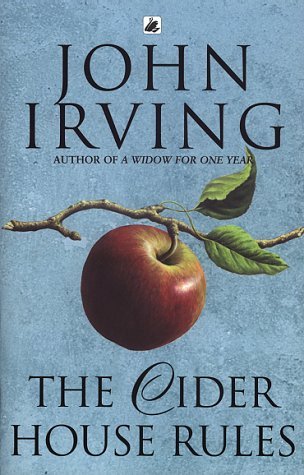
Thirteen years on, I remembered the orphanage and cider farm settings, the dynamic between Doctor Wilbur Larch and his protégé, Homer Wells, and Homer’s love for his best friend’s girl, Candy. I also remembered that this is a Trojan horse of a novel: it advocates, not very subtly, for abortion rights through pictures of women in desperate situations. Luckily, by the time I first read it I was no longer slavishly devoted to the American Religious Right. But this time I felt that even readers who consider themselves pro-choice might agree Irving over-eggs his argument. My memory of the 1999 film version is clearer. It severely condenses the book’s 40 years or so of action, cutting subplots and allowing Tobey Maguire and Charlize Theron to play the leads all the way through. A shorter timeframe also more neatly draws a line between Rose Rose’s experience and Homer’s change of heart about offering abortions.
I had a strong preference for the scenes set at St. Cloud’s orphanage in Maine. Dr. Larch is celibate and addicted to ether – all a result of his first sexual encounter with a prostitute. He has an ironclad conviction that he is doing the Lord’s work for the pregnant women who get off the train at St. Cloud’s, whether they come for an abortion or to leave a live baby behind. Homer Wells is the one orphan who never finds an adoptive home; he stays on and becomes Larch’s trainee in obstetrics, but vows that he won’t perform abortions. As a young adult, Homer is pulled away from the orphanage by his puppy love for Wally and Candy, a couple-in-trouble who come up from his family’s apple farm. Homer thinks he’ll go back with his new friends for a month or two, but instead he stays at Ocean View orchard for decades, his relationship with Candy changing when Wally goes off to war and comes back disabled.
I had forgotten the bizarre scenario Larch has to set up for the orphanage’s board of trustees to accept his chosen successor, and the far-fetched family situation Homer, Candy and Wally end up in. The orchard sections could feel endless, so I always thrilled to mentions of what was happening for Dr. Larch and the nurses back at St. Cloud’s.

Oktoberfest reading and snacking.
The Dickensian influence – lots of minor characters and threads tying up nicely by the end; quirks of speech and behavior – has generally been the aspect I like the most about Irving’s work, and while I loved the explicit references to David Copperfield here (a few kids get their names from it, it’s read aloud to the boy orphans every night, and its opening question about whether the protagonist will be the hero of his own life or not applies to Homer, too), I did find the novel awfully baggy this time. I even put in a slip of paper where I felt that things started to drift: page 450.
One further note to make about the film: it, rather unforgivably, eliminates Melony, a larger-than-life character and necessary counterpart to the book’s multiple passive females. She’s the de facto head of the girl orphans, as Homer is for the boys, and initiates Homer into sex. But her feelings for him are more of hero worship than of romantic love, and when he breaks his promise and leaves St. Cloud’s without her, she sets off to hunt him down. Her odyssey, delivered in parallel, is nearly as important as Homer’s (see what I/Irving did there?).
While I loved the medical history material and Dr. Larch’s moral fiber, this time I found Homer a little insipid and annoying (he answers nearly every question with “Right”), and the plot somewhat slack and obvious. In my memory this is probably #3 out of the Irving novels I’ve read, below A Prayer for Owen Meany and The World According to Garp – both of which I’d also like to reread to see if they’ve retained their power.
Page count: 731
My original rating (July–September 2007): 
My rating now: 
Done any rereading, or picked up any very long books, lately?
October Releases by Rachel Mann, Sigrid Nunez and Ruth Janette Ruck
A calmer month for new releases after September’s bumper crop. I read a sophisticated mystery set at a theological college, a subtle novel about empathy and being a good friend, and a memoir of raising one of Britain’s first llamas.
The Gospel of Eve by Rachel Mann
Last year I dipped into Mann’s poetry (A Kingdom of Love) and literary criticism/devotional writing (In the Bleak Midwinter); this year I was delighted to be offered an early copy of her debut novel. The press materials are full of comparisons to Donna Tartt’s The Secret History; it’s certainly an apt point of reference for this mystery focusing on clever, Medieval-obsessed students training for the priesthood at a theological college outside Oxford.
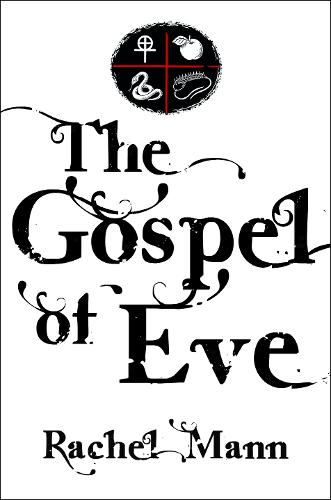 It’s 1997 and Catherine Bolton is part of the first female intake at Littlemore College. She has striven to rid herself of a working-class accent and recently completed her PhD on Chaucer, but feels daunted by her new friends’ intelligence and old-money backgrounds: Ivo went to Eton, Charlie is an heiress, and so on. But Kitty’s most fascinated with Evie, who is bright, privileged and quick with a comeback – everything Kitty wishes she could be.
If you think of ordinands as pious and prudish, you’ll be scandalized by these six. They drink, smoke, curse and make crude jokes. In seminars with Professor Albertus Loewe, they make provocative mention of feminist theory and are tempted by his collection of rare books. Soon sex, death and literature get all mixed up as Kitty realizes that her friends’ devotion to the Medieval period goes as far as replicating dangerous rituals. We know from the first line that one of them ends up dead. But what might it have to do with the apocryphal text of the title?
I didn’t always feel the psychological groundwork was there to understand characters’ motivations, but I still found this to be a beguiling story, well plotted and drenched in elitism and lust. Mann explores a theology that is more about practice, about the body, than belief. Kitty’s retrospective blends regret and nostalgia: “We were the special ones, the shining ones,” and despite how wrong everything went, part of her wouldn’t change it for the world.
My thanks to publicist Hannah Hargrave for the proof copy for review. Published today by Darton, Longman & Todd Ltd.
What Are You Going Through by Sigrid Nunez
A perfect follow-up to The Friend and very similar in some ways: again we have the disparate first-person musings of an unnamed narrator compelled to help a friend. In Nunez’s previous novel, the protagonist has to care for the dog of a man who recently killed himself; here she is called upon to help a terminally ill friend commit suicide. The novel opens in September 2017 in the unfamiliar town she’s come to for her friend’s cancer treatments. While there she goes to a talk by an older male author who believes human civilization is finished and people shouldn’t have children anymore. This prophet of doom is her ex.
 His pessimism is echoed by the dying friend when she relapses. The narrator agrees to accompany her to a rental house where she will take a drug to die at a time of her choosing. “Lucy and Ethel Do Euthanasia,” the ex jokes. And there is a sort of slapstick joy early in this morbid adventure, with mishaps like forgetting the pills and flooding the bathroom.
As in Rachel Cusk’s Outline trilogy, the voice is not solely or even primarily the narrator’s but Other: her friend speaking about her happy childhood and her estrangement from her daughter; a woman met at the gym; a paranoid neighbor; a recent short story; a documentary film. I felt there was too much recounting of a thriller plot, but in general this approach, paired with the absence of speech marks, reflects how the art we consume and the people we encounter become part of our own story. Curiosity about other lives fuels empathy.
With the wry energy of Jenny Offill’s Weather, this is a quiet novel that sneaks up to seize you by the heartstrings. “Women’s stories are often sad stories,” Nunez writes, but “no matter how sad, a beautifully told story lifts you up.” Like The Friend, which also ends just before The End, this presents love and literature as ways to bear “witness to the human condition.”
With thanks to Virago for the proof copy for review.
Along Came a Llama: Tales from a Welsh Hill Farm by Ruth Janette Ruck
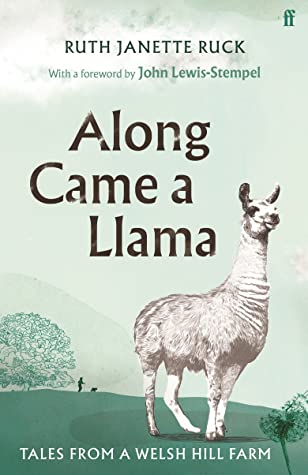 Originally published in 1978 (now reissued with a foreword by John Lewis-Stempel), this is an enjoyably animal-stuffed memoir reminiscent of Gerald Durrell and especially Doreen Tovey. Ruck (d. 2006) and her family – which at times included her ill sister, her elderly mother and/or her sister-in-law – lived on a remote farm in the hills of North Wales. On a visit to Knaresborough Zoo, Ruck was taken with the llamas and fancied buying one to add to their menagerie of farm animals. It was as simple as asking the zoo director and then taking the young female back to Wales in a pony box. At that time, hardly anyone in the UK knew anything about llamas or the other camelids. No insurance company would cover their llama in transit; no one had specialist knowledge on feeding or breeding. Ruck had to do things the old-fashioned way, finding books and specialist scientific papers.
But they mostly learned about Ñusta (the Quechua word for princess) by spending time with her. At holidays they discovered her love of chocolate Easter eggs and cherry brandy. The cud-chewing creature sometimes gave clues to what else she’d been eating, as when she regurgitated plum stones. She didn’t particularly like being touched or trailed by an orphaned lamb, but followed Ruck around dutifully and would sit sociably in the living room. Life with animals often involves mild disasters: Ñusta jumps in a pool and locks Ruck’s husband in the loo, and the truck breaks down on the way to mate her with the male at Chester Zoo.

A vintage cover I found on Goodreads.
From spitting to shearing, there was a lot to get used to, but this account of the first three years of llama ownership emphasizes the delights of animal companionship. There were hardships in Ruck’s life, including multiple sclerosis and her sister’s death, but into the “austere but soul-rewarding life of a hill firm … like a catalyst or a touch of magic, the llama came along.” I was into llamas and alpacas well before the rest of the world – in high school I often visited a local llama farm, and I led a llama in a parade and an alpaca in a nativity play – so that was my primary reason for requesting this, but it’s just right for any animal lover.
With thanks to Faber & Faber for the free copy for review.
What recent releases can you recommend?
Completing the Women’s Prize Winners Reading Project and Voting
In this 25th anniversary year of the Women’s (previously Orange/Baileys) Prize, people have been encouraged to read all of the previous winners. I duly attempted to catch up on the 11 winners I hadn’t yet read, starting with Fugitive Pieces by Anne Michaels; Half of a Yellow Sun by Chimamanda Ngozi Adichie and A Crime in the Neighborhood by Suzanne Berne as part of a summer reading post; and When I Lived in Modern Times by Linda Grant, Property by Valerie Martin and Larry’s Party by Carol Shields (a reread) in this post.
This left just four for me to read before voting for my all-time favorite in the web poll. I managed two as recent buddy reads but had to admit defeat on the others, giving them just the barest skim before sending them back to the library.
The Idea of Perfection by Kate Grenville (1999; 2001 prize)
(Buddy read with Laura T.; see her review here)
 This is essentially an odd-couple romance, but so awkward I don’t think any of its scenes could accurately be described as a meet-cute. Harley Savage, a thrice-married middle-aged widow, works for the Applied Arts Museum in Sydney. The tall, blunt woman is in Karakarook, New South Wales to help the little town launch a heritage museum. Douglas Cheeseman is a divorced engineer tasked with tearing down a local wooden bridge and building a more suitable structure in its place. Their career trajectories are set to clash, but the novel focuses more on their personal lives. From the moment they literally bump into each other outside Douglas’ hotel, their every meeting is so embarrassing you have to blush – she saves him from some angry cows, while he tends to her after a bout of food poisoning.
Grenville does well to make the two initially unappealing characters sympathetic, primarily by giving flashes of backstory. Douglas is the posthumous child of a war hero, but has never felt he’s a proper (macho) Australian man. In fact, he has a crippling fear of heights, which is pretty inconvenient for someone who works on tall bridges. Harley, meanwhile, is haunted by the scene of her last husband’s suicide and is also recovering from a recent heart attack.
The title is, I think, meant to refer to how the protagonists fail to live up to ideals or gender stereotypes. However, it more obviously applies to the subplot about Felicity Porcelline, a stay-at-home mother who has always sought to be flawless – a perfect pregnancy, an ageless body (“Sometimes she thought she would rather be dead than old”), the perfect marriage – but gets enmired in a dalliance with the town butcher. I was never convinced Felicity’s storyline was necessary. Without it, the book might have been cut from 400 pages to 300.
Still, this was a pleasant narrative of second chances and life’s surprises. The small-town setting reminded Laura of Olive Kitteridge in particular, and I also thought frequently of Anne Tyler and her cheerfully useless males (“There was a lot to be said for being boring, and it was something [Douglas] was good at”). But I suspect the book won’t remain vivid in my memory, especially with its vague title that doesn’t suggest the contents. I enjoyed Grenville’s writing, though, so will try her again. In my mind she’s more known for historical fiction. I have a copy of The Secret River, so will see if she lives up to that reputation.
My rating:
How to Be Both by Ali Smith (2014)
(Buddy read with Marcie of Buried in Print.)
 A book of two halves, one of which I thoroughly enjoyed; the other I struggled to engage with. I remembered vaguely as I was reading it that this was published in two different versions. As it happened, my library paperback opened with the contemporary storyline.
New Year’s Day marks the start of George’s first full year without her mother, a journalist who died at age 50. Her mother’s major project was “Subvert,” which used Internet pop-ups to have art to comment on politics and vice versa. George remembers conversations with her mother about the nature of history and art, and a trip to Italy. She’s now in therapy, and has a flirty relationship with Helena (“H”), a mixed-race school friend.
Smith’s typical wordplay comes through in the book’s banter, especially in George and H’s texts. George is a whip-smart grammar pedant. Her story was, all in all, a joy to read. There is even a hint of mystery here – is it possible that her mother was being monitored by MI5? When George skips school to gaze at her mother’s favorite Francesco del Cossa painting in the National Gallery, she thinks she sees Lisa Goliard, her mother’s intense acquaintance, who said she was a bookbinder but acted more like a spy…
The second half imagines a history for Francesco del Cossa, who rises from a brick-making family to become a respected portrait and fresco painter. The artist shares outward similarities with George, such as a dead mother and homoerotic leanings. There are numerous tiny connections, too, some of which I will have missed as my attention waned. The voice felt all wrong for the time period; I sensed that Smith wasn’t fully invested in the past, so I wasn’t either. (In dual-timeline novels, I pretty much always prefer the contemporary one and am impatient to get back to it; at least in books like Unsheltered and The Liar’s Dictionary there are alternate chapters to look forward to if the historical material gets tedious.)
An intriguing idea, a very promising first half, then a drift into pretension. Or was that my failure to observe and appreciate? Smith impishly mocks: “If you notice, it changes everything about the picture.” With her format and themes, she questions accepted binaries. There are interesting points about art, grief and gender, even without the clever links across time. But had the story opened with the other Part 1, I may never have gotten anywhere.
My rating: 
Skims
I made the mistake of leaving the three winners that daunted me the most stylistically – McBride, McInerney and Smith – for last. I eventually made it through the Smith, though the second half was quite the slog, but quickly realized these two were a lost cause for me.
 A Girl Is a Half-formed Thing by Eimear McBride: I’d glanced at the first few pages in a shop before and found the style immediately off-putting. When I committed to this #ReadingWomen project, I diligently requested a copy from the university library even though I seriously doubted I’d have the motivation to read it. It turns out my first impression was correct: I would have to be paid much more than I’ve ever been paid for writing about a book just to get through this one. From the first paragraph on, it’s deliberately impenetrable in a sub-Joycean way. Ron Charles, the Washington Post book critic and one of my literary heroes/gurus, found the subject matter relentlessly depressing and the obfuscating style elitist. (Might it work as an audiobook? I can’t say; I’ve never listened to one.)
 The Glorious Heresies by Lisa McInerney: Not as stylistically difficult as expected, though there is mild dialect and long passages in italics (one of my reading pet peeves). But I’m not drawn to gangster stories, and after a couple of chapters didn’t feel like pushing myself through the book. I did enjoy the setup of Maureen killing an intruder with a holy stone, eliciting this confession: “I crept up behind him and hit him in the head with a religious ornament. So first I suppose God would have to forgive me for killing one of his creatures and then he’d have to forgive me for defiling one of his keepsakes.” For Anna Burns and Donal Ryan fans, perhaps?
It’s been many years since I’ve read some of these novels, such that all I have to go on is my vague memories and Goodreads ratings, and there are a handful there towards the bottom that I couldn’t get through at all, but I still couldn’t resist having a go at ranking the 25 winners, from best to least. My completely* objective list:
(*not at all)
Larry’s Party by Carol Shields
Half of a Yellow Sun by Chimamanda Ngozi Adichie
We Need to Talk about Kevin by Lionel Shriver
An American Marriage by Tayari Jones
The Tiger’s Wife by Téa Obreht
On Beauty by Zadie Smith
Home Fire by Kamila Shamsie
A Crime in the Neighborhood by Suzanne Berne
The Road Home by Rose Tremain
When I Lived in Modern Times by Linda Grant
The Idea of Perfection by Kate Grenville
Fugitive Pieces by Anne Michaels
The Lacuna by Barbara Kingsolver
Bel Canto by Ann Patchett
May We Be Forgiven by A.M. Homes
Property by Valerie Martin
Small World by Andrea Levy
Home by Marilynne Robinson
How to Be Both by Ali Smith
The Power by Naomi Alderman
Hamnet by Maggie O’Farrell
A Spell of Winter by Helen Dunmore
The Glorious Heresies by Lisa McInerney
The Song of Achilles by Madeline Miller
A Girl Is a Half-formed Thing by Eimear McBride
You can see the arbitrary nature of prizes at work here: some authors I love have won for books I don’t consider their best (Adichie, Kingsolver, O’Farrell, Patchett), while some exceptional female authors have been nominated but never won (Toni Morrison, Elizabeth Strout, Anne Tyler). Each year the judges are different, and there are no detailed criteria for choosing the winner, so it will only ever be the book that five people happen to like the best.
As she came out top of the heap with what is, coincidentally, the only one of the winning novels that I have managed to reread, my vote goes to Carol Shields for Larry’s Party. (People’s memory for prize winners is notoriously short, so I predict that one of the last two years’ winners, Tayari Jones or Maggie O’Farrell, will win the public’s best of the best vote.)

You have until midnight GMT on Sunday November 1st to vote for your favorite winner at this link. That’s less than a week away now, so get voting!
Note: If you’re interested in tracking your Women’s Prize reading over the years, check out Rachel’s extremely helpful list of all the nominees. It comes in spreadsheet form for you to download and fill out. I have read 138 nominees (out of 477) and DNFed another 19 so far.
Who gets your vote?
Autumn Reading: The Pumpkin Eater and More
I’ve been gearing up for Novellas in November with a few short autumnal reads, as well as some picture books bedecked with fallen leaves, pumpkins and warm scarves.
An Event in Autumn by Henning Mankell (2004)
[Translated from the Swedish by Laurie Thompson, 2014]
 My first and probably only Mankell novel; I have a bad habit of trying mystery series and giving up after one book – or not even making it through a whole one. This was written for a Dutch promotional deal and falls chronologically between The Pyramid and The Troubled Man, making it #9.5 in the Wallander series. It opens in late October 2002. After 30 years as a police officer, Kurt Wallander is interested in living in the countryside instead of the town-center flat he shares with his daughter Linda, also a police officer. A colleague tells him about a house in the country owned by his wife’s cousin and Wallander goes to have a look.
Of course things aren’t going to go smoothly with this venture. You have to suspend disbelief when reading about the adventures of investigators; it’s like they attract corpses. So it’s not much of a surprise that while he’s walking the grounds of this house he finds a human hand poking out of the soil, and eventually the remains of a middle-aged couple are unearthed. The rest of the book is about finding out what happened on the property at the time of the Second World War. Wallander says he doesn’t believe in ghosts, but victims of wrongful death are as persistent as ghosts: they won’t be ignored until answers are found.
This was a quick and easy read, but nothing about it (setting, topics, characterization, prose) made me inclined to read further in the author’s work.
My rating:
The Pumpkin Eater by Penelope Mortimer (1962)
 (Classic of the Month, #1)
Like a nursery rhyme gone horribly wrong, this is the story of a woman who can’t keep it together. She’s the woman in the shoe, the wife whose pumpkin-eating husband keeps her safe in a pumpkin shell, the ladybird flying home to find her home and children in danger. Aged 31 and already on her fourth husband, the narrator, known only as Mrs. Armitage, has an indeterminate number of children. Her current husband, Jake, is a busy filmmaker whose philandering soon becomes clear, starting with the nanny. A breakdown at Harrods is the sign that Mrs. A. isn’t coping, and she starts therapy. Meanwhile, they’re building a glass tower as their countryside getaway, allowing her to contemplate an escape from motherhood.
An excellent 2011 introduction by Daphne Merkin reveals how autobiographical this seventh novel was for Mortimer. But her backstory isn’t a necessary prerequisite for appreciating this razor-sharp period piece. You get a sense of a woman overwhelmed by responsibility and chafing at the thought that she’s had no choice in what life has dealt her. Most chapters begin in medias res and are composed largely of dialogue, including with Jake or her therapist. The book has a dark, bitter humor and brilliantly recreates a troubled mind. I was reminded of Janice Galloway’s The Trick Is to Keep Breathing and Elizabeth Hardwick’s Sleepless Nights. If you’re still looking for ideas for Novellas in November, I recommend it highly.
My rating:
Snow in Autumn by Irène Némirovsky (1931)
[Translated from the French by Sandra Smith, 2007]
(Classic of the Month, #2)
 I have a copy of Suite Française, Némirovsky’s renowned posthumous classic, in a box in America, but have never gotten around to reading it. This early tale of the Karine family, forced into exile in Paris after the Russian Revolution, draws on the author’s family history. The perspective is that of the family’s old nanny, Tatiana Ivanovna, who guards the house for five months after the Karines flee and then, joining them in Paris after a shocking loss, longs for the snows of home. “Autumn is very long here … In Karinova, it’s already all white, of course, and the river will be frozen over.” Nostalgia is not as innocuous as it might seem, though. This gloomy short piece brought to mind Gustave Flaubert’s story “A Simple Heart.” I wouldn’t say I’m taken by Némirovsky’s style thus far; in fact, the frequent ellipses drove me mad! The other novella in my paperback is Le Bal, which I’ll read next month.
My rating:
Plus a quartet of children’s picture books from the library:

Pumpkin Soup by Helen Cooper: A cat, a squirrel and a duck live together in a teapot-shaped cabin in the woods. They cook pumpkin soup and make music in perfect harmony, each cheerfully playing their assigned role, until the day Duck decides he wants to be the one to stir the soup. A vicious quarrel ensues, and Duck leaves. Nothing is the same without the whole trio there. After some misadventures, when the gang is finally back together, they’ve learned their lesson about flexibility … or have they? Adorably mischievous.
Moomin and the Golden Leaf by Richard Dungworth: Beware: this is not actually a Tove Jansson plot, although her name is, misleadingly, printed on the cover (under tiny letters “Based on the original stories by…”). Autumn has come to Moominvalley. Moomin and Sniff find a golden leaf while they’re out foraging. He sets out to find the golden tree it must have come from, but the source is not what he expected. Meanwhile, the rest are rehearsing a play to perform at the Autumn Ball before a seasonal feast. This was rather twee and didn’t capture Jansson’s playful, slightly melancholy charm. 
Little Owl’s Orange Scarf by Tatyana Feeney: Ungrateful Little Owl thinks the orange scarf his mother knit for him is too scratchy. He tries “very hard to lose his new scarf” and finally manages it on a trip to the zoo. His mother lets him choose his replacement wool, a soft green. I liked the color blocks and the simple design, and the final reveal of what happened to the orange scarf is cute, but I’m not sure the message is one to support (pickiness vs. making do with what you have).
Christopher Pumpkin by Sue Hendra and Paul Linnet: The witch of Spooksville needs help preparing for a big party, so brings a set of pumpkins to life. Something goes a bit wrong with the last one, though: instead of all things ghoulish, Christopher Pumpkin loves all things fun. He bakes cupcakes instead of stirring gross potions and strums a blue ukulele instead of inducing screams. The witch threatens to turn Chris into soup if he can’t be scary. The plan he comes up with is the icing on the cake of a sweet, funny book delivered in rhyming couplets. Good for helping kids think about stereotypes and how we treat those who don’t fit in.
Have you read any autumn-appropriate books lately?
R.I.P. Reads, Part I: Magrs Buddy Read; Hynes, Johnson, Oates
This is my third year participating in R.I.P. (Readers Imbibing Peril), now in its 15th year. I read my first novel by Paul Magrs as a buddy read with Liz of Adventures in reading, running and working from home, and coincidentally had Daisy Johnson’s creepy second novel out from the library. Rounding out this first post are a novella by James Hynes and a short story by Joyce Carol Oates, by whom I still haven’t managed to read a whole book. For my planned Part II, I’m working on historical suspense novels by Michelle Paver (a constant on my R.I.P. lists, it seems) and Laura Purcell, and trying my first Henning Mankell.

666 Charing Cross Road by Paul Magrs (2011)
 Apart from Dracula, my only previous experience of vampire novels was Deborah Harkness’s books. My first book from Paul Magrs ended up being a great choice because it’s pretty lighthearted and as much about the love of books as it is about supernatural fantasy – think of a cross between Jasper Fforde and Neil Gaiman. The title is a tongue-in-cheek nod to Helene Hanff’s memoir, 84 Charing Cross Road. Like Hanff, Aunt Liza sends letters and money to a London bookstore in exchange for books that suit her tastes. A publisher’s reader in New York City, Liza has to read new stuff for work but not-so-secretly prefers old books, especially about the paranormal – a love she shares with her gay bookseller friend, Jack.
One day the bookstore (actual address: 66b) sends a gruesome treasure, a grimoire soaked in vampire blood. In the wrong hands, it returns the vampiric spirit to life and sets off a chain reaction as each victim bites and infects others. I couldn’t help but think of the pandemic; indeed, Magrs uses the word “disease” at one point. Vampirism always has erotic overtones, though, making it seem more like an STD. As it happens, the vampires’ New York leader is Liza’s niece Shelley’s boyfriend, Daniel. Meanwhile, the star exhibit at the Museum of Outsider Art where Shelley works, a Scottish Bride effigy nicknamed Bessie, has come to life. Bessie leads Liza and Jack to London in the fight against Daniel and his kind.
Set between Halloween and Christmas, this is a pacy and quick-witted story that is easy to follow even as it gets more complicated and adds in ever more secondary characters. Hints about Liza’s past experience of the supernatural and an open ending leave room for a prequel or sequel. There were a few melodramatic moments and I wasn’t always convinced by Liza’s New Yawk accent. (I also wanted to stick up for Liza and another character about her age, Consuela – Magrs often refers to one or both as “the old woman,” when in the context they can’t be far past 60!) But these are minor niggles about a book that was so much fun to read. I’ll try something else by Magrs, probably Exchange and/or one of the Brenda and Effie series – who could resist that premise of the Bride of Frankenstein running a B&B in Whitby? (See also Liz’s review.)
My rating:
The rest…
Queen of the Jungle (from Publish and Perish: Three Tales of Tenure and Terror) by James Hynes (1997)
 I read the first of this volume’s three suspense novellas and will save the others for future years of R.I.P. or Novellas in November. At 95 pages, it feels like a complete, stand-alone plot with solid character development and a believable arc. Paul and Elizabeth are academics marooned at different colleges: Paul is finishing up his postdoc and teaches menial classes at an English department in Iowa, where they live; Elizabeth commutes long-distance to spend four days a week in Chicago, where she’s on track for early tenure at the university.
The couple’s cat, Charlotte, starts acting up, peeing in random places around the apartment. The animal psychic they hire says it’s because a woman keeps coming and going, disturbing the cat’s routines. Elizabeth assumes it’s her fault, feels terrible, and redoubles her efforts to get her boss to offer Paul a job on the basis of his bizarre literary/pop culture mash-up thesis chapters. But readers soon learn the real reason for the cat’s unease: Paul is carrying on an affair with Kymberly, a graduate student from the communications department. Charlotte is preternaturally determined to terrorize Kym and broadcast Paul’s secret. It’s an amusing battle of wills that comes to have greater stakes. Mentions of computer and telephone technology made this seem slightly dated, but I liked Hynes’s writing.
My rating:
Sisters by Daisy Johnson (2020)
 Teenagers September and July were born just 10 months apart, with July always in thrall to her older sister. September can pressure her into anything, no matter how risky or painful, in games of “September Says.” But one time things went too far. That was the day they went out to the tennis courts to confront the girls at their Oxford school who had bullied July.
For much of this short novel, Johnson keeps readers guessing about what happened that day and why the girls’ mother, Sheela, took them away to Settle House, her late husband’s family home in the North York Moors. Despite the new setting, July finds it impossible to shrug off her sister’s influence. Their psychic connection is such that she feels she’s losing her own virginity as she watches September have sex with a local boy on the beach. September’s is so much the dominant personality that July admits she feels like no more than “an appendage.”
Emotionally used and physically harmed, July starts to doubt her sanity. This was most evident for me in the scene where she goes up to a soggy-looking wall of Settle House and puts a hand through it, hearing “the rustle and gurgle of motion, the shuttering of thousands of wings.” (Presuming that’s a deliberate word choice and not a typo for shuddering.) Ants start pouring out of the wall, followed by a bird. But when she goes back to look at the wall later that day, it’s intact. I was reminded of The Haunting of Hill House, with its picture of a malevolent house preying on its inhabitants’ fears.

Sisters is a book that depends entirely on its late twist, so I shall say no more. About halfway through, I had a vague idea of what the surprise might be, but convinced myself I was wrong. “What if? … Nah, couldn’t be.” I wonder how early you’ll catch on. I adore the U.S. cover, but the UK cover contains more of a hint. I think I liked Everything Under, Johnson’s Booker-shortlisted debut novel, that little bit more, but my bottom line for that one goes for this, too: “As mesmerizing as it is unsettling.” Johnson is such a talented young author, and she also has the best author photo out there at the moment, a black-and-white image of her reflected in a train window.
My rating:
“The Woman in the Window” (from Night-Gaunts and Other Tales of Suspense) by Joyce Carol Oates (2018)
 Oates was inspired by Edward Hopper’s 1926 painting, Eleven A.M. (The striking cover image is from a photographic recreation by Richard Tuschman. Very faithful except for the fact that Hopper’s armchair was blue.) A secretary pushing 40 waits in the New York City morning light for her married lover to arrive. She’s tired of him using her and keeps a sharp pair of sewing shears under her seat cushion. We bounce between the two characters’ perspectives as their encounter nears. He’s tempted to strangle her. Will today be that day, or will she have the courage to plunge those shears into his neck before he gets a chance? In this room, it’s always 11 a.m. The tension is well maintained, but the punctuation kind of drove me crazy. I might try the rest of the book next year.
Have you been reading anything fantastical or spooky this October?
Two Bellwether Prize Winners by Heidi Durrow and Hillary Jordan
I conceived of the idea to read all of the Bellwether Prize winners because I loved Lisa Ko’s The Leavers so much. The PEN/Bellwether Prize for Socially Engaged Fiction is a biennial award given since 2000 by PEN America and Barbara Kingsolver, who created and funds the prize, “to a U.S. citizen for a previously unpublished work of fiction that addresses issues of social justice.” (More information can be found here.) Earlier this year, I found secondhand or cheap new copies of two of the winners and tried another one from the library.
The Girl Who Fell from the Sky by Heidi W. Durrow (2010)
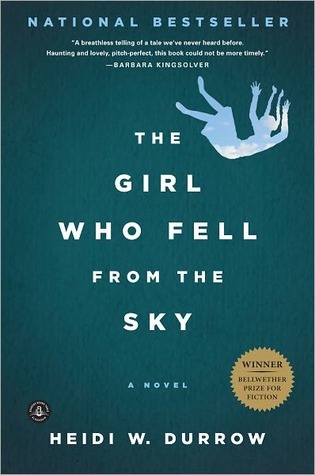 This review is ALL SPOILER because there isn’t really a way to discuss the book otherwise, so skip onwards if you think you might want to read this someday. Durrow was inspired by her own family history – she is biracial, her father a Black serviceman and her mother from Denmark – and by a newspaper story about a woman who jumped off the top of a multi-story building with her small children. Only one daughter survived the fall. Durrow was captivated by that girl’s story and wanted to imagine what her life would be like in the wake of tragedy.
In 1982, Rachel has come to live with her father’s mother in Portland, Oregon. She’s starting a new life there after a long time in the hospital. She survived her mother Nella’s leap from their Chicago apartment building because she landed on the top of the heap of three siblings. As her teen years unfold, she struggles to incorporate her European heritage with her African American identity and turns to promiscuity. Details of what happened that day in Chicago unfold gradually.
The secondary characters are more interesting than Rachel herself, even though she narrates, and I felt more sympathy for her when she was a child. I would have liked more of the mother’s journal entries, showing how her depression and alcoholism developed. The coincidence of the one eyewitness to the jump ending up in Portland was too much for me. Overall, this was fairly dismal and didn’t make enough of its compelling premise. It was an easy read, but had it been much longer than 260 pages I would likely have DNFed.
My rating: 
Mudbound by Hillary Jordan (2008)
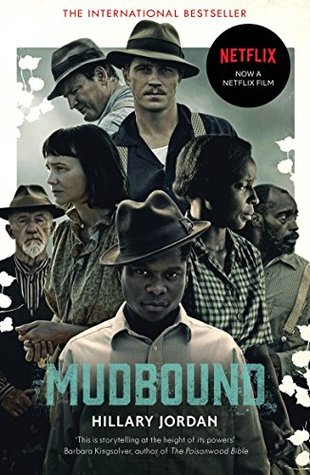 1946: Two servicemen return from fighting in Europe, headed to the same Mississippi farm. Jamie McAllan was a fighter pilot and Ronsel Jackson was part of a tank division. Both are dependent on alcohol to help them cope with the memories of what they have seen and done. But Jamie can get away with drunk driving and carousing with local women, knowing that his big brother, Henry, will take him back in no matter what. Ronsel, though, has to keep his head down and be on his guard at every moment: war hero or not, no one in Mississippi is going to let a Black man walk in through the front door of a store or get a lift home in a white man’s truck. His sharecropping family’s position at the McAllan farm, Mudbound, is precarious, with the weather and the social hierarchy always working against them.
This story of love, betrayal, and the obsession with land is told through rotating first-person narration from six key players, three McAllans and three Jacksons. Each voice is distinct and perfectly captures the character’s personality and level of education. Jordan uses this kaleidoscope view to explore how fateful decisions bind the two families together. I particularly loved the two female voices: Laura, Henry’s wife; and Florence, Ronsel’s mother. Though they’re often stuck inside cooking and delivering babies, they still play their roles in the farm’s drama. The novel opens with a burial scene, but readers get faked out not once but twice about how the character died. I raced through the last three-quarters, and the final 50–100 pages are a real doozy. This feels like a modern classic of the segregated South and I’d recommend it for those looking for a follow-up to The Vanishing Half.
My rating:
And a DNF:
Running the Rift by Naomi Benaron (2010)
I read 25 pages and didn’t feel drawn into the characters’ story. When the main characters are from a persecuted ethnic minority and one boy is a star runner, you sort of know where things are heading. (I’m also perhaps too familiar with Rwandan history from We Wish to Inform You that Tomorrow We Will Be Killed with Our Families by Philip Gourevitch.)
Remaining Bellwether Prize winners:
 2019 Katherine Seligman, If You Knew [retitled At the Edge of the Haight – publication forthcoming in January 2021]
2014 Ron Childress, And West Is West
2012 Susan Nussbaum, Good Kings Bad Kings
2004 Marjorie Kowalski Cole, Correcting the Landscape
2002 Gayle Brandeis, The Book of Dead Birds
2000 Donna Gershten, Kissing the Virgin’s Mouth
Have you read one of these winners? Do any tempt you?
The 1956 Club: The Lonely Londoners and Night
It’s my second time participating in one of Simon and Karen’s reading weeks (after the 1920 Club earlier this year). It was a boon that the two books I chose and borrowed from the library were of novella length. As in April, I managed one very enjoyable read and one slightly less successful skim.
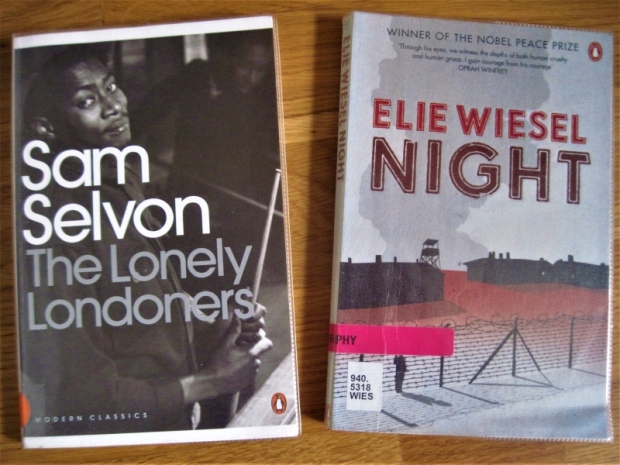
The Lonely Londoners by Sam Selvon
This title was familiar to me because it was one of the texts the London secondary school students could choose to review for a special supplement of Wasafiri literary magazine when I did a few in-school sessions mentoring them in the basics of book reviewing in early 2014. (An experience that was totally outside my comfort zone and now feels like a lifetime away.)
 Selvon, a Trinidadian journalist who settled in London in 1950, became known as the “father of black writing” in Britain. Moses Aloetta, an expert in London life after a few years here, lends a hand to his West Indian brethren who are fresh off the boat. As the book opens, he’s off to meet Henry Oliver, whom he soon dubs “Sir Galahad” for his naïve idealism. Moses warns Galahad that, although racism isn’t as blatant as in America, the British certainly aren’t thrilled about black people coming over and taking their jobs. Galahad reassures him that he’s a “born hustler.” We meet a series of other immigrants, like Cap and Bart, who move flats and change jobs frequently, drink and carouse, and “love woman too bad.”
I read and enjoyed the first 52 pages but skimmed from that point on because the patois, while initially captivating, got to be a bit much – I have a limited tolerance for dialect, and for episodic storytelling. I did love the sequences about Galahad catching pigeons for food and Cap following up with seagulls. There is a strong voice and sense of place here: if you want to experience London in the 1950s and see a rarer immigrant perspective, it would be a great choice. (Also recently reviewed by Liz and Annabel.)
Representative passages:
“It have people living in London who don’t know what happening in the room next to them, far more the street, or how other people living. London is a place like that. It divide up in little worlds, and you stay in the world you belong to and you don’t know anything about what happening in the other ones except what you read in the papers.”
the nine-page stream-of-consciousness paragraph that starts “Oh what a time it is when summer come to the city and all them girls throw away heavy winter coat and wearing light summer frocks so you could see the legs and shapes that was hiding away from the cold blasts”
My rating:
Night by Elie Wiesel
[Translated from the French by Marion Wiesel]
A short, harrowing memoir of concentration camp life. Eliezer Wiesel was a young teenager obsessed with the Kabbalah when his family was moved into a Romanian ghetto for Jews and then herded onto a transport train. Uniquely in my reading of Holocaust memoirs, Wiesel was not alone but had his father by his side for much of the time as they were shuttled between various concentration camps including Auschwitz and Buchenwald, from which he was liberated in April 1945. But if the presence of family started as a blessing in a life of privation and despair, it became more of a liability as his father fell ill with dysentery.
 Like Viktor Frankl, Wiesel puts his survival down to luck: not once but several times, he and his father were sent to the left (towards the crematoria), but spared at the last minute. They endured infection, a stampede, a snowstorm and near-starvation. But their faith did not survive intact. “For God’s sake, where is God?” someone watching the hanging of a child burst out. “And from within me, I heard a voice answer: ‘Where He is? This is where—hanging here from this gallows.’” I’d heard that story before, twisted by Christian commentators into a “Hey, that’s like Jesus on the cross! God is right here suffering with us” message when actually it’s more “God is dead. God has abandoned us.”
From the preface to a new translation by his wife, I learned that the original Yiddish manuscript was even bleaker in outlook, with opening and closing passages that voice a cynical loss of trust in God and fellow man. “I am not so naïve as to believe that this slim volume will change the course of history or shake the conscience of the world. Books no longer have the power they once did. Those who kept silent yesterday will remain silent tomorrow” was the chilling final line of his first version. And yet Night has been taught in many high schools, and if it opens even a few students’ eyes – given the recent astonishing statistics about American ignorance of the scope of the Holocaust – it has been of value.
Wiesel won the Nobel Peace Prize in 1986. His acceptance speech is appended to the text of my 2008 Penguin paperback. In it he declares: “I swore never to be silent whenever and wherever human beings endure suffering and humiliation. We must take sides. Neutrality helps the oppressor, never the victim. Silence encourages the tormentor, never the tormented. Sometimes we must interfere. When human lives are endangered, when human dignity is in jeopardy, national borders and sensitivities become irrelevant. Wherever men and women are persecuted because of their race, religion, or political views, that place must—at that moment—become the center of the universe.” Wise words with perennial relevance.
My rating:
September Releases: Gyasi, McKay, Sheldrake, Tremain, Woolfson
September is always a big month in the publishing world, but even more so this year because of all the titles delayed from the spring and summer – apparently 600 books were published in the first week of September in the UK alone.
Still, I only ended up with my usual, manageable five new releases (with a few more on the way from the library). I read a beautiful novel about addiction and religion in contemporary America, speculative fiction about communication with wildlife in mid-pandemic (!) Australia, everything you ever wanted to know about fungi, historical fiction about outsiders in England and Borneo, and a study of our broken relationship with other animals.
Two of these are from my most anticipated list for the second half of 2020. Four of the five can be linked by the tenet that humans are only one species among many others necessary to life on this Earth, and not in some way above and beyond.
Transcendent Kingdom by Yaa Gyasi
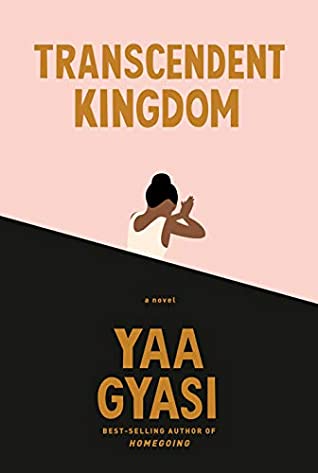 This follow-up to Gyasi’s dazzling, centuries-spanning linked story collection, Homegoing, won’t be out in the UK until March 2021, but I couldn’t resist reading an e-copy of the American edition (Knopf) from Edelweiss. It’s altogether a more subdued and subtle book, but its treatment of themes of addiction, grief, racism and religion is so spot on that it packs a punch. Gifty is a PhD student at Stanford, researching pleasure and reward circuits in the mouse brain. She gets mice hooked on a sugary drink and then performs experiments to see if she can turn off their compulsion to keep pressing a lever for more. Sometimes when they press the lever they get an electric shock. Certain mice give up; others never will. Why?
People who know Gifty well assume she chose her field because of a personal tragedy. When she was 10, her 16-year-old brother, Nana, a high school basketball star in this Ghanaian-American family’s Alabama town, died of an opiate overdose. He’d gotten addicted to prescription drugs after a sports injury. At one level, Gifty acknowledges she is trying to atone for her brother’s death, but she won’t see it in those terms. An intensely private person, she shoulders almost impossible burdens of grief and responsibility for her mother, who has plunged into depression and, when she comes to live with Gifty, spends all her time in bed.
The most compelling aspect of the novel for me was Gifty’s attitude towards the religion of her childhood. Though they were the only black family at their Pentecostal church, she was a model believer, writing prayers in her journal, memorizing scriptures, and never doubting that everything happens for a reason. Nana’s death shattered it all. Though she now looks to science for answers, she misses the certainty she once had: that she was saved, that humans are special, that someone was looking out for her and her family, that it all mattered. I highlighted dozens of passages, but it’s possible the book won’t mean quite as much to readers for whom there’s no personal resonance. The complex mother–daughter relationship is an asset, and musings on love and risk are tenderly expressed. I wanted a more climactic conclusion to take this into 5-star territory, but I’ve still added it to my Best of 2020 shelf.
Favorite lines:
the species Homo sapiens, the most complex animal, [is] the only animal who believed he had transcended his Kingdom, as one of my high school biology teachers used to say.
At times, my life now feels so at odds with the religious teachings of my childhood that I wonder what the little girl I once was would think of the woman I’ve become … I am looking for new names for old feelings. My soul is still my soul, even if I rarely call it that.
the more I do this work the more I believe in a kind of holiness in our connection to everything on Earth. Holy is the mouse.
My rating:
I read an advanced e-copy via Edelweiss.
The Animals in That Country by Laura Jean McKay
 McKay has a PhD in literary animal studies and serves as an animal expert and presenter on Australia’s ABC radio show Animal Sound Safari. Pair her academic background with the fact that this shares a title with a Margaret Atwood poetry collection and you’ll have some idea of what to expect here: mysterious but mostly believable speculative fiction that hinges on human communication with animals.
Jean Bennett isn’t your average grandma: a wise-cracking alcoholic, she drives the tourist train through the Australian wildlife park her daughter-in-law manages but wishes she could be a fully fledged ranger. Her ex-husband, Graham, left her and went down south, and eventually their only son Lee did the same. Now all Jean has left is Kim, her six-year-old granddaughter. Jean entertains Kim by imagining voices for the park’s animals. This no longer seems like a game, though, when news filters through of the “zooflu,” which has hit epidemic levels and has as a main symptom the ability to understand what animals say.
When Kim is kidnapped, Jean steals a camper van and takes Sue the dingo along to help her find her granddaughter. “There’s a new normal now,” a bus driver tells her. “And around here, not wearing a mask means you’ve gone animal. I’d put on my protective if I was you. Put that mutt in a cage.” It was uncanny reading this in the midst of a pandemic, but the specifics of McKay’s novel are hard to grasp. The animal language isn’t audible, necessarily, but a combination of smells, noises and body language. For a long time, they seem like pure nonsense, but gradually they resemble a sort of rough poetry. Here’s one example from Sue:
My front end
takes the food
quality.
Muzzle
for the Queen
(Yesterday).
(Sue usually calls Jean “Queen” or “Mother,” showing that she respects her authority, and “Yesterday” is frequently used to suggest a primitive sense of the past or of an older person.)
As entertaining a protagonist as Jean is, I lost interest in her road trip. If you focus on the journey into the wilderness and don’t mind a sudden ending, you may find this a worthwhile heir to Hollow Kingdom by Kira Jane Buxton and The Road by Cormac McCarthy.
My rating:
I read a proof copy for a Nudge review, but it’s never shown up on their website.
Entangled Life: How Fungi Make Our Worlds, Change Our Minds, and Shape Our Futures by Merlin Sheldrake
 I first heard about Sheldrake through Robert Macfarlane’s Underland. He struck me as a mad genius – an impression that was only strengthened by reading his detailed, enthusiastic book about fungi. Sheldrake researches fungal life in the tropical forests of Panama, accompanies truffle hunters in Italy, takes part in a clinical study on the effects of LSD (derived from a fungus), observes lichens off the coast of British Columbia, and attends a conference in Oregon on Radical Mycology. But more than a travel memoir, this is a work of science – there are over 100 pages devoted to notes, bibliography and index.
Basic information you’ll soon learn: mushrooms are only the fruiting bodies of fungi; under the ground is the material bulk, the mycelium, a sprawling network of hyphae. In what’s sometimes called the “Wood Wide Web,” fungal networks link the trees in a forest, and join up with plants, such as in lichens. “I feel a … sense of vertigo when I think about the complexity of mycorrhizal relationships – kilometers of entangled life – jostling beneath my feet,” Sheldrake confesses. He gives examples of fungi navigating and solving problems – what of our concept of intelligence if a creature without a brain can do such things?
Fungi are very adaptable to extreme conditions. Research is underway to grow edible mushrooms on some of our most troublesome waste, such as used diapers (nappies) and cigarette butts. And, of course, for millennia we’ve relied on certain fungi – yeasts – to create products like bread and beer. Sheldrake is a very hands-on writer: When he wants to know something, he does it, whether that’s scrumping Isaac Newton’s apples in Cambridge and fermenting the juice into cider at home or growing mushrooms on a copy of this very book.
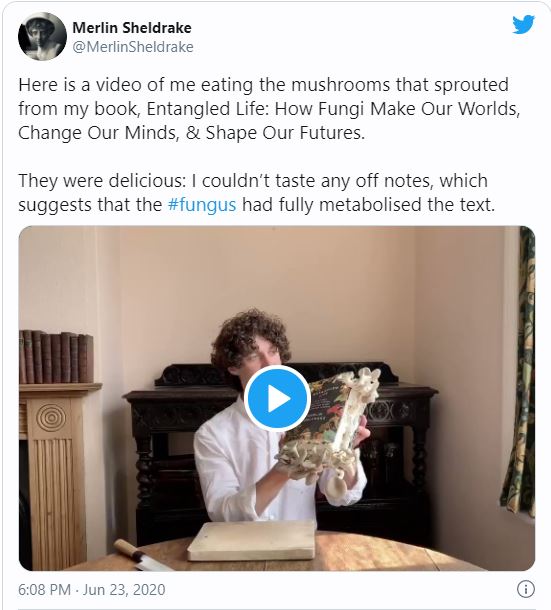
During the month I was reading this, I felt like I kept coming across references to fungi. (I even had a patch of ringworm!)

It’s a perspective-altering text, but one that requires solid concentration. I’ll confess that at times it went over my head and I wished for a glossary and diagrams. A greater than average interest in biology and/or botany would thus be a boon to a potential reader. But if you can keep up, the book will elicit many a cry of “wow!” and “what?!” I kept launching “did you know?” questions at my husband, especially about the zombie fungi that parasitize insects. What a strange and wonderful world.
Favorite lines: “Paying more attention to animals than plants contributes to humans’ plant-blindness. Paying more attention to plants than fungi makes us fungus-blind.”
My rating:
My thanks to Bodley Head for the free copy for review.
Islands of Mercy by Rose Tremain
 I read this back in June to prepare for writing a profile of Tremain for a forthcoming issue of Bookmarks magazine. Here’s the summary I wrote: “In Bath, England in 1865, 24-year-old nurse Jane Adeane is nicknamed ‘The Angel of the Baths’ for her healing touch. If she marries Dr. Valentine Ross, a colleague of her surgeon father, she can earn respectability – but will have to hide her love for Julietta, a married woman. Meanwhile, Dr. Ross’s brother, Edmund, a naturalist following in the footsteps of Alfred Russel Wallace, has journeyed to Borneo. Ill with malaria, he is taken in by British eccentric Sir Ralph Savage, a lover of native men and benevolent local rajah who funds infrastructure projects like a paved road and a hospital. Exiled or inwardly tortured for loving the wrong people, Tremain’s characters search for moments of wonder and comfort – whether those come in a primitive hut in the Malay Archipelago or in a cozy tearoom in Bath.”
It’s a slightly odd title, but tells you a lot about what Tremain is doing in this 14th novel. Often at the mercy of forces internal and external, her outcast characters look for places where they can find rest and refuge after a time of suffering. Will they, in turn, extend mercy? The split perspective and the focus on people who have to hide their sexuality are most similar to Sacred Country. The Victorian tip of the hat is mostly directed, I think, to George Eliot; of recent work, I was reminded of The Doll Factory and The Essex Serpent. I especially liked Jane’s painter aunt, Emmeline, and Clorinda, the Irish woman whose opening of a tearoom sets the plot going. The settings are surprising and vivid, and if Tremain doesn’t quite bring them and their story lines together seamlessly, she is still to be applauded for her ambition. This is probably my joint favorite of her novels that I’ve read so far, with The Road Home.
Favorite lines:
We must be unconventional in our joys and find them wherever we can.
life, so often so cruel in the way it thrust the human soul into prisons from which there seemed to be no escape, could sometimes place it athwart an open door.
My rating:
I read an advanced e-copy via NetGalley.
Between Light and Storm: How We Live with Other Species by Esther Woolfson
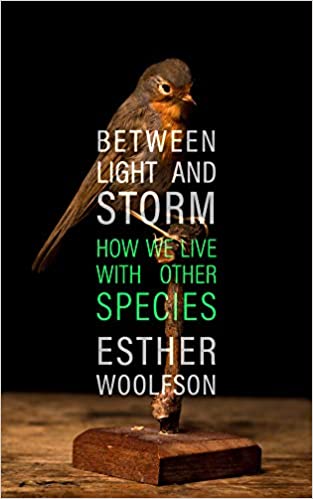 If you’ve read Woolfson’s Corvus, you’ve already met Chicken, an orphaned rook she raised. For over 31 years, Chicken was a constant presence in her home. The recently departed bird is the dedicatee of her new book, feted as “Colleague, companion, friend.” (No mere pet.) Relationships with these creatures with whom she shared her life led her to think differently about how we as humans conceive of the animal world in general. “If I had ever believed humans to be the only ones to live profound and interconnected lives, I couldn’t any more. … If we’re the gods now, shouldn’t we be better than we are?” From her introduction, it’s clear that her sympathy toward the more-than-human world extends even to spiders, and her language throughout – using words like “who” and “his” in reference to animals, rather than “that” or “its” – reinforces the view that all species are equally valuable.
Or, at least, should be. But our attitudes are fundamentally distorted, Woolfson believes, and have been since the days of Aristotle (whose Ladder of Nature is an origin of the ideas that nature is there for man to use) and the Old Testament writers (one of the two creation accounts in Genesis established the idea of “dominion”). From cave paintings to animal sacrifice, intensive farming to fur coats, taxidermy to whaling, she surveys what others have thought and said about how animals are, or should be, perceived. There was more of an academic tone to this book than I expected, and in early chapters I found too much overlap with other works I’ve read about deep time (Time Song, Surfacing, Underland again!).
I most appreciated the fragments of nature writing and memoir and would have liked more in the way of personal reflection. Woolfson’s perspective – as a Jewish woman in Scotland – is quite interesting. She is clearly troubled by how humans exploit animals, but mostly recounts others’ reasoning rather than coming to conclusions of her own. (Though there is a brilliant takedown of the gender politics of Watership Down.) It’s a book that demands more time and attention than I was able to give just now. As I only skimmed it, I’m going to refrain from assigning a rating and will pass this on to my husband and return to it one day. [I do wish the title, on its own (subtitle aside), was more indicative of the contents.]
My thanks to Granta for the free copy for review.
Which of those 600+ September releases can you recommend?
Short Stories in September, Part II: Adichie, Shanahan & More
Septembers are for making a bit of an effort to read short story collections, which otherwise tend to sit on my shelves unread. I reviewed three collections earlier in the month, and have gotten through another five since then.
Let’s start with the good stuff.
The Thing Around Your Neck by Chimamanda Ngozi Adichie (2009)
 My third by Adichie this year, and an ideal follow-up to Half of a Yellow Sun and Americanah because it reworks or anticipates themes and settings from both novels. For instance, the former was in my mind while reading “Ghosts,” in which a retired mathematics professor meets an old colleague he assumed had died during the Biafran War. “Cell One” and “A Private Experience” picture a Nigeria rife with violence and rioting. The missing are presumed dead and the imprisoned are in danger of being ‘disappeared’. I was reminded of Americanah while reading “Imitation” and “On Monday of Last Week,” in which Nigerian women in Philadelphia tire of submission to their husbands and make their own life changes.
Characters hope to win the visa lottery to the USA, adjust to an arranged marriage, fret over a plane crash back home, or dare to speak out about mistreatment of women. African-American women’s freedom is attractive by comparison. The final story, “The Headstrong Historian,” has the most expansive sense of time: it opens in what feels like an ancient tribal setting – before the next generation attended Anglican mission school. A third-generation character rescues her family’s story, reclaiming her African heritage while taking advantage of Western education. I was especially charmed by two stories in the second person, including the title story, which refers not to a necklace but to a burden of depression. There’s not a dud among the dozen here. Adichie has won me as a loyal fan. [From free bookshop]
Carrying Fire and Water by Deirdre Shanahan (2020)
 “Why do people travel? … I suppose to lose part of themselves. Parts which trap us. Or maybe because it is possible, and it helps us believe there is a future.”
These sixteen stories, split fairly evenly between first- and third-person perspectives, focus on women’s lives after. After a breakup, a death, an affair, a miscarriage or sexual abuse, they have to assimilate the trauma and reevaluate life. Most of the characters are based in England or Ireland, but other places are frequent points of reference: a beach holiday in Turkey in “Grievous Bodily Harm,” memories of life in Tokyo in “Araiyakushimae,” and wanderings around the USA in “Lost Children.” This gives the collection a wide scope, while the overall air of melancholy lends tonal consistency.
There are no speech marks, so dialogue flows naturally into exposition. The similarity of the protagonists and the delicate writing threatened to make the stories blend into one in my mind, but one per sitting made a perfect dose. A few standouts: in “Foraged Things,” Lia meets a man searching for mushrooms in the wood; in “Breakfast with Rilke,” hitchhikers look for love and adventure in continental Europe; and in “The Stars Are Light Enough,” a substitute teaching King Lear is alarmed when a problem student goes missing.
My thanks to Splice for the free copy for review.
But these next three, alas, were pretty lackluster reads for me. All:
Your Duck Is My Duck by Deborah Eisenberg (2018)
 Who could resist such a title and cover?! Unfortunately, I didn’t warm to Eisenberg’s writing and got little out of these stories, especially “Merge,” the longest and only one of the six that hadn’t previously appeared in print. The title implies collective responsibility and is applied to a story of artists on a retreat in Europe. “The Third Tower” has a mental hospital setting. In “Recalculating,” a character only learns about an estranged uncle after his death. The two I liked most were “Taj Mahal,” about competing views of a filmmaker from the golden days of Hollywood, and “Cross Off and Move On,” about a family’s Holocaust history. But all are very murky in my head. (See Susan’s more positive review.) [Free from a neighbor]
Learning to Talk by Hilary Mantel (2003)
 Last year I loved reading Mantel’s collection The Assassination of Margaret Thatcher. In comparison, these six first-person stories felt like autobiographical castoffs. (They were individually published in various periodicals between 1987 and 2002 and then collected as a follow-up to her memoir, Giving Up the Ghost, an excerpt from which closes this book.) We get a child’s perspective on village life in the North of England with a lodger, a stepfather and a mean dog. My two favorites were the title story, about taking elocution lessons, and “Third Floor Rising,” about an 18-year-old’s first job in a department store. [Public library]
First Love, Last Rites by Ian McEwan (1975)
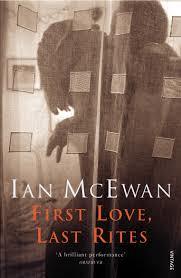 There’s a nastiness to these early McEwan stories that reminded me of Never Mind by Edward St. Aubyn. The teenage narrator of “Homemade” tells you right in the first paragraph that his will be a tale of incest. A little girl’s body is found in the canal in “Butterflies.” The voice in “Conversation with a Cupboard Man” is that of someone who has retreated into solitude after being treated cruelly at the workplace (“I hate going outside. I prefer it in my cupboard”). “Last Day of Summer” seems like a lovely story about a lodger being accepted as a member of the family … until the horrific last page. Only “Cocker at the Theatre” was pure comedy, of the raunchy variety (emphasis on “cock”). You get the sense of a talented writer whose mind you really wouldn’t want to spend time in; had this been my first exposure to McEwan, I would probably never have opened up another of his books. [Public library]
I’m still much more likely to gravitate towards novels rather than short stories because I find story collections so hit and miss; rarely do I find one that I enjoy all the way through.
Can you think of any short story authors I might like?
Catching Up on Review Books: Antlers, Arnett, E. Williams, Yamboliev
Four July–August releases: Scottish nature writing, the quirky story of a family taxidermy business in Florida, a dual-timeline novel set at an unusual dictionary’s headquarters, and a critical and personal response to Jeffrey Eugenides’ Middlesex.
Antlers of Water: Writing on the Nature and Environment of Scotland, edited by Kathleen Jamie
 This nature writing anthology of essays, poems and visual art drew me because of contributor names like GP Gavin Francis (reviewed: Shapeshifters), Amy Liptrot (the Wainwright Prize-winning memoir The Outrun), singer/songwriter Karine Polwart, and Shetland chronicler Malachy Tallack (reviewed: The Un-Discovered Islands and The Valley at the Centre of the World), not to mention editor Kathleen Jamie. Archaeology and folk music evoke the past, while climate change scenarios inject a sense of a menacing future. Seabirds circle and coastal and island scenery recurs. Entries from Alec Finlay’s “A Place-Aware Dictionary” disguise political points under tongue-in-cheek language, as in a definition of foraging: “Later sometimes referred to as the Brexit Diet.” The (sub)urban could be more evident, and I didn’t need two bouts of red deer sex, but there’s still a nice mix of tones and approaches here.
Six best pieces (out of 24): Chris Powici on wind turbines and red kites at the Braes of Doune; Jacqueline Bain on how reduced mobility allows her to observe wasps closely; Jim Crumley on sea eagle reintroductions and the ancient sky burials that took place at the Tomb of the Eagles; Jen Hadfield on foraging for whelks at the ocean’s edge, in a run-on hybrid narrative; Sally Huband on how persecution of ravens and of women (still not allowed to take part in Up Helly Aa festivities) continues on Shetland; and Liptrot on how wild swimming prepared her for childbirth and helped her to recover a sense of herself separate from her baby. And if I had to pick just one, the Huband – so brave and righteously angry.
Favorite lines:
“Compromises need to be made. An overlap between the wild and the human has to be negotiated and managed. … So let’s play merry hell with the distinction between what counts as wild and what counts as human, between what’s condemned as a visual obscenity and what’s seen as a marvel of the age. Let’s mess up the boundaries and get a new measure of ourselves as a species.” (Powici)
inspiration to get out walking again: “Don’t wait / thinking you’ve seen it all already … don’t wait thinking you need better boots / or a waterproof that’ll keep out the rain. / It won’t. Don’t wait.” (“Water of Ae” by Em Strang)
My rating:
My thanks to Canongate for the free copy for review.
Mostly Dead Things by Kristen Arnett
“We couldn’t ever leave roadkill behind. Something inside us always made us stop to pick up dead things.”
 After her father’s suicide, Jessa-Lynn Morton takes over the family taxidermy business in central Florida. Despite her excessive drinking and grief over both her father and her best friend and long-time on-and-off girlfriend (also, inconveniently, her brother’s wife) Brynn, who recently took off, she’s just about holding it together. That is, until 1) her mother takes to composing interspecies orgies and S&M scenes in the shop window and 2) her niece and nephew, Lolee and Bastien, start bringing in specimens for taxidermy that they haven’t exactly obtained legally. Gallery owner Lucinda Rex takes an interest in her mother’s ‘art’ and is soon a new romantic interest for Jessa. But the entire family is going to have to face its issues before her professional and love life can be restored.
This debut novel’s title, cover and premise were utterly irresistible to me, and though I loved the humid Florida setting, it was all a bit too much. At 200 pages this could have been a razor-sharp new favorite, but instead there was a lot of sag in its 350+ pages. Alternating chapters based around mounting particular animals give glimpses into the family’s past but mostly have Jessa mooning over Brynn. Her emotional journey starts to feel belabored; it’s as if an editor tried to rein in Arnett’s campy glee at the dysfunctional family’s breakdown and made her add in some amateur psychoanalysis, and for me this diluted the quirky joy.
Skinning and sex scenes are equally explicit here. This never bothered me, but it should go without saying that it is not a book for the squeamish. It’s when sex and taxidermy mix that things get a little icky, as in her mother’s X-rated tableaux and a line like “Often I found myself comparing the limber body of a deer with the long line of [Lucinda’s] legs or the strong cord of her neck.” Believe it or not, this is not the first queer taxidermy novel I’ve read. The other one, English Animals by Laura Kaye, was better. I’d wanted another Swamplandia! but got something closer to Black Light instead.
My rating:
My thanks to Corsair for the free copy for review.
The Liar’s Dictionary by Eley Williams
 Mallory is five years into an internship at Swansby House, the London headquarters of Swansby’s dictionary. The dictionary is known for being unfinished – too many of its lexicographers left for WWI and never returned – and for having made-up words. In 1899, Peter Winceworth, the butt of jokes among his colleagues, started composing mountweazels (fake entries) and inserting them into the dictionary. In the contemporary story line, Mallory’s job is to remove the mountweazels as the dictionary is prepared for digitization. But her attention is distracted by anonymous bomb threats and by lingering shame about her sexuality – Mallory thinks she’s “out enough,” but her girlfriend Pip begs to differ.
Chapters are headed with vocabulary words running from A to Z, and alternate between Mallory’s first-person narration and a third-person account of Winceworth’s misadventures at the turn of the twentieth century. In any book with this kind of structure I seem to prefer the contemporary strand and itch to get back to it, though there is a quite astounding scene in which Winceworth intervenes to help a choking pelican. Events at Swansby House resonate and mirror each other across the dozen decades, with both main characters emerging with a new sense of purpose after an epiphany that life is about more than work. Though silly in places, this has a winning love of words and characters you’ll care about.
A favorite made-up word: “Mammonsomniate: to dream that money might make anything possible.”
Readalikes: Enter the Aardvark by Jessica Anthony and Boxer, Beetle by Ned Beauman
My rating:
My thanks to William Heinemann for the proof copy for review.
Looking Was Not Enough: Jeffrey Eugenides’ Middlesex by Irena Yamboliev
 When I worked in a university library and read Middlesex during quiet evenings on the circulation desk in 2009, a colleague asked me, “Is that about the London borough?” My reply: “Er, no, it’s about a hermaphrodite.” That’s an off-putting, clinical sort of word, but it does appear in the first paragraph of this family saga with a difference, after the mythological intensity and medical necessity implied by the killer opening line: “I was born twice: first, as a baby girl, on a remarkably smogless Detroit day in January of 1960; and then again, as a teenage boy, in an emergency room near Petoskey, Michigan, in August of 1974.”
Cal, born Calliope but now living as a man and working in the Foreign Service, recounts three generations of family history, from Greece to Detroit to Berlin. “Because … their parents were dead and their village destroyed, because no one in Smyrna knew who they were,” brother and sister Lefty and Desdemona became lovers and got married on the boat over to America. They were his grandparents. Add to that his parents’ first-cousin marriage and you see how inbreeding played genetic havoc and made way for Callie/Cal.
 I intended to reread Middlesex, which I consider one of my all-time favorite books, but only made it through 60 pages on this occasion. Still, Yamboliev, a Bulgarian-American who teaches at Stanford, reminded me of everything I love about it: the medical theme, the exploration of selfhood, the playful recreation of the past. Drawing parallels with her own family’s move to America, she ponders the disconnection from the home country and the creation of a new life story. “To tell ourselves where we come from—to narrate—is to find a pattern retroactively.” She also looks at literary precursors like Ovid’s Metamorphoses, Herculine Barbin’s memoir, and Balzac’s and Barthes’s writings on a castrato. “Does transformation make the self discontinuous?” is one of her central questions, and she likens Cal’s situation to that of trans men who have to train themselves to speak, dress and act in a convincingly masculine way.
This is part of Fiction Advocate’s “Afterwords” series; all its monographs do a wonderful job of blending literary criticism, enthusiastic appreciation, and autobiographical reflection as life dovetails with (re)reading. I’ve previously reviewed the Fiction Advocate books on Blood Meridian, Fun Home, and The Year of Magical Thinking in this post, and the ones on Karl Ove Knausgaard’s My Struggle and Cheryl Strayed’s Wild in this one.
My rating:
My thanks to Fiction Advocate for the free e-copy for review.
 Bookish Beck = Rebecca Foster. American transplant to England. Freelance proofreader and book reviewer.
