Fourth Blog Anniversary
I launched my blog four years ago today. Is that ages, or no time at all? Like I said last year, it feels like something I’ve been doing forever, and yet there are bloggers out there who are coming up on a decade or more of online writing about books.

By Incabell [CC BY-SA 4.0 (https://creativecommons.org/licenses/by-sa/4.0)%5D.
This is my 542nd post, so the statistics tell me that I’ve been keeping up an average of just over 2.5 posts a week. Although I sometimes worry about overwhelming readers with ‘too many’ posts, I keep in mind that a) no one is obliged to read everything I post, b) a frequently updated blog is a thriving blog, and c) it only matters that it’s a manageable pace for me.
In the last year or so, I’ve gotten more involved in buddy reads and monthly challenges (things like Reading Ireland Month, 20 Books of Summer, R.I.P., Margaret Atwood Reading Month, and Novellas and Nonfiction in November); I’ve continued to take part in literary prize shadow panels and attend literary events when I can. I’ve hosted the Library Checkout for nearly a year and a half now and there are a few bloggers who join in occasionally (more are always welcome!). The posts I most enjoy putting together are write-ups of my travels, and seasonal and thematic roundups, which are generally good excuses to read backlist books from my own shelves instead of getting my head turned by new releases.
Some statistics from the past year:
 My four most viewed posts were:
The Diary of a Bookseller by Shaun Bythell
Clock Dance by Anne Tyler: Well…
Mixed Feelings about Elena Ferrante
I got the most likes in December 2018, and the most unique visitors and comments in August.
 My four favorite posts I wrote in the past year were:
A Trip to Wigtown, Scotland’s Book Town
Painful but Necessary: Culling Books, Etc.
Why We Sleep … And Why Can’t I Wake Up?
A President’s Day Reading Special (No Trump in Sight)
Thanks to everyone who has supported me this past year, and/or all four years, by visiting the site, commenting, re-tweeting, and so on. You’re the best!
How I Did on My 2018 Reading Goals & The Year’s Cover Trends
The year-end coverage continues!
So, how did I do with the 2018 reading goals I set for myself about this time last year? Rather poorly! is the short answer.
- I only read one book that might be considered a travel classic (by Patrick Leigh Fermor), though I did read some modern travel books.
 I only read Ali and the first half of a biography of May Sarton. What I’d envisioned being a monthly biography feature on the blog turned into a one-off.
- I need to work out my literature in translation percentage and compare it to last year’s to see if I’ve improved at all.
However, I do feel that I did well at reading my own books, as boosted by my 20 Books of Summer being chosen exclusively from my own shelves. Once I’m back from America I’ll have to do another full inventory and see how many unread books are still in the house, as compared to the 327 at this time last year.
Out of my 31 most anticipated reads of the second half of the year, I read 20 (of which 5 were at least somewhat disappointing), abandoned 2, still have 2 to read, lost interest in 1, have 1 in progress, and can’t find 5. For the whole year, the statistics are at 38/61 read (13 disappointments = more than 1/3 – that’s really bad and needs to be fixed!), 7 DNF, 4 still to read, 9 not found, 2 lost interest, and 1 in progress.
As for my non-reading-related goal … my accordion-playing fell by the wayside in July because I went away to America for three weeks unexpectedly, and after that never got back into the habit of daily practice and biweekly lessons the other side of Reading. I’d still like to pick it back up in the near future. I was at a point where I knew five notes and a few bass chords and could play both hands on a number of very simple tunes.

The poor cat was alarmed at yet another folk instrument entering his abode.
This Year’s Cover Trends
Mostly flora, which I noticed before 2018 had even begun.


The other one that kept jumping out at me was rubber gloves. Weird!


I’ll be back on the 26th to begin the countdown of my favorite books of the year, starting with nonfiction.
Merry Christmas!
Vocabulary Words I Learned from Books This Year
These are in chronological order by my reading.
- borborygmi = stomach rumblings caused by the movement of fluid and gas in the intestines
- crapula = sickness caused by excessive eating and drinking
- olm = a cave-dwelling aquatic salamander
~The Year of the Hare, Arto Paasilinna
- befurbelowed = ornamented with frills (the use seems to be peculiar to this book, as it is the example in every online dictionary!)
~The Awakening, Kate Chopin
 roding = the sound produced during the mating display of snipe and woodcock, also known as drumming
- peat hag = eroded ground from which peat has been cut
~Deep Country, Neil Ansell
- rallentando = a gradual decrease in speed
~Sight, Jessie Greengrass
- piceous = resembling pitch
~March, Geraldine Brooks
- soffit = the underside of eaves or an arch, balcony, etc.
~The Only Story, Julian Barnes
 lemniscate = the infinity symbol, here used as a metaphor for the pattern of pipe smoke
~The Invisible Bridge, Julie Orringer
- purfling = a decorative border
- lamingtons = sponge cake squares coated in chocolate and desiccated coconut (sounds yummy!)
~The Life and Loves of Lena Gaunt, Tracy Farr
- ocellated = having eye-shaped markings
~Red Clocks, Leni Zumas
- balloonatic (WWI slang) = a ballooning enthusiast
- skinkling = sparkling
- preludial = introductory
- claustral = confining
- baccalà = salted cod
~The Incendiaries, R. O. Kwon
(There were so many words I didn’t immediately recognize in this novel that I thought Kwon must have made them up; preludial and claustral, especially, are words I didn’t know existed but that one might have extrapolated from their noun forms.)
 bronies = middle-aged male fans of My Little Pony (wow, who knew this was a thing?! I feel like I’ve gone down a rabbit hole just by Googling it.)
- callipygian = having well-shaped buttocks
~Gross Anatomy, Mara Altman
- syce = someone who looks after horses; a groom (especially in India; though here it was Kenya)
- riem = a strip of rawhide or leather
- pastern = a horse’s ankle equivalent
~West with the Night, Beryl Markham
- blintering = flickering, glimmering (Scottish)
- sillion = shiny soil turned over by a plow
~The Light in the Dark: A Winter Journal, Horatio Clare
- whiffet = a small, young or unimportant person
~Ladder of Years, Anne Tyler
- trilliant = a triangular gemstone cut
- cabochon = a gemstone that’s polished but not faceted
- blirt = a gust of wind and rain (but here used as a verb: “Coldness blirted over her”)
- contumacious = stubbornly disobedient
~Four Bare Legs in a Bed, Helen Simpson
 xeric = very dry (usually describes a habitat, but used here for a person’s manner)
~Unsheltered, Barbara Kingsolver
- twitten = a narrow passage between two walls or hedges (Sussex dialect – Marshall is based near Brighton)
~The Power of Dog, Andrew Marshall
- swither (Scottish) = to be uncertain as to which course of action to take
- strathspey = a dance tune, a slow reel
~Stargazing, Peter Hill
- citole = a medieval fiddle
- naker = a kettledrum
- amice = a liturgical vestment that resembles a cape
~The Western Wind, Samantha Harvey
 pareidolia = seeing faces in things, an evolutionary adaptation (check out @FacesPics on Twitter!)
~The Overstory, Richard Powers
Have you learned any new vocabulary words recently?
How likely am I to use any of these words in the next year?
An Untranslatable Term for International Translation Day
Today is International Translation Day, so I’m sharing my favorite spread from In Other Words: An Illustrated Miscellany of the World’s Most Intriguing Words and Phrases by Christopher J. Moore (foreword by Simon Winchester), which came out from Modern Press last year. It’s a collection of the linguist/translator’s 80 favorite untranslatable expressions.
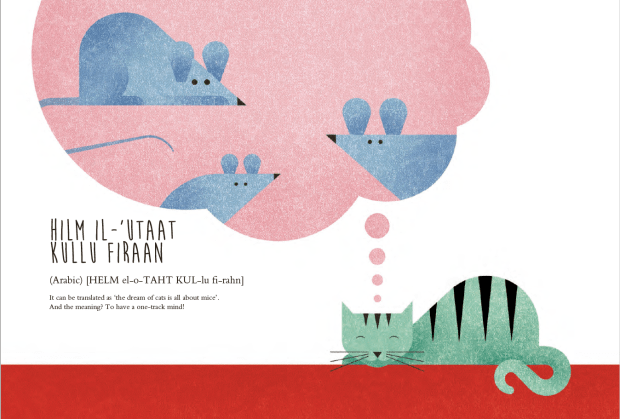
#Internationaltranslationday #InOtherWords @modernbooks
My thanks to Alison Menzies PR for sending a copy of the e-book.
These Days
It’s mid-September and crunch time: my husband intends to hand in a complete draft of his PhD thesis next week. He’s been studying part time while working full time and technically has another year to submit, but this month is his self-imposed deadline before the frantic busyness of a new academic year. For weeks now, he’s been going to campus just once or twice a week, working mostly at home out of a makeshift office in our summer house, to which he reels an extension lead each morning so he can plug in his laptop and desk lamp. There’s no Internet signal that far from the house, so it’s a distraction-free zone – or at least the distractions are mostly pleasant ones like birdsong and the cat padding in and out. He’s been known to stay out there until well past 10 at night working on his writing and mapping.
It’s been nice for me to have a bit of company at home during the day (though it’s definitely for the best that we work in different spaces). We reconvene for morning coffee and afternoon tea and also break for lunch. Twice a day I’ll traipse out to the summer house with a tray of hot drinks and snacks and a tote bag of books over my shoulder to spend an hour or so relaxing before getting back to my proofreading or other work upstairs. I’ve tried to be kind and supportive through all the catastrophic announcements about the results being wrong, the statistics going screwy, and the project being basically impossible to finish.
On a practical level, I help out by preparing very simple meals – bean burgers from the freezer section at Aldi plus homemade coleslaw and corn-on-the-cob; fresh oven chips with a fried egg and steamed broccoli – or at least doing the sous chef chopping for complicated ones. My husband cooked for himself during his last two years of uni and enjoys improvising meals, so he’s done pretty much all the cooking for the 11+ years of our marriage. When I was in America I picked up a “Vidalia Chop Wizard” from Bed Bath & Beyond. Some will be thinking “what a pointless, cheaty device!” – but I knew without it I’d never get more involved in cooking, especially because I hate to have lingering savory smells on my fingers.

It’s been a stressful couple of months for my husband, and that stress has of course spilled over to me somewhat. Still, I’m trying not to wish these days away, even as I look forward to the relief of his thesis being finished. It’s never good to wish your life away. I even tried to do some peaceful sitting in nature (i.e., our garden) last week, which led to this short Guardian Country Diary-style piece. (However, you’d better believe I have plans for the post-PhD evenings and weekends. After all these weeks of letting my hubby off the hook, the chores have piled up. I envision a deep clean of the kitchen, tidying up all the little half-finished projects that are sitting around, gardening, banking, and much more.)
This past Saturday we gave ourselves the day off to attend Newbury Real Ale Festival. It’s held just across the canal from our house, so we could hardly pass up the opportunity to sample 146 beers and 118 ciders (my tipple of choice). The music was terrible but the weather stayed decent for much of the five hours we were there. Along with plenty of reading and snacking on crisps, I had the chance to try six ciders, which ranged from the almost undrinkable (beetroot and orange flavor sounded interesting!) to the sublime.


Appropriately enough, the best of the bunch was from Thistly Cross, a cider company based in Scotland: next Wednesday, to celebrate (we hope) the thesis being handed in, we’re off to Edinburgh for a long weekend. It’s something of a work trip for my husband – he’s traveling on to the Cairngorms for a two-day PhD student workshop while I stay behind at our Airbnb – but we’ll have a couple of days to enjoy the city together as well as two very long train rides on which to sink into books.
You’ll be unsurprised to learn that I started planning what books I’d pack weeks ago: some on a train theme; some by or about Scottish writers; some set in Scotland. I’ll also take at least one October review book (probably Barbara Kingsolver’s Unsheltered or Sarah Perry’s Melmoth) and one of the multiple library reservations that have arrived for me all at once (most likely John Boyne’s A Ladder to the Sky or Melissa Harrison’s All Among the Barley).

I’ve been to Edinburgh twice before, but both trips were brief and the most recent one was in 2005. What should I see and do? Where should I eat? (I’ll have to find at least one meal out in the city on my own.) I plan to visit the Writers’ Museum for the first time, and may drop into the National Gallery again. Since I was too skint to do so in my early twenties, I’ll probably also treat myself to a tour of the Castle (though, 17 quid – really?!). Any other recommendations of secondhand bookshops, cafés, free/inexpensive attractions and casual dining establishments will be much appreciated!
August Thoughts (via Song Lyrics and Book Quotes)
Can’t believe I let the summer slip away again
Like watermelon juice dripping down my chin
It might be light enough for one last swim
If we hurry on down to the shore
A fool would ask for more
A fool would ask for more
~from “August” by Mark Erelli
Summer is winding down here in southern England. The chilly nights and mornings and the huge ripe blackberries tell us autumn will be here soon. Did I make enough of the summer? Or did I so ardently escape the heat, here and in America, that I didn’t let myself enjoy it?
 We didn’t end up making a summer pudding this year. It’s an old-fashioned, grown-up dessert made of almost nothing but white bread and fresh berries, but if you want to taste July in a bowl this is it. Sweetness from strawberries and raspberries; only just palatable sharpness from currants; smoothness from a generous pouring of cream. As my husband says each year, who knows how many more annual summer puddings we’ll get? Food traditions are as important a way of marking the passing of time and the seasons’ gifts as anything else.
~
I’ve had “August” by Mark Erelli, a New England folk singer/songwriter we discovered through The Darwin Song Project, in my head for weeks and weeks. It presents scenes from a languid summer evening that appeal to my nostalgia for my American childhood. More than that, though, its recurring line – “A fool would ask for more” – encourages me to be grateful for what I have and to appreciate these ordinary, fleeting moments.
“You’re one of those people who wants everything but what they have.” So Ruth, dying of breast cancer, skewers her best friend Ann, the narrator of Talk before Sleep by Elizabeth Berg. That line stung a little, because I fear it’s true of me. When I’m in America I’m silently contemptuous of the lavish lifestyle and the can-do attitude; as soon as I’m back in England I stew in my cluttered house and my shabby little life. I envy friends with design magazine-worthy homes (but I don’t want the hassle of owning a house), sweet kids (but I don’t want to have children), stable careers (but I don’t want a regular job), and comfortable habits not needled by environmental and ethical dilemmas (but once you know you can’t go back).
~
My five-year freelancing anniversary passed quietly at the end of July. Being a freelancer has all the perks you’d expect – no boss or co-workers, at least not in the traditional sense; no commute; flexibility; variety – but also some downsides you might not realize. In my case, it means I virtually never leave my house, and I’m sedentary and sitting most of the time. I don’t get vacation time or sick pay, I have to muddle through my taxes in two countries, and I put hours and hours of work into assignments that pay insultingly little.
When asked recently for advice about freelance writing, I warned that it is extremely difficult to make money from writing about books – so if you want to do it, be sure you’re just doing it for the love of books, and secure another source of income. For me that’s proofreading science journal articles. It’s something I’m good at and find just challenging enough to keep me stimulated, but if I’m honest I don’t really care about this work. It’s just a paycheck.
To put it simply, I’m bored. Some of my writing gigs have spanned the full five years, and I’m still doing exactly the same things. I’ve had a couple small pay rises, but I’m not earning significantly more than I was in 2013, even though I was recently named an associate editor at one of the magazines (an honorary title, alas). I feel restless and like I’m just waiting for the smallest signal to tell me I can drop everything. It would be a relief to let it all go. Julia Cameron captures this feeling in The Artist’s Way: “Restive in our lives, we yearn for more, we wish, we chafe. … We want to do something but we think it needs to be the right something, by which we mean something important.”
So really what I should be doing is aiming higher. I’m now a member of the National Book Critics Circle and have access to a document listing the pay rates for big-name venues, places that pay hundreds of dollars for book reviews and $1+/word for literary articles. But it often takes me months to get up the courage to pitch to a new publication, if I ever do it at all.
In Help Me! (out on September 6th), freelance journalist Marianne Power took on a different self-help book each month for a year to see if she could change her life for the better. One particularly rough month was all about Rejection Therapy. “I should have been constantly sending ideas to different publications but I didn’t. … I didn’t want to get rejected because I would take that as a confirmation of all the insecurities I had in my head – that I was a rubbish writer, that I had been lucky to get even this far, that I would never work again.”
That passage certainly resonated for me. No matter how many hundreds of reviews I write, I still barely trust myself to write another successful one. Temporary triumphs fade fast. Getting a pitch accepted at Literary Hub had been one of the highlights of my year, but pretty much as soon as the article was published on the website I felt deflated. It was a flash in the pan; a few comments and retweets and then it was forgotten before you know it.
I didn’t think I was a flighty person who needed a lot of novelty in my life. But Beryl Markham – lion hunter, horse trainer, aviatrix – has been reminding me that even if you have a good life that many would admire, even if you’d be a fool to ask for more, sometimes you still need a change. Here’s a passage from the formidable adventurer’s West with the Night: “I wonder if I should have a change – a year in Europe this time – something new, something better, perhaps. A life has to move or it stagnates. Even this life, I think. … it is no good anticipating regrets. Every tomorrow ought not to resemble every yesterday.”
My 35th birthday is coming up this autumn. It feels like time for a rethink. What do I want every tomorrow to look like? It’s all too easy to stick with what feels like a sure thing instead of launching into something new.
How do you ensure you’re appreciating your life but also challenging yourself with new things?
My Patchy Experience with Book Clubs
I know that a number of you have long-term, faithful book clubs. Boy, am I envious! You might find it surprising that I’ve only ever been in one traditional book club, and it wasn’t a resounding success. Partway through my time working for King’s College, London, an acquaintance from another library branch started the club. A group of five to eight of us from Library Services aimed to meet after work one evening a month at a Southbank venue or a staff room to discuss our latest pick. By poring over old e-mails and my Goodreads library, I’ve managed to remember 10 of the books we read between November 2011 and June 2013:
- Do Androids Dream of Electric Sheep?, Philip K. Dick [classic science fiction]
- The Little Shadows, Marina Endicott [Canadian historical fiction]
- A Spot of Bother, Mark Haddon [contemporary fiction]
- The Talented Mr. Ripley, Patricia Highsmith [classic suspense]
- The Vintner’s Luck, Elizabeth Knox [bizarre historical fiction/magic realism]
- What Was Lost, Catherine O’Flynn [contemporary fiction]
- Franny and Zooey, J.D. Salinger [classic short fiction]
- The Rabbi’s Cat, Joann Sfar [graphic novel in translation]
- Girl Meets Boy, Ali Smith [an update of Greek myth]
- Angel, Elizabeth Taylor [an obscure English classic]
That may well be the complete list. Although I was a member for 20 months until I quit to go freelance, we often only managed to meet every other month because we couldn’t find a mutually convenient free evening or no one had read the book in time. I was consistently frustrated that – even when our selections were only about 200 pages long – I was often one of the only people to have read the whole book.
Overall, the quality of books we chose struck me as mediocre: I rated half of these books 2 stars, and the rest 3 stars. (I think I was a harsher rater then, but it’s not a good sign, is it?) Perhaps this is part of the inevitable compromising that goes with book clubs, though: You humor other people in their choices and hope they’ll be kind about yours? My suggestion, for the record, was the pretty dismal Little Shadows, for which I got a free set of book club copies to review for Booktime magazine. But I also voted in favor of most of the above list.
Looking back, I am at least impressed by how varied our selections were. People were interested in trying out different genres, so we ranged from historical fiction to sci-fi, and even managed a graphic novel. But when we did get together for discussion there was far too much gossipy chat about work, and when we finally got around to the book itself the examination rarely went deeper than “I liked it” or “I hated all the characters.”
If it was profound analysis I was after, I got that during the years I volunteered at Greenbelt, an annual summer arts festival with a progressive Christian slant. I eagerly read the eclectic set of three books the literature coordinator chose for book club meetings in 2010 – Star of the Morning: The Extraordinary Life of Lady Hester Stanhope by Kirsten Ellis, The First Person and Other Stories by Ali Smith, and The Bridge of San Luis Rey by Thornton Wilder – and then as a literature volunteer for the next three years I read and prepared copious notes and questions about our festival “Big Read.” We did Exile by Richard North Patterson in 2011, Dark Eden by Chris Beckett in 2012 and So Many Ways to Begin by Chris Beckett in 2013, and each time I offered to chair the book club meetings.
Unfortunately, due at least in part to logistical considerations, these were run in the way many festival events are: a panel of two to five talking heads with microphones was at the front of the tent, sometimes on a raised dais, while the audience of whatever size sat towards the back. This created a disconnect between the “experts” and the participants, and with the exception of the McGregor meeting I don’t recall much audience input. I’ve mostly blanked out the events – as I tend to for anything that entails public speaking and nervous preparation for something you can’t control – but I was pleased to be involved and I should probably make more of this on my CV. It wasn’t your average book club setting, that’s for sure.
In recent years the closest thing I’ve had to a book club has been online buddy reading. The shadow panels for the Wellcome Book Prize and Sunday Times Young Writer of the Year Award fall into this category, as do online readalongs I’ve done for several Iris Murdoch novels and for C.S. Lewis’s Mere Christianity with various female family members. A few of us book bloggers chatted about Andrea Levy’s Small Island in an online document earlier this year, and my mom and I e-mailed back and forth while reading W. Somerset Maugham’s The Painted Veil in May. I’m also doing my last three of the #20BooksofSummer as online buddy reads, checking in occasionally on Twitter.
Of course, there are some inherent limitations to this kind of discussion – people read at different paces and don’t want to spoil the plot for others, and at some point the back-and-forth fizzles out – but it’s always been easier for me to organize my thoughts in writing, so I likely feel more comfortable contributing than I might in an in-person meeting.
This is all context for my decision to join my neighborhood book club next month. The club arose some months back out of our community’s Facebook group, a helpful resource run by a go-getting lady a few doors down from us. So far it’s turning out to be a small group of thirty- and fortysomething women who alternate meetings at each other’s houses, and the name they’ve chosen gives an idea of the tone: “Books, Booze and Banter.”
I made the mistake of not getting involved right at the start; I wanted to hang back and see what kind of books they’d choose. This means I wasn’t part of the early process of putting titles in a hat, so I’ve looked on snobbishly for several months as they lurched between crime and women’s fiction, genres I generally avoid. (Still, there were actually a couple books I might have joined them for had I not been in America and had they been readily available at the public library.) For many people a book club selection will be the only book they get through that month, so I can understand how they’d want it to be something ‘readable’ that they’d be happy to pick up anyway. Even though statistically I read 27 books a month, I’m still jealously protective of my reading time; I want everything I read to be worthwhile.
 So for September I managed to steer the group away from a poorly received historical novel of over 400 pages and the new Joël Dicker and onto Ladder of Years by Anne Tyler, which the bookstore chain Waterstones has been promoting heavily as one of their books of the month. I already had a charity shop copy in hand and the others liked the sound of it, so we’re all set for September 12th! Future months’ literary fiction choices look promising, too, so provided I enjoy the discussion and the camaraderie I plan to stick with it: a backlist Pat Barker novel I’ve not read, and Kirsty Logan and Jonathan Coe novels I’ve read before and won’t reread but will remind myself about briefly before the meetings.
I’m out of practice with this book club thing. My mother tells me that I have a lot to contribute but that I must also be open to what I’ll learn from other people – even if I don’t expect to. So I don’t want to set myself up as some kind of expert. In fact, I probably won’t even mention that I’m a freelance book reviewer and book blogger. Mostly I’m hoping to find some friendly faces around the neighborhood, because even though we’ve lived here just over two years I still only know a handful of names and keep myself to myself as I work from home. Even if I have to read books I wouldn’t normally, it’ll be worth it to meet more people.
What has your experience with book clubs (in person and online) been?
Painful but Necessary: Culling Books, Etc.
I’ve been somewhat cagey about the purpose for my trip back to the States. Yes, it was about helping my parents move, but the backstory to that is that they’re divorcing after 44 years of marriage and so their home of 13 years, one of three family homes I’ve known, is being sold. It was pretty overwhelming to see all the stacks of stuff in the garage. I was reminded of these jolting lines from Nausheen Eusuf’s lush poem about her late parents’ house, “Musée des Beaux Morts”: “Well, there you have it, folks, the crap / one collects over a lifetime.”


On the 7th I moved my mom into her new retirement community, and in my two brief spells back at the house I was busy dealing with the many, many boxes I’ve stored there for years. In the weeks leading up to my trip I’d looked into shipping everything back across the ocean, but the cost would have been in the thousands of dollars and just wasn’t worth it. Although my dad is renting a storage unit, so I’m able to leave a fair bit behind with him, I knew that a lot still had to go. Even (or maybe especially) books.
Had I had more time at my disposal, I might have looked into eBay and other ways to maximize profits, but with just a few weeks and limited time in the house itself, I had to go for the quickest and easiest options. I’m a pretty sentimental person, but I tried to approach the process rationally to minimize my emotional overload. I spent about 24 hours going through all of my boxes of books, plus the hundreds of books and DVDs my parents had set aside for sale, and figuring out the best way to dispose of everything. Maybe these steps will help you prepare for a future move.

The Great Book Sort-Out in progress.
When culling books, I asked myself:
- Do I have duplicate copies? This was often the case for works by Dickens, Eliot and Hardy. I kept the most readable copy and put the others aside for sale.
- Have I read it and rated it 3 stars or below? I don’t need to keep the Ayn Rand paperback just to prove to myself that I got through all 1000+ pages. If I’m not going to reread Jane Smiley’s A Thousand Acres, better to put it in the local Little Free Library so someone else can enjoy it for the first time.
- Can I see myself referring to this again? My college philosophy textbook had good explanations and examples, but I can access pithy statements of philosophers’ beliefs on the Internet instead. I’d like to keep up conversational French, sure, but I doubt I’ll ever open up a handbook of unusual verb conjugations.
- Am I really going to read this? I used to amass classics with the best intention of inhaling them and becoming some mythically well-read person, but many have hung around for up to two decades without making it onto my reading stack. So it was farewell to everything by Joseph Fielding and Sinclair Lewis; to obscure titles by D.H. Lawrence and Anthony Trollope; and to impossible dreams like Don Quixote. If I have a change of heart in the future, these are the kinds of books I can find in a university library or download from Project Gutenberg.
My first port of call for reselling books was Bookscouter.com (the closest equivalents in the UK are WeBuyBooks and Ziffit). This is an American site that compares buyback offers from 30 secondhand booksellers. There’s a minimum number of books / minimum value you have to meet before you can complete a trade-in. You print off a free shipping label and then drop off the box at your nearest UPS depot or arrange for a free USPS pickup. I ended up sending boxes to Powell’s Books, TextbookRush and Sellbackyourbook and making nearly a dollar per book. Powell’s bought about 18 of my paperback fiction titles, while the other two sites took a bizarre selection of around 30 books each.
Some books that were in rather poor condition or laughably outdated got shunted directly into piles for the Little Free Library or a Salvation Army donation. Many of my mom’s older Christian living books and my dad’s diet and fitness books I sorted into categories to be sold by the box in an online auction after the house sells.
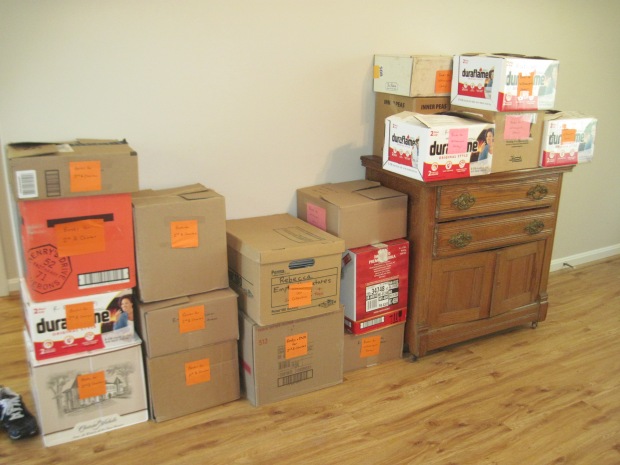
The final set of books awaiting sale.
All this still left about 18 boxes worth of rejects. For the non-antiquarian material I first tried 2nd & Charles, a new and secondhand bookstore chain that offers cash or store credit on select books. I planned to take the rest, including the antiquarian stuff, to an Abebooks seller in my mom’s new town, but I never managed to connect with him. So, the remaining boxes went to Wonder Book and Video, a multi-branch store I worked for during my final year of college. The great thing about them (though maybe not so great when you work there and have to sort through boxes full of dross) is that they accept absolutely everything when they make a cash offer. Although I felt silly selling back lots of literary titles I bought there over the years, at a massive loss, it was certainly an efficient way of offloading unwanted books.
As to everything else…
- I sent off 42.5 pounds (19.3 kilograms) of electronic waste to GreenDisk for recycling. That’s 75 VHS tapes, 63 CDs, 38 cassette tapes, 11 DVDs, five floppy disks, two dead cables, and one dead cell phone I saved from landfill, even if I did have to pay for the privilege.
- I donated all but a few of my jigsaw puzzles to my mom’s retirement community.
- I gave my mom my remaining framed artworks to display at her new place.
- I gave some children’s books, stuffed animals, games and craft supplies away to my nieces and nephews or friends’ kids.
- I let my step-nephew (if that’s a word) take whatever he wanted from my coin collection, and then sold that and most of my stamp collection back to a coin store.
- Most of my other collections – miniature tea sets, unicorn figurines, classic film memorabilia – all went onto the auction pile.
- My remaining furniture, a gorgeous rolltop desk plus a few bookcases, will also be part of the auction.
- You can tell I was in a mood to scale back: I finally agreed to throw out two pairs of worn-out shoes with holes in them, long after my mother had started nagging me about them.


Mementos and schoolwork have been the most difficult items for me to decide what to do with. Ultimately, I ran out of time and had to store most of the boxes as they were. But with the few that I did start to go through I tried to get in a habit of appreciating, photographing and then disposing. So I kept a handful of favorite essays and drawings, but threw out my retainers, recycled the science fair projects, and put the hand-knit baby clothes on the auction pile. (My mom kept the craziest things, like 12 inches of my hair from a major haircut I had in seventh grade – this I threw out at the edge of the woods for something to nest with.)


 All this work and somehow I was still left with 29 smallish boxes to store with my dad’s stuff. Fourteen of these are full of books, with another four boxes of books stored in my mom’s spare room closet to select reading material from on future visits. So to an extent I’ve just put off the really hard work of culling until some years down the road – unless we ever move to the States, of course, in which case the intense downsizing would start over here.
At any rate, in the end it’s all just stuff. What I’m really mourning, I know, is not what I had to get rid of, or even the house, but the end of our happy family life there. I didn’t know how to say goodbye to that, or to my hometown. I’ve got the photos and the memories, and those will have to suffice.
Have you had to face a mountain of stuff recently? What are your strategies for getting rid of books and everything else?
I Spy TBR Challenge
I spotted this recently on Ex Urbanis and it was too fun to pass up. (I believe the meme started on YouTube, but I’ve been unable to trace the chain back to the very beginning.) There are 20 categories; for each one choose at least one title or cover that fits in some way.
I decided to limit myself to books on my to-read shelves, but had to cheat for two categories and pick books I’ve already read. Some were so easy I could have picked out at least 5–10 books that fit the bill, while others were quite a challenge.
The idea is to gather up all the books within five minutes, but because I had to go up and down the stairs and survey shelves in multiple rooms it took me just over 15! See how fast you can find something for each prompt.
Food

Transport
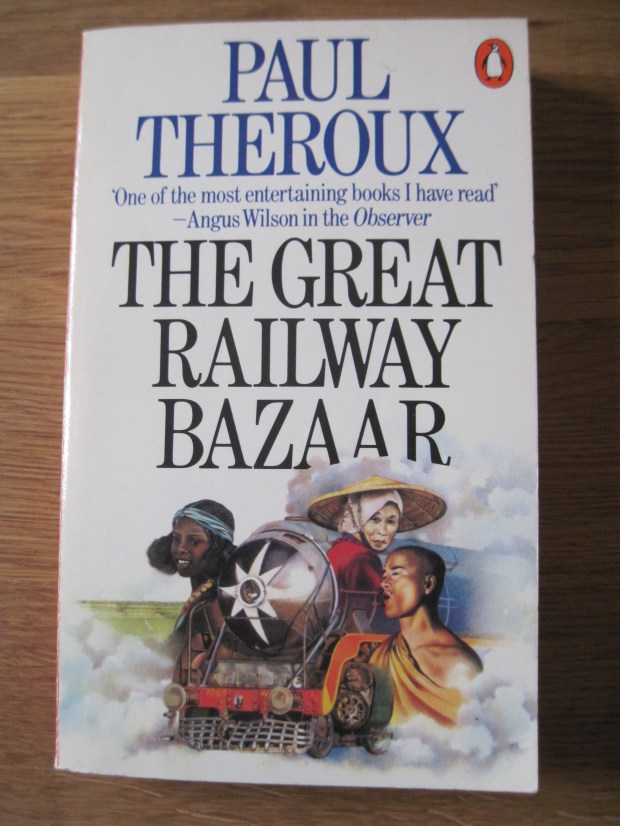
Weapon – This one was really tough, since I don’t read crime fiction. But I finally managed to find a surgeon’s memoir with a scalpel on the cover.
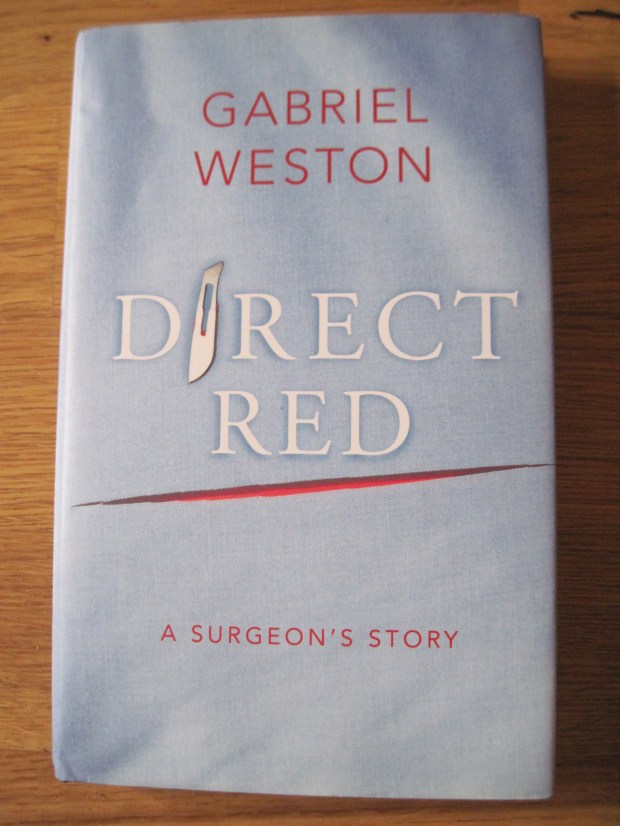
Animal – I could easily have found 15+ for this one, thanks to my husband’s nature books, but I stuck with fiction.
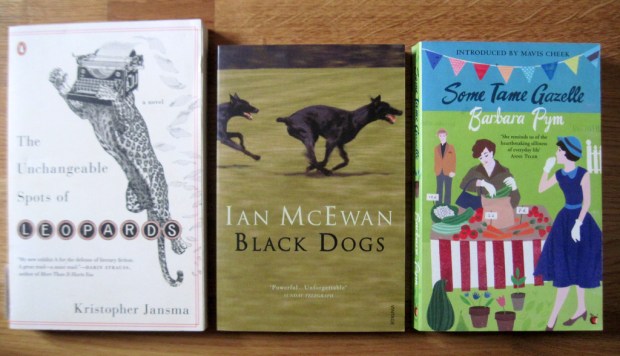
Number

Something You Read
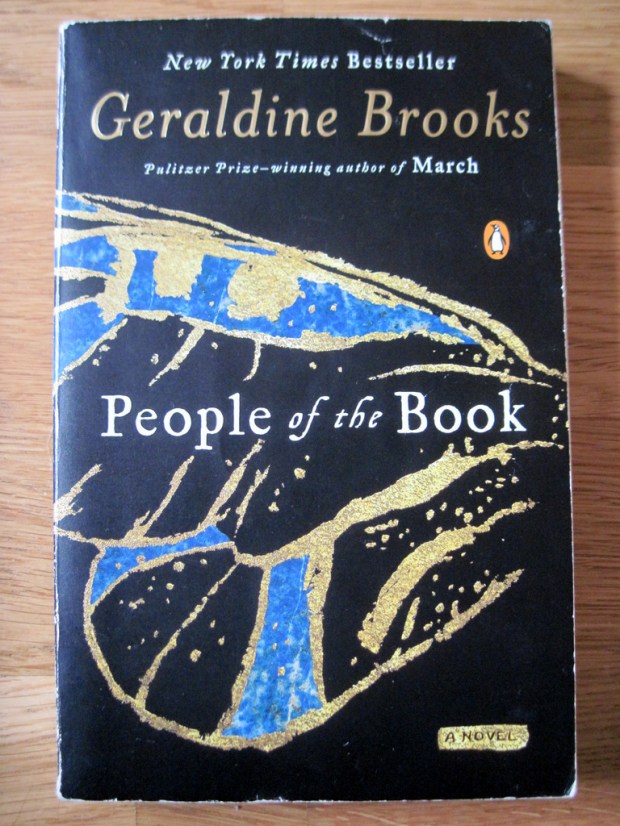
Body of Water
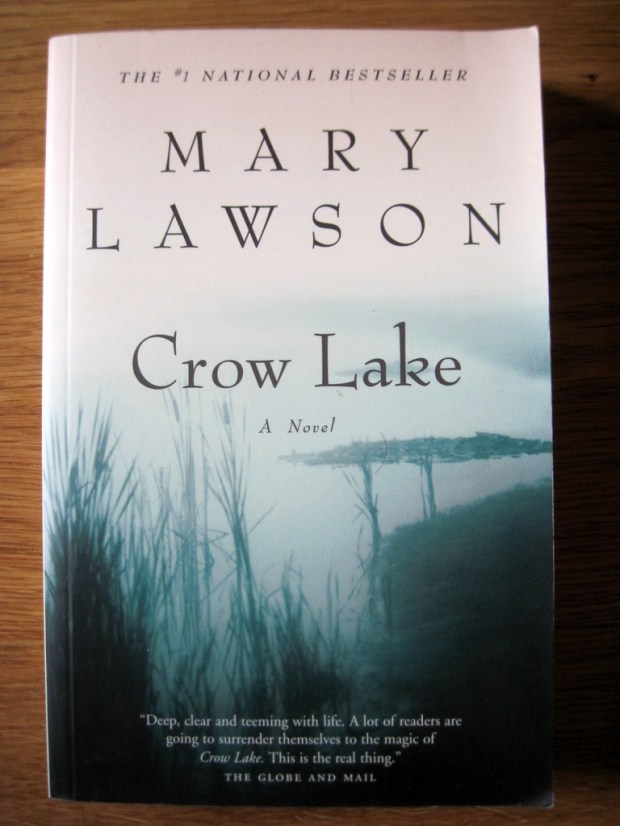
Product of Fire – Another really difficult one, so I cheated with this May Sarton memoir I’ve already read.
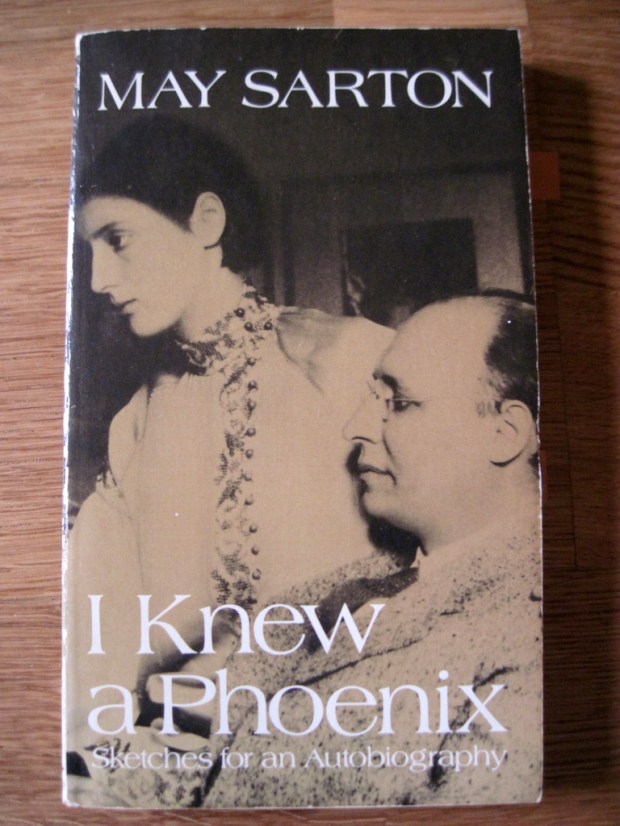
Royalty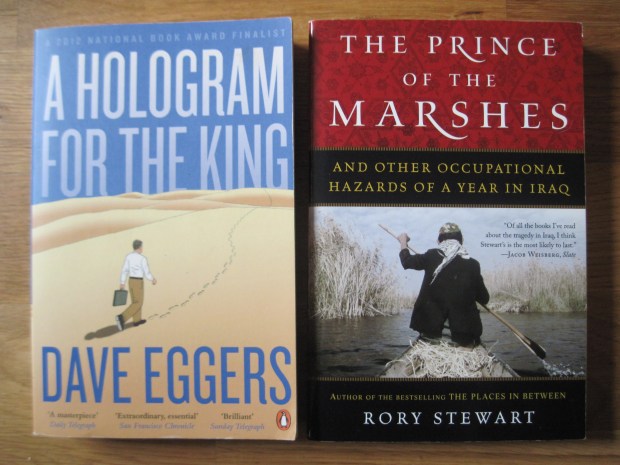
Architecture
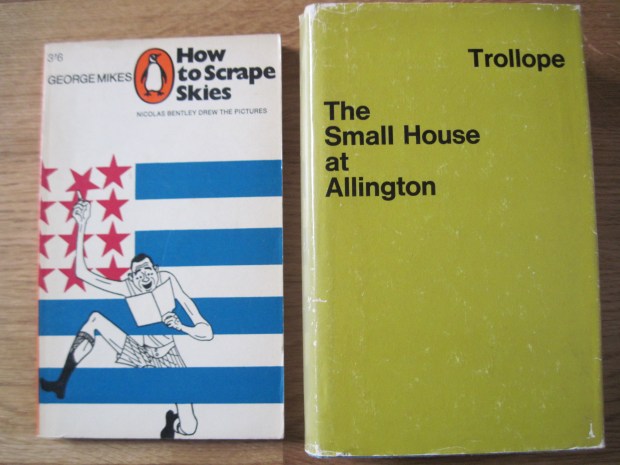
Clothing – Another cheat of sorts: all I could find was the cover of Bill Bryson’s memoir, which I’ve already read.

Family Member
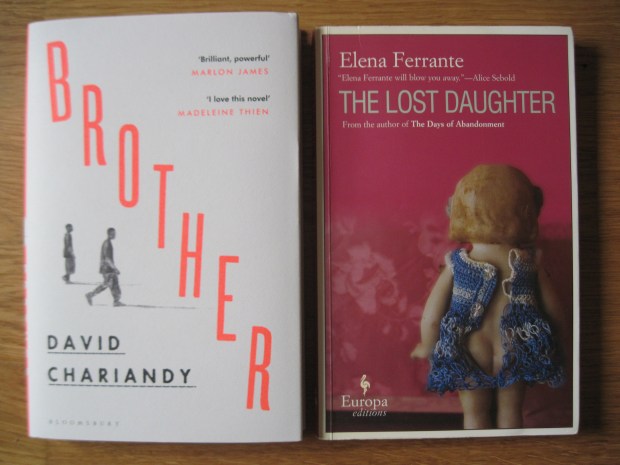
Time of Day

Music
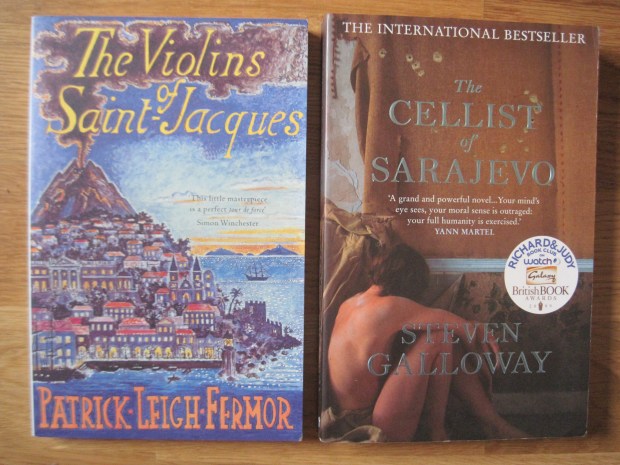
Paranormal Being
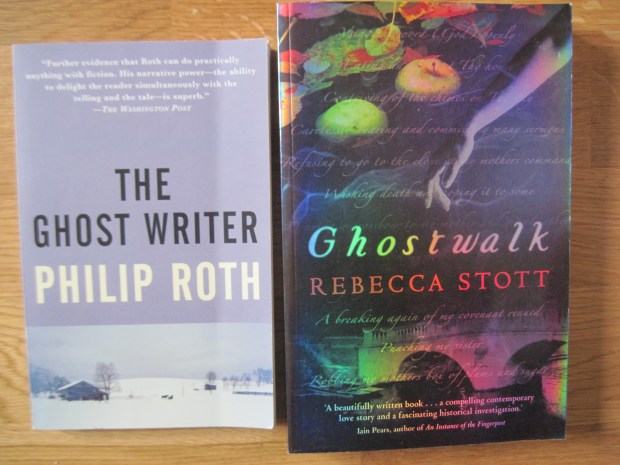
Occupation
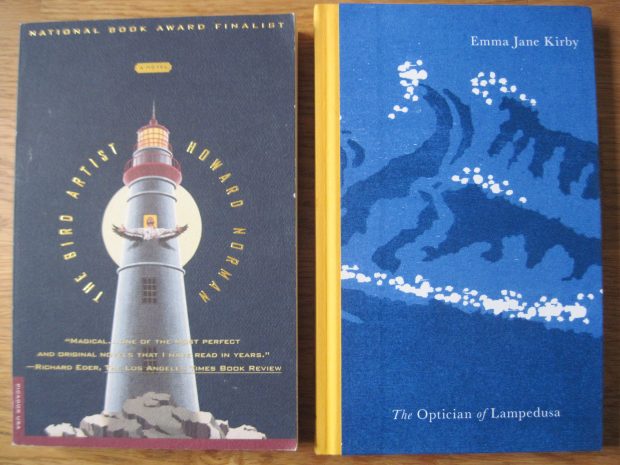
Season
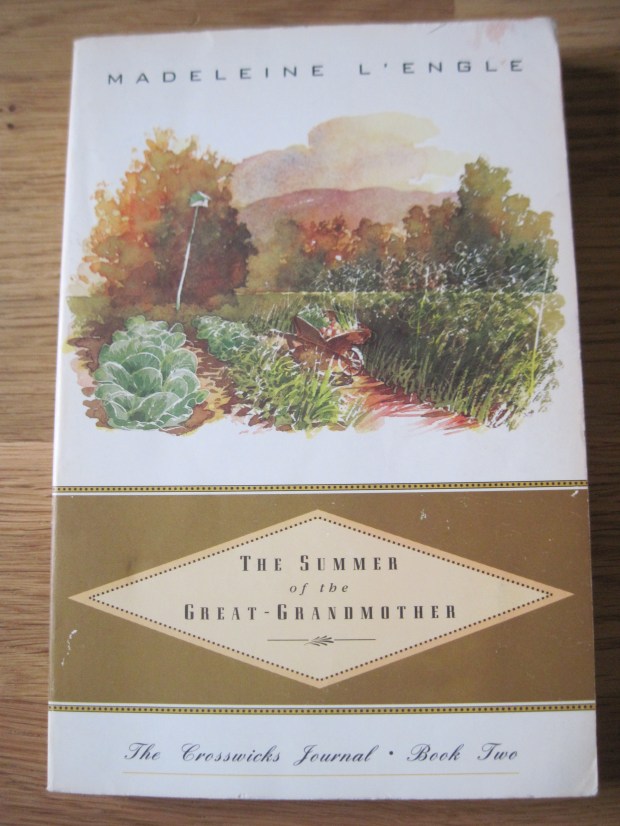
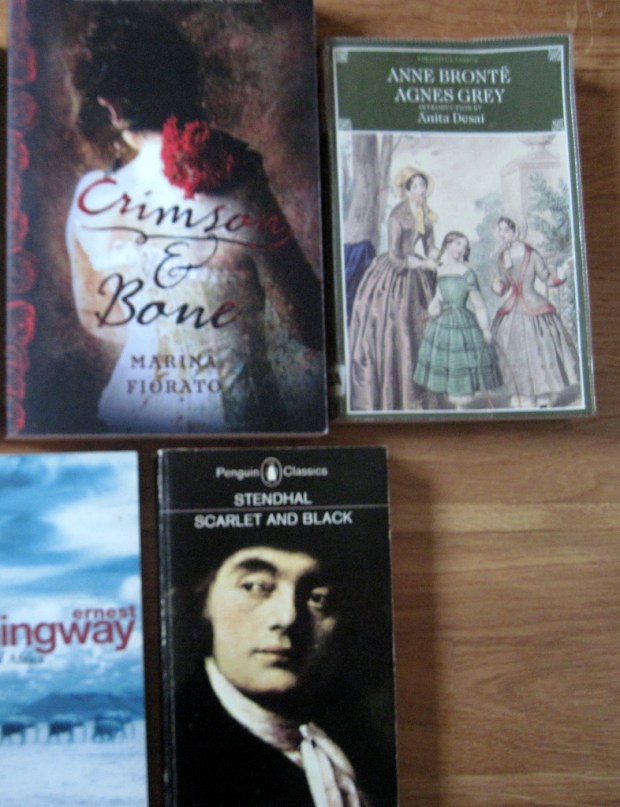
Color – Another one I could have amassed tons for. (Partially cut off is Ernest Hemingway’s Green Hills of Africa.)
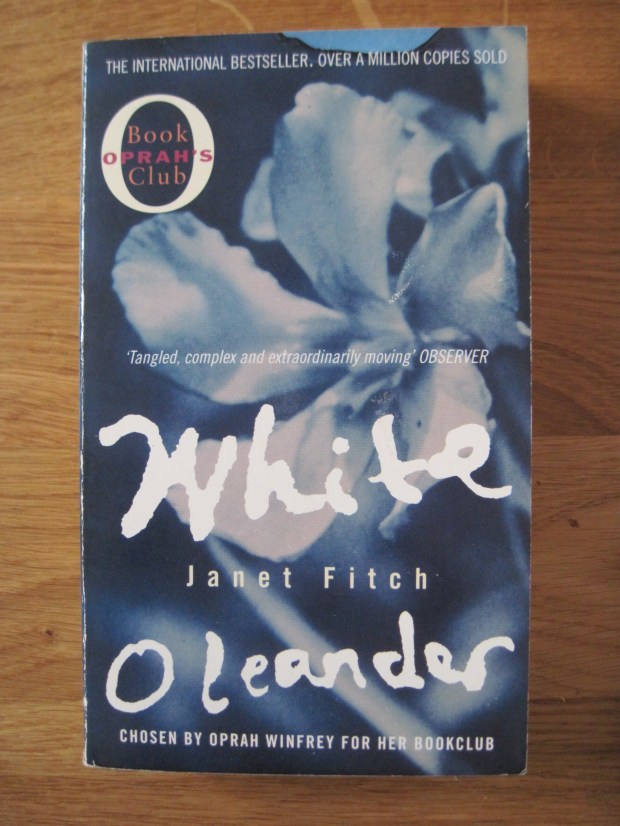
Celestial Body

Something that Grows
Third Blog Anniversary
Hard to believe, but I’ve only been blogging for three years as of today. It feels like something I’ve been doing forever, but at the same time I still consider myself a newbie. This is my 382nd post, so I’ve been keeping up an average of 2.5 posts a week.

By Joey Gannon from Pittsburgh, PA (Candles) [CC BY-SA 2.0 (http://creativecommons.org/licenses/by-sa/2.0)%5D, via Wikimedia Commons.
I’ve particularly enjoyed doing author Q&As and highlighting seasonal reads, novellas, books about cats, and physical book traits. I especially like writing up bookshop visits and other literary travels, and discussing literary prizes. My supply of graphic novels seems to have dried up; for new releases I focus on literary fiction, historical fiction and memoirs.
Straightforward book reviews have always been less popular than book lists and other more tangentially book-related posts. Library Checkout posts are consistently well-liked, as were the “Books in Brief” sets of five mini-reviews I used to do. As I’ve noted before, my posts on abandoned books are always perversely popular.
Some of my favorite posts from the past year were on World Kidney Day, Mother–Daughter Author Pairs, and Book Hoarding, and my review in verse of Jonathan Eig’s Ali: A Life.
The numbers of likes seem to be less than informative as they simply reflect a growing number of followers – many of my recent posts have averaged 20–25 likes – so I prefer to look at comments, as it means people are truly reading and engaging. In terms of numbers of comments, my top posts of all time appeared in the last year and were:
- Bibliotherapy appointment
- Books in Brief, May 2017 (featuring books by Sebastian Barry, Tracy Chevalier, Thomas H. Cook, Nicole Gulotta and Elizabeth Hay)
- (Tied for 3rd) Booker Longlist 2017 & Jacob’s Room Is Full of Books review
Thanks to everyone who has supported me this past year, and/or all three years, by visiting the site, commenting, re-tweeting, and so on. You’re the best!
 Bookish Beck = Rebecca Foster. American transplant to England. Freelance proofreader and book reviewer.
