Nonfiction November Book Pairings: Hardy’s Wives, Rituals, and Romcoms
Liz is hosting this week of Nonfiction November. For this prompt, the idea is to choose a nonfiction book and pair it with a fiction title with which it has something in common.

I came up with three based on my recent reading:
Thomas Hardy’s Wives
On my pile for Novellas in November was a tiny book I’ve owned for nearly two decades but not read until now. It contains some of the backstory for an excellent historical novel I reviewed earlier in the year.
Some Recollections by Emma Hardy
&
The Chosen by Elizabeth Lowry


The manuscript of Some Recollections is one of the documents Thomas Hardy found among his first wife’s things after her death in 1912. It is a brief (15,000-word) memoir of her early life from childhood up to her marriage – “My life’s romance now began.” Her middle-class family lived in Plymouth and moved to Cornwall when finances were tight. (Like the Bennets in Pride and Prejudice, you look at the house they lived in, and read about the servants they still employed, and think, “impoverished,” seriously?!) “Though trifling as they may seem to others all these memories are dear to me,” she writes. It’s true that most of these details seem inconsequential, of folk historical value but not particularly illuminating about the individual.
An exception is her account of her dealings with fortune tellers, who often went out of their way to give her good – and accurate – predictions, such as that she would marry a writer. It’s interesting to set this occult belief against the traditional Christian faith she espouses in her concluding paragraph, in which she insists an “Unseen Power of great benevolence directs my ways.” The other point of interest is her description of her first meeting with Hardy, who was sent to St. Juliot, where she was living with her parson brother-in-law and sister, as an architect’s assistant to begin repairs on the church. “I thought him much older than he was,” she wrote. As editor Robert Gittings notes, Hardy made corrections to the manuscript and in some places also changed the sense. Here Hardy gave proof of an old man’s continued vanity by adding “he being tired” after that line … but then partially rubbing it out. (Secondhand, Books for Amnesty, Reading, 2004) [64 pages] 
The Chosen contrasts Emma’s idyllic mini memoir with her bitterly honest journals – Hardy read but then burned these, so Lowry had to recreate their entries based on letters and tone. But Some Recollections went on to influence his own autobiography, and to be published in a stand-alone volume by Oxford University Press. Gittings introduces the manuscript (complete with Emma’s misspellings and missing punctuation) and appends a selection of Hardy’s late poems based on his first marriage – this verse, too, is central to The Chosen.
Another recent nonfiction release on this subject matter that I learned about from a Shiny New Books review is Woman Much Missed: Thomas Hardy, Emma Hardy and Poetry by Mark Ford. I’d also like to read the forthcoming Hardy Women: Mother, Sisters, Wives, Muses by Paula Byrne (1 February 2024, William Collins).
Rituals
The Ritual Effect by Michael Norton
&
The Rituals by Rebecca Roberts


Last month I reviewed this lovely Welsh novel about a woman who is an independent celebrant, helping people celebrate landmark events in their lives or cope with devastating losses by commemorating them through secular rituals.
Coming out in April 2024, The Ritual Effect is a Harvard Business School behavioral scientist’s wide-ranging study of how rituals differ from habits in that they are emotionally charged and lift everyday life into something special. Some of his topics are rites of passage in different cultures; musicians’ and sportspeople’s pre-performance routines; and the rituals we develop around food and drink, especially at the holidays. I’m just over halfway through this for an early Shelf Awareness review and I have been finding it fascinating.
Romantic Comedy
(As also featured in my August Six Degrees post)
What I Was Doing While You Were Breeding by Kristin Newman
&
Romantic Comedy by Curtis Sittenfeld


Romantic Comedy is probably still the most fun reading experience I’ve had this year. Sittenfeld’s protagonist, Sally Milz, writes TV comedy, as does Kristin Newman (That ’70s Show, How I Met Your Mother, etc.). What I Was Doing While You Were Breeding is a lighthearted record of her sexual conquests in Amsterdam, Paris, Russia, Argentina, etc. (Newman even has a passage that reminds me of Sally’s “Danny Horst Rule”: “I looked like a thirty-year-old writer. Not like a twenty-year-old model or actress or epically legged songstress, which is a category into which an alarmingly high percentage of Angelenas fall. And, because the city is so lousy with these leggy aliens, regular- to below-average-looking guys with reasonable employment levels can actually get one, another maddening aspect of being a woman in this city.”) Unfortunately, it got repetitive and raunchy. It was one of my 20 Books of Summer but I DNFed it halfway.
“The Possibilities of Place” Webinar with Nina Mingya Powles
Yesterday was National Nonfiction Day in the UK, apparently, as well as being part of the ongoing Nonfiction November challenge. Appropriately, I attended what I think must be my first writing workshop, run online by The Emma Press, a Birmingham-based publisher whose poetry and essay collections I enjoy. Thanks to Arts Council England funding, they’ve been able to arrange a series of masterclass webinars that explore some of the genres they publish.

The life writing class I participated in was led by Nina Mingya Powles, a poet and essayist whose terrific books Magnolia, Small Bodies of Water, and Tiny Moons (The Emma Press’s best-selling memoir) I’ve read and reviewed. Other attendees hailed from as far afield as Orkney, West Cork, the South of France, Berlin and New Zealand. The seminar was in Zoom presenter mode, so only Nina was on screen and the rest of us communicated via the chat box. I had been nervous about joining from my PC without a webcam or microphone, so I was relieved that this was the setup.


Nina spoke about how broad the umbrella of “life writing” is, potentially incorporating poetry and autofiction as well as straightforward prose. “Creative nonfiction” is a term sometimes used interchangeably with it. Today she wanted to focus on how memories (especially childhood memories), food and place are intertwined.
For our first warm-up exercise, she had us draw a rough map of a body of water and put a point on it, then write ourselves into that place. During this 7-minute freewrite, I compiled a list of not particularly poetic sense impressions of Annapolis harbour. I found myself crying as I realized I might never have a reason to go back to a place that was so important in my teen and early adult years.
Nina’s black-and-white cat, Otto, often butted in, in amusing and feline-appropriate ways. We proceeded to consider food as a portal to memories and to different places we’ve lived or travelled. Nina likes to think about being an outsider and the visitor’s perspective. She acknowledged that our relationships with food can be complicated, so sometimes it is a loaded topic. Mostly she is looking for gentle, tender, joyful depictions of food.
 She read aloud Rebecca May Johnson’s recipe poem “to purge the desire to write like a man,” which on one level is about making tomato sauce (as is Small Fires) but ends with a “found incantation” from Natalia Ginzburg that reclaims the female realm of the kitchen as a place of power. I loved how the first stanzas describe the body as an archive, containing multitudes. Then we considered a Jennifer Wong poem, “A personal history of soups,” about all the Chinese soups she loves and misses, and their personal and legendary meanings.
Taking the Wong title as our prompt, we spent 15 minutes writing a rough piece about a foodstuff. I’ve reproduced mine below, without any tidying-up. I mimicked the part-recipe format of the Johnson and tried to picture the kitchen of our first Bowie house and the cookware we had there.
A personal history of apple pie
As American as…
Dad did all the cooking when I was growing up, so for my mother to accompany me in the kitchen was a big thing. One year of my adolescence, there was a baking contest at the church my best friend and her family attended. I didn’t expect to take part at all or, if anything, perhaps I assumed I’d knock together some simple chocolate chip cookies on my own. But Mom insisted we would make an apple pie from scratch together – crust and all.
An apron each. One green, one red. Hand-embroidered heirlooms made by her grandmother. (Don’t keep them folded away in a drawer. Use them. They are your lineage, your artefacts.)
Half shortening, half butter. Glass bowl. Cold water. Half-moon cutter criss-crosses through chunks of semi-solid fat to render them smaller and smaller, flour-covered pebbles the size of peas.
Scent clouds of cinnamon and cloves billow up from a pan of stewing apples. A ceramic dish with crimping around the rim. A wooden rolling pin to achieve a uniform one-quarter inch round of dough. Freshly washed fingers gently pressing divots into the sides until every air bubble disappears.
Blind bake the crust. Trust that it will hold your creation. The sizzle of softened fruit in contact with the part-baked crust.
I have no memory of whether we won a prize. And me so competitive! The prize was the time. The prize was the attention. The assurance that this was worth it, that I was worth it.
Next we moved on to think about place and journeys, especially departures and arrivals – bringing places with us versus leaving them behind. An attendee commented, and Nina agreed, that often distance is useful: we can most easily write about somewhere after we’ve left it, once there is a sense of yearning. For this section we looked at a few-page extract from Larissa Pham’s essay collection Pop Song in which she describes a drive from Albuquerque to Taos. Expecting beautiful Georgia O’Keeffe-type scenery, she experiences the letdown of signs of the opioid crisis and Trump voters.
Borrowing a line from the Pham essay, Nina invited us to spend 20 minutes writing a piece that would bring the reader into the immediacy of our experience of a place. She reminded us, as a general rule, to remember to cite whatever we borrow, or to remove the borrowed line afterwards and see if it still works. My take on “Here I was now in the distant place…” ended up being a few rambling paragraphs contrasting my two study abroad years, one magical and one difficult. (Sample line: “Everything in England was like that: partially familiar but slightly askew.”)
At the end, three participants unmuted themselves and read their food pieces aloud. One was about food and a mother’s love; milk and rice. The other two, amusingly, were both about meringue: making a cherry meringue pie with a Scottish granny, and assembling pavlovas with aunts in New Zealand.
Nina encouraged us to think of life writing as a fluid thing, including journaling, blogging, travel and nature writing. This was heartening because I’ve always indulged in bits of autobiographical writing on my blog, and I started a journal last month as my 40th birthday approached, inspired in part by the 150 journals I inherited from my mother as well as by the desires to document my life and believe that the day-to-day has meaning.
The two-hour workshop was incredibly good value, especially considering that The Emma Press sent a voucher for £4 off of one of their books. (I’ve ordered their poetry anthology on ageing.) Nina also generously circulated lists of additional writing prompts, magazines that accept life writing submissions, and relevant competitions to enter.
I’d purchased a ticket on a whim but wasn’t sure whether I’d participate fully – I have a bad habit of skipping the exercises in books, after all. I’m so glad I did join, and gave myself over to the writing prompts. Who knows if anything will come of it, but it was cathartic to think about life experiences I don’t often have at the forefront of my mind, and to see how much can be produced in short periods of concerted writing.
Novellas in November, Week 1: My Year in Novellas (#NovNov23)
Novellas in November begins today! Cathy (746 Books) and I are delighted to be celebrating the art of the short book with you once again. Remember to let us know about your posts here, via the Inlinkz service or through a comment. How impressive is it that before November even started we were already up to 20 blog and social media posts?! I have a feeling this will be a record-breaking year for participation.

I’m kicking off our first weekly prompt:
Week 1 (starts Wednesday 1 November): My Year in Novellas
- During this partial week, tell us about any novellas you have read since last NovNov.

(See the announcement post for more info about the other weeks’ prompts and buddy reads.)
I relish building rather ludicrous stacks of novellas through the year. When I’m standing in front of a Little Free Library, browsing in secondhand bookstores and charity shops, or perusing the shelves at the public library where I volunteer, I’m always thinking about what I could add to my piles for November.
But I do read novella-length books at other times of year, too. Forty-six of them so far this year, according to my Goodreads shelves. That seems impossible, but I guess it reflects the fact that I often choose to review novellas for BookBrowse, Foreword and Shelf Awareness. I’ve read a real mixture, but predominantly literature in translation and autobiographical works. Here are seven highlights:
Fiction
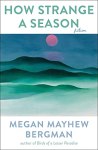


How Strange a Season by Megan Mayhew Bergman: A strong short story collection with the novella-length “Indigo Run” being a Southern Gothic tale of betrayal and revenge.
Loved and Missed by Susie Boyt: The heart-wrenching story of a woman who adopts her granddaughter due to her daughter’s drug addiction. Its brevity speaks emotional volumes.
Crudo by Olivia Laing: A wry, all too relatable take on recent events and our collective hypocrisy and sense of helplessness. Biography + autofiction + cultural commentary.
Nonfiction
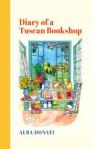
Diary of a Tuscan Bookshop by Alba Donati: Lovely snapshots of a bookseller’s personal and professional life.
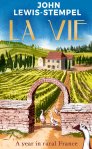
La Vie: A Year in Rural France by John Lewis-Stempel: A ‘peasant farmer’ chronicles a year in the quest to become self-sufficient. His best book in an age, ideal for armchair travel.

My Neglected Gods by Joanne Nelson: The poignant microessays locate epiphanies in the everyday.
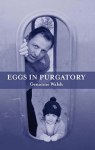
Eggs in Purgatory by Genanne Walsh: A stunning autobiographical essay about the last few months of her father’s life.
I currently have five novellas underway, and I’ve laid out a pile of potential one-sitting reads for quiet mornings in the weeks to come.
Here’s hoping you all are as excited about short books as I am!
Why not share some recent favourites with us in a post of your own?
Love Your Library (and Life Update), October 2023
My thanks, as always, to Elle for her participation in this monthly meme, and to Laura for mentioning whenever she sources a book from the library!
I’m posting a bit later than usual because it’s been a busy time, and quite an emotional rollercoaster too. First was the high of my joint 40th birthday party with my husband (whose birthday is in late November) on Saturday evening. It required close to wedding levels of event planning and was stressful, especially in the week ahead, with lots of dropouts due to illness and changed plans. Yesterday and today, I’ve been up to my knees in dirty dishes, leftovers, and soiled tablecloths and bedding to try to get washed and dry. But it was a fantastic party in the end, bringing together people from lots of different areas of our lives. I’m so grateful to everyone who came to celebrate with cake, a quiz, a ceilidh, a bring-and-share/potluck meal, and dancing to the hits of 1983.


The next day was a bit of a crash back to earth as I snuck away from the house guests to attend my church’s annual Memorial Service. With All Hallows’ Eve and then All Saints coming up, it’s a traditional time to think about the dead, but all the more so because today is the first anniversary of my mother’s death. It’s taken me the full year to understand and accept, with both mind and heart, that she’s gone. I’m not marking the day in any particular way apart from having a cup of strong Earl Grey tea in her honour. I feel close to her when I read her journals, look at photographs, or see all the many items she gave me that I still use. We recently moved her remains to a different cemetery and it’s strangely comforting to think that her plot could also accommodate at least a portion of my ashes one day.
Love Your Library
Last week I was trained in how to use the library content management system and received log-ins for limited access to return, issue and renew books and search for information on the internal catalogue. It has been interesting to see how things work from the other side, having been a customer of the library system for over a decade. At busy times I will be able to help out behind the counter, but because I have to call a senior for literally anything more complicated, I am not a replacement for an employee. It is a sad reality that some libraries have to rely on volunteers in this way; none of the smaller branches in West Berkshire would be able to stay open without volunteers working alongside staff.
Novellas in November will be here before we know it. I have a huge pile of library novellas borrowed, in addition to all the ones I own.
Since last month:
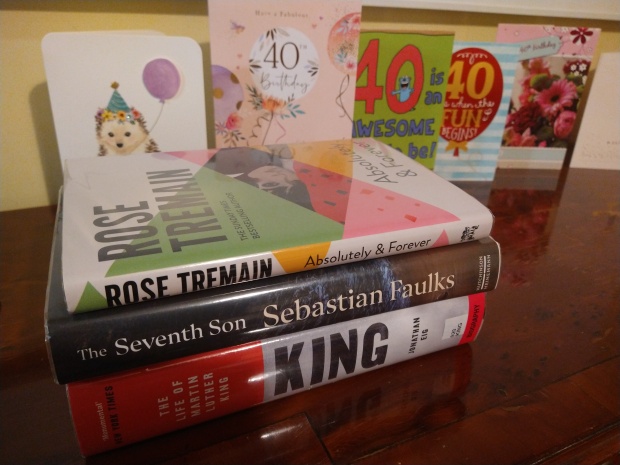
READ
- The Whispers by Ashley Audrain
- I Want to Die but I Want to Eat Tteokbokki by Baek Se-hee
- The Seaside by Madeleine Bunting

- Penance by Eliza Clark

- Emily Wilde’s Encyclopaedia of Faeries by Heather Fawcett
- By the Sea by Abdulrazak Gurnah (for book club)
- Milk by Alice Kinsella
- The Sad Ghost Club by Lize Meddings
CURRENTLY READING
- Western Lane by Chetna Maroo
- The Last House on Needless Street by Catriona Ward
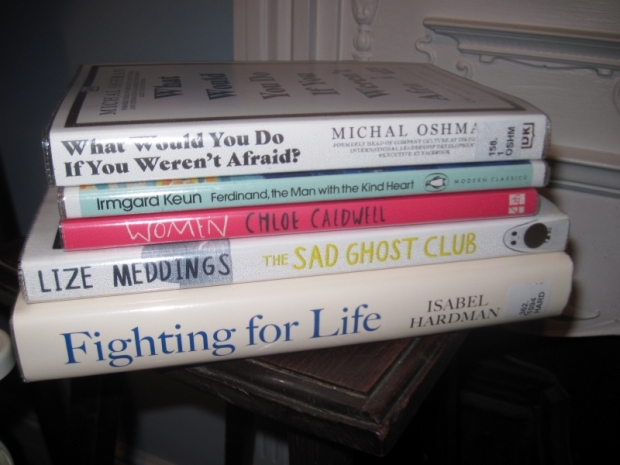
CURRENTLY (NOT) READING
- The Absolutely True Diary of a Part-Time Indian by Sherman Alexie
- The Year of the Cat by Rhiannon Lucy Coslett
- Reproduction by Louisa Hall
- Weyward by Emilia Hart
- The Last Bookwanderer by Anna James
- Findings by Kathleen Jamie (a re-read)
- Before the Light Fades by Natasha Walter
I started all of the above weeks ago, but they have been languishing on various stacks and it will take a concerted effort to get back to and finish them.
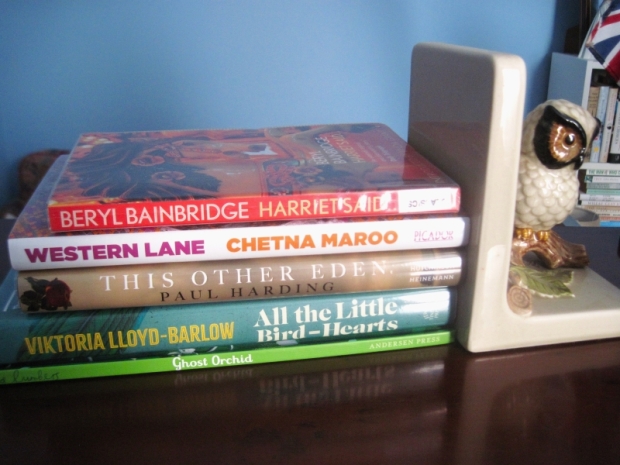
RETURNED UNREAD
- The Seventh Son by Sebastian Faulks
- This Other Eden by Paul Harding
- All the Little Bird-Hearts by Viktoria Lloyd-Barlow
All were much-hyped or prize-listed novels that didn’t grab me within the first few pages, so I relinquished them to the next person in the reservation queue.
What have you been reading or reviewing from the library recently?

Share a link to your own post in the comments. Feel free to use the above image. The hashtag is #LoveYourLibrary.
Novellas in November 2023 Link-Up
Novellas in November had another great year, with 52 bloggers contributing a total of 175 posts! You can peruse them all at the links below.
Getting Ready for Novellas in November!
Novellas: “all killer, no filler”
~Joe Hill
For the fourth year in a row, Cathy of 746 Books and I are celebrating the art of the short* book by co-hosting Novellas in November as a month-long challenge. This time we have five prompts, adapted from ones commonly used for Nonfiction November. (*A reminder that we suggest 200 pages as the upper limit for a novella.)
Here’s the schedule:
Week 1 (starts Wednesday 1 November): My Year in Novellas
- During this partial week, tell us about any novellas you have read since last NovNov.
Week 2 (starts Monday 6 November): What Is a Novella?
- Ponder the definition, list favourites, or choose ones you think best capture the ‘spirit’ of a novella.
Week 3 (starts Monday 13 November): Broadening My Horizons
- Pick your top novellas in translation and think about new genres or authors you’ve been introduced to through novellas.
Week 4 (starts Monday 20 November): The Short and the Long of It
- Pair a novella with a nonfiction book or novel that deals with similar themes or topics.
Week 5 (starts Monday 27 November): New to My TBR
- In the last few days, talk about the novellas you’ve added to your TBR since the month began.
We also have two buddy read options, one contemporary and one classic. Please join us in reading one or both at any time in November!
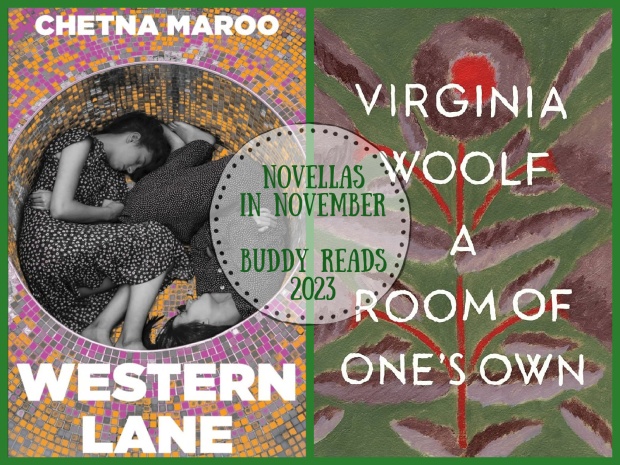
Western Lane by Chetna Maroo (2023) is on this year’s Booker Prize longlist; whether or not it advances to the shortlist on Thursday, it promises to be a one-of-a-kind debut novel about an eleven-year-old girl coming to terms with the loss of her mother and becoming deeply involved in the world of competitive squash.
A Room of One’s Own by Virginia Woolf (1929), an extended essay about the conditions necessary for women’s artistic achievement, is based on lectures she delivered at Cambridge’s women’s colleges. This feminist classic is in print or can be freely read online (Internet Archive or Project Gutenberg Canada).
It’s always a busy month in the blogging world, what with Nonfiction November, German Literature Month, and Margaret Atwood Reading Month. Why not search your shelves and/or local library for novellas that count towards multiple challenges? You might also consider participating in Annabel’s Beryl Bainbridge Reading Week (the 18th through 26th) as most of Bainbridge’s novels were under 200 pages.
We’re looking forward to having you join us! From 1 November there will be a pinned post on my site from which you can join the link-up. Keep in touch via Twitter (@cathy746books) and Instagram (@cathy_746books), and feel free to use the terrific feature images Cathy has made plus our new hashtag, #NovNov23.
Six Degrees of Separation: Romantic Comedy to Wild Fell
This is a fun meme I take part in every few months.
For August we begin with Romantic Comedy by Curtis Sittenfeld, one of my top 2023 releases so far. (See Kate’s opening post.)
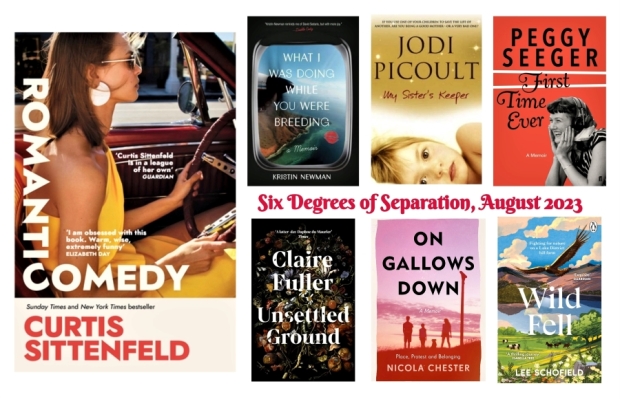
 #1 Sittenfeld’s protagonist, Sally Milz, writes TV comedy, as does Kristin Newman (That ’70s Show, How I Met Your Mother, etc.), author of What I Was Doing While You Were Breeding, a lighthearted record of her travels and romantic conquests. (She even has a passage that reminds me of Sally’s Danny Horst Rule: “I looked like a thirty-year-old writer. Not like a twenty-year-old model or actress or epically legged songstress, which is a category into which an alarmingly high percentage of Angelenas fall. And, because the city is so lousy with these leggy aliens, regular- to below-average-looking guys with reasonable employment levels can actually get one, another maddening aspect of being a woman in this city.”)
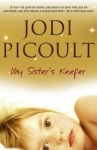 #2 I didn’t realize when I picked it up in a charity shop that my copy smelled strongly of cigarette smoke. I aired it in kitty litter, then by scented candles, and it still reeks. I reckon I can tolerate the smell long enough to finish it and put it in the Little Free Library, which gets good ventilation. A novel I acquired from the free bookshop we used to have in the mall in town was the only book I can remember having to get rid of before reading because it just smelled too bad (also of cigarettes in that case): My Sister’s Keeper by Jodi Picoult.
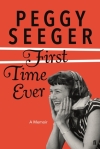 #3 So I didn’t read that, but I have read another Picoult novel, Sing You Home. The author is known for picking a central issue to address in each work, and in that one it was sexuality. Zoe, a music therapist, is married to Max but leaves him for Vanessa – and then decides to sue him for the use of the embryos they created together via IVF. It was the first book I’d read with that dynamic (a previously straight woman enters into a lesbian partnership), but by no means the last. Later came Untamed by Glennon Doyle, Hidden Nature by Alys Fowler, The Fixed Stars by Molly Wizenberg … and one you maybe weren’t expecting: the fantastic memoir First Time Ever by Peggy Seeger. The authors vary in how they account for it. They were gay all along but didn’t realize it? Their orientation changed? Or they just happened to fall in love with someone of the same gender? Seeger doesn’t explain at all, simply records how head-over-heels she was for Ewan MacColl … and then for Irene Pyper Scott.
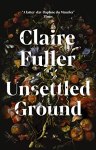 #4 Peggy Seeger is one of my heroes these days. I first got into her music through the lockdown livestreams put together by Folk on Foot and have since seen her live and acquired several of her albums, including a Smithsonian Folkways collection of her best-loved folk standards. One of these is, of course, “I’m Gonna Be an Engineer,” which was one of the inspirations for Claire Fuller’s Unsettled Ground.
 #5 Unsettled Ground, an unusual story of rural poverty and illiteracy, is set in a fictional village modelled on Inkpen, where Nicola Chester lives. Her memoir On Gallows Down, which held particular local interest for me, was shortlisted for the Wainwright Prize last year.
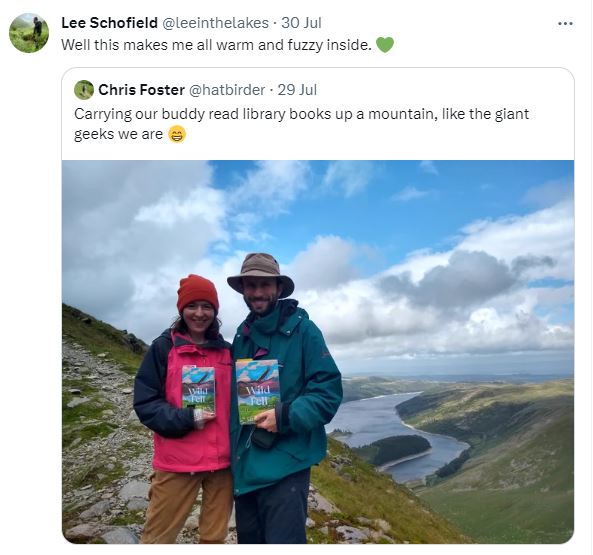
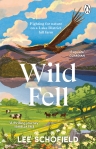 #6 Also shortlisted that year was Wild Fell by Lee Schofield, about his work at RSPB Haweswater. Like Chester, he’s been mired in the struggle to balance sustainable farming with conservation at a beloved place. And like a fellow Lakeland farmer (and previous Wainwright Prize winner for English Pastoral), James Rebanks, he’s trying to be respectful of tradition while also restoring valuable habitats. My husband and I each took a library copy of Wild Fell along to Cumbria last week (about which more anon) and packed it in a backpack for an on-location photo during our wild walk at the very atmospheric Haweswater.
Where will your chain take you? Join us for #6Degrees of Separation! (Hosted on the first Saturday of each month by Kate W. of Books Are My Favourite and Best.) Next month’s starting book is Wifedom by Anna Funder.
Have you read any of my selections? Tempted by any you didn’t know before?
10 Days in the USA and What I Read (Plus a Book Haul)
On October 29th, I went to an evening drinks party at a neighbour’s house around the corner. A friend asked me about whether the UK or the USA is “home” and I replied that the States feels less and less like home every time I go, that the culture and politics are ever more foreign to me and the UK’s more progressive society is where I belong. I even made an offhand comment to the effect of: once my mother passed, I didn’t think I’d fly back there often, if at all. I was thinking about 5–10 years into the future; instead, a few hours after I got home from the party, we were awoken by the middle-of-the-night phone call saying my mother had suffered a nonrecoverable brain bleed. The next day she was gone.
I haven’t reflected a lot on the irony of that timing, probably because it feels like too much, but it turns out I was completely wrong: in fact, I’m now returning to the States more often. With our mom gone and our dad not really in our lives, my sister and I have gotten closer. Since October I’ve flown back twice and she’s visited here once. There are 7.5 years between us and we’ve always been at different stages of life, with separate preoccupations and priorities; I was also lazy and let my mom be the go-between, passing family news back and forth. Now there’s a sense that we are all we have, and we have to stick together.


So it was doubly important for me to be there for my sister’s graduation from nursing school last week. If we follow each other on Facebook or Instagram, you will have already seen that she finished at the top of her cohort and was one of just two students recognized for academic excellence out of the college’s over 200 graduates – and all of this while raising four children and coping with the disruption of Mom’s death seven months ago. There were many times when she thought she would have to pause or give up her studies, but she persisted and will start work as a hospice nurse soon. We’re all as proud as could be, on our mom’s behalf, too.
The trip was a mixture of celebratory moments and sad duties. We started the process of going through our mom’s belongings and culling what we can, but the files, photos and mementoes are the real challenge and had to wait for another time. There were dozens of books I’d given her for birthdays and holidays, mostly by her favourite gentle writers – Gerald Durrell, Jan Karon, Gervase Phinn – invariably annotated with her name, the date and occasion. I looked back through them and then let them go.


Between my two suitcases I managed to bring back the rest of her first box of journals (there are 150 of them in total, spanning 1989 to 2022), and I’m halfway through #4 at the moment. We moved out of my first home when I was nine, and I don’t have a lot of vivid memories of those early years. But as I read her record of everyday life it’s like I’m right back in those rooms. I get new glimpses of myself, my dad, my sister, but especially of her – not as my mother, but as a whole person. As a child I never realized she was depressed: distressed about her job situation, worried over conflicts with her siblings and my sister, coping with ill health (she was later diagnosed with fibromyalgia) and resisting ageing. For as strong as her Christian faith was, she was really struggling in ways I couldn’t appreciate then.

I hope that later journals will introduce hindsight, now that she’s not around to give a more circumspect view. In any case, they’re an incredible legacy, a chance for me to relive much of my life that I otherwise would only remember in fragments through photographs, and perhaps have a preview of what I can expect from the course of our shared kidney disease.
What I Read
 The Housekeepers by Alex Hay – A historical heist novel with shades of Downton Abbey, this comes out in July. Reviewed for Shelf Awareness.

Cowboys Are My Weakness by Pam Houston – Terrific: stark, sexy stories about women who live out West and love cowboys and hunters (as well as dogs and horses). Ten of the stories are in the first person, voiced by women in their twenties and thirties who are looking for romance and adventure and anxiously pondering motherhood (“by the time you get to be thirty, freedom has circled back on itself to mean something totally different from what it did at twenty-one”). The remaining two are in the second person, which I always enjoy. The occasional Montana setting reminded me of stories I’ve read by Maile Meloy and Maggie Shipstead, while the relationship studies made me think of Amy Bloom’s work.

The Harpy by Megan Hunter – Read for Literary Wives club. Review coming up on Monday.

The Lake Shore Limited by Sue Miller – A solid set of narratives alternating between the POVs of four characters whose lives converge around a play inspired by the playwright’s loss of her boyfriend on one of the hijacked planes on 9/11. Her mixed feelings about him towards the end of his life and about being shackled to his legacy as his ‘widow’ reverberate in other sections: one about the lead actor, whose wife has ALS; and one about a widower the playwright is being set up with on a date. Fitting for a book about a play, the scenes feel very visual. A little underpowered, but subtlety is to be expected from a Miller novel. She, Anne Tyler and Elizabeth Berg write easy reads with substance, just the kind of book I want to take on an airplane, as indeed I did with this one. I read the first 2/3 on my travel day (although with the 9/11 theme this maybe wasn’t the best choice!).
 For apposite plane reading, I also started Fly Girl by Ann Hood, her memoir of being a TWA flight attendant in the 1970s, the waning glory days of air travel. I’ve read 10 or so of Hood’s books before from various genres, but lost interest in the minutiae of her job applications and interviews. Another writer would probably have made a bigger deal of the inherent sexism of the profession, too. I read 30%.
 Hello Beautiful by Ann Napolitano – I knew I wanted to read this even before it was Oprah’s 100th book club pick. It’s a family story spanning three decades and focusing on the Padavanos, a working-class Italian American Chicago clan with four daughters: Julia, Sylvie, and twins Cecilia and Emeline. Julia meets melancholy basketball player William Waters while at Northwestern in the late 1970s and they marry and have a daughter; Sylvie, a budding librarian, makes out with boys in the stacks until her great romance comes along; Cecilia is an artist and Emeline loves babies and manages a nursery. More than once a character think of their collective story as a “soap opera,” and there’s plenty of melodrama here – an out-of-wedlock pregnancy, estrangements, a suicide attempt, a coming out, stealing another’s man – as well as far-fetched coincidences, including the two major deaths falling on the same day as a birth and a reconciliation.
There is such warmth and intensity to the telling, and brave reckoning with mental illness, prejudice and trauma, that I excused flaws such as dwelling overly much in characters’ heads through close third person narration, to the detriment of scenes and dialogue. I love sister stories in general, and the subtle echoes of Leaves of Grass and Little Women (the connections aren’t one to one and you’re kept guessing for most of the book who will be the Beth) add heft. I especially appreciated how a late parent is still remembered in daily life after 30 years have passed. This is, believe it or not, the second basketball novel I’ve loved this year, after Tell the Rest by Lucy Jane Bledsoe.
I always try to choose thematically appropriate reads, so I also started:
 Circling My Mother by Mary Gordon – A memoir she began after her nonagenarian mother’s death with dementia. Intriguingly, the structure is not chronological but topic by topic, built around key relationships: so far I’ve read “My Mother and Her Bosses” and “My Mother: Words and Music.”
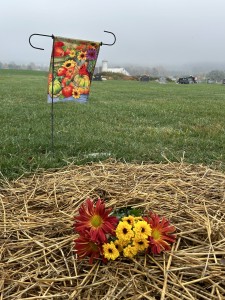
Grave by Allison C. Meier – My sister and I made a day trip up to my mother’s grave for the first time since her burial. She has a beautiful spot in a rural cemetery dating back to the 1780s, but it’s in full sun and very dry, so we tried to cheer up the dusty plot with some extra topsoil and grass seed, marigolds, and a butterfly flag.


 Meier is a cemetery tour guide in Brooklyn, where she lives. In the third of the e-book I’ve read so far, she looks at American burial customs, the lack of respect for Black and Native American burial sites, and the rise of garden cemeteries such as Mount Auburn in Cambridge, Massachusetts. I’ve been reading death-themed books for over a decade and have delighted in exploring cemeteries (including Mount Auburn, as part of my New England honeymoon) for even longer, so this is right up my street and one of the better Object Lessons monographs.
What I Bought
I traded in most of my mother’s books at 2nd & Charles and Wonder Book and Video but, no surprise, promptly spent the store credit on more secondhand books. Thanks to clearance shelves at both stores, I only had to chip in another $12.25 for the below haul, which also covered two Dollar Tree purchases (I felt bad for Susan Minot having signed editions end up remaindered!). Some tried and true authors here, as well as novelties to test out, with a bunch of short stories and novellas to read later in the year.


20 Books of Summer 2023 Plan
It’s my sixth year participating in Cathy’s 20 Books of Summer challenge, which starts today and runs through the 1st of September. In previous years I’ve chosen a theme.
2018: Books by women
2019: Fauna
2020: Food
2021: Colours
2022: Flora
Only in 2018, I think, was I strict enough with myself to only read books that I own, but every year that’s been my main goal: to clear things from the print TBR.
So, that means: no library books, no review copies bar the long-neglected backlog or the set-aside ones, and Kindle books only if I purchased them. Though I won’t be prescriptive about it, I’d like to prioritize hardbacks, recent acquisitions or longtime shelf-sitters, and books by women.
I thought about having no theme, or multiple mini ones, this year. However, I’ve amassed so many foodie reads that I could easily fill my 20 just with that topic (fiction and nonfiction pictured below, with some supplementary summery reads at left), so I’ll see how I go.


Below is my set-aside and review backlog area, which takes up much of the top two shelves. The bottom shelf is books I’m keen to reread. I could easily select some of my 20 from here.

I hoped to get ahead by reading one or two relevant books on the plane back from America, where I’ve been for the last 10 days for my sister’s nursing school graduation and some sadmin for my mom. Did I manage it? After I get over the jet lag, I’ll report back with my first read or two.
Are you joining in the summer reading challenge? What’s the first book on the docket?
Six Degrees of Separation: From Born to Run to Scary Monsters
I take part in this meme every few months. This time we begin with Born to Run, Bruce Springsteen’s memoir. (See Kate’s opening post.)
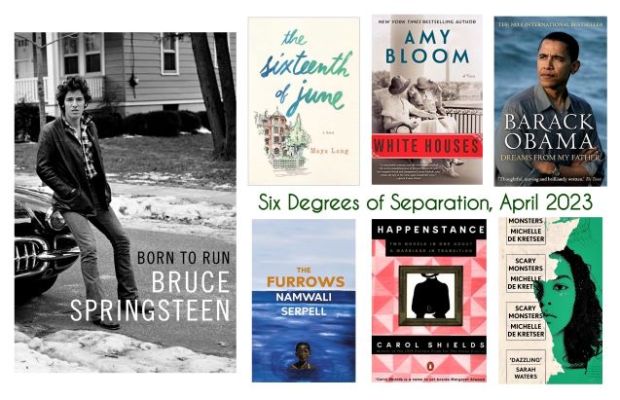
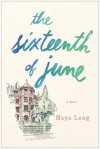 #1 Springsteen is one of my musical blind spots – I maybe know two songs by him? – but my husband has been working up a cover of his “Streets of Philadelphia” to perform at the next open mic night at our local arts venue. A great Philadelphia-set novel I’ve read twice is The Sixteenth of June by Maya Lang.
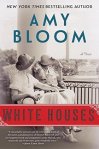 #2 The 16th of June is, as James Joyce fans out there will know, “Bloomsday,” so I’ll move on to the only novel I’ve read so far by Amy Bloom (and one I felt ambivalent about, though I love her short stories and memoir), White Houses.
 #3 A recent and much-missed occupant of the White House: Barack Obama, whose Dreams from My Father didn’t quite stand up to a reread but is still a strong family memoir when it doesn’t go too deep into community organizing.
 #4 Similar to the Oprah effect, Obama publicly mentioning that he’s read and enjoyed a book is enough to make it a bestseller. On his list of favourite books of 2022 was The Furrows by Namwali Serpell, which I currently have on the go as a buddy read with Laura T.
 #5 The Furrows is longlisted for the inaugural Carol Shields Prize for Fiction. In 2020 I did buddy reads of six Carol Shields novels with Marcie of Buried in Print. One of those was Happenstance, the story of a marriage told from two perspectives, the husband’s and the wife’s.
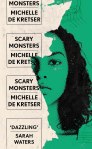 #6 My Happenstance volume gives the wife’s story first and then once you’ve read to halfway you flip it over to read the husband’s story. The only other novel I know of that does that (How to Be Both does have two different versions, each of which starts with a different story line, but you don’t physically turn the book over) is Scary Monsters by Michelle de Kretser, which recently won the Rathbones Folio Prize in the fiction category. Perhaps it’s no coincidence that Ali Smith was a judge! (How astonished am I that I predicted all three category winners and the overall winner in this post from three days before the announcement?!) I know nothing else about the novel, but I have a copy out from the library and plan to read it soon.
Where will your chain take you? Join us for #6Degrees of Separation! (Hosted on the first Saturday of each month by Kate W. of Books Are My Favourite and Best.) Next month’s starting book is Hydra by Adriane Howell, from the Stella Prize 2023 shortlist.
Have you read any of my selections? Tempted by any you didn’t know before?
 Bookish Beck = Rebecca Foster. American transplant to England. Freelance proofreader and book reviewer.
 Bookish Beck