Thankfulness
When I was growing up, my mom instituted a Thanksgiving ritual whereby each family member was given five dried corn kernels and we would go around in a circle and each say one thing we were thankful for, repeating the cycle until we’d all thought of five reasons to be grateful and added our corns to a communal basket.
I recently read The Gratitude Diaries by Janice Kaplan. For her one-year experiment in changing her attitude, she kept a daily gratitude diary in which she wrote one to three things she was thankful for every evening.
I’m not the world’s most optimistic person, and sometimes I can only see the bad side of my position as a freelance worker: uncertain income, loads of little piecemeal assignments not adding up to a proper salary, the dread of IRS calculations, no vacation time, feeling cut off from humanity and stuck in the house, and so on.
But in the spirit of Thanksgiving corns and gratitude diaries, I’d like to offer five reasons why I’m very grateful for what I’m doing now.
![By Catherine (Colorful Corn) [CC BY 2.0 (http://creativecommons.org/licenses/by/2.0)], via Wikimedia Commons](https://upload.wikimedia.org/wikipedia/commons/7/74/Colorful_Corn_-_%281%29.jpg)
By Catherine (Colorful Corn) [CC BY 2.0 (http://creativecommons.org/licenses/by/2.0)%5D, via Wikimedia Commons.
- A truly flexible schedule. No day is ever exactly the same as the next. It’s no problem at all to fit in doctor’s or vet’s appointments; I’m always in for workmen and deliveries. Chores, errands and bits of food prep can squeeze in wherever they need to. I can get up and make a cup of tea whenever I like. I generally find time to have the cat on my lap for a couple of hours every day while I read. And sometimes I even get the luxury of a nap!
- None of the petty crap of a 9-to-5 job. Boy, I sure don’t miss commuting to London, having a boss and annoying colleagues, putting on a faux-helpful demeanor for customers, and watching the clock in near-existential despair. Yes, I have employers nowadays, but it’s really completely different – they’re just names on the other side of e-mails. I am my own taskmaster; the buck stops here. Plus I almost never bother with makeup.
- Varied work. On most days I split my time between editing scientific journal articles, reading for work and pleasure, writing book reviews, and blogging. Even if I’m preparing multiple reviews at the same time, assignments feel distinct depending on the venue. Writing a strictly structured 350-word review for Kirkus is nothing like writing 950 words with a theological slant for Third Way magazine, for instance.
- Occasional affirmations. The majority of my freelance queries are met with silence if not outright rejection, but every so often I get a ‘yes’ that can make my day and keep me going. Although it’s not a paid assignment, I was particularly pleased when Third Way magazine asked me to write their 2015 Year in Fiction roundup. I’ve also recently started working with Publishers Weekly, the Times Literary Supplement, Stylist magazine, the Los Angeles Review of Books, and the Pittsburgh Post-Gazette.
- Life revolves around books. I’m surrounded by books all day, every day – much more so than I ever was in my six years of working in libraries. I’m always deep into 10 or 15 books at a time, with stacks of print and virtual books waiting for me. I get paid to read books and write what I think about them. Isn’t that amazing?!
From The Gratitude Diaries I learned that thankfulness appears to boost the immune system, lower stress, attract others’ help, and spark 20% more progress towards goals. Really, why not try it?
As one man Kaplan met puts it, “I’m happy, healthy … and in the most productive moment of my life. If I don’t walk around the street buoyant and jubilant, then what’s wrong with me?”
Happy Thanksgiving!
Thanksgiving Reading
This Thursday marks one of the most American of holidays: Thanksgiving. (My apologies to Canadian readers, who already had their celebration in October, and to British readers, who may find the whole thing a bit mysterious.) If you’ve never experienced a Thanksgiving meal for yourself, you might not know what all the fuss is about. After all, as Bill Bryson puts it in Notes from a Big Country, it’s a holiday where you just try to “get your stomach into the approximate shape of a beach ball.” But something about dysfunctional families crossing the country for a feast and reflecting on the country’s origins – however spurious the Pilgrims-’n-Injuns history behind the tradition might be – makes for intriguing fictional possibilities.
It’s no wonder Thanksgiving turns up all the time in American novels. Jonathan Franzen’s The Corrections is a classic example, but look further and you’ll find references everywhere. For instance, I’m just finishing up Good on Paper by Rachel Cantor (coming in February), set in New York City as Y2K approaches, and what do you know? There’s a Thanksgiving meal. And even a simple list of dishes gives a perfect miniature view of differences in class and perspective: Shira’s neighbor wants “traditional fare—string bean casserole with cornflakes” and yam casserole topped with marshmallows, while her gay, Pakistani co-parent, Ahmad, prefers “the exotic: millet-shitake stuffing with chestnut-and-caper sauce.”
If you’re looking for something seasonal to read this week, here are snippets of books I’ve reviewed, two fiction and two nonfiction. For more ideas, check out this Thanksgiving books list on Goodreads from the Washington Post’s Ron Charles. Anne Tyler, Richard Ford – some great stuff on there!
Fiction:
 Want Not by Jonathan Miles: “Waste not, want not” goes the aphorism, and Miles’s second novel explores both themes to their fullest extent: the concept of waste – from profligate living to garbage and excrement – and ordinary people’s conflicting desires. In three interlocking story lines, Miles looks for what is really of human value at a time when everything seems disposable and possessions both material and digital can exert a dispiriting tyranny. The novel opens on Thanksgiving 2007, with New York City buried under an early snowstorm. The nation’s annual excuse for gluttony makes a perfect metaphorical setting for Miles’s exposé of food waste and consumerist excess. This is a book I wish I had written.


Housebreaking by Dan Pope: This tightly crafted novel of adultery in dysfunctional suburbia is somewhat reminiscent of Tom Perrotta’s Little Children or the movie Far from Heaven, but with less memorable characters and story line overall. The strategy of revisiting the same events of one late summer and fall from different characters’ perspectives makes it feel slightly repetitive and claustrophobic. My favorite touches were the comical dialogue between a handful of old folks and a description of the cookie-cutter buildings in the Connecticut suburbs: “all the little houses, lined up like cereal boxes on a shelf.” Like Want Not, it also revolves around Thanksgiving 2007.

Bet you never thought there would be a third novel set on Thanksgiving 2007! But it appears there is: Strangers at the Feast by Jennifer Vanderbes. You may also like to sample “An Old-Fashioned Thanksgiving,” an 1881 short story by Louisa May Alcott.
Nonfiction:
You won’t have to try too hard to find Thanksgiving scenes in nonfiction either, especially when it comes to memoirs. I read one of Ruth Reichl’s terrific ‘foodoirs’, Comfort Me with Apples, earlier this year and there’s a great moment when she and Michael Singer, who would become her second husband, go to a restaurant for their first Thanksgiving together. It’s a disaster of a meal; the duck isn’t served until midnight. Sure is memorable, though.
 The First Thanksgiving by Nathaniel Philbrick: In this selection from his 2007 book Mayflower: A Story of Courage, Community, and War, reprinted as a mini e-book in the “Penguin Tracks” series, Philbrick tells the true story behind the first Thanksgiving. As with most beloved legends, the circumstances are much more complicated and much less rosy than they appear in our collective memory. Philbrick writes in an informative yet conversational style, and paints an appealing picture of the Pilgrims as reasonable people with humble aims. (See my full review at Bookkaholic.)
 Eating Appalachia: Rediscovering Regional American Flavors by Darrin Nordahl: Nordahl travels through Ohio, West Virginia, Kentucky and North Carolina in search of truly indigenous local ingredients. There are a few recipes and photographs in each chapter, although this is more of a narrative than a cookbook. I loved how he brought it all together with his imagined Appalachian Thanksgiving feast (what we consider traditional today includes very little that would actually have been eaten in the Pilgrims’ place and time):
appetizers of pickled ramps and brook trout crostini, bowls of butternut [the nut, not the squash] cream bisque, plates piled with the showpiece dish of spicebush-peppered roast elk tenderloin and hickory nut stuffing—all washed down with steaming sassafras tea and chilled sumac-ade, capped with a choice of persimmon pudding with black walnut ice cream or pawpaw panna cotta.
Do you like to tailor your reading to the holidays? What will you be reading this Thanksgiving week?
Reviews Roundup, October–November
One of my goals with this blog is to have one convenient place where I can gather together all my writing that has appeared in disparate online locations. To that end, once a month I provide links to all book reviews I’ve published elsewhere, with a rating (below each description) and a taster so you can decide whether to read more. A few exceptions: I won’t point out my Kirkus Indie, BlueInk or Publishers Weekly reviews since I don’t get a byline.
This month you may recognize a few books I already previewed in my posts on books as beautiful objects and library books read in October.
The Bookbag
Charlotte Brontë’s Secret Love by Jolien Janzing: Charlotte and Emily Brontë’s time in Belgium – specifically, Charlotte’s passion for her teacher, Constantin Heger – is the basis for this historical novel. The authoritative yet inviting narration is a highlight, but some readers may be uncomfortable with the erotic portrayal; it doesn’t seem to fit the historical record, which suggests an unrequited love affair. My other issue with the book is a couple of subplots that only seem to have minor significance.

In Fidelity by Jack Wilson: In this 1970s-set novel, the central couple’s relationship is tested by illness and extramarital sexual experiences. Moving from New England to Nigeria and back, the story asks what loyalty really requires when a once-strong connection has faded over time. Strongly reminiscent of John Updike in Part One, this is the male view of adultery. Something about the self-justifying tone stuck in my craw. A more balanced book would give the wife’s perspective, too, as Carol Shields did in Happenstance, or like Lauren Groff recently did to great success in Fates and Furies.
BookBrowse
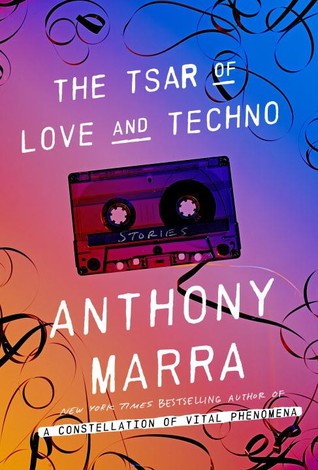 The Tsar of Love and Techno by Anthony Marra [subscription service]: This collection of tightly linked short stories, an intimate look at Russia and Chechnya in wartime and afterwards, reveals how politics, family, and art intertwine. Ranging from 1937 to 2013, the pieces show how fear and propaganda linger in the post-Stalinist era. In art as much as in politics, it can be difficult to distinguish airbrushed history from bitter reality. Just as he did in his excellent debut novel, A Constellation of Vital Phenomena, Marra renders unspeakable tragedies bearable because of his warm and witty writing. All his characters’ voices are well-realized and inviting, and he comes up with terrific one-liners.
BookTrib
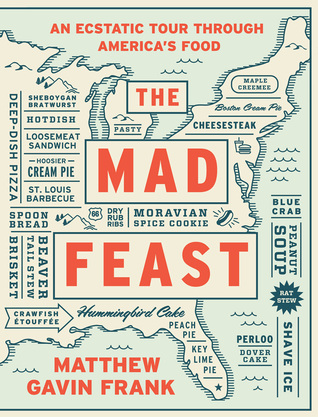 Mad Feast by Matthew Gavin Frank: This is the cookbook David Foster Wallace might have written. In an off-the-wall blend of memoir, travel, history and fiction, Frank proceeds region by region, choosing for each American state one beloved dish and interrogating its origins as well as its metaphors and associations. It’s a mixed bag of familiar foods and ones that only locals are likely to know about. Each chapter ends with a recipe for the signature plate, whether from a Lutheran church or a posh restaurant. Frank’s digressive, anecdotal approach takes some getting used to. If you appreciate the style of writers like Geoff Dyer, Maggie Nelson and Will Self, this should be your next food-themed read.
For Books’ Sake
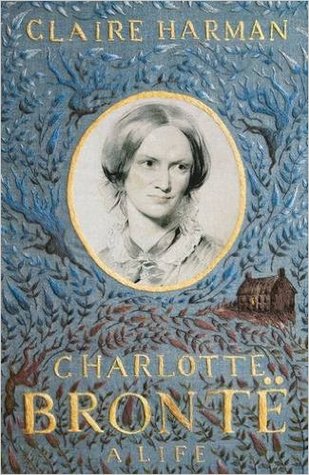 Charlotte Brontë: A Life by Claire Harman: With her bicentennial approaching in April 2016, it’s the perfect time to revisit Charlotte Brontë’s timeless stories. One of the things Harman’s biography does best is trace how the Brontës’ childhood experiences found later expression in fiction. A chapter on the publication of Jane Eyre is a highlight. Diehard fans might not encounter lots of new material, but Harman does make a revelation concerning Charlotte’s cause of death – not TB, as previously believed, but hyperemesis gravidarum (extreme morning sickness). This will help you appreciate afresh a “poet of suffering” whose novels were “all the more subversive because of [their] surface conventionality.”

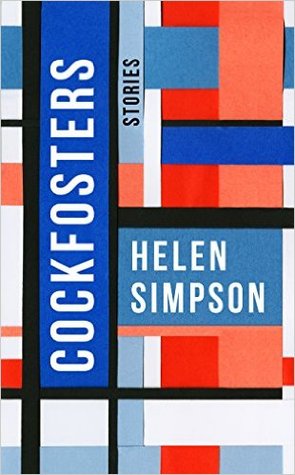
Cockfosters by Helen Simpson: Simpson’s sixth story collection is full of wry, incisive reflections on aging, loss, regrets, gender roles, and a changing relationship to sex. Most of Simpson’s characters are in their late forties, a liminal time when they’re caught between older parents and still-needy children. Many pieces are dialogue-driven, like scenes in plays. In “Kentish Town,” book club members meet to discuss Dickens’s The Chimes. Simpson weaves in discussion of the plot with commentary on the state of the nation as the ladies set the world to rights and make New Year’s resolutions. It’s a perfect story to read in the run-up to Christmas. The overall stand-out is “Erewhon,” named for Samuel Butler’s 1872 satirical utopian novel. It quickly becomes clear that gender roles are reversed in its fictional world.
Foreword Reviews
 Addiction Is Addiction by Raju Hajela, Paige Abbott and Sue Newton: This comprehensive, well-organized guide discusses the features of addictive thinking and feeling, suggests holistic recovery methods, and offers useful definitions, diagrams, and case studies. The authors are affiliated with Health Upwardly Mobile Inc., Calgary, Alberta. Tracing the history of addiction back to the eighteenth century, when it was first known as “alcoholic disease syndrome,” they present an expert view of the disease’s symptoms and outlook. Strongly recommended to those who have participated in groups like Alcoholics Anonymous or Narcotics Anonymous.
Kirkus
Indie Spotlight: Books about Religion: Self-publishing allows writers to tell their full stories. An article based on interviews with four indie religion authors and mini-reviews of their books.
Nudge
Notes on Suicide by Simon Critchley: Critchley is a philosophy professor at New York’s New School for Social Research. Although he reassures readers with his first line that “This book is not a suicide note,” he also hints that its writing was inspired by personal trouble: “my life has dissolved over the past year or so, like sugar in hot tea.” Not suicidal himself, then, but sympathetic to those who are driven to self-murder. This concise essay illuminates arguments surrounding suicide, with points of reference ranging from Greek philosophers to Robin Williams. Overall, though, it feels cursory and inconclusive.
 The Gratitude Diaries by Janice Kaplan: We can all do with a little encouragement to appreciate what we already have. In so many areas of life – finances, career, relationship, even the weather – we’re all too often hoping for more or better than what we are currently experiencing. Here Kaplan undertakes a year-long experiment to see if gratitude can improve every aspect of her life. She draws her information from interviews with researchers and celebrities, quotes from philosophers, and anecdotes from her own and friends’ lives. It’s easy, pleasant reading I’d recommend to fans of Gretchen Rubin.
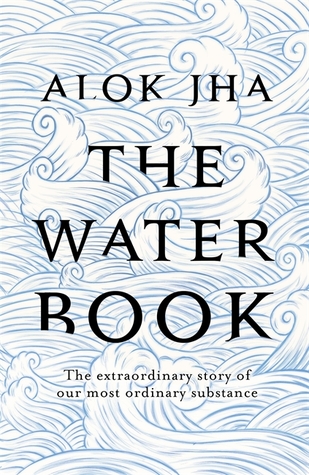 The Water Book by Alok Jha: An interdisciplinary look at water’s remarkable properties and necessity for life on earth. For the most part, Jha pitches his work at an appropriate level. However, if it’s been a while since you studied chemistry at school, you may struggle. Part IV, on the search for water in space, is too in-depth for popular science and tediously long. In December 2013 Jha was part of a month-long Antarctic expedition. He uses the trip as an effective framing device, but I would have liked more memoiristic passages. All in all, I was hoping for less hard science and more reflection on water’s importance to human culture.
 Claxton: Field Notes from a Small Planet by Mark Cocker: Mark Cocker is the Guardian’s country diarist for Norfolk. The short pieces in this book are reprints of his columns, some expanded or revised. I would advise keeping this as a bedside or coffee table book from which you read no more than one or two entries a week, so that you always stay in chronological sync. You’ll appreciate the book most if you experience nature along with Cocker, rather than reading from front cover to back in a few sittings. The problem with the latter approach is that there is inevitable repetition of topics across years. All told, after spending a vicarious year in Claxton, you’ll agree: “How miraculous that we are all here, now, in this one small place.”
 A Mile Down by David Vann: Vann, better known for fiction, tells the real-life story of his ill-fated journeys at sea. He hired a Turkish crew to build him a boat of his own, and before long shoddy workmanship, language difficulties, bureaucracy, and debts started to make it all seem like a very bad idea. Was he cursed? Would he follow his father into suicide? The day-to-day details of boat-building and sailing can be tedious, and there’s an angry tone that’s unpleasant; Vann seems to think everybody else was incompetent or a crook. However, he does an incredible job of narrating two climactic storms he sailed through.
Wasafiri
The Triumph of the Snake Goddess by Kaiser Haq: Beginning with the creation of the world and telling climactic tales of the snake goddess Manasa’s interactions with humans, Haq crafts a uniquely playful set of sacred stories that bear striking similarities to those from other religious traditions. Like Greek myths, the Manasa stories are full of shape-shifting and mistaken identity; rape and incest; jealousy and revenge; and over-the-top exploits of warring gods. She even wears snakes in her hair, like Medusa. Many parallels can also be drawn with the Hebrew and Christian scriptures. Haq’s rendering of the creation account, in particular, resembles the language of Genesis. This book will appeal to students of comparative religion, but can be read with equal enjoyment by laymen in search of engaging storytelling.
I also post reviews of most of my casual reading and skimming on Goodreads.
Mrs. Stevens Hears the Mermaids Singing by May Sarton: Although I’m a huge fan of Sarton’s memoirs, this was my first taste of her fiction. I was underwhelmed: it’s slight and strangely unfeminist. Part of the problem may be that I know so much about Sarton that I couldn’t help but see all the autobiographical detail here. Most of the novel’s action takes place in one day, as Mrs. Stevens awaits the arrival of two interviewers and reflects on past love affairs (some with women) and the meaning of the Muse. For me, Sarton’s journals are a better source of deep thoughts on the writer’s vocation, the value of solitude and the memory of love. This was seen as Sarton’s coming-out book, although it’s not at all sexually explicit.
 Running on the March Wind by Lenore Keeshig: Keeshig is a First Nations Canadian; these poems are full of images of Nanabush the Trickster, language from legal Indian acts, and sly subversion of stereotypes – cowboys and Indians, the only good Indian is a dead Indian (in “Making New”), the white man’s burden, and so on. In places I found these more repetitive and polemical than musical, though I did especially like the series of poems on trees.
The Cartographer Tries to Map a Way to Zion by Kei Miller: Kei Miller is a Jamaican writer who uses island patois and slang, and Rastafarian images and language, alongside standard English. Here he sets up (especially with the long, multi-part title poem) a playful contrast between the cartographer, emblem of civilization and unbiased science, and the rastaman, who takes an altogether more laidback approach to mapping his homeland. This was the perfect poetry collection to be reading in tandem with A Brief History of Seven Killings (see below).
 Very British Problems Abroad by Rob Temple: This is possibly ever so slightly funnier than the original (Very British Problems). A lot of it rings true. Once again the fact that the book originated as tweets means you can’t read too much of it at a time or the one-liners grow tiresome. A couple of my favorites were: “The feeling of dread as you approach the campsite and only then remembering that last year you said you’d never, ever do this again” and “Noticing an avalanche heading your way and hoping your umbrella’s up to the job.”
 Purity by Jonathan Franzen: By starting and ending with Purity ‘Pip’ Tyler, Franzen emphasizes his debt to Dickens: shades of both Bleak House and Great Expectations are there in the discovery of true parentage and unexpected riches. This is strong on the level of character and theme. Secrecy, isolation and compassion are recurring topics. East Germany, Bolivia and Oakland, California: Franzen doesn’t quite pull all his settings and storylines together, but this is close. With a more dynamic opening section, it might have been 5 stars.
 A Brief History of Seven Killings by Marlon James: This is an edgy, worthwhile Booker pick, but not for the faint-hearted. For the most part, James alternates patois and standard speech, but nearly every section is packed with local slang and expletives. Whether in monologue or dialogue, the many voices form a captivating chorus. The novel is in five parts, each named after a popular song or album of the time. James’s scope, especially as he follows Josey Wales to the Bronx, is too wide. All the narrative switches, once so dynamic, grow tiresome. At 350 pages this would have been a 5-star read. Nevertheless, I’ll be watching the HBO miniseries. (Full review to appear in December 2015 issue of Third Way magazine.)
 Kitchens of the Great Midwest by J. Ryan Stradal: One of my favorite debuts of 2015. Stradal has revealed that his grandmother’s Lutheran church cookbook was the inspiration for this culinary-themed novel that takes place over the course of 30 years. His unique structure takes what are essentially short stories from different perspectives and time periods and links them loosely through Eva Thorvald. Eva’s pop-up supper club gains fame thanks to her innovative adaptations of traditional Midwestern foods like venison or Scandinavian lutefisk; it charges $5,000 a head. I loved almost all of Stradal’s ordinary, flawed characters. If you want a peek at how average Americans live (apart from the $5,000 meals), you’ll find it here.
 The Japanese Lover by Isabel Allende: Allende is a wonderful storyteller. This isn’t up to the level of her South American novels (e.g. The House of the Spirits), and in elaborating both Alma’s and Irina’s stories there’s a bit too much telling rather than showing, but I thoroughly enjoyed the book all the same – I devoured it in just a few days. Allende is sensitive to both the process of aging and the various strategies for dealing with traumatic events from the past.
 Accidental Saints: Finding God in All the Wrong People by Nadia Bolz-Weber: I knew of Nadia Bolz-Weber through Greenbelt Festival. She’s a foul-mouthed, tattooed, fairly orthodox Lutheran pastor. This brief, enjoyable memoir is about how she keeps believing despite her own past issues and the many messed-up and outwardly unlovable people who show up at her church, House for All Sinners and Saints in Denver. In my favorite section, she zeroes in on one Holy Week and shows the whole range of emotions and trauma that religion can address. The Ash Wednesday chapter is the overall highlight.
 The Road to Little Dribbling: Adventures of an American in Britain by Bill Bryson: Bryson’s funniest book for many years. It meant a lot to me since I am also an American expat in England. Two points of criticism, though: although he moves roughly from southeast to northwest in the country, the stops he makes are pretty arbitrary, and his subjects of mockery are often what you’d call easy targets. Do we really need Bryson’s lead to scorn litterbugs and reality television celebrities? Still, I released many an audible snort of laughter while reading.
 Shaler’s Fish by Helen Macdonald: I was a huge fan of Macdonald’s memoir, H is for Hawk, so was excited to read her poetry collection, originally published in 2001 but to be reissued by Atlantic Monthly Press. Unfortunately, despite the occasional bird and nature imagery (e.g. in “Monhegan”), I found these poems largely inaccessible. Perhaps it was the sprinkling of archaic vocabulary and spellings, or the general lack of punctuation apart from annoying slashes and ampersands.

Portrait of an Addict as a Young Man: A Memoir by Bill Clegg: One of the finest memoirs I’ve come across (and I read a heck of a lot of them). Through this book I followed literary agent Bill Clegg on dozens of taxi rides between generic hotel rooms and bar toilets and New York City offices and apartments; together we smoked innumerable crack pipes and guzzled dozens of bottles of vodka while letting partners and family members down and spiraling further down into paranoia and squalor. Every structural and stylistic decision works: the present tense, short paragraphs, speech set out in italics, occasional flashback chapters distanced through third-person narration. Clegg achieves a perfect balance between his feelings at the time – being out of control and utterly enslaved to his next hit – and the hindsight that allows him to see what a pathetic figure he was becoming.
 Landfalls by Naomi J. Williams: An enjoyable novel of eighteenth-century maritime adventure, based on a true story and reminiscent of Matthew Kneale’s English Passengers and Peter Carey’s Parrot and Olivier in America. Williams moves between the perspectives of various crew members and outsiders, sometimes employing first person and sometimes third. Key chapters are set in South America, California, Alaska, Macao, and the Solomon Islands. I especially enjoyed a chapter from the point-of-view of a native Alaskan girl – one of the few times the novel focuses on female experience.
 Dept. of Speculation by Jenny Offill: Not as innovative or profound as I was expecting given the rapturous reviews from so many quarters. It’s an attempt to tell an old, old story in a new way: wife finds out her husband is cheating. Offill’s style is fragmentary and aphoristic. Some of the facts and sayings are interesting, but most just sit there on the page and don’t add to the story. What I did find worthwhile was tracing the several tense and pronoun changes: from first-person, past tense into present tense, then to third-person and back to first-person for the final page.
 As Far As I Know by Roger McGough: A bit silly for my tastes; lots of puns and other plays on words. In style they feel like children’s poems, but with vocabulary and themes more suited to adults. I did like “Indefinite Definitions,” especially BRUPT: “A brupt is a person, curt and impolite / Brusque and impatient / Who thinks he’s always right.” The whole series is like that: words with the indefinite article cut off and an explanation playing on the original word’s connotations. From the “And So to Bed” concluding cycle, I loved Camp bed: “A la Recherche du Temps Perdu / on the bedside table / Gardenia on the pillow / Silk pyjamas neatly folded.”
 The Penguin Lessons: What I Learned from a Remarkable Bird by Tom Michell: Marley & Me with a penguin. Well, sort of. A sweet if slight story about the author keeping a Magellanic penguin as a pet while teaching in an Argentina boarding school in the 1970s. On a vacation to Uruguay the twentysomething rescued a penguin from an oil spill and named him Juan Salvado. The uproarious process of cleaning the oil-sodden bird, achieved with a bidet, string bag, and plenty of dish soap, was my favorite passage. However, I’m hesitant about anthropomorphizing, and the language can be stiff – I would have dated this to the 1950s by the speech. Also, there’s precious little evidence of Argentina’s political upheaval.
The Seed Collectors & The A to Z of You and Me
The Seed Collectors by Scarlett Thomas
“I have no idea why everyone thinks nature is so benign and glorious and wonderful. All nature is trying to do is kill us as efficiently as possible.”
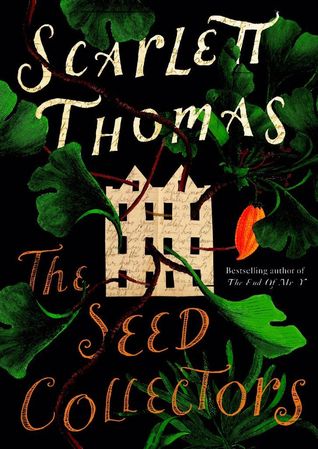 This offbeat novel about obsession, sex and inheritance is set in Kent in 2011 and stars an extended family of botanists. The concept of a family tree has a more than usually literal meaning here given the shared surname is Gardener and most members are named after plants. We have Great-Aunt Oleander, recently deceased; cousin Bryony and her children Holly and Ash; siblings Charlie and Clem (short for Clematis); and half-sister Fleur, who has taken over Oleander’s yoga center, Namaste House. The generation in between was virtually lost, perhaps to a plant-based drug overdose, on a seed collecting expedition to the South Pacific. Oleander has left each motherless child one of these possibly deadly seed pods.
Did I mention the book is saturated with sex? Incest, adultery, illegitimate children, S&M, Internet porn, you name it. But beyond that, the metaphorical language is highly sexualized – bursting with seeds, fertility and genital-like plants. I can’t think when I’ve encountered such oversexed vocabulary since D.H. Lawrence’s Sons and Lovers. Here’s a sampling:
Dave seems to be avoiding the clouds as he works the little plane up into the sky, penetrating it slowly, and really quite gently.
A surprising amount of plants look like dicks.
(of peat) It’s like walking on a giant’s pubes.
All lettuce wants is sex. And violence. Just like all plants. It wants to reproduce, and it wants to kill or damage its rivals so they don’t reproduce.
So many flowers are basically little sex booths.
And she was pulling him towards her, deeper into her, as if he were a flower and she an insect desperate for his cheap, sugary nectar.
Connections between characters morph and take on new dimensions as the book goes on. A few characters are unrealized, such as Fleur, which meant I felt slightly disconnected from them. (My ‘favorite’ in a book stuffed full of unlikable figures was probably Bryony, whose hunger for food, alcohol and shopping seems to be endless.) Likewise, not all the storylines are truly essential, so the book seems aimless for its final third; it definitely could have been shorter and tied together better, perhaps with some flashbacks to the previous generation’s experiences on the island to make the past feel more alive. The spiritual element remains vague, although there is a pleasant touch of magic realism along the way.
Despite these reservations, I truly enjoyed Thomas’s unusual writing. She moves freely between characters’ perspectives but also inserts odd second-person asides asking philosophical questions about wasted time and what is truly important in life. One peculiar little section even imagines the point-of-view of a robin in the garden of Namaste House, with made-up words fit for “The Jabberwocky”: “The man is, as always, incompt and untrig. He sloggers around his rooms in his black and grey ragtails like an elderly magpie.”
I like the range of questions you’re left with as a reader: Is nature malicious? Can we overcome our addictions? How much of who we are is down to our parentage? Does life really just come down to sex? The content of the novel might be reminiscent of A.S. Byatt and Andrea Barrett’s science-infused fiction or The World Before Us by Aislinn Hunter, but the style is totally different. I can’t even think who it reminds me of; it feels pretty one of a kind to me. Luckily this is Thomas’s sixth novel, so there’s plenty more for me to explore.
With thanks to Canongate for the free copy, won in a Goodreads giveaway.
My rating:
The A to Z of You and Me by James Hannah
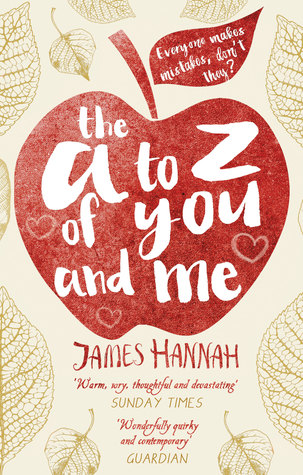 Lying in a hospice bed, 40-year-old Ivo looks back on his life. Even after just four short decades and a modest career at a garden center, he has plenty to regret. Hard partying and drug use exacerbated his diabetes and prompted kidney failure. His lifestyle also led indirectly to his girlfriend, a nursing student named Mia (the “you” whom he often addresses directly), leaving him. He’s estranged from his sister and the friends he’d been close to since school days, especially Mal. How did he mess up so badly and cut himself off so completely that he’s now dying alone? And how much can he put right before he goes?
There’s plenty of affecting writing in Hannah’s debut novel, as in one of my favorite passages: “The sun chooses this moment to radiate through to me, through me. It feels like – it feels like life. I can sense my corrupt blood bubbling and basking beneath the surface.” I also love how Hannah captures the routines of institutional life – the sights, smells and sounds that come to define Ivo’s circumscribed life:
Round the corner now. Noticeboard up on the right, pinned every inch over with flyers and leaflets. The papers at the bottom lift and flutter in the convection of the heater beneath.
I am lost in a world of regular hums, distant beeping, the periodic reheating of the coffee machine in the corridor, and that steady kazoo [of his next-door neighbor’s breathing].
Nurse Sheila and Amber, the daughter of another hospice patient, are great supporting characters. Sheila’s A to Z game, encouraging Ivo to think of a memory attached to body parts starting with each letter of the alphabet, provides a hokey but effective structure. As Ivo’s condition deteriorates and his thoughts are scrambled by morphine, his narration gradually becomes less coherent and more insular. This means that by the time we reach the conclusion (which somehow manages to be both predictable and shocking at the same time), we aren’t sure whether he’s giving a reliable account of events or imagining things.
Ultimately, I felt confused about what Hannah meant for the book to be. Is this Irvine Welsh lite? Or a Rachel Joyce style tear-jerker? It’s similar in setup to The Love Song of Miss Queenie Hennessy, you see, and the remembered relationship with Mia is rather sappy. However, keep in mind that in British English the letter Z is pronounced ‘zed’, so the title doesn’t rhyme, which keeps it from being overly twee. Another barrier to my appreciation of the novel was that I never understood why Ivo was dying. People don’t die of kidney failure nowadays, thanks to dialysis and transplantation. (I have a kidney disease, so I should know!)
I’d recommend this book to fans of Mark Haddon, David Nicholls and Donal Ryan. I’ll follow Hannah’s career and hope he can avoid melodrama and a contrived structure – the two near-pitfalls of this one – in the future.
With thanks to Transworld Books for the free copy, won in a Goodreads giveaway.
My rating:
Review: Seal Morning by Rowena Farre
Here’s an obscure nature classic for animal lovers who can’t get enough of Gerald Durrell and James Herriot. It was a bestseller and a critical success when first published in 1957, and the fact that it has been reprinted several times in the new millennium is testament to its enduring appeal. It’s the account of seven years Farre spent living in a primitive Scottish croft (no electricity or running water) with her Aunt Miriam, starting at age 10. Despite an abrupt beginning, a dearth of dialogue and slightly rushed storytelling, I found this very enjoyable.
 Like the young Durrell, Farre kept a menagerie of wild and half-domesticated animals, including Cuthbert and Sara the gray squirrels, Rodney the rat, Hansel and Gretel the otters, and – the star of this memoir – Lora, a common seal pup. Other pets came and went, like an ill-tempered roe deer fawn, a family of song thrushes, and a pair of fierce wild cat kittens. Early chapters about the struggle to keep all these ravenous creatures fed and wrangled are full of humorous mishaps, like Cuthbert falling down a chimney into the porridge.
Farre acquired Lora on a trip to Lewis. Like dogs, seal pups are very loyal and attached. Farre fed Lora a bottle on her lap and let her sleep at the foot of the bed. Lora was also strikingly intelligent: she recognized 35 words, collected the mail from the postman, unpacked groceries and had an aptitude for music, including playing the mouth organ and xylophone and ‘singing’ along to piano accompaniment. She and the otters, along with Ben the dog, loved to frolic in the water and slide down snowy hills in the winter.
Besides capturing animal antics, what Farre does best in this book is to evoke the extreme isolation of their living situation. Aunt Miriam had saved up £75 a year for them to live off, but also painted designs on wooden bowls for extra cash. The regular summer routine of storing up food was not about passing the time but survival. Near-catastrophes, like getting lost in a mountain mist or the goats raiding Lora’s food supply, showed how precarious life could be. There was little to do on winter days, and only five or six hours of daylight anyway;
“Another hour in the croft and I would have had a nervous breakdown,” said Aunt Miriam. Life up here got you like that sometimes.
Really there are very few adults these days who possess the mental and emotional self-sufficiency necessary for leading satisfactory existences in these remote parts.
A life with animals is bound to involve some sadness. One pet gets picked off by a peregrine; another is injured in a trap and has to be put down. Ben’s fate is particularly sad. Lora’s, by contrast, is just mysterious: after seven years at the croft, she simply disappeared. Farre never learned what became of her.
At age 17, Farre had to decide how to make her own way in life. She took solo camping trips to contemplate her future, doing some informal seal research on Shetland and Iceland. Especially after Aunt Miriam met a Canadian man on an extended trip to visit friends in Berkshire and got engaged, it was clear that their crofting life together was soon to end. Farre hints at what happened next for her: she would go on to travel with British gypsies and journey to the Himalayas, subjects for two further autobiographies. The book ends on a melancholy note as Farre returns to the croft five years later and finds it no better than a ruin.
Farre died relatively young, aged 57 in 1979. Alas, an afterword by Maurice Fleming introduces an element of doubt about the writer and the strict veracity of her memoir. For one thing, Rowena Farre wasn’t her real name. “Piecing Daphne Lois Macready’s life together is like laying out a jigsaw from which some bits are missing and others faded,” Fleming writes. We know she was born in India to an Army officer and the family moved around the Far East for a number of years. However, Farre does not account for her formal schooling, and no evidence of the croft has ever been found. In other words, we don’t know how much is true.
Does this matter? It doesn’t detract from my enjoyment of this lively animal-themed memoir (after all, Herriot also did plenty of fictionalizing), but it does make me wonder whether some of Lora’s feats might be made up. Are seals really as intelligent and personable as she makes them out to be? I was left feeling slightly uneasy, and wanting to do more research about both Farre and seals to figure out what’s what. Still, this is a wonderfully cozy read to pick up by a fire this autumn or winter.
With thanks to the publisher, Birlinn, for the free copy.
My rating:
Review: Ruins by Peter Kuper
In the past few years I’ve made a conscious effort to get more into graphic novels. In that time I’ve discovered some real gems – highlighted in a previous post entitled “Graphic Novels for Newbies” – and Peter Kuper’s latest book, Ruins, is among my favorites. Kuper is a comics legend: he’s a long-time MAD Magazine illustrator and the author of more than 20 books, as well as a teacher at the School of Visual Arts in Manhattan.
 Ruins appealed to me because of its environmental theme, but I found so much more to love. I previewed it in my last post, “Books as Objects of Beauty,” because it’s a simply gorgeous physical book – what with the embossed title on the cover and spine, the red-edged pages, the built-in ribbon bookmark, and the entomological drawings on the endpapers. Luckily what’s inside is just as special as the packaging.
In essence, this is the bittersweet story of an American couple traveling from Manhattan to Oaxaca, Mexico for a sabbatical year. Samantha hopes to brush up on her Spanish, work on a book about Mexican history and legends, and finally get pregnant. George, recently laid off from his job as an entomologist at the Natural History Museum, is delighted with Oaxaca’s invertebrate life – leafcutter ants, edible grasshoppers, and a pesky scorpion – but not so convinced about having a baby; surely the world is too messed up to bring a new life into?
The novel’s small cast also includes Angelina, their housekeeper; another George, a British bookseller; and Al, a former photojournalist and heavy drinker who joins with our George to document the local teachers’ strike. We learn that Samantha has lived here before and has returned in part to exorcise tragic events from her past. The book’s title thus has many meanings in context: not only the ruined cities Samantha and George visit as tourists and the ruin corrupt Governor Ulises Ruiz Ortiz is currently making of the place, but also the decay of relationships old and new and the decline of the environment.
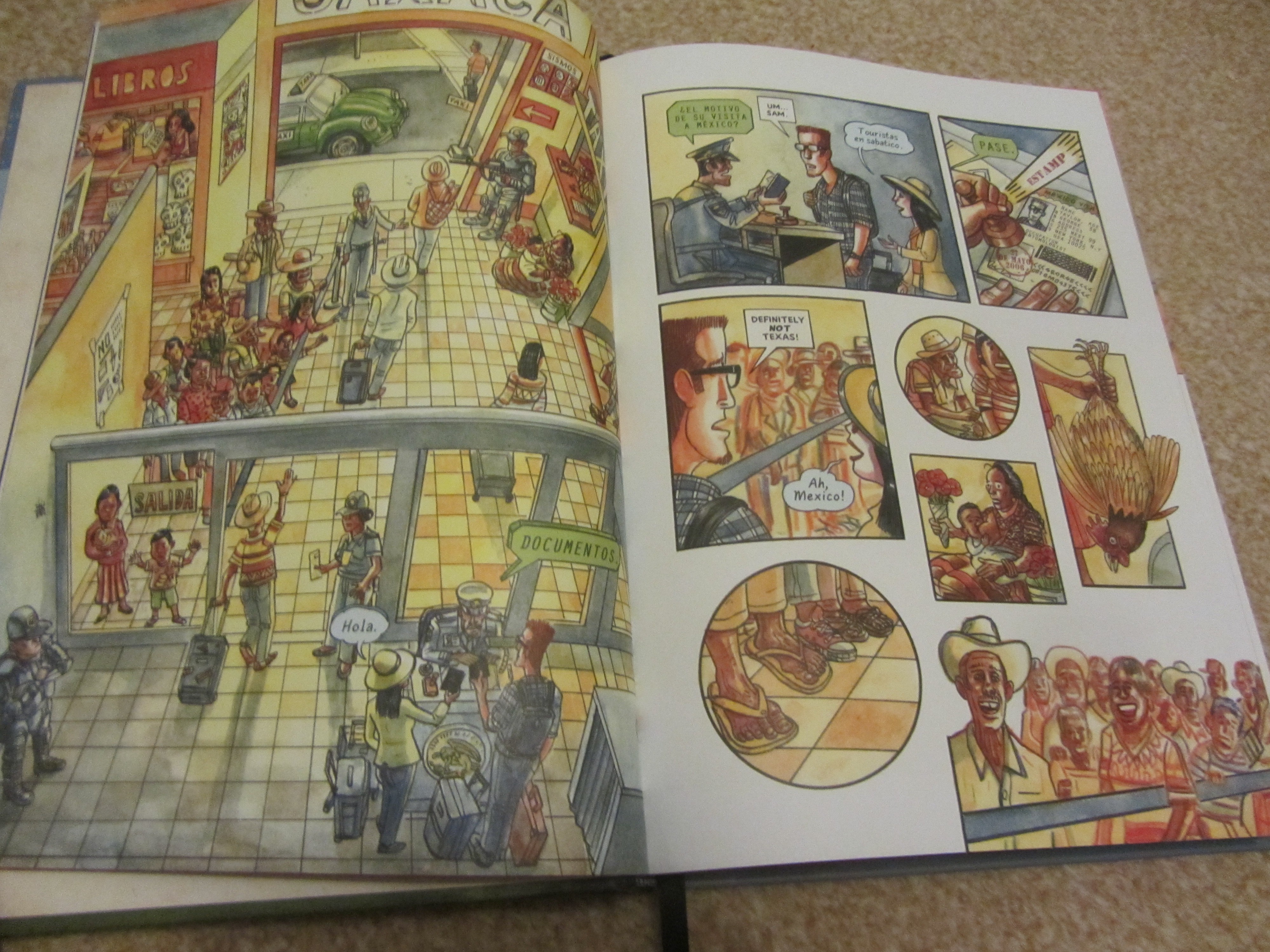
The colorful arrival at Oaxaca Airport.
The environmental agenda comes through in the parallel story of one monarch’s migration. Sections set in Mexico alternate with short interludes showing the butterfly’s journey south from America to Michoacan, Mexico, where monarchs gather en masse in a pine forest. The limited palette of these spreads, in contrast with the vibrant colors of the Oaxaca scenes, is particularly effective: the monarch is generally the only speck of color against a monochrome blue-gray background showing rather dreary American scenes. Tagged in Pennsylvania, the monarch flies over polluted rivers, a nuclear power plant, an abandoned West Virginian mine, the aftermath of Hurricane Katrina, Monsanto tomato pickers, a Texas border arrest, and a Mexican drug deal gone wrong – a symbol of precarious hope in spite of circumstance.
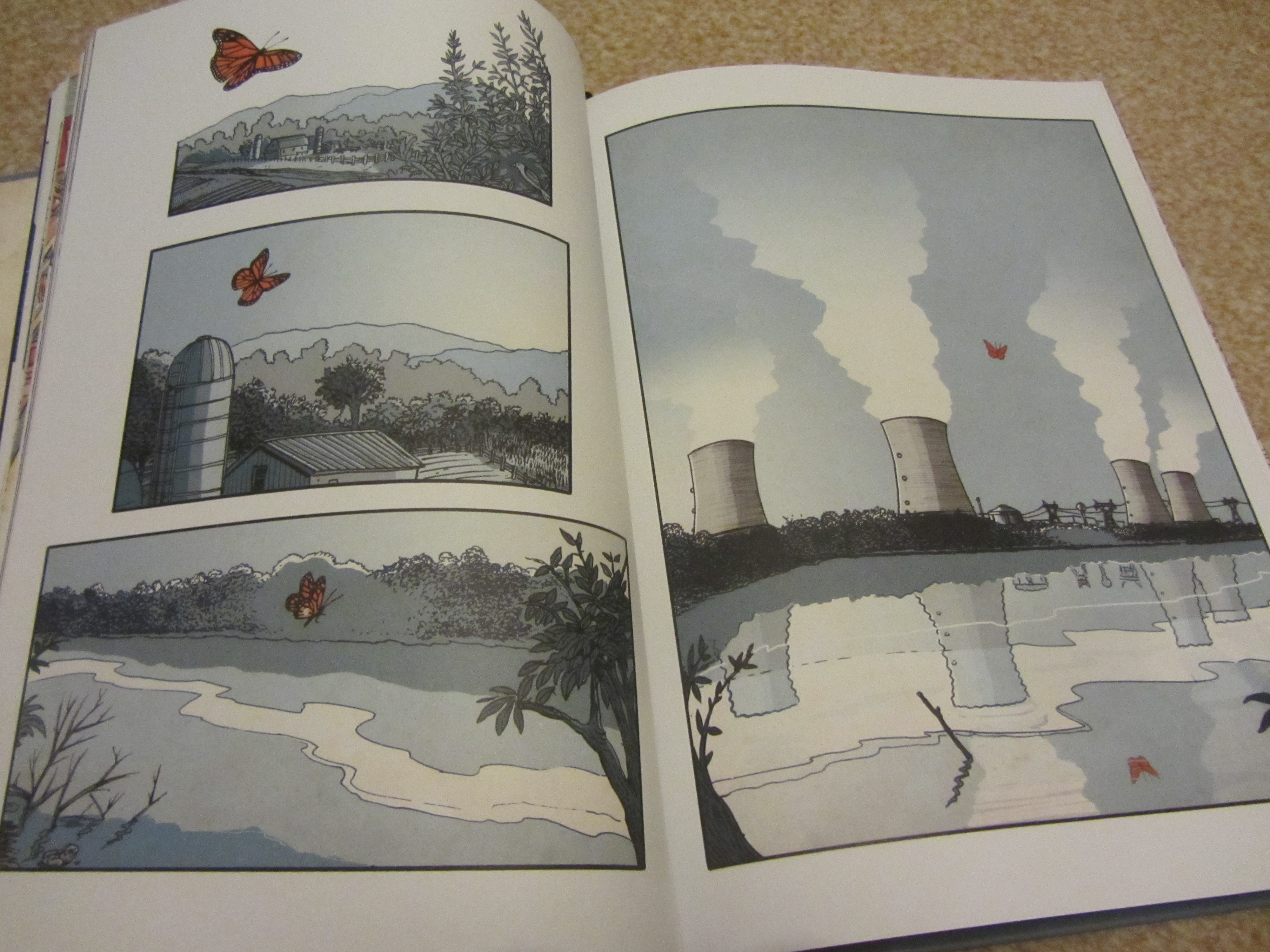
The tagged monarch flying over a polluted scene.
A Mexican folk belief has it that monarchs are the souls of dead children returning. At the end of the book a newly hatched butterfly starts its journey north – but what has become of our human heroes? That’s for readers lucky enough to get their hands on a copy of this wonderful book to find out.
Kuper and his family lived in Oaxaca from 2006 to 2008 and return annually for visits; you can see both familiarity and love in his terrific drawings of the city and its natural surroundings. Just as it tempers monochrome with color, Ruins carefully balances sadness and hope. If you think a graphic novel can’t sustain an involved and satisfying plot, think again. I’d especially recommend this to Barbara Kingsolver fans – the Mexican setting and monarch migration theme tie in with The Lacuna and Flight Behavior, respectively.
With thanks to the publisher, SelfMadeHero, for the free copy.
My rating: 
Books as Objects of Beauty
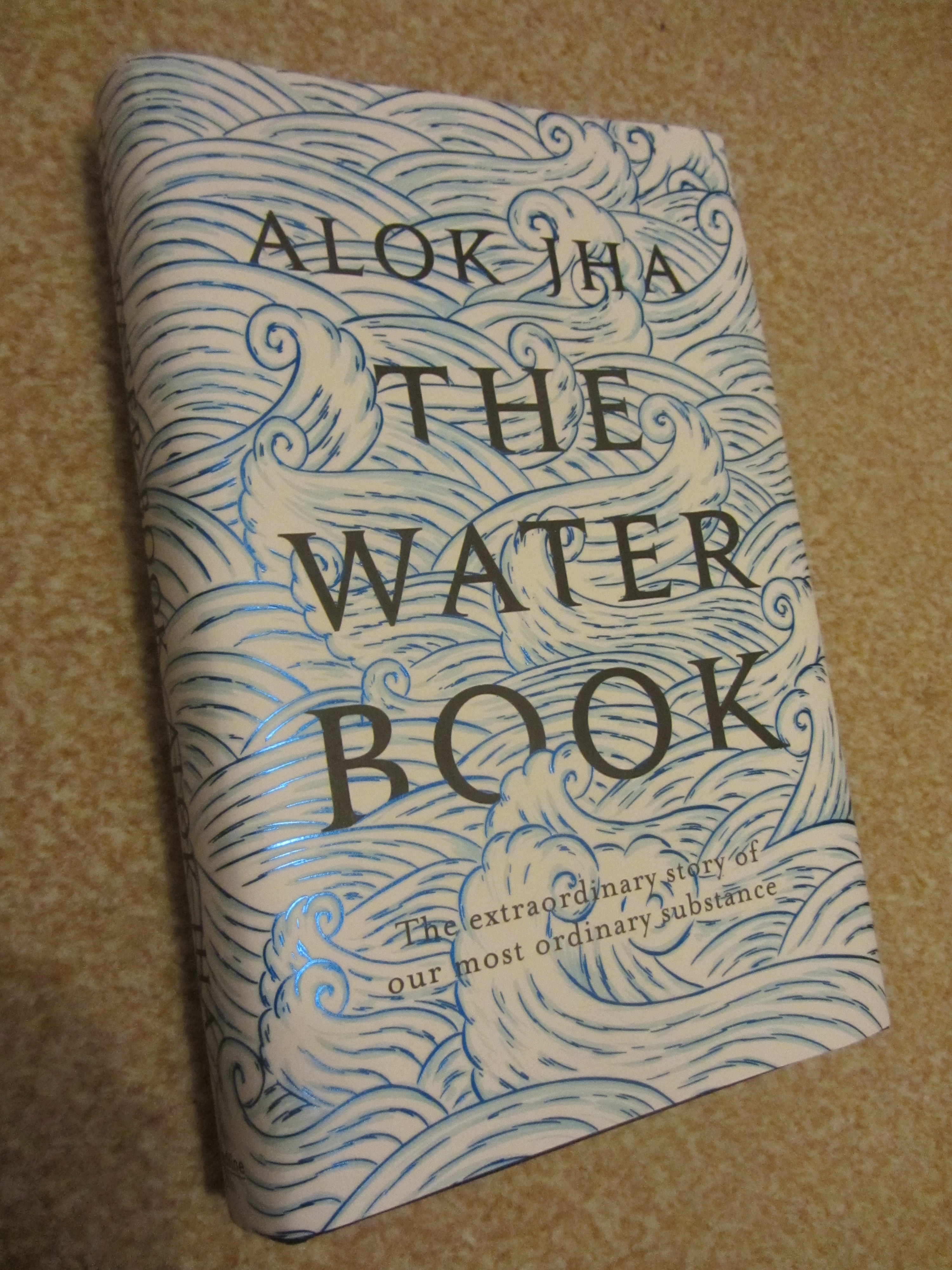
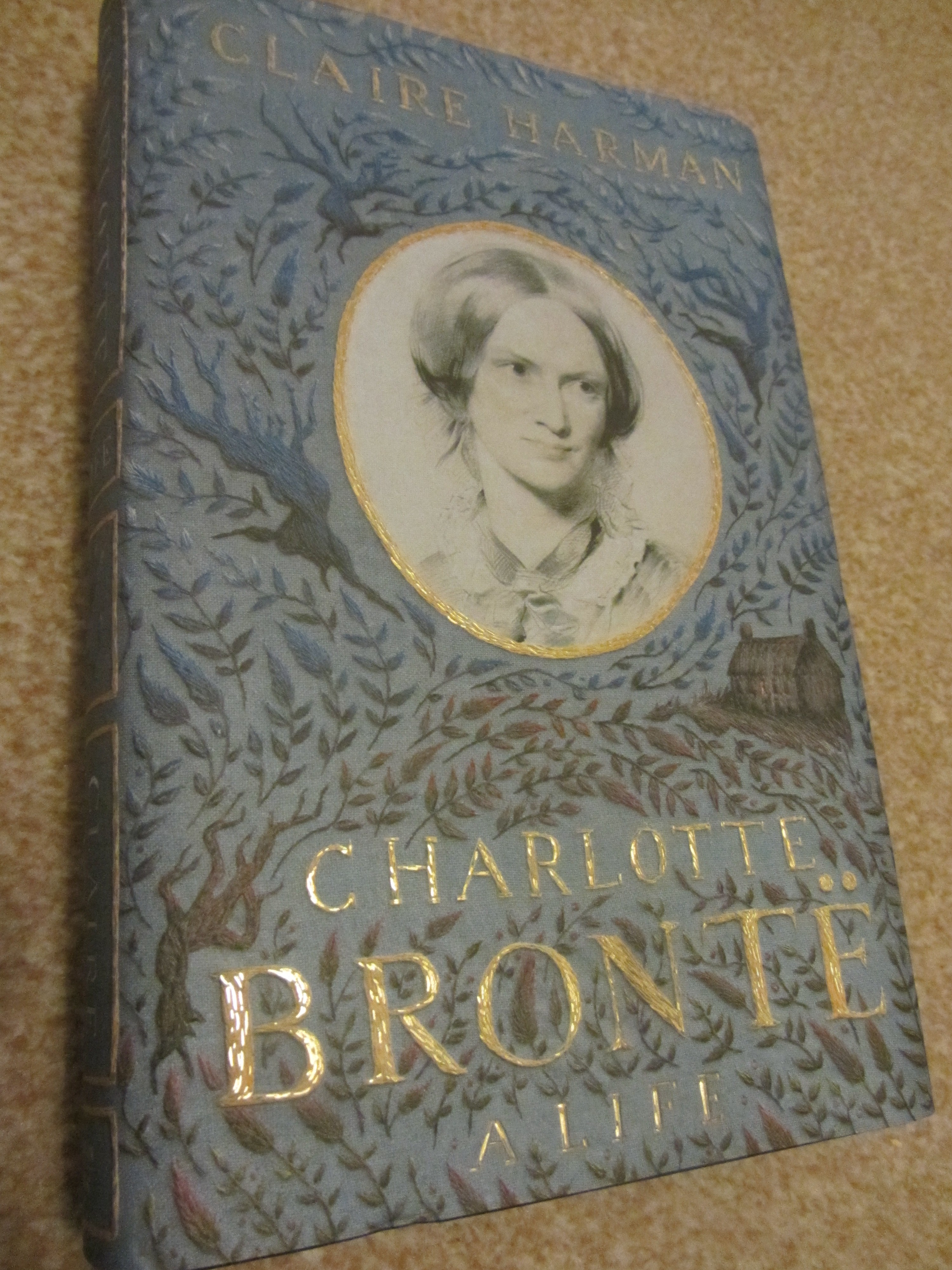
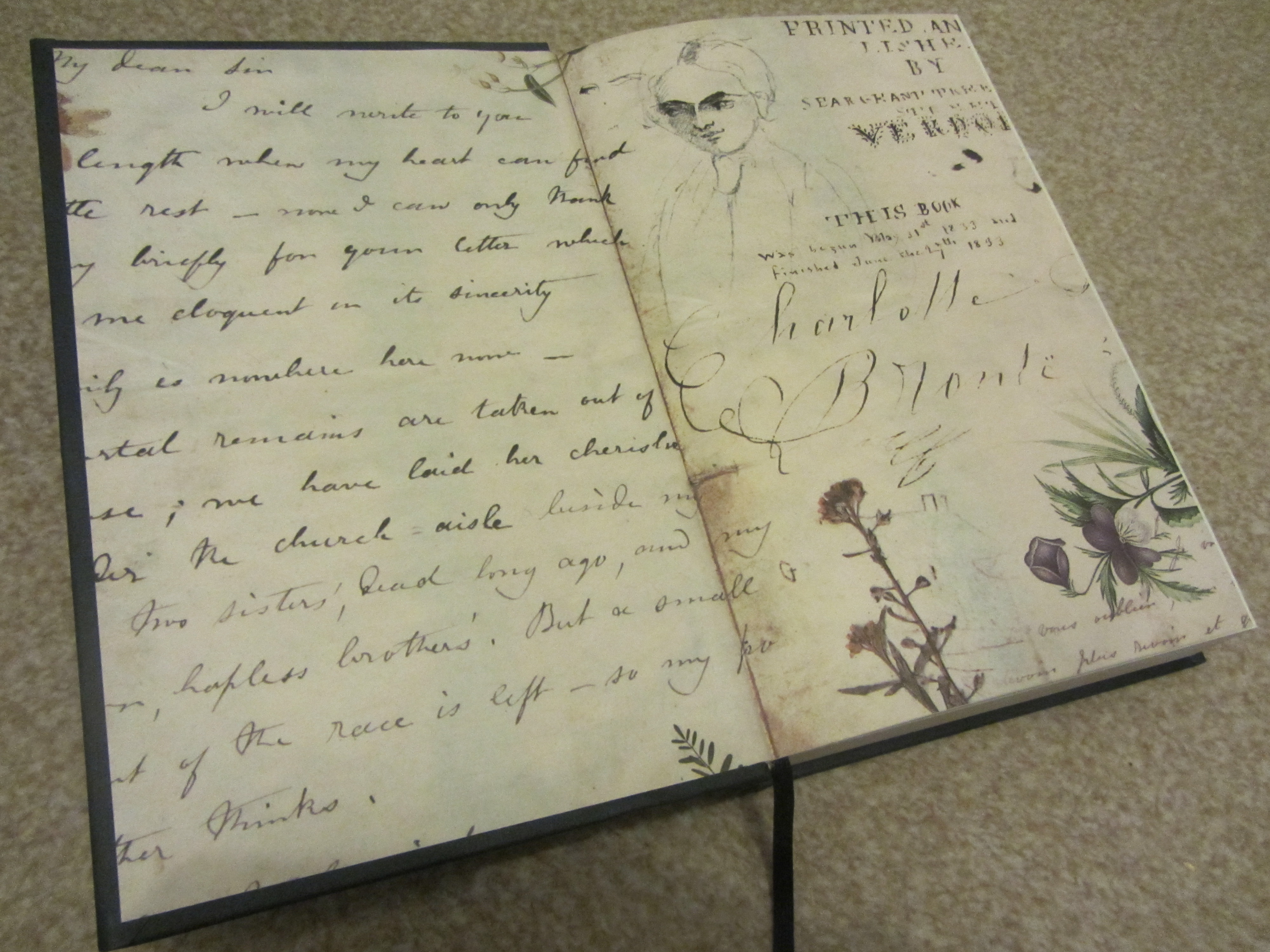
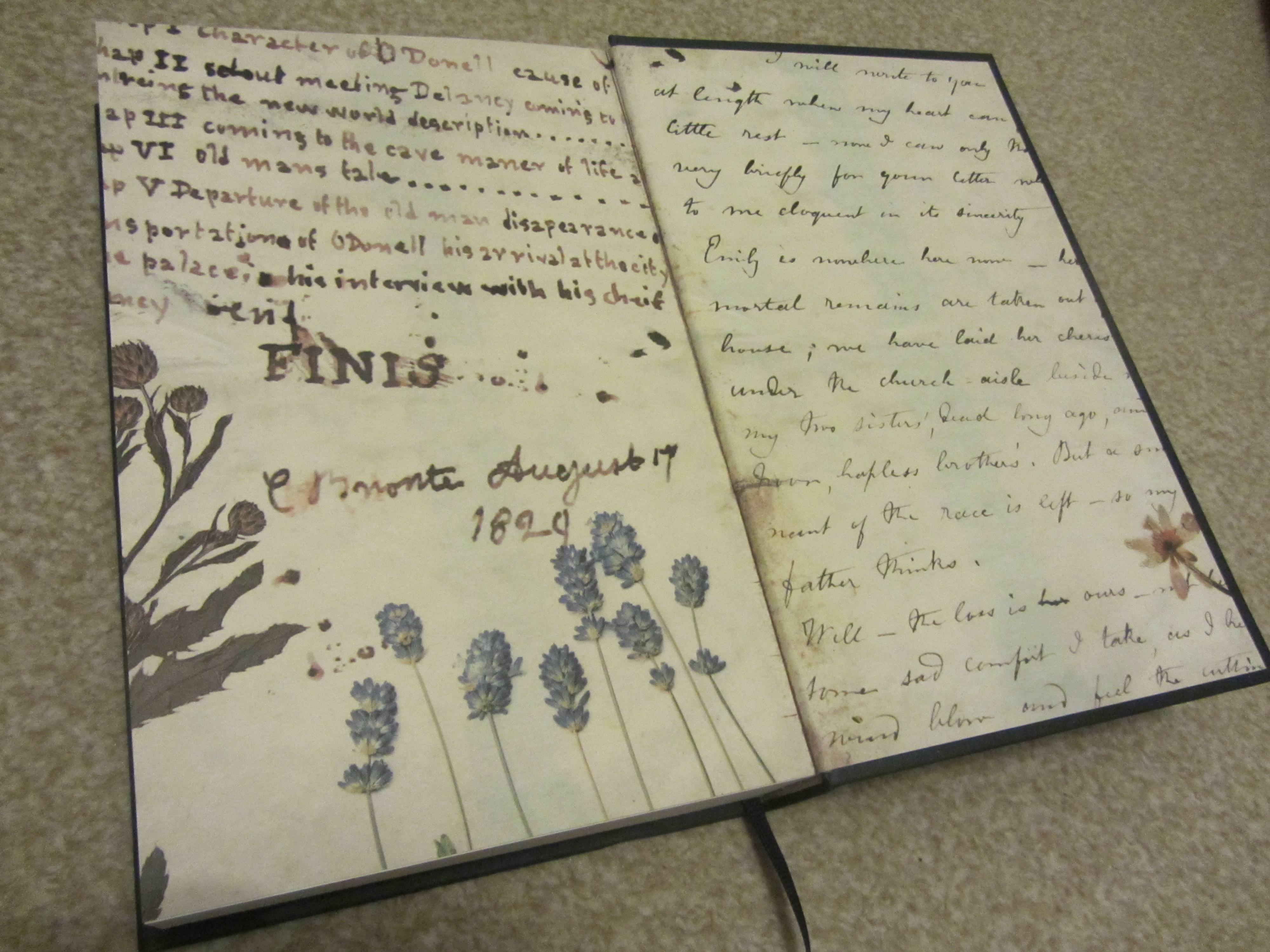
At least half of my reading nowadays is e-books, usually downloaded from NetGalley and Edelweiss and read on my Kindle. All the same, I still love the feel and smell of paper books, and it’s a special treat when the books are things of beauty in their own right. A few books I’ve reviewed recently have been absolutely stunning physical objects. Here are some photographs and a rundown of their key attributes:
The Water Book by Alok Jha – Just look at that gorgeous, shiny cover! I was less taken with the contents of the book itself, but never mind. (My review is forthcoming at Nudge.)
Charlotte Brontë: A Life by Claire Harman – Embossed embroidery effect on the cover, handwriting and sketches (including the only known C. Brontë self-portrait, only recently identified) on the endpapers, and built-in ribbon bookmark. (My review will go up at For Books’ Sake on Wednesday.)
A Brief History of Seven Killings by Marlon James – The dustjacket of this Booker Prize winner is lovely enough, but take it off and you still hold a striking object, in appropriately Rastafarian colors. (Full review in December issue of Third Way magazine.)


Ruins by Peter Kuper – Embossed title on the cover, with the monarch in matte; entomological drawings on the endpapers; alternating monochrome and full-color sequences; plus a built-in ribbon bookmark. (To be reviewed here in the near future.)


To survive in this modern age, physical books have to be more than just words on a page, because e-books do that much more efficiently. They simply have to be beautiful.
What are some of the most eye-catching books you’ve encountered recently?
Library Checkout: October 2015

I used to be a library fiend. At one point we belonged to about six different library systems thanks to our jobs at universities and our frequent back-and-forths to a couple of towns where we used to live. Back when reservations were still free through Reading Borough Libraries I would regularly have 20 or more new books on request at any one time, and every trip to the library required backpacks, tote bags and my husband’s help to get everything to the car.
Now that holds cost 50 pence each, however, I’ve cut back to basically zero. Most of what I used to read via libraries has now been replaced by e-books downloaded from NetGalley and Edelweiss. This is rather a shame, as I still love the feeling of stocking up with piles of physical books. I’ll still make an exception and pay 40 pence to reserve a book through our (more strictly local) Wokingham Borough Libraries when it’s something I’m hugely keen to read, like the new Jonathan Franzen novel or a book I need to review and can’t find online.
Nowadays I mostly peruse my local library for poetry collections and new nonfiction, though I can occasionally be tempted by recent fiction I haven’t gotten my hands on by other means.
(Thanks to Shannon at River City Reading for the great idea and the template! Check out her blog for other link-ups.)
LIBRARY BOOKS READ
- The Cartographer Tries to Map a Way to Zion, Kei Miller [I also saw the author speak at Reading Poetry Festival.]
- Purity, Jonathan Franzen
CHECKED OUT, TO BE READ
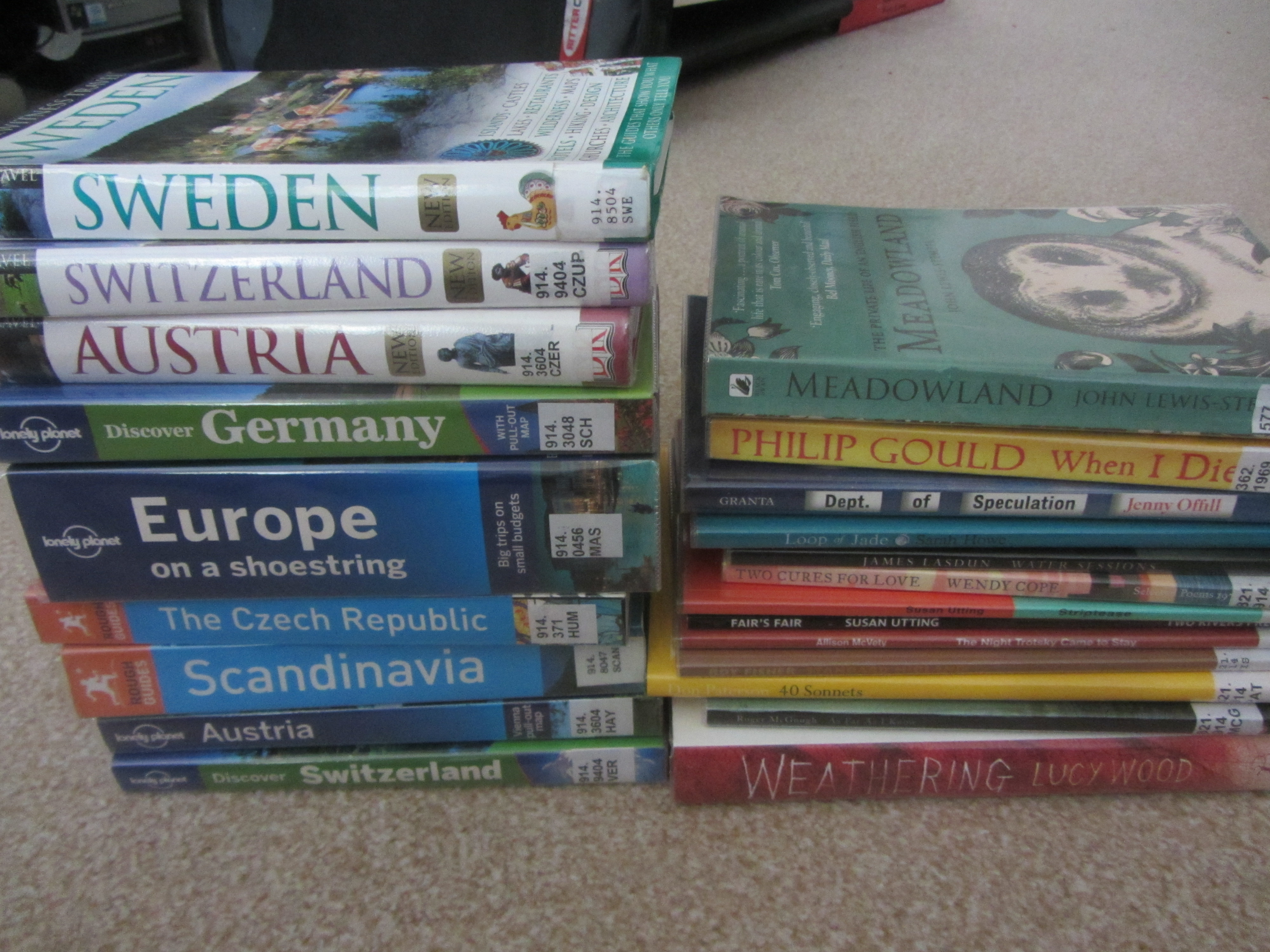
- DK Eyewitness Guides to Sweden, Austria, and Switzerland; Rough Guides to Scandinavia and the Czech Republic; Lonely Planet Guides to Germany, Austria, Switzerland, and “Europe on a Shoestring” [we’re contemplating a big trip around Europe by train next spring; the next few months will be for dreaming and planning]
- When I Die: Lessons from the Death Zone, Philip Gould
- Dept. of Speculation, Jenny Offill
- Weathering, Lucy Wood [for BookBrowse review]
- Meadowland: The Private Life of an English Field, John Lewis-Stempel
Poetry books:
- As Far as I Know, Roger McGough
- Two Cures for Love: Selected Poems 1979–2006, Wendy Cope
- The Night Trotsky Came to Stay, Allison McVety
- 40 Sonnets, Don Patterson
- Fair’s Fair, Susan Utting
- Striptease, Susan Utting
- Loop of Jade, Sarah Howe
- Water Sessions, James Lasdun
- Standard Midland, Roy Fisher
Do you take advantage of your local libraries?
What were some of your best recent library reads?
Review: The Looking-Glass Sisters, Gøhril Gabrielsen
Since discovering Peirene Press, a publisher of novellas in English translation (see my “Small Books Are Good, Too” post for a mini-review of one of their previous titles), I’ve been keen to try more of their little gems. This is the second of four novels from Gøhril Gabrielsen, a Norwegian author who lives in the far north of the country in a region called Finnmark. It’s an isolated place she uses to good effect in this novel about two sisters whose lives change – and not for the better – when one of them gets married.
I reign as queen in my room, in spite of the dust and the dirt. I have the silence, my pen and books, and, not least, I own the hours when Ragna is away.
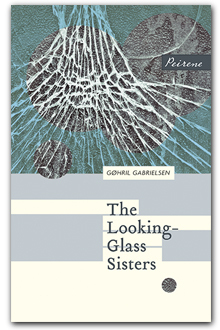 Our unnamed narrator is paralyzed from the waist down and keeps to her bed in a home she shares with her older sister, Ragna. Their parents had her late in life and died early, so Ragna has looked after her since they were 19 and 24. They are now in middle age, so for years have rubbed along reasonably well, although there have been small acts of cruelty on either side – for instance, as a child the narrator planted chewing gum in Ragna’s bed so she’d have her luxurious hair cut off, and Ragna stays in the bathroom so long one morning that the narrator, making her tortuous way downstairs on crutches, has an accident in the hallway.
Our unnamed narrator is paralyzed from the waist down and keeps to her bed in a home she shares with her older sister, Ragna. Their parents had her late in life and died early, so Ragna has looked after her since they were 19 and 24. They are now in middle age, so for years have rubbed along reasonably well, although there have been small acts of cruelty on either side – for instance, as a child the narrator planted chewing gum in Ragna’s bed so she’d have her luxurious hair cut off, and Ragna stays in the bathroom so long one morning that the narrator, making her tortuous way downstairs on crutches, has an accident in the hallway.
A short prologue tells us things have gotten worse: Ragna and her husband of less than one year, Johan, now keep the sister locked up in the attic. In the novella’s core section the narrator returns to the previous year, when Ragna and Johan were courting, to track the decline of this strange “little family with pus and pain in our cuts and scratches.” It all starts with her finding a letter Ragna wrote to a nursing home about committing her sister – and replacing it with a sheet of blank paper.
Our discontented narrator has a compulsion to remind everyone of her inconvenient existence: “I’m here. And I’m bloody hungry!” Whenever Ragna and Johan have friends visit, she is sure to make a scene. Her other acts of resistance are largely passive, though: writing snarky messages in the blank pages of encyclopedia volumes, listening on disapprovingly as Ragna and Johan have sex on the other side of the wall, and cursing Johan by burning his hair. Ragna follows suit by pettishly withholding library books and hot meals.
What we have here is essentially a psychological thriller with a claustrophobic domestic setting. Because we see everything from the narrator’s perspective, we share her sense of outrage at how Johan has upset her comfortable life and “sabotaged our sisterly pact.” At the same time, Gabrielsen implants tiny, clever clues that this is an unreliable narrator:
Can it be that I, the helpless one, have bred the anger in her by making myself more pathetic than I am? And can it be that I, in my struggle to gain the inviolable position of victim, have forged and fashioned Ragna the violator?
Furthermore, can it be that I, after years of exaggerated care needs, have robbed her of the ability to think, to create a living, inner life?
I can once more carry on my most precious occupation: lie on the pillows and twist the world exactly as I like.
Ultimately we have to wonder whether the person who has been telling us this whole story might be mentally compromised. How much of her mistreatment and present condition is she imagining? The way Gabrielsen counterbalances inherent trust in a narrator with skepticism as the story proceeds is remarkable. “I am reduced to an observing eye,” the protagonist tells us – and as readers we both see out of that eye and seek an objective outside view. It’s a gently thrilling book I’d recommend to you in the run-up to Halloween.
Peirene issues books in trios: this is part of the “Chance Encounter series: Meeting the Other,” along with Aki Ollikainen’s White Hunger and Raymond Jean’s Reader for Hire.
With thanks to Peirene Press for the free copy.
My rating:
Reviews Roundup, September–October
One of my goals with this blog is to have one convenient place where I can gather together all my writing that has appeared in disparate online locations. To that end, once a month I’ll provide links to all the book reviews I’ve published elsewhere, with a rating (below each description) and a short taster so you can decide whether to click to read more. A couple of exceptions: I won’t point out my Kirkus Indie, BlueInk or Publishers Weekly reviews since I don’t get a byline.
The Bookbag
Rising Strong by Brené Brown: Brown, a qualitative researcher in the field of social work, encourages readers to embrace vulnerability and transform failure and shame through a simple process of re-evaluating the stories we tell ourselves. The gimmicky terminology and frequent self-referencing grated on me a bit, but I appreciated how the book made me reconsider events from my own life. It’s the ideas that carry Rising Strong, so as long as you come to it expecting a useful tool rather than a literary experience you shouldn’t be disappointed. Genuinely helpful self-help.
 Life After You by Lucie Brownlee: With honesty and humor, Brownlee reconstructs the two years following her husband’s sudden death. My sister is still a new widow, so I read this expecting it to resonate with her situation, and it certainly does. I had an issue with the title and marketing, though. When originally published last year, the book had the title Me After You. That’s been changed to sound a little less like a Jojo Moyes novel, but the cover is more chick lit than ever, which doesn’t really match the contents of the book.
The Glass Girl by Sandy Hogarth (& interview): Moving between Australia and England and spanning several decades of Ruth Bishop’s life, this debut novel explores the psychological effects of sexual trauma and betrayal. The middle of the book feels a little meandering, and the chronology is sometimes over-complicated. However, Ruth’s is a warm first-person voice, and the ending hints at welcome resolution to unanswered questions. My favorite aspect of the novel, though, is the frequent observations of the natural world.

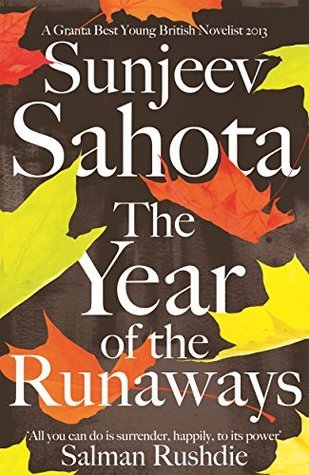 The Year of the Runaways by Sunjeev Sahota: With multilingual slang and several Sikh characters, Sahota’s second novel illuminates aspects of the South Asian experience that might be unfamiliar. Daily life is a struggle for Tochi, Randeep and Avtar: they work multiple jobs to make ends meet, serving at Crunchy Fried Chicken, cleaning sewers, or building a luxury hotel in Leeds. The fourth protagonist is Randeep’s visa-wife, Narinder. Through flashbacks we discover each one’s past. It’s a harrowing read, but you can’t help but sympathize with the four runaways as they make and dissolve connections over the year.
The Gap of Time by Jeanette Winterson: This contemporary ‘cover version’ of The Winter’s Tale links a London financier, a Parisian singer, and a blended family in New Orleans. Winterson creates clear counterparts for each Shakespeare characters, often tweaking names so they are recognizable but more modern. Inventive and true to the themes and imagery (time, adoption; angels, bears, statues) of the original, but ultimately adds little to one’s experience of Shakespeare. I’ll hope for better things from the rest of the Hogarth Shakespeare series. (Still to come: Margaret Atwood on The Tempest, Howard Jacobson on The Merchant of Venice and Anne Tyler on The Taming of the Shrew, among others.)
BookBrowse
 After the Parade by Lori Ostlund [subscription service, but the full text of my review will be available for free during the week of October 20th as part of Editor’s Choice]: Ostlund’s debut novel explores trauma and loneliness through the past and present of the protagonist, an ESL teacher who has just left his long-term partner, as well as the stories of those he meets. Although set over a six-month period, the novel is so full of flashbacks that it feels dense with the weight of the past. At times this can seem more like a set of short stories, only loosely connected through Aaron. Still, the overarching theme is strong and resonant: “after the parade,” after everything has changed irrevocably, you must keep going, pushing past the sadness to build a new life.
BookTrib
 The Best Small Fictions 2015, ed. by Tara L. Masih and Robert Olen Butler: In this very strong anthology of flash fiction, stories range from Tweet length to a few pages, but are always under 1,000 words. Titles and first lines carry a lot of weight. One of the best openers is “I didn’t recognize her without her head” (“Before She Was a Memory,” Emma Bolden). In genre the stories run the gamut from historical fiction to whimsical fantasy. You’ll be introduced to a wealth of fresh and existing talent. There are literally dozens of stand-outs here, but if I had to choose a top 3, they’d be “A Notice from the Office of Reclamation” by J. Duncan Wiley, “The Lunar Deep” by David Mellerick Lynch, and (overall favorite) “Something Overheard” by Yennie Cheung.
For Books’ Sake
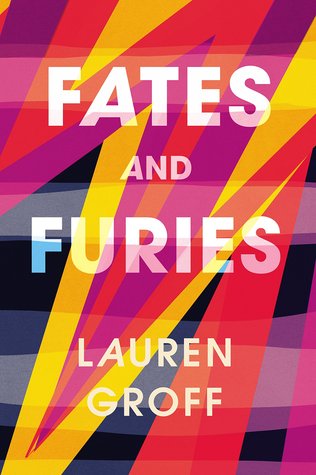 Fates and Furies by Lauren Groff: An incisive study of a marriage, beautifully written and rich with allusions to Shakespeare and Greek mythology. Short, verbless sentences pile up to create exquisite descriptions, as in “Sunset. House on the dunes like a sun-tossed conch. Pelicans thumb-tacked in the wind.” However, I was less sure about the necessity of the bracketed phrases, which seem to represent a Greek chorus giving omniscient commentary, and the use of slang and nicknames can grate. Groff makes it onto a short list of women I expect to produce the Great American Novel.
Foreword Reviews
 When All Goes Quiet by Augustinus F. Lodewyks: This religious memoir should interest those who are curious about how spiritual experience can infiltrate everyday life. “When all goes quiet, I know that Heaven is trying to show me its glory,” Lodewyks writes. In autobiographical vignettes, he vividly expresses his mystical visions, particularly those featuring Jesus, the Virgin Mary and angels, who tend to appear in times of crisis and during events of ritual significance like weddings, funerals and religious pilgrimages. Some will still object to the overt proselytizing, especially in the book’s last quarter.

The Blessing of Movement by Deborah Konrad: Konrad’s story is an inspirational memoir about life with disability and caring for dying relatives. Her sister Sandra became a quadriplegic in her twenties. Throughout the book, Konrad investigates the secret strength that underlay “the sunny disposition of the pretty paralyzed woman.” She concludes that it was all about thankfulness, as proven by Sandra’s gratitude journal. Konrad’s own life undeniably gets sidelined, though; more self-reflection would provide a good match for her insights into her sister’s character.
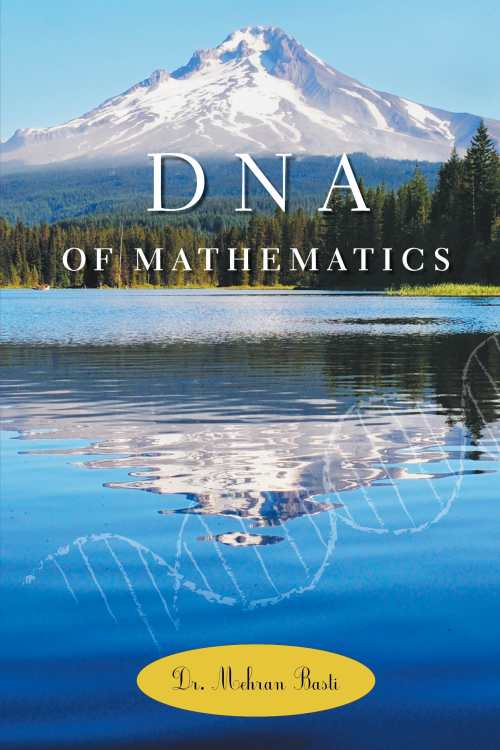 DNA of Mathematics by Mehran Basti: Drawing on his academic specialty in mathematics, Basti explores how scientific theories have been used and misused through history. The book lacks focus due to frequent unrelated asides. It may be difficult to grant credibility to a scientist who dismisses the big bang because it was theorized through “semi-broken scientific methods” and seems to have a personal vendetta against Stephen Hawking. Most importantly, the mathematics that forms the book’s basis is never fully explained.

From Hell to Heaven, One Man’s Journey by Gustav Daffy: This book was inspired by an acrimonious divorce and other family troubles; although Christian faith helped Gustav adjust his thinking, many of the poems still feel like the angry outpourings of a man with an ax to grind. Moreover, formulaic rhyming and poor spelling and grammar mar this overlong collection. It would take a professional copyeditor to hone this into a concise set of linguistically and stylistically acute poems. However, the author’s in-the-moment reactions are easy to relate to.
Shiny New Books
 Grief Is the Thing with Feathers by Max Porter: It may seem perverse to twist Emily Dickinson’s words about hope into a reflection on bereavement, but Porter’s exceptional debut does just that: tweak poetic forebears – chiefly Poe’s “The Raven” and Ted Hughes’s Crow – to create a hybrid response to loss. The novella is composed of three first-person voices: Dad, Boys and Crow (the soul of the book: witty, onomatopoeic, often macabre). Dad and his two young sons are adrift in mourning; the boys’ mum died after an unspecified accident in their London flat. The three narratives resemble monologues in a play, with short lines laid out on the page more like stanzas of a poem.
We Love This Book
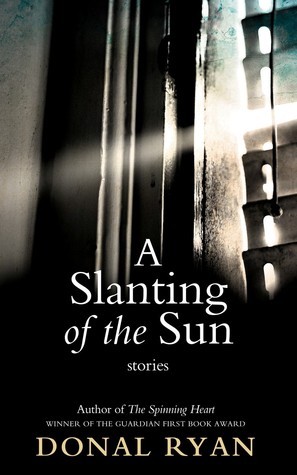 A Slanting of the Sun by Donal Ryan: The Irish author of the novels The Spinning Heart (winner of the Guardian First Book Award in 2013) and The Thing About December, returns with 20 jolting, voice-driven short stories suffused with loneliness and anger. Nineteen of the 20 are in the first person, echoing the chorus of voices that made The Spinning Heart so effective. Many of the narrators speak in thick dialect and run-on sentences, which helps to immerse you in the rhythms of Irish speech. In a book full of lonely people, it is the moments of connection – however fleeting – that matter. For example, in “Long Puck,” one of the best stories, a Catholic priest posted to Syria initiates interfaith hurling matches that temporarily lift everyone’s spirits.
I also post reviews of most of my casual reading and skimming on Goodreads.
 The River by Helen Humphreys: Humphreys has lived along Ontario’s Napanee River for over a decade. I was expecting a blend of personal reflection and natural observations, but instead the book is mostly composed of brief fictional passages illuminating a handful of species. I liked the passages about the heron best – Humphreys successfully imagines the life of a plume hunter and contrasts it with the excitement of two women involved in the foundation of a bird conservation charity. However, much of the book felt like unconnected vignettes, not building to any kind of grander picture of a location.

The Mountain Can Wait by Sarah Leipciger: The novel opens and closes with a hit-and-run, but in between those momentous peaks it’s a quieter tale of a single father trying to guide his son and daughter into young adulthood in the wilds of Canada’s west and islands. Tom Berry’s work is not cutting trees down but planting them – an interesting adaptation of a traditional woodsman’s activity to a new eco age. I found the story a little sleepy but loved Leipciger’s writing, especially her account of the daily drudgery of manual labor and her descriptions of wilderness scenery.
 Decline of the Animal Kingdom by Laura Clarke: Bizarre, in-your-face poetry from a 30-year-old Canadian: business jargon, YouTube videos, fast food…and, yes, animals. Many of the poems feature mules and lions, including weird dialogues between a mule and its supervisor / domestic partner / psychiatrist. With plays on words and sexualized vocabulary, Clarke considers inter-species altruism and the inevitable slide towards extinction. Two favorite lines: “You forget you live parallel to violence” (from “Carnivora”); “The Tasmanian tiger live-tweets its extinction from the Hobart zoo in 1933” (from “Extirpation”).
Do No Harm: Stories of Life, Death and Brain Surgery by Henry Marsh: “Terrible job, neurosurgery. Don’t do it.” Lucky for us, Henry Marsh reports back from the frontlines of brain surgery so we don’t have to. He’s nearing retirement age after a career divided between a London hospital and medical missions to Ukraine. The punchy chapters are named after conditions he has treated or observed. Marsh comes across as having a hot temper, exhibiting extreme frustration with NHS bureaucracy. At the same time, he gets very emotional over his patients declining and dying, and experiences profound guilt over operations that go wrong or were ultimately unnecessary.

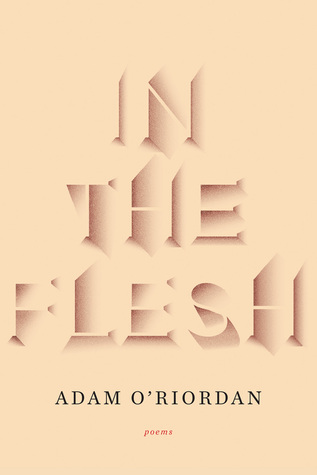 In the Flesh by Adam O’Riordan: My favorite poems in O’Riordan’s debut collection were about Victorian Manchester, 1910s suffragettes and the Wordsworths, this last based on the author’s year in residence at their Lake District cottage. I also liked “The Corpse Garden” – about the outdoor forensic lab in Knoxville, Tennessee – and a couple of multi-part poems that seem to enliven family history. It’s the vocabulary and alliteration that make these poems; there are only a handful of rhyming couplets.
A Circle of Quiet by Madeleine L’Engle: If, like me, you only knew L’Engle through her Wrinkle in Time children’s series, this journal should come as a revelation. I didn’t know she wrote any nonfiction for adults. The Crosswicks books cannot be called simple memoirs, however; there’s so much more going on. In this journal (published 1972) of a summer spent at their Connecticut farmhouse, L’Engle muses on theology, purpose, children’s education, the writing life, the difference between creating stories for children and adults, neighbors and fitting into a community, and much besides.
 A View of the Harbour by Elizabeth Taylor: My third Taylor – not as good as Mrs. Palfrey, but better than Angel. It’s about the everyday family and romantic entanglements of a small English harbor village in the 1940s. Beth is a preoccupied writer who doesn’t notice that her husband, the local doctor, is carrying on an affair with her best friend, the divorcée Tory, who is also their next-door neighbor. As always, Taylor has great insight into the human psyche and unlikely relationships. The plot is low on thrills for sure, but it’s pleasant reading, especially if you’re on holiday at the seaside (I started reading it on the coast near Dublin).
Amazing Grace: A Vocabulary of Faith by Kathleen Norris: This makes the shortlist of books I would hand to skeptics to show them there might be something to this Christianity nonsense after all. Norris spent 20 years away from the faith but gradually made her way back, via the simple Presbyterianism of her Dakota relatives but also through becoming an oblate at a Benedictine monastery – two completely different expressions of the same faith. In few-page essays, she gives each word or phrase a rich backstory through anecdote, scripture and lived philosophy, ensuring that it’s not just religious jargon anymore.
 Undermajordomo Minor by Patrick deWitt: What The Sisters Brothers did for the Western, this does for the Gothic fairytale. It’s not quite as fun or successful as the previous book, but has a nicely campy Dracula or Jane Eyre feel. Lucien “Lucy” Minor, a compulsive liar, sets out to find adventure and romance as undermajordomo of a castle in the quaint German countryside. Here he meets pickpockets, a periodically insane baron, a randy maiden, and a strapping rival who’s a soldier in the absurdist local conflict. DeWitt’s understated humor is not as clearly on display here; there’s also, strangely, quite a bit of sex.
Sentenced to Life by Clive James: James, an Australian critic and all-round man of letters, was first diagnosed with leukemia in 2010. After a setback in 2013, he’s rallied, but these poems are certainly infused with a sense of imminent mortality. The incessant ABAB rhyming in the early poems set up a jaunty rhythm I didn’t find appropriate to the subject matter; I much prefer the later unrhymed poems. “Plot Points” is my favorite, artfully linking disparate historical moments.
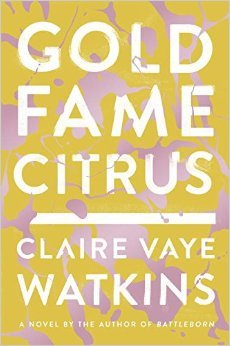 Gold Fame Citrus by Claire Vaye Watkins: Gold, fame, citrus: reasons people once came to California. Now, only a desperate remnant remains in this waterless wasteland. Luz and Ray squat in a starlet’s abandoned mansion and live off of Luz’s modeling money – she was once the environmental movement’s poster child, “Baby Dunn.” When they take charge of a baby called Ig, however, their priorities change. They set off for the strangely beautiful sea of dunes, the Amargosa, leaving behind the ‘frying pan’ of exposure to the elements for the ‘fire’ of a desert cult. There is some absolutely beautiful prose. This is the book that California (Edan Lepucki) wanted to be.
Satin Island by Tom McCarthy: U. is a corporate anthropologist in London, coming off the success of the Koob–Sassen contract and facing the blank page of the Great Report he’s tasked with writing. Not much happens here; the book is more about his anthropological observations and the things he fixates on, like oil spills, a sabotaged parachutist, and Satin Island – a place he encounters in a dream and then, by word association, likens to Staten Island, a destination he doesn’t quite make it to. For me the most interesting parts were about narrative. I found this too clever for its own good; not Booker Prize material.
 Bookish Beck = Rebecca Foster. American transplant to England. Freelance proofreader and book reviewer.
 Bookish Beck