Review: The House of Hawthorne by Erika Robuck
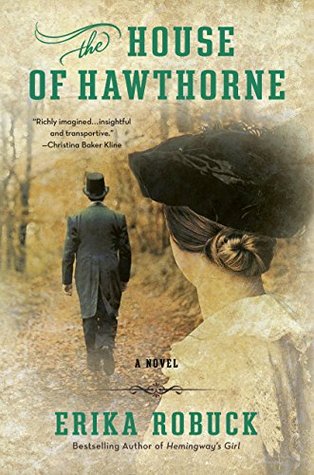 We often resent books we’re forced to read in school, but The Scarlet Letter wasn’t like that for me. Even though it was assigned reading for high school, I could instantly sense how important it was in the history of American literature. The tragic story of Hester Prynne and her judgmental community is one that stays with me half a lifetime later. I reread it in college for a Hawthorne & Melville course, for which I also read The Blithedale Romance, The House of the Seven Gables, and several of Nathaniel Hawthorne’s best short stories.
My more-than-average interest in Hawthorne, combined with my love of historical fiction about “famous wives” (see my BookTrib articles on the subject, including one specifically about the Hemingway and Fitzgerald wives) meant that I was eager to read Erika Robuck’s latest. She’s made a name for herself with novels about some of history’s famous women, including Zelda Fitzgerald, Edna St. Vincent Millay and one of the Hemingway wives, but somehow I’ve never read anything by her until now.
“Time flies over us, but leaves its shadow behind.”
(one of Robuck’s epigraphs, from Hawthorne’s The Marble Faun)

Nathaniel Hawthorne in 1840 (from Wikimedia Commons).
The novel is from the first-person perspective of Sophia Peabody, later the wife of Nathaniel Hawthorne. The Peabodys were an artistic, intellectual family who encouraged Sophia to cultivate her talent as a painter and sculptor, but illness often held her back: she suffered from debilitating headaches and turned to morphine and mesmerism for relief. The story begins and ends in the spring of 1864, when Nathaniel, suffering from a stomach ailment, sets off on a final journey without Sophia. In between these bookends, the novel spans the 1830s through the 1860s, taking in Sophia’s sojourn in Cuba as a young woman, her and Nathaniel’s courtship, and the challenges of parenthood and making a living from art.
My favorite portions of the novel were set in Concord, Massachusetts, that haven for writers and Transcendentalists. Ralph Waldo Emerson, Henry David Thoreau and Herman Melville all play minor roles. It’s especially amusing to see Melville, Hawthorne’s ardent admirer, overstep the boundaries of polite society and become an irksome stalker. What I did not realize from previous biographical reading about the Hawthornes is that they nearly always struggled for money. They rented Emerson’s uncle’s house in Concord but were evicted when they fumbled to make payments. Nathaniel’s jobs in the Custom House and as the U.S. Consul in Liverpool (appointed by President Franklin Pierce, who was a personal friend and whose biography he wrote) were undertaken out of financial desperation rather than interest.
The Hawthornes’ time in Europe was another highlight of the novel for me. They encounter the Brownings and finally get a chance to see all the Italian art that has inspired Sophia over the years. Their oldest daughter, Una, also falls ill with malaria, which provides some great dramatic scenes in later chapters. I warmed to this late vision of Sophia as a devoted mother, whereas I struggled to accept her as a vibrant young woman and a randy wife. Her constant complaints about headaches are annoying, and I wasn’t convinced that the Cuba chapters were relevant to the novel as a whole; Robuck tries to link Sophia’s observations of slavery there with the abolitionist sentiments of the 1860s, but Sophia’s devotion to the antislavery cause was only ever half-hearted, so I didn’t believe the experience in Cuba could have affected her that deeply. Her unconsummated lust for Fernando is also, I suppose, meant to prefigure her abiding passion for Nathaniel – which is described in frequent, cringe-worthy sex scenes and flowery lines like “In his gaze, I feel our souls rise up to meet each other.”
Ultimately, my disconnection from Sophia as narrator meant that I would prefer to read about the Hawthornes in biographies, of which there are plenty. Two novels I would recommend that incorporate many of the same historical figures are Miss Fuller by April Bernard and What Is Visible by Kimberly Elkins (about the deaf-blind Laura Bridgman – who has a tiny cameo here). Beautiful Fools by R. Clifton Spargo uses a Cuba setting to better effect in telling the story of Scott and Zelda Fitzgerald’s last holiday. I preferred all three of these to The House of Hawthorne. However, I’m certainly up for trying more of Robuck’s fiction.
My rating: 
I received early access to this book through the Penguin First to Read program.
Reviews Roundup, March–April
One of my goals with this blog is to have one convenient place where I can gather together all my writing that has appeared in disparate online locations. To that end, once a month – or maybe more often – I’ll provide links to all the book reviews I’ve published elsewhere, with a short taster and a rating (below) so you can decide whether to click to read more. (A couple of exceptions: I won’t point out my Kirkus Indie or BlueInk reviews since I don’t get a byline.)
BookBrowse
 The Animals by Christian Kiefer [BookBrowse is a subscription service, but an excerpt is available for free on the website]: Kiefer’s second novel contrasts wildness and civilization through the story of a man who runs an animal refuge to escape from his criminal past.

The Bookbag
 The Sunlit Night by Rebecca Dinerstein: A debut novel as charming as it is quirky. Two young adults from Brooklyn meet in the far north of Norway, where one is an artist’s apprentice and the other is burying a beloved father. Bittersweet family backstories and burgeoning romance make this a winner.

Beauty and Chaos: Slices and Morsels of Tokyo Life by Michael Pronko (& interview): The pleasant and diverse travel essays in this collection draw on Pronko’s 15 years living in Japan. A long-term resident but still an outsider, he is perfectly placed to notice the many odd and wonderful aspects of Tokyo life.
The Blind Man of Hoy: A True Story by Red Szell: Red Széll started losing his sight at age 19. In 2013 he became the first blind person to climb the Old Man of Hoy, off the Orkney Islands. An inspirational rock-climbing adventure.

 Adeline: A Novel of Virginia Woolf by Norah Vincent: Set in 1925–1941 and focusing on Virginia Woolf’s marriage and later career, this is a remarkable picture of mental illness from the inside. For the depth of its literary reference and psychological insight, this is my favorite novel of 2015 so far.
Nudge
On Immunity: An Inoculation by Eula Biss: This wide-ranging work of nonfiction explores the facts, myths and metaphors of vaccination. Biss powerfully captures the modern phenomenon of feeling simultaneously responsible and powerless.
Chaplin and Company by Mave Fellowes: An aspiring mime buys a London canal boat and finds her father in this debut novel. Fellowes writes good descriptive passages and handles past and present capably. However, I was unsure whether Chaplin and Company overall has much narrative verve. What I will take away is an offbeat, bittersweet coming-of-age story.

 Gorsky by Vesna Goldsworthy: An updated version of The Great Gatsby set amongst contemporary London’s über-rich Russians. The novel is wise about the implications of class and immigration. However, as a whole it doesn’t work as well as some updated classics, such as The Innocents (Francesca Segal). In a sense, Goldsworthy’s literary debt is too obvious.
Quite a Good Time to Be Born: A Memoir, 1935-1975 by David Lodge [more personal musings and an overview of the book’s content]: David Lodge, one of Britain’s most celebrated comic novelists, surveys 40 years of personal and social change.
Better Than Before: Mastering the Habits of Our Everyday Lives by Gretchen Rubin: The author of The Happiness Project returns with a thorough guide to making and breaking habits, offering different strategies for different personality types.
 Dear Committee Members by Julie Schumacher: A very funny epistolary novel in the form of letters of recommendation written by a grouchy English professor. English graduates and teachers in particular will get a kick out of this, but I daresay anyone who has ever been fed up with bureaucracy at work will sympathize with Fitger.
The Last Asylum: A Memoir of Madness in Our Time by Barbara Taylor: Taylor was once a mental patient at Friern Hospital. This is an arresting vision of madness from the inside, as well as a history of England’s asylum system.
We Love This Book
 It’s What I Do: A Photographer’s Life of Love and War by Lynsey Addario: Photojournalist Lynsey Addario remembers a decade on the frontline of conflicts in the Middle East and Africa and strives for balance in her work and personal life. Journalists face real danger every day. It’s all here: bombs, car accidents, dehydration, beatings, and sexual assault. Yet all the risks over the years have been worth it “to convey beauty in war.”
Hausfrau by Jill Alexander Essbaum: Essbaum’s arresting debut novel reads like a modern retelling of Madame Bovary, with its main character a desperate housewife in Zurich. As deplorable as Anna’s actions may be, she is an entirely sympathetic tragic heroine. Watch her trajectory with horror but you cannot deny there is a little of Anna in you.
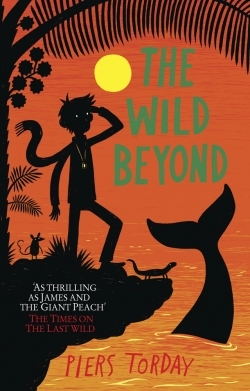 The Wild Beyond by Piers Torday: the suspenseful finale to “The Last Wild,” a fantasy trilogy for younger readers. The environmentalist message is not subtle but it is powerful and should inspire older children. Blending hints of Pullman and Tolkien with up-to-the-minute dystopian themes, this is an inventive take on the classic quest narrative.
The Time in Between: A Memoir of Hunger and Hope by Nancy Tucker: Nancy Tucker suffered from anorexia and bulimia for nearly a decade. Written in an original blend of styles, her eating disorder memoir is wrenching but utterly absorbing. You won’t find epiphanies or happy endings here, just a messy, ongoing recovery process – but 21-year-old Tucker narrates it exquisitely.
Quadrapheme literary magazine
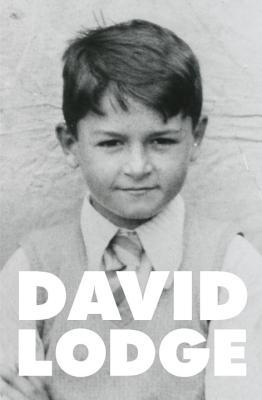 Quite a Good Time to Be Born: A Memoir, 1935-1975 by David Lodge [more of an essay about the context and sociological themes]: Even readers less familiar with Lodge’s work may be interested in the book’s insights into the social changes of post-war Britain. Lodge has not had a conventionally exciting life, and he knows it. From the title onward, his focus is more on his time period than his own uniqueness. He appears as an Everyman who superseded his working-class origins and expectations through hard work and luck.
Shiny New Books
 Reading the World: Confessions of a Literary Explorer by Ann Morgan: Not just another bibliomemoir. A better balance could have been struck between recycled blog content and academic musings on postcolonial literature and censorship. An interest in the politics of literature in translation would be a boon to anyone attempting this.
Foreword Reviews (self-published titles)
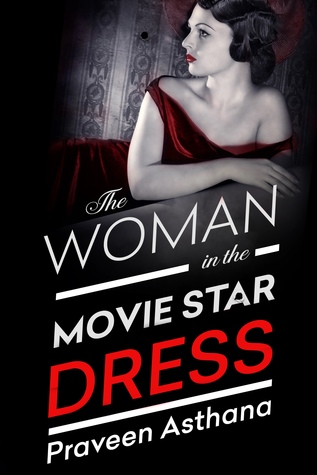 The Woman in the Movie Star Dress by Praveen Asthana: In this carefully plotted novel, a young Native American finds self-assurance and explores her sexuality by trying on the clothing – and personae – of Hollywood actresses. Spirited characters and dialogue make this an enjoyable read for classic film lovers.
Silence by Deborah Lytton: Lytton’s second novel for young adults concerns the unlikely match between a Broadway-bound singer who experiences temporary deafness after an accident and a pianist with a speech impediment and a traumatic past. It is a touching story about the forces that so often threaten us into silence and the struggle to find a voice anyway.
 Woody Allen: Reel to Real by Alex Sheremet: Woody Allen fans will prize this comprehensive, readable rundown of his oeuvre. This is an exhaustive study, ideal for established Allen enthusiasts and film students rather than the average moviegoer looking for an introduction.
I also post reviews of most of my casual reading on Goodreads.
The Mermaid’s Child by Jo Baker: This was Baker’s second novel, originally published in 2004. It doesn’t nearly live up to Longbourn, but it’s a fairly intriguing blend of historical fiction and fantasy. Malin’s father was a ferryman; her absent mother, so he swears, was a mermaid. Curiously timeless and placeless.
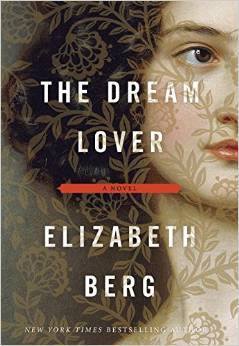 The Dream Lover: A Novel of George Sand by Elizabeth Berg: This historical novel about George Sand is a real slow burner. Berg makes the mistake of trying to be too comprehensive about Sand’s life; it would be better to just choose illustrative vignettes or representative love affairs (e.g. with Chopin) rather than include them all. There are two different timelines, 1831–1876 and 1804–1831, but together they’re still just a chronological slog.
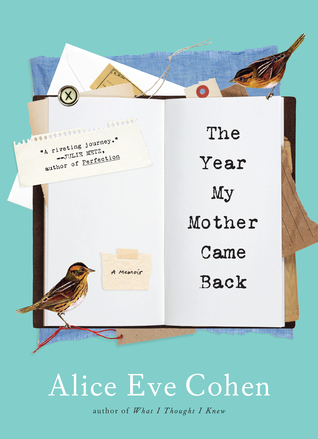 The Year My Mother Came Back by Alice Eve Cohen: There’s some gentle magic realism to this mother-daughter memoir. In the difficult year that forms the kernel of the memoir, Cohen’s younger daughter, Eliana, had a leg-lengthening surgery; her adopted older daughter, Julia, met her birth mother, Zoe; and Cohen herself underwent a lumpectomy and radiation for breast cancer. During radiation sessions, when she had to lie face-down, perfectly still, for 10 minutes at a time, her mother – dead for 20 years – would appear and talk to her.
A Sting in the Tale: My Adventures with Bumblebees by Dave Goulson: A wholly engaging tour through everything we know and are still trying to learn about bumblebees. I saw Goulson, founder of the UK’s Bumblebee Conservation Trust, speak at a nature conference in November and found him to be just as enthusiastic and well-informed in person. His occasional anthropomorphisms are unfailingly endearing.
 Black River by S.M. Hulse: Back in the town of Black River, Montana after his wife’s agonizing death, Wesley Carver must face the trauma he experienced as a prison guard when he was held hostage and tortured during an inmate riot. Now his attacker is up for parole, and Wes plans to attend the hearing and discourage the jury. At first you might think you’re reading a revenge story, but this is something subtler and sweeter than that. (What a shame that Hulse had to go by her initials, rather than Sarah, to be taken seriously in this genre, even though she’s on a level with Philipp Meyer.)
Trumbull Ave. by Michael Lauchlan: I didn’t like this quite as much as the other Made in Michigan books I’ve read, but Lauchlan does a good job of contrasting pastoral and post-industrial views of Detroit through free verse, as in “Detroit Pheasant,” the poem that gives the collection its cover image.
What Ridiculous Things We Could Ask of Each Other by Jeffrey Schultz: I enjoyed these poems set in a seemingly post-apocalyptic urban wasteland. They’re full of black humor, sarcasm and realistically pessimistic views of the American future. They’re very densely structured, usually in complete sentences of free verse.
Review: After Birth by Elisa Albert
 Looking for a heartwarming story about new motherhood? You won’t find it here. The narrator of Elisa Albert’s second novel, Ari, gave birth to Walker a year ago but still hasn’t gotten over the disruption to her life: the constant demands on her time and affection, the decay of her postgraduate thesis, and post-traumatic flashbacks to her caesarean section. Birth wasn’t the blissful, Earth Mother experience she wanted it to be; it was more like butchery: “nightmare blur of newborn stitches tears antibiotic awake constipation tears wound tears awake awake awake limping tears screaming tears screaming shit piss puke tears.” Now don’t get her wrong; she loves Walker: “He’s an awesome baby, a swell little guy. Still a baby, though, of which even the best are oppressive fascist bastard dictator narcissists.”
So even though Ari is reasonably happy and settled in her upstate New York home with her husband Paul (a professor 15 years her senior) and Walker, putting in the occasional shift at the local co-op and sending half-hearted ideas to her advisor, she can’t escape the thought that life isn’t as it should be. That is, until Mina Morris, bassist from a late-eighties girl band, moves to town to sublet her friends’ place while they’re on sabbatical in Rome. Ari had a girl crush on Mina before she ever met her, but when she realizes Mina is nine months’ pregnant, she sees a chance to put her new mommy expertise to good use. She’ll give Mina all the advice and support she wished she’d had. When the need arises, she’ll even breastfeed Mina’s newborn son, Zev. (Albert had a similar experience when her son was failing to thrive from breastfeeding and a friend fed him for her; see her Guardian article.)
 There isn’t a whole lot of plot to After Birth. Mina comes into Ari’s life for just two months and then moves on. Ari temporarily indulges her fantasy of a feminist collective where women help each other give birth and raise each other’s children; it is enough of a healing experience that she can conceive of resuming her thesis or even – ha! – having another baby. Still, she acknowledges that “the work of childbearing, done fully, done consciously, is all-consuming. So who’s gonna write about it if everyone doing it is lost forever within it? You want adventures, you want poetry and art, you want to salon it up over at Gertrude and Alice’s, you’d best leave the messy all-consuming baby stuff to someone else.”
It can be hard to warm to Ari’s sarcastic voice and jarringly short or disorientingly run-on phrases. Albert’s choice to exclude speech marks means that the whole book reads like a sort of fever dream, with past and present and different voices melding. My favorite passage is a monologue by an Oprah-like black nurse who encourages Ari in her early attempts at breastfeeding. There are also frequent flashbacks to Ari’s childhood: Jewish summer camp and the aftermath of her mother Janice’s untimely death. The memories of her mother’s illness (DES treatment leading to breast cancer) and the touches of magic realism as the dead Janice occasionally pops up alongside Ari, usually kvetching about her choices, make this uncannily similar to The Year My Mother Came Back by Alice Eve Cohen.
After Birth might not prove to be a classic of ambivalent motherhood, but if you’re in the right mood for it I reckon you’ll find it to be a striking novella.
My rating:
Recommended Easter Reading
Unlike Christmas, Easter is a holiday that might not lend itself so easily to reading lists. December is the perfect time to be reading cozy books with wintry scenes of snow and hearth, or old-time favorites like Charles Dickens. Christmas-themed books and short stories are a whole industry, it seems. Lent and Advent both prize special foods, traditions and symbols, but beyond devotional reading there doesn’t seem to be an Easter book scene. Nonetheless, I have a handful of books I’d like to recommend for the run-up to Easter, whether for this year or the future.
 Easter, Michael Arditti
I hadn’t heard of Michael Arditti until I reviewed his novel The Breath of Night – a taut, Heart of Darkness-inspired thriller about a young man searching for a missing priest in the Philippines – for Third Way magazine in late 2013. He deserves to be better known. Easter (2000), his third novel, earned him comparisons to Iris Murdoch and Barbara Pym. His nuanced picture of modern Christianity, especially the Anglican Church, is spot-on.
I’ve just finished Part One, which traces the week between Palm Sunday and Easter Sunday in a fictional London parish, St Mary-in-the-Vale, Hampstead. Structured around the services of Holy Week and punctuated with bits of liturgy, the novel moves between the close third-person perspectives of various clergy and parishioners. Huxley Grieve, the vicar, is – rather inconveniently – experiencing serious doubts in this week of all weeks. And this at a time when the new Bishop of London, Ted Bishop (“Bishop by name, bishop by calling,” he quips), has announced his mission to root out the poison of liberalism from the Church.
So far I’m reminded of a cross between Susan Howatch and David Lodge (especially in How Far Can You Go?), with a dash of the BBC comedy Rev thrown in. Reverend Grieve’s sermons may be achingly earnest, but the novel is also very funny indeed. Here’s a passage, almost like a set of stage directions, from the Palm Sunday service: “The procession moves up the nave. The Curate leads the donkey around the church. It takes fright at the cloud of incense and defecates by the font.”
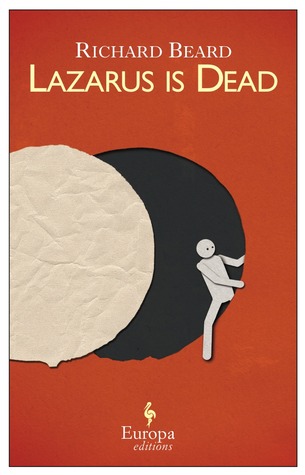 Lazarus Is Dead, Richard Beard
In this peculiar novel-cum-biography, Beard attempts to piece together everything that has ever been said, written and thought about the biblical character of Lazarus. The best sections have Beard ferreting out the many diseases from which Lazarus may have been suffering, and imagining what his stench – both in life and in death – must have been like. (“He stinketh,” as the Book of John pithily puts it.)
Alongside these reasonable conjectures is a strange, invented backstory for Jesus and Lazarus: when they were children Jesus failed to save Lazarus’ younger brother from drowning and Lazarus has borne a lifelong grudge. A Roman official is able to temporarily convince Lazarus that he needs to take up the mantle of the Messiah because he came back to life: he has the miracle to prove the position, whether he wants it or not. The end of the novel follows the strand of the Passion Week, though in a disconnected and halfhearted fashion.
Beard’s interest is not that of a religious devotee or a scriptural scholar, but of a skeptical postmodern reader. Lazarus is a vehicle for questions of textual accuracy, imagination, and the creation of a narrative of life and death. His unprecedented second life must make him irresistible to experimental novelists. Beard’s follow-up novel, Acts of the Assassins, is also Bible-themed; it’s a thriller that imagines the Roman Empire still in charge today.
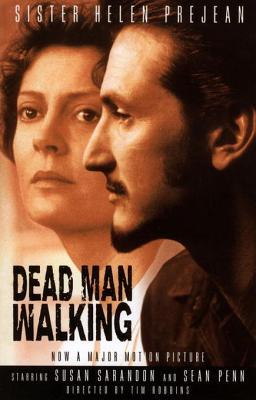 Dead Man Walking, Sister Helen Prejean
No matter your current thoughts on the death penalty, you owe it to yourself to read this book with an open mind. I read it in the run-up to Easter 2007, and would recommend it as perfect reading for the season. As I truly engaged with themes of guilt and retribution, I felt the reality of death row was brought home to me for the first time. Many of the men Prejean deals with in this book we would tend to dismiss as monsters, yet Jesus is the God who comes for the lost and the discounted, the God who faces execution himself.
The film version, which conflates some of the characters and events of the book, is equally affecting. I saw it first, but it does not ruin the reading experience in any way.
 The Last Week: What the Gospels Really Teach about Jesus’s Final Days in Jerusalem, Marcus J. Borg and John Dominic Crossan
Marcus Borg, who just died on January 21st, has been one of the most important theologians in my continuing journey with Christianity. His Reading the Bible Again for the First Time and The Heart of Christianity are essential reading for anyone who’s about to give up on the faith. In this day-by-day account, mostly referencing the Gospel of Mark, Borg and Crossan convey all that is known about the historical Jesus’ last week and death. They collaborated on a second book, The First Christmas, which does the same for Jesus’ birth.
And now for two more unusual, secular selections…
 Bellman & Black, Diane Setterfield
Call me morbid, but I love English graveyards. My most enduring Easter memory is of dawn services at the country church in my husband’s hometown. In the weak half-light, with churchyard rooks croaking a near-deafening chorus, the overwhelming sense was of rampant wildness. The congregation huddled around a bonfire while a black-cloaked vicar intoned the story of scripture, from creation to the coming of Christ, as loudly as possible over the rooks – trying to win mastery over the night, and score a point for civilization in the meantime.
This anecdote goes some way toward explaining why I rather enjoyed Bellman and Black – but why many others won’t. Setterfield’s second novel is a peculiar beast, a bit like a classic suspense story but also an English country fable. Protagonist William Bellman is part Job and part Faustus. At age ten, he makes a catapult that kills a rook. Thereafter, his life is plagued by death, despite his successful career as an entrepreneur at a cloth mill. Can he make a deal with the Devil – or, rather, the sinister Mr. Black – that will stop the cycle of deaths?
Bellman’s daughter Dora is a wonderful character, and because I love birds anyway and have strong, visceral memories involving rooks in particular, I enjoyed Setterfield’s symbolic use of them. However, many will be bored to tears by details of cloth-making and dyeing in early nineteenth-century England. Setterfield evokes her time period cannily, but in such a painstaking manner that the setting does not feel entirely natural. Here’s hoping for a return to form with Setterfield’s third novel.
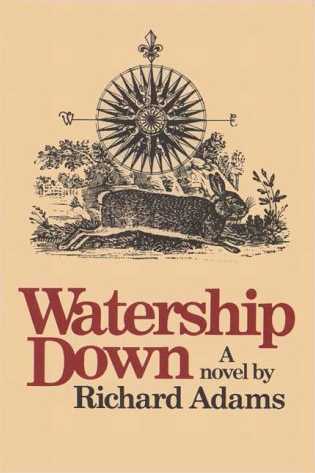 Watership Down, Richard Adams
This was the first book I ever borrowed from the Adult Fiction section of the public library, when I was eight years old. It quickly became a favorite, and though I didn’t reread it over and over like I did the Chronicles of Narnia, it still has a strong place in my childhood memories. Why have I chosen it for this list? Well, it’s about rabbits: a warren comes under threat from English countryside development and human interference.
I loved a little story Rachel Joyce inserts in her novel The Love Song of Miss Queenie Hennessy. Taking over from another nun, a young, air-headed nurse at Queenie’s hospice resumes reading Watership Down to a patient. At the end the patient cries, “Oh, it’s so sad, those poor rabbits” and the nurse replies, “What rabbits?” (You’d think the cover might have given it away!) It’s a good laugh, but also reflects how carefully Adams characterizes – one might say anthropomorphizes – each rabbit; you might forget they’re actually animals.
Do you have any favorite books to read or reread at particular holidays?
Happy spring reading!
Review: The Birth of the Pill by Jonathan Eig
The development of the birth control pill: this seems like an odd topic for my first book review on the new blog, but I’ll go with it. I have a special love for nonfiction that incorporates many different genres: history, biography, popular science, sociology, and so on. (See my next-to-last paragraph for some other examples of books that do this well.)
 This is an epic adventure starring four unlikely heroes: two middle-aged doctors, Gregory Pincus, fired by Harvard, and John Rock, a Catholic; and two older ladies, Margaret Sanger, who left her first husband and family and grew increasingly addicted to alcohol and prescription pills, and Katharine McCormick, whose mentally ill husband died and left her with a huge fortune she dug into the birth control movement.

Dr. Gregory Pincus is on the left (date unknown). Copyright Mrs. F. Hammond.
From testing progesterone on rabbits to the desperate hunt for human test subjects in Puerto Rico and in a Massachusetts mental hospital, it is a tale full of surprises. When first presented to American doctors and the FDA, the contraceptive pill – then known as Enovid – was billed as an infertility drug: It regulated periods to make it more likely that women would then get pregnant after going off it. Pincus et al. conveniently failed to mention that it also prevented ovulation. I never would have expected a Trojan horse story.
Margaret Sanger was given a hero’s welcome on every trip to Japan, but she also had an unfortunate association with the eugenics movement – an inevitable offshoot of concerns about overpopulation? She once said that parents should have to apply for the right to have children just like immigrants have to apply for visas. The best random piece of trivia I came across here was that Prescott S. Bush, father of George and grandfather of Dubya, was the treasurer for Planned Parenthood’s first nationwide fundraising campaign in 1947. You can bet the Bush family has tried to cover that one up!

Margaret Sanger in 1922.
“Religion is a very poor scientist,” John Rock was known to say. The fight to have the Catholic Church change its position on birth control is an important background narrative in this book. The sexual revolution and the personal decision to contravene Catholic doctrine regarding contraception is also a major component of Quite a Good Time to Be Born, David Lodge’s recent memoir. It’s always fun when similar ideas come up in multiple books at the same time.
Jonathan Eig was previously known for his sports biographies, and there’s plenty of action and narrative here. Like the best science writers (Rebecca Skloot in The Immortal Life of Henrietta Lacks, David Quammen in Spillover, Atul Gawande in Being Mortal, or Siddhartha Mukherjee in The Emperor of All Maladies), he tells a story rich with three-dimensional characters.
We have a family legend about a Swiss ancestor who admitted herself to a mental asylum (then euphemistically called a sanatorium) in upstate New York in 1922 rather than have more children. She already had nine kids (one more died in infancy); she was tired and overworked. If this was what it took to keep her husband from making her pregnant again, so be it. She and thousands of housewives like her never could have guessed that one day (in 1960, to be precise) a simple pill could limit their family size. This is what this book is all about: the quest to give women control over their lives.
My rating:
How Many Books Is Too Many? (to be reading at once)
You can never have too many books. But it’s entirely possible to have too many on the go at one time, or too many on the physical to-read pile (as opposed to the virtual to-read list; mine currently numbers in the thousands over at Goodreads). I was prompted to think about this at the end of 2014, when I went around our flat and counted all my owned but unread books that I still wanted to read. At that point I counted 155.
One of my reading goals for 2015 was born: I would attempt to read more of the books I actually own – at least enough to keep pace with my secondhand book buying habit. So yesterday afternoon, expecting to be heartened by my progress, I did a recount. Result? 180.
WHAT?! The number went up! Gah!
It must be that all-paperbacks-for-£1 shopping spree we did at the bookshop in Henley-on-Thames…and then I brought some books back in my suitcase on our last trip to America…plus a few more review copies have arrived.
There are books all over the flat: in the spare room, on the bedroom bookcase, on the bedside tables, on the hallway bookcase, on a big four-shelf case in the lounge, on desk shelves, even in an overflow area on the shelving unit of board games, jigsaw puzzles, CDs and DVDs.
And that’s not counting the dozens of approved e-books awaiting download on NetGalley and Edelweiss, and the others already on my Nook and Kindle e-readers. It’s nigh on impossible to say no to free books, after all.
Okay, so I’ve established that I have a book hoarding obsession that extends into both the print and electronic realms. (It’s no surprise I worked for a website called Bookkaholic for two years, is it?) But is this really such a problem? It’s somehow comforting to know that I’ll never run out of reading material.
A related concern, though, is this: Am I reading too many books at once? I have 13 on the go at the moment (8 print and 5 electronic). Especially since I got my Nook, I find that I’ve developed a kind of ADHD when it comes to books. It’s so easy to click from one book to another that I sometimes don’t stick with one for more than a chapter at a time. Sometimes, if I’m in a rut, I’ll read the first few pages of 10 or more books before I manage to settle on one.
Up until college, I was the kind of person who faithfully read just one book at a time. Since then, though, I’ve become convinced of the merit of having two or more on the go at a time: at least one novel and at least one work of nonfiction, maybe with some poetry thrown in. If you have nonfiction from very different genres – for instance, a spiritual autobiography and a nature book; or a travel book and a foodie memoir – you could read multiple nonfiction books at the same time.
The benefits are multiple.
- If you’re bored with one book, spend time with another one. You can always go back.
- Sometimes a pairing is fortuitous – what you’re learning in one book will have bearing on another, or the same historical figure will turn up in both.
- The psychological burden of having a tall stack of books staring you down may encourage you to read more.
Yet there are disadvantages.
- With novels and short story collections, you may get characters and storylines mixed up if you have too many in your head at once.
- You’ll make progress in all the books more slowly.
- If you get gripped by one, you might abandon the others temporarily.
Your turn:
How many books do you read at once?
What do you think is an ideal number?
How do you manage your (physical or virtual) to-read shelf?
Paid or Unpaid?
Our address was chosen at random to take part in a nationwide time use survey run by NatCen Social Research in conjunction with the University of Oxford. On last Sunday and again this past Friday, we had to fill out the entire day’s activities in 10-minute blocks; for the whole week we also had to note our hours spent in paid work. My husband’s graph looked pretty standard, but mine resembled a Morse code message. Overall I did 35 paid hours –making for a fairly normal working week – but it was spread across the days, often in evenings or in odd chunks here and there.

Is there a Morse code message in my weekly working pattern?
Having my paid work, volunteer work and hobby all overlap in the realm of bookishness is convenient, but it also means I treat all my hours as potential work time. I consider my unpaid reviews (e.g. for Nudge, For Books’ Sake, The Bookbag, Shiny New Books and Third Way magazine) to be ‘work’ just as much as those I’m paid for, so it can feel like I put in much more than a 40-hour week.
The truth is that it’s hard to make a living from book reviews. Very few venues still pay for reviews – why would they, given the abundance of people who review for free on Amazon and Goodreads, among other websites? I’ve found some American print and web publications willing to pay for writing, but in the UK, paid opportunities can seem few and far between. My more reliable source of income is editing academic journal articles.
There’s one exception to the rule: self-published books. Indie authors have to do all their own marketing and publicity, so are eager to garner professional reviewers’ opinions. Several of my main gigs are for independent companies that provide book reviews to self-published authors, for a fee. There have some a handful of gems over the past 20 months, but there have also been some books so utterly terrible that they should never have seen the light of day.
I wrote to Ron Charles, the Washington Post’s book editor, last year and asked for his take on the situation. Here’s an excerpt from what I wrote to him:
“It seems to be an irony of this life that the books I want to be reading and most enjoy, I usually don’t get paid to review; while many of the books I am paid to review (most of them self-published) range from okay to terrible. I wondered if you might have any advice for me – specifically, whether there is still money to be made from reviewing for traditional print media.”
He let me down in the nicest possible way:
“The short answer is, ‘No.’ There has never been much money to be made reviewing books, and, lately, there’s almost none. The collapse of almost all the nation’s book sections along with the rise of a million book blogs and a trillion customer reviews on online bookseller sites mean there’s very little demand for professional book reviews. For people who want to read about books, this is largely a good thing. For people who want to support themselves by writing about books, it’s problematic. If you write well and enjoy it, that may be enough. Or you may find some new way to write about books that could draw an online audience. I wish the best!”
Do I have some novel way of writing about books? I doubt I could make that case. I write for pay when I can, but for the most part I just follow my tastes and amass all the free new books I can – through the unpaid review venues mentioned above, from the library, via giveaways, or as electronic downloads from NetGalley and Edelweiss. Although I’m a writer, I’m first and foremost a reader; it’s an essential part of my identity rather than a professional goal.
Many of you may be bloggers who have a day job and review books purely for the love of it. I’d be interested to get some feedback from any of you who write book reviews, especially if you get paid for some but not for others:
- Do you feel varying degrees of pressure depending on the audience or venue you’re writing for?
- Does the knowledge that an author (perhaps a self-published one) is paying for your opinion mean that you approach the work differently?
- Do you see a future for paid book reviews?
Welcome!
At the end of July 2013, I left my job as a library assistant to set up as a freelance book reviewer. For just over a year and a half, then, I’ve been writing reviews and other book-related articles on a self-employed basis.
I nearly laughed aloud that summer when a friend introduced me with “This is Rebecca. She writes about books for a living.” It seemed ironic to me because, especially back then, I wasn’t ‘making a living,’ not by any stretch of the imagination. However, I’ve come to think about what I’m doing in a slightly different way. I might not be making a living as such, but I’m making a life – one based around books. I must never forget what a privilege that is.
I’ll be focusing on a number of different print and online writing venues (see my About page for a fairly comprehensive list). Recently I’ve also started editing academic journal articles; the work may be less creative, but it plays to my strengths of close observation and perfectionism in writing.
My goal with this blog is to make a shopfront for all my online writing as well as a place to post personal musings on recent books and the state of literature today. I’d be delighted for any of you who are interested to join me here and/or on Twitter: @bookishbeck. I also welcome friend requests from readers with similar tastes on Goodreads.
 Bookish Beck = Rebecca Foster. American transplant to England. Freelance proofreader and book reviewer.
 Bookish Beck