Review: Early One Morning by Virginia Baily
Like the Roberto Benigni film Life Is Beautiful, Virginia Baily’s second novel* shows how the Holocaust affected Italy’s Jews. It’s not a Holocaust novel, though; it’s a before-and-after story that’s more about adoption, coming of age when you don’t know who you are, and adapting to motherhood. It’s about choices, inevitabilities, regrets and a love that endures.
 October 1943: Chiara Ravello is walking near Rome’s Jewish ghetto when she spots a large group of people being herded into trucks. A Jewish woman catches her eye and directs her seven-year-old son to go with Chiara. Pretending the boy is her nephew, Chiara saves him from certain death. The war years have been a hard time for the Ravello family: Chiara’s father and her fiancé both died about five years ago, and her mother perished in a bombing a few months ago. Now she and her epileptic sister Cecilia are preparing to flee the occupation by taking refuge in their grandmother’s home in the hills above Rome. Chiara never expected to be a mother after Carlo’s death, but now she has the chance to raise Daniele Levi as her own.
That’s where many novels would have ended it: with a hopeful conclusion after a time of hardship; with a new beginning spooling out in the future. Instead, this is where Baily starts her bittersweet tale. It’s no happily ever after for Chiara and Daniele; indeed, over the years that Daniele is a silent, sullen boy, then a rebellious teenager, and finally a drug addict, Chiara will frequently question the impulsive choice she made that morning in 1943. She seems doomed, in Daniele’s eyes at least, to be “the wicked stepmother, half-provider, half-tyrant.” This gives the novel something of the flavor of Lionel Shriver’s We Need to Talk about Kevin, another rare instance of fictional ambivalence about motherhood.
There’s an extra layer to the novel, however. In 1973, Chiara learns that Daniele has a daughter he never knew: Maria, now 16, lives with her mother in Wales. Angry and unsure of her new identity, Maria has boycotted her school leaving exams and asks to live with Chiara for the summer instead. Baily describes these two very different characters equally well, and does a great job of capturing the feel of Rome and its surroundings, especially through Maria’s viewpoint. She also moves deftly between the events of 1943–44 and those of 1973 in alternating chapters, giving subtle clues as to the time period through her interesting choice of tense: right up to the last chapter, she uses the present tense to describe past action, and the past tense for current action.
Through the flashbacks, we learn surprising truths about how Chiara abandoned a family member and gained a best friend. She made dubious choices during the war, but also showed great bravery and generosity. Baily gives just enough away, and so gradually that the novel’s nearly 400 pages pass quickly. In touching on World War II and the Holocaust only peripherally, the novel avoids well-worn, clichéd narratives and does something new.
The writing does not draw attention to itself; there are no long-winded descriptions or ornate sentences. Baily relies more on food (as in “[Maria’s] insides were lubricated with olive oil”) and period fashion to add detail and local color. Still, where there is metaphorical language it usually refers to animals and seems both appropriate and evocative. I also love the warm, earthy tones of the book’s cover, which reminds me of my time spent in Tuscany last year. However, I’m not sure the novel’s title works; it doesn’t say enough about the book.
Still, I admire how Baily takes what seems like a familiar Holocaust rescue story and turns it on its head. A late passage in which Chiara watches over Daniele as he sleeps off a hangover hints at the emotional ambiguities she conveys here:
Funny how sometimes she used to think that because he had this horseshoe birthmark, a talisman of good fortune imprinted in his skin, he carried his luck with him. How she persisted in thinking it was luck that had saved him when the rest of his family had perished, and not, as he seems to want to demonstrate to her, its opposite.
‘I don’t blame you, Ma,’ he has told her more than once.
‘So why are you so intent on throwing your life away?’ she has asked him, but he doesn’t seem to have an answer.
 I would particularly recommend this novel to fans of Maggie O’Farrell and Anthony Doerr. Read this alongside Julia Blackburn’s Thin Paths or another choice from my Italian summer reading list – it’s the next best thing to being there.
My rating: 
*At first I presumed this was a debut, but it turns out she wrote one novel previously, under the name Ginny Baily, Africa Junction (2011).
Many thanks to Virago for my free copy, received through a newsletter giveaway.
I Like Big Books and I Cannot Lie
You can never get a cup of tea large enough or a book long enough to suit me.
~ C. S. Lewis

My best friend got me this tote bag for my 30th birthday. Rarely has there been a better slogan.
 Here’s to doorstoppers! Books of 500 pages or more [the page count is in brackets for each of the major books listed below] can keep you occupied for entire weeks of a summer – or for just a few days if they’re gripping enough. There’s something delicious about getting wrapped up in an epic story and having no idea where the plot will take you. Doorstoppers are the perfect vacation companions, for instance. I have particularly fond memories of getting lost in Jonathan Strange and Mr. Norrell by Susanna Clarke [782] on a week’s boating holiday in Norfolk with my in-laws, and of devouring The Crimson Petal and the White by Michel Faber [835] on a long, queasy ferry ride to France.
I have an MA in Victorian Literature, so I was used to picking up novels that ranged between 600 and 900 pages. Of course, one could argue that the Victorians were wordier than necessary due to weekly deadlines, the space requirements of serialized stories, and the popularity of subsequent “triple-decker” three-volume publication. Still, I think Charles Dickens’s works, certainly, stand the test of time. His David Copperfield [~900] is still my favorite book. I adore his sprawling stories crammed full of major and minor characters. Especially in a book like David Copperfield that spans decades of a character’s life, the sheer length allows you time to get to know the protagonist intimately and feel all his or her struggles and triumphs as if they were your own.

Nothing ‘little’ about this review copy.
I felt the same about A Little Life by Hanya Yanagihara [720], which I recently reviewed for Shiny New Books. Jude St. Francis is a somewhat Dickensian character anyway, for his orphan origins at least, and even though the novel is told in the third person, it is as close a character study as you will find in contemporary literature. I distinctly remember two moments in my reading, one around page 300 and one at 500, when I looked up and thought, “where in the world will this go?!” Even as I approached the end, I couldn’t imagine how Yanagihara would leave things. That, I think, is one mark of a truly masterful storyteller.

Slow but steady progress.
Speaking of Dickensian novels, in recent years I’ve read two Victorian pastiches that have an authentically Victorian page count, too: The Luminaries by Eleanor Catton [848] and Death and Mr. Pickwick by Stephen Jarvis [816]. The Luminaries, which won the 2013 Booker Prize, has an intricate structure (based on astrological charts) that involves looping back through the same events – making it at least 200 pages too long.
It was somewhat disappointing to read Jarvis’s debut novel in electronic format; without the physical signs of progress – a bookmark advancing through a huge text block – it’s more difficult to feel a sense of achievement. Once again one might argue that the book’s digressive nature makes it longer than necessary. But with such an accomplished debut that addresses pretty much everything ever written or thought about The Pickwick Papers, who could quibble?

I was initially rather daunted by the heft of The Luminaries.
John Irving’s novels are Dickensian in their scope as well as their delight in characters’ eccentricities, but fully modern in terms of themes – and sexual explicitness. Along with Dickens, he’s a mutual favorite author for my husband and me, and his A Prayer for Owen Meany [637] numbers among our collective favorite novels. Most representative of his style are The World According to Garp and The Cider House Rules.
Here are a handful of other long novels I’ve read and reviewed within the last few years (the rating is below each description):
 All the Light We Cannot See by Anthony Doerr [531] – The 2015 Pulitzer Prize winner; set in France and Germany during World War II.

In the Light of What We Know by Zia Haider Rahman [555] – Digressive intellectualizing about race, class and war as they pertain to British immigrants.
 The Son by Philipp Meyer [561] – An old-fashioned Western with hints of Cormac McCarthy.

The Art of Fielding by Chad Harbach [512] – Baseball is a window onto modern life in this debut novel about homosocial relationships at a small liberal arts college.
 “A Discovery of Witches” fantasy trilogy by Deborah Harkness: A Discovery of Witches [579], Shadow of Night [584], and The Book of Life [561] – Thinking girl’s vampire novels, with medieval history and Oxford libraries thrown in.
/  /
/ 
And here’s the next set of doorstoppers on the docket:
Of Human Bondage by W. Somerset Maugham [766] – A Dickensian bildungsroman about a boy with a clubfoot who pursues art, medicine and love.
The Goldfinch by Donna Tartt [864] – I have little idea of what this is actually about. A boy named Theo, art, loss, drugs and 9/11? Or just call it life in general. I’ve read Tartt’s other two books and was enough of a fan to snatch up a secondhand paperback for £1.
A Brief History of Seven Killings by Marlon James [686] (as with A Little Life, the adjective in the title surely must be tongue-in-cheek!) – The starting point is an assassination attempt on Bob Marley in the late 1970s, but this is a decades-sweeping look at Jamaican history. I won a copy in a Goodreads giveaway.
A Suitable Boy by Vikram Seth [1,474!] – A sprawling Indian family saga. Apparently he’s at work on a sequel entitled A Suitable Girl.
This Thing of Darkness by Harry Thompson [744] – A novel about Charles Darwin and his relationship with Robert FitzRoy, captain of the Beagle.
The Last Chronicle of Barset by Anthony Trollope [891] – As the title suggests, this is the final novel in Trollope’s six-book “Chronicles of Barsetshire” series. Alas, reading this one requires reading the five previous books, so this is more like a 5,000-page commitment…
Now, a confession: sometimes I avoid long books because they just seem like too much work. It’s sad but true that a Dickens novel takes me infinitely longer to read than a modern novel of similar length. The prose is simply more demanding, there’s no question about it. So if I’m faced with a choice between one 800-page novel that I know could take me months of off-and-on reading and three or four 200–300-page contemporary novels, I’ll opt for the latter every time. Part of this also has to do with meeting my reading goals for the year: when you’re aiming for 250 titles, it makes more sense to read a bunch of short books than a few long ones. I need to get better about balancing quality and quantity.
How do you feel about long books? Do you seek them out or shy away? Comments welcome!
Review: Smoke Gets in Your Eyes, by Caitlin Doughty
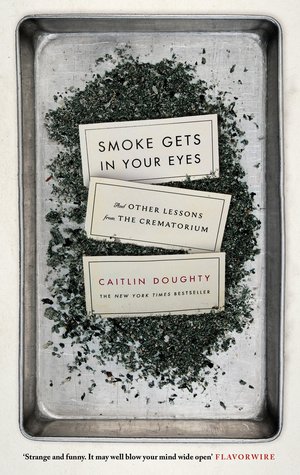 Caitlin Doughty, a funeral director in her early thirties, is on a mission. Her goal? Nothing less than completely changing how we think about death and the customs surrounding it. Her odyssey through the death industry began when she was 23 and started working at suburban San Francisco’s Westwind Crematorium. She had spent her first 18 years in Hawaii and saw her first dead body at age eight when she went to a Halloween costume contest at the mall and saw a little girl plummet 30 feet over a railing. In another century, she reflects, it would have been rare for a child to go that long before seeing a corpse; nineteenth-century tots might have experienced the death of multiple siblings, if not a parent.
“Today, not being forced to see corpses is a privilege of the developed world,” she writes. And if we do see a dead body, it will have been so prettified by mortuary workers that it might bear little resemblance to how the person looked in life. Here Doughty reveals all the tricks of the American trade – from embalming (a post-Civil War development) and heavy-duty makeup to gluing eyes closed and sewing mouths shut – that give the dead that peaceful, lifelike look we like to see at wakes. Compare our squeamishness with the openness of various Asian countries, where one might see dozens of corpses floating down the Ganges or Buddhist monks meditating on a decomposing corpse as a memento mori.
Doughty is in a somewhat awkward position: she is part of the very American death industry she is criticizing – those “professionals whose job was not ritual but obfuscation, hiding the truths of what bodies are and what bodies do.” Although she reveled in her work at the crematorium despite its occasional gruesomeness and seems to believe cremation is an efficient and responsible choice for body disposal, she also worries that it might be a further sign of people’s determination to keep bodies out of sight and out of mind. As anthropologist Geoffrey Gorer noted, “In many cases, it would appear, cremation is chosen because it is felt to get rid of the dead more completely and finally than does burial.”
Could cremation be noble instead? Doughty traces its origins to ancient Roman funeral pyres, as different as could be from the enclosed, clinical environment of a modern crematorium. Two factors led directly to cremation becoming increasingly accepted and popular after the 1960s. One was Jessica Mitford’s book The American Way of Death (1961), which mocked the same Los Angeles area cemetery Evelyn Waugh does in The Loved One, Forest Lawn. The other was Pope Paul VI overturning the Catholic Church’s ban on cremation in 1963. Doughty quotes George Bernard Shaw’s rapturous account of his mother’s cremation in 1913 as proof that it can be not only natural, but even aesthetically pleasing:
And behold! The feet burst miraculously into streaming ribbons of garnet colored lovely flame, smokeless and eager, like Pentecostal tongues, and as the whole coffin passed in it sprang into flame all over, and my mother became that beautiful fire.
It is rare, however – and, for the workers, nerve-racking – to have witnesses at a cremation. For the most part Westwind worked like a factory, cremating six bodies per weekday. Doughty experienced all sides of the work: collecting dead fetuses from hospitals for free cremation, shaving adult corpses before burning, enduring the stench of decomposing flesh, and taking delivery of a box of heads whose bodies were donated to science. She is largely unsentimental about it all; who is this fairytale witch who speaks of “tossing” babies into the oven and grinding their little bones?
“Handmaiden to the underworld,” she describes herself, and given her medieval history degree and Goth-lite looks, you can see that a certain macabre cast of mind is necessary for this line of work. She also has a good ear for arrestingly witty one-liners; my favorite was “As a general rule, if anyone ever asks you to put stockings on a ninety-year-old deceased Romanian woman with edema, your answer should be no.”
Still, Doughty recognizes the almost unbearable sadness of many of the cases the crematorium sees – the young man who traveled to California from Washington just to stand in the path of a train, the “floaters” found in the ocean, the elderly with oozing bed sores, and the homeless folk of Los Angeles who were cremated and dumped in a mass grave after they were used for embalming practice at her mortuary school. She even considered committing suicide herself on a lonely trip out to a redwood forest.
What has kept her going is the desire to combat misconceptions and superstitions about the dead. As she realized after a potentially serious car accident on the freeway, she has lost her own fear of death, and she wants to help others do the same. This will require getting people talking about death, something she is doing through her online community Order of the Good Death and her Ask a Mortician YouTube videos. She would also like to see people having involvement with dead bodies again, as they did in previous centuries, perhaps by washing their dead relatives or keeping them at home before the funeral rather than having them taken away. “It is never too early to start thinking about your own death and the deaths of those you love.” This is not morbid; it’s just planning ahead for an inevitable experience. “We can wander further into the death dystopia, denying that we will die and hiding dead bodies from our sight. Making that choice means we will continue to be terrified and ignorant of death, and the huge role it plays in how we live our lives.”
The sections of personal anecdote in this book are better than those based on anthropological research – which is not woven in entirely naturally. Ultimately, it’s a little unclear exactly how Doughty plans to change things. She speaks of designing her own welcoming crematorium, an open, airy space that doesn’t suggest a death factory. But it’s enough that she’s part of a movement in the right direction, and beneath her wry tone her passion is clear.
My rating:
Further reading suggestions: For more on how people are revolutionizing how we think about death, I highly recommend Anne Karpf’s book for the School of Life, How to Age. Other death-themed reads I have particularly enjoyed are The Undertaking by Thomas Lynch, The Removers by Andrew Meredith, and A Tour of Bones by Denise Inge. Less effective as a memoir but still interesting for its view of the funeral home business is The Undertaker’s Daughter by Kate Mayfield.
Note: I was originally going to review this book for a British website, so I received a free copy of the UK edition from Canongate. Doughty inserts British statistics and information to increase the book’s relevance to a new audience. She also astutely notes that British funerals minimize interaction with a dead body, something I have certainly found true in the two cremations I have attended in England. The Irish are famous for their wakes, but the British do not have this custom. In fact, when we attended my brother-in-law’s viewing and funeral in America earlier this year, it was the first time my husband (aged 31) had seen a dead body. Although I can see Doughty’s point about a prettified corpse not being representative of what the dead ‘should’ look like, I must also say that the funeral home had done a fantastic job of making him look happy and at peace, like he was sleeping and having pleasant dreams. He certainly didn’t look like a man who had suffered the ravages of brain cancer for four years. The same was not true for my ninety-something grandmother, however, who was nearly unrecognizable.
Reviews Roundup, June–July
One of my goals with this blog is to have one convenient place where I can gather together all my writing that has appeared in disparate online locations. To that end, once a month I’ll provide links to all the book reviews I’ve published elsewhere, with a rating and a short taster so you can decide whether to click to read more. (A couple of exceptions: I won’t point out my Kirkus Indie or BlueInk reviews since I don’t get a byline.)
BookBrowse
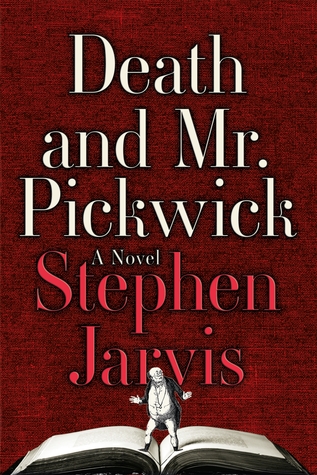 Death and Mr. Pickwick by Stephen Jarvis [subscription service; excerpt available to non-subscribers]: The Pickwick Papers was a Victorian publishing phenomenon. Originally envisioned as a series of sporting tales to accompany Robert Seymour’s engravings in a monthly magazine, the story soon took on a life of its own. Debut novelist Jarvis believes that a conspiracy between Dickens and his publishers covered up two key facts: Pickwick was primarily Seymour’s creation, and Dickens’s brash attempt to take it over was the impetus for Seymour’s suicide in 1836. At 800+ pages, this novel is chock-full of digressions – some amusing, others seemingly irrelevant. Jarvis started the project with the ambition of reading everything ever written about Pickwick. The results are exhaustive…but also a little exhausting.
 Hakai Magazine (a Canadian publication highlighting coastal ecosystems)
Coastlines by Patrick Barkham: In his third nature book, Guardian journalist Patrick Barkham blends science, history, and biography as he travels sections of the British coast protected through Enterprise Neptune, a National Trust campaign celebrating its 50th anniversary this year. His structural approach is unconventional: neither chronological nor geographical, but thematic. In sections on childhood, war, work, art, and faith, he highlights the many practical and metaphorical roles the coast has played in the British story. The choices of location often feel arbitrary and the themes are not quite strong enough to pull the book together, but Barkham succeeds in evoking the mysterious grandeur of the coast.
The Bookbag
Two Lives by Sarah Bourne (& interview): A car accident causes Emma and Loretta’s lives to be intertwined in surprising ways as they negotiate loss, domestic violence and motherhood. There’s a great dynamic between these characters: Loretta vicariously relives her own experience of pregnancy through Emma. As time moves on, their relationship is more like Barbara and Sheba’s in Notes on a Scandal; secrets provoke a tacit power struggle. For a short book, it’s filled with heavy social issues. It loses points for poor cover design as well as frequent typos. All the same, this is a compelling story built around likeable main characters. It does what fiction does best: exploring the small moments that can change lives for good.
 Nudge
Nudge
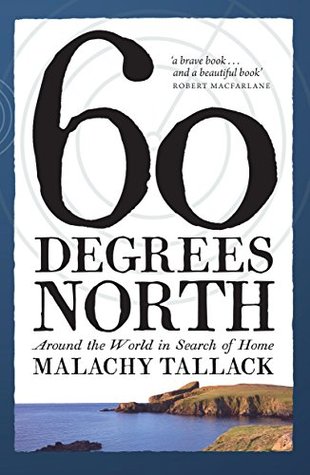
Sixty Degrees North by Malachy Tallack: “Geography begins at the only point of which we can be certain. It begins inside. And from there, from inside, rises a single question: where am I?” Tallack muses. This is a beautifully introspective book about the search for home and identity amidst the changes of time and the trappings of place. The goal of traveling across cold northern places makes it reminiscent of Joanna Kavenna’s The Ice Museum. However, a more telling comparison is with George Mackay Brown, chronicler of the Orkney Islands; like Brown, Tallack is interested in islands, both literally and metaphorically, as places of both isolation and authentic community.
Shiny New Books

The American cover is more evocative of the subject matter.

The UK cover: different thematic focus; frankly a bit tame and boring.
A Little Life by Hanya Yanagihara: Sure to be one of the books of the year, if not the decade. Jude St. Francis: Dickensian orphan, patron saint of lost causes, Christlike Man of Sorrows, and one of the most memorable characters in recent fiction. The reading experience might have been unbearable due to his suffering, but Yanagihara’s skill keeps you reading: the narration is matter-of-fact and revelation of Jude’s past is incremental, so distressing flashbacks are punctuated with more innocuous events. There is nothing ‘little’ about this book or the life portrayed. The novel is an attempt to tackle the monolithic question of what makes life worth living. Among the potential answers: love (though it doesn’t conquer all), friendship, creativity, and the family you create for yourself. Yanagihara has instantly shot to literary greatness; this is Pulitzer and Man Booker Prize-winning material.
BookTrib: A preview of the PBS broadcast of Poldark, which aired on BBC earlier this year.
I also post reviews of most of my casual reading and skimming on Goodreads (the rating is below each description).
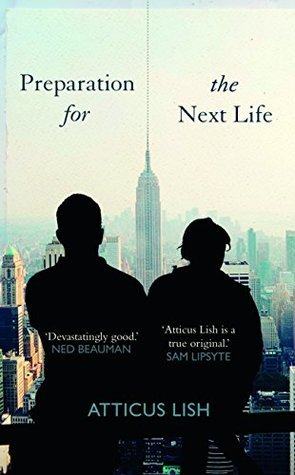 Preparation for the Next Life by Atticus Lish: Like West Side Story, this debut novel is an updated Romeo and Juliet narrative – a tragedy-bound love story with a gritty contemporary setting and a sobering message about racism and the failure of the American dream. Lish’s post-9/11 New York City is less melting pot than Boschian hell, a violent abyss lubricated with the sweat of illegal immigrants. The matter-of-fact style somehow manages to elevate the everyday and urban into an art form. (Full review in August 2015 issue of Third Way magazine.)
Housebreaking by Dan Pope: This tightly crafted novel of adultery in dysfunctional suburbia is somewhat reminiscent of Tom Perrotta’s Little Children or the movie Far from Heaven, but with less memorable characters and storyline overall. The strategy of revisiting the same events of the late summer and fall of 2007 from different characters’ perspectives makes it feel slightly repetitive and claustrophobic.
In a Dark Wood by Joseph Luzzi: In November 2007 Joseph Luzzi’s wife Katherine was in a fatal car accident; she had been eight and a half months’ pregnant, so within one day he entered “the wild uncharted terrain of being a single father and widower.” For several years Luzzi disengaged from fatherhood, throwing himself into his work – teaching Italian at Bard College, editing the proofs for a forthcoming book – while his mother did the hard work of childrearing. As Virgil was to Dante, Dante is to Luzzi: a guide through the hell of loss and into a vita nuova as he starts a new life with his daughter Isabel and, later, his second wife.
 Big Magic by Elizabeth Gilbert: Gilbert sets herself up as a layman’s creativity guru much like Anne Lamott does with Bird by Bird or Stephen King with On Writing. This is based on Gilbert’s TED talks, and it reads very much like a self-help pep talk, with short chapters, lots of anecdotes, and buzz words to latch onto. Her central tenet is “You do not need anybody’s permission to live a creative life.” The voice and message are similar to Rob Bell’s in the field of contemporary theology: reminding readers that what is too precious for words should, perhaps paradoxically, be held loosely with open hands. Releases September 22nd.
Miss Emily by Nuala O’Connor: Emily Dickinson’s Amherst is an inviting setting, and the alternating first-person voices of Emily and the family’s Irish maid, Ada Concannon, are both well realized. However, the plot soon gets mired in the melodrama of a wrong done to Ada in the Dickinson household, which results in a crisis that – you guessed it – requires the reclusive Emily to leave the house. After reading, I remained greedy for more of Emily’s inner life and poetry.
Malignant Metaphor by Alanna Mitchell: A Canadian science journalist counters three misleading adjectives often applied to cancer: inevitable, preventable, and deserved. She personalizes her quest for knowledge through two family experiences. First her brother-in-law, having already survived prostate cancer, was diagnosed with untreatable stage III melanoma. Later Mitchell’s daughter had a thyroid cancer scare. In both cases, things turned out better than expected – proof that cancer is not a death sentence. Releases September 15th.
 A Window Opens by Elisabeth Egan: A sweet, funny debut novel about a woman who tries to juggle all the elements of a happy life: finding the perfect job for a modern book-lover…but also being a good mother to her three children, supporting her husband after he loses his job at a law firm, and helping her mother care for her father as he suffers a relapse of throat cancer. It succeeds because its female first-person voice is immediately engaging. You like Alice and root for her. Releases August 25th.
The Sunken Cathedral by Kate Walbert: Much has been made of Walbert’s “Impressionistic” style. There is some beautiful writing here for sure, but I think it would lend itself better to short stories as there is not enough plot or character continuity to latch onto. Essentially the novel is about a set of New Yorkers in a Chelsea brownstone (chiefly Marie, an old woman who came to America from France after World War II) and their disparate memories and experiences.

Reading with Pomegranates
I spotted an odd coincidence the other week: I’ve read three books with the word ‘pomegranate’ in the title. It’s not a word (or a fruit) you encounter every day, and it has some interesting metaphorical and mythological connections with womanhood that are worth exploring. Here, then, are those three books and some things they have in common:
 Traveling with Pomegranates: A Mother–Daughter Story, Sue Monk Kidd and Ann Kidd Taylor
In this unusual travel memoir, novelist Sue Monk Kidd and her daughter Ann Kidd Taylor, a budding writer herself, swap reflections on their travels to sites in Greece and France associated with the sacred feminine and wonder what kind of women they want to be. Taylor’s trip to Greece in college had been life-changing, even giving her the idea of becoming an ancient Greek scholar, but when she was rejected by her chosen graduate school it threw her for a loop and sparked a years-long depression that distanced her from her mother and her true self.
Meanwhile, Kidd had only written nonfiction at this point but longed to be a novelist and had initial plans for The Secret Life of Bees floating in her mind. She was able to reconnect with Taylor on this first trip to Greece, and bought them matching glass pomegranate charms to wear on necklaces as a salient reminder of the myth of Demeter rescuing her beloved daughter Persephone from the underworld. As they journeyed on to France looking for Black Madonna statues like the one at Rocamadour, both Kidd and Taylor turned secrets of the heart into wishes and promises expressed to the Goddess.
As they returned to South Carolina and Taylor prepared for marriage, Kidd transitioned from myth to fairy tales while pondering the turn of generations. The fact that Taylor wore Kidd’s old wedding dress only underscored for her that “The Young Woman inside has turned to go, but the Old Woman has not shown up.” All the same, she was going through menopause and having to adjust to a new relationship with her body. “Perhaps all mothers of daughters possess a secret talking mirror that announces when their young womanhood begins to fade and their daughters’ begin to blossom,” she muses. “As in the fairy tale, the experience can unleash a lacerating jealousy in some mothers.”
This is a book with vivid settings, carefully recreated scenes and dialogue, mythological echoes, and strong feminist themes. For both Kidd and Taylor, the struggle was to balance Hestia (a home life) with Athena or Joan of Arc (the intellect and sense of adventure). “I learned how easy it is to give up and become draperies while everyone else is dancing,” Taylor laments. For both her and her mother, these travels in search of the sacred feminine were all about finding inner courage and acting on creative urges despite fear.
(Taylor gives her mother the first and last word; initially she was going to write up their journeys by herself, but later enlisted her mother’s help to give the full story – or, being cynical, to have a big-name draw. It is a shame that Taylor hasn’t managed to write anything else in all this time given that her writing is nearly as good as her mother’s. I loved Kidd’s The Invention of Wings but still haven’t read Bees, her breakout novel, so this has whetted my appetite to finally pick that one up.)
 Eating Pomegranates: A Memoir of Mothers, Daughters, and the BRCA Gene, Sarah Gabriel
I read this perhaps nine years ago now; it was one of the first books – along with A Three Dog Life by Abigail Thomas and Without a Map by Meredith Hall – that really turned me on to memoirs, now one of my very favorite genres, and got me thinking about illness and death and how we respond to these in writing. Gabriel, an Oxford journalist, was diagnosed with breast cancer at age 44; her mother had died of the same disease at age 42, when Gabriel was a teenager. Two years before the diagnosis, Gabriel had genetic testing and discovered that she had an inherited mutation on the BRCA gene that made cancer nearly inevitable for her.
Exploring her past and chronicling the grueling treatment process she underwent while raising two small children, Gabriel looks for meaning and connections in a life-and-death struggle. Like Traveling with Pomegranates, this book weaves in the mythology surrounding Persephone and Demeter, bringing with it themes of abandonment and the hope of escaping the pull of the underworld.
Secrets of the Pomegranate, Barbara Lamplugh
I reviewed this debut novel for The Bookbag in April. As in the Kidd–Taylor book, themes of women’s identity and creative bravery come through strongly. The title refers not only to the book’s setting, the Spanish city of Granada (which literally means pomegranate), but also serves as a symbol for female fertility. Also, as Lamplugh revealed in my interview with her, “According to the Qu’ran, [the pomegranate] grows in the gardens of paradise” – which is important to the novel given the main character’s study of Islamic women’s history as well as her relationship with a Muslim man.
My rating: for all 3 books
Q: When is a fruit not just a fruit?
A: When it has as many symbolic and mythological associations as the pomegranate.
Have you noticed odd little connections between books before, whether their titles or themes? Share them in the comments below!
Reviews Roundup, May–June
One of my goals with this blog is to have one convenient place where I can gather together all my writing that has appeared in disparate online locations. To that end, once a month – or maybe more often – I’ll provide links to all the book reviews I’ve published elsewhere, with a rating and a short taster so you can decide whether to click to read more. (A couple of exceptions: I won’t point out my Kirkus Indie or BlueInk reviews since I don’t get a byline.)
BookBrowse
Girl at War by Sara Nović [subscription service; excerpt available to non-subscribers]: This pitch-perfect debut novel is an inside look at the Yugoslavian Civil War and its aftermath, from the perspective of a young girl caught up in the fighting. The careful structure is what keeps it from becoming just another ordinary, chronological war story. The recreation of a child’s perspective on the horrors of war is stunning. In fact, I can barely think of a negative thing to say about this concise novel. It strikes a perfect balance between past and present, tragic and hopeful.
 Church of Marvels by Leslie Parry [subscription service; excerpt available to non-subscribers]: With settings ranging from a Coney Island theater to an opium den and a mental asylum, this is a gritty look at late-nineteenth-century outsiders. Circus and sideshow themes have been very popular in fiction in recent years, and this is a great example of a novel that uses those elements as background but goes beyond the incidentals of the carnival lifestyle to examine sexuality and societal outcasts. A very atmospheric and accomplished debut novel.
The Bookbag
Secrets of the Pomegranate by Barbara Lamplugh (& interview): In the aftermath of the 2004 Madrid train bombings, the secrets harbored by two English sisters, one of them settled in Granada, will come out into the open and affect the entire family. Lamplugh does a great job of unveiling a little at a time – but still maintaining tension until the surprise of the final revelation. The novel shifts easily between the central narrative and Deb’s diary entries, and between Alice’s and Mark’s perspectives. A strong debut novel.
An Account of the Decline of the Great Auk, According to One Who Saw It by Jessie Greengrass: An unusual mixture of historical, contemporary and dystopian short stories. A number of the first-person narratives feel like vague interior monologues, though there are some universal sentiments. When Greengrass picks one genre (but which will it be?) and sticks with it for the length of a whole book, she should have the time and space for the deep characterizations I thought were missing here. (But you can’t beat this book’s title, can you?)
 From the Mixed-Up Files of Mrs. Basil E. Frankweiler by E.L. Konigsburg: This was one of the key books of my American childhood. All these years later, phrases were still familiar to me, such as Jamie’s frequent exclamation of “Oh, boloney!” I clearly remembered the delicious overall sense of adventure and secrecy. Konigsburg captures school group chatter and brother/sister banter perfectly. The museum and archive settings are a great way to get children interested in art, history and library research. This was the original Night at the Museum before that franchise was ever dreamed up.
The Hunt for the Golden Mole by Richard Girling: From Victorian animal collecting to present-day poaching, Girling surveys the contradictory human instincts toward exploitation and preservation of mammals. The book is rather scattered, with too little about the actual quest for the mole, but the message about species extinction is powerful. (The Somali golden mole has never been seen in the wild, except as a few bones in an owl pellet found by an Italian zoologist in 1964. For some reason, it captured Girling’s imagination, becoming a symbol of rarity and fragility.)
Nudge
Road Ends by Mary Lawson: Contrasting rural Canada and London in the 1960s, Lawson’s third novel is a powerful story about how people deal with a way of life ending. She creates a perfect balance between her two plot strands, and the evocation of both locations is flawless, perhaps because they have autobiographical worth for her – she grew up on a farm in Ontario but moved to England in 1968. One remarkable thing about the novel is how she traces every decision back to a traumatic event in a character’s past.
 The Wolf Border by Sarah Hall: Rachel Caine has run Idaho’s Chief Joseph wolf preserve for nearly a decade, but her roots are in England’s Lake District. Her two worlds unexpectedly collide when an earl asks for her help reintroducing wolves near the Scottish border. Alongside the story of the wolves’ release runs Rachel’s decision to become a mother. The twin plot strands – one environmental and the other personal – ask what can be salvaged from the past.
Italian Ways by Tim Parks: Parks, an Englishman, has lived and worked in northern Italy for over 30 years. To start with he saw his train travel as an everyday source of woes about ticket queues, late running, officious staff, and so on, but as years passed he decided to interrogate Italy’s rail system as a metaphor for the country itself. He structures this book around seven train journeys. It’s better suited to train spotters than to armchair travelers: there is quite a lot about train schedules and not enough about the countryside itself.
 Landmarks by Robert Macfarlane: This new classic of nature writing zeroes in on the language we use to talk about our environment, both individual words – which Macfarlane celebrates in nine mini-glossaries alternating with the prose chapters – and the narratives we build around places, via discussions of the work of nature writers he admires. Whether poetic (“heavengravel,” Gerard Manley Hopkins’s term for hailstones), local and folksy (“wonty-tump,” a Herefordshire word for a molehill), or onomatopoeic (on Exmoor, “zwer” is the sound of partridges taking off), his vocabulary words are a treasure trove.
Penelope Fitzgerald: A Life by Hermione Lee: A thorough and sympathetic appreciation of an underrated author, and another marvelously detailed biography from Lee. Fitzgerald is, like Diana Athill, a reassuring examples of an author who did not find success until well into middle age. Although she always guarded literary ambitions, she was not able to pursue her work wholeheartedly until she had reared three children and nursed her hapless husband through his last illness. The approach is largely chronological, though Lee pauses at key moments to investigate the biographical origins of each of Fitzgerald’s books.
Saint Mazie by Jami Attenberg: Mazie Phillips-Gordon, a real ticket-taker at The Venice movie theatre, barely gets a footnote in history. Here we see all sides of this bold, brassy broad through Attenberg’s fragmented, epistolary narrative. The novel intersperses Mazie’s fictional diary entries (1907 to 1939) with excerpts from her unpublished autobiography and interviews with people who knew her. This is historical fiction – but not as we’re accustomed to it. Attenberg shows how fragile and incomplete the documentary record can be. A hard-nosed heroine with a heart of gold, Mazie will leave her mark on you.
 A Buzz in the Meadow by Dave Goulson: As Goulson did in his book about bees, A Sting in the Tale, he treats readers like friends he is taking on a gentle tour to have everyday encounters with nature. The low-key, humorous anecdotes are reminiscent of the writings of Gerald Durrell, but – like Durrell – Goulson has a serious environmental agenda. Some of the most amusing chapters are about the sexual habits of insects and plants. This is less focused than his previous book, though, and repeats some of the material. The main draw, as always, is Goulson’s infectious enthusiasm and excellent explanations of science.
We Love This Book
War of the Encyclopaedists by Christopher Robinson and Gavin Kovite: In this postmodern satire, two Seattle hipsters must face reality when one of them leaves to fight in the Iraq War. From now on they keep in touch by updating their pretentious Wikipedia article. While Hal applies literary criticism to Star Wars and tries to make amends to his ex-girlfriend, Mickey is in life-and-death situations, looking for car bombs and overseeing local elections. Robinson and Kovite (an Iraq War veteran) alternate their settings in a fairly seamless whole.
The Edible Atlas by Mina Holland: Food lovers and armchair travelers alike will savor this tour through the world’s regional cuisines and trademark dishes. In her first book, the editor of the Guardian’s Cook supplement introduces 39 cuisines with larder lists, a rundown of crucial flavors, and one to four recipes. Maps show which spices and chilies are used in different areas, while sidebars present key ingredients. The book strives for a balance of common imports and unknown dishes, prioritizing authenticity and reproducibility at home.
 Hollow Heart by Viola di Grado: Twenty-five-year-old Dorotea Giglio slit her wrists in the bathtub in July 2011 and expired in “a grim mojito of mint bubble bath and blood.” Over the next four years she chronicles her physical decomposition as well as her spirit’s enduring search for love. In alternately clinical and whimsical language, with fresh metaphors that have survived translation from Italian admirably, di Grado’s second novel examines the secret sadness passed down through families.
Foreword Reviews
Auschwitz #34207: The Joe Rubinstein Story by Nancy Sprowell Geise: This eye-opening account of a Polish Jew’s life before, during, and after Auschwitz deposits readers right into concentration camp horrors. Instead of presenting this as a third-person biography, Geise writes as Rubinstein, using extensive interviews and documentary research to recreate his perspective. While the story is necessarily a bit less dramatic after the chapters on the Holocaust, the fact that Rubinstein survived and later became a successful shoe designer in New York is inspiring.
The Contaminants by Devin K. Smyth: Two teens aboard a spacecraft hold out hope for new life on post-apocalyptic Earth in this believable YA science fiction novel. Composed of two solid first-person narratives and based around two father-child relationships, this is a novel that prizes emotions as much as it does technology. The novel is on the thin side; it could have done with another subplot or two to add some complexity. However, the subtle eugenics theme will give teen readers plenty to think about while they follow the fast-paced story.
 The Loneliness Cure by Kory Floyd: A professor of communication tackles the loneliness epidemic with stories and science. Floyd explains the problems associated with chronic affection deprivation and suggests practical strategies for getting more of the human contact we naturally crave. Two-thirds of the text goes to preliminaries, but the subtitle’s six strategies are worth waiting for. Like the best self-help books, this convinces readers that “it pays to reach out for help when you need it” and gives the confidence and tactics to do so.
BookTrib
In this article I give a more in-depth preview of Circling the Sun by Paula McLain, her fictionalized biography of Beryl Markham.
I also post reviews of most of my casual reading and skimming on Goodreads.
Insomnia by Linda Pastan: Excellent free verse poems infused with images of weather, heavenly bodies, the night sky, art history, and travels. No rhymes to speak of, but plenty of alliteration and repetition – like in “Necklace,” where nearly every line ends with “pearl” or “pearls.” Historical and mythological references are frequent and highbrow. Especially in Part 3, the main theme is facing old age and illness. Linda Pastan has been writing poetry for nearly half a century; I’ll be sure to seek out more of her collections. Releases October 26th.
The Kindness by Polly Samson: This very subtle novel reminds me of works by Tessa Hadley and Lucy Caldwell. It takes one seemingly perfect couple – Julia and Julian – and parses out what went wrong between them and the aftermath. The book is so elegantly structured; characters drift in and out of flashbacks with none of the customary warnings. Instead Samson leaves it to readers to piece together the jigsaw puzzle of how they met and raised their daughter, Mira, and then how everything fell apart.
 The Versions of Us by Laura Barnett: In this impressive debut, Barnett chronicles the romantic lives of two Cambridge graduates through three-quarters of a century, giving three options for how their connection might play out. She juggles her storylines and moves through decades with ease. Less mawkish than One Day; less gimmicky than Life After Life – though there are shades of both. The message seems to be: there is no one perfect person, no one perfect story. Unsentimental this may be, but it feels true to how life works. (My full review will appear in the July 2015 issue of Third Way magazine.)
Eating Appalachia: Rediscovering Regional American Flavors by Darrin Nordahl: Nordahl travels through Ohio, West Virginia, Kentucky and North Carolina in search of truly indigenous local ingredients. He highlights ramsons, pawpaw, elk (leaner and richer than beef), squirrel, hickory nuts and black walnuts, sumac, spicebush berry, sassafras, and persimmons. There are a few recipes and photographs in each chapter, although this is more of a narrative than a cookbook. I loved how he brought it all together with an imagined Appalachian Thanksgiving feast.
Eating Rome: Living the Good Life in the Eternal City by Elizabeth Minchilli: Minchilli’s parents moved the family from America to Rome when she was 12. Over the years she kept going back to Italy: to Florence as a graduate student, and then to stay when she married Domenico. Here, through recipes and personal stories, she shares her enthusiasm for Italian food and for Rome in particular. She finishes each chapter with a list of favorite eateries, so this is a practical guide anyone would benefit from taking along on a trip to Rome.
Some Churches by Tasha Cotter: I loved the first two poems but felt a number of the rest were lacking in artistry. Almost all are written in complete sentences, some in paragraph blocks, and alliteration isn’t always enough to differentiate them from prose. Favorite lines (from “Blood Orange”): “People think that either the red or the orange should go, because to blend the two / alienates some readers. / … I, too, am having an identity crisis, / just like the blood orange. Now that we’ve peeled back / the artifice, you’re inviting me in anyway”.
South Toward Home: Travels in Southern Literature by Margaret Eby: This tour through Southern literature is a great introduction for someone whose familiarity with Southern authors is minimal. Starting off in her home state of Mississippi, Eby travels through Georgia, Alabama, Louisiana, and back to Mississippi in a roughly circular road trip. My favorite chapter was on Flannery O’Connor, but I was also interested to learn about Harry Crews, who I’d never heard of before – it certainly sounds like he was a character. Releases September 8th.
 Post-Traumatic Church Syndrome: A Memoir of Humor and Healing by Reba Riley: I could relate to much of Riley’s story. She was a Pentecostal-leaning fundamentalist through high school, but now even setting foot in a church made her feel nauseous. Yet she retained a strong spiritual compass that helped her tap into the energy of the “Godiverse.” Aged 29, Riley had the idea of experiencing 30 different religious traditions before 30. She writes in a chatty, girlfriend-to-girlfriend style, as if you’ve joined her book club for a glass of pinot grigio.
The Truth According to Us and Safekeeping
They say there are only two basic plots: a stranger comes to town, or the hero sets off on a journey. So far this summer I’ve enjoyed two novels that exemplify one or the other model.
 First is The Truth According to Us by Annie Barrows, co-author of the endearing The Guernsey Literary and Potato Peel Pie Society. This atmospheric historical novel is set in the sweltering summer of 1938. Layla Beck, a spoiled senator’s daughter, has been sent to Macedonia, West Virginia by the WPA to document the town’s story in advance of its sesquicentennial. Her uncle pulls strings to get her the job even though he thinks his flighty niece is “exactly as fit to work on the project as a chicken is to drive a Buick.”
From a lunatic Civil War general onwards, Macedonia has certainly had a colorful history. The problem is that all the local lights want to skew history to present themselves in the most favorable light. This applies to the family Layla boards with as well, the Romeyns. Felix and Jottie’s father ran the American Everlasting Hosiery Company until a devastating fire some 20 years ago – blamed on Jottie’s old sweetheart, Vause Hamilton.
Now Felix’s twelve-year-old daughter Willa, who narrates much of the novel, wants to get to the bottom of things. What really happened during that factory fire? Why are the Romeyns snubbed around town? Has her divorcé father turned to bootlegging, and can she stop Miss Beck from bewitching him? Like Scout Finch in To Kill a Mockingbird or Flavia de Luce in Alan Bradley’s mysteries, Willa is a spunky heroine whose curiosity carries the plot.
Once again Barrows makes good use of the epistolary format by inserting the letters Layla sends and receives during her time in Macedonia. Third person narration also gets us into the mind of Jottie, one of the strongest characters. However, later sections of the novel get a little bogged down in Jottie’s romantic history, and overall it is too long by at least a quarter. Barrows is better at capturing everyday speech and routines than momentous activities like a factory strike, but she certainly evokes the oppressive heat of a long American summer.
As Willa concludes, “The truth of other people is a ceaseless business. You try to fix your ideas about them, and you choke on the clot you’ve made.” This novel reminds us that others – whether strangers or family – are always a mystery, and history is a matter of interpretation.
My rating:
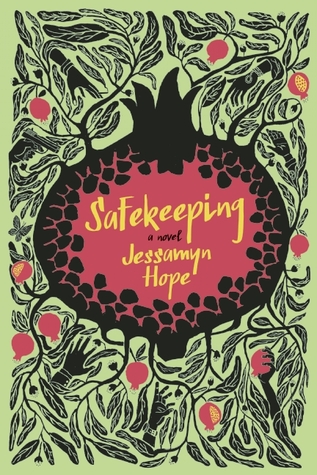 Next up is Safekeeping, the debut novel from Jessamyn Hope. A bit like All the Light We Cannot See, the Pulitzer Prize-winning novel from Anthony Doerr, the plot revolves around a priceless jewel. In this case it’s a medieval sapphire brooch that has been passed down through Adam’s family for centuries. In 1994, after the death of his grandfather, a Holocaust survivor, Adam undertakes a quest to return the brooch to the woman he fell in love with on an Israeli kibbutz and never forgot. Adam has his own problems – he’s a recovering junkie and alcoholic – but he feel he owes this to his grandfather’s memory.
A kibbutz undergoing the bitter transition from communalism to salaried work provides a vivid contrast to Adam’s native New York City. Hope populates her novel with a wonderful cast of eccentric characters. There’s Ulya, a Belarussian prima donna with a shoplifting habit; Claudette, a French Canadian Catholic crippled by mental health issues; Ziva, a kibbutz veteran who fights the changes tooth and nail despite advancing infirmity; and Ofir, a young man who endeavors to finish his military service early so he can return to his beloved piano.
I loved the way that Hope links the disparate characters in a constellation of connections. Acts of generosity, small or large, make a huge difference, even though betrayals past and present still linger. Close third person narration shifts easily between all the characters’ viewpoints, while two surprising historical interludes add depth. Hope handles flashbacks as elegantly as I’ve ever seen: you follow characters into their thoughts and suddenly snap back to the present right along with them.
I’ll confess I was slightly disappointed with the inconclusive ending. We follow the brooch rather than the characters, which means that in two cases we are left wondering about a person’s fate. Still, I was so impressed with the writing, especially the interweaving of past and present, that I will be eager to watch Hope’s career. Safekeeping is published by Fig Tree Books, a champion of modern Jewish literature, and has one of the most terrific book covers I’ve seen in a while.
My rating:
Between the Dark and the Daylight, Joan Chittister
 Joan Chittister is a Benedictine nun and author of over 50 books of theology. Somehow I had never heard of her before I requested this title from Blogging for Books. Between the Dark and the Daylight, which came out in February, strikes me as a work of practical spirituality with a self-help bent. It’s not very religion-specific; in fact, Jesus is only mentioned four times, and the word “Christian” appears just once.
Based on the title, I was expecting something like Barbara Brown Taylor’s Learning to Walk in the Dark, which is more about metaphors of darkness and how times of doubt and suffering may actually be helpful for people of faith. Although there is likely some overlap between the two, Chittister’s subtitle – Embracing the Contradictions of Life – gives a better idea of what her book is about. Her focus on oxymorons and pairs of opposites spurs readers to re-evaluate and redefine experiences that are always envisioned as negative: frustration, confusion, loss, solitude, and doubt (in this last she reminds me of Peter Rollins).
“To the average person whose life is exemplary most of all for its ordinariness—to people like you and me, for instance—it is what goes on inside of us that matters for the healthy life and real spirituality. … Whatever it is that we harbor in the soul throughout the nights of our lives is what we will live out during the hours of the day.”
Chittister takes emotions seriously, but at the same time she gently nudges us to look below the surface and ask what’s really going on within.
In Chapter 2, “The Delusion of Frustration,” for example, she insists that “Frustration is a cover-up for something we have yet to face in ourselves. … It’s what we use to explain the sour or pouty or demanding or manipulative attitudes we have developed. It is the right we assert to be less than we are capable of being.”
Rather than seeing uncertainty as negative, we should consider it as fostering “the spirit of invention and possibility”: “Life is about participating in the fine art of finding ourselves—our talents, our confidence, our sense of self, our purpose in life.”
Rather than letting failure drive us into despair, we must “pursue the possible in the imperfect,” for “hope lies in taking what we have … and using every heartbeat within us to turn it into something worthwhile.” As Churchill once said, “Success is bounding from failure to failure with no loss of enthusiasm.”
“The Creativity of Confusion” and “The Liberation in Loss” are two more stand-out chapters, with too many quotable lines to mention here.
This book has been quite inspirational for me. It’s refreshing to see that Chittister doesn’t advocate mute resignation to what life/God/Fate has in store for us; “it is as much our responsibility to shape life as it is for life to shape us.” I especially appreciated her advice to “Plant yourself where you know you can bloom.”
If I were being critical, I might say that her prose is a little repetitive and too reliant on quotes and anecdotes from external sources. She is certainly more focused on ideas than on writing style. This is a common complaint I have about theology books: if academic, they’re inaccessible; if popular, they’re averagely written.
Nevertheless, I think Chittister’s work will be revelatory for a lot of people. And you don’t have to be a Catholic, or even a Christian, to find wisdom here. (My NetGalley request to read the book was initially declined because I’m not a Catholic blogger, a curious instance of narrow, discriminatory thinking.) Anyone who wants to pursue a life of joy and purpose – who dares to believe that life could be more than a cycle of frustration and hopelessness – will want to give this a read.
My rating:
Reviews Roundup, April–May
One of my goals with this blog is to have one convenient place where I can gather together all my writing that has appeared in disparate online locations. To that end, once a month – or maybe more often – I’ll provide links to all the book reviews I’ve published elsewhere, with a rating and a short taster so you can decide whether to click to read more. (A couple of exceptions: I won’t point out my Kirkus Indie or BlueInk reviews since I don’t get a byline.)
[I seem to have done more ‘free’ than ‘required’ reading this past month, which I attribute to having been on vacation in America for about two weeks of that time.]
BookBrowse
 The Turner House by Angela Flournoy [subscription service, but an excerpt is available for free on the website]: In Flournoy’s debut novel, the 13 grown children of Francis and Viola Turner must put aside their own personal baggage and decide what will become of their parents’ Detroit house during the financial crisis.
The Bookbag
Mother of Eden by Chris Beckett: This sequel to 2012’s Arthur C. Clarke Award-winning science fiction novel Dark Eden sees Gela’s descendants splitting into factions and experimenting with different political systems. Starlight Brooking emerges as a Messiah figure, spreading a secret message of equality. Releases June 4th.
 Sophie and the Sibyl by Patricia Duncker: In Duncker’s sixth novel, a playful Victorian pastiche, George Eliot’s interactions with her German publisher and his feisty young wife provide fodder for Daniel Deronda. Consciously modeled on John Fowles’s The French Lieutenant’s Woman, this is a postmodern blending of history, fiction, and metafictional commentary.
We Love This Book
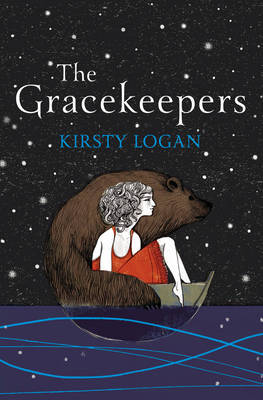 The Gracekeepers by Kirsty Logan: This inventive debut novel imagines a circus traveling through a flooded future world. Humanity is divided into two races, landlockers and damplings. Fear and prejudice distance these groups but the novel imagines them drawn together through a meeting between two young women, Callanish and North.
Foreword Reviews
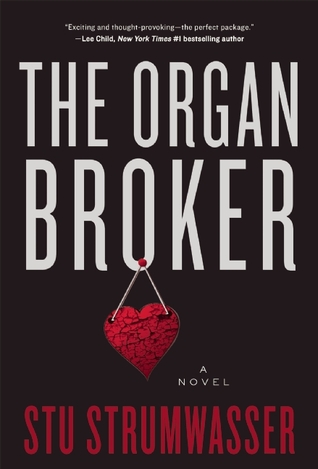 The Organ Broker by Stu Strumwasser: “There is no shortage of organs; there is only a shortage of organs in America.” The antihero of this debut novel finds organs on the international market and sells them for huge profits to Americans on transplant waiting lists. With snappy dialogue and a lovable hustler protagonist, it explores ethical ambiguities.
BookTrib
I chose my top four mother–daughter memoirs (by Alice Eve Cohen, Abigail Thomas, Alison Bechdel and Jeanette Winterson) for this Mother’s Day article.
I also post reviews of most of my casual reading on Goodreads.
Mademoiselle Chanel by C.W. Gortner: A writer of Tudor-era mysteries turns to more recent history with this novel about Coco Chanel. Detailing every business venture and love affair, he makes some parts a real chronological slog. I always associate Chanel with the 1950s–60s, so it was interesting to learn that she was born in the 1880s and experienced both world wars.
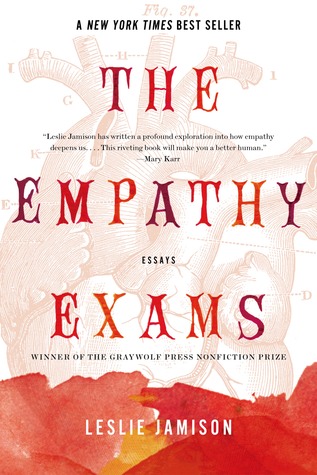 The Empathy Exams by Leslie Jamison: I liked the medical-related pieces – attending a Morgellons disease conference, working as a medical actor – but not the Latin American travel essays or the character studies. The overarching theme of empathy was not as strong as I thought it would be; really, the book is more about how experiences mark the body.
The Real Thing: Lessons on Love and Life from a Wedding Reporter’s Notebook by Ellen McCarthy: McCarthy writes about weddings and relationships for The Washington Post. This is a collection of short pieces about modern dating, breakups, wedding ceremonies, marriage, and making love last. The style is breezy and humorous, largely anecdote- and interview-based, with some heartfelt moments. If you’re a wedding junkie you’ll definitely enjoy it, but I didn’t think it broke new ground.
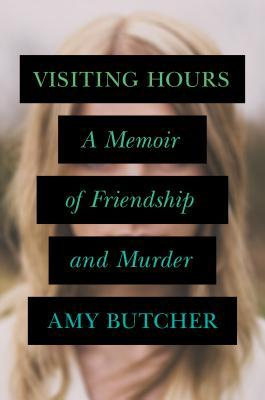 Visiting Hours: A Memoir of Friendship and Murder by Amy E. Butcher: The facts are simple: one night towards the end of their senior year at Gettysburg College, Kevin Schaeffer walked Butcher home from a drunken outing, then stabbed his ex-girlfriend to death. This book has elements of a true crime narrative, detailing the crime and speculating on possible causes for Kevin’s psychotic episode, but it’s more about how the crime affected Butcher. This is a concise and gripping narrative reminiscent of Half a Life by Darin Strauss.
A Reunion of Ghosts by Judith Claire Mitchell: Vee, Lady and Delph are the fourth generation of Alters, a Jewish family cursed with a rash of suicides. Indeed, the majority of the novel is the middle-aged sisters’ collective suicide note, narrated in the first-person plural. They reach back into the past to give the stories of their ancestors, including great-grandparents Iris and Lenz Alter, the latter of whom had the ironic distinction of being the Jewish creator of Zyklon gas (based on a real figure).
Beloved Strangers: A Memoir by Maria Chaudhuri: Islam versus Christianity is a background note, but the major theme is East versus West – specifically, Chaudhuri’s native Bangladesh set against America, where she attended university and later lived and worked. Religion, sexuality, dreams and second chances at love are all facets of the author’s search for a sense of home and family in a life of shifting loyalties. (My full review will appear in the autumn 2015 issue of Wasafiri literary magazine.)
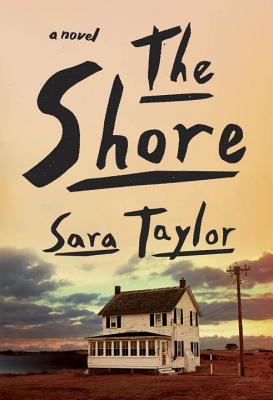 The Shore by Sara Taylor: Gritty and virtuosic, this novel-in-13-stories imagines 250 years of history on a set of islands off the coast of Virginia. As a Maryland native, I think of Chincoteague and Assateague as vacation destinations, but Taylor definitely focuses on their dark side here: industrial-scale chicken farms, unwanted pregnancies, domestic violence, bootleg liquor, gang rape, murders and meth labs.
Echoes of Heartsounds: A Memoir by Martha Weinman Lear: Longtime New York City journalist Lear’s first husband, a doctor named Hal, died after a series of heart attacks. Ironically, 30 years later she was admitted to the same hospital for a heart attack – an event that presents completely differently in women. As a sequel to her previous memoir, Heartsounds (1980), this explores life’s odd parallels and repetitions.
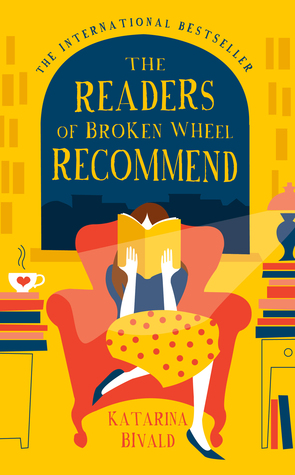 The Readers of Broken Wheel Recommend by Katarina Bivald: A Swedish tourist opens a bookstore in small-town Iowa. Given that she’d never visited the States at the time she wrote this novel (published in her native Sweden in 2013), Bivald has painted a remarkably accurate picture of a Midwestern town peopled with fundamentalists, gays, rednecks and a gun-toting diner owner. A cute read for book lovers, provided you can stomach a bit of chick lit / romance.
Life From Scratch: A Memoir of Food, Family, and Forgiveness by Sasha Martin: Martin writes well and I enjoyed this book overall, but at times you may become frustrated and ask “where’s the food?!” That’s because the makeup of this book is: Misery Memoir – 70% / Global Table Adventure blog – 30%. Martin had the idea to cook dishes from every country of the world. At the rate of one feast per weekend, the blog project took four years. She manages to give a fairly comprehensive overview of the cooking she did over that time.
Plumb Line by Steve Luttrell: Disappointingly average poems about nature and memory. The situations and sentiments are relatable but the language so plain that nothing sticks out.

The Sixth Extinction: An Unnatural History by Elizabeth Kolbert: The picture Kolbert paints of our environmental situation is depressing. I already knew the facts of climate change and animal extinction, but according to Kolbert the prognosis is even worse than I was aware. As a longtime New Yorker journalist, she writes at a good level for laymen: not talking down, nor assuming any specialist knowledge. Luckily, there are spots of humor to lighten the tone.
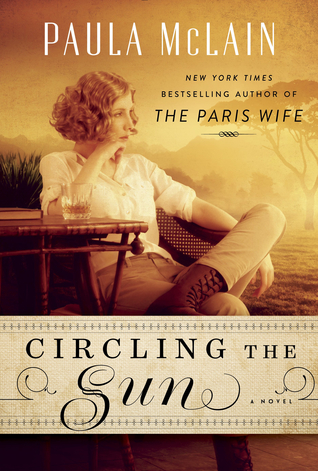 Circling the Sun by Paula McLain: This is just as good as The Paris Wife – if not better. I didn’t think I was very interested in aviatrix Beryl Markham, but McLain proved me wrong. The love triangle between her, Karen Blixen (Isak Dinesen) and Denys Finch Hatton forms the kernel of the book. McLain describes her African settings beautifully, and focuses as much on the small emotional moments that make a life as she does on the external thrills, though there are plenty of those.
The Size of Our Bed by Jacqueline Tchakalian: Well-structured and grouped into thematic sections, these poems are primarily about motherhood, the death of a much-loved husband from cancer, and adjusting to the reality of war. Alliteration and assonance stand in for traditional rhymes. Tchakalian is especially good with colors and flowers, which combine to create memorable metaphors. Releases September 15th.
Review: The House of Hawthorne by Erika Robuck
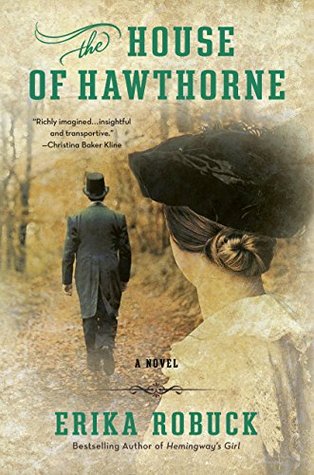 We often resent books we’re forced to read in school, but The Scarlet Letter wasn’t like that for me. Even though it was assigned reading for high school, I could instantly sense how important it was in the history of American literature. The tragic story of Hester Prynne and her judgmental community is one that stays with me half a lifetime later. I reread it in college for a Hawthorne & Melville course, for which I also read The Blithedale Romance, The House of the Seven Gables, and several of Nathaniel Hawthorne’s best short stories.
My more-than-average interest in Hawthorne, combined with my love of historical fiction about “famous wives” (see my BookTrib articles on the subject, including one specifically about the Hemingway and Fitzgerald wives) meant that I was eager to read Erika Robuck’s latest. She’s made a name for herself with novels about some of history’s famous women, including Zelda Fitzgerald, Edna St. Vincent Millay and one of the Hemingway wives, but somehow I’ve never read anything by her until now.
“Time flies over us, but leaves its shadow behind.”
(one of Robuck’s epigraphs, from Hawthorne’s The Marble Faun)

Nathaniel Hawthorne in 1840 (from Wikimedia Commons).
The novel is from the first-person perspective of Sophia Peabody, later the wife of Nathaniel Hawthorne. The Peabodys were an artistic, intellectual family who encouraged Sophia to cultivate her talent as a painter and sculptor, but illness often held her back: she suffered from debilitating headaches and turned to morphine and mesmerism for relief. The story begins and ends in the spring of 1864, when Nathaniel, suffering from a stomach ailment, sets off on a final journey without Sophia. In between these bookends, the novel spans the 1830s through the 1860s, taking in Sophia’s sojourn in Cuba as a young woman, her and Nathaniel’s courtship, and the challenges of parenthood and making a living from art.
My favorite portions of the novel were set in Concord, Massachusetts, that haven for writers and Transcendentalists. Ralph Waldo Emerson, Henry David Thoreau and Herman Melville all play minor roles. It’s especially amusing to see Melville, Hawthorne’s ardent admirer, overstep the boundaries of polite society and become an irksome stalker. What I did not realize from previous biographical reading about the Hawthornes is that they nearly always struggled for money. They rented Emerson’s uncle’s house in Concord but were evicted when they fumbled to make payments. Nathaniel’s jobs in the Custom House and as the U.S. Consul in Liverpool (appointed by President Franklin Pierce, who was a personal friend and whose biography he wrote) were undertaken out of financial desperation rather than interest.
The Hawthornes’ time in Europe was another highlight of the novel for me. They encounter the Brownings and finally get a chance to see all the Italian art that has inspired Sophia over the years. Their oldest daughter, Una, also falls ill with malaria, which provides some great dramatic scenes in later chapters. I warmed to this late vision of Sophia as a devoted mother, whereas I struggled to accept her as a vibrant young woman and a randy wife. Her constant complaints about headaches are annoying, and I wasn’t convinced that the Cuba chapters were relevant to the novel as a whole; Robuck tries to link Sophia’s observations of slavery there with the abolitionist sentiments of the 1860s, but Sophia’s devotion to the antislavery cause was only ever half-hearted, so I didn’t believe the experience in Cuba could have affected her that deeply. Her unconsummated lust for Fernando is also, I suppose, meant to prefigure her abiding passion for Nathaniel – which is described in frequent, cringe-worthy sex scenes and flowery lines like “In his gaze, I feel our souls rise up to meet each other.”
Ultimately, my disconnection from Sophia as narrator meant that I would prefer to read about the Hawthornes in biographies, of which there are plenty. Two novels I would recommend that incorporate many of the same historical figures are Miss Fuller by April Bernard and What Is Visible by Kimberly Elkins (about the deaf-blind Laura Bridgman – who has a tiny cameo here). Beautiful Fools by R. Clifton Spargo uses a Cuba setting to better effect in telling the story of Scott and Zelda Fitzgerald’s last holiday. I preferred all three of these to The House of Hawthorne. However, I’m certainly up for trying more of Robuck’s fiction.
My rating:
I received early access to this book through the Penguin First to Read program.
 Bookish Beck = Rebecca Foster. American transplant to England. Freelance proofreader and book reviewer.
 Bookish Beck