Bookish Bits and Bobs
It’s felt like a BIG week for prize news. First we had the Booker Prize longlist, about which I’ve already shared some thoughts. My next selection from it is Trust by Hernan Diaz, which I started reading last night. The shortlist comes out on 6 September. We have our book club shadowing application nearly ready to send off – have your fingers crossed for us!
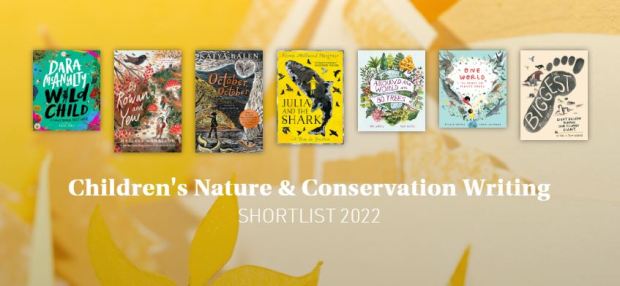
Then on Friday the three Wainwright Prize shortlists (I gave my reaction to the longlists last month) were announced: one for nature writing, one for conservation writing, and – new this year – one for children’s books on either.
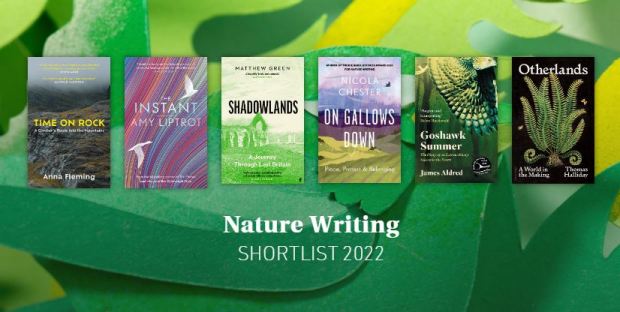
 I’m delighted that my top two overall picks, On Gallows Down by Nicola Chester and Silent Earth by Dave Goulson, are still in the running. I’ve read half of the nature list and still intend to read Shadowlands, which is awaiting me at the library. I’d happily read any of the remaining books on the conservation list and have requested the few that my library system owns. Of the children’s nominees, I’m currently a third of the way through Julia and the Shark and also have the Davies out from the library to read.
As if to make up for the recent demise of the Costa Awards, the Folio Prize has decided to split into three categories: fiction, nonfiction and poetry; the three finalists will then go head-to-head to compete for the overall prize. I’ve always wondered how the Folio judges pit such different books against each other. This makes theirs an easier job, I guess?
Speaking of prize judging, I’ve been asked to return as a manuscript judge for the 2023 McKitterick Prize administered by the Society of Authors, the UK trade union for writers. (Since 1990, the McKitterick Prize has been awarded to a debut novelist aged 40+. It’s unique in that it considers unpublished manuscripts as well as published novels – Political Quarterly editor Tom McKitterick, who endowed the Prize, had an unpublished novel at the time of his death.) Although I’d prefer to be assessing ‘real’ books, the fee is welcome. Submissions close in October, and I’ll spend much of November–December on the reading.
Somehow, it’s August. Which means:
- Less than a month left for the remaining 10 of my 20 Books of Summer. I’m actually partway through another 12 books that would be relevant to my flora theme, so I just have to make myself finish and review 10 of them.
- It’s Women in Translation month! I’m currently reading The Last Wild Horses by Maja Lunde and have The Summer Book by Tove Jansson out from the library. I also have review copies of two short novels from Héloïse Press, and have placed a library hold on The Disaster Tourist by Yun Ko-eun. We’ll see how many of these I get to.

 Marcie (Buried in Print) and I have embarked on a buddy read of Cloudstreet by Tim Winton. I’ve never read any of his major works and I’m enjoying this so far.
Goodreads, ever so helpfully, tells me I’m currently 37 books behind schedule on my year’s reading challenge. What the website doesn’t know is that, across my shelves and e-readers, I am partway through – literally – about 90 books. So if I could just get my act together to sit down and finish things instead of constantly grabbing for something new, my numbers would look a lot better. Nonetheless, I’ve read loads by anyone’s standard, and will read lots more before the end of the year, so I’m not going to sweat it about the statistics.
A new home has meant fun tasks like unpacking my library (as well as not-so-fun ones like DIY). As a reward for successfully hosting a housewarming party and our first weekend guests, I let myself unbox and organize most of the rest of the books in my new study. My in-laws are bringing us a spare bookcase soon; it’s destined to hold biographies, poetry and short story collections. I thought I’d be able to house all the rest of my life writing and literary reference books on two Billy bookcases, but it’s required some clever horizontal stacks, special ‘displays’ on the top of each case, and, alas, some double-stacking – which I swore I wouldn’t do.


Scotland and Victoriana displays, unread memoirs and literary reference books at left; medical reads display and read memoirs at right.
I need to acquire one more bookcase, a bit narrower than a Billy, to hold the rest of my read fiction plus some overflow travel and humour on the landing.
I get a bit neurotic about how my library is organized, so questions that others wouldn’t give much thought to plague me:
- Should I divide read from unread books?
- Do I hide the less sightly proof copies in a stack behind the rest?
- Is it better to have hardbacks and paperbacks all in one sequence, or separate them to maximize space?
(I’ve employed all of these options for various categories.)
I also have some feature shelves to match particular challenges, like novellas, future seasonal reads, upcoming releases and review books to catch up on, as well as signed copies and recent acquisitions to prioritize. Inevitably, once I’ve arranged everything, I find one or two strays that then don’t fit on the shelves I’ve allotted. Argh! #BibliophileProblems, eh?
I’ve been skimming through The Bookman’s Tale by Ronald Blythe, and this passage from the diary entry “The Bookshelf Cull” stood out to me:
“Should you carry a dozen volumes from one shelf to another, you will most likely be carrying hundreds before you finish. Sequences will be thrown out; titles will have to be regrouped; subjects will demand respect.”
What are your August reading plans? Following any literary prizes?
How are your shelves looking? Are they as regimented as mine, or more random?
Booker Prize Longlist Thoughts and Reading Plan
Yesterday the 2022 Booker Prize longlist was announced.

It’s an intriguing selection that for the most part avoids the usual suspects – although a few of these authors have previously been shortlisted, they’re not from the standard crop of staid white men. The website is making much of two pieces of trivia: that the longlist includes the youngest and oldest authors ever (Leila Mottley at 20 and Alan Garner at 87); and that Small Things Like These is the shortest book to be nominated.
I happen to have read two from the longlist so far, and I’m surprised by how many of the rest I want to read. I’ll go through each of the ‘Booker Dozen’ of 13 below (the brief summaries are from the Booker Prize announcement e-mail):
Glory by NoViolet Bulawayo
“This energetic and exhilarating joyride … is the story of an uprising, told by a vivid chorus of animal voices that help us see our human world more clearly.”
- Zimbabwean author Bulawayo was shortlisted for her debut novel, We Need New Names, in 2013. I’ve never been drawn to read that one, and have to wonder why we needed an extended Animal Farm remake…
Trust by Hernan Diaz
“A literary puzzle about money, power, and intimacy, Trust challenges the myths shrouding wealth, and the fictions that often pass for history.”
- I’m looking forward to this one after all the buzz from its U.S. release, and have a copy on the way to me from Picador.
The Trees by Percival Everett
“A violent history refuses to be buried in … Everett’s striking novel, which combines an unnerving murder mystery with a powerful condemnation of racism and police violence.”
- Susan is a fan of Everett’s. He’s known for his satirical fiction, whereas the only book of his that I happen to have read was poetry – not representative of his work. I’d happily read this if given the chance, but Everett’s stuff is hard to find over here.
Booth by Karen Joy Fowler
“Fowler’s epic novel about an ill-fated family of thespians, drinkers and dreamers, whose most infamous son is destined to commit a terrible and violent act.”
- I reviewed this for BookBrowse earlier in the year. (It’s Fowler’s second nomination, after We Are All Completely Beside Ourselves, a very different novel.) The present-tense narration helps it be less of a dull group biography, and there are two female point-of-view characters. The issues of racial equality, political divisions and mistrust of the government are just as important in our own day. However, the foreshadowing is sometimes heavy-handed, the extended timeline means there is some skating over of long periods, and the novel as a whole is low on scenes and dialogue, with Fowler conveying a lot of information through exposition. I gave it a tepid
 .
.
Treacle Walker by Alan Garner
“This latest fiction from a remarkable and enduring talent brilliantly illuminates an introspective young mind trying to make sense of the world around him.”
- Garner is a beloved fantasy writer in the UK. Though I didn’t care for The Owl Service when I read it in 2019, given that this is just over 150 pages, there would be no harm in taking a chance on it.
Seven Moons of Maali Almeida by Shehan Karunatilaka
“Karunatilaka’s rip-roaring epic is a searing, mordantly funny satire set amid the murderous mayhem of a Sri Lanka beset by civil war.”
- This is the sort of Commonwealth novel I’m wary of, fearing Rushdie-like indulgence. My library system tends to order all the Booker nominees, so I would gladly borrow this and try the early pages to see how I get on.
Small Things Like These by Claire Keegan
“Keegan’s tender tale of hope and quiet heroism is both a celebration of compassion and a stern rebuke of the sins committed in the name of religion.”
- I read and reviewed this late last year and appreciated it as a spare and heartwarming yuletide fable. A coal merchant in 1980s Ireland comes to value his quiet family life all the more when he sees how difficult existence is for the teen mothers sent to work in the local convent’s laundry service. I was familiar with the Magdalene Laundries from the movie The Magdalene Sisters and found this a fairly predictable narrative, with the nuns cartoonishly villainous. So I’m not as enthusiastic as many others have been, but feel like a Scrooge for saying so.
Case Study by Graeme Macrae Burnet
“Graeme Macrae Burnet offers a dazzlingly inventive – and often wickedly humorous – meditation on the nature of sanity, identity and truth itself.”
- Macrae Burnet was a dark horse in the 2016 Booker race for the terrific His Bloody Project. This new novel was one of Clare’s top picks for the longlist and sounds like a clever and playful book about a psychoanalyst and his patient; again the author blends fact and fiction and relies on ‘found documents’. I have it on request from the library.
The Colony by Audrey Magee
“In … Magee’s lyrical and brooding fable, two outsiders visit a small island off the west coast of Ireland, with unforeseen and haunting consequences.”
- One of Clare and Susan’s joint correct predictions (Susan’s review). On the face of it, it sounds too similar to one I read from last year’s longlist, An Island. I can’t say I’m particularly interested, though if this were to be shortlisted I might have a go.
Maps of Our Spectacular Bodies by Maddie Mortimer
“Under attack from within, Lia tries to keep the landscapes of her past, her present and her body separate. But time and bodies are porous, and unpredictable.”
- This Desmond Elliott Prize winner was already on my TBR for its medical theme and is one of two nominees I’m most excited about. It potentially sounds long and challenging, but has been received well by my Goodreads friends. I’ll hope my library system acquires a copy soon.
Nightcrawling by Leila Mottley
“At once agonising and mesmerising, Nightcrawling presents a haunting vision of marginalised young people navigating the darkest corners of an adult world.”
- Like many, I had this brought to my attention anew by Ruth Ozeki’s shout-out during her Women’s Prize acceptance speech (Mottley was her student). I’d already heard some chatter about it from its Oprah’s Book Club selection. The subject matter – sex workers in Oakland, California – will be tough, but I hope the prose and storytelling will make up for it. I have it on request from the library.
After Sappho by Selby Wynn Schwartz
“A joyous reimagining of the lives of a brilliant group of feminists, sapphists, artists and writers from the past, as they battle for control over their lives, for liberation and for justice.”
- The other novel I’m most excited about. It was totally new to me but sounds fantastic. It only came out this month, so I’ll see if Galley Beggar might be willing to send out a review copy.
Oh William! by Elizabeth Strout
“Strout returns to her beloved heroine Lucy Barton in a luminous novel about love, loss, and the family secrets that can erupt and bewilder us at any time.”
- I DNFed this one after just 20 or so pages last year, finding Lucy too annoyingly scatter-brained this time around (I’d enjoyed My Name Is Lucy Barton but not read the sequel). But I’m willing to give it another try, so have placed a library hold.
There we have it: 2 read, 4 I have immediate plans to read, 3 I’m keen to read if I can find them, 4 I’m less likely to read – but, unlike in most years, there are no entries I’m completely uninterested in or averse to reading.
Earlier this year my book club took part in a Women’s Prize shadowing project run by the Reading Agency. They’re organizing a similar thing on behalf of the Booker Prize, but the six groups (for six shortlisted books) will be chosen by the Prize organizers this time, so we’ve been encouraged to apply again. It’s a better deal in that members of successful groups will be invited to attend the shortlist party and then the awards ceremony. I’ll meet up with my co-leader later this week to work on our application.
What have you read from the longlist? Which book(s) do you most want to find?
Love Your Library, July 2022
Margaret posted about books picked at random while volunteering at the library, and the way a certain type of cover can draw you in or fit your mood. I’ve certainly experienced this, too!
I’ve noticed that, lately, my library system has been making an effort to cover gaps in its holdings, purchasing books to boost its collections of LGBTQ and postcolonial literature: reissues of novels by Caribbean and Indigenous (e.g. Maori) authors, more by trans people, Black British authors from the Virago Modern Classics series, etc. They also tend to buy up writers’ back catalogues, especially if reprinted as a uniform series – I keep hoping they’ll do this for Sarah Hall. Though I volunteer at the library twice a week, I don’t have insider knowledge; it’s still a mystery to me how and why some books get ordered and some don’t.
Since last month…
READ
- Orchid Summer by Jon Dunn
- Lessons in Chemistry by Bonnie Garmus
- Secrets of the Sea House by Elisabeth Gifford
- This Is Not a Pity Memoir by Abi Morgan (for book club)

- The Summer of the Bear by Bella Pollen
- Transitions: Our Stories of Being Trans, ed. Juno Roche et al.

- Stormy Petrel by Mary Stewart
- Madwoman by Louisa Treger – reviewing for Shelf Awareness
And from the university library:
- The Daughter of Time by Josephine Tey
From whence this amusing quote about library books:
“No T. More in any of the bookshops, so tried Public Library. Can’t think why one never thinks of Public Libraries. Probably because books expected to be soupy. Think this looks quite clean and unsoupy. You get fourteen days. Sounds like a sentence rather than a loan.”
(I sometimes get perfume-y books, but not soupy ones. How about you?)
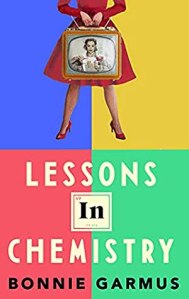 I’ll zero in on one of these, Lessons in Chemistry, because there are 50 reservations after me in the queue – that must be a record for my small library system! Bonnie Garmus made her authorial debut at age 64; you can be sure she’ll be in the running for the next Paul Torday Memorial Prize (awarded by the Society of Authors to a first novel by a writer over 60). Elizabeth Zott is a scientist through and through, applying a chemist’s mindset to her every venture, including cooking, rowing and single motherhood in the 1950s. When she is fired from her job in a chemistry lab and gets a gig as a TV cooking show host instead, she sees it as her mission to treat housewives as men’s intellectual equals, but there are plenty of people who don’t care for her unusual methods and free thinking. I was reminded strongly of The Atomic Weight of Love and The Rosie Project, as well as novels by Katherine Heiny and especially John Irving what with the deep dive into backstory and particular pet subjects, and the orphan history for Zott’s love interest. This was an enjoyable tragicomedy. You have to cheer for the triumphs she and other female characters win against the system of the time. However, her utter humourlessness/guilelessness felt improbable, the very precocious child (and dog) stretch belief, and the ending was too pat for me.
CURRENTLY READING
Continuing with my flora and summer themes; continuing to linger in Scotland; reading about the amazing birds filling our skies (and nesting in our eaves):
- Where the Wildflowers Grow by Leif Bersweden
- Bridget Jones: Mad About the Boy by Helen Fielding (for book club)
- Swifts and Us by Sarah Gibson
- Black Narcissus by Rumer Godden
- Tenderness by Alison MacLeod
- Where the World Ends by Geraldine McCaughrean
- Golden Boys by Phil Stamper
- The False Rose by Jakob Wegelius
- Summer by Edith Wharton
What have you been reading or reviewing from the library recently?

Share a link to your own post in the comments. Feel free to use the above image. The hashtag is #LoveYourLibrary.
20 Books of Summer, 8–10: Marram, Orchid Summer, and Bonsai
Halfway through my flora-themed reading challenge with less than half of the summer left to go. However, I’m actually partway through another seven relevant reads, so I’m confident I’ll get to 20. The sticking point for me, as always, is finishing what I’ve started!
Today I have brief responses to the two nature/travel quest memoirs I took with me to the Outer Hebrides, plus a forthcoming Chilean novella about how a relationship is to be memorialized.
Marram: Memories of Sea and Spider Silk by Leonie Charlton (2020)
I think I’d already downloaded this to my Kindle when I saw Charlton interviewed by the Bookshop Band on their breakfast-time variety show during the 2020 online Wigtown Book Festival. In 2017, Charlton and her friend Shuna undertook a three-week pony trek through the Outer Hebrides. Like many, they worked their way south to north, starting at Barra and finishing on Lewis (we travelled in the opposite direction on our recent trip).
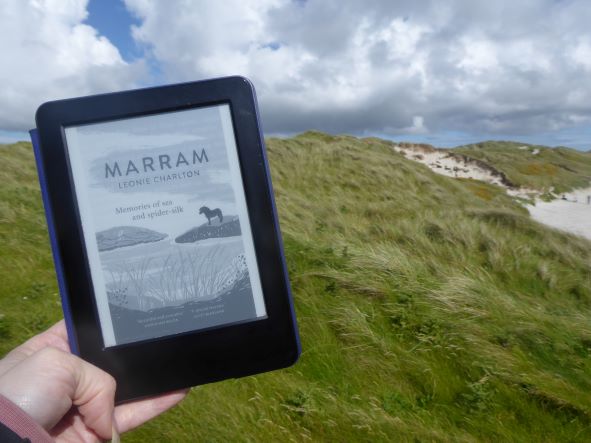
Marram grass on a Benbecula beach.
Although it was a low-key fundraising project for her daughter’s traditional music school, for Charlton there was another underlying reason. Her difficult mother, a jewellery maker, had died of brain cancer seven years before, and she had the idea of leaving beads from her mum’s collection (she’d actually nicknamed her daughter “Beady,” though for her eyes) along the route to lay her and their complicated relationship to rest. As one of her mother’s friends put it, “She was a nightmare, and wonderful, and totally impossible.”
I enjoyed the blend of topics – the amazing scenery, the rigours of the trail, the kindness of acquaintances and strangers who gave them places to camp and graze the ponies, and painful memories – and probably got more out of it because I was reading on location. Her regrets about her mother formed a larger part of the book than expected, but that wasn’t a problem for me; you might steer clear if this would be triggering, though. (Read via NetGalley)
Orchid Summer: In Search of the Wildest Flowers of the British Isles by Jon Dunn (2018)
Dunn saw all but one of Britain’s native species of orchid (51–55, depending on how you count; subspecies are still being debated) between the spring and autumn of 2016; only the ghost orchid eluded him. He alternates between his whistlestop travels, the backstory to his nature obsession, and the historical and cultural associations with orchids. “I was rapidly learning that orchids exert an influence unlike any other plant upon those who fall under their spell, he writes” (in that vein, I also recommend Susan Orlean’s The Orchid Thief).
I most enjoyed the chapters set in North Uist – where he goes to find the Hebridean marsh orchid – and his adopted home of Shetland; it’s always fun to read about somewhere I am or have been before (also including Lindisfarne). The number-driven quest seems like a peculiarly male undertaking, e.g. the similar The Butterfly Isles by Patrick Barkham, and orchids in particular are surrounded by secrecy – you have to be in the know to locate rarities, which often seem to be in roadside ditches. Dunn evades potential accusations of elitism or machismo, though, by recounting vulnerable moments: when he inadvertently strayed onto a golf course and got verbally abused; when some lads stopped their car to harass him.
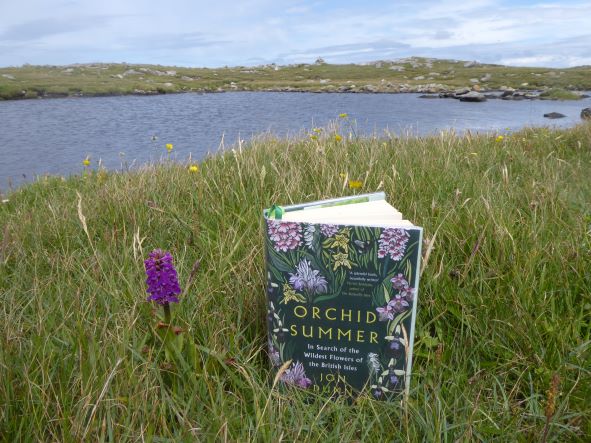
A marsh orchid at Balranald nature reserve, North Uist.
In general, this is denser with information than all but the keenest amateur botanists need, so I didn’t engage with it as much as his book about hummingbirds, The Glitter in the Green, but Dunn is a top-class nature and travel writer who really brings places and species to life on the page through his enthusiastic descriptions. Still, I wish this could have been illustrated with colour plates, as the author is an equally accomplished photographer. (Public library)
Bonsai by Alejandro Zambra (2006; 2022)
[Translated from the Spanish by Megan McDowell]
“In Emilia and Julio’s story … there are more omissions than lies, and fewer omissions than truths”
 These college students’ bond is primarily physical, with an overlay of intellectual pretentiousness: they read to each other from the likes of Proust before they go to bed. Zambra, a Chilean poet and fiction writer, zooms in and out to spotlight each one’s other connections with friends and lovers and presage how the past will lead to separate futures. Already we see Julio thinking about how this time-limited relationship will be remembered in memory and in writing. The plot of a story Zambra references in this allusion-heavy work, “Tantalia” by Macedonio Fernández, provides the title: a couple buy a small plant to signify their love, but realize that maybe wasn’t a great idea given that plants can die.
Tending a bonsai is like writing, thinks Julio. Writing is like tending a bonsai, Julio thinks.
At scarcely 60 pages, with plenty of blank space between sections, this feels most like a short story. Bonsai symbolism aside, I didn’t find much to latch onto. Zambra is playing literary games here – “Let’s say her name is or was Emilia and that his name is, was, and will be Julio,” he writes in the first paragraph – and indulging an appetite for metafiction. Drawing attention to the arbitrary nature of creation made this feel generic and soulless, like the author wasn’t committed to or fond of his characters and their story. This wasn’t my cup of tea, but fans of Open Water and Normal People who also love spare writing in translation might enjoy it.
With thanks to Fitzcarraldo Editions for the free copy for review. Bonsai will be published on August 17th.
What to Read during a Heat Wave
The short answer is whatever you want. A longer answer: you could get stuck into heat-themed and summer-set books; escape by reading about a holiday destination, whether you can get there or not; will yourself cool by reading about icy places; and/or sink into a stack of lighter reading material.
I’ll be employing some or all of these strategies as the mercury climbs. I keep thinking I’ll just give up on work one of these days – my new study has a big window that traps the midday sun, but it remains bearable as long as I use blackout curtains and a desk fan – and read on a couch all afternoon. That hasn’t happened yet, but on Tuesday peak temperatures (of 36 °C) are expected here in the UK, so I may well carry out my threat.
Here’s what I’m reading now in each of those categories, along with some earlier reads I can recommend (with excerpts from my reviews and a link to the full text):
Embrace the Heat
My current reads:
Contemporary
 Golden Boys by Phil Stamper: Four gay high school students in small-town Ohio look forward to a summer of separate travels for jobs and internships and hope their friendships will stay the course. With alternating first-person passages and conversation threads, this YA novel is proving to be a sweet, fun page turner and the perfect follow-up to the Heartstopper series (my summer crush from last year).
Classic
 Summer by Edith Wharton: An adopted young woman (and half-hearted librarian) named Charity Royall gets a shot at romance when a stranger arrives in her New England town. I’m only 30 pages in so far, but this promises to be a great read – but please not as tragic as Ethan Frome? (Apparently, Wharton called it a favourite among her works, and referred to it as “the Hot Ethan,” which I’m going to guess she meant thermally.)
My top recommendations:
Contemporary
 Heatstroke by Hazel Barkworth: From the first word (“Languid”) on, this drips with hot summer atmosphere, with connotations of discomfort and sweaty sexuality. Rachel is a teacher of adolescents as well as the mother of a 15-year-old, Mia. When Lily, a pupil who also happens to be one of Mia’s best friends, goes missing, Rachel is put in a tough spot…
 A Crime in the Neighbourhood by Suzanne Berne: Marsha remembers the summer of 1972, when her father left her mother for Aunt Ada and news came of a young boy’s sexual assault and murder in the woods behind a mall. “If you hadn’t known what had happened in our neighborhood, the street would have looked like any other suburban street in America.”
 Heat by Bill Buford: You know what they say: if you can’t stand the heat, get out of the kitchen (eat some cold salads instead!). Buford traces TV chef Mario Batali’s culinary pedigree through Italy and London, and later spends stretches of several months in Italy as an apprentice to a pasta-maker and a Tuscan butcher. Exactly what I want from food writing.
 Heat Wave by Penelope Lively: Pauline, a freelance copyeditor in her fifties, has escaped from London to spend a hot summer at World’s End, the Midlands holiday cottage complex she shares with her daughter and her family. The increasing atmospheric threats (drought or storms; combine harvesters coming ever nearer) match the tensions in the household.
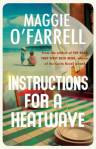 Instructions for a Heatwave by Maggie O’Farrell: Another spot-on tale of family and romantic relationships. The language is unfailingly elegant. It opens with the heat as the most notable character: “It inhabits the house like a guest who has outstayed his welcome: it lies along corridors, it circles around curtains, it lolls heavily on sofas and chairs.”
- This is set during the UK heatwave of 1976, which lives on in collective memory and legend in this country even though its temperature record has been topped (but not the length of the streak). I’ve since tried two other novels set during the summer of ’76 but neither took (maybe you’ll get on better with them?): Water Shall Refuse Them by Lucie McKnight Hardy and In the Place of Fallen Leaves by Tim Pears.
 Or try the American summer of 1975 instead, with Mary Jane by Jessica Anya Blau, a juicy coming-of-age novel set in Baltimore.
Classic
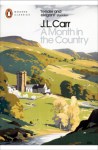 A Month in the Country by J. L. Carr: Tom Birkin, a First World War veteran whose wife has left him, arrives in Oxgodby to uncover the local church’s wall painting of the Judgment Day. “There was so much time that marvelous summer.” There is something achingly gorgeous about this Hardyesque tragicomic romance, as evanescent as ideal summer days.
 The Go-Between by L. P. Hartley: Twelve-year-old Leo Colston is invited to spend the several July weeks leading up to his birthday at his school friend Marcus Maudsley’s home, Brandham Hall. The heat becomes a character in its own right, gloweringly presiding over the emotional tension caused by secrets, spells and betrayals.
 In a Summer Season by Elizabeth Taylor: The title is not only literal, when much of the action takes place, but a metaphor for the fleeting nature of happiness (as well as life itself). Kate remembers pleasant days spent with her best friend and their young children: “It was a long summer’s afternoon and it stood for all the others now. … Their friendship was as light and warming as the summer’s air.”
Escape on Holiday
I try to read on location whenever possible, but if it’s a staycation for you this year, you can still transport yourself somewhere exciting or tropical through fiction.
My current read:
 Mustique Island by Sarah McCoy: “A sun-splashed romp with a rich divorcée and her two wayward daughters in 1970s Mustique, the world’s most exclusive private island [in the Caribbean], where Princess Margaret and Mick Jagger were regulars and scandals stayed hidden from the press.”
My top recommendations:
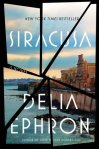 Siracusa by Delia Ephron: A snappy literary thriller about two American couples who holiday together on the Sicilian island of Siracusa. Shifting between the perspectives of the four main characters, it looks back to ask what went disastrously wrong on that trip. A delicious story ripe for a cinematic adaptation.
 Nothing but Blue Sky by Kathleen MacMahon: Set in Aiguaclara, a hidden gem on Spain’s Costa Brava where David and Mary Rose holidayed every summer for 20 years. Most of the book remembers their life together and their previous vacations here. Grief, memory, fate: some of my favourite themes, elegantly treated.
 A Theatre for Dreamers by Polly Samson: Set on the Greek island of Hydra in 1960, this zeroes in on several authors, including a young poet from Canada named Leonard Cohen. We see all of the real-life characters from the perspective of a starry-eyed 17-year-old narrator. You can feel the Mediterranean heat soaking up through your sandals.
 The Vacationers by Emma Straub: Perfect summer reading; perfect vacation reading. Straub writes great dysfunctional family novels featuring characters so flawed and real you can’t help but love and laugh at them. Here, Franny and Jim Post borrow a friend’s home in Mallorca for two weeks, hoping sun and relaxation will temper the memory of Jim’s affair.
Read Yourself Cool
Will reading about snow and ice actually make you feel any cooler? It can’t hurt.
My current reads:
I had a vague Antarctica reading theme going for a while, but have yet to get back into two set-aside reads, Empire Antarctica by Gavin Francis and Lean Fall Stand by Jon McGregor (or pick up Snow Widows by Katherine MacInnes and South Pole Station by Ashley Shelby). Maybe next week!
My top recommendations:
 Among the Summer Snows by Christopher Nicholson: After the death from cancer of his wife Kitty, a botanical illustrator, Nicholson set off for Scotland’s Cairngorms and Ben Nevis in search of patches of snow that persist into summer. “Summer snow is a miracle, a piece of out-of-season magic: to see it is one thing, to make physical contact with it is another.”
 The Still Point by Amy Sackville: A sweltering summer versus an encasing of ice; an ordinary day versus decades of futile waiting. Sackville explores these contradictions only to deflate them, collapsing time such that a polar explorer’s wife and her great-great-niece can inhabit the same literal and emotional space despite being separated by more than a century.
Keep it Light
I’m more likely to read genre fiction (crime, especially) during the summer, it seems. I recently read The Daughter of Time by Josephine Tey for book club, for instance – but it was so permeated in Plantagenet history that it wasn’t your standard detective drama at all.
I also like to pick up lighter reads that edge towards women’s fiction. I’ve been starting my days with passages from these two, though it might make more sense to read them later in the day as a reward for getting through parts of weightier books.
My current reads:
 Bridget Jones: Mad About the Boy by Helen Fielding: I’d never read this second sequel from 2013, so we’re doing it for our August book club – after some darker reads, people requested something light! Bridget is now a single mother in her early 50s, but some things never change, like constant yo-yo dieting and obsessive chronicling of the stats of her life.
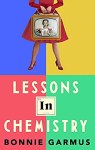 Lessons in Chemistry by Bonnie Garmus: This year’s It book. I’m nearly halfway through and enjoying it, if not as rapturously as so many. Katherine Heiny meets John Irving is the vibe I’m getting. Elizabeth Zott is a scientist through and through, applying a chemist’s mindset to her every venture, including cooking, rowing and single motherhood in the 1950s.
My top recommendations:
 Sunburn by Laura Lippman: While on a beach vacation in 1995, a woman walks away from her husband and daughter and into a new life as an unattached waitress. I liked that I recognized many Maryland/Delaware settings. Quick and enjoyable. (I’ve never been hotter than during the July week we spent in Milan in 2019. This is one of the books I read on that trip.)
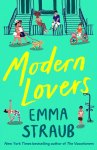 Modern Lovers by Emma Straub: Short chapters flip between all the major characters’ perspectives, showing that she completely gets each one of them. The novel is about reassessing as one approaches adulthood or midlife, about reviving old dreams and shoring up flagging relationships. Nippy and funny and smart and sexy. So many lines ring true. (Yes, a second entry from Straub: she writes such accessible and addictive literary fiction.)
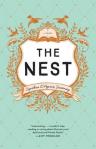 The Nest by Cynthia D’Aprix Sweeney: The four dysfunctional Plumb siblings must readjust their expectations when the truth comes out. This also affects their trust fund, “the nest.” A nest is, of course, also a home, so for as much as this seems to be about money, it is really more about family and how we reclaim our notion of home after a major upheaval.
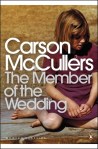 This article on the Penguin website has a few more ideas, including To Kill a Mockingbird (you think we’ve got it bad? Try a summer in the American South!), Atonement, and poetry. I took up one of Alice Vincent’s recommendations right away: since I’m reading My Autobiography of Carson McCullers by Jenn Shapland, it made sense to get a copy of McCullers’s The Member of the Wedding out from the public library. Already on the first page you’re steeped in a sweltering Georgia summer (like McCullers, my dad is from Columbus):
It happened that green and crazy summer when Frankie was twelve years old. … The sidewalks of the town were grey in the early morning and at night, but the noon sun put a glaze on them, so that the cement burned and glittered like glass. The sidewalks finally became too hot for Frankie’s feet. … The world seemed to die each afternoon and nothing moved any longer. At last the summer was like a green sick dream, or like a silent crazy jungle under glass.
What are your current reading strategies?
Have you ever spent all day reading, just because you could?
Review Catch-Up: Herreros, Onyebuchi and Tookey
Quick snapshot reviews as I work through a backlog.
One each today from fiction, nonfiction and poetry: a graphic novel about the life of Georgia O’Keeffe, a personal response to Chimamanda Ngozi Adichie’s Americanah, and a beautiful collection of place-centric verse.
Georgia O’Keeffe by Maria Herreros (2021; 2022)
[Translated from the Spanish by Lawrence Schimel]
 This is the latest in SelfMadeHero’s “Art Masters” series (I’ve also reviewed Gauguin, Munch and Vincent). Madrid-based illustrator Herreros renders O’Keeffe’s life story in an abstract style that feels in keeping with the artist’s own. The book opens in 1915 with O’Keeffe still living in her family home in Virginia and working as an art teacher. Before she ever meets Alfred Stieglitz, she is fascinated by his photography. They fall in love at a distance via a correspondence and later live together in New York City. Their relationship ebbs as she spends more and more time in New Mexico, a desert landscape that inspires many of her most famous paintings. Much of the narrative is provided by O’Keeffe’s own letters (with idiosyncrasies retained); the additional summary text is unfortunately generic, and the urge to cover many years leads to skating over long periods. Still, the erotic attention to detail and the focus on the subject’s dedication to independence made it worthwhile.

With thanks to SelfMadeHero for the free copy for review.
(S)kinfolk: Chimamanda Ngozi Adichie’s Americanah by Tochi Onyebuchi (2021)
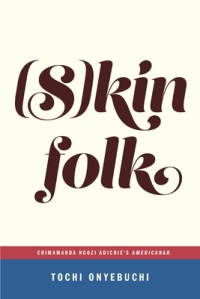 I’ve reviewed six previous releases from Fiction Advocate’s “Afterwords” series (on Blood Meridian, Fun Home, and The Year of Magical Thinking; My Struggle and Wild; and Middlesex). In these short monographs, “acclaimed writers investigate the contemporary classics,” weaving literary criticism into memoir as beloved works reverberate through their lives. Onyebuchi, a Nigerian American author of YA dystopian fiction, chose one of my favourite reads of recent years: Americanah. When he read the novel as a lawyer in training, it was the first time he sensed recognition of his own experiences in literature. He saw his immigrant mother’s situation, the collective triumph of Obama’s election, and his (re)discovery of Black beauty and spaces. Like Ifemelu: he was an outsider to African American identity and had to learn it gradually; and he makes a return trip to Nigeria at the end. I enjoyed this central thread but engaged less with asides about a 2013 visit to the West Bank (for a prisoners’ rights organization) and Frantz Fanon’s work on Algeria.
With thanks to Fiction Advocate for the free e-copy for review.
In the Quaker Hotel by Helen Tookey (2022)
 Tookey’s third collection brings its variety of settings – an austere hotel, Merseyside beaches and woods, the fields and trees of Southern France (via Van Gogh’s paintings), Nova Scotia (she completed a two-week residency at the Elizabeth Bishop House in 2019) – to life as vibrantly as any novel or film could. In recent weeks I’ve taken to pulling out my e-reader as I walk home along the canal path from library volunteering, and this was a perfect companion read for the sunny waterway stroll, especially the poem “Track.” Whether in stanzas, couplets or prose paragraphs, the verse is populated by meticulous images and crystalline musings.
not a loss
something like a clarifying
becoming something you can’t name
There are evanescent encounters (“Leapfrog”) and deep time (“Natural History”); playing with language (“Concession à Perpetuité”) and erasures (“Pool / Other Body”). You’ll find alliteration and ampersands (a trend in contemporary poetry?), close observation of nature, and no trace of cliché. Below are the opening stanzas of a couple of poems to give a flavour:

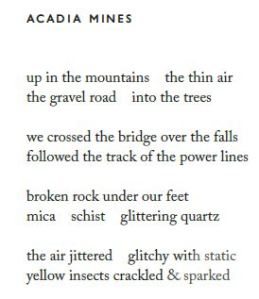
With thanks to Carcanet Press for the free e-copy for review.
Would you be interested in reading one or more of these?
What Lies Hidden: Secrets of the Sea House & Night Waking
When I read Kay’s review of Sarah Maine’s The House Between Tides, the book seemed so familiar I did a double take. A Scottish island in the Outer Hebrides … dual contemporary and historical story lines … the discovery of a skeleton. It sounded just like Night Waking by Sarah Moss (another Sarah M.!), which I was already planning on rereading on our trip to the Outer Hebrides. Kay then suggested a readalike that ended up being even more similar, Elisabeth Gifford’s The Sea House (U.S. title), one of whose plots was Victorian and the skeleton in which was a baby’s. I passed on the Maine but couldn’t resist finding a copy of the Gifford from the library so I could compare it with the Moss. Both:
Secrets of the Sea House by Elisabeth Gifford (2013)
 Although nearly 130 years separate the two protagonists, they are linked by the specific setting – a manse on the island of Harris – and a belief that they are descended from selkies. In 1992, Ruth and her husband are converting the Sea House into a B&B and hoping to start a family. When they find the remains of a baby with skeletal deformities reminiscent of a mermaid under the floorboards, Ruth plunges into a search for the truth of what happened in their home. In 1860, Reverend Alexander Ferguson lived here and indulged his amateur naturalist curiosity about cetaceans and the dubious creatures announced as “mermaids” (often poor taxidermy crosses between a monkey and a fish, as in The Mermaid and Mrs. Hancock).
Ruth and Alexander trade off as narrators, but we get a more rounded view of mid-19th-century life through additional chapters voiced by the reverend’s feisty maid, Moira, a Gaelic speaker whose backstory reveals the cruelty of the Clearances – she won’t forgive the laird for what happened to her family. Gifford’s rendering of period prose wasn’t altogether convincing and there are some melodramatic moments: this could be categorized under romance, and I was surprised by the focus on Ruth’s traumatic upbringing in a children’s home after her mother’s death by drowning. Still, this was an absorbing novel and I actually learned a lot, including the currently accepted explanation for where selkie myths come from.
I also was relieved that Gifford uses real place names instead of disguising them (as Bella Pollen and Sarah Moss did). We passed through the tiny town of Scarista, where the manse is meant to be, on our drive. If I’d known ahead of time that it was a real place, I would have been sure to stop for a photo op (it must be this B&B!). We also stopped in Tarbert, a frequent point of reference, to visit the Harris Gin distillery. (Public library)
Night Waking by Sarah Moss (2011)
This was my first of Moss’s books and I have always felt guilty that I didn’t appreciate it more. I found the voice more enjoyable this time, but was still frustrated by a couple of things. Dr Anna Bennet is a harried mum of two and an Oxford research fellow trying to finish her book (on Romantic visions of childhood versus the reality of residential institutions – a further link to the Gifford) while spending a summer with her family on the remote island of Colsay, which is similar to St. Kilda. Her husband, Giles Cassingham, inherited the island but is also there to monitor the puffin numbers and track the effects of climate change. Anna finds a baby’s skeleton in the garden while trying to plant some fruit trees. From now on, she’ll snatch every spare moment (and trace of Internet connection) away from her sons Raph and Moth – and the builders and the police – to write her book and research what might have happened on Colsay.
 Each chapter opens with an epigraph from a classic work on childhood (e.g. by John Bowlby or Anna Freud). Anna also inserts excerpts from her manuscript in progress and fragments of texts she reads online. Adding to the epistolary setup is a series of letters dated 1878: May Moberley reports to her sister Allie and others on the conditions on Colsay, where she arrives to act as a nurse and address the island’s alarming infant mortality statistics. It took me the entire book to realize that Allie and May are the sisters from Moss’s 2014 novel Bodies of Light; I’m glad I didn’t remember, as there was a shock awaiting me.
According to Goodreads, I first read this over just four days in early 2012. (This was back in the days where I read only one book at a time, or at most two, one fiction and one nonfiction.) I remember feeling like I should have enjoyed its combination of topics – puffin fieldwork, a small island, historical research – much more, but I was irked by the constant intrusions of the precocious children. That is, of course, the point: they interrupt Anna’s life, sleep and research, and she longs for a ‘room of her own’ where she can be a person of intellect again instead of wiping bottoms and assembling sometimes disgusting meals. She loves her children, but hates the daily drudgery of motherhood. Thankfully, there’s hope at the end that she’ll get what she desires.
I had completely forgotten the subplot about the first family they rent out the new holiday cottage to (yet another tie-in to the Gifford, in which they’re preparing to open a guest house): a hot mess of alcoholic mother, workaholic father, and university-age daughter with an eating disorder. Zoe’s interactions with the boys, and Anna’s role as makeshift counsellor to her, are sweet, but honestly? I would have cut this story line entirely. Really, I longed for the novella length and precision of a later work like Ghost Wall. Still, I was happy to reread this, with Anna’s wry wit a particular highlight, and to discover for the first time (silly me!) that thread of connection with Bodies of Light / Signs for Lost Children. (Free from a neighbour)
Original rating: 
My rating now:
I enjoyed the Gifford enough to immediately request the library’s copy of one of her newer novels, The Lost Lights of St. Kilda, so my connection to the Western Isles can at least continue through my reading. I also found a pair of children’s novels plus a mystery novel set on St. Kilda, and I was sent an upcoming novel set on an island off the west coast of Scotland, so I’ll be on this Scotland reading kick for a while!
Truth Is Stranger than Fiction: The Summer of the Bear by Bella Pollen
“The island exerted a mesmeric pull. She had felt the magic of it all her life, but it was a magic that stayed on the island. You couldn’t take it with you.”
~MILD SPOILERS IN THIS ONE~
 One of my reading selections for our recent trip to the Outer Hebrides was The Summer of the Bear by Bella Pollen, which is set on a lightly fictionalized version of North Uist. It’s the summer of 1979 and the recently bereaved Fleming family is on the way from London to the island for their usual summer holiday. This year everything looks different. The patriarch, Nicky, had a fatal fall from a roof in Bonn, where he was stationed as a diplomat. Whether it was an accident or suicide is yet to be determined.
Now it’s just Letitia and the three children. Georgie is awaiting exam results and university offers. Jamie is the youngest and has an earnest, innocent, literal mind (I believe I first came across the novel in connection to my interest in depictions of autism, and I assume he is meant to be on the spectrum). Alba, smack in the middle, acts out via snarky comments as well as shoplifting and tormenting her brother. The locals look out for each of the family members and make allowances for the strange things they do because of grief.
In the meantime, there’s an escaped grizzly bear on the loose in the islands. The chapters rotate through the main characters’ perspectives and include short imaginings of the bear’s journey. I found it hard to take these seriously – could an animal really be in awe of the Northern Lights? – especially when Pollen begins to suggest telepathic communication occurring between Jamie and the bear.
I was a third of the way into the novel before I learned that the bear subplot was based on a true story – my husband saw a sidebar about it in the guidebook. I’d had no idea! Hercules the trained bear starred in films and commercials. In 1980, while filming an ad for Andrex, he slipped his rope and remained on the run for several weeks despite a military search, straying 20 miles and losing half his body weight before he was tranquillized and returned to his owner. We made the pilgrimage to his burial site in Langass Woodland.


Pollen herself spent childhood summers in the Outer Hebrides and remembered the buzz about the hunt for Hercules. This plus the recent death of their father makes it a pivotal summer for all three children. Though in general I appreciated the descriptions of the island, and liked the character interactions and Jamie’s guilelessness and gumption, I felt uncomfortable with his portrayal. I didn’t think it realistic for an 11-year-old to not understand the fact of death; it seemed almost offensive to suggest that, because he’s on the autism spectrum, he wouldn’t understand euphemisms about loss. The sequence where he goes looking for “Heaven” is pretty excruciating.
Add that to the unlikelihood of Jamie’s participation in the bear’s discovery and an unnecessary conspiracy element about Nicky’s death and this novel didn’t live up to its potential for me. I’d read one other book by Pollen, the memoir Meet Me in the In-Between, but won’t venture further into her work. Still, this was an interesting curio. (Public library)
[I thought about including this (and Sarah Moss’s Night Waking) in my flora-themed 20 Books of Summer because of the author’s surname, but I think I’ll make my 20 without stretching that far!]
Adventuring (and Reading) in the Outer Hebrides
Islands are irresistible for the unique identities they develop through isolation, and the extra effort that it often takes to reach them. Over the years, my husband and I have developed a special fondness for Britain’s islands – the smaller and more remote the better. After exploring the Inner Hebrides in 2005 and Orkney and Shetland in 2006, we always intended to see more of Scotland’s islands; why ever did we leave it this long?

From Wikimedia Commons. By Kelisi.
Rail strikes and cancelled trains threatened our itinerary more than once, so it was a relief that we were able to go, even at extra cost. Our back-up plan left us with a spare day in Inverness, which we filled with coffee and pastries outside the cathedral, browsing at Leakey’s bookshop, walking along the River Ness and in the botanical gardens, and a meal overlooking the 19th-century castle.


Then it was on to the Outer Hebrides at last, via a bus ride and then a ferry to Stornoway in Lewis, the largest settlement in the Western Isles. Here we rented a car for a week to allow us to explore the islands at will. We were surprised at how major a town Stornoway is, with a big supermarket and slight suburban sprawl – yet it was dead on the Saturday morning we went in to walk around; not until 11:30 was there anything like the bustle we expected.
We’d booked three nights in a tiny Airbnb house 15 minutes from the capital. First up on our tourist agenda was Callanish stone circle, which we had to ourselves (once the German coach party left). Unlike at Stonehenge, you can walk in among the standing stones. The rest of our time on Lewis went to futile whale watching, the castle grounds, and beach walks.


This post threatens to become a boring rundown, so I’ll organize the rest thematically, introduced by songs by Scottish artists.
“I’ll Always Leave the Light On” by Kris Drever
Long days: The daylight lasts longer so far north, so each day we could plan activities not just for the morning and afternoon but late into the evening. At our second stop – three nights in another Airbnb on North Uist – we took walks after dinner, often not coming back until 10 p.m., at which point there was still another half-hour until sunset.
“Why Does It Always Rain on Me?” by Travis
Weather: We got a mixture of sun and clouds. It rained at least a bit on most days, and we got drenched twice, walking out to an eagle observatory on Harris (where we saw no eagles, as they are too sensible to fly in the rain) and dashing back to the car from a coastal excursion. I was doomed to wearing plastic bags around my feet inside my disintegrating hiking boots for the rest of the trip. There was also a strong wind much of the time, which made it feel colder than the temperature suggested – I often wore my fleece and winter hat.

A witty approach to weather forecasting. (Outside the shop/bistro on Berneray.)
“St Kilda Wren” by Julie Fowlis
 Music and language: Julie Fowlis is a singer from North Uist who records in English and Gaelic. (This particular song is in Gaelic, but the whole Spell Songs album was perfect listening on our drives because of the several Scottish artists involved and the British plants and animals sung about.) There is a strong Gaelic-speaking tradition in the Western Isles. We heard a handful of people speaking it, all road signs give place names in Gaelic before the English translation, and there were several Gaelic pages in the free newspaper we picked up.
Wildlife: The Outer Hebrides is a bastion for some rare birds: the corncrake, the red-necked phalarope, and both golden and white-tailed eagles. Thanks to intel gleaned from Twitter, my husband easily found a phalarope swimming in a small roadside loch. Corncrakes hide so well they are virtually impossible to see, but you will surely hear their rasping calls from the long grass. Balranald is the westernmost RSPB reserve and a wonderful place to hear corncrakes and see seabirds flying above the machair (wildflower-rich coastal grassland). No golden eagles, but we did see a white-tailed eagle flying over our accommodation on our last day, and short-eared owls were seemingly a dime a dozen. We were worried we might see lots of dead birds on our trip due to the avian flu raging, but there were only five – four gannets and an eider – and a couple looked long dead. Still, it’s a distressing situation.


We also attended an RSPB guided walk to look for otters and did indeed spot one on a sea loch. It happened to be the Outer Hebrides Wildlife Festival week. Our guide was knowledgeable about the geography and history of the islands as well.

Badges make great, cheap souvenirs!
St. Kilda: This uninhabited island really takes hold of the imagination. It can still be visited, but only via a small boat through famously rough seas. We didn’t chance it this time. I might never get there, but I enjoy reading about it. There’s a viewing point on North Uist where one can see out to St. Kilda, but it was only the vaguest of outlines on the hazy day we stopped.
“Traiveller’s Joy” by Emily Smith
Additional highlights:
- An extended late afternoon tea at Mollans rainbow takeaway shed on Lewis. Many of the other eateries we’d eyed up in the guidebook were closed, either temporarily or for good – perhaps an effect of Covid, which hit just after the latest edition was published.


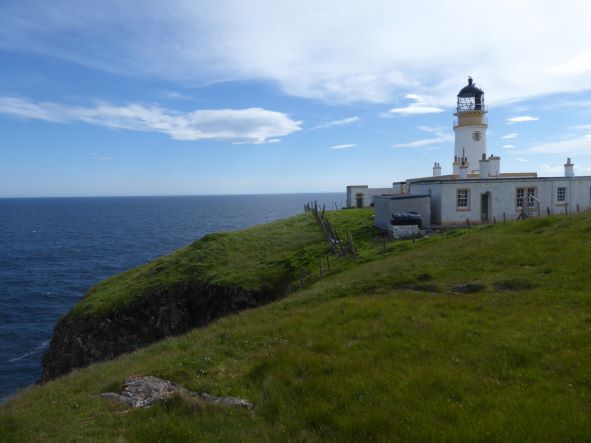
- A long reading session with a view by the Butt of Lewis, which has a Stevenson lighthouse.
- Watching mum and baby seals playing by the spit outside our B&B window on Berneray.
- Peat smoked salmon. As much of it as I could get.
- A G&T with Harris gin (made with kelp).
“Dear Prudence” (Beatles cover) by Lau
Surprises:
- Gorgeous, deserted beaches. This is Luskentyre on Harris.

- No midges to speak of. The Highlands are notorious for these biting insects, but the wind kept them away most of the time we were on the islands. We only noticed them in the air on one still evening, but they weren’t even bad enough to deploy the Avon Skin So Soft we borrowed from a neighbour.
- People still cut and burn peats for fuel. Indeed, when we stepped into the Harris gin distillery for a look around, I was so cold and wet that I warmed my hands by a peat fire! Even into the 1960s, people lived in primitive blackhouses, some of which have now been restored as holiday rentals. The one below is run as a museum.

- Not far outside Stornoway is the tiny town of Tong. We passed through it each day. Here Mary Anne MacLeod was born in 1912. If only she’d stayed on Lewis instead of emigrating to New York City, where she met Fred Trump and had, among other children, a son named Donald…
- Lord Leverhulme, founder of Unilever, bought Lewis in 1918 and part of Harris the next year. He tried to get crofters to work in his businesses, but all his plans met with resistance and his time there was a failure, as symbolized by this “bridge to nowhere” (Garry Bridge). His legacy is portrayed very differently here compared to in Port Sunlight, the factory workers’ town he set up in Merseyside.

- The most far-flung Little Free Library I’ve ever visited (on Lewis).

- Visits from Lulu the cat at our North Uist Airbnb.

“Wrapped Up in Books” by Belle and Sebastian
What I read: I aimed for lots of relevant on-location reads. I can’t claim Book Serendipity: reading multiple novels set on Scottish islands, it’s no surprise if isolation, the history of the Clearances, boat rides, selkies and seabirds recur. However, the coincidences were notable for one pair, Secrets of the Sea House by Elisabeth Gifford and Night Waking by Sarah Moss, a reread for me. I’ll review these two together, as well as The Summer of the Bear by Bella Pollen (inspired by a real incident that occurred on North Uist in 1980), in full later this week.

I also read about half of Sightlines by Kathleen Jamie, a reread for me; its essays on gannets and St. Kilda chimed with the rest of my reading. Marram, Leonie Charlton’s memoir of pony trekking through the Outer Hebrides, will form part of a later 20 Books of Summer post thanks to the flora connection, as will Jon Dunn’s Orchid Summer, one chapter of which involves a jaunt to North Uist to find a rare species.


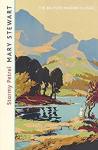 Stormy Petrel by Mary Stewart: My selection for the train journey up. I got Daphne du Maurier vibes from this short novel about a holiday Dr Rose Fenemore, an English tutor at Cambridge, takes to Moila, a (fictional) small island off of Mull in the Inner Hebrides. It’s a writing retreat for her: she’s working on a book of poetry, but also on the science fiction she publishes under a pseudonym. Waiting for her brother to join her, she gets caught up in mild intrigue when two mysterious men enter her holiday cottage late one stormy night. Each has a good excuse cooked up, but who can she trust? I enjoyed the details of the setting but found the plot thin, predictable and slightly silly (“I may be a dish, but I am also a don”). This feels like it’s from the 1950s, but was actually published in 1991. I might try another of Stewart’s.
I also acquired four books on the trip: one from the Little Free Library and three from Inverness charity shops.

I started reading all three in the bottom pile, and read a few more books on my Kindle, two of them for upcoming paid reviews. The third was:
 Tracy Flick Can’t Win by Tom Perrotta: A sequel to Election, which you might remember as a late-1990s Reese Witherspoon film even if you don’t know Perrotta’s fiction. Tracy Flick was the goody two-shoes student who ran for school president and had her campaign tampered with. Now in her forties, she’s an assistant principal at a high school and a single mother. Missing her late mother and wishing she’d completed law school, she fears she’ll be passed over for the top job when the principal retires. This is something of an attempt to update the author’s laddish style for the #MeToo era. Interspersed with the third-person narration are snappy first-person testimonials from Tracy, the principal, a couple of students, and the washed-up football star the school chooses to launch its new Hall of Fame. I can’t think of any specific objections, but nor can I think of any reason why you should read this.
On my recommendation, my husband read Love of Country by Madeleine Bunting and The Frayed Atlantic Edge by David Gange, two excellent nonfiction books about Britain’s islands and coastline.
“Other Side of the World” by KT Tunstall
General impressions: We weren’t so taken with Lewis on the whole, but absolutely loved what we saw of Harris on our drive to the ferry to Berneray and wished we’d allotted it more time. While we only had one night on Berneray and mostly saw it in the rain, we thought it a lovely little place. It only has the one shop, which doubles as the bistro in the evenings – warned by the guidebook that this is the only place to eat on the island, we made our dinner reservation many weeks in advance. The following morning, as we ate our full Scottish cooked breakfast, I asked the B&B owner what led him to move from England to “the ends of the earth.” He took mild objection to my tossed-off remark and replied that the islands are more like “the heart of it all.” Thanks to fast Internet service, remote working is no issue.


We are more than half serious when we talk about moving to Scotland one day. We love Edinburgh, though the tourists might drive us mad, and enjoyed our time in Wigtown four years ago. I’d like to think we could even cope with island life in Orkney or the Hebrides. We imagine them having warm, tight-knit communities, but would newcomers feel welcome? With only one major supermarket in the whole Western Isles, would we find enough fresh fruit and veg? And however would one survive the bleakness of the winters?
North Uist captivated us right away, though. Within 15 minutes of driving onto the island via a causeway, we’d seen three short-eared owls and three red deer stags, and we got great views of hen harriers and other raptors. One evening we found ourselves under what seemed to be a raven highway. It felt unlike anywhere else we’d been: pleasingly empty of humans, and thus a wildlife haven.
The long journey home: The public transport nightmares of our return trip put something of a damper on the end of the holiday. We left the islands via a ferry to Skye, where we caught a bus. So far, so good. Our second bus, however, broke down in the middle of nowhere in the Highlands and the driver plus we five passengers were stuck for 3.5 hours awaiting a taxi we thought would never come. When it did, it drove the winding road at terrifying speed through the pitch black.
Grateful to be alive, we spent the following half-day in Edinburgh, bravely finding brunch, the botanic gardens and ice cream with our heavy luggage in tow. The final leg home, alas, was also disrupted when our overcrowded train to Reading was delayed and we missed the final connection to Newbury, necessitating another taxi – luckily, both were covered by the transport operators, and we’ll also reclaim for our tickets. Much as we believe in public transport and want to support it, this experience gave us pause. Getting to and around Spain by car was so much easier, and that trip ended up a lot cheaper, too. Ironic!

Guarding the bags in Edinburgh
“Take Me Back to the Islands” by Idlewild
Next time: On this occasion we only got as far south as Benbecula (which, pleasingly, is pronounced Ben-BECK-you-luh). In the future we’d think about starting at the southern tip and seeing Barra, Eriskay and South Uist before travelling up to Harris. We’ve heard that these all have their own personalities. Now, will we get back before many more years pass?
Six Degrees of Separation: From Wintering to The Summer of the Bear
This month we begin with Wintering by Katherine May. I reviewed this for the Times Literary Supplement back in early 2020 and enjoyed the blend of memoir, nature and travel writing. (See also Kate’s opening post.)

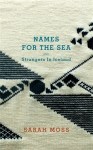 #1 May travels to Iceland, which is the location of Sarah Moss’s memoir Names for the Sea. I’ve read nine of Moss’s books and consider her one of my favourite contemporary authors. (I’m currently rereading Night Waking.)
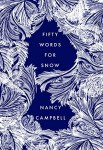 #2 Nancy Campbell’s Fifty Words for Snow shares an interest in languages and naming. I noted that the Icelandic “hundslappadrifa” refers to snowflakes as large as a dog’s paw.
 #3 In 2018–19, Campbell was the poet laureate for the Canal & River Trust. As part of her tour of the country’s waterways, she came to Newbury and wrote a poem on commission about the community gardening project I volunteer with. (Here’s her blog post about the experience.) Three Women and a Boat by Anne Youngson is about a canalboat journey.
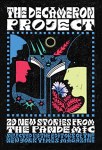 #4 Youngson’s novel was inspired by the setup of Jerome K. Jerome’s Three Men in a Boat. Another book loosely based on a classic is The Decameron Project, a set of 29 short stories ranging from realist to dystopian in their response to pandemic times.
 #5 Another project updating the classics was the Hogarth Shakespeare series. One of these books (though not my favourite) was The Gap of Time by Jeanette Winterson, her take on The Winter’s Tale.
 #6 Even if you’ve not read it (it happened to be on my undergraduate curriculum), you probably know that The Winter’s Tale famously includes the stage direction “Exit, pursued by a bear.” I’m finishing with The Summer of the Bear by Bella Pollen, one of the novels I read on my trip to the Outer Hebrides because it’s set on North Uist. I’ll review it in full soon, but for now will say that it does actually have a bear in it, and is based on a true story.
I’m pleased with myself for going from Wintering (via various other ice, snow and winter references) to a “Summer” title. We’ve crossed the hemispheres from Kate’s Australian winter to summertime here.
Where will your chain take you? Join us for #6Degrees of Separation! (Hosted on the first Saturday of each month by Kate W. of Books Are My Favourite and Best.) Next month’s starting point will be the recent winner of the Women’s Prize, The Book of Form and Emptiness by Ruth Ozeki.
Have you read any of my selections? Tempted by any you didn’t know before?
 Bookish Beck = Rebecca Foster. American transplant to England. Freelance proofreader and book reviewer.
