Three on a Theme (and #ReadIndies): Nonfiction I Sponsored Last Year
Here in the UK we’re hunkering down against the high winds of Storm Eunice. We’ve already watched two trees come down in a neighbour’s garden (and they’re currently out there trying to shore up the fence!), and had news on the community Facebook page of a huge conifer down by the canal. Very sad. I hope you’re all safe and well and tucked up at home.
Today I’m looking back at several 2021 nonfiction releases I helped come into existence. The first and third I sponsored via Unbound, and the second through Dodo Ink. Supporting small publishers also ties this post into Karen and Lizzy’s February Read Indies initiative. All: 

This Party’s Dead: Grief, Joy and Spilled Rum at the World’s Death Festivals by Erica Buist
A death tourism book? I’m there! This is actually the third I’ve read in recent years, after From Here to Eternity by Caitlin Doughty and Near the Exit by Lori Erickson. Buist’s journey was sparked off by the sudden death of her fiancé Dion’s father, Chris – he was dead for a week before his cleaner raised the alarm – and her burden of guilt. It’s an act of atonement for what happened to Chris and the fact that she and Dion, who used to lodge with him, weren’t there when he really needed it. It’s also her way of discovering a sense of the sacred around death, instead of simply fearing and hiding from it.
 This takes place in roughly 2018. The author travelled to eight festivals in seven countries, starting with Mexico for the Day of the Dead and later for an exploration of Santa Muerte, a hero of the working class. Other destinations included Nepal, Sicily (“bones of the dead” biscotti), Madagascar (the “turning of the bones” ceremony – a days-long, extravagant party for a whole village), Thailand and Kyoto. The New Orleans chapter was a standout for me. It’s a city where the dead outnumber the living 10 to 1 (and did so even before Katrina), and graveyard and ghost tours are a common tourist activity.
Buist is an entertaining writer, snappy and upbeat without ever seeming flippant as she discusses heavy topics. The mix of experience and research, the everyday and the momentous, is spot on and she recreates dialogue very well. I appreciated the earnest seeking here, and would happily read a book of hers on pretty much any subject. (New purchase from Unbound)
Trauma: Essays on Art and Mental Health, ed. Thom Cuell & Sam Mills
I’ll never learn: I left it nearly 10 months between finishing this and writing it up. And took no notes. So it’s nearly impossible to recreate the reading experience. What I do recall, however, is how wide-ranging and surprising I found this book. At first I had my doubts, thinking it was overkill to describe sad events like a break-up or loss as “traumatic”. But an essay midway through (which intriguingly trades off autobiographical text by Kirsty Logan and Freudian interpretation by Paul McQuade) set me straight: trauma cannot be quantified or compared; it’s all about the “unpreparedness of the subject. A traumatic event overwhelms all the defences laid out in advance against the encroachment of negative experience.”
 The pieces can be straightforward memoir fragments or playful, experimental narratives more like autofiction. (Alex Pheby’s is in the second person, for instance.) Within those broad branches, though, the topics vary widely. James Miller writes about the collective horror at the Trump presidency. Emma Jane Unsworth recounts a traumatic delivery – I loved getting this taste of her autobiographical writing but, unfortunately, it outshone her full-length memoir, After the Storm, which I read later in the year. Susanna Crossman tells of dressing up as a clown for her clinical therapy work. Naomi Frisby (the much-admired blogger behind The Writes of Womxn) uses food metaphors to describe how she coped with the end of a bad relationship with a narcissist.
As is inevitable with a collection this long, there are some essays that quickly fade in the memory and could have been omitted without weakening the book as a whole. But it’s not gracious to name names, and, anyway, it’s likely that different pieces will stand out for other readers based on their own experiences. (New purchase from Dodo Ink)
Four favourites:
- “Inheritance” by Christiana Spens (about investigating her grandparents’ lives through screen prints and writing after her father’s death and her son’s birth)
- “Blank Spaces” by Yvonna Conza (about the lure of suicide)
- “The Fish Bowl” by Monique Roffey (about everyday sexual harassment and an assault she underwent as a teenager; I enjoyed this so much more than her latest novel)
- “Thanks, I’ll Take the Chair” by Jude Cook, about being in therapy.
Women on Nature: 100+ Voices on Place, Landscape & the Natural World, ed. Katharine Norbury
It was over three years between when I pledged support and held the finished book in my hands; I can only imagine what a mammoth job compiling it was for Katharine Norbury (author of The Fish Ladder). The subtitle on the title page explains the limits she set: “An anthology of women’s writing about the natural world in the east Atlantic archipelago.” So, broadly, British and Irish writers, but within that there’s a lot of scope for variety: fragments of fiction (e.g., a passage from Jane Eyre), plenty of poetry, but mostly nonfiction narratives – some work in autobiographical reflection; others are straightforward nature or travel writing. Excerpts from previously published works trade off with essays produced specifically for this volume. So I encountered snippets of works I’d read by the likes of Miriam Darlington, Melissa Harrison, Sara Maitland, Polly Samson and Nan Shepherd. The timeline stretches from medieval mystics to today’s Guardian Country Diarists and BIPOC nature writers.
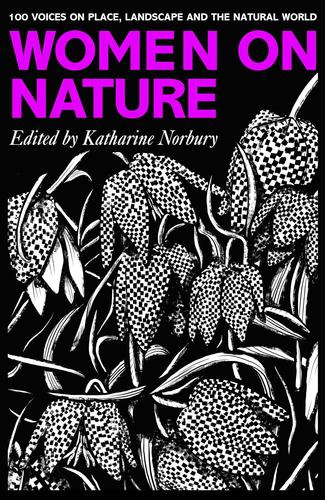 For most of the last seven months of 2021, I kept this as a bedside book, reading one or two pieces on most nights. It wasn’t until early this year that I brought it downstairs and started working it into my regular daily stacks so that I would see more progress. At first I quibbled (internally) with the decision to structure the book alphabetically by author. I wondered if more might have been done to group the pieces by region or theme. But besides being an unwieldy task, that might have made the contents seem overly determined. Instead, you get the serendipity of different works conversing with each other. So, for example, Katrina Porteous’s dialect poem about a Northumberland fisherman is followed immediately by Jini Reddy’s account of a trip to Lindisfarne; Margaret Cavendish’s 1653 dialogue in verse between an oak tree and the man cutting him down leads perfectly into an excerpt from Nicola Chester’s On Gallows Down describing a confrontation with tree fellers.
I’d highly recommend this for those who are fairly new to the UK nature writing scene and/or would like to read more by women. Keep it as a coffee table book or a bedside read and pick it up between other things. You’ll soon find your own favourites. (New purchase from Unbound)
Five favourites:
- “Caravan” by Sally Goldsmith (a Sheffield tree defender)
- “Enlli: The Living Island” by Pippa Marland (about the small Welsh island of Bardsey)
- “An Affinity with Bees” by Elizabeth Rose Murray (about beekeeping, and her difficult mother, who called herself “the queen bee”)
- “An Island Ecology” by Sarah Thomas (about witnessing a whale hunt on the Faroe Islands)
- My overall favourite: “Arboreal” by Jean McNeil (about living in Antarctica for a winter and the contrast between that treeless continent and Canada, where she grew up, and England, where she lives now)
“It occurred to me that trees were part of the grammar of one’s life, as much as any spoken language. … To see trees every day and to be seen by them is a privilege.”
Stay strong, trees!
Sponsored any books, or read any from indie publishers, recently?
Three on a Theme for Valentine’s Day: “Love” Books by Natalie Diaz, Maile Meloy and Jane Smiley
This post is an annual tradition for me, somehow.* Love, whether erotic, romantic or familial, turns up in the titles of these three works by women writers: poems, short stories and a novella.
Postcolonial Love Poem by Natalie Diaz (2020)
Diaz, raised on a Mojave reservation in California, won a Pulitzer Prize for this honey-thick exploration of queer Native American identity. There are lustful moments aplenty here—
My lover comes to me like darkfall—long,
and through my open window. Mullion, transom. […]
I keep time on the hematite clocks of her shoulders.
(from “Like Church”)
 —but the mineral-heavy imagery (“the agate cups of your palms …the bronzed lamp of my breast”) is so weirdly archaic and the vocabulary so technical that I kept thinking of the Song of Solomon. Not that there’s anything wrong with that; it’s just not the model I expected to find.
So I ended up preferring the forthright political poems about contemporary Native American life. Police shootings, pipeline protests: it’s a fact that her people are disproportionately persecuted (see “American Arithmetic”). Her brother’s drug abuse and mental illness also form a repeating subject (e.g., “It Was the Animals”).
The collection is as much of a love poem to land as it is to a woman, with water bodies described as affectionately as female bodies. “The Colorado River is the most endangered river in the United States—also, it is a part of my body” is the opening line of “The First Water Is the Body”; see also “exhibits from the American Water Museum.”
My favourite single poem, “If I Should Come Upon Your House Lonely in the West Texas Desert,” is sexy but also, charmingly, features echoes of “Goldilocks and the Three Bears”:
I will swing my lasso of headlights
across your front porch,
let it drop like a rope of knotted light
at your feet.
While I put the car in park,
you will tie and tighten the loop
of light around your waist—
and I will be there with the other end
wrapped three times
around my hips horned with loneliness.
[…]
I will lie down in you.
Eat my meals at the red table of your heart.
Each steaming bowl will be, Just right.
I will eat it all up,
break all your chairs to pieces.
(New purchase, Awesomebooks.com)
Half in Love by Maile Meloy (2002)
Meloy’s was a new name for me when I picked this up as part of a bargain secondhand book haul last year, but she’s actually published 10 books and is esteemed in literary circles; Ann Patchett even dedicated her latest release, These Precious Days, to her.
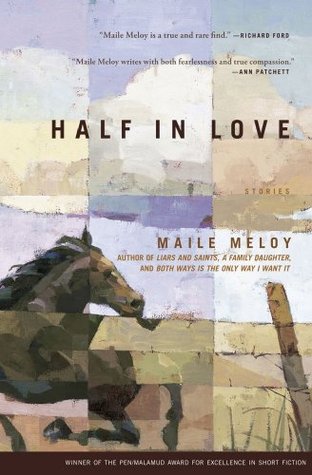 Meloy is from Montana and most of the 14 stories in this, her debut collection, are set in the contemporary American West among those who make their living from the outdoors, diving to work on hydroelectric dams or keeping cattle and horses. However, one of the more memorable stories, “Aqua Boulevard,” is set in Paris, where a geriatric father can’t tamp down his worries for his offspring.
The few historical stories have a melancholy air, with protagonists whose star has faded. There’s the brief, touching portrait of an outmoded career in “The Ice Harvester” and the secondhand reminiscences of being in late-colonial diplomatic service in the Middle East in “Last of the White Slaves”; “Red” is about an American soldier stationed in London during the Second World War.
Crime and its consequences recur. I loved the opening story, “Tome,” about a lawyer whose client wants her to keep in touch after he goes to jail. Teenage girls are the title characters in a couple of stories; “Ranch Girl” is in the second person. “Kite Whistler Aquamarine” is a heartbreaker about a filly born premature one winter. “Paint” was the standout for me: it’s pretty terrifying what a wife’s temporary attitude of neglect leads to when her luckless husband undertakes some DIY.
As is usual with a collection, a few of the stories left little impression on me. But there’s sufficient range and depth here to induce me to seek out more of Meloy’s work. I can recommend this to readers of Claire Boyles, David Guterson, Lily King, Jane Smiley (see below!) and David Vann. (Secondhand purchase, 2nd & Charles) 
Favourite passages:
“Be interesting in your twenties,” Suzy says. “Otherwise you’ll want to do it in your thirties or forties, when it wreaks all kinds of havoc, and you’ve got a husband and kids.”
Eugénie invited my husband to Greece every summer because she wanted him to publish her memoir. She had lived a remarkable life but didn’t have a remarkable book, and it dragged through slow ghostwritten revisions. Every year, at work in the hot city, I thought of blue water and white bougainvillea and forgot how exhausting it was to be her guest, to stay in favor and say the right things. So each summer we would arrive, look at the new draft, give careful suggestions that would not be taken, and find ourselves on the terrace waiting for her to trip mercifully off to bed.
Ordinary Love by Jane Smiley (1990)
 This is one of Smiley’s earlier works and feels a little generic, like she hadn’t yet developed a signature voice or themes. One summer, a 52-year-old mother of five prepares for her adult son Michael’s return from India after two years of teaching. His twin brother, Joe, will pick him up from the airport later on. Through conversations over dinner and a picnic in the park, the rest of the family try to work out how Michael has changed during his time away. “I try to accept the mystery of my children, of the inexplicable ways they diverge from parental expectations, of how, however much you know or remember of them, they don’t quite add up.” The narrator recalls her marriage-ending affair and how she coped afterwards. Michael drops a bombshell towards the end of the 91-page novella. Readable yet instantly forgettable, alas. I bought it as part of a dual volume with Good Will, which I don’t expect I’ll read. (Secondhand purchase, Bookbarn International)
If you read just one … It’s got to be Postcolonial Love Poem, the most Eros-appropriate of the three by far.
*I’m really not a Valentine’s Day person, yet this is the sixth year in a row that I’ve put together a themed post featuring books that have “Love” or a similar word in the title in the run-up to mid-February (2017, 2018, 2019, 2020, and 2021).
Read any books about love lately?
Thoughts on Literary Prizes, Sequels, and Finishing Books
I feel like my blogging is all over the place so far this month, but I’ll get back on track in the next couple of weeks with a few thematic roundups. Today, some disparate thoughts.
 Literary prize season will soon be in full swing, and can be overwhelming. I’m currently reading Megan Nolan’s Acts of Desperation, doing double duty from the Dylan Thomas Prize longlist and the Sunday Times Young Writer of the Year Award shortlist, and enjoying it more than expected given the inevitable Sally Rooney comparisons and messed-up young female tropes. However, I abandoned Here Comes the Miracle (from the latter) after 46 pages because it was just as When God Was a Rabbit as I feared.
 Today the second Barbellion Prize winner was announced: Lynn Buckle for What Willow Says, her lyrical novella about communication between a terminally ill woman, her deaf granddaughter, and the natural world. My choice from the shortlist would have been Josie George’s A Still Life, but I can see how the judges might have felt, in an early year when precedents are still being set, that it was important to recognize fiction as being just as valid a way of writing about disability and chronic illness.
Earlier in the week, the Rathbones Folio Prize shortlist was announced. Everyone remarked on the attractive mint green colour scheme! I found myself slightly disappointed; the Prize is usually more various since it includes nonfiction and poetry as well as fiction. Only one nonfiction title here: Philip Hoare going on (again) about whales. I’ve read another of poet Selima Hill’s collections so would gladly read this, too. I’ve already read the Brown and Keegan novellas and Sahota’s novel; I DNFed the Riley. Galgut has already won the Booker Prize. I’m awaiting a library hold of The Magician but I rather doubt my staying power with a 500-page biographical novel. My vote would, overwhelmingly, be for China Room.

I’m more tempted by the Fiction with a Sense of Place shortlist, announced as part of the Edward Stanford Travel Writing Awards early this month. What an intriguing and non-obvious set of nominees! Elena Knows was on the Barbellion longlist and the Greengrass and Shafak novels were previously shortlisted for the Costa Prize. I plan to try the Heller again this summer.

I’m also delighted to see that Small Bodies of Water by Nina Mingya Powles is shortlisted for the Stanford Dolman Travel Book of the Year Award.

I’ve been pondering my predictions and wishes (entirely separate things) for the Women’s Prize longlist and will post them early next month; for now, check out Laura’s.
I believe books should be self-contained and I struggle to engage with ANY series. Unpopular opinion alert: sequels are almost always indulgent and/or money-grubbing on the part of the author. Here are four high-profile literary fiction sequels I plan on skipping this year (in all the cases, I just didn’t like the original enough to continue the story):
- Either/Or by Elif Batuman – The Idiot was bizarre, deadpan and slightly entertaining, but I have no need to spend any more time with Selin.)
 The Candy House by Jennifer Egan – A Visit from the Goon Squad didn’t stand up to a reread.
- Less Is Lost by Andrew Sean Greer – Less, only mildly funny, was hugely overrated by critics.
- Tracy Flick Can’t Win by Tom Perrotta – I read, and saw the Reese Witherspoon-starring movie version of, Election ages ago; this is the one I’d be most likely to change my mind about, if I read good reviews.
I learned via a friend’s Instagram post that there is such a thing as #FinishItFebruary and felt seen. My goal had been to clear my set-aside shelf by the end of January; of course that didn’t happen, but I have been making some progress, reducing it from about 40 to more like 25. I try to reintroduce a part-finished book into my stack every few days. Sometimes it ‘takes’ and I finish it shortly; other times it languishes again, just in a different location. I’ll see how many more I can get to before the end of February.

A reminder of that set-aside shelf, as of early January.
Following any literary prize races this year?
Do you also avoid sequels, and leave books part-read?
I own too many unread books by…
A side effect of packing my library in preparation for moving: I’ve noticed there are certain authors whose works I tend to acquire secondhand and then stockpile rather than read. (I’ve also included in the tallies copies that I know are sitting in boxes in the USA.)
 D.H. Lawrence: 9+ (Aaron’s Rod, Kangaroo, The Lost Girl, The Plumed Serpent, a Complete Poems volume, Sea and Sardinia, a Selected Short Stories volume, Studies in Classic American Literature, The Woman Who Rode Away)
Lawrence was one of my research specialties as an undergraduate, so I read all his major works in my early twenties, as well as some lesser-known stuff, but haven’t felt compelled to pick up anything by him since. I’m not sure I’d care for him anymore, and it’s as if I don’t want to destroy the mystique. Yet I also can’t bring myself to get rid of these.
 T.C. Boyle: 7 (A Friend of the Earth, The Inner Circle, Riven Rock, The Tortilla Curtain, Water Music, The Women, World’s End)
I’ve read five of Boyle’s books and have had a mixed experience, but his plots – whether biographical (Alfred Kinsey! the wives and lovers of Frank Lloyd Wright!) or environmental – tend to attract me. My husband has actually become the bigger fan, so has read 3–4 of these that I haven’t.
 W. Somerset Maugham: 7 (Ashenden, Christmas Holiday, Creatures of Circumstance, Liza of Lambeth, The Magician, The Razor’s Edge, The Summing Up)
I read four of Maugham’s novels between 2014 and 2020. He’s an unappreciated author these days. Back when we had a free bookshop in my local mall, I volunteered weekly and most weeks came away with a backpack full of goodies. One week it was a partial leatherbound set of Maugham, which I’ve since supplemented with other paperbacks.
 Robertson Davies: 6.5 (The Salterton Trilogy, The Deptford Trilogy, The Cornish Trilogy)
I loved Fifth Business and The Rebel Angels, read for subsequent Robertson Davies week challenges run by Lory, but made aborted attempts at both ‘sequels’, so the rest of his three major trilogies remain unread on my shelves.
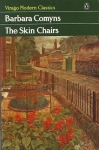 Barbara Comyns: 5 (The Juniper Tree, The House of Dolls, Mr Fox, The Skin Chairs, A Touch of Mistletoe)
I blame Liz for this one: after I read Who Was Changed and Who Was Dead during Novellas in November last year, she passed on her Comyns stash in a lovely Christmas parcel. Most are short enough to suit a future #NovNov, but I have The Juniper Tree earmarked for 20 Books of Summer (flora themed) and A Touch of Mistletoe for Christmastide.

 Wendy Perriam: 5 (Absinthe for Elevenses, Breaking and Entering, Cuckoo, Michael, Michael, Sin City)
Again, mostly Liz’s fault. (Though two others came from my Hay-on-Wye haul in September 2020.) I’ve still only read the one novel by Perriam, The Stillness The Dancing, but it was great and made me confident that I’d enjoy engaging with her repeated themes.
 Richard Mabey: 4 (The Common Ground, Gilbert White biography, Nature Cure, The Unofficial Countryside)
Considering that Mabey is the father of modern British nature writing, it’s kind of shocking that I’ve never read anything by him. I’ve put Nature Cure on my bedside pile to start soon.
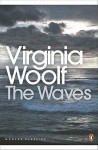 Virginia Woolf: 4 (Between the Acts, The Waves, The Years, a volume of her diaries)
I’ve tried The Waves and The Years and didn’t get further than a few pages; I find Woolf unreadably dense in a way I didn’t in my early twenties, when I studied To the Lighthouse (go figure). But there’s still this compulsion to have read them so that I can be a well-rounded literary person.
 Kent Haruf: 3 (Plainsong, Eventide, Benediction)
Our Souls at Night topped my backlist reads in 2020, but an attempt at reading Plainsong soon after failed. I think it was more involved, with more strands, than I was expecting after the simplicity of his novella. So the trilogy, acquired piecemeal secondhand, has languished on my shelves. I’ll try again with Plainsong this year.
 Elizabeth Jane Howard: 3 (Marking Time, Confusion, Casting Off)
I loved sinking into The Light Years, the first volume of The Cazalet Chronicles (read for a book club meeting last January), and even read the first 60 pages of the sequel, Marking Time, but then tailed off – you can see I’m terrible about continuing with series. But I’d like to get back into this one and, when I do, I have Books 2–4 out of five awaiting me.
 Mary Karr: 3 (The Liars’ Club, Cherry, Lit)
Karr was key to the resurgence in popularity of memoirs in the 1990s. I’ve read her book about memoir (as well as a commencement speech she gave, and a volume of her poems), but not yet one of her actual memoirs. I found them all free or secondhand on trips back to the States. I don’t know whether it’s important to go in the chronological order listed above, or if I should just jump in with whichever, maybe Lit, about her struggle with alcoholism.
 Sue Miller: 3 (The Lake Shore Limited, While I Was Gone, The World Below)
After I read Monogamy in December 2020 and it ended up on my Best-of list for that year, I scurried to get hold of a bunch of her other books. I’ve since read The Senator’s Wife, which was a big disappointment, but I’m looking forward to trying more.
 Howard Norman: 3 (Devotion, The Northern Lights, What Is Left the Daughter)
I’ve read six of Norman’s books; he’s an underrated treasure of an author. I have no idea why I haven’t read these yet. Two are marooned in America, but The Northern Lights could make it onto a reading stack anytime. I just need the right excuse, it seems.
I’m thinking back to 2020, when I realized I had four unread Chimamanda Ngozi Adichie books on my shelves. Through various challenges – doorstoppers, summer reads, short stories, novellas – I managed to read them ALL that year, followed by another two in 2021. I don’t usually enjoy binging on particular authors in that way, but her books are different enough from each other (and just so good) that I didn’t mind.
I can’t promise to try the same tactic with these underread authors this year, but I can at least resolve to read one book by each of them, to reduce the backlog.
Do you have particular authors you own a lot by … but fail to read?
Six Degrees: From No One Is Talking About This to The White Garden
This month marks two years that I’ve been participating in the Six Degrees meme. I’m an off-and-on contributor – I skipped last month – but this month’s starting book hooked me in. We begin with No One Is Talking About This by Patricia Lockwood, critically acclaimed but divisive among regular readers. It made my Best of 2021 list. (See Kate’s opening post.)

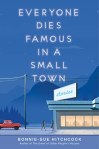 #1 No one is talking about the danger/allure of social media and the real-life moments that matter so much more … or maybe everyone is by now? What else is ‘everyone’ up to? Well, according to an appealing 2021 title from my TBR, Everyone Dies Famous in a Small Town (a YA linked short story collection by Bonnie-Sue Hitchcock). My library has a copy, so I need to catch up.
 #2 I did a search of my Goodreads library to find other small-town stories and FOUR of the results were unread nonfiction books by Heather Lende, set in Alaska (where lots of the Hitchcock stories are set as well). Now, my rule is that I can only have ONE book by an untried author on my virtual TBR; only if I read and enjoy a book of theirs can I add further titles. So I culled the other three but kept Find the Good, about the simple lessons Lende learned from writing obituaries in her small town.
 #3 I’ve read a few books with a lemon on the cover, but the one that was most about, you know, lemons, was The Land Where Lemons Grow by Helena Attlee. I chose it as one of my location-appropriate reads – written up here – during a vacation to Tuscany in 2014, my first time in Italy. It contains (more than) all you ever wanted to know about lemons.
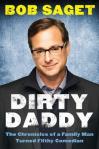 #4 A less apt read for time spent in Florence, but I distinctly remember lying in bed in our hotel room, which was basically part of a medieval villa, and reading it on my Nook when I couldn’t sleep because of the noisy nightlife out the window: Dirty Daddy by the late comedian Bob Saget. I rarely choose celebrity memoirs and this one was kinda crummy, but I’d requested it from Edelweiss because of my fond memories of the 1990s sitcom Full House.
 #5 Full house? How about A House Full of Daughters, a family memoir by Juliet Nicolson (sister of Adam)? It covers seven generations of women, including her grandmother, Vita Sackville-West. I loved my visits to Sissinghurst Castle and Knole Park, two of Vita’s homes, and have devoured Adam Nicolson and Sarah Raven’s writings about their work at Sissinghurst. When a neighbour was giving away a copy of this book, I snatched it up. It’s packed in a box and will be awaiting me after our move (coming up in March, we hope).
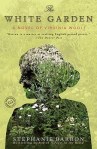 #6 During the lockdown spring I wrote about a silly novel called The White Garden by Stephanie Barron, which imagines that Virginia Woolf did not commit suicide upon her disappearance in March 1941, but hid with Vita at Sissinghurst. An American garden designer tasked with recreating Sackville-West’s famous White Garden at a wealthy client’s upstate New York estate ends up investigating what happened. My interest in the historical figures involved was enough to keep me going through a rather frothy book.
From one contemporary novel that swaps farce for poignancy to another that descends into ridiculousness, my chain has travelled via Alaska, Italy and Hollywood to Kent, England. The overarching theme has been fame: on the Internet, in small towns, in show business, and (my kind of celebrity) in the literary world.
Where will your chain take you? Join us for #6Degrees of Separation, hosted on the first Saturday of each month by Kate W. of Books Are My Favourite and Best. Next month’s starting point is The End of the Affair by Graham Greene, my perfect excuse to finally review it (I finished it more than a year ago!).
Have you read any of my selections? Tempted by any you didn’t know before?
The 2022 Dylan Thomas Prize Longlist
The Swansea University International Dylan Thomas Prize recognizes the best published work in the English language written by an author aged 39 or under. The 12-strong longlist for the 2022 prize, announced this morning, features lots of women and diverse voices. All literary genres are eligible. There are eight novels, two poetry collections and two short story collections in the running:

- A Passage North by Anuk Arudpragasam (Granta)
- What Noise Against the Cane by Desiree Bailey (Yale University Press)
- Keeping the House by Tice Cin (And Other Stories)
- Auguries of a Minor God by Nidhi Zak/Aria Eipe (Faber)
- The Sweetness of Water by Nathan Harris (Tinder Press/Headline)
- No One Is Talking About This by Patricia Lockwood (Bloomsbury Circus)
- Milk Blood Heat by Dantiel W. Moniz (Atlantic Books)
- Hot Stew by Fiona Mozley (John Murray Press)
- Open Water by Caleb Azumah Nelson (Viking, Penguin General)
- Acts of Desperation by Megan Nolan (Jonathan Cape)
- Peaces by Helen Oyeyemi (Faber)
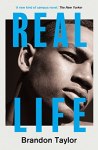
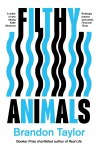
- Filthy Animals by Brandon Taylor (Daunt Books Publishing)
 Coming just a week and a half after the Young Writer of the Year Award shortlist news, the longlist repeats two of its titles, Open Water and Acts of Desperation. No One Is Talking About This was shortlisted for the Booker and Women’s Prizes last year. A Passage North was also Booker shortlisted, while The Sweetness of Water was on the longlist.
 I happen to have already read and reviewed No One Is Talking About This, Open Water, and Filthy Animals; I DNFed Hot Stew (some thoughts here). I am being sent a copy of Acts of Desperation for my Young Writer of the Year Award reading.
Of the rest, I’m most interested in reading the short story collection Milk Blood Heat and the two poetry nominees, What Noise Against the Cane and Auguries of a Minor God. I’m hoping that review copies of these few, perhaps as part of a longlist blog tour, will be a possibility.
Looking at the longlist, Brandon Taylor immediately jumps out to me as a deserving winner. I feel like his debut novel and follow-up story collection establish him as a confident writer with a mature voice and style that will be with us for the long haul.
This year’s judges are novelist and Swansea University lecturer Alan Bilton, Jaipur Literature Festival founder and director Namita Gokhale (chair), poet Luke Kennard, and novelists Irenosen Okojie and Rachel Trezise.
The shortlist will be announced on 31 March and the winner on 12 May.
(My previous Dylan Thomas Prize coverage: I reviewed a few nominees for the blog tours in 2019 and 2020, and introduced the shortlist in 2021.)
Have you read any of the nominated titles? Which ones appeal to you?
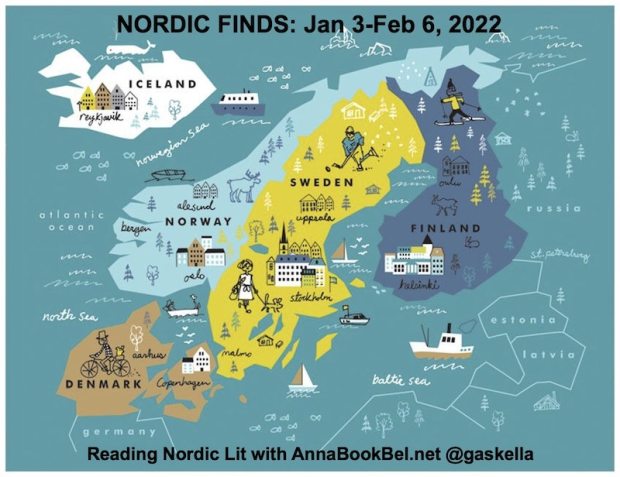
Swedish Death Cleaning (#NordicFINDS and #ReadIndies) & Three Rereads
An unexpected opportunity to contribute another post for Nordic FINDS this week (after my skim of Sophie’s World): yesterday we went into London – for just the second time since the pandemic started – and I took along a couple of novella-length books, one of them this Swedish nonfiction work that I picked up from a charity shop the other week. As it was released by Canongate in 2017, it also fits into Karen and Lizzy’s Read Indies challenge.
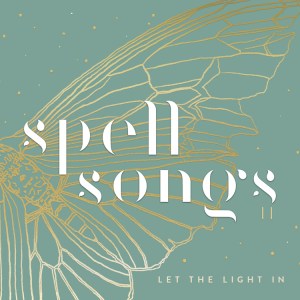
Our previous London trip was to see Bell X1 play at Union Chapel back in December. Yesterday was also for a gig, this time The Lost Words: Spell Songs playing Cadogan Hall. I’d been dubious about this ensemble project based on Robert Macfarlane and Jackie Morris’s The Lost Words and The Lost Spells but ended up loving both books as well as the two albums of folk/world music based on them, and it was a brilliant evening of music.
Anyway, on to the books. I also reread a novella in advance of book club, so afterwards I’ll take a quick look at the rereading I’ve done so far this year.
Döstädning: The Gentle Art of Swedish Death Cleaning by Margareta Magnusson
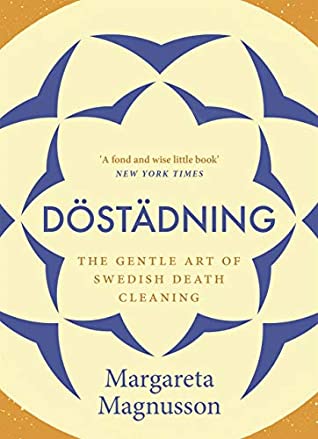 This is not about trauma cleaning, but downsizing and culling possessions so that the burden doesn’t fall to your children or other relatives after your death. Magnusson, who is in her 80s, has experience with death cleaning: first after her mother’s death, then after her mother-in-law’s, and finally after her husband’s, when she decided to move from the family home to a small flat. I enjoyed the little glimpses into her life as a mother of five and an artist. The family moved around a lot for her husband’s work, living in the USA and Singapore. She makes more of an allowance for possessions that hold sentimental value (especially photos and letters), being more concerned about the accumulation of STUFF.
As for general strategies, she suggests starting the process c. age 65 and beginning with the big things, from furniture on down, so that you make visible progress right away. “I’ve discovered that it is rewarding to spend time with these objects one last time and then dispose of them.” She goes category by category through her possessions. Clothing and cookbooks are pretty easy to shed: get rid of whatever doesn’t fit or suit you anymore, and only keep a couple of much-used cookbooks; you can find most any recipe on the Internet these days, after all. Leave the emotional material for last or you’ll get bogged down, she advises – you can take your time and enjoy reminiscing as you look through mementoes later on. She even considers what to do about old pets.
To let things, people and pets go when there is no better alternative is a lesson that has been very difficult for me to learn, and it is a lesson that life, as it goes further along, is teaching me more and more often.
Magnusson writes that she does not intend this to be a sad book, and it’s mostly very practical and unsentimental, even funny at times: on disposing of secret stuff, “save your favourite dildo but throw away the other fifteen!”; a little section on the perils of “man caves” and her memories of her clumsy cat Klumpeduns. I also laughed at the concept of a fulskåp (“a cabinet for the ugly”) for unwanted gifts that must eventually be rehomed or disposed of.
One problem that I have with decluttering books in general is that there isn’t enough of an anti-consumerist and green message. One, don’t accumulate the stuff in the first place (and reuse and buy secondhand wherever possible); two, possessions should almost never be thrown away, and only as an absolute last resort after doing everything possible to repair, refurbish, rehome or recycle them.
This was an enjoyable little book that I’ll pass on to someone else who might find it useful (so long as it’s not considered too on the nose as a book recommendation!), but it didn’t necessarily add anything for me beyond what I’d encountered in Outer Order, Inner Calm by Gretchen Rubin and Year of No Clutter by Eve O. Schaub. (Secondhand purchase)
[I’m a little confused as to whether this is in translation or not. It first appeared in Swedish, but as no translator is listed anywhere in the copyright info, I assume that Magnusson translated it herself. Apart from some wrong number/amount and during/over choices, it reads like a native speaker’s work.]
2022’s Rereading
I’ve reread three books so far this year, which for me is pretty good going. It helped that all three were novella length, and I had book club as an excuse to return to the two novels.
 The Sense of an Ending by Julian Barnes was the other book I popped in the back of my purse for yesterday’s London outing. Barnes is one of my favourite authors – I’ve read 21 books by him now! – but I remember not being very taken with this Booker winner when I read it just over 10 years ago. (I prefer to think of his win as being for his whole body of work as he’s written vastly more original and interesting books, like Flaubert’s Parrot.) It’s the story of an older man looking back on his youth, and his friend’s suicide, in the light of what he learns after a somewhat mysterious bequest. The themes of history, memory and regret certainly mean more to me now in my late 30s than they did in my late 20s, but I still find this work a little lightweight; sordid, too. (Free from mall bookshop)
Readalikes: Any Human Heart by William Boyd, Moon Tiger by Penelope Lively, The Child in Time by Ian McEwan
 The Prime of Miss Jean Brodie by Muriel Spark was January’s book club selection. I had remembered no details apart from the title character being a teacher. It’s a between-the-wars story set in Edinburgh. Miss Brodie’s pet students are girls with attributes that remind her of aspects of herself. Our group was appalled at what we today would consider inappropriate grooming, and at Miss Brodie’s admiration for Hitler and Mussolini. Educational theory was interesting to think about, however. Spark’s work is a little astringent for me, and I also found this one annoyingly repetitive on the sentence level. (Public library)
 Brit-Think, Ameri-Think: A Transatlantic Survival Guide by Jane Walmsley: This is the revised edition from 2003, so I must have bought it as preparatory reading for my study abroad year in England. This may even be the third time I’ve read it. Walmsley, an American in the UK, compares Yanks and Brits on topics like business, love and sex, parenting, food, television, etc. I found my favourite lines again (in a panel entitled “Eating in Britain: Things that Confuse American Tourists”): “Why do Brits like snacks that combine two starches? (a) If you’ve got spaghetti, do you really need the toast? (b) What’s a ‘chip-butty’? Is it fatal?” The explanation of the divergent sense of humour is still spot on, and I like the Gray Jolliffe cartoons. Unfortunately, a lot of the rest feels dated – she’d updated it to 2003’s pop culture references, but these haven’t aged well. (New purchase?)
Any Nordic reads, or rereads, for you lately?
Sophie’s World by Jostein Gaarder for #NordicFINDS
For my meager contribution to Annabel’s five-week Nordic FINDS challenge, I got out my copy of Sophie’s World by Jostein Gaarder that came from the free mall bookshop in 2020.
Sophie’s World: A Novel about the History of Philosophy (1994)
[Translated from the Norwegian by Paulette Møller]
 Sophie Amundsen, 14 going on 15, starts receiving mysterious letters asking her life’s big questions: Who are you? Where does the world come from? Soon her anonymous correspondent starts sending whole sheaves of paper elaborating on episodes from the unfolding history of philosophy, from creation myths through the Greek philosophers to Marxism and Darwinism via the Renaissance and Enlightenment. She’s so engrossed in her impromptu philosophy course that she starts to neglect her schoolwork and worry her mother. Sophie identifies the letter-writer as one Alberto Knox, who perhaps lives in a lake cabin nearby, and starts to interact with him by writing back. (I loved that their letters are delivered by a golden Labrador named Hermes.) Meanwhile, she’s perplexed by all the postcards she receives addressed to “Hilde,” also 15. Is she reading Hilde’s story, or is Hilde reading hers?
I’ll be honest … I made it just 96 pages (out of 394) before I started skimming, flipping past big chunks to get to the story. As to what I did experience, my feelings are mixed:
- On the one hand, this is certainly a more fun way to encounter philosophy than the textbook I had in college, while still offering accurate and thorough information.
- On the other hand, is the novel’s young adult audience really going to stick around for all the talky/preachy bits surrounding the slightly magical, mind-bending plot?
I think this became a word-of-mouth bestseller a couple of decades ago because of its novelty value. It’s a book that asks and assumes a lot of its readers: that we be curious and diligent, that we engage in the universal search of meaning. As Alberto writes in his first proper letter, “We feel we are part of something mysterious and we would like to know how it all works.” I feel I missed my moment to read it, though I can admire its aim.
(See Annabel’s review here.)
My current Scandinavian read is Land of Snow and Ashes by Petra Rautiainen, a Finnish author, about the treatment of Sámi people during World War II (coming out from Pushkin Press tomorrow).
Love Your Library, January 2022
We’re now on the fourth month of the Love Your Library feature. First, my thanks to Mary R. of Bibliographic Manifestations for her post on the libraries she has known and loved, and Naomi M. of Consumed by Ink for her reviews of recent books she’s read from the library. Karen of Booker Talk let me share this photo she took of a beautifully refurbished chapel-turned-library local to her.

Rosemary of Scones and Chaises Longues also sent me a photo of her latest library book haul.

I’ve been back to my library volunteering this month and am starting to amass borrowed books and hold requests. In keeping with my goal of prioritizing backlist books over brand-new ones, I’ve been picking up whatever catches my eye, including some releases from last year that I missed, and some older stuff, too. All volunteers were recently given this tote bag as a thank-you.

As to what I’ve actually read from the library recently, it’s mostly selections from the Costa Awards shortlists. I read the full poetry shortlist, two as review copies and two from the library. My preferred title was Eat or We Both Starve, but The Kids (a mixed-race author’s memories of kids she’s taught, and her own coming of age, and a potential antidote to the Kate Clanchy debacle?) won. I also read Free by Lea Ypi, a delightful memoir about growing up in Albania in the 1980s and 90s that has scenes and dialogue worthy of fiction, and Fault Lines by Emily Itami, a debut novel wryly narrated by a Tokyo housewife having an affair. I’m currently halfway through Maggie Blue and the Dark World by Anna Goodall, an enjoyable middle grade novel reminiscent of classic Madeleine L’Engle and C.S. Lewis fantasy but updated to cover bullying, mental health issues and same-sex attraction.


Do share a link to your own post in the comments, and feel free to use the image below. I’ve co-opted a hashtag that is already popular on Twitter and Instagram: #LoveYourLibrary.

Here’s a reminder of my ideas of what you might choose to post (this list will stay up on the project page):
- Photos or a list of your latest library book haul
- An account of a visit to a new-to-you library
- Full-length or mini reviews of some recent library reads
- A description of a particular feature of your local library
- A screenshot of the state of play of your online account
- An opinion piece about library policies (e.g. Covid procedures or fines amnesties)
- A write-up of a library event you attended, such as an author reading or book club.
If it’s related to libraries, I want to hear about it!
January Releases, Part III: Taylor Harris, Cathy Rentzenbrink & Tanya Shadrick
Rounding off my three-part look at some of the month’s new releases with two memoirs plus a memoir-writer’s self-help guide today. (Can you tell I’m a memoir junkie?) Topics range from medical mysteries and covert racism to a reclaiming of life after a near-death experience, but these three nonfiction works by women are linked by the determination to overcome self-doubt.
This Boy We Made: A Memoir of Motherhood, Genetics, and Facing the Unknown by Taylor Harris
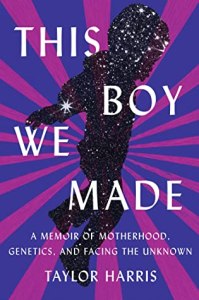 One morning, Taylor Harris and her husband (an African American family based in Charlottesville, Virginia) found their 22-month-old son Christopher, nicknamed “Tophs,” awake but unresponsive in his crib. In the years that followed, she and his doctors looked for answers as to why his body couldn’t regulate his blood sugar levels, sometimes leading to seizures, and to why his speech and mental processing remained delayed. All their tests and theories have never amounted to a conclusive diagnosis. This was a book that repeatedly surprised me. I’d assumed it would be exclusively about the medical mystery of Tophs’s physical and intellectual disability. But Harris elegantly weaves in a lot of other themes, too: mental illness, her own physical concerns (a BRCA2 mutation), racism, faith, and advocating for her children’s health and education. (Full review at BookBrowse.)
Write It All Down: How to put your life on the page by Cathy Rentzenbrink
Cathy Rentzenbrink is a lovely human being, and I’ve always appreciated her enthusiastic support of books. I’ve read all of her work even though I’ve been disappointed with her last few releases. There are so many writing guides out there – including several on memoir-writing specifically – that the first question to ask about one is, does it offer anything new? For me, this one doesn’t. In fact, it’s more of a therapy session than a practical writing guide.
 The undemanding prose slides right down, but 60 pages in (at the end of Part One, “Preparation”) I realized all we’d had thus far was enumerating and countering the hang-ups of unconfident, procrastinating would-be writers. The rest of the book does then get into the nitty-gritty of producing a first draft (“Excavation”) of a life story and editing it into a more polished form. Rentzenbrink peppers in little tricks to keep oneself at the desk, like setting a timer or micro-goals, writing a section in the form of a letter, and dredging up sensory details. Most of the mini chapters are just a couple of pages. Several end with a series of prompts. I’m notorious for skipping the application questions in self-help books, but I’d be interested to hear if other readers have actually gone through these exercises and found them helpful.
I’m so familiar with the author’s own story from her three autobiographical works that I was less than patient about encountering certain incidents again here – though I was intrigued to learn that she gave up alcohol in the recent past after realizing that she was a problem drinker. I’ve also read most of the material in her Further Reading list; all told, I didn’t feel this book offered me much, as a lay reader or a maybe-some-day memoirist. But it seems to have been enormously popular among critics and readers (its average Goodreads rating is 4.38), so clearly a lot of people have been finding Rentzenbrink’s down-to-earth approach reassuring.
With thanks to Emma Finnigan PR and Bluebird for the proof copy for review.
The Cure for Sleep: Memoir of a Late-Waking Life by Tanya Shadrick
From my Most Anticipated list. Shadrick hangs around the fringes of nature writing cliques on Twitter, so I expected this to have more of a nature/travel element. Instead, it bears a fairy tale ambience, of a little girl lost in the woods and craving freedom; of a sleepwalking woman deciding to live more deliberately. It opens with a near-death experience: Shadrick, new mother to a son conceived after infertility treatment, suffered a severe haemorrhage after the placenta tore an artery and was rushed to hospital for emergency surgery.
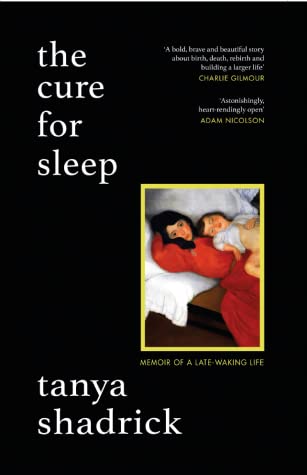 From this point she returns to the beginning of her life and proceeds chronologically, pausing at joyful or traumatic moments. Her childhood feels like the key to understanding everything else: her father left when she was a baby; her mother, all too aware of being of lower class, was driven to improve herself. Shadrick wanted her mother all to herself, at the same time as she felt trapped by her. She injured herself jumping off an outhouse roof in protest at her mother’s new boyfriend, who became her stepfather. At university she reacted against her upbringing in predictable ways, failing her first year and having an abortion. Even once happily married, she kept unconsciously searching for surrogate father (older male) figures.
After the postnatal operation, she felt a need to escape – by suicide if necessary – yet forced herself to stay, make connections in her town and be present for her children. But she remained a free spirit, swimming and writing a mile-long scroll as public performance art. Her work with hospice patients, recording their memories, qualified her to edit Lynne Roper’s wild swimming diaries into a Wainwright Prize-longlisted book.
Awakening versus sleep is the figurative framework for the memoir, with a feminist insistence on freedom and self-fulfilment at the same time as being a mother. This is an unusual book – at times overwritten and too deliberately moulded into tropes as a rebuttal to randomness, even though, looking back, I can’t decipher a coherent plot to the events – that reminded me most of Free Woman by Lara Feigel and I Am, I Am, I Am by Maggie O’Farrell.
With thanks to W&N for the free copy for review.
Does one of these books appeal to you?
 Bookish Beck = Rebecca Foster. American transplant to England. Freelance proofreader and book reviewer.
