20 Books of Summer, #18–19: The Other’s Gold and Black Dogs
Today’s entries in my colour-themed summer reading are a novel about a quartet of college friends and the mistakes that mar their lives and a novella about the enduring impact of war set just after the fall of the Berlin Wall.
The Other’s Gold by Elizabeth Ames (2019)
Make new friends but keep the old,
One is silver and the other’s gold.
Do you know that little tune? We would sing it as a round at summer camp. It provides a clever title for this story of four college roommates whose lives are marked by the threat of sexual violence and ambivalent feelings about motherhood. Alice, Ji Sun, Lainey and Margaret first meet as freshmen in 2002 when they’re assigned to the same suite (with a window seat! how envious am I?) at Quincy-Hawthorn College.
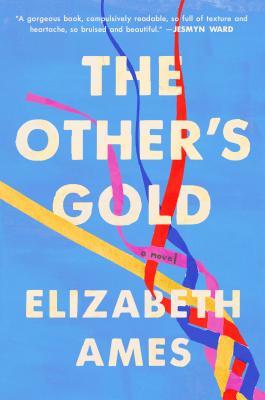 They live together for the whole four years – a highly unusual situation – and see each other through crises at college and in the years to come as they find partners and meander into motherhood. Iraq War protests and the Occupy movement form a turbulent background, but the friends’ overriding concerns are more personal. One girl was molested by her brother as a child and has kept secret her act of revenge; one has a crush on a professor until she learns he has sexual harassment charges being filed against him by multiple female students. Infertility later provokes jealousy between the young women, and mental health issues come to the fore.
As in Expectation by Anna Hope, the book starts to be all about babies at a certain point. That’s not a problem if you’re prepared for and interested in this theme, but I love campus novels so much that my engagement waned as the characters left university behind. Also, the characters seemed too artificially manufactured to inject diversity (Ji Sun is a wealthy Korean; adopted Lainey is of mixed Latina heritage, and bisexual; Margaret has Native American blood) and embody certain experiences. And, unfortunately, any #MeToo-themed read encountered in the wake of My Dark Vanessa is going to pale by comparison.
Part One held my interest, but after that I skimmed to the end. Ideally, I would have chosen replacements and not included skims like this and Green Mansions, but it’s not the first summer that I’ve had to count DNFs and skimmed books – my time and attention are always being diverted by paid review work, review copies and library books with imminent deadlines. I’ve read lots of fiction about groups of female friends this summer, partly by accident and partly by design, and will likely do a feature on it in an upcoming month. For now, I’d recommend Lara Feigel’s The Group instead of this. 
With thanks to Pushkin Press (ONE imprint) for the free e-copy for review.
Black Dogs by Ian McEwan (1992)
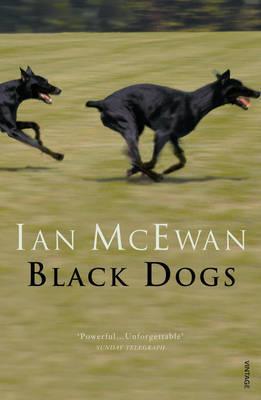 When I read the blurb, I worried I’d read this before and forgotten it: all it mentions is a young couple setting off on honeymoon and having an encounter with evil. Isn’t that the plot of The Comfort of Strangers? I thought. In fact, this only happens to have the vacation detail in common, and has a very different setup and theme overall.
Jeremy lost his parents in a car accident (my least favourite fictional trope – far too convenient a way of setting a character off on their own!) when he was eight years old, and is self-aware enough to realize that he has been seeking for parental figures ever after. He becomes deeply immersed in the story of his wife’s parents, Bernard and June, even embarking on writing a memoir based on what June, from her nursing home bed, tells him of their early life (Part One).
After June’s death, Jeremy takes Bernard to Berlin (Part Two) to soak up the atmosphere just after the Wall comes down, but the elderly man is kicked by a skinhead. The other key thing that happens on this trip is that he refutes June’s account of their honeymoon. At June’s old house in France (Part Three), Jeremy feels her presence and seems to hear the couple’s voices. Only in Part Four do we learn what happened on their 1946 honeymoon trip to France: an encounter with literal black dogs that also has a metaphorical dimension, bringing back the horrors of World War II.
I think the novel is also meant to contrast Communist ideals – Bernard and June were members of the Party in their youth – with how Communism has played out in history. It was shortlisted for the Booker, which made me feel that I must be missing something. A fairly interesting read, most similar in his oeuvre (at least of the 15 I’ve read so far) to The Child in Time. (Secondhand purchase from a now-defunct Newbury charity shop) 
Coming up next: The latest book by John Green – it’s due back at the library on the 31st so I’ll aim to review it before then, possibly with a rainbow-covered novel as a bonus read.
The Group by Lara Feigel (and Mary McCarthy)
Lara Feigel’s memoir Free Woman was one of my favourite books of 2018. In it she interrogates conventions of marriage and motherhood while rereading the works of Doris Lessing – The Golden Notebook (1962), in particular, dramatizes women’s struggles to combine their disparate roles into a harmonious identity. Drawing inspiration from Lessing as well as from another early feminist novel, The Group by Mary McCarthy (more on this below), Feigel’s debut novel crafts a kaleidoscopic portrait of five women’s lives in 2018.
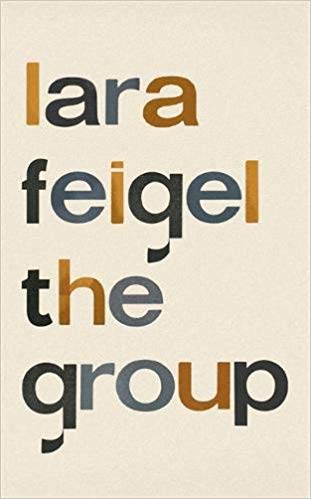 Stella, Kay, Helena, Polly and Priss met at a picnic while studying at Oxbridge and decided to rent a house together. Now 40-ish, they live in London and remain close, though their lives have branched in slightly different directions. Kay is an English teacher but has always wanted to be a novelist like her American husband, Harald. Priss is a stay-at-home mother excited to be opening a café. Polly, a gynaecological consultant at St Thomas’s Hospital, is having an affair with a married colleague. Helena, a single documentary presenter, decides she wants to have a baby and pursues insemination via a gay friend.
Narrating her friends’ lives as well as her own is Stella, an editor at a Faber-like publishing house whose director (also Helena’s uncle) is under investigation for sexual misconduct. Stella, a stand-in for the author, has split from her husband and has a new baby via IVF as well as an older child; this hint of autofiction lends the book an intimacy it might have lacked with an omniscient perspective. Although you have to suspend disbelief in a few places – could Stella really know so many details of her friends’ lives? – it feels apt that she can only understand these other women in relation to herself. Her voice can be catty, but is always candid, and Feigel is astute on the performative aspects of femininity.
Fast-forward a Sally Rooney novel by about 20 years and you’ll have an idea of what to expect here. It is a sexually frank and socially engaged narrative that arose from the context of the #MeToo movement and fully acknowledges the privilege and limitations of its setting. The characters express guilt over lamenting middle-class problems while there is such suffering in the wider world – we glimpse this in Polly’s work with African girls who have undergone genital mutilation. The diversity is limited to Black boyfriends, Helena’s bisexuality, and the fact that one group member decides not to have children (that 1 in 5 is statistically accurate).
The advantage of the apparent heterogeneity in the friend group, though, is that it highlights depths of personality and subtleties of experience. Stella even sees herself as an amateur anthropologist:
So here we are then. Five exact contemporaries who once shared a cluttered, thin-walled student house off the Cowley Road, all privileged, white, middle-class, all vestigial hangers-on, left over from an era when we received free educations at our elite university and then emerged into a world where we could still just about find jobs and buy flats, provided with opportunities for selfishness and leisure by our cleaners and our childminders. Nothing very eventful happens to us, but that gives more room for the ethnographer in me to get to work.
Feigel previously wrote two group biographies of cultural figures of the Second World War era, and she applies that precise skill set – capturing the atmosphere of a time period; noting similarities but also clear distinctions between people – to great effect here. You’ll recognize aspects of yourself in all of the characters, and be reminded of how grateful you are for (or how much you wish you had) friends whom you know will always be there for you. It’s an absorbing and relevant novel that ranks among my few favourites of the year so far.
My rating: 
The Group was published by JM Originals (John Murray) on July 2nd. My thanks to the publisher for the free copy for review.
Readalikes: The Radiant Way by Margaret Drabble, Girl, Woman, Other by Bernardine Evaristo, and Expectation by Anna Hope.
See Susan’s review also.
The Group by Mary McCarthy (1963)
As soon as I heard about Lara Feigel’s forthcoming novel, I unearthed the Mary McCarthy paperback I’d plucked from Bookbarn’s shelves in 2017. I decided to read Feigel’s first, lest it feel less than fresh; perhaps inevitably, McCarthy’s felt dated in comparison. I had trouble engaging with it as a whole, but still enjoyed contrasting the two books.
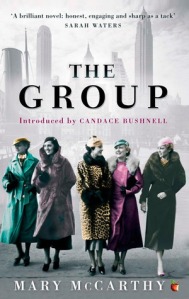 McCarthy focuses on eight girls from the Vassar class of ’33. Kay, the first to marry, has an upper-crust New York City wedding one week after graduation. But after Harald loses his theatre job, his cocktail habit and their luxury apartment soon deplete Kay’s Macy’s salary. Meanwhile, Dottie loses her virginity to Harald’s former neighbour in a surprisingly explicit scene. Contraception is complicated, but not without comic potential – as when Dottie confuses a pessary and a peccary. Career, romance, and motherhood are all fraught matters.
Feigel borrows the names of four of her five group members, plus those of some secondary characters, from McCarthy, with Stella a new character perhaps inspired in part by McCarthy’s Libby, who wants to work with books but, after delivering an earnest report on a 500-page pot-boiler, hears that “we really have no work that you’re uniquely qualified to do. You’re one of thousands of English majors who come pouring out of the colleges every June, stage-struck to go into publishing.” (That sure sounds familiar!)
Narrowing the circle and introducing a first-person narrator were wise choices that made Feigel’s version more accessible. Both, though, are characterized by forthright commentary and a shrewd understanding of human motivations. I’ll try again with McCarthy’s The Group someday, but for now I’m planning to pick up her Memories of a Catholic Girlhood.
Note: Mary McCarthy is one of the authors profiled in Michelle Dean’s Sharp.
Other 2019 Superlatives and Some Statistics
My best discoveries of the year: The poetry of Tishani Doshi; Penelope Lively and Elizabeth Strout (whom I’d read before but not fully appreciated until this year); also, the classic nature writing of Edwin Way Teale.


The authors I read the most by this year: Margaret Atwood and Janet Frame (each: 2 whole books plus parts of 2 more), followed by Doris Lessing (2 whole books plus part of 1 more), followed by Miriam Darlington, Paul Gallico, Penelope Lively, Rachel Mann and Ben Smith (each: 2 books).
Debut authors whose next work I’m most looking forward to: John Englehardt, Elizabeth Macneal, Stephen Rutt, Gail Simmons and Lara Williams.
My proudest reading achievement: A 613-page novel in verse (Mary Ann Sate, Imbecile by Alice Jolly) + 2 more books of over 600 pages (East of Eden by John Steinbeck and Cutting for Stone by Abraham Verghese).


Best book club selection: Red Dust Road by Jackie Kay was our first nonfiction book and received our highest score ever.
Some best first lines encountered this year:
 “What can you say about a twenty-five-year old girl who died?” (Love Story by Erich Segal)
- “The women of this family leaned towards extremes” (Away by Jane Urquhart)
- “The day I returned to Templeton steeped in disgrace, the fifty-foot corpse of a monster surfaced in Lake Glimmerglass.” (from The Monsters of Templeton by Lauren Groff)
The downright strangest book I read this year: Lanny by Max Porter
The 2019 books everybody else loved (or so it seems), but I didn’t: Fleishman Is in Trouble by Taffy Brodesser-Akner, The Topeka School by Ben Lerner, Underland by Robert Macfarlane, The Boy, The Mole, The Fox and The Horse by Charlie Mackesy, Three Women by Lisa Taddeo and The Nickel Boys by Colson Whitehead
 The year’s major disappointments: Cape May by Chip Cheek, We Are the Weather: Saving the Planet Begins at Breakfast by Jonathan Safran Foer, Letters to the Earth: Writing to a Planet in Crisis, ed. Anna Hope et al., Bowlaway by Elizabeth McCracken, Rough Magic: Riding the World’s Loneliest Horse Race by Lara Prior-Palmer, The Lager Queen of Minnesota by J. Ryan Stradal, The Knife’s Edge by Stephen Westaby and Frankissstein by Jeanette Winterson
The worst book I read this year: Jonathan Livingston Seagull by Richard Bach
Some statistics on my 2019 reading:
Fiction: 45.4%
Nonfiction: 43.4%
Poetry: 11.2%
(As usual, fiction and nonfiction are neck and neck. I read a bit more poetry this year than last.)
Male author: 39.4%
Female author: 58.9%
Nonbinary author (the first time this category has been applicable for me): 0.85%
Multiple genders (anthologies): 0.85%
(I’ve said this the past three years: I find it interesting that female authors significantly outweigh male authors in my reading; I have never consciously set out to read more books by women.)
E-books: 10.3%
Print books: 89.7%
(My e-book reading has been declining year on year, partially because I’ve cut back on the reviewing gigs that involve only reading e-books and partially because I’ve done less traveling; also, increasingly, I find that I just prefer to sit down with a big stack of print books.)
Work in translation: 7.2%
(Lower than I’d like, but better than last year’s 4.8%.)
Where my books came from for the whole year:
- Free print or e-copy from publisher: 36.8%
- Public library: 21.3%
- Secondhand purchase: 13.8%
- Free (giveaways, The Book Thing of Baltimore, the free mall bookshop, etc.): 9.2%
- Downloaded from NetGalley, Edelweiss or Project Gutenberg: 7.8%
- Gifts: 4.3%
- University library: 2.9%
- New purchase (usually at a bargain price): 2.9%
- Church theological library: 0.8%
- Borrowed: 0.2%
(Review copies accounted for over a third of my reading; I’m going to scale way back on this next year. My library reading was similar to last year’s; my e-book reading decreased in general; I read more books that I either bought new or got for free.)
Number of unread print books in the house: 440
(Last thing I knew the figure was more like 300, so this is rather alarming. I blame the free mall bookshop, where I volunteer every Friday. Most weeks I end up bringing home at least a few books, but it’s often a whole stack. Surely you understand. Free books! No strings attached!)
Nonfiction Review Books Roundup: Hay, Hope et al., Lee, Long, McLaren, Zuckerman
I’m continuing with the Nonfiction November focus by catching up on six nonfiction review books I’ve been sent over the last half a year. We’ve got a record of elderly parents’ decline, letters and poems written about the climate crisis, a family memoir set between Taiwan and Canada, a widow’s mushroom-hunting quest, a work of ecotheology that reflects on travels in the Galápagos Islands, and a defense of an entirely secular basis for morality. You can’t say I don’t read a variety, even within nonfiction! See if one or more of these tempts you.
All Things Consoled: A Daughter’s Memoir by Elizabeth Hay
 Gordon and Jean Hay stumbled into their early nineties in an Ottawa retirement home starting in 2009. Elizabeth Hay is one of four children, but caregiving fell to her for one reason and another, and it was a fraught task because of her parents’ prickly personalities: Jean was critical and thrifty to the point of absurdity, spooning thick mold off apple sauce before serving it and needling Elizabeth for dumping perfectly good chicken juice a year before; Gordon had a terrible temper and a history of corporal punishment of his children and of his students when he was a school principal. Jean’s knee surgery and subsequent infection finally put paid to their independence; her mind was never the same and she could no longer paint.
There are many harsh moments in this memoir, but almost as many wry ones, with Hay picking just the right anecdotes to illustrate her parents’ behavior and the shifting family dynamic. She never looks away, no matter how hard it all gets. Her father’s rage against the dying of the light contrasts with her mother’s fade into confusion – lightened by the surprisingly poetic turns of phrase she came out with despite her dementia and aphasia. The title phrase, for instance, was her attempt at “all things considered.” I would wholeheartedly recommend this to readers of Hay’s novels, but anyone can appreciate the picture of complicated love and grief. (See also Susan’s review.)
With thanks to MacLehose Press for the free copy for review.
Letters to the Earth: Writing to a Planet in Crisis, edited by Anna Hope et al.
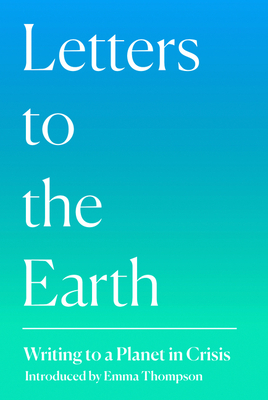 Culture Declares Emergency launched in April to bring the arts into the conversation about the climate emergency. Letters to the Earth compiles 100 short pieces by known and unknown names alike. Alongside published authors, songwriters, professors and politicians are lots of ordinary folk, including children as young as seven. The brief was broad: to write a letter in response to environmental crisis, whether to or from the Earth, to future generations (there are wrenching pieces written to children: “What can I say, now that it’s too late? … that I’m sorry, that I tried,” writes Stuart Capstick), to the government or to other species.
There are certainly relatable emotions here, especially the feeling of helplessness. “We take the train, go vegan, refuse plastic, buy less and less. But that is tiny. We are tiny,” novelist Jo Baker writes. I loved retired bishop Richard Holloway’s wry letter calling the author of Genesis to account for unhelpful language of dominion, Rob Cowen’s poem to a starling, and Anna Hope’s essay about parenting in a time of uncertainty. Unfortunately, much of the rest is twee or haranguing, e.g. “Forest fires are scorching INNOCENT wildlife. Plastic is strangling INNOCENT turtles and dolphins,” a 12-year-old writes. This was put together in a matter of months, and it shows. There is not enough tonal variety, a lot of overwriting has crept through, and errors, especially in the kids’ work, remain uncorrected. Perhaps six to 10 pieces stood out to me overall. I’d recommend the Extinction Rebellion handbook instead.
With thanks to Alison Menzies / William Collins for the free copy for review.
Two Trees Make a Forest: On Memory, Migration and Taiwan by Jessica J. Lee
 I loved Turning, Lee’s 2017 memoir about swimming in one of Berlin’s lakes per week for a year, so I jumped at the chance to read her follow-up, which delves into her maternal line’s history in Taiwan. She travels to Taipei for three months to brush up on her Chinese, write and hike. Interspersed with the lush descriptions of her walks are reflections on Taiwan’s history and on the hidden aspects of her grandfather Gong’s past that only came to light after Lee’s grandmother, Po, died and she and her mother discovered an autobiographical letter he’d written before he drifted into dementia. Nature, language, history and memory flow together in a delicate blend of genres – “I moved from the human timescale of my family’s story through green and unfurling dendrological time,” she writes.
This has got to be one of the most striking title and cover combinations of the year. Along with Chinese characters, the book includes some looping text and Nico Taylor’s maps and illustrations of Taiwanese flora and fauna. While you will likely get more out of this if you have a particular interest in Asian history, languages and culture, it’s impressive how Lee brings the different strands of her story together to form a hybrid nature memoir that I hope will be recognized by next year’s Wainwright Prize and Young Writer of the Year Award shortlists. She’d also be a perfect New Networks for Nature speaker.
With thanks to Virago for the free copy for review.
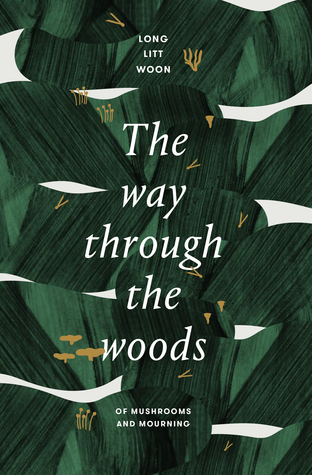
The Way through the Woods: Of Mushrooms and Mourning by Long Lit Woon
 [Trans. from the Norwegian by Barbara J. Haveland]
I couldn’t resist the sound of a bereavement memoir crossed with a mushroom hunting guide. When Long met her husband, Eiolf Olsen, she was an 18-year-old Malaysian exchange student in Stavanger, Norway. Meeting Eiolf changed the whole course of her life, keeping her in Europe for good; decades later, her life changed forever once again when Eiolf dropped dead at work one morning. “If anyone had told me that mushrooms would be my lifeline, the thing that would help me back onto my feet and quite literally back onto life’s track, I would have rolled my eyes. What had mushrooms to do with mourning?” she writes.
 The answer to that rhetorical question is nothing much, at least not inherently, so this ends up becoming a book of two parts, with the bereavement strand (printed in green and in a different font – green is for grief? I suppose) engaging me much more than the mushroom-hunting one, which takes her to Central Park and the annual Telluride, Colorado mushroom festival as well as to Norway’s woods again and again – “In Norway, outdoor life is tantamount to a religion.” But the quest for wonder and for meaning is a universal one. In addition, if you’re a mushroom fan you’ll find gathering advice, tasting notes, and even recipes. I fancy trying the “mushroom bacon” made out of oven-dried shiitakes.
With thanks to Scribe for the free copy for review.
God Unbound: Theology in the Wild by Brian McLaren
 McLaren was commissioned to launch a series that was part travel guide, part spiritual memoir and part theological reflection. Specifically, he was asked to write about the Galápagos Islands because he’d been before and they were important to him. He joins a six-day eco-cruise that tours around the island chain off Ecuador, with little to do except observe the birds, tortoises and iguanas, and swim with fish and sea turtles. For him this is a peaceful, even sacred place that reminds him of the beauty that still exists in the world despite so much human desecration. Although he avoids using his phone except to quickly check in with his wife, modernity encroaches unhelpfully through a potential disaster with his laptop.
I was surprised to see that McLaren leaves the Galápagos at the midpoint – whatever could fill the rest of the book, I wondered? He starts by reassessing Darwin, so often painted as a villain by Evangelical Christianity but actually a model of close, loving attention to nature. He also recalls how some of his most intense spiritual experiences have arisen from time in nature. McLaren’s books have been pivotal to my spiritual journey as we’ve both gradually become more liberal and environmentalist. His definition of God might horrify traditionalists, but holds appeal for me: “a centering singularity whose gravity holds me in insistent orbit, pulling me deeper into mystery, pondering who I am and what my life means.” This is an unusual but gently entrancing book full of photos and quotes from other thinkers including John Muir, Pope Francis and Richard Rohr. It’s an ideal introduction to ecotheology.
With thanks to Canterbury Press for the free copy for review.
What It Means to Be Moral: Why Religion Is Not Necessary for Living an Ethical Life by Phil Zuckerman
 From one end of the spectrum (progressive Christianity) to the other (atheism). Here’s a different perspective from a sociology professor at California’s Pitzer College. Zuckerman’s central argument is that humanism and free choice can fuel ethical behavior; since there’s no proof of God’s existence and theists have such a wide range of beliefs, it’s absurd to slap a “because God says so” label on our subjective judgments. Morals maintain the small communities our primate ancestors evolved into, with specific views (such as on homosexuality) a result of our socialization. Alas, the in-group/out-group thinking from our evolutionary heritage is what can lead to genocide. Instead of thinking in terms of ‘evil’, though, Zuckerman prefers Dr. Simon Baron-Cohen’s term, “empathy erosion.”
To tackle violent crime, Zuckerman contends, we need a more equal society, with the Scandinavian countries a model of how to achieve that through higher taxes, social services and the rehabilitation of prisoners. He uses a lot of relatable examples from history and from his own experience, as well as theoretical situations, to think through practical morality. I found his indictment of American Christianity accurate – how does it make sense for people who say they follow the way of Jesus to fight against equality, tolerance and scientific advances and instead advocate guns, the death penalty and Trump? Well, indeed.
It might seem odd for me to recommend this alongside the McLaren, but there is much to be gained from both viewpoints. Zuckerman’s work overlaps a fair bit with another I’ve read on the topic, Richard Holloway’s Godless Morality – even a bishop agrees we needn’t take our societal ethics straight from the Bible! I can’t go along fully with Zuckerman because I think progressive religion has been and can continue to be a force for good, but I would agree that atheists can be just as moral as people of faith – and often more so.
With thanks to Counterpoint Press for sending a proof copy for review.
Would you be interested in reading one or more of these?
Book Serendipity, 2019 Second Half
I call it serendipitous when two or more books that I’m reading at the same time or in quick succession have something pretty bizarre in common. Because I have so many books on the go at once – usually between 10 and 20 – I guess I’m more prone to such incidents. I post these occasional reading coincidences on Twitter. What’s the weirdest one you’ve had lately? (The following are in rough chronological order.)
[Previous 2019 Book Serendipity posts from April and July.]
- Two novels in which a character attempts to glimpse famous mountains out of a train window but it’s so rainy they can barely be seen: The Unchangeable Spots of Leopards by Kristopher Jansma and The Pine Islands by Marion Poschmann.


- Ex-husbands move from England to California and remarry younger women in The Stillness The Dancing by Wendy Perriam and Heat Wave by Penelope Lively.
 References to Edgar Allan Poe in both Timbuktu by Paul Auster and The Unchangeable Spots of Leopards by Kristopher Jansma.
- An account of Percy Shelley’s funeral pyre in both The Unchangeable Spots of Leopards by Kristopher Jansma and Frankissstein by Jeanette Winterson.
- Mentions of barn owls being killed by eating poisoned rats in Owl Sense by Miriam Darlington and Homesick by Catrina Davies.


- Miriam Rothschild is mentioned in Irreplaceable by Julian Hoffman and An Obsession with Butterflies by Sharman Apt Russell.
- Gorse is thrown on bonfires in Homesick by Catrina Davies and The Stillness The Dancing by Wendy Perriam.
 A character has a nice cup of Ovaltine in Some Tame Gazelle by Barbara Pym and The Stillness The Dancing by Wendy Perriam.
- I started two books with “Bloom” in the title on the same day.

 Two books I finished about the same time conclude by quoting or referring to the T. S. Eliot lines about coming back to the place where you started and knowing it for the first time (Owl Sense by Miriam Darlington and This Is Not a Drill, the Extinction Rebellion handbook).
- Three books in which the narrator wonders whether to tell the truth slant (quoting Emily Dickinson, consciously or not): The Unchangeable Spots of Leopards by Kristopher Jansma, The Poisonwood Bible by Barbara Kingsolver and The Hiding Game by Naomi Wood.
- On the same day, I saw mentions of crullers in both On Chapel Sands by Laura Cumming and The Dutch House by Ann Patchett.


- There are descriptions of starling murmurations over Brighton Pier in both Irreplaceable by Julian Hoffman and Expectation by Anna Hope. (Always brings this wonderful Bell X1 song to mind!)
- I was reading The Outermost House by Henry Beston and soon after found an excerpt from it in Irreplaceable by Julian Hoffman; later I started The Easternmost House by Juliet Blaxland, whose title is a deliberate tip of the hat to Beston.
 At a fertility clinic, the author describes a pair of transferred embryos as “two sequins of light” (in On Chapel Sands by Laura Cumming) and “two points of light” (in Expectation by Anna Hope).
- Mentions of azolla ferns in Time Song by Julia Blackburn and Bloom (aka Slime) by Ruth Kassinger.
 Incorporation of a mother’s brief memoir in the author’s own memoir in On Chapel Sands by Laura Cumming and All Things Consoled by Elizabeth Hay.
- Artist mothers in On Chapel Sands by Laura Cumming, All Things Consoled by Elizabeth Hay, and Expectation by Anna Hope.
- Missionary fathers in The Poisonwood Bible by Barbara Kingsolver and The Wind that Lays Waste by Selva Almada.


- Twins, one who’s disabled from a birth defect and doesn’t speak much, in Golden Child by Claire Adam and The Poisonwood Bible by Barbara Kingsolver.
 An Irish-American family in a major East Coast city where the teenage boy does construction work during the summers in Ask Again, Yes by Mary Beth Keane and The Dutch House by Ann Patchett.
- SPOILERS: A woman with terminal cancer refuses treatment so she can die on her own terms and is carried out into her garden in Expectation by Anna Hope and A Reckoning by May Sarton.
- A 27-year-old professor has a student tearfully confide in her in Crow Lake by Mary Lawson and The Small Room by May Sarton.


- Reading The Yellow House by Sarah M. Broom at the same time as The Dutch House by Ann Patchett.
 “I was nineteen years old and an idiot” (City of Girls, Elizabeth Gilbert); “I was fifteen and generally an idiot” (The Dutch House, Ann Patchett).
- Mentions of a conjuring tricks book in Time Song by Julia Blackburn and Fifth Business by Robertson Davies.
- A teen fleeces their place of employment in Sweet Sorrow by David Nicholls and Who Will Run the Frog Hospital? by Lorrie Moore.


- A talking parrot with a religious owner in The Poisonwood Bible by Barbara Kingsolver and Olive Kitteridge by Elizabeth Strout.
- Pictorial book serendipity: three books I was reading, and another waiting in the wings, had a red, black and white color scheme.

 Kripalu (a Massachusetts retreat center) is mentioned in Fleishman Is in Trouble by Taffy Brodesser-Akner and Once More We Saw Stars by Jayson Greene.
- The character of Netty Quelch in Robertson Davies’s The Manticore reminds me of Fluffy in Ann Patchett’s The Dutch House.
- The artist Chardin is mentioned in How Proust Can Change Your Life by Alain de Botton and Varying Degrees of Hopelessness by Lucy Ellmann.
- A Czech grand/father who works in a plant nursery in the opening story of Andrea Barrett’s Ship Fever and Patricia Hampl’s The Florist’s Daughter.


- The author was in Eva Le Gallienne’s NYC theatre company (Madeleine L’Engle’s Two-Part Invention and various works by May Sarton, also including a biography of her).
 Gillian Rose’s book Love’s Work is mentioned in both Notes Made while Falling by Jenn Ashworth and My Year Off by Robert McCrum. (I will clearly have to read the Rose!)
- Sarah Baartman (displayed in Europe as the “Hottentot Venus”) is mentioned in Shame on Me by Tessa McWatt and Hull by Xandria Phillips.
Literary Fiction Book Tag
Thanks to the Lauras (Reading in Bed and Dr Laura Tisdall) for making me aware of this tag that is also going around on BookTube. Laura F. specifically tagged me. If you haven’t already taken part and think this looks like fun, why not give it a try? For my examples I’ve chosen books I read this year or last year.
- How do you define literary fiction?
 My inclination is to adapt one of Italo Calvino’s definitions of a classic (recapped here): a book that will never finish saying all it has to say. In other words, a perennially relevant work that speaks to the human condition. Obviously, not all literary fiction can live up to that standard; some will inevitably feel dated due to its setting, slang, technology, and so on. But at its best, literary fiction voices, and makes an attempt at answering, one or more of life’s biggest questions. As Laura F. says, this generally means that it lends itself to discussion and (re)interpretation. I know I can be an awful snob about genre fiction, but I avoid crime, science fiction, etc. because I find these genres less ‘serious’ and thus less worthwhile than literary fiction.
- Name a literary fiction novel with a superb character study.
The first novel that comes to mind here is The Poisonwood Bible, which would be a suitable answer for several of these categories but on rereading struck me most for how well developed its five main characters are. Barbara Kingsolver does an impressive job of distinguishing these multiple narrators from each other based on how they speak/write.
- Name a literary fiction novel that has experimental or unique writing.
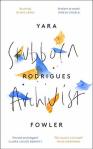 One of the fiction highlights of 2019 so far for me is Stubborn Archivist by Yara Rodrigues Fowler. It stands out from the autofiction field due to its placement of words. Some pages contain just a few lines, or a single short paragraph that reads like a prose poem. Even in the more conventional sections, a lack of punctuation creates a breathless, run-on pace.
- Name a literary fiction novel with an interesting structure.
In The Monsters of Templeton, Lauren Groff’s debut novel, Willie Upton is back in her hometown in upstate New York, partway through a PhD and pregnant by her married professor. We hear from various leading lights in the town’s history and/or Willie’s family tree through a series of first-person narratives, letters and other documents.
- Name a literary fiction novel that explores social themes.
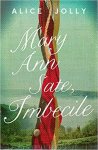 Mary Ann Sate, Imbecile by Alice Jolly, which I reviewed for Nudge, is written entirely in verse and narrated in dialect by an unlearned servant from a cloth mill town in Gloucestershire. With unemployment rising amid the clamor for universal male suffrage, the scene is set for a climactic clash between the common people and the landowning class.
- Name a literary fiction novel that explores the human condition.
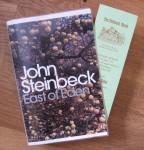 John Steinbeck’s East of Eden has an overarching theme of good and evil as it plays out in families and in individual souls. This weighty material – openly addressed in theological and philosophical terms in the course of the novel – is couched in something of a family saga that follows several generations of the Trasks and the Hamiltons.
- Name a brilliant literary-hybrid genre novel.
 The Sparrow by Mary Doria Russell is a rare sci-fi novel that I loved wholeheartedly. Set on a near-future Jesuit mission to the two alien species on a distant planet, it is about the possibility of believing in God, and doing good works in His name, when suffering seems to be the only result. (See also: The Book of Strange New Things by Michel Faber.)
- What genre do you wish was mixed with literary fiction more?
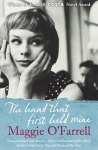 I’ve always felt that Maggie O’Farrell expertly straddles the line between literary and women’s fiction; her books are addictively readable but also hold up to critical scrutiny. Her best is The Hand that First Held Mine, but everything I’ve read by her is wonderful. I’d happily read more books like hers. (Expectation by Anna Hope was slightly less successful.)
Reviews Roundup, January–February
One of my goals with this blog is to have one convenient place where I can gather together all my writing that has appeared in disparate online locations. To that end, once a month I provide links to all book reviews I’ve published elsewhere, with a rating (below each description) and a taster so you can decide whether to read more. A few exceptions: I won’t point out my Kirkus Indie, BlueInk or Publishers Weekly reviews since I don’t get a byline. Meanwhile, I’ve done my first review for the Pittsburgh Post-Gazette – exciting!
The Bookbag
The Noise of Time by Julian Barnes: “Art is the whisper of history, heard above the noise of time.” Through a fictionalized biography of the Russian composer Shostakovich, Barnes questions how art can withstand political oppression. Knowing Barnes’s penchant for stylistic experimentation, this was never going to be a straightforward, chronological life story. Instead, as he so often does, he sets up a tripartite structure, focusing on three moments when Shostakovich has a reckoning with Power. The book is full of terrific one-liners (“Integrity is like virginity: once lost, never recoverable”), but there are not many memorable scenes to latch on to.

Motions and Moments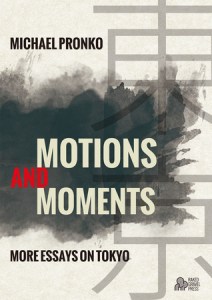 : More Essays on Tokyo (& interview) by Michael Pronko: Pronko’s third collection of essays about his adopted city is an eloquent tribute to a place full of contradictions and wonders. Compared to his earlier collection, Beauty and Chaos, I sense Pronko is now more comfortable in his surroundings, perhaps happier to include himself in ‘we’ rather than looking on passively at ‘them’. For instance – inspired by Japanese women’s perfect outfits – he consciously tries to dress better, and he’s taken to eating ramen and sleeping on a futon, just like a native. The highlight is a set of pieces written in the aftermath of the 2011 earthquake / tsunami.

BookBrowse
 The Portable Veblen by Elizabeth McKenzie: Veblen, named after the late-nineteenth-century Norwegian-American economist, is one of the oddest heroines you’ll ever meet. She thinks squirrels are talking to her and kisses flowers. But McKenzie doesn’t just play Veblen for laughs; she makes her a believable character well aware of her own psychological backstory. I suspect the squirrel material could be a potential turn-off for readers who can’t handle too much whimsy. Over-the-top silly in places, this is nonetheless a serious account of the difficulty of Veblen and Paul, her neurology researcher fiancé, blending their dysfunctional families and different ideologies – which is what marriage is all about.
 Weathering by Lucy Wood: This atmospheric debut novel is set in a crumbling house by an English river and stars three generations of women – one of them a ghost. Ada has returned to her childhood home after 13 years to scatter her mother Pearl’s ashes, sort through her belongings, and get the property ready to sell. In a sense, then, this is a haunted house story. Yet Wood introduces the traces of magical realism so subtly that they never feel jolting. Like the river, the novel is fluid, moving between the past and present with ease. The vivid picture of the English countryside and clear-eyed look at family dynamics remind me most of Tessa Hadley (The Past) and Polly Samson (The Kindness).
Foreword Reviews
When We Were Invincible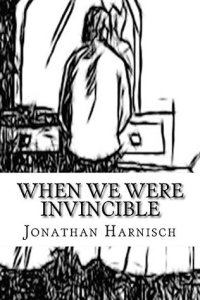 by Jonathan Harnisch: In this short novel, a young man wrestles with depression and Tourette’s syndrome, which together drive him to the point of suicide. A series of dreams and chance meetings, along with the possibility of romance and faith in God, pull him back from the edge. The book successfully introduces philosophical themes and gives a sympathetic picture of mental illness. However, it is weaker at filling in background and providing transitions, and there are many awkward, unlikely lines of dialogue. Recommended to fans of The Curious Incident of the Dog in the Night-Time.

Nudge
 The Life and Death of Sophie Stark by Anna North: The twisty, clever story of a doomed filmmaker – perfect for fans of Hausfrau. Who is Sophie Stark? A New York City-based indie director whose four documentary-style movies are “almost more like life than life itself.” Bisexual and with certain traits of high-functioning autism, Sophie is easily misunderstood. She’s a rebel who doesn’t conform to social niceties. The book is told through five first-person reminiscences from the people closest to her. In this respect the novel’s format recalls Kitchens of the Great Midwest. My favorite sections, though, are the reviews of her films, all by the same critic.
 Casualties by Betsy Marro: A powerful, melancholy debut novel about how war affects whole families, not just individual soldiers. As in Bill Clegg’s Did You Ever Have a Family, which Casualties resembles in tone if not in style, a bereaved mother sets off on a journey. Ruth’s unlikely companion on the road trip east is a Gulf War amputee who appears little more than a conman but genuinely wants to clean up his act so he can reconcile with his teenage daughter. At times the road trip scenario felt a little far-fetched to me, and Casey too obvious a replacement son figure. Yet as both he and Ruth ponder how much they have lost and the small things they can try to put right, they together form a touching picture of the various ways war’s effects can linger.
Pittsburgh Post-Gazette
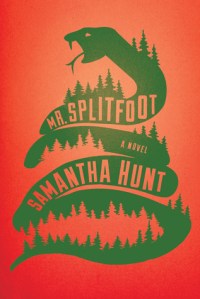 Mr. Splitfoot by Samantha Hunt: “All stories are ghost stories,” Samantha Hunt proclaims in her quirky third novel about the crossover between motherhood and mysticism. In a dual storyline that takes in fundamentalist cults, unlikely mediums and a pregnant woman’s pilgrimage, Hunt asks whether one can ever believe in the unseen. Mr. Splitfoot has the offbeat charm of Scarlett Thomas’s work. While the plot ultimately feels like a bit of a jumble, its vision of unexpected love and loyalty remains compelling. “The End’s always coming,” but it is how one lives in the face of brutality and impending extinction that matters.
I also post reviews of most of my casual reading and skimming on Goodreads:
 Rush Oh! by Shirley Barrett: A debut novel in which an Australian whaler’s daughter looks back at 1908, a catastrophic whaling season but also her first chance at romance. I felt that additional narrators, such as a whaleman or an omniscient voice, would have allowed for more climactic scenes. Still, I found this gently funny, especially the fact that the family’s cow and horse are inseparable and must be together on any outing. There are some great descriptions of whales, too.
 Felicity by Mary Oliver: I was disappointed with my first taste of Mary Oliver’s poetry. So many readers praise her work to the skies, and I’ve loved excerpts I’ve read elsewhere. However, I found these to be rather simplistic and clichéd, especially poems’ final lines, e.g. “Soon now, I’ll turn and start for home. / And who knows, maybe I’ll be singing.” or “Late, late, but now lovely and lovelier. / And the two of us, together—a part of it.” I’ll definitely try more of her work, but I’ll look out for an older, classic collection.
 Paulina & Fran by Rachel B. Glaser: Full of blunt, faux-profound sentences and smutty, two-dimensional characters. Others may rave about it, but this wasn’t for me. I get that it is a satire on female friendship and youth entitlement. But I hated how the main characters get involved in a love triangle, and once they leave college any interest I had in them largely disappeared. Least favorite lines: “Paulina. She’s like Cleopatra, but more squat.” / “She’s more like Humphrey Bogart” and “She craved the zen-ness of being rammed.”

 Noah’s Wife by Lindsay Starck: I kept wanting to love this book, but never quite did. It’s more interesting as a set of ideas – a town where it won’t stop raining, a minister losing faith, homeless zoo animals sheltering with ordinary folk – than as an executed plot. My main problem was that the minor characters take over so that you never get to know the title character, who remains nameless. There’s also a ton of platitudes towards the end. It reminded me most of The Readers of Broken Wheel Recommend and Not Forgetting the Whale (another cozy environmental dystopia based around biblical allusions).
 Spill Simmer Falter Wither by Sara Baume: This sounded like a charmingly offbeat story about a loner and his adopted dog setting off on a journey. As it turns out, this debut is much darker than expected, but what saves it from being unremittingly depressing is the same careful attention to voice you encounter in fellow Irish writers like Donal Ryan and Anne Enright. It’s organized into four sections, with the title’s four verbs as headings. In a novel low on action, the road trip is much the most repetitive section, extending to the language as well. Even so, Baume succeeds in giving a compassionate picture of a character whose mental state comes into question. (Full review in March 2016 issue of Third Way magazine.)
 Medium Hero by Korby Lenker: Lenker is an indie musician, and the 27 autobiographical stories in his debut collection are about the everyday challenges of being on the road versus trying to pay the bills. Many feature “Korby” or “Simon” as fictional stand-ins, and recurring locations include his hometown of Twin Falls, Idaho and his adopted home of Nashville. As the title suggests, Lenker has no illusions about being famous or out of the ordinary. Most of the time he just tries to be a decent guy, the kind who prays for family members in distress even though he’s not sure he believes in God. Lest that sound too serious, though, there are also stories about peeing his pants and the perils of being a metrosexual.
 Glitter and Glue by Kelly Corrigan: Slides down like ice cream. And I say that even though the whole basis for this memoir feels rather thin. Corrigan frames it around five months in the early 1990s when she worked as a nanny for two Australian kids whose mother died of cancer. For a young woman fresh out of college, it was like a trial run for being a mother, and also gave her a new appreciation for everything her own mother had done for her during her Philadelphia Catholic upbringing. If Corrigan’s father was the ‘glitter’ of the family, her mother was the ‘glue’ – holding everything together in the background. This is impressively reconstructed, dialogue and all, from letters, journals and photos.
 The Ballroom by Anna Hope: This novel was inspired by the story of the author’s great-great-grandfather, an Irishman who was a patient at Menston Asylum in West Yorkshire from 1909 to 1918. The novel zeroes in on the long, hot summer of 1911, focusing through alternating close third-person chapters on John Mulligan, a new patient named Ella Fay, and Dr. Charles Fuller, who wants to put his mental hospital at the frontline of eugenics research. Ultimately I didn’t like this quite as much as Wake, but I think it cements Anna Hope’s reputation as a solid historical fiction writer. I hope with her next book she’ll move beyond the years around World War I to consider a less-chronicled era.
 Life without a Recipe by Diana Abu-Jaber: The Jordanian–American writer reflects on how various food cultures have sustained her through a life that hasn’t always turned out as expected. Three marriages, a move from Portland to Florida, a winding path to motherhood in her forties, and her father’s death from leukemia are some of the main events. Like Sasha Martin’s Life from Scratch, this is more about family and personal history than it is about food (and there are no recipes). Still, food is the stuff of memories, and it is what binds her to two strong characters: her Jordanian father Bud with his stuffed grape leaves, and her maternal grandmother Grace with her frequent baking and the pastries they consumed together in Paris.
 Arctic Summer by Damon Galgut: This fictionalized account of the life of E.M. Forster focuses on the drawn-out composition of A Passage to India, which he began in 1913 but wouldn’t complete and publish until 1924. In between he broke off to write his explicitly homosexual novel Maurice (only published posthumously), spent three years working in Egypt during the war, and served as a secretary to an Indian maharajah. As fictionalized biographies of authors go, I’d rate this somewhere between David Lodge’s A Man of Parts (H.G. Wells) and Colm Tóibín’s superior The Master (Henry James); all three share a heavy focus on the author’s sexuality. “Buggery in the colonies. It wasn’t noble” is one of my favorite random snippets from this novel, and sums up, for me, its slightly prurient aftertaste.
 Bookish Beck = Rebecca Foster. American transplant to England. Freelance proofreader and book reviewer.
 Bookish Beck