Book Serendipity, August to September
From Jennifer Croft’s superb Notes on Postcards (forthcoming in November):
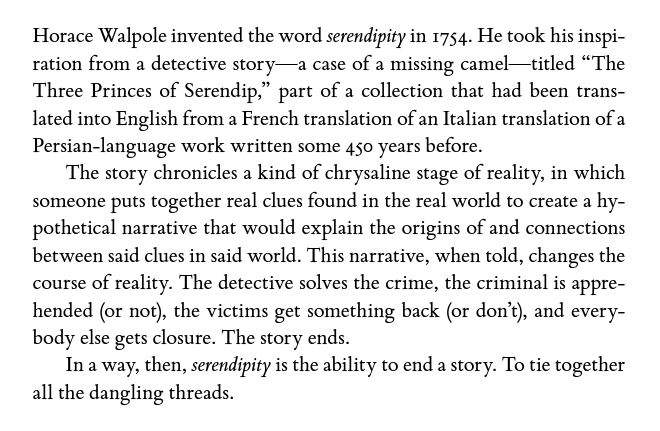
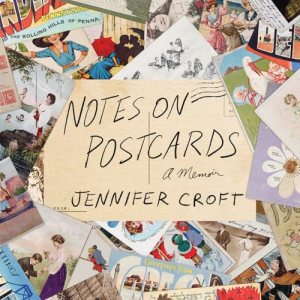
I’d heard that story of Horace Walpole and the etymology of “serendipity” before. Tying together dangling threads is a good description of what I try to do with these posts, which arise from my reading.
I call it “Book Serendipity” when two or more books that I have read at the same time or in quick succession have something in common – the more bizarre, the better. This is a regular feature of mine every couple of months. Because I usually have 20–30 books on the go at once, I suppose I’m more prone to such incidents. People frequently ask how I remember all of these coincidences. The answer is: I jot them down on scraps of paper or input them immediately into a file on my PC desktop; otherwise, they would flit away!
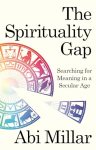 The more accurate keyword would probably be “synchronicity,” which according to Carl Jung, who “believed in a universe of mysterious connections,” is “a meaningful coincidence in which an internal mental state somehow attracts a real-world parallel” (quotes from The Spirituality Gap by Ali Millar). An intriguing idea, that: somehow, by thinking about these ideas or details, I might be … luring repeat incidents to me?!
The following are in roughly chronological order.
What’s in a name?
- Girlfriends named Maddie (in Year of the Drought by Roland Buti) and Mattie (Tom’s in Pardon Our French by Alex Durand and Tom Carles); plus a granddaughter (in The Typing Lady and Other Fictions by Ruth Ozeki) and niece (in The Land and Its People by David Sedaris) named Maddy.
- A character named Hattie in Leaving the Yellow House by Saul Bellow and The Correspondent by Virginia Evans.
- A character named India in Leaving the Yellow House by Saul Bellow and Family Family by Laurie Frankel (our second The Marriage Plot/Literary Wives club read this year in which the protagonist was named India, after Mrs. Bridge by Evan S. Connell).
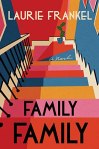 A daughter named Rebecca in Switzy by Emma Cline and Family Family by Laurie Frankel (where she’s known as Bex); and sisters named Rebecca (known as Becks) in one story of The Rental Heart and Other Fairytales by Kirsty Logan and The Long Road to Holy Island by Austin Suggs. Those are both nicknames I’ve had, by the way. The one nickname I detest is Becky.
- A mother named Monica in The Summerhouse Trilogy by Alice Thomas Ellis and Apt Pupil by Stephen King.
- A Hilda in The Given World by Melissa Harrison and one story of Self-Help by Lorrie Moore.
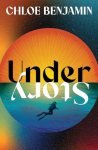
- A Clare in Under Story by Chloe Benjamin, The Leveret by Anna Goldreich and The Given World by Melissa Harrison.
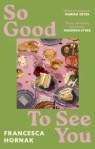
- A Sergio in Old Romantics by Maggie Armstrong and a Serge in So Good to See You by Francesca Hornak.
- A son named Silas in Under Story by Chloe Benjamin and So Good to See You by Francesca Hornak.
- Compensation for run-over chickens in Year of the Drought by Roland Buti and Don’t Let’s Go to the Dogs Tonight by Alexandra Fuller.
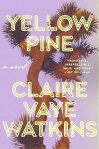
- “Enough is enough” is a slogan in The Land and Its People by David Sedaris (where it’s also an essay title) and Yellow Pine by Claire Vaye Watkins.
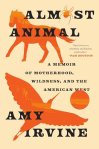
 Telluride, Colorado features as a setting in Almost Animal by Amy Irvine and in one essay of The Land and Its People by David Sedaris.
- A trip from Paris to see Chartres Cathedral in The Magician by W. Somerset Maugham and Shadow of a Man by May Sarton.
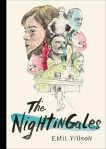
- Fleeting references to the Donner Party in Yellow Pine by Claire Vaye Watkins and The Nightingales by Emil Wilson.
- An essay about an Icelandic sheep ram, and the idea that one should ride geldings because they’re calmer and more reliable than mares, in Animals Taught Me Everything by Pam Houston and The Land and Its People by David Sedaris.
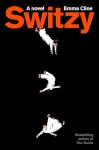
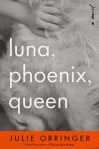
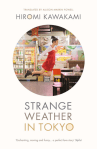
- The protagonist’s work performance declining due to dementia, and a tweed jacket, in Switzy by Emma Cline and Luna, Phoenix, Queen by Julie Orringer. (There’s also a tweed jacket mentioned in Strange Weather in Tokyo by Hiromi Kawakami.)
- German artist Käthe Kollwitz is mentioned in Seed Corn Must Not Be Ground (the title is from one of her works) by Pat Browne and The Book of Mating by Laksmi Pamuntjak.
- Child brides and incestuous rape are mentioned/feature in Almost Animal by Amy Irvine and The Book of Mating by Laksmi Pamuntjak, both of which I was reading early for Foreword Reviews.
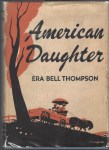
- The keeping of goats in Almost Animal by Amy Irvine and American Daughter by Era Bell Thompson, both of which I was reading early for Foreword Reviews.
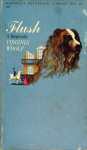
- In August I unwittingly started rereading two books that I’d first read in April 2013 (is 13+ years the ideal interval?!): I Feel Bad about My Neck by Nora Ephron and Flush by Virginia Woolf.
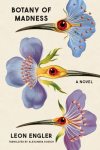
- Men by the name of Christmas: the narrator’s parents wanted to name him Noel (but the German state didn’t allow it?!) in Botany of Madness by Leon Engler; and a main character is named Joe Christmas in Light in August by William Faulkner.
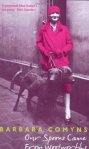
- To the narrator’s question of whether something awful has happened / they’ve done something wrong, a reply of “it very likely had but she hadn’t heard about it yet” in Our Spoons Came from Woolworths by Barbara Comyns and “Most likely. You know that better than I do” in Botany of Madness by Leon Engler.
- The idea that human–animal communication/connection is deeper than that between humans because it is beyond language plays a major role in three books I read around the same time: Animals Taught Me Everything by Pam Houston, Mitz by Sigrid Nunez, and Luna, Phoenix, Queen by Julie Orringer. (The Houston and Orringer both publish on 13 October and I was reviewing them early for Shelf Awareness.)
- The fact that children of alcoholics feel they have to make everything perfect to avoid conflict appears in Botany of Madness by Leon Engler and Animals Taught Me Everything by Pam Houston.
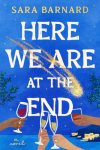 I encountered lines from the song “Closing Time” by Semisonic in Here We Are at the End by Sara Barnard (a specific reference to the pop song accompanied “Every new beginning comes from some other beginning’s end” – which I was amused to learn is actually a quote from Seneca!) and Family Family by Laurie Frankel (“You don’t have to go home. But you can’t stay here.” – not attributed, but I can’t but think she had the song in mind.)
- The stereotype of overachieving Asian Americans is mentioned or discussed in Family Family by Laurie Frankel, Miracle Creek by Angie Kim, and To Grieve Is to Carry Another Time by Matthew Salesses. There are Korean Americans in all three, and Korean children adopted into a white family in the Frankel and Salesses.
- A young woman is aghast at her mother getting rid of loved pet(s) in Nightjar by Emily Ruskovich and The Nightingales by Emil Wilson (both titled after birds!)
- A mention of the practice of buying single cigarettes from a city corner shop for 50 cents in Between Two Kingdoms by Suleika Jaouad and Miracle Creek by Angie Kim.
- Saving turtles from the road in Yellow Pine by Claire Vaye Watkins and then a mention of someone else doing so in To Grieve Is to Carry Another Time by Matthew Salesses.
 The lines “Leave as soon as you think to yourself, ‘This is a great party. I’m having a wonderful time’” from Nora Ephron’s I Feel Bad About My Neck are echoed in Emma Cline’s Switzy.
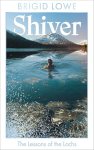
- A holy well is mentioned in The Given World by Melissa Harrison and Shiver by Brigid Lowe.
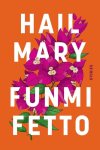
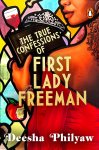
- A sexy pastor’s wife features in one story of Hail Mary by Funmi Fetto and The True Confessions of First Lady Freeman by Deesha Philyaw.
- A flawed pearl is mentioned in Apt Pupil by Stephen King and A Desert between Two Seas by A. Muia.
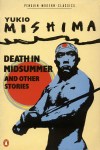
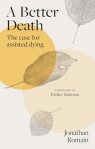
- A mention of hara-kiri (literal) in Death in Midsummer by Yukio Mishima and A Better Death by Jonathan Romain; and as a metaphor in What I Don’t Know about Animals by Jenny Diski.
- Camel cigarettes appear in Miracle Creek by Angie Kim and Apt Pupil by Stephen King.
- A woman remembers being nicknamed an “ice queen” in one story of Everest by Ashani Lewis and Plum by Hollie McNish.
- A woman has to have a bowel movement in the labour ward in Old Romantics by Maggie Armstrong and Natural Disaster by Lisa Owens.
- The challenge of being a mother in the film industry is discussed in Family Family by Laurie Frankel and So Good to See You by Francesca Hornak.
 A three-year-old gets their own cereal breakfast in Old Romantics by Maggie Armstrong and So Good to See You by Francesca Hornak.
- A woman feels guilty of neglect due to her eight-year-old son’s death in a lake in Under Story by Cloe Benjamin and The Correspondent by Virginia Evans.
- A viral scandal where photographs/video footage are misconstrued to make a woman look bad in Hum by Helen Phillips and The True Confessions of First Lady Freeman by Deesha Philyaw.
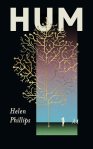
- A misunderstanding causes a mother to be investigated for child neglect in one story of Old Romantics by Maggie Armstrong and Hum by Helen Phillips.
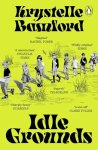 Shirley Temples (the non-alcoholic cocktail) are mentioned in Idle Grounds by Krystelle Bamford and The True Confessions of First Lady Freeman by Deesha Philyaw.
- A woman impulsively takes a dishwashing job in Under Story by Cloe Benjamin and Exit Party by Emily St. John Mandel.

- A scene of putting out sandbags in Rattlebone by Maxine Clair and The Long Road to Holy Island by Austin Suggs.
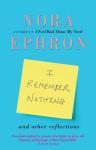 An unwanted mince pie in Idle Grounds by Krystelle Bamford and I Remember Nothing by Nora Ephron.
- A child in hospital with acute appendicitis in one story of Don’t Go to Sleep in the Dark by Celia Fremlin and Natural Disaster by Lisa Owens (and with suspected appendicitis in Shiver by Brigid Lowe).
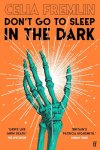
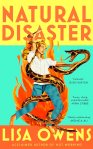
- The Tennyson poem “The Charge of the Light Brigade” is mentioned in Idle Grounds by Krystelle Bamford and Peck & Peck by Bonnie Garmus.
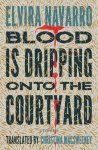
- Having to get off an elevator at the previous floor because it doesn’t go up to the destination in Exit Party by Emily St. John Mandel and Blood Is Dripping onto the Courtyard by Elvira Navarro.
- Realizing one’s bed is unmade in one story of Everest by Ashani Lewis and A Very British Midlife Crisis by Rob Temple.
- Confusion over the name of a possibly abused dog (with special powers!) adopted from a shelter in Peck & Peck by Bonnie Garmus and Luna, Phoenix, Queen by Julie Orringer.
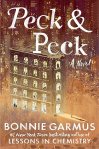
- I encountered the phrase “She’s not worth it” in both Peck & Peck by Bonnie Garmus and The True Confessions of First Lady Freeman by Deesha Philyaw within 10 minutes!
 Someone being pulled back into the womb in Under Story by Chloe Benjamin and Nightmares and Daydreams: A.C. 2020 by Mirko Ilić.
- An apple orchard as a setting in Under Story by Chloe Benjamin and one story of Apple and Palm by Patricia Henley.

- “Little Nemo in Slumberland” as an image and metaphor in Switzy by Emma Cline and Nightmares and Daydreams: A.C. 2020 by Mirko Ilić.
- A lost twin sibling – lost at birth in Peck & Peck by Bonnie Garmus and H Is for Hawk by Helen Macdonald; lost later on in one story of The Rental Heart and Other Fairytales by Kirsty Logan.


- A portal to another timeline, and characters who are doubles of each other, in Under Story by Chloe Benjamin and Exit Party by Emily St. John Mandel.
- A lesbian couple moves to a new house and the one woman feels isolated and sad because she’s recently had a miscarriage in the debut novels The New People by Andrea Uptmor (reviewed for BookBrowse) and then The Leveret by Anna Goldreich.
- Nagging a woman to use lotion on her hands as they’re the first place to show signs of ageing in Hum by Helen Phillips and one story of Moderate to Poor, Occasionally Good by Eley Williams.
A couple of visual ones:
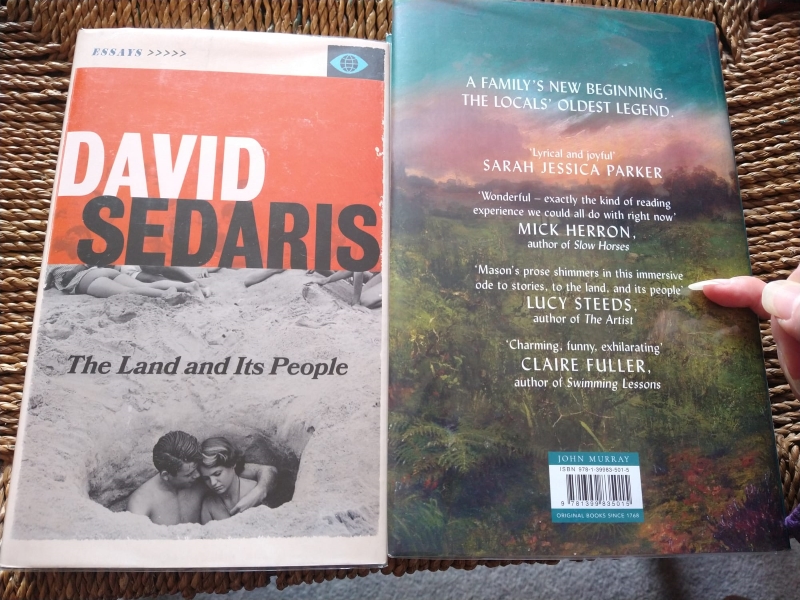
- I was reading The Land and Its People by David Sedaris at the same time as Country People by Daniel Mason, one of whose blurbs happens to borrow Sedaris’s title phrase.
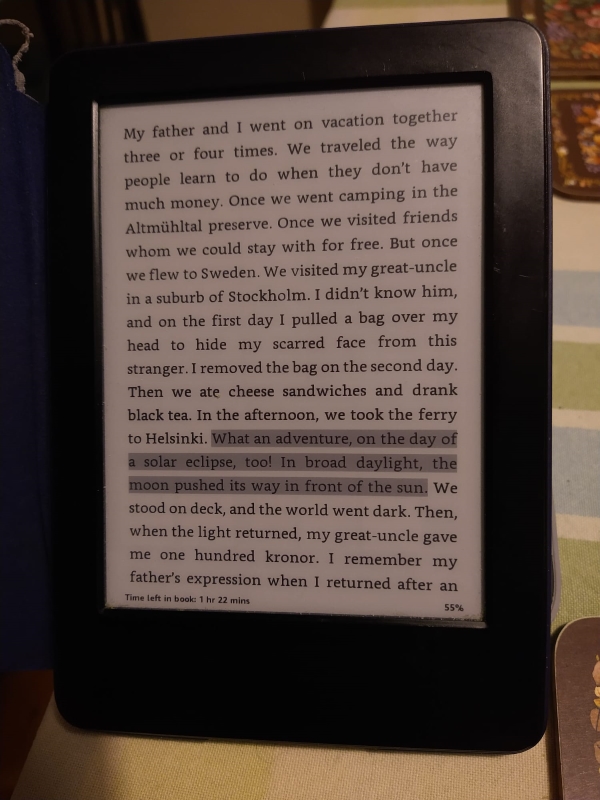
- I was reading Botany of Madness by Leon Engler and encountered this passage on the day of the solar eclipse in Europe (12 August):
What’s the weirdest reading coincidence you’ve had lately?
The Marriage Plot: Family Family by Laurie Frankel (2024)
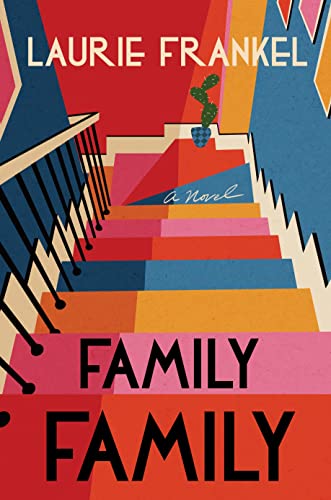
In case you missed the announcement, “The Marriage Plot” is the new name for the online book club formerly known as “Literary Wives.” Part of our reasoning behind the rebrand was to be more inclusive in our thinking about love and roles in long-term partnerships. But even from that wider perspective, Laurie Frankel’s fifth novel, Family Family, ended up being an outlier, because there’s no central marriage or core partners. Instead, the book makes the point that “families get formed in all sorts of ways” and “look all sorts of ways and are made up of all sorts of people and still count as family.” Specifically, Frankel – and her flamboyant actress protagonist, India Allwood – want to counter traumatic adoption stories by showing that placing for adoption and/or adopting can be a first choice rather than a last resort.
{BEWARE SPOILERS IN THE REST!}
There are two narrative threads, one set across eight days in 2020 and another advancing in fits and starts from 1998 to meet up with it. In the former, India is in trouble with her agent and television studio for badmouthing the last movie she made because she felt it promulgated tired, negative stories about adoptees. One of her adopted Korean American twins, 10-year-old Fig, decides to come to her mother’s defense by locating the two children India gave up for adoption (Rebecca and Lewis), their biological fathers (Robbie and Davis), and the adoptive parents (Camille and the Andrews). En route to a big, messy, unlikely family reunion, alternating chapters fill in India’s career – from high school dramatics to her current superhero hit, Val Halla – and unconventional decisions about motherhood.
 In terms of our club reads, this reminded me most of Lessons in Chemistry for how the protagonists resist marriage and prioritize independent vocations. All of the mothers on display are single parents: Camille and India, yes, but also India’s mother before her, who tells her, when she is first pregnant at 16, “having a baby has nothing to do with having a husband.” When India again falls pregnant unintentionally at age 20 (which does rather strain belief), she reminds herself, “parenting need not have anything to do with partnering.”
Long before I ever read a novel by Frankel, I’d come across a first-person piece she wrote for the Guardian about adopting a child from Korea. The experience of having a transgender child then led to her third novel, This Is How It Always Is (2017). I read that from the library because it had been a hit with my book club before I joined. There’s no denying the agenda behind either, but it was subtler in that earlier case. The characters here are quirky and their interactions amusing, but Frankel seems rather too pleased with her own wit. In addition, India is A Bit Much and Fig is on the verge of annoyingly precocious. Although the story bops along nicely, I would probably cut the page length by a third or more. So this was good-hearted fun, if overlong and moralistic. I’ll read more by Frankel, though, and I fancy appropriating India’s habit of keeping torn-up index cards in her pockets in case she needs confetti for an impromptu celebration. (Secondhand – Better World Books) 
(Be sure to check out the reviews by Becky, Kate, Kay, and Marianne, too!)
The club’s next read will be The Eden Test by Adam Sternbergh, in December. I’m skipping this one as a) I couldn’t find an affordable copy and b) I didn’t fancy it. So the next read for me will be Wedded Wife by Rachael E. Lennon (March 2027) – I’m looking forward to it, as it will make a change for being nonfiction, and from a queer author.
20 Books of Summer, 17–20: Jaouad, Kim, Merwin, Piñeiro (#WITMonth)
It’s time to draw a line under 20 Books of Summer so I can focus on hosting Short Story September. I’m technically not quite finished with these first two I’m technically not quite finished with these first two [70 pages to go in the Jaouad and 46 in the Kim], but I’ve read enough to form an opinion and will pop back later to add in final thoughts and ratings. My final four are a memoir of cancer in young adulthood; a page-turning courtroom drama about experimental autism treatment gone wrong; gorgeous nature poems; and a novella in translation that comments on disability, motherhood and mental health issues. Skip to the end for my one DNF of the challenge and a look back at some stats plus my most successful reads.
Between Two Kingdoms: What Almost Dying Taught Me about Living by Suleika Jaouad (2021)
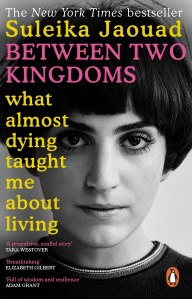
{Updated on 7 September} Jaouad wrote a New York Times column about going through leukaemia treatment in her early twenties and what came next. After months of itching and fatigue, she fell properly ill while working her first postgraduate job in Paris and her blood test results were so bad that she flew home to New York. She would be in and out of hospital for the next five years, enduring multiple rounds of chemo and a bone marrow transplant from her brother. It’s a terrific granular account of the physical and emotional rigours of illness, as well as the strain it put on her relationships – being her primary caregiver was too much for her boyfriend, Will. But she also found a community of young cancer patients, many (like Max Ritvo) now dead. After 60% of the book’s length, as the title – its metaphor taken from Susan Sontag – suggests, the new challenge for Jaouad was resuming life. “I’ve spent the past fifteen hundred days working tirelessly toward a single goal—survival. And now that I’ve survived, I’m realizing I don’t know how to live.” She decides to undertake a cross-country road trip punctuated by visits to people who wrote to her through her column: fellow cancer survivors, a mother who lost a son to suicide, a man on death row in Texas. At first I thought this content felt tacked on and should have been a sequel, but ultimately it illustrates why she wouldn’t edit out her illness if she had it all to do again. I hadn’t heard of Jaouad before I stumbled on this book; from Instagram, I learned she’s now (at age 38) weathered cancer three times. (Little Free Library) 
Miracle Creek by Angie Kim (2019)
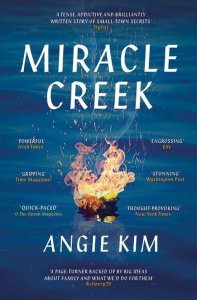
{Updated on 7 September} After enjoying Happiness Falls so much, I wanted to go back to Kim’s debut, for which she won an Edgar Award. (There’s an autistic boy and discussion of therapies in that second book as well.) The bulk of the novel is set during the four days of an August 2009 trial. It’s been a year since a horrific accident at Pak Yoo’s “Miracle Submarine,” a rural Virginia hyperbaric oxygen chamber where regulars came for twice-daily treatment of autism, cerebral palsy, and infertility. Meanwhile, protesters gathered outside to draw attention to what they believed to be a dangerous and unproven technique, the equivalent of child abuse. Someone with Camel cigarettes and matches from a local 7-11 set a small fire under an oxygen tank; the resulting explosion killed two and seriously injured two more. The mother of one of the autistic boys was arrested for suspected arson and attempted murder, but as the trial goes on suspicion seems to shift to members of the Korean American family who ran the HBOT operation. There’s a lot to sink the teeth into here. Each character has secrets, and little revelations are emerging all the time, such that the prosecutor and defence lawyer are always having to adjust their approach. Like I’ve experienced with Kim before, this was intelligent, thought-provoking, and absorbing. It’s just the sort of crime-adjacent fiction I like. An author Q&A at the end reveals a couple of autobiographical inspirations: working in her immigrant parents’ convenience store near Baltimore as a teenager, and taking one of her sons, who had neurological deafness and chronic illnesses, for HBOT. (Gift from my wish list)
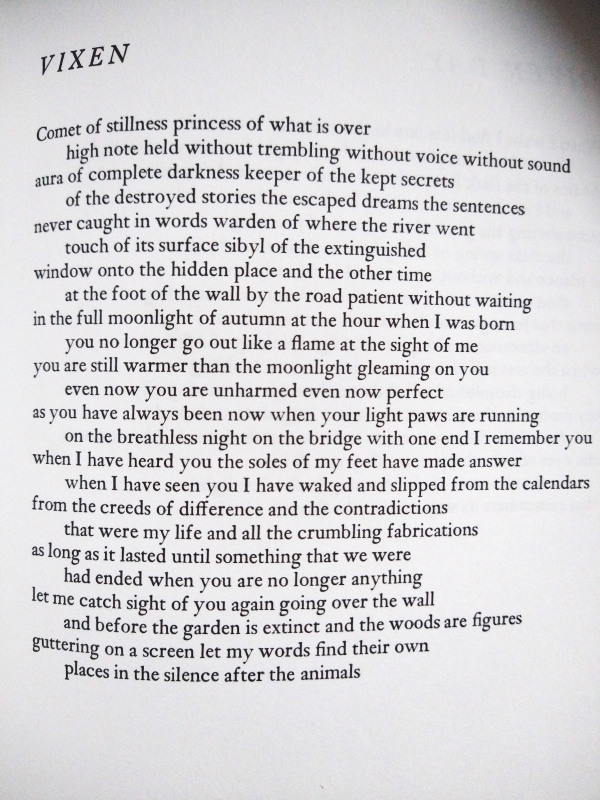
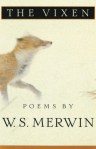
The Vixen by W.S. Merwin (1996)
it seems that the world is made of a single
summer as it always has been (from “Entry”)
 I took this off the shelf because Merwin was one of the POV characters in The Daffodil Days, Helen Bain’s excellent novel about Sylvia Plath’s final years. I had no idea what to expect, and it took me a while to get used to his entirely unpunctuated verse. Only by reading aloud or in my head was I able to split the text blocks into meaning-rich phrases. The fox is a revenant flitting through many of these poems as they pinpoint natural rhythms and human traces across the seasons and centuries. A lot reference summer, in particular, so this was a perfect choice for the challenge. There are a few historical portraits but most of the pieces feel timeless, evoking a countryside locale where the speaker returns to find derelict dwellings given over to birds and trees. Mostly it feels like this could be England, but sometimes a dry aridity suggests the Mediterranean. There is a strong sense of temporality, especially of afterness – the close of a day, the tail end of a season, the still-resonant emptiness after life has left or activity has finished. But there is also the hint of an eternal present:
Seen from afterward the time appears to have been
all of a piece which of course it was but how seldom
it seemed that way when it was still happening (from “Completion”)
In a long book (~65 pieces), there were only a few poems that washed over me without making any impression. The run-on pace, alliteration, and close attention to the natural world made this utterly mesmerizing. I’ll be sure to read more by Merwin. (Secondhand – Bridport Old Books) 
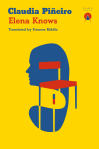
Elena Knows by Claudia Piñeiro (2007; 2021)
[Translated from Spanish by Frances Riddle]
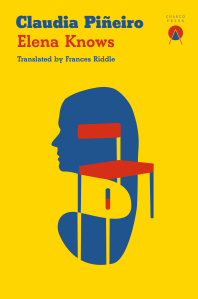 Piñeiro is an Argentinian author known for infusing her detective novels with a political conscience. Elena Knows is a mystery of sorts, in which the title character devotes herself to investigating her daughter’s death (Rita was found hanging in the belfry of a church). But several elements make this atypical for crime fiction: Elena has Parkinson’s disease – “that f—ing whore illness,” she calls it; refuses to accept the police’s conclusion that Rita died by suicide – she would never have gone there in the rain, she insists; and drags her uncooperative body across Buenos Aires to confront an acquaintance she thinks might be able to shed some light. It’s a circadian narrative, divided into sections by Elena’s pill schedule, but expands its timeline through flashbacks to consider the complications of the mother–daughter relationship as Elena became more physically dependent. The eventual encounter with Isabel presents a contrast in the form of a woman who didn’t want to become a mother but had to because of a prohibition on abortion, which was only legalized in Argentina in 2020. While the approach and themes were appealing, I found this repetitive and the long blocks of dialogue in italics were challenging to read. This was shortlisted for the International Booker Prize, though I thought it had a better chance in that year’s Barbellion Prize race (returning this year!). (Gift from my wish list)
And a DNF:
Blonde by Joyce Carol Oates (2000)
Her problem wasn’t she was a dumb blonde, it was she wasn’t a blonde and she wasn’t dumb.
Sigh. Between February and July I read about 200 pages, then skimmed another 100 or so, then finally gave up. (My third Oates DNF. I don’t think she and I are meant to be, though I seem to have better luck with her short stories and own another couple of her books to try.) I engaged most with the early pages about her childhood with a vain, neglectful mother who ends up in a mental hospital; and then with her teenage marriage to Bucky Glazer and involvement in the war effort.
She was a sweet kid but so emotional. Wanting love all the time. She was immature and unreliable and I guess so was I; we were too young. If she’d been a better cook and not so emotional, it might’ve worked out.
Except that people were dying and being injured and the world filling up with smoldering rubble, Norma Jeane liked the War. The War was as steady and reliable as hunger or sleep. Always, the War was there.
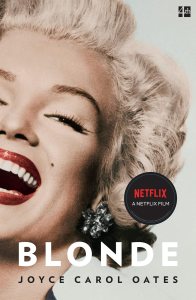 In the part that I skimmed, she is starting to become known in Hollywood, with a nude photo shoot (for which she only earned $50), bit parts in films, and her famous stage name.
In the introductory Author’s Note, Oates writes, “for all its length, synecdoche is the principle of appropriation.” So, for instance, instead of multiple foster families, we just get one. Always, there was unwanted male attention, including molestation. I was surprised to find that the pick-and-choose, fact–fiction hybrid approach became a problem for me. I wanted to know if she really married a man named Bucky and wrote poetry. Yet I didn’t want to have to be verifying every fact either.
Oates’s kitchen-sink style involves imagined scenes and dialogue plus retrospective commentary and knowing asides; long, looping sentences and short ones; direct and indirect speech; lots of exclamation points. Lots of everything. The repetition will be deliberate, for effect, but I kept longing for a streamlined version that cut, say, three of every five sentences.
Anyway, this was certainly a project worth undertaking for Oates; you can see why it was irresistible to unearth the reality behind a legend. Norma Jeane is intriguing for her simultaneous childlike innocence and cultivated sensuality. (Secondhand – Awesomebooks.com)
20 Books Statistics:
14 fiction
4 nonfiction
2 poetry
7 by BIPOC
3 towards WIT Month (for which I reviewed 8 in total, with library reads and Foreword reviews)
3 rereads
I’ve learned this year that it’s important, momentum-wise, to build in a number of shorter books (6 of novella length + 2 poetry collections) and best to avoid doorstoppers. I was wise to pick some addictive, undemanding novels that tread the line between popular and literary fiction (Kim, Mantel, O’Farrell, Reid, Sullivan); anything that feels like hard work (Oates!) is definitely not a summer read.
I only read a risible 4 of the specific books I set out as options in my planning post, plus 1 of my additional ideas. (It’s ironic that I struggled to finish this set of 20 when I could have labelled anything from my shelves part of the challenge – in total, I read 39 of my own books this summer.)
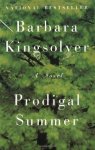
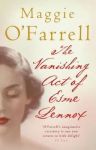
My favourites of the 20 were Strange Weather in Tokyo, Prodigal Summer & The Vanishing Act of Esme Lennox (both rereads), and The Vixen. But What Belongs to You, Miracle Creek, Mitz, The Employees, Commencement, and Flush were also great reads. To be able to single out half of the books equals a huge success!
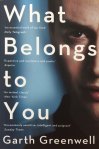
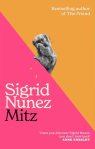
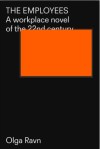
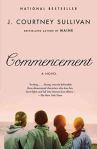
I also completed a 4-book diagonal on the Bingo card!
- Summer in the title (PRODIGAL SUMMER)
- A classic you’ve been meaning to (RE-)read (FLUSH)
- Features a family holiday (MITZ)
- Published in summer (ELENA KNOWS – July 2021)
Book Serendipity, Mid-November–Early January
This is a short set but I’ll post it now to keep things ticking over. I’ve lost nearly a week to the upper respiratory virus from hell, and haven’t felt up to sitting at my computer for any extended periods of time. I had to request extensions on a few of my work deadlines; I’ll hope to be back to normal blogging next week, too.
I call it “Book Serendipity” when two or more books that I read at the same time or in quick succession have something in common – the more bizarre, the better. This is a regular feature of mine every couple of months. Because I usually have 20–30 books on the go at once, I suppose I’m more prone to such incidents. People frequently ask how I remember all of these coincidences. The answer is: I jot them down on scraps of paper or input them immediately into a file on my PC desktop; otherwise, they would flit away! Feel free to join in with your own.
The following are in roughly chronological order.
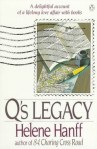
- Ayot St Lawrence as a setting in Q’s Legacy by Helene Hanff and Flesh by David Szalay.
- A man who has panic attacks in Pan by Michael Clune and All the World Can Hold by Jung Yun.
- Two of my Shelf Awareness PRO (early) reviews in a row were of 2026 novels set on a celebrity/reunion cruise: All the World Can Hold by Jung Yun, followed by American Fantasy by Emma Straub. In both, the narrative alternates between three main characters, the cruise is to celebrate a milestone birthday for a passenger’s relative, and there’s a celebrity who’s in AA.
- A teacher–student relationship develops into a friendship in The Irish Goodbye by Beth Ann Fennelly (with Molly McCully Brown, whose Places I’ve Taken My Body I’ve reviewed) and Lessons from My Teachers by Sarah Ruhl (with Max Ritvo, about whom she wrote a whole book).
 Someone becomes addicted to benzodiazepines in The Pass by Katriona Chapman and All the World Can Hold by Jung Yun (both 2026 releases).
- A New York City event scheduled to occur on September 15 or 16, 2001 is postponed because of 9/11 in Joyride by Susan Orlean (her wedding) and All the World Can Hold by Jung Yun (a cruise departure – it’s moved to Boston).
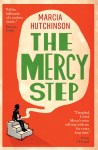
- A 1960s attempted suicide by putting one’s head in a gas oven in The Mercy Step by Marcia Hutchinson and The Soul of Kindness by Elizabeth Taylor.
- A plan to eat cheese to induce dreams in The Reservation by Rebecca Kauffman and Slags by Emma Jane Unsworth.
- An author is (at least initially) aghast at the liberties taken with an adaptation of her book in Spent by Alison Bechdel and Joyride by Susan Orlean (the film Adaptation, one of my favourites, bears little relation to her nonfiction work The Orchid Thief, which I also love).
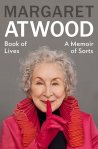
- A North American author meets her British publishers, André Deutsch and Diana Athill, in Book of Lives by Margaret Atwood and Q’s Legacy by Helene Hanff. (Atwood also mentions Sir Arthur Quiller-Couch, the title reference in the Hanff.)
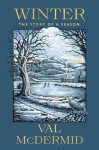
- An older white woman feels compelled to add, as an aside after a memory of slightly dodgy behaviour observed, that cultural appropriation was not a thing in those days in Book of Lives by Margaret Atwood and Winter by Val McDermid.
- I read two books in 2025 with a title taken from a Christian Wiman poem: A Truce that Is Not Peace by Miriam Toews, then Some Bright Nowhere by Ann Packer.
- A special trip undertaken for a younger sister’s milestone birthday: a road trip through Scotland in a campervan in Slags by Emma Jane Unsworth for a 40th; and a boy band reunion cruise to the Bahamas for a 45th in American Fantasy by Emma Straub.
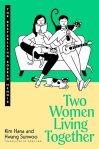
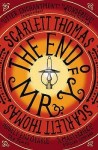
- A reference to Sartre’s “hell is other people” line (paraphrased) in Two Women Living Together by Kim Hana and Hwang Sunwoo and The End of Mr Y by Scarlett Thomas.
- The clock-drawing test as a shorthand for assessing a loved one’s dementia in Book of Lives by Margaret Atwood (her partner Graeme) and Joyride by Susan Orlean (her mother).
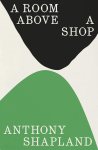 A sexual encounter between two men is presaged by them relieving themselves side by side at urinals in A Room Above a Shop by Anthony Shapland and The End of Mr Y by Scarlett Thomas.
- An older man who knows he’s having a stroke just wants to sit quietly in a chair and not be taken to hospital in Book of Lives by Margaret Atwood (her partner Graeme) and The Boy from the Sea by Garrett Carr.
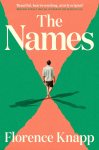
- A man who’s gone through Alcoholics Anonymous gets dangerously close to falling off the wagon: picks up a bottle of gin in a shop in The Names by Florence Knapp / buys a drink at a bar in All the World Can Hold by Jung Yun.
- I was reading two nonfiction books with built-in red ribbon bookmarks at the same time: Book of Lives by Margaret Atwood and Robin by Stephen Moss.
- Homoeopathy is an element in The Names by Florence Knapp and The End of Mr Y by Scarlett Thomas.
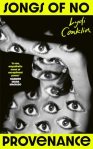
- A character named Sparrow in Spent by Alison Bechdel and Songs of No Provenance by Lydi Conklin.

- A mention of special celebrations for a Korean mother’s 70 birthday in Two Women Living Together by Kim Hana and Hwang Sunwoo and All the World Can Hold by Jung Yun.
- Some kinky practices in Songs of No Provenance by Lydi Conklin and Mr Norris Changes Trains by Christopher Isherwood.
- A girl from an immigrant family reads Greek mythology for escape in Visitations by Julia Alvarez and The Mercy Step by Marcia Hutchinson.
- “View halloo” (originally a fox-hunting term) is used as a greeting in Talking It Over by Julian Barnes and Arsenic for Tea by Robin Stevens.
What’s the weirdest reading coincidence you’ve had lately?
The 2026 Releases I’ve Read So Far
I happen to have read a number of pre-release books, generally for paid reviews for Foreword and Shelf Awareness. (I already previewed six upcoming novellas here.) Most of my reviews haven’t been published yet, so I’ll just give brief excerpts and ratings here to pique the interest. I link to the few that have been published already, then list the 2026 books I’m currently reading. Soon I’ll follow up with a list of my Most Anticipated titles.


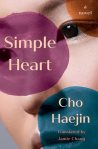 Simple Heart by Cho Haejin (trans. from Korean by Jamie Chang) [Other Press, Feb. 3]: A transnational adoptee returns to Korea to investigate her roots through a documentary film. A poignant novel that explores questions of abandonment and belonging through stories of motherhood.
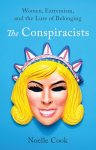 The Conspiracists: Women, Extremism, and the Lure of Belonging by Noelle Cook [Broadleaf Books, Jan. 6]: An in-depth, empathetic study of “conspirituality” (a philosophy that blends conspiracy theories and New Age beliefs), filtered through the outlook of two women involved in storming the Capitol on January 6, 2021.

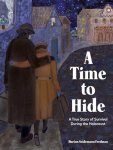
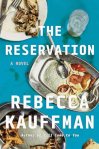 The Reservation by Rebecca Kauffman [Counterpoint, Feb. 24]: The staff members of a fine-dining restaurant each have a moment in the spotlight during the investigation of a theft. Linked short stories depict character interactions and backstories with aplomb. Big-hearted; for J. Ryan Stradal fans.


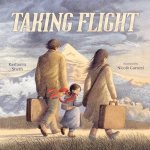 Taking Flight by Kashmira Sheth (illus. Nicolo Carozzi) [Dial Press, April 21]: A touching story of the journeys of three refugee children who might be from Tibet, Syria and Ukraine. The drawing style reminded me of Chris Van Allsburg’s. This left a tear in my eye.

Currently reading:
(Blurb excerpts from Goodreads; all are e-copies apart from Evensong)
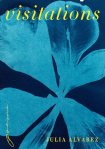 Visitations: Poems by Julia Alvarez [Knopf, April 7]: “Alvarez traces her life [via] memories of her childhood in the Dominican Republic … and the sisters who forged her, her move to America …, the search for mental health and beauty, redemption, and success.”
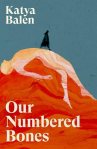 Our Numbered Bones by Katya Balen [Canongate, 12 Feb. / HarperVia, Feb. 17]: Her “adult debut [is] about a grieving author who heads to rural England for a writer’s retreat, only to stumble upon an incredible historical find” – a bog body!
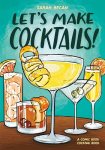 Let’s Make Cocktails!: A Comic Book Cocktail Book by Sarah Becan [Ten Speed Press, April 7]: “With vivid, easy-to-follow graphics, Becan guides readers through basic techniques such as shaking, stirring, muddling, and more. With all recipes organized by spirit for easy access, readers will delight in the panelized step-by-step comic instructions.”
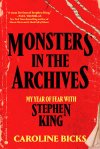 Monsters in the Archives: My Year of Fear with Stephen King by Caroline Bicks [Hogarth/Hodder & Stoughton, April 21]: “A fascinating, first of its kind exploration of Stephen King and his … iconic early books, based on … research and interviews with King … conducted by the first scholar … given … access to his private archives.”
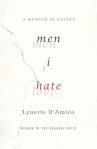 Men I Hate: A Memoir in Essays by Lynette D’Amico [Mad Creek Books, Feb. 17]: “Can a lesbian who loves a trans man still call herself a lesbian? As D’Amico tries to engage more deeply with the man she is married to, she looks at all the men—historical figures, politicians, men in her family—in search of clear dividing lines”.
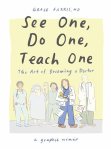 See One, Do One, Teach One: The Art of Becoming a Doctor: A Graphic Memoir by Grace Farris [W. W. Norton & Company, March 24]: “In her graphic memoir debut, Grace looks back on her journey through medical school and residency.”
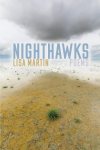 Nighthawks by Lisa Martin [University of Alberta Press, April 2]: “These poems parse aspects of human embodiment—emotion, relationship, mortality—and reflect on how to live through moments of intense personal and political upheaval.”
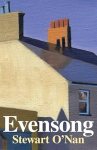 Evensong by Stewart O’Nan [published in USA in November 2025; Grove Press UK, 1 Jan.]: “An intimate, moving novel that follows The Humpty Dumpty Club, a group of women of a certain age who band together to help one another and their circle of friends in Pittsburgh.”
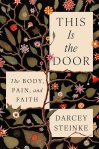 This Is the Door: The Body, Pain, and Faith by Darcey Steinke [HarperOne, Feb. 24]: “In chapters that trace the body—The Spine, The Heart, The Knees, and more—[Steinke] introduces sufferers to new and ancient understandings of pain through history, philosophy, religion, pop culture, and reported human experience.”
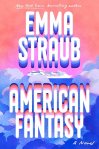 American Fantasy by Emma Straub [Riverhead, April 7 / Michael Joseph (Penguin), 14 May]: “When the American Fantasy cruise ship sets sail for a four-day themed voyage, aboard are all five members of a famous 1990s boyband, and three thousand screaming women who have worshipped them for thirty years.”
Additional pre-release review books on my shelf:
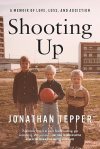 Shooting Up by Jonathan Tepper [Constable, 19 Feb.]: “Born into a family of American missionaries driven by unwavering faith … Jonathan’s home became a sanctuary for society’s most broken … AIDS hit Spain a few years after it exploded in New York and, like an invisible plague, … claimed countless lives – including those … in the family rehabilitation centre.”
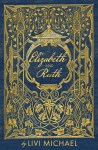 Elizabeth and Ruth by Livi Michael [Salt Publishing, 9 Feb.]: “Based on the real correspondence between Elizabeth Gaskell and Charles Dickens … [Gaskell] visits a young Irish prostitute in Manchester’s New Bailey prison. … [A] story of hypocrisy and suppression, and how Elizabeth navigates the … prejudice of the day to help the young girl”.
Will you look out for one or more of these?
Any other 2026 reads you can recommend?
#NovNov25 Final Statistics & Some 2026 Novellas to Look Out For (Chapman, Fennelly, Gremaud, Miles, Netherclift & Saunders)
Novellas in November 2025 was a roaring success: In total, we had 50 bloggers contributing 216 posts covering at least 207 books! The buddy read(s) had 14 participants. If you want to take a look back at the link parties, they’re all here. It was our best year yet – thank you.
*For those who are curious, our most reviewed book was The Wax Child by Olga Ravn (4 reviews), followed by The Most by Jessica Anthony (3). Authors covered three times: Franz Kafka and Christian Kracht. Authors with work(s) reviewed twice: Margaret Atwood, Nora Ephron, Hermann Hesse, Claire Keegan, Irmgard Keun, Thomas Mann, Patrick Modiano, Edna O’Brien, Clare O’Dea, Max Porter, Brigitte Reimann, Ivana Sajko, Georges Simenon, Colm Tóibín and Stefan Zweig.*

I read and reviewed 21 novellas in November. I happen to have already read six with 2026 release dates, some of them within November and others a bit earlier for paid reviews. I’ll give a quick preview of each so you’ll know which ones you want to look out for.
The Pass by Katriona Chapman
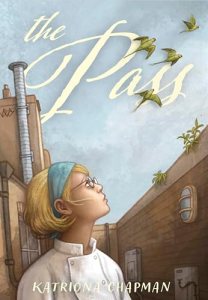 Claudia Grace is a rising star in the London restaurant world: in her early thirties, she’s head chef at Alley. But she and her small team, including sous chef Lisa, her best friend from culinary school; and Ben, the innovative Black bartender, face challenges. Lisa has a young son and disabled husband, while Ben is torn between his love of gardening and his commitment to Alley. Claudia is more stressed than ever as she prepares for a competition. All three struggle with their parents’ expectations. A financial crisis comes out of nowhere, but the greater threat is related to motivation. I was drawn to this graphic novel for the restaurant setting, but it’s more about families and romantic relationships than food. Several characters look too alike or much younger or older than they’re supposed to, while there’s a sudden ending that suggests a sequel might follow. (Fantagraphics, Jan. 20) [184 pages] (Read via Edelweiss)
The Irish Goodbye: Micro-Memoirs by Beth Ann Fennelly
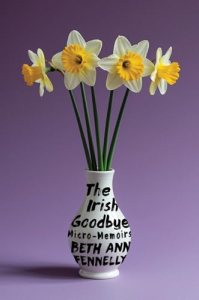 I’ve also read Fennelly’s previous collection of miniature autobiographical essays, Heating & Cooling. She takes the same approach as in flash fiction: some of these 45 pieces are as short as one sentence, remarking on life’s irony, poignancy or brevity. Again and again she loops back to her sister’s untimely death (the title reference: “without farewells, you slipped out the back door of the party of your life”); other major topics are her mother’s worsening dementia, her happy marriage, her continuing 28-year-old friendships with her college roommates, the pandemic, and her ageing body. Every so often, Fennelly experiments with third- or second-person narration, as when she recalls making a perfect gin and tonic for Tim O’Brien. One of the most in-depth pieces revisits a lonely stint teaching in Czechoslovakia in the early 1990s. Returning to the town recently, she is astounded that so many recognize her and that a time she experienced as bleak is the stuff of others’ fond memories. I also loved the long piece that closes the collection, “Dear Viewer of My Naked Body,” about being one of the 12 people in Oxford, Mississippi to pose nude for a painter in oils. Brilliant last phrase: “Enjoy the bunions.” (W.W. Norton & Company, Feb. 24) [144 pages] (Read via Edelweiss)
Generator by Rinny Gremaud (2023; 2026)
[Trans. from French by Holly James]
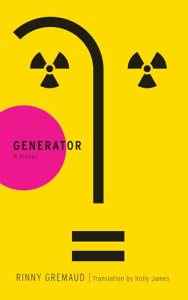 “I was born in 1977 at a nuclear power plant in the south of South Korea,” the unnamed narrator opens. She and her mother then moved to Switzerland with her stepfather. In 2017, news of Korea’s plans to decommission the Kori 1 reactor prompts her to trace her birth father, who was a Welsh engineer on the project. As a way of “walking my hypotheses,” she travels to Wales, Taiwan (where he had a wife and family), Korea, and Michigan, his last known abode. In parallel, she researches the history of nuclear power. By riffing on the possible definitions of generation, this lyrical autofiction comments on creation and legacy. Full Foreword review forthcoming. (Schaffner Press, Jan. 7) [197 pages] (PDF review copy)
Eradication: A Fable by Jonathan Miles
 This taut, powerful fable pits an Everyman against seemingly insurmountable environmental and personal problems. Who wouldn’t take a job that involves “saving the world”? Adi, the antihero of Jonathan Miles’s fourth novel, is drawn to the listing not just for the noble mission but also for the chance at five weeks alone on a Pacific island. Santa Flora once teemed with endemic birds and reptiles, but many species have gone extinct because of the ballooning population of goats. He’s never fired a gun, but the mysterious “foundation” was so desperate it hired him anyway. It’s a taut parable reminiscent of T.C. Boyle’s When the Killing’s Done. My full Shelf Awareness review is here. (riverrun, 5 Feb. / Doubleday, Feb. 10) [176 pages] (Read via Edelweiss)
Vessel: The shape of absent bodies by Dani Netherclift
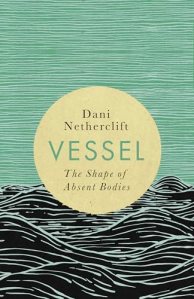 One scorching afternoon in 1993, the author’s father and brother drowned while swimming in an irrigation channel near their Australia home. A joint closed-casket funeral took place six days later. Eighteen at the time, Netherclift witnessed her relatives’ disappearance but didn’t see their bodies. Must one see the corpse to have closure? she wonders. “The presence of absence” is an overarching paradox. There are lacunae everywhere: in her police statement from the fateful day; in her journal and letters from that summer. The contradictions and ironies of the situation defy resolution. Full Foreword review forthcoming. (Assembly Press, Jan. 13) [184 pages] (PDF review copy)
Vigil by George Saunders
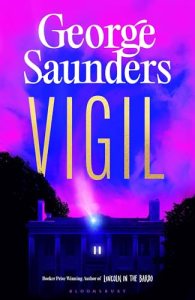 Impossible not to set this against the exceptional Lincoln in the Bardo, focused as both are on the threshold between life and death. Unfortunately, the comparison is not favourable to Vigil. A host of the restive dead visit the dying to offer comfort at the end. Jill Blaine’s life was cut short when she was murdered by a car bomb in a case of mistaken identity. Her latest “charge” is K.J. Boone, a Texas oil tycoon who not only contributed directly to climate breakdown but also deliberately spread anti-environmentalist propaganda through speeches and a documentary. As he lies dying of cancer in his mansion, he’s visited by, among others, the spirits of the repentant Frenchman who invented the engine and an Indian man whose family perished in a natural disaster. I expected a Christmas Carol-type reckoning with climate past and future; in resisting such a formula, Saunders avoids moralizing – oblivion comes for the just and the unjust. However, he instead subjects readers to a slog of repetitive, half-baked comedic monologues. I remain unsure what he hoped to achieve with the combination of an irredeemable character and an inexorable situation. All this does is reinforce randomness and hopelessness, whereas the few other Saunders works I’ve read have at least reassured with the sparkle of human ingenuity. YMMV. (Bloomsbury / Random House, 27 Jan.) [192 pages] (Read via NetGalley)
April 3rd Releases by Emily Jungmin Yoon & Jean Hannah Edelstein
It’s not often that I manage to review books for their publication date rather than at the end of the month, but these two were so short and readable that I polished them off over the first few days of April. So, out today in the UK: a poetry collection about Asian American identity and environmental threat, and a memoir in miniature about how body parts once sexualized and then functionalized are missed once they’re gone.
Find Me as the Creature I Am by Emily Jungmin Yoon (2024)
 The Korean American poet’s second full-length work is broadly about loss experienced or expected – but also about the love that keeps us going in dire times. The free verse links personal bereavement with larger-scale tragedies, including climate grief. “All my friends who loved trees are dead” tells of Yoon’s grandmother’s death, while “I leave Asia and become Asian” remembers the murders of eight Asian spa workers in Atlanta in 2021. Violence against women, and the way the Covid-19 pandemic spurred further anti-Asian racism, are additional topics in the early part of the book. For me, Part III’s environmental poems resonated the most. Yoon reflects on the ways in which we are, sometimes unwittingly, affecting the natural world, especially marine ecosystems: “there is no ‘eco-friendly’ way to swim with dolphins. / We do not have to touch everything we love,” she writes. “I look at the ocean like it’s goodbye. … I look at your face / like it’s goodbye.” This is a tricky one to assess; while I appreciated the themes, I did not find the style or language distinctive. The collection reminded me of a cross between Rupi Kaur and Jenny Xie.
Published in the USA by Knopf on October 22, 2024. With thanks to Atlantic Books for the free copy for review.
Breasts: A Relatively Brief Relationship by Jean Hannah Edelstein
From my Most Anticipated list. I loved Edelstein’s 2018 memoir This Really Isn’t About You, and I regularly read her Substack. This micro-memoir in three essays explores the different roles breasts have played in her life: “Sex” runs from the day she went shopping for her first bra as a teenager with her mother through to her early thirties living in London. Edelstein developed early and eventually wore size DD, which attracted much unwanted attention in social situations and workplaces alike. (And not just a slightly sleazy bar she worked in, but an office, too. Twice she was groped by colleagues; the second time she reported it. But: drunk, Christmas party, no witnesses; no consequences.) “It felt like a punishment, a consequence of my own behavior (being a woman, having a fun night out, doing these things while having large breasts),” she writes.
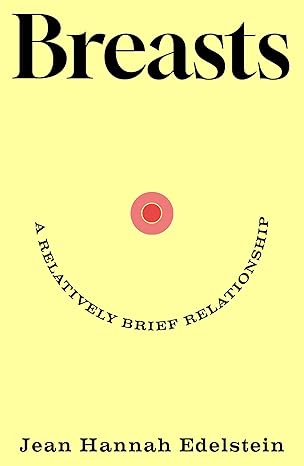 “Food” recounts how her perspective on her breasts changed when she had her two children via IVF – so they wouldn’t inherit Lynch syndrome from her – and initially struggled to breastfeed. “I wanted to experience the full utility of my breasts,” she explains, so, living in Brooklyn now, she consulted a lactation consultant known as “the breast whisperer.” Part 3 is “Cancer”: when Edelstein was 41, mammograms discovered Stage 0 cancer in one breast. “For so long I’d been subject to unwelcome opinions about the kind of person that I was because of the size of my breasts.” But now it was up to her. She chose a double mastectomy for balance, with simultaneous reconstruction by a plastic surgeon.
Although this is a likable book, the retelling is quite flat; better that than mawkish, certainly, but none of the experiences feel particularly unique. It’s more a generic rundown of what it’s like to be female – which, yes, varies to an extent but not that much if we’re talking about the male gaze. There wasn’t the same spark or wit that I found in Edelstein’s first book. Perhaps in the context of a longer memoir, I would have appreciated these essays more.
With thanks to Phoenix for the free copy for review.
February Releases by Hess, Kim, Sides (#ReadIndies); Atwood and Shah
I’m pleased to have, between this post and yesterday’s review catch-up, featured 9 books from 8 independent publishers for Read Indies this month. (I have also done some indie reading from my shelves, which I’ll summarize early in March.) Three of the books in my February review stacks were indie releases. I’ve got a hybrid memoir that blends poetic exploration of scripture with personal psychological reflections; an out-of-the-ordinary mystery about a father’s disappearance that comments on disability, racism and much more; and a terrific set of fabulist short stories. My two bonus (non-indie) February books are an unconvincing collaborative novel and a counselling-focussed bibliotherapy guide.

When Fragments Make a Whole: A Personal Journey through Healing Stories in the Bible by Lory Widmer Hess
 Some of you may know Lory, who is training as a spiritual director, from her blog, Enter Enchanted. It was so kind of her to get in touch offering her first book for review. It’s a unique combination of poetry, scriptural exegesis, and fragments of memoir. Each chapter considers a different healing story from the Gospels. As in the lectio divina I learned from college Christian fellowships, the idea with the verse retellings from the Bible is to imagine oneself into a character’s position and consider the crises that led to seeking Jesus’ help. I especially liked the poem “Talitha, Koum,” which links the stories of the woman with the issue of blood and the resurrection of Jairus’ daughter. In both, faith reverses a seemingly hopeless situation.
The short sections of commentary draw in a lot of context as well as etymology from the Greek. The autobiographical essays chart a history of physical and mental challenges, including dissociation, low self-esteem and shame, and offer openness to healing as its own miracle when there are no easy answers. They are notable for their vulnerability, especially when discussing marital problems. The outlook is intellectual and psychological rather than the spiritualizing I’m used to from my evangelical background – Lory comes from the anthroposophy tradition, which I don’t claim to fully understand but (I think) eschews dogma like original sin and atonement and instead makes the spiritual journey a matter of human reconnection with God through free will and the intellect. This is nicely balanced, though, by her work with developmentally disabled adults in residential homes in New England and Switzerland, which reminds her “there is a truth beyond intellectual knowledge, a language beyond words”. It is a calm, honest, methodical book that will intrigue anyone interested in thinking through how the Bible is applicable to the challenges of daily life.
With thanks to the author and Floris Books (Edinburgh) for the free copy for review.
Happiness Falls by Angie Kim
Buzz from across the pond about Kim’s novels led me to request this even though I don’t typically read mysteries. The bulk is set over 2.5 days in June 2020 as the Korean American Parkson family investigates, on their own and with the help of police and various local tip-offs, what happened to the father, Adam, who’d been at River Falls Park with the severely disabled 14-year-old son, Eugene, who is autistic and has mosaic Angelman syndrome. Mother Hannah and 20-year-old twins Mia and John, home from college for the lockdown, quickly realise something is wrong when Eugene, who has blood on his shirt and under his nails, stumbles home on his own and Adam is unreachable by phone. There’s more to the setup than that, and many complicated side-tracks to the investigation, but the basic questions remain for 300+ pages: What happened to Adam? and What was Eugene’s part in it?
Mia narrates, and it’s a pleasure spending time with her quick, systematic brain as she runs through all the options and deals with each new theory and red herring. She clearly gets it from her father, whose recovered notebook is full of amateur experimentation on the “Happiness Quotient”. Her wit and garrulousness (sample aside: “I’m sorry, but I don’t care how much you love fun fonts—you cannot talk about prison rape in Comic Sans”) spills over into footnotes as if in effusive counterpoint to Eugene, who is nonspeaking.
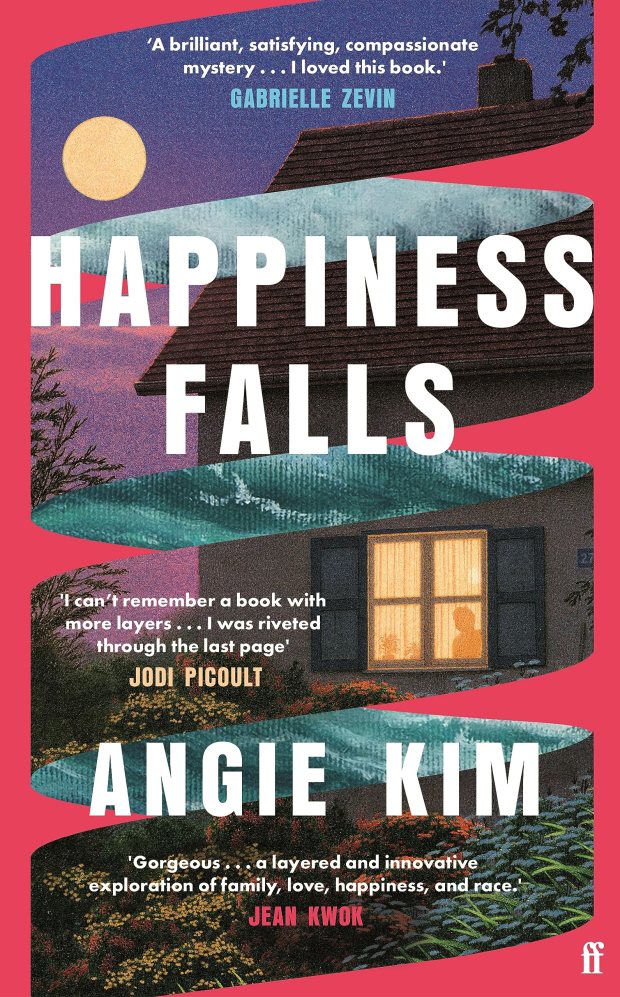
The pandemic setting places interesting constraints on the official proceedings, and the prospect of a new communication method (involving painstaking spelling with a letter stencil) revolutionizes this family as they grasp that Eugene is far from nonverbal and has been ‘locked in’ all along. The account a therapist elicits from him seems to clinch the case, but uncertainty lingers.
This is like a blend of Celeste Ng’s Everything I Never Told You, Rebecca Makkai’s I Have Some Questions for You, and Naoki Higashida’s The Reason I Jump; if you’ve liked one or more of these, I would strongly recommend it. Mystery readers may lack patience for the digressions. The solution is eclipsed by the many issues – prejudice based on race and disability, how one’s circumstances affect contentment, nuances of communication, sibling relationships and twin ESP – explored along the way. Because I am not a crime reader, the pace was no problem for me. My annoyances were with the preponderance of hindsight (“I wish I’d said something,” “It didn’t occur to me until much later”) and the fact that Mia says “begs the question” for raising a question (misuse of a rhetorical term) several times. I found personal meaning in the book because of the Washington, DC-area locales and my severely disabled, nonverbal goddaughter. What if there really is something going on in her mind, and we could find out what it was… I mused. I’ll be keen to read Kim’s debut, Miracle Creek.
With thanks to Faber for the free copy for review.
Crocodile Tears Didn’t Cause the Flood by Bradley Sides
 These 17 flash fiction stories fully embrace the possibilities of magic and weirdness, particularly to help us reconnect with the dead. Brad and I are literary acquaintances from our time working on (the now defunct) Bookkaholic web magazine in 2014–15. I liked this even more than his first book, Those Fantastic Lives (2021), although the contours are very similar. Young people, animals and monsters abound – and sometimes the lines between those identities are unclear. There’s a lot of experimentation with form: a choose-your-own-adventure narrative, a police transcript, a two-truths-and-a-lie challenge, a story all in questions, an English exam, and a letter. A few of my favorite stories were “The Guide to King George,” about an amusement farm’s resident pond monster; “Claire & Hank,” in which a paleontologist’s unearthed Pteranodon becomes a sister to his motherless son; and “Dying at Allium Farm,” whose sassy undead owners think they’re fooling their Tennessee customers. And can you imagine a better title and cover combination?!
With thanks to Montag Press and publicist Lori Hettler for the e-copy for review.
And a couple of bonus February releases that are not from indie publishers:
Fourteen Days, ed. Margaret Atwood and Douglas Preston
This Authors Guild Foundation collaborative project is a Covid-era Decameron update in which the residents of an increasingly derelict New York City apartment complex meet on the rooftop every evening for two early lockdown weeks to clap for healthcare workers, indulge in adult beverages, and swap random stories. The tenants all go by nicknames like “Hello Kitty,” “Florida” and “Vinegar.” The frame narrative has the building superintendent (Yessie, a lesbian of Romanian heritage) worrying over her father’s wellbeing in a care home and surreptitiously recording the oral stories on her phone to later transcribe into the “bible” kept by the previous super. We’re told up front that the manuscript ends up in police custody.
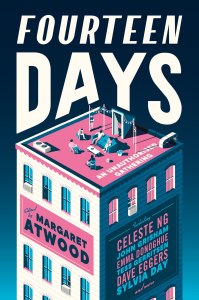 I had a misconception that each chapter would be written by a different author. I think that would actually have been the more interesting approach. Instead, each character is voiced by a different author, and sometimes by multiple authors across the 14 chapters (one per day) – a total of 36 authors took part. I soon wearied of the guess-who game. I most enjoyed the frame story, which was the work of Douglas Preston, a thriller author I don’t otherwise know.
There was a promising idea here, but problems with the execution. One is that, for the most part, the stories are pointless. The characters get hung up on whether they’re ‘true’ or not, but for readers it’s all made up and, while one or two individual tales might be amusing, they do nothing to build a plot and so I found myself mostly skipping over them to get back to the interactions on the roof and the super’s commentary. Another is that, to stand out from an ensemble cast, a voice needs to be really distinctive, and only “Eurovision” (flamboyantly gay) was that for me – based on my love for his rabbit story in particular, I should be reading Joseph Cassara. And finally, the book culminates with an annoying twist that made me cross.
With thanks to Chatto & Windus (Penguin) for the proof copy for review.
Bibliotherapy: The Healing Power of Reading by Bijal Shah
Bibliotherapy is one of my niche bookish interests (see my write-up of my bibliotherapy appointment with Ella Berthoud at the School of Life), so I was delighted to be offered a copy of another relevant book. Bijal Shah grew up in an East African Indian community before moving to the UK with her family as a teenager. When she was in training as a psychodynamic counsellor and attended therapy sessions herself, she realised how helpful literature was in helping her think through traumatic experiences from her past, such as sexism, colourism and a painful break-up. “I have lived half my life in the pages of books,” she observes, “relying on them to put my real life into perspective.” I feel the same way.

The emphasis is very much on therapy here, as Shah elaborates on practices such as literary journaling, recording audio notes, writing poetry, and focusing on gratitude. About half of the book is given over to anonymized sample case studies where she looks at the reasons why a client might come to her for bibliotherapy, the books and exercises she prescribed them, and the sorts of realizations people came to when reflecting on their own lives in relation to what they read. I suspect that the majority of readers, unless they have a vested interest in counselling, will, like me, most enjoy browsing the A–Z list of book prescriptions in the final 20% of the book (with more on Shah’s website). There is good variety to these in terms of author diversity, new vs. backlist reads, and both YA and adult fiction, though most of the recommendations are nonfiction, particularly psychology and self-help: these are much more literal (and, generally, obvious) prescriptions than Berthoud and Elderkin’s playful take.
With thanks to the author and Piatkus (Hachette) for the free copy for review.
Three in Translation for #NovNov23: Baek, de Beauvoir, Naspini
I’m kicking off Week 3 of Novellas in November, which we’ve dubbed “Broadening My Horizons.” You can interpret that however you like, but Cathy and I have suggested that you might like to review some works in translation and/or think about any new genres or authors you’ve been introduced to through novellas. Literature in translation is still at the edge of my comfort zone, so it’s good to have excuses such as this (and Women in Translation Month each August) to pick up books originally published in another language. Later in the week I’ll have a contribution or two for German Lit Month too.

I Want to Die but I Want to Eat Tteokbokki by Baek Se-hee (2018; 2022)
[Translated from the Korean by Anton Hur]
 Best title ever. And a really appealing premise, but it turns out that transcripts of psychiatry appointments are kinda boring. (What a lazy way to put a book together, huh?) Nonetheless, I remained engaged with this because the thoughts and feelings she expresses are so relatable that I kept finding myself or other people I know in them. Themes that emerge include co-dependent relationships, pathological lying, having impossibly high standards for oneself and others, extreme black-and-white thinking, the need for attention, and the struggle to develop a meaningful career in publishing.
There are bits of context and reflection, but I didn’t get a clear overall sense of the author as a person, just as a bundle of neuroses. Her psychiatrist tells her “writing can be a way of regarding yourself three-dimensionally,” which explains why I’ve started journaling – that, and I want believe that the everyday matters, and that it’s important to memorialize.
I think the book could have ended with Chapter 14, the note from her psychiatrist, instead of continuing with another 30+ pages of vague self-help chat. This is such an unlikely bestseller (to the extent that a sequel was published, by the same title, just with “Still” inserted!); I have to wonder if some of its charm simply did not translate. (Public library) [194 pages]
The Inseparables by Simone de Beauvoir (2020; 2021)
[Translated from the French by Lauren Elkin]
 Earlier this year I read my first work by de Beauvoir, also of novella length, A Very Easy Death, a memoir of losing her mother. This is in the same autobiographical mode: a lightly fictionalized story of her intimate friendship with Elisabeth Lacoin (nicknamed “Zaza”) from ages 10 to 21, written in 1954 but not published until recently. The author’s stand-in is Sylvie and Zaza is Andrée. When they meet at school, Sylvie is immediately enraptured by her bold, talented friend. “Many of her opinions were subversive, but because she was so young, the teachers forgave her. ‘This child has a lot of personality,’ they said at school.” Andrée takes a lot of physical risks, once even deliberately cutting her foot with an axe to get out of a situation (Zaza really did this, too).
Whereas Sylvie loses her Catholic faith (“at one time, I had loved both Andrée and God with ferocity”), Andrée remains devout. She seems destined to follow her older sister, Malou, into a safe marriage, but before that has a couple of unsanctioned romances with her cousin, Bernard, and with Pascal (based on Maurice Merleau-Ponty). Sylvie observes these with a sort of detached jealousy. I expected her obsessive love for Andrée to turn sexual, as in Emma Donoghue’s Learned by Heart, but it appears that it did not, in life or in fiction. In fact, Elkin reveals in a translator’s note that the girls always said “vous” to each other, rather than the more familiar form of you, “tu.” How odd that such stiffness lingered between them.
This feels fragmentary, unfinished. De Beauvoir wrote about Zaza several times, including in Memoirs of a Dutiful Daughter, but this was her fullest tribute. Its length, I suppose, is a fitting testament to a friendship cut short. (Passed on by Laura – thank you!) [137 pages]
(Introduction by Deborah Levy; afterword by Sylvie Le Bon de Beauvoir, de Beavoir’s adopted daughter. North American title: Inseparable.)
Tell Me About It by Sacha Naspini (2020; 2022)
[Translated from the Italian by Clarissa Botsford]
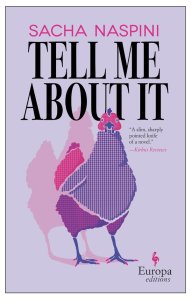 The Tuscan novelist’s second work to appear in English has an irresistible setup: Nives, recently widowed, brings her pet chicken Giacomina into the house as a companion. One evening, while a Tide commercial plays on the television, Giacomina goes as still as a statue. Nives places a call to Loriano Bottai, the local vet and an old family friend who is known to spend every night inebriated, to ask for advice, but they stay on the phone for hours as one topic leads to another. Readers learn much about these two, whom, it soon emerges, have a history.
The text is saturated with dialogue; quick wits and sharp tempers blaze. You could imagine this as a radio or stage play. The two characters discuss their children and the town’s scandals, including a lothario turned artist’s muse and a young woman who died by suicide. “The past is full of ghosts. For all of us. That’s how it is, and that’s how it will always be,” Loriano says. There’s a feeling of catharsis to getting all these secrets out into the open. But is there a third person on the line?
A couple of small translation issues hampered my enjoyment: the habit of alternating between calling him Loriano and Bottai (whereas Nives is always that), and the preponderance of sayings (“What’s true is that the business with the nightie has put a bee in my bonnet”), which is presumably to mimic the slang of the original but grates. Still, a good read. (Passed on by Annabel – thank you!) [128 pages]

Book Serendipity, Mid-December 2022 to Mid-February 2023
I call it “Book Serendipity” when two or more books that I read at the same time or in quick succession have something in common – the more bizarre, the better. This is a regular feature of mine every few months. Because I usually have 20–30 books on the go at once, I suppose I’m more prone to such incidents. The following are in roughly chronological order.
My biggest overall coincidence set this time was around Korean culture, especially food:
- A demanding Korean/American mother (“Umma”) in Sea Change by Gina Chung, Camp Zero by Michelle Min Sterling, and Crying in H Mart by Michelle Zauner.
- In the Chung and Zauner, she has eyebrows tattooed on.
- In the Chung and Sterling, there’s also a mall setting.
- Winter in Sokcho by Elisa Shua Dusapin was set in South Korea and mentioned a lot of the same cultural factors and foods. KIMCHI (which I’ve never had) was inescapable in these four books.


And the rest…
- The concept of Satan as “the enemy” in God’s Ex-Girlfriend by Gloria Beth Amodeo and All of Us Together in the End by Matthew Vollmer, two 2023 memoirs I reviewed for Foreword Reviews.
- A mention of the Newsboys (my favourite Christian rock band when I was a teenager) in God’s Ex-Girlfriend by Gloria Beth Amodeo and, of all places, Animal Life by Auður Ava Ólafsdóttir (the context: a list of songs with “Born” in the title; theirs is called – you guessed it! – “Born Again”).
- Two Moores in my stack at once: Birds of America by Lorrie Moore and The Distance from Slaughter County by Steven Moore.
- A chapter in The Distance from Slaughter County by Steven Moore is called “Fight Night” and I was reading the early pages of Fight Night by Miriam Toews at the same time.
- A story in Birds of America by Lorrie Moore is called “Real Estate” and I was reading Real Estate by Deborah Levy at the same time.
- The Virgil quote “there are tears at the heart of things” and the theme of melancholy link Bittersweet by Susan Cain and The Heart of Things by Richard Holloway.
- A character who stutters in Bournville by Jonathan Coe and A Place Called Winter by Patrick Gale.

- (Werther’s) butterscotch candies are mentioned in Leila and the Blue Fox by Kiran Millwood Hargrave, Our Missing Hearts by Celeste Ng, What Napoleon Could Not Do by DK Nnuro, and How to Be Sad by Helen Russell.
- A mother who loves going to church in Bournville by Jonathan Coe and Born a Crime by Trevor Noah.
- The metaphor of a girl trapped in a block of marble ready to have her identity carved out in Sea Change by Gina Chung and Everything’s Changing by Chelsea Stickle.

- When I read a short story about a landmine-detecting rat in Everything’s Changing by Chelsea Stickle, I knew it wasn’t the first time I’d encountered that very specific setup. It took some digging, but I found out the other was in Attrib. by Eley Williams.
- Shane McCrae, whose forthcoming memoir Pulling the Chariot of the Sun I was also reading, is a named poetic influence/source in More Sky by Joe Varrick-Carty.

- I’m sure that after the one in Margaret Atwood’s The Door I encountered another poem about a frozen cat … but can’t now find it for the life of me.
- A character named Marnie in Martha Quest by Doris Lessing and City of Friends by Joanna Trollope.
- Cape Verdean immigrants in the Boston area, then and now, in Daughters of Nantucket by Julie Gerstenblatt and The War for Gloria by Atticus Lish.

- Someone swaps green tea for coffee in Bittersweet by Susan Cain and City of Friends by Joanna Trollope.
- A half-French, half-Asian protagonist in a novella translated from the French: A Single Rose by Muriel Barbery and Winter in Sokcho by Elisa Shua Dusapin.
- A (semi-)historical lesbian couple as a subject of historical fiction in Daughters of Nantucket by Julie Gerstenblatt and Chase of the Wild Goose by Mary Gordon.
- A lesbian couple with a ten-year age gap breaks up because the one partner wants a baby and the other does not in My Mother Says by Stine Pilgaard and City of Friends by Joanna Trollope.
- After I specifically read three Frost Fairs books … 18th-century frolics on the frozen Thames were mentioned in The Secret Diaries of Charles Ignatius Sancho by Paterson Joseph.

- As I was reading The Secret Diaries of Charles Ignatius Sancho by Paterson Joseph, I saw him briefly mentioned in How to Be Sad by Helen Russell.
- From one 139-page book about a foreigner’s wanderings in Kyoto (often taking in temples) to another: I followed up A Single Rose by Muriel Barbery with How Kyoto Breaks Your Heart by Florentyna Leow.


- Persimmon jam is mentioned in Winter in Sokcho by Elisa Shua Dusapin and How Kyoto Breaks Your Heart by Florentyna Leow.
- A brave post-tragedy trip to a mothers and babies group ends abruptly when people are awkward or rude in All My Wild Mothers by Victoria Bennett and How to Be Sad by Helen Russell.


 As I was reading What We Talk about when We Talk about Love by Raymond Carver, I encountered a snippet from his poetry as a chapter epigraph in Bittersweet by Susan Cain.
- Sexologist Havelock Ellis inspired one of the main characters in The New Life by Tom Crewe and is mentioned in passing in Martha Quest by Doris Lessing.
What’s the weirdest reading coincidence you’ve had lately?
 Bookish Beck = Rebecca Foster. American transplant to England. Freelance proofreader and book reviewer.
