Book Serendipity, Mid-February to Mid-April
I call it “Book Serendipity” when two or more books that I read at the same time or in quick succession have something in common – the more bizarre, the better. This is a regular feature of mine every couple of months. Because I usually have 20–30 books on the go at once, I suppose I’m more prone to such incidents. People frequently ask how I remember all of these coincidences. The answer is: I jot them down on scraps of paper or input them immediately into a file on my PC desktop; otherwise, they would flit away!
The following are in roughly chronological order.
- The protagonist isn’t aware that they’re crying until someone tells them / they look in a mirror in The Remains of the Day by Kazuo Ishiguro and Three Days in June by Anne Tyler.
- A residential complex with primal scream therapy in Confessions by Catherine Airey and The Möbius Book by Catherine Lacey.
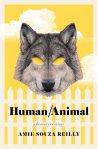
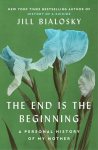
- Memories of wiping down groceries during the early days of the pandemic in The End Is the Beginning by Jill Bialosky and Human/Animal by Amie Souza Reilly.
- A few weeks before I read Maurice and Maralyn by Sophie Elmhirst, I’d finished reading the author’s husband’s debut novel (Going Home by Tom Lamont); I had no idea of the connection between them until I got to her Acknowledgements.
- A mention of the same emergency money passing between friends in Alligator Tears by Edgar Gomez ($20) and The Möbius Book by Catherine Lacey ($100).
- Autobiographical discussions of religiosity and anorexia in The Möbius Book by Catherine Lacey and Godstruck by Kelsey Osgood.
- The theme of the dark night sky in The Wild Dark by Craig Childs, followed almost immediately by Night Magic by Leigh Ann Henion.
- Last year I learned about Marina Abramović’s performance art where she and her ex trekked to China’s Great Wall from different directions, met in the middle, and continued walking away to dramatize their breakup in The Ritual Effect by Michael Norton. Recently I saw it mentioned again in The Möbius Book by Catherine Lacey. Abramović’s work is also mentioned in Human/Animal by Amie Souza Reilly and is the basis for the opening track on Anne-Marie Sanderson’s album Old Light, “Amethyst Shoes.”
- The idea of running towards danger appears in Alex Marzano-Lesnevich’s essay in Edge of the World, a queer travel anthology edited by Alden Jones; and the bibliography of The Möbius Book by Catherine Lacey.
- I then read another Alex Marzano-Lesnevich essay in quick succession (both were excellent, by the way) in What My Father and I Don’t Talk About, edited by Michele Filgate.
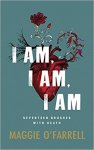
- A scene in which a woman goes to a police station and her concerns are dismissed because she has no evidence and the man/men’s behaviour isn’t ‘bad enough’ in I Am, I Am, I Am by Maggie O’Farrell and Human/Animal by Amie Souza Reilly.
- Too many details as the sign of a lie in Dream Count by Chimamanda Ngozi Adichie and Three Days in June by Anne Tyler.
- Scenes of throwing all of a spouse’s belongings out on the yard/street in Old Soul by Susan Barker, How to Survive Your Mother by Jonathan Maitland, and Human/Animal by Amie Souza Reilly.
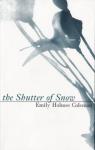
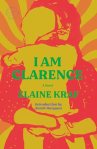
- Reading two lost American classics about motherhood and time spent in a mental institution at the same time: The Shutter of Snow by Emily Holmes Coleman and I Am Clarence by Elaine Kraf.
- Disorientation underwater: a literal experience in I Am, I Am, I Am by Maggie O’Farrell, then used as a metaphor for what it was like to be stuck in a blizzard on Annapurna in 2014 in The Secret Life of Snow by Giles Whittell.
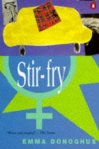
- A teenager who has a job cleaning hotels in Old Soul by Susan Barker and I Am, I Am, I Am by Maggie O’Farrell. (In Stir-Fry by Emma Donoghue, Maria is also a teenaged cleaner, but of office buildings.)
- A vacuum cleaner bag splits in Stir-Fry by Emma Donoghue and one story of Are You Happy? by Lori Ostlund – in the latter it’s deliberate, searching for evidence of the character’s late son after cleaning his room.

- An ailing tree or trees that have to be cut down in one story of The Accidentals by Guadalupe Nettel and The Lost Trees of Willow Avenue by Mike Tidwell.
- Buchenwald was mentioned in one poem each in A God at the Door by Tishani Doshi and The Ghost Orchid by Michael Longley.
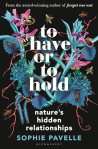
- A reference to Robin Wall Kimmerer’s Braiding Sweetgrass in To Have or to Hold by Sophie Pavelle and Human/Animal by Amie Souza Reilly.

- A mentally unwell woman deliberately burns her hands in I Am Clarence by Elaine Kraf and Every Day Is Mother’s Day by Hilary Mantel.
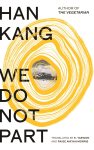
- A mention of the pollution caused by gas stoves in We Do Not Part by Han Kang and The Lost Trees of Willow Avenue by Mike Tidwell.
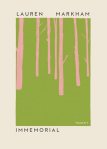
- An art installation involving part-buried trees was mentioned in Immemorial by Lauren Markham and then I encountered a similar project a few months later in We Do Not Part by Han Kang. Burying trees as a method of carbon storage is then discussed in The Lost Trees of Willow Avenue by Mike Tidwell.

- Imagining the lives of the people living in an apartment you didn’t end up renting in Scaffolding by Lauren Elkin and one story of The Accidentals by Guadalupe Nettel.
- The Anthropocene is mentioned in Scaffolding by Lauren Elkin and The Alternatives by Caoilinn Hughes.
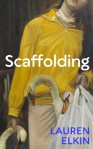
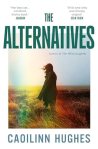
- I was reading three debut novels from the McKitterick Prize longlist at the same time, all of them with very similar page counts of 383, 387, and 389 (i.e., too long!).
- Being appalled at an institutionalized mother’s appearance in The End Is the Beginning by Jill Bialosky and Every Day Is Mother’s Day by Hilary Mantel.
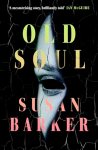 A remote artist’s studio and severed fingers in Old Soul by Susan Barker and We Do Not Part by Han Kang.
- A lesbian couple in New Mexico, the experience of being watched through a window, and the mention of a caftan/kaftan, in Old Soul by Susan Barker and one story of Are You Happy? by Lori Ostlund.
- Refusal to go to a hospital despite being in critical condition in I Am, I Am, I Am by Maggie O’Farrell and one story of Are You Happy? by Lori Ostlund.
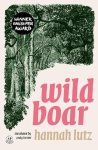
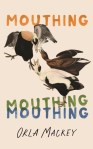
- It’s not a niche stylistic decision anymore; I was reading four novels with no speech marks at the same time: Old Soul by Susan Barker, Scaffolding by Lauren Elkin, The Alternatives by Caoilinn Hughes, and We Do Not Part by Han Kang. [And then, a bit later, three more: Wild Boar by Hannah Lutz, Mouthing by Orla Mackey, and How to Be Somebody Else by Miranda Pountney.]
 A lesbian couple is alarmed by the one partner’s family keeping guns in Spent by Alison Bechdel and one story of Are You Happy? by Lori Ostlund.
- Responding to the 2021 murder of eight Asian spa workers in Atlanta in Foreign Fruit by Katie Goh and Find Me as the Creature I Am by Emily Jungmin Yoon.
- Disposing of a late father’s soiled mattress in Mouthing by Orla Mackey and one story of Are You Happy? by Lori Ostlund.
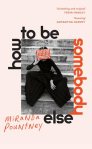 New York City tourist slogans in Apple of My Eye by Helene Hanff and How to Be Somebody Else by Miranda Pountney.
- A Jewish care home for the elderly in The End Is the Beginning by Jill Bialosky and Joanna Rakoff’s essay in What My Father and I Don’t Talk About (ed. Michele Filgate).
- A woman has no memory between leaving a bar and first hooking up with the man she’s having an affair with in If You Love It, Let It Kill You by Hannah Pittard and How to Be Somebody Else by Miranda Pountney.
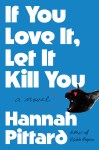 A stalker-ish writing student who submits an essay to his professor that seems inappropriately personal about her in one story of Are You Happy? by Lori Ostlund and If You Love It, Let It Kill You by Hannah Pittard.
- A pygmy goat as a pet (and a one-syllable, five-letter S title!) in Spent by Alison Bechdel and Sleep by Honor Jones.
- A Brooklyn setting and thirtysomething female protagonist in Sleep by Honor Jones, So Happy for You by Celia Laskey, and How to Be Somebody Else by Miranda Pountney.
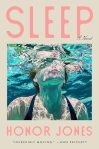
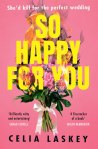
- A mention of the American Girl historical dolls franchise in Sleep by Honor Jones and If You Love It, Let It Kill You by Hannah Pittard, both of which I’m reviewing early for Shelf Awareness.
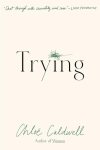 A writing professor knows she’s a hypocrite for telling her students what (not) to do and then (not) doing it herself in Trying by Chloé Caldwell and If You Love It, Let It Kill You by Hannah Pittard. These two books also involve a partner named B (or Bruce), metafiction, porch drinks with parents, and the observation that a random statement sounds like a book title.
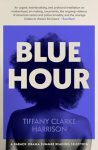
- The protagonist’s therapist asks her to find more precise words for her feelings in Blue Hour by Tiffany Clarke Harrison and So Happy for You by Celia Laskey.
- The protagonist “talks” with a dying dog or cat in The Möbius Book by Catherine Lacey and If You Love It, Let It Kill You by Hannah Pittard.
 Shalimar perfume is mentioned in Scaffolding by Lauren Elkin and Chopping Onions on My Heart by Samantha Ellis.
- The Rapunzel fairytale is a point of reference in In the Evening, We’ll Dance by Anne-Marie Erickson and Secret Agent Man by Margot Singer, both of which I was reading early for Foreword Reviews.
What’s the weirdest reading coincidence you’ve had lately?
20 Books of Summer, 18–20: Ayanna Lloyd Banwo, Sarah Hall, Meghan O’Rourke
Whew, it’s the final day of the challenge and I’ve managed to finish and write up a last batch of two novels and one nonfiction work: a magic realist tableau of love and death in Trinidad, a fateful romance set against the backdrop of the construction of an English dam in 1936, and a personal and cultural record of chronic illness and its treatment in contemporary America.
When We Were Birds by Ayanna Lloyd Banwo (2022)
 I was sent a copy as part of the McKitterick Prize shortlist. The setting of a cemetery, Fidelis in Port Angeles, Trinidad, had vaguely attracted me even before its nomination. Emmanuel Darwin has turned his back on his Rastafarian upbringing to cut off his dreadlocks and work as a gravedigger (any contact with the dead is anathema in the religion). Meanwhile, Yejide, who lives in the hills, is losing her mother, Petronella, and gaining a legacy she’s not sure she wants: the women of her family are caretakers of the souls of the dead, keeping them alive in exchange for protection. Like the corbeaux, dark counterparts of tropical parrots, they tread the border of life and death. As All Saints’ and All Souls’ Days draw closer, Darwin and Yejide together have to decide whether they will be swallowed by the graveyard or escape it. While this was atmospheric and had alluring elements, the speculative angle was not notably well realized and the particular form of patois – eschewing all possessives and most verb conjugations – drove me nuts. I skimmed this one. (Free from the Society of Authors)
Haweswater by Sarah Hall (2002)
I bought this in Cumbria one year and started reading it in Cumbria the next. Once I got home, however, there was little impetus to keep going. Were it not for the temporary local interest, I likely would not have finished this debut novel, which lurches between dry and melodramatic. As it is, I had to skim to the end. Had it been my first taste of Sarah Hall’s work, it might have put me off trying her again.
 The frame is historical: Haweswater was indeed dammed to provide water for the city of Manchester in 1936, flooding the village of Mardale. Hall focuses on the people of Mardale, specifically the Lightburn family, who have persisted with farming despite its particular challenges in this hilly landscape. When Jack Liggett comes out from the City on behalf of the waterworks, he meets with hostility, including from the Lightburns’ daughter, Janet, who negotiates for their tenancy to continue until the dam is actually built. Then, well, you know, Romeo and Juliet and pride and prejudice and all that, and they start an affair. Hall has always written forthrightly about sex, starting here.
There’s a climactic final 60 pages in which three major characters die, two in symbolic acts of suicide, but it was a little too much tragedy, too late, for me after the dull midsection. I was intrigued, however, that a plot point turns on golden eagles being in the valley, as Wild Fell, another of my Haweswater-set reads, opens with the presence of the ghost of England’s last golden eagle, who vanished in 2015. This related snippet shows how over-the-top Hall’s use of dialect is: “Golden eagles wud be mor’less gone, gone or illegal these days, like, notta funni bizniz t’be gittin’ mixed up in, eh? What kinda daft bugger d’yer take mi for?” It’s like Thomas Hardy rustics – hard to take seriously. (Anne-Marie Sanderson’s haunting song “Haweswater” is based on the novel.) (Secondhand – Clutterbooks, Sedbergh, 2022) 
The Invisible Kingdom: Reimagining Chronic Illness by Meghan O’Rourke (2022)
Well before I was a devoted follower of the Barbellion Prize for books on disability and chronic illness, I was interested in these topics. For much of her forties and fifties, my mother struggled with fibromyalgia, one of a suite of illnesses misunderstood or even dismissed by the medical profession (as O’Rourke puts it, with a tongue-in-cheek nod to Jane Austen: “it is a truth universally acknowledged among the chronically ill that a young woman in possession of vague symptoms like fatigue and pain will be in search of a doctor who believes she is actually sick”). I hope this National Book Award nominee goes some way toward convincing skeptics that these are real conditions to be addressed by listening to patients and treating them holistically.
 In 2012 the author became seriously ill and spent much of her thirties in a fog of pain, spending the equivalent of several days per month at doctors’ appointments and agreeing to ever more bizarre treatments in her desperation. Some of her issues were autoimmune and/or genetic: Hashimoto’s (thyroid), Ehlers-Danlos, POTS, endometriosis. She also dealt with infertility at the same time as she was trying to get well enough to contemplate having children. For her, the turning point was when she was diagnosed with Lyme disease and put on antibiotics. (Later she would travel to London to get fecal microbiota transplants to restore her microbiome.) Chronic Lyme is similar to long COVID, the true extent of which we’re only just beginning to understand; reading a list of the symptoms, I was tempted to remotely/retrospectively diagnose a few people I know with one or the other. It can be ever so slightly miserable reading about navigating all of these conditions, though nowhere near as miserable as it must have been for O’Rourke to live through them, of course.
I knew the author for her exquisite memoir of losing her mother to cancer, The Long Goodbye. Here the writing is more functional and journalistic, but I was still impressed by the attention she pays and the connections she draws; she’s also a poet, so she’s open to emotions and keen to capture them in words. In the face of the unexplained, she contends, chronically ill people are searching for meaning and narrative (restitution, chaos or quest, as Arthur Frank named the three options). She probes her own psyche: “had I become trapped in my identity as a sick person, someone afraid of living? If my mission in life had been reduced to being well at all costs, then the illness had won.” There’s a good balance of research, personal experience and general reflection in this one. (Passed along by Laura – thank you!) 
Related reads: Ill Feelings by Alice Hattrick, It’s All in Your Head by Suzanne O’Sullivan, Waiting for Superman by Tracie White
And that’s a wrap! My summer reading was a little scattered and not as thematic as initially planned, but I stuck to my pledge to read only print books that I owned, and then cleared half of them from my shelves through reselling or donating to the Little Free Library. I’ll definitely call that a win.
My favourite from the 20 was a novel, Search by Michelle Huneven, then Making the Beds for the Dead by Gillian Clarke (poetry), followed by two chef’s memoirs, A Cook’s Tour by Anthony Bourdain and Dirt by Bill Buford, and Dorthe Nors’ nature/travel essays. The one DNF and couple of skims are unfortunate, but these things happen.
Next year I fancy a completely open challenge – just, again, getting through books from my shelves. (Maybe all hardbacks?)
Doorstopper of the Month: A Reread of The Poisonwood Bible (1998)
“The fallen Congo came to haunt even our little family, we messengers of goodwill adrift on a sea of mistaken intentions.”
You may have gathered by now that I struggle with rereading. Often I find that on a second reading a book doesn’t live up to my memory of it – last year I reread just four books, and I rated each one a star lower than I had the first time. But that wasn’t the case with my September book club book, Barbara Kingsolver’s The Poisonwood Bible, which I’ve just flown through in 11 days. I first read it in the spring of 2002 or 2003, so maybe it’s that I’d allowed enough time to pass for it to be almost completely fresh – or that I was in a better frame of mind to appreciate its picture of harmful ideologies in a postcolonial setting. In any case, this time it struck me as a masterpiece, and has instantly leapt onto my favorites list.
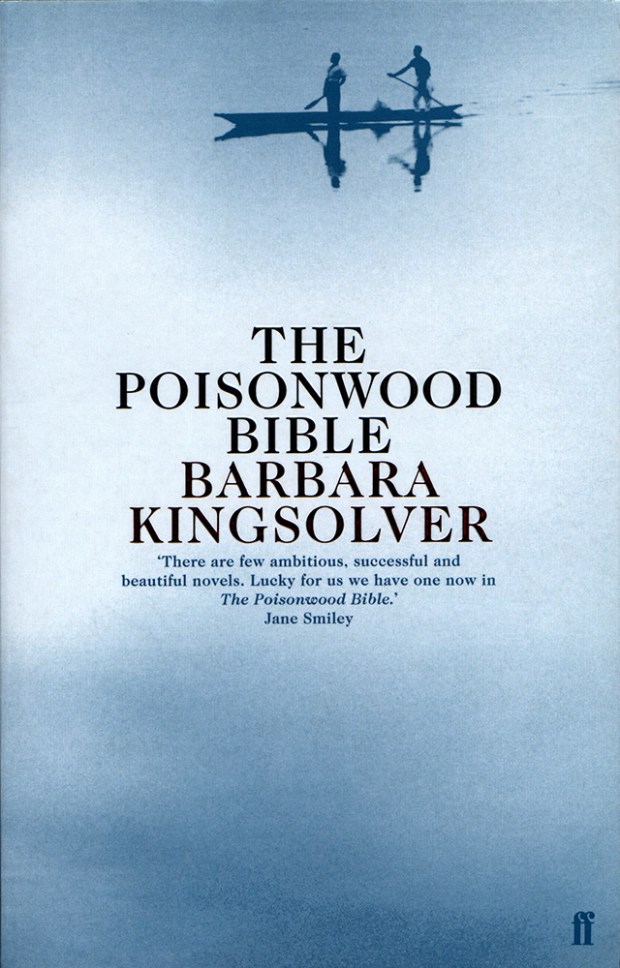
Here’s what I’d remembered about The Poisonwood Bible after the passage of 16–17 years:
- It’s about a missionary family in Africa, and narrated by the daughters.
- One of the sisters marries an African.
- The line “Nathan was made frantic by sex” (except I had it fixed incorrectly in my mind; it’s actually “Nathan was made feverish by sex”).
Everything else I’d forgotten. Here’s what stood out on my second reading:
- Surely one of the best opening lines ever? (Though technically there’s a prologue that comes before it.) “We came from Bethlehem, Georgia, bearing Betty Crocker cake mixes into the jungle.”
- The book is actually narrated in turns by the wife and four daughters of Southern Baptist missionary Nathan Price, who arrives in the Congo with his family in 1959. These five voices are a triumph of first-person narration, so distinct and arising organically from the characters’ personalities and experiences. The mother, Orleanna, writes from the future in despondent isolation – a hint right from the beginning that this venture is not going to end well. Fifteen-year-old Rachel is a selfish, ditzy blonde who speaks in malapropisms and period slang and misses everything about American culture. Leah, one of the 13-year-olds, is whip-smart and earnest; she idolizes their father and echoes his religious language. Her twin, Adah, who was born with partial paralysis, rarely speaks but has an intricate inner life she expresses through palindromes, cynical poetry and plays on words. And Ruth May, just five years old, sees more than she understands and sets it all across plainly but wittily.
- Nathan’s arrogant response to the ‘native customs’ is excruciating. His first prayer, spoken to bless the meal the people of Kilanga give in welcome, quickly becomes a diatribe against nakedness, and he later rails against polygamy and witch doctors and tries to enforce child baptism. When he refuses to take their housekeeper Mama Tataba’s advice on planting, all of the seeds he brought from home wash away in the first rainstorm. On a second attempt he meekly makes the raised beds she recommended, and keeps away from the poisonwood that made him break out in a nasty rash. This garden he plants is a metaphor for control versus adaptation.
- Brother Fowles, Nathan’s predecessor at the mission, is proof that Christianity doesn’t have to be a haughty rampage. He respects Africans enough to have married one, and his religion is a playful, elastic one built around love and working alongside creation.
- The King James Bible (plus Apocrypha, for which Nathan harbors a strange fondness) provides much of the book’s language and imagery, as well as the section headings. Many of these references come to have (sometimes mocking) relevance. Kingsolver also makes reference to classics of Africa-set fiction, like Chinua Achebe’s Things Fall Apart and Joseph Conrad’s Heart of Darkness.
- Africa is a place of many threats – malaria and dysentery, snakes in the chicken house, swarms of ants that eat everything in their path, corruption, political coups and assassinations – not least the risk of inadvertently causing grave cultural offense.
- The backdrop of the Congo’s history, especially the declaration of independence in 1960 and the U.S.-led “replacement” (by assassination) of its first prime minister, Patrice Lumumba, with the dictator Mobutu, is thorough but subtle, such that minimal to no Googling is required to understand the context. (Only in one place, when Leah and Rachel are arguing as adults, does Kingsolver resort to lecturing on politics through dialogue, as she does so noticeably in Unsheltered.)
- Names are significant, as are their changes. With the end of colonialism Congo becomes Zaire and all its cities and landmarks are renamed, but the change seems purely symbolic. The characters take on different names in the course of the book, too, through nicknames, marriage or education. Many African words are so similar to each other that a minor mispronunciation by a Westerner changes the meaning entirely, making for jokes or irony. And the family’s surname is surely no coincidence: we are invited to question the price they have paid by coming to Africa.
- We follow the sisters decades into the future. “Africa has a thousand ways to get under your skin,” Leah writes; “we’ve all ended up giving up body and soul to Africa, one way or another.” Three of the four end up staying there permanently, but disperse into different destinies that seem to fit their characters. Even those Prices who return to the USA will never outrun the shadow the Congo has left on their lives.
 What an amazing novel about the ways that right and wrong, truth and pain get muddied together. Some characters are able to acknowledge their mistakes and move on, while others never can. As Adah concludes, “We are the balance of our damage and our transgressions.”
I worried it would be a challenge to reread this in time to hand it over for my husband to take on his week-long field course in Devon, but it turned out to be a cinch. That’s the mark of success of a doorstopper for me: it’s so engrossing you hardly notice how long the book is. I think this will make for our best book club discussion yet. I can already think of a few questions to ask – Is it fair that Nathan never gets to tell his side of the story? Which of the five voices is your favorite? Who changes and who stays the same over the course of the book? – and I’m sure I’ll find many more resources online since this was an Oprah’s Book Club pick too.
English singer-songwriter Anne-Marie Sanderson’s excellent Book Songs, Volume 1 EP includes the song “Poisonwood.” The excerpted lyrics are below, with direct quotes from the text in bold.

Our Father speaks for all of us
Our Father knows what’s best for us as well
He planted a garden where poisonwood grew
He cut down the orchids cos none of us knew
that the seeds that filled his pockets
would grow and grow without stopping
his beans, his Kentucky Wonders
played their part in tearing us asunder.
Our mother suffered through all of this
Our mother carried the guilt
Carry us, marry us, ferry us, bury us
Carry us, bury us with the poisonwood.
Page count: 615
My rating: 
The Shortest of the Short: Four Novellas of under 50 Pages

Outside Stamford Library.
It’s a tradition now in its third and last year: I spend one day at the New Networks for Nature conference with my husband, and then (to save money, and because I’ve usually had my fill of stimulating speakers by then) wander around Stamford and haunt the public library on the other day.
 This past Saturday I browsed the charity shops and found a short story collection I’ve been interested in reading, but otherwise just spent hours in Stamford’s library looking through recent issues of the Times Literary Supplement and The Bookseller and reading from the stack of novellas I’d brought with me. I read four in one sitting because all were shorter than 50 pages long: two obscure classics and two nature books.

Fiction:
The Man Who Planted Trees by Jean Giono (1953)
[Translated from the French by Barbara Bray; 46 pages]
 Trees have been a surprise recurring theme in my 2018 reading. This spare allegory from a Provençal author is all about the difference one person can make. The narrator meets a shepherd and beekeeper named Elzéard Bouffier who plants as many acorns as he can; “it struck him that this part of the country was dying for lack of trees, and having nothing much else to do he decided to put things right.” Decades pass and two world wars do their worst, but very little changes in the countryside. Old Bouffier has led an unassuming but worthwhile life.
 There’s not very much to this story, though I appreciated the message about doing good even if you won’t get any recognition or even live to see the fruits of your labor. What’s most interesting about it is the publication history: it was commissioned by Reader’s Digest for a series on “The Most Extraordinary Character I Ever Met,” and though the magazine accepted it with rapture, there was belated outrage when they realized it was fiction. It was later included in a German anthology of biography, too! No one recognized it as a fable; this became a sort of literary in-joke, as Giono’s daughter Aline reveals in a short afterword.
Bartleby the Scrivener by Herman Melville (1853)
[40 pages from my Penguin Classics copy of Billy Budd, Sailor and Other Stories]
 You probably know the basic plot even if you’ve never read the story. Hired as the fourth scrivener in a Wall Street office of law-copyists, Bartleby seems quietly efficient until one day he mildly refuses to do the work requested of him. “I prefer not to” becomes his refrain. First he stops proofreading his copies, and then he declines to do any writing at all. (More and more these days, I find I have the same can’t-be-bothered attitude as Bartleby!) As the employer/narrator writes, “a certain unconscious air … of pallid haughtiness … positively awed me into my tame compliance with his eccentricities.” Farce ensues as he finds himself incapable of getting rid of Bartleby, even after he goes to the extreme of changing the premises of his office. Three times he even denies knowing Bartleby, but still the man is a thorn in his flesh, a nuisance turned inescapable responsibility. A glance at the introduction by Harold Beaver tells me I’m not the first to make such Christian parallels. (This was the first Melville I’ve read since an aborted attempt on Moby-Dick during college.)
Nonfiction:
The Company of Swans by Jim Crumley (1997)
[Illustrated by Harry Brockway, who also did the wood engravings for the Giono; 39 pages]

 Crumley is an underappreciated Scottish nature writer. Here he tells the tale of a pair of mute swans on a loch in Highland Perthshire. He followed their relationship with great interest over a matter of years. First he noticed that their nest had been robbed, twice within a few weeks, and realized otters must be to blame. Then, although it’s a truism that swans mate for life, he observed the cob (male) leaving the pen (female) for another! Crumley was overtaken with sympathy for the abandoned swan and got to feed her by hand and watch her fall asleep. “To suggest there was true communication between us would be outrageous, but I believe she regarded me as benevolent, which was all I ever asked of her,” he writes. Two years later he learns the end of her story. A pleasant ode to fleeting moments of communion with nature.
Favorite passages:
“Swans this wild let you into only a certain portion of their lives. They give you intimate glimpses. But you can never have any part in the business of being a swan. You can offer them no more than the flung tribute of your admiring gaze.”
“I think there is nothing in all nature that outshines that lustrous lacing of curves [of swan necks], nothing in all theatre that outperforms its pivotal tension.”
Holloway by Robert Macfarlane (2013)
[Illustrated by Stanley Donwood; 39 pages]
 In 2011 Macfarlane set out to recreate a journey through South Dorset that he’d first undertaken with the late Roger Deakin in 2005, targeting the sunken paths of former roadways. This is not your average nature or travel book, though; it’s much more fragmentary and poetic than you’d expect from a straightforward account of a journey through the natural world. I thought the stream-of-consciousness style overdone, and got more out of the song about the book by singer-songwriter Anne-Marie Sanderson. (Her Book Songs, Volume 1 EP, which has been one of my great discoveries of the year, is available to listen to and purchase on her Bandcamp page. It also includes songs inspired by Ian McEwan’s Sweet Tooth, Barbara Kingsolver’s The Poisonwood Bible, Sarah Hall’s Haweswater, and Doris Lessing’s Mara and Dann.) The black-and-white illustrations are nicely evocative, though.


Lines I liked:
“paths run through people as surely as they run through places.”
“The holloway is absence; a wood-way worn away by buried feet.”
 Bookish Beck = Rebecca Foster. American transplant to England. Freelance proofreader and book reviewer.
 Bookish Beck