A Recommendation for August
Each month I aim to preview two to four books to be released in the next month that I have already read and can recommend. It’s looking thin on the ground for August because two of my most anticipated reads of the year were disappointments, and another August release I left unfinished; I give mini write-ups of these below. However, I’ve very much enjoyed What It Means When a Man Falls from the Sky, the debut story collection by Lesley Nneka Arimah, which came out in America in April but releases on the 24th over here; I’ll be reviewing it for Shiny New Books shortly. Also, I’m 20% into The Education of a Coroner by John Bateson (releases August 15th), a fascinating set of sometimes gory true crime case studies.
As for the one August book I’m currently able to wholeheartedly recommend, that is…
The Futilitarians: Our Year of Thinking, Drinking, Grieving, and Reading by Anne Gisleson
(Coming from Little, Brown and Company on the 22nd)
 One for angsty, bookish types. In 2012 Anne Gisleson, a New Orleans-based creative writing teacher, her husband, sister and some friends formed an Existential Crisis Reading Group (which, for the record, I think would have been a better title). Each month they got together to discuss their lives and their set readings – both expected and off-beat selections, everything from Kafka and Tolstoy to Kingsley Amis and Clarice Lispector – over wine and snacks.
One of their texts, Arthur Koestler’s The Act of Creation, proposed the helpful notion of the Trivial and Tragic Planes. The Trivial is where we live everyday; the Tragic is where we’re transported when something awful happens. Gisleson had plenty of experience with the latter: not just the suicides of her younger twin sisters, a year and a half apart, and her father’s death from leukemia, but also the collective loss of Hurricane Katrina. She returns again and again to these sources of grief in her monthly chapters structured around the book group meetings, elegantly interweaving family stories and literary criticism.
I found the long quotes from the readings a little much – you probably shouldn’t pick this up if you haven’t the least interest in philosophy and aren’t much troubled by life’s big questions – but in general this is a fascinating, personal look at what makes life worth living when it might be shattered any second. I particularly loved the chapter in which the book club members creatively re-enact the Stations of the Cross for Easter and the sections about her father’s pro bono work as an attorney for death row inmates at Angola prison. Sometimes it really is a matter of life and death.
Favorite passage:
“Generations of parents have put their children to bed in this house and even if I haven’t quite figured out the why and the how of living, others have found reasons to keep moving things forward. In quiet moments I can feel the collective push of these ghost-hands on my back, nudging me on.”
My rating: 
And now for the ones I’m closer to lukewarm on…
(Reviews in the order in which I read the books.)
Mrs. Fletcher by Tom Perrotta
(Coming from Scribner on the 1st)
 I enjoy Tom Perrotta’s novels: they’re funny, snappy, current and relatable; it’s no surprise they make great movies. I’ve somehow read seven of his nine books now, without even realizing it. Mrs. Fletcher is more of the same satire on suburban angst, but with an extra layer of raunchiness that struck me as unnecessary. It seemed something like a sexual box-ticking exercise. But for all the deliberately edgy content, this book isn’t really doing anything very groundbreaking; it’s the same old story of temptations and bad decisions, but with everything basically going back to a state of normality by the end. If you haven’t read any Perrotta before and are interested in giving his work a try, let me steer you towards Little Children instead. That’s his best book by far.
My rating: 
Sour Heart by Jenny Zhang
(Coming from Lenny Books on the 1st [USA] and Bloomsbury Circus on the 10th [UK])
 I read “We Love You Crispina” (13%), about the string of awful hovels a family of Chinese immigrants is forced to move between in early 1990s New York City. You’d think it would be unbearably sad reading about cockroaches and shared mattresses and her father’s mistress, but Zhang’s deadpan litanies are actually very funny: “After Woodside we moved to another floor, this time in my mom’s cousin’s friend’s sister’s apartment in Ocean Hill that would have been perfect except for the nights when rats ran over our faces while we were sleeping and even on the nights they didn’t, we were still being charged twice the cost of a shitty motel.” Perhaps I’m out of practice in reading short story collections, but after I finished this first story I felt absolutely no need to move on to the rest of the book.
My rating: 
Forest Dark by Nicole Krauss
(Coming on the 24th from Harper [USA] and Bloomsbury [UK])
 Impressive in scope and structure, but rather frustrating. If you’re hoping for another History of Love, you’re likely to come away disappointed: while that book touched the heart; this one is mostly cerebral. Metafiction, the Kabbalah, and some alternative history featuring Kafka are a few of the major elements, so think about whether those topics attract or repel you. Looking a bit deeper, this is a book about Jewish self-invention and reinvention. Now, when I read a novel with a dual narrative, especially when the two strands share a partial setting – here, the Tel Aviv Hilton – I fully expect them to meet up at some point. In Forest Dark that never happens. At least, I don’t think so.* I sometimes found “Nicole” (the author character) insufferably clever and inward-gazing. All told, there’s a lot to think about here: more questions than answers, really. Interesting, for sure, but not the return to form I’d hoped for.
*Hop over to my Goodreads review to read the marked spoilers and chip in with comments!
My rating:
What August books do you have on the docket?
Have you already read any that you can recommend?
Blog Tour: My Mourning Year by Andrew Marshall
Andrew G. Marshall is the author of 18 self-help books about relationships. He has written for newspapers, appeared on television and radio programs, and worked as a marriage therapist. However, he has shared little about his own experience of relationships until now. Twenty years have passed since the death of his long-term partner, Thomas Hartwig. Sharing this diary of Thom’s death with several friends and family members who’d suffered recent bereavements seemed to help, so he’s hoping that in book form it can be of wider benefit to those who are in the midst of grief.
Marshall met Thom, then the headmaster of a German language school, on a holiday to Spain in September 1989. They alternated between Germany and England every other weekend for years, and in 1995 Thom finally relocated to join Marshall near Brighton. Thom had plans to start an interior design business, but fell ill just six months later. By early 1997, he had a diagnosis of liver failure and was given weeks to live. They traveled to Germany to get Thom a second opinion and, despite his resolution to die back in England, he breathed his last at the German hospital on March 9th, aged 43.
The above constitutes a brief Part One, while the rest of the book recounts the first full year after Thom’s death. Marshall tracks the changes in several areas of his life:
Family Life: “People become counselors to make sense of their difficult families, and of course I am no exception,” Marshall notes. He grew up in a conservative middle-class family in Bedford and didn’t come out until he was nearly 30. Hugely disappointed that his parents and sister didn’t make it to Thom’s memorial service, Marshall moves from not talking to his family at all to making tentative overtures of reconciliation. There’s a particularly touching scene where he confronts his parents about the way they repressed emotion while he was growing up and hears the words “I love you” from his father for the first time.
 Career: For part of his mourning year, Marshall worked on the Agony television program as an “agony uncle.” He took a break from Relate counseling, but continued to write freelance articles, many of them touching on illness and death, and contributed a “Revelations” celebrity profile column to the Independent, in which he interviewed authors and pop stars about life’s turning points. Two of my favorite moments in the book arise from this: Jim Crace (promoting Quarantine) tells how he realized the emptiness of atheism when burying his father; and Carol Shields’s Larry’s Party provides Marshall’s gateway into literary fiction, which he’d never attempted before.
Home Life: “There is something terribly sad about the clutter we accumulate,” Marshall sighs. “I was loved and I did love, but now all I had was this debris.” Thom moved to England with 87 packing cases; even at the hospital in Germany there were two bags of stuff to look through. Back in England, though Marshall tries to navigate around “Thom-shaped holes” in his life, especially near holidays, he realizes this relationship hasn’t ended: he kisses his lover’s ashes goodnight, and heeds Thom’s late advice to replace the vacuum cleaner. Meanwhile he goes on short vacations, sees friends, dogsits, and even tries counseling – but finds it’s “like watching a conjurer saw a lady in half, but knowing how he does it.”
Spirituality: Marshall has several experiences he has trouble explaining. For instance, at certain points he smells vanilla all around him and chooses to take it as a sign of Thom’s enduring presence – a trace of the vanilla candle that burned beside his deathbed. He also has some psychic messages conveyed, by both friends and strangers, and attends a spiritualist service. But it is an interview with forensics expert Kathy Reichs that helps him to once and for all detach the idea of Thom’s dead body from that of his spirit.
Self-Expression: Writing the “Revelations” column and this diary proved better therapy for Marshall than traditional counseling sessions. Towards the end of this book he also takes an introduction to playwriting course, and in the intervening years several of the plays he has written have been performed around the UK.
Love: After Thom’s death, Marshall was desperate for physical comfort, and temporarily found it with Peter, whom he met at a gay sauna. I admired Marshall’s honesty about this fling; it must have been tempting to excise it from the record to make himself look better. But their relationship never went beyond a few dates. This sad story has a happy coda, though: In 2001 Marshall met Ignacio, who became his civil partner in 2008 and his husband in 2015.
I’ve read many bereavement memoirs, but the diary format makes this one a unique blend of momentous occasions – Princess Diana’s funeral and the preparations for a catered dinner party on the anniversary of Thom’s death – and the challenges of everyday life. I would not hesitate to recommend it to anyone who has experienced or is currently enduring bereavement; it will be reassuring to read about the flux in Marshall’s emotions and see an example of how to rebuild after loss.
Perhaps this is the reality of mourning: you never get over the loss but reassemble the daily minutiae into a new life. At the beginning it feels like a box of flat-pack furniture with the instructions in Swedish, but finally you discover that tab A can slide into slot B. Eventually you own something quite functional – even though there are always a few screws left over and it never looks as good as it does in the catalogue.
Whether the clairvoyants are correct and Thom has become my guardian spirit is not important[;] he is always with me. I have integrated his personality into mine and in that way he lives on through me.
(For more on the author, and Thom, see the book’s website.)
My Mourning Year will be released by RedDoor Publishing on Thursday, April 20th. Thanks to Anna Burtt for the review copy.
My rating: 
Medical Mysteries: Joselin Linder’s The Family Gene
Yes, another memoir on a medical theme! I really do read a lot of them. My eye was drawn to The Family Gene: A Mission to Turn My Deadly Inheritance into a Hopeful Future by Joselin Linder because of the medical mystery aspect: 14 members of Linder’s Ashkenazi Jewish family are the only known exemplars of their particular genetic disease, so rare it doesn’t have a name or surefire treatment protocol, but now at least has a location on a chromosome.
 Linder’s awareness of her family’s peculiar medical problems began when her father, William, himself a doctor near their home in Columbus, Ohio, started having a persistent build-up of lymph (also known as chyle) in his abdomen – usually a sign of heart or liver failure. At one point doctors tapped four liters of the stuff from his lungs. Her father’s illness threw Linder, then a junior in college, for a loop; drugs and music started to replace academics. After he died, aged 49, in September 1996, she became a nomad, moving from Prague to San Francisco to Brooklyn and dabbling in different careers.
Only gradually did they all realize that the same thing had happened to William’s uncle, Nathan, in the 1960s and his grandmother, Mae, before that. While Mae lived to age 54, Nathan died at 34, even after treatment at NIH. Along with the lymphedema, a heart murmur was a common factor. William’s brother, Norman; Linder and her older sister, Hilary; and various cousins of their generation were diagnosed in this way. The author’s own symptoms were initially easily to ignore – swollen ankles and a low platelet count – but escalated in her thirties: a blocked vein in her liver meant she was in danger of bleeding out if she vomited.
It’s rare to be able to trace a genetic disease from its founder through to the present. In Linder’s case, her great-great-grandmother, Ester Bloom, is the first known sufferer. Researchers eventually isolated their family’s gene on the X chromosome, near the location for asthma. This explained why, historically, female family members had a better prognosis than males – they have one normal X chromosome and one diseased one; men only get the defective X chromosome – and why asthma medication helped to an extent.
There are a couple of chapters here on the basics of genetics that felt a little condescending to me; for anyone with a high school or A level biology qualification, the simplistic metaphors explaining the workings of DNA may seem superfluous. I also had trouble relating to Linder’s immediate reaction to her father’s death. Although he’d been severely ill for years by then, her attitude still seems a little heartless. Of the decision to take him off dialysis, she writes, “I was on board. It was time to call it a day.” When the family went around expressing opinions, she said, “I think it’s time, Dad. You’ve been through so much,” to which he replied “F— you”! An ex-boyfriend’s suicide a couple years later affected her much more than her own father’s death. Grief affects people in strange and unpredictable ways, I guess.
What I most appreciated was how the book sensitively reveals the ways a genetic condition complicates life, especially in America: Linder had to do without health insurance for 10 years, having been denied it in Ohio on the grounds of a pre-existing condition. In addition, she and her sister faced a quandary common to those who carry genetic diseases: should they have children? While Hilary underwent pre-implantation genetic diagnosis, a form of IVF, to bear healthy twins, Linder ultimately decided against having children.
I enjoyed the earlier part of this genetic quest narrative a bit more than the later material about Linder’s symptoms. Still, I can recommend this to viewers of House and readers of Susannah Cahalan’s Brain on Fire and the like.
The Family Gene is released by Ecco today. With thanks to Beth Parker and James Faccinto for the electronic review copy via Edelweiss.
My rating: 
Grief in Literature: Michel Faber and Cathy Rentzenbrink
On Tuesday night I had the chance to see Michel Faber in conversation with Cathy Rentzenbrink at Foyles bookstore in London. The topic was grief in literature, and specifically Faber’s book of poems in honor of his late wife, Undying: A Love Story (which I reviewed here in July). Faber had always written occasional poems, he said, “sort of kind of clever” stuff that he would have taken little note of if he encountered it from another author; the only really good ones, he thought, were about illness, based on his time as a nurse. So when there came this huge uprising of poems about Eva’s last illness, he felt they were a more appropriate way of commemorating her life than a novelistic narrative.

A six-floor bookshop: heaven for book lovers.
Rentzenbrink mentioned two things that particularly struck her: how Eva emerges in the fullness of her personality in the course of these poems, and the fact that the book is not angry. Faber explained that Eva herself was not angry. She did not think of multiple myeloma as her enemy and had no illusions about ‘beating’ cancer; instead, she just tried to achieve the best quality of life and the longest lifespan possible. In fact, she found cancer interesting, Faber recalled: she researched it as much as she could and followed its course with a certain curiosity. He contrasted her experience with that of an acquaintance in the Scottish Highlands who had the same disease and wanted to know nothing about it, leaving it all in the hands of her doctors. Faber believes this ignorance shortened their friend’s life unnecessarily.
Making sure that Eva came through as a real person in the poems was a struggle, Faber confessed. To start with his editors at Canongate, many of whom knew Eva, were frustrated that Undying was mercilessly medical, describing the process and aftermath of cancer treatment. A few poems, then, he wrote as a direct response to that criticism, almost as if ‘on commission’, he said, to infuse the book with more of Eva’s personality.
Only two of the poems were written while Eva was still alive, Faber noted. One was “Nipples,” written at her bedside just 10 days before her death. Eva had dealt with the pain and indignity of her illness admirably, but plasmacytomas – big purple welts all over her skin – truly broke her spirit, he revealed. His poem is a strangely erotic take on these blemishes: “Excited peaks of plasma. … Your flesh is riotous with the pleasure / of predatory cells.”

Cathy Rentzenbrink and Michel Faber
There’s irony there, and a certain dark humor in many of the rest. “There are so many absurdities when a body is breaking down spectacularly,” Faber said. And yet the last two years of Eva’s life were “incredibly intimate and tender,” as a fiercely independent woman ended up very frail and completely dependent on him as her carer. Likewise, Faber had to shift from creativity to practicality to cope with household tasks plus caregiving.
Cathy Rentzenbrink was the perfect person to interview Faber. She is the author of a bereavement memoir, The Last Act of Love, about her brother’s death after eight years in a vegetative state. Moreover, her mother survived a bout with cancer at the same age as Eva; she was heavily involved with that process through accompanying her to chemotherapy appointments. I was a bit disappointed that Rentzenbrink didn’t get to speak more about her own grief and the experience of crafting a narrative out of it. Faber said he too had envisioned more of a dialogue, but that Rentzenbrink thought it would be inappropriate for her to talk about herself and generously kept the focus on his work instead.
I also would have appreciated more context about grief literature in general, and poetry in particular. Faber did mention that there are many kinds of grief poetry. For instance, Thomas Hardy was still writing poems about his first wife decades after her death. Faber consciously avoided writing elegant, well-formed poetry like some that he’s read; instead he wanted his poems to be raw, direct, even shocking. Contrast that with the rainbows and heavenly visions of much of what’s out there. This came home to me a few weeks ago at my husband’s uncle’s funeral. Three poems were recited in the course of the ceremony, all of them heavily clichéd and unfailingly rhymed. This meant that the speakers ended up using singsong voices. In Faber’s poems, though, end rhymes are rare. I noticed them more, along with the sibilance and internal rhymes, through the emphasis he lent when reading aloud.
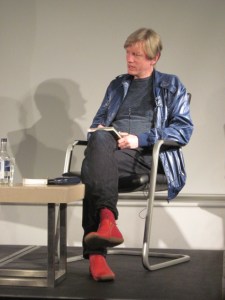 Rentzenbrink insisted there is still life to be lived for the grieving. As if to reinforce her point, Faber openly admitted to his relationship with a fellow writer who also lost a longtime partner, Louisa Young, whom he met the year after Eva’s death. He’s aware that this poses a marketing problem: he’s no longer the disconsolate soul in rumpled clothing, barely surviving without his spouse. (Indeed, he looked well put together and hip in his blue leather jacket and bright orange shoes, and his blond mop makes him appear much younger than he is.) Thinking also of a widower friend, Rentzenbrink said that her feeling was “he looked after her for so many years; he can have a little fun now!”
As to Faber’s professional future, he reiterated that he does not plan to write any more novels for adults. All of his fiction is about characters desperate to transcend, he said, and now it’s time for him to do that in his own life. He’s pondered a couple of nonfiction projects about aesthetics and music, but for now his next goal is a YA adventure novel. Whenever plaintive readers beg him for future novels, he cheekily asks whether they’ve read his whole back catalogue – including two collections of short stories, always a hard sell for novel readers. I have six more of Faber’s books to get to myself, so that’s plenty to fuel me in the years ahead. I came away from this event with a greater appreciation for the poems in Undying and a deep respect for a man aware of the seasons of his life, writing and caregiving among them.
Books in Brief: Five I Enjoyed Recently
Lab Girl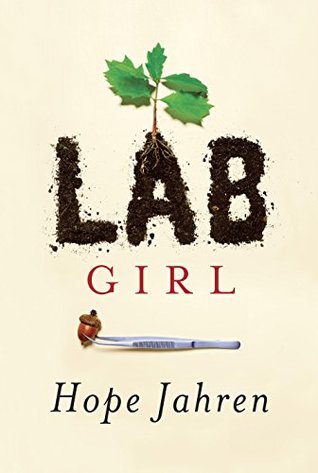
By Hope Jahren
This memoir puts so many things together that it shouldn’t work, yet somehow – delightfully – does. With witty anecdotes and recreated dialogue, Jahren tells about her Minnesota upbringing, crossing the country to take up geobiology/botany academic posts in Atlanta, Baltimore and Hawaii, her long-time platonic relationship with eccentric lab partner Bill, and zany road trips for conferences and field work. On the serious side, she writes about how bipolar disorder complicated work life, marriage and motherhood. Add to that the interspersed chapters illuminating aspects of plant biology and you get a truly varied and intricate narrative. What Jahren does best is simply convey what it is like to have true passion for your work, a rare thing. You don’t have to be a science type to enjoy this book. All that’s required is curiosity about how others live. Jahren might even inspire you to go plant a tree.
My rating: 
 It’s Okay to Laugh (Crying Is Cool, Too)
By Nora McInerny Purmort
Purmort was hit by a triple whammy of loss: within weeks of miscarrying her second child, both her father and her husband were dead of cancer. After a seizure revealed his brain tumor, she and Aaron got engaged on his hospital bed and went through fertility treatment to have their son. All in all they got three years together, after which the Minneapolis-based author founded what she calls the “Hot Widows Club.” She’s only about my age but, as she puts it, has “been through some shit.” The book is in the form of short essays, a lot like blog entries, that tread the fine line between heartbreak and humor. I might have preferred a bit more of a narrative; I wearied of open letters and lists. The book is best where she eases up on self-deprecating jokes and pop culture references and just tells her story, so much of which resonates with my sister’s experience. As soon as I finished the book, I ordered her a copy.
My rating:
My Heart Can’t Even Believe It: A Story of Science, Love, and Down Syndrome
 By Amy Silverman
When her younger daughter Sophie was born with Down’s syndrome in 2003, Silverman had no idea what to expect. The long-time Arizona journalist put her investigative skills to work, finding out everything she could about the discovery of Down’s and the history of how patients have been treated down the decades. In addition, she delves into the foundation of the Special Olympics (which had a connection with the Kennedy family) and its alternatives, and – not being a “support group kinda girl,” the other sources of encouragement she finds, especially through fellow bloggers. A significant portion of the book is about finding the best schools for Sophie – information that may well be not just U.S.-specific but particular to Arizona, where charter schools are popular. Still, what comes through is Silverman’s fierce love for her daughter and her insistence that every person with Down’s is an individual.
My rating:
 How to Ruin Everything: Essays
By George Watsky
Watsky is a slam poet and rap/hip hop artist from San Francisco. These essays about his misadventures reminded me most of Lauren Weedman (Miss Fortune) and John Jeremiah Sullivan (Pulphead). My favorite pieces were “Tusk,” on smuggling a narwhal tusk from Canada to the States to be his roommate’s great-aunt June’s hundredth birthday present, and “The White Whale,” about his unreliable tour bus. Others see him moving from a crumbling Boston college house to the heart of Hollywood deadbeat territory, traveling through India, fishing in Alaska, trying to attract older women, and reflecting on a childhood love of baseball. In the other stand-out essay, a more serious one, he reveals his experience of epilepsy and weaves in the history of its diagnosis and treatment. Also remarkable was a mention of Pauly Shore, a personage I haven’t thought about in, oh, I don’t know, a decade?
My rating:
Only in Naples: Lessons in Food and Famiglia from My Italian Mother-in-Law
 By Katherine Wilson
This is just the kind of book I would want to write about my experience studying abroad in England and eventually settling here. Of course, Wilson had it harder: she had to conduct her romance with Salvatore Avallone, relate to her future in-laws, and start a career all in a different language. But there were consolation prizes, chief among them the food. A lot of the best anecdotes revolve around Italian cuisine, like Salva’s mother Raffaella sending food down to her daughter in the apartment below via the elevator, or his uncle catching octopi with his one arm. I loved the colorful Italian and Neapolitan dialect expressions Wilson dots around, and as a fellow expat it was interesting to see what her non-negotiable American imports are (we all have our own list, I’m sure): wall-to-wall carpeting, air conditioning, a garbage disposal, and peanut butter – I’m with her on that last one, anyway.
My rating:
(For each one, read my full Goodreads review by clicking on the title link.)
Have you read any of these? Which one takes your fancy?
Note: I’m traveling until the 24th so won’t be responding to comments right away, but will be sure to catch up soon after I’m back. I always welcome your thoughts!
My Favorite Nonfiction Reads of 2015
Without further ado, I present to you my 15 favorite non-fiction books read in 2015. I’m a memoir junkie so many of these fit under that broad heading, but I’ve dipped into other areas too. I give two favorites for each category, then count down my top 7 memoirs read this year.
Note: Only four of these were actually published in 2015; for the rest I’ve given the publication year. Many of them I’ve already previewed through the year, so – like I did yesterday for fiction – I’m limiting myself to two sentences per title: the first is a potted summary; the second tells you why you should read this book. (Links given to full reviews.)
Foodie Lit
 A Homemade Life: Stories and Recipes from My Kitchen Table by Molly Wizenberg (2009): Wizenberg reflects on the death of her father Burg from cancer, time spent living in Paris, building a new life in Seattle, starting her food blog, and meeting her husband through it. Each brief autobiographical essay is perfectly formed and followed by a relevant recipe, capturing precisely how food is tied up with memories.
 Comfort Me with Apples: More Adventures at the Table by Ruth Reichl (2001): Reichl traces the rise of American foodie culture in the 1970s–80s (Alice Waters and Wolfgang Puck) through her time as a food critic for the Los Angeles Times, also weaving in personal history – from a Berkeley co-op with her first husband to a home in the California hills with her second after affairs and a sticky divorce. Throughout she describes meals in mouth-watering detail, like this Thai dish: “The hot-pink soup was dotted with lacy green leaves of cilantro, like little bursts of breeze behind the heat. … I took another spoonful of soup and tasted citrus, as if lemons had once gone gliding through and left their ghosts behind.”
Nature Books
 Meadowland: The Private Life of an English Field by John Lewis-Stempel (2014): Lewis-Stempel is a proper third-generation Herefordshire farmer, but also a naturalist with a poet’s eye. Magical moments and lovely prose, as in “The dew, trapped in the webs of countless money spiders, has skeined the entire field in tiny silken pocket squares, gnomes’ handkerchiefs dropped in the sward.”
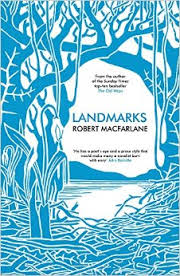 Landmarks by Robert Macfarlane: This new classic of nature writing zeroes in on the language we use to talk about our environment, both individual words – which Macfarlane celebrates in nine mini-glossaries alternating with the prose chapters – and the narratives we build around places, via discussions of the work of nature writers he admires. Whether poetic (“heavengravel,” Gerard Manley Hopkins’s term for hailstones), local and folksy (“wonty-tump,” a Herefordshire word for a molehill), or onomatopoeic (on Exmoor, “zwer” is the sound of partridges taking off), his vocabulary words are a treasure trove.
Theology Books
 Amazing Grace: A Vocabulary of Faith by Kathleen Norris (1998): In few-page essays, Norris gives theological words and phrases a rich, jargon-free backstory through anecdote, scripture and lived philosophy. This makes the shortlist of books I would hand to skeptics to show them there might be something to this Christianity nonsense after all.
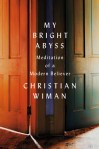 My Bright Abyss: Meditation of a Modern Believer by Christian Wiman (2013): Seven years into a cancer journey, Wiman, a poet, gives an intimate picture of faith and doubt as he has lived with them in the shadow of death. Nearly every page has a passage that cuts right to the quick of what it means to be human and in interaction with other people and the divine.
General Nonfiction
 Penelope Fitzgerald: A Life by Hermione Lee (2013): Although Penelope Fitzgerald always guarded literary ambitions, she was not able to pursue her writing wholeheartedly until she had reared three children and nursed her hapless husband through his last illness. This is a thorough and sympathetic appreciation of an underrated author, and another marvellously detailed biography from Lee.
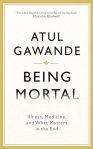 Being Mortal: Medicine and What Matters in the End by Atul Gawande (2014): A surgeon’s essential guide to decision-making about end-of-life care, but also a more philosophical treatment of the question of what makes life worth living: When should we extend life, and when should we concentrate more on the quality of our remaining days than their quantity? The title condition applies to all, so this is a book everyone should read.
Memoirs
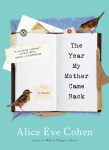 The Year My Mother Came Back by Alice Eve Cohen: Wry and heartfelt, this is a wonderful memoir about motherhood in all its variations and complexities; the magic realism (Cohen’s dead mother keeps showing up) is an added delight. I recommend this no matter what sort of relationship, past or present, you have with your mother, especially if you’re also a fan of Anne Lamott and Abigail Thomas.
- The Art of Memoir
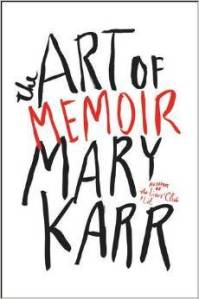 by Mary Karr: There is a wealth of practical advice here, on topics such as choosing the right carnal details (not sexual – or not only sexual – but physicality generally), correcting facts and misconceptions, figuring out a structure, and settling on your voice. Karr has been teaching (and writing) memoirs at Syracuse University for years now, so she’s thought deeply about what makes them work, and sets her theories out clearly for readers at any level of familiarity.
 A Circle of Quiet by Madeleine L’Engle (1971): In this account of a summer spent at her family’s Connecticut farmhouse, L’Engle muses on theology, purpose, children’s education, the writing life, the difference between creating stories for children and adults, neighbors and fitting into a community, and much besides. If, like me, you only knew L’Engle through her Wrinkle in Time children’s series, this journal should come as a revelation.
-
 Do No Harm: Stories of Life, Death and Brain Surgery by Henry Marsh (2014): “Terrible job, neurosurgery. Don’t do it.” – luckily for us, Henry Marsh reports back from the frontlines of brain surgery so we don’t have to. In my favorite passages, Marsh reflects on the mind-blowing fact that the few pounds of tissue stored in our heads could be the site of our consciousness, our creativity, our personhood – everything we traditionally count as the soul.
 I Hate to Leave This Beautiful Place by Howard Norman (2013): Norman has quickly become one of my favorite writers. You wouldn’t think these disparate autobiographical essays would fit together as a whole, given that they range in subject from Inuit folktales and birdwatching to a murder–suicide committed in Norman’s Washington, D.C. home and a girlfriend’s death in a plane crash, but somehow they do; after all, “A whole world of impudent detours, unbridled perplexities, degrading sorrow, and exacting joys can befall a person in a single season, not to mention a lifetime.”
 Portrait of an Addict as a Young Man by Bill Clegg (2010): Through this book I followed literary agent Bill Clegg on dozens of taxi rides between generic hotel rooms and bar toilets and New York City offices and apartments; together we smoked innumerable crack pipes and guzzled dozens of bottles of vodka while letting partners and family members down and spiraling further down into paranoia and squalor. He achieves a perfect balance between his feelings at the time – being out of control and utterly enslaved to his next hit – and the hindsight that allows him to see what a pathetic figure he was becoming.
And my overall favorite nonfiction book of the year:
 1. The Light of the World by Elizabeth Alexander: In short vignettes, beginning afresh with every chapter, Alexander conjures up the life she lived with – and after the sudden death of – her husband Ficre Ghebreyesus, an Eritrean chef and painter. This book is the most wonderful love letter you could imagine, and no less beautiful for its bittersweet nature.
What were some of your best nonfiction reads of the year?
Reviews Roundup, September–October
One of my goals with this blog is to have one convenient place where I can gather together all my writing that has appeared in disparate online locations. To that end, once a month I’ll provide links to all the book reviews I’ve published elsewhere, with a rating (below each description) and a short taster so you can decide whether to click to read more. A couple of exceptions: I won’t point out my Kirkus Indie, BlueInk or Publishers Weekly reviews since I don’t get a byline.
The Bookbag
Rising Strong by Brené Brown: Brown, a qualitative researcher in the field of social work, encourages readers to embrace vulnerability and transform failure and shame through a simple process of re-evaluating the stories we tell ourselves. The gimmicky terminology and frequent self-referencing grated on me a bit, but I appreciated how the book made me reconsider events from my own life. It’s the ideas that carry Rising Strong, so as long as you come to it expecting a useful tool rather than a literary experience you shouldn’t be disappointed. Genuinely helpful self-help.

 Life After You by Lucie Brownlee: With honesty and humor, Brownlee reconstructs the two years following her husband’s sudden death. My sister is still a new widow, so I read this expecting it to resonate with her situation, and it certainly does. I had an issue with the title and marketing, though. When originally published last year, the book had the title Me After You. That’s been changed to sound a little less like a Jojo Moyes novel, but the cover is more chick lit than ever, which doesn’t really match the contents of the book.
The Glass Girl by Sandy Hogarth (& interview): Moving between Australia and England and spanning several decades of Ruth Bishop’s life, this debut novel explores the psychological effects of sexual trauma and betrayal. The middle of the book feels a little meandering, and the chronology is sometimes over-complicated. However, Ruth’s is a warm first-person voice, and the ending hints at welcome resolution to unanswered questions. My favorite aspect of the novel, though, is the frequent observations of the natural world.

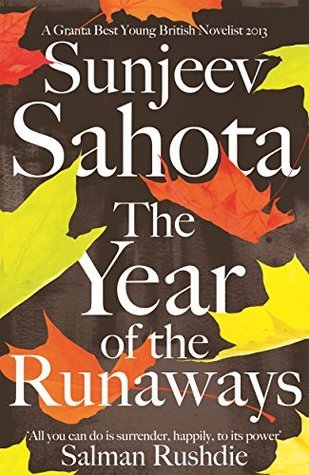 The Year of the Runaways by Sunjeev Sahota: With multilingual slang and several Sikh characters, Sahota’s second novel illuminates aspects of the South Asian experience that might be unfamiliar. Daily life is a struggle for Tochi, Randeep and Avtar: they work multiple jobs to make ends meet, serving at Crunchy Fried Chicken, cleaning sewers, or building a luxury hotel in Leeds. The fourth protagonist is Randeep’s visa-wife, Narinder. Through flashbacks we discover each one’s past. It’s a harrowing read, but you can’t help but sympathize with the four runaways as they make and dissolve connections over the year.
The Gap of Time by Jeanette Winterson: This contemporary ‘cover version’ of The Winter’s Tale links a London financier, a Parisian singer, and a blended family in New Orleans. Winterson creates clear counterparts for each Shakespeare characters, often tweaking names so they are recognizable but more modern. Inventive and true to the themes and imagery (time, adoption; angels, bears, statues) of the original, but ultimately adds little to one’s experience of Shakespeare. I’ll hope for better things from the rest of the Hogarth Shakespeare series. (Still to come: Margaret Atwood on The Tempest, Howard Jacobson on The Merchant of Venice and Anne Tyler on The Taming of the Shrew, among others.)
BookBrowse
 After the Parade by Lori Ostlund [subscription service, but the full text of my review will be available for free during the week of October 20th as part of Editor’s Choice]: Ostlund’s debut novel explores trauma and loneliness through the past and present of the protagonist, an ESL teacher who has just left his long-term partner, as well as the stories of those he meets. Although set over a six-month period, the novel is so full of flashbacks that it feels dense with the weight of the past. At times this can seem more like a set of short stories, only loosely connected through Aaron. Still, the overarching theme is strong and resonant: “after the parade,” after everything has changed irrevocably, you must keep going, pushing past the sadness to build a new life.
BookTrib
 The Best Small Fictions 2015, ed. by Tara L. Masih and Robert Olen Butler: In this very strong anthology of flash fiction, stories range from Tweet length to a few pages, but are always under 1,000 words. Titles and first lines carry a lot of weight. One of the best openers is “I didn’t recognize her without her head” (“Before She Was a Memory,” Emma Bolden). In genre the stories run the gamut from historical fiction to whimsical fantasy. You’ll be introduced to a wealth of fresh and existing talent. There are literally dozens of stand-outs here, but if I had to choose a top 3, they’d be “A Notice from the Office of Reclamation” by J. Duncan Wiley, “The Lunar Deep” by David Mellerick Lynch, and (overall favorite) “Something Overheard” by Yennie Cheung.
For Books’ Sake
 Fates and Furies by Lauren Groff: An incisive study of a marriage, beautifully written and rich with allusions to Shakespeare and Greek mythology. Short, verbless sentences pile up to create exquisite descriptions, as in “Sunset. House on the dunes like a sun-tossed conch. Pelicans thumb-tacked in the wind.” However, I was less sure about the necessity of the bracketed phrases, which seem to represent a Greek chorus giving omniscient commentary, and the use of slang and nicknames can grate. Groff makes it onto a short list of women I expect to produce the Great American Novel.
Foreword Reviews
 When All Goes Quiet by Augustinus F. Lodewyks: This religious memoir should interest those who are curious about how spiritual experience can infiltrate everyday life. “When all goes quiet, I know that Heaven is trying to show me its glory,” Lodewyks writes. In autobiographical vignettes, he vividly expresses his mystical visions, particularly those featuring Jesus, the Virgin Mary and angels, who tend to appear in times of crisis and during events of ritual significance like weddings, funerals and religious pilgrimages. Some will still object to the overt proselytizing, especially in the book’s last quarter.

The Blessing of Movement by Deborah Konrad: Konrad’s story is an inspirational memoir about life with disability and caring for dying relatives. Her sister Sandra became a quadriplegic in her twenties. Throughout the book, Konrad investigates the secret strength that underlay “the sunny disposition of the pretty paralyzed woman.” She concludes that it was all about thankfulness, as proven by Sandra’s gratitude journal. Konrad’s own life undeniably gets sidelined, though; more self-reflection would provide a good match for her insights into her sister’s character.
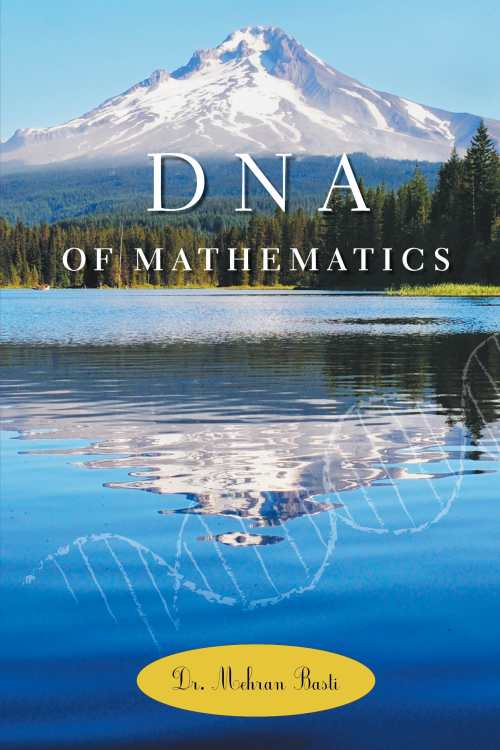 DNA of Mathematics by Mehran Basti: Drawing on his academic specialty in mathematics, Basti explores how scientific theories have been used and misused through history. The book lacks focus due to frequent unrelated asides. It may be difficult to grant credibility to a scientist who dismisses the big bang because it was theorized through “semi-broken scientific methods” and seems to have a personal vendetta against Stephen Hawking. Most importantly, the mathematics that forms the book’s basis is never fully explained.

From Hell to Heaven, One Man’s Journey by Gustav Daffy: This book was inspired by an acrimonious divorce and other family troubles; although Christian faith helped Gustav adjust his thinking, many of the poems still feel like the angry outpourings of a man with an ax to grind. Moreover, formulaic rhyming and poor spelling and grammar mar this overlong collection. It would take a professional copyeditor to hone this into a concise set of linguistically and stylistically acute poems. However, the author’s in-the-moment reactions are easy to relate to.
Shiny New Books
 Grief Is the Thing with Feathers by Max Porter: It may seem perverse to twist Emily Dickinson’s words about hope into a reflection on bereavement, but Porter’s exceptional debut does just that: tweak poetic forebears – chiefly Poe’s “The Raven” and Ted Hughes’s Crow – to create a hybrid response to loss. The novella is composed of three first-person voices: Dad, Boys and Crow (the soul of the book: witty, onomatopoeic, often macabre). Dad and his two young sons are adrift in mourning; the boys’ mum died after an unspecified accident in their London flat. The three narratives resemble monologues in a play, with short lines laid out on the page more like stanzas of a poem.
We Love This Book
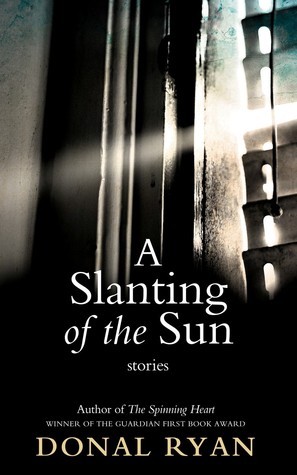 A Slanting of the Sun by Donal Ryan: The Irish author of the novels The Spinning Heart (winner of the Guardian First Book Award in 2013) and The Thing About December, returns with 20 jolting, voice-driven short stories suffused with loneliness and anger. Nineteen of the 20 are in the first person, echoing the chorus of voices that made The Spinning Heart so effective. Many of the narrators speak in thick dialect and run-on sentences, which helps to immerse you in the rhythms of Irish speech. In a book full of lonely people, it is the moments of connection – however fleeting – that matter. For example, in “Long Puck,” one of the best stories, a Catholic priest posted to Syria initiates interfaith hurling matches that temporarily lift everyone’s spirits.
I also post reviews of most of my casual reading and skimming on Goodreads.
 The River by Helen Humphreys: Humphreys has lived along Ontario’s Napanee River for over a decade. I was expecting a blend of personal reflection and natural observations, but instead the book is mostly composed of brief fictional passages illuminating a handful of species. I liked the passages about the heron best – Humphreys successfully imagines the life of a plume hunter and contrasts it with the excitement of two women involved in the foundation of a bird conservation charity. However, much of the book felt like unconnected vignettes, not building to any kind of grander picture of a location.

The Mountain Can Wait by Sarah Leipciger: The novel opens and closes with a hit-and-run, but in between those momentous peaks it’s a quieter tale of a single father trying to guide his son and daughter into young adulthood in the wilds of Canada’s west and islands. Tom Berry’s work is not cutting trees down but planting them – an interesting adaptation of a traditional woodsman’s activity to a new eco age. I found the story a little sleepy but loved Leipciger’s writing, especially her account of the daily drudgery of manual labor and her descriptions of wilderness scenery.
 Decline of the Animal Kingdom by Laura Clarke: Bizarre, in-your-face poetry from a 30-year-old Canadian: business jargon, YouTube videos, fast food…and, yes, animals. Many of the poems feature mules and lions, including weird dialogues between a mule and its supervisor / domestic partner / psychiatrist. With plays on words and sexualized vocabulary, Clarke considers inter-species altruism and the inevitable slide towards extinction. Two favorite lines: “You forget you live parallel to violence” (from “Carnivora”); “The Tasmanian tiger live-tweets its extinction from the Hobart zoo in 1933” (from “Extirpation”).
Do No Harm: Stories of Life, Death and Brain Surgery by Henry Marsh: “Terrible job, neurosurgery. Don’t do it.” Lucky for us, Henry Marsh reports back from the frontlines of brain surgery so we don’t have to. He’s nearing retirement age after a career divided between a London hospital and medical missions to Ukraine. The punchy chapters are named after conditions he has treated or observed. Marsh comes across as having a hot temper, exhibiting extreme frustration with NHS bureaucracy. At the same time, he gets very emotional over his patients declining and dying, and experiences profound guilt over operations that go wrong or were ultimately unnecessary.

 In the Flesh by Adam O’Riordan: My favorite poems in O’Riordan’s debut collection were about Victorian Manchester, 1910s suffragettes and the Wordsworths, this last based on the author’s year in residence at their Lake District cottage. I also liked “The Corpse Garden” – about the outdoor forensic lab in Knoxville, Tennessee – and a couple of multi-part poems that seem to enliven family history. It’s the vocabulary and alliteration that make these poems; there are only a handful of rhyming couplets.
A Circle of Quiet by Madeleine L’Engle: If, like me, you only knew L’Engle through her Wrinkle in Time children’s series, this journal should come as a revelation. I didn’t know she wrote any nonfiction for adults. The Crosswicks books cannot be called simple memoirs, however; there’s so much more going on. In this journal (published 1972) of a summer spent at their Connecticut farmhouse, L’Engle muses on theology, purpose, children’s education, the writing life, the difference between creating stories for children and adults, neighbors and fitting into a community, and much besides.
 A View of the Harbour by Elizabeth Taylor: My third Taylor – not as good as Mrs. Palfrey, but better than Angel. It’s about the everyday family and romantic entanglements of a small English harbor village in the 1940s. Beth is a preoccupied writer who doesn’t notice that her husband, the local doctor, is carrying on an affair with her best friend, the divorcée Tory, who is also their next-door neighbor. As always, Taylor has great insight into the human psyche and unlikely relationships. The plot is low on thrills for sure, but it’s pleasant reading, especially if you’re on holiday at the seaside (I started reading it on the coast near Dublin).
Amazing Grace: A Vocabulary of Faith by Kathleen Norris: This makes the shortlist of books I would hand to skeptics to show them there might be something to this Christianity nonsense after all. Norris spent 20 years away from the faith but gradually made her way back, via the simple Presbyterianism of her Dakota relatives but also through becoming an oblate at a Benedictine monastery – two completely different expressions of the same faith. In few-page essays, she gives each word or phrase a rich backstory through anecdote, scripture and lived philosophy, ensuring that it’s not just religious jargon anymore.
 Undermajordomo Minor by Patrick deWitt: What The Sisters Brothers did for the Western, this does for the Gothic fairytale. It’s not quite as fun or successful as the previous book, but has a nicely campy Dracula or Jane Eyre feel. Lucien “Lucy” Minor, a compulsive liar, sets out to find adventure and romance as undermajordomo of a castle in the quaint German countryside. Here he meets pickpockets, a periodically insane baron, a randy maiden, and a strapping rival who’s a soldier in the absurdist local conflict. DeWitt’s understated humor is not as clearly on display here; there’s also, strangely, quite a bit of sex.
Sentenced to Life by Clive James: James, an Australian critic and all-round man of letters, was first diagnosed with leukemia in 2010. After a setback in 2013, he’s rallied, but these poems are certainly infused with a sense of imminent mortality. The incessant ABAB rhyming in the early poems set up a jaunty rhythm I didn’t find appropriate to the subject matter; I much prefer the later unrhymed poems. “Plot Points” is my favorite, artfully linking disparate historical moments.
 Gold Fame Citrus by Claire Vaye Watkins: Gold, fame, citrus: reasons people once came to California. Now, only a desperate remnant remains in this waterless wasteland. Luz and Ray squat in a starlet’s abandoned mansion and live off of Luz’s modeling money – she was once the environmental movement’s poster child, “Baby Dunn.” When they take charge of a baby called Ig, however, their priorities change. They set off for the strangely beautiful sea of dunes, the Amargosa, leaving behind the ‘frying pan’ of exposure to the elements for the ‘fire’ of a desert cult. There is some absolutely beautiful prose. This is the book that California (Edan Lepucki) wanted to be.
Satin Island by Tom McCarthy: U. is a corporate anthropologist in London, coming off the success of the Koob–Sassen contract and facing the blank page of the Great Report he’s tasked with writing. Not much happens here; the book is more about his anthropological observations and the things he fixates on, like oil spills, a sabotaged parachutist, and Satin Island – a place he encounters in a dream and then, by word association, likens to Staten Island, a destination he doesn’t quite make it to. For me the most interesting parts were about narrative. I found this too clever for its own good; not Booker Prize material.
Reviews Roundup, June–July
One of my goals with this blog is to have one convenient place where I can gather together all my writing that has appeared in disparate online locations. To that end, once a month I’ll provide links to all the book reviews I’ve published elsewhere, with a rating and a short taster so you can decide whether to click to read more. (A couple of exceptions: I won’t point out my Kirkus Indie or BlueInk reviews since I don’t get a byline.)
BookBrowse
 Death and Mr. Pickwick by Stephen Jarvis [subscription service; excerpt available to non-subscribers]: The Pickwick Papers was a Victorian publishing phenomenon. Originally envisioned as a series of sporting tales to accompany Robert Seymour’s engravings in a monthly magazine, the story soon took on a life of its own. Debut novelist Jarvis believes that a conspiracy between Dickens and his publishers covered up two key facts: Pickwick was primarily Seymour’s creation, and Dickens’s brash attempt to take it over was the impetus for Seymour’s suicide in 1836. At 800+ pages, this novel is chock-full of digressions – some amusing, others seemingly irrelevant. Jarvis started the project with the ambition of reading everything ever written about Pickwick. The results are exhaustive…but also a little exhausting.
 Hakai Magazine (a Canadian publication highlighting coastal ecosystems)
Coastlines by Patrick Barkham: In his third nature book, Guardian journalist Patrick Barkham blends science, history, and biography as he travels sections of the British coast protected through Enterprise Neptune, a National Trust campaign celebrating its 50th anniversary this year. His structural approach is unconventional: neither chronological nor geographical, but thematic. In sections on childhood, war, work, art, and faith, he highlights the many practical and metaphorical roles the coast has played in the British story. The choices of location often feel arbitrary and the themes are not quite strong enough to pull the book together, but Barkham succeeds in evoking the mysterious grandeur of the coast.
The Bookbag
Two Lives by Sarah Bourne (& interview): A car accident causes Emma and Loretta’s lives to be intertwined in surprising ways as they negotiate loss, domestic violence and motherhood. There’s a great dynamic between these characters: Loretta vicariously relives her own experience of pregnancy through Emma. As time moves on, their relationship is more like Barbara and Sheba’s in Notes on a Scandal; secrets provoke a tacit power struggle. For a short book, it’s filled with heavy social issues. It loses points for poor cover design as well as frequent typos. All the same, this is a compelling story built around likeable main characters. It does what fiction does best: exploring the small moments that can change lives for good.
 Nudge
Nudge
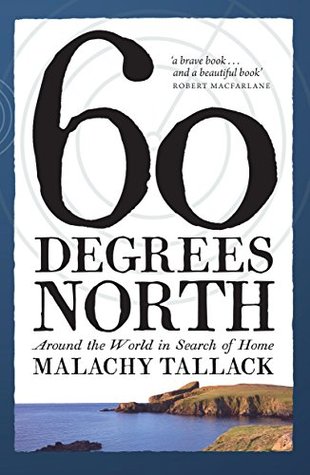
Sixty Degrees North by Malachy Tallack: “Geography begins at the only point of which we can be certain. It begins inside. And from there, from inside, rises a single question: where am I?” Tallack muses. This is a beautifully introspective book about the search for home and identity amidst the changes of time and the trappings of place. The goal of traveling across cold northern places makes it reminiscent of Joanna Kavenna’s The Ice Museum. However, a more telling comparison is with George Mackay Brown, chronicler of the Orkney Islands; like Brown, Tallack is interested in islands, both literally and metaphorically, as places of both isolation and authentic community.
Shiny New Books

The American cover is more evocative of the subject matter.

The UK cover: different thematic focus; frankly a bit tame and boring.
A Little Life by Hanya Yanagihara: Sure to be one of the books of the year, if not the decade. Jude St. Francis: Dickensian orphan, patron saint of lost causes, Christlike Man of Sorrows, and one of the most memorable characters in recent fiction. The reading experience might have been unbearable due to his suffering, but Yanagihara’s skill keeps you reading: the narration is matter-of-fact and revelation of Jude’s past is incremental, so distressing flashbacks are punctuated with more innocuous events. There is nothing ‘little’ about this book or the life portrayed. The novel is an attempt to tackle the monolithic question of what makes life worth living. Among the potential answers: love (though it doesn’t conquer all), friendship, creativity, and the family you create for yourself. Yanagihara has instantly shot to literary greatness; this is Pulitzer and Man Booker Prize-winning material.
BookTrib: A preview of the PBS broadcast of Poldark, which aired on BBC earlier this year.
I also post reviews of most of my casual reading and skimming on Goodreads (the rating is below each description).
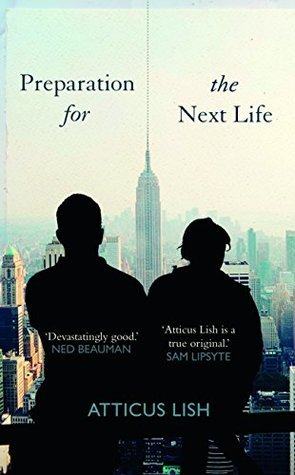 Preparation for the Next Life by Atticus Lish: Like West Side Story, this debut novel is an updated Romeo and Juliet narrative – a tragedy-bound love story with a gritty contemporary setting and a sobering message about racism and the failure of the American dream. Lish’s post-9/11 New York City is less melting pot than Boschian hell, a violent abyss lubricated with the sweat of illegal immigrants. The matter-of-fact style somehow manages to elevate the everyday and urban into an art form. (Full review in August 2015 issue of Third Way magazine.)
Housebreaking by Dan Pope: This tightly crafted novel of adultery in dysfunctional suburbia is somewhat reminiscent of Tom Perrotta’s Little Children or the movie Far from Heaven, but with less memorable characters and storyline overall. The strategy of revisiting the same events of the late summer and fall of 2007 from different characters’ perspectives makes it feel slightly repetitive and claustrophobic.
In a Dark Wood by Joseph Luzzi: In November 2007 Joseph Luzzi’s wife Katherine was in a fatal car accident; she had been eight and a half months’ pregnant, so within one day he entered “the wild uncharted terrain of being a single father and widower.” For several years Luzzi disengaged from fatherhood, throwing himself into his work – teaching Italian at Bard College, editing the proofs for a forthcoming book – while his mother did the hard work of childrearing. As Virgil was to Dante, Dante is to Luzzi: a guide through the hell of loss and into a vita nuova as he starts a new life with his daughter Isabel and, later, his second wife.
 Big Magic by Elizabeth Gilbert: Gilbert sets herself up as a layman’s creativity guru much like Anne Lamott does with Bird by Bird or Stephen King with On Writing. This is based on Gilbert’s TED talks, and it reads very much like a self-help pep talk, with short chapters, lots of anecdotes, and buzz words to latch onto. Her central tenet is “You do not need anybody’s permission to live a creative life.” The voice and message are similar to Rob Bell’s in the field of contemporary theology: reminding readers that what is too precious for words should, perhaps paradoxically, be held loosely with open hands. Releases September 22nd.
Miss Emily by Nuala O’Connor: Emily Dickinson’s Amherst is an inviting setting, and the alternating first-person voices of Emily and the family’s Irish maid, Ada Concannon, are both well realized. However, the plot soon gets mired in the melodrama of a wrong done to Ada in the Dickinson household, which results in a crisis that – you guessed it – requires the reclusive Emily to leave the house. After reading, I remained greedy for more of Emily’s inner life and poetry.
Malignant Metaphor by Alanna Mitchell: A Canadian science journalist counters three misleading adjectives often applied to cancer: inevitable, preventable, and deserved. She personalizes her quest for knowledge through two family experiences. First her brother-in-law, having already survived prostate cancer, was diagnosed with untreatable stage III melanoma. Later Mitchell’s daughter had a thyroid cancer scare. In both cases, things turned out better than expected – proof that cancer is not a death sentence. Releases September 15th.
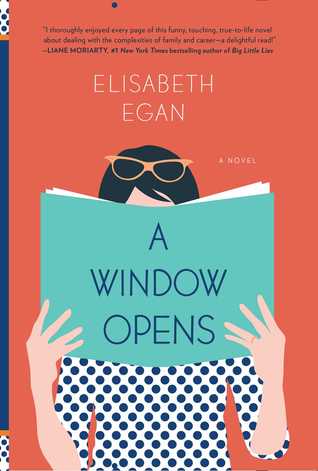 A Window Opens by Elisabeth Egan: A sweet, funny debut novel about a woman who tries to juggle all the elements of a happy life: finding the perfect job for a modern book-lover…but also being a good mother to her three children, supporting her husband after he loses his job at a law firm, and helping her mother care for her father as he suffers a relapse of throat cancer. It succeeds because its female first-person voice is immediately engaging. You like Alice and root for her. Releases August 25th.
The Sunken Cathedral by Kate Walbert: Much has been made of Walbert’s “Impressionistic” style. There is some beautiful writing here for sure, but I think it would lend itself better to short stories as there is not enough plot or character continuity to latch onto. Essentially the novel is about a set of New Yorkers in a Chelsea brownstone (chiefly Marie, an old woman who came to America from France after World War II) and their disparate memories and experiences.
 Bookish Beck = Rebecca Foster. American transplant to England. Freelance proofreader and book reviewer.
 Bookish Beck