October Books: Ballard, Czarnecki, Moss, Oliver, Ostriker, Steed & More
Apparently October is THE biggest month of the year for new releases. A sterling set came my way this year, including two beautiful novella-length memoirs, a luxuriantly illustrated work dedicated to an everyday bird species, two very different but equally elegant poetry collections, and a book of offbeat comics. Time and concentration only allow for a paragraph or so on each, but I hope that gives a flavour of the contents and will pique interest in the ones that suit you best. Plus I excerpt and link to my BookBrowse review of a poignant story of sisters and mental illness, and my Shelf Awareness review of a fantastic graphic novel adaptation.
Bound: A Memoir of Making and Remaking by Maddie Ballard
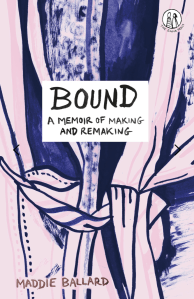 This collection of micro-essays considers sewing and much more. Each piece is headed by a pattern name and list of materials that Ballard made into an article of clothing for herself or for someone else. Among the minutiae of the craft, she slips in so many threads: about her mixed Chinese heritage and her relationship with her grandmother, about the environmental and financial benefits of making one’s own clothing, and especially about the upheaval of her twenties: the pandemic, a break-up, leaving a job to go back to school, finding roommates. I can barely mend a sock and I’m clueless when it comes to fashion, yet I can appreciate how sewing blends comfort and creativity. Ballard presents it as a meditative act of self-care:
I lower the needle and the world recedes. The process of sewing a garment – printing the pattern, tracing and cutting, sewing the first and the second and the fiftieth seam – is a lesson in taking your time.
Like gardening, sewing is an investment in the future – in what sort of person your future self will be, and how she will feel about her body, and what she will want to wear.
Similar to two other very short works of nonfiction I’ve read from The Emma Press, How Kyoto Breaks Your Heart by Florentyna Leow and Tiny Moons by Nina Mingya Powles (Ballard, too, is from New Zealand), this is a graceful, enriching book about a young woman making her way in the world and figuring out what is essential to her sense of home and identity. I commend it whether or not you have any particular interest in handicraft.
With thanks to The Emma Press for the free copy for review.
Encounters with Inscriptions: A Memoir Exploring Books Gifted by Parents by Kristin Czarnecki
When Kristin Czarnecki got in touch to offer a copy of her bibliomemoir about revisiting the books her late parents gifted her, I was instantly intrigued but couldn’t have known in advance how perfect it would be for me. Niche it might seem, but it combines several of my reading interests: bereavement, books about books, relationships with parents (especially a mother) and literary travels.
 The book starts, aptly, with childhood. A volume of Shel Silverstein poetry and A Child’s Christmas in Wales serve as perfect vehicles for the memories of how her parents passed on their love of literature and created family holiday rituals. Thereafter, the chapters are not strictly chronological but thematic. A work of women’s history opens up her mother’s involvement in the feminist movement; reading a Thomas Merton book reveals why his thinking was so important to her Catholic father. The interplay of literary criticism, cultural commentary and personal significance is especially effective in pieces on Alice Munro and Flannery O’Connor. A Virginia Woolf biography points to Czarnecki’s academic specialism and a cookbook to how food embodies memories.
It seems fitting to be reviewing this on the second anniversary of my mother’s death. The afterword, which follows on from the philosophical encouragement of a chapter on the Rubaiyat of Omar Khayyam, exhorts readers to cherish loved ones while we can – and be grateful for the tokens they leave behind. I had told Kristin about books my parents inscribed to me, as well as the journals I inherited from my mother. But I didn’t know there would be other specific connections between us, too, such as being childfree and hopeless in the kitchen. (Also, I have family in South Bend, Indiana, where she’s from, and our mothers were born in the first week of August.) All that to say, I felt that I found a kindred spirit in this lovely book, which is one of the nicest things that happens through reading.
With thanks to the author for the advanced e-copy for review.
The Starling: A Biography by Stephen Moss
 Moss has written a whole series of accessible bird species monographs suitable for nature buffs; this is the sixth. (I’ve not read the others, just Moss’s Wild Hares and Hummingbirds and Skylarks with Rosie, but we do have a copy of The Robin on the shelf that I’ve earmarked for Christmas.) The choice of the term ‘biography’ indicates the meeting of a comprehensive aim and intimate detail. The book conveys much anatomical and historical information about the starling’s relatives, habits, and worldwide spread, yet is only 187 pages – and plenty of those feature relevant paintings and photographs, too. It’s well known that starlings were introduced to Anglophone countries as part of misguided “acclimatisation” projects that we would now dub cultural imperialism. In the USA and elsewhere, the bird is still considered common. But with the industrialisation of agriculture, starlings are actually having less breeding success and thus are in decline.
Overall, the style of the book is dry and slightly workmanlike. However, when he’s recounting murmurations he’s seen in Somerset or read about, Moss’s enthusiasm lifts it into something special. Autumn dusk is a great time to start watching out for starling gatherings. I love observing and listening to the starlings just in the treetops and aerials of my neighbourhood, but we do also have a small local murmuration that I try to catch at least a few times in the season. Here’s how he describes their magic: “At a time when, both as a society and as individuals, we are less and less in touch with the natural world, attending this fleeting but memorable event is a way we can reconnect, regain our primal sense of wonder – and still be home in time for tea.”
With thanks to Square Peg, an imprint of Vintage (Penguin Random House) for the free copy for review.
The Alcestis Machine by Carolyn Oliver
 Carolyn is a blogger friend whose first collection, Inside the Storm I Want to Touch the Tremble, was on my Best Books of 2022 list. Her second is again characterized by precise vocabulary and crystalline imagery, often related to etymology, book history, or pigments (“You and I are marginalia shadowed / by a careless hand, we are gall-soaked vellum / invisible appetites consume.”). Astronomy and technology are a counterpoint, juxtaposing the ancient and the cutting-edge. I loved the language of sea creatures in “Strange Attractor” and the oblique approach to the passage of time (“Three popes ago, you and I”). The repeated three-word opening “In another life” gives a sense of many worlds, e.g., “In another life I’m a florist sometimes accused of inappropriate gravity.” Prose poems relay childhood memories. Love poems are tantalizing and utterly original: “If I promise not to describe the moon, will you / come with me a ways further into the night? / We’ll wash the forest floor / of ash and find a fairy ring / half-eaten, muted crescent bereft of power.” And alliteration never fails to win me over: “Tonight, snow tumbles over sophomores and starlings” and “the pillars in the water make a pillory not a pier”. Some of the collection remained cryptic for me; there was a bit less that grabbed me emotionally. But it’s still stirring work. And how flabbergasted was I to spot my name in the Acknowledgments? (Read via Edelweiss)
The Holy & Broken Bliss: Poems in Plague Time by Alicia Ostriker
“The words of an old woman shuffling the cards of her own decline the decline
of her husband the decline of her nation her plague-smitten world”
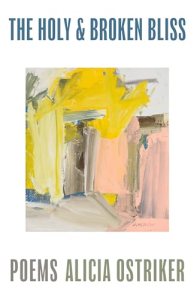 Out of pandemic isolation come new rituals: watching days and seasons pass, fighting for her own health but mostly her husband’s, and lamenting public displays of hate. Lines feel stark with honesty; some poems are just haiku length. Elsewhere, repetition and alliteration create a wistful tone. Jewish scripture and mysticism are the source of much of the language and outlook. Music and nature, too, promise the transcendent. Simple and remarkable. Here’s a stanza about late autumn:
It is almost winter and still
as I walk to the clinic the gingkos
sing their seraphic air
as if there is no tomorrow
With thanks to Alice James Books for the advanced e-copy for review.
Forces of Nature by Edward Steed
 Steed is a longtime New Yorker cartoonist who produces single panels. This means there is no story progression (as in a graphic novel), just what you see on one page. Some of the comics are wordless; many scenes are visual gags which, to be entirely honest, I didn’t always grasp. Steed’s recurring characters are unhappy couples, exiles on desert islands, and dumb cops or criminals. His style is deliberately simplistic: the people not much more advanced than stick figures and the animals especially sketchy. There are multiple attempted prison breaks and satirical depictions of God and the Garden of Eden. Many of the setups are contrived, and the tone can be absurd or prickly, even shading into gruesome. These comics weren’t altogether my cup of tea, though I did get a laugh out of a few of them (a seasonal example is below). Endorsed if you fancy a cross between Edward Gorey and The Book of Bunny Suicides.
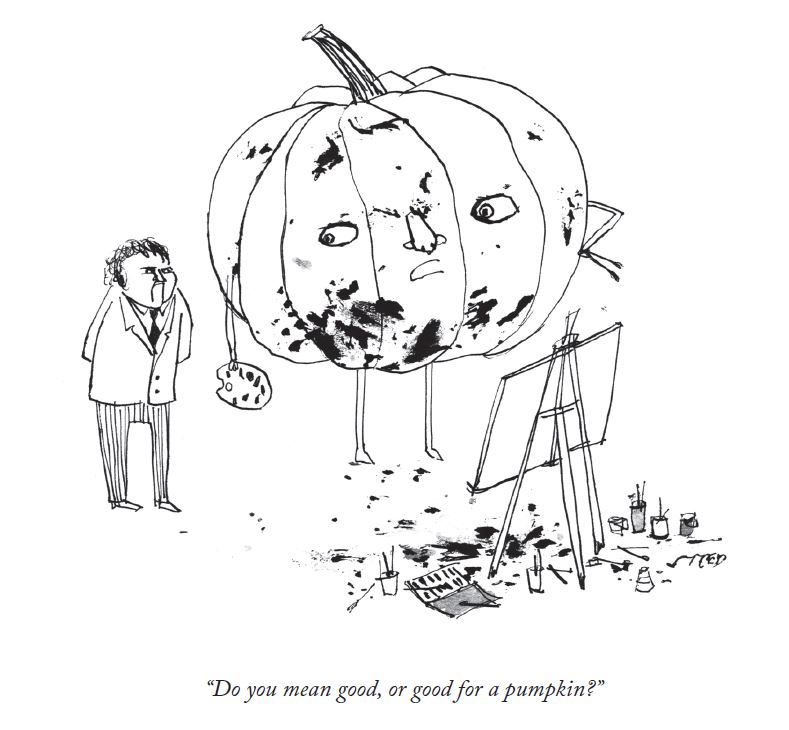
With thanks to Drawn & Quarterly for the e-copy for review.
Reviewed for BookBrowse:
 Shred Sisters by Betsy Lerner – “No one will love you more or hurt you more than a sister” is a wry aphorism that appears late in Lerner’s debut novel. Over the course of two decades, there is much heartache for the Shred family, but also moments of joy. Ultimately, a sisterly bond endures despite secrets, betrayals, and intermittent estrangement. Through her psychologically astute portrait of Olivia (“Ollie”) and Amy Shred, Lerner captures the lasting effects that mental illness can have on not just an individual, but an entire family.
Reviewed for Shelf Awareness:
 The Worst Journey in the World, Volume 1: Making Our Easting Down: The Graphic Novel by Sarah Airriess – The thrilling opening to a cinematically vivid adaptation of Apsley Cherry-Garrard’s 1922 memoir. He was an assistant zoologist on Robert Falcon Scott’s 1910-13 Terra Nova expedition to the South Pole. Even before the ship entered the pack ice, the journey was perilous. The book resembles a full-color storyboard for a Disney-style maritime adventure film. There is jolly camaraderie as the men sing sea shanties to boost morale. The second volume can’t arrive soon enough.
Book Serendipity, August to October 2024
I call it “Book Serendipity” when two or more books that I read at the same time or in quick succession have something in common – the more bizarre, the better. This is a regular feature of mine every couple of months. Because I usually have 20–30 books on the go at once, I suppose I’m more prone to such incidents. People frequently ask how I remember all of these coincidences. The answer is: I jot them down on scraps of paper or input them immediately into a file on my PC desktop; otherwise, they flit away!
The following are in roughly chronological order.
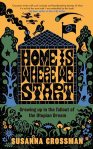
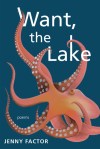
- The William Carlos Williams line “no ideas but in things” is quoted in Home Is Where We Start by Susanna Crossman and echoed with a slight adaptation in Want, the Lake by Jenny Factor.
- A woman impulsively stops into a tattoo parlour in We Are Animals by Jennifer Case and Birdeye by Judith Heneghan.
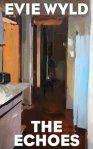
- Cleaning up a partner’s bristles from the sink in 300 Arguments by Sarah Manguso and The Echoes by Evie Wyld.
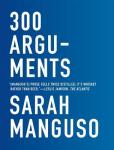
- Sarah Manguso, by whom I was reading two books for a Bookmarks article, was quoted in Some of Us Just Fall by Polly Atkin.
- Someone is annoyed at their spouse making a mess cooking lemon preserves in How We Know Our Time Travelers by Anita Felicelli and Liars by Sarah Manguso, both of which are set in California.
- Rumpelstiltskin is referenced in one short story of a speculative collection: How We Know Our Time Travelers by Anita Felicelli and The Man in the Banana Trees by Marguerite Sheffer.
- A father who is hard of hearing, and an Australian woman looking for traces of her grandmother’s life in England in The House with All the Lights On by Jessica Kirkness and The Echoes by Evie Wyld.
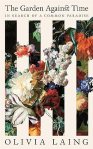
- A character named Janie or Janey in Their Eyes Were Watching God by Zora Neale Hurston and The Echoes by Evie Wyld. The Pre-Raphaelite model Janey is also mentioned in The Garden Against Time by Olivia Laing.
 Contrasting one’s childhood love of the Little House on the Prairie books with reading them as an adult and being aware of the racial and colonial implications in Home Is Where We Start by Susanna Crossman and My Good Bright Wolf by Sarah Moss.
- A mention of Little Women in A Perfect Arrangement by Suzanne Berne and My Good Bright Wolf by Sarah Moss.
- A character grew up in a home hair-dressing business in A Perfect Arrangement by Suzanne Berne and Home Is Where We Start by Susanna Crossman.
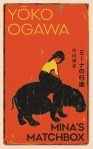
- The discovery of an old pram in an outbuilding in Instructions for a Heatwave by Maggie O’Farrell and Mina’s Matchbox by Yōko Ogawa.
- An Irish woman named Aoife in My Good Bright Wolf by Sarah Moss and Instructions for a Heatwave by Maggie O’Farrell.
- Cooking then throwing out entire meals in My Good Bright Wolf by Sarah Moss and The Echoes by Evie Wyld. (Also throwing out a fresh meal in Birdeye by Judith Heneghan. Such scenes distress me!)
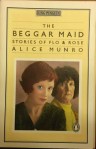 A new lover named Simon in one story of The Beggar Maid by Alice Munro and The Echoes by Evie Wyld.
- A character writes a recommendation letter for someone who then treats them vindictively, because they assumed the letter was negative when it wasn’t, in A Perfect Arrangement by Suzanne Berne and one story of The Beggar Maid by Alice Munro.
- After her parents’ divorce, the author never had a designated bedroom in her father’s house in Home Is Where We Start by Susanna Crossman and The Garden Against Time by Olivia Laing.
- Reading The Bell Jar as a teenager in Shred Sisters by Betsy Lerner and My Good Bright Wolf by Sarah Moss.
- A contentious Town Hall meeting features in A Perfect Arrangement by Suzanne Berne and Birdeye by Judith Heneghan.
- The wife is pregnant with twins in A Perfect Arrangement by Suzanne Berne and The Year of Living Biblically by A.J. Jacobs. (There are also twins in Birdeye by Judith Heneghan. In general, I find that they occur far more often in fiction than in real life!)
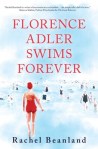
- 1930s Florida as a setting in Florence Adler Swims Forever by Rachel Beanland and Their Eyes Were Watching God by Zora Neale Hurston.
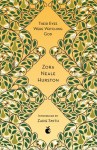
- Dorothy Wordsworth and her journals are discussed in Some of Us Just Fall by Polly Atkin and My Good Bright Wolf by Sarah Moss.
- Wordsworth’s daffodils are mentioned in Signs, Music by Raymond Antrobus and My Good Bright Wolf by Sarah Moss.
- “F*ck off” is delivered in an exaggerated English accent in Birdeye by Judith Heneghan and The Souvenir Museum by Elizabeth McCracken.
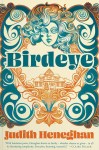
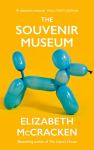
- The main character runs a country store in Their Eyes Were Watching God by Zora Neale Hurston and The Beggar Maid by Alice Munro.
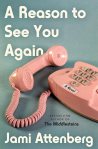 Reading a second novel this year in which the younger sister of a pair wants to go into STEM and joins the Mathletes in high school: first was A Reason to See You Again by Jami Attenberg; later was Shred Sisters by Betsy Lerner.
- An older sister who has great trouble attending normal school and so is placed elsewhere (including a mental institution) for a total of two years in Learning to Think by Tracy King and Shred Sisters by Betsy Lerner.
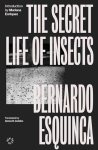
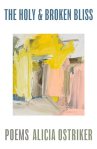
- The idea of trees taking revenge on people for environmental destruction in one story of The Secret Life of Insects by Bernardo Esquinca and one poem of The Holy & Broken Bliss by Alicia Ostriker.
- An illiterate character in Instructions for a Heatwave by Maggie O’Farrell and Also Here by Brooke Randel.
-
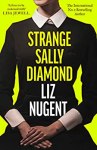 Controversy over throwing a dead body into the trash in Birdeye by Judith Heneghan and Strange Sally Diamond by Liz Nugent.
- A publishing assistant who wears a miniskirt and Doc Martens in Shred Sisters by Betsy Lerner and Summer Fridays by Suzanne Rindell.
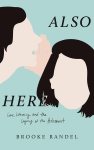
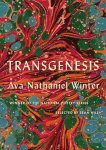
- Ancestors’ experience in Auschwitz in Also Here by Brooke Randel and Transgenesis by Ava Winter.
- The protagonist finds it comforting when her boyfriend lies down with his full weight on her in Shred Sisters by Betsy Lerner and The Echoes by Evie Wyld.
- A woman badgers her ex-husband about when his affair with his high school/college sweetheart started (before or after the divorce) in Shred Sisters by Betsy Lerner and Liars by Sarah Manguso.
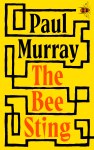 I encountered an Irish matriarch who married the ‘wrong’ brother, not Frank, in The Bee Sting by Paul Murray earlier in the year, and then in Instructions for a Heatwave by Maggie O’Farrell.
- A boy is playing in the family car on the driveway when it rolls backwards and kills someone in A Perfect Arrangement by Suzanne Berne and Tell Me Everything by Elizabeth Strout.
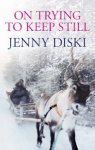
- Quantoxhead, Somerset is mentioned in On Trying to Keep Still by Jenny Diski and A House Unlocked by Penelope Lively.
- Tapeworms are mentioned in On Trying to Keep Still by Jenny Diski and one story of The Best Short Stories 2023: The O. Henry Prize Winners, ed. Lauren Groff.
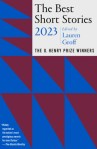
- A description of horrific teeth in one story of The Best Short Stories 2023: The O. Henry Prize Winners, ed. Lauren Groff, and one story of The Long Swim by Terese Svoboda.
- A character researches potato blight, and another keeps his smoking a secret from his wife, in one story of The Best Short Stories 2023: The O. Henry Prize Winners, ed. Lauren Groff, and Tell Me Everything by Elizabeth Strout.
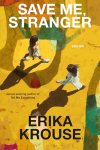 A piano gets mauled out of anger in one story of Save Me, Stranger by Erika Krouse and Strange Sally Diamond by Liz Nugent.
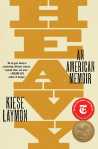
- Men experiencing eating disorders in Heavy by Kiese Laymon and Heartstopper Volumes 3 and 4 by Alice Oseman.
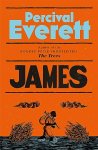
- Black people deliberately changing their vocabulary and speech register when talking to white people in James by Percival Everett and Heavy by Kiese Laymon.
- My second book of the year in which a woman from centuries ago who magically appears in the present requests to go night clubbing: first The Ministry of Time by Kaliane Bradley, then Isabella & Blodwen by Rachael Smith.
- Characters named Sadie in James by Percival Everett, The Souvenir Museum by Elizabeth McCracken, and Still Life at Eighty by Abigail Thomas.
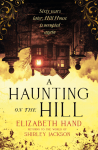
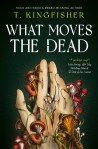
- Creepy hares in horror: A Haunting on the Hill by Elizabeth Hand and What Moves the Dead by T. Kingfisher. There were weird rabbits in I’m the King of the Castle by Susan Hill, too.
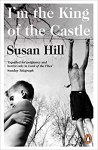
- I read two scenes of a calf being born, one right after the other: in Dangerous Enough by Becky Varley-Winter, then I’m the King of the Castle by Susan Hill.
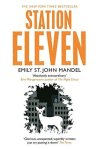
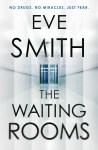
- I read about an animal scratch leading to infection leading to death in a future with no pharmaceuticals in Station Eleven by Emily St. John Mandel in the morning and then in the afternoon heard Eve Smith mention the same thing happening due to antibiotic resistance in her novel The Waiting Rooms. Forget about R.I.P.; this is the stuff that scares me…
What’s the weirdest reading coincidence you’ve had lately?
Starting the Year as I Mean to Go On?
The houseguests have gone home, the Christmas tree is coming down tomorrow, and it’s darned cold. I’m feeling stuck in a rut in my career, the blog, and so many other areas of life. It’s hard not to think of 2017 as a huge stretch of emptiness with very few bright spots. All I want to do is sit around in my new fuzzy bathrobe and read under the cat. Luckily, I’ve had some great books to accompany me through the Christmas period and have finished five so far this year.
I thought I’d continue the habit of writing two-sentence reviews (or maybe no more than three), except when I’m writing proper full-length reviews on assignment or for blog tours or other websites. Granted, they’re usually long and multi-part sentences, and this isn’t actually a time-saving trick – as Blaise Pascal once said, “I’m sorry I wrote you such a long letter; I didn’t have time to write a short one” – but it feels like good discipline.
So here’s some mini-reviews of what I’ve been reading in late December and early January:
The Dark Flood Rises, Margaret Drabble
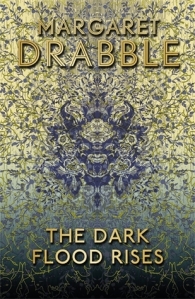 The “dark flood” is D.H. Lawrence’s metaphor for death, and here it corresponds to busy seventy-something Fran’s obsession with last words, obituaries and the search for the good death as many of her friends and acquaintances succumb – but also to literal flooding in the west of England and (dubious, this) to mass immigration of Asians and Africans into Europe. This is my favorite of the five Drabble books that I’ve read – it’s closest in style and tone to her sister A.S. Byatt as well as to Tessa Hadley, and the themes of old age and life’s randomness are strong – even though there seem to be too many characters and the Canary Islands subplot mostly feels like an unnecessary distraction. (Public library)
Hogfather, Terry Pratchett
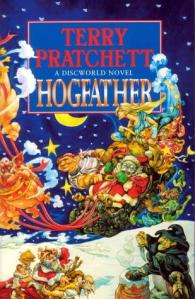 In Discworld belief causes imagined beings to exist, so when a devious plot to control children’s minds results in a dearth of belief in the Hogfather, the Fat Man temporarily disappears and Death has to fill in for him on this Hogswatch night. I laughed aloud a few times while reading this clever Christmas parody, but I had a bit of trouble following the plot and grasping who all the characters were given that this was my first Discworld book; in general I’d say that Pratchett is another example of British humor that I don’t entirely appreciate (along with Monty Python and Douglas Adams) – he’s my husband’s favorite, but I doubt I’ll try another of his books. (Own copy)
Love of Country: A Hebridean Journey, Madeleine Bunting
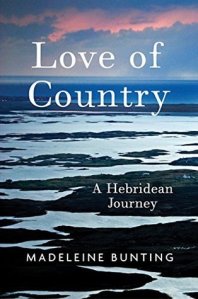 In a reprise of childhood holidays that inevitably headed northwest, Bunting takes a series of journeys around the Hebrides and weaves together her contemporary travels with the religion, folklore and history of this Scottish island chain, an often sad litany of the Gaels’ poverty and displacement that culminated with the brutal Clearances. Rather than giving an exhaustive survey, she chooses seven islands to focus on and tells stories of unexpected connections – Orwell’s stay on Jura, Lord Leverhulme’s (he of Port Sunlight and Unilever) purchase of Lewis, and Bonnie Prince Charlie’s landing on Eriskay – as she asks how geography influences history and what it truly means to belong to a place. (Public library)
Cobwebs and Cream Teas: A Year in the Life of a National Trust House, Mary Mackie
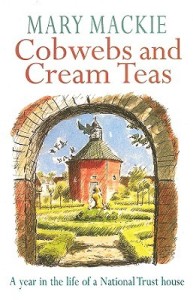 Mackie’s husband was Houseman and then Administrator at Felbrigg Hall in Norfolk in the 1980s – live-in roles that demanded a wide range of skills and much more commitment than the usual 9 to 5 (when he borrowed a pedometer he learned that he walked 15 miles in the average day, without leaving the house!). Her memoir of their first year at Felbrigg proceeds chronologically, from the intense cleaning and renovations of the winter closed season through to the following Christmas’ festivities, and takes in along the way plenty of mishaps and visitor oddities. It will delight anyone who’d like a behind-the-scenes look at the life of a historic home. (Own copy)
The Bridge Ladies: A Memoir, Betsy Lerner
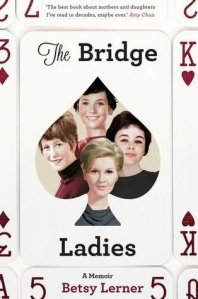 When life unexpectedly took the middle-aged Lerner back to her hometown of New Haven, Connecticut, she spent several years sitting in on her mother’s weekly bridge games to learn more about these five Jewish octogenarians who have been friends for 50 years and despite their old-fashioned reserve have seen each other through the loss of careers, health, husbands and children. Although Lerner also took bridge lessons herself, this is less about the game and more about her ever-testy relationship with her mother (starting with her rebellious teenage years), the ageing process, and the ways that women of different generations relate to their family and friends. It wouldn’t be exaggerating to say that every mother and daughter should read this; I plan to shove it in my mother’s and sister’s hands the next time I’m in the States. (Own copy)
Waiting on the Word, Malcolm Guite
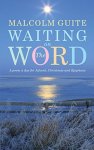 Guite chooses well-known poems (by Christina Rossetti, John Donne, Alfred Lord Tennyson, Samuel Taylor Coleridge et al.) as well as more obscure contemporary ones as daily devotional reading between the start of Advent and Epiphany; I especially liked his sonnet sequence in response to the seven “O Antiphons.” His commentary is learned and insightful, and even if at times I thought he goes into too much in-depth analysis rather than letting the poems speak for themselves, this remains a very good companion to the Christmas season for any poetry lover. (E-book from NetGalley)
 I started too many books over Christmas and have sort of put six of them on hold – including Titus Groan, which I’m thinking of quitting (it takes over 50 pages for one servant to tell another that the master has had a son?!), and City on Fire, which is wonderful but dispiritingly long: even after two good sessions with it in the days after Christmas, I’ve barely made a dent.
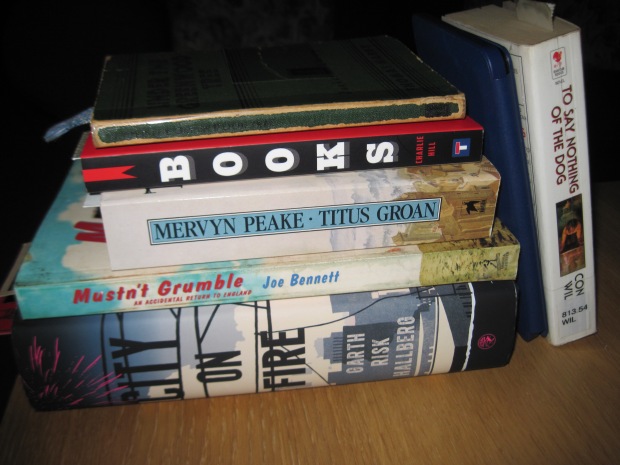
Stack on left = on hold (the book on top is Under the Greenwood Tree); standing up at right = books I’m actually reading.
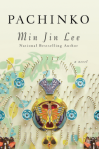
However, the three books that I am actively reading I’m loving: To Say Nothing of the Dog by Connie Willis is an uproarious blend of time travel science fiction and Victorian pastiche (university library), Pachinko by Min Jin Lee is a compulsive historical saga set in Korea (ARC from NetGalley), and the memoir Birds Art Life by Kyo Maclear has been compared to H Is for Hawk in the way she turns to birdwatching to deal with depression (e-book from Edelweiss). I also will be unlikely to resist my e-galley of the latest Anne Lamott book, Hallelujah Anyway (forthcoming in April, ARC from Edelweiss), for much longer.



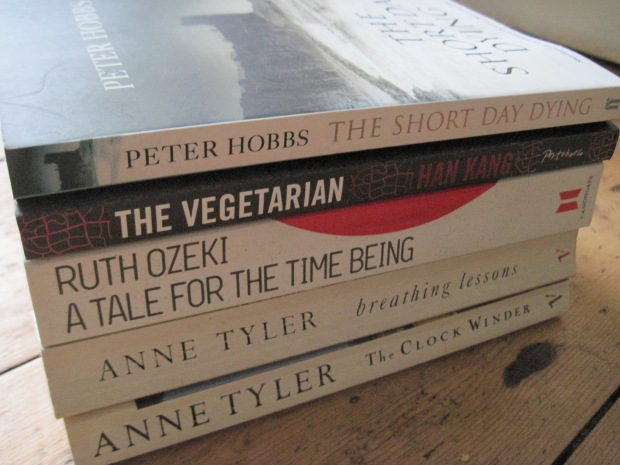
Meanwhile, in post-holiday charity shopping I scored six books for £1.90: one’s been tucked away as a present for later in the year; the Ozeki I’ve already read, but it’s a favorite so I’m glad to own it; and the rest are new to me. I look forward to trying Han Kang; Anne Tyler is a reliable choice for a cozy read; and the Hobbs sounds like a wonderful Victorian-set novel.
All in all, I seem to be starting my year in books as I mean to go on: reading a ton; making sure I review most or all of the books, even if I write just a few sentences; maintaining a balance between my own books, library books, and recent or advance NetGalley/Edelweiss reads; and failing to restrain myself from buying more.
Now if I could just work on my general attitude…
 Bookish Beck = Rebecca Foster. American transplant to England. Freelance proofreader and book reviewer.
 Bookish Beck