A Trip to Wigtown, Scotland’s Book Town
Wigtown is tucked away in the southwest corner of Scotland in Galloway, a region that doesn’t draw too many tourists. It did remind us a lot of Hay-on-Wye, the Book Town in Wales, what with the dry-stone walls, rolling green hills with more imposing mountains behind, sheep in the fields, and goodly number of bookshops. Wigtown is a sleepier place – it’s really just one main street and square – and has fewer bookshops and eateries overall, but the shops it does have are mainly large and inviting, and several are lovely bookshops-cum-cafés where you can pause for tea/coffee and cake before continuing with your book browsing. It rained for much of our trip and even snowed on a couple of brief occasions, but we got one day of very good weather and made the best of all the rest.


Day 1, Monday the 2nd: Six-plus hours of driving, partially in the sleet and snow, saw us arriving to our spacious and comfortable B&B by 6 p.m., giving us an hour to freshen up before dinner in the dining room. Cullen skink (leek and potato soup with chunks of smoked haddock); pork chops in a mustard cream sauce with roast parsnips, boiled potatoes and carrots, and mashed swede (aka rutabaga); and chocolate cake with gingerbread sauce. All delicious!
Day 2, Tuesday the 3rd: Smoked salmon and scrambled eggs for breakfast, accompanied by plenteous tea and toast. Off in the drizzle to see some local sites: Torhouse stone circle and Crook of Baldoon RSPB bird reserve. Nice sightings of whooper swans, pink-footed geese and lapwings, and a panoramic view of Wigtown across the way. Back to the car in the steady rain to find that we had a flat tire. Thanks to our foot pump, we got back to the W. Barclay garage in town, where they ordered a new tire and fitted the spare wheel. In the afternoon we drove to the Isle of Whithorn to see the 13th-century St. Ninian’s Chapel ruins and St. Ninian’s Cave. In the evening we went to Craft for beer/cider and the weekly acoustic music night, which, alas, just ended up being two old guys playing Americana songs on guitars.


Today’s book shopping: Glaisnock Café, where we also stopped for coffee and a tasty slice of courgette and avocado cake; The Open Book (run by Airbnb customers – this week it was Maureen from Pennsylvania and her niece Rebecca from Switzerland; they’d booked the experience two years ago, and the wait is now up to three years); the Wigtown Community shop (a charity shop); and browsing at Old Bank Books and Byre Books.


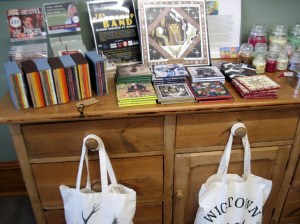
I loved seeing lots of Bookshop Band merchandise around. This was in the Festival Shop.
Day 3, Wednesday the 4th: Vegetarian ‘full Scottish’ cooked breakfast to fuel us for a rainy day of bookshops and explorations further afield. 12 p.m.: return trip to the garage to have our tire fitted. All the staff were so friendly and pleasant. They seemed delighted to see tourists around, and were interested in where we came from and what we were finding to do in the area. Mr. Barclay himself had one of the thickest Scottish accents I’ve ever heard, but I managed to decipher that he thinks of Galloway as “the next best place to heaven,” despite the weather. We spotted a local ‘celebrity’, Ben of the Bookshop Band, in the Co-op, but didn’t say hello as he was trying to pay for his shopping and had the baby in tow.
In the afternoon we ventured to Newton Stewart, the nearest big town, to buy petrol, picnic supper food, and another secondhand book at the community shop there. We retreated from the sudden snow for a scrumptious dinner of smoked salmon, black pudding and haggis (all of them battered and fried, with chips!) at a diner-like smokehouse. Back in Wigtown, we got a mainly dry evening to do the Martyrs’ Walk. In 1685 two Covenanters (Scottish reformers who broke from Charles I’s Anglican Church), Margaret McLachlan, 63, and Margaret Wilson, 18, were tied to stakes on the mud flats and allowed to drown in the rising tide.


Today’s book shopping: THE BOOKSHOP. I’ve meant to visit ever since I read Jessica Fox’s memoir, Three Things You Need to Know about Rockets, in February 2013. Previously based in California, Fox decided on a whim to visit a bookshop in Scotland and ended up here at the country’s largest. She promptly fell in love with the bookshop owner and with Wigtown itself; though she and Shaun Bythell are no longer an item, she has been a major mover and shaker in the town, playing a role in the annual festival and establishing The Open Book.


The Bookshop is a wonderfully rambling place with lots of nooks and crannies housing all sorts of categories. Look out for the shot and mounted Kindle, the Festival bed, the stuffed badger, a scroll of bookseller’s rules, Captain the cat, and a display of Bythell’s The Diary of a Bookseller. Together we found £35 worth of books we wanted to buy – whew! – thanks to my husband’s niche nature books, and had a nice chat with the man himself at the till. He signed my book, commiserated with us about the weather and our trip to see “Willie” (Barclay), and gave us tips for what to see locally. You’d hardly believe he’s the same curmudgeon who wrote the book. Now that I’ve been to the town and the shop, it’s time for me to start rereading it.


We also perused the smallish but very nice selection at Beltie Books, where we made a welcome stop for a cappuccino and some cookies, and I bought a cut-price new book at the Festival Shop. (They stock books by festival speakers plus a curated selection of new releases.)
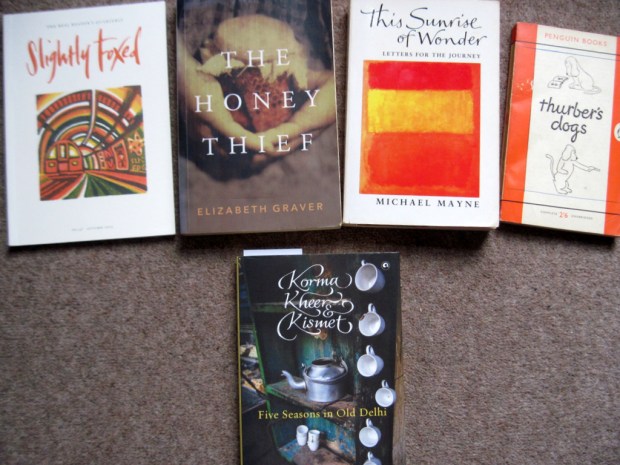
Day 4, Thursday the 5th: SUNSHINE, at last! After hearty omelettes, we headed to the hill that overlooks the town to get the best views of the week. On to Monreith for a charming coastal walk up to the Gavin Maxwell monument of a bronze otter. (He wrote Ring of Bright Water, which my husband brought along to read on our trip.) After a lunch stop back in town, it was out to the red kite feeding station about 40 minutes away – I came for the books; my husband came for the red kites. Though they’re common enough in our part of Berkshire, he was keen to see the site of another recent reintroduction. Wales also has a feeding station we visited some years ago, and on both occasions seeing dozens of birds swoop down for meat was quite the spectacle – though here you sit on an open porch, even closer to the action. We did a few other short walks in the area, finishing off with a sunset sit in Wigtown’s bird hide.


Today’s book shopping: ReadingLasses calls itself Britain’s only women’s bookshop. They stock Persephone Books direct from Bloomsbury, and they also have a large selection of secondhand books. This is the best place to go in town for a light meal and a snack. We had delicious homemade soup with soda bread for an early lunch, followed by coffee and tiffin. I bought a novel by Candia McWilliam, a Scottish author I’ve only read nonfiction by before.


At Curly Tale Books, the children’s bookshop next-door to The Bookshop, we bought a picture book about the local ‘belted’ Galloway cows for our niece. We didn’t realize the shop owner is also the author! She offered to sign the book for us, but we decided that a five-year-old wouldn’t appreciate it enough.
Day 5, Friday the 6th: Full Scottish breakfast to see us on our way, and a farewell to the two B&B cats, including the fluffiest cat on earth. To break up the rather arduous journey, we stopped early on at the Cairn Holy stone circle/tomb and the Cream o’ Galloway farm shop for cheese and ice cream. Home at 7:30 p.m. to find something from the freezer for dinner, unpack and shelve all these new books.
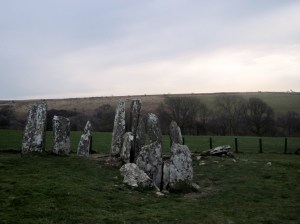
Cairn Holy
Total acquisitions: 13 books for me, 7 books for my husband, 3 books for gifts
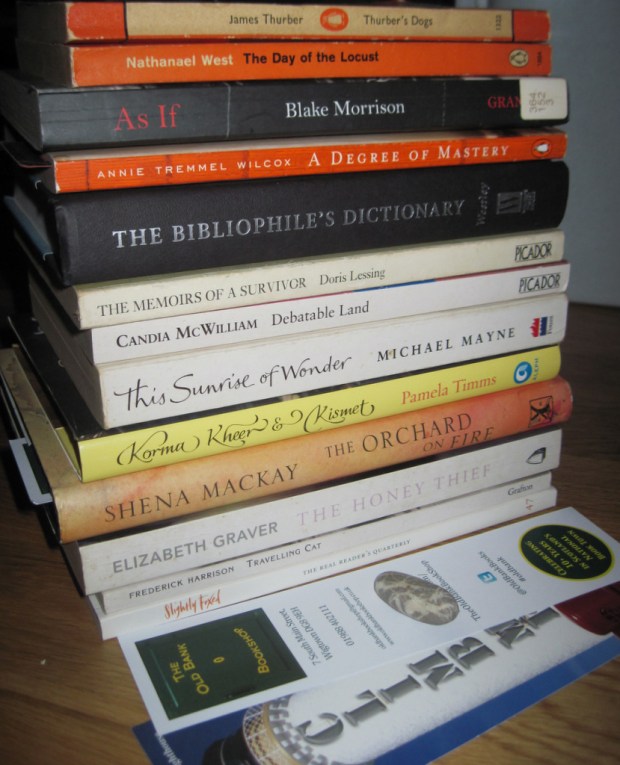
Wigtown is more than twice as far away as Hay is for us, so we’re less likely to go back. (It’s also a tough place to find a decent evening meal.) However, I’d like to think that life will take me back to Wigtown someday, perhaps for the Festival, or for a stay at The Open Book – though I’d have to start planning ahead to 2021!
What I read:
Bits of lots of books I had on the go, but mostly a few vaguely appropriate titles:
Under the Skin by Michel Faber was the perfect book for reading on rainy Scottish highways. I’m so glad I decided at the last minute to bring it. Isserley drives along Highland roads picking up hitchhikers – but only the hunky males – to take back to her farm near the Moray Firth. It’s likely that you already know the setup of this even if you haven’t read it, perhaps from the buzz around the 2013 film version starring Scarlett Johansson. It must have been so difficult for the first reviewers and interviewers to discuss the book without spoilers back in 2000. David Mitchell, in his introduction to my Canons series reprint, does an admirable job of suggesting the eeriness of the contents without giving anything significant away.
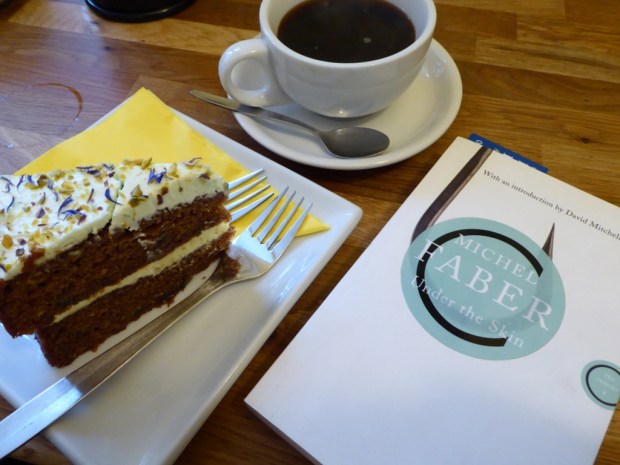
Shelve this under science fiction, though it veers towards horror and then becomes a telling allegory. I knew the basic plot beforehand, but there were still some surprises awaiting me, and I was impressed with how Faber pulled it all off. Keep an eye open for how he uses the word “human.” This has a lot to say about compassion and dignity, and how despite our differences we are fundamentally the same “under the skin.” 
An atmospheric line: “The fields all around her house were shrouded in snow, with patches of dark earth poking through here and there as if the world were a rich fruit cake under cream.”
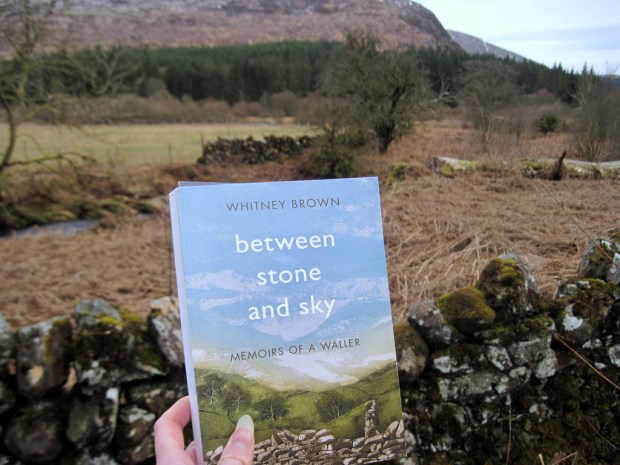
Between Stone and Sky: Memoirs of a Waller by Whitney Brown: For a TLS review. Brown, from South Carolina, trained as a dry-stone waller in Wales (where she fell in love with a man who wouldn’t marry her), but we saw plenty such walls in Scotland too. As an expat I could relate to her feeling of being split between two countries.  (Releases May 17th.)
I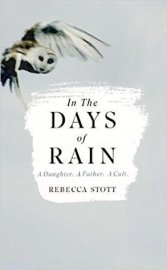 n the Days of Rain: A daughter. A father. A cult. by Rebecca Stott: I read the first two-fifths or so, mostly in the car and over our leisurely B&B breakfasts. One branch of Stott’s Exclusive Brethren family came from Eyemouth, a Scottish fishing village. A family memoir, a bereavement memoir, a theological theme: this brings together a lot of my favorite things. And it won last year’s Costa Biography Award, so you know it’s got to be good.
I also started two books by Scottish novelists, The Orchard on Fire by Shena Mackay and The Accidental by Ali Smith – though I don’t know if I’ll make it through the latter.
Hungerford Literary Festival: Simon Fenwick on Joan Leigh Fermor
Birthday book haul.
I had a pleasant birthday weekend: a five-mile country walk with some foraging of sloes, reading in the armchair with the cat, catching up with Poldark on DVD, and a three-course Italian feast my husband made from a River Café cookbook (plus a homemade Sachertorte). And I got 11 secondhand books for my birthday, if you were wondering!
We also attended a couple of Hungerford Literary Festival events. This year the theme was “Journeys,” so all of the featured books and authors were broadly travel-related Alas, the talk we were meant to attend on Saturday by Sunday Times writer Jonathan Dean, based on I Must Belong Somewhere, his memoir about researching his family’s European history, was cancelled due to insufficient ticket sales – we felt so sorry for the poor author!
However, on Sunday my husband saw Nick Hunt speak about his recent travelogue on famous European winds such as the mistral, and I saw Simon Fenwick in conversation with journalist Elinor Goodman about his new biography of Joan Leigh Fermor, the wife of celebrated travel writer Patrick Leigh Fermor (whom Fenwick and Goodman consistently called Paddy).
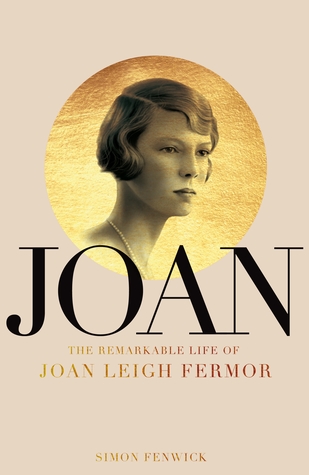 Fenwick considers Joan an enigmatic figure; although she could be quite a bitch, she also brought out the best in certain people, including Paddy. From a wealthy Yorkshire wool merchant family, she met golden writers like John Betjeman at bohemian parties. Although she was a fairly successful photographer – there will be a major exhibition of her work in London next year – she cast herself in a supporting role, as was traditional for the time: she would say that her career was all about helping Paddy in his, financially as well as morally. (I could just imagine what a novel about her would be called: The Travel Writer’s Wife.)
Although Fenwick believes Joan is a worthy biographical subject in her own right, her relationship with Paddy dominated the talk. When the couple met in Egypt in 1944, he was famous for having kidnapped a Nazi general, a stunt of debatable military benefit though it was certainly great for publicity. Women flocked to the handsome Paddy: he was carrying on two affairs at this time, and his one lover got pregnant and had an abortion.

Patrick Leigh Fermor. By Δημήτρης Παπαδήμος (Ιωάννης Δ.Παπαδήμος) [CC BY-SA 3.0], via Wikimedia Commons.
Joan was known as a wonderful cook and entertainer. In Greece they had a rotating cast of guests, and people would frequently just turn up uninvited. From afar the house looks like an ancient monastery, Fenwick said, though it’s now surrounded by modern buildings. Much of it is one huge room that serves as library, living room and dining room, with a corridor leading to the outside. In Joan’s time there were cats galore. Fenwick remembers the strong smell of jasmine the first time he walked through the archway into the courtyard.

The Fermors’ Greek villa. By Rodolph at English Wikipedia [CC BY-SA 3.0], via Wikimedia Commons.
Although Fenwick did not wish to comment on another biographer’s work, he noted that in comparison to Cooper’s his is perhaps a bit of a new view on Paddy, a “not wholly heroic but fascinating” figure, flawed “on a grand scale.” Fenwick was impressed by “his pure energy – in his writing and in everything he did.” While Paddy must have been exhausting to live with, Fenwick believes he and Joan recognized in each other a similar approach to life.
As a speaker Fenwick wasn’t particularly engaging: even with a microphone he seemed to mutter, and left awkward gaps before answering. Is it fair that his dull manner made me wonder whether his book would be worth reading? Not all authors can be charismatic in person, I’m sure; I would definitely struggle with public speaking if I ever had to go on a book tour. But I do wish he had perhaps read a section from his book so I could have gotten a sense of the style. I think Joan’s life is interesting enough that I will still read her biography someday, but perhaps only after I’ve read more of Paddy’s travel books and the Cooper biography, which I own in paperback.
Have you attended any literary events recently? Does an author’s personality influence your opinion of their books?
Harvest Supper, Scrabble Tournament & Book Haul: A Great Trip to Bookbarn
I manage about an annual trip to Bookbarn International, one of my favorite secondhand bookshops in the UK. Apart from the stock in their newly opened Darwin Rare Books room and the 50-pence children’s books, everything in the shop is £1. I never fail to come out with a great stack of finds. Our trip on Thursday was extra special because we were going for the café’s Harvest Supper and Scrabble tournament, held as part of The Great Bath Feast.


We played one 45-minute game against another team of two, broke for an excellent vegetarian supper of squash, spinach and goat’s cheese pie with mashed potatoes and baby roast vegetables, then played a second match before dessert (vegan plum crumble with custard or gluten-free fig brownie with ice cream). Over the years my husband and I have become quite the Scrabble fiends, and together on one team I’m afraid we were unbeatable. Our bingo starting off Game #2 helped, but we worried we were at an overall advantage because the other boards each had three teams playing.


It was a special pleasure to meet William Pryor, the chairman of Bookbarn. Last year he spotted my blog posts about Bookbarn and offered me a copy of his memoir, The Survival of the Coolest. It’s a wonderful book about growing up a descendant of Charles Darwin but going off the rails and ending up addicted to heroin in his 20s:
This family of mine! On the one hand you have the royalty of science and Bloomsbury, on the other the fading world of the English landed gentry. … We had no religion but Darwin.
The months ran into each other as a blur of the chase for relief, the wheeling and dealing … One of the most striking aspects of hell is that it goes round and round; the same torments over and over again.
Mr. Pryor let me have a sneak peek at the Darwin room after the shop closed and kindly gave me a copy of his grandmother Gwen Raverat’s memoir, Period Piece. Over pudding we chatted about literary festivals, the Bookshop Band, his failed idea to return a portion of secondhand books’ resale value to the authors, and the latest Nobel Prize winner.
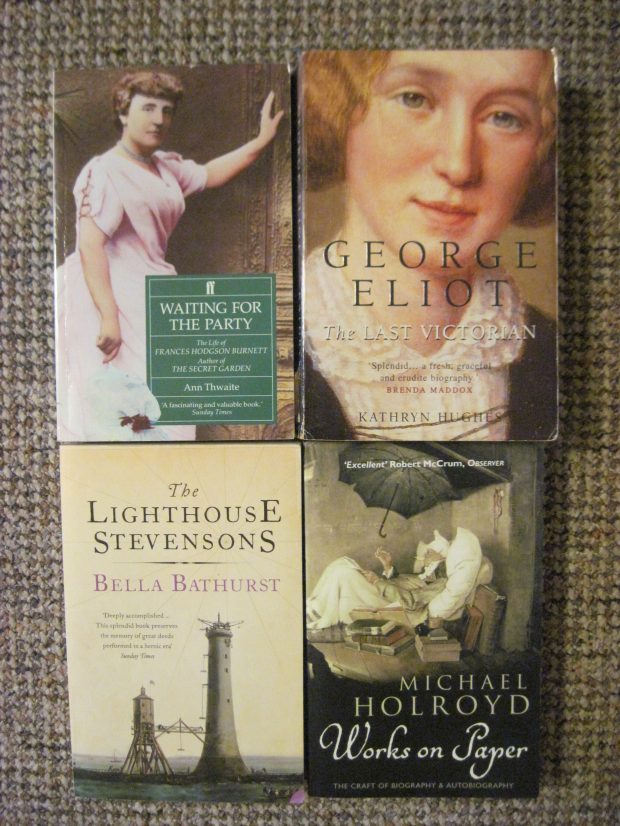
As to that book haul: I feel like I have fiction coming out of my ears, so with our hour of book browsing time I mainly focused on biographies and memoirs. Here are my finds:
Biographies and essays on writing biography:
Bereavement memoirs:
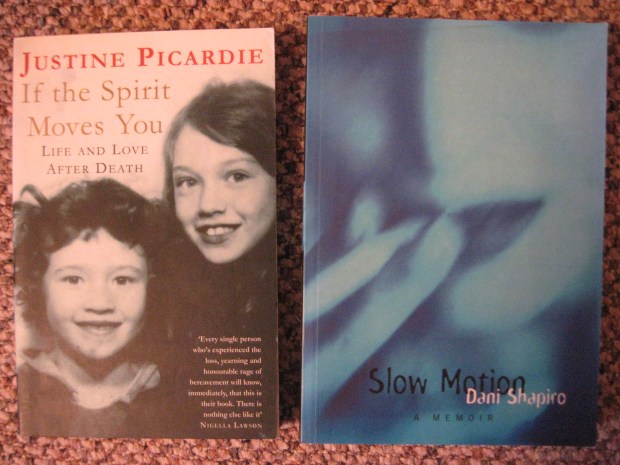
(Two of my purchases will go especially well as pairs with books I already own.)


Medical memoirs:
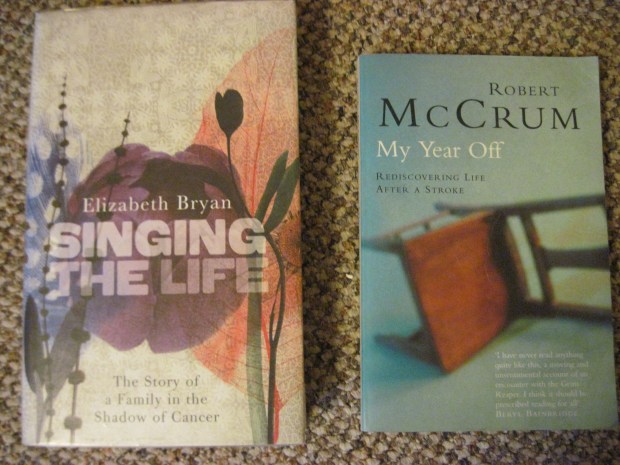
General memoirs (I was especially pleased to find the sequel to Cobwebs and Cream Teas, which I bought at Bookbarn last time and read early this year):
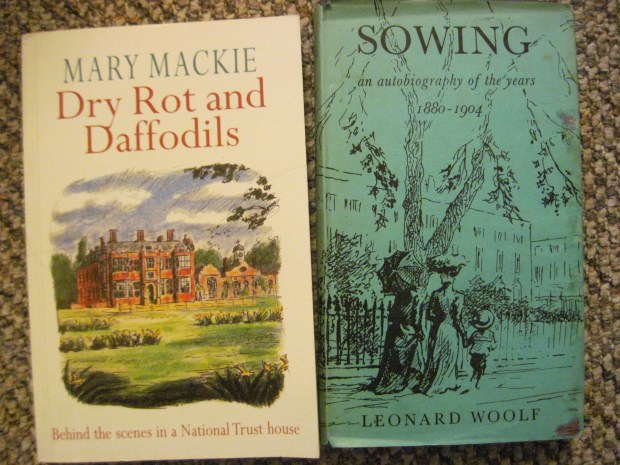
Plus two poetry books (one of them signed!):


And two novels I happened to grab on the way to the till:

My unexpected freebies. The Raverat is a lovely small-format hardback with gilt-edge pages and a maroon ribbon bookmark; on the right is our prize for winning the Scrabble tournament:


I’ve already had a peek inside a few of the books I bought and found some excellent passages. Leonard Woolf’s memoir opens with an extraordinary passage of almost biblical language about existence and non-existence; one of Marge Piercy’s poems struck me right away for its description of a Jewish holiday and the line “there is no justice we don’t make daily / like bread and love.”
My husband came away with three natural history books, and we also found a few children’s books to give to nieces and nephews.
Thanks to this book haul plus a trip to Book-Cycle in early September and some charity shopping last week, I’ve had to start a double stack on my biography/memoir shelves. There’s already a double stack on one of my unread fiction shelves. Next week is my birthday, so the book acquisitions are only likely to continue…
Am I a (Book) Hoarder?
When I was a kid my parents and sister deemed me a pack rat, and over the years I’ve been a collector of many different things: stamps, coins, figurines, tea sets, shells, fossils, feathers, anything featuring puffins or llamas, and so on. At this point my only active collection is of books, but the others are all still in evidence in my old closet. I had a few good reasons to contemplate my belongings recently: first, I read a book about decluttering; then, on my recent trip back to the States, I helped my sister pack as she prepares to move out of her home of 12 years, and co-hosted a yard sale at my parents’ house to get rid of some of ye olde stuff.
Year of No Clutter, Eve O. Schaub
 Schaub faces the possibility that she has inherited a family tendency to hoarding and tackles her house’s clutter-filled “Hell Room.” From one February to the next she enlisted her daughters’ help sorting things into piles and came up with a regular route of consignment shops, thrift stores, and libraries where she could drop off carloads of donations. Bigger projects included a photo book of 100 of her daughter’s artworks and a rag rug incorporating many beloved articles of clothing.
I enjoyed the nitty-gritty details of how this family organized and got rid of things because I like big tidying projects and putting everything in its rightful place, whether that be the recycling bin, a crate in the attic, or a charity bag. But what I most appreciated was how sensitive Schaub is to all the issues that can be tied up with our stuff, especially OCD, nostalgia, and indecision. “Although Marie Kondo disapproves, I’m not about to stop collecting my own life,” she writes. “It has been a source of pleasure for me ever since I can remember; it helps define me.” 
Helping Out
My sister is very much of the Marie Kondo school of de-cluttering. She strives for minimalism in her décor, and is constantly going back through her sons’ clothes and toys to see what she can get rid of. All the same, 12 years of living in the same house has spelled a lot of accumulation. As she did her last-minute wedding preparations in early August, I was let loose on the packing and soon got all the easy stuff – like books and decorations – boxed up. But I quickly became overwhelmed by what remained, such as the boys’ toy room, DIY supplies, and stacks upon stacks of framed art and photographs plus photo albums.
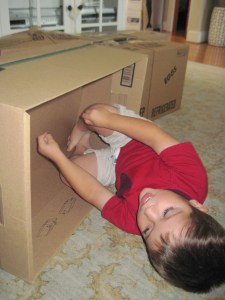
Nephew #2 “helps” with packing.
As I was packing I couldn’t keep myself from peeking into the albums and tearfully marvelling that the whole life she built with her first husband – who died of brain cancer in January 2015 – is over. Death is so simple and final, right? Yet even these many months later I have a hard time getting my head around how the huge personality and web of connections that was my brother-in-law could be gone. And this even though I couldn’t be happier that my sister has found love again and gained two terrific step-kids.
When she and her husband move into their new-build home later in the year and get all this stuff back out of storage, she’s going to have quite the job sorting through everything and deciding what of her old life to keep on display, or keep at all. How to honor the years that are gone without having them intrude on the new family that she’s made?
Making It Personal
Mementoes, including travel souvenirs and special cards and letters I’ve received, are particularly hard for me to cull. There are four or five sizable boxes full of mementoes in my closet in the States, and another couple in our attic here. Getting rid of correspondence just feels wrong to me; I’ve probably rarely deleted a personal e-mail in the last 20 years. It’s like I need that physical proof of the relationships and events that have meant the most to me.
I’m much less sentimental when it comes to most other objects. The yard sale my mom and I had last weekend was a great opportunity to get rid of things that had been sitting around for a decade or more and were just never going to join me in the UK, including lamps, cushions, a clock, a CD player, a jewelry box, a formal dress, a shoe rack, and various figurines and framed prints. I only made $37, and a lot remained to be picked up the Salvation Army (including a whole box of VHS films I found at the bottom of the closet), but it was good to shed some stuff – and I at least earned enough to cover my book and maple syrup shopping on this trip!


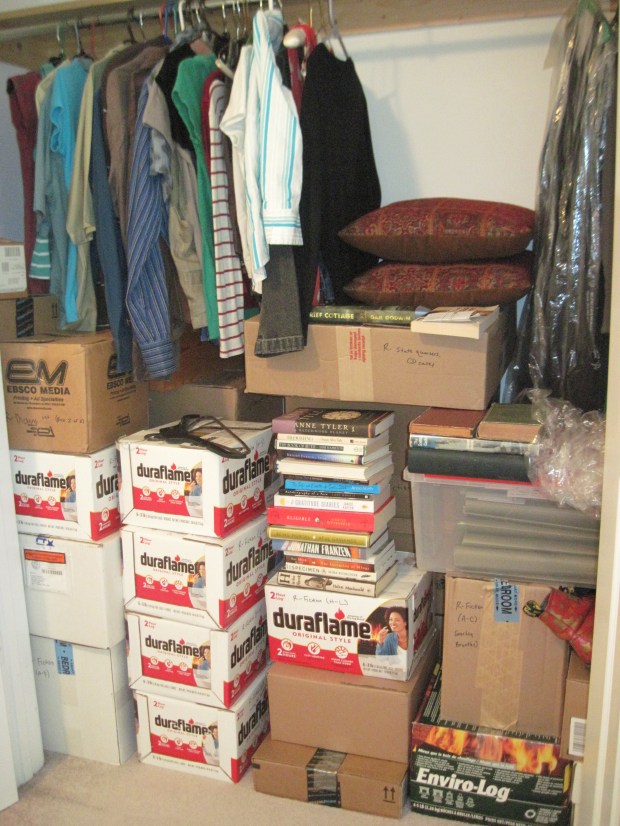
Now, even though there are 25–30 (smallish) boxes of books remaining in that closet, I can definitively say that I’m not as much of a book hoarder as I once was – back in high school, say. On this trip I went back through all of the boxes to consolidate them and pulled out another 50+ books to give away or resell on a future visit. I looked back with fondness through three boxes of books from my childhood, but then promptly handed them over to my mom to share with my nephews or give away, as she chooses.


Back in the UK, I keep on top of my book collection by considering carefully every time I read a book whether I want to keep it: Is it a favorite? Will I read it again, refer to it or lend it to others? If not, I might give it away to a friend, check the resale prices on Amazon, WeBuyBooks or Ziffit, or donate it to a charity shop. This keeps the review copies from piling up, and means that my shelves are always full but generally not overfull.
Are you brutal or sentimental when it comes to books and other possessions? When’s the last time you had a big clear-out?
Chastleton House (It Even Has a Bookshop)
I’ve been off my blogging game ever since we got back from America, but I hope to remedy that soon. I have a blog post planned for every day of the coming week, including some reviews, my monthly Library Checkout, a few recommendations for July releases, and a look back at the best books from the first half of the year.
Today I’m easing myself back into blogging with a mini profile of the National Trust historic manor we visited yesterday, Chastleton House in Oxfordshire (but it’s nearer the Gloucestershire border – very much Cotswolds country).
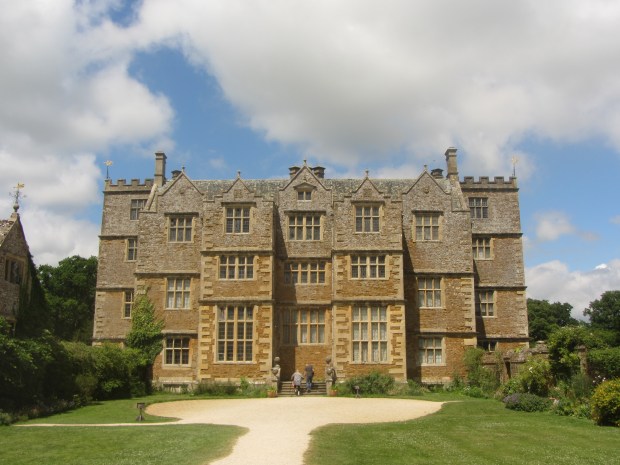
Photo by Chris Foster.
My brother-in-law sent us a voucher for free entry into any NT property, but my eye was drawn to this one in particular because I saw that there’s a secondhand bookshop in the stables. Compared to other historic houses, this one feels a lot less fusty. It’s been preserved as it was when the NT acquired it in 1991, so instead of reconstructed seventeenth-century rooms you get them as they were last used by later tenants. There are cracks in the plasterwork, cobwebs in the corners, and lots of stuff everywhere. But as a result, it seems less like part of the corporate fold; even the “Do Not Touch” signs are handwritten.


Chastleton has a literary claim to fame of which I was unaware before our visit: it was a filming location for the 2015 BBC adaptation of Hilary Mantel’s Wolf Hall. (Never mind that it was built in 1607–12, well after the Tudor history that novel is meant to portray.) Another interesting historical nugget: this is where the rules of croquet were codified in the 1860s, and there are still croquet lawns there today. Our visit happened to coincide with a special lawn games weekend, so we learned how to play croquet properly and my husband proceeded to trounce me.


Of course, I availed myself of a few bargain books from the secondhand stall.
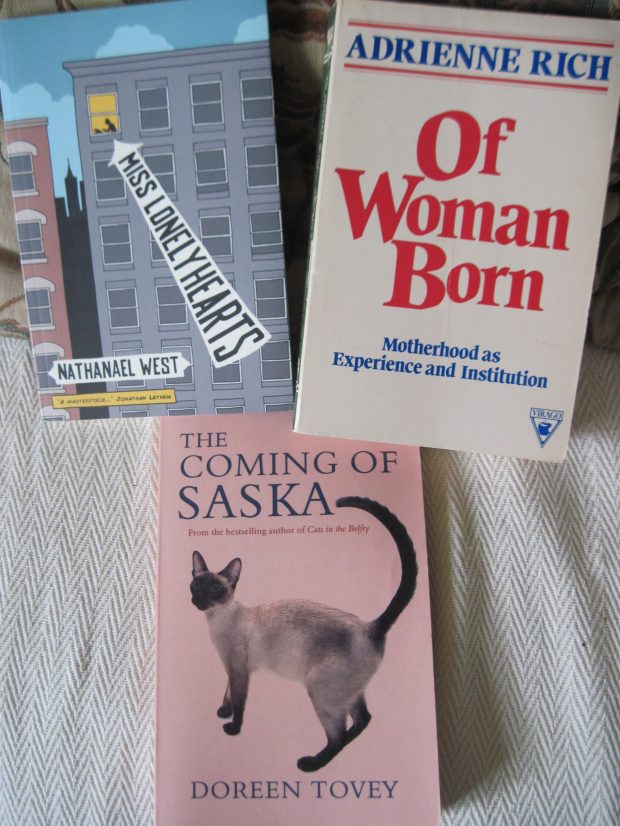 We also had tea and cake from a charity sale in the next-door churchyard. After dinner back home, in the evening we decided to walk 10 minutes down the road to our local event space for a folk concert featuring The Willows, with Gareth Lee and Annie Baylis supporting. We’ve been to three gigs at this former village hall so far this year; with tickets just £10 each and the venue so close, why not?! Each time we have heard absolutely excellent live folk music, with tinges of everything from Americana to electronica.
All together, a smashing day out.
America Reading & Book Haul, Etc.
On Wednesday we got back from two weeks in the States. We were so busy catching up with family and friends we hadn’t seen in a year and a half or more that my reading really slowed down: aside from the three books I took on the plane and finished within my first week, I only read another two books (not counting two during the trip back). Alas, I seem to be in a bit of a rut: everything I read was 3 stars. I haven’t finished anything I’d rate higher than that since late May. I do hope I can break that pattern before June ends!
What I Read:
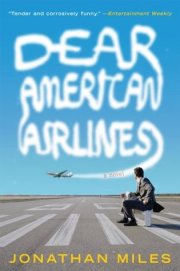 In Dear American Airlines by Jonathan Miles, Bennie Ford writes an extended letter during an unexpected overnight layover in Chicago, ostensibly to demand his $392.68 back, but really to tell his life story. His daughter is getting married in California tomorrow; it’s Bennie’s chance to make things right after years of estrangement. Will he make it to the wedding or not? The structure of the book means it doesn’t particularly matter, and I stopped caring a little bit as it went on. The sections of a novel Bennie is translating from the Polish felt irrelevant to me. Still, amusing, and a good one to read in the airport and on a plane.
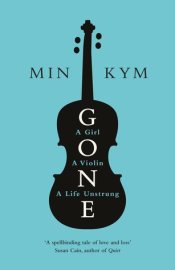 Gone: A Girl, a Violin, a Life Unstrung by Min Kym: I’m completely unmusical, so I enjoyed learning about what it’s like to be a violin virtuoso and a child prodigy, and what it means to fall in love with an instrument. Kym also puts things into the context of being a Korean immigrant to London. The central event of the book is having her Stradivarius, worth hundreds of thousands of pounds, stolen from a train station café in late 2010. It’s a brief and fairly immersive story, but the style is melodramatic and choppy at times.
 Back When We Were Grown-ups was my fifth Anne Tyler novel. Rebecca is in her fifties and the pillar of the large Davitch family, even though she only married into it six years before her husband’s sudden death. The Davitches are always renting out their home for their party business, and Rebecca has over the years developed a joyous persona that she’s not sure is really her true self. What would life have been like if she hadn’t become a stepmother to Joe’s three girls but instead married her college sweetheart, Will? While this is funny and warm, and a cozy read in the best possible way, it didn’t really stand out for me.
Three Singles to Adventure by Gerald Durrell, first published in 1954, tells of his animal collecting in Guiana, South America. The highlight is pipa toad reproduction and birth.
 Grief Cottage by Gail Godwin is a very atmospheric read, set on a South Carolina island with a haunted cottage where a family was swept away by a hurricane. However, I thought the rhythm of the young narrator’s languid summer days caring for his great-aunt became tedious, and I struggled to buy how self-aware he was meant to be of his fragile mental state at the age of 11. It’s reminiscent of John Irving (quirky secondary characters and so on) but without the same spark. I was sent a review copy for BookBrowse but found I couldn’t recommend it with 4 stars or higher.
To my surprise, I completely went off Kindle reading on this trip until the flight back, when I raced through Salmon Doubts by Adam Sacks, a sweet but inconsequential graphic novel about the salmon’s life cycle. I also started the poetry collection Fast by Jorie Graham but left it unfinished.
Two more DNFs from the trip were The Reluctant Fundamentalist by Mohsin Hamid and Between the World and Me by Ta-Nehisi Coates. I may try again with both in the future. Alas, library reading was a total wash: Hourglass by Dani Shapiro didn’t arrive in time, I abandoned the Coates, and I didn’t feel in the mood for advice letters so ended up not even starting Tiny Beautiful Things by Cheryl Strayed.
 My enjoyable read on the long journey back was Mennonite in a Little Black Dress by Rhoda Janzen. Janzen gave the Mennonite tradition she’d forsaken a second look after her life fell apart in her early forties: her husband left her for Bob, whom he met on a gay dating site; and she was in a serious car accident. It’s more in the form of linked autobiographical essays than a straight memoir, so she keeps cycling round to some of the same themes, and it gets less laugh-out-loud funny as it goes on. Still, I was impressed by how the author has managed to pull what’s good from experiences most would consider disastrous. (I also read the first third of Hotel du Lac by Anita Brookner.)
Now that I’m home I’ve started a huge pile of review books and library books and instead of the 1–3 books at a time I was reading while we were away I’m back up to my more usual 14.
What I Bought:
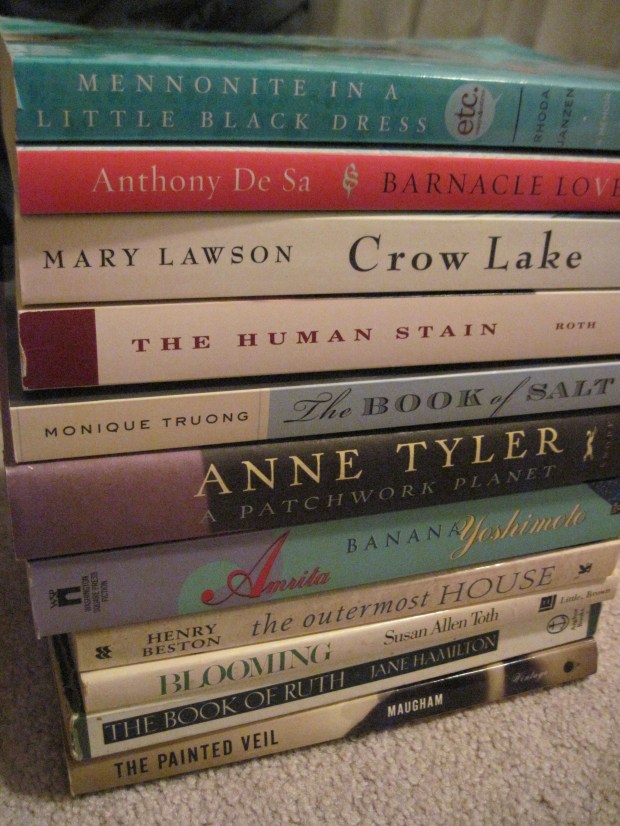
Day 2: A stop at my parents’ local Dollar Tree to stock up on greetings cards for the year’s events (2 for $1!) also brought some unexpectedly good book finds. [Not pictured: a paperback of Jonathan Franzen’s Freedom, our favorite of his novels.] Total spend: $3.18.
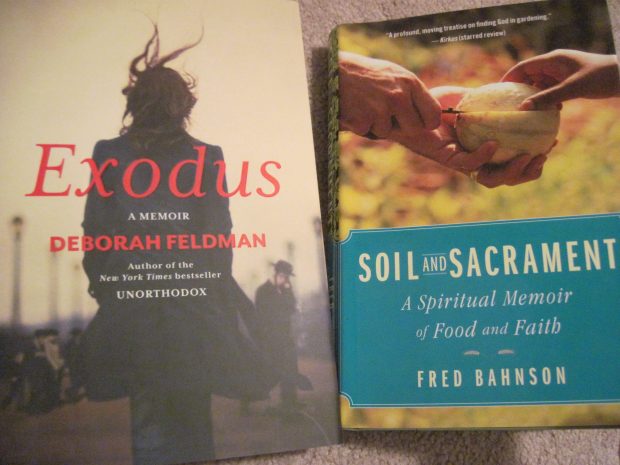
Day 4: The obligatory visit to Wonder Book & Video in Frederick, Maryland, one of my happy places.
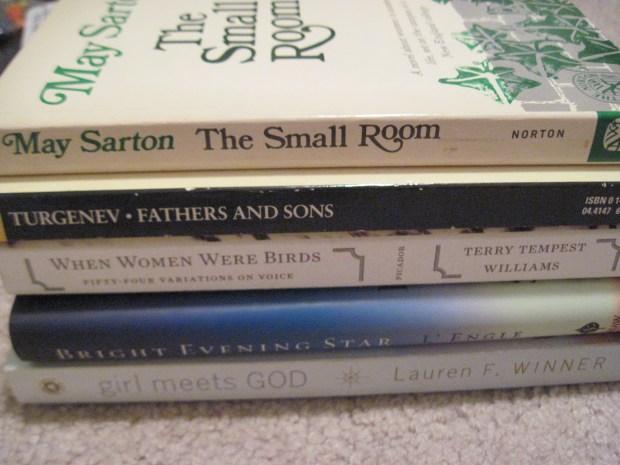
Day 5: A trip to bookstore chain 2nd & Charles in Hagerstown, MD. Total spend (minus my trade-in of various books and CDs): $5.19.
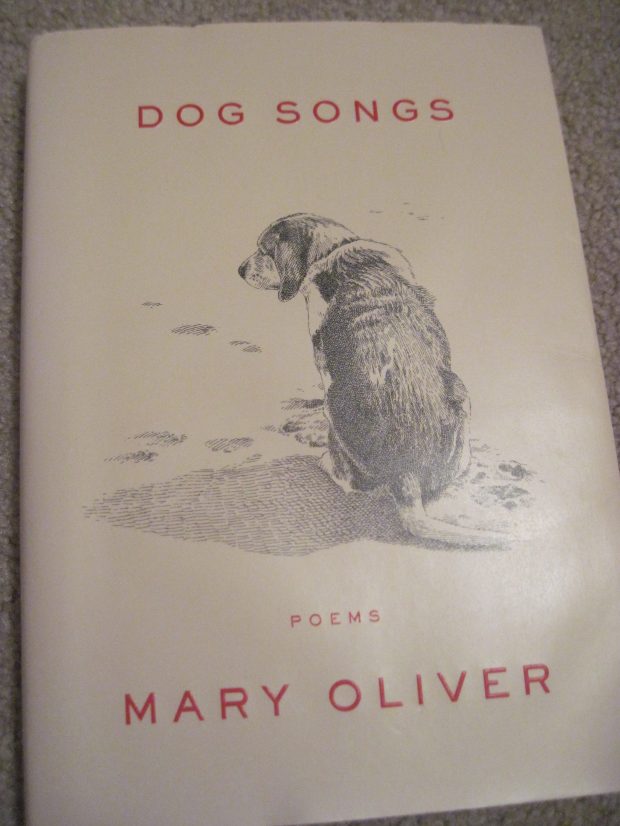
Day 6: A book of Mary Oliver poems from the Goodwill store in Westminster, MD.
Day 14: Some bargains from a thrift store in Rehoboth Beach, Delaware, where we met up with my friend and her family while they were on holiday. Total spend: $4.50.

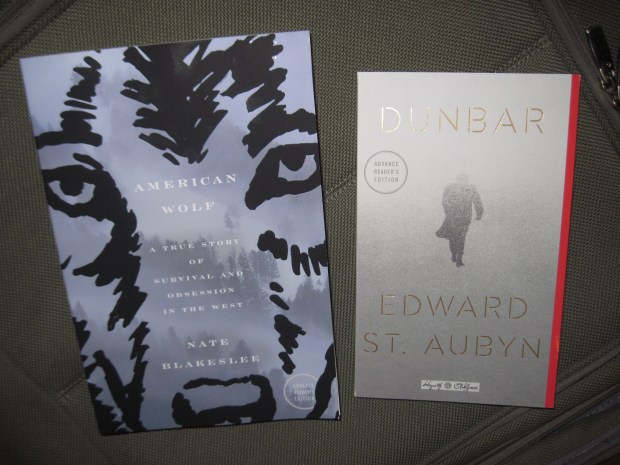
I also managed to snag a couple of Crown ARCs that are not out until October.
The state of my closet back in the States (most of those boxes contain books):
Other Bookish Sightings:
A Little Free Library at my parents’ local organic supermarket. I dropped off a few proof copies before I left.

The Peabody Library of Johns Hopkins University in Baltimore.

A trip to Mermaid Books in Williamsburg, Virginia (overpriced – no purchases), where I spotted an amusing cover on Anne Tyler’s first novel – she still has the same hairdo!


Ephemera in two of my purchases.


Other highlights of the trip:
- Meeting my sister’s fiancé (!) and his kids.
- Going to an alpaca farm with my sister and nephews.
- Surprising my mom with her early 70th birthday gift: a mother–daughters trip to the Kennedy Center in Washington, D.C. for dinner and a showing of Shear Madness, a long-running improvisational murder mystery with audience participation.
- Exploring Williamsburg (and Jamestown Island) for the first time since I was a kid.
- A day trip to Cape May, New Jersey – a place to go back to, methinks.
- Plus all our meet-ups, however brief, with friends.
- Not forgetting the total of seven cats and two dogs we got to spend time with.
- Two weeks of doing absolutely no work. I didn’t miss it for a second.
One last book haul photo: These were the review copies (top two) and giveaway books awaiting me when I got back to the UK. (I won the Schaub from Liz’s blog; I’m on a great run with Goodreads giveaways at the moment: along with these Sedaris and Whittal titles, I have new books by Cathy Rentzenbrink and Anne de Courcy on the way.)
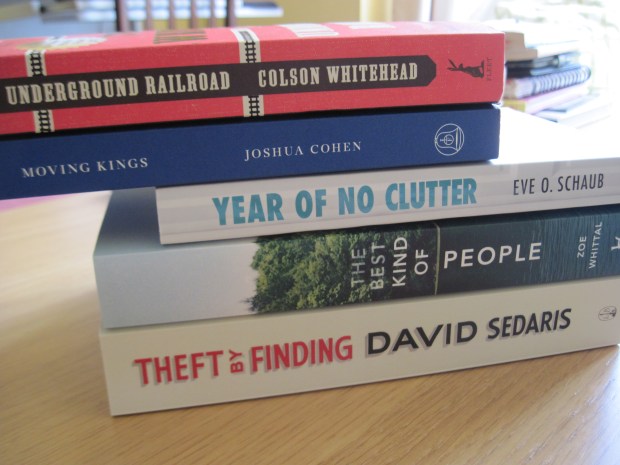
How has your summer reading been going?
Making Plans for April & a Return to Hay-on-Wye
In April I’ll be busy with the last three books on the Wellcome Book Prize shortlist. I’m nearing halfway in Ed Yong’s I Contain Multitudes, have just started Siddhartha Mukherjee’s dauntingly dense The Gene, and am still awaiting my library hold on David France’s How to Survive a Plague. With the shadow panel’s decision due by the 23rd, it’s going to be something of a struggle! If push comes to shove, I’ll have to leave Dickens aside for next month and call Mukherjee and/or France my doorstopper for April.
As to other planned posts for the month…
- I read my second Margaret Laurence novel a little while back and just need to find time to write it up.
- I’m taking part in a nonfiction blog tour for a bereavement memoir on the 11th.
- I’m working on four review books, including two offered directly by the authors.
- I’ll try to round up a few recent or upcoming theology titles for an Easter post.
- If I get a chance, I’ll preview two or more recommended May releases.
Luckily, it’s a quieter month for me in terms of work deadlines. I’ve been working like a fiend to get ready for our short break to Hay-on-Wye, leaving Monday and returning Thursday evening. Tomorrow I’ll be submitting four completed reviews and scheduling a Wellcome Prize post for while we’re away, and then I’ll be able to breathe a big sigh of relief and allow myself some time off – always a difficult thing for freelancers to manage.
This will be our sixth trip to Hay-on-Wye, the Book Town in Wales. Our other visits clustered between 2004 and 2011; I can hardly believe it’s nearly six years since we’ve been back to one of our favorite places! Yet it’s a bittersweet return. On four of our previous trips, we stayed in the same B&B, a gorgeous eighteenth-century house with extensive gardens. It’s where we got engaged in 2006. It also served the finest breakfast known to man: organic Full English PLUS homemade cereals and jam to go with warm croissants; local single-variety apple juice PLUS all-you-can-drink tea. Around 2013 we toyed with the idea of going back, but didn’t make a serious enquiry until 2014. Alas, they’d closed temporarily while the hostess underwent breast cancer treatment. We wished them well, hoping we’d get a message when they reopened for business. Instead, we found her obituary in the Guardian last year.
So, although Hay is still our special place, we’re sad the experience won’t be quite the same. We also noticed that more shops have closed since last we visited, but there are still about 12, a lot for a town of its size. Some of these are top-class, like Booth’s, the Cinema Bookshop and Addyman’s. There will certainly be no dearth of tempting shopping opportunities. I’m not going with much of a plan in mind. Our general strategy is to start with the cheapest shops/bargain basements and then move on to more expensive and specialist ones.
Hay is better for browsing than for concerted searching for particular titles – for that you’re better off going online (many of the shops do Internet sales). It’s also not a place to go for cheap paperbacks – for that you’re better off at your local charity shop. So although I’m taking an updated list of books that are priorities to find, I don’t expect to make much of a dent in it. I’ll just wander and see what catches my eye. We’ll also visit Llanthony Priory and Clyro Church, go for a good country walk, and have lunch with a friend in the Brecon area.
Taking books to Hay is rather like taking coal to Newcastle, but it must be done. I’ve picked four topical reads to sample while I’m there: a selection from Reverend Francis Kilvert’s diary – he was the curate of Clyro from 1865 to 1872; Bruce Chatwin’s 1982 debut novel On the Black Hill, set on the England–Wales border; the obscure classic The Rebecca Rioter, about the Rebecca Riots against tolls in rural Wales in 1839–43; and a Kindle copy of The Airbnb Story, since we’re renting an Airbnb property this time.
But that’s not all. I need to make progress in at least some of the books I currently have on the go, too, so I will be loading up a book-themed tote bag with the following:
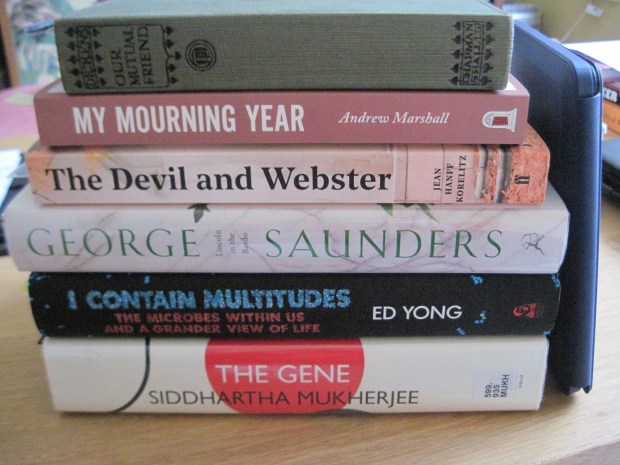
I call this my Hay-stack. Geddit? In progress on the Kindle are a poetry book and two religion books.
Now, the last thing I needed just before a trip to Hay was an influx of secondhand books, but I couldn’t help myself. This afternoon a local green initiative ran a swap shop where you bring things you don’t want anymore and go home with things you do want. I donated a couple of household items and a few books … but came away with 13 books. Good travel and literature finds. I’m particularly pleased with Elizabeth Bishop’s Complete Poems and a Dave Eggers novel I’ve not read. It’s fun to think of the journeys these books have been on: John Sutherland’s How to Read a Novel (which I have already read, but would like to have around for reference) is an ex-library book all the way from Westborough, Massachusetts! I left my details so I can get involved with future local greening activities, too.
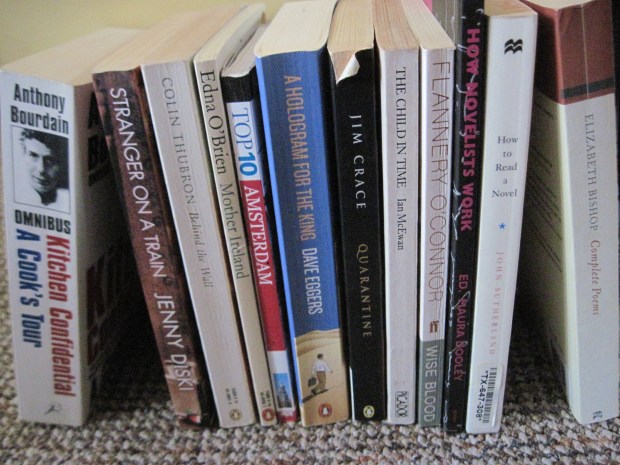
The one not pictured will be a gift.
I know a number of my readers are Hay regulars, or have at least made the trek once. If you have any up-to-date recommendations for us in terms of shopping or eating out in the area, do let me know (by tomorrow night if you can – we’re away from Monday morning).
See also: My review of Hay local interest book Under the Tump by Oliver Balch.
Enjoy my Sarah Moss review while I’m away, and I’ll see you back here on Friday!
The Best Fiction of 2016: My Top 15
You might be surprised to hear that I received ‘only’ eight books for Christmas. (And a very fetching owl bookmark.) Here they are:

As I did last year, I’ve come up with my top 15 fiction books of the year (the three translated works first appeared in English in 2016) and even attempted to rank them. Many of these books have already featured on the blog in some way over the course of the year. To keep it simple for myself as well as for all of you who are figuring out whether you’re interested in these books or not, I’m limiting myself to two sentences per title: the first is a potted summary; the second tells you why you should read it. I also link to any full reviews.
Without further ado, let the countdown begin!
 Your Heart Is a Muscle the Size of a Fist by Sunil Yapa: A hard-hitting novel with an unforgettably resonant title, this is set at the 1999 Seattle WTO protest: Yapa explores the motivations and backstories of activists, police officers, and delegates as the day deteriorates into violence. This fine debut is about cultivating the natural compassion in your heart even while under the threat of the fist.
 The Crime Writer by Jill Dawson: Beyond the barest biographical facts, Dawson has imagined the plot based on Patricia Highsmith’s own preoccupations: fear of a stalker, irksome poison-pen letters, imagining what it would be like to commit murder … and snails. You’re never quite sure as you’re reading what is actually happening in the world of the novel and what only occurs in Highsmith’s imagination, making this one of the most gripping, compulsive books I encountered this year.
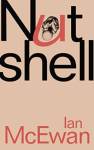 Nutshell by Ian McEwan: Within the first few pages, I was captivated and convinced by the voice of this contemporary, in utero Hamlet. His captive state pairs perfectly with Hamlet’s existential despair, but also makes him (and us as readers) part of the conspiracy: even as he wants justice for his father, he has to hope his mother and uncle will get away with their crime; his whole future depends on it.
 The Longest Night by Andria Williams: This absorbing work of historical fiction combines a remote setting, the threat of nuclear fallout, and a marriage strained to the breaking point in a convincing early 1960s atmosphere. A great debut and an author I’d like to hear more from.
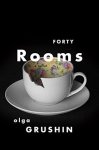 Forty Rooms by Olga Grushin: Each of us is said to occupy 40 rooms in our lives; this novel in 40 vignettes, one per room, tells the life story of a Russian immigrant to America who dreams of becoming a poet but ends up a suburban housewife and mother of six. I feel this book will resonate with women of every age, prompting them to question the path they’ve taken, the passions they’ve left unexplored, and whether it’s too late to change.
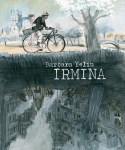 Irmina by Barbara Yelin: After her grandmother’s death Yelin, a Munich-based artist, found a box of diaries and letters that told the story of a budding love affair that was not to be and charted a young woman’s gradual capitulation to Nazi ideology. For the out-of-the-ordinary window onto Third Reich history and the excellent illustrations, I highly recommend this to graphic novel lovers and newbies alike.
 The Wonder by Emma Donoghue: In the 1850s a nurse investigates the case of an Irish girl surviving without food for months: miracle or hoax? Donoghue writes convincing and vivid historical fiction, peppering the text with small details about everything from literature to technology and setting up a particularly effective contrast between medicine and superstition.
 The Summer Guest by Alison Anderson: The kernel of the novel is a true story: for two summers in the late 1880s, Chekhov (known here as Anton Pavlovich) stayed at the Lintvaryovs’ guest house in Luka, Ukraine; one strand of the narration is a journal kept during those years by the family’s eldest daughter, who’s dying of a brain tumor. An elegantly plotted story about writing, translation, illness, and making the most of life.
 Quiet Flows the Una by Faruk Šehić: This autobiographical novel by a Bosnian poet and former soldier is full of poetic language and nature imagery. The lyrical writing about his beloved river provides a perfect counterpoint to the horror and absurdity of war.
 Three-Martini Lunch by Suzanne Rindell: Rindell brings the late 1950s, specifically the bustling, cutthroat New York City publishing world, to life through the connections between three young people who collide over a debated manuscript. It’s an expert evocation of Beat culture and post-war paranoia over communism and homosexuality.
 Golden Hill by Francis Spufford: The novel opens suddenly as twenty-four-year-old Richard Smith arrives from London with a promissory note for £1000; before he can finally get his money, he’ll fall in and out of love, fight a duel, and be arrested twice – all within the space of two months. Bawdy, witty, vivid historical fiction; simply brilliant.
 Why We Came to the City by Kristopher Jansma: Five university friends strive to make their lives count against the indifferent backdrop of recession-era New York City. You’ll see yourself in one or more of the characters, and the rest you’ll greet as if they were your own friends and makeshift family.
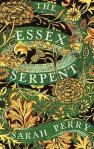 The Essex Serpent by Sarah Perry: The Essex Serpent was a real-life legend from the latter half of the seventeenth century, but Perry’s second novel has fear of the sea creature re-infecting Aldwinter, her invented Essex village, in the 1890s. This exquisite work of historical fiction explores the gaps – narrower than one might think – between science and superstition and between friendship and romantic love.
 The Tobacconist by Robert Seethaler: Seventeen-year-old Franz Huchel’s life changes for good when in 1937 his mother sends him away from his quiet lakeside village to work for her old friend Otto Trsnyek, a Vienna tobacconist. This novel is so many things: a coming-of-age story, a bittersweet romance, an out-of-the-ordinary World War II/Holocaust precursor, and a perennially relevant reminder of the importance of finding the inner courage to stand up to oppressive systems.
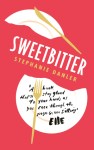 Sweetbitter by Stephanie Danler: The restaurant where twenty-two-year-old Tess works is a claustrophobic world unto itself, like a theatre set where the food is high art and the staff interactions are pure drama. Everything about this novel is utterly assured: the narration, the characterization, the prose style, the plot, the timing; it captures the intensity and idealism of youth yet injects a hint of nostalgia.
& A poetry selection:
 Still the Animals Enter by Jane Hilberry: A rich, strange, gently erotic collection featuring diverse styles and blurring the lines between child and adult, human and animal, life and death through the language of metamorphosis. The message is that we are part of a shared life beyond the individual family or even the human species; we are all connected.
What are the best novels you read this year? Any new favorite books or authors?
I’ll be back tomorrow with the best nonfiction books I read this year.
A Saturday Jaunt to Bath
 We heard that The Bookshop Band would be playing at a free seasonal concert on Saturday night, so on something of a whim we planned a daytrip to Bath. Even though it wasn’t exactly on the way (my husband’s regular, feeble refrain), I take any opportunity of being in the Bath/Bristol area to make a pilgrimage to Bookbarn International. This was a delightful surprise since I’d been in late July and never thought I’d get to go again this year.
This turned out to be our best trip yet. We were unrushed for once, so had plenty of time for browsing. I had particularly good luck in the orange-spined all-Penguins section, and even found three books I wanted from the “Unsorted” shelves, which was something of a miracle. We finally tried out their newish café and got a darned good cup of coffee and a cake each.


All told, we came away with a better haul than on any previous visit: 13 books for me, 10 nature books plus a River Café cookbook for my husband, and eight books to give away as presents. And for all that (books + refreshments), less than £40. Add on a couple of books from a charity shop in Bath and I got some real steals – no book more than £1.
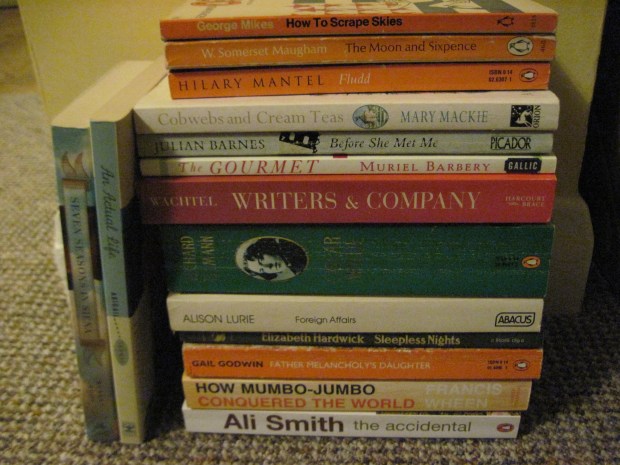
I’m particularly pleased with:
- Richard Ellmann’s biography of Oscar Wilde
- Writers & Company, a collection of Canadian radio interviews with authors
- A signed copy of Francis Wheen’s How Mumbo-Jumbo Conquered the World
- An Actual Life by Abigail Thomas – I love her memoirs so have been looking forward to trying her fiction.
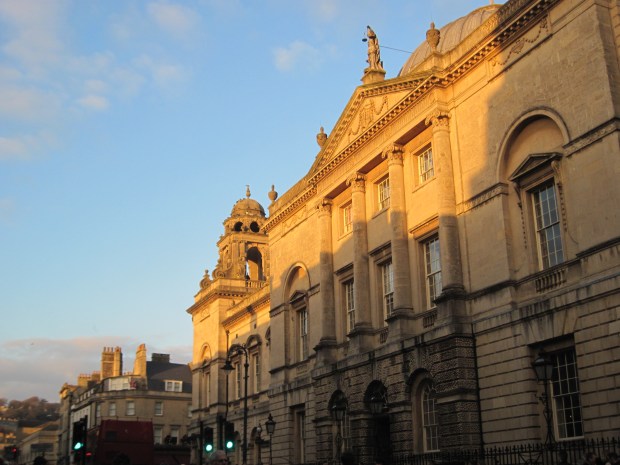
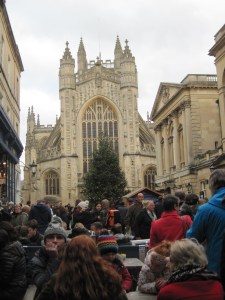
Bath Abbey
This was my fifth trip to Bath, which was looking lovely and golden in the wintry afternoon light but was certainly bustling, to put it politely. More accurately, you could barely move through the main streets, particularly around the Christmas market. At one point we weren’t sure we were going to get any hot food for dinner – it had never occurred to us to book ahead, and the brasserie and pub we tried were both full. Luckily the Real Italian Pizza Co. had a table for two, and I enjoyed a gloriously doughy calzone before we headed up to St Swithin’s Church for a holiday concert featuring Songways Choir and The Bookshop Band.
St Swithin’s has had a church on site since the tenth century, a sort of age we Americans can barely get our heads round. Jane Austen’s parents married here; so did William Wilberforce. It was something of a bittersweet occasion because the couple who make up The Bookshop Band are moving to Wigtown, Scotland’s town of books, in January and expecting their first booklet in May. So this was most likely my last chance to see them for quite a while. They only played a mini-set of five songs after the choir performance. Most of these I’d heard before, but “Wagons and Wheels,” based on Carol Birch’s Orphans of the Carnival (which I have on my Kindle and have been meaning to read), was new to me and a highlight.


Earlier in the evening we’d had a chance to stop by Mr B’s Emporium of Reading Delights, the independent bookshop in Bath where the band got their start. It’s such a cozy and welcoming shop, and I added a goodly number of books to my wish list while I was there. It’s something of a shame that we never got to see them perform in situ (though I don’t know how more than 20 people could fit in the upstairs space!), but I’ve managed to see them live three times and by funding their 2016 recording project have had excellent music streaming to my computer the whole year.
Thanks to last night’s holiday concert and the university carol service we’ll be attending tomorrow evening, I should certainly be feeling in the Christmas spirit. Look out for my two posts on seasonal reading coming up this week.
Picked up any secondhand bargains recently?
Are you feeling the Christmas spirit?
Birthday Happenings
One of the best things about being a home-based freelancer is that I can arrange my work schedule to suit my life. Having my birthday fall on a Friday this year was especially good because it meant I got until Monday to submit my daily editing load. My husband was working as usual, so I spent much of the day reading under the cat and charity shopping. I bought seven books, a nice mixture of England-themed nonfiction and juicy novels, plus new-to-me comfy black flats. (Total spend: £10.25.) Being short on time that evening, we lazily ordered delivery pizza for probably the first time in eight years, followed by cocktails and cake.
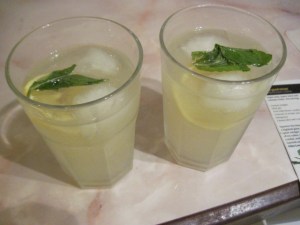 I didn’t end up using my literary cakes and cocktails books this year, but that gives me a chance to proffer my own pun names for what we did make. We tried two gin cocktails we’d found recipes for in the Guardian. The one they called “Elderflower Collins” was absolutely delicious: lemon juice, elderflower cordial and gin, topped up with San Pellegrino Limonata (lemon soda) and garnished with a lemon slice and a mint sprig. I dub it “A Visit from Mr. Collins,” as in the Bennet girls will have to down quite a few of these before…
Unfortunately, the second cocktail was not a hit. The “Miss Polly Hawkins” combines chamomile-flavored gin (I steeped two chamomile teabags in 60 mL of gin for a week), rose syrup (we didn’t have it or want to buy it so substituted our homemade rosehip syrup), plain gin and egg white. Egg white is a fairly frequent ingredient in cocktails – it adds gloss and body – but we found that it made the drink gloopy. That plus the overall floral and medicinal notes meant this was fairly hard to swallow; we had to drown it in sparkling water and ice cubes to get it down. Alas, I modify Iris Murdoch to call this “An Unappealing Rose.”
 However, my cake was an unqualified success. I usually go for chocolate or chocolate/peanut butter desserts, but decided to be different this year and requested the Italian Pear and Ginger Cheesecake from Genevieve Taylor’s cookbook A Good Egg. It was sophisticated and delicious. Running with the Italy thing, I’ll pick out a Forster title and call it “Where Angels Pear to Tread.” (It doesn’t make a whole lot of sense; then again, neither do a lot of the names in Tequila Mockingbird and Scone with the Wind!)
On Sunday the birthday fun continued with a trip to Hungerford Bookshop (our nearest independent bookshop) and a gentle country walk. I bought two secondhand books but came away with a total of four – in the basement they have a table covered in free proof copies, so my husband and I grabbed one each (how I wish I could have taken the lot!). It’s a great idea for rewarding customer loyalty and dealing with unwanted proofs; perhaps I’ll donate a stack of mine to them next time I’m there.


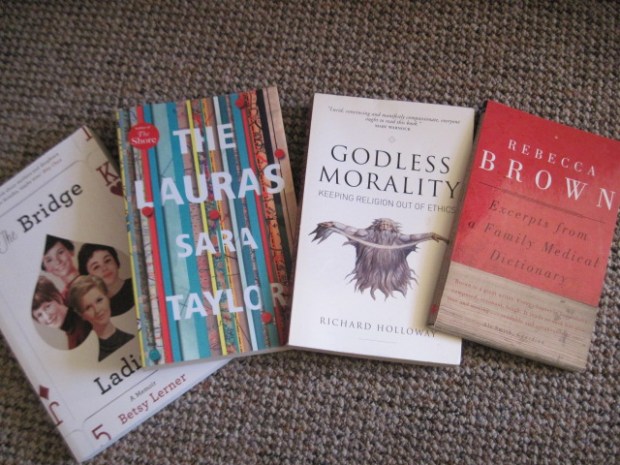
Two proofs (left) and two nonfiction purchases.
This year I got a Kindle case and two bookshop-themed memoirs as presents: The Little Bookstore of Big Stone Gap by Wendy Welch and Books, Baguettes and Bedbugs by Jeremy Mercer. I started reading the former – the story of a married couple opening a bookshop in recession-era Virginia – right away. I also got a poster frame so I can finally hang my literary map of the British Isles on the wall above my desk, and a “Shhhh, reading in progress” mug.

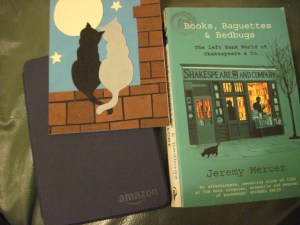

Consuming tasty food and drink + acquiring a baker’s dozen of books + getting out into the countryside = a great birthday weekend!
 Bookish Beck = Rebecca Foster. American transplant to England. Freelance proofreader and book reviewer.
 Bookish Beck