Wellcome Book Prize Shortlist: To Be a Machine by Mark O’Connell
The topic of this shortlisted book didn’t particularly appeal to me, so I was pleasantly surprised to enjoy it. Transhumanism is about using technology to help us overcome human limitations and radically extend our lifespan. Many of the strategies O’Connell, a Dublin-based freelance writer with a literature background, profiles are on the verge of science fiction. Are we looking at liberation from the rules of biology, or enslavement to technology? His travels take him to the heart of this very American, and very male, movement.
Cryogenic freezing: The first person was cryogenically frozen in 1966. Max More’s Alcor Life Extension Foundation in Scottsdale, Arizona offers whole-body or head-only (“neuro”) options for $200,000 or $80,000. More argues that the residents of Alcor are somewhere between living and dead. These entities are held in suspension in the belief that technology will one day allow us to upload the contents of the mind into a new vessel.
- This approach seems to conceive of the human mind/consciousness as pure information to be computed.
 Cyborgs: Grindhouse Wetware, near Pittsburgh, aims to turn people into literal cyborgs. Tim Cannon had a Circadia device the size of a deck of cards implanted in his arm for three months to take biometric measurements. Other colleagues have implanted RFID chips. He intends to have his arms amputated and replaced by superior prostheses as soon as the technology is available.
- That may seem extreme, but think how bound people already are to machines: O’Connell calls his smartphone a “mnemonic prosthesis” during his research travels.
Mortality as the enemy: Many transhumanists O’Connell meets speak of aging and death as an affront to human dignity. We mustn’t be complacent, they argue, but must oppose these processes with all we’re worth. One of the key people involved in that fight is Aubrey de Grey of SENS (“Strategies for Engineered Negligible Senescence”), and Google has also gotten in on it with their “Calico” project.
- O’Connell recounts explaining aging and death to his three-year-old son; his wife chipped in that – according to “Dada’s book” – perhaps by the time the boy is grown up death will no longer be a problem.
The Singularity: Posited by Ray Kurzweil, the Singularity is the future point at which artificial intelligence will surpass humanity. O’Connell likens it to the Christian idea of the Rapture, itself a moment of transcendence. At a conference on transhumanism and religion in Piedmont, California, he encounters Terasem, a religion founded recently by a transhumanist and transgender person.
- To my surprise, To Be a Machine makes frequent reference to religious ideas: O’Connell thinks of transhumanism as an attempt to reverse the Fall and become godlike, and he often describes the people he meets as zealots or saints, driven by the extremity of their beliefs. Both religion and transhumanism could be seen as a way of combating nihilism and insisting on the meaning of human life.
O’Connell’s outsider position helped me to engage with the science; he’s at least as interested, if not more so, in the deeper philosophical questions that transhumanism raises. I would caution that a grounding in religion and philosophy could be useful, as the points of reference used here range from the Gnostic gospels and St. Augustine to materialism and Nietzsche. But anyone who’s preoccupied with human nature should find the book intriguing.
You could also enjoy this purely as a zany travelogue along the lines of Elif Batuman’s The Possessed and Donovan Hohn’s Moby-Duck. The slapstick antics of the robots at the DARPA Robotics Challenge and the road trip in Zoltan Istvan’s presidential campaign Immortality Bus are particularly amusing. O’Connell’s Dickensian/Wildean delight in language is evident, and I also appreciated his passing references to William Butler Yeats.
It could be argued, however, that O’Connell was not the ideal author of this book. He is not naturally sympathetic to transhumanism; he’s pessimistic and skeptical, often wondering whether the proponents he meets are literally insane (e.g., to think that they are in imminent danger of being killed by robots). Most of the relevant research, even when conducted by Europeans, is going on in the USA, particularly in the Bay Area. So why would an Irish literary critic choose transhumanism as the subject for his debut? It’s a question I asked myself more than once, though it never stopped me from enjoying the book.
The title (from an Andy Warhol quote) may reference machines, but really this is about what it means to be human. O’Connell even ends with a few pages on his own cancer scare, a reminder that our bodies are flawed machines. I encourage you to give this a try even if you think you have no particular interest in technology or science fiction. It could also give a book club a lot to discuss.
Favorite lines:
“We exist, we humans, in the wreckage of an imagined splendor. It was not supposed to be this way: we weren’t supposed to be weak, to be ashamed, to suffer, to die. We have always had higher notions of ourselves. … The frailty is the thing, the vulnerability. This infirmity, this doubtful convalescence we refer to, for want of a better term, as the human condition.”
My rating:
See what the rest of the shadow panel has to say about this book:
Annabel’s review: “I loved this book from the front cover to the back, starting with its title. … He writes with empathy and a good deal of humour which makes the text always readable and entertaining, while provoking his readers to think deeply about their own beliefs.”
Clare’s review: “O’Connell’s prose style is wordy and ironic. He is pleasingly sceptical about many aspects of transhumanism. … It is an entertaining book which provides a lot of food for thought for a layperson like myself.”
Laura’s review: “Often, I found that his description of his own internal questions would mirror mine. This is a really fantastic book, and for me, a clear front runner for the Wellcome Book Prize.”
Paul’s review: “An interesting book that hopefully will provoke further discussion as we embrace technology and it envelops us.”
My gut feeling: Though they highlight opposite approaches to death – transcending it versus accepting it – this and Kathryn Mannix’s With the End in Mind seem to me the two shortlisted books of the most pressing importance. I’d be happy to see either of them win. To Be a Machine is an awful lot of fun to read, and it seems like a current favorite for our panel.
Shortlist strategy:
- I’m coming close to the end of my skim of The Vaccine Race by Meredith Wadman.
- I’m still awaiting a review copy of Mayhem by Sigrid Rausing, which I’ll be featuring as part of the official Wellcome Book Prize shortlist blog tour.
Wellcome Book Prize Shadow Panel & Two Longlist Reviews
I’m delighted to announce the other book bloggers on my Wellcome Book Prize 2018 shadow panel: Paul Cheney of Halfman, Halfbook, Annabel Gaskell of Annabookbel, Clare Rowland of A Little Blog of Books, and Dr. Laura Tisdall. Once the shortlist is announced on Tuesday the 20th, we’ll be reading through the six nominees and sharing our thoughts. Before the official winner is announced at the end of April we will choose our own shadow winner.
I’ve been working my way through some of the longlisted titles I was able to access via the public library and NetGalley. Here’s my latest two (both  ):
):
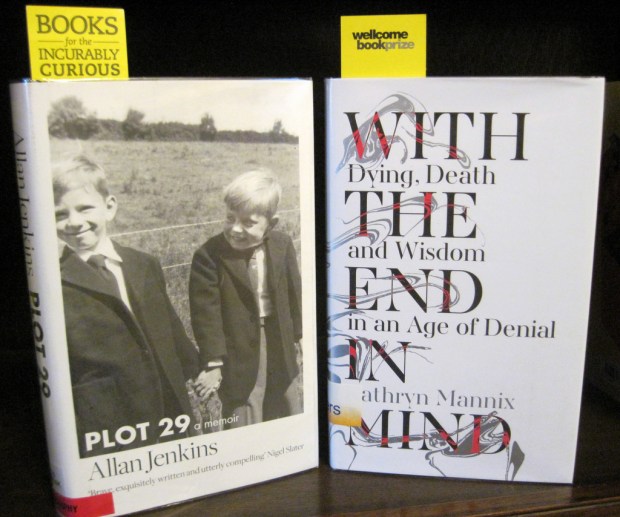
Plot 29: A Memoir by Allan Jenkins
This is an unusual hybrid memoir: it’s a meditative tour through the gardening year, on a plot in London and at his second home in his wife’s native Denmark. But it’s also the story of how Jenkins, editor of the Observer Food Monthly, investigated his early life. Handed over to a Barnardo’s home at a few months of age, he was passed between various family members and a stepfather (with some degree of neglect: his notes show scabies, rickets and TB) and then raised by strict foster parents in Devon with his beloved older half-brother, Christopher. It’s interesting to read that initially Jenkins intended to write a simple gardening diary, with a bit of personal stuff thrown in. But as he got further into the project, it started to morph.

This cover image is so sweet. It’s a photograph from Summer 1959 of Christopher and Allan (on the right, aged five), just after they were taken in by their foster parents in Devon.
The book has a complicated chronology: though arranged by month, within chapters its fragments jump around in time, a year or a date at the start helping the reader to orient herself between flashbacks and the contemporary story line. Sections are often just a paragraph long; sometimes up to a page or two. I suspect some will find the structure difficult and distancing. It certainly made me read the book slowly, which I think was the right way. You take your time adjusting to the gradual personal unveiling just as you do to the slow turn of the seasons. When major things do happen – meeting his mother in his 30s; learning who his father was in his 60s – they’re almost anticlimactic, perhaps because of the rather flat style. It’s the process that has mattered, and gardening has granted solace along the way.
I’m grateful to the longlist for making me aware of a book I otherwise might never have heard about. I don’t think the book’s mental health theme is strong enough for it to make the shortlist, but I enjoyed reading it and I’ll also take a look at Jenkins’s upcoming book, Morning, about the joys of being an early riser. (Ironic after my recent revelations about my own sleep patterns!)
Favorite lines:
“Solitude plus community, the constant I search for, the same as the allotment”
“The last element to be released from Pandora’s box, they say, was hope. So I will mourn the children we once were and I will sow chicory for bitterness. I will plant spring beans and alliums. I’ll look after them.”
“As a journalist, I have learned the five Ws – who, what, where, when, why. They are all needed to tell a story, we are taught, but too many are missing in my tale.”
With the End in Mind: Dying, Death and Wisdom in an Age of Denial by Kathryn Mannix
This is an excellent all-round guide to preparation for death. It’s based around relatable stories of the patients Mannix met in her decades working in the fields of cancer treatment and hospice care. She has a particular interest in combining CBT with palliative care to help the dying approach their remaining time with realism rather than pessimism. In many cases this involves talking patients and their loved ones through the steps of dying and explaining the patterns – decreased energy, increased time spent asleep, a change in breathing just before the end – as well as being clear about how suffering can be eased.
I read the first 20% on my Kindle and then skimmed the rest in a library copy. This was not because I wasn’t enjoying it, but because it was a two-week loan and I was conscious of needing to move on to other longlist books. It may also be because I have read quite a number of books with similar themes and scope – including Caitlin Doughty’s two books on death, Caring for the Dying by Henry Fersko-Weiss, Being Mortal by Atul Gawande, and Waiting for the Last Bus by Richard Holloway. Really this is the kind of book I would like to own a copy of and read steadily, just a chapter a week. Mannix’s introductions to each section and chapter, and the Pause for Thought pages at the end of each chapter, mean the book lends itself to being read as a handbook, perhaps in tandem with an ill relative.
 The book is unique in giving a doctor’s perspective but telling the stories of patients and their families, so we see a whole range of emotions and attitudes: denial, anger, regret, fear and so on. Tears were never far from my eyes as I read about a head teacher with motor neurone disease; a pair of women with metastatic breast cancer who broke their hips and ended up as hospice roommates; a beautiful young woman who didn’t want to stop wearing her skinny jeans even though they were exacerbating her nerve pain, as then she’d feel like she’d given up; and a husband and wife who each thought the other didn’t know she was dying of cancer.
Mannix believes there’s something special about people who are approaching the end of their life. There’s wisdom, dignity, even holiness surrounding them. It’s clear she feels she’s been honored to work with the dying, and she’s helped to propagate a healthy approach to death. As her children told her when they visited her dying godmother, “you and Dad [a pathologist] have spent a lifetime preparing us for this. No one else at school ever talked about death. It was just a Thing in our house. And now look – it’s OK. We know what to expect. We don’t feel frightened. We can do it. This is what you wanted for us, not to be afraid.”
I would be happy to see this advance to the shortlist.
Favorite lines:
“‘So, how long has she got?’ I hate this question. It’s almost impossible to answer, yet people ask as though it’s a calculation of change from a pound. It’s not a number – it’s a direction of travel, a movement over time, a tiptoe journey towards a tipping point. I give my most honest, most direct answer: I don’t know exactly. But I can tell you how I estimate, and then we can guesstimate together.”
“we are privileged to accompany people through moments of enormous meaning and power; moments to be remembered and retold as family legends and, if we get the care right, to reassure and encourage future generations as they face these great events themselves.”
Longlist strategy:
Currently reading: The Butchering Art by Lindsey Fitzharris: a history of early surgery and the fight against hospital infection, with a focus on the life and work of Joseph Lister.
Up next: I’ve requested review copies of The White Book by Han Kang and Mayhem by Sigrid Rausing, but if they don’t make it to the shortlist they’ll slip down the list of priorities.
Waiting for the Last Bus by Richard Holloway
Theology rarely appears on this blog, though I have a dual degree in English and Religion and read a fair number of books with religious themes. Never fear: it’s not your average pie-in-the-sky Christian talk in Waiting for the Last Bus, Richard Holloway’s brand-new book about old age and death. Holloway was a career priest and has written nearly 30 theological works, but he comes at things from a refreshingly different angle. In Leaving Alexandria (2012), one of my all-time favorite memoirs, he recorded his drift away from orthodoxy – even as he rose through the ranks of the Church of Scotland to become Bishop of Edinburgh. He recognizes morality as provisional (like in another of his books I’ve read, Godless Morality (1999)) – the Church has changed its mind about women and gay people, for instance – and doesn’t waste time pondering the supernatural or the chance of eternal life, but he still thinks religion has lessons to teach us about how we can approach death with dignity.

The thematic scaffolding of this short book, which grew out of a Radio 4 series that aired in 2016, is acceptance versus denial. For Holloway, going prematurely bald was like a preview of ageing, and the futility of the quack hair restoration pills he ordered from a magazine was his first lesson in accepting what you cannot change about yourself. Seeing ourselves as we really are is a lifelong struggle, Holloway acknowledges; some only grasp their identity right at the end, as death approaches. Predestination is a doctrine common to Christianity and Islam, but he is more inclined to mix free will and fate. His recurring metaphor is of a deck of cards: life is a hand that you are dealt, but you get to choose exactly how to play it.
This is a richly allusive book, full of snatches of literature (especially poetry), as well as excerpts from obituaries and from funeral addresses Holloway has given. He also discusses the fear of death, the dystopian possibilities of cryogenic freezing, countering regrets with forgiveness, and how the way we face death could redeem a disappointing life. Holloway’s is a voice of wisdom worth heeding, and he is honest and humble instead of giving pat answers to life’s enormous questions. I would be particularly likely to recommend this to readers of Julian Barnes’s Nothing to Be Frightened Of who want a contrasting perspective.
A couple of favorite passages:
“I have ministered [Last Rites] myself and seen the peace they can bring at the end. I have sent good friends into the arms of a merciful God I was no longer sure I believed in. And I was convinced not only of the efficacy but of the honesty of what I was doing. I was not there to ventilate my doubts but to help the dying find the strength to cast off and take the tide that was pulling them out.”
“Religion is at its most compelling when it restrains the urge to explain death away and contents itself with voicing our sorrow and defiance that [death] keeps beating us into the ground. It feels most authentic when it stops preaching and becomes, instead, our song, our protest, the handkerchief waved against the immense tank looming at the corner of the street.”
My rating:
Waiting for the Last Bus is published in the UK today, March 1st. With thanks to Canongate for the free copy for review.
The Violet Hour by Katie Roiphe
I don’t believe that you can learn how to die, or gain wisdom, or prepare, and the work I have done on this book has, if anything, confirmed that suspicion, but I do think you can look at a death and be less afraid.
 The subtitle – “Great Writers at the End” – gives you a hint of what to expect from this erudite, elegiac work of literary biography. In a larger sense, it is about coming to terms with the fear of death, one of the last enduring Western phobias.
Roiphe was a sickly, morbid child. After a serious, extended case of something like pneumonia, she had half a lung removed, and her chosen reading was books about Armenian genocide. Although she was convinced she was going to die at 12, it was only a blip; her next significant encounter with death was her father’s cardiac arrest at age 82. Once again, she was utterly unprepared. In investigating six great authors’ deaths, Roiphe is not so much looking for sage tour guides to the underworld as asking how one faces and narrates death.
To start with I was skeptical about Roiphe’s set of chosen writers. Between Susan Sontag, Sigmund Freud, John Updike, Dylan Thomas, Maurice Sendak and James Salter there’s no class or racial diversity, and the gender balance is poor. Yet as I read on I set these quibbles aside. There are literally hundreds, maybe thousands of subjects Roiphe could have chosen, so in a sense the particular authors discussed here are arbitrary. She’s eschewed more obvious candidates like Christopher Hitchens, probably because he wrote enough about his own impending mortality himself. The criteria were probably as plain as this: an author who meant something to Roiphe, left a lot of documentary evidence, preferably had some living descendants and colleagues to interview, and whose death was drawn out enough that s/he had time to wrestle with the thought of it in writing.
Starting each chapter with the vigil at an author’s deathbed in a hospital room or at home, Roiphe skips back and forth in time to pinpoint where illness and death cropped up in that author’s life and work. For Susan Sontag, dying at New York’s Sloan Kettering in 2004, it was her third bout with cancer. A final extreme intervention, a bone marrow transplant at Seattle, had recently failed. Still Sontag shirked the notion of death, refusing even to talk about it. Work was how she had always transcended the specter of death – by writing books like Illness as Metaphor and inserting scenes of false death into her fiction – and now it was all that kept her going. Perhaps, Roiphe theorizes, there was a kind of solipsism at the heart of Sontag’s denial of death: she just could not believe that anything would continue existing without her. Well before her first experience of cancer in the 1970s, she wrote in a notebook: “Too abstract: death. Too concrete: me.”

Susan Sontag’s grave at the Cimetière du Montparnasse, Paris. (By Wikimedia Commons / Mu (Own work), via Wikimedia Commons.)
One might expect Freud to have been more disciplined about the business of dying, what with his theory of Thanatos (the death drive) and his frequently professed acceptance. However, as Roiphe emphasizes, it is one thing to say you accept death, and quite another thing to actually accept it. In Freud’s case, his refusal to give up cigars despite painful throat cancer and 33 oral surgeries flew in the face of his otherwise rational methods. Cigars were his only vice, he shrugged. Is a cigar just a cigar, or are there overt sexual connotations? For Updike, sex was like Freud’s cigars: sensual evidence that life goes on. Adultery, a frequent theme in his fiction, was perhaps an unconscious strategy for ‘cheating’ death. It was only after his diagnosis with lung cancer that death replaced sex as the central obsession of his work. His last book, like his first, would be poetry: Endpoint, one last valiant effort before death.
![Freud with one of his beloved cigars, 1922. Max Halberstadt [Public domain], via Wikimedia Commons.](https://commons.wikimedia.org/wiki/File:Sigmund_Freud_LIFE.jpg)
Freud with one of his beloved cigars, 1922. Max Halberstadt [Public domain], via Wikimedia Commons.
Each chapter is its own microcosm. The author herself only appears in the prologue and epilogue; in between, although she obviously interviewed survivors (and Salter, who died before he could read the finished book), she edits herself out so we can be right there with the subject. There’s no distance at all. That sense of intimacy is clearest in the chapter-heading photographs of the authors’ (posthumously?) empty studies. These are haunting images. Look at Sendak’s desk covered in paints and drawings, slippers carefully waiting underneath; a cardigan on the back of the chair – there’s such a sense of life. The life continues in the work.
None of these authors got death perfectly right. Several of them fought it right to the end; several of them veered towards faith despite a lifelong antipathy to religion; several of them were ultimately taken aback by the simple realization that they, too, were mortal. Roiphe discovers no magic formula for how a writer should do death. Despite their contradictory approaches, though, all her subjects had the same destination:
here’s what I learned from the deaths in this book: You work. You don’t work. You resist. You don’t resist. You exert the consummate control. You surrender. You deny. You accept. You pray. You don’t pray. You read. You work. You take as many painkillers as you can. You refuse painkillers. You rage against death. You run headlong toward it.
In the end the deaths are the same. They all die. The world releases them.
This would be an ideal book for fans of Olivia Laing (see my review of The Lonely City) or Julian Barnes’s Nothing to Be Frightened of. What Roiphe observes of Sendak’s habit of drawing the dead and dying could equally be applied to The Violet Hour: it’s about seeing the beauty in what terrifies you. One of my top few nonfiction reads of 2016 so far.
With thanks to Grace Vincent of Virago for sending a review copy. The Violet Hour releases today in the UK; it was published on March 8th in the States by The Dial Press.
My rating: 
Hope for a Cool Pillow by Margaret Overton
“There must be better and worse ways to die. It seems both rational and possible to minimize the likelihood of an unpleasant end.”
~William T. Vollmann, “A Good Death”
 If pressed to say which books Margaret Overton’s wry, out-of-the-ordinary new memoir most reminded me of, I’d describe it as a cross between Atul Gawande’s Being Mortal and Roz Chast’s Can’t We Talk about Something More Pleasant? The Chicago-area anesthesiologist is the author of a previous memoir, Good in a Crisis (2012), about the aftermath of a divorce and a brain aneurysm. Her latest book, which released on March 1st, started off as a manifesto on the need for an overhaul of American end-of-life care, with a strong drive towards creating an advanced directive and otherwise being meticulously prepared for one’s own death.
From there, I gather, the book took on a life of its own. It’s delightfully digressive, incorporating cases Overton observed in the hospital where she worked and lessons gleaned from a Harvard Business School course on healthcare delivery but also her personal experience of guiding her parents through their last days – her father died of lung cancer in 1998 and her mother, who suffered from dementia, finally followed in 2010.
Years surrounded by infirmity and the possibility of death have convinced her of the benefits of hospice and physician-assisted suicide, still only legal in a few states. We need to know (as we already do for our pets) when suffering is too much and stop extending life at any cost, Overton insists – rather than allowing hospitals to profit from death, as currently happens, with many elderly patients undergoing expensive and ultimately ineffectual procedures in their final weeks. “The last six months of life accounted for roughly twenty-five percent of our Medicare spending.”
For as universal as suffering and death are, we sure are wont to refuse them space in our lives. Again and again Overton uses the striking metaphor of “lemon juice,” drawn from a news story about a hapless would-be bank robber who thought spraying himself with lemon juice would make him invisible to onlookers and police. In our daily lives, she opines, we keep wearing that lemon juice, denying that there is a problem with our healthcare system and our thinking about death.
My thoughts kept coming back to care at the end of life. How do we change the end game? How do we make it better for the elderly, for those of us who will some day become elderly, and how do we save our country some money in the process so that when it is our turn, there will be money left in the system to provide us with the care we want? It seemed to me that if we could just tinker with this one aspect of healthcare, a number of other issues would fall into place.
What’s so special about this book is seeing the problem from several angles and perspectives: that of a physician, that of a healthcare researcher, and that of a dutiful daughter. Overton keeps her narrative interesting by avoiding chronological rundowns; instead she intercuts, sometimes paragraph by paragraph, multiple anecdotes – alternating a hospital case with her mother’s last days, say, or jumping between her experience at the Harvard course and her father’s treatment. I can see how some might find the non-consecutive structure off-putting, but I loved every bit of this short, powerful book, from the evocative title through to the excellent final chapter. Anyone who has enjoyed the aforementioned Gawande and Chast books should not hesitate to make this their next read.
See also this Chicago Tribune article on Margaret Overton.
With thanks to publicist Beth Parker for the e-copy for review.
My rating: 
Reviews Roundup, July–August
One of my goals with this blog is to have one convenient place where I can gather together all my writing that has appeared in disparate online locations. To that end, once a month I’ll provide links to all the book reviews I’ve published elsewhere, with a rating (below each description) and a short taster so you can decide whether to click to read more. A couple of exceptions: I won’t point out my Kirkus Indie or BlueInk reviews since I don’t get a byline.
The Bookbag
 The Past by Tessa Hadley: Four adult siblings gather at their grandfather’s Devon vicarage for one last summer holiday before the house is sold. Their interactions, past and present, skirt the edges of tragedy and show the secrets and psychological intricacies any family harbors. Hadley writes beautifully subtle stories of English family life. Here she channels Elizabeth Bowen with a setup borrowed from The House in Paris: the novel is divided into three parts, titled “The Present,” “The Past,” and “The Present.” That structure allows for a deeper look at what the house and a neighboring cottage have meant to the central family. Hadley writes great descriptive prose and has such insight into family dynamics. Releases September 3rd.

 Between Gods by Alison Pick: At a time of transition – preparing for her wedding and finishing her first novel, set during the Holocaust – the author decided to convert to Judaism, the faith of her father’s Czech family. There are so many things going on in this sensitive and engrossing memoir: depression, her family’s Holocaust history, her conversion, career struggles, moving to Toronto, adjusting to marriage, and then pregnancy and motherhood following soon after – leading full circle to a time of postpartum depression. That said, this book is exactly what you want from a memoir: it vividly depicts a time of tremendous change, after which the subject is still somehow the same person, or perhaps more herself than ever.
BookBrowse
 Villa America by Liza Klaussmann [the full text of my review is available for free this week as part of Editor’s Choice]: In her second novel, Klaussmann explores the glittering, tragic lives of Gerald and Sara Murphy, real-life models for F. Scott Fitzgerald’s Tender Is the Night. The book is slow to start with, with the first third unnecessarily devoted to Gerald’s and Sara’s childhoods and courtship. It is not until the Murphys are established in France and receive visits from fellow artists that the book really comes to life. It is easy to see why the Murphys attracted hangers-on. Yet beneath the façade of glamour, there is real sadness and struggle. Gerald’s uncertain sexuality is a tacit issue between him and Sara, and sickness strikes the family with cruel precision. The novel set up a beautiful contrast between happiness and tragedy.
Foreword Reviews
Stop the Diet, I Want to Get Off! by Lisa Tillinger Johansen: Yo-yo dieters and newbies alike should pick up Johansen’s witty book before wasting any time, money, or heartache on ineffective fad diets. Surveying diets old and new in a conversational style, Johansen gives the merits and dangers of each and suggests realistic principles for healthy eating and exercise. She bases her advice on solid facts, but cannily avoids the dry, scientific tone some experts might use. Instead, she uses chatty, informal language and personal stories to enliven her writing.
 The Year of Necessary Lies by Kris Radish: Radish’s tenth novel highlights women’s role in the Audubon Society campaign to eradicate feathers from ladies’ hats. Her fictional heroine, Julia Briton, is a composite portrait of the many courageous women who stood up to plume hunters and the fashion industry alike in the early years of the twentieth century. “I did not simply want to survive, but to live with great passion and to do something that made a difference in the world,” Julia declares. Recommended for fans of Sue Monk Kidd’s The Invention of Wings.

Nudge
Now and at the Hour of Our Death by Susana Moreira Marques: In 2011 Marques, a freelance journalist, spent five months visiting the dying through a Portuguese home palliative care project. The resulting book falls into two parts: “Travel Notes about Death,” one-line aphorisms and several-paragraph anecdotes; and “Portraits,” case studies and interview transcripts from three families facing the death of a loved one. The lack of a straightforward narrative and the minimal presence of the author mean that the book overall feels disjointed. Nonetheless, it is a thought-provoking look at hospice services and emotions surrounding death. Releases September 3rd.
 Caught by Lisa Moore: A classic cat-and-mouse story in which a Canadian drug smuggler escapes from prison to score another load of marijuana from Colombia. Moore paints Slaney and Hearn as “modern-day folk heroes,” and her writing elevates what could have been a plain crime story into real literature. From the title onwards, the book is heavy with foreshadowing as Moore exploits the dramatic irony that readers know the police have a sting operation trailing Slaney the whole way. Indeed, the most remarkable thing about the novel is how it maintains tension even though the outcome seems inevitable. “The best stories … we’ve known the end from the beginning.” To my surprise, Caught is not just a good old-fashioned adventure story, but also has the epic, tragic weight of Homer’s Odyssey.
Field Notes from the Edge by Paul Evans: A book full of unexpected nuggets of information and inspiration: in addition to the travel notes and field observations, Evans (who writes a Guardian country diary from Wenlock Edge, Shropshire) incorporates personal anecdote, folk songs, myths and scientific advances. His central idea is that we have lost our connection with nature due to fear – “ecophobia,” the opposite of which is E.O. Wilson’s “biophilia.” How do we overcome that fear? Mostly by doing just what Evans does: spending time in nature, finding beauty and developing an affinity for particular places and species.
Shiny New Books
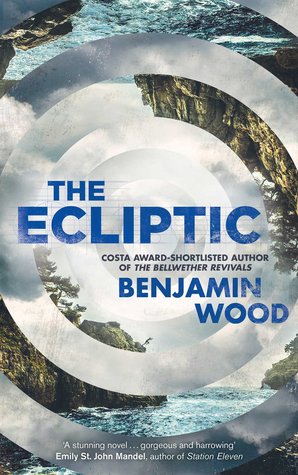 The Ecliptic by Benjamin Wood: Portmantle is a mysterious artists’ retreat center on a Turkish island. Our narrator, Elspeth Conroy (aka Knell), is a Scottish painter who came to Portmantle in 1962 after some struggles with mental illness. The first third of the novel is tremendously gripping and Gothic. The core of the book, nearly 200 pages, is a flashback to Elspeth’s life before. At last, after what feels like too long a digression, we come full circle back to Portmantle. I didn’t warm to The Ecliptic quite as much as I did to Wood’s debut, The Bellwether Revivals. Still, it’s really interesting to see how he alternates between realism and surrealism here. The parts that feel most real and immediate and the parts that are illusory are difficult to distinguish between. An odd, melancholy, shape-shifting novel.
We Love This Book
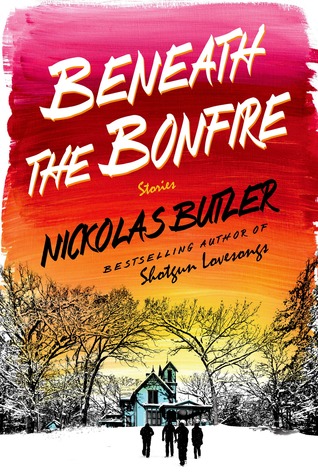 Beneath the Bonfire by Nickolas Butler: Ten tales of moral complexity in America’s gritty heartland. Fire and recreational drugs are powerful forces linking these Wisconsin-set stories. Opener “The Chainsaw Soirée” sets the tone by describing a failed utopia reminiscent of Lauren Groff’s Arcadia. The stand-out is “Morels,” in which three stoned friends go foraging for mushrooms in their dying rural community. The title’s similarity to “morals” is no coincidence: when the trio are involved in a hit-and-run they have to decide what to stand for. Unsentimental but lyrically composed, these stories will appeal to fans of Ron Rash.
 Among the Ten Thousand Things by Julia Pierpoint: Pierpont’s ambitiously structured debut novel explores how infidelity affects a whole New York City family. In short sections of matter-of-fact statements Pierpont gives a what-happened-next for each of the characters over the next decade or so. But “it’s the between-time that lasted,” Pierpoint argues as she returns to that summer of revelations for a closer look. The climactic events of the holiday contrast childhood innocence and adulthood; when you’re on the cusp, certain experiences can push you over the brink from one to the other. This offbeat take on the dysfunctional family novel should interest fans of Nicole Krauss or Rebecca Dinerstein (The Sunlit Night). [Few extra thoughts at Goodreads.]

I also post reviews of most of my casual reading and skimming on Goodreads.
 F: A Novel by Daniel Kehlmann: What does F stand for? Faith, finances, fraud, forgery, family and Fate all play a role in Kehlmann’s fourth novel available in English translation. F is also for the Friedlands: Arthur the unreliable patriarch; Martin, a portly Catholic priest who doesn’t believe in God; and his twin half-brothers, Eric and Ivan, a mentally ill businessman and a homosexual painter who forges his mentor’s masterworks. Reading this brilliant, funny spoof on the traditional family saga is like puzzling out a Rubik’s Cube: it is a multi-faceted narrative with many meanings that only become clear the deeper you go. (Full review in September/October 2015 issue of Third Way magazine.)

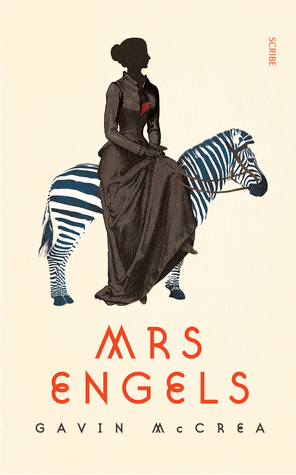 Mrs. Engels by Gavin McCrea: I generally love Victorian-set historical fiction and books about famous wives, so I was surprised by how little I liked this novel about Lizzie Burns, the illiterate, working-class Irish woman who was Frederick Engels’ longtime partner. The novel flits between 1870–1, when Lizzie and Frederick were newly arrived in London and involved in helping the poor and Franco-Prussian War refugees, and their earlier years in Manchester. Lizzie is a no-nonsense first-person narrator, and her coarse, questionably grammatical speech fits with her background. Unfortunately, I never warmed to Lizzie or felt that she was giving a truly intimate look at her own life. This novel had such potential to bring an exciting, revolutionary time to life, but it never fulfilled its promise for me. Releases in the States on October 13th.

Rank by Aaron McCollough: Some nice alliteration and pleasant imagery of flora, fauna and musical instruments. However, I struggled to find any overarching meaning in these run-on poems. In fact, I could not tell you what a single one of them is actually about. Story is just as important as sound in poetry, I feel, and in that respect this collection was lacking. Releases September 1st.
Trout’s Lie by Percival Everett: “The line of time / Is past. / The line folds back, / Splits. / Two lines now, future, present. The past / Is a circle of / Abstraction, regret.” There is a lot of repetition and wordplay in these poems. The title piece uses a line in Italian from Dante – translating to “in the middle of our life’s path” – that forms another recurring theme: being stuck between times or between options and having to decide which way to go. These read quickly, with the run-on phrases flowing naturally from topic to topic. I’m not sure this was the best introduction to a prolific author I’d never heard of; I’ll have to look into his other work. Releases October 15th.
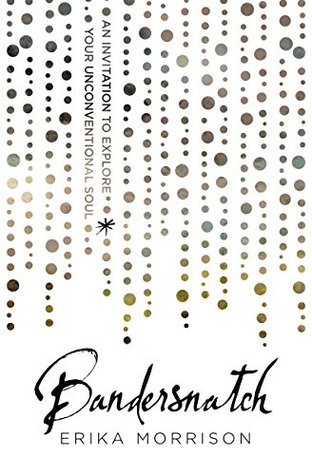 Bandersnatch by Erika Morrison: This is Christian self-help, an ideal read for fans of Glennon Doyle Melton and Rob Bell. The title, a creature from Lewis Carroll’s imagination, is Morrison’s shorthand for a troublemaker. She argues that as Christians we should be following Jesus down the road of “positive nonconformity”: taking an avant-garde approach to life, turning ordinary moments into divine opportunities through spiritual alchemy, taking an interest in the least of these with kingdom anthropology, and making the everyday trials of marriage and parenthood our works of art. I liked the book best when Morrison illustrated her points with stories from her own life. Overall I found the book repetitive, and the language can definitely be hippy-dippy in places. Releases October 6th.

Family Values by Wendy Cope: Cope mostly uses recognizable forms (villanelles, sonnets, etc.): this is interesting to see in contemporary poetry, but requires a whole lot of rhyming, most of it rather twee (e.g. “tuppence/comeuppance”), which gives the whole collection the feeling of being written for children. My two favorites were “Lissadell,” about a vacation to Ireland, and “Haiku,” perfect in its simplicity:
A perfect white wine
is sharp, sweet and cold as this:
birdsong in winter.
Review: Smoke Gets in Your Eyes, by Caitlin Doughty
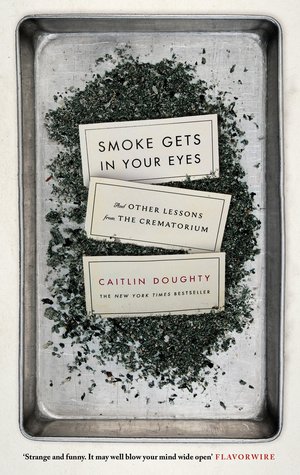 Caitlin Doughty, a funeral director in her early thirties, is on a mission. Her goal? Nothing less than completely changing how we think about death and the customs surrounding it. Her odyssey through the death industry began when she was 23 and started working at suburban San Francisco’s Westwind Crematorium. She had spent her first 18 years in Hawaii and saw her first dead body at age eight when she went to a Halloween costume contest at the mall and saw a little girl plummet 30 feet over a railing. In another century, she reflects, it would have been rare for a child to go that long before seeing a corpse; nineteenth-century tots might have experienced the death of multiple siblings, if not a parent.
“Today, not being forced to see corpses is a privilege of the developed world,” she writes. And if we do see a dead body, it will have been so prettified by mortuary workers that it might bear little resemblance to how the person looked in life. Here Doughty reveals all the tricks of the American trade – from embalming (a post-Civil War development) and heavy-duty makeup to gluing eyes closed and sewing mouths shut – that give the dead that peaceful, lifelike look we like to see at wakes. Compare our squeamishness with the openness of various Asian countries, where one might see dozens of corpses floating down the Ganges or Buddhist monks meditating on a decomposing corpse as a memento mori.
Doughty is in a somewhat awkward position: she is part of the very American death industry she is criticizing – those “professionals whose job was not ritual but obfuscation, hiding the truths of what bodies are and what bodies do.” Although she reveled in her work at the crematorium despite its occasional gruesomeness and seems to believe cremation is an efficient and responsible choice for body disposal, she also worries that it might be a further sign of people’s determination to keep bodies out of sight and out of mind. As anthropologist Geoffrey Gorer noted, “In many cases, it would appear, cremation is chosen because it is felt to get rid of the dead more completely and finally than does burial.”
Could cremation be noble instead? Doughty traces its origins to ancient Roman funeral pyres, as different as could be from the enclosed, clinical environment of a modern crematorium. Two factors led directly to cremation becoming increasingly accepted and popular after the 1960s. One was Jessica Mitford’s book The American Way of Death (1961), which mocked the same Los Angeles area cemetery Evelyn Waugh does in The Loved One, Forest Lawn. The other was Pope Paul VI overturning the Catholic Church’s ban on cremation in 1963. Doughty quotes George Bernard Shaw’s rapturous account of his mother’s cremation in 1913 as proof that it can be not only natural, but even aesthetically pleasing:
And behold! The feet burst miraculously into streaming ribbons of garnet colored lovely flame, smokeless and eager, like Pentecostal tongues, and as the whole coffin passed in it sprang into flame all over, and my mother became that beautiful fire.
It is rare, however – and, for the workers, nerve-racking – to have witnesses at a cremation. For the most part Westwind worked like a factory, cremating six bodies per weekday. Doughty experienced all sides of the work: collecting dead fetuses from hospitals for free cremation, shaving adult corpses before burning, enduring the stench of decomposing flesh, and taking delivery of a box of heads whose bodies were donated to science. She is largely unsentimental about it all; who is this fairytale witch who speaks of “tossing” babies into the oven and grinding their little bones?
“Handmaiden to the underworld,” she describes herself, and given her medieval history degree and Goth-lite looks, you can see that a certain macabre cast of mind is necessary for this line of work. She also has a good ear for arrestingly witty one-liners; my favorite was “As a general rule, if anyone ever asks you to put stockings on a ninety-year-old deceased Romanian woman with edema, your answer should be no.”
Still, Doughty recognizes the almost unbearable sadness of many of the cases the crematorium sees – the young man who traveled to California from Washington just to stand in the path of a train, the “floaters” found in the ocean, the elderly with oozing bed sores, and the homeless folk of Los Angeles who were cremated and dumped in a mass grave after they were used for embalming practice at her mortuary school. She even considered committing suicide herself on a lonely trip out to a redwood forest.
What has kept her going is the desire to combat misconceptions and superstitions about the dead. As she realized after a potentially serious car accident on the freeway, she has lost her own fear of death, and she wants to help others do the same. This will require getting people talking about death, something she is doing through her online community Order of the Good Death and her Ask a Mortician YouTube videos. She would also like to see people having involvement with dead bodies again, as they did in previous centuries, perhaps by washing their dead relatives or keeping them at home before the funeral rather than having them taken away. “It is never too early to start thinking about your own death and the deaths of those you love.” This is not morbid; it’s just planning ahead for an inevitable experience. “We can wander further into the death dystopia, denying that we will die and hiding dead bodies from our sight. Making that choice means we will continue to be terrified and ignorant of death, and the huge role it plays in how we live our lives.”
The sections of personal anecdote in this book are better than those based on anthropological research – which is not woven in entirely naturally. Ultimately, it’s a little unclear exactly how Doughty plans to change things. She speaks of designing her own welcoming crematorium, an open, airy space that doesn’t suggest a death factory. But it’s enough that she’s part of a movement in the right direction, and beneath her wry tone her passion is clear.
My rating:
Further reading suggestions: For more on how people are revolutionizing how we think about death, I highly recommend Anne Karpf’s book for the School of Life, How to Age. Other death-themed reads I have particularly enjoyed are The Undertaking by Thomas Lynch, The Removers by Andrew Meredith, and A Tour of Bones by Denise Inge. Less effective as a memoir but still interesting for its view of the funeral home business is The Undertaker’s Daughter by Kate Mayfield.
Note: I was originally going to review this book for a British website, so I received a free copy of the UK edition from Canongate. Doughty inserts British statistics and information to increase the book’s relevance to a new audience. She also astutely notes that British funerals minimize interaction with a dead body, something I have certainly found true in the two cremations I have attended in England. The Irish are famous for their wakes, but the British do not have this custom. In fact, when we attended my brother-in-law’s viewing and funeral in America earlier this year, it was the first time my husband (aged 31) had seen a dead body. Although I can see Doughty’s point about a prettified corpse not being representative of what the dead ‘should’ look like, I must also say that the funeral home had done a fantastic job of making him look happy and at peace, like he was sleeping and having pleasant dreams. He certainly didn’t look like a man who had suffered the ravages of brain cancer for four years. The same was not true for my ninety-something grandmother, however, who was nearly unrecognizable.
 Bookish Beck = Rebecca Foster. American transplant to England. Freelance proofreader and book reviewer.
 Bookish Beck