Marlborough Lit Fest Event: Debut Authors Helen Bain and Sara Bayat
On Sunday morning I attended my first Marlborough Literature Fest event in four years (after the Patrick Gale keynote in 2022). It paired two debut authors whose recent novels incorporate multiple points-of-view to give a rounded picture of an English village. I already knew Helen Bain’s The Daffodil Days, one of my favourites from 2026, but was unfamiliar with Sara Bayat’s Hesket and looked forward to hearing more about it. The event took place in St Peter’s Church, at the bottom of the high street, and was chaired by Dr Nicola Presley of Bath Spa University – but mostly ran itself because the two authors had read each other’s books and asked each other their own insightful, leading questions along the way.
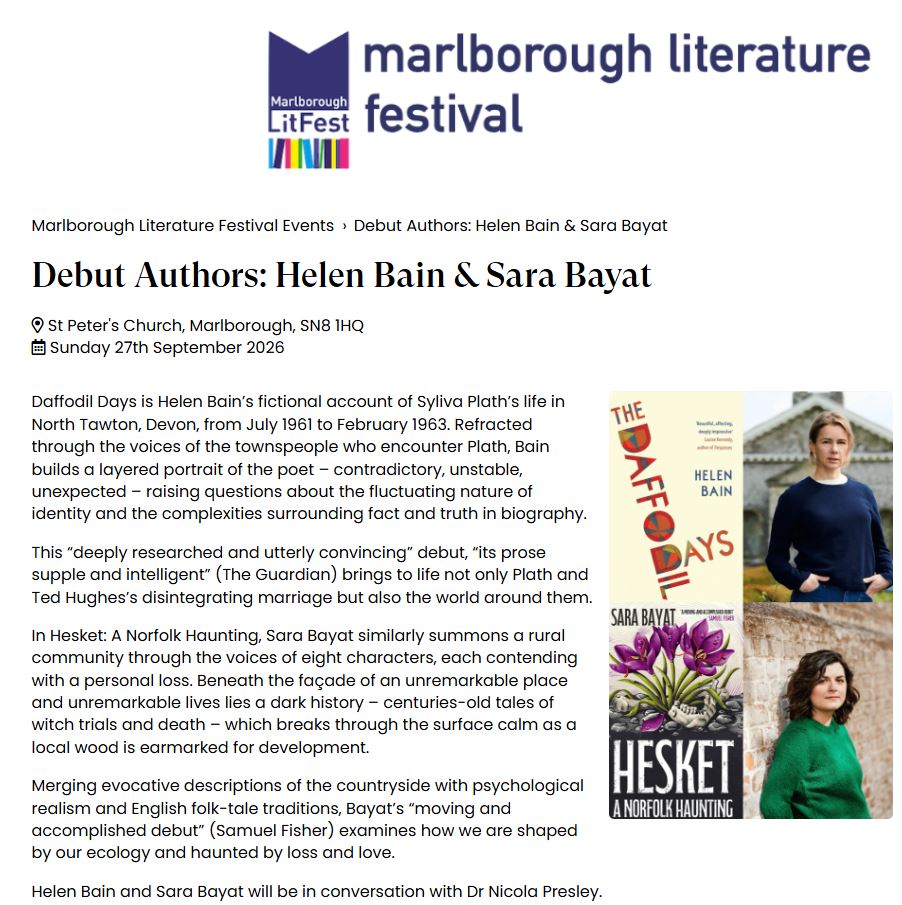
‘Syliva’ in the programme listing!
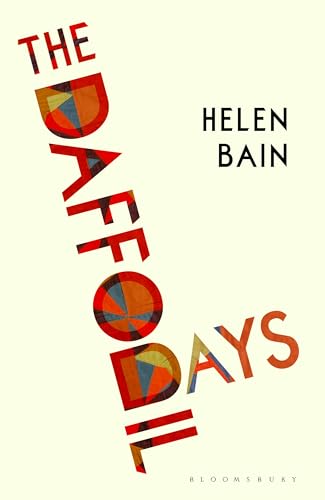 Bain’s focus on 16 ancillary characters was her way, she said, of countering the two-dimensional representation of Sylvia Plath that mostly relates to the nature of her death. It also allowed her to depict social change more broadly – David Kynaston’s history books covering 1962 were helpful, she said. Plath was a 28-year-old American dropped into the Devon village of North Tawton – an incomer, but she was gregarious and talked to anyone. Bain can see so much of Devon in her poems, and Dartmoor is visible from the house (which Ted Hughes kept for the rest of his life, though Plath only spent about 15 months there).
“Would it be possible to see her differently” from the poetry icon? Bain asked herself, and so “splintered her” into the 16 viewpoints. She opened the event by reading from the chapter in which the Bendix man visits to show Plath how to do a load of laundry; she gets agitated with him but he remains calm. Bain said she felt a heavy sense of historical responsibility. She spent a lot of time interviewing North Tawton residents about their childhood and let people review chapters that included their parents. All in all, she said, she approached the research as if she was writing a biography, but then looked for the gaps where only fiction can go.
Hesket is about a semi-rural village in Norfolk marked by the trauma of historical witch trials. A housing development disturbs the ground and strange things start happening. Bayat, who was heavily pregnant, read a passage from the early pages in which a swarm of bees lands in a baby’s crib. All of the major characters are othered in some way. The structure of multiple POVs was right for the novel because it encompassed the entirety of the village, Bayat said; she used the metaphors of mycorrhizal fungi and a beehive. “Uncanny” was the descriptor she employed most often, so I’m expecting the touches of horror to be subtle, but still plan on reading this next month for R.I.P. (I have a new copy on the way, bought with a voucher).
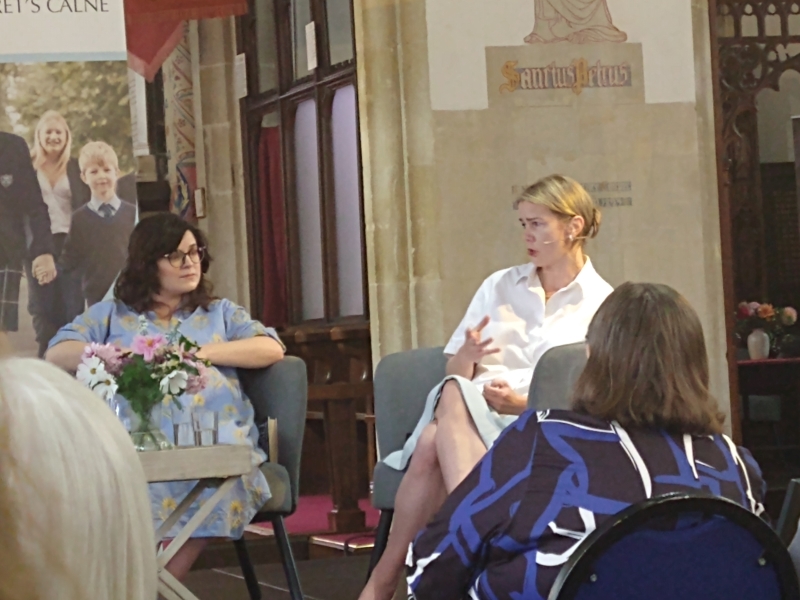
Bayat (L); Bain (R)
In terms of the connections between the two novels, Presley suggested that they are each haunted – The Daffodil Days by Plath’s death but also perhaps by Ted Hughes, who stays on the fringes – and that the landscape is of great importance. Bayat was influenced by local protests over the Western Link, her walks in the flatlands of Norfolk, and an inescapable awareness of drought and flooding. For both authors, maintaining a throughline while also revealing connections between the characters and across time was challenging (even more so for Bain due to her reverse chronology), but it was in the redrafting that everything came together. A question raised in one chapter might be answered in another, and so on.
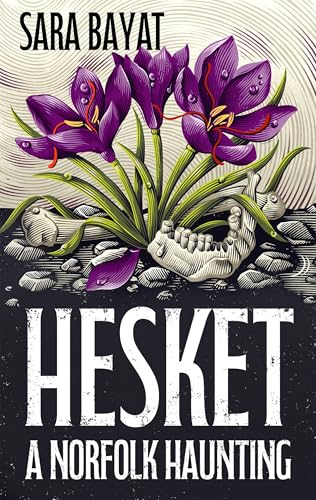 One of the audience questions was of the dreaded ‘where do you get your ideas?’ variety, but Bayat actually had a good answer. Roald Dahl’s The Witches was her favourite book growing up, and she was obsessed with Arthur C. Clarke’s Mysterious World and its tales of the uncanny in everyday life. She also remembers once, having a coffee in Norwich overlooking the polluted river through the centre, thinking that she saw movement under the surface. That, plus there’s a nearby bridge where the witches were led to their death. Bayat mentioned borrowing some details from her father-in-law’s allotment cronies, too. Bain chimed in: people-watching inspires her, and she sees writers as magpies pulling bits from here and there. The works were a long time in the making: Bayat started in 2019, while Bain’s took 4–5 years.
There were any number of events on the Festival programme that interested me, but given that a trip to Marlborough requires my husband to give me a ride 40 minutes away (there’s no train station in the town, alas), I felt I had to be selective. This was a great choice!
(Fun literary connections: Benjamin Wood was signing copies of Seascraper at the back of the church as I arrived – his was the previous event. And the owner of Hungerford Bookshop, my local indie, was in the audience and asked a question!)
A New Chapter in My McKitterick Prize Judging
 For the past four years, I have been a judge for the McKitterick Prize, one of various awards administered by the Society of Authors (the UK trade union for writers). Since 1990, this Prize has been given to a debut novelist aged 40+. It’s unique in that it considers unpublished manuscripts as well as published novels – Tom McKitterick, who endowed the prize, was a former Political Quarterly editor and left an unpublished novel at his death. The overlapping Paul Torday Memorial Prize (for debut authors of 60+) closed last year, so this is one of just two prizes I know of for authors OVER a certain age, the other being the RSL Christopher Bland Prize, which is for fiction or nonfiction.
In 2021–24, my role was helping to whittle down the unpublished manuscripts, which then joined the traditionally published novels for judging. For 2025, I’m delighted to announce that I’m one of the judges assessing the published material (this includes self-published books). The opportunity came about by happenstance, really. I realized that I hadn’t heard from the SoA lately and assumed they didn’t need me this year, but e-mailed in case and learned that a judge had just had to bow out, leaving a space for me. It feels like a big step up as judging ‘proper books’ – by which I mean published, and in print format – for a literary prize is a longstanding ambition of mine.


My first shipment arrived on Thursday and I’ve already gotten stuck into my first two reads. I didn’t take a look at the list before the parcel was delivered so I could have the fun of unboxing surprises. Four of the submissions are ones I (secretly) predicted, and I recognized another six titles. The rest are new to me. I likely won’t be able to share more about the process or any of my reading until after the shortlist in May and/or the winner announcement in June at the annual SoA Awards ceremony. My hope is that I will find lots of gems so the task never turns tedious. Longlist choices are due in March, so I’m going to be busy over the next few months! I pulled out a notebook I won in a giveaway on Cathy’s blog to act as a repository for my notes and thoughts. I’m excited to see what themes emerge and encounter some debut novelists the world needs to hear about.


How to Be Human and Strange Heart Beating
I’m mostly grouping these two debut novels by women authors together for my scheduling convenience, but they do have things in common. For starters, both center on an encounter with another species that determines much of what follows. For another thing, they pivot on the end of one relationship and the potential beginning of another. And in the end they’re about how we retain our humanity in the face of loss – despite the strong temptation to give into madness. Although they are both notable and surprising books, I felt that one was significantly more successful than the other; read on to discover which I favor.
How to Be Human by Paula Cocozza
Thirty-four-year-old Mary Green is adrift after her long-term fiancé, Mark, moves out of their East London home. She works in university HR but hates her job and can never manage to show up to it on time. Though she and Mark broke up in part because she didn’t feel ready to commit to having children, she’s inordinately fond of the next-door neighbors’ baby, Flora. Most of all, she’s trying to reorient herself to the presence of a fox who slips in from the surrounding edgeland to visit her back garden each evening. He leaves presents: boxers, a glove, an egg, and – one disorienting evening – Flora herself, a live bundle on the back steps.
 Whereas the neighbors are horrified at the thought of a fox infestation and ready to go on the attack if necessary, Mary is enraptured by this taste of wildness. Before long the novel is using almost erotic vocabulary to describe her encounters with ‘her’ fox; Mary even allows the neighbors and her ex to get the idea that she’s ‘seeing someone’ new. Yet even as Mary’s grasp on reality grows feebler, it’s easy to empathize with her delight at the unexpectedness of interspecies connection: “At the end of her garden she had found a friend. … His wildness was a gift. … He was an escape artist, she thought admiringly. Maybe he could free her too.”
I love this novel for what it has to say about trespass, ownership and belonging. Whose space is this, really, and where do our loyalties lie? Cocozza sets up such intriguing contradictions between the domestic and the savage, the humdrum and the unpredictable. The encounter with the Other is clarifying, even salvific, and allows Mary to finally make her way back to herself. There’s something gently magical about the way the perspective occasionally shifts to give the fox’s backstory and impressions as a neologism-rich stream (“Come fresh to stalk around the human Female with sly feet and rippety eyes. Spruckling toadsome”). Memorable lines abound, and a chapter set at the neighbors’ barbecue is brilliant, as are the final three chapters, in which Mary – like James Darke – holes up in her house in anticipation of a siege.

Detail from the cover.
As much as this is about a summer of enchantment and literal brushes with urban wildlife, it’s also about women’s lives: loneliness, choices we make and patterns we get stuck in, and those unlooked-for experiences that might just liberate us. The character Mary is my near contemporary, so I could relate to her sense of being stuck personally and professionally, and also of feeling damned if you do, damned if you don’t regarding having children. “Some part of her was made for a bigger, wilder, freer life.” One of my favorite books of 2017 so far.
Paula Cocozza is a feature writer for the Guardian. How to Be Human was published in the UK by Hutchinson on April 6th. My thanks to the publisher for the free copy for review.
My rating: 
If you’re in the London area, you may be interested in this animal-themed Faber Social event, also featuring Lucy Jones, author of Foxes Unearthed. I’ll be in America at the time or else I surely would have gone!
I also enjoyed these two articles by Paula Cocozza: one on the depiction of foxes in popular culture, and the other about a life-changing encounter she had with a wild fox.
Strange Heart Beating by Eli Goldstone
 No doubt about it: the cover and title – from W. B. Yeats’s “Leda and the Swan” – can’t be beat. One day in late March this book showed up on my Twitter, Goodreads and Instagram feeds, and the cover lured me into requesting a copy right away. The elevator pitch is a winner, too: Seb’s artist wife, Leda, was killed by a swan. To be precise, she was boating in a London park and got too close to some cygnets; the parent bird upturned the boat and Leda drowned. The novel is narrated by Seb, an art history professor realizing just how little he knew about the woman he loved. When he takes a break from work to travel to Leda’s native Latvia in search of answers, he even learns that she was known by another name, Leila.
It’s as if Seb is running both towards and away from his sorrow:
What can I do to find some way back to Leda? I seek for meaning in every miserable glint and shadow … I felt I was starting to lose myself as well. Grief is the aggressive displacement of the self from a known universe to another … I want to bury myself neck-deep in the quicksand of grief.
When he gets to Latvia he stays at a guesthouse and communicates with the landlady in Russian. For a week running he meets Leda’s cousin Olaf at his clubhouse each night to drink and play cards, and later bags a boar with Olaf and his hunting buddies. While viewing a fresco in a picturesque church he meets Ursula, who is looking to build an eco-friendly resort to boost the country’s tourism industry. She soon emerges as a potential love interest for Seb.
As best I could make out, this is set roughly a decade ago. Interspersed between Seb’s rather aimless travels are passages from Leda’s diary between 1988 and 2005. These reveal her to have been a lonely, bullied youth who took refuge in art and music. If you’re familiar with the myth of Leda and the Swan, you’ll be expecting the trauma in her past. It’s a shame this has to be spelt out in Leda’s final diary entry; it was sufficiently foreshadowed, I think.
Ultimately I felt this book had a promising setup but didn’t particularly go anywhere. It struck me as an excellent short story idea that got expanded and lost a good bit of its power along the way. This is a shame, as I was initially reminded of several excellent debut novels with Eastern European elements, especially in the excellent opening sequence about how Leda’s various female ancestors perished (Jonathan Safran Foer’s Everything Is Illuminated, Rebecca Dinerstein’s The Sunlit Night, and Jaroslav Kalfař’s Spaceman of Bohemia). There could have been a quirky family saga in there had Goldstone chosen to go in that direction.
By the end we’ve learned next to nothing about Seb despite his first-person narration, and little of interest about Leda either. I can see how this is meant to reinforce a central message about the unknowability of other people, even those we think we know best, but it creates distance between reader and narrator. You could easily read this 194-page paperback in an afternoon. If you do and find yourself, like me, a mite dissatisfied, never fear – Goldstone is so young and writes so well; I’m confident she will only improve in the years to come.
Eli Goldstone has a City University Creative Writing MA. Strange Heart Beating is published in the UK by Granta today, May 4th. My thanks to the publisher for the free copy for review.
My rating: 
 Bookish Beck = Rebecca Foster. American transplant to England. Freelance proofreader and book reviewer.
