Marlborough Lit Fest Event: Debut Authors Helen Bain and Sara Bayat
On Sunday morning I attended my first Marlborough Literature Fest event in four years (after the Patrick Gale keynote in 2022). It paired two debut authors whose recent novels incorporate multiple points-of-view to give a rounded picture of an English village. I already knew Helen Bain’s The Daffodil Days, one of my favourites from 2026, but was unfamiliar with Sara Bayat’s Hesket and looked forward to hearing more about it. The event took place in St Peter’s Church, at the bottom of the high street, and was chaired by Dr Nicola Presley of Bath Spa University – but mostly ran itself because the two authors had read each other’s books and asked each other their own insightful, leading questions along the way.
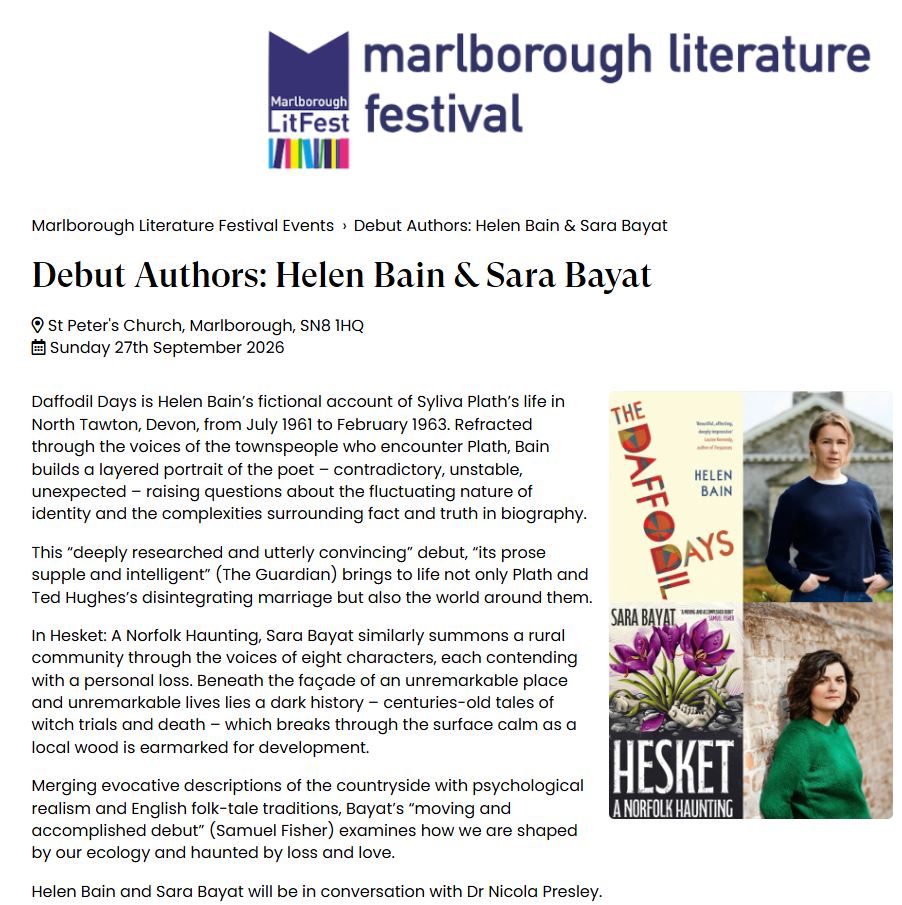
‘Syliva’ in the programme listing!
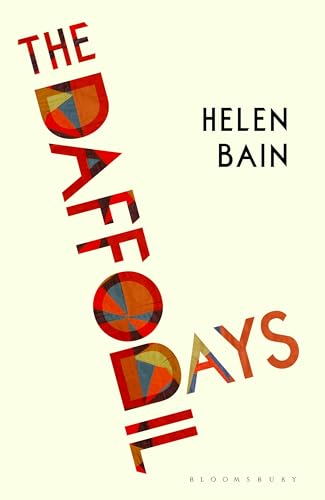 Bain’s focus on 16 ancillary characters was her way, she said, of countering the two-dimensional representation of Sylvia Plath that mostly relates to the nature of her death. It also allowed her to depict social change more broadly – David Kynaston’s history books covering 1962 were helpful, she said. Plath was a 28-year-old American dropped into the Devon village of North Tawton – an incomer, but she was gregarious and talked to anyone. Bain can see so much of Devon in her poems, and Dartmoor is visible from the house (which Ted Hughes kept for the rest of his life, though Plath only spent about 15 months there).
“Would it be possible to see her differently” from the poetry icon? Bain asked herself, and so “splintered her” into the 16 viewpoints. She opened the event by reading from the chapter in which the Bendix man visits to show Plath how to do a load of laundry; she gets agitated with him but he remains calm. Bain said she felt a heavy sense of historical responsibility. She spent a lot of time interviewing North Tawton residents about their childhood and let people review chapters that included their parents. All in all, she said, she approached the research as if she was writing a biography, but then looked for the gaps where only fiction can go.
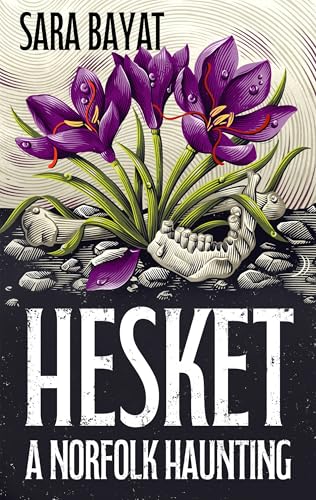
Hesket is about a semi-rural village in Norfolk marked by the trauma of historical witch trials. A housing development disturbs the ground and strange things start happening. Bayat, who was heavily pregnant, read a passage from the early pages in which a swarm of bees lands in a baby’s crib. All of the major characters are othered in some way. The structure of multiple POVs was right for the novel because it encompassed the entirety of the village, Bayat said; she used the metaphors of mycorrhizal fungi and a beehive. “Uncanny” was the descriptor she employed most often, so I’m expecting the touches of horror to be subtle, but still plan on reading this next month for R.I.P. (I have a new copy on the way, bought with a voucher).
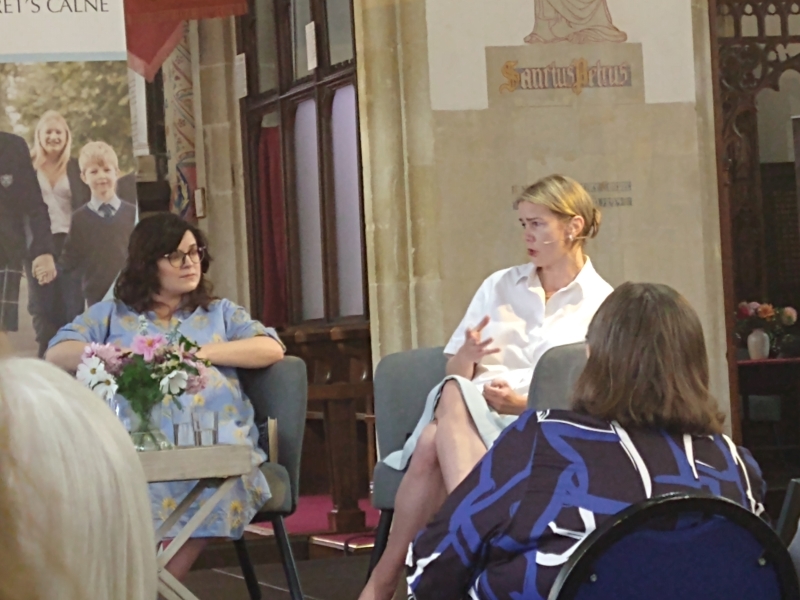
Bayat (L); Bain (R)
In terms of the connections between the two novels, Presley suggested that they are each haunted – The Daffodil Days by Plath’s death but also perhaps by Ted Hughes, who stays on the fringes – and that the landscape is of great importance. Bayat was influenced by local protests over the Western Link, her walks in the flatlands of Norfolk, and an inescapable awareness of drought and flooding. For both authors, maintaining a throughline while also revealing connections between the characters and across time was challenging (even more so for Bain due to her reverse chronology), but it was in the redrafting that everything came together. A question raised in one chapter might be answered in another, and so on.
 One of the audience questions was of the dreaded ‘where do you get your ideas?’ variety, but Bayat actually had a good answer. Roald Dahl’s The Witches was her favourite book growing up, and she was obsessed with Arthur C. Clarke’s Mysterious World and its tales of the uncanny in everyday life. She also remembers once, having a coffee in Norwich overlooking the polluted river through the centre, thinking that she saw movement under the surface. That, plus there’s a nearby bridge where the witches were led to their death. Bayat mentioned borrowing some details from her father-in-law’s allotment cronies, too. Bain chimed in: people-watching inspires her, and she sees writers as magpies pulling bits from here and there. The works were a long time in the making: Bayat started in 2019, while Bain’s took 4–5 years.
There were any number of events on the Festival programme that interested me, but given that a trip to Marlborough requires my husband to give me a ride 40 minutes away (there’s no train station in the town, alas), I felt I had to be selective. This was a great choice!
(Fun literary connections: Benjamin Wood was signing copies of Seascraper at the back of the church as I arrived – his was the previous event. And the owner of Hungerford Bookshop, my local indie, was in the audience and asked a question!)
Patrick Gale at Marlborough Literature Festival
It’s been a long time since I attended a literary festival in person rather than online. Four of us from my book club went along yesterday evening to the headline event of Marlborough Literature Festival. Marlborough is a pleasant market town in Wiltshire about 40 minutes from Newbury, and I’d like to get back to it sometime soon when things are open so I can explore its secondhand and plastic-free shops.
Patrick Gale closed the festival by speaking about his new novel (his 17th), Mother’s Boy. I knew it was a historical novel that covered the Second World War, but I had no idea that it was based on a real person, poet Charles Causley. With Andrew Motion, Gale is a patron of the Charles Causley Trust, which runs an annual poetry competition for children. I hadn’t heard of Causley, but Gale and some members of the audience recall memorizing his poems in school – like Roald Dahl’s, they can have a wicked sense of humour. Causley also wrote in the style of traditional ballads; my husband knows a version of one on a folk album.
Gale called Causley the “least sexy” of the war poets. He was from Launceston, Cornwall and left school at age 15, joining the Navy and later working as a schoolteacher for many years. He lived with his widowed mother and, if you believe the legend, died a virgin. However, Gale unearthed evidence that Causley was in fact a closeted homosexual and had sexual encounters with men during the war. He experienced survivor’s guilt because he escaped his ship’s explosion while he had an on-shore posting so that he could sit his exams.
Equally important to the novel is Causley’s mother, Laura, who grew up in extreme poverty and, after her husband’s death from TB, raised Charles in a slum on a laundress’ salary, even managing to buy him a piano. Launceston was decimated by the two world wars, and essentially colonized by the segregated U.S. Army. Gale made up a Black character named Amos, but gave him a horrific real-life story. Laura would have met Black soldiers and, later, German POWs through her working-class church.
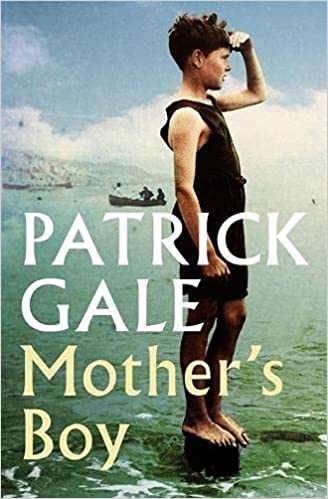
Gale acknowledged that he had to make up more of Laura’s story, relying only on the information about her in Causley’s tiny appointment diaries. In response to an audience question, he said he thinks Causley would be “utterly appalled” at the existence of this novel because he was an intensely private person, but that he’s salved his conscience with the fact that the book is driving people back to Causley’s poems. He wrote this as a novel rather than a biography because he tends to “overempathize” with characters, and likes to go “behind the bedroom door,” as he put it – indeed, one (non-graphic) scene he read was of Charles’s conception, while the other was about Charles learning to read at age five and enjoying his father’s company though he knew he was ill.
Mother’s Boy is most like A Place Called Winter from his oeuvre, Gale remarked, in that it’s historical fiction based on real people – in that earlier case, his own relatives. Gale’s father was the governor of Wandsworth Prison and his mother the daughter of the governor of Liverpool Prison (where he oversaw many hangings). In fact, he’s now at work on a sequel to A Place Called Winter, about his grandparents and parents, and researching from letters.
I was impressed with Gale’s delivery: he spoke engagingly for 45 minutes about the book and its context, peppering in readings and recitations, with no interviewer to prompt him. It was clearly a practiced lecture, but he had no notes and spoke warmly and as if off the cuff.
Are any of these poem titles familiar to you? These were the ones mentioned during last night’s event. (You can listen to Causley reading some of them in his eighties – with his large cat purring in the background – on the Poetry Archive site I linked to above.)
- “Timothy Winters”
- “Rattler Morgan”
- “Eden Rock”
- “The Ballad of a Bread Man”
- “Angel Hill”
I have a copy of Mother’s Boy on hold at the library for me to pick up tomorrow, and we fancy reading A Place Called Winter for book club soon – his Notes from an Exhibition was one of our all-time favourites that we’ve read together.
Are you a Patrick Gale fan? Have you been able to attend any literary events recently?
 Bookish Beck = Rebecca Foster. American transplant to England. Freelance proofreader and book reviewer.

