The Best Books from the First Half of 2026
Hard to believe it, but it’s that time of year already. For a decade now, I’ve been making a first-half superlatives list. It remains to be seen how many of these will make it onto my overall best-of year rundown, but for now, these are my 15 favourite current-year releases that I’ve read so far (representing the top 23% of the 2026 releases I’ve read this year; or the top 10% of my overall reading so far). It’s been a brilliant year for fiction! Links are to my full reviews where available.
Fiction
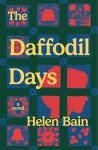 Daffodil Days by Helen Bain: Bain’s remarkable debut novel builds a slantwise biographical portrait of Sylvia Plath through her interactions with friends and acquaintances in the last years of her life. It’s everyone from her midwife to her brother to a washing machine salesman. The vignettes proceed backward through the book’s 17-month span: a determined metaphorical move from resignation to optimism. The focus is therefore not on the end of Plath’s life but on the full flow of her genius.
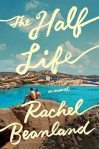 The Half Life by Rachel Beanland: In Beanland’s enchanting third novel, a young Navy wife has a sexual awakening and discovers her scientific vocation while stationed on an Italian island. The title cleverly suggests both nuclear fallout and how secrets constrain people. Beanland adeptly depicts grief, homesickness, and culture shock, and illuminates American and Italian politics. Sensual and intriguing, this belated-coming-of-age story reminiscent of Beautiful Ruins and The Atomic Weight of Love is an absorbing summer read. [Forthcoming from Simon & Schuster on July 14.]
 Brawler by Lauren Groff: The nine short stories in Groff’s exceptional eighth book profile women in states of desperation and probe legacies of loss and violence. Themes of midlife reinvention and latent queerness recur. There’s also a startling Jamesian fable; a 1950s Southern gothic black comedy that would do Flannery O’Connor proud; and the masterful novella-length examination of privilege and obsession. The prose is stellar and the endings breathtaking. Groff is a first-rate novelist, but her short stories are truly peerless.
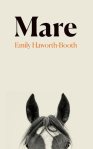 Mare by Emily Haworth-Booth: This work of autofiction circles the question of becoming a mother and posits the writing life and other relationships as partial substitutes for parenthood. The narrator spends three days a week riding at a local stable and tending to a black and white mare. Haworth-Booth makes caring for an animal analogous with motherhood, but doesn’t stop at easy symbolism. Cultivating bodily bonds with other creatures is part of how we find purpose when life is threatened by chronic illness and climate breakdown.
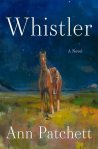 Whistler by Ann Patchett: Patchett is a master on the subject of family dysfunction, and her 10th novel, a stepdaughter-stepfather love story, is as wise as ever on secrets, traumatic memories, and storytelling. The bittersweet tone is perfectly judged. Daphne’s banter with her loved ones is a delight. The plot whisks along, its satisfying full circle returning to the Metropolitan Museum of Art, where she saw Eddie Triplett for the first time in 40 years, and incorporates a clever metanarrative twist. Quiet but surprising, witty yet heartrending.
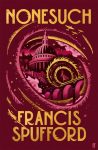 Nonesuch by Francis Spufford: A grown-up fantasy book for those of us who were Narnia-obsessed children. It’s a rollicking blend of realistic WWII-set fiction and alternative history, with some magical and time travel elements. I was impressed that Spufford voices a young woman as protagonist and takes her ambitions and sexual desire seriously. There are witty turns of phrase throughout yet never an inappropriate levity. This parallel world is cleverly imagined and carefully reasoned, and the whole is shot through with a clear love of London.
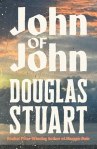 John of John by Douglas Stuart: In Stuart’s superb third novel, set on the Isle of Harris in the 1990s, Cal seeks to reconcile his sexuality and artistic goals with his family’s expectations and his devout upbringing. An absorbing, deliciously melodramatic story is built around the contrast between modernity and the old ways. The characters’ power plays and acts of desperation are heartrending, but mischief and love of colour and crafts lend lightness. Stuart’s every observation is profound; the simplest phrase is memorable for its beauty.
Nonfiction
 The Irish Goodbye: Micro-Memoirs by Beth Ann Fennelly: Fennelly takes the same approach as in flash fiction: some of these 45 pieces are as short as one sentence, remarking on life’s irony, poignancy or brevity. Again and again, she loops back to her sister’s untimely death; other topics are her mother’s worsening dementia, her happy marriage, her continuing 28-year friendships with her college roommates, the pandemic, and her ageing body. One of the most in-depth pieces revisits a lonely stint teaching in Czechoslovakia in the early 1990s.
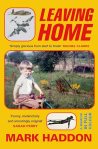 Leaving Home by Mark Haddon: Eighty-seven nonchronological vignettes range across Haddon’s life and his parents’. Most are awful: his cold, invalid mother; his father’s adultery; cruel treatment at boarding school; medical crises. Impressive that he’s a functional person given the lack of love and empathy in his early life, and that he’s so honest about mental health. Haddon is also an artist and there’s a wealth of comics, portraits and family photographs here (plus cynical captions on stock photos to puncture any potential nostalgia).
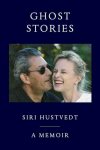 Ghost Stories by Siri Hustvedt: Paul Auster died of non-small cell lung cancer on April 30, 2024. “I’m living in a haunted house,” his widow writes. This isn’t a straightforward bereavement memoir but moves back and forth between past and present and incorporates various documents, such as e-mail updates she sent to friends and family during Paul’s illness. It’s particularly interesting to learn about their mutual influence on each other’s work. Recommended to fans of either or both authors, as well as those interested in grief stories.
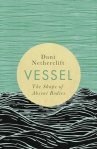 Vessel: The Shape of Absent Bodies by Dani Netherclift: One scorching afternoon in 1993, the author’s father and brother drowned while swimming in an irrigation channel near their Australia home. A joint closed-casket funeral took place six days later. Eighteen at the time, Netherclift witnessed her relatives’ disappearance but didn’t see their bodies. Must one see the corpse to have closure? she wonders. “The presence of absence” is an overarching paradox. The contradictions and ironies of the situation defy resolution.
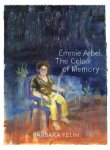 Emmie Arbel: The Colour of Memory by Barbara Yelin: An illustrated biography of a child Holocaust survivor based on interviews. Survival is not a one-time event because trauma is complex and ongoing. In Emmie’s case, her foster father (himself a Holocaust survivor) molested her for years. The colour palette is appropriately sombre. And yet there is vibrant colour in the depiction of Emmie’s home and garden in Israel. This is a work of real courage, of speaking out in spite of a suspicion that all is bleak and meaningless.
Poetry
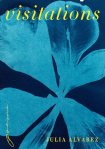 Visitations by Julia Alvarez: Like a miniature autobiography in verse, Alvarez’s radiant fifth collection offers snapshots from her life: a childhood in the Dominican Republic, immigration to 1960s New York City, the vicissitudes of adulthood, and the bittersweetness of later-life love. In a prose afterword, she calls the poems “visitations from selves of the past and present.” With its vivid scenes and alliterative phrasing, this gorgeous collection presents food and family, memory and companionship, as talismans to hold against the darkness.
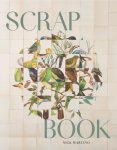 Scrap Book by Nick Martino: Martino’s debut poetry collection draws on his mother’s journals and 1980s Polaroids to capture a family dynamic overshadowed by divorce and his father’s incarceration. The imagery spotlights Midwest farm country. Love and meaning are salvaged from family wreckage in the same way one might “look/ for fugitive beauty in the bulldozed” orchard. Free verse alternates with forms: an unrhymed sonnet, an aubade, and a “duplex.” Alliteration and assonance sparkle, and two poems employ anaphoric rhetoric.
 The Way the Water Held Me by Catherine Redford: Redford was 35 with a young child when her wife died of cancer. We don’t hear so much about being widowed early, or in a same-sex partnership. Redford interrogates the expectations of widowhood through biographical poems about Mary Shelley. I loved the archival vocabulary of “Obituary” and how belongings left behind take on outsize significance. The alliteration and nature imagery are just right. From the hardest of circumstances came something tender and lovely.
Have you read any of these, or might you now based on my recommendation? What other 2026 releases should I catch up on?
Two Recommended January Releases: Dominicana and Let Me Be Frank
Much as I’d like to review books in advance of their release dates, that doesn’t seem to be how things are going this year. I hope readers will find it useful to learn about recent releases they might have missed.
This month I’m featuring a fictionalized immigration story from the Dominican Republic and a collection of autobiographical comics by a New Zealander.
Dominicana by Angie Cruz
(Published by John Murray on the 23rd)
It’s easy to assume that all the immigration (or Holocaust, or WWI; whatever) stories have been told. This is proof that that is not true; it felt completely fresh to me. Ana Canción is 11 when Juan Ruiz first proposes to her in 1961 – the same year dictator Rafael Trujillo is assassinated, throwing their native Dominican Republic into chaos. The Ruiz brothers are admired for their entrepreneurial spirit; they jet back and forth to New York City to earn money they plan to invest in a restaurant back home. To Ana’s parents, pairing their daughter with a man with such good prospects makes financial sense, so though Ana doesn’t love him and knows nothing about sex, she finds herself married to Juan at age 15. With fake papers that claim she’s 19, she arrives in New York on the first day of 1965 to start a new life.
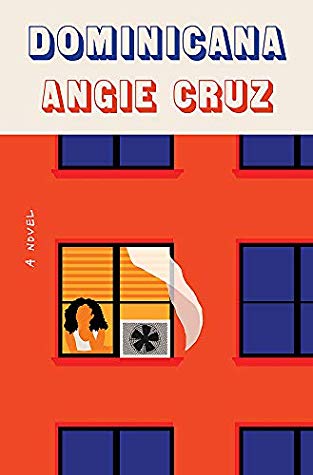 It is not the idyll she expected. Ana often feels confused and isolated in their tiny apartment, and the political unrest in NYC (e.g. the assassination of Malcolm X) and in DR mirrors the turbulence of her marriage. Juan is violent and unfaithful, and although Ana dreams of leaving him she soon learns that she is pregnant and has to think of her duty to her family, who expect to join her in America. The content of the novel could have felt like heavy going, but Ana is such a plucky and confiding narrator that you’re drawn into her world and cheer for her as she comes up with ways to earn money of her own (such as selling pastelitos to homesick factory workers and at the World’s Fair) and figures out what she wants from life.
This allowed me to imagine what it would be like to have an arranged marriage and arrive in a country not knowing a word of the language. Cruz based the story on her mother’s experience, even though her mother thought her life was too common and boring to interest anyone. The literary style – short chapters with no speech marks – could be offputting for some but worked for me, and I loved the tongue-in-cheek references to I Love Lucy. Had I only managed to read this in December, it would have been on my Best of 2019 list – it was first published in September by Flatiron Books, USA.
Let Me Be Frank by Sarah Laing
(Published by Lightning Books on the 16th)
 Laing is a novelist and comics artist from New Zealand known for her previous graphic memoir, Mansfield and Me, about her obsession with acclaimed NZ writer Katherine Mansfield. This collection brings together the autobiographical comics that originally appeared on Laing’s blog of the same title in 2010‒19. She started posting the comics when she was writer-in-residence at the Frank Sargeson Centre in Auckland. (I know the name Sargeson because he helped Janet Frame when she was early in her career.)
So what is the book about? All of life, really: growing up with type 1 diabetes, having boyfriends, being part of a family, the constant niggle of body issues, struggling as a writer, and trying to be a good mother. Other specific topics include her teenage obsession with music (especially Morrissey) and her run-ins with various animals (a surprising number of dead possums!). She ruminates about the times when she hasn’t done enough to help people who were in trouble. She also admits her confusion about fashion: she is always looking for, but never finding, ‘her look’. And is she modeling a proper female identity for her children? “I feel like I’m betraying feminism, buying my daughter a fairy princess dress,” she frets.


But even as she expresses these worries, she wonders how genuine she can be since they form the basis of her art. Is she just “publically performing my neuroses”? The work/life divide is especially tricksy when your life inspires your work.


I took half a month to read these comics on screen, usually just a few pages a day. It’s a tough book to assess as a whole because there is such a difference between the full-color segments and the sketch-like black-and-white ones. There is also a ‘warts-and-all’ approach here, with typos and cross-outs kept in. (Two that made me laugh were “aesophegus” [for oesophagus] and “Diana Anthill”!) Overall, though, I think this is a relatable and fun book that would suit fans of Alison Bechdel and Roz Chast but should also draw in readers new to the graphic novel format.
My thanks to Eye/Lightning Books for sending me an e-book to review.
 Bookish Beck = Rebecca Foster. American transplant to England. Freelance proofreader and book reviewer.
