The Best Books from the First Half of 2026
Hard to believe it, but it’s that time of year already. For a decade now, I’ve been making a first-half superlatives list. It remains to be seen how many of these will make it onto my overall best-of year rundown, but for now, these are my 15 favourite current-year releases that I’ve read so far (representing the top 23% of the 2026 releases I’ve read this year; or the top 10% of my overall reading so far). It’s been a brilliant year for fiction! Links are to my full reviews where available.
Fiction
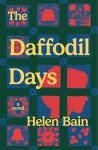 Daffodil Days by Helen Bain: Bain’s remarkable debut novel builds a slantwise biographical portrait of Sylvia Plath through her interactions with friends and acquaintances in the last years of her life. It’s everyone from her midwife to her brother to a washing machine salesman. The vignettes proceed backward through the book’s 17-month span: a determined metaphorical move from resignation to optimism. The focus is therefore not on the end of Plath’s life but on the full flow of her genius.
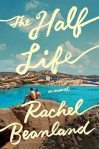 The Half Life by Rachel Beanland: In Beanland’s enchanting third novel, a young Navy wife has a sexual awakening and discovers her scientific vocation while stationed on an Italian island. The title cleverly suggests both nuclear fallout and how secrets constrain people. Beanland adeptly depicts grief, homesickness, and culture shock, and illuminates American and Italian politics. Sensual and intriguing, this belated-coming-of-age story reminiscent of Beautiful Ruins and The Atomic Weight of Love is an absorbing summer read. [Forthcoming from Simon & Schuster on July 14.]
 Brawler by Lauren Groff: The nine short stories in Groff’s exceptional eighth book profile women in states of desperation and probe legacies of loss and violence. Themes of midlife reinvention and latent queerness recur. There’s also a startling Jamesian fable; a 1950s Southern gothic black comedy that would do Flannery O’Connor proud; and the masterful novella-length examination of privilege and obsession. The prose is stellar and the endings breathtaking. Groff is a first-rate novelist, but her short stories are truly peerless.
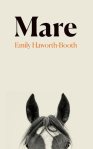 Mare by Emily Haworth-Booth: This work of autofiction circles the question of becoming a mother and posits the writing life and other relationships as partial substitutes for parenthood. The narrator spends three days a week riding at a local stable and tending to a black and white mare. Haworth-Booth makes caring for an animal analogous with motherhood, but doesn’t stop at easy symbolism. Cultivating bodily bonds with other creatures is part of how we find purpose when life is threatened by chronic illness and climate breakdown.
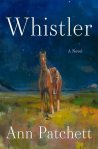 Whistler by Ann Patchett: Patchett is a master on the subject of family dysfunction, and her 10th novel, a stepdaughter-stepfather love story, is as wise as ever on secrets, traumatic memories, and storytelling. The bittersweet tone is perfectly judged. Daphne’s banter with her loved ones is a delight. The plot whisks along, its satisfying full circle returning to the Metropolitan Museum of Art, where she saw Eddie Triplett for the first time in 40 years, and incorporates a clever metanarrative twist. Quiet but surprising, witty yet heartrending.
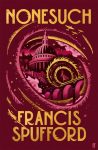 Nonesuch by Francis Spufford: A grown-up fantasy book for those of us who were Narnia-obsessed children. It’s a rollicking blend of realistic WWII-set fiction and alternative history, with some magical and time travel elements. I was impressed that Spufford voices a young woman as protagonist and takes her ambitions and sexual desire seriously. There are witty turns of phrase throughout yet never an inappropriate levity. This parallel world is cleverly imagined and carefully reasoned, and the whole is shot through with a clear love of London.
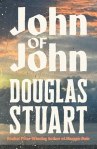 John of John by Douglas Stuart: In Stuart’s superb third novel, set on the Isle of Harris in the 1990s, Cal seeks to reconcile his sexuality and artistic goals with his family’s expectations and his devout upbringing. An absorbing, deliciously melodramatic story is built around the contrast between modernity and the old ways. The characters’ power plays and acts of desperation are heartrending, but mischief and love of colour and crafts lend lightness. Stuart’s every observation is profound; the simplest phrase is memorable for its beauty.
Nonfiction
 The Irish Goodbye: Micro-Memoirs by Beth Ann Fennelly: Fennelly takes the same approach as in flash fiction: some of these 45 pieces are as short as one sentence, remarking on life’s irony, poignancy or brevity. Again and again, she loops back to her sister’s untimely death; other topics are her mother’s worsening dementia, her happy marriage, her continuing 28-year friendships with her college roommates, the pandemic, and her ageing body. One of the most in-depth pieces revisits a lonely stint teaching in Czechoslovakia in the early 1990s.
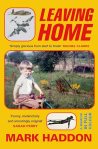 Leaving Home by Mark Haddon: Eighty-seven nonchronological vignettes range across Haddon’s life and his parents’. Most are awful: his cold, invalid mother; his father’s adultery; cruel treatment at boarding school; medical crises. Impressive that he’s a functional person given the lack of love and empathy in his early life, and that he’s so honest about mental health. Haddon is also an artist and there’s a wealth of comics, portraits and family photographs here (plus cynical captions on stock photos to puncture any potential nostalgia).
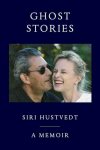 Ghost Stories by Siri Hustvedt: Paul Auster died of non-small cell lung cancer on April 30, 2024. “I’m living in a haunted house,” his widow writes. This isn’t a straightforward bereavement memoir but moves back and forth between past and present and incorporates various documents, such as e-mail updates she sent to friends and family during Paul’s illness. It’s particularly interesting to learn about their mutual influence on each other’s work. Recommended to fans of either or both authors, as well as those interested in grief stories.
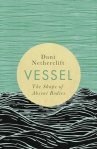 Vessel: The Shape of Absent Bodies by Dani Netherclift: One scorching afternoon in 1993, the author’s father and brother drowned while swimming in an irrigation channel near their Australia home. A joint closed-casket funeral took place six days later. Eighteen at the time, Netherclift witnessed her relatives’ disappearance but didn’t see their bodies. Must one see the corpse to have closure? she wonders. “The presence of absence” is an overarching paradox. The contradictions and ironies of the situation defy resolution.
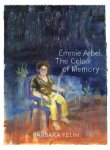 Emmie Arbel: The Colour of Memory by Barbara Yelin: An illustrated biography of a child Holocaust survivor based on interviews. Survival is not a one-time event because trauma is complex and ongoing. In Emmie’s case, her foster father (himself a Holocaust survivor) molested her for years. The colour palette is appropriately sombre. And yet there is vibrant colour in the depiction of Emmie’s home and garden in Israel. This is a work of real courage, of speaking out in spite of a suspicion that all is bleak and meaningless.
Poetry
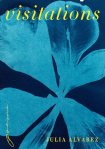 Visitations by Julia Alvarez: Like a miniature autobiography in verse, Alvarez’s radiant fifth collection offers snapshots from her life: a childhood in the Dominican Republic, immigration to 1960s New York City, the vicissitudes of adulthood, and the bittersweetness of later-life love. In a prose afterword, she calls the poems “visitations from selves of the past and present.” With its vivid scenes and alliterative phrasing, this gorgeous collection presents food and family, memory and companionship, as talismans to hold against the darkness.
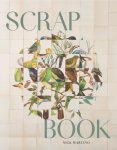 Scrap Book by Nick Martino: Martino’s debut poetry collection draws on his mother’s journals and 1980s Polaroids to capture a family dynamic overshadowed by divorce and his father’s incarceration. The imagery spotlights Midwest farm country. Love and meaning are salvaged from family wreckage in the same way one might “look/ for fugitive beauty in the bulldozed” orchard. Free verse alternates with forms: an unrhymed sonnet, an aubade, and a “duplex.” Alliteration and assonance sparkle, and two poems employ anaphoric rhetoric.
 The Way the Water Held Me by Catherine Redford: Redford was 35 with a young child when her wife died of cancer. We don’t hear so much about being widowed early, or in a same-sex partnership. Redford interrogates the expectations of widowhood through biographical poems about Mary Shelley. I loved the archival vocabulary of “Obituary” and how belongings left behind take on outsize significance. The alliteration and nature imagery are just right. From the hardest of circumstances came something tender and lovely.
Have you read any of these, or might you now based on my recommendation? What other 2026 releases should I catch up on?
Book Serendipity, Mid-November–Early January
This is a short set but I’ll post it now to keep things ticking over. I’ve lost nearly a week to the upper respiratory virus from hell, and haven’t felt up to sitting at my computer for any extended periods of time. I had to request extensions on a few of my work deadlines; I’ll hope to be back to normal blogging next week, too.
I call it “Book Serendipity” when two or more books that I read at the same time or in quick succession have something in common – the more bizarre, the better. This is a regular feature of mine every couple of months. Because I usually have 20–30 books on the go at once, I suppose I’m more prone to such incidents. People frequently ask how I remember all of these coincidences. The answer is: I jot them down on scraps of paper or input them immediately into a file on my PC desktop; otherwise, they would flit away! Feel free to join in with your own.
The following are in roughly chronological order.
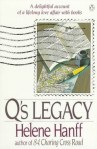
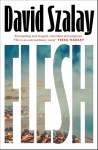
- Ayot St Lawrence as a setting in Q’s Legacy by Helene Hanff and Flesh by David Szalay.
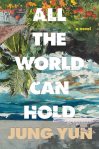
- A man who has panic attacks in Pan by Michael Clune and All the World Can Hold by Jung Yun.
- Two of my Shelf Awareness PRO (early) reviews in a row were of 2026 novels set on a celebrity/reunion cruise: All the World Can Hold by Jung Yun, followed by American Fantasy by Emma Straub. In both, the narrative alternates between three main characters, the cruise is to celebrate a milestone birthday for a passenger’s relative, and there’s a celebrity who’s in AA.
- A teacher–student relationship develops into a friendship in The Irish Goodbye by Beth Ann Fennelly (with Molly McCully Brown, whose Places I’ve Taken My Body I’ve reviewed) and Lessons from My Teachers by Sarah Ruhl (with Max Ritvo, about whom she wrote a whole book).
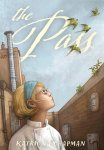 Someone becomes addicted to benzodiazepines in The Pass by Katriona Chapman and All the World Can Hold by Jung Yun (both 2026 releases).
- A New York City event scheduled to occur on September 15 or 16, 2001 is postponed because of 9/11 in Joyride by Susan Orlean (her wedding) and All the World Can Hold by Jung Yun (a cruise departure – it’s moved to Boston).
- A 1960s attempted suicide by putting one’s head in a gas oven in The Mercy Step by Marcia Hutchinson and The Soul of Kindness by Elizabeth Taylor.
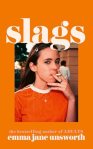
- A plan to eat cheese to induce dreams in The Reservation by Rebecca Kauffman and Slags by Emma Jane Unsworth.
- An author is (at least initially) aghast at the liberties taken with an adaptation of her book in Spent by Alison Bechdel and Joyride by Susan Orlean (the film Adaptation, one of my favourites, bears little relation to her nonfiction work The Orchid Thief, which I also love).
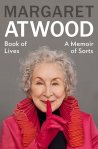
- A North American author meets her British publishers, André Deutsch and Diana Athill, in Book of Lives by Margaret Atwood and Q’s Legacy by Helene Hanff. (Atwood also mentions Sir Arthur Quiller-Couch, the title reference in the Hanff.)
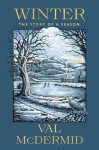
- An older white woman feels compelled to add, as an aside after a memory of slightly dodgy behaviour observed, that cultural appropriation was not a thing in those days in Book of Lives by Margaret Atwood and Winter by Val McDermid.
- I read two books in 2025 with a title taken from a Christian Wiman poem: A Truce that Is Not Peace by Miriam Toews, then Some Bright Nowhere by Ann Packer.
- A special trip undertaken for a younger sister’s milestone birthday: a road trip through Scotland in a campervan in Slags by Emma Jane Unsworth for a 40th; and a boy band reunion cruise to the Bahamas for a 45th in American Fantasy by Emma Straub.
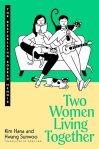
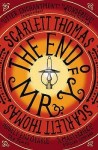
- A reference to Sartre’s “hell is other people” line (paraphrased) in Two Women Living Together by Kim Hana and Hwang Sunwoo and The End of Mr Y by Scarlett Thomas.
- The clock-drawing test as a shorthand for assessing a loved one’s dementia in Book of Lives by Margaret Atwood (her partner Graeme) and Joyride by Susan Orlean (her mother).
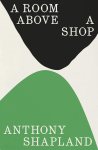 A sexual encounter between two men is presaged by them relieving themselves side by side at urinals in A Room Above a Shop by Anthony Shapland and The End of Mr Y by Scarlett Thomas.
- An older man who knows he’s having a stroke just wants to sit quietly in a chair and not be taken to hospital in Book of Lives by Margaret Atwood (her partner Graeme) and The Boy from the Sea by Garrett Carr.
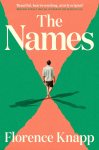
- A man who’s gone through Alcoholics Anonymous gets dangerously close to falling off the wagon: picks up a bottle of gin in a shop in The Names by Florence Knapp / buys a drink at a bar in All the World Can Hold by Jung Yun.
- I was reading two nonfiction books with built-in red ribbon bookmarks at the same time: Book of Lives by Margaret Atwood and Robin by Stephen Moss.
- Homoeopathy is an element in The Names by Florence Knapp and The End of Mr Y by Scarlett Thomas.
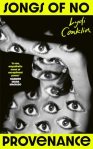
- A character named Sparrow in Spent by Alison Bechdel and Songs of No Provenance by Lydi Conklin.

- A mention of special celebrations for a Korean mother’s 70 birthday in Two Women Living Together by Kim Hana and Hwang Sunwoo and All the World Can Hold by Jung Yun.
- Some kinky practices in Songs of No Provenance by Lydi Conklin and Mr Norris Changes Trains by Christopher Isherwood.
- A girl from an immigrant family reads Greek mythology for escape in Visitations by Julia Alvarez and The Mercy Step by Marcia Hutchinson.
- “View halloo” (originally a fox-hunting term) is used as a greeting in Talking It Over by Julian Barnes and Arsenic for Tea by Robin Stevens.
What’s the weirdest reading coincidence you’ve had lately?
The 2026 Releases I’ve Read So Far
I happen to have read a number of pre-release books, generally for paid reviews for Foreword and Shelf Awareness. (I already previewed six upcoming novellas here.) Most of my reviews haven’t been published yet, so I’ll just give brief excerpts and ratings here to pique the interest. I link to the few that have been published already, then list the 2026 books I’m currently reading. Soon I’ll follow up with a list of my Most Anticipated titles.


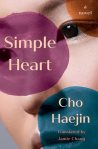 Simple Heart by Cho Haejin (trans. from Korean by Jamie Chang) [Other Press, Feb. 3]: A transnational adoptee returns to Korea to investigate her roots through a documentary film. A poignant novel that explores questions of abandonment and belonging through stories of motherhood.
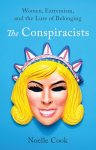 The Conspiracists: Women, Extremism, and the Lure of Belonging by Noelle Cook [Broadleaf Books, Jan. 6]: An in-depth, empathetic study of “conspirituality” (a philosophy that blends conspiracy theories and New Age beliefs), filtered through the outlook of two women involved in storming the Capitol on January 6, 2021.

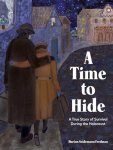
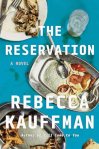 The Reservation by Rebecca Kauffman [Counterpoint, Feb. 24]: The staff members of a fine-dining restaurant each have a moment in the spotlight during the investigation of a theft. Linked short stories depict character interactions and backstories with aplomb. Big-hearted; for J. Ryan Stradal fans.


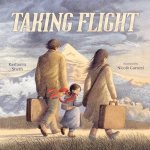 Taking Flight by Kashmira Sheth (illus. Nicolo Carozzi) [Dial Press, April 21]: A touching story of the journeys of three refugee children who might be from Tibet, Syria and Ukraine. The drawing style reminded me of Chris Van Allsburg’s. This left a tear in my eye.

Currently reading:
(Blurb excerpts from Goodreads; all are e-copies apart from Evensong)
Visitations: Poems by Julia Alvarez [Knopf, April 7]: “Alvarez traces her life [via] memories of her childhood in the Dominican Republic … and the sisters who forged her, her move to America …, the search for mental health and beauty, redemption, and success.”
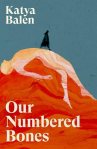 Our Numbered Bones by Katya Balen [Canongate, 12 Feb. / HarperVia, Feb. 17]: Her “adult debut [is] about a grieving author who heads to rural England for a writer’s retreat, only to stumble upon an incredible historical find” – a bog body!
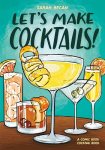 Let’s Make Cocktails!: A Comic Book Cocktail Book by Sarah Becan [Ten Speed Press, April 7]: “With vivid, easy-to-follow graphics, Becan guides readers through basic techniques such as shaking, stirring, muddling, and more. With all recipes organized by spirit for easy access, readers will delight in the panelized step-by-step comic instructions.”
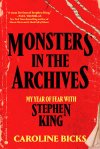 Monsters in the Archives: My Year of Fear with Stephen King by Caroline Bicks [Hogarth/Hodder & Stoughton, April 21]: “A fascinating, first of its kind exploration of Stephen King and his … iconic early books, based on … research and interviews with King … conducted by the first scholar … given … access to his private archives.”
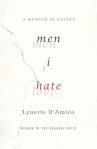 Men I Hate: A Memoir in Essays by Lynette D’Amico [Mad Creek Books, Feb. 17]: “Can a lesbian who loves a trans man still call herself a lesbian? As D’Amico tries to engage more deeply with the man she is married to, she looks at all the men—historical figures, politicians, men in her family—in search of clear dividing lines”.
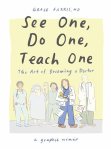 See One, Do One, Teach One: The Art of Becoming a Doctor: A Graphic Memoir by Grace Farris [W. W. Norton & Company, March 24]: “In her graphic memoir debut, Grace looks back on her journey through medical school and residency.”
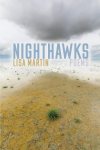 Nighthawks by Lisa Martin [University of Alberta Press, April 2]: “These poems parse aspects of human embodiment—emotion, relationship, mortality—and reflect on how to live through moments of intense personal and political upheaval.”
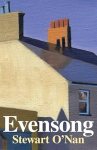 Evensong by Stewart O’Nan [published in USA in November 2025; Grove Press UK, 1 Jan.]: “An intimate, moving novel that follows The Humpty Dumpty Club, a group of women of a certain age who band together to help one another and their circle of friends in Pittsburgh.”
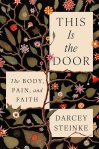 This Is the Door: The Body, Pain, and Faith by Darcey Steinke [HarperOne, Feb. 24]: “In chapters that trace the body—The Spine, The Heart, The Knees, and more—[Steinke] introduces sufferers to new and ancient understandings of pain through history, philosophy, religion, pop culture, and reported human experience.”
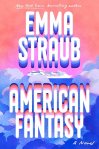 American Fantasy by Emma Straub [Riverhead, April 7 / Michael Joseph (Penguin), 14 May]: “When the American Fantasy cruise ship sets sail for a four-day themed voyage, aboard are all five members of a famous 1990s boyband, and three thousand screaming women who have worshipped them for thirty years.”
Additional pre-release review books on my shelf:
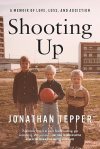 Shooting Up by Jonathan Tepper [Constable, 19 Feb.]: “Born into a family of American missionaries driven by unwavering faith … Jonathan’s home became a sanctuary for society’s most broken … AIDS hit Spain a few years after it exploded in New York and, like an invisible plague, … claimed countless lives – including those … in the family rehabilitation centre.”
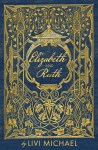 Elizabeth and Ruth by Livi Michael [Salt Publishing, 9 Feb.]: “Based on the real correspondence between Elizabeth Gaskell and Charles Dickens … [Gaskell] visits a young Irish prostitute in Manchester’s New Bailey prison. … [A] story of hypocrisy and suppression, and how Elizabeth navigates the … prejudice of the day to help the young girl”.
Will you look out for one or more of these?
Any other 2026 reads you can recommend?
Last Love Your Library of 2025 & Another for #DoorstoppersInDecember
Thanks to Eleanor, Margaret and Skai for writing about their recent library reading! Marcie also joined in with a post about completing Toronto Public Library’s 2025 Reading Challenge with books by Indigenous authors.
I managed to fit in a few more 2025 releases before Christmas. My plan for January is to focus on reading from my own shelves (which includes McKitterick Prize submissions and perhaps also review copies to catch up on), so expect next month to be a lighter one.
My recent reading has featured many mentions of how much libraries mean, particularly to young women.
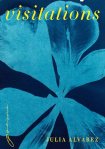 In her autobiographical poetry collection Visitations (coming out in April), Julia Alvarez writes of how her family’s world changed when they moved to New York City from the Dominican Republic in the 1960s. “Waiting for My Father to Pick Me Up at the Library” adopts the tropes of Alice in Wonderland: as her future expands, her father’s life shrinks.
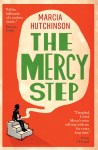 In The Mercy Step by Marcia Hutchinson, the public library is a haven for Mercy, growing up in Bradford in the 1960s. She can hardly believe it’s free for everyone to use, even Black people. Greek mythology is her escape from an upbringing that involves domestic violence and molestation. “It’s peaceful and quiet in the Library. No one shouts or throws things or hits anyone. If anyone talks, the Librarian puts a finger to her mouth and tells them to shush.”
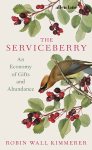 The Serviceberry by Robin Wall Kimmerer affirms the social benefits of libraries: “I love bookstores for many reasons but revere both the idea and the practice of public libraries. To me, they embody the civic-scale practice of a gift economy and the notion of common property. … We don’t each have to own everything. The books at the library belong to everyone, serving the public with free books”.
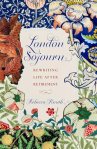 After Rebecca Knuth retired from an academic career in library and information science, she moved to London for a master’s degree in creative nonfiction and joined the London Library as well as the public library. But in her memoir London Sojourn (coming out in January), she recalls that she caught the library bug early: “Each weekday, I bused to school and, afterward, trudged to the library and then rode home with my geologist father. … Mostly, I read.”
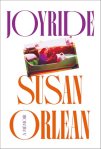 And in Joyride, Susan Orlean recounts the writing of each of her books, including The Library Book, which is about the 1986 arson at the Los Angeles Central Library but also, more widely, about what libraries have to offer and the oddballs often connected with them.
My library use over the last month:
(links are to any reviews of books not already covered on the blog)
READ
- Mum’s Busy Work by Jacinda Ardern; illus. Ruby Jones
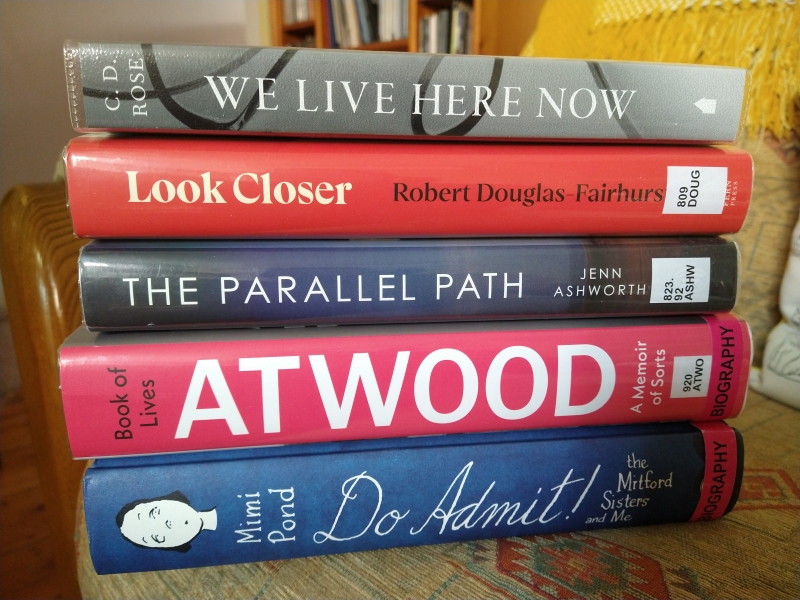
- Book of Lives: A Memoir of Sorts by Margaret Atwood

- Storm-Cat by Magenta Fox

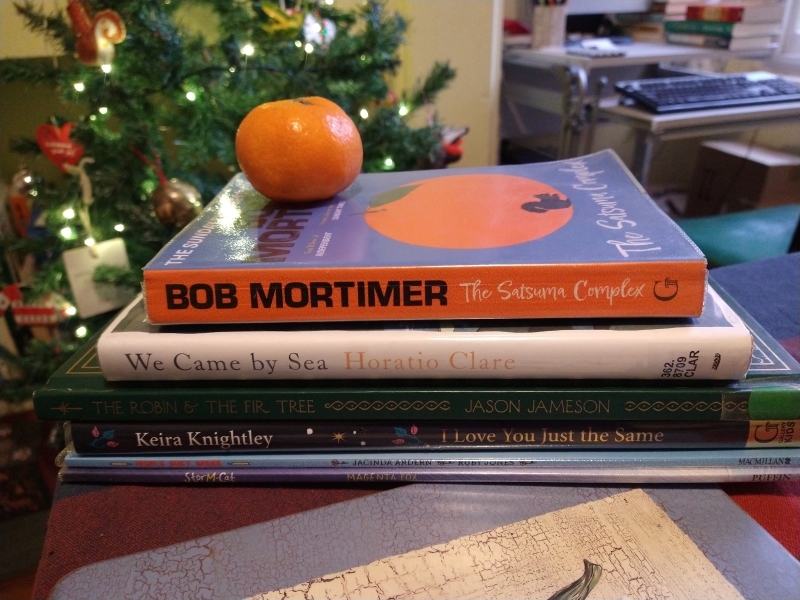
- The Robin & the Fir Tree by Jason Jameson
- I Love You Just the Same by Keira Knightley – Proof that celebrities should not be writing children’s books. I would say the story and drawings were pretty good … if she were a college student.

- Winter by Val McDermid

- The Search for the Giant Arctic Jellyfish, The Search for Carmella, & The Search for Our Cosmic Neighbours by Chloe Savage
- Weirdo Goes Wild by Zadie Smith and Nick Laird; illustrated by Magenta Fox
- Murder Most Unladylike by Robin Stevens


+ A final contribution to #DoorstoppersInDecember
Do Admit: The Mitford Sisters and Me by Mimi Pond
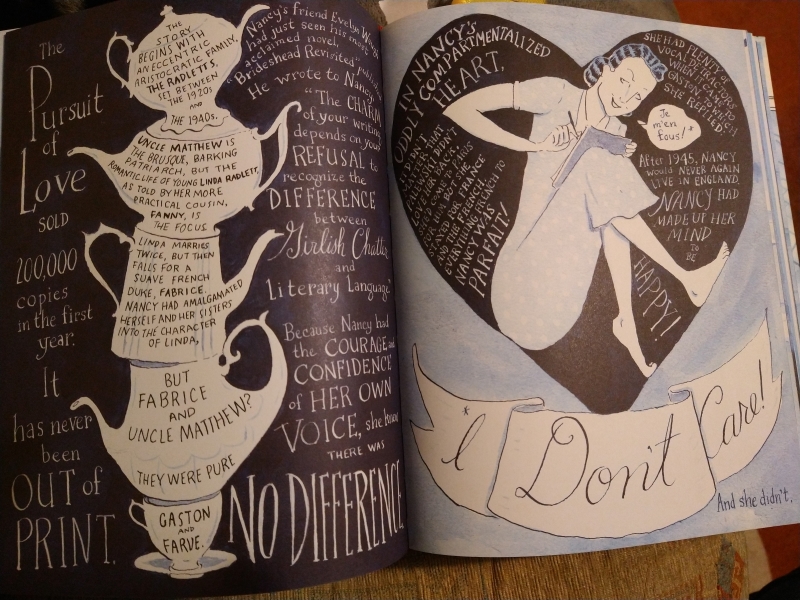
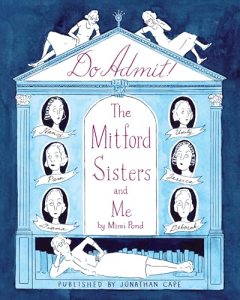 Truth really is stranger than fiction. Of the six Mitford sisters, two were fascists (Diana and Unity) and one was a communist (Jessica). Two became popular authors (Nancy and Jessica). One (Unity) was pals with Hitler and shot herself in the head when Britain went to war with Germany; she didn’t die then but nine years later of an infection from the bullet still stuck in her brain. This is all rich fodder for a biographer – the batshit lives of the rich and famous are always going to fascinate us peons – and Pond’s comics treatment is a great way of keeping history from being one boring event after another. Although she uses the same Prussian blue tones throughout, she mixes up the format, sometimes employing 3–5 panes but often choosing to create one- or two-page spreads focusing on a face, a particular setting or a montage. No two pages are exactly alike and information is conveyed through dialogue, documents and quotations. If just straight narrative, there are different typefaces or text colours and it is interspersed with the pictures in a novel way. Whether or not you know a thing about the Mitfords, the book intrigues with its themes of family dynamics, grief, political divisions, wealth and class. My only misgiving, really, was about the “and Me” part of the title; Pond appears in maybe 5% of the book, and the only personal connections I gleaned were that she wished she had sisters, wanted to escape, and envied privilege and pageantry. [444 pages]
CURRENTLY READING
- The Parallel Path: Love, Grit and Walking the North by Jenn Ashworth
- The Honesty Box by Lucy Brazier
- Of Thorn & Briar: A Year with the West Country Hedgelayer by Paul Lamb
- The Satsuma Complex by Bob Mortimer (for book club in January; I’m grumpy about it because I didn’t vote for this one, had no idea who the author [a TV comedian in the UK] was, and the writing is shaky at best)
- We Live Here Now by C.D. Rose
SKIMMED
- Look Closer: How to Get More out of Reading by Robert Douglas-Fairhurst
CHECKED OUT, TO BE READ
- It’s Not a Bloody Trend: Understanding Life as an ADHD Adult by Kat Brown
- We Came by Sea by Horatio Clare
ON HOLD, TO BE COLLECTED
- The Two Faces of January by Patricia Highsmith
- Arsenic for Tea by Robin Stevens
IN THE RESERVATION QUEUE
- Honour & Other People’s Children by Helen Garner
- Snegurochka by Judith Heneghan
- Ultra-Processed People by Dr. Chris van Tulleken (for book club in February)
RETURNED UNFINISHED
- Night Life: Walking Britain’s Wild Landscapes after Dark by John Lewis-Stempel
What have you been reading or reviewing from the library recently?

Share a link to your own post in the comments. Feel free to use the above image. The hashtag is #LoveYourLibrary.
 Bookish Beck = Rebecca Foster. American transplant to England. Freelance proofreader and book reviewer.
