The Best Books from the First Half of 2026
Hard to believe it, but it’s that time of year already. For a decade now, I’ve been making a first-half superlatives list. It remains to be seen how many of these will make it onto my overall best-of year rundown, but for now, these are my 15 favourite current-year releases that I’ve read so far (representing the top 23% of the 2026 releases I’ve read this year; or the top 10% of my overall reading so far). It’s been a brilliant year for fiction! Links are to my full reviews where available.
Fiction
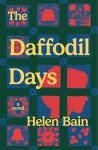 Daffodil Days by Helen Bain: Bain’s remarkable debut novel builds a slantwise biographical portrait of Sylvia Plath through her interactions with friends and acquaintances in the last years of her life. It’s everyone from her midwife to her brother to a washing machine salesman. The vignettes proceed backward through the book’s 17-month span: a determined metaphorical move from resignation to optimism. The focus is therefore not on the end of Plath’s life but on the full flow of her genius.
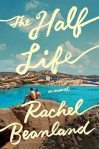 The Half Life by Rachel Beanland: In Beanland’s enchanting third novel, a young Navy wife has a sexual awakening and discovers her scientific vocation while stationed on an Italian island. The title cleverly suggests both nuclear fallout and how secrets constrain people. Beanland adeptly depicts grief, homesickness, and culture shock, and illuminates American and Italian politics. Sensual and intriguing, this belated-coming-of-age story reminiscent of Beautiful Ruins and The Atomic Weight of Love is an absorbing summer read. [Forthcoming from Simon & Schuster on July 14.]
 Brawler by Lauren Groff: The nine short stories in Groff’s exceptional eighth book profile women in states of desperation and probe legacies of loss and violence. Themes of midlife reinvention and latent queerness recur. There’s also a startling Jamesian fable; a 1950s Southern gothic black comedy that would do Flannery O’Connor proud; and the masterful novella-length examination of privilege and obsession. The prose is stellar and the endings breathtaking. Groff is a first-rate novelist, but her short stories are truly peerless.
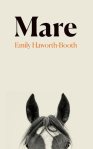 Mare by Emily Haworth-Booth: This work of autofiction circles the question of becoming a mother and posits the writing life and other relationships as partial substitutes for parenthood. The narrator spends three days a week riding at a local stable and tending to a black and white mare. Haworth-Booth makes caring for an animal analogous with motherhood, but doesn’t stop at easy symbolism. Cultivating bodily bonds with other creatures is part of how we find purpose when life is threatened by chronic illness and climate breakdown.
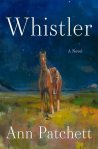 Whistler by Ann Patchett: Patchett is a master on the subject of family dysfunction, and her 10th novel, a stepdaughter-stepfather love story, is as wise as ever on secrets, traumatic memories, and storytelling. The bittersweet tone is perfectly judged. Daphne’s banter with her loved ones is a delight. The plot whisks along, its satisfying full circle returning to the Metropolitan Museum of Art, where she saw Eddie Triplett for the first time in 40 years, and incorporates a clever metanarrative twist. Quiet but surprising, witty yet heartrending.
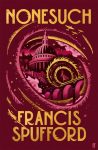 Nonesuch by Francis Spufford: A grown-up fantasy book for those of us who were Narnia-obsessed children. It’s a rollicking blend of realistic WWII-set fiction and alternative history, with some magical and time travel elements. I was impressed that Spufford voices a young woman as protagonist and takes her ambitions and sexual desire seriously. There are witty turns of phrase throughout yet never an inappropriate levity. This parallel world is cleverly imagined and carefully reasoned, and the whole is shot through with a clear love of London.
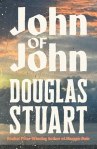 John of John by Douglas Stuart: In Stuart’s superb third novel, set on the Isle of Harris in the 1990s, Cal seeks to reconcile his sexuality and artistic goals with his family’s expectations and his devout upbringing. An absorbing, deliciously melodramatic story is built around the contrast between modernity and the old ways. The characters’ power plays and acts of desperation are heartrending, but mischief and love of colour and crafts lend lightness. Stuart’s every observation is profound; the simplest phrase is memorable for its beauty.
Nonfiction
 The Irish Goodbye: Micro-Memoirs by Beth Ann Fennelly: Fennelly takes the same approach as in flash fiction: some of these 45 pieces are as short as one sentence, remarking on life’s irony, poignancy or brevity. Again and again, she loops back to her sister’s untimely death; other topics are her mother’s worsening dementia, her happy marriage, her continuing 28-year friendships with her college roommates, the pandemic, and her ageing body. One of the most in-depth pieces revisits a lonely stint teaching in Czechoslovakia in the early 1990s.
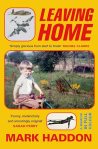 Leaving Home by Mark Haddon: Eighty-seven nonchronological vignettes range across Haddon’s life and his parents’. Most are awful: his cold, invalid mother; his father’s adultery; cruel treatment at boarding school; medical crises. Impressive that he’s a functional person given the lack of love and empathy in his early life, and that he’s so honest about mental health. Haddon is also an artist and there’s a wealth of comics, portraits and family photographs here (plus cynical captions on stock photos to puncture any potential nostalgia).
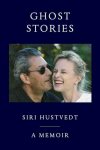 Ghost Stories by Siri Hustvedt: Paul Auster died of non-small cell lung cancer on April 30, 2024. “I’m living in a haunted house,” his widow writes. This isn’t a straightforward bereavement memoir but moves back and forth between past and present and incorporates various documents, such as e-mail updates she sent to friends and family during Paul’s illness. It’s particularly interesting to learn about their mutual influence on each other’s work. Recommended to fans of either or both authors, as well as those interested in grief stories.
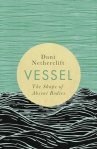 Vessel: The Shape of Absent Bodies by Dani Netherclift: One scorching afternoon in 1993, the author’s father and brother drowned while swimming in an irrigation channel near their Australia home. A joint closed-casket funeral took place six days later. Eighteen at the time, Netherclift witnessed her relatives’ disappearance but didn’t see their bodies. Must one see the corpse to have closure? she wonders. “The presence of absence” is an overarching paradox. The contradictions and ironies of the situation defy resolution.
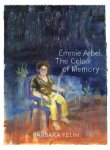 Emmie Arbel: The Colour of Memory by Barbara Yelin: An illustrated biography of a child Holocaust survivor based on interviews. Survival is not a one-time event because trauma is complex and ongoing. In Emmie’s case, her foster father (himself a Holocaust survivor) molested her for years. The colour palette is appropriately sombre. And yet there is vibrant colour in the depiction of Emmie’s home and garden in Israel. This is a work of real courage, of speaking out in spite of a suspicion that all is bleak and meaningless.
Poetry
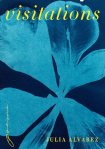 Visitations by Julia Alvarez: Like a miniature autobiography in verse, Alvarez’s radiant fifth collection offers snapshots from her life: a childhood in the Dominican Republic, immigration to 1960s New York City, the vicissitudes of adulthood, and the bittersweetness of later-life love. In a prose afterword, she calls the poems “visitations from selves of the past and present.” With its vivid scenes and alliterative phrasing, this gorgeous collection presents food and family, memory and companionship, as talismans to hold against the darkness.
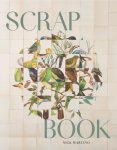 Scrap Book by Nick Martino: Martino’s debut poetry collection draws on his mother’s journals and 1980s Polaroids to capture a family dynamic overshadowed by divorce and his father’s incarceration. The imagery spotlights Midwest farm country. Love and meaning are salvaged from family wreckage in the same way one might “look/ for fugitive beauty in the bulldozed” orchard. Free verse alternates with forms: an unrhymed sonnet, an aubade, and a “duplex.” Alliteration and assonance sparkle, and two poems employ anaphoric rhetoric.
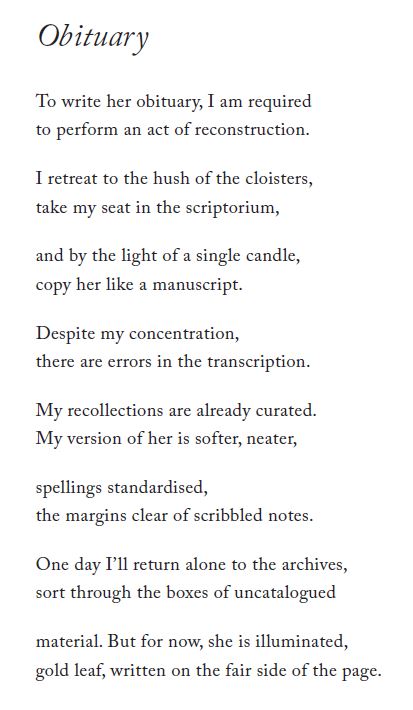
 The Way the Water Held Me by Catherine Redford: Redford was 35 with a young child when her wife died of cancer. We don’t hear so much about being widowed early, or in a same-sex partnership. Redford interrogates the expectations of widowhood through biographical poems about Mary Shelley. I loved the archival vocabulary of “Obituary” and how belongings left behind take on outsize significance. The alliteration and nature imagery are just right. From the hardest of circumstances came something tender and lovely.
Have you read any of these, or might you now based on my recommendation? What other 2026 releases should I catch up on?
March Releases by Emily Haworth-Booth, Roz Morris, Catherine Redford & Joann Sfar
Autofiction about beloved animals and ambivalence over motherhood, a witty memoir of house-hunting in the South of England, a poetry collection reflecting on bereavement and queer parenthood, and a graphic novel adaptation of a 20th-century classic: I had a real variety this month.
Mare by Emily Haworth-Booth
Is the entire novel built around a pun? The French for mother, mère, is a homophone for mare. Like Motherhood by Sheila Heti, this is a work of autofiction that circles the question of becoming a mother and posits the writing life and other relationships as partial substitutes for parenthood. But yes, there is also a literal horse. The narrator lives in London with her husband and scrapes together a living by teaching creative writing on Zoom and writing children’s books. They’ve recently lost their dearly loved dog and are friendly with the neighbours whose garden they share and whose noise they hear the other side of a wall – so much so that she thinks of the two girls as “not-my-daughter” and “also-not-my-daughter.” The narrator is contracted to write a book about plastics for children but can’t seem to land on the right tone somewhere between alarm and false cheer. Approaching age 40, she’s finally coming to terms with the fact that she won’t be a mother due to premature ovarian failure.
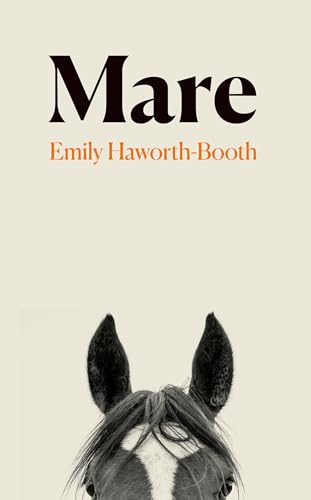 Into all this comes the love of a horse. She finds a stable two miles away and spends three days a week there riding and tending to a black and white mare. As a child she’d been horse-crazy, so this isn’t “a new feeling … but a resurgence. Deeply familiar. Lust and tenderness and hope mingled.” Time with the horse reminds her to be present, to live in her body despite its flaws, to take joy in the everyday. “Being with the horse has come to feel more and more like an exercise in metaphor.”
Haworth-Booth makes caring for an animal analogous with motherhood, but doesn’t stop at easy symbolism. The mare might stand in for female fear and vulnerability, but is also flesh and blood. Cultivating bodily bonds with other creatures is part of how we find purpose when life is threatened by chronic illness and climate breakdown.
This is Haworth-Booth’s adult debut and I hope it will be submitted for next year’s McKitterick Prize. Its wry honesty appealed to me, as did the narrator’s interactions with her mother (who forwards her “Childfree and fabulous” e-newsletters) and not-my-daughter, who share her interest in horses. There’s also the meta angle of the narrator assembling an “H folder” that eventually becomes this book. Hard to tell in my Kindle file, but some passages seem to be aligned like poetry. “The boundaries are blurring … this is the age of the non-binary, the hybrid, … the uncategorisable,” the narrator says to her students. “What about a collection of thoughts themed around a subject, themed around, for example, a horse?” I can see how some would find this insufferable, but it really worked for me. (Read via NetGalley)
Turn Right at the Rainbow: A Memoir of Househunting, Happenstance and Home by Roz Morris
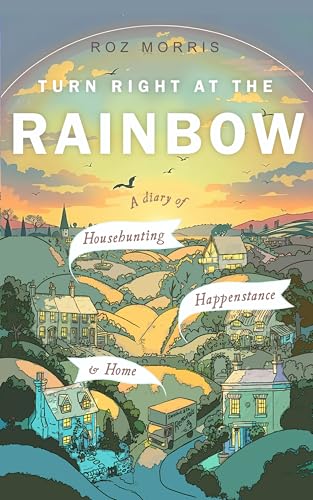 Now that we’re four years on from the purchase of our first property, I can read about house-hunting without finding it too depressing! When Morris and her husband Dave decided to move out of London, securing a buyer for their house was a cinch, but finding a new place that they loved as much as their home of twenty-plus years seemed like an insurmountable challenge. She wrings much humour from the process by comparing house viewings with first dates – as in a romcom, you’re always looking out for “The One,” but all the potential suitors have various issues – and employing jokey nicknames (“the Rusty Tractor house,” “The Aardvark House”), and a financial shorthand of arms and legs.
Estate agents, potential buyers, and sellers alike are maddening in their quirks. There are so many inexplicable features in otherwise normal suburban Surrey properties: more toilets than bedrooms, giant air-conditioning units, a long bench that looks like it belongs in a bus station waiting room, and so on. In between details of the search, Morris remembers her upbringing in mining country made famous by Alan Garner and how she and Dave met and made a life together as childfree writers. This is a warm and funny read whose short chapters fly by, but it also made me ponder what is essential in a home. Though I was mildly taken aback by the ending, I came to think of it as fitting, in a T.S. Eliot knowing the place for the first time sort of way.
With thanks to the author for the free e-copy for review. (Published by Spark Furnace.)
The Way the Water Held Me by Catherine Redford
 This isn’t your average bereavement story: Redford was only 35 and had a young child at the time that her wife died of cancer. We don’t hear so much about being widowed early, or in a same-sex partnership. Redford interrogates the expectations of widowhood (“If not Victoria, I can be Jackie O”) through biographical poems about Mary Shelley’s writings in the wake of Percy Bysshe Shelley’s untimely death. There’s a found/collage poem pieced together from one of Shelley’s letters; others quote from her Frankenstein and The Last Man. Elsewhere, Redford alludes to Woolf, Wordsworth and Wuthering Heights. Redford recalls feeling bombarded by people’s sympathy (“The flowers arrive like a tsunami”) and having no idea how to respond when asked how she’s doing. She relives moments from their carefree courtship days, lists the elements of “Her Last Day,” and documents the rituals that enshrine memory. I loved the archival vocabulary of “Obituary” (below) and how belongings left behind take on outsize significance: “I cross-examine every page of her notebooks, lay out the contents / of each drawer in a crescent on the floor as if they are grave goods // selected for her journey to the afterlife” (from “Circles”). The alliteration and nature (especially seaside) imagery were just right for me. From the hardest of circumstances came something tender and lovely.
With thanks to The Emma Press for the advanced e-copy for review.
The Little Prince by Antoine de Saint-Exupéry (1943)
Graphic novel adaptation by Joann Sfar (2008); colours by Brigitte Findakly
[Translated from French by Sarah Ardizzone, 2010]
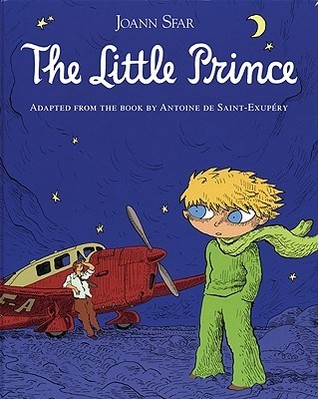 Reading The Little Prince in the original French was a long-term project in my high school French curriculum. I can still remember snippets such as “Dessine-moi un mouton” (“Draw me a sheep”) and apprivoiser (to tame) – it was good for learning such random vocabulary words. You are probably familiar with this fable of a pilot who crashes in the desert and meets a strange, possibly alien boy and talks with him about his interplanetary journeys as well as a flower, a snake, a fox, and so on. Before he landed on earth, he alighted on six other planets where he met a king, a vain man, a drunk, a businessman, a lamplighter, and a geographer, all of whom appeared to be trapped in destructive patterns of their own making.
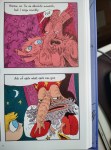
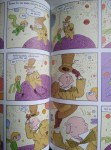
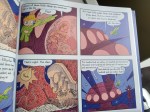
I had a few issues. The main one is that, these days, the story falls for me in the same category as other intolerably twee stuff like Jonathan Livingston Seagull and The Boy, the Mole, the Fox and the Horse. Granted, “You can only see clearly with the heart. What matters is invisible to the eye” is profound in its simplicity. But much of the rest had me rolling my eyes. As for the adaptation, why was it deemed necessary? The original The Little Prince is illustrated. Plus the drawing style is rather grotesque. (I don’t remember this from the only other book I’ve read by Sfar, The Rabbi’s Cat.) I guess the idea was to contrast the boy’s innocence and blue-pool eyes with the essential ugliness of much of what he encounters. But what’s with most of the planets’ residents having noses like penises? (Unsolicited review copy from SelfMadeHero)
 Bookish Beck = Rebecca Foster. American transplant to England. Freelance proofreader and book reviewer.
