Polishing off My 20 Books of Summer with Hay, Jones & Markham
I finished off strong with a few books I’ve been meaning to read for months or years.
Late Nights on Air by Elizabeth Hay (2007)
 (This was a Twitter buddy read with Naomi of Consumed by Ink and Penny of Literary Hoarders.) I read my first novel by Hay, A Student of Weather, last year. It was wonderfully rewarding even though it took me a month to read. By contrast, I read the Giller Prize-winning Late Nights on Air in half that time. Most of it is set in 1975–7 in Yellowknife, a small city in Canada’s Northwest Territories. Here winter lasts for eight months and you can still meet with snow and frozen lakes in early July. A tight-knit cast gathers around the local radio station: Harry and Gwen, refugees from Ontario starting new lives; Dido, an alluring Dutch newsreader; Ralph, the freelance book reviewer; menacing Eddie; and pious Eleanor.
Everyone is in love with everyone else, so you get these layers of unrequited romance and a sense of exposure: not just to the elements, but to the vulnerabilities of admitting one’s feelings and risking professional failure. The novel is also about appearances and assumptions – “You don’t look anything like how you sound,” Gwen says to Harry – and the dangers of obsession. Four of the station employees set out one summer to recreate the six-week journey of Arctic explorer John Hornby, a trip that ends up being as wondrous as it is fraught. Hay’s foreshadowing is a bit heavy-handed, and I found the final chapters after the expedition a slight letdown, but overall this is a marvellous story of quiet striving and dislocation. I saw bits of myself in each of the characters, and I loved the extreme setting, both mosquito-ridden summer and bitter winter. I need to read the rest of Hay’s oeuvre stat.
Favorite passages:
Harry’s professional advice to Gwen: “Radio was like poetry, he told her. At its best it could be, while television was like a blockbuster novel: one made you think and feel, the other dulled your mind. … ‘To be any good you have to believe it’s hard. It’s called creative tension. … And you won’t be any good until you’re dedicated to something outside yourself.’ … I learned that a mistake is just something you go on from.”
“Something blossoms in an unlikely place. An oasis of trees miles above the treeline. An arctic river warmer than any other water they’d come upon. The four of them bathed in the waters of the Thelon, wading out into it, almost swimming. On shore they towelled themselves dry and dressed, and there was no feeling to equal the splendour of warm clothes on river-cold skin.”
My rating: 
I ran out of time for Half of a Yellow Sun by Chimamanda Ngozi Adichie so substituted in…
An American Marriage by Tayari Jones (2018)
(If it’s good enough for Barack Obama and Oprah Winfrey, it’s good enough for me!)
 The title feels like an echo of An American Tragedy. It’s both monolithic and generic, as if saying: Here’s a marriage; make of it what you will. Is it representative of the average American situation, or is it exceptional? Roy and Celestial only get a year of happy marriage before he’s falsely accused of rape and sentenced to 12 years in prison in Louisiana. Through their alternating first-person narration and their letters back and forth while Roy is incarcerated, we learn more about this couple: how their family circumstances shaped them, how they met, and how they drift apart as Celestial turns to her childhood friend, Andre, for companionship. When Roy is granted early release, he returns to Georgia to find Celestial and see what might remain of their marriage. I ached for all three main characters: It’s an impossible situation. The novel ends probably the only way it could, on a realistic yet gently optimistic note. Life goes on, if not how you expect, and there will be joys still to come.
This would make a great book club pick: there’s a lot to probe about the characters’ personalities and motivations, and about how they reveal or disguise themselves through their narration. I found it remarkable how the letters, which together make up not even one-fifth of the text, enhance the raw honesty of the book. There are other marriages on display besides Roy and Celestial’s, their range providing a snapshot of African-American lower-middle- and upper-middle-class life in the South. I especially liked the use of two totem objects, Roy’s tooth and the hickory tree outside Celestial’s childhood home (what you see on the cover).
Favorite lines:
Celestial: “I believed that our marriage was a fine-spun tapestry, fragile but fixable. We tore it often and mended it, always with a silken thread, lovely but sure to give way.”
Andre: “I don’t believe that blood makes a family; kin is the circle you create, hands held tight.”
Celestial: “Our marriage was a sapling graft that didn’t have time to take.”
Roy: “mostly my life is good, only it’s a different type of good from what I figured on.”
My rating: 
An American Marriage was published in the UK by Oneworld on April 5th. My thanks to the publisher for the free copy for review.
West With the Night by Beryl Markham (1942)
 (Another Twitter buddy read, with Laila of Big Reading Life.) I’ve meant to pick this up ever since I read Paula McLain’s fantastic novel about Beryl Markham, Circling the Sun. I loved Markham’s memoir even more. She writes so vividly about the many adventures of her life in Africa: hunting lions, training race horses, and becoming one of the continent’s first freelance pilots, delivering mail and locating elephant herds.
It took me a while to get used to the structure – this is a set of discrete stories rather than a chronological narrative – but whether she’s reflecting on the many faces of Africa or the peculiar solitude of night flights, the prose is just stellar. Ernest Hemingway once asserted in a letter that Markham could “write rings around all of us who consider ourselves as writers,” and I certainly enjoyed this more than anything I’ve read by Hemingway.
The text is bookended by two momentous flights: it opens with Markham scrambling to deliver oxygen to an injured miner, and ends with her completing the first east–west solo flight across the Atlantic in 1936. Her engine cut out multiple times; it’s no less than a miracle that she survived to crash land in Nova Scotia. Laila and I agree that Markham’s life is so exciting it’s crying out for a movie version. In the meantime, I’d like to read some more about her circle – Denys Finch Hatton; and Baron von Blixen and his wife Karen (aka Danish writer Isak Dinesen, famous for Out of Africa). In my Circling the Sun review for BookTrib, I wrote that “Markham was the kind of real-life action adventure heroine you expect to find in Indiana Jones movies,” and that sense was only confirmed by her own account.
Favorite passages:
“to fly in unbroken darkness without even the cold companionship of a pair of ear-phones or the knowledge that somewhere ahead are lights and life and a well-marked airport is something more than just lonely. It is at times unreal to the point where the existence of other people seems not even a reasonable possibility. The hills, the forests, the rocks, and the plains are one with the darkness, and the darkness is infinite. The earth is no more your planet than is a distant star—if a star is shining; the plane is your planet and you are its sole inhabitant.”
“I saw how a man can be master of a craft, and how a craft can be master of an element. I saw the alchemy of perspective reduce my world, and all my other life, to grains in a cup. I learned to watch, to put my trust in other hands than mine. And I learned to wander. I learned what every dreaming child needs to know—that no horizon is so far that you cannot get above it or beyond it.”
My rating:
So how did I do on my first-ever #20BooksofSummer challenge? In that I read and reviewed (more than) 20 books by women that I owned in print, it was a smashing success. However, I only read 7 of the books I’d intended to, substituting in the rest from my review pile, books I owned in America, and others that grabbed my attention more than those I’d picked out in early June. Looks like I’m not great at sticking with the specific reading plans I set!
At any rate, as bonuses, here are the additional books by women that I read in print from my own shelves over the summer, not counting ones already reviewed on the blog (in chronological order, with ratings and links to any Goodreads reviews):
- Blue Horses, Mary Oliver

- The Egg and I, Betty Macdonald
- Eye of the Shoal: A Fish-watcher’s Guide to Life, the Ocean and Everything, Helen Scales
- The Partly Cloudy Patriot, Sarah Vowell

- Talk before Sleep, Elizabeth Berg
- The Incendiaries, R.O. Kwon [blog tour review coming on Monday]

- The Artist’s Way: A Spiritual Path to Higher Creativity, Julia Cameron
- Gross Anatomy: My Curious Relationship with the Female Body (The Top Half and the Bottom Half), Mara Altman [Glamour UK review coming soon]
- Questions of Travel, Elizabeth Bishop
- Writers & Company, Eleanor Wachtel

- Help Me!: One woman’s quest to find out if self-help really can change her life, Marianne Power
- Mrs Gaskell & Me: Two Women, Two Love Stories, Two Centuries Apart, Nell Stevens
I’d call that a result!
What have been the best books of the summer? Of the final 20, The Invisible Bridge by Julie Orringer was the winner, followed closely by The Life and Loves of Lena Gaunt by Tracy Farr, Late Nights on Air by Elizabeth Hay, and West With the Night by Beryl Markham. There were no real duds. I’m still very interested in all but one of the books I chose back in June, so I’ll see how many of the rest I can fit into this autumn and winter’s reading.
How was your summer of reading? Did you meet any goals you set?
#16–17: The Life and Loves of Lena Gaunt & The Invisible Bridge
I’m coming towards the close of my 20 Books of Summer challenge. Now, I’ve done plenty of substituting – some of my choices from early in the summer will have to spill over into the autumn (for instance, I’m reading the May Sarton biography slowly and carefully so am unlikely to finish it before early September) or simply wait for another time – but in the end I will have read 20+ books I own in print by women authors. (Ongoing/still to come are a few buddy reads: Half of a Yellow Sun by Chimamanda Ngozi Adichie with Anna Caig; Late Nights on Air by Elizabeth Hay with Naomi of Consumed by Ink and Penny of Literary Hoarders; and West with the Night by Beryl Markham with Laila of Big Reading Life.)
The two #20Booksof Summer I finished most recently have been the best so far. I’d heard great things about these debut novels but let years go by before getting hold of them, and then months more before picking them up. Though one is more than twice the length of the other, they are both examples of large-scale storytelling at its best: we as readers are privy to the sweep of a whole life, and get to know the protagonists so well that we ache for their sorrow. What might have helped the authors tap into the emotional power of their stories is that both drew on family history, to different extents, when creating the characters and incidents.
The Life and Loves of Lena Gaunt by Tracy Farr (2013)
 Lena Gaunt: early theremin player, grande dame of electronic music, and opium addict. When we meet our 81-year-old narrator, she’s just performed at the 1991 Transformer Festival and has caught the attention of a younger acolyte who wants to come interview her at home near Perth, Australia for a documentary film – a setup that reminded me a bit of May Sarton’s Mrs. Stevens Hears the Mermaids Singing. It’s pretty jolting the first time we see Lena smoke, but as her life story unfolds it becomes clear that it’s been full of major losses, some nearly unbearable in their cruelty, so it’s no surprise that she would wish to forget.
Though Lena bridles at Mo’s many probing questions, she realizes this may be her last chance to have her say and starts typing up a record of her later years to add to a sheaf of autobiographical stories she wrote earlier in life. These are interspersed with the present action to create a vivid collage of Lena’s life: growing up with a pet monkey in Singapore, moving to New Zealand with her lover, frequenting jazz clubs in Paris, and splitting her time between teaching music in England and performing in New York City.
With perfect pitch and recall, young Lena moved easily from the piano to the cello to the theremin. I loved how Farr evokes the strangeness and energy of theremin music, and how sound waves find a metaphorical echo in the ocean’s waves – swimming is Lena’s other great passion. Life has been an overwhelming force from which she’s only wrested fleeting happiness, and there’s a quiet, melancholic dignity to her voice. This was nominated for several prizes in Australia, where Farr is from, but has been unfairly overlooked elsewhere.
Favorite lines:
“I once again wring magic from the wires by simply plucking and stroking my fingers in the aether.”
“I felt the rush of the electrical field through my body. I felt like a god. I felt like a queen. I felt like a conqueror. And I wanted to play it forever.”
“All of the stories of my life have begun and ended with the ocean.”
My rating:
The Life and Loves of Lena Gaunt was published in the UK by Aardvark Bureau in 2016. My thanks to the publisher for a free copy for review.
The Invisible Bridge by Julie Orringer (2010)
 It’s all too easy to burn out on World War II narratives these days, but this is among the very best I’ve read. It bears similarities to other war sagas such as Birdsong and All the Light We Cannot See, but the focus on the Hungarian Jewish experience was new for me. Although there are brief glimpses backwards and forwards, most of the 750-page book is set during the years 1937–45, as Andras Lévi travels from Budapest to Paris to study architecture, falls in love with an older woman who runs a ballet school, and – along with his parents, brothers, and friends – has to adjust to the increasingly strict constraints on Jews across Europe.
A story of survival against all the odds, this doesn’t get especially dark until the last sixth or so, and doesn’t stay really dark for long. So if you think you can’t handle another Holocaust story, I’d encourage you to make an exception for Orringer’s impeccably researched and plotted novel. Even in labor camps, there are flashes of levity, like the satirical newspapers that Andras and a friend distribute among their fellow conscripts, while the knowledge that the family line continues into the present day provides a hopeful ending.
This is a flawless blend of family legend, wider history, and a good old-fashioned love story. I read the first 70 pages on the plane back from America but would have liked to find more excuses to read great big chunks of it at once. Sinking deep into an armchair with a doorstopper is a perfect summer activity (though also winter … any time, really). [First recommended to me by Andrea Borod (aka the Book Dumpling) over five years ago.]
Favorite lines:
“He felt the stirring of a new ache, something like homesickness but located deeper in his mind; it was an ache for the time when his heart had been a simple and satisfied thing, small as the green apples that grew in his father’s orchard.”
“[It] seemed to be one of the central truths of his life: that in any moment of happiness there was a reminder of bitterness or tragedy, like the ten plague drops spilled from the Passover cup, or the taste of wormwood in absinthe that no amount of sugar could disguise.”
“For years now, he understood at last, he’d had to cultivate the habit of blind hope. It had become as natural to him as breathing.”
My rating:
20 Books of Summer 2018
This is my first year joining in with the 20 Books of Summer challenge run by Cathy of 746 Books. I’ve decided to put two twists on it. One: I’ve only included books that I own in print, to work on tackling my mountain of unread books (300+ in the house at last count). As I was pulling out the books that I was most excited to read soon, I noticed that most of them happened to be by women. So for my second twist, all 20 books are by women. Why not? I’ve picked roughly half fiction and half life writing, so over the next 12 weeks I just need to pick one or two from the below list per week, perhaps alternating fiction and non-. I’m going to focus more on the reading than the reviewing, but I might do a few mini roundup posts.
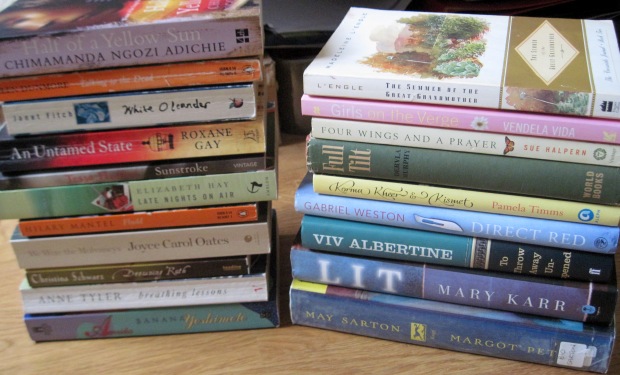
I’m doing abysmally with the goal I set myself at the start of the year to read lots of travel classics and biographies, so I’ve chosen one of each for this summer, but in general my criteria were simply that I was keen to read a book soon, and that it mustn’t feel like hard work. (So, alas, that ruled out novels by Elizabeth Bowen, Ursula K. LeGuin and Virginia Woolf.) I don’t insist on “beach reads” – the last two books I read on a beach were When Breath Becomes Air by Paul Kalanithi and Grief Cottage by Gail Godwin, after all – but I do hope that all the books I’ve chosen will be compelling and satisfying reads.
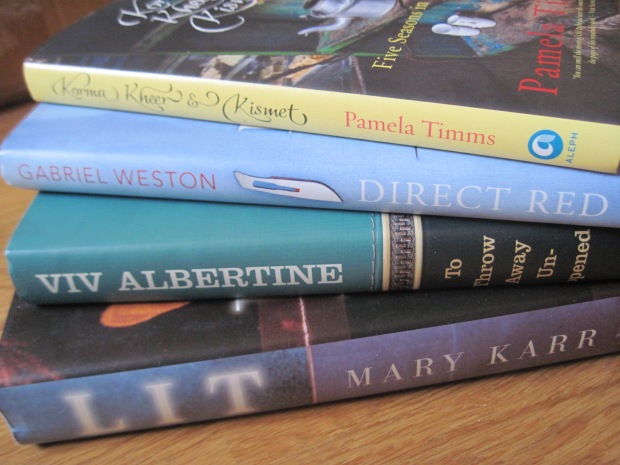
- To Throw Away Unopened by Viv Albertine – I picked up a copy from the Faber Spring Party, having no idea who Albertine was (guitarist of the all-female punk band The Slits). Everyone I know who has read this memoir has raved about it.
- Lit by Mary Karr – I’ve read Karr’s book about memoir, but not any of her three acclaimed memoirs. This, her second, is about alcoholism and motherhood.
- Korma, Kheer and Kismet: Five Seasons in Old Delhi by Pamela Timms – I bought a bargain copy at the Wigtown Festival shop earlier in the year. Timms is a Scottish journalist who now lives in India. This should be a fun combination of foodie memoir and travel book.
- Direct Red: A Surgeon’s Story by Gabriel Weston (a woman, honest!) – Indulging my love of medical memoirs here. I bought a copy at Oxfam Books earlier this year.
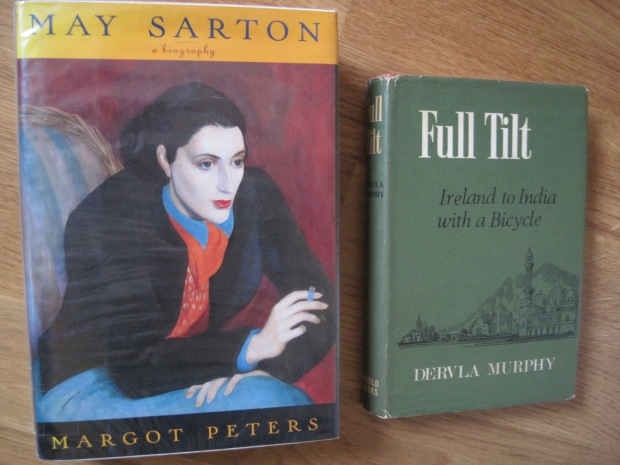 5. May Sarton by Margot Peters – I’ve been on a big May Sarton kick in recent years, so have been eager to read this 1997 biography, which apparently is not particularly favorable.
6. Full Tilt: Ireland to India with a Bicycle by Dervla Murphy – I bought this 1960s hardback from a charity shop in Cambridge a couple of years ago. It will at least be a start on that travel classics challenge.
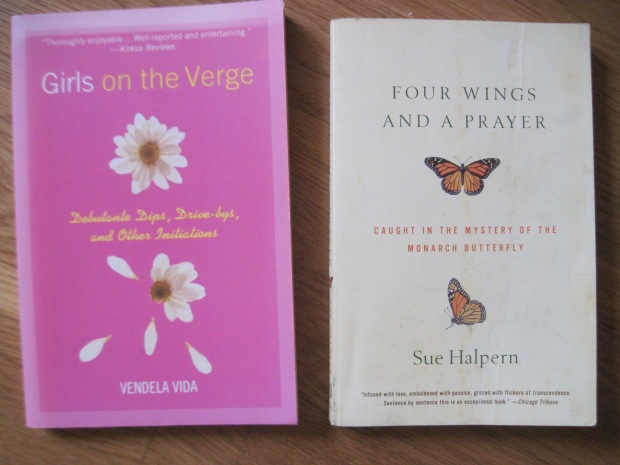
7. Girls on the Verge: Debutante Dips, Drive-bys, and Other Initiations by Vendela Vida – This was Vida’s first book. It’s about coming-of-age rituals for young women in America.
8. Four Wings and a Prayer: Caught in the Mystery of the Monarch Butterfly by Sue Halpern – Should fall somewhere between science and nature writing, with a travel element.
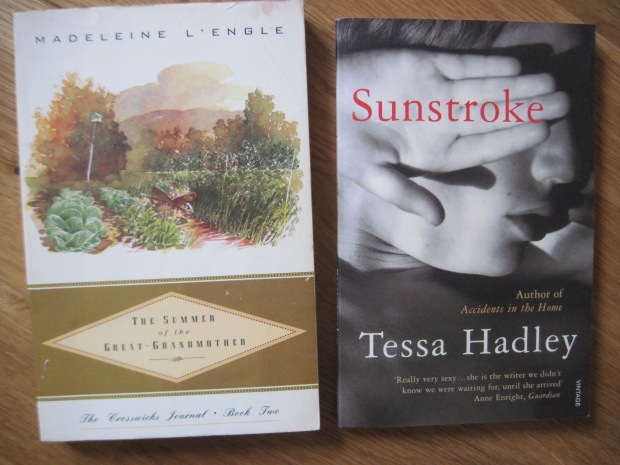
9. The Summer of the Great-Grandmother by Madeleine L’Engle – L’Engle is better known for children’s books, but she wrote tons for adults, too: fiction, memoirs and theology. I read the stellar first volume of the Crosswicks Journal, A Circle of Quiet, in September 2015 and have meant to continue the series ever since.
10. Sunstroke by Tessa Hadley – You know how I love reading with the seasons when I can. This slim 2007 volume of stories is sure to be a winner. Seven of the 10 originally appeared in the New Yorker or Granta.
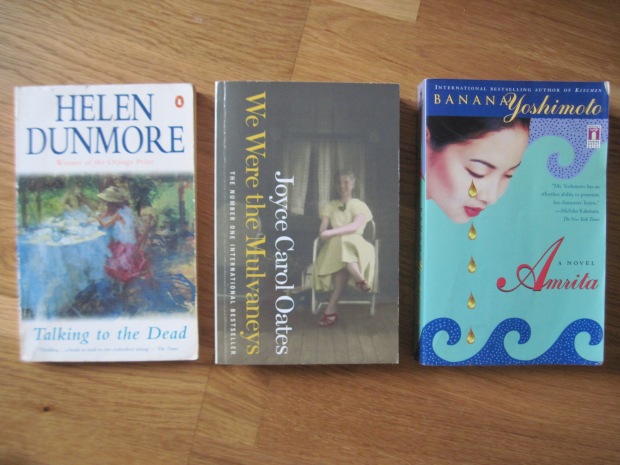
11. Talking to the Dead by Helen Dunmore – I’ve only ever read Dunmore’s poetry. It’s long past time to try her fiction. This one comes highly recommended by Susan of A life in books.
12. We Were the Mulvaneys by Joyce Carol Oates – Oates is intimidatingly prolific, but I’m finally going to jump in and give her a try.
13. Amrita by Banana Yoshimoto – A token lit in translation selection. “This is the story of [a] remarkable expedition through grief, dreams, and shadows to a place of transformation.” (Is it unimaginative to say that sounds like Murakami?)
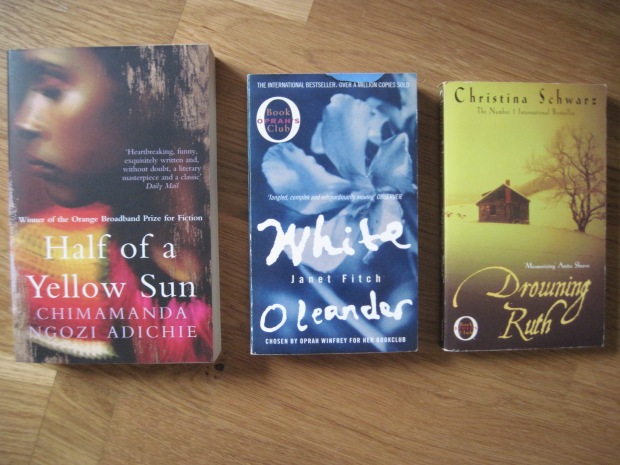
14. Half of a Yellow Sun by Chimamanda Ngozi Adichie – How have I not read any of her fiction yet?! This has been sitting on my shelf for years. I only vaguely remember the story line from the film, so it should be fairly fresh for me.
15. White Oleander by Janet Fitch – An Oprah’s Book Club selection from 1999. I reckon this would make a good beach or road trip read.
16. Drowning Ruth by Christina Schwarz – Another Oprah’s Book Club favorite from 2000. Set in Wisconsin in the years after World War I.
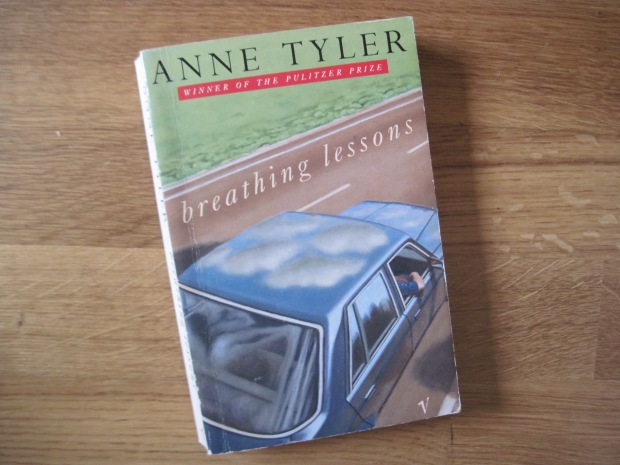
- Breathing Lessons by Anne Tyler – Tyler novels are a tonic. I have six unread on the shelf; the blurb on this one appealed to me the most. This summer actually brings two Tylers as Clock Dance comes out on July 12th – I’ll either substitute that one in, or read both!
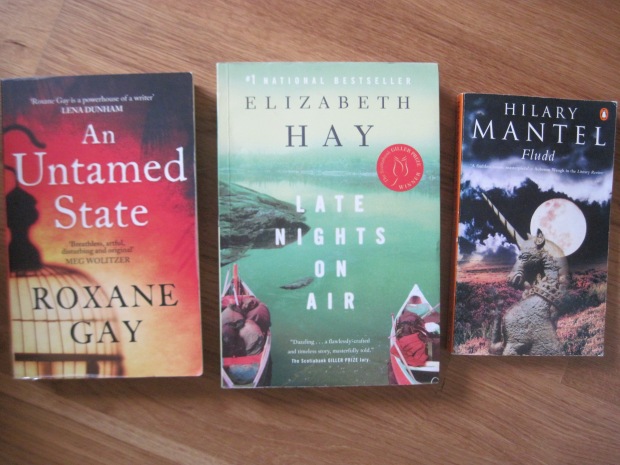
18. An Untamed State by Roxane Gay – I’ve only read Gay’s memoir, Hunger. She’s an important cultural figure; it feels essential to read all her books. I expect this to be rough.
19. Late Nights on Air by Elizabeth Hay – This has been on my radar for such a long time. After loving my first Hay novel (A Student of Weather) last year, what am I waiting for?
20. Fludd by Hilary Mantel – I haven’t read any Mantel in years, not since Bring Up the Bodies first came out. While we all await the third Cromwell book, I reckon this short novel about a curate arriving in a fictional town in the 1950s should hit the spot.
I’ll still be keeping up with my review books (paid and unpaid), blog tours, advance reads and library books over the summer. The aim of this challenge, though, is to make inroads into the physical TBR. Hopefully the habit will stick and I’ll keep on plucking reads from my shelves during the rest of the year.
Where shall I start? If I was going to sensibly move from darkest to lightest, I’d probably start with An Untamed State and/or Lit. Or I might try to lure in the summer weather by reading the two summery ones…
Which of these books have you read? Which ones appeal?
Third Blog Anniversary
Hard to believe, but I’ve only been blogging for three years as of today. It feels like something I’ve been doing forever, but at the same time I still consider myself a newbie. This is my 382nd post, so I’ve been keeping up an average of 2.5 posts a week.

By Joey Gannon from Pittsburgh, PA (Candles) [CC BY-SA 2.0 (http://creativecommons.org/licenses/by-sa/2.0)%5D, via Wikimedia Commons.
I’ve particularly enjoyed doing author Q&As and highlighting seasonal reads, novellas, books about cats, and physical book traits. I especially like writing up bookshop visits and other literary travels, and discussing literary prizes. My supply of graphic novels seems to have dried up; for new releases I focus on literary fiction, historical fiction and memoirs.
Straightforward book reviews have always been less popular than book lists and other more tangentially book-related posts. Library Checkout posts are consistently well-liked, as were the “Books in Brief” sets of five mini-reviews I used to do. As I’ve noted before, my posts on abandoned books are always perversely popular.
Some of my favorite posts from the past year were on World Kidney Day, Mother–Daughter Author Pairs, and Book Hoarding, and my review in verse of Jonathan Eig’s Ali: A Life.
The numbers of likes seem to be less than informative as they simply reflect a growing number of followers – many of my recent posts have averaged 20–25 likes – so I prefer to look at comments, as it means people are truly reading and engaging. In terms of numbers of comments, my top posts of all time appeared in the last year and were:
- Bibliotherapy appointment
- Books in Brief, May 2017 (featuring books by Sebastian Barry, Tracy Chevalier, Thomas H. Cook, Nicole Gulotta and Elizabeth Hay)
- (Tied for 3rd) Booker Longlist 2017 & Jacob’s Room Is Full of Books review
Thanks to everyone who has supported me this past year, and/or all three years, by visiting the site, commenting, re-tweeting, and so on. You’re the best!
Making Plans (and Book Lists) for America
On Tuesday we leave for two weeks in America. It’s nearly a year and a half since our last trip – much too long – so we’ll be cramming in lots of visits with friends and family and doing a fair bit of driving around the Mid-Atlantic states. I’m giving myself the whole time off, which means I’ve been working flat out for the past two weeks to get everything done (including my U.K. and U.S. taxes). I’m nearly there: at the 11-day countdown I still had 12 books I wanted to finish and 12 reviews to write; now I’m down to five books, only one of which might be considered essential, and all the reviews are ready to submit/schedule. What with the holiday weekend underway, it should all be manageable.
I’m a compulsive list maker in general, but especially when it comes to preparing for a trip. I’ve kept adding to lists entitled “Pack for America,” “Do in America,” “Buy in America,” and “Bring back from America.” But the more fun lists to make are book-related ones: what paper books should I take to read on the plane? Which of the 315 books on my Kindle ought I to prioritize over the next two weeks? Which exclusively American books should I borrow from the public library? What secondhand books will I try to find? And which of the books in the dozens of boxes in the closet of my old bedroom will I fit in my suitcase for the trip back?
I liked the sound of Laila’s habit of taking an Anne Tyler novel on every flight. That’s just the kind of cozy reading I want, especially as I head back to Maryland – not far at all from Tyler’s home turf of Baltimore. I browsed the blurbs on a few of her paperbacks I have lying around and chose Back When We Were Grownups to be my fifth Tyler and one of my airplane reads.
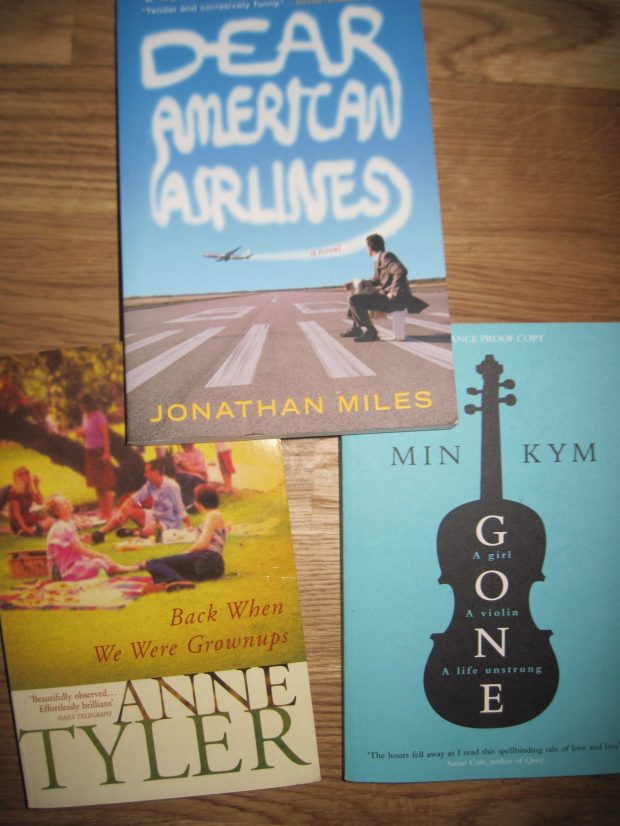
I’m also tempted by Min Kym’s Gone, a memoir by a violin virtuoso about having her Stradivarius stolen. I picked up a proof copy in a 3-for-£1 charity sale a couple of weeks ago. And then I can’t resist the aptness of Jonathan Miles’s Dear American Airlines (even though we’re actually flying on Virgin). I’ll start one or more of these before we go, just to make sure they ‘take’.
I almost certainly won’t need three print books for the trip, particularly if I take advantage of the in-flight entertainment. We only ever seem to watch films while we’re in America or en route there, so between the two legs I’ll at least try to get to La La Land and The Light between Oceans; I’m also considering Nocturnal Animals, Silence, and the live-action Beauty and the Beast – anyone seen these?
However, I’ll also keep my Kindle to hand, as I find it easier to pick up and put down on multi-part journeys like ours to the airport (train ride + coach ride). Some of the books on my Kindle priority list are: The Day that Went Missing by Richard Beard, Cork Dork by Bianca Bosker, Eleanor Oliphant Is Completely Fine by Gail Honeyman, The Fact of a Body by Alexandria Marzano-Lesnevich, Mrs. Fletcher by Tom Perrotta (out in August), The Power by Naomi Alderman, Reservoir 13 by Jon McGregor, The Rules Do Not Apply by Ariel Levy, See What I have Done by Sarah Schmidt, You Should Have Left by Daniel Kehlmann … and the list continues, but I’ll stop there.

My book shopping list is an ongoing one, as the many cross-outs and additions on this sheet show. Finding specific books at my beloved Wonder Book can be a challenge, so I usually just keep in mind the names of authors I’d like to read more by. This time that might include Arnold Bennett, Geoff Dyer, Elizabeth Hay, Bernd Heinrich, W. Somerset Maugham, Haruki Murakami and Kathleen Norris. In addition to the couple of secondhand bookstores we always hit, I hope to visit a few new-to-me ones on stays with friends in Virginia.
As for those poor books sat in boxes in the closet, I have plans to unearth novels by Anita Brookner, Mohsin Hamid, Kent Haruf, Penelope Lively, Howard Norman and Philip Roth – for reading while I’m there and/or bringing back with me. I’m also contemplating borrowing my dad’s omnibus edition of the John Updike “Rabbit” novels. From my nonfiction hoard, I fancy an Alexandra Fuller memoir, D.H. Lawrence’s travel books and more of May Sarton’s journals. If only it weren’t for luggage weight limits!
On Monday I’ll publish my intercontinental Library Checkout, on Tuesday I have a few June releases to recommend, and then I’m scheduling a handful of posts for while I’m away – a couple reviews I happen to have ready, plus some other lightweight stuff. Alas, I read no doorstoppers in May, but I have a list (of course) of potential ones for June, so will attempt to resurrect that monthly column.
Though I may be slow to respond to comments and read your blogs while I’m away, I will do my best and hope to catch up soon after I’m back.
Books in Brief: Five I Loved Recently
Ironically, Tuesday’s post on all the books I’ve abandoned so far in 2017 was my most popular in ages; it received nearly twice as many views as most of my recent posts. I think readers must find it reassuring that they’re ‘allowed’ to give up on a book rather than struggle through to the end of something they’re really not enjoying. However, I unwittingly stirred up some controversy when I shared the post on a Facebook group for book bloggers and authors and got a few replies along the lines of “I would never write about a book I didn’t like or didn’t finish. It’s not fair to the author.” Hmmm.
Anyway, today I have five pretty much unreserved recommendations instead. An original take on the American Civil War, a retelling of a Shakespearean tragedy, a highly unusual travel book, a creative blending of poems and recipes, and a wonderful book about sisters and betrayal from a Canadian author new to me. I hope you’ll find something here to enjoy.
Days Without End
By Sebastian Barry
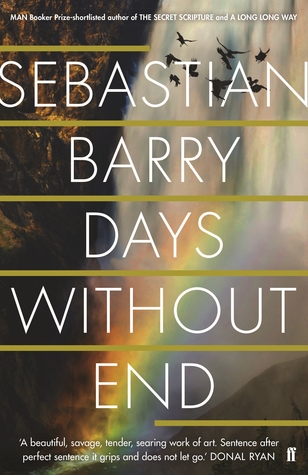 An entirely believable look at the life of the American soldier in the 1850s and 1860s, this novel succeeds due to its folksy dialect and a perfect balance between adventuresome spirit and repulsion at wartime carnage. While it shares some elements with Westerns and Civil War fiction, it’s unique in several ways. Though thrilling and episodic, it’s deeply thoughtful as well. Thomas writes semi-literate English but delivers profound, beautiful statements all the same. Lovely metaphors and memorable turns of phrase abound. Finally, this book is the most matter-of-fact consideration of same-sex relationships I’ve ever encountered in historical fiction. Heart-breaking, life-affirming, laugh-out-loud: these may be clichés, but here’s one novel that is all these things and more. Truly unforgettable. (See my full review at BookBrowse. See also my related article on the Native American practice of cross-dressing, known as winkte or berdache.)
My rating:
New Boy: Othello Retold
By Tracy Chevalier
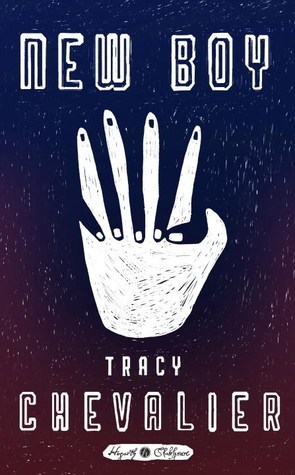 (My second favorite in the Hogarth Shakespeare series, after Margaret Atwood’s Hag-Seed.) Chevalier is known for historical fiction, but here she gives Othello a near-contemporary situation and a backdrop much closer to home: her native Washington, D.C. Spring 1974: it’s Ghanaian diplomat’s son Osei Kokote’s first day at a new school. Fortunately, he’s taken under the wing of one of the most popular sixth grade girls, Dee, and they’re soon inseparable. The novel takes place all in one day, divided into discrete sections by recess periods and a lunch break. Jump rope rhymes, jungle gyms, kickball games, arts and crafts, and a typical cafeteria meal of Salisbury steak and tater tots: it’s impressive how Chevalier takes ordinary elements and transforms them into symbols of a complex hierarchy and shifting loyalties. The language of possession and desire felt overly dramatic to me when applied to eleven-year-olds. However, it’s a remarkable exploration of the psyche of a boy isolated by his race. (Full review forthcoming at the Pittsburgh Post-Gazette website.)
My rating:  (maybe more like 3.75)
Tragic Shores: A Memoir of Dark Travel
By Thomas H. Cook
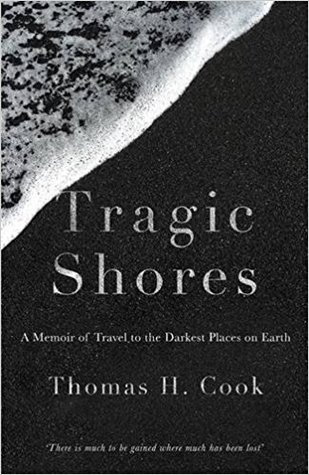 Cook is a crime writer. In this out-of-the-ordinary travel memoir he blends personal experience and history to tell of the ‘dark places’ he’s drawn to visiting. In 28 chapters that jump around in chronological order, he chronicles journeys he’s made to places associated with war, massacres, doomed lovers, suicides and other evidence of human suffering. Some are well known – Lourdes, Auschwitz, Verdun and Ground Zero – while others, like a Hawaiian leper colony and the hideaway of a fifteenth-century serial killer, require more background. A section on Okinawa and Hiroshima is among the book’s highlights: excellent descriptions of the mass suicide rooms where the Japanese retreated as the Americans approached and the atomic bomb drop itself bring history to life. But the most memorable chapter of all is one in which suffering touches Cook in a personal way. A meditative and often melancholy picture of humanity at its best and worst. (See my full review at Nudge.)
My rating:
Eat This Poem: A Literary Feast of Recipes Inspired by Poetry
By Nicole Gulotta
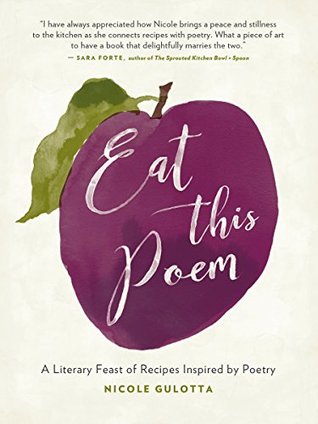 This arose from Gulotta’s blog of the same title. It’s a luscious mix of food-themed poems – none of which I’d ever encountered before, even if certain of the poets were familiar to me (like Mary Oliver, Sharon Olds and Wendell Berry) – commentary, personal anecdote and recipes that manage to hit the sweet spot in a Venn diagram between trendy, frugal, simple and indulgent. I could see myself making and eating any of these recipes, but my eye was particularly drawn to baked sweet potatoes with maple yogurt, vanilla-pear crumble, butternut squash macaroni and cheese, olive oil pumpkin bread, and cornmeal waffles. It might seem like this is a book that would only have niche appeal, but I don’t think that’s the case. Whether you like to cook or just like to eat, whether you love poetry or struggle to understand it, I’d recommend this for pleasant occasional reading. It only misses out on five stars because some of the observations are fairly obvious; these poems mostly speak for themselves.
My rating:
A Student of Weather
By Elizabeth Hay
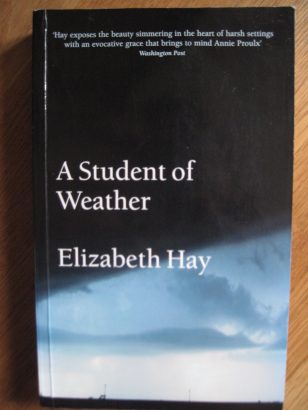 Set between the 1930s and 1970s, Hay’s debut (shortlisted for Canada’s Giller Prize in 2000) focuses on a pair of sisters, Norma Joyce and Lucinda Hardy, and the frostbitten young weather researcher who stumbles upon their Saskatchewan farmhouse one January evening in 1938. “Two sisters fell down the same well, and the well was Maurice Dove.” Seventeen-year-old Lucinda became the capable family housekeeper after their mother’s death. Norma Joyce is a precocious, sneaky eight-year-old. On each of Maurice’s visits, and in the years to come, they quietly jostle for his attention. Despite the upheaval of war and a move to Ontario, some things never change. Hay lends her story allusive depth by referencing biblical pairs of opposites: Jacob and Esau, Mary and Martha, and the Prodigal Son and his jealous older brother. My favorite parts were when the sisters were together in Canada; once Norma Joyce moves to New York, the book starts drifting a bit. However, there are such astute observations about what goes on in family and romantic relationships, and many perfect sentences. I thoroughly enjoyed reading this slowly over the course of a month, and I’d gladly read anything else from Hay.
My rating:
 Bookish Beck = Rebecca Foster. American transplant to England. Freelance proofreader and book reviewer.
 Bookish Beck