Reviews Roundup, January–February
One of my goals with this blog is to have one convenient place where I can gather together all my writing that has appeared in disparate online locations. To that end, once a month I provide links to all book reviews I’ve published elsewhere, with a rating (below each description) and a taster so you can decide whether to read more. A few exceptions: I won’t point out my Kirkus Indie, BlueInk or Publishers Weekly reviews since I don’t get a byline. Meanwhile, I’ve done my first review for the Pittsburgh Post-Gazette – exciting!
The Bookbag
The Noise of Time by Julian Barnes: “Art is the whisper of history, heard above the noise of time.” Through a fictionalized biography of the Russian composer Shostakovich, Barnes questions how art can withstand political oppression. Knowing Barnes’s penchant for stylistic experimentation, this was never going to be a straightforward, chronological life story. Instead, as he so often does, he sets up a tripartite structure, focusing on three moments when Shostakovich has a reckoning with Power. The book is full of terrific one-liners (“Integrity is like virginity: once lost, never recoverable”), but there are not many memorable scenes to latch on to.

Motions and Moments : More Essays on Tokyo (& interview) by Michael Pronko: Pronko’s third collection of essays about his adopted city is an eloquent tribute to a place full of contradictions and wonders. Compared to his earlier collection, Beauty and Chaos, I sense Pronko is now more comfortable in his surroundings, perhaps happier to include himself in ‘we’ rather than looking on passively at ‘them’. For instance – inspired by Japanese women’s perfect outfits – he consciously tries to dress better, and he’s taken to eating ramen and sleeping on a futon, just like a native. The highlight is a set of pieces written in the aftermath of the 2011 earthquake / tsunami.

BookBrowse
 The Portable Veblen by Elizabeth McKenzie: Veblen, named after the late-nineteenth-century Norwegian-American economist, is one of the oddest heroines you’ll ever meet. She thinks squirrels are talking to her and kisses flowers. But McKenzie doesn’t just play Veblen for laughs; she makes her a believable character well aware of her own psychological backstory. I suspect the squirrel material could be a potential turn-off for readers who can’t handle too much whimsy. Over-the-top silly in places, this is nonetheless a serious account of the difficulty of Veblen and Paul, her neurology researcher fiancé, blending their dysfunctional families and different ideologies – which is what marriage is all about.
 Weathering by Lucy Wood: This atmospheric debut novel is set in a crumbling house by an English river and stars three generations of women – one of them a ghost. Ada has returned to her childhood home after 13 years to scatter her mother Pearl’s ashes, sort through her belongings, and get the property ready to sell. In a sense, then, this is a haunted house story. Yet Wood introduces the traces of magical realism so subtly that they never feel jolting. Like the river, the novel is fluid, moving between the past and present with ease. The vivid picture of the English countryside and clear-eyed look at family dynamics remind me most of Tessa Hadley (The Past) and Polly Samson (The Kindness).
Foreword Reviews
When We Were Invincible by Jonathan Harnisch: In this short novel, a young man wrestles with depression and Tourette’s syndrome, which together drive him to the point of suicide. A series of dreams and chance meetings, along with the possibility of romance and faith in God, pull him back from the edge. The book successfully introduces philosophical themes and gives a sympathetic picture of mental illness. However, it is weaker at filling in background and providing transitions, and there are many awkward, unlikely lines of dialogue. Recommended to fans of The Curious Incident of the Dog in the Night-Time.

Nudge
 The Life and Death of Sophie Stark by Anna North: The twisty, clever story of a doomed filmmaker – perfect for fans of Hausfrau. Who is Sophie Stark? A New York City-based indie director whose four documentary-style movies are “almost more like life than life itself.” Bisexual and with certain traits of high-functioning autism, Sophie is easily misunderstood. She’s a rebel who doesn’t conform to social niceties. The book is told through five first-person reminiscences from the people closest to her. In this respect the novel’s format recalls Kitchens of the Great Midwest. My favorite sections, though, are the reviews of her films, all by the same critic.
 Casualties by Betsy Marro: A powerful, melancholy debut novel about how war affects whole families, not just individual soldiers. As in Bill Clegg’s Did You Ever Have a Family, which Casualties resembles in tone if not in style, a bereaved mother sets off on a journey. Ruth’s unlikely companion on the road trip east is a Gulf War amputee who appears little more than a conman but genuinely wants to clean up his act so he can reconcile with his teenage daughter. At times the road trip scenario felt a little far-fetched to me, and Casey too obvious a replacement son figure. Yet as both he and Ruth ponder how much they have lost and the small things they can try to put right, they together form a touching picture of the various ways war’s effects can linger.
Pittsburgh Post-Gazette
 Mr. Splitfoot by Samantha Hunt: “All stories are ghost stories,” Samantha Hunt proclaims in her quirky third novel about the crossover between motherhood and mysticism. In a dual storyline that takes in fundamentalist cults, unlikely mediums and a pregnant woman’s pilgrimage, Hunt asks whether one can ever believe in the unseen. Mr. Splitfoot has the offbeat charm of Scarlett Thomas’s work. While the plot ultimately feels like a bit of a jumble, its vision of unexpected love and loyalty remains compelling. “The End’s always coming,” but it is how one lives in the face of brutality and impending extinction that matters.
I also post reviews of most of my casual reading and skimming on Goodreads:
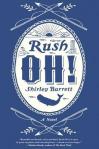 Rush Oh! by Shirley Barrett: A debut novel in which an Australian whaler’s daughter looks back at 1908, a catastrophic whaling season but also her first chance at romance. I felt that additional narrators, such as a whaleman or an omniscient voice, would have allowed for more climactic scenes. Still, I found this gently funny, especially the fact that the family’s cow and horse are inseparable and must be together on any outing. There are some great descriptions of whales, too.
 Felicity by Mary Oliver: I was disappointed with my first taste of Mary Oliver’s poetry. So many readers praise her work to the skies, and I’ve loved excerpts I’ve read elsewhere. However, I found these to be rather simplistic and clichéd, especially poems’ final lines, e.g. “Soon now, I’ll turn and start for home. / And who knows, maybe I’ll be singing.” or “Late, late, but now lovely and lovelier. / And the two of us, together—a part of it.” I’ll definitely try more of her work, but I’ll look out for an older, classic collection.
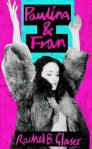 Paulina & Fran by Rachel B. Glaser: Full of blunt, faux-profound sentences and smutty, two-dimensional characters. Others may rave about it, but this wasn’t for me. I get that it is a satire on female friendship and youth entitlement. But I hated how the main characters get involved in a love triangle, and once they leave college any interest I had in them largely disappeared. Least favorite lines: “Paulina. She’s like Cleopatra, but more squat.” / “She’s more like Humphrey Bogart” and “She craved the zen-ness of being rammed.”

 Noah’s Wife by Lindsay Starck: I kept wanting to love this book, but never quite did. It’s more interesting as a set of ideas – a town where it won’t stop raining, a minister losing faith, homeless zoo animals sheltering with ordinary folk – than as an executed plot. My main problem was that the minor characters take over so that you never get to know the title character, who remains nameless. There’s also a ton of platitudes towards the end. It reminded me most of The Readers of Broken Wheel Recommend and Not Forgetting the Whale (another cozy environmental dystopia based around biblical allusions).
 Spill Simmer Falter Wither by Sara Baume: This sounded like a charmingly offbeat story about a loner and his adopted dog setting off on a journey. As it turns out, this debut is much darker than expected, but what saves it from being unremittingly depressing is the same careful attention to voice you encounter in fellow Irish writers like Donal Ryan and Anne Enright. It’s organized into four sections, with the title’s four verbs as headings. In a novel low on action, the road trip is much the most repetitive section, extending to the language as well. Even so, Baume succeeds in giving a compassionate picture of a character whose mental state comes into question. (Full review in March 2016 issue of Third Way magazine.)
 Medium Hero by Korby Lenker: Lenker is an indie musician, and the 27 autobiographical stories in his debut collection are about the everyday challenges of being on the road versus trying to pay the bills. Many feature “Korby” or “Simon” as fictional stand-ins, and recurring locations include his hometown of Twin Falls, Idaho and his adopted home of Nashville. As the title suggests, Lenker has no illusions about being famous or out of the ordinary. Most of the time he just tries to be a decent guy, the kind who prays for family members in distress even though he’s not sure he believes in God. Lest that sound too serious, though, there are also stories about peeing his pants and the perils of being a metrosexual.
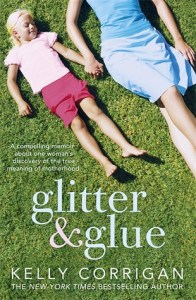 Glitter and Glue by Kelly Corrigan: Slides down like ice cream. And I say that even though the whole basis for this memoir feels rather thin. Corrigan frames it around five months in the early 1990s when she worked as a nanny for two Australian kids whose mother died of cancer. For a young woman fresh out of college, it was like a trial run for being a mother, and also gave her a new appreciation for everything her own mother had done for her during her Philadelphia Catholic upbringing. If Corrigan’s father was the ‘glitter’ of the family, her mother was the ‘glue’ – holding everything together in the background. This is impressively reconstructed, dialogue and all, from letters, journals and photos.
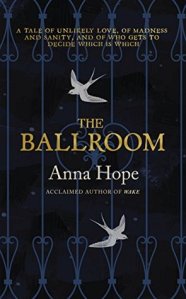 The Ballroom by Anna Hope: This novel was inspired by the story of the author’s great-great-grandfather, an Irishman who was a patient at Menston Asylum in West Yorkshire from 1909 to 1918. The novel zeroes in on the long, hot summer of 1911, focusing through alternating close third-person chapters on John Mulligan, a new patient named Ella Fay, and Dr. Charles Fuller, who wants to put his mental hospital at the frontline of eugenics research. Ultimately I didn’t like this quite as much as Wake, but I think it cements Anna Hope’s reputation as a solid historical fiction writer. I hope with her next book she’ll move beyond the years around World War I to consider a less-chronicled era.
 Life without a Recipe by Diana Abu-Jaber: The Jordanian–American writer reflects on how various food cultures have sustained her through a life that hasn’t always turned out as expected. Three marriages, a move from Portland to Florida, a winding path to motherhood in her forties, and her father’s death from leukemia are some of the main events. Like Sasha Martin’s Life from Scratch, this is more about family and personal history than it is about food (and there are no recipes). Still, food is the stuff of memories, and it is what binds her to two strong characters: her Jordanian father Bud with his stuffed grape leaves, and her maternal grandmother Grace with her frequent baking and the pastries they consumed together in Paris.
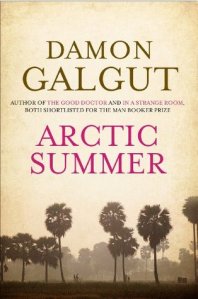 Arctic Summer by Damon Galgut: This fictionalized account of the life of E.M. Forster focuses on the drawn-out composition of A Passage to India, which he began in 1913 but wouldn’t complete and publish until 1924. In between he broke off to write his explicitly homosexual novel Maurice (only published posthumously), spent three years working in Egypt during the war, and served as a secretary to an Indian maharajah. As fictionalized biographies of authors go, I’d rate this somewhere between David Lodge’s A Man of Parts (H.G. Wells) and Colm Tóibín’s superior The Master (Henry James); all three share a heavy focus on the author’s sexuality. “Buggery in the colonies. It wasn’t noble” is one of my favorite random snippets from this novel, and sums up, for me, its slightly prurient aftertaste.
My Favorite Nonfiction Reads of 2015
Without further ado, I present to you my 15 favorite non-fiction books read in 2015. I’m a memoir junkie so many of these fit under that broad heading, but I’ve dipped into other areas too. I give two favorites for each category, then count down my top 7 memoirs read this year.
Note: Only four of these were actually published in 2015; for the rest I’ve given the publication year. Many of them I’ve already previewed through the year, so – like I did yesterday for fiction – I’m limiting myself to two sentences per title: the first is a potted summary; the second tells you why you should read this book. (Links given to full reviews.)
Foodie Lit
 A Homemade Life: Stories and Recipes from My Kitchen Table by Molly Wizenberg (2009): Wizenberg reflects on the death of her father Burg from cancer, time spent living in Paris, building a new life in Seattle, starting her food blog, and meeting her husband through it. Each brief autobiographical essay is perfectly formed and followed by a relevant recipe, capturing precisely how food is tied up with memories.
 Comfort Me with Apples: More Adventures at the Table by Ruth Reichl (2001): Reichl traces the rise of American foodie culture in the 1970s–80s (Alice Waters and Wolfgang Puck) through her time as a food critic for the Los Angeles Times, also weaving in personal history – from a Berkeley co-op with her first husband to a home in the California hills with her second after affairs and a sticky divorce. Throughout she describes meals in mouth-watering detail, like this Thai dish: “The hot-pink soup was dotted with lacy green leaves of cilantro, like little bursts of breeze behind the heat. … I took another spoonful of soup and tasted citrus, as if lemons had once gone gliding through and left their ghosts behind.”
Nature Books
 Meadowland: The Private Life of an English Field by John Lewis-Stempel (2014): Lewis-Stempel is a proper third-generation Herefordshire farmer, but also a naturalist with a poet’s eye. Magical moments and lovely prose, as in “The dew, trapped in the webs of countless money spiders, has skeined the entire field in tiny silken pocket squares, gnomes’ handkerchiefs dropped in the sward.”
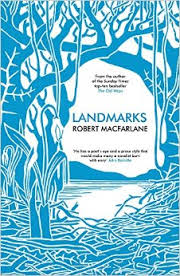 Landmarks by Robert Macfarlane: This new classic of nature writing zeroes in on the language we use to talk about our environment, both individual words – which Macfarlane celebrates in nine mini-glossaries alternating with the prose chapters – and the narratives we build around places, via discussions of the work of nature writers he admires. Whether poetic (“heavengravel,” Gerard Manley Hopkins’s term for hailstones), local and folksy (“wonty-tump,” a Herefordshire word for a molehill), or onomatopoeic (on Exmoor, “zwer” is the sound of partridges taking off), his vocabulary words are a treasure trove.
Theology Books
 Amazing Grace: A Vocabulary of Faith by Kathleen Norris (1998): In few-page essays, Norris gives theological words and phrases a rich, jargon-free backstory through anecdote, scripture and lived philosophy. This makes the shortlist of books I would hand to skeptics to show them there might be something to this Christianity nonsense after all.
 My Bright Abyss: Meditation of a Modern Believer by Christian Wiman (2013): Seven years into a cancer journey, Wiman, a poet, gives an intimate picture of faith and doubt as he has lived with them in the shadow of death. Nearly every page has a passage that cuts right to the quick of what it means to be human and in interaction with other people and the divine.
General Nonfiction
 Penelope Fitzgerald: A Life by Hermione Lee (2013): Although Penelope Fitzgerald always guarded literary ambitions, she was not able to pursue her writing wholeheartedly until she had reared three children and nursed her hapless husband through his last illness. This is a thorough and sympathetic appreciation of an underrated author, and another marvellously detailed biography from Lee.
 Being Mortal: Medicine and What Matters in the End by Atul Gawande (2014): A surgeon’s essential guide to decision-making about end-of-life care, but also a more philosophical treatment of the question of what makes life worth living: When should we extend life, and when should we concentrate more on the quality of our remaining days than their quantity? The title condition applies to all, so this is a book everyone should read.
Memoirs
 The Year My Mother Came Back by Alice Eve Cohen: Wry and heartfelt, this is a wonderful memoir about motherhood in all its variations and complexities; the magic realism (Cohen’s dead mother keeps showing up) is an added delight. I recommend this no matter what sort of relationship, past or present, you have with your mother, especially if you’re also a fan of Anne Lamott and Abigail Thomas.
- The Art of Memoir
 by Mary Karr: There is a wealth of practical advice here, on topics such as choosing the right carnal details (not sexual – or not only sexual – but physicality generally), correcting facts and misconceptions, figuring out a structure, and settling on your voice. Karr has been teaching (and writing) memoirs at Syracuse University for years now, so she’s thought deeply about what makes them work, and sets her theories out clearly for readers at any level of familiarity.
 A Circle of Quiet by Madeleine L’Engle (1971): In this account of a summer spent at her family’s Connecticut farmhouse, L’Engle muses on theology, purpose, children’s education, the writing life, the difference between creating stories for children and adults, neighbors and fitting into a community, and much besides. If, like me, you only knew L’Engle through her Wrinkle in Time children’s series, this journal should come as a revelation.
-
 Do No Harm: Stories of Life, Death and Brain Surgery by Henry Marsh (2014): “Terrible job, neurosurgery. Don’t do it.” – luckily for us, Henry Marsh reports back from the frontlines of brain surgery so we don’t have to. In my favorite passages, Marsh reflects on the mind-blowing fact that the few pounds of tissue stored in our heads could be the site of our consciousness, our creativity, our personhood – everything we traditionally count as the soul.
 I Hate to Leave This Beautiful Place by Howard Norman (2013): Norman has quickly become one of my favorite writers. You wouldn’t think these disparate autobiographical essays would fit together as a whole, given that they range in subject from Inuit folktales and birdwatching to a murder–suicide committed in Norman’s Washington, D.C. home and a girlfriend’s death in a plane crash, but somehow they do; after all, “A whole world of impudent detours, unbridled perplexities, degrading sorrow, and exacting joys can befall a person in a single season, not to mention a lifetime.”
 Portrait of an Addict as a Young Man by Bill Clegg (2010): Through this book I followed literary agent Bill Clegg on dozens of taxi rides between generic hotel rooms and bar toilets and New York City offices and apartments; together we smoked innumerable crack pipes and guzzled dozens of bottles of vodka while letting partners and family members down and spiraling further down into paranoia and squalor. He achieves a perfect balance between his feelings at the time – being out of control and utterly enslaved to his next hit – and the hindsight that allows him to see what a pathetic figure he was becoming.
And my overall favorite nonfiction book of the year:
 1. The Light of the World by Elizabeth Alexander: In short vignettes, beginning afresh with every chapter, Alexander conjures up the life she lived with – and after the sudden death of – her husband Ficre Ghebreyesus, an Eritrean chef and painter. This book is the most wonderful love letter you could imagine, and no less beautiful for its bittersweet nature.
What were some of your best nonfiction reads of the year?
Reviews Roundup, August–September
One of my goals with this blog is to have one convenient place where I can gather together all my writing that has appeared in disparate online locations. To that end, once a month I’ll provide links to all the book reviews I’ve published elsewhere, with a rating (below each description) and a short taster so you can decide whether to click to read more. A couple of exceptions: I won’t point out my Kirkus Indie or BlueInk reviews since I don’t get a byline.
The Bookbag
 Dandelion Angel by C.B. Calico (& interview): This was inspired by a non-fiction work, Understanding the Borderline Mother by Christine Ann Lawson. The four mother/daughter relationships in this Germany-set novel – all marked to some extent by dysfunction, physical and/or verbal abuse, and borderline personality disorder – are based on Lawson’s metaphorical classifications: the hermit, the queen, the waif, and the witch. Looping back through her four storylines in three complete cycles, Calico shows how mental illness is rooted in childhood experiences and can go on to affect a whole family.

The Last Pilot by Benjamin Johncock: Cinematic descriptions of the California desert setting plus excellent characters and dialogue enliven this debut novel about a fictional test pilot and his family troubles during America’s Space Race. Johncock is British, but you can tell he’s taken inspiration from stories about the dawn of the astronaut age. If I allowed myself small points of criticism, I would say that it’s a challenge to accept the passage of time in the final 50 pages, and that a keen interest in astronauts is probably a boon to keep readers going through the test flight portions, which to me were less compelling than the domestic drama of Jim, Grace and Florence.
 Home Is Burning by Dan Marshall: At age 25, Dan Marshall went home to Salt Lake City to care for a father with ALS and a mother with leukemia. He and his four hapless siblings (a Sedaris-like clan) approached caregiving with sarcasm and dirty humor. Gleefully foul-mouthed, his memoir lacks introspective depth. He hardly ventures deeper than initial descriptions like “My gay brother, Greg” and “My adopted Native American sister, Michelle.” And even when his sentiments about his father are sincere, they are conveyed via what sound like clichés: “I wanted my poor dad to get better, not worse.” But to my surprise, Marshall made me cry in the end.

Of Orcas and Men by David Neiwert: Inspired by personal sightings near his home in Seattle, Neiwert set out to learn everything he could about orcas. The result is a thorough study of whales’ behavior and interactions with humanity from native mythology through modern-day aquarium shows. Some specialist interest would probably be helpful to those attempting this book, although there are plenty of black-and-white photographs to keep even casual readers interested. “Recovering our humanity may be the real gift of the orcas, what they can teach us. It’s our choice whether to listen.”

BookBrowse
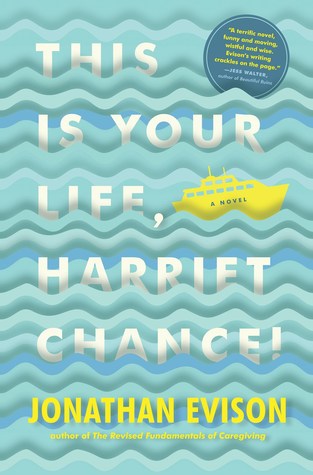 This Is Your Life, Harriet Chance! by Jonathan Evison [a subscription service, but an excerpt is available for free]: A widow in her seventies relives the ups and downs of her life while on an Alaskan cruise to scatter her husband’s ashes. Chapters alternate between a third-person account of the cruise and a second-person survey of Harriet’s past, delivered in the format of TV’s This Is Your Life. The narration is fresh and effective because the gradual revelations undermine Harriet’s elderly persona in such surprising ways. She is an out-of-the-ordinary but believable protagonist who, like all of us, has a mixture of victories and disappointments behind her. This is a charming novel about learning to reckon with the past.
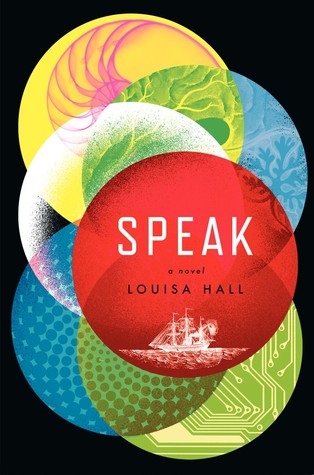 Speak by Louisa Hall [subscription service, but the full text of my review will be available for free during the week starting September 25th as part of Editor’s Choice]: Hall interweaves disparate time periods and voices to track the development of artificial intelligence. The fact that all six narratives are in different documentary formats – memoirs, letters, the transcript of a dialogue, a diary, and so on – means they are easy to distinguish. One might argue that two of them (Alan Turing’s letters and Mary’s shipboard diary) are unnecessary, and yet these are by far the most enjoyable. They prove Hall has an aptitude for historical fiction, a genre she might choose to pursue in the future. A remarkable book interrogating how the languages we converse in and the stories we tell make us human.
BookTrib
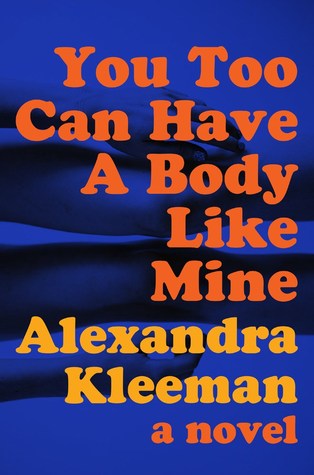 You Too Can Have a Body Like Mine by Alexandra Kleeman: Think of Alexandra Kleeman as an heir to Dave Eggers and Douglas Coupland, with a hefty dollop of Margaret Atwood thrown in. Her first novel is a full-on postmodern satire bursting with biting commentary on consumerism and conformity. Television and shopping are the twin symbolic pillars of a book about the commodification of the body. In a culture of self-alienation where we buy things we don’t need, have no idea where food comes from and desperately keep up the façade of normalcy, Kleeman’s is a fresh voice advocating the true sanity of individuality. Don’t miss her incredible debut.

Foreword Reviews
Conflict Communication by Rory Miller: Based on “ConCom,” the police verbal de-escalation program Miller developed with Marc MacYoung, this book aims to introduce readers to more conscious methods of verbal communication that will sidestep instinctive reactions and promote peaceful solutions. The advice is practical and intuitive, yet picks up on tiny details that most people would not notice. Concise, helpful, and well-organized, this is strongly recommended for readers interested in the psychology of violence and improving communication skills.
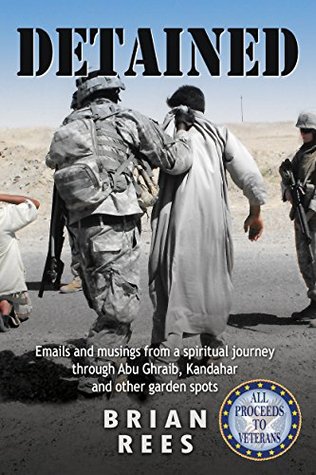 Detained by Brian Rees: Rees intersperses witty e-mail updates from his tours of Iraq and Afghanistan with clued-in commentary about war tactics, terrorism, Islam, and the benefits of transcendental meditation (TM) for soldiers with PTSD. The mixture of formats and topics generally works well, though the spiritual material deserves its own book. There’s no denying Rees’s expertise, and his fluid writing keeps the pages turning. This could make a fascinating companion volume for fans of recent war fiction such as The Yellow Birds, Redeployment, and War of the Encyclopaedists.
 Talk to Me of Love by Julia Anne Bernhardt: The poems in Bernhardt’s first collection range from erotic to spiritual as they investigate love in all its forms. Repetition, rhyme, and mantras produce hypnotic sonic effects and support the central message of the epigraph: “God is in the detail.” The everyday and the eternal mix here. This well-structured collection celebrates different types of love through meditative verse. The themes’ strength is enough to recommend it to readers of Jo Shapcott and Julia Copus.
The Hidden Treasure of Dutch Buffalo Creek by Jackson Badgenoone: Otherworldly ghost writers (the “Neverborn”) compose biographies for ordinary people in this playfully metafictional novel. James is a strong central character whose memories from the 1950s through the present give a sense of history’s sweep, while vivid descriptive language enlivens the settings. Although well written, the book as a whole is an unusual amalgam of spiritualism, historical nostalgia, and technology. James’s story might have been better told as a simple coming-of-age novel with flashbacks.
Nudge
 Common Ground by Rob Cowen: An unassuming patch of edge-land outside Harrogate is Cowen’s nature paradise, providing him with wildlife encounters and imaginative scenarios. Essentially, what Cowen does is give profiles of the edge-land’s inhabitants: animal and human, himself included. For instance, he creates an account of the life and death of a fox; elsewhere, he crafts a first-person narrative by a deer being hunted in medieval times. These fictions emulating Watership Down or Tarka the Otter, though well written, are out of place. When the book avoids melodramatic anthropomorphizing, it is very beautiful indeed.
We Love This Book
 Where My Heart Used to Beat by Sebastian Faulks: In Faulks’s thirteenth novel, his trademark themes of war, love and memory coalesce through the story of a middle-aged psychiatrist discovering the truth about his father’s death. Reminiscent of Birdsong as well as John Fowles’s The Magus and Ernest Hemingway’s A Farewell to Arms, this does not have the power of Faulks’s previous work but is a capable study of how war stories and love stories translate into personal history. [A few extra thoughts at Goodreads.]

I also post reviews of most of my casual reading and skimming on Goodreads.
 How to Write a Novel by Melanie Sumner: Our would-be novelist is Aris (short for Aristotle) Thibodeau, 12.5 years old and as precocious as Flavia de Luce. Diane is her single mother, and Max her downright weird younger brother. Using Write a Novel in 30 Days!, Aris is turning her family’s life story into fiction. In some ways they are very out of place here in Kanuga, Georgia. The child’s wry look at family dysfunction reminded me of Sue Townsend’s The Secret Diary of Adrian Mole, Aged 13 ¾. I would probably read something else from Sumner, so long as it wasn’t quite as silly and YA geared as this.
The Art of Memoir by Mary Karr: I would recommend this to anyone who reads and/or secretly wants to write memoirs; for the latter group, there is a wealth of practical advice here, on topics such as choosing the right carnal details (not sexual – or not only sexual – but physicality generally), correcting your facts and misconceptions, figuring out a structure, and settling on your voice. Along the way Karr discusses a number of favorite memoirs in detail, sometimes even line by line: Wild by Cheryl Strayed, Stop-Time by Pat Conroy, A Childhood by Harry Crews, Maya Angelou’s books, Speak, Memory by Nabokov, and so on.

Emblems of the Passing World: Poems after Photographs by August Sander by Adam Kirsch: A charming mix of historical photographs (1910s–1950s Germany) and poems. Kirsch uses his poetry to bring these one-dimensional figures to life, imagining the stories behind their generic titles (“Office Worker” or “Farming Family”) and sometimes slyly questioning the political and status connotations of such designations. One of my favorites was “Student of Philosophy.” This book could draw people whose interests usually run more to nonfiction – especially social history – into giving poetry a try. Releases November 17th.
 Browsings by Michael Dirda: Dirda wrote this pleasant set of bibliophilic essays for the American Scholar website in 2012–13. He’s the American equivalent of the UK’s John Sutherland: an extremely well-read doyen of the classics with a special love for Victorian and Edwardian genre fiction, often as revived by small presses and specialist societies. At times Dirda’s interests can be a bit obscure for the average reader, and some of the essays feel redundant. Still, it’s easy to relate to his addictive book purchasing and hoarding.
The Communist Manifesto by Karl Marx and Friedrich Engels: I read this on the train to Manchester, appropriate reading when approaching one of the UK’s biggest centers of Victorian industry and the place where Marx and Engels met to discuss ideas in the mid-1840s. Like Darwin’s Origin of Species, another seminal Victorian text, this has so many familiar lines and wonderful metaphors that have entered into common discourse that I simply assumed it was composed in English. My eyes glaze over at politics or economics, so I valued this more for its language than for its ideas. Part II, “Proletarians and Communists,” is the most focused part if you want to sample it.
 Number 11 by Jonathan Coe: This is a funny and mildly disturbing state-of-England and coming-of-age novel. I’d only read one previous book by Coe, Expo 58; this is a better example of his usual pattern: multiple, loosely linked storylines. Here the theme is the absurdity of modern culture, encompassing many aspects: unjust wars, the excesses of the uber-rich, the obsession with celebrity, and suspicion and exclusion of those who are different from us. The number 11 keeps popping up, too. My favorite parts were a Survivor-type reality television show and a laughably over-the-top prize ceremony banquet. Releases November 11th.
 My Family and Other Superheroes by Jonathan Edwards: Edwards displays his proud Welsh heritage with poems reflecting on his family tree and the country’s landscape. One of my favorites was “View of Valleys Village from a Hill,” in which the narrator, with a God’s-eye view of his family, envisions messing around with them. The witty “In John F. Kennedy International Airport” imagines that Wales has been abolished and recreated in miniature in a small Kansas museum (a bit like Julian Barnes’s England, England).
The Whole & Rain-domed Universe by Colette Bryce: Many of these poems are about the author’s Irish family inheritance, both literal and figurative, as in “Heritance”: “From her? Resilience. Generosity. / A teacher’s gravitas. / Irish stew. A sense / of the ridiculous. High ceilings.” I loved the first line of “Signature” – “When I finally gave up and became my mother.” It’s particularly nice how enjambment often makes the thought go just that one line beyond what you expect. I’d read more from Bryce.
Reviews Roundup, April–May
One of my goals with this blog is to have one convenient place where I can gather together all my writing that has appeared in disparate online locations. To that end, once a month – or maybe more often – I’ll provide links to all the book reviews I’ve published elsewhere, with a rating and a short taster so you can decide whether to click to read more. (A couple of exceptions: I won’t point out my Kirkus Indie or BlueInk reviews since I don’t get a byline.)
[I seem to have done more ‘free’ than ‘required’ reading this past month, which I attribute to having been on vacation in America for about two weeks of that time.]
BookBrowse
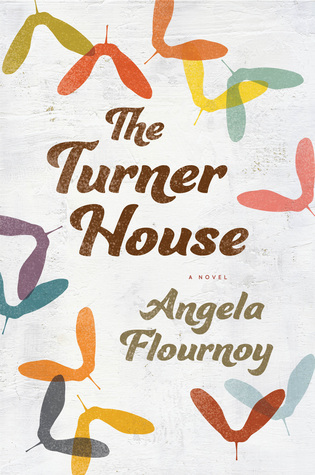 The Turner House by Angela Flournoy [subscription service, but an excerpt is available for free on the website]: In Flournoy’s debut novel, the 13 grown children of Francis and Viola Turner must put aside their own personal baggage and decide what will become of their parents’ Detroit house during the financial crisis.
The Bookbag
Mother of Eden by Chris Beckett: This sequel to 2012’s Arthur C. Clarke Award-winning science fiction novel Dark Eden sees Gela’s descendants splitting into factions and experimenting with different political systems. Starlight Brooking emerges as a Messiah figure, spreading a secret message of equality. Releases June 4th.
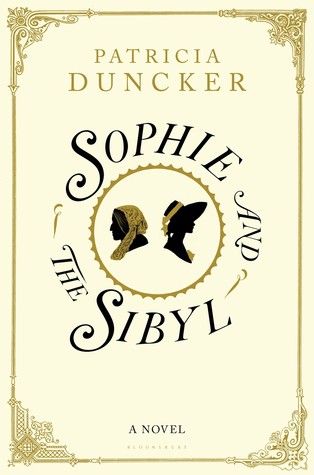 Sophie and the Sibyl by Patricia Duncker: In Duncker’s sixth novel, a playful Victorian pastiche, George Eliot’s interactions with her German publisher and his feisty young wife provide fodder for Daniel Deronda. Consciously modeled on John Fowles’s The French Lieutenant’s Woman, this is a postmodern blending of history, fiction, and metafictional commentary.
We Love This Book
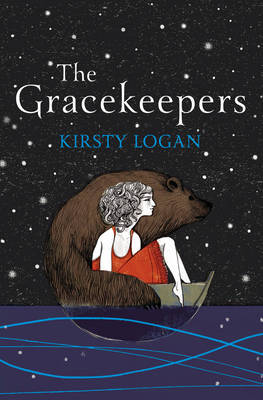 The Gracekeepers by Kirsty Logan: This inventive debut novel imagines a circus traveling through a flooded future world. Humanity is divided into two races, landlockers and damplings. Fear and prejudice distance these groups but the novel imagines them drawn together through a meeting between two young women, Callanish and North.
Foreword Reviews
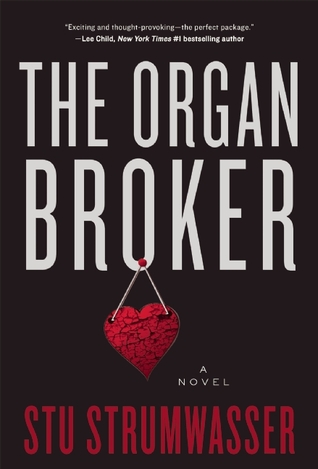 The Organ Broker by Stu Strumwasser: “There is no shortage of organs; there is only a shortage of organs in America.” The antihero of this debut novel finds organs on the international market and sells them for huge profits to Americans on transplant waiting lists. With snappy dialogue and a lovable hustler protagonist, it explores ethical ambiguities.
BookTrib
I chose my top four mother–daughter memoirs (by Alice Eve Cohen, Abigail Thomas, Alison Bechdel and Jeanette Winterson) for this Mother’s Day article.
I also post reviews of most of my casual reading on Goodreads.
Mademoiselle Chanel by C.W. Gortner: A writer of Tudor-era mysteries turns to more recent history with this novel about Coco Chanel. Detailing every business venture and love affair, he makes some parts a real chronological slog. I always associate Chanel with the 1950s–60s, so it was interesting to learn that she was born in the 1880s and experienced both world wars.
 The Empathy Exams by Leslie Jamison: I liked the medical-related pieces – attending a Morgellons disease conference, working as a medical actor – but not the Latin American travel essays or the character studies. The overarching theme of empathy was not as strong as I thought it would be; really, the book is more about how experiences mark the body.
The Real Thing: Lessons on Love and Life from a Wedding Reporter’s Notebook by Ellen McCarthy: McCarthy writes about weddings and relationships for The Washington Post. This is a collection of short pieces about modern dating, breakups, wedding ceremonies, marriage, and making love last. The style is breezy and humorous, largely anecdote- and interview-based, with some heartfelt moments. If you’re a wedding junkie you’ll definitely enjoy it, but I didn’t think it broke new ground.

 Visiting Hours: A Memoir of Friendship and Murder by Amy E. Butcher: The facts are simple: one night towards the end of their senior year at Gettysburg College, Kevin Schaeffer walked Butcher home from a drunken outing, then stabbed his ex-girlfriend to death. This book has elements of a true crime narrative, detailing the crime and speculating on possible causes for Kevin’s psychotic episode, but it’s more about how the crime affected Butcher. This is a concise and gripping narrative reminiscent of Half a Life by Darin Strauss.
A Reunion of Ghosts by Judith Claire Mitchell: Vee, Lady and Delph are the fourth generation of Alters, a Jewish family cursed with a rash of suicides. Indeed, the majority of the novel is the middle-aged sisters’ collective suicide note, narrated in the first-person plural. They reach back into the past to give the stories of their ancestors, including great-grandparents Iris and Lenz Alter, the latter of whom had the ironic distinction of being the Jewish creator of Zyklon gas (based on a real figure).
Beloved Strangers: A Memoir by Maria Chaudhuri: Islam versus Christianity is a background note, but the major theme is East versus West – specifically, Chaudhuri’s native Bangladesh set against America, where she attended university and later lived and worked. Religion, sexuality, dreams and second chances at love are all facets of the author’s search for a sense of home and family in a life of shifting loyalties. (My full review will appear in the autumn 2015 issue of Wasafiri literary magazine.)
 The Shore by Sara Taylor: Gritty and virtuosic, this novel-in-13-stories imagines 250 years of history on a set of islands off the coast of Virginia. As a Maryland native, I think of Chincoteague and Assateague as vacation destinations, but Taylor definitely focuses on their dark side here: industrial-scale chicken farms, unwanted pregnancies, domestic violence, bootleg liquor, gang rape, murders and meth labs.
Echoes of Heartsounds: A Memoir by Martha Weinman Lear: Longtime New York City journalist Lear’s first husband, a doctor named Hal, died after a series of heart attacks. Ironically, 30 years later she was admitted to the same hospital for a heart attack – an event that presents completely differently in women. As a sequel to her previous memoir, Heartsounds (1980), this explores life’s odd parallels and repetitions.
 The Readers of Broken Wheel Recommend by Katarina Bivald: A Swedish tourist opens a bookstore in small-town Iowa. Given that she’d never visited the States at the time she wrote this novel (published in her native Sweden in 2013), Bivald has painted a remarkably accurate picture of a Midwestern town peopled with fundamentalists, gays, rednecks and a gun-toting diner owner. A cute read for book lovers, provided you can stomach a bit of chick lit / romance.
Life From Scratch: A Memoir of Food, Family, and Forgiveness by Sasha Martin: Martin writes well and I enjoyed this book overall, but at times you may become frustrated and ask “where’s the food?!” That’s because the makeup of this book is: Misery Memoir – 70% / Global Table Adventure blog – 30%. Martin had the idea to cook dishes from every country of the world. At the rate of one feast per weekend, the blog project took four years. She manages to give a fairly comprehensive overview of the cooking she did over that time.
Plumb Line by Steve Luttrell: Disappointingly average poems about nature and memory. The situations and sentiments are relatable but the language so plain that nothing sticks out.
The Sixth Extinction: An Unnatural History by Elizabeth Kolbert: The picture Kolbert paints of our environmental situation is depressing. I already knew the facts of climate change and animal extinction, but according to Kolbert the prognosis is even worse than I was aware. As a longtime New Yorker journalist, she writes at a good level for laymen: not talking down, nor assuming any specialist knowledge. Luckily, there are spots of humor to lighten the tone.
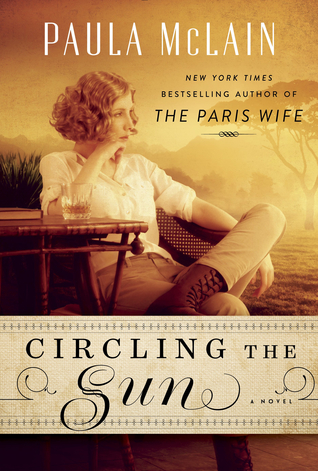 Circling the Sun by Paula McLain: This is just as good as The Paris Wife – if not better. I didn’t think I was very interested in aviatrix Beryl Markham, but McLain proved me wrong. The love triangle between her, Karen Blixen (Isak Dinesen) and Denys Finch Hatton forms the kernel of the book. McLain describes her African settings beautifully, and focuses as much on the small emotional moments that make a life as she does on the external thrills, though there are plenty of those.
The Size of Our Bed by Jacqueline Tchakalian: Well-structured and grouped into thematic sections, these poems are primarily about motherhood, the death of a much-loved husband from cancer, and adjusting to the reality of war. Alliteration and assonance stand in for traditional rhymes. Tchakalian is especially good with colors and flowers, which combine to create memorable metaphors. Releases September 15th.
 Bookish Beck = Rebecca Foster. American transplant to England. Freelance proofreader and book reviewer.
 Bookish Beck