Nonfiction November “Stranger than Fiction”: The Boys in the Boat
I’m taking a quick break from novellas coverage but keeping up the nonfiction focus with this week’s Nonfiction November prompt, “Stranger than Fiction,” hosted by Christopher at Plucked from the Stacks: “This week we’re focusing on all the great nonfiction books that almost don’t seem real. A sports biography involving overcoming massive obstacles, a profile on a bizarre scam, a look into the natural wonders in our world—basically, if it makes your jaw drop, you can highlight it for this week’s topic.” I would also interpret this brief to refer to nonfiction that reads as fluently as a novel, and on both counts this book stands out.
The Boys in the Boat: Nine Americans and Their Epic Quest for Gold at the 1936 Berlin Olympics by Daniel James Brown (2013)
We read this for my book club a couple of months ago, on the recommendation of one of our members’ spouses. I was dubious because I don’t read history books, and don’t enjoy playing or watching sports, so a sport + history book sounded like a real snoozefest, but that couldn’t have been further from the truth.

Brown focuses on one of the University of Washington rowers, Joe Rantz, in effect making him the protagonist of a classic underdog story. The college team in general, and Rantz in particular, were unlikely champions. Rantz lost his mother young and, abandoned by his father multiple times, had to make a living by his wits in the Seattle area, sometimes resorting to illegal schemes like poaching and selling liquor during Prohibition, but also logging and working in dam construction. Even among the teammates who became his de facto family, he was bullied for coming from poverty and for his enthusiasm for folksy music. That we come to know and care deeply for Rantz testifies to how well Brown recreates his life story – largely via Rantz’s daughter’s reminiscences, though Brown did meet Rantz before his death.
Another central character is world-renowned boat designer George Pocock, an Englishman who set up shop on the Washington campus. Boatbuilding and rowing both come across as admirable skills involving hard physical labour, scientific precision and an artist’s mind. I was surprised by how much I enjoyed reading about the technical details of woodworking and rowing. Brown emphasizes the psychological as well as the physical challenges of rowing – “mind in boat” is a catchphrase reminding rowers to give their total attention for there to be harmony between teammates. Individual talent is only useful insomuch as it boosts collective performance, and there has to be a perfect balance between speed, power and technique. Often, it means going past the pain barrier: “Competitive rowing is an undertaking of extraordinary beauty preceded by brutal punishment,” as the author sums it up.
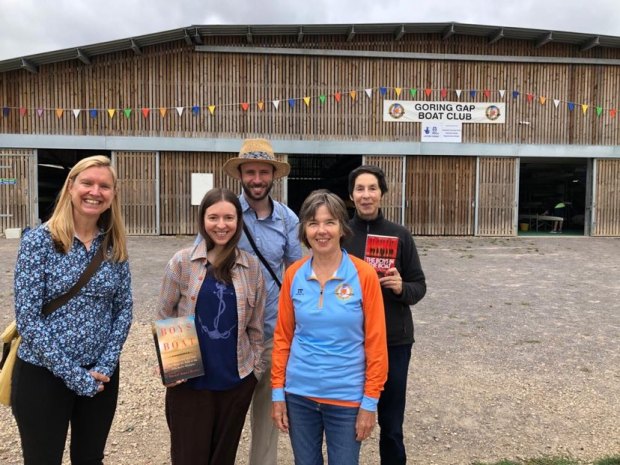
(After reading the book, some of us went on a fieldtrip to see the boating club where the woman who recommended the book rows as an amateur. It wasn’t until I saw the rowers out on the Thames that I realized that only the coxswain – the one who sits at the back of the boat and calls out the orders – faces forward, while all the other rowers are facing backwards. That feels metaphorically significant, like you have to trust where the journey is taking you all together rather than relying on your own sight.)
All along, Brown subtly weaves in the historical background: Depression-era Seattle with its shantytowns, and the rise of Hitler in Germany. Joseph Goebbels and Leni Riefenstahl were key propagandists, whitewashing the city in advance of the Olympics to make a good impression on foreign visitors. Some atrocities had already been committed, and purification policies were in place, yet the Nazis fooled many with a façade of efficiency and cleanliness.
I have deep admiration for books, fiction or non-, that can maintain suspense even though you know the outcome. The pacing really works here. Most of the action is pre-Berlin, which keeps the tension high. (The only times when my attention waned was in the blow-by-blow accounts of preliminary races.) There were so many mishaps associated with the Olympic race that it truly is amazing that the U.S. team pulled through to win – I’ll leave the specifics for future readers to discover. But there are a couple ‘stranger than fiction’ details of the book that I do want to pull out: Joe’s father and brother each married one sister from a set of twins; and actor Hugh Laurie’s father was on the Great Britain rowing team at the 1936 Olympics.
The fires and heatwave of 1936 felt familiar, as did the hairstyles and fashions in the black-and-white photos (but the ‘boys’ themselves look more like 35-year-olds than modern college students). In some ways it seemed that little has changed, but then other facts feel impossibly outdated – e.g., sperm whale oil was used to oil the boats.
This might seem like a ‘dad book’ – indeed, several of us passed the book on to our fathers/-in-law after reading – but in fact it has very broad appeal and is one I’d be likely to recommend to any big readers, even if they’re not keen on nonfiction. It’s one of my most memorable reads of the year so far. And whether you fancy reading the book or not, you may want to look out for the George Clooney-directed film, coming out next year. (Secondhand purchase) 
Booker Prize Longlist Reading & Shortlist Predictions
I’ve polished off another four from the Booker Prize longlist (my initial reactions and excerpts from existing reviews are here), with one more coming up for me next month.
Trust by Hernan Diaz
“History itself is just a fiction—a fiction with an army. And reality? Reality is a fiction with an unlimited budget.”
My synopsis for Bookmarks magazine:
Set in the 1920s and 1930s, this expansive novel is about the early days of New York City high finance. It is told through four interlocking narratives. The first is Bonds, a novel by Harold Vanner, whose main character is clearly based on tycoon Andrew Bevel. Bevel, outraged at his portrayal as well as the allegation that his late wife, Mildred, was a madwoman, responds by writing a memoir—the book’s second part. Part 3 is an account by Ida Partenza, Bevel’s secretary, who helps him plot revenge on Vanner. In the final section, Mildred finally gets her say. Her journal caps off a sumptuous, kaleidoscopic look at American capitalism.
 Ghostwriter Ida’s section was much my favourite, for her voice as well as for how it leads you to go back to the previous part – some of it still in shorthand (“Father. Describe early memories of him. … MATH in great detail. Precocious talent. Anecdotes.”) and reassess its picture of Bevel. His short selling in advance of the Great Depression made him a fortune, but he defends himself: “My actions safeguarded American industry and business.” Mildred’s journal entries, clearly written through a fog of pain as she was dying from cancer, then force another rethink about the role she played in her husband’s decision making. With her genius-level memory, philanthropy and love of literature and music, she’s a much more interesting character than Bevel – that being the point, of course, that he steals the limelight. This is clever, clever stuff. However, as admirable as the pastiche sections might be (though they’re not as convincing as the first section of To Paradise), they’re ever so dull to read.
With thanks to Picador for the free copy for review.
Case Study by Graeme Macrae Burnet
 That GMB is quite the trickster. From the biographical sections, I definitely assumed that A. Collins Braithwaite was a real psychiatrist in the 1960s. A quick Google when I got to the end revealed that he only exists in this fictional universe. I enjoyed the notebooks recounting an unnamed young woman’s visits to Braithwaite’s office; holding the man responsible for her sister’s suicide, she books her appointments under a false name, Rebecca Smyth, and tries acting just mad (and sensual) enough to warrant her coming back. Her family stories, whether true or embellished, are ripe for psychoanalysis, and the more she inhabits this character she’s created the more she takes on her persona. (“And, perhaps on account of Mrs du Maurier’s novel, Rebecca had always struck me as the most dazzling of names. I liked the way its three short syllables felt in my mouth, ending in that breathy, open-lipped exhalation.” I had to laugh at this passage! I’ve always thought mine a staid name.) But the different documents don’t come together as satisfyingly as I expected, especially compared to His Bloody Project. (Public library)
Those two are both literary show-off stuff (the epistolary found documents strategy, metafiction): the kind of book I would have liked more in my twenties. I’m less impressed with games these days; I prefer the raw heart of this next one.
Nightcrawling by Leila Mottley
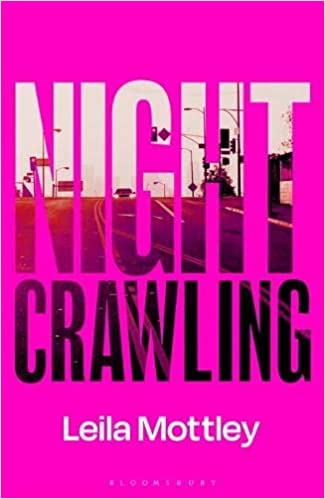 She may be only 20 years old, but Leila Mottley is the real deal. Her debut novel, laden with praise from her mentor Ruth Ozeki and many others, reminded me of Bryan Washington’s work. The first-person voice is convincing and mature as Mottley spins the (inspired by a true) story of an underage prostitute who testifies against the cops who have kept her in what is virtually sex slavery. At 17, Kiara is the de facto head of her household, with her father dead, her mother in a halfway house, and her older brother pursuing his dream of recording a rap album. When news comes of a rise in the rent and Kia stumbles into being paid for sex, she knows it’s her only way of staying in their Oakland apartment and looking after her neglected nine-year-old neighbour, Trevor.
I loved her relationships with Trevor, her best friend Alé (they crash funerals for the free food), and trans prostitute Camila, and the glimpses into prison life and police corruption. This doesn’t feel like misery for the sake of it, just realistic and compassionate documentation. There were a few places where I felt the joins showed, like a teacher had told her she needed to fill in some emotional backstory, and I noticed an irksome habit of turning adjectives into verbs or nouns (e.g., “full of all her loud,” “the sky is just starting to pastel”); perhaps this is an instinct from her start in poetry, but it struck me as precious. However, this is easily one of the more memorable 2022 releases I’ve read, and I’d love to see it on the shortlist and on other prize lists later this year and next. (Public library) 
Oh William! by Elizabeth Strout
 This was a DNF for me last year, but I tried again. The setup is simple: Lucy Barton’s ex-husband, William, discovers he has a half-sister he never knew about. William and Lucy travel from New York City to Maine in hopes of meeting her. For both of them, the quest sparks a lot of questions about how our origins determine who we are, and what William’s late mother, Catherine, was running from and to in leaving her husband and small child behind to forge a different life. Like Lucy, Catherine came from nothing; to an extent, everything that unfolded afterwards for them was a reaction against poverty and neglect.
The difficulty of ever really knowing another person, or even understanding oneself, is one of Strout’s recurring messages. There are a lot of strong lines and relatable feelings here. What I found maddening, though, is Lucy’s tentative phrasing, e.g. “And I cannot explain it except to say—oh, I don’t know what to say! Truly, it is as if I do not exist, I guess is the closest thing I can say.” She employs hedging statements like that all the time; it struck me as false that someone who makes a living by words would be so lacking in confidence about how to say what she means. So I appreciated the psychological insight but found Lucy’s voice annoying, even in such a short book. (Public library)
A Recap
I’ve read 6 of the 13 at this point, have imminent plans to read After Sappho for a Shelf Awareness review, and would still like to read the Mortimer if my library system acquires it. The others? Meh. I might consider catching up if they’re shortlisted.
My book group wasn’t chosen to shadow the Booker Prize this year, which is fair enough since we already officially shadowed the Women’s Prize earlier in the year (here are the six successful book clubs, if you’re interested). However, we have been offered the chance to send in up to five interview questions for the shortlisted authors. The Q&As will then be part of a website feature. And I was pleasantly surprised to see that my non-holiday snap of a Booker Prize nominee turned up in this round-up!
Here’s my (not particularly scientific) reasoning for what might make the shortlist:
A literary puzzle novel
Trust by Hernan Diaz or Case Study by Graeme Macrae Burnet
- Trust feels more impressive, and timely; GMB already had his chance.
A contemporary novel
Nightcrawling by Leila Mottley or Oh William! by Elizabeth Strout
- Oh William! is the weakest Strout novel I’ve read. Mottley’s is a fresh voice that deserves to be broadcast.

A satire
The Trees by Percival Everett or Seven Moons of Maali Almeida by Shehan Karunatilaka
- Without having read either, I’m going to hazard a guess that the Everett is too Ameri-centric/similar to The Sellout. The Booker tends to reward colourful Commonwealth books. [EDITED to add that I forgot to take into my considerations Glory by NoViolet Bulawayo; while it doesn’t perfectly fit this category, as a political allegory it’s close enough that I’ll include it here. I would not be at all surprised if it made the shortlist, along with the Karunatilaka.]

A couple of historical novels
Booth by Karen Joy Fowler or After Sappho by Selby Wynn Schwartz
and/or
A couple of Irish novels
Small Things Like These by Claire Keegan or The Colony by Audrey Magee
- I’m hearing such buzz about the Magee, and there’s such love out there for the Keegan, that I reckon both of these will make it through.


The odd one out?
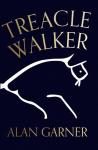
Treacle Walker by Alan Garner or Maps of Our Spectacular Bodies by Maddie Mortimer
- Maybe nostalgia will spur the judges to give Garner a chance in his 80s.

My predicted shortlist:



On Tuesday evening we’ll find out if I got any of these right!
What have you read from the longlist? What do you most want to read, or see on the shortlist?
Reviews: de Jongh, Eipe, Parker and Scull
Today’s roundup includes a graphic novel set during the U.S. Dust Bowl, a Dylan Thomas Prize-shortlisted poetry collection infused with Islamic imagery, a book about adaptive technologies for the disabled, and a set of testimonies from the elderly and terminally ill.
Days of Sand by Aimée de Jongh (2021; 2022)
[Translated from the Dutch by Christopher Bradley]
Dust can drive people mad.
 This terrific Great Depression-era story was inspired by the real-life work of photographers such as Dorothea Lange who were sent by the Farm Security Administration, a new U.S. federal agency, to document the privations of the Dust Bowl in the Midwest. John Clark, 22, is following in his father’s footsteps as a photographer, leaving New York City to travel to the Oklahoma panhandle. He quickly discovers that struggling farmers are believed to have brought the drought on themselves through unsustainable practices. Many are fleeing to California. The locals are suspicious of John as an outsider, especially when they learn that he is working to a checklist (“Orphaned children”, “Family packing car to leave”).
“The best photos have an instant impact. Right away, they grab our attention. They tell a story, or deliver a message. The question is: how do you make that happen?” one of his employers had asked. John grows increasingly uncomfortable with being part of what is essentially a propaganda campaign when he develops a personal fondness for Cliff, a little boy who offers to be his assistant, and Betty, a pregnant widow whose runaway horse he finds. The deprivation and death he sees at close hand bring back memories of his father’s funeral four years ago.
Whether a cityscape or the midst of a dust storm, de Jongh’s scenes are stark and evocative. Each chapter opens with a genuine photograph from the period (de Jongh travelled to the USA for archival and on-the-ground research thanks to a grant from the Dutch Foundation for Literature), and some panes mimic B&W photos the FSA team took. It’s rare for me to find the story and images equally powerful in a graphic novel, but that’s definitely the case here.


With thanks to SelfMadeHero for the free copy for review.
Auguries of a Minor God by Nidhi Zak/Aria Eipe (2021)
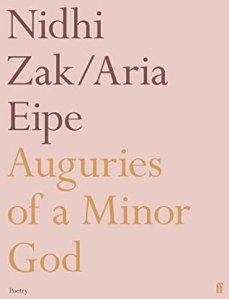 This debut poetry collection is on the Dylan Thomas Prize shortlist. I’ve noted that recent winners – such as Lot by Bryan Washington and Luster by Raven Leilani – have in common a distinctive voice and use of language, which chimes with what Thomas was known for (see my recent review of Under Milk Wood) and clarifies what the judges are looking for.
The placement of words on the page seems to be very important in this volume – spread out or bunched together, sometimes descending vertically, a few in grey. It’s unfortunate, then, that I read an e-copy, as most of the formatting was lost when I put it on my Nook. The themes of the first part include relationships, characterized by novelty or trauma; tokens of home experienced in a new land; myths; and nature. Section headings are in Malayalam.
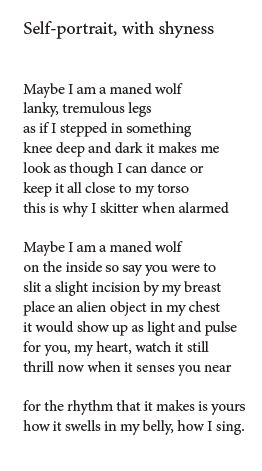
The book culminates in a lengthy, astonishingly nimble abecedarian in which a South Asian single father shepherds his children through English schooling as best he can while mired in grief over their late mother. This bubbles over in connection with her name, Noor, followed by a series of “O” apostrophe statements, some addressed to God and others exhorting fellow believers. Each letter section gets progressively longer. I was impressed at how authentically the final 30-page section echoes scriptural rhythms and content – until I saw in the endnotes that it was reproduced from a 1997 translation of the Quran, and felt a little cheated. Still, “A is for…” feels like enough to account for this India-born poet’s shortlisting. (The Prize winner will be announced on Thursday the 12th.)
With thanks to Midas PR for the free e-copy for review.
Hybrid Humans: Dispatches from the Frontiers of Man and Machine by Harry Parker (2022)
 I approached this as a companion to To Be a Machine by Mark O’Connell and that is precisely what I found, with Parker’s personal insight adding a different angle to the discussion of how technology corrects and transcends flawed bodies. Parker was a captain in the British Army in Afghanistan when an IED took his legs. Now he wears prostheses that make him roughly 12% machine. “Being a hybrid human means expensive kit – you have to pay for the privilege of leading a normal life.” He revisits the moments surrounding his accident and his adjustment to prostheses, and meets fellow amputees like Jack, who was part of a British medical trial on osseointegration (where titanium implants come out of the stump for a prosthesis to attach to) that enabled him to walk much better. Other vets they know had to save up and travel to Australia to have this done because the NHS didn’t cover it.
Travelling to the REHAB trade fair in Karlsruhe, Parker learns that disability, too, can be the mother of invention. Virtual reality and smartphone technology are invaluable, with an iPhone able to replace up to 11 single-purpose devices. Yet he also encounters disabled people who are happy with their lot and don’t look to tech to improve it, such as Jamie, who’s blind and relies only on a cane. And it’s not as if tools to compensate for disability are new; the book surveys medical technologies that have been with us for decades or even centuries: from glass eyes to contact lenses; iron lungs, cochlear implants and more.
Pain management, PTSD, phantom limbs, foreign body rejection, and deep brain stimulation for Parkinson’s disease are other topics in this wide-ranging study that is at the juncture of the personal and political. “A society that doesn’t look after the vulnerable isn’t looking after anyone – I’d learnt first-hand that we’re all just a moment from becoming vulnerable,” Parker concludes. I’ll hope to see this one on next year’s Barbellion Prize longlist.
With thanks to Profile Books/Wellcome Collection for the free copy for review.
Regrets of the Dying: Stories and Wisdom that Remind Us How to Live by Georgina Scull (2022)
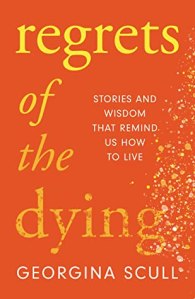 A medical crisis during pregnancy that had her minutes from death was a wake-up call for Scull, leading her to rethink whether the life she was living was the one she wanted. She spent the next decade interviewing people in her New Zealand and the UK about what they learned when facing death. Some of the pieces are like oral histories (with one reprinted from a blog), while others involve more of an imagining of the protagonist’s past and current state of mind. Each is given a headline that encapsulates a threat to contentment, such as “Not Having a Good Work–Life Balance” and “Not Following Your Gut Instinct.” Most of her subjects are elderly or terminally ill. She also speaks to two chaplains, one a secular humanist working in a hospital and the other an Anglican priest based at a hospice, who recount some of the regrets they hear about through patients’ stories.
Recurring features are not spending enough time with family and staying too long in loveless or unequal relationships. Two accounts that particularly struck me were Anthea’s, about the tanning bed addiction that gave her melanoma, and Millicent’s, guilty that she never went to the police about a murder she witnessed as a teenager in the 1930s (with a NZ family situation that sounds awfully like Janet Frame’s). Scull closes with 10 things she’s learned, such as not to let others’ expectations guide your life and to appreciate the everyday. These are readable narratives, capably captured, but there isn’t much here that rises above cliché.
With thanks to publicist Claire Morrison and Welbeck for the free copy for review.
Would you be interested in reading one or more of these?
Jane Smiley’s Last Hundred Years trilogy
Jane Smiley’s “The Last Hundred Years” trilogy is a saga prioritizing the experiences of the Langdons, an Iowa farming family, over the century beginning in 1920. In chronological chapters, one per year from 1920 to the near future of 2019, Smiley follows an ordinary couple, their six children and several generations of their descendants as they navigate America’s social changes and re-evaluate their principles during decades of upheaval.
 Some Luck
Here’s an excerpt from my Shiny New Books review in early 2015: “Farming, unpredictable and frequently heartbreaking, is an appropriate framework for an all-American story. Aspects of the Great American Novel are certainly on display: immigrant roots, coming-of-age trajectories for individuals and the nation, and American dream scenarios of reinvention. Within the confines of its third-person omniscient point-of-view, the novel shifts between the perspectives of each main character, especially the children. Smiley avoids a gimmicky One Day effect by varying the time of year so most chapters highlight different events, birthdays or holidays. Droughts, the Great Depression, the Second World War, and McCarthyism all feature, while the start of the Cold War – including paranoia over the Russians getting the bomb – sets up the second volume.”
My rating: 
Some months ago it occurred to me that I never followed up with the Langdons. Although I don’t generally read sequels or series, I nonetheless made it a priority to find the other two volumes of the trilogy from the library.
Early Warning
The second book covers 1953 to 1986. The family loses one member to Vietnam, one to cancer, and one to the easiest, simplest death you could imagine. There’s a shotgun wedding, a divorce, and several affairs. In short, it feels like a real family, like your family. Events seem arbitrary at the time but later take on the cast of inevitability. Historical landmarks are there as background information, not as clichéd points of action (a good example is the JFK assassination). The Vietnam War threads through the middle section, but isn’t overpowering. The connections with history are pretty subtle here. One of my favorites is when Janet, at a Vietnam protest march, suddenly realizes she’s behind Martin Luther King, Jr. and Dr. Spock. Her later involvement with the Peoples Temple grew tiresome for me, but I appreciated the ironic eye on the future: in 1980, “Well, I guess, they invaded Afghanistan…wherever that is!”
 Iowa was still my preferred setting, an ideal site for pondering time’s workings and how money comes and goes: Joe “knew enough at his age to know that dollars were like drops of mist – they fluttered around you and then dissipated.” I also like Andy’s therapy sessions, frequently featured in the first half. There’s even a gentle mystery in this book: a boy who doesn’t seem to be related to the family keeps showing up, but by the end we figure out who he is.
People may rise and fall in importance, just as they do in real life, but everyone has a perspective. That’s part of Smiley’s message here, I think. Early on she observes that Rosanna “hadn’t thought of Roland Frederick as having a point of view.” Recognizing other people as valid subjects, overcoming solipsism, is really what literature is all about.
Although I’m interested in what happens next, I don’t like the grandchildren generation all that much; Richie and Michael are especially unpleasant, and I have a feeling they will be major players in Golden Age. Still, I feel invested in and close to this family, so I’m going to see it through to the end.
Favorite passage:
Joe’s dystopian vision: “But he could see it, looking south – he could see all the layers lift off – the roof of the house, the second floor, the first floor. He could see the children and Jesse and Jenny and Lois and Minnie being lifted out on a fountain of debt and scattered to the winds; then he could see the corn and beans scoured away, and the topsoil, once twelve inches thick, now six inches thick, and below that, the silty clay loam, more gray than black, then the subsoil, brownish clay all the way down, down, down to the yellow layer, mostly, again, clay, all of it exposed, all of it flying into the atmosphere like money, burning up in the hot sunshine, disappearing.”
My rating:
Golden Age
Alas, the final installment was my least favorite. There are a few reasons for this. One is simply that I didn’t like the third- and fourth-generation characters as much. Another is that, with such a large family tree, you get more lists of names and catch-up sessions. The intrusion of history is also more overt. I noted this in the 2011 chapter, especially, which mentions the Japanese earthquake, Utøya and the Occupy movement. One character dies on 9/11; another gets a flesh-eating bacteria. One is struck by lightning; another dies in a hit and run. Not only are several of the deaths unrealistic, but, true to the winding-down spirit, there are simply a lot of them.
 As people disperse and the second generation starts to die off, the bonds between the family members weaken. The Iowa farm diminishes in real-life and symbolic importance compared to the action on the coasts: California, New York and Washington, where Richie is a congressman. I might actually have preferred if Smiley had imagined an alternative history for the 2000s and 2010s. (Of course, that would have broken the mold she made for herself.) For me, it all felt too close. I had a sense of her picking easy targets: “I would like to thank the members of the U.S. Congress for being so easy to satirize,” she writes in her acknowledgments. There’s also too much horse material – a frequent indulgence for Smiley.
The last five or so chapters were speculative at the time Smiley was writing, and some of her predictions already seem a little silly, like violent protests against a Harper government in Vancouver in 2016. However, her environmental worries are right on, and her words about the 2012 presidential election seem prescient in relation to this year’s race: a character advises his family to vote Democrat “as a protest against the Republican Party for offering a roster of candidates that went from bad to worse to worst ever.”
My rating: 
Ultimately, my favorite overall character was Andy, who reinvented herself as a young woman and does so again as a widow, turning into a computer and investment whiz. Frank was an early favorite in Some Luck, where he reminded me a lot of Mad Men’s Don Draper, but I grew less enamored with him over the years. Henry was perhaps my second favorite in the previous two books, but he rather fades into the background in the final book.
My advice to anyone wondering whether they should read this trilogy would be to start with Some Luck and, if you really like it, proceed to Early Warning. Golden Age is largely unnecessary and can be reserved for die-hard Smiley fans or series completists.
Further reading: Literary Hub article, “Why Wasn’t Great American Novelist Jane Smiley on the Cover of a Magazine?”
 Bookish Beck = Rebecca Foster. American transplant to England. Freelance proofreader and book reviewer.
 Bookish Beck