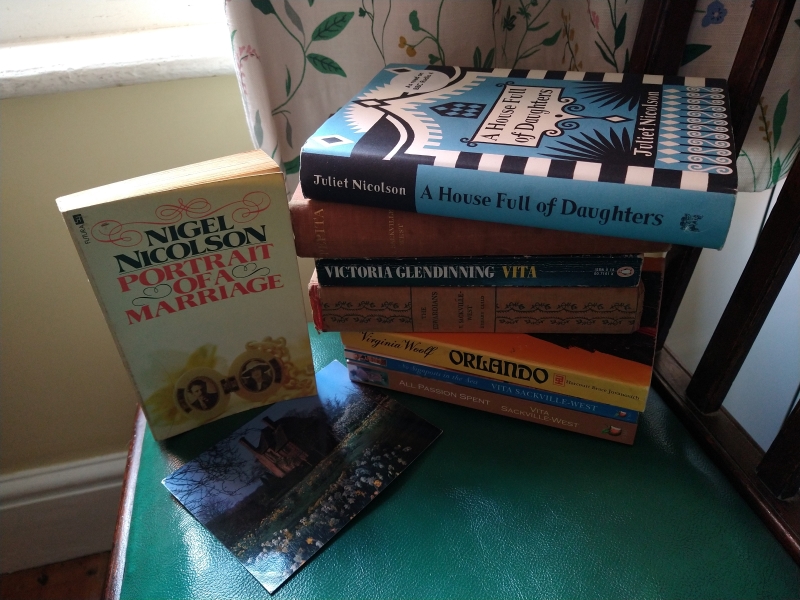
20 Books of Summer, 5: A House Full of Daughters by Juliet Nicolson
Journalist and popular historian Juliet Nicolson is Vita Sackville-West’s granddaughter and one of the few remaining guardians of her living memory. This 2015 family memoir chronicles the lives of seven (eight, really) generations of women and travels from Malaga in the 1830s to present-day England. Nicolson acknowledges the inherited privilege that has typified this clan since the time of Vita’s grandmother but prefers to emphasize the roles that place and talent have played. It is enough of a biography of Vita to have won a Bisexual Book Award but, even though Vita only had sons, the focus is on mother–daughter bonds and how values and experiences have recurred across nearly two centuries.
First came Pepita, who rose from poverty in southern Spain to be a legendary dancer (“the Beyoncé of her day,” Nicolson quipped at an online event I attended – see below) and catch the eye of an English diplomat, Lionel Sackville-West, at a performance in Paris. Although Pepita was already married to her dancing teacher, she shook off her controlling mother and became Sackville-West’s longtime mistress, bearing him seven children. They could all have been disinherited for illegitimacy, however, had Pepita’s daughter Victoria not secured the link – and access to the family estate, Knole – by marrying her cousin, young Lionel Sackville-West. Vita wrote in Pepita, her joint biography of her mother and grandmother, “My mother appears to have been born with the faculty of attracting the most peculiar and improbable happenings,” such as a proposal of marriage from the recently widowed U.S. president, Chester Arthur, when she accompanied her father to Washington, DC.

Vita is the book’s presiding spirit and pivot point, but I already knew a lot about her from reading Victoria Glendinning’s biography plus two of her novels, so this material was too familiar. The fact that we then leap from daughters to a daughter-in-law (Nicolson’s mother, Philippa Tennyson-d’Eyncourt – these figures are all posher than posh!) is unfortunate as it dilutes the theme. However, Nicolson gives a behind-the-scenes look at Sissinghurst and the marriages between Vita and Harold, loving but also a cover for same-sex relationships for both of them; and Nigel and Philippa, which was a disaster almost from the start. Nicolson is also brave to admit the alcoholism that she subconsciously received from her mother. Philippa died at 58, but by admitting she had a problem Nicolson was able to get help and turn things around. Two generations followed: her two daughters and one granddaughter, who is now 11.
Nicolson sees patterns repeating across the generations: emotional abandonment by parents, “the lack of confidence, the fear of failure, and the seeking of approval where there was none” as well as “writing about the life and work of an earlier generation.” She hopes that with this book she has marked the arrival of “an increasingly tolerant and accepting generation, one that is not afraid to learn from the mistakes of the past and is determined not to repeat them”. (Fun but unrelated fact: Penelope Fitzgerald was one of Nicolson’s teachers.)

On the staircase leading up to Vita’s study in the tower, September 2009.
I visited Sissinghurst in 2009 – I can’t believe I haven’t been back in the past 15 years – and when we briefly lived in Sevenoaks in 2012 we also went to Knole. Both are magical places, especially Sissinghurst. For a few years there I was on a kick of reading a lot by and about Vita (I can recommend No Signposts in the Sea) and I also absorbed a fair bit via Adam Nicolson’s books (that’s Juliet’s brother) and his wife Sarah Raven’s – her recipes are to die for, and she’s kept up the gardens in a way that would make Vita proud. So I’d say it probably helps to have an existing interest in the family, but it should be a reasonably engrossing read in any case. (Free from a neighbour) 
Yesterday I watched “The Inspiration of Vita Sackville-West,” a recording of an RSL event held at the London Library in October that was aired to tie in with their annual Dalloway Day as well as the 95th anniversary of the publication of Virginia Woolf’s Orlando (for which Vita was a model) and, of course, Pride Month. The panelists were Juliet Nicolson; trans novelist Shola von Reinhold, whose LOTE (2020) won the Republic of Consciousness and James Tait Black Memorial Prizes; fashion critic Charlie Porter; and writer Olivia Laing. The discussion was expertly chaired by Shahidha Bari, an academic, fashion writer and presenter of BBC Two’s Inside Culture. She opened by asking each speaker to define Vita in one word. Nicolson chose “lover,” which von Reinhold echoed. Porter said “physical.” Laing cheated with a made-up compound word: “androgynous-aristocratic-aesthete.”
And the conversation went on from there. Nicolson spoke of her grandmother as a formidable woman, tall and tobacco-scented, and remembered the exotic treasures she and her siblings found in Vita’s tower study, such as a bottle of emerald-green nail polish. She described Vita as enigmatic and representing duality: she was born a Victorian but has been embraced by modernist and queer studies; she was conventional in some ways, but also a rebel. Porter has written about fashion and the Bloomsbury circle, with Woolf as one of his subjects, so he thinks about Vita mostly as a muse. He read from Vita’s letter to Harold describing meeting Woolf, whom she thought “quite old” and “atrociously dressed.” Nonetheless, she’d lost her heart. Woolf in her turn commented on Vita’s moustache, which was likely a sign of her Spanish heritage rather than excess testosterone as some have theorized.
For von Reinhold, Vita is an early example of androgyny, a precursor to today’s trans and nonbinary identities. Laing, who has recently published a book on gardening, focused on Vita as a garden writer and designer. She said she doesn’t really value Vita’s novels but thinks her garden books (collections of her Observer columns) are extraordinary and read a passage in which she dreamt up the famous White Garden she would create at Sissinghurst (I read a kinda crummy novel about it a few years ago, The White Garden by Stephanie Barron).
The event gave a very good sense of Vita as a person but not as a writer. Audience questions brought up her poetry (oh God, it’s awful!) and travel books but that was as far as it went, and there was no discussion of the novels. Nicolson mentioned Pepita in passing but mostly talked about Portrait of a Marriage, which was half written by Vita and then finished by Nigel, a publisher (he was half of Weidenfeld and Nicolson, aka W&N). He had the courage to reveal his mother’s sexuality and Nicolson said that she believes Vita’s legacy is courage – to create a garden from scratch as a self-taught amateur, yes; but mostly to be oneself.
A Few Bizarre Backlist Reads: McEwan, Michaels & Tremain
I’ve grouped these three prize-winning novels from the late 1980s and 1990s together because they all left me scratching my head, wondering whether they were jumbles of random elements and events or if there was indeed a satisfyingly coherent story. While there were aspects I admired, there were also moments when I thought it indulgent of the authors to pursue poetic prose or plot tangents and not consider the reader’s limited patience. I had to think for ages about how to rate these, but eventually arrived at the same rating for each, reflecting my enjoyment but also my hesitation. 
The Child in Time by Ian McEwan (1987)
[Whitbread Prize for Fiction (now Costa Novel Award)]
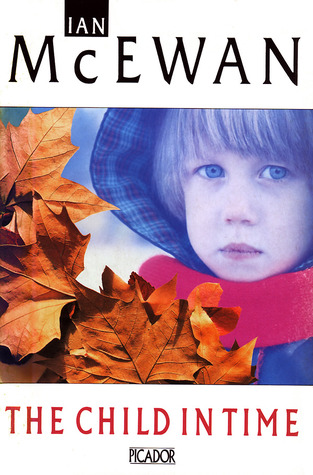 This is the second-earliest of the 13 McEwan books I’ve read. It’s something of a strange muddle (from the protagonist’s hobbies of Arabic and tennis lessons plus drinking onwards), yet everything clusters around the title’s announced themes of children and time.
Stephen Lewis’s three-year-old daughter, Kate, was abducted from a supermarket three years ago. The incident is recalled early in the book, as if the remainder will be about solving the mystery of what happened to Kate. But such is not the case. Her disappearance is an unalterable fact of Stephen’s life that drove him and his wife apart, but apart from one excruciating scene later in the book when he mistakes a little girl on a school playground for Kate and interrogates the principal about her, the missing child is just subtext.
Instead, the tokens of childhood are political and fanciful. Stephen, a writer whose novels accidentally got categorized as children’s books, is on a government committee producing a report on childcare. On a visit to Suffolk, he learns that his publisher, Charles Darke, who later became an MP, has reverted to childhood, wearing shorts and serving lemonade up in a treehouse.
Meanwhile, Charles’s wife, Thelma, is a physicist researching the nature of time. For Charles, returning to childhood is a way of recapturing timelessness. There’s also an odd shared memory that Stephen and his mother had four decades apart. Even tiny details add on to the time theme, like Stephen’s parents meeting when his father returned a defective clock to the department store where his mother worked.
This is McEwan, so you know there’s going to be a contrived but very funny scene. Here that comes in Chapter 5, when Stephen is behind a flipped lorry and goes to help the driver. He agrees to take down a series of (increasingly outrageous) dictated letters but gets exasperated at about the same time it becomes clear the young man is not approaching death. Instead, he helps him out of the cab and they celebrate by drinking two bottles of champagne. This doesn’t seem to have much bearing on the rest of the book, but is the scene I’m most likely to remember.
Other noteworthy elements: Stephen has a couple of run-ins with the Prime Minister; though this is clearly Margaret Thatcher, McEwan takes pains to neither name nor so much as reveal the gender of the PM (in fear of libel claims?). Homeless people and gypsies show up multiple times, making Stephen uncomfortable but also drawing his attention. I assumed this was a political point about Thatcher’s influence, with the homeless serving as additional stand-ins for children in a paternalistic society, representing vulnerability and (misplaced) trust.
This is a book club read for our third monthly Zoom meeting, coming up in the first week of June. While it’s odd and not entirely successful, I think it should give us a lot to talk about: the good and bad aspects of reverting to childhood, whether it matters if Kate ever comes back, the caginess about Thatcher, and so on.
Fugitive Pieces by Anne Michaels (1996)
[Orange Prize (now Women’s Prize for Fiction)]
“One can look deeply for meaning or one can invent it.”
 Poland, Greece, Canada; geology, poetry, meteorology. At times it felt like Michaels had picked her settings and topics out of a hat and flung them together. Especially in the early pages, the dreamy prose is so close to poetry that I had trouble figuring out what was actually happening, but gradually I was drawn into the story of Jakob Beer, a Jewish boy rescued like a bog body or golem from the ruins of his Polish village. Raised on a Greek island and in Toronto by his adoptive father, a geologist named Athos who’s determined to combat the Nazi falsifying of archaeological history, Jakob becomes a poet and translator. Though he marries twice, he remains a lonely genius haunted by the loss of his whole family – especially his sister, Bella, who played the piano. Survivor’s guilt never goes away. “To survive was to escape fate. But if you escape your fate, whose life do you then step into?”
The final third of the novel, set after Jakob’s death, shifts into another first-person voice. Ben is a student of literature and meteorological history. His parents are concentration camp survivors, so he relates to the themes of loss and longing in Jakob’s poetry. Taking a break from his troubled marriage, Ben offers to go back to the Greek island where Jakob last lived to retrieve his notebooks – which presumably contain all that’s come before. Ben often addresses Jakob directly in the second person, as if to reassure him that he has been remembered. Ultimately, I wasn’t sure what this section was meant to add, but Ben’s narration is more fluent than Jakob’s, so it was at least pleasant to read.
Although this is undoubtedly overwritten in places, too often resorting to weighty one-liners, I found myself entranced by the stylish writing most of the time. I particularly enjoyed the puns, palindromes and rhyming slang that Jakob shares with Athos while learning English, and with his first wife. If I could change one thing, I would boost the presence of the female characters. I was reminded of other books I’ve read about the interpretation of history and memory, Everything Is Illuminated and Moon Tiger, as well as of other works by Canadian women, A Student of Weather and Fall on Your Knees. This won’t be a book for everyone, but if you’ve enjoyed one or more of my readalikes, you might consider giving it a try.
Sacred Country by Rose Tremain (1992)
[James Tait Black Memorial Prize, Prix Fémina Etranger]
In 1952, on the day a two-minute silence is held for the dead king, six-year-old Mary Ward has a distinct thought: “I am not Mary. That is a mistake. I am not a girl. I’m a boy.” Growing up on a Suffolk farm with a violent father and a mentally ill mother, Mary asks to be called Martin and binds her breasts with bandages. Kicked out at age 15, she lives with her retired teacher and then starts to pursue a life on her own terms in London. While working for a literary magazine and dating women, she consults a doctor and psychologist to explore the hormonal and surgical options for becoming the man she believes she’s always been.
Meanwhile, a hometown acquaintance with whom she once shared a dentist’s waiting room, Walter Loomis, gives up his family’s butcher shop to pursue his passion for country music. Both he and Mary/Martin are sexually fluid and, dissatisfied with the existence they were born into, resolve to search for something more. The outsiders’ journeys take them to Tennessee, of all places. But when Martin joins Walter there, it’s an anticlimax. You’d expect their new lives to dovetail together, but instead they remain separate strivers.
At a bare summary, this seems like a simple plot, but Tremain complicates it with many minor characters and subplots. The story line stretches to 1980: nearly three decades’ worth of historical and social upheaval. The third person narration shifts perspective often to show a whole breadth of experience in this small English village, while occasional first-person passages from Mary and from her mother, Estelle, who’s in and out of a mental hospital, lend intimacy. Otherwise, the minor characters feel flat, more like symbols or mouthpieces.
To give a flavor of the book’s many random elements, here’s a decoding of the extraordinary cover on the copy I picked up from the free bookshop:
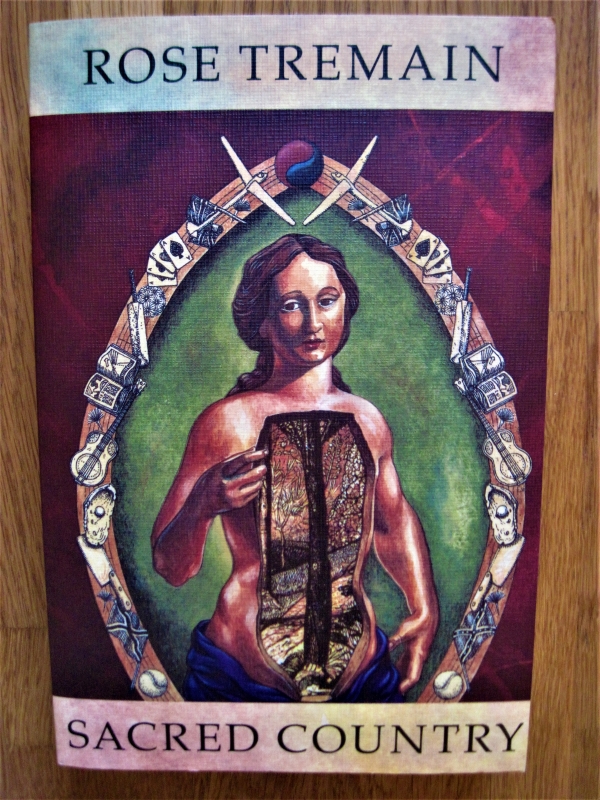
Crimson background and oval shape = female anatomy, menstruation
Central figure in a medieval painting style, with royal blue cloth = Mary
Masculine muscle structure plus yin-yang at top = blended sexuality
Airplane = Estelle’s mother died in a glider accident
Confederate flag = Tennessee
Cards = fate/chance, conjuring tricks Mary learns at school, fortune teller Walter visits
Cleaver = the Loomis butcher shop
Cricket bat = Edward Harker’s woodcraft; he employs and then marries Estelle’s friend Irene
Guitar = Walter’s country music ambitions
Oyster shell with pearl = Irene’s daughter Pearl, whom young Mary loves so much she takes her (then a baby) in to school for show-and-tell
Cutout torso = the search for the title land (both inward and outer), a place beyond duality
Tremain must have been ahead of the times in writing a trans character. She acknowledged that the premise was inspired by Conundrum by Jan Morris (who, born James, knew he was really a girl from the age of five). I recall that Sacred Country turned up often in the footnotes of Tremain’s recent memoir, Rosie, so I expect it has little autobiographical resonances and is a work she’s particularly proud of. I read this in advance of writing a profile of Tremain for Bookmarks magazine. It feels very different from her other books I’ve read; while it’s not as straightforwardly readable as The Road Home, I’d call it my second favorite from her. The writing is somewhat reminiscent of Kate Atkinson, early A.S. Byatt and Shena Mackay, and it’s a memorable exploration of hidden identity and the parts of life that remain a mystery.
 Bookish Beck = Rebecca Foster. American transplant to England. Freelance proofreader and book reviewer.
 Bookish Beck