My Life in Book Titles from 2024
As usual for January, I’m in the middle of lots of books but hardly finishing anything, so consider this a placeholder until my Love Your Library and January releases posts later in the month. It’s a fun meme that goes around every year; I first spotted it on Annabel’s blog and Susan also took part. I’ve never had a go before but when I looked at the prompts I realized some books I read in 2024 have titles that work awfully well. Links are to my reviews.
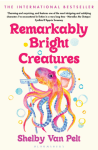 In high school I was [one of the] Remarkably Bright Creatures (Shelby Van Pelt)
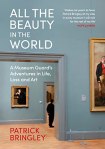
- People might be surprised by All the Beauty in the World (Patrick Bringley)
- I will never be A Spy in the House of Love (Anaïs Nin)
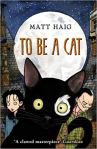 My fantasy job is To Be a Cat (Matt Haig)
- At the end of a long day, I need [a] Cocktail (Lisa Alward)

- I hate being [an] Exhibit (R.O. Kwon)
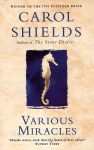
- Wish I had Various Miracles (Carol Shields)
- My family reunions are The Grief Cure (Cory Delistraty)
 At a party you’d find me with Orphans of the Carnival (Carol Birch)
- I’ve never been to Jungle House (Julianne Pachico)
 A happy day includes The Old Haunts (Allan Radcliffe)
- Motto I live by: I’m Mostly Here to Enjoy Myself (Glynnis MacNicol)
 On my bucket list is A Bookshop of One’s Own (Jane Cholmeley)
- In my next life, I want to have A House Full of Daughters (Juliet Nicolson)
20 Books of Summer, 5: A House Full of Daughters by Juliet Nicolson
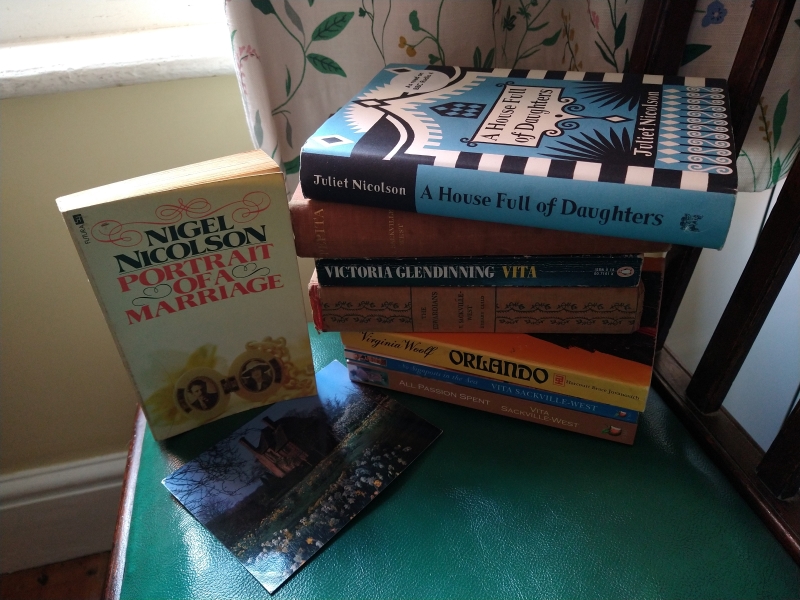
Journalist and popular historian Juliet Nicolson is Vita Sackville-West’s granddaughter and one of the few remaining guardians of her living memory. This 2015 family memoir chronicles the lives of seven (eight, really) generations of women and travels from Malaga in the 1830s to present-day England. Nicolson acknowledges the inherited privilege that has typified this clan since the time of Vita’s grandmother but prefers to emphasize the roles that place and talent have played. It is enough of a biography of Vita to have won a Bisexual Book Award but, even though Vita only had sons, the focus is on mother–daughter bonds and how values and experiences have recurred across nearly two centuries.
First came Pepita, who rose from poverty in southern Spain to be a legendary dancer (“the Beyoncé of her day,” Nicolson quipped at an online event I attended – see below) and catch the eye of an English diplomat, Lionel Sackville-West, at a performance in Paris. Although Pepita was already married to her dancing teacher, she shook off her controlling mother and became Sackville-West’s longtime mistress, bearing him seven children. They could all have been disinherited for illegitimacy, however, had Pepita’s daughter Victoria not secured the link – and access to the family estate, Knole – by marrying her cousin, young Lionel Sackville-West. Vita wrote in Pepita, her joint biography of her mother and grandmother, “My mother appears to have been born with the faculty of attracting the most peculiar and improbable happenings,” such as a proposal of marriage from the recently widowed U.S. president, Chester Arthur, when she accompanied her father to Washington, DC.

Vita is the book’s presiding spirit and pivot point, but I already knew a lot about her from reading Victoria Glendinning’s biography plus two of her novels, so this material was too familiar. The fact that we then leap from daughters to a daughter-in-law (Nicolson’s mother, Philippa Tennyson-d’Eyncourt – these figures are all posher than posh!) is unfortunate as it dilutes the theme. However, Nicolson gives a behind-the-scenes look at Sissinghurst and the marriages between Vita and Harold, loving but also a cover for same-sex relationships for both of them; and Nigel and Philippa, which was a disaster almost from the start. Nicolson is also brave to admit the alcoholism that she subconsciously received from her mother. Philippa died at 58, but by admitting she had a problem Nicolson was able to get help and turn things around. Two generations followed: her two daughters and one granddaughter, who is now 11.
Nicolson sees patterns repeating across the generations: emotional abandonment by parents, “the lack of confidence, the fear of failure, and the seeking of approval where there was none” as well as “writing about the life and work of an earlier generation.” She hopes that with this book she has marked the arrival of “an increasingly tolerant and accepting generation, one that is not afraid to learn from the mistakes of the past and is determined not to repeat them”. (Fun but unrelated fact: Penelope Fitzgerald was one of Nicolson’s teachers.)

On the staircase leading up to Vita’s study in the tower, September 2009.
I visited Sissinghurst in 2009 – I can’t believe I haven’t been back in the past 15 years – and when we briefly lived in Sevenoaks in 2012 we also went to Knole. Both are magical places, especially Sissinghurst. For a few years there I was on a kick of reading a lot by and about Vita (I can recommend No Signposts in the Sea) and I also absorbed a fair bit via Adam Nicolson’s books (that’s Juliet’s brother) and his wife Sarah Raven’s – her recipes are to die for, and she’s kept up the gardens in a way that would make Vita proud. So I’d say it probably helps to have an existing interest in the family, but it should be a reasonably engrossing read in any case. (Free from a neighbour) 
Yesterday I watched “The Inspiration of Vita Sackville-West,” a recording of an RSL event held at the London Library in October that was aired to tie in with their annual Dalloway Day as well as the 95th anniversary of the publication of Virginia Woolf’s Orlando (for which Vita was a model) and, of course, Pride Month. The panelists were Juliet Nicolson; trans novelist Shola von Reinhold, whose LOTE (2020) won the Republic of Consciousness and James Tait Black Memorial Prizes; fashion critic Charlie Porter; and writer Olivia Laing. The discussion was expertly chaired by Shahidha Bari, an academic, fashion writer and presenter of BBC Two’s Inside Culture. She opened by asking each speaker to define Vita in one word. Nicolson chose “lover,” which von Reinhold echoed. Porter said “physical.” Laing cheated with a made-up compound word: “androgynous-aristocratic-aesthete.”
And the conversation went on from there. Nicolson spoke of her grandmother as a formidable woman, tall and tobacco-scented, and remembered the exotic treasures she and her siblings found in Vita’s tower study, such as a bottle of emerald-green nail polish. She described Vita as enigmatic and representing duality: she was born a Victorian but has been embraced by modernist and queer studies; she was conventional in some ways, but also a rebel. Porter has written about fashion and the Bloomsbury circle, with Woolf as one of his subjects, so he thinks about Vita mostly as a muse. He read from Vita’s letter to Harold describing meeting Woolf, whom she thought “quite old” and “atrociously dressed.” Nonetheless, she’d lost her heart. Woolf in her turn commented on Vita’s moustache, which was likely a sign of her Spanish heritage rather than excess testosterone as some have theorized.
For von Reinhold, Vita is an early example of androgyny, a precursor to today’s trans and nonbinary identities. Laing, who has recently published a book on gardening, focused on Vita as a garden writer and designer. She said she doesn’t really value Vita’s novels but thinks her garden books (collections of her Observer columns) are extraordinary and read a passage in which she dreamt up the famous White Garden she would create at Sissinghurst (I read a kinda crummy novel about it a few years ago, The White Garden by Stephanie Barron).
The event gave a very good sense of Vita as a person but not as a writer. Audience questions brought up her poetry (oh God, it’s awful!) and travel books but that was as far as it went, and there was no discussion of the novels. Nicolson mentioned Pepita in passing but mostly talked about Portrait of a Marriage, which was half written by Vita and then finished by Nigel, a publisher (he was half of Weidenfeld and Nicolson, aka W&N). He had the courage to reveal his mother’s sexuality and Nicolson said that she believes Vita’s legacy is courage – to create a garden from scratch as a self-taught amateur, yes; but mostly to be oneself.
Six Degrees: From No One Is Talking About This to The White Garden
This month marks two years that I’ve been participating in the Six Degrees meme. I’m an off-and-on contributor – I skipped last month – but this month’s starting book hooked me in. We begin with No One Is Talking About This by Patricia Lockwood, critically acclaimed but divisive among regular readers. It made my Best of 2021 list. (See Kate’s opening post.)

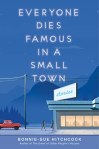 #1 No one is talking about the danger/allure of social media and the real-life moments that matter so much more … or maybe everyone is by now? What else is ‘everyone’ up to? Well, according to an appealing 2021 title from my TBR, Everyone Dies Famous in a Small Town (a YA linked short story collection by Bonnie-Sue Hitchcock). My library has a copy, so I need to catch up.
 #2 I did a search of my Goodreads library to find other small-town stories and FOUR of the results were unread nonfiction books by Heather Lende, set in Alaska (where lots of the Hitchcock stories are set as well). Now, my rule is that I can only have ONE book by an untried author on my virtual TBR; only if I read and enjoy a book of theirs can I add further titles. So I culled the other three but kept Find the Good, about the simple lessons Lende learned from writing obituaries in her small town.
 #3 I’ve read a few books with a lemon on the cover, but the one that was most about, you know, lemons, was The Land Where Lemons Grow by Helena Attlee. I chose it as one of my location-appropriate reads – written up here – during a vacation to Tuscany in 2014, my first time in Italy. It contains (more than) all you ever wanted to know about lemons.
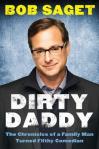 #4 A less apt read for time spent in Florence, but I distinctly remember lying in bed in our hotel room, which was basically part of a medieval villa, and reading it on my Nook when I couldn’t sleep because of the noisy nightlife out the window: Dirty Daddy by the late comedian Bob Saget. I rarely choose celebrity memoirs and this one was kinda crummy, but I’d requested it from Edelweiss because of my fond memories of the 1990s sitcom Full House.
 #5 Full house? How about A House Full of Daughters, a family memoir by Juliet Nicolson (sister of Adam)? It covers seven generations of women, including her grandmother, Vita Sackville-West. I loved my visits to Sissinghurst Castle and Knole Park, two of Vita’s homes, and have devoured Adam Nicolson and Sarah Raven’s writings about their work at Sissinghurst. When a neighbour was giving away a copy of this book, I snatched it up. It’s packed in a box and will be awaiting me after our move (coming up in March, we hope).
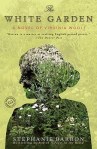 #6 During the lockdown spring I wrote about a silly novel called The White Garden by Stephanie Barron, which imagines that Virginia Woolf did not commit suicide upon her disappearance in March 1941, but hid with Vita at Sissinghurst. An American garden designer tasked with recreating Sackville-West’s famous White Garden at a wealthy client’s upstate New York estate ends up investigating what happened. My interest in the historical figures involved was enough to keep me going through a rather frothy book.
From one contemporary novel that swaps farce for poignancy to another that descends into ridiculousness, my chain has travelled via Alaska, Italy and Hollywood to Kent, England. The overarching theme has been fame: on the Internet, in small towns, in show business, and (my kind of celebrity) in the literary world.
Where will your chain take you? Join us for #6Degrees of Separation, hosted on the first Saturday of each month by Kate W. of Books Are My Favourite and Best. Next month’s starting point is The End of the Affair by Graham Greene, my perfect excuse to finally review it (I finished it more than a year ago!).
Have you read any of my selections? Tempted by any you didn’t know before?
 Bookish Beck = Rebecca Foster. American transplant to England. Freelance proofreader and book reviewer.
 Bookish Beck