Book Serendipity, November to December 2024
I call it “Book Serendipity” when two or more books that I read at the same time or in quick succession have something in common – the more bizarre, the better. This is a regular feature of mine every couple of months. Because I usually have 20–30 books on the go at once, I suppose I’m more prone to such incidents. People frequently ask how I remember all of these coincidences. The answer is: I jot them down on scraps of paper or input them immediately into a file on my PC desktop; otherwise, they would flit away! The following are in roughly chronological order.
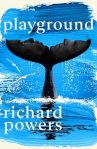
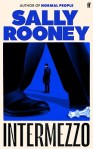
- Characters who were in a chess club and debating society in high school/college in Playground by Richard Powers and Intermezzo by Sally Rooney.
- Pondering the point of a memorial and a mention of hiring mourners in Immemorial by Lauren Markham and Basket of Deplorables by Tom Rachman.
- A mention of Rachel Carson, and her The Sea Around Us in particular, in Playground by Richard Powers, while I was also reading for review Rachel Carson and the Power of Queer Love by Lida Maxwell.
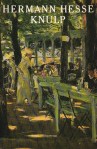
- A character pretends to be asleep when someone comes into the room to check on them in Knulp by Hermann Hesse and Rental House by Weike Wang.
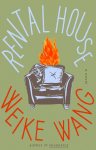
- A mention of where a partner puts his pistachio shells in After the Rites and Sandwiches by Kathy Pimlott and Rental House by Weike Wang.
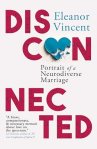 A character who startles very easily (in the last two cases because of PTSD) in Life before Man by Margaret Atwood, A History of Sound by Ben Shattuck, and Disconnected by Eleanor Vincent.
- The husband is named Nate in Life before Man by Margaret Atwood and Rental House by Weike Wang.
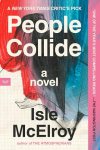
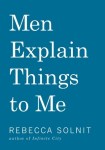
- In People Collide by Isle McElroy, there’s a mention of Elizabeth reading “a popular feminist book about how men explained things to women.” The day I finished reading the novel, I started reading the book in question: Men Explain Things to Me by Rebecca Solnit.
- I learned about the “he’s-at-home” (19th-century dildo) being used by whalers’ wives on Nantucket while the husbands are away at sea through historical fiction – Daughters of Nantucket by Julie Gerstenblatt, which I read last year – and encountered the practice again through an artefact found in the present day in The History of Sound by Ben Shattuck. Awfully specific!
- A week after I finished reading Station Eleven by Emily St. John Mandel, it turned up in a discussion of Vancouver Island in Island by Julian Hanna.
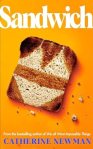
- A Cape Cod setting in Sandwich by Catherine Newman (earlier in the year) plus The History of Sound by Ben Shattuck and Rental House by Weike Wang.
- A gay character references Mulder and Scully (of The X-Files) in the context of determining sexual preference, and there’s a female character named Kit, in The Old Haunts by Allan Radcliffe and one story of Show Don’t Tell by Curtis Sittenfeld.
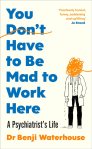
- A mention of The Truman Show in the context of delusions in The Year of Living Biblically by A.J. Jacobs and You Don’t Have to Be Mad to Work Here by Benji Waterhouse.
- St. Lucia is mentioned in Beasts by Ingvild Bjerkeland, Brightly Shining by Ingvild Rishøi (two Norwegian authors named Ingvild there!), and Mudhouse Sabbath by Lauren Winner.
- A pet named Darwin: in Levels of Life by Julian Barnes it’s Sarah Bernhardt’s monkey; in Cold Kitchen by Caroline Eden it’s her beagle. Within days I met another pet beagle named Darwin in Island by Julian Hanna. (It took me a moment to realize why it’s a clever choice!)
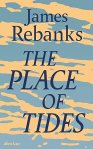
- A character named Henrik in The Place of Tides by James Rebanks and one story of Show Don’t Tell by Curtis Sittenfeld, and a Hendrik in The Safekeep by Yael van der Wouden.
- A hat with a green ribbon in The Safekeep by Yael van der Wouden and one story of Show Don’t Tell by Curtis Sittenfeld (in which it’s an emoji).
- Romanian neighbours who speak very good English in Island by Julian Hanna and Rental House by Weike Wang.
- A scene of returning to a house one used to live in in Hyper by Agri Ismaïl, The Old Haunts by Allan Radcliffe, and one story of Show Don’t Tell by Curtis Sittenfeld.
- A woman has had three abortions in The House of Dolls by Barbara Comyns and Without Exception by Pam Houston.
- Household items keep going missing and there’s broken china in The House of Dolls by Barbara Comyns and The Safekeep by Yael van der Wouden.
- Punctuated equilibrium (a term from evolutionary biology) is used as a metaphor in Hyper by Agri Ismaïl and Men Explain Things to Me by Rebecca Solnit.
 The author’s mother repeatedly asked her daughter a rhetorical question along the lines of “Do you know what I gave up to have you?” in Permission by Elissa Altman and Without Exception by Pam Houston.
- The author/character looks in the mirror at the end of a long day and hardly recognizes him/herself in The Place of Tides by James Rebanks, You Don’t Have to Be Mad to Work Here by Benji Waterhouse, and Amphibian by Tyler Wetherall.
- A man is afraid to hold his boyfriend’s hand in public in another country because he’s unsure about the cultural attitudes towards homosexuality in Clinical Intimacy by Ewan Gass and Small Rain by Garth Greenwell.
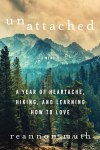
- The author’s mother is a therapist/psychologist and the author her/himself is undergoing some kind of mental health treatment in Unattached by Reannon Muth and You Don’t Have to Be Mad to Work Here by Benji Waterhouse.
- A man declares that dying in one’s mid-40s is nothing to complain about in A Beginner’s Guide to Dying by Simon Boas and Small Rain by Garth Greenwell.
- A woman ponders whether her ongoing anxiety is related to the stressful circumstances of her birth in Unattached by Reannon Muth and When the World Explodes by Amy Lee Scott.
What’s the weirdest reading coincidence you’ve had lately?
Short, Soul-Soothing Reads for #NovNov24 & #NonfictionNovember: Barnes, Cognetti, Lende, Mann, Nouwen and Winner
After the catastrophic U.S. election results (which we’ve all managed to ignore or normalize so as to keep going with our lives) and a medical crisis with our dear old cat, I’ve been craving literary soul food. These six short nonfiction books have been good companions, promising love, meaning and transcendence in the midst of bereavement and daily routines.
Levels of Life by Julian Barnes (2013)
 Barnes was a favourite author in my twenties and thirties, though I’ve had less success with his recent work. He wrote a few grief-soaked books in the wake of the death of his wife, celebrated literary agent Pat Kavanagh*. I had this mistaken for a different one (Through the Window, I think?) that I had enjoyed more. No matter; it was still interesting to reread this triptych of auto/biographical essays. The final, personal piece, “The Loss of Depth,” is a classic of bereavement literature on par with C.S. Lewis’s A Grief Observed; I would happily take it as a standalone pamphlet. Its every word rings true, especially the sense of duty as the lost one’s “principal rememberer.” But the overarching ballooning metaphor, and links with early French aerial photographer Nadar and Colonel Fred Burnaby, aeronaut and suitor of Sarah Bernhardt, don’t convince. The strategy feels like a rehearsal for Richard Flanagan’s Baillie Gifford Prize-winning Question 7, a similar hybrid work that pulls it off better. (Little Free Library) [118 pages]
*In spring 2008, I attended a talk by John Irving at King’s College, London, where I worked in library services for five years. Barnes and Kavanagh were in the front row and embraced Irving before the start. I was floored to hear of Kavanagh’s death later that year because she’d looked so well. It was a fast-acting brain tumour that felled her just 37 days after diagnosis.
Without Ever Reaching the Summit by Paolo Cognetti (2018; 2020)
[Translated from the Italian by Stash Luczkiw]
 Part pilgrimage and part 40th birthday treat, Cognetti’s October 2017 Himalayan trek through Dolpo (a Nepalese plateau at the Tibetan border) would also somewhat recreate Peter Matthiessen’s The Snow Leopard. Cognetti struggles with altitude sickness and the fare: “I tried salted yak butter tea for the first time—nauseating if you thought you were drinking tea, good and refreshing if you thought you were drinking broth.” He and his companions fancifully decide that Kanjiroba, the lovable stray dog who joins their party, is a reincarnation of Matthiessen. I have limited tolerance for travel books’ episodic combinations of nature descriptions, anthropological observations, and the rigours of the nomadic lifestyle. The same was true here, but the slight spiritual aspect and references to The Snow Leopard lifted it. (Public library) [135 pages]
Find the Good: Unexpected Life Lessons from a Small-Town Obituary Writer by Heather Lende (2015)
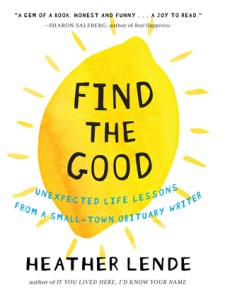 Lende is a journalist in isolated Haines, Alaska (population: 2,000). There’s a plucky motivational bent to these mini-essays about small-town life and death. In writing obituaries for normal, flawed people, she is reminded of what matters most: family (she’s a mother of five, one adopted, and a grandmother; she includes beloved pets in this category) and vocation. The title phrase is the motto she lives by. “I believe gratitude comes from a place in your soul that knows the story could have ended differently, and often does, and I also know that gratitude is at the heart of finding the good in this world—especially in our relationships with the ones we love.” The anecdotes and morals are sweet if not groundbreaking. The pocket-sized hardback might appeal to readers of Anne Lamott and Elizabeth Strout. (Birthday gift from my wish list, secondhand) [162 pages]
Do Not Be Afraid: The joy of waiting in a time of fear by Rachel Mann (2024)
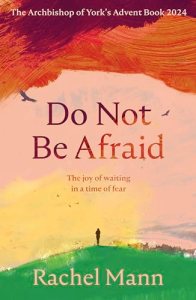 This is the Archbishop of York’s Advent Book 2024; I read it early because, pre-election, I yearned for its message of courage and patience. We need it all the more now. The bite-sized essays are designed to be read one per day from the first Sunday of Advent through to Christmas Day. Often they include a passage of scripture or poetry (including some of Mann’s own) for meditation, and each entry closes with a short prayer and a few questions for discussion or private contemplation. The topics are a real variety but mostly draw on the author’s own experiences of waiting and suffering: medical appointments and Covid isolation as well as the everyday loneliness of being single and the pain of coping with chronic illness. She writes about sitting with parishioners as they face death and bereavement. But there are also pieces inspired by popular culture – everything from Strictly to Quentin Tarantino.
Mann has written several previous Lent course books based on films. I’ve read her work in multiple genres (poetry: A Kingdom of Love and Eleanor Among the Saints; literary criticism: In the Bleak Midwinter; memoir: Dazzling Darkness; fiction: The Gospel of Eve); she is such a versatile writer, and with a fascinating story as a trans priest. Sombre yet hopeful, this is recommended seasonal reading. [114 pages]
With thanks to SPCK for the free copy for review.
The Inner Voice of Love: A Journey through Anguish to Freedom by Henri J. M. Nouwen (1997)
 Anguish is a strong word; I haven’t done any biographical digging to figure out what was going on in Nouwen’s life to prompt it, but apparently this secret journal came out of a lost relationship. (I wonder if it could have been a homosexual attachment. Nouwen was a Dutch Roman Catholic priest who became the pastor of a community for disabled adults in Canada.) He didn’t publish for another eight years but friends encouraged him to let his experience aid others. The one- or two-page reflections are written in the second person, so they feel like a self-help pep talk. The recurring themes are overcoming abandonment and rejection, relinquishing control, and trusting in God’s love and faithfulness. “You must stop being a pleaser and reclaim your identity as a free self.” The point about needing to integrate rather than sideline psychological pain is one I’m sure any therapist would affirm. Nouwen writes that a new spirituality of the body is necessary. This was a comforting bedside book with lots of passages that resonated. (Free – withdrawn from church theological library) [98 pages]
Mudhouse Sabbath: An Invitation to a Life of Spiritual Discipline by Lauren F. Winner (2003)
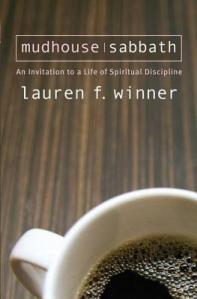 After Winner converted from Orthodox Judaism to Christianity, she found that she missed how Jewish rituals make routine events sacred. There are Christian sacraments, of course, but this book is about how the wisdom of another tradition might be applied in a new context. “Judaism offers opportunities for people to inhabit and sanctify bodies and bodily practices,” Winner writes. There are chapters on the concept of the Sabbath, wedding ceremonies, prayer and hospitality. Fasting is a particular sticking point for Winner, but her priest encourages her to see it as a way of demonstrating dependence on, and hunger for, God. I most appreciated the sections on mourning and ageing. “Perhaps the most essential insight of the Jewish approach to caring for one’s elderly is that this care is, indeed, an obligation. What Judaism understands is that obligations are good things. They are the very bedrock of the Jew’s relationship to God, and they govern some of the most fundamental human relationships”. By the way, Mudhouse is Winner’s local coffeehouse, so she believes these disciplines can be undertaken anywhere. (Secondhand – Awesomebooks.com) [142 pages]

Nonfiction November: Being the ‘Expert’ on Women’s Religious Memoirs
This week of the month-long challenge is hosted by JulzReads. I’m a total memoir junkie and gravitate towards ones written by women: sometimes those whose lives are completely different to mine (medical crises, parenting, etc.) and sometimes those who’ve had experiences similar to mine (moving to a new country, illness and dysfunction in the family, etc.).
In my late teens I fell into a crisis of faith that lasted for many years – or maybe is still ongoing – and planted the seed for my Master’s thesis on women’s faith and doubt narratives in Victorian fiction. I’m always looking out for memoirs that discuss religious conversion, doubt, or loss of faith.
I know we don’t all share the same obsessions. (The bookish world would be boring if we did!) It’s possible this topic doesn’t interest you at all. But if it does, or if you’d like to test the waters, here are 15 or so relevant reads that have stood out for me; I think I’ve only written about a few of them on here in the past.
[Note: I highly recommend any autobiographical writing by Anne Lamott, Madeleine L’Engle, and Kathleen Norris; although all three write/wrote about faith, their engagement with doubt doesn’t quite feel specific enough to get them a spot on this list.]
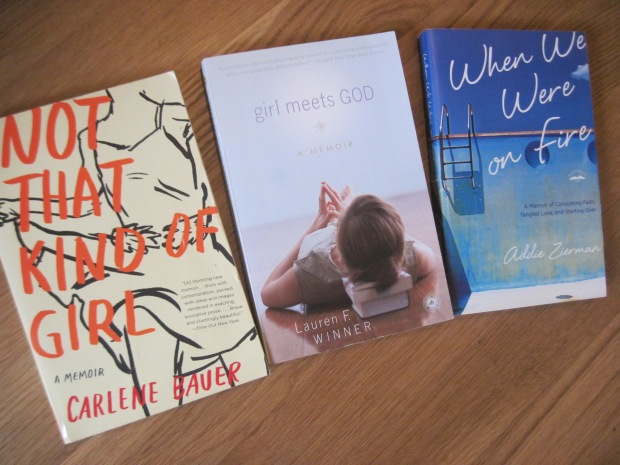
Most of the books below I read from the library or on Kindle/Nook, or have lent to others. These are the ones I happen to own in print.
Recommended from This Year’s Reading
 Everything Happens for a Reason, and Other Lies I’ve Loved by Kate Bowler: An assistant professor at Duke Divinity School, Bowler was fascinated by prosperity theology: the idea that God’s blessings reward righteous living and generous giving to the church. If she’d been tempted to set store by this notion, that certainty was permanently fractured when she was diagnosed with stage IV colon cancer in her mid-thirties. Bowler writes tenderly about suffering and surrender, and about living in the moment with her husband and son while being uncertain of the future, in a style reminiscent of Anne Lamott and Nina Riggs.
 The Most Beautiful Thing I’ve Seen: Opening Your Eyes to Wonder by Lisa Gungor: Like many Gungor listeners, Lisa grew up in, and soon outgrew, a fundamentalist Christian setting. She married Michael Gungor at the absurdly young age of 19 and they struggled with infertility and world events. When their second daughter was born with Down syndrome and required urgent heart surgery, it sparked further soul searching and a return to God, but this time within a much more open spirituality that encircles and values everyone – her gay neighbors, her disabled daughter; the ones society overlooks.
 In the Days of Rain: A Daughter, a Father, a Cult by Rebecca Stott: This is several things: a bereavement memoir that opens with Stott’s father succumbing to cancer and eliciting her promise to finish his languishing memoirs; a family memoir tracking generations in England, Scotland and Australia; and a story of faith and doubt, of the absolute certainty experienced inside the Exclusive Brethren (a sect that numbers 45,000 worldwide) and how that cracked until there was no choice but to leave. Stott grew up with an apocalyptic mindset. It wasn’t until she was a teenager that she learned to trust her intellect and admit doubts.
 Educated by Tara Westover: You might be tired of hearing about this book, but it really does deserve the hype. Westover’s is an incredible story of testing the limits of perseverance and sanity. After an off-grid, extremist Mormon upbringing in Idaho, hard work took her from almost complete ignorance to a Cambridge PhD. She writes with calm authority, channeling the style of the scriptures and history books that were formative in her upbringing and education. This is one of the most powerful and well-written memoirs I’ve ever read.
Recent Releases (all came out on Nov. 13th)
 A River Could Be a Tree by Angela Himsel: From rural Indiana and an apocalyptic Christian cult to New York City and Orthodox Judaism by way of studies in Jerusalem: Himsel has made quite the religious leap. She was one of 11 children and grew up in the Worldwide Church of God (reminiscent of the Exclusive Brethren from Stott’s book). Although leaving a cult is easy to understand, what happens next feels more like a random sequence of events than a conscious choice; maybe I needed some more climactic scenes.
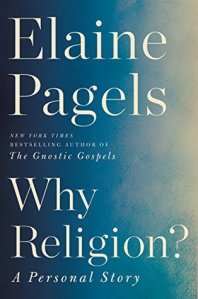 Why Religion? A Personal Story by Elaine Pagels: Pagels is a religion scholar known for her work on the Gnostic Gospels. As a teen she joined a friend’s youth group and answered the altar call at a Billy Graham rally. Although she didn’t stick with Evangelicalism, spirituality provided some comfort when her son died of pulmonary hypertension at age six and her physicist husband Heinz fell to his death on a hike in Colorado little more than a year later. She sees religion’s endurance as proof that it plays a necessary role in human life.
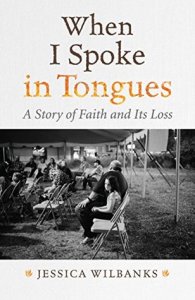 When I Spoke in Tongues: A Story of Faith and Its Loss by Jessica Wilbanks: Like me, Wilbanks grew up attending a Pentecostal-style church in southern Maryland. I recognized the emotional tumult of her trajectory – the lure of power and certainty; the threat of punishment and ostracism – as well as some of the specifics of her experience. Captivated by the story of Enoch Adeboye and his millions-strong Redemption Camps, she traveled to Nigeria to research the possible Yoruba roots of Pentecostalism in the summer of 2010.
Read Some Time Ago
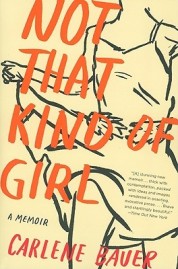 Not That Kind of Girl by Carlene Bauer: A bookish, introspective adolescent, Bauer was troubled by how fundamentalism denied the validity of secular art. All the same, Christian notions of purity and purpose stuck with her throughout her college days in Baltimore and then when she was trying to make it in publishing in New York City. Along the way she flirted with converting to Catholicism. What Bauer does best is to capture a fleeting mindset and its evolution into a broader way of thinking.
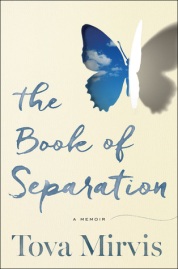 The Book of Separation by Tova Mirvis: In a graceful and painfully honest memoir, Mirvis goes back and forth in time to contrast the simplicity – but discontentment – of her early years of marriage with the disorientation she felt after divorcing her husband and leaving Orthodox Judaism. Anyone who has wrestled with faith or other people’s expectations will appreciate this story of finding the courage to be true to yourself.
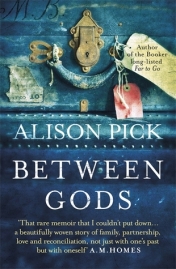 Between Gods by Alison Pick: At a time of transition – preparing for her wedding and finishing her first novel, set during her Holocaust – the author decided to convert to Judaism, the faith of her father’s Czech family. Ritual was her way into Judaism: she fasted for Yom Kippur and took her father to synagogue on the anniversary of her grandfather’s death, but also had the fun of getting ready for a Purim costume party.
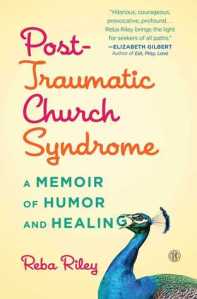 Post-Traumatic Church Syndrome: A Memoir of Humor and Healing by Reba Riley: Riley was a Pentecostal-leaning fundamentalist through high school, but turned her back on it in college. Yet she retained a strong spiritual compass that helped her tap into the energy of the “Godiverse.” She concocted the idea of experiencing 30 different religious traditions before she turned 30, and spent 2011–12 visiting a Hindu temple, a Buddhist meditation center, a mosque, a synagogue, a gathering of witches, and a range of Christian churches.
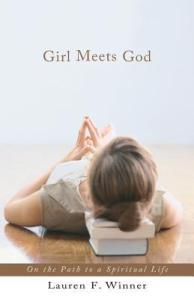 Girl Meets God: A Memoir by Lauren F. Winner: Some people just seem to have the religion gene. That’s definitely true of Winner, who was as enthusiastic an Orthodox Jew as she later was a Christian after the conversion that began in her college years. Like Anne Lamott, Winner draws on anecdotes from everyday life and very much portrays herself as a “bad Christian,” one who struggles with the basics like praying and finding a church community and is endlessly grateful for the grace that covers her shortcomings.
 When We Were on Fire by Addie Zierman: Zierman was a poster girl for Evangelicalism in her high school years. After attending Christian college, she and her husband spent a lonely year teaching English in Pinghu, China. Things got worse before they got better, but eventually she made her way out of depression through therapy, antidepressants and EMDR treatments, marriage counselling, a dog, a home of their own, and – despite the many ways she’d been hurt and let down by “Church People” over the years – a good-enough church.
Read but Not Reviewed
 Fleeing Fundamentalism by Carlene Cross
Leaving Church by Barbara Brown Taylor
On my TBR Stack
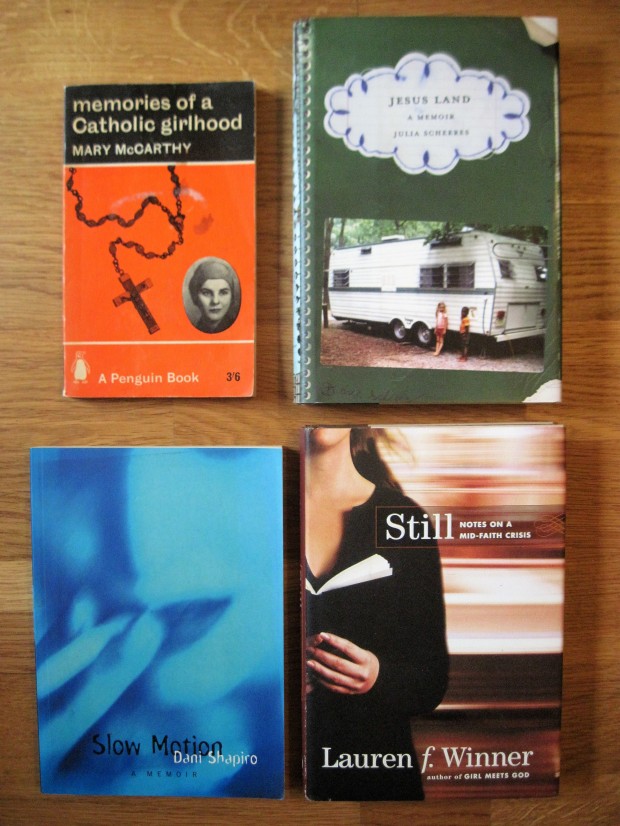
 Not pictured: (on Nook) Girl at the End of the World by Elizabeth Esther; (on Kindle) Shunned by Linda A. Curtis and Cut Me Loose by Leah Vincent. Also, I got a copy of Priestdaddy by Patricia Lockwood for my birthday, but I’m not clear to what extent it’s actually about her religious experiences.
 Bookish Beck = Rebecca Foster. American transplant to England. Freelance proofreader and book reviewer.
 Bookish Beck