Novellas in November Wrap-Up, with Mini-Reviews
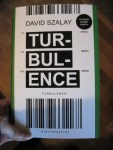 Novellas in November was a great success, helping me to finish more books in one month than I possibly ever have before. David Szalay’s Turbulence – a linked short story collection of tantalizing novella length – just arrived yesterday; I’ve started it but will be finishing it in December. The slim volume Fox 8 by George Saunders is also waiting for me at the library and I should be able to read it soon.
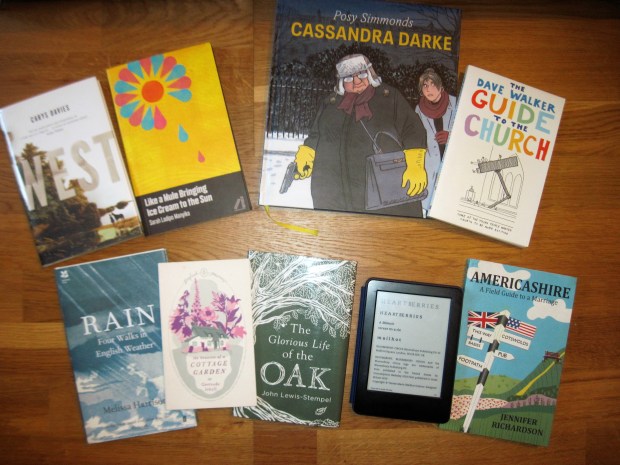
For this final installment I have 10 small books to feed back on: a mixture of fiction, graphic novels, nature books and memoirs.
Fiction:
West by Carys Davies (2018)
[149 pages]
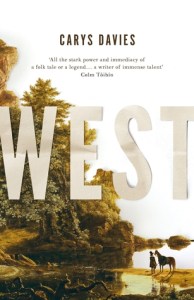 A gritty piece of historical fiction about a widowed mule breeder, Cyrus Bellman, who sets out from Pennsylvania to find traces of the giant creatures whose bones he hears have been discovered in Kentucky. He leaves his 10-year-old daughter, Bess, in the care of his sister, knowing he’ll be gone at least two years and may never return. Chapters cut between Cy’s harrowing journey in the company of a Native American guide, Old Woman From A Distance, and Bess’s home life, threatened by the unwanted attentions of their ranch hand neighbor and the town librarian. I don’t usually mind dark stories, but this was so bleak that I found it pretty unpleasant. The deus ex machina ending saved it somewhat.
Like a Mule Bringing Ice Cream to the Sun by Sarah Ladipo Manyika (2016)
[118 pages]
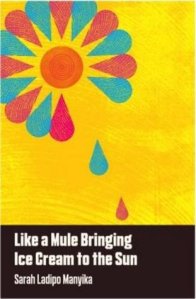 Morayo Da Silva is an unlikely heroine: soon to turn 75, she’s a former English professor from Nigeria who hopped between countries with her ambassador husband but now lives alone in San Francisco. The first-person narration switches around to give the perspectives of peripheral figures like a shopkeeper, a homeless woman, and Sunshine, the young friend who helps Morayo get her affairs in order after she has a fall and goes into a care home temporarily. These shifts in point of view can be abrupt, even mid-chapter, and are a little confusing. However, Morayo is a wonderful character, inspiring in her determination to live flamboyantly. I also sympathized with her love of books. I would happily have read twice as many pages about her adventures.
Graphic Novels:
Cassandra Darke by Posy Simmonds (2018)
[94 pages]
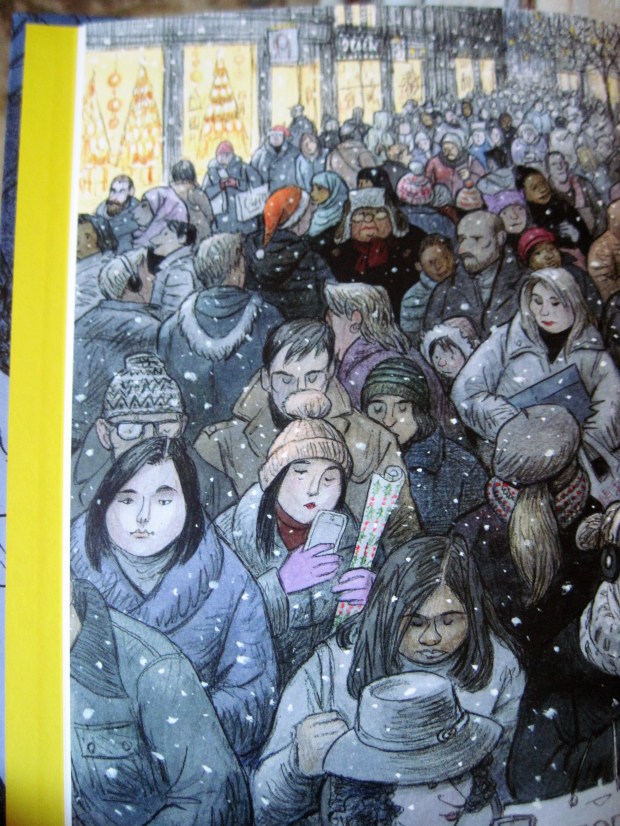
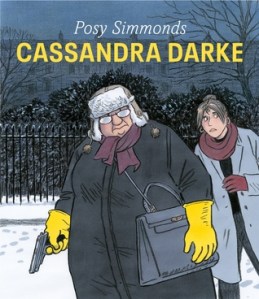 Simmonds would be great for graphic novel newbies: she writes proper, full-length stories, often loosely based on a classic plot, with lots of narration and dialogue alongside the pictures. Cassandra Darke is a 71-year-old art dealer who’s laid low by fraud allegations and then blindsided by a case of mistaken identity that brings her into contact with a couple of criminal rings. To start with she’s a Scrooge-like curmudgeon who doesn’t understand the big fuss about Christmas, but she gradually grows compassionate, especially after her own brief brush with poverty. Luckily, Simmonds doesn’t overdo the Christmas Carol comparisons. Much of the book is in appropriately somber colors, with occasional brightness, including the yellow endpapers and built-in bookmark.
The Dave Walker Guide to the Church by Dave Walker (2006)
[88 pages]
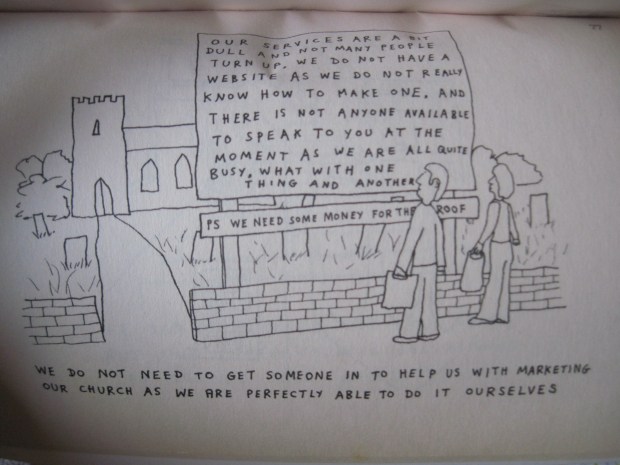
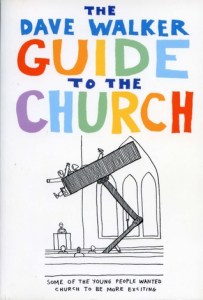 Most of these comics originally appeared in the Church Times, the official newspaper of the Church of England. No doubt you’ll get the most out of it if you’re familiar with Anglican churches or the like (Episcopalian or even Roman Catholic). My mother-in-law is a C of E vicar and we’ve attended a High Anglican church for the last two years, so I got many a good snort out of the book. Walker pokes fun at bureaucracy, silly traditions, closed-mindedness, and the oddities of church buildings and parishioners’ habits. My favorite spreads compare choirs and music groups on criteria like “ability to process in” and liken different church members to chess pieces to explain church politics.
Nature Books:
Rain: Four Walks in English Weather by Melissa Harrison (2016)
[100 pages]
 In the course of a year Harrison took four rainy walks, in different seasons and different parts of England. She intersperses her observations with facts and legends about the rain, quotes from historical weather guides and poems. It has the occasional nice line, but is overall an understated nature/travel book. A noteworthy moment is when she remembers scattering her mother’s ashes on a Dartmoor tor. I most liked the argument that it’s important to not just go out in good weather, but to adapt to nature in all its moods: “I can choose now to overcome the impulse for comfort and convenience that insulates us not only from the bad in life but from much of the good. I think we need the weather, in all its forms, to feel fully human.”
The Beauties of a Cottage Garden by Gertrude Jekyll (2009)
[88 pages]
 This mini-volume from Penguin’s English Journeys series feels like a bit of a cheat because it’s extracted from Wood and Garden (1899). Oh well. In short chapters Jekyll praises the variety of colors, smells and designs you’ll find in the average country garden, no matter how modest its size. She speaks of gardening as a lifelong learning process, humbly acknowledging that she’s no expert. “I hold that the best purpose of a garden is to give delight and to give refreshment of mind, to soothe, to refine, and to lift up the heart in a spirit of praise and thankfulness. … a garden is a grand teacher. It teaches patience and careful watchfulness; it teaches industry and thrift; above all, it teaches entire trust.”
The Glorious Life of the Oak by John Lewis-Stempel (2018)
[87 pages]
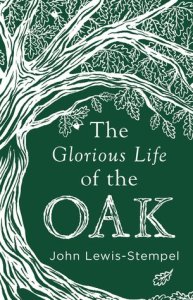
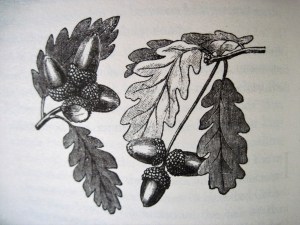 I didn’t enjoy this as much as the other Lewis-Stempel book I read this month, The Secret Life of the Owl. There’s a lot here about the role the oak has played in British history, such as in warships and cathedral roofs. Other topics are the oak’s appearance and function in different seasons, the use of acorns and oak leaves in cooking, and the myths and legends associated with the trees. I felt there was too much minimally relevant material added in to make up the page count, such as a list of Britain’s famous named oaks and long poems from the likes of John Clare and William Cowper. While Lewis-Stempel always has a piercing eye, I wonder if he shouldn’t be saving up his energies to write more substantial books.
General Nonfiction / Memoirs:
My Year by Roald Dahl (1993)
[64 pages]
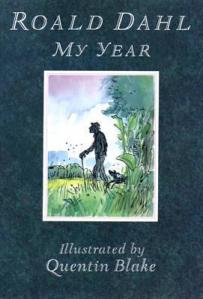 I spotted a copy in our Stamford Airbnb bedroom and read it over our two nights there. These short month-by-month essays were composed in the last year of Dahl’s life. Writing with children in mind, he remarks on what schoolkids will experience, whether a vacation or a holiday like Guy Fawkes night. But mostly he’s led by the seasons: the birds, trees and other natural phenomena he observed year after year from his home in Buckinghamshire. Dahl points out that he never lived in a city, so he chose to mark the passing of time chiefly by changes in the countryside. This is only really for diehard fans, but it’s a nice little book to have at the bedside. (Illustrated, as always, with whimsical Quentin Blake sketches.)
Heart Berries by Terese Marie Mailhot (2018)
[178 pages]
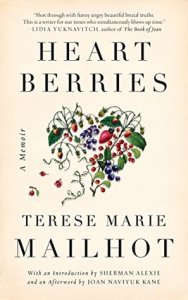 Mailhot was raised on a First Nation reservation on an island off of British Columbia. She is wary of equating her family with Native stereotypes, but there’s no denying that her father was a drunk and ended up murdered. After a childhood of abuse and foster homes, Mailhot committed herself to a mental hospital for PTSD, bipolar II and an eating disorder. It was there that she started writing her story. Much of the book is addressed in the second person to her partner, who helped her move past a broken marriage and the loss of her older son to his father’s custody. Though I highlighted lots of aphoristic pronouncements, I had trouble connecting with the book as a whole: the way imprecise scenes blend into each other makes it hard to find a story line in the murk of miserable circumstances. A more accurate title would have been “Indian Condition” or “Indian Sick” (both used as chapter titles).
Americashire: A Field Guide to a Marriage by Jennifer Richardson (2013)
[151 pages]
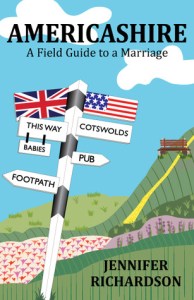 A memoir by an American woman married to a Brit and adjusting to English village life was always going to appeal to me. If you approach this as a set of comic essays on the annual rituals of rich toffs (summer fairs, auctions, horse racing, a hunt ball, a cattle market, etc.), it’s enjoyable enough. It’s when Richardson tries to be more serious, discussing her husband’s depression, their uncertainty over having children, and her possible MS, that the book falters. You can tell her editors kept badgering her to give the book a hook, and decided the maybe-baby theme was strongest. But I never sensed any real wrestling with the question. Not a bad book, but it lacks a clear enough idea of what it wants to be.
Total number of novellas read this month: 26
[not reviewed: In the Space between Moments: Finding Joy and Meaning in Medicine by Pranay Sinha –  ]
]
A few that didn’t take: The Optician of Lampedusa by Emma Jane Kirby, The Mussel Feast by Birgit Vanderbeke, Sea of Ink by Richard Weihe
 My overall favorite: The Gifts of the Body by Rebecca Brown
Runners-up: Surfacing by Margaret Atwood, How to See Nature by Paul Evans, Bodies of Water by V. H. Leslie, and Ghost Wall by Sarah Moss
The ones that got away from me:
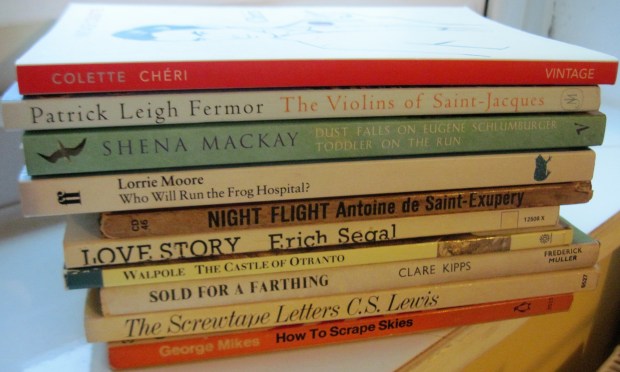
There’s always next year!
What’s the best novella you’ve read recently? Do you like the sound of any of the ones I read?
Margaret Atwood Reading Month: Surfacing and The Edible Woman
For the Margaret Atwood Reading Month hosted by Marcie and Naomi, I read her first two novels – though I didn’t realize they were so at the time, and read them in reverse order. These were my 18th and 19th Atwood books overall, and my 11th and 12th of her novels. It was particularly interesting to see the germ of her frequent themes in these early works.
Surfacing (1972)
(At 186 pages, this just about fit into Novellas for November too!) A young Canadian woman has returned to her French-speaking hometown, ostensibly to search for her missing father but really to search for herself. She’s an illustrator at work on a collection of Quebec folk tales, and in her past are a husband and child that she left behind. With her at her father’s lakeside cabin are her boyfriend Joe, whom she’s not sure she loves, and their friends David and Anna, a married couple whose dynamic is rather disturbing – David is always making demeaning sexualized jokes about Anna, who is afraid for him to see her without makeup on.
 This is a drifting, dreamy sort of book whose gorgeous nature writing (“Above the trees streaky mackerel clouds are spreading in over the sky, paint on a wet page; no wind at lake level, soft feel of the air before rain”) inures you to various threats. You’re never sure just how serious they’ll turn out to be. Will the men’s attitude to women spill over into outright assault? Will there be some big blowup with the resented Americans who are monopolizing the lake? (“We used to think they were harmless and funny and inept and faintly lovable, like President Eisenhower.”)
Meanwhile, the question of her father’s whereabouts becomes less and less important as the book goes on. The narrator seems to have closed herself off to emotion, but all that’s repressed returns dramatically in the final 20 pages (“From any rational point of view I am absurd; but there are no longer any rational points of view.”).
I suspect there may be a fair bit I missed; the book would probably benefit from future re-readings and even some exploration of secondary sources to think about all that’s going on. It’s maybe not as accessible and plot-heavy as much of Atwood’s later work, but I found it to be an intriguing and rewarding read, and it still feels timely more than four decades later.
The Edible Woman (1969)
Marian McAlpin works for Seymour Surveys, administering questionnaires about rice pudding and a new brand of beer. She shares an apartment with Ainsley, who tests electric toothbrushes, in the home of a harridan of a landlady who monitors their every move. Marian is happy enough with her boyfriend Peter and gradually drifts into an engagement – but she can’t stop thinking about Duncan, an apathetic graduate student whom she met during her survey rounds and ran into again at the laundromat. Duncan represents a sort of strings-free relationship that contrasts with the traditional marriage she’d have with Peter. Her challenge is to overcome the inertia of convention and decide what she really wants from her life.
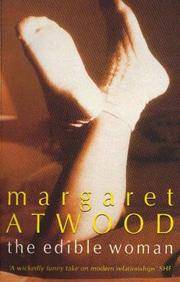 Part Two’s shift from first person to third person is a signal that Marian is dissociating from her situation. She recoils from food and pregnancy – two facts of bodily life that the book’s characters embrace greedily or turn from in horror. Gradually Marian eliminates more and more foods from her diet, starting with meat. And while Ainsley concocts a devious plan to get pregnant by Marian’s friend Len, Marian keeps in mind the cautionary tale of her college friend Clara, whose three monstrous children are always peeing on people or going off to poop in corners. Marian perceives Clara as having given up her mind in favor of her womb.
It’s unclear whether we’re meant to see Marian’s experience as a temporary eating disorder or a physical manifestation of endangered femininity. Now that veganism is mainstream, it sounds dated to hear her lamenting, “I’m turning into a vegetarian, one of those cranks; I’ll have to start eating lunch at Health Bars.” In any case, you can spot themes that will recur in Atwood’s later work, like the threat of the male gaze (Surfacing), the perception of the female body (Lady Oracle), manipulation of pregnancy (The Handmaid’s Tale) and so on. I can’t say I particularly enjoyed this novel, but I liked the food metaphors and laughed at the over-the-top language about babies.
Have you read any of Margaret Atwood’s books recently?
November Reading Plans: Novellas, Margaret Atwood and More
This is my third year joining Laura Frey and others in reading novellas in November. Laura has put together a history of the challenge here; it has had various incarnations but has no particular host or rules. Join us if you like! (#NovNov) The definition of a novella seems to be loose – it’s based more on word count than page count – so it’s up to you what you’d like to classify as one. I generally limit myself to books of 150 pages or fewer, though in some cases I’d probably go as high as 180-some. I’ve trawled my shelves and library pile and have four stacks to select from: fiction, classics, novella-length nonfiction, and slightly longer novels (160–190 pages) that I’ll keep around as backups but likely won’t get to.


Between what I have in these stacks, holds I’m waiting on at the library (West by Carys Davies, The Glorious Life of the Oak by John Lewis-Stempel and Holloway by Robert Macfarlane), and some additional choices on my e-readers (Lady into Fox by David Garnett, Heart Berries by Terese Marie Mailhot and Childhood: Two Novellas by Gerard Reve), I easily have enough for a book a day. In a future year maybe I’d be able to clear my schedule such that I could indeed read one novella per day, but I have so many review books on the go that I won’t aim for that. Besides, I’m not the kind of reader who’d sit down and read a 160-page book in one sitting; I’d be more likely to read 20 pages each in eight different books.
This is the pile I’ll be starting later today. (The Evans looks long but is 164 pages of text with various full- and half-page black-and-white illustrations dotted through.)
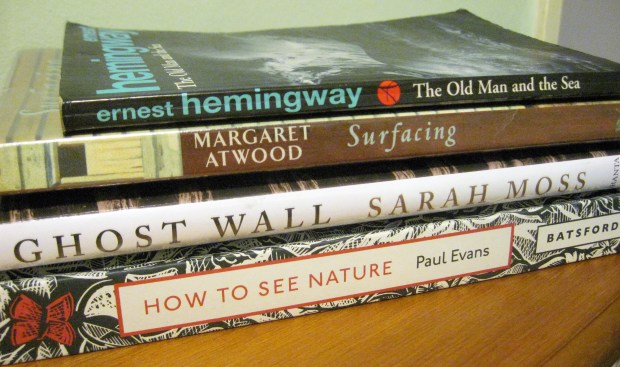
I got a headstart on Novellas in November with this Canongate volume published today.
Courage Calls to Courage Everywhere by Jeanette Winterson
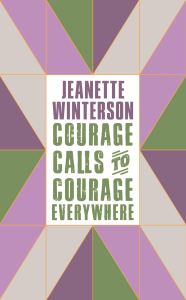 Last year it was Mary Beard’s Women and Power; in 2018 this is the Christmas gift to slip into every feminist book-lover’s stocking. Adapted from Winterson’s Richard Dimbleby Lecture and supplemented by the text of Emmeline Pankhurst’s 1913 speech “Freedom or Death,” this is a slim, attractive volume that feels timely if insubstantial. Winterson gives a potted history of suffragism and argues that female brains are not wired differently; it’s just social programming that tells us so. Gender imbalances in university admissions and the job market continued into the 1970s, so it’s no surprise, she says, that women are still catching up 40 years later – and she supports measures that could be labeled as positive discrimination.
From the #MeToo movement she makes what seems like an odd swerve into discussing AI because computer science/Silicon Valley is very male-dominated and she wants to be sure women have a respected role in the future. My reaction to this was the same as to Beard’s book and Chimamanda Ngozi Adichie’s We Should All Be Feminists: you can’t (and I don’t) dispute what the author has to say; for the most part the points are compelling and well made. Yet I don’t necessarily feel that I learned anything, or saw something familiar in a new way.
Favorite lines:
“When prejudice and bad science are no longer in the way, women always prove themselves as capable as men.”
“that’s how it is with patriarchy – we don’t notice the all-male panels, the movies where women are just the love interest, the number of male presenters on TV and radio […] and we do need parity, because women are one half of the population.”
My rating:
Other November reading plans…
 Margaret Atwood Reading Month
One of my longer novellas is a library copy of Surfacing (1972), which will be my first of two reads for the Margaret Atwood Reading Month hosted by Marcie and Naomi. I also own a copy of The Edible Woman (1969) and look forward to trying both of these early works.
Young Writer of the Year Award
Being involved with the Sunday Times/PFD Young Writer of the Year Award was one of my highlights of 2017. I’m excited for this year’s shadow panelists, several of whom are longtime blogging friends, and look forward to following along with the shortlist reads even though I can’t attend this year’s events. With any luck I will already have read at least one or two of the nominees (fingers crossed for Daisy Johnson and Fiona Mozley) so that there’s only a couple more to discover.
John Leonard Prize committee
In May I joined the National Book Critics Circle. One of the awards they give annually is the John Leonard Prize for the best first book in any genre. The pool of nominees is based on member recommendations, and a volunteer panel of members (as many as are interested!) then reads the 5–7 finalists and votes for a winner by January 8th. I signed up to be on the panel, so I’m committed to reading all the finalists in e-book format within about six weeks. Again, I hope to find that I’ve already read at least a few of the nominees. Regardless, it will be a fun project to keep me busy over our two weeks in America for the holidays.

Any reading plans for November? Will you be joining in with novellas or Margaret Atwood’s books?
35 Years, 35 Favorite Books
I love book lists: ticking off what I’ve read from newspaper and website selections, comparing my “best-of” choices and prize predictions with other people’s, and making up my own thematic inventories. Earlier in the year I spotted Desert Island-style 100-book lists on Annabookbel and A life in books, as well as Lonesome Reader’s reconsideration of the 100 favorite books he’d chosen half a lifetime ago. For my 35th birthday today, I’ve looked back at my “Absolute Favorites” shelf on Goodreads and picked the 35 titles that stand out the most for me: some are childhood favorites, some are books that changed my thinking, some I have read two or three times (an extreme rarity for me), and some are recent discoveries that have quickly become personal classics. I’ve listed these in rough chronological order of when I first read them, rather than ranking them, which would be nigh on impossible! Perhaps I’ll revisit the list on future significant birthdays and see how things change. Interesting to note that this works out as about two-thirds fiction and one-third nonfiction.
~
- Miss Rumphius by Barbara Cooney
- The Silver Chair by C.S. Lewis
- Watership Down by Richard Adams
- Anne of Green Gables by L.M. Montgomery
- David Copperfield by Charles Dickens
 The Scarlet Letter by Nathaniel Hawthorne
- Far from the Madding Crowd by Thomas Hardy
- Jane Eyre by Charlotte Brontë
- A Portrait of the Artist as a Young Man by James Joyce
- Possession by A.S. Byatt
- Flaubert’s Parrot by Julian Barnes
- Sixpence House by Paul Collins
 A History of God by Karen Armstrong
- Conundrum by Jan Morris
- The Heart of Christianity by Marcus Borg
- The Blind Assassin by Margaret Atwood
- My Family and Other Animals by Gerald Durrell
- On Beauty by Zadie Smith
- Heaven’s Coast by Mark Doty
 Secrets in the Dark by Frederick Buechner
- A Prayer for Owen Meany by John Irving
- American Wife by Curtis Sittenfeld
- Middlesex by Jeffrey Eugenides
- Caribou Island by David Vann
- To Travel Hopefully by Christopher Rush
- We, the Drowned by Carsten Jensen
 The Emperor of All Maladies by Siddhartha Mukherjee
- Leaving Alexandria by Richard Holloway
- An Exact Replica of a Figment of My Imagination by Elizabeth McCracken
- A Tale for the Time Being by Ruth Ozeki
- Want Not by Jonathan Miles
- Journal of a Solitude by May Sarton
- F by Daniel Kehlmann
 Dinner at the Homesick Restaurant by Anne Tyler
- March by Geraldine Brooks
Are any of these among your favorites, too?
2017 Fiction Picks from Rosemary & Reading Glasses
I asked Carolyn Oliver of Rosemary & Reading Glasses for her top fiction picks from 2017 and she came up with this list of 13 cracking recommendations. I doubt you’ll be able to resist adding at least one of these to your TBR.
Best 2017 Fiction: A Baker’s Dozen
These were my favorite works of fiction published (in the United States) in 2017, listed in the order I read them. One caveat: as I write this, there are 22 days left in 2017, so I may find another favorite; there are some heavy hitters (Jesmyn Ward’s Sing, Unburied, Sing comes to mind) that haven’t found their way to my nightstand yet.
 Human Acts, Han Kang: I admit, this book, which traces the human costs of the brutally repressed Gwanju Uprising, is difficult to read. Worth the effort, though, for its urgent questions about the nature of humanity.
 Pachinko, Min Jin Lee: A twentieth-century family saga about Korean immigrants in Japan. Expansive and richly textured.
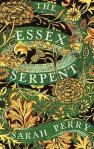 The Essex Serpent, Sarah Perry: A recently widowed natural historian and a village curate spar over rumors of a returned prehistoric serpent. Sumptuous.
 Lincoln in the Bardo, George Saunders: The resident ghosts look on with consternation as Abraham Lincoln visits their cemetery to mourn over the body of his son, Willie. Polyphonic; extraordinarily moving.
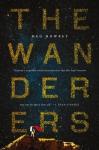 The Wanderers, Meg Howrey: Three astronauts undertake a long-term simulation of a mission to Mars, leaving their loved ones behind. Wonderful literary sci-fi, absorbing in its physical and psychological detail.
 Exit West, Mohsin Hamid: Two young lovers become part of a global migration through mysterious doors that connect locations all over the world. Intimate and tender.
 My Darling Detective, Howard Norman: A tale of family secrets set in 1970s Halifax, featuring plainspoken people and delightful use of radio drama. From my review: “noir with a spring in its step and a lilt in its voice.”
 Days Without End, Sebastian Barry: Irish immigrant Thomas McNulty chronicles his survival in the American West (and the Civil War) and his love for fellow soldier John Cole. Fearsomely beautiful.
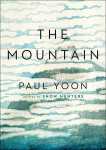 The Mountain, Paul Yoon: Six exquisite short stories, set in different locations over the past 100 years, from a master of the form.
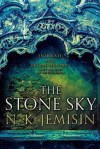 The Stone Sky, N. K. Jemisin: The blistering final book in Ms. Jemisin’s stunning Broken Earth trilogy (must be read in order, so start with The Fifth Season if you’re new to the series). Superb speculative fiction.
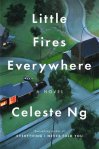 Little Fires Everywhere, Celeste Ng: The complexities of race, class, and motherhood swirl in a Cleveland suburb (my hometown) in this deft, compassionate novel.
 Her Body and Other Parties, Carmen Maria Machado: Short stories grounded in the body but shot through with elements of horror and fantasy. Won’t take it easy on you, but you won’t want to stop reading, either. Brilliant.
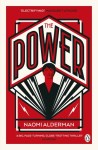 The Power, Naomi Alderman: Women harness a power within themselves that turns the tables on men. Atwoodian dystopia at its finest.
A huge thank-you to Carolyn for this guest blog!
Which one of her picks do you want to read first?
Review and Q&A: Unruly Creatures by Jennifer Caloyeras
The 11 stories in Jennifer Caloyeras’ new collection, Unruly Creatures (released on October 3rd by West Virginia University Press), feature characters who find themselves in extreme situations and/or are let down by their bodies. Often, their tentative steps outside their own problematic situations involve making unexpected connections with the animal world: a neglected boy learns from a taxidermist, a trainer at the Institute for Privileged Primates is surprised by the depth of her feelings for one of the gorillas in her care, a woman who has just had a double mastectomy empathizes with a cow stuck in the crater left by a crashed meteor, and two teens realize they can only bond with their father when in animal costumes.
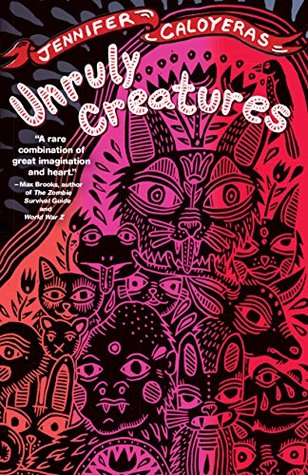 I appreciated the variety of forms and voices here. One story set in a dystopian future has an epistolary element, including letters and memos; two others use second-person or first-person plural narration, respectively. There’s also a lot to think about in terms of gender. For instance, one protagonist frets about out-of-control pubic hair, while another finds it difficult to maintain her trans identity on a male prison ward. “A Real Live Baby” was a stand-out for me. Its title is a tease, though, because Chloe is doing the Egg Baby project in school and ‘babysits’ for her delusional neighbor, who keeps a doll in a stroller. The conflation of dolls and babies is also an element in recent stories by Camilla Grudova and Lesley Nneka Arimah – proof, if we needed it, that modern motherhood is both an enigma and a work in progress.
I’d recommend this story collection to readers of Margaret Atwood and Karen Joy Fowler – and to book clubs. You certainly won’t run out of things to discuss!
My rating:
Jennifer kindly offered to take part in a Q&A over e-mail. We talked about eco-lit, fairy tales gone wild, and how writing and marketing short stories is different from novels.
Animals take on a variety of roles in these stories: research subjects, art projects, friends. Are you an animal lover? Or was that linking theme incidental? And what did you hope to convey about the ways the human and animal worlds intersect?
I am an animal lover. I always have been. When I was younger I really wanted to be a marine biologist. I couldn’t quite get around the math. Then for a while, I thought, animal psychologist. I’ve always been obsessed with animals and animal behavior and the ways in which humans are constantly distancing themselves from animals and their behavior. We have a bit of an unfair superiority complex when it comes to the animal world. I ended up going down an entirely different path (musician and singer) before applying to graduate school for a MA in English and then a MFA in creative writing.

Jennifer with her dogs. Photo by Gene Fama.
But to get back to your question, I didn’t set out to write a collection of linked animal stories; that ended up happening organically. I like to use animals as a mirror or lens through which we see ourselves: sometimes at our worst, most instinctive behavior – sometimes at our best. I think an apt metaphor is that of child staring at an animal at a cage in the zoo, internalizing the thought, “I am nothing like that animal. I am everything like that animal.”
Sometimes the humans are the truly unruly creatures – thinking especially of the obnoxious plane passenger in “Airborne” and Ernest, the persnickety postman in “Big Brother.” How does placing them alongside animal characters point up their flaws?
I am a huge fan of unlikable and unreliable narrators. And I think the short story genre lends itself to utilizing these types of narrators, because you don’t have to sustain this for the duration of an entire novel. In “Big Brother”, the reader aligns with everyone else in the story, not the protagonist. Ernest can’t get over the fact that Les, his co-worker, could have such a bond with a parrot, when Ernest has such a difficult time connecting with anyone, yet in the same story, Ernest’s earnest love for his dog is apparent. He has the key to connecting with people, he just doesn’t have the means to put this knowledge to use.
“H2O” imagines a future extreme drought situation in which only the elite can afford fresh water. Does this feel like a plausible scenario, especially where you live in California?
Oh, the water situation is really scary. I don’t think we’re far off from the scenario presented in this story. It’s always absurd to me when we hear about drought conditions and yet, here I am, driving by a huge verdant golf course. And the access for the wealthy in this particular story resonates in terms of access in general in a capitalistic society. In the story, which is a sort of eco-lit satire (I think I just made up that genre), water is the most coveted commodity, yet it’s marketed differently depending on economic status. Living in Los Angeles, there seems to be a production value to everything here, so I wanted to add that twist in the story – the commercialism of a commodity – how it would be talked about on a production set. How to do the perfect “hard sell” when it comes to water.
I especially love the fairy tale-gone-wild mood of “Unruly”: Caroline loathes the Rapunzel-like abundance of her pubic hair, and instead of a glass slipper we get glass shards in Tom’s arm. How does twisting a fairy tale play with readers’ expectations for a story?
I’ve always been obsessed with fairy tales. My second young adult novel, Strays, has a whole component where a high school English teacher introduces 16-year-old Iris, the protagonist, to Angela Carter’s The Bloody Chamber (if you’re a fairy tale fan, you have to read this one!), which is a feminist reinterpretation of fairy tales. I love how familiar all the fairy tale tropes are. I love the use of magical realism in fairy tales and I love the idea of playing with a familiar and predictable story and undercutting the reader’s expectations. To that end, I recently read (and loved) A. Igoni Barrett’s Blackass – which was a retelling of Kafka’s Metamorphosis. But instead of waking up as a cockroach, in this version – a black man in Lagos wakes up as a white man, afforded all of the benefits of white privilege. As a reader you’re thinking, “I know the story, but I don’t know this story.”
The story “Stuffed” was also inspired loosely by the fairy tale of Hansel and Gretel. The witch in the woods is replaced by a taxidermist (who is not evil) and instead, things with the child go dark pretty quickly.
Occasionally ersatz creatures are on display: doll babies, taxidermied animals, or animal costumes. What are we to make of that gulf between the real thing and the false one on display?
Surrogates are some of my favorite things to explore! I took a deep dive into the world of taxidermy while doing research for “Stuffed”. I really couldn’t get enough. I remember as a child getting lost for hours in the Hall of Mammals at the Natural History Museum in Los Angeles. I think, for me, it’s the idea of creating something to replace something, but the replacement is complete artifice. In terms of taxidermy, essentially, you are replacing death or recreating death to imitate life. A real dead animal is ugly, sunken, decayed. But we have these artists who take death, stuff it with synthetic material, replace eyeballs with beads and you have a recreation of an animal that sometimes looks better off than a live version of that animal. A lot of what is explored in these stories is a stripping down to raw human behavior. People hide behind the masks and costumes and artifice, but placed in certain situations, their animal instincts will always emerge.
[See also my review of the taxidermy-themed English Animals by Laura Kaye.]
Can you remember what the seed was for some of these stories? A particular line, scene, image, or character? Do you start writing a story with a title in mind, or does the title usually suggest itself later on?
Titles always come last for me. Always. I can’t name a thing until I know what that thing is. Writing is such a process and oftentimes I won’t end up where I think I’m going when I’m writing a story. They always surprise me. “Unruly” (the story of the pubic-haired Rapunzel) came directly out of this vivid dream I had when I was pregnant with my first child. I dreamed that I was naked with long flowing hair everywhere and a squirrel came out of a tree, nipped off a chunk of my hair and ran back to her nest and wove the hair into the nest. I remember waking up hysterically laughing. In hindsight it was such an obvious fertility dream; for the sake of the story, I made it a representation of coming-of-age/adolescence – a time where one’s body feels out of control, but I took it to the next level.
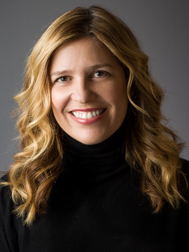
Photo by Gene Fama.
“The Sound of an Infinite Gesture” came directly from Koko the signing gorilla. It’s amazing that a gorilla can use sign language and communicate, but there was also something odd about people putting these very human ideas on a gorilla (remember they got her a pet kitten? And now I see they have her signing PSAs to save the environment?), so I started ruminating on what if we took this idea further – the gorilla communicates so well with her trainer that they begin to develop intimate feelings for one another.
Stories will often come out of an article I read (how leeches are being used in modern medicine led to “Bloodletting”) or from a friend, “Hey, did you know that people go to furry parties where they dress up in costumes and hug one another?” which led to “Plush” and I start playing around with what that might look like. It’s a lot of imaginative play involved. That’s my favorite part of writing – that dreamy time before I actually sit down to type – when it’s all just floating around my head and I’m trying to make a movie of it in my mind.
You’ve previously written YA novels. How different was the experience of writing these short stories? Do you see this work finding a dissimilar audience?
Writing a short fiction collection is not for the faint of heart. I was actually shocked at how slim the collection looked when it arrived in the mail. I kept thinking, “but I did all that work!” Each story, in a way, is treated like a novel. And I’m not talking just about the structure from beginning to end. Every word in a short story is precious; you have to economize. And, in order to get momentum for the collection, you want to publish stories from the collection in literary journals, which takes the same amount of energy and query letters that sending out your novel to an agent or publisher takes!
The audience for this book is completely different than the 13–17 demographic of the two other books. I have had a few people say, “Oh I bought your latest book for my child” and I’m quick to say, “it’s not for kids!” But read at your own risk.
Who are some of your favorite writers? Who has inspired your prose style or your story strategies?
I have so many favorite writers! And I read across all genres. It’s hard to say exactly who has influenced my work, but I will share my favorites! I love Lorrie Moore’s Birds of America. I think she is the best at synthesizing humor and pathos in the same space. I strive to do this in my stories. Pastoralia by George Saunders is another favorite collection. He is a master storyteller, satirist, humorist and his stories bring me to my knees from emotion in unexpected ways. I love Aimee Bender’s use of magical realism. I recently read Ottessa Moshfegh’s Homesick for Another World and loved it! There are so many amazing and varied voices when it comes to contemporary short fiction! The faculty member I worked closely with at the University of British Columbia when I was working on my MFA in creative writing was the Giller-nominated writer, Zsuzsi Gartner. In addition to being an incredible writer herself, she opened up the world of endless possibilities in short fiction, which was incredibly liberating.
What are you working on next?
Last year, I was selected as the writer-in-residence at the Annenberg in Santa Monica and I began working on a contemporary novel about expectations and parenthood. I’m still working on it and hope to be finished by the beginning of the new year. (Now that it’s in writing, maybe I will be further motivated!) I was pretty sure that I was done with short fiction for a while, but then ideas started coming to me again, so it’s my job to listen.
I also teach writing at UCLA Extension’s Writers’ Program. I will be teaching a new course, “Writing the Young Adult Novel”, in the winter and my usual “Intro to Short Fiction” in the spring. The classes are online, so if any of your readers are interested, sign up!
I spend a good amount of my time editing and helping to develop manuscripts and stories for clients. So it’s a nice balance between writing, editing and teaching.
My father, screenwriter Ron Clark, and I are toying with starting a podcast. Stay tuned!
Other places to reach Jennifer on social media:
Facebook Author Page: Jennifer Caloyeras
Twitter: @Jencaloyeras
Instagram: JenniferCaloyeras
The Booker Dark Horse: Elmet by Fiona Mozley
The dark horse in this year’s Man Booker Prize race is Elmet, a brilliant, twisted fable about the clash of the land-owning and serf classes in contemporary England. I’d love to see this win the Booker, or make the shortlist at the very least. You’d hardly believe it’s a debut novel, or that it’s by a 29-year-old PhD candidate in medieval history. The epigraph from Ted Hughes defines “Elmet” as an ancient Celtic kingdom encompassing what is now West Yorkshire. The word still appears in a few Yorkshire place names today. Metaphorically, Hughes notes, the region was a “‘badlands’, a sanctuary for refugees from the law.” That’s an apt setting for Mozley’s central characters: a family living on the edge of poverty and respectability – off-grid and not quite legal.
 Daniel and Cathy Oliver – 14 and 15, respectively – live with their father, John Smythe, in a simple house he built with his own hands in a copse. They mostly eat whatever they can hunt. Daddy is a renowned pugilist not above beating people up when they owe his friends money. Feisty Cathy is bullied by boys at school; when teachers don’t believe her, she has no choice but to hit back. There’s a strong us-against-the-world ethos to the novel, but underneath that defensiveness there’s a sense of unease: Daniel, the narrator, isn’t a fighter like his father and sister. He’s a sensitive soul who’s happiest cooking and playing with his dogs.
Like the reader, Daniel watches in grim fascination as Mr. Price, a powerful local landlord, starts issuing threats. Price warns Daddy that his family is trespassing. If they don’t leave he’ll make life difficult for them. A group of tenants, many of them just out of prison and barely getting by, bands together to take revenge on Price, planning to withhold rent and farm labor until conditions improve. No longer will they accept £20 payments for 10-hour work days. At first it seems their fight for rights might be successful, but Price and his goons retrench. Things come to a head when Price promises to sign their plot of land over to Daniel – if Daddy agrees to call off the strike and fight one last climactic match in the woods.
The final 70 pages of Elmet blew me away: a crescendo of fateful violence that reaches Shakespearean proportions. This knocks all those Hogarth remakes (which generally, with the exception of Hag-Seed, adhere too slavishly to the plots and so fail to channel the spirit) into a cocked hat. Though oddly similar to two other novels on the Booker longlist that unearth disturbing doings in a superficially pastoral England – Reservoir 13 by Jon McGregor and Autumn by Ali Smith – Elmet achieves the better balance between lush nature writing and Hardyesque pessimism. Mozley’s countryside is no idyll but a fallen edgeland:
And if the hare was made of myths then so too was the land at which she scratched. Now pocked with clutches of trees, once the whole county had been woodland and the ghosts of the ancient forest could be marked when the wind blew. The soil was alive with ruptured stories that cascaded and rotted then found form once more and pushed up through the undergrowth and back into our lives.
The characters usually speak in Yorkshire dialect, but where many authors would render the definite article as “t’,” Mozley simply elides it. For instance, here’s John shaking his head over the injustice of land ownership:
It’s idea a person can write summat on a bit of paper about a piece of land that lives and breathes, and changes and quakes and floods and dries, and that that person can use it as he will, or not at all, and that he can keep others off it, all because of a piece of paper. That’s part which means nowt to me.
The author is not entirely consistent with the transcription of dialect, though, and sometimes her use of spoken language is off: too ornate to be believable in certain characters’ mouths, like Cathy or a man who comes to the door to deliver bad news late on. These are such minor lapses of authorial control that I barely think them worth mentioning, but take it as proof that Mozley will only get better in the years to come. This is a gorgeous, timeless tale of the determination to overcome helplessness by facing down those who might harm the body but cannot destroy the spirit.
My rating: 
Elmet was published in the UK by JM Originals on August 10th. With thanks to Yassine Belkacemi and Katherine Burdon at John Murray Press for the free review copy.
Culling My Goodreads TBR
You could say my Goodreads to-read shelf has gotten out of hand. As of July 17th it was at 7190 titles. That includes pretty much every book I’ve ever heard about and thought “yeah, maybe I’ll read that someday.” Inspired by Eleanor’s “Down the TBR Hole” posts, I decided something needed to be done – but not just 5–10 titles at a time or I’d be at this forever. So in the last couple weeks I’ve looked through a few hundred or so entries on my TBR each day, starting with the ones that were added longest ago.
My culling strategies were as follows:
Remove:
- Any duplicates – it’s possible to add multiple editions of a book (especially print vs. Kindle) without realizing it.
- Anything I don’t recognize in the slightest, even after a brief refresher on the blurb.
- Anything that doesn’t look like something I would read; yes, I’m afraid this involves judging the book by its cover.
- Anything labeled #1, or that I know is a sequel – I don’t generally read series.
- Most of what came up in searches for “murder,” “kill,” “detect,” “body,” “blood” or “mystery” – just facing facts here: I don’t ever read crime fiction. If a murder is incidental to a plot, fine, but I don’t search out mysteries.
- Any book I already own in print or e-format; the book itself serves as the reminder that I intend to read it. [Exception: I maintain “Kindle priority” and “priority advanced 2017 read” shelves.]
Get down to just one to-find-next title for each author. I already know I’ll read anything by Wendell Berry or Margaret Atwood, so I don’t need 10 titles on my TBR; I’ll keep the one I’m most keen on at the moment. Likewise, I discovered three titles each by Ivan Doig, Helen Garner and Tom Drury on the TBR but can’t remember how I even heard of these authors; I cut down to one title apiece. [Exceptions:
- If an author has written in very different genres, I’ll retain two books to showcase the diversity, perhaps one fiction and one nonfiction.
- If it’s an author I know I want to read everything by and there’s just a handful more books that I need to find to complete the set (e.g. Carol Shields and Marcus Borg), I’ll keep them all on the list so I know to look out for them.]
Transfer some reference-type books (e.g. philosophy/ethics books, essay collections, anthologies and cookbooks) to my “to skim only” shelf.
Say goodbye to an author who’s disappointed me in the past (Marina Endicott), who I’ve decided I might not be interested in after all (Russell Banks), or whom I’ve gone off (Howard Jacobson).
Scan through for notably low average ratings.
- For any book where this is below, say, 3.4, I’ll look back at the blurb and scan through the reviews, especially those by friends, and decide on a case-by-case basis whether I want to keep it on the list.
- Any book with a rating significantly below 3.0 gets deleted as a matter of course. There is the potential here for deleting some books that are polarizing and I might just love, but it’s a risk I’m willing to take; if I’m meant to read a book in my lifetime, it’ll happen somehow. [At one point, to hurry things along, I organized the to-read shelf by ascending average rating and (after getting past a bunch of 0.00 ratings for pre-release or unrated books) managed to cull a good number of books with a 2.-something average.]
This has turned out to be a much more laborious process than I’d hoped, mostly because you can only delete one title at a time and always have to click “OK” to verify. It would go so much faster if I could select 10 or 20 titles to delete at once. Yet it’s ended up being a rewarding undertaking because I’ve rediscovered many books I’d completely forgotten about. Along the way I’m adding loads to my thematic shelves and have updated my “priority to find” list. I’ve also created various new shelves like “parenting,” “dementia” and “Nancy Pearl recommendation”.
After working on this off and on for two weeks – keeping a Goodreads window open all day while doing other computer work – I managed to get the TBR down to 5498 titles. So I’ve cut the original list down by about 23.5%. However, I still have 91 pages of results to sift through. It’s a bit depressing that after all the effort I’ve put in I still have so much to do when I get back from America. At the same time, it’s quite the addictive little task. The idea is that ultimately the TBR will be significantly shorter and more targeted to my tastes.
I shall report back when I’m finally finished!
How do you keep your (virtual or physical) TBR shelf under control?
Catching Up on Prize Winners: Alderman, Grossman & Whitehead
Sometimes I love a prize winner and cheer the judges’ ruling; other times I shake my head and puzzle over how they could possibly think this was the best the year had to offer. I’m late to the party for these three recent prize-winning novels. I’m also a party pooper, I guess, because I didn’t particularly like or dislike a one of them. (Reviews are in the order in which I read the books. My rating for all three =  )
)
A Horse Walks into a Bar by David Grossman
(Winner of the Man Booker International Prize)
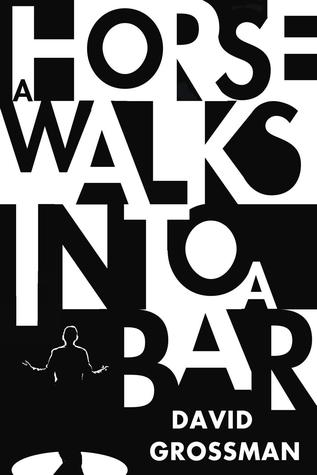 “Why the long face? Did someone die? It’s only stand-up comedy!” Except that for the comedian himself, Dovaleh Greenstein, this swan song of a show in the Israeli town of Netanya devolves into the story of the most traumatic day of his life. Grossman has made what seems to me an unusual choice of narrator: Avishai Lazar, a widower and Supreme Court justice, and Dov’s acquaintance from adolescence – they were in the same military training camp. Dov has invited him here to bear witness, and by the end we know Avishai will produce a written account of the evening.
Although it could be said that Avishai’s asides about the past, and about the increasingly restive crowd in the club, give us a rest from Dov’s claustrophobic monologue, in doing so they break the spell. This would be more hard-hitting as a play or a short story composed entirely of speech; in one of those formats, Dov’s story might keep you spellbound through a single sitting. Instead, I found that I had to force myself to read even five or 10 pages at a time. There’s no doubt Grossman can weave a clever tale about loss, and there are actually some quite funny jokes in here too, but overall I found this significantly less powerful than the author’s previous work, Falling Out of Time.
The Underground Railroad by Colson Whitehead
(Winner of the Pulitzer Prize, National Book Award and Arthur C. Clarke Award; longlisted for the Man Booker Prize)
 Following Cora on her fraught journey from her Georgia plantation through the Carolinas and Tennessee to Indiana is enjoyable enough, with the requisite atrocities like lynchings and rapes thrown in to make sure it’s not just a picaresque cat-and-mouse battle between her and Arnold Ridgeway, the villainous slavecatcher. But I’m surprised that such a case has been made for the uniqueness of this novel based on a simple tweak of the historical record: Whitehead imagines the Underground Railroad as an actual subterranean transport system. This makes less of a difference than you might expect; if anything, it renders the danger Cora faces more abstract. The same might be said for the anachronistic combination of enlightened and harsh societies she passes through: by telescoping out to show the range of threats African-Americans faced between the Civil War and the 1930s, the novel loses immediacy.
Ultimately, I felt little attachment to Cora and had to force myself to keep plodding through her story. My favorite parts were little asides giving other characters’ backstories. There’s no doubt Whitehead can shape a plot and dot in apt metaphors (I particularly liked “Ajarry died in the cotton, the bolls bobbing around her like whitecaps on the brute ocean”). However, I kept thinking, Haven’t I read this story before? (Beloved, Ruby, The Diary of Anne Frank; seen on screen in Twelve Years a Slave, Roots and the like.) This is certainly capably written, but doesn’t stand out for me compared to Homegoing, which was altogether more affecting.
The Power by Naomi Alderman
(Winner of the [Bailey’s] Women’s Prize)
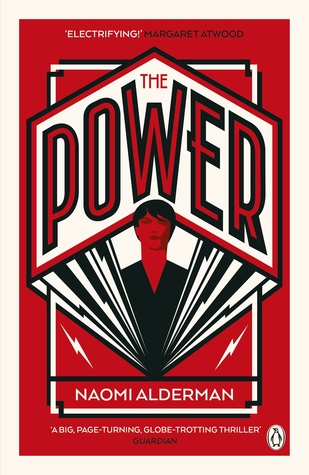 I read the first ~120 pages and skimmed the rest. Alderman imagines a parallel world in which young women realize they wield electrostatic power that can maim or kill. In an Arab Spring-type movement, they start to take back power from their oppressive societies. You’ll cheer as women caught up in sex trafficking fight back and take over. The movement is led by Allie, an abused child who starts by getting revenge on her foster father and then takes her message worldwide, becoming known as Mother Eve.
Alderman has cleverly set this up as an anthropological treatise-cum-historical novel authored by “Neil Adam Armon” (an anagram of her own name), complete with documents and drawings of artifacts. “The power to hurt is a kind of wealth,” and in this situation of gender reversal women gradually turn despotic. They are soldiers and dictators; they inflict genital mutilation and rape on men.
I enjoyed the passages mimicking the Bible, but felt a lack of connection with the characters and didn’t get a sense of years passing even though this is spread over about a decade. This is most like Margaret Atwood’s MaddAddam trilogy – Alderman’s debt to Atwood is explicit, in the dedication as well as the acknowledgments – so if you really like those books, by all means read this one. My usual response to such speculative fiction, though, even if it describes a believable situation, is: what’s the point? As with “Erewhon,” the best story in Helen Simpson’s collection Cockfosters, the points about gender roles are fairly obvious.
I’d be interested to hear if you’ve read any of these books – or plan to read them – and believe they were worthy prize winners. If so, set me straight!
Books in Brief: Five I Loved Recently
Ironically, Tuesday’s post on all the books I’ve abandoned so far in 2017 was my most popular in ages; it received nearly twice as many views as most of my recent posts. I think readers must find it reassuring that they’re ‘allowed’ to give up on a book rather than struggle through to the end of something they’re really not enjoying. However, I unwittingly stirred up some controversy when I shared the post on a Facebook group for book bloggers and authors and got a few replies along the lines of “I would never write about a book I didn’t like or didn’t finish. It’s not fair to the author.” Hmmm.
Anyway, today I have five pretty much unreserved recommendations instead. An original take on the American Civil War, a retelling of a Shakespearean tragedy, a highly unusual travel book, a creative blending of poems and recipes, and a wonderful book about sisters and betrayal from a Canadian author new to me. I hope you’ll find something here to enjoy.
Days Without End
By Sebastian Barry
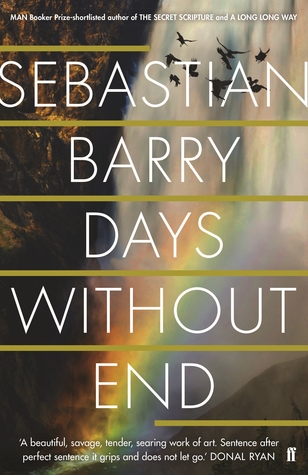 An entirely believable look at the life of the American soldier in the 1850s and 1860s, this novel succeeds due to its folksy dialect and a perfect balance between adventuresome spirit and repulsion at wartime carnage. While it shares some elements with Westerns and Civil War fiction, it’s unique in several ways. Though thrilling and episodic, it’s deeply thoughtful as well. Thomas writes semi-literate English but delivers profound, beautiful statements all the same. Lovely metaphors and memorable turns of phrase abound. Finally, this book is the most matter-of-fact consideration of same-sex relationships I’ve ever encountered in historical fiction. Heart-breaking, life-affirming, laugh-out-loud: these may be clichés, but here’s one novel that is all these things and more. Truly unforgettable. (See my full review at BookBrowse. See also my related article on the Native American practice of cross-dressing, known as winkte or berdache.)
My rating: 
New Boy: Othello Retold
By Tracy Chevalier
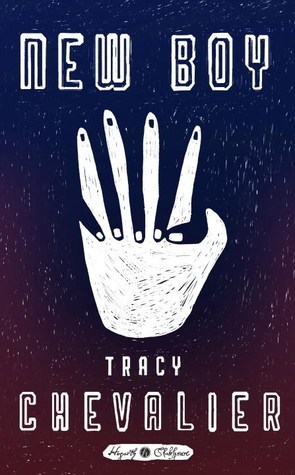 (My second favorite in the Hogarth Shakespeare series, after Margaret Atwood’s Hag-Seed.) Chevalier is known for historical fiction, but here she gives Othello a near-contemporary situation and a backdrop much closer to home: her native Washington, D.C. Spring 1974: it’s Ghanaian diplomat’s son Osei Kokote’s first day at a new school. Fortunately, he’s taken under the wing of one of the most popular sixth grade girls, Dee, and they’re soon inseparable. The novel takes place all in one day, divided into discrete sections by recess periods and a lunch break. Jump rope rhymes, jungle gyms, kickball games, arts and crafts, and a typical cafeteria meal of Salisbury steak and tater tots: it’s impressive how Chevalier takes ordinary elements and transforms them into symbols of a complex hierarchy and shifting loyalties. The language of possession and desire felt overly dramatic to me when applied to eleven-year-olds. However, it’s a remarkable exploration of the psyche of a boy isolated by his race. (Full review forthcoming at the Pittsburgh Post-Gazette website.)
My rating: (maybe more like 3.75)
Tragic Shores: A Memoir of Dark Travel
By Thomas H. Cook
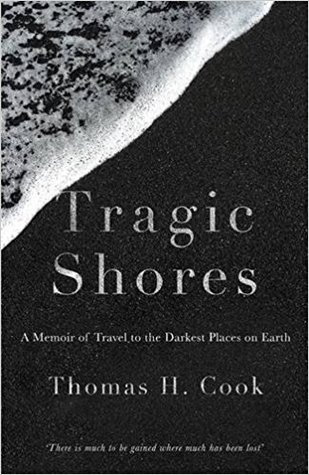 Cook is a crime writer. In this out-of-the-ordinary travel memoir he blends personal experience and history to tell of the ‘dark places’ he’s drawn to visiting. In 28 chapters that jump around in chronological order, he chronicles journeys he’s made to places associated with war, massacres, doomed lovers, suicides and other evidence of human suffering. Some are well known – Lourdes, Auschwitz, Verdun and Ground Zero – while others, like a Hawaiian leper colony and the hideaway of a fifteenth-century serial killer, require more background. A section on Okinawa and Hiroshima is among the book’s highlights: excellent descriptions of the mass suicide rooms where the Japanese retreated as the Americans approached and the atomic bomb drop itself bring history to life. But the most memorable chapter of all is one in which suffering touches Cook in a personal way. A meditative and often melancholy picture of humanity at its best and worst. (See my full review at Nudge.)
My rating:
Eat This Poem: A Literary Feast of Recipes Inspired by Poetry
By Nicole Gulotta
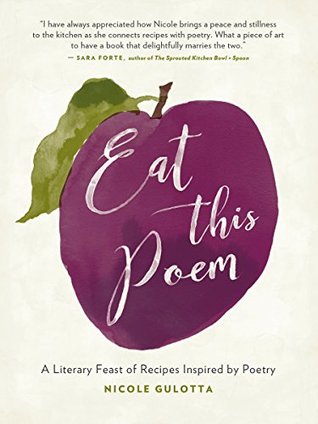 This arose from Gulotta’s blog of the same title. It’s a luscious mix of food-themed poems – none of which I’d ever encountered before, even if certain of the poets were familiar to me (like Mary Oliver, Sharon Olds and Wendell Berry) – commentary, personal anecdote and recipes that manage to hit the sweet spot in a Venn diagram between trendy, frugal, simple and indulgent. I could see myself making and eating any of these recipes, but my eye was particularly drawn to baked sweet potatoes with maple yogurt, vanilla-pear crumble, butternut squash macaroni and cheese, olive oil pumpkin bread, and cornmeal waffles. It might seem like this is a book that would only have niche appeal, but I don’t think that’s the case. Whether you like to cook or just like to eat, whether you love poetry or struggle to understand it, I’d recommend this for pleasant occasional reading. It only misses out on five stars because some of the observations are fairly obvious; these poems mostly speak for themselves.
My rating:
A Student of Weather
By Elizabeth Hay
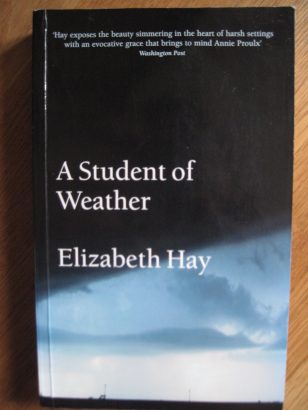 Set between the 1930s and 1970s, Hay’s debut (shortlisted for Canada’s Giller Prize in 2000) focuses on a pair of sisters, Norma Joyce and Lucinda Hardy, and the frostbitten young weather researcher who stumbles upon their Saskatchewan farmhouse one January evening in 1938. “Two sisters fell down the same well, and the well was Maurice Dove.” Seventeen-year-old Lucinda became the capable family housekeeper after their mother’s death. Norma Joyce is a precocious, sneaky eight-year-old. On each of Maurice’s visits, and in the years to come, they quietly jostle for his attention. Despite the upheaval of war and a move to Ontario, some things never change. Hay lends her story allusive depth by referencing biblical pairs of opposites: Jacob and Esau, Mary and Martha, and the Prodigal Son and his jealous older brother. My favorite parts were when the sisters were together in Canada; once Norma Joyce moves to New York, the book starts drifting a bit. However, there are such astute observations about what goes on in family and romantic relationships, and many perfect sentences. I thoroughly enjoyed reading this slowly over the course of a month, and I’d gladly read anything else from Hay.
My rating:
 Bookish Beck = Rebecca Foster. American transplant to England. Freelance proofreader and book reviewer.
 Bookish Beck