#MARM2025, Part II: Bluebeard’s Egg and Book of Lives (In Progress)
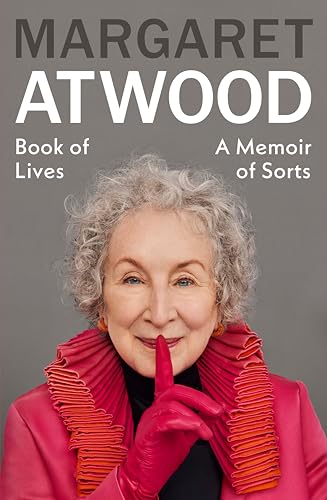 My hold on Margaret Atwood’s memoir, Book of Lives, arrived in late November. It’ll be my first read for Doorstoppers in December. I’d also been casually rereading her 1983 short story collection Bluebeard’s Egg and managed the first two stories; I’ll return to the rest next year. A recent Guardian interview stated that Atwood had written in “every genre … except autobiography” and quoted her as saying “I’m an old-fashioned novelist. Everything in my novels came from looking at the world around. I don’t think I have much of an inner psyche.” Is this her being coy or facetious? Because, particularly among the short stories, there are many incidents taken from her life. Indeed, in the 140 pages of Book of Lives that I’ve read so far, there are frequent mentions of how people or events made their way into her fiction and poetry. Perhaps most obviously in Cat’s Eye, a novel about childhood bullying by girlfriends.
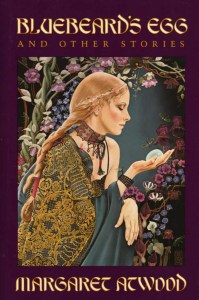 Bluebeard’s Egg opens with two Alice Munro-esque stories, “Significant Moments in the Life of My Mother” and “Hurricane Hazel,” both of which track with facts revealed in the memoir. The former draws on her mother Margaret’s Nova Scotia upbringing as the daughter of a country doctor (to avoid confusion, Atwood was nicknamed “Peggy”). Out of a welter of random stories comes the universal paradox: that she is in some ways exactly like her mother, and in others couldn’t be more different. It closes: “I had become a visitant from outer space, a time-traveller come back from the future, bearing news of a great disaster.” The latter story features a young teenage girl in a half-hearted relationship with an older, cooler boyfriend, mostly because she thinks it’s what’s expected of her. Atwood addresses it explicitly:
Let’s call this boyfriend “Buddy,” which is how he appears in a story of mine called “Hurricane Hazel.” Buddy and I broke up on the night of this famous hurricane, which flooded the Don Valley and killed eighty-one people in Toronto. Buddy wanted to go out that night, but my father, snapping out of his inattention—this was, after all, a matter of the weather, something he always kept his eye on—said it was out of the question. Didn’t Buddy know what a hurricane was? Far too dangerous!
 One can also trace The Penelopiad (see my first post for Margaret Atwood Reading Month 2025) back to Atwood’s high school experiences with the Greek classics.
Who knows when an “influence” may begin? My own 2005 book, The Penelopiad, had its origins fifty years before, when I’d been horrified by the brutal treatment dished out to Penelope’s twelve maids by Odysseus and Telemachus. After being made to clean up the blood from the suitors who’d raped them and were subsequently slaughtered by Odysseus, they were hanged in a line. “Their feet twitched, but not for very long.” A line I have always remembered.
As to Book of Lives in general, I’m finding it delightful but also dense with detail and historical context. Atwood grew up between the wilderness and the city because of her entomologist father’s seasonal fieldwork. She was called “Little Carl” due to how much she resembled her handy father, who built the cabins and houses they lived in as well as most of their furniture. With her beloved older brother, Harold, she was free to explore and later, as a camp counsellor, was known as “Peggy Nature” for her zoological expertise. She could easily have become a scientist but fell in love with crafts and the humanities, sewing her own clothes and writing an opera for Home Economics class. By the end of high school, she’d decided she was going to be a poet.
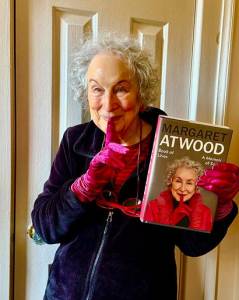
A cute pic of her from her Substack
I’m impressed by the clarity of Atwood’s memories; all I remember of my school days wouldn’t fill one chapter, let alone four. It could be argued that some of this is superfluous – a whole chapter on several summers as a counsellor at a Reform Jewish camp? But it’s her prerogative to choose the content and no doubt, always the novelist, she’s seeding important facts that will come to fruition later. As ever, her turns of phrase are amusing and her asides witty. There is a wonderful trove of photographs and artefacts for illustration. Although she effortlessly recreates her experience at any age, her perspective is salted with hindsight. I can already tell, making my way steadily through, 25 pages at a time, to return this by the deadline, that I’m going to need to read it again in the future to take it all in. Ideally, I’ll get my own copy so I can use the index to return to any scenes I want to revisit.
Bluebeard’s Egg – Little Free Library
Book of Lives – Public library
#MARM2025 and #NovNov25: The Penelopiad by Margaret Atwood (2005)
It’s my eighth time participating in the annual Margaret Atwood Reading Month (#MARM) hosted by indomitable Canadian blogger Marcie of Buried in Print. In previous years, I’ve read Surfacing and The Edible Woman, The Robber Bride and Moral Disorder, Wilderness Tips, The Door, Bodily Harm and Stone Mattress, and Life Before Man and Interlunar; and reread The Blind Assassin. Novembers are my excuse to catch up on the soon-to-be-86-year-old’s extensive back catalogue. While awaiting a library hold of her memoir, Book of Lives, I’ve also been rereading the 1983 short story collection Bluebeard’s Egg.

Celebrating its 20th anniversary this year is The Penelopiad, Atwood’s contribution to Canongate’s The Myths series, from which I’ve also read the books by Karen Armstrong, A.S. Byatt, Ali Smith and Jeanette Winterson. I remember Armstrong’s basic point being that a myth is not a falsehood, as in common parlance, but a story that is always true even if not literally factual. Think of it as ‘these things happen’ rather than this happened. Greek mythology is every bit as brutal as the Hebrew Bible, and I find it instructive to interpret biblical stories the same way: Focus on timelessness and universality rather than on historicity.
I do the scheduling for my book club, so I cheekily set The Penelopiad as our November book so that it would count towards two blog challenges. Although it’s a feminist retelling of Homer’s The Odyssey, we concluded that it’s not essential to have prior knowledge of the Greek myths. Much of the narrative is from Penelope’s perspective, including from the afterlife. Cliché has it that she waited patiently for 20 years for her husband Odysseus to return from war, chastely warding off all her would-be suitors. But she admits to readers that both she and Odysseus are inveterate liars.
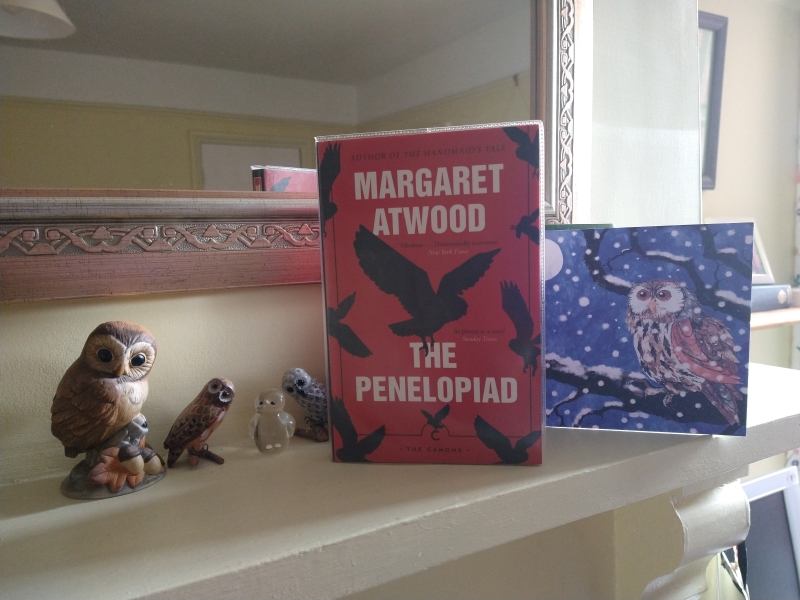
When Odysseus returned, he murdered the suitors and then Penelope’s maids – some of whom had consensual relations with the men; others of whom were raped. The focus is not on the slaughtered suitors, or on Odysseus’s triumphant return and revenge, but on the dozen maids – viz. the chapter title “Odysseus and Telemachus Snuff the Maids.” The murdered maids form a first-person plural voice (a literal Greek chorus) and speak in poetry and song, also commenting on their own plight through an anthropology lecture and a videotaped trial. They appeal to The Furies for posthumous justice, knowing they won’t get it from men (see the Virago anthology Furies). This sarcastic passage spotlights women’s suffering:
Never mind. Point being that you don’t have to get too worked up about us, dear educated minds. You don’t have to think of us as real girls, real flesh and blood, real pain, real injustice. That might be too upsetting. Just discard the sordid part. Consider us pure symbol. We’re no more real than money.
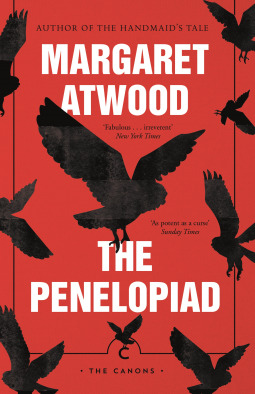
The cover of The Canons edition hints at the maids’ final transformation into legend.
 As well as The Odyssey, Atwood drew on external sources. She considers the theory that Penelope was the leader of a goddess cult. Women are certainly the most interesting characters here. Penelope’s jealousy of her cousin Helen (of Troy) and her rocky relationship with her teenage son Telemachus are additional threads. Eurycleia, Odysseus’s nurse, is a minor character, and there is mention of Penelope’s mother, a Naiad. Odysseus himself comes across not as the brave hero but as brash, selfish and somewhat absurd.
Like Atwood’s other work, then, The Penelopiad is subversive and playful. We wondered whether it set the trend for Greek myth retellings – given that those by Pat Barker, Natalie Haynes, Madeline Miller, Jennifer Saint and more emerged 5–15 years later. It wouldn’t be a surprise: she has always been wise and ahead of her time, a puckish prophetess. This fierce, funny novella isn’t among my favourites of the 30 Atwood titles I’ve now read, but it was an offbeat selection that made for a good book club discussion – and it wouldn’t be the worst introduction to her feminist viewpoint.
(Public library)
[198 pages]

#NovNov25 and Other November Reading Plans
Not much more than two weeks now before Novellas in November (#NovNov25) begins! Cathy and I are getting geared up and making plans for what we’re going to read. I have a handful of novellas out from the library, but mostly I gathered potential reads from my own shelves. I’m hoping to coincide with several of November’s other challenges, too.

Although we’re not using the below as themes this year, I’ve grouped my options into categories:
Short Classics (pre-1980)
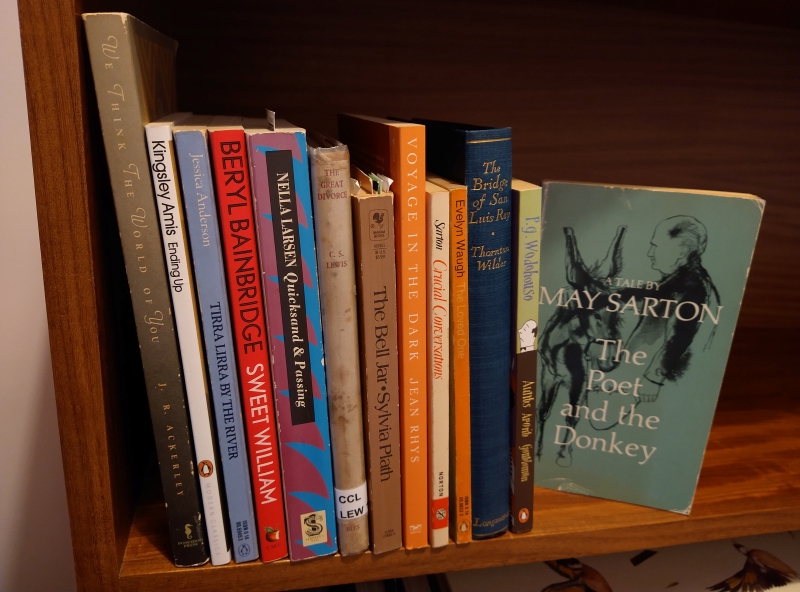
Just Quicksand to read from the Larsen volume; the Wilder would be a reread.
Contemporary Novellas
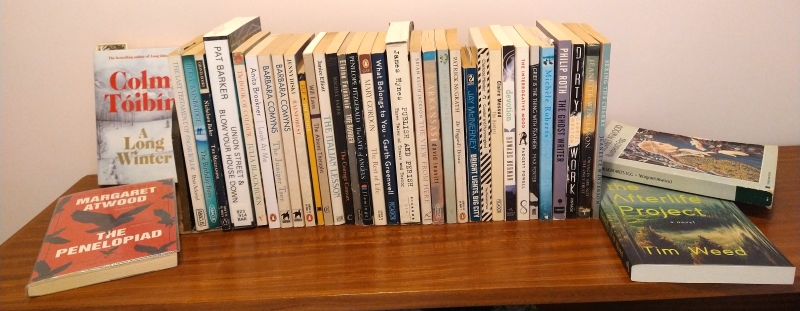
(Just Blow Your House Down; and the last two of the three novellas in the Hynes.)
Also, on my e-readers: Sea, Poison by Caren Beilin, Likeness by Samsun Knight, Eradication: A Fable by Jonathan Miles (a 2026 release, to review early for Shelf Awareness)
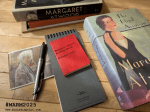 *Margaret Atwood Reading Month is hosted by Marcie of Buried in Print. I’ve just read The Penelopiad for book club, so I’ll start off with a review of that. I might also reread Bluebeard’s Egg, and I’ll be eagerly awaiting her memoir from the library.
[*Science Fiction Month: Beautyland by Marie-Helene Bertino, Archive of Unknown Universes by Ruben Reyes Jr., and The Afterlife Project (all catch-up review books) are options, plus I recently started reading The Martian by Andy Weir.]
Short Nonfiction
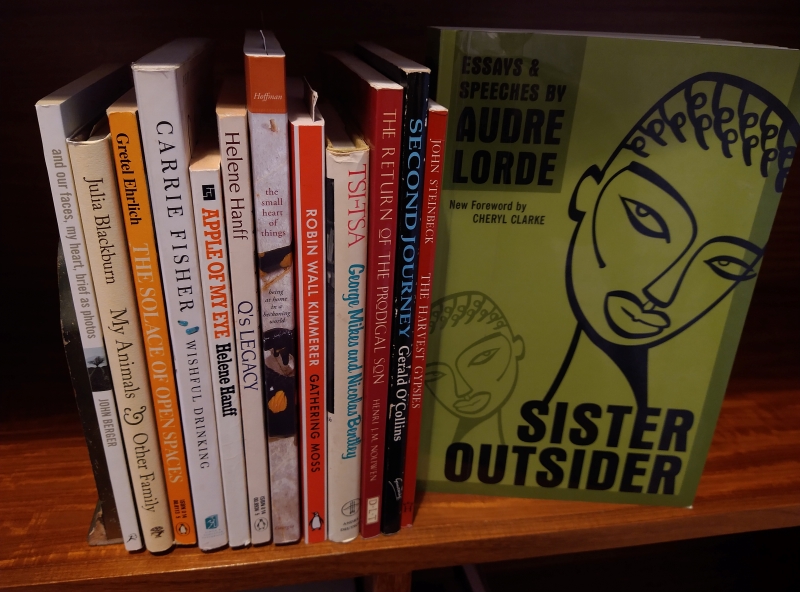
Including our buddy read, Sister Outsider by Audre Lorde. (A shame about that cover!)
Also, on my e-readers: The Serviceberry by Robin Wall Kimmerer, No Straight Road Takes You There by Rebecca Solnit, Because We Must by Tracy Youngblom. And, even though it doesn’t come out until February, I started reading The Irish Goodbye: Micro-Memoirs by Beth Ann Fennelly via Edelweiss.
For Nonfiction November, I also have plenty of longer nonfiction on the go, a mixture of review books to catch up on and books from the library:
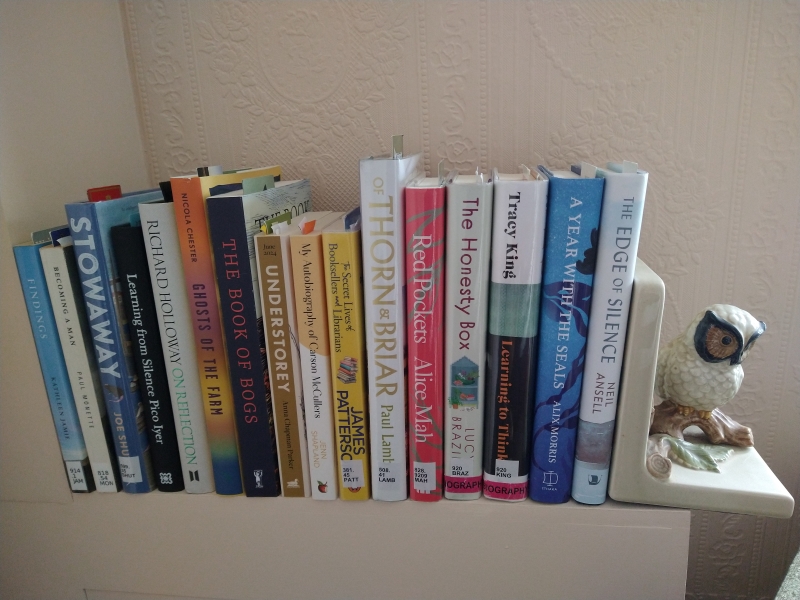
I also have one nonfiction November release, Joyride by Susan Orlean, to review.
Novellas in Translation
At left are all the novella-length options, with four German books on top.
The Chevillard and Modiano are review copies to catch up on.

Also on the stack, from the library: Super-Frog Saves Tokyo by Haruki Murakami
On my e-readers: The Old Fire by Elisa Shua Dusapin, The Old Man by the Sea by Domenico Starnone, Our Precious Wars by Perrine Tripier
 *German Literature Month: Our recent trip to Berlin and Lübeck whetted my appetite to read more German/German-language fiction. I’ll try to coincide with the Thomas Mann week as I was already planning to reread Death in Venice. I have some longer German books on the right-hand side as well. I started Kairos but found it hard going so might switch to audiobook. I also have Demian by Hermann Hesse on my Nook, downloaded from Project Gutenberg.
Spy any favourites or a particularly appealing title in my piles?
The link-up is now open for you to share your planning post!
Any novellas lined up to read next month?
#MARM2024: Life before Man and Interlunar by Margaret Atwood
Hard to believe, but it’s my seventh year participating in the annual Margaret Atwood Reading Month (#MARM) hosted by indomitable Canadian blogger Marcie of Buried in Print. In previous years, I’ve read Surfacing and The Edible Woman, The Robber Bride and Moral Disorder, Wilderness Tips, The Door, and Bodily Harm and Stone Mattress; and reread The Blind Assassin. I’m wishing a happy belated birthday to Atwood, who turned 85 earlier this month. Novembers are my excuse to catch up on her extensive back catalogue. In recent years, I’ve scoured the university library holdings to find works by her that I often had never heard of, as was the case with this early novel and mid-career poetry collection.
Life before Man (1979)
 Atwood’s fourth novel is from three rotating third-person POVs: Toronto museum curator Elizabeth, her toy-making husband Nate, and Lesje (pronounced “Lashia,” according to a note at the front), Elizabeth’s paleontologist colleague. The dated chapters span nearly two years, October 1976 to August 1978; often we visit with two or three protagonists on the same day. Elizabeth and Nate, parents to two daughters, have each had a string of lovers. Elizabeth’s most recent, Chris, has died by suicide. Nate disposes of his latest mistress, Martha, and replaces her with Lesje, who is initially confused by his interest in her. She’s more attracted to rocks and dinosaurs than to people, in a way that could be interpreted as consistent with neurodivergence.
It was neat to follow along seasonally with Halloween and Remembrance Day and so on, and see the Quebec independence movement simmering away in the background. To start with, I was engrossed in the characters’ perspectives and taken with Atwood’s witty descriptions and dialogue: “[Nate]’s heard Unitarianism called a featherbed for falling Christians” and (Lesje:) “Elizabeth needs support like a nun needs tits.” My favourite passage encapsulates a previous relationship of Lesje’s perfectly, in just the sort of no-nonsense language she would use:
The geologist had been fine; they could compromise on rock strata. They went on hikes with their little picks and kits, and chipped samples off cliffs; then they ate jelly sandwiches and copulated in a friendly way behind clumps of goldenrod and thistles. She found this pleasurable but not extremely so. She still has a collection of rock chips left over from this relationship; looking at it does not fill her with bitterness. He was a nice boy but she wasn’t in love with him.
Elizabeth’s formidable Auntie Muriel is a terrific secondary presence. But this really is just a novel about (repeated) adultery and its aftermath. The first line has Elizabeth thinking “I don’t know how I should live,” and after some complications, all three characters are trapped in a similar stasis by the end. By the halfway point I’d mostly lost interest and started skimming. The grief motif and museum setting weren’t the draws I’d expected them to be. Lesje is a promising character but, disappointingly, gets snared in clichéd circumstances. No doubt that is part of the point; “life before man” would have been better for her. (University library) 
This prophetic passage from Life before Man leads nicely into the themes of Interlunar:
The real question is: Does [Lesje] care whether the human race survives or not? She doesn’t know. The dinosaurs didn’t survive and it wasn’t the end of the world. In her bleaker moments, … she feels the human race has it coming. Nature will think up something else. Or not, as the case may be.
The posthuman prospect is echoed in Interlunar in the lines: “Which is the sound / the earth will make for itself / without us. A stone echoing a stone.”
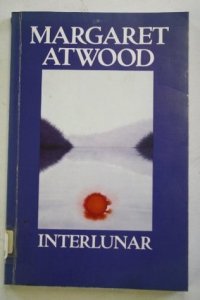
Interlunar (1984)
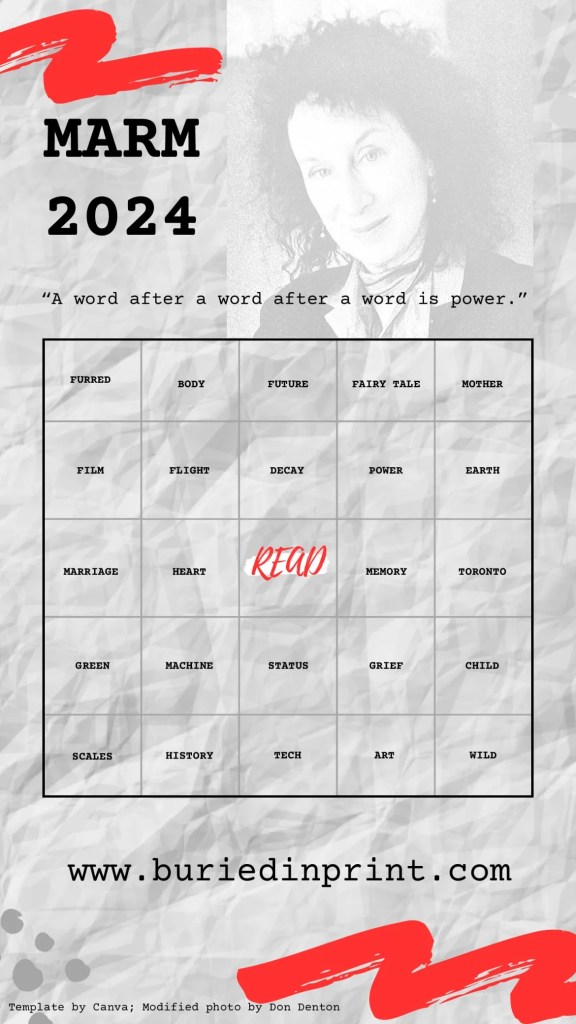
Some familiar Atwood elements in this volume, including death, mythology, nature, and stays at a lake house; you’ll even recognize a couple of her other works in poem titles “The Robber Bridegroom” and “The Burned House.” The opening set of “Snake Poems” got me the “green” and “scales” squares on Marcie’s Bingo card (in addition to various other scattered ones, I’m gonna say I’ve filled the whole right-hand column thanks to these two books).
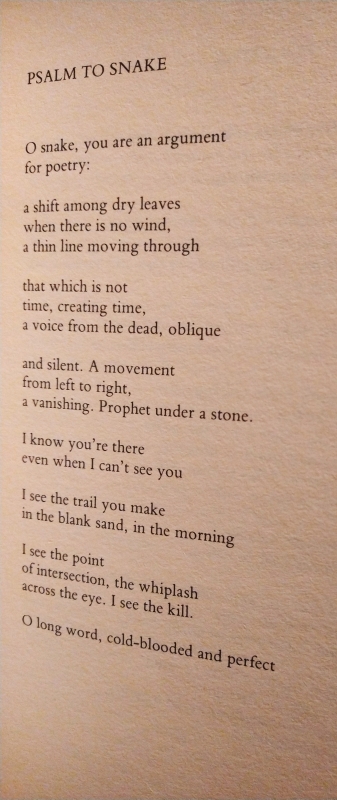
This one brilliantly likens the creature to the sinuous ways of language:
 “A Holiday” imagines a mother–daughter camping vacation presaging a postapocalyptic struggle for survival: “This could be where we / end up, learning the minimal / with maybe no tree, no rain, / no shelter, no roast carcasses / of animals to renew us … So far we do it / for fun.” As in her later collection The Door, portals and thresholds are of key importance. “Doorway” intones, “November is the month of entrance, / month of descent. Which has passed easily, / which has been lenient with me this year. / Nobody’s blood on the floor.” There are menace and melancholy here. But as “Orpheus (2)” suggests at its close, art can be an ongoing act of resistance: “To sing is either praise / or defiance. Praise is defiance.” I do recommend Atwood’s poetry if you haven’t tried it before, even if you’re not typically a poetry reader. Her poems are concrete and forceful, driven by imagery and voice; not as abstract as you might fear. Alas, I wasn’t sent a review copy of her collected poems, Paper Boat, as I’d hoped, but I will continue to enjoy encountering them piecemeal. (University library)
Bodily Harm and Stone Mattress by Margaret Atwood (#MARM)
It’s my sixth year participating in the annual Margaret Atwood Reading Month (#MARM), hosted by indomitable Canadian blogger Marcie of Buried in Print. In previous years, I’ve read Surfacing and The Edible Woman, The Robber Bride and Moral Disorder, Wilderness Tips, and The Door; and reread The Blind Assassin. Wish a happy belated birthday to MA, who turned 84 earlier this month. As it happens, today is my husband’s 40th birthday and I am tapping away at this in the passenger’s seat of the car as we hurtle through the freezing fog toward Slimbridge for some wintry birdwatching. I spent much of yesterday making his German chocolate cake (delicious but very involved) from a Hummingbird Bakery cookbook.

Bodily Harm (1982)
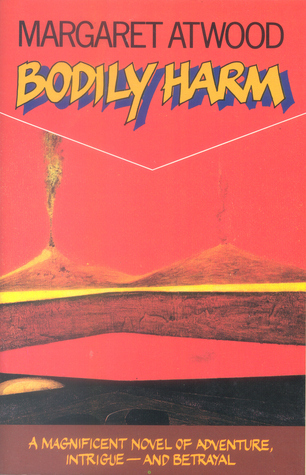 I had literally never heard of her fifth novel before I spotted it on the library catalogue and decided to have a go. The fact that nobody talks about it is evidence, I think, of an overbaked plot and more successful treatment of her trademark themes in other books. Nonetheless, it was perfectly readable and had its highlights. Renata Wilford, “Rennie,” is a journalist for hire from Ontario who has recently had her life turned upside down by breast cancer and the departure of her boyfriend, Jake. She flies to the Caribbean island nation of St. Antoine to write a travel piece, coinciding with the first elections since the British left. It’s a febrile postcolonial setting of shantytowns and shortages. Rennie tries to focus on boat trips, cocktails and beach lounging, but Dr. Minnow, who she met on the plane, is determined to show her the reality of his country – cold truths that include assassination and imprisonment.
Alongside the thriller plot are the more expected literary flashbacks to Rennie’s childhood, her life with Jake, and the cancer surgery and her crush on her surgeon. Her old friend Jocasta is an amusingly punky feminist and a counterpoint to Lora, the fellow Canadian and bad girl Rennie meets in St. Antoine. There are no speech marks in the sections set in the past, and there are some passages of direct monologue from Lora recounting her abusive upbringing. I felt Atwood was stretching to make points about cultural imperialism and violence, whereas the title is more applicable to the physical threats women face from illness and misogyny:
“The body, sinister twin, taking its revenge for whatever crimes the mind was supposed to have committed on it. Nothing had prepared her for her own outrage, the feeling that she’d been betrayed by a close friend. She’d given her body swimming twice a week, forbidden it junk food and cigarette smoke, allowed it a normal amount of sexual release. She’d trusted it. Why then had it turned against her?”
(University library) 
Stone Mattress (2014)
I was tempted to call this my first ever audiobook, but that is not technically true: 11 years ago, we had a David Attenborough book on in the car on the way to Cornwall. However, this definitely felt like a landmark. I’d long meant to catch up on Atwood’s last but one story collection, but my library had withdrawn the physical copy and only had the book on CD. How would I fit it into my life, I wondered? Others have told me they listen to audiobooks while commuting, cooking or cleaning … er, I don’t really do any of those! But I amassed a goodly list of tasks involving my hands but not much of my brain to complete while listening to the CDs through my PC speakers:
• Prepared two clothing recycling parcels (37 socks off to the London Sock Company’s Sock Amnesty programme; 3 shirts and 2 sets of pyjamas to Rapanui’s 100% cotton recycling scheme)
• Mended 13 socks, 4 shirts, 3 gloves, 2 cardigans, a shoulder bag strap, and a purse strap and lining
• Framed a photo for a Christmas gift
• Baked the aforementioned German chocolate cake
• Wrapped my husband’s birthday presents
• Wrote a couple of Christmas cards
 Nonetheless, I found it frustrating that it took so long to get through a story/disc, surely longer than I would have spent reading with my eyes (and so I have only managed 7.5 of 9 stories so far), and it was slightly harder for me to concentrate. It was also disorienting to not have visual cues, such that I had no idea how much of a story was remaining, and sometimes didn’t know how place or character names were spelt. One interesting novelty, though, was the reader voices. There are five different voice actors on this audiobook, three women (including MA herself on the title story) and two men. It is interesting to ponder how their intonation might affect my reaction to a story. For instance, Rob Delaney’s deadpan delivery really makes “The Freeze-Dried Groom,” a witty work of mild horror in which a fraudulent antiques dealer finds an entire wedding, complete with groom, abandoned in a storage unit.
As in a number of Atwood’s later works, recurring themes of ageing and the writer’s craft intertwine. I most enjoyed the opening linked trio of “Alphinland,” “Revenant” and “Dark Lady,” which orbit SFF writer Constance and her one-time lover, macho poet Gavin. The first story has Constance slipping between her fictional world and the real one, in which a winter storm is impending and her husband Ewan has been dead for four days. In “Revenant,” an elderly Gavin holds court as a scholar comes to interview him. Imagine his ire when he learns she is there to question him about Constance for her PhD research. “Dark Lady” brings the three major women from Gavin’s life into a face-off.
Funniest was “I Dream of Zenia with the Bright Red Teeth,” a The Robber Bride mini-sequel in which three ageing women fend off an interfering male with the help of a potential reincarnation of their late friend. I was reminded of the setup of Charlotte Wood’s The Weekend, not least for the presence of an annoying dog. Least engaging has been “The Dead Hand Loves You,” about Jack Dace, the author of an international horror classic who has always resented having to share his profits four ways with his early adulthood housemates because of his promise to catch up on his back rent from his creative earnings. I thought this one would never end. In general, though, this has been classic MA, mixing realism and fantasy in clever and witty ways. And I’m sure it won’t be my last audiobook. I was gifted an Audible book for my birthday by a blind friend, to start with. Now to store up some more busy work… (Public library audiobook) 
Margaret Atwood Reading Month: The Door (#MARM)
It’s my fifth year participating in the annual Margaret Atwood Reading Month (#MARM), hosted by indomitable Canadian blogger Marcie of Buried in Print. In previous years for this challenge, I’ve read Surfacing and The Edible Woman, The Robber Bride and Moral Disorder, and Wilderness Tips; and reread The Blind Assassin. Today is Atwood’s 83rd birthday, so what better time to show her some love?
Like the Beatles, she’s worked in so many different genres and styles that I don’t see how anyone could say they don’t like her – you just haven’t explored her oeuvre deeply enough. Although she’s best known for her fiction, she started off as a poet, with a whole five collections published in the 1960s before her first novel appeared. I’d previously read her Eating Fire: Selected Poetry 1965–1995 and Dearly, my top poetry read of 2020.
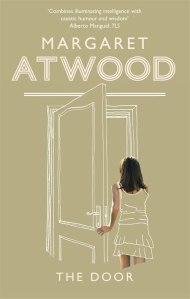 The Door (2007) was at that point her first poetry release in 12 years and features a number of the same themes that permeate her novels and nonfiction: memory, writing, ageing, travel and politics. I particularly like the early poems where she reinhabits memories of childhood and early adulthood, often through objects. Such artifacts are “pocketed as pure mementoes / of some once indelible day,” she writes in “Year of the Hen.”
These are followed by a trilogy about the death of the family’s pet cat, Blackie. “We get too sentimental / over dead animals. / We turn maudlin,” she acknowledges in “Mourning for Cats,” yet “Blackie in Antarctica” injects some humour as she remembers how her sister kept the cat’s corpse in the freezer until she could come home to bury it. Also on the lighter side is a long “where are they now?” update for the Owl and the Pussycat.
There are also meta reflections on poetry, slightly menacing observations on the weather (an implacable, fate-like force) and the seasons (autumn = hunting), virtual visits to the Arctic, mild complaints about the elderly not being taken seriously, and thoughts on duty.
Four in a row muse about war – the Vietnam War in particular, I think? “The Last Rational Man” is a sinister standout, depicting a figure who is doomed under Caligula’s reign. Whoever she may have had in mind when she wrote this, it’s just as relevant 15 years later.
In the final, title poem, which appears to be modelled on the Seven Ages of Man, a door is a metaphor for life’s transitions and, ultimately, for death.
The door swings open:
O god of hinges,
god of long voyages,
you have kept faith.
It’s dark in there.
You confide yourself to the darkness.
You step in.
The door swings closed.
Apart from a few end rhymes, Atwood relies more on theme than on sonic technique or form. That, I think, makes her poetry accessible to those who are new to or suspicious of verse. Happy birthday, M.A., and thank you for your literary wisdom and innovation! (Little Free Library)
The Blind Assassin Reread for #MARM, and Other Doorstoppers
It’s the fourth annual Margaret Atwood Reading Month (#MARM), hosted by Canadian blogger extraordinaire Marcie of Buried in Print. In previous years, I’ve read Surfacing and The Edible Woman, The Robber Bride and Moral Disorder, and Wilderness Tips. This year Laila at Big Reading Life and I did a buddy reread of The Blind Assassin, which was historically my favourite Atwood novel. I’d picked up a free paperback the last time I was at The Book Thing of Baltimore. Below are some quick thoughts based on what I shared with Laila as I was reading.

The Blind Assassin (2000)
Winner of the Booker Prize and Hammett Prize; shortlisted for the Orange Prize
I must have first read this about 13 years ago. The only thing I remembered before I started my reread was that there is a science fiction book-within-the-book. I couldn’t recall anything else about the setup before I read in the blurb about the suspicious circumstances of Laura’s death in 1945. Indeed, the opening line, which deserves to be famous, is “Ten days after the war ended, my sister Laura drove a car off a bridge.”
I always love novels about sisters, and Iris is a terrific narrator. Now a cantankerous elderly woman, she takes us back through her family history: her father’s button factory and his clashes with organizing workers, her mother’s early death, and her enduring relationship with their housekeeper, Reenie. Iris and Laura met a young man named Alex Thomas, a war orphan with radical views, at the factory’s Labour Day picnic, and it was clear early on that Laura was smitten, while Iris went on to marry Richard Griffen, a nouveau riche industrialist.

Interspersed with Iris’s recollections are newspaper articles that give a sense that the Chase family might be cursed, and excerpts from The Blind Assassin, Laura’s posthumously published novel. Daring for its time in terms of both explicit content and literary form (e.g., no speech marks), it has a storyline rather similar to 1984, with an upper-crust woman having trysts with a working-class man in his squalid lodgings. During their time snatched together, he also tells her a story inspired by the pulp sci-fi of the time. I was less engaged by the story-within-the-story(-within-the-story) this time around compared to Iris’s current life and flashbacks.
In the back of my mind, I had a vague notion that there was a twist coming, and in my impatience to see if I was right I ended up skimming much of the second half of the novel. My hunch was proven correct, but I was disappointed with myself that I wasn’t able to enjoy the journey more a second time around. Overall, this didn’t wow me on a reread, but then again, I am less dazzled by literary “tricks” these days. At the sentence level, however, the writing was fantastic, including descriptions of places, seasons and characters’ psychology. It’s intriguing to think about whether we can ever truly know Laura given Iris’s guardianship of her literary legacy.
If you haven’t read this before, find a time when you can give it your full attention and sink right in. It’s so wise on family secrets and the workings of memory and celebrity, and the weaving in of storylines in preparation for the big reveal is masterful.
Some favourite passages:
“What fabrications they are, mothers. Scarecrows, wax dolls for us to stick pins into, crude diagrams. We deny them an existence of their own, we make them up to suit ourselves – our own hungers, our own wishes, our own deficiencies.”
“Beginnings are sudden, but also insidious. They creep up on you sideways, they keep to the shadows, they lurk unrecognized. Then, later, they spring.”
“The only way you can write the truth is to assume that what you set down will never be read. Not by any other person, and not even by yourself at some later date. Otherwise you begin excusing yourself. You must see the writing as emerging like a long scroll of ink from the index finger of your right hand; you must see your left hand erasing it. Impossible, of course.”
My original rating (c. 2008): 
My rating now:
What to read for #MARM next year, I wonder??
In general, I have been struggling mightily with doorstoppers this year. I just don’t seem to have the necessary concentration, so Novellas in November has been a boon. I’ve been battling with Ruth Ozeki’s latest novel for months, and another attempted buddy read of 460 pages has also gone by the wayside. I’ll write a bit more on this for #LoveYourLibrary on Monday, including a couple of recent DNFs. The Blind Assassin was only my third successful doorstopper of the year so far. After The Absolute Book, the other one was:
The Lincoln Highway by Amor Towles
 In Towles’ third novel – a big, old-fashioned dose of Americana – brothers and pals set out from Nebraska on road and rail adventures to find a fortune in 1950s New York. The book features some fantastic characters. Precocious Billy steals every scene he appears in. Duchess is a delightfully flamboyant bounder, peppering his speech with malapropisms and Shakespeare quotes. However, Emmett is a dull protagonist, and it’s disappointing that Sally, one of just two main female characters, plays such a minor role. A danger with an episodic narrative is that random events and encounters pile up but don’t do much to further the plot. At nearly 200 pages in, I realized little of consequence had happened yet. A long road, then, with some ups and downs along the way, but Towles’ fans will certainly want to sign up for the ride.
See my full review for BookBrowse; see also my related article on Studebaker cars.
With thanks to Hutchinson for the free copy for review.
Anything by Atwood, or any doorstoppers, on your pile recently?
Margaret Atwood Reading Month: Wilderness Tips and CWWA Symposium
For this third annual Margaret Atwood Reading Month (#MARM), hosted by Canadian bloggers extraordinaires Marcie of Buried in Print and Naomi of Consumed by Ink, I picked up Wilderness Tips, a short story collection I’m not sure I’d even heard of before I liberated this battered paperback from the Hay-on-Wye Airbnb where we stayed in September (shhhhhh!).
I also listened in to one of the papers given at the Contemporary Women’s Writing Association’s mini online symposium held to mark her 81st birthday yesterday.

Wilderness Tips (1991)
 If pressed to give a one-line summary, I would say the overall theme of this collection is the power that women have (or do not have) in relationships – this is often a question of sex, but not always. Much of the collection falls neatly into pairs: “True Trash” and “Death by Landscape” are about summer camp and the effects that experiences had there still have decades later; “The Bog Man” and “The Age of Lead” both use the discovery of a preserved corpse (one a bog body, the other a member of the Franklin Expedition) as a metaphor for a frozen relationship; and “Hairball” and “Weight” are about a mistress’s power plays. I actually made myself a key on the table of contents page, assigning A, B, and C to those topics. The title story I labeled [A/C] because it’s set at a family’s lake house but the foreign spouse of one of the sisters has history with or designs on all three.
“Uncles,” a standout, didn’t fit into my framework. Susanna’s three uncles played a major role in her life, so when she got a job with a Toronto newspaper she welcomed her colleague Percy’s avuncular attentions. To her surprise, though, his tell-all autobiography reveals he wasn’t so happy about his protégée’s success after all. Two overall favorites were “Hairball,” about a mistress’s superbly executed act of revenge, and the final story, “Hack Wednesday,” in which Marcia takes stock of her life as she prepares for her children coming home for Christmas. Swap the Berlin Wall and Noriega for, I don’t know, Syria and Trump or suchlike, and it would be absolutely current, what with her partner Eric’s eco-warrior escapades (and hypocrisy) and her wish to situate herself in the context of history but also transcend it. I marked out the most passages in this one, and so many made me laugh:
Time is going faster and faster; the days of the week whisk by like panties. The panties she’s thinking about are the kind she had when was a little girl, in pastels, with ‘Monday,’ ‘Tuesday,’ ‘Wednesday’ embroidered on them. Ever since then the days of the week have had colours for her: Monday is blue, Tuesday is cream, Wednesday is lilac. You counted your way through each week by panty, fresh on each day, then dirtied and thrown into the bin. Marcia’s mother used to tell her that she should always wear clean panties in case a bus ran over her, because other people might see them as her corpse was being toted off to the morgue. It wasn’t Marcia’s potential death that loomed uppermost in her mind, it was the state of her panties.
“One of these days I’m going to kill that beast,” says Eric. … “You poor baby!” says Marcia, scooping up the cat, which is overweight. It’s on a diet, but mooches in secret from the neighbours. Marcia sympathizes. “I just let the damn thing out. In, out, in, out. It can’t make up its mind,” says Eric. “It’s confused,” says Marcia.
Marcia will get a little drunk on the eggnog, and later, after the dishes are done, she will cry silently to herself, shut into the bathroom and hugging in her festive arms the grumbling cat, which she will have dragged out from under a bed for this purpose. She will cry because the children are no longer children, or because she herself is not a child any more, or because there are children who have never been children, or because she can’t have a child any more, ever gone. Her body has gone past too quickly for her.
My rating: 
CWWA Symposium
 To open the afternoon program, Dr. Fiona Tolan of Liverpool John Moores University spoke on “21st-century Gileads: Feminist Dystopian Fiction after Atwood.” She noted that The Handmaid’s Tale casts a long shadow; it’s entered into our cultural lexicon and isn’t going anywhere. She showed covers of three fairly recent books that take up the Handmaid’s red: The Power, Vox, and Red Clocks. However, the two novels she chose to focus on do not have comparable covers: The Water Cure by Sophie Mackintosh (my review) and The Natural Way of Things by Charlotte Wood. I was unfamiliar with the premise of the Wood. Ten young women who have been involved in public sex scandals (e.g. with politicians) are kidnapped and imprisoned in a compound in the Outback; their heads are shaven and they are forced to undertake hard labor. Although it’s a female-dominated space, the patriarchy is perpetuated. Is sisterhood a possibility here?
Atwood has said, “Some books haunt the reader and some haunt the writer.” Tolan argued that Handmaid’s clearly does both, since Atwood chose to return to Gilead with The Testaments. While Tolan believes Atwood’s overall emphasis has always been on liberty, she notes that the author has been reluctant to be associated with feminism as a movement.
I feel like my #MARM participation has been somewhat half-hearted this year – I won’t be getting a Bingo on this chart! – but I always enjoy engaging with Atwood’s writing and thinking. With any luck, I’ll still get to read her new poetry collection, Dearly, for review in 2020, and before long I can start planning what I’ll read for this challenge next November.
Margaret Atwood Reading Month: The Robber Bride and Moral Disorder
For this second annual Margaret Atwood Reading Month hosted by Marcie of Buried in Print and Naomi of Consumed by Ink, I chose two of her works of fiction pretty much at random. The Robber Bride, one of her last few major novels that I hadn’t yet read, and Moral Disorder, a linked short story collection I’d not heard of before, both came my way for free and became my 19th and 20th Atwood books overall. Women’s fulfillment, especially the question of having children or not, and the threat of suicide are two themes that connect the two despite the 13 years between them.
The Robber Bride (1993)
 Zenia is dead, to begin with. Or is she? Five years after her funeral, as Tony, Roz and Charis, the university frenemies from whom she stole lovers and money, are eating lunch at The Toxique, Zenia comes back. Much of the book delves into the Toronto set’s history, with Tony seeming to get the most space and sympathy – she’s a lot like Nell (see below), so probably the most autobiographical character here, and the one I warmed to the most. Tony’s mother left and her father committed suicide, so she’s always been an unusual loner with a rich inner life, speaking and writing backwards (like Adah in The Poisonwood Bible) and becoming obsessed with battle logistics. Now, as a professor of history at her alma mater, she has a good reason to indulge that geeky hobby of keeping model battlefields in the basement.
I found this quite slow, especially through the middle stretch, such that its nearly 500 pages of small type often felt interminable. It didn’t help that I developed very little interest in Roz and Charis. The setup is based on a gender-reversed version of the fairy tale “The Robber Bridegroom,” about a handsome man who lures women into the woods and eats them. Zenia is the (almost literal) femme fatale: “Brilliant, and also fearsome. Wolfish, feral, beyond the pale.” The topic of toxic friendship ties in with Cat’s Eye, and the examination of gender roles feels like it’s edging towards something more radical: when late on a minor character comes out, Roz thinks that for the next generation “the fences once so firmly in place around the gender corrals are just a bunch of rusty old wire.”
A favorite passage:
“Very beautiful people have that effect, [Tony] thinks: they obliterate you. In the presence of Zenia she feels more than small and absurd: she feels non-existent.”
Moral Disorder (2006)
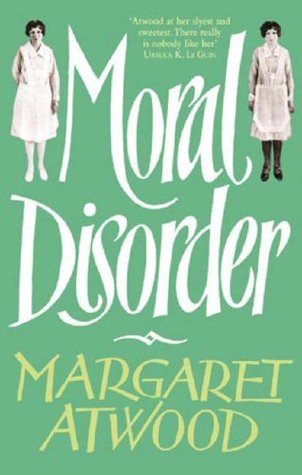 The title came from Atwood’s late partner, Graeme Gibson, who stopped writing novels in 1996 and gave her permission to reuse the name of his work in progress. It suggests that all is not quite as it should be. Then again, morality is subjective. Though her parents disapprove of Nell setting up a household with Tig, who is still married to Oona, the mother of his children, theirs ends up being a stable and traditional relationship; nothing salacious about it.
The first five and last two stories are in the first person, while a set of four in the middle is in the third person – including my favorites, “White Horse” and “The Entities,” two knockout stand-alones. Nell and Tig retreat to a farm for this segment, and Nell has to deal with her sister’s mental illness and her assumption that Tig doesn’t want to have more children. I also liked “The Art of Cooking and Serving,” in which Nell becomes a big sister at age 12. There are a few nothing-y stories, though, and I struggled to see this as having the main character all the way through – but that is probably part of the point: We have so many experiences, and change so much, in the course of a life that we feel we’ve become different people. This is about the memories and connections that last even as the externals alter beyond recognition.
Two favorite passages:
“Maybe she would grow cunning, up here on the farm. Maybe she would absorb some of the darkness, which might not be darkness at all but only knowledge. She would turn into a woman others came to for advice. She would be called in emergencies. She would roll up her sleeves and dispense with sentimentality, and do whatever blood-soaked, bad-smelling thing had to be done. She would become adept with axes.”
“All that anxiety and anger, those dubious good intentions, those tangled lives, that blood. I can tell about it or I can bury it. In the end, we’ll all become stories. Or else we’ll become entities. Maybe it’s the same.”
Have you read any of Margaret Atwood’s books recently?
Which two should I earmark for next year? (I reckon The Testaments and Stone Mattress)
 Bookish Beck = Rebecca Foster. American transplant to England. Freelance proofreader and book reviewer.
 Bookish Beck