Book Serendipity, Mid-April through Early June
I call it “Book Serendipity” when two or more books that I read at the same time or in quick succession have something in common – the more bizarre, the better. This is a regular feature of mine every few months. Because I usually have 20–30 books on the go at once, I suppose I’m more prone to such incidents. The following are in roughly chronological order.
- Fishing with dynamite takes place in Glowing Still by Sara Wheeler and In Memoriam by Alice Winn.
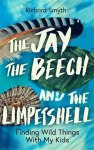
- Egg collecting (illegal!) is observed and/or discussed in Sea Bean by Sally Huband and The Jay, the Beech and the Limpetshell by Richard Smyth.

- Deborah Levy’s Things I Don’t Want to Know is quoted in What I’d Rather Not Think About by Jente Posthuma and Glowing Still by Sara Wheeler. I then bought a secondhand copy of the Levy on my recent trip to the States.
- “Piss-en-lit” and other folk names for dandelions are mentioned in The House of the Interpreter by Lisa Kelly and The Furrows by Namwali Serpell.
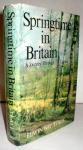
- Buttercups and nettles are mentioned in The House of the Interpreter by Lisa Kelly and Springtime in Britain by Edwin Way Teale (and other members of the Ranunculus family, which includes buttercups, in These Envoys of Beauty by Anna Vaught).


- The speaker’s heart is metaphorically described as green in a poem in Lo by Melissa Crowe and The House of the Interpreter by Lisa Kelly.
- Discussion of how an algorithm can know everything about you in Tomb Sweeping by Alexandra Chang and I’m a Fan by Sheena Patel.
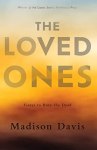
- A brother drowns in The Loved Ones: Essays to Bury the Dead by Madison Davis, What I’d Rather Not Think About by Jente Posthuma, and The Furrows by Namwali Serpell.


A few cases of a book recalling a specific detail from an earlier read:
- This metaphor in The Chosen by Elizabeth Lowry links it to The Marriage Portrait by Maggie O’Farrell, another work of historical fiction I’d read not long before: “He has further misgivings about the scalloped gilt bedside table, which wouldn’t look of place in the palazzo of an Italian poisoner.”
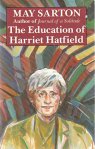
- This reference in The Education of Harriet Hatfield by May Sarton links it back to Chase of the Wild Goose by Mary Louisa Gordon (could it be the specific book she had in mind? I suspect it was out of print in 1989, so it’s more likely it was Elizabeth Mavor’s 1971 biography The Ladies of Llangollen): “Do you have a book about those ladies, the eighteenth-century ones, who lived together in some remote place, but everyone knew them?”
- This metaphor in Things My Mother Never Told Me by Blake Morrison links it to The Chosen by Elizabeth Lowry: “Moochingly revisiting old places, I felt like Thomas Hardy in mourning for his wife.”
- A Black family is hounded out of a majority-white area by harassment in The Education of Harriet Hatfield by May Sarton and Ordinary Notes by Christina Sharpe.
 Wartime escapees from prison camps are helped to freedom, including with the help of a German typist, in My Father’s House by Joseph O’Connor and In Memoriam by Alice Winn.
- A scene of eating a deceased relative’s ashes in 19 Claws and a Black Bird by Agustina Bazterrica and The Loved Ones by Madison Davis.
- A girl lives with her flibbertigibbet mother and stern grandmother in “Wife Days,” one story from How Strange a Season by Megan Mayhew Bergman, and Jane of Lantern Hill by L.M. Montgomery.
- Macramé is mentioned in How Strange a Season by Megan Mayhew Bergman, The Memory of Animals by Claire Fuller, Floppy by Alyssa Graybeal, and Sidle Creek by Jolene McIlwain.
- A fascination with fractals in Floppy by Alyssa Graybeal and one story in Sidle Creek by Jolene McIlwain. They are also mentioned in one essay in These Envoys of Beauty by Anna Vaught.
- I found disappointed mentions of the fact that characters wear blackface in Laura Ingalls Wilder’s Little Town on the Prairie in Monsters by Claire Dederer and, the very next day, Ordinary Notes by Christina Sharpe.


- Moon jellyfish are mentioned in the Blood and Cord anthology edited by Abi Curtis, Floppy by Alyssa Graybeal, and Sea Bean by Sally Huband.
- A Black author is grateful to their mother for preparing them for life in a white world in the memoirs-in-essays I Can’t Date Jesus by Michael Arceneaux and Ordinary Notes by Christina Sharpe.
- The children’s book The Owl Who Was Afraid of the Dark by Jill Tomlinson is mentioned in The Jay, the Beech and the Limpetshell by Richard Smyth and These Envoys of Beauty by Anna Vaught.
- The protagonist’s father brings home a tiger as a pet/object of display in The Marriage Portrait by Maggie O’Farrell and The Memory of Animals by Claire Fuller.

- Bloor Street, Toronto is mentioned in Jane of Lantern Hill by L.M. Montgomery and Ordinary Notes by Christina Sharpe.
- Ralph Waldo Emerson’s thinking about the stars is quoted in Jane of Lantern Hill by L.M. Montgomery and These Envoys of Beauty by Anna Vaught.
- Wondering whether a marine animal would be better off in captivity, where it could live much longer, in The Memory of Animals by Claire Fuller (an octopus) and Sea Bean by Sally Huband (porpoises).
 Martha Gellhorn is mentioned in The Collected Regrets of Clover by Mikki Brammer and Monsters by Claire Dederer.
- Characters named June in “Indigo Run,” the novella-length story in How Strange a Season by Megan Mayhew Bergman, and The Cats We Meet Along the Way by Nadia Mikail.
- “Explicate!” is a catchphrase uttered by a particular character in Girls They Write Songs About by Carlene Bauer and The Lake Shore Limited by Sue Miller.
- It’s mentioned that people used to get dressed up for going on airplanes in Fly Girl by Ann Hood and The Lights by Ben Lerner.


- Green-Wood Cemetery in Brooklyn is a setting in The Lights by Ben Lerner and Grave by Allison C. Meier.
- Last year I read Tomorrow, and Tomorrow, and Tomorrow by Gabrielle Zevin, in which Oregon Trail re-enactors (in a video game) die of dysentery; this is also a live-action plot point in “Pioneers,” one story in Lydia Conklin’s Rainbow Rainbow.
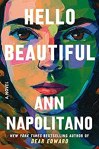
- A bunch (4 or 5) of Italian American sisters in Circling My Mother by Mary Gordon and Hello Beautiful by Ann Napolitano.
What’s the weirdest reading coincidence you’ve had lately?
Book Serendipity, Mid-December 2022 to Mid-February 2023
I call it “Book Serendipity” when two or more books that I read at the same time or in quick succession have something in common – the more bizarre, the better. This is a regular feature of mine every few months. Because I usually have 20–30 books on the go at once, I suppose I’m more prone to such incidents. The following are in roughly chronological order.
My biggest overall coincidence set this time was around Korean culture, especially food:
- A demanding Korean/American mother (“Umma”) in Sea Change by Gina Chung, Camp Zero by Michelle Min Sterling, and Crying in H Mart by Michelle Zauner.
- In the Chung and Zauner, she has eyebrows tattooed on.
- In the Chung and Sterling, there’s also a mall setting.
- Winter in Sokcho by Elisa Shua Dusapin was set in South Korea and mentioned a lot of the same cultural factors and foods. KIMCHI (which I’ve never had) was inescapable in these four books.


And the rest…
- The concept of Satan as “the enemy” in God’s Ex-Girlfriend by Gloria Beth Amodeo and All of Us Together in the End by Matthew Vollmer, two 2023 memoirs I reviewed for Foreword Reviews.
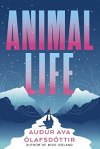
- A mention of the Newsboys (my favourite Christian rock band when I was a teenager) in God’s Ex-Girlfriend by Gloria Beth Amodeo and, of all places, Animal Life by Auður Ava Ólafsdóttir (the context: a list of songs with “Born” in the title; theirs is called – you guessed it! – “Born Again”).

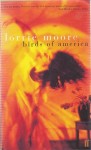
- Two Moores in my stack at once: Birds of America by Lorrie Moore and The Distance from Slaughter County by Steven Moore.
- A chapter in The Distance from Slaughter County by Steven Moore is called “Fight Night” and I was reading the early pages of Fight Night by Miriam Toews at the same time.
- A story in Birds of America by Lorrie Moore is called “Real Estate” and I was reading Real Estate by Deborah Levy at the same time.

- The Virgil quote “there are tears at the heart of things” and the theme of melancholy link Bittersweet by Susan Cain and The Heart of Things by Richard Holloway.
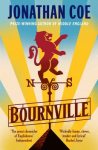
- A character who stutters in Bournville by Jonathan Coe and A Place Called Winter by Patrick Gale.

- (Werther’s) butterscotch candies are mentioned in Leila and the Blue Fox by Kiran Millwood Hargrave, Our Missing Hearts by Celeste Ng, What Napoleon Could Not Do by DK Nnuro, and How to Be Sad by Helen Russell.
- A mother who loves going to church in Bournville by Jonathan Coe and Born a Crime by Trevor Noah.
- The metaphor of a girl trapped in a block of marble ready to have her identity carved out in Sea Change by Gina Chung and Everything’s Changing by Chelsea Stickle.
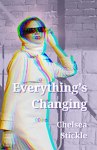
- When I read a short story about a landmine-detecting rat in Everything’s Changing by Chelsea Stickle, I knew it wasn’t the first time I’d encountered that very specific setup. It took some digging, but I found out the other was in Attrib. by Eley Williams.
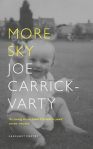
- Shane McCrae, whose forthcoming memoir Pulling the Chariot of the Sun I was also reading, is a named poetic influence/source in More Sky by Joe Varrick-Carty.

- I’m sure that after the one in Margaret Atwood’s The Door I encountered another poem about a frozen cat … but can’t now find it for the life of me.
- A character named Marnie in Martha Quest by Doris Lessing and City of Friends by Joanna Trollope.
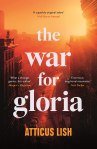
- Cape Verdean immigrants in the Boston area, then and now, in Daughters of Nantucket by Julie Gerstenblatt and The War for Gloria by Atticus Lish.

- Someone swaps green tea for coffee in Bittersweet by Susan Cain and City of Friends by Joanna Trollope.
- A half-French, half-Asian protagonist in a novella translated from the French: A Single Rose by Muriel Barbery and Winter in Sokcho by Elisa Shua Dusapin.
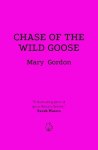
- A (semi-)historical lesbian couple as a subject of historical fiction in Daughters of Nantucket by Julie Gerstenblatt and Chase of the Wild Goose by Mary Gordon.
- A lesbian couple with a ten-year age gap breaks up because the one partner wants a baby and the other does not in My Mother Says by Stine Pilgaard and City of Friends by Joanna Trollope.
- After I specifically read three Frost Fairs books … 18th-century frolics on the frozen Thames were mentioned in The Secret Diaries of Charles Ignatius Sancho by Paterson Joseph.

- As I was reading The Secret Diaries of Charles Ignatius Sancho by Paterson Joseph, I saw him briefly mentioned in How to Be Sad by Helen Russell.
- From one 139-page book about a foreigner’s wanderings in Kyoto (often taking in temples) to another: I followed up A Single Rose by Muriel Barbery with How Kyoto Breaks Your Heart by Florentyna Leow.


- Persimmon jam is mentioned in Winter in Sokcho by Elisa Shua Dusapin and How Kyoto Breaks Your Heart by Florentyna Leow.
- A brave post-tragedy trip to a mothers and babies group ends abruptly when people are awkward or rude in All My Wild Mothers by Victoria Bennett and How to Be Sad by Helen Russell.


 As I was reading What We Talk about when We Talk about Love by Raymond Carver, I encountered a snippet from his poetry as a chapter epigraph in Bittersweet by Susan Cain.
- Sexologist Havelock Ellis inspired one of the main characters in The New Life by Tom Crewe and is mentioned in passing in Martha Quest by Doris Lessing.
What’s the weirdest reading coincidence you’ve had lately?
Chase of the Wild Goose by Mary Louisa Gordon: A Lurid Editions Reprint
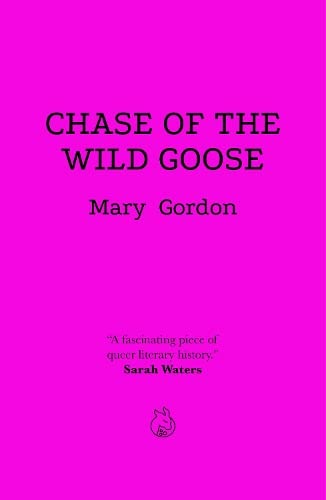 Chase of the Wild Goose, a playful, offbeat biographical novel about the Ladies of Llangollen, was first published by Leonard and Virginia Woolf’s Hogarth Press in 1936. I was delighted to be invited to take part in an informal blog tour celebrating the book’s return to print (today, 1 February) as the inaugural publication of Lurid Editions, which will focus on reprinting lesser-known and trailblazing 20th-century classics.
Mary Louisa Gordon was a medical doctor and early graduate of the London School of Medicine for Women. She also served as a prison inspector and had a special concern for the plight of female prisoners; another of her works was Penal Discipline (1922). Chase of the Wild Goose was published when she was 75. She underwrote the book to keep it in print until her death in 1941. A word-of-mouth success, it sold reasonably well in those first years.
I’d encountered the Ladies of Llangollen a couple of times before, in nonfiction: in The Art of the Wasted Day by Patricia Hampl, where they are among her exemplars of solitary, introspective living; and in Sign Here If You Exist and Other Essays by Jill Sisson Quinn, where, in the way that they blur the lines between romance and friendship, they presage her experience with an intimate female friend. This was a different way to explore their story.
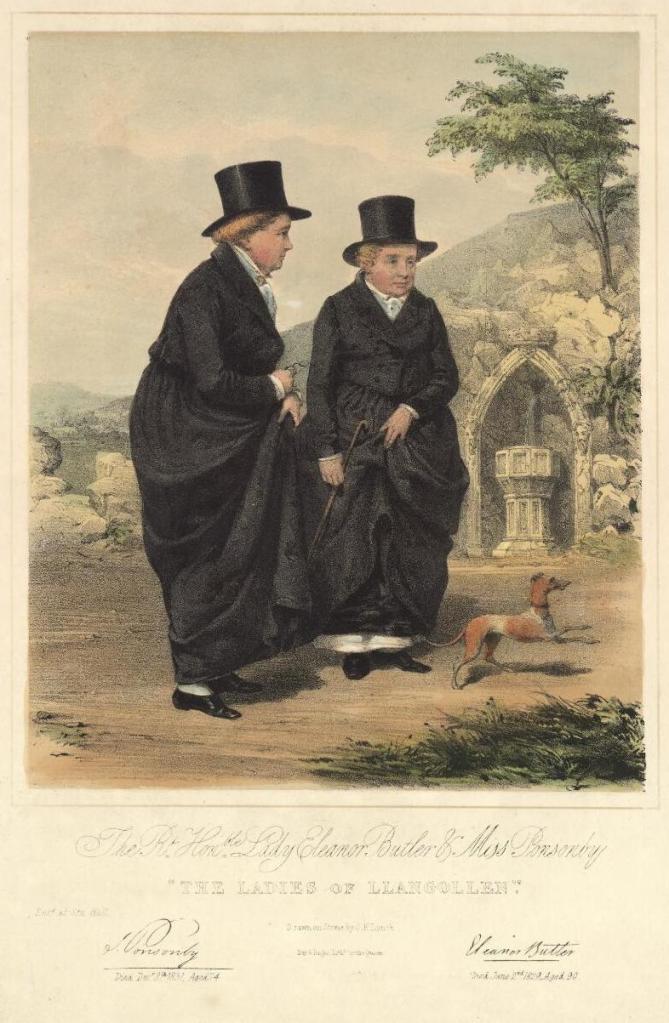
Portrait of The Rt. Honble. Lady Eleanor Butler & Miss Ponsonby ‘The Ladies of Llangollen’. By James Henry Lynch, Public domain, via Wikimedia Commons. (Wearing their customary plain riding habits and top hats.)
“The two heroines of this story, the Lady Eleanor Butler and Miss Sarah Ponsonby, have a remarkable history. They achieved fame at a stroke. They made a noise in the world which has never since died out, and which we, their spiritual descendants, continue to echo.”
These are the opening lines of what, in its first half, is a fairly straightforward chronological account of the protagonists’ lives, from their first meeting to when they flee to Wales to set up house together at Plas Newydd. They grow up in Ireland and, although their prospects differ – EB has a wealthy upbringing at Kilkenny Castle, whereas teenage SP has recently lost her mother and is being passed around relatives and acquaintances – both are often told that marriage is the only viable option. The eccentric spinster stereotype is an unkind one, but one EB is willing to risk. In one terrific scene, she shames her archbishop great-uncle for being just like everyone else and threatening to sell her to the highest bidder in matrimony. Still, the notion persists that if only the right man comes courting, they’ll change their tune.
At their first meeting EB and SP engage in an intense discussion of the possibilities for women, and within two weeks they’re already pledging to be together forever: “I think that nothing cheap, or second-rate, or faute de mieux, will ever do for you or me … We think—you and I—that we want something strange and exceptional, but something different may be ordained for us,” Eleanor says to Sarah. “From now onwards I… won’t you keep me… in your heart?” Sarah asks in parting. Eleanor replies, “I think you have been in it since before we were born.”
The strength of that romantic conviction that they are fated for each other keeps them going despite difficulties – EB’s father disowns her and cuts her off, which has inevitable financial implications, though she had already bought Plas Newydd outright; and for both of them, leaving Ireland is a wrench because they feel certain that they can never go back.

Plas Newydd. Photo by Wolfgang Sauber, CC BY-SA 3.0 , via Wikimedia Commons.
By Part II, the erstwhile fugitives, settled into local life in North Wales, enter into a sedate middle age of visitors and correspondence. Much of the material for this section is drawn from the journal EB kept. Part III is where things get really interesting: in a metafictional twist, Gordon herself enters the narrative as she meets and converses with the long-dead Ladies at their house, reflecting on the social changes that have occurred since their time.
As the Afterword by Dr Nicola Wilson notes, Chase of the Wild Goose is creative nonfiction in the same vein as Orlando, building on real-life figures and relationships in a way that must have seemed ahead of its age, not least for how it looks back to venerate queer foremothers. Although there are long stretches of the book that are tedious with biographical detail and melodramatic speeches, there is enough in the way of convincing dialogue and scenes to make up for that. While I feel the novel probably has more to offer to academics and those with a particular interest in its subjects than to general readers, I was pleased to be able to experience a rediscovered classic. I marvelled every time I reminded myself that this largely takes place in the late eighteenth to early nineteenth century. Gordon ably reproduces the diction and mores of the Ladies’ time, but her modernist intrusion takes it beyond pastiche.
As for the title, I’m most accustomed to the wild goose as a metaphor for the Holy Spirit in Celtic Christian iconography, but of course it is also a pun on the proverbial wild-goose chase. Gordon nods to both connotations; the phrase appears several times in the text and is the protagonists’ private term for their search for a life together – for liberty and for love. You have to cheer for them, achieving what so few could in their time. Here’s to you, Ladies!
With thanks to D-M Withers and Lurid Editions for the free copy for review.
A first read for Karen and Lizzys #ReadIndies challenge. I will hope to add many more before the end of the month!

Liz has also reviewed the novel.
For more information, do also read this fascinating Guardian article.
 Bookish Beck = Rebecca Foster. American transplant to England. Freelance proofreader and book reviewer.
 Bookish Beck