Books of Summer, 2: The Story of My Father by Sue Miller
I followed up my third Sue Miller novel, The Lake Shore Limited, with her only work of nonfiction, a short memoir about her father’s decline with Alzheimer’s and eventual death. James Nichols was an ordained minister and church historian who had been a professor or dean at several of the USA’s most elite universities. The first sign that something was wrong was when, one morning in June 1986, she got a call from police in western Massachusetts who had found him wandering around disoriented and knocking at people’s doors at 3 a.m. On the road and in her house after she picked him up, he described vivid visual delusions. He still had the capacity to smile “ruefully” and reply, when Miller explained what had happened and how his experience differed from reality, “Doggone, I never thought I’d lose my mind.”
Until his death five years later, she was the primary person concerned with his wellbeing. She doesn’t say much about her siblings, but there’s a hint of bitterness that the burden fell to her. “Throughout my father’s disease, I struggled with myself to come up with the helpful response, the loving response, the ethical response,” she writes. “I wanted to give him as much of myself as I could. But I also wanted, of course, to have my own life. I wanted, for instance to be able to work productively.” She had only recently found success with fiction in her forties and published two novels before her father died; she dedicated the second to him, but too late for him to understand the honor. Her main comfort was that he never stopped being able to recognize her when she came to visit.
Although the book moves inexorably towards a death, Miller lightens it with many warm and admiring stories from her father’s past. Acknowledging that she’ll never be able to convey the whole of his personality, she still manages to give a clear sense of who he was, and the trajectory of his illness, all within 170 pages. The sudden death of her mother, a flamboyant lyric poet, at age 60 of a heart attack, is a counterbalance as well as a potential contributing factor to his slow fading as each ability was cruelly taken from him: living alone, reading, going outside for walks, sleeping unfettered.

Sutton Hill, the nursing home where he lived out his final years, did not have a dedicated dementia ward, and Miller regrets that he did not receive the specialist care he needed. “I think this is the hardest lesson about Alzheimer’s disease for a caregiver: you can never do enough to make a difference in the course of the disease. Hard because what we feel anyway is that we have never done enough. We blame ourselves. We always find ourselves deficient in devotion.” She conceived of this book as a way of giving her father back his dignity and making a coherent story out of what, while she was living through it, felt like a chaotic disaster. “I would snatch him back from the meaninglessness of Alzheimer’s disease.”
And in the midst of it all, there were still humorous moments. Her poor father fell in love with his private nurse, Marlene, and believed he was married to her. Awful as it was, there was also comedy in an extended family story Miller tells, one I think I’m unlikely to forget: They had always vacationed in New Hampshire rental homes, and when her father learned one of the opulent ‘cottages’ was coming up for sale, he agreed to buy it sight unseen. The seller was a hoarder … of cats. Eighty of them. He had given up cleaning up after them long ago. When they went to view the house her father had already dropped $30,000 on, it was a horror. Every floor was covered inches deep in calcified feces. It took her family an entire summer to clean the place and make it even minimally habitable. Only afterwards could she appreciate the incident as an early sign of her father’s impaired decision making.
I’ve read a fair few dementia-themed memoirs now. As people live longer, this suite of conditions is only going to become more common; if it hasn’t affected one of your own loved ones, you likely have a friend or neighbor who has had it in their family. This reminded me of other clear-eyed, compassionate yet wry accounts I’ve read by daughter-caregivers Elizabeth Hay (All Things Consoled) and Maya Shanbhag Lang (What We Carry). It was just right as a pre-Father’s Day read, and a novelty for fans of Miller’s novels. (Charity shop) 
Booker Prize 2020: Longlist Progress & Shortlist Predictions
The 2020 Booker Prize shortlist will be announced tomorrow, September 15th. Following on from my initial thoughts … I’ve only managed to read one more book from the longlist, reviewed in brief below along with some thoughts on a few other nominees I’ve sampled.
Burnt Sugar by Avni Doshi
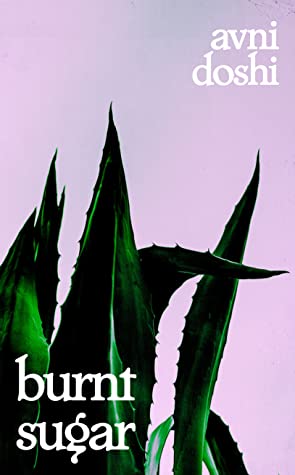 This short, intense novel is about two women locked into resentful competition. Tara and Antara also happen to be mother and daughter. When the long-divorced Tara shows signs of dementia, artist Antara and her American-born husband Dilip take her into their home in Pune, India. Her mother’s criticism and strange behavior stir up flashbacks to the 1980s and 1990s, when Antara felt abandoned by Tara during the four years they lived in an ashram and then her time at boarding school. Emotional turmoil led to medical manifestations like excretory issues and an eating disorder, and both women fell in love in turn with a homeless photographer named Reza Pine.
When Antara learns she is pregnant, the whole cycle of guilt and maternal ambivalence looks set to start again. Memory is precarious and full of potential hurt here, and Antara’s impassive narration is perfectly suited to the story of a toxic relationship. Neither the UK title nor the one for the original Indian publication (Girl in White Cotton) seems quite right to me; I might have chosen something related to the cover and endpaper image of the aloe plant: something that is as spiky as a cactus yet holds out hope of balm. This was a good fictional follow-up to a memoir I read earlier in the year about dementia’s effect on an Indian-American mother–daughter pair, What We Carry by Maya Shanbhag Lang.
Favorite passages:
It seems to me now that this forgetting is convenient, that she doesn’t want to remember the things she has said and done. It feels unfair that she can put away the past from her mind while I’m brimming with it all the time. I fill papers, drawers, entire rooms with records, notes, thoughts, while she grows foggier with each passing day.
I will never be free of her. She’s in my marrow and I’ll never be immune.
My rating: 
My thanks to Hamish Hamilton for the free copy for review.
DNFed:
Apeirogon by Colum McCann
 Reminiscent of the work of David Grossman, this is the story of two fathers, one Israeli and one Palestinian, who lost their daughters to the ongoing conflict between their nations: Rami Elhanan’s 13-year-old daughter Smadar was killed by a Palestinian suicide bomber, while Bassam Aramin’s 10-year-old daughter Abir was shot by Israeli border police. The two men become unlikely friends through their work with a peacemaking organization, with Bassam also expanding his sense of compassion through his studies of the Holocaust.
It doesn’t take long to piece the men’s basic stories together. But the novel just keeps going. It’s in numbered vignettes ranging in length from one line to a few pages, and McCann brings in many tangentially related topics such as politics, anatomy, and religious history. Bird migration is frequently used as a metaphor. Word association means some lines feel arbitrary and throwaway. Looking ahead, I could see the numbering goes up to 500, at which point there is a long central section narrated in turn by the two main characters, and then goes back down to 1, mimicking the structure of the One Thousand and One Nights, mentioned in #101.
The narrative sags under the challenge McCann has set for himself. At 200 pages, this might have been a masterpiece. Though still powerful, it sprawls into repetition and pretension. (I read the first 150 pages.)
My rating: 
Set aside temporarily:
 The New Wilderness by Diane Cook: The blurb promised an interesting mother–daughter relationship, but so far this is dystopia by numbers. A wilderness living experiment started with 20 volunteers, but illnesses and accidents have reduced their number. Bea was an interior decorator and her partner, Glen, a professor of anthropology – their packing list and habits echo primitive human culture. I loved the rituals around a porcelain teacup, but in general the plot and characters weren’t promising. I read Part I (47 pages) and would only resume if this makes the shortlist, which seems unlikely. (See this extraordinarily detailed 1-star Goodreads review from someone who DNFed the novel near where I am now.)
 Shuggie Bain by Douglas Stuart: Dialect + depressing subject matter = a hard slog. Poverty and alcoholism make life in 1980s Glasgow a grim prospect for Agnes Bain and her three children. So far, the novel is sticking with the parents and the older children, with the title character barely getting a mention. I did love the scene where Catherine goes to Leek’s den in the pallet factory. This is a lot like the account Damian Barr gives of his childhood in Maggie & Me. I left off on page 82 but will go back to this if it makes the shortlist.
So that makes a total of 2 read, 4 DNFed, 2 set aside (and might yet DNF), 2 I still hope to read (one of which I’m awaiting from the library; the other is on my birthday wish list), and 3 I don’t intend to read. Not a great showing at all this year!
Still, I can never resist an opportunity to make predictions about a prize shortlist, so here’s what I expect to still be in the running after tomorrow. Weighty, diverse; a mixture of historical and contemporary.
- The Mirror & The Light by Hilary Mantel (will win)
- Apeirogon by Colum McCann
- The Shadow King by Maaza Mengiste
- Shuggie Bain by Douglas Stuart
- Real Life by Brandon Taylor
- How Much of These Hills Is Gold by C. Pam Zhang
What have you read from the longlist? What do you expect to be shortlisted?
April Releases: Motherhood, Medicine, Wine … And an Aardvark
I’m averaging four new releases a month: a nicely manageable number. In April I read a memoir about a mother’s dementia, a bizarre little novel about a stuffed aardvark linking two centuries, a history of medicine in graphic novel form, and a sommelier’s memoir.
My top recommendation for the month is:
What We Carry by Maya Shanbhag Lang
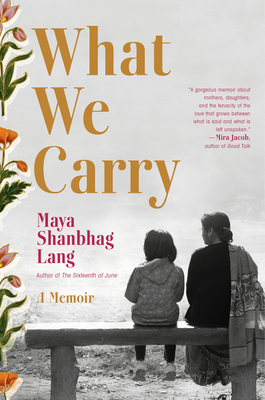 Maya Lang’s novel The Sixteenth of June* was one of my top three novels of 2014, so I was eager to read her next book, a forthright memoir of finding herself in the uncomfortable middle (the “sandwich generation”) of three generations of a female family line. Her parents had traveled from India to the USA for her mother’s medical training and ended up staying on permanently after she became a psychiatrist. Lang had always thought of her mother as a superwoman who managed a career alongside parenthood, never asked for help, and reinvented herself through a divorce and a career change.
When Lang gave birth to her own daughter, Zoe, this model of self-sufficiency mocked her when she had postpartum depression and needed to hire a baby nurse. It was in her daughter’s early days, just when she needed her mother’s support the most, that her mother started being unreliable: fearful and forgetful. Gradually it became clear that she had early-onset Alzheimer’s. Lang cared for her mother at home for a year before making the difficult decision to see her settled into a nearby nursing home.
Like Elizabeth Hay’s All Things Consoled, this is an engaging, bittersweet account of obligation, choices and the secrets that sometimes come out when a parent enters a mental decline. I especially liked how Lang frames her experiences around an Indian folktale of a woman who enters a rising river, her child in her arms. She must decide between saving her child or herself. Her mother first told this story soon after Zoe’s birth to acknowledge life’s ambiguity: “Until we are in the river, up to our shoulders—until we are in that position ourselves, we cannot say what the woman will do. We must not judge. That is the lesson of the story. Whatever a woman decides, it is not easy.” The book is a journey of learning not to judge her mother (or herself), of learning to love despite mistakes and personality changes.
*One for me to reread in mid-June!
Published by Dial Press on the 28th. I read an e-copy via NetGalley.
Full disclosure: Maya and I are Facebook friends.
Other April releases to look out for:
(All: )
Enter the Aardvark by Jessica Anthony
 On a scoreboard of the most off-the-wall, zany and fun novels I’ve read, this one would be right up there with Ned Beauman’s Boxer, Beetle and Alex Christofi’s Glass. The two story lines, one contemporary and one set in the 1870s, are linked by a taxidermied aardvark that makes its way from Namibia to the Washington, D.C. suburbs by way of Victorian England.
The aardvark was collected by naturalist Sir Richard Ostlet and stuffed by Titus Downing, his secret lover. Ostlet committed suicide in Africa, but his wife could still sense him walking up and down outside her London home. In the present day, Republican congressman Alexander Paine Wilson, who emulates Ronald Reagan in all things, gets a FedEx delivery of a taxidermied aardvark – an apparent parting gift from Greg Tampico before the latter committed suicide. To keep his gay affair from becoming public knowledge, Wilson decides it’s high time he found himself a trophy wife. But the damned aardvark keeps complicating things in unexpected ways.
A scene where a police officer stops Wilson for texting and driving and finds the stuffed aardvark in the back of his SUV had me laughing out loud (“Enter the aardvark, alight on its mount. Enter the aardvark, claw raised, head covered with a goddamned gourmet $22 dish towel that suddenly looks incredibly suspicious hanging over the head of an aardvark, like it’s an infidel”). History repeats itself amusingly and the aardvark is an entertaining prop, but Wilson is too obviously odious, and having his narrative in the second person doesn’t add anything. This is not a debut novel but reads like one: full of bright ideas, but falling a bit short in the execution.
Published by Doubleday on the 23rd. I won a proof copy in a Twitter giveaway.
Medicine: A Graphic History by Jean-Noël Fabiani
 [Illustrated by Philippe Bercovici; translated from the French by Edward Gauvin]
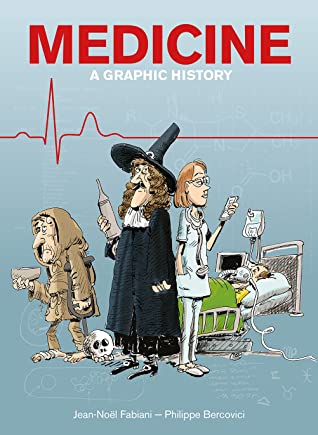
From prehistory to nanotechnology, this is a thorough yet breezy survey of what people have learned about the body and how to treat it. (In approach it reminded me most of another SelfMadeHero graphic novel I reviewed last year, ABC of Typography.) Some specific topics are the discovery of blood circulation, the development of anesthesia, and the history of mental health treatment.
Fabiani, a professor as well as the head of cardiac surgery at Georges Pompidou European Hospital in Paris, focuses on the key moments when ideas became testable theories and when experiments gave groundbreaking results. While he provided the one-page introduction to each chapter and the expository writing at the head of each comic pane, I suspect it was illustrator Philippe Bercovici who added most of the content in the speech bubbles, including plenty of jokes (especially since Fabiani thanks Bercovici for bringing his talent and humor to the project).
This makes for a lighthearted book that contains enough detail so that you feel like you are still getting the full story. Unsurprisingly, I took the most interest in chapters entitled The Great Epidemics and A Few Modern Plagues. I would especially recommend this to teenagers with an interest in medicine.
Published by SelfMadeHero on the 9th. My thanks to the publisher for the free copy for review.
Wine Girl by Victoria James
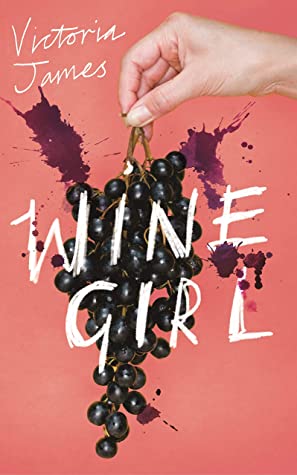 In 2012, at age 21, Victoria James became America’s youngest certified sommelier. Still in her twenties, she has since worked in multiple Michelin-starred restaurants in New York City and became the only American female to win the Sud de France Sommelier Challenge. But behind all the competition wins, celebrity sightings, and international travel for wine festivals and conferences is a darker story.
This is a tell-all about a toxic restaurant culture of overworked employees and casual sexism. James regularly worked 80-hour weeks in addition to her wine school studies, and suffered multiple sexual assaults. In addition, sexual harassment was common – even something as seemingly harmless as the title epithet a dismissive diner launched at her when he ordered a $650 bottle of wine for his all-male table and then told her it was corked and had to be replaced. “Wine girl” was a slur against her for her age, her gender and her presumed lack of experience, even though by that point she had an encyclopedic knowledge of wine varieties and service.
That incident from the prologue was my favorite part of the book; unfortunately, nothing that came afterwards really lived up to it. The memoir goes deep into James’s dysfunctional upbringing (her parents’ bitter divorce, her mother’s depression, her father’s alcoholism and gambling, her own battle with addictions), which I found I had little interest in. It’s like Educated lite, but with a whiney tone: “I grew up in a household of manipulation and neglect, left to fend for myself.”
For those interested in reading about wine and restaurant culture, I’d recommend Cork Dork by Bianca Bosker and Sweetbitter by Stephanie Danler (one of my pairings here) instead.
A favorite line: “Like music, the wonders of art, food, and beverage can transcend all boundaries. … I wanted to capture that feeling, the exhilaration of familiarity, and bring people together through wine.”
Published by Fleet on the 16th. My thanks to the publisher for the free copy for review.
What recent releases can you recommend?
2020 Reading Goals and Anticipated Releases
Review copies have started to feel like an obligation I don’t want. Almost as soon as one comes through the door, I regret having asked for or accepted it. (Now I have to read the danged thing, and follow through with a review!) So I’m going to cut back severely this year. The idea is to wait until late in 2020 to figure out which are the really worthwhile releases, and then only read those instead of wading through a lot of mediocre stuff.
“Until one has some kind of professional relationship with books one does not discover how bad the majority of them are. In much more than nine cases out of ten the only objectively truthful criticism would be ‘This book is worthless,’ while the truth about the reviewer’s own reaction would probably be ‘This book does not interest me in any way, and I would not write about it unless I were paid to’. … The best practice, it has always seemed to me, would be simply to ignore the great majority of books and to give very long reviews … to the few that seem to matter.” (from “Confessions of a Book Reviewer” in Books v. Cigarettes by George Orwell)
These are the January to May 2020 releases I own so far, with perhaps a few more on the way. I acquired a lot of these in September through November, before I made the decision to cut down on review copies.

I’m also looking forward to new books by Sebastian Barry, Susanna Clarke, Stephanie Danler, Anne Enright, Yaa Gyasi, John Irving, Daisy Johnson, Daniel Kehlmann, Sue Monk Kidd, Rebecca Dinerstein Knight, Maya Shanbhag Lang, Helen Macdonald, Hilary Mantel, David Mitchell, Sarah Moss, Mark O’Connell, Maggie O’Farrell, Anne Tyler, Abraham Verghese, Raynor Winn and Molly Wizenberg.
I can still access new/pre-release books via my public library and NetGalley/Edelweiss, especially fiction to review for BookBrowse and nonfiction for Kirkus and the TLS.
This resolution is not about denying or punishing myself, as bloggers’ book-buying bans sometimes seem to be, so if an unmissable book (e.g. HAMNET) is offered on Twitter or via my blog, I won’t consider it cheating to say yes. FOMO will likely be a chronic condition for me this year, but ultimately I hope to do myself a favor.
With the reading time I’m saving, I plan to make major inroads into those 440 print books I own and haven’t read yet, and to do a lot of re-reading (I only managed one and a bit rereads in 2019). I might well blog less often and only feature those books that have been exceptional for me. I’ve set aside this shelf of mostly fiction that I think deserves re-reading soon:

“I do not think we go back to the exciting books,—they do not usually leave a good taste in the mouth; neither to the dull books, which leave no taste at all in the mouth; but to the quiet, mildly tonic and stimulating books,—books that have the virtues of sanity and good nature, and that keep faith with us.” (from “On the Re-Reading of Books” in Literary Values by John Burroughs)
I hope (as always) to read more classics, literature in translation and doorstoppers. Travel and biography are consistently neglected categories for me. Though I won’t set specific goals for these genres, I will aim to see measurable progress. I will also take advantage of the Wellcome Book Prize being on hiatus this year to catch up on some of the previous winners and shortlisted books that I’ve never managed to read.
Mostly, I want to avoid any situations that make me feel guilty or mean (so no more books received direct from the author, and any review books that disappoint will be quietly dropped), follow my whims, and enjoy my reading.
 Bookish Beck = Rebecca Foster. American transplant to England. Freelance proofreader and book reviewer.
 Bookish Beck