September’s Focus: Short Stories
This is the seventh year in a row in which I’m making a special effort to read short stories in September; otherwise, story collections tend to languish on my shelves (and Kindle) unread. In September 2020 I read 8 collections, and in September 2021 it was 12. How many can I get through this time?! Here are my options, including, at far right, some I’m partway through, a thematic trio (“Birds” titles) I fancy reviewing together, and a few from the library.


To my surprise, if I count linked short stories, I’ve already read 13 collections this year. Highlights: Dance Move by Wendy Erskine, The Summer Book by Tove Jansson, Antipodes by Holly Goddard Jones, and How High We Go in the Dark by Sequoia Nagamatsu.
 The best of the lot, though, has been Stories from the Tenants Downstairs by Sidik Fofana, which I’ll be reviewing for BookBrowse over the weekend. It’s a character- and voice-driven set of eight stories about the residents of a Harlem apartment complex, many of them lovable rogues who have to hustle to try to make rent in this gentrifying area.
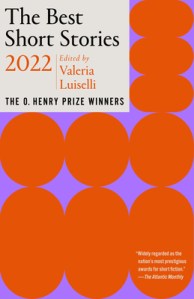 A September release I’ll quickly plug: The Best Short Stories 2022: The O. Henry Prize Winners, selected by Valeria Luiselli. I read this for Shelf Awareness and my review will be appearing in a couple of weeks. Half of the 20 stories are in translation – Luiselli insists this was coincidental – so it’s a nice taster of international short fiction. Contributing authors you will have heard of: Chimamanda Ngozi Adichie, Lorrie Moore, Samanta Schweblin and Olga Tokarczuk. The style runs the gamut from metafiction to sci-fi/horror. Covid-19, loss and parenting are frequent elements. My two favourites: Joseph O’Neill’s “Rainbows,” about sexual misconduct allegations, then and now; and the absolutely bonkers novella-length “Horse Soup” by Vladimir Sorokin, about a woman and a released prisoner who meet on a train and bond over food. (13 September, Anchor Books)
 Here’s a short story collection I received for review but, alas, couldn’t finish: Milk Blood Heat by Dantiel W. Moniz. This was longlisted for the Dylan Thomas Prize and won the NB Magazine Blogger’s Book Prize. The link, I have gathered, is adolescent girls in Florida. I enjoyed the title story, which opens the collection and takes peer pressure and imitation to an extreme, but couldn’t get through more than another 1.5 after that; they left zero impression.
Currently reading: The Boat by Nam Le (it won the Dylan Thomas Prize; I’ve read the first story so far and it was knockout!), Birds of a Lesser Paradise by Megan Mayhew Bergman.
 Resuming soon: The Predatory Animal Ball by Jennifer Fliss (e-book), Hearts & Bones by Niamh Mulvey, The Secret Lives of Church Ladies by Deesha Philyaw – all were review copies.
Are you a short story fan? Read any good ones recently?
Join me in this low-key challenge if you wish!
Snow, Dog, Foot by Claudio Morandini: A Peirene Press Novella
Who could resist the title of this Italian bestseller? A black comedy about a hermit in the Italian Alps, it starts off like Robert Seethaler’s A Whole Life and becomes increasingly reminiscent of Olga Tokarczuk’s Drive Your Plow Over the Bones of the Dead with its remote setting, hunting theme, and focus on an older character of dubious mental health.
Adelmo Farandola hasn’t washed in years. Why bother since he only sees fellow humans every six months when he descends to the valley to stock up on food and wine? When he arrives at the general store at the start of autumn, though, he gets a surprise. The shopkeeper laughs at him, saying he nearly cleared her out the week before. Yet he doesn’t remember having been there since April. Sure enough, when he gets back to the cabin he sees that his stable is full of supplies. He also finds an old dog that won’t go away and soon starts talking to him.

Estranged from his brother, who co-owns the property, and still haunted by the trauma of the war years, when he had to hide in a mine shaft, Adelmo is used to solitude and starvation rations. But now, with the dog around, there’s an extra mouth to feed. Normally Adelmo might shoot an occasional chamois for food, but a pesky mountain ranger keeps coming by and asking if Adelmo has a shotgun – and whether he has a license for it.
When winter sets in and heavy snowfall and then an avalanche trap Adelmo and the dog in the cabin, they are driven to the limits of their resilience and imagination. The long-awaited thaw reveals something disturbing: a blackened human foot poking out of a snowdrift. Each day Adelmo forgets about the corpse and the dog has to remind him that the foot has been visible for a week now, so they really should alert someone down in the village…
The hints of Adelmo’s dementia and mental illness accumulate gradually, making him a highly unreliable point-of-view character. This is a taut story that alternates between moments of humor and horror. I was so gripped I read it in one evening sitting, and would call it one of the top two Peirene books I’ve read (along with The Looking-Glass Sisters by Gøhril Gabrielsen).
My rating: 
Snow, Dog, Foot will be published in the UK on the 15th. It was translated from the Italian by J. Ockenden, who won the 2019 Peirene Stevns Translation Prize for the work in progress. With thanks to Peirene Press for the free copy for review.
Peirene Press issues its novellas in thematic trios. This is the first in 2020’s “Closed Universe” series, which will also include Ankomst by Gøhril Gabrielsen, about a Norwegian climatologist who has left her family to study seabird parenting and meet up with a lover; and The Pear Field by Nana Ekvtimishvili, set at a Georgian orphanage. (I’m especially keen on the former.)
Three Recent Review Books: Holmes, Tokarczuk & Whitaker
Where the Road Runs Out by Gaia Holmes (2018)
A gem of a poetry collection. Gaia Holmes is a creative writing tutor in Halifax, Yorkshire. This is her third volume of poetry. A major thread of the book is caring for her father at home and in the hospital as he was dying on the Orkney Islands – a time of both wonder and horror. It felt like she could never get anything right and kept angering him, as she recounts in “Feckless.” Even after his death, she continued to see him. I especially loved the food metaphors in “Kummerspeck” (a German term for emotional overeating; literally, “grief bacon”), where sweets, meat and salt cannot sate the cravings of ravenous grief.
 Other themes include pre-smartphone life (“Before All This” – not everything needed to be documented, you could live where you were and not rely on others’ constant approval), the lengths women will go to impress men (“The Audition”), being the only childless person in a room (“Ballast”) and a marriage falling apart (“Your Orange Raincoat”). Also notable are a multi-part tribute to the Chilean miners trapped in 2010 and an imagined outbreak of violence between runners and ramblers. Holmes channels Anne Sexton in “Angel of the Checkout,” with its wonderful repeated line “do you know the price of love?”, and Mary Oliver in the first stanza of “Wild Pigeons.”
There are no rhymes, just alliteration and plays on words, with a lot of seaside imagery. I would highly recommend this to poetry lovers and newbies alike.
A favorite passage:
I have no manual
for dying
so I do what I think
you’re supposed to do
in this situation.
I light the stub
of last night’s candle,
utter something holy
and stand
at your bedside
with the unfamiliar taste
of the Lord’s Prayer
clinging to my lips.
(from “The Lord’s Prayer”)
My rating: 
My thanks to Comma Press for the free copy for review.
Drive Your Plow over the Bones of the Dead by Olga Tokarczuk (2009; English translation, 2018)
[Translated from the Polish by Antonia Lloyd-Jones]
 What a bizarre novel! Janina Dusezjko is a delightfully twisted Miss Marple type who lives in a remote forest cabin in Poland, near the Czech border. She’s determined to learn the truth of what happened to her two beloved dogs, whom she calls her Little Girls. When four different men who were involved in local hunting – her unpleasant neighbor, a deer poacher whom she nicknamed Big Foot; a police commandant; a fox farm owner; and the president of the mushroom pickers’ association – are all found murdered, her theorizing runs wild. She believes the animals are taking revenge, and intends to use her astrology skills to glean more information about these untimely deaths. The police, meanwhile, dismiss her as a hysterical old crone.
The title comes from William Blake, whose writing is an undercurrent to the book: Dizzy, Janina’s former English pupil, is reading and translating Blake, and I reckon Janina’s nutty philosophy and capitalization of random words, especially abstractions, may be an homage to Blake. I probably missed some of the more intricate allusions, and my attention wandered for a while during the middle of the book, but this was an offbeat and mostly enjoyable read. I struggled with Flights, but I’m glad I tried Tokarczuk again.
A representative passage:
“We have this body of ours, a troublesome piece of luggage, we don’t really know anything about it and we need all sorts of Tools to find out about its most natural processes.”
My rating: 
My thanks to Fitzcarraldo Editions for the free copy for review.
Chicken Unga Fever: Stories from the Medical Frontline by Dr. Phil Whitaker (2018)
This is a selection of Whitaker’s “Health Matters” columns from the New Statesman magazine. In his time as a GP he’s seen his fair share of common and unusual illnesses, and has so honed his diagnosing skills that he can start to figure out what’s wrong based on how someone stands up and walks towards his office from the waiting room. That’s why he’s a “meeter” (calling names in person and escorting patients down the hallway) rather than a “buzzer” (waiting for them to come to him, having being called via a digital screen).
 In digestible essays of 2.5 pages each, Whitaker discusses mental health sectioning, home visiting, the rise of technology and antibiotic resistance, the culture of complaint, zealous overscreening and overtreatment (he’d have an ally there in Barbara Ehrenreich: see her Natural Causes) and the tricky issue of getting consent from teenagers. He also recreates individual cases that have left an impression on him. When it comes to diagnoses, he recognizes that sometimes it’s a matter of luck – like when he landed on Cushing’s disease based on a rare combination of common symptoms – and that sometimes you have to admit you don’t know and turn to the Internet. That’s where the title comes from – an out-of-hours caller’s approximation of suspected chikungunya fever.
This is an enjoyable book for medically minded laymen to read a few pieces at a time, though I suspect its take on various issues could soon be outdated.
My rating:
My thanks to Salt Publishing for the free copy for review.
 Bookish Beck = Rebecca Foster. American transplant to England. Freelance proofreader and book reviewer.
 Bookish Beck