20 Books of Summer, 5: Crudo by Olivia Laing (2018)
Behind on the challenge, as ever, I picked up a novella. It vaguely fits with a food theme as crudo, “raw” in Italian, can refer to fish or meat platters (depicted on the original hardback cover). In this context, though, it connotes the raw material of a life: a messy matrix of choices and random happenings, rooted in a particular moment in time.
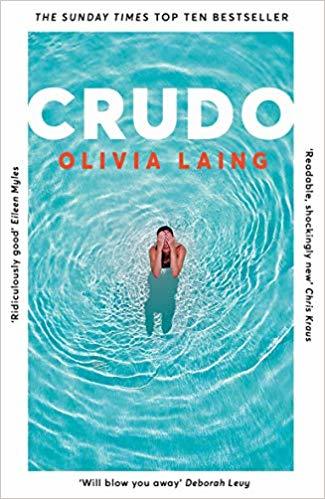 This is set over four and a bit months of 2017 and steeped in the protagonist’s detached horror at political and environmental breakdown. She’s just turned 40 and, in between two trips to New York City, has a vacation in Tuscany, dabbles in writing and art criticism, and settles into married life in London even though she’s used to independence and nomadism.
For as hyper-real as the contents are, Laing is doing something experimental, even fantastical – blending biography with autofiction and cultural commentary by making her main character, apparently, Kathy Acker. Never mind that Acker died of breast cancer in 1997.
I knew nothing of Acker but – while this is clearly born of deep admiration, as well as familiarity with her every written word – that didn’t matter. Acker quotes and Trump tweets are inserted verbatim, with the sources given in a “Something Borrowed” section at the end.
Like Jenny Offill’s Weather, this is a wry and all too relatable take on current events and the average person’s hypocrisy and sense of helplessness, with the lack of speech marks and shortage of punctuation I’ve come to expect from ultramodern novels:
she might as well continue with her small and cultivated life, pick the dahlias, stake the ones that had fallen down, she’d always known whatever it was wasn’t going to last for long.
40, not a bad run in the history of human existence but she’d really rather it all kept going, water in the taps, whales in the oceans, fruits and duvets, the whole sumptuous parade
This is how it is then, walking backwards into disaster, braying all the way.
 I’ve somehow read almost all of Laing’s oeuvre (barring her essays, Funny Weather) and have found books like The Trip to Echo Spring, The Lonely City and Everybody wide-ranging and insightful. Crudo feels as faithful to life as Rachel Cusk’s autofiction or Deborah Levy’s autobiography, but also like an attempt to make something altogether new out of the stuff of our unprecedented times. No doubt some of the intertextuality of this, her only fiction to date, was lost on me, but I enjoyed it much more than I expected to – it’s funny as well as eminently quotable – and that’s always a win. (Little Free Library)
Monsters: A Fan’s Dilemma by Claire Dederer
The question posed by Claire Dederer’s third hybrid work of memoir and cultural criticism might be stated thus: “Are we still allowed to enjoy the art made by horrible people?” You might be expecting a hard-line response – prescriptive rules for cancelling the array of sexual predators, drunks, abusers and abandoners (as well as lesser offenders) she profiles. Maybe you’ve avoided Monsters for fear of being chastened about your continuing love of Michael Jackson’s music or the Harry Potter series. I have good news: This book is as compassionate as it is incisive, and while there is plenty of outrage, there is also much nuance.
Dederer begins, in the wake of #MeToo, with film directors Roman Polanski and Woody Allen, setting herself the assignment of re-watching their masterpieces while bearing in mind their sexual crimes against underage women. In a later chapter she starts referring to this as “the stain,” a blemish we can’t ignore when we consider these artists’ work. Try as we might to recover prelapsarian innocence, it’s impossible to forget allegations of misconduct when watching The Cosby Show or listening to Miles Davis’s Kind of Blue. Nor is it hard to find racism and anti-Semitism in the attitude of many a mid-20th-century auteur.

Does “genius” excuse all? Dederer asks this in relation to Picasso and Hemingway, then counteracts that with a fascinating chapter about Lolita – as far as we know, Nabokov never engaged in, or even contemplated, sex with minors, but he was able to imagine himself into the mind of Humbert Humbert, an unforgettable antihero who did. “The great writer knows that even the blackest thoughts are ordinary,” she writes. Although she doesn’t think Lolita could get published today, she affirms it as a devastating picture of stolen childhood.
“The death of the author” was a popular literary theory in the 1960s that now feels passé. As Dederer notes, in the Internet age we are bombarded with biographical information about favourite writers and musicians. “The knowledge we have about celebrities makes us feel we know them,” and their bad “behavior disrupts our ability to apprehend the work on its own terms.” This is not logical, she emphasizes, but instinctive and personal. Some critics (i.e., white men) might be wont to dismiss such emotional responses as feminine. Super-fans are indeed more likely to be women or teenagers, and heartbreak over an idol’s misdoings is bound up with the adoration, and sense of ownership, of the work. She talks with many people who express loyalty “even after everything” – love persists despite it all.

U.S. cover
In a book largely built around biographical snapshots and philosophical questions, Dederer’s struggle to make space for herself as a female intellectual, and write a great book, is a valuable seam. I particularly appreciated her deliberations on the critic’s task. She insists that, much as we might claim authority for our views, subjectivity is unavoidable. “We are all bound by our perspectives,” she asserts; “consuming a piece of art is two biographies meeting: the biography of the artist, which might disrupt the consuming of the art, and the biography of the audience member, which might shape the viewing of the art.”
While men’s sexual predation is a major focus, the book also weighs other sorts of failings: abandonment of children and alcoholism. The “Abandoning Mothers” chapter posits that in the public eye this is the worst sin that a woman can commit. Her two main examples are Doris Lessing and Joni Mitchell, but there are many others she could have mentioned. Even giving more mental energy to work than to childrearing is frowned upon. Dederer wonders if she has been a monster in some ways, and confronts her own drinking problem.

A painting by Cathy Lomax of girls at a Bay City Rollers concert.
Here especially, the project reminded me most of books by Olivia Laing: the same mixture of biographical interrogation, feminist cultural criticism, and memoir as in The Trip to Echo Spring and Everybody; some subjects even overlap (Raymond Carver in the former; Ana Mendieta and Valerie Solanas in the latter – though, unfortunately, these two chapters by Dederer were the ones I thought least necessary; they could easily have been omitted without weakening the argument in any way). I also thought of how Lara Feigel’s Free Woman examines her own life through the prism of Lessing’s.
The danger of being quick to censure any misbehaving artist, Dederer suggests, is a corresponding self-righteousness that deflects from our own faults and hypocrisy. If we are the enlightened ones, we can look back at the casual racism and daily acts of violence of other centuries and say: “1. These people were simply products of their time. 2. We’re better now.” But are we? Dederer redirects all the book’s probing back at us, the audience. If we’re honest about ourselves, and the people we love, we will admit that we are all human and so capable of monstrous acts.
Dederer’s prose is forthright and droll; lucid even when tackling thorny issues. She has succeeded in writing the important book she intended to. Erudite, empathetic and engaging from start to finish, this is one of the essential reads of 2023. 
With thanks to Sceptre for the free copy for review.
Buy Monsters from Bookshop.org [affiliate link]
Some of My Most Anticipated Releases of 2021
Although 120+ books that will be published in 2021 are already on my radar, I’ve limited myself to the 20 I’m most excited about. The modest number is a cheat in that I’ve already read a couple of books from this period in advance (and I’m currently reading another two), and I haven’t listed any that I already own as proofs or finished copies (pictured here) or have been promised. With a couple of exceptions, these books are due out between January and June.
I’m also not counting these three forthcoming books that I’ve sponsored via Kickstarter (the Trauma anthology) or Unbound:


Two that I read as U.S. e-books but would recommend that UK-based readers look out for in 2021 are Memorial by Bryan Washington (Jan. 7, Atlantic) and Transcendent Kingdom by Yaa Gyasi (March 4, Penguin).


The following are in UK release date order, within sections by genre; the quoted descriptions are from the publisher blurbs on Goodreads. Much more fiction is catching my eye this time.
Fiction
 The Living Sea of Waking Dreams by Richard Flanagan [Jan. 14, Chatto & Windus / May 25, Knopf] “In a world of perennial fire and growing extinctions, Anna’s aged mother … increasingly escapes through her hospital window … When Anna’s finger vanishes and a few months later her knee disappears, Anna too feels the pull of the window. … A strangely beautiful novel about hope and love and orange-bellied parrots.” I’ve had mixed success with Flanagan, but the blurb draws me and I’ve read good early reviews so far. [Library hold]
 The Charmed Wife by Olga Grushin [Jan. 21, Hodder & Stoughton / Jan. 12, Putnam] “Cinderella married the man of her dreams – the perfect ending she deserved after diligently following all the fairy-tale rules. Yet now, two children and thirteen-and-a-half years later, things have gone badly wrong. One night, she sneaks out of the palace to get help from the Witch who, for a price, offers love potions to disgruntled housewives.” A feminist retelling. I loved Grushin’s previous novel, Forty Rooms. [Edelweiss download]
 The Prophets by Robert Jones Jr. [Jan. 21, Quercus / Jan. 5, G.P. Putnam’s Sons] “A singular and stunning debut novel about the forbidden union between two enslaved young men on a Deep South plantation, the refuge they find in each other, and a betrayal that threatens their existence.” Lots of hype about this one. I’m getting Days Without End vibes, and the mention of copious biblical references is a draw for me rather than a turn-off. The cover looks so much like the UK cover of The Vanishing Half! [Publisher request pending]
 Mrs Death Misses Death by Salena Godden [Jan. 28, Canongate] “Mrs Death has had enough. She is exhausted from spending eternity doing her job and now she seeks someone to unburden her conscience to. Wolf Willeford, a troubled young writer, is well acquainted with death, but until now hadn’t met Death in person – a black, working-class woman who shape-shifts and does her work unseen. Enthralled by her stories, Wolf becomes Mrs Death’s scribe, and begins to write her memoirs.” [NetGalley download / Library hold]
 No One Is Talking About This by Patricia Lockwood [Feb. 16, Bloomsbury / Riverhead] “A woman known for her viral social media posts travels the world speaking to her adoring fans … Suddenly, two texts from her mother pierce the fray … [and] the woman confronts a world that seems to contain both an abundance of proof that there is goodness, empathy and justice in the universe, and a deluge of evidence to the contrary.” Lockwood’s memoir, Priestdaddy, is an all-time favorite of mine. [NetGalley download / Publisher request pending]
 A Town Called Solace by Mary Lawson [Feb. 18, Chatto & Windus / Feb. 16, Knopf Canada] “It’s North Ontario in 1972, and seven-year-old Clara’s teenage sister Rose has just run away from home. At the same time, a strange man – Liam – drives up to the house next door, which he has just inherited from Mrs Orchard, a kindly old woman who was friendly to Clara … A beautiful portrait of a small town, a little girl and an exploration of childhood.” I’ve loved the two Lawson novels I’ve read. [Publisher request pending]
 Klara and the Sun by Kazuo Ishiguro [March 2, Faber & Faber / Knopf] Synopsis from Faber e-mail: “Klara and the Sun is the story of an ‘Artificial Friend’ who … is warned not to invest too much in the promises of humans. A luminous narrative about humanity, hope and the human heart.” I’m not an Ishiguro fan per se, but this looks set to be one of the biggest books of the year. I’m tempted to pre-order a signed copy as part of an early bird ticket to a Faber Members live-streamed event with him in early March.
 Hot Stew by Fiona Mozley [March 18, Hodder & Stoughton / April 20, Algonquin Books] “The Soho that Precious and Tabitha live and work in is barely recognizable anymore. … Billionaire-owner Agatha wants to kick the women out to build expensive restaurants and luxury flats. Men like Robert, who visit the brothel, will have to go elsewhere. … An insightful and ambitious novel about property, ownership, wealth and inheritance.” This sounds very different to Elmet, but I liked Mozley’s writing enough to give it a try.
 Libertie by Kaitlyn Greenidge [March 30, Algonquin Books; April 29, Serpent’s Tail] “Coming of age as a free-born Black girl in Reconstruction-era Brooklyn, Libertie Sampson” is expected to follow in her mother’s footsteps as a doctor. “When a young man from Haiti proposes, she accepts, only to discover that she is still subordinate to him and all men. … Inspired by the life of one of the first Black female doctors in the United States.” I loved Greenidge’s underappreciated debut, We Love You, Charlie Freeman. [Edelweiss download]
 An Ordinary Wonder by Buki Papillon [April 9, Dialogue Books] “Richly imagined with art, proverbs and folk tales, this moving and modern novel follows Oto through life at home and at boarding school in Nigeria, through the heartbreak of living as a boy despite their profound belief they are a girl, and through a hunger for freedom that only a new life in the United States can offer. … a powerful coming-of-age story that explores complex desires as well as challenges of family, identity, gender and culture, and what it means to feel whole.”
 Great Circle by Maggie Shipstead [May 4, Doubleday / Knopf] “In 1940s London, after a series of reckless romances and a spell flying to aid the war effort, Marian embarks on a treacherous, epic flight in search of the freedom she has always craved. She is never seen again. More than half a century later, Hadley Baxter, a troubled Hollywood starlet beset by scandal, is irresistibly drawn to play Marian Graves in her biopic.” I loved Seating Arrangements and have been waiting for a new Shipstead novel for seven years!
 The Anthill by Julianne Pachico [May 6, Faber & Faber; this has been out since May 2020 in the USA, but was pushed back a year in the UK] “Linda returns to Colombia after 20 years away. Sent to England after her mother’s death when she was eight, she’s searching for the person who can tell her what’s happened in the time that has passed. Matty – Lina’s childhood confidant, her best friend – now runs a refuge called The Anthill for the street kids of Medellín.” Pachico was our Young Writer of the Year shadow panel winner.
 Filthy Animals: Stories by Brandon Taylor [June 24, Daunt Books / June 21, Riverhead] “In the series of linked stories at the heart of Filthy Animals, set among young creatives in the American Midwest, a young man treads delicate emotional waters as he navigates a series of sexually fraught encounters with two dancers in an open relationship, forcing him to weigh his vulnerabilities against his loneliness.” Sounds like the perfect follow-up for those of us who loved his Booker-shortlisted debut novel, Real Life.
Saturday Night at the Lakeside Supper Club by J. Ryan Stradal [USA only? Pamela Dorman Books; no cover or exact date yet, just “Summer 2021”] “Combines the comedic pathos of John Irving with the brilliant generational storytelling of Jane Smiley and the wildly rich and quirky characters of fellow Minnesotan Anne Tyler … set on a lake in Northern Minnesota, about a beloved but dying family restaurant and whether it can be saved.” I was disappointed by Stradal’s latest, but love Kitchens of the Great Midwest enough to give him another try.
Matrix by Lauren Groff [Sept. 23, Cornerstone / Riverhead; no cover yet] “Cast out of the royal court by Eleanor of Aquitaine, … seventeen-year-old Marie de France is sent to England to be the new prioress of an impoverished abbey, its nuns on the brink of starvation and beset by disease. … a mesmerizing portrait of consuming passion, aberrant faith, and a woman that history moves both through and around.” Yuck to medieval history in general as a setting, but I love Groff’s work enough to get hold of this one anyway.
Nonfiction
 Islands of Abandonment: Nature Rebounding in the Post-Human Landscape by Cal Flyn [Jan. 21, William Collins; June 1, Viking] “A variety of wildlife not seen in many lifetimes has rebounded on the irradiated grounds of Chernobyl. A lush forest supports thousands of species that are extinct or endangered everywhere else on earth in the Korean peninsula’s narrow DMZ. … Islands of Abandonment is a tour through these new ecosystems … ultimately a story of redemption”. Good news about nature is always nice to find. [Publisher request pending]
 The Believer by Sarah Krasnostein [March 2, Text Publishing – might be Australia only; I’ll have an eagle eye out for news of a UK release] “This book is about ghosts and gods and flying saucers; certainty in the absence of knowledge; how the stories we tell ourselves to deal with the distance between the world as it is and as we’d like it to be can stunt us or save us.” Krasnostein was our Wellcome Book Prize shadow panel winner in 2019. She told us a bit about this work in progress at the prize ceremony and I was intrigued!
 A History of Scars: A Memoir by Laura Lee [March 2, Atria Books; no sign of a UK release] “In this stunning debut, Laura Lee weaves unforgettable and eye-opening essays on a variety of taboo topics. … Through the vivid imagery of mountain climbing, cooking, studying writing, and growing up Korean American, Lee explores the legacy of trauma on a young queer child of immigrants as she reconciles the disparate pieces of existence that make her whole.” I was drawn to this one by Roxane Gay’s high praise.
 Everybody: A Book about Freedom by Olivia Laing [April 29, Picador / May 4, W. W. Norton & Co.] “The body is a source of pleasure and of pain, at once hopelessly vulnerable and radiant with power. … Laing charts an electrifying course through the long struggle for bodily freedom, using the life of the renegade psychoanalyst Wilhelm Reich to explore gay rights and sexual liberation, feminism, and the civil rights movement.” Wellcome Prize fodder from the author of The Lonely City.
 Rooted: Life at the Crossroads of Science, Nature, and Spirit by Lyanda Lynn Haupt [May 4, Little, Brown Spark; no sign of a UK release] “Cutting-edge science supports a truth that poets, artists, mystics, and earth-based cultures across the world have proclaimed over millennia: life on this planet is radically interconnected. … In the tradition of Rachel Carson, Elizabeth Kolbert, and Mary Oliver, Haupt writes with urgency and grace, reminding us that at the crossroads of science, nature, and spirit we find true hope.” I’m a Haupt fan.
Which of these do you want to read, too?
What other upcoming 2021 titles are you looking forward to?
Pandemic Reading Strategies & Recommendations, Serious or Tongue-in-Cheek
If you’ve been spending time blog-hopping or on Twitter over the last few weeks, you will have seen countless riffs on this topic. Everyone’s pondering what’s best to read in these times. All we can get our hands on about plagues (Boccaccio, Camus, Defoe)? Allegories of similarly challenging worldwide disasters (WWII, 9/11)? Childhood favorites? Comfort reads? Funny books? Light, undemanding stuff? Rereads?
My general answer would be: as always, read whatever you want or can – anything that captures your attention is worthwhile. We’re under so much stress that our reading should be entirely unpressured. But to be a little more specific, I’ve gathered reading recommendations on a variety of topics, drawing on lists that others have made and linking to my own blog reviews where applicable.
(Some of these ideas are less serious than others.)
If you are brave enough to learn about zoonotic diseases:
 Spillover: Animal Infections and the Next Human Pandemic by David Quammen: This is top-notch scientific journalism: pacey, well-structured, and gripping. The best chapters are on Ebola and SARS; the SARS chapter, in particular, reads like a film screenplay, if this were a far superior version of Contagion. It’s a sobering subject, with some quite alarming anecdotes and statistics, but this is not scare-mongering for the sake of it; Quammen is frank about the fact that we’re still all more likely to get heart disease or be in a fatal car crash.
If you can’t look away from pandemic stories, historical or imagined:


I already had Philip Roth’s Nemesis (set in 1940s New Jersey amid a polio epidemic) out from the library because it was on the Wellcome Book Prize shortlist in 2011. I was also inspired to take Year of Wonders by Geraldine Brooks (set in the 1660s and featuring an English village that quarantined itself during the Plague) off the shelf. I’m nearing the end of these two and should have my reviews up next week.
You will see no one book referenced more than Station Eleven by Emily St. John Mandel. It’s a wholly believable dystopian novel in which 99% of the population has been wiped out by a pandemic. The remnant bands together not just to survive but to create and preserve art. “What was lost in the collapse: almost everything, almost everyone, but there is still such beauty.” (My full BookBrowse review from December 2014.)
See also this Publishers Weekly list of “13 Essential Pandemic Novels.”
If you’re feeling cooped up…
 Infinite Home by Kathleen Alcott: “Edith is a widowed landlady who rents apartments in her Brooklyn brownstone to an unlikely collection of humans, all deeply in need of shelter.” (I haven’t read it, but I do have a copy; now would seem like the time to read it!)
…yet want to appreciate the home you’re stuck in:


Years ago I read and loved At Home: A Short History of Private Life by Bill Bryson and Happier at Home by Gretchen Rubin. I can’t tell you anything more than that because it was before the days when I reviewed everything I read, but these are both reliable authors.
 I love the sound of A Journey Around My Room by Xavier de Maistre: “Finding himself locked in his room for six weeks, a young officer journeys around his room in his imagination, using the various objects it contains as inspiration for a delightful parody of contemporary travel writing and an exercise in Sternean picaresque.”
I’m also drawn to Home: The Story of Everyone Who Ever Lived in Our House by Julie Myerson, who combed archives for traces of all the former residents of her 1870s terraced house in Clapham.
If you’re struggling with being on your own:


The Lonely City by Olivia Laing: This remarkable book on outsider artists interweaves biography, art criticism and memoir. Laing is a tour guide into the peculiar, lonely crowdedness you find in a world city.
How to Be Alone by Sara Maitland: Maitland argues that although being alone is easy to achieve, there is an art to doing it properly, and solitude and loneliness are by no means the same thing. Profiling everyone from the Desert Fathers of early Christianity to the Romantic poets, she enumerates all the benefits that solitude confers.
Journal of a Solitude by May Sarton: A one-year account of her writing life in New Hampshire, this is Sarton’s best. The book dwells on the seasonal patterns of the natural world (shovelling snow, gardening, caring for animals) but also the rhythms of the soul – rising in hope but also falling into occasional, inevitable despair.
See also this Penguin UK list of books to read in self-isolation.
If you’ve been passing the time by baking…
 The City Baker’s Guide to Country Living by Louise Miller: As chief baker at the Sugar Maple Inn in Guthrie, Vermon, Olivia Rawlings settles into a daily routine of baking muffins, bread and cakes. This is a warm, cozy debut novel full of well-drawn secondary characters and romantic possibilities. There’s nothing clichéd about it, though. Livvy is a sassy narrator, and I loved how Miller documents the rhythms of the small-town country year, including tapping the maple trees in the early spring and a pie baking contest at the summer county fair.
 Sourdough by Robin Sloan: Lois Clary, a Bay Area robot programmer, becomes obsessed with baking. “I needed a more interesting life. I could start by learning something. I could start with the starter.” She attempts to link her job and her hobby by teaching a robot arm to knead the bread she makes for a farmer’s market. Madcap adventures ensue. It’s a funny and original novel and it makes you think, too – particularly about the extent to which we should allow technology to take over our food production.
…but can’t find yeast or eggs in the shop:
Yeast: A Problem by Charles Kingsley (1851). Nope, I haven’t read it, but our friend has a copy in his Everyman’s Library collection and the title makes us laugh every time we see it.
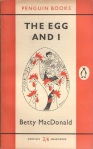 The Egg & I by Betty Macdonald: MacDonald and her husband started a rural Washington State chicken farm in the 1940s. Her account of her failure to become the perfect farm wife is hilarious. The voice reminded me of Doreen Tovey’s: mild exasperation at the drama caused by household animals, neighbors, and inanimate objects. “I really tried to like chickens. But I couldn’t get close to the hen either physically or spiritually, and by the end of the second spring I hated everything about the chicken but the egg.” Perfect pre-Easter reading.
And here are a few lists I put together for Hungerford Bookshop:
If you need a laugh:
Fiction:
Lucky Jim by Kingsley Amis
The Darling Buds of May (and sequels) by H.E. Bates
Ella Minnow Pea by Mark Dunn
Heartburn by Nora Ephron
 Cold Comfort Farm by Stella Gibbons
Anything by Nick Hornby
Three Men in a Boat by Jerome K. Jerome
Anything by David Lodge
Dear Committee Members by Julie Schumacher
The Rosie Project (and sequels) by Graeme Simsion
To Say Nothing of the Dog by Connie Willis
Nonfiction:
 Anything by Bill Bryson
21st-Century Yokel by Tom Cox
Anything by Gerald Durrell
Anything by Nora Ephron (essays)
This Is Going to Hurt by Adam Kay
Priestdaddy by Patricia Lockwood
Dear Lupin by Roger Mortimer
Anything by David Sedaris
Little Failure by Gary Shteyngart
If you want to disappear into a long book:


The Heart’s Invisible Furies by John Boyne
Jonathan Strange & Mr Norrell by Susanna Clarke
David Copperfield by Charles Dickens
Middlesex by Jeffrey Eugenides
The Crimson Petal and the White by Michel Faber
The Signature of All Things by Elizabeth Gilbert
The Nix by Nathan Hill
We, the Drowned by Carsten Jensen
Mary Ann Sate, Imbecile by Alice Jolly
The Poisonwood Bible by Barbara Kingsolver
The Wind-Up Bird Chronicle by Haruki Murakami
The Sparrow by Mary Doria Russell
American Wife by Curtis Sittenfeld
East of Eden by John Steinbeck
The Goldfinch by Donna Tartt
Cutting for Stone by Abraham Verghese
The Paying Guests by Sarah Waters
If you’re looking for some hope:
 Almost Everything: Notes on Hope by Anne Lamott
Hope in the Dark by Rebecca Solnit
Hope Dies Last: Making a Difference in an Indifferent World by Studs Terkel
I’ve been doing a combination of the above strategies, reading about historical plagues in fiction and nonfiction but also doing some rereading and consuming lighter genre stuff like mysteries. I continue to dip into new releases, and I enjoy the ongoing challenge of my reading projects. Right now, I’m working through a few current Women’s Prize longlistees, as well as some past Wellcome Book Prize nominees and Women’s Prize winners, and I’m about to start a third #1920Club title. Plus I’m already thinking about my 20 Books of Summer (I’m considering an all-foodie theme).
Further reading:
- Book Riot pinpoints seven categories of books to read during a pandemic.
- Clare surveys the post-pandemic literary landscape.
- Elle logs her pandemic reading and viewing.
- Laura discusses pandemic reading strategies and distraction reading.
- Literary Hub looks at parallel situations, including post-9/11 reads, to make predictions, and asks what your “go-to quarantine read” says about you. (I’ve read Kindred most recently, but I wouldn’t say that describes me.)
- Simon thinks about what we can and should read.
- Susan highlights some comfort reads.
What are your current reading strategies?
Books in Brief: Five I Loved Recently
Feminist social history, visits with the world’s bees, a novel about a peculiar child and his reclusive writer mother, witty notes on Englishness, and tips on surviving heartbreak: five very different books, but I hope one or more of them is something that you’d enjoy.
Flâneuse: Women Walk the City in Paris, New York, Tokyo, Venice and London
By Lauren Elkin
 Raised in New York and now a Paris resident, Lauren Elkin has always felt at home in cities. Here she traces how women writers and artists have made the world’s great cities their own, blending memoir, social history and literary criticism. In a neat example of form flowing from content, the book meanders from city to city and figure to figure. My interest waned during later chapters on protesting (‘taking to the streets’) and the films of Agnès Varda. However, especially when she’s musing on Martha Gellhorn’s rootlessness, Elkin captures the angst of being a woman caught between places and purposes in a way that expatriates like myself will appreciate. It’s in making the history of the flâneuse personal that Elkin opens her book up to a wider swathe of readers than just the feminist social historians and literary critics who might seem like her natural audience. I would particularly recommend this to readers of Rebecca Solnit and Olivia Laing. (See my full review at The Bookbag.)
My rating: 
Bee Quest: In Search of Rare Bees
By Dave Goulson
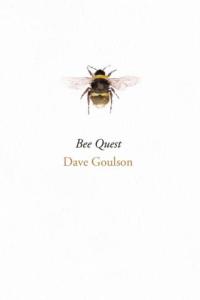 Goulson grows more like Bill Bryson and Gerald Durrell with each book. Although the topic of this, his third nature book (all of them are broadly about insects), is probably of least personal interest to me, there are plenty of wonderful asides and pieces of trivia that make it worth journeying along with him from Poland to Ecuador in the search for rare bees. For as close-up as his view often is, he also sees the big picture of environmental degradation and species loss. I learned some fairly dismaying facts: gold mining is extremely destructive to the environment, producing 20 tons of toxic material per ring; and it takes five liters of water to produce one almond in California. As for a more hopeful statistic: the billions of dollars it would take to set up conservation efforts for all the world’s species would still only equate to cutting world Coke consumption by 20%. It’s all a matter of priorities.
A favorite line:
“As is often the case in entomology, in the end it all comes down to the genitals.”
My rating:
Be Frank with Me
By Julia Claiborne Johnson
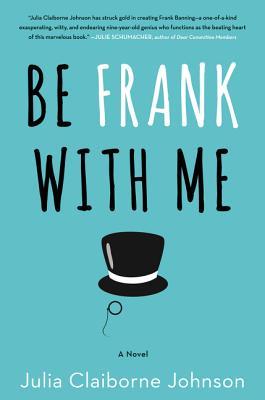 Alice, a young publishing assistant, is sent from New York City to Los Angeles to encourage one-hit wonder and Harper Lee type M.M. Banning to produce her long-delayed second novel. But when she arrives she discovers her most pressing duty is keeping an eye on Mimi’s oddball son, nine-year-old Frank. I doubt you’ve ever met a character quite like Frank. (I appreciated how, although he is clearly on what would be termed the autistic spectrum, Johnson avoids naming his condition.) Alice narrates the whole book in the first person. She finds herself caught in a four-person battle of wits – Alice, Mimi, Frank, and “itinerant male role model” Xander – inside Mimi’s big glass-fronted fishbowl of a house. There were a couple moments when I wondered where this madcap plot could be going. In particular, we have to wait a long time to find out whether Mimi is actually going to deliver another book. But the payout is worth waiting for. (See my full review at The Bookbag.)
My rating:
How to Be an Alien
By George Mikes
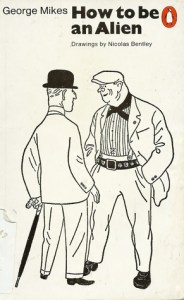 (The first volume in the How to Be a Brit omnibus; originally published in 1946.) You can draw a straight line from this through Bill Bryson’s Notes from a Small Island to the “Very British Problems” phenomenon. Mikes (that’s “mee-cash” – he was a Hungarian journalist who accidentally moved to England permanently when he was sent to London as a correspondent just before World War II) made humorous observations that have, in general, aged well. The mini-essays on tea, weather, and queuing struck me as particularly apt. I’d heard this line before, though I can’t remember where: “An Englishman, even if he is alone, forms an orderly queue of one.”
Another favorite passage:
“It is all right to have central heating in an English home, except the bath room, because that is the only place where you are naked and wet at the same time, and you must give British germs a fair chance.” [This reminds me of when my mother made her first trip to England in 2004 to visit me during my study abroad year; in her family newsletter reporting on the experience, one of her key observations was, “British bathrooms are antiquated.” My husband and I still quote this to each other regularly.]
My rating:
A Manual for Heartache
By Cathy Rentzenbrink
 This is a follow-up to Rentzenbrink’s memoir, The Last Act of Love, which was about the accident that left her brother in a vegetative state for eight years and the legal battle she and her parents fought to be able to end his life. The first quarter of this book contains fairly generic advice for people who have been through family tragedy, illness or some other hardship. It’s when Rentzenbrink makes things personal, talking about her own struggles with PTSD and depression and strategies that have helped her over the years, that the book improves, and it maintains a pretty high standard therafter. Although you wouldn’t really call anything in here groundbreaking, it’s a slim and accessible volume that I could see being helpful for anyone who’s grieving, even someone who’s not usually a reader or has a short attention span. (I won a copy in a Goodreads giveaway.)
A couple favorite passages:
“Experiencing grief for the first time is like the dark twin of falling in love. It feels a bit crazy, and we don’t think anyone has ever felt exactly as we do. But of course they have.”
“We don’t need to be unbroken. Our first step is simply to stop trying to hide our scars. Heartache is human.”
My rating:
Have you read any of these? Which one takes your fancy?
Favorite Nonfiction Reads of 2016
Below I’ve chosen my 10 favorite nonfiction books published in 2016, followed by five older nonfiction reads that I only discovered this year. I find it nigh on impossible to compare different genres of nonfiction, so I’m not ranking these but simply listing them alphabetically by author (interestingly, all but one of the 2016 books are by women).
As with yesterday’s fiction choices, many of these books have already featured on the blog in some way over the course of the year. To keep it simple for myself as well as for all of you who are figuring out whether you’re interested in these books or not, I’m limiting myself to two sentences per title: the first is a potted summary; the second tells you why you should read it. I also link to any full reviews.
The Best of 2016
 This Is Cancer by Laura Holmes Haddad: A stage IV inflammatory breast cancer survivor, the author wrote the “What to Expect” guide she wishes she could have found at the time of her diagnosis in 2012. Throughout this comprehensive, well-structured book, she uses her own experience to set out practical advice for dealing with the everyday medical and emotional realities of cancer.
 Lab Girl by Hope Jahren: With witty anecdotes and recreated dialogue, Jahren tells about her Minnesota upbringing, her long years in education, her ultimate specialization in geobiology/botany, crossing the country to take up academic posts in Atlanta, Baltimore and Hawaii, her long-time platonic relationship with eccentric lab partner Bill, and zany road trips across America for conferences and field work. What I think she does best is convey what it’s like to have true passion for your work, a rare thing.
 When Breath Becomes Air by Paul Kalanithi: Kalanithi was 36 and just completing his neurosurgery residency in Stanford, California when he was diagnosed with advanced lung cancer that did not respond well to treatment; he devoted his last year to writing this. I would recommend this cancer memoir to anyone for the beauty of its prose – a fine blend of literature and medicine – and the simple yet wholehearted picture of a life cut short.
 The Lonely City by Olivia Laing: A remarkable piece of work fusing social history, commentary on modern art, biographical observation and self-knowledge. It’s a testament to Laing’s skill when I say that I knew next to nothing about any of these artists to start with and have little fondness for modern art but still found her book completely absorbing.
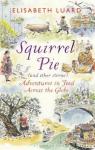 Squirrel Pie (and Other Stories): Adventures in Food across the Globe by Elisabeth Luard: Broadly speaking, this is about indigenous and peasant cooking traditions, a remit that allows Luard to include and adapt travel pieces she’s written over the past 20 years. It’s a cozy and conversational book for anyone who enjoys cooking or eating food from different cuisines (from Maui and Romania to Gujarat and Ethiopia); Luard’s own sketches and line drawings provide a lovely accompaniment.
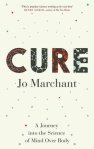 Cure: A Journey into the Science of Mind over Body by Jo Marchant: Marchant, a journalist with a PhD in genetics and medical microbiology, investigates instances where the mind seems to contribute to medical improvement: the use of placebos in transplant recipients, hypnosis for IBS patients, virtual reality to help burn victims manage pain, and the remarkable differences that social connection, a sense of purpose, meditation and empathic conversation all make. I finished the book feeling intrigued and hopeful about what this might all mean for the future of medicine.
 Poor Your Soul by Mira Ptacin: Ptacin’s wonderful memoir is based around two losses: her brother in a collision with a drunk driver, and a pregnancy in 2008; she skips back and forth in time to examine the numb aftermath of trauma as well as the fresh pain of actually going through it. I loved so much about this book, especially her memories of growing up in the cereal capital of America in Michigan and the account of her mother coming to America from Poland and setting up a fine-dining restaurant.
 The Violet Hour: Great Writers at the End by Katie Roiphe: An erudite, elegiac work of literary biography that takes in Susan Sontag, Sigmund Freud, John Updike, Dylan Thomas, Maurice Sendak and James Salter. What Roiphe observes of Sendak’s habit of drawing the dead and dying could equally be applied to The Violet Hour: it’s about seeing the beauty in what terrifies you.
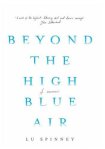 Beyond the High Blue Air: A Memoir by Lu Spinney: In March 2006 Lu Spinney’s twenty-nine-year-old son, Miles King, was on a snowboarding holiday in Austria; on the final morning of the trip he took a fall that would leave this athlete, intellectual, and entrepreneur with a traumatic brain injury. Spinney tells her sad tale remarkably well, in a consciously literary style: with no speech marks and present-tense narration, thought and action flow lucidly into dialogue and daydream; she always chooses just the right metaphors, too.
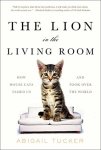 The Lion in the Living Room: How House Cats Tamed Us and Took Over the World by Abigail Tucker: From the earliest domestication of animals to the cat meme-dominated Internet, Tucker marvels at how cats have succeeded by endearing themselves to humans and adapting as if effortlessly to any habitat in which they find themselves. This is the amazing cat book I’d been looking for, but I don’t think you even have to be a pet person to find this wide-ranging book enthralling.
If I had to list an overall favorite nonfiction book of the year, it would be The Violet Hour.
The Best of the Rest
Stir: My Broken Brain and the Meals That Brought Me Home by Jessica Fechtor (2015): At age 28 Fechtor, then a graduate student in history and Yiddish, collapsed on a treadmill with a brain bleed; a subsequent surgery to clip the aneurysm left her blind in one eye. She gives a glimpse into an ordinary existence turned upside down and the foods that helped her regain a zest for life by reconnecting her with her family and her Jewish heritage.
A Time of Gifts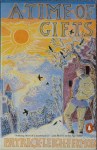 by Patrick Leigh Fermor (1977): Over the course of three years in the 1930s, starting when he was just 18, Fermor walked from Holland to Constantinople; this first of three volumes covers up until his entry into Hungary. His descriptions of the landscape and the people he interacted with are as fresh as if they happened yesterday; the precious glimpse of pre-war history and the damn fine writing make this a true masterwork of travel writing.
The Cloister Walk by Kathleen Norris (1996): Norris draws lessons from the time she spent as a lay Benedictine oblate but also simply reflects on her own life: the blessings and challenges of being a freelance poet and theologian; the daily discipline involved in marriage, keeping a house and gardening; and childhood memories from Virginia, Illinois and Hawaii. This is an impressively all-encompassing and eloquent set of essays on how faith intersects with everyday life.
One of Us : The Story of a Massacre and Its Aftermath by Åsne Seierstad (2015): An utterly engrossing account of Anders Behring Breivik’s July 22, 2011 attacks on an Oslo government building (8 dead) and the political youth camp on the island of Utøya (69 killed). This is a book about love and empathy – what they can achieve and what happens when they are absent; it shows how wide the ripples of one person’s actions can be, and how deep individual motivation goes.
 The Complete Maus by Art Spiegelman (1986): Spiegelman drew these allegorical tableaux to illustrate what, from a distance of decades, his Polish father Vladek told him about his almost unbelievable series of escapes, including time in Auschwitz. The only graphic novel to win the Pulitzer Prize, this brings the Holocaust home in a fresh way and paved the way for comic artists like Roz Chast and Alison Bechdel.
What were some of your top nonfiction reads of the year?
Tomorrow I’ll list some runners-up for the year, and award a few more superlatives.
The Violet Hour by Katie Roiphe
I don’t believe that you can learn how to die, or gain wisdom, or prepare, and the work I have done on this book has, if anything, confirmed that suspicion, but I do think you can look at a death and be less afraid.
 The subtitle – “Great Writers at the End” – gives you a hint of what to expect from this erudite, elegiac work of literary biography. In a larger sense, it is about coming to terms with the fear of death, one of the last enduring Western phobias.
Roiphe was a sickly, morbid child. After a serious, extended case of something like pneumonia, she had half a lung removed, and her chosen reading was books about Armenian genocide. Although she was convinced she was going to die at 12, it was only a blip; her next significant encounter with death was her father’s cardiac arrest at age 82. Once again, she was utterly unprepared. In investigating six great authors’ deaths, Roiphe is not so much looking for sage tour guides to the underworld as asking how one faces and narrates death.
To start with I was skeptical about Roiphe’s set of chosen writers. Between Susan Sontag, Sigmund Freud, John Updike, Dylan Thomas, Maurice Sendak and James Salter there’s no class or racial diversity, and the gender balance is poor. Yet as I read on I set these quibbles aside. There are literally hundreds, maybe thousands of subjects Roiphe could have chosen, so in a sense the particular authors discussed here are arbitrary. She’s eschewed more obvious candidates like Christopher Hitchens, probably because he wrote enough about his own impending mortality himself. The criteria were probably as plain as this: an author who meant something to Roiphe, left a lot of documentary evidence, preferably had some living descendants and colleagues to interview, and whose death was drawn out enough that s/he had time to wrestle with the thought of it in writing.
Starting each chapter with the vigil at an author’s deathbed in a hospital room or at home, Roiphe skips back and forth in time to pinpoint where illness and death cropped up in that author’s life and work. For Susan Sontag, dying at New York’s Sloan Kettering in 2004, it was her third bout with cancer. A final extreme intervention, a bone marrow transplant at Seattle, had recently failed. Still Sontag shirked the notion of death, refusing even to talk about it. Work was how she had always transcended the specter of death – by writing books like Illness as Metaphor and inserting scenes of false death into her fiction – and now it was all that kept her going. Perhaps, Roiphe theorizes, there was a kind of solipsism at the heart of Sontag’s denial of death: she just could not believe that anything would continue existing without her. Well before her first experience of cancer in the 1970s, she wrote in a notebook: “Too abstract: death. Too concrete: me.”

Susan Sontag’s grave at the Cimetière du Montparnasse, Paris. (By Wikimedia Commons / Mu (Own work), via Wikimedia Commons.)
One might expect Freud to have been more disciplined about the business of dying, what with his theory of Thanatos (the death drive) and his frequently professed acceptance. However, as Roiphe emphasizes, it is one thing to say you accept death, and quite another thing to actually accept it. In Freud’s case, his refusal to give up cigars despite painful throat cancer and 33 oral surgeries flew in the face of his otherwise rational methods. Cigars were his only vice, he shrugged. Is a cigar just a cigar, or are there overt sexual connotations? For Updike, sex was like Freud’s cigars: sensual evidence that life goes on. Adultery, a frequent theme in his fiction, was perhaps an unconscious strategy for ‘cheating’ death. It was only after his diagnosis with lung cancer that death replaced sex as the central obsession of his work. His last book, like his first, would be poetry: Endpoint, one last valiant effort before death.
![Freud with one of his beloved cigars, 1922. Max Halberstadt [Public domain], via Wikimedia Commons.](https://commons.wikimedia.org/wiki/File:Sigmund_Freud_LIFE.jpg)
Freud with one of his beloved cigars, 1922. Max Halberstadt [Public domain], via Wikimedia Commons.
Each chapter is its own microcosm. The author herself only appears in the prologue and epilogue; in between, although she obviously interviewed survivors (and Salter, who died before he could read the finished book), she edits herself out so we can be right there with the subject. There’s no distance at all. That sense of intimacy is clearest in the chapter-heading photographs of the authors’ (posthumously?) empty studies. These are haunting images. Look at Sendak’s desk covered in paints and drawings, slippers carefully waiting underneath; a cardigan on the back of the chair – there’s such a sense of life. The life continues in the work.
None of these authors got death perfectly right. Several of them fought it right to the end; several of them veered towards faith despite a lifelong antipathy to religion; several of them were ultimately taken aback by the simple realization that they, too, were mortal. Roiphe discovers no magic formula for how a writer should do death. Despite their contradictory approaches, though, all her subjects had the same destination:
here’s what I learned from the deaths in this book: You work. You don’t work. You resist. You don’t resist. You exert the consummate control. You surrender. You deny. You accept. You pray. You don’t pray. You read. You work. You take as many painkillers as you can. You refuse painkillers. You rage against death. You run headlong toward it.
In the end the deaths are the same. They all die. The world releases them.
This would be an ideal book for fans of Olivia Laing (see my review of The Lonely City) or Julian Barnes’s Nothing to Be Frightened of. What Roiphe observes of Sendak’s habit of drawing the dead and dying could equally be applied to The Violet Hour: it’s about seeing the beauty in what terrifies you. One of my top few nonfiction reads of 2016 so far.
With thanks to Grace Vincent of Virago for sending a review copy. The Violet Hour releases today in the UK; it was published on March 8th in the States by The Dial Press.
My rating: 
The Lonely City by Olivia Laing
For several years in her mid-thirties, British author Olivia Laing lived in New York City. A relationship had recently fallen through and she was subletting an apartment from a friend. Whole days went by when she hardly left the flat, whiling away her time on social media and watching music videos on YouTube. Whenever she did go out, she felt cut off because of her accent and her unfamiliarity with American vernacular; she wished she could wear a Halloween mask all the time to achieve anonymity. How ironic, she thought, that in a city of millions she could be so utterly lonely.
Loneliness feels like such a shameful experience, so counter to the lives we are supposed to lead, that it becomes increasingly inadmissible, a taboo state whose confession seems destined to cause others to turn and flee. … [L]oneliness inhibits empathy because it induces in its wake a kind of self-protective amnesia, so that when a person is no longer lonely they struggle to remember what the condition is like.
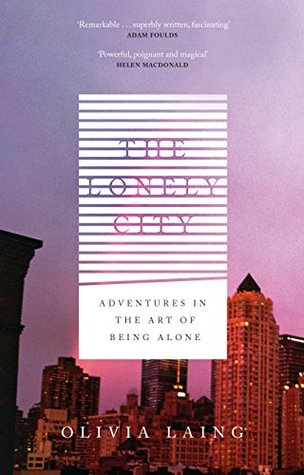 Whereas alcoholic writers were the points of reference for her previous book, the superb The Trip to Echo Spring (2013), here outsider artists take center stage: Edward Hopper, Andy Warhol, David Wojnarowicz, Henry Darger, and the many lost to AIDS in the 1980s to 1990s. It’s a testament to Laing’s skill at interweaving biography, art criticism and memoir when I say that I knew next to nothing about any of these artists to start with and have little fondness for modern art but still found her book completely absorbing.
Several of the artists shared underlying reasons for loneliness: an abusive childhood, mental illness and/or sexuality perceived as aberrant. Edward Hopper might seem the most ‘normal’ of the artists profiled, but even he was bullied when he shot up to 6 feet at age 12; his wife Jo, doing some amateur psychoanalyzing, named it the root of his notorious taciturnity. His Nighthawks, with its “noxious pallid green” shades, perfectly illustrates the inescapability of “urban alienation,” Laing writes: when she saw it in person at the Whitney, she realized the diner has no door. (It’s a shame the book couldn’t accommodate a centerfold of color plates, but each chapter opens with a black-and-white photograph of its main subject.)
Andy Warhol was born Andrej Warhola to Slovakian immigrants in Pittsburgh in 1928. He was often tongue-tied and anxious, and used fashion and technology as ways of displacing attention. In 1968 he was shot in the torso by Valerie Solanas, the paranoid, sometimes-homeless author of SCUM Manifesto, and ever after had to wear surgical corsets. For Warhol and Wojnarowicz, art and sex were possible routes out of loneliness. As homosexuals, though, they could be restricted to sordid cruising grounds such as cinemas and piers. Like Klaus Nomi, a gay German electro-pop singer whose music Laing listened to obsessively, Wojnarowicz died of AIDS. Nomi was one of the first celebrities to succumb, in 1983. The epidemic only increased the general stigma against gay people. Even Warhol, as a lifelong hypochondriac, was leery about contact with AIDS patients. Through protest marches and artworks, Wojnarowicz exposed the scale of the tragedy and the lack of government concern.
In some ways Henry Darger is the oddest of the outsiders Laing features. He is also the only one not based in New York: he worked as a Chicago hospital janitor for nearly six decades; it was only when he was moved into a nursing home and the landlord cleared out his room that an astonishing cache of art and writing was discovered. Darger’s oeuvre included a 15,000-page work of fiction set in “the Realms of the Unreal” and paintings that veer towards sadism and pedophilia. Laing spent a week reading his unpublished memoir. With his distinctive, not-quite-coherent style and his affection for the asylum where he lived as an orphaned child, he reminded me of Royal Robertson, the schizophrenic artist whose work inspired Sufjan Stevens’s The Age of Adz album, and the artist character in the movie Junebug (2005).
A few of the chapters are less focused because they split the time between several subjects. I also felt that a section on Josh Harris, Internet entrepreneur and early reality show streaming pioneer, pulled the spotlight away from outsider art. Although I can see, in theory, how his work is performance art reflecting on our lack of true connection in an age of social media and voyeurism, I still found this the least relevant part.

The American cover
The book is best when Laing is able to pull all her threads together: her own seclusion – flitting between housing situations, finding dates through Craigslist and feeling trapped behind her laptop screen; her subjects’ troubled isolation; and the science behind loneliness. Like Korey Floyd does in The Loneliness Cure, Laing summarizes the physical symptoms and psychological effects associated with solitude. She dips into pediatrician D.W. Winnicott’s work on attachment and separation in children, and mentions Harry Harlow’s abhorrent rhesus monkey experiments in which babies were raised without physical contact.
The tone throughout is academic but not inaccessible. Ultimately I didn’t like this quite as much as The Trip to Echo Spring, but it’s still a remarkable piece of work, fusing social history, commentary on modern art, biographical observation and self-knowledge. The first chapter and the last five paragraphs, especially, are simply excellent. Your interest may wax and wane through the rest of the book, but I expect that, like me, you’ll willingly follow Laing as a tour guide into the peculiar, lonely crowdedness you find in a world city.
(See also Laing’s list of 10 Books about Loneliness, chosen for Publishers Weekly.)
With thanks to Canongate for sending a free copy.
My rating: 
 Bookish Beck = Rebecca Foster. American transplant to England. Freelance proofreader and book reviewer.
 Bookish Beck