Thinking Realistically about Reading Plans for the Rest of the Year
The other year I did something dangerous: I started an exclusive Goodreads shelf (i.e., an option besides the standard “Read,” “Currently Reading” and “Want to Read”) called “Set Aside Temporarily,” where I stick a book I have to put on hiatus for whatever reason, whether I’d read 20 pages or 200+. This enabled me to continue in my bad habit of leaving part-read books lying around. I know I’m unusual for taking multi-reading to an extreme with 20‒30 books on the go at a time. For the most part, this works for me, but it does mean that less compelling books or ones that don’t have a review deadline attached tend to get ignored.
I swore I’d do away with the Set Aside shelf in 2020, but it hasn’t happened. In fact, I made another cheaty shelf, “Occasional Reading,” for bedside books and volumes I read a few pages in once a week or so (e.g. devotional works on lockdown Sundays), but I don’t perceive this one to be a problem; no matter if what’s on it carries over into 2021.
Looking at the five weeks left in the year and adapting the End of the Year Book Tag Laura did recently, I’ve been thinking about what I can realistically read in 2020.
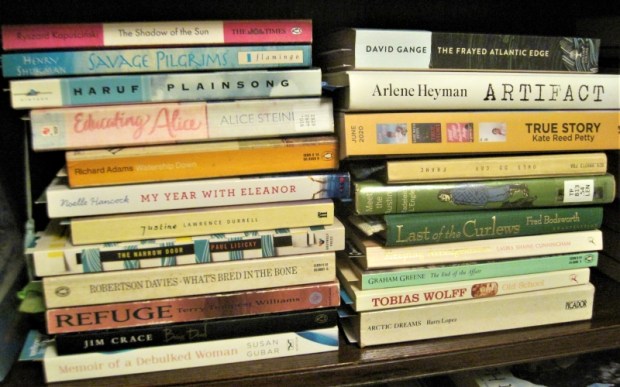
Is there a book that you started that you still need to finish by the end of the year?
So many! I hope to finish most, if not all, of the books I’m currently reading, plus I’d like to clear these set aside stacks as much as possible. If nothing else, I have to finish the two review books (Gange and Heyman, on the top of the right-hand stack).
Name some books you want to read by the end of the year.
I still have these four print books to review on the blog. The Shields, a reissue, is for a December blog tour; I might save the snowy one for later in the winter.
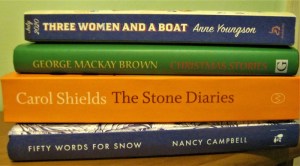
I will also be reading an e-copy of Miss Benson’s Beetle by Rachel Joyce for a BookBrowse review.
 The 2020 releases I’d placed holds on are still arriving to the library for me. Of them, I’d most like to get to:
- Mr Wilder & Me by Jonathan Coe
- Bringing Back the Beaver: The Story of One Man’s Quest to Rewild Britain’s Waterways by Derek Gow
- To Be a Man by Nicole Krauss
My Kindle is littered with 2020 releases I purchased or downloaded from NetGalley and intended to get to this year, including buzzy books like My Dark Vanessa. I don’t read so much on my e-readers anymore, but I’ll see if I can squeeze in one or two of these:
 Fat by Hanne Blank
- Marram by Leonie Charlton
- D by Michel Faber
- Alone Together: Love, Grief, and Comfort in the Time of COVID-19, edited by Jennifer Haupt
- Tyll by Daniel Kehlmann
- Avoid the Day by Jay Kirk*
- World of Wonders by Aimee Nezhukumatathil*
*These were on my Most Anticipated list for the second half of 2020.
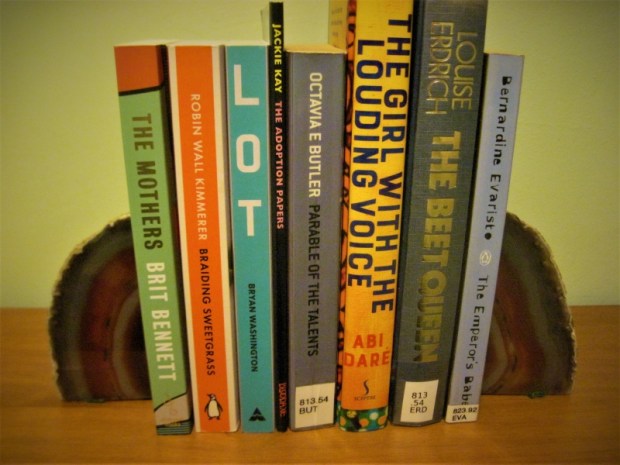
The Nezhukumatathil would also count towards the #DiverseDecember challenge Naomi F. is hosting. I assembled this set of potentials: four books that I own and am eager to read on the left, and four books from libraries on the right.
Is there a book that could still shock you and become your favorite of the year?
Two books I didn’t finish until earlier this month, The Glass Hotel by Emily St. John Mandel and Vesper Flights by Helen Macdonald, leapt into contention for first place for the year in fiction and nonfiction, respectively, and it’s entirely possible that something I’ve got out from the library or on my Kindle (as listed above) could be just as successful. That’s why I wait until the last week of the year to finalize Best Of lists.
Do you have any books that are partly read and languishing? How do you decide on year-end reading priorities?
This Year’s Summer-Themed Reading: Lippman, Lively, Nicholls & More
Sun, warmth and rival feelings of endlessness and evanescence: here were three reads that were perfect fits for the summer setting.
Sunburn by Laura Lippman (2018)
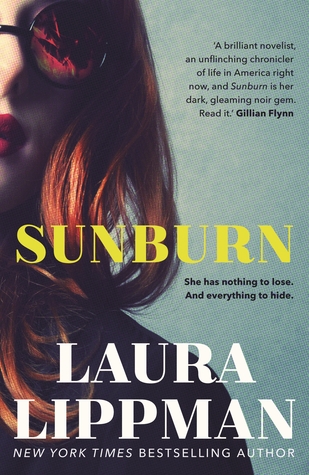 While on a beach vacation in 1995, a woman walks away from her husband and daughter and into a new life as an unattached waitress in Belleville, Delaware. Polly has been known by many names, and this isn’t the first time she’s left a family and started over. She’s the (literal) femme fatale of this film noir-inspired piece, as bound by her secrets as is Adam Bosk, the investigator sent to trail her. He takes a job as a chef at the diner where Polly works, and falls in love with her even though he may never fully trust her. Insurance scams and arson emerge as major themes.
I liked the fact that I recognized many of the Maryland/Delaware settings, and that the setup is a tip of the hat to Anne Tyler’s excellent Ladder of Years, which was published in the year this is set. It is a quick and enjoyable summer read that surprised me with its ending, but I generally don’t find mysteries a particularly worthwhile use of my reading time. Put it down to personal taste and/or literary snobbery. 
Heat Wave by Penelope Lively (1996)
 My fourth Lively book, and the most enjoyable thus far. Pauline, a freelance copyeditor (“Putting commas into a novel about unicorns”) in her fifties, has escaped from London to spend a hot summer at World’s End, the Midlands holiday cottage complex she shares with her daughter Teresa, Teresa’s husband Maurice, and their baby son Luke. Maurice is writing a history of English tourism and regularly goes back to London for meetings or receives visits from his publishers, James and Carol. Pauline, divorced from a philandering husband, recognizes the signs of Maurice’s adultery long before Teresa does, and uneasily ponders how much to hint and how much to say outright.
The last line of the first chapter coyly promises an “agreeable summer of industry and companionship,” but the increasing atmospheric threats (drought or storms; combine harvesters coming ever nearer) match the tensions in the household. I expected this to be one of those subtle relationship studies where ultimately nothing happens. That’s not the case, though; if you’ve been paying good attention to the foreshadowing you’ll see that the ending has been on the cards.
I loved the city versus country setup of the novel, especially the almost Van Gogh-like descriptions of the blue sky and the golden wheat, and recognized myself in Pauline’s freelancer routines. Her friendships with bookseller Hugh and her client, novelist Chris Rogers, might be inconsequential to the plot but give Pauline a life wider than the confines of the cottage, and the frequent flashbacks to her marriage to Harry show what she had to overcome to earn a life of her own.
This was a compulsive read that was perfect for reading during the hottest week of our English summer. I’d recommend it to fans of Tessa Hadley, Susan Hill and Polly Sansom. 
Sweet Sorrow by David Nicholls (2019)
 The title is a snippet from Romeo and Juliet, which provides the setup and subject matter for this novel about first love during the golden summer of 1997, when Charlie Lewis and Fran Fisher are 16. Charlie thinks he’s way too cool for the thespians, but if he wants to keep seeing Fran he has to join the Full Fathom Five Theatre Co-operative for the five weeks of rehearsals leading up to performances. Besides, he doesn’t have anything better to do – besides watching his dad get drunk on the couch and scamming the petrol station where he works nights. Charlie starts off as the most robotic Benvolio imaginable, but Fran helps bring him up to scratch with her private tutoring (which is literal as well as a euphemism).
Glimpses of the present day are an opportunity for nostalgia and regret, as Charlie/Nicholls coyly insists that first love means nothing: “love is boring. Love is familiar and commonplace for anyone not taking part, and first love is just a gangling, glandular incarnation of the same. … first love wasn’t real love anyway, just a fraught and feverish, juvenile imitation of it.” I enjoyed the teenage boy perspective and the theatre company shenanigans well enough, but was bored with the endless back story about Charlie’s family: his father’s record shops went bankrupt; his mother left him for another golf club colleague and took his sister; he and his depressed father are slobby roommates subsisting on takeaways and booze; blah blah blah.
It’s possible that had I read or seen R&J more recently, I would have spotted some clever parallels. Honestly? I’d cut 100+ pages (it should really be closer to 300 pages than 400) and repackage this as YA fiction. If you’re looking for lite summer fare reminiscent of Rachel Joyce and, yes, One Day, this will slip down easily, but I feel like I need to get better about curating my library stack and weeding out new releases that will be readable but forgettable. I really liked Us, which explains why I was willing to take another chance on Nicholls.
Note: There is a pretty bad anachronism here: a reference to watching The Matrix, which wasn’t released until 1999 (p. 113, “Cinnamon” chapter). Also a reference to Hobby Lobby, which as far as I know doesn’t exist in the UK (here it’s Hobbycraft) (p. 205, “Masks” chapter). I guess someone jumped the gun trying to get this ready for its U.S. release.
Favorite summery passage: “This summer’s a bastard, isn’t it? Sun comes out, sky’s blue if you’re lucky and suddenly there are all these preconceived ideas of what you should be doing, lying on a beach or jumping off a rope swing into the river or having a picnic with all your amazing mates, sitting on a blanket in a meadow and eating strawberries and laughing in that mad way, like in the adverts. It’s never like that, it’s just six weeks of feeling like you’re in the wrong place … and you’re missing out. That’s why summer’s so sad – because you’re meant to be so happy. Personally, I can’t wait to get my tights back on, turn the central heating up. At least in winter you’re allowed to be miserable” (Fran)
Plus a couple of skims:
The Sun Does Shine: How I Found Life and Freedom on Death Row by Anthony Ray Hinton with Lara Love Hardin (2018)
 I’d heard about Hinton’s case: he spent nearly 30 years on death row in Alabama for crimes he didn’t commit. In 1985 he was convicted of two counts of robbery and murder, even though he’d been working in a locked warehouse 15 miles away at the time the restaurant managers were shot. His mother’s gun served as the chief piece of evidence, even though it didn’t match the bullets found at the crime scenes. “My only crime was … being born black in Alabama,” Hinton concludes. He was a convenient fall guy, and his every appeal failed until Bryan Stevenson of the Equal Justice Initiative (and author of Just Mercy, which I’d like to read) took on his case.
It took another 16 years and an appeal to the U.S. Supreme Court, but Hinton was finally released and now speaks out whenever he can about justice for those on death row, guilty or innocent. Almost the most heartbreaking thing about the book is that his mother, who kept the faith for so many years, died in 2012 and didn’t get to see her son walk free. I love the role that literature played: Hinton started a prison book club in which the men read Go Tell It on the Mountain and To Kill a Mockingbird and discussed issues of race and injustice. Although he doesn’t say very much about his life post-prison, I did note how big of an adjustment 30 years’ worth of technology was for him.
I don’t set a lot of stock by ghostwritten or co-written books, and found the story much more interesting than the writing here (though Hardin does a fine job of recreating the way a black man from the South speaks), so I just skimmed the book for the basics. I was impressed by how Hinton avoided bitterness and, from the very beginning, chose to forgive those who falsely accused him and worked to keep him in prison. “I was afraid every single day on death row. And I also found a way to find joy every single day. I learned that fear and joy are both a choice.” The book ends with a sobering list of all those currently on death row in the United States: single-spaced, in three columns, it fills nine pages. Lord, have mercy.
The Last Supper: A Summer in Italy by Rachel Cusk (2009)
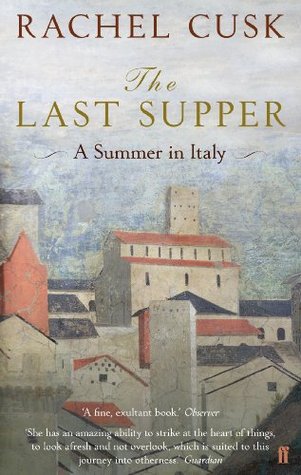 Having moved away from Bristol, Cusk and her family (a husband and two children) decided to spend a summer in Italy before deciding where to go next. They took the boat to France then drove, made a stop in Lucca, and settled into a rented house on the eastern edge of Tuscany. It proceeded to rain for 10 days. Cusk learns to speak the vernacular of football and Catholicism – but Italian eludes her: “I too feel humbled, feel childlike and impotent. It is hard to feel so primitive, so stupid.” They glory in the food, elemental and unpretentious; they try a whole spectrum of gelato flavors. And they experience as much culture as they can: “we will learn to fillet an Italian city of its artworks with the ruthless efficiency of an English aristocrat de-boning a Dover sole.” A number of these masterpieces are reproduced in the text in black and white. In the grip of a heatwave, they move on to Rome, Naples and Capri.
If I’d been able to get hold of this for my trip to Milan (it was on loan at the time), I might have enjoyed it enough to read the whole thing. As it is, I just had a quick skim through. Cusk can write evocatively when she wishes to (“We came here over the white Apuan mountains, leaving behind the rose-coloured light of the coast … up and up into regions of dazzling ferocity where we wound among deathly white peaks scarred with marble quarries, along glittering chasms where the road fell away into nothingness and we clung to our seats in terror”), but more often resorts to flat descriptions of where they went and what they did. I’m pretty sure Transit was a one-off and I’ll never warm to another Cusk book.
DNFs: Alas, One Summer: America, 1927 by Bill Bryson and The Go-Between by L. P. Hartley were total non-starters. Maybe some other day (make that year).
See also my 2017 and 2018 “summer” reads, all linked by the season appearing in the title.
Have you read any summer-appropriate books lately?
America Reading & Book Haul, Etc.
The wedding of a college friend – who I calculated I’ve known at least half my life – was the excuse we needed to book a trip back to the States for the last two weeks of May. Along with the classy nuptials in the Fell’s Point area of Baltimore, we enjoyed a day’s sightseeing in Philadelphia, a couple of outings to watch birds and other wildlife on Cape May (a migration hotspot in New Jersey), two meet-ups with other friends, and plenty of relaxation time with my mom and sister, including a Memorial Day picnic at my mom’s retirement community and a tour of Antietam Battlefield. It was much hotter than anticipated, including some days in the high 80s or even 90s, and the hayfever, ticks and mosquitoes were bad, too, but we survived.


While back in Maryland I continued the intermittent downsizing process I’ve been going through for a while now. After being on the market for nearly a year, my family home finally sold and went to closing while we were over there. So that provided a scrap of closure, but my current estrangement from my father (we don’t even know where he’s living) means there’s a lot of continuing uncertainty.
In any case, I managed to reduce the number of boxes I’m storing with my sister from 29 to 20 by recycling lots of my old schoolwork, consolidating my mementos, reselling one box of books and donating another, donating a box of figurines and decorative bottles to a thrift store, displaying some at my mom’s place, giving away a few trinkets to a friend’s kids, and packing a bunch of stuff – photo albums and decorations as well as 64 books – in our various suitcases and hand luggage to take back to the UK.


And I also acquired more books, of course! A whopping 46 of these were free: eight review copies were waiting for me at my mom’s place; three were from the outdoor free bin at 2nd & Charles, a secondhand bookstore; one was found in a Little Free Library near our friends’ place in New Jersey (Emerald City by Jennifer Egan, not pictured); and the rest were from The Book Thing of Baltimore, a legendary volunteer-run free bookshop. I mostly raided the biography section for an excellent selection of women’s life writing; the fiction is unalphabetized so harder to find anything in, but I picked up a few novels, too. My only purchases were new (remainder) copies of one novel and one memoir from Dollar Tree. Total book spending on the trip: just $2.12.
What I Read:
Two that I’d already started but finished on the plane ride over:
 The Florist’s Daughter by Patricia Hampl: (As featured in my spring reading list.) “Love and flowers, death and flowers.” Poetic writing about small-town Minnesota life, a tense relationship with her late mother, and her late father’s flower shop.
 - The Girls by Lori Lansens: I love reading about sister relationships, and the Darlen girls’ situation is an extreme case of love and jealousy given that they literally can’t get away from each other. Not as good as the two other conjoined-twin novels I’ve read, Chang and Eng by Darin Strauss and Cutting for Stone by Abraham Verghese, but I would read more from Lansens, a solid Oprah Book Club sort of author.

Three review books that will be featuring here in the near future:
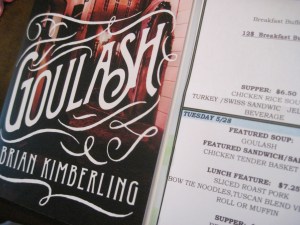
- Goulash by Brian Kimberling
- Sorry I’m Late, I Didn’t Want to Come: An Introvert’s Year of Living Dangerously by Jessica Pan
- Mother Ship by Francesca Segal
A few quick reads:
 A Certain Loneliness: A Memoir by Sandra Gail Lambert: (A proof copy passed on by an online book reviewing friend.) A memoir in 29 essays about living with the effects of severe polio. Most of the pieces were previously published in literary magazines. While not all are specifically about the author’s disability, the challenges of life in a wheelchair seep in whether she’s writing about managing a feminist bookstore or going on camping and kayaking adventures in Florida’s swamps. I was reminded at times of Constellations by Sinéad Gleeson.
  No Happy Endings: A Memoir by Nora McInerny: (Borrowed from my sister.) I didn’t appreciate this as much as the author’s first memoir, It’s Okay to Laugh, though it’s in the same style: lots of short, witty but bittersweet essays reflecting on life’s losses. Within a year of being widowed by cancer, she met a new partner and soon was – surprise! – pregnant with his baby. Together they formed a blended family of four children ranging from 0 to 15 and two wounded adults. McInerny also writes about her newfound spirituality and feminism. The problem with the essay format is that she cycles through aspects of the same stories multiple times.
  Native Guard by Natasha Trethewey: (Free from 2nd & Charles.) Trethewey writes beautifully disciplined verse about her mixed-race upbringing in Mississippi, her mother’s death and the South’s legacy of racial injustice. She occasionally rhymes, but more often employs forms that involve repeated lines or words. The title sequence concerns a black Civil War regiment in Louisiana. Two favorites from this Pulitzer-winning collection by a former U.S. poet laureate were “Letter” and “Miscegenation”; stand-out passages include “In my dream, / the ghost of history lies down beside me, // rolls over, pins me beneath a heavy arm” (from “Pilgrimage”) and “I return / to Mississippi, state that made a crime // of me — mulatto, half-breed” (from “South”).
 I also read the first half or more of: The Music Shop by Rachel Joyce, my June book club book; Hungry by Jeff Gordinier, a journalist’s travelogue of his foodie journeys with René Redzepi of Noma fame, coming out in July; and the brand-new novel In West Mills by De’Shawn Charles Winslow – these last two are for upcoming BookBrowse reviews.
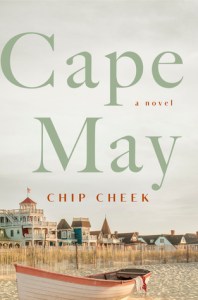
But the book I was most smug to have on my reading list for the trip was the recent novel Cape May by Chip Cheek. What could be more perfect for reading on location? I asked myself. Unfortunately, it stood out for the wrong reasons. In October 1957 a young pair of virgins, Effie and Henry, travel from Georgia to New Jersey for an off-season honeymoon in her uncle’s vacation home. They’re happy enough with each other but underwhelmed with the place (strangely, this matched my experience of Cape May), and even consider going home early until they fall in with Clara, a friend of Effie’s cousin; Clara’s lover, Max; and Max’s younger sister, Alma. Effie and Henry join the others for nightly drunken revelry.
[SPOILERS!] As the weeks pass Effie, ill and dejected, almost seems to disappear as Cheek delves into Henry’s besotted shenanigans, described in unnecessarily explicit sexual detail. When Effie makes a bid or two for her own sexual freedom late on, it only emphasizes the injustice of spending so much time foregrounding Henry’s perspective. Despite the strength of the period atmosphere and seaside location, this ends up being dull and dated. If you’re after a typically ‘trashy’ beach read and don’t mind lots of sex scenes, you may get on with it better than I did. 

Reading a few pages of Cape May over an ice-cold G&T at the wedding reception.
Bonus bookishness:
Vineland, New Jersey was on the way from our friends’ house to Cape May, so we stopped to take my proof copy of Barbara Kingsolver’s Unsheltered to its spiritual home. Alas, Vineland is an utterly boring small American town. However, Mary Treat at least appears on a painted mural on a building on the main street. The Historical Society, where Kingsolver did her research, was closed, but we photographed the outside.


What’s the last book you read ‘on location’? Did it work out well for you?
Season’s Readings: What I’ll Be Reading This Christmas
With part of my birthday book token I treated myself to the new paperback edition of Jeanette Winterson’s Christmas Days, which I’ll read off and on over the holidays this year and next, probably. I recently finished Rachel Joyce’s wintry short story collection and started Madeleine L’Engle’s third Crosswicks Journal, An Irrational Season. The first two chapters are set at Advent and Christmas and the rest later in the liturgical year; I’ve set the book aside to come back to in January. L’Engle is a great author to read if you’d like some liberal, non-threatening theology at this time of year. I particularly recommend her Christmas-themed book that I read last year. (Mini-reviews of the Joyce and L’Engle are below.)
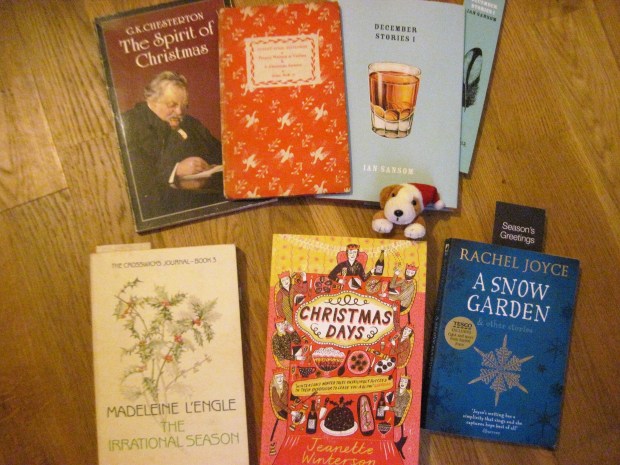
I also have a signed copy of Ian Sansom’s December Stories I that I won in a giveaway on Cathy’s blog, so I’ll be dipping into plenty of seasonally appropriate short stories this year. Earlier this year I picked up copies of the G.K. Chesterton collection (signed by the anthology editor) and the Robert Louis Stevenson volume (which contains prayers plus a sermon written during his time in Samoa) free at church from the theological library of a woman who’d died and donated her books to the church family.


A Snow Garden and Other Stories by Rachel Joyce
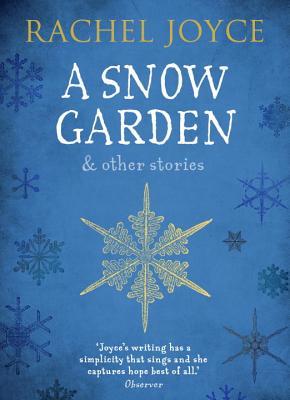 Two stand-outs were “The Boxing Day Ball,” a prequel to The Unlikely Pilgrimage of Harold Fry, describing how Harold and Maureen met, and “A Faraway Smell of Lemon,” in which a woman mourning the end of her relationship wanders into a cleaning supplies store and learns the simple lesson that everybody hurts. (“Life is hard sometimes” – fair enough, but can we say it without a cliché?) “I’ll Be Home for Christmas” is about the boy formerly known as Tim, now the mega pop star X. All he wants is a quiet few days back home, but he can’t seem to escape his reputation. Characters and little elements from previous stories reappear in later ones. My favorite was probably the title story, about a father trying to make the holidays perfect for his sons after his breakdown and divorce.
Joyce chooses to write about ordinary and forgotten people, but sometimes her vision of chavvy types doesn’t quite ring true, and when she isn’t being melancholy she’s twee. “Christmas Day at the Airport” was so contrived it made me groan. While I don’t think any of her books are truly great, they’re pleasant, relatable and easy to read.
My rating: 
Favorite lines:
“There is much to do, much to prepare, much to mend, but it cannot be done in a day and sometimes it is better to do one small thing.” (from “A Faraway Smell of Lemon”)
“The truth was, there were no instructions when you got married. There was no manual in the birthing suite that explained how to bring up a happy child. No one said, you do this, and then you do this, and after that this will happen. You made it up as you went along.” (from “The Marriage Manual”)
Bright Evening Star: Mystery of the Incarnation by Madeleine L’Engle
 “The story of Jesus’ birth has been oversentimentalized until it no longer has the ring of truth, and once we’d sentimentalized it we could commercialize it and so forget what Christmas is really about.” L’Engle believes in the power of storytelling, and in this short volume of memoir she retells the life story of Jesus and recalls her own experiences with suffering and joy: losing her father young (his lungs damaged by poison gas in WWI) and the death of her husband of 40 years versus the sustaining nature of family love and late-life friendships. Chapters 4 and 5 are particular highlights.
L’Engle was not at all your average American Christian: raised in the Episcopal tradition, she didn’t even encounter Evangelicalism until her mid-forties, and she doesn’t understand the focus on creationism and sexual morality. She also writes about free will and the adoration of Mary and how A Wrinkle in Time (rejected by many a publisher) was her fable of light in the midst of darkness. The title comes from The New Zealand Prayer Book, which also gives helpful alternate names for the persons of the Trinity: Earth Maker, Pain Bearer, Life Giver. This isn’t a particularly Christmas-y book, but it still lends itself to being read a chapter at a time during Advent.
My rating:
Some other favorite lines:
“Christ, in being born as Jesus, broke into time for us, so that time will never be the same again.”
“Family can be a movable feast. It can be a group of friends sitting around the dining table for an evening. It can be one or two people coming to stay with me for a few nights or a few weeks. It should be the church, and I am grateful that my church is a small church.”
Are you reading any particularly wintry or Christmasy books this year?
The Bookshop Band & The June–July Outlook
The Bookshop Band played in an Oxfordshire village 35 minutes’ drive from us yesterday evening. I’ve now seen them four times; I don’t think that quite qualifies me as a groupie, though I do count them among my favorite artists and own their complete discography.
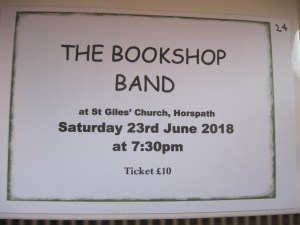
The small church provided great acoustics and an intimate setting, and the set list was a fun mixture of old and new. All of their songs are based on literature: When they were the house band at Mr B’s Emporium of Reading Delights in Bath, they would write two songs based on an author’s new book on the very day that s/he would be making an appearance at the shop in the evening. A combination of slow reading and procrastination, I suppose. You’d never believe it, though, because their songs are intricate and thoughtful, often pulling out moments and ideas from books (at least the ones I’ve read) that never would have occurred to me.
Here’s what they played last night, and which books the songs were based on:
- “Once Upon a Time” – For a radio commission they crafted this compilation of first lines from various books.
- “Cackling Farts” – A day-in-the-life song featuring archaic vocabulary words from Mark Forsyth’s The Horologicon.
- “You Make the Best Plans, Thomas” – Hilary Mantel’s Bring Up the Bodies (one of my absolute favorites of their songs).
- “Why I Travel This Way” – Yann Martel’s The High Mountains of Portugal (I have heard this live once before, but it’s never been recorded).
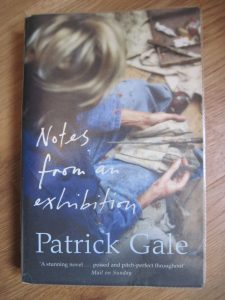 “Petroc and the Lights” – Patrick Gale’s Notes from an Exhibition (which reminds me that I really need to read it soon!).
- “Dirty Word” – A brand-new song based on Aldous Huxley’s Brave New World; it stemmed from their recent commission to write about banned books for the V&A.
- “How Not to Woo a Woman” – Rachel Joyce’s The Unlikely Pilgrimage of Harold Fry (it must be a band favorite as they’ve played it every time I’ve seen them).
- “Curious and Curiouser” – Lewis Carroll’s Alice in Wonderland.
- “Sanctuary” – A new song they wrote for the launch event at the Bodleian Library for Philip Pullman’s La Belle Sauvage (The Book of Dust, #1).
- “Room for Three” – The other song they wrote for the Pullman event
- “We Are the Foxes” – Ned Beauman’s Glow.
- “Edge of the World” – Emma Hooper’s Etta and Otto and Russell and James.
- “Faith in Weather” – The only one not based on a book; this was inspired by a Central European folktale about seven ravens (another of my absolute favorites).
- “Thirteen Chairs” – Dave Shelton’s Thirteen Chairs (another one they’ve played every time I’ve seen them).
I’m always impressed by Ben and Beth’s musicianship (guitars, ukuleles, cello, harmonium and more), and I also admire how they’ve continued touring intensively despite being new parents. They’re currently on the road for two months, and one-year-old Molly simply comes along for the ride!

A gorgeous sunset as we left the gig last night.
It’ll be a busy week on the blog. I have posts planned for every day through Saturday thanks to Library Checkout, the Iris Murdoch readalong, and various features reflecting on the first half of the year and looking ahead to the second half.
It turns out I’ll be in America for three weeks of July helping my parents pack and move, so I may have to slow down on the 20 Books of Summer challenge, and will almost certainly have to substitute in some books I have in storage over there. (I’m pondering fiction by Laurie Colwin, Hester Kaplan, Antonya Nelson and Julie Orringer; and nonfiction by Joan Anderson, Haven Kimmel and Sarah Vowell.) I have a few books lined up to review for their July release dates, but it’ll be a light month overall.
Dubiously Thematic Easter Reading
In 2015 and 2017 I came up with some appropriately theological reading recommendations for Easter. This year I’m going for a more tongue-in-cheek approach, as befits the unfortunate conjunction of Easter with April Fools’ Day.
Currently reading or reviewing:
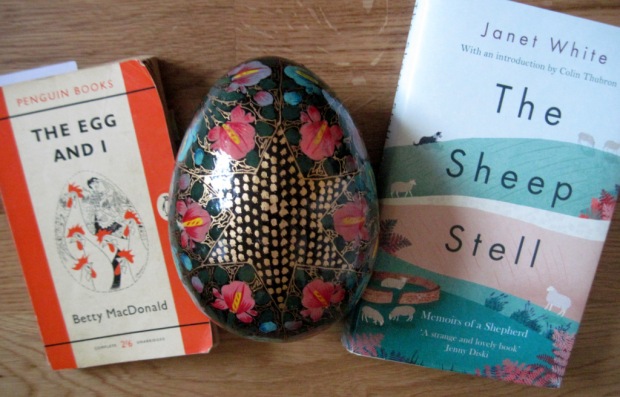
The Egg and I by Betty MacDonald
I bought this on a whim from a local charity shop, based on the title, cover and blurb. I’m about one-third of the way through so far. MacDonald and her husband started a chicken farm in a mountainous area of the Pacific Northwest in the 1940s. Her account of her failure to become the perfect farm wife is rather hilarious. My only hesitation is about her terrible snobbishness towards rednecks and “Indians.”


A representative passage: “Gathering eggs would be like one continual Easter morning if the hens would just be obliging and get off the nests. Co-operation, however, is not a chickenly characteristic and so at egg-gathering time every nest was overflowing with hen, feet planted, and a shoot-if-you-must-this-old-grey-head look in her eye.”
The Sheep Stell by Janet White
 I’m reviewing this reissued memoir for the TLS. It’s a delightful story of finding contentment in the countryside, whether on her own or with family. White, now in her eighties, has been a shepherd for six decades in the British Isles and in New Zealand. While there’s some darker material here about being stalked by a spurned suitor, the tone is mostly lighthearted. I’d recommend it to anyone who’s enjoyed books by Gerald Durrell, James Herriot and Doreen Tovey.
Representative passages: “Shepherding is a strange mixture of tremendous physical work alternating with periods of calm, quiet indolence.” & “A dare, a dream and a challenge. I could have hunted the whole world over and never in a lifetime found anywhere so right: warm, high, pastoral and severed by the sea.”
Read recently:
The Trouble with Goats and Sheep by Joanna Cannon
 Mrs. Creasy disappears one Monday in June 1976, and ten-year-old Grace Bennett and her friend Tilly are determined to figure out what happened. I have a weakness for precocious child detectives (from Harriet the Spy to Flavia de Luce), so I enjoyed Grace’s first-person sections, but it always feels like cheating to me when an author realizes they can’t reveal everything from a child’s perspective so add in third-person narration and flashbacks. These fill in the various neighbors’ sad stories and tell of a rather shocking act of vigilante justice they together undertook nine years ago.
Sheep are a metaphor here for herd behavior and a sense of belonging, but also for good versus evil. Grace and Tilly become obsessed with a Bible passage the vicar reads about Jesus separating the sheep from the goats. But how can he, or they, know who’s truly righteous? As Grace says, “I think that’s the trouble, it’s not always that easy to tell the difference.” It’s a simplistic message about acknowledging the complexity of other lives and situations rather than being judgmental, and matches the undemanding prose.
Reminiscent of Rachel Joyce, but not as good.
My rating:
Vita Nova by Louise Glück
 My first collection from the prolific Pulitzer winner. Some of the poems are built around self-interrogation, with a question and answer format; several reflect on the myth of Orpheus and Eurydice. The first and last poems are both entitled “Vita Nova,” while another in the middle is called “The New Life.” I enjoyed the language of spring in the first “Vita Nova” and in “The Nest,” but I was unconvinced by much of what Glück writes about love and self-knowledge, some of it very clichéd indeed, e.g. “I found the years of the climb upward / difficult, filled with anxiety” (from “Descent to the Valley”) and “My life took me many places, / many of them very dark” (from “The Mystery”).
Best lines about spring:
“The spring of the year; young men buying tickets for the ferryboats. / Laughter, because the air is full of apple blossoms.” (from “Vita Nova”)
“Spring / descended. Or should one say / rose? … yellow-green of forsythia, the Commons / planted with new grass— // the new / protected always” (from “Ellsworth Avenue”)
My rating:
Plucked off the shelf for their dubious thematic significance!

To Rise Again at a Decent Hour by Joshua Ferris
Animal, Vegetable, Miracle by Barbara Kingsolver
Wise Blood by Flannery O’Connor
So You’ve Been Publicly Shamed by Jon Ronson
The Resurrection of Joan Ashby by Cherise Wolas
Happy Easter to all those who mark it, and have a good week. I have a few review-based posts scheduled for while we’re in Wigtown, a trip I hope to report on next Monday, when I will also attempt to catch up on blogs and comments.
On the Road with Ma: The Lauras by Sara Taylor
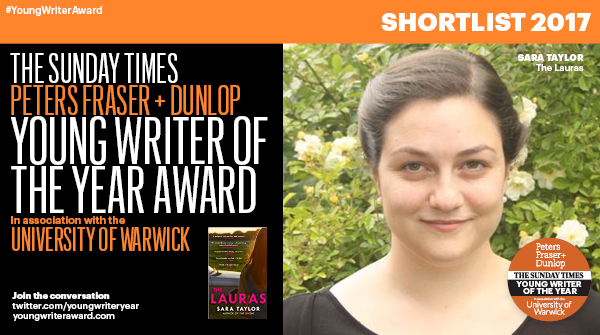
Sunday Times Young Writer of the Year Award shortlist review #1
Sara Taylor’s debut, The Shore, was a gritty and virtuosic novel-in-13-stories that imagined 250 years of history on a set of islands off the coast of Virginia. It was one of my favorite books of 2015, and earned Taylor a spot on that year’s Sunday Times Young Writer of the Year Award shortlist as well as the Baileys Prize longlist. Her second book is a whole different kettle of fish: a fairly straightforward record of an extended North American road trip that 13-year-old Alex took with his/her mother 30 years ago.
Alex and Ma have run off from their home in Virginia and left Alex’s father behind. They travel, seemingly at random, all over – North Carolina, Michigan, Mississippi, Nevada, California – stopping for weeks at a time for Ma to earn enough to move on again. On the way they visit various sites from Ma’s past, mostly foster homes where she lived as a runaway teen and made fleeting connections with friends and lovers. Her five best friends were all apparently named Laura. Sometimes it seems Ma is after revenge; other times she’s making amends for mistakes from her past or attending to unfinished business. One thing gradually becomes clear: this is no arbitrary journey but a quest with a destination. It even has a Harold Fry element, though Taylor avoids Rachel Joyce’s schmaltz.
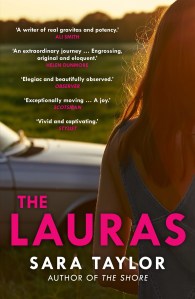 The Lauras is more complex than your average coming-of-age tale, largely because of Alex’s deliberate androgyny: a whole novel passes without us figuring out whether the narrator is male or female. “I suppose I was forgettable, came across still as whichever gender a person expected to see … being either and neither and both at once fit me more closely than the other options on offer,” Alex writes. But this chosen indeterminateness is not without consequences: there are a couple of disturbing scenes of bullying and sexual assault.
I enjoyed the mother-and-teen banter and the depiction of characters who are restless and rootless, driven on by traumatic memories as much as by uncertainty about the future. However, I had a few problems with the book. A road trip is generally a fun fictional setup, but here it tends towards the episodic and the repetitive. Moreover, Ma’s past is generally conveyed by secondhand stories rendered in Alex’s voice, which subordinates Ma’s perspective to her child’s and relies on somewhat dull reportage. Also, the metaphorical language and level of psychological understanding seem too advanced for a young teen, which only emphasizes the disjunction between the events being recounted (perhaps from the 1990s?) and the supposed present day three decades later. Those niggles explain why I abandoned this book a third of the way through on my first attempt in December 2016, and why, for me at least, it overall pales in comparison with the originality of The Shore.

I prefer this cover image.
Bearing in mind that I might be meeting these authors at the shortlist event or prize-giving ceremony, I’m not going to rate the five ST Young Writer books. (It wouldn’t take much sleuthing to find my Goodreads ratings, but never mind.) I’m still a huge fan of Sara Taylor’s work and look forward to her next book; were this to be the consensus of the rest of the shadow panel I would happily recognize it, but it’s unlikely to be one of my top two.
Other reviews of The Lauras:
Postscript: Taylor and I have a few neat connections: she graduated from Randolph College (formerly Randolph-Macon Women’s College), whose study abroad program in Reading, England brought me over here for the first time, and when not working on her PhD at UEA lives with her husband in Reading. Plus a tiny mention from The Lauras made me cheer: Ma went to Hood College, my alma mater!
A Book-Themed Concert and Goody Bag
On Saturday my husband and I headed to Hungerford to see The Bookshop Band for the second time. A year and a half ago I first had the chance to see them live at the 2014 Hungerford Literary Festival, when they gave a performance tied in with Rachel Joyce’s release of The Love Song of Miss Queenie Hennessy.
The band formed about five years ago to provide music for author events at their local bookshop, Mr B’s Emporium of Reading Delights in Bath, England. Since then they’ve written somewhere between 120 and 150 songs inspired by books. Their basic genre is indie folk, with plenty of guitar, ukulele and cello as well as a bunch of improvised percussion and three intermingled voices. Depending on the book in question, though, the feel can vary widely, ranging from sweet to bizarre or haunting. Especially when I’ve read the book being sung about, it’s intriguing to see what the musicians have picked up on – often something very different from what I would as a reader and reviewer.
 This year the band (now down to two members) is making an effort to record and release all their songs in 10 albums. I participated in a crowdfunding project so am lucky enough to receive all their new releases in digital format before they’re available as printed CDs. The first album is Curious and Curiouser, the title track of which was inspired by Alice in Wonderland. Other sets of songs are based on A Midsummer Night’s Dream and the steampunk novel The Strange Affair of Spring Heeled Jack by Mark Hodder, while “Once Upon a Time,” a commission for radio, strings together famous first lines from fiction.
My favorite Bookshop Band song (so far) is “Bobo and the Cattle,” inspired by Alexandra Fuller’s Don’t Let’s Go to the Dogs Tonight. Two great ones new to me from Saturday’s performance were “Faith in Weather,” based on Central European fairy tales, and “You Make the Best Plans, Thomas,” about Hilary Mantel’s Bring Up the Bodies.
You can listen to lots of their songs on their Bandcamp page and dozens of videos of their performances are on YouTube and Vimeo (I’ve linked to several above). When performing events they often get the authors to play with them: Louis de Bernières pitched in with mandolin on a song about The Dust that Falls from Dreams, and Yann Martel played glockenspiel while promoting The High Mountains of Portugal.
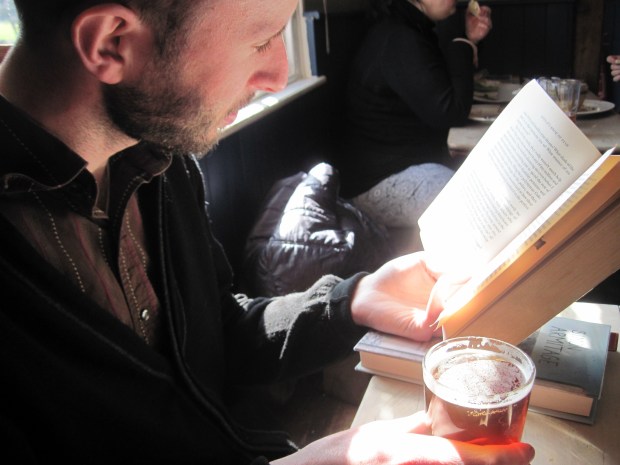
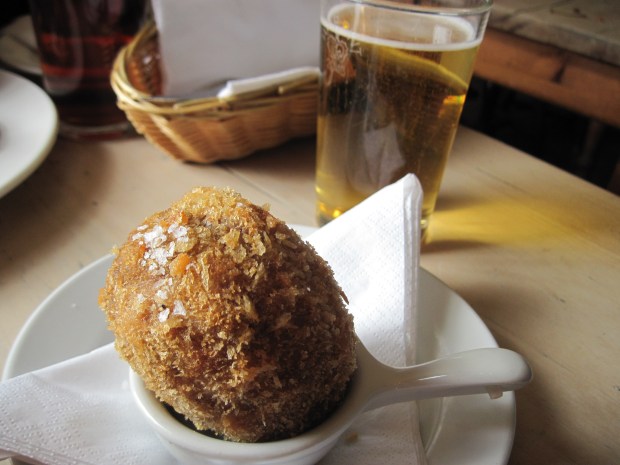
We had started off the day with lunch at a Berkshire country pub, The Pot Kiln, where we didn’t mind the 40-minute wait for food because we had books and half-pints of beer and cider to while away the time over as sunshine poured through the windows. The menu is mostly based around game shot by the chef himself in the fields opposite the pub, so we indulged in a venison and wild boar hot dog and venison Scotch eggs before setting off on a windy several-mile walk near Combe Gibbet and then continuing on to Hungerford.
Now for the goody bag: on the venue tables the owner of Hungerford Bookshop had placed a ten-question literary quiz to work on and hand in during the intermission. I was fairly confident on some of my answers, had a guess at the others, and after literally about 45 minutes of wrestling with anagrams finally figured out that “Lobbing Slates” gives the name of novelist Stella Gibbons. We won with 7 out of 10 correct; an elderly lady joked that we’d Googled all the answers, but I pointed out that we don’t own a smartphone between us! Now, I suspect we were actually the only entry, but that doesn’t diminish our accomplishment, right?! I was delighted to win a couple of free books I hadn’t necessarily intended on reading but now certainly will, plus a metal bookmark and a notebook, all in a limited-edition “Books Are My Bag” tote designed by Tracey Emin.
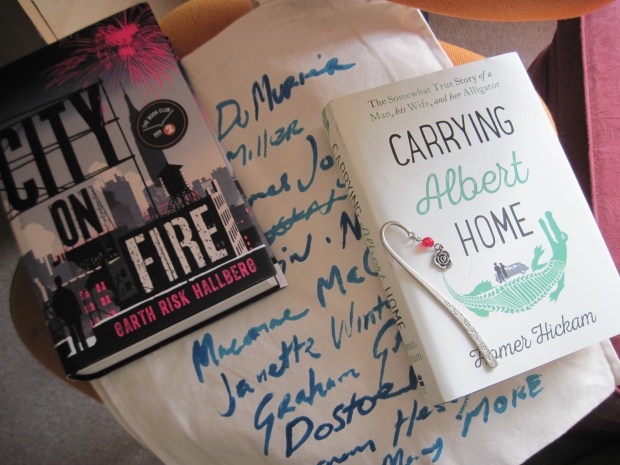
All in all, a fantastic and mostly bookish day out!
If you live in the UK and get the chance, don’t hesitate to go see The Bookshop Band play; they’re touring widely this year.
Reviews Roundup, February–March
One of my goals with this blog was to have one convenient place where I could gather together all my writing that appears in disparate online locations. To that end, once a month I provide links to all book reviews I’ve published elsewhere, with a rating (below each description) and a taster so you can decide whether to read more. A few exceptions: I don’t point out my Kirkus Indie, BlueInk or Publishers Weekly reviews since I don’t get a byline. Meanwhile, I’ve done my first article for the Los Angeles Review of Books – exciting!
The Bookbag
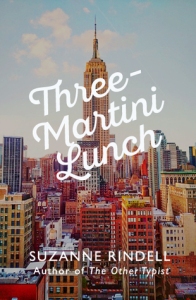
Three-Martini Lunch by Suzanne Rindell: Brings the late 1950s, specifically the bustling, cutthroat New York City publishing world, to life through the connections between three young people who collide over a debated manuscript. The three first-person voices fit together like a dream. It’s an expert evocation of Beat culture and post-war paranoia over Communism and homosexuality. Walking into Eden’s office, especially, you’ll think you’ve landed on the set of Mad Men. This classy, well-plotted follow-up will win Rindell even more fans and tide us all over until the film version of The Other Typist – produced by and starring Keira Knightley – appears. Releases May 19th in the UK.

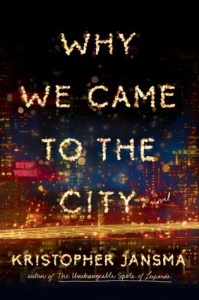 Why We Came to the City by Kristopher Jansma: Five university friends strive to make their lives count against the indifferent backdrop of recession-era New York City. When one of them falls ill, they pull together like a family. The tone of the novel lies somewhere between A Little Life and the sitcom Friends (a Mexican version of which the characters watch obsessively). Even as his characters realize that they are not special and not in control of their lives, Jansma never lets his book descend too far into gloom. Narrowly misses out on 5 stars from me because the storyline loses momentum in Part Two. Rich with emotion and literary allusions (from Walden to The Iliad), this is my favorite novel of the year so far.
Waltzing in Vienna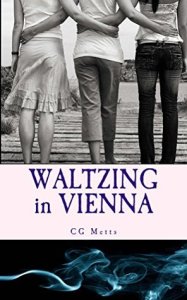 by C.G. Metts (& interview): Three girlfriends – a singer staging a comeback, a psychology professor reawakening to sexuality after being widowed, and a socialite Southern Belle – are reunited in Charleston, South Carolina in their early forties. Remembering their wild college days, they wonder how to make midlife count. There’s a fun Sex and the City or Ya-Ya Sisterhood vibe to this recommended debut novel. I liked the mixture of nostalgia and gentle feminism, and I think this may also inspire readers to see South Carolina’s coastal landscape for themselves. The title phrase is the friends’ shorthand for smoking marijuana together.

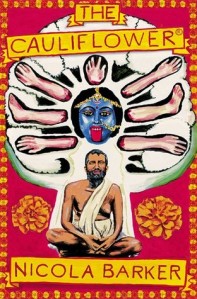 The Cauliflower® by Nicola Barker: Put simply, this is a fictionalized biography of the largely illiterate Hindu guru Sri Ramakrishna (1836–1886). That may sound dry as dust, but Barker makes it a playful delight by skipping around in time and interspersing aphorisms, imagined film scenes, questions and answers, and even a recipe with the narrative chapters. The kernel of the story – set in 1857 at the Dakshineswar Kali Temple, six miles north of Calcutta – is narrated in the first person by the guru’s nephew, Hriday. Scripture of all types (the Bible is also cited) is a relevant, joyful echo here rather than a dull set of rules. Bizarre but very readable. Releases April 21st.
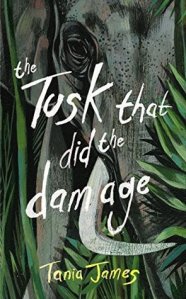 The Tusk That Did the Damage by Tania James: This composite picture of the state of wildlife conservation in India is told from three perspectives: an elephant named the Gravedigger, a poacher, and a documentary filmmaker. James ably intersperses three voices as she explores how people fail to live up to their ideals and make harmful assumptions. Despite these attributes, it was one of those books I had to force myself through. Perhaps it was the environmental agenda: if a book is going to wear its message so openly, it has to live up to it in terms of the writing. I might have preferred it if the whole novel had been from Emma’s point of view, with one climactic encounter with the Gravedigger to make the poaching question immediate and not simply academic.

BookBrowse
Dog Run Moon: Stories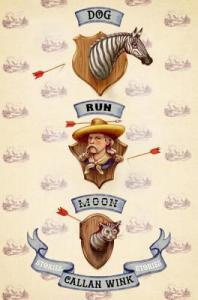 by Callan Wink [subscription service]: Wink’s debut story collection, set mostly under Montana’s open skies, stars a motley cast of aimless young men, ranchers, Native Americans, and animals live and dead. He plays around with Western stereotypes in intriguing ways. A few of the tales are a bit less compelling, and I would have preferred more variety in narration (8 of 9 are third person), but the stand-outs more than make up for it. My two favorites were “Runoff” (there’s a double meaning to the title) and “Exotics,” in which all the characters are lured by the life they don’t currently have.
 For Books’ Sake
Interview with Rachel B. Glaser, author of Paulina & Fran [my review of which was in last month’s roundup]
Foreword Reviews
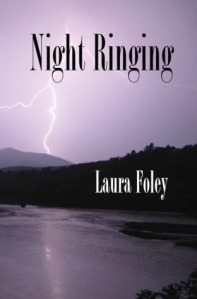 Night Ringing by Laura Foley: Foley’s strong fifth collection ruminates on romance and family via autobiographical free verse. One of the collection highlights is “In the Honda Service Area,” which unexpectedly unites modern technology with ancient literature. While a woman describes her impending hip replacement surgery to a friend, Foley tries to concentrate on Homer’s Iliad. The collection is dedicated to Foley’s partner, Clara Giménez, and lesbian romance is a subtle undercurrent. Especially recommended for fans of Jane Hilberry and Adrienne Rich.
The Temple of Paris by Laura DeBruce: This second volume in Laura DeBruce’s Quicksilver Legacy trilogy is a fast-paced fantasy adventure novel. In the previous book, the author introduced the “Immortals,” centuries-old creatures who are impervious to disease and aging due to a magic elixir. If Hana, the teenage protagonist, can learn how to use the elixir in her possession correctly, she can save her mother from a potentially fatal blood disorder. Although the complicated plot might be challenging for those new to the series, older teens will appreciate the rollicking story and the chance for vicarious European sightseeing.

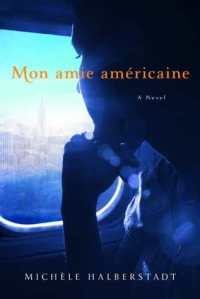 Mon amie américaine by Michèle Halberstadt: After years of heavy smoking and migraines, a brain aneurysm plunges forty-year-old Molly into a coma. The novel is presented as Michèle’s confessional letter to her American friend Molly, addressed in the second person. During Molly’s coma and after she wakes up, Michèle ponders their unlikely friendship and also frets over her threatened marriage. The novella is like a cross between Jenny Offill’s Dept. of Speculation and Jean-Dominique Bauby’s The Diving-Bell and the Butterfly, and bears tantalizing traces of deliberate homage to Pedro Almodóvar’s coma-themed Talk to Her: an understated dual account of betrayal and disability.
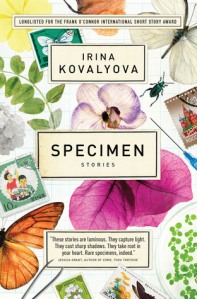 Specimen: Stories by Irina Kovalyova: “People like to pretend that our genes define the truth for us. But I assure you that’s not the case,” a character insists in the title story. Diverse in setting and form, these nine stories, long-listed for the Frank O’Connor International Short Story Award, contrast the scientific understanding of genetics with deeper wisdom about the bonds of love and family. Nestling science into rich psychological narratives, Kovalyova’s work is reminiscent of that of Andrea Barrett and A. S. Byatt; in fact, the latter is directly referenced in one story. She also channels Anthony Marra and Adam Johnson by affirming love’s survival in spite of repressive situations.
Of Crime and Passion by Jonathan Harnisch: In this novella, a proud young man seeks to transcend his underprivileged upbringing by worming his way into the homes of the rich and seducing powerful women. At its heart, the book is about the ongoing conflict between economic and social classes. With the melodramatic action and old-fashioned dialogue, though, it is easy to imagine this coming-of-age tale working better in the form of a play.
Hakai Magazine
(a Canadian publication highlighting coastal ecosystems)
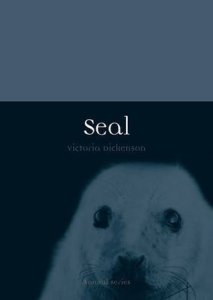 Seal by Victoria Dickenson: “It is hard to imagine a creature more distant from the human species in bodily form, habits, and habitat than the seal,” Dickenson writes in her introduction, “yet our mutual regard tells of a long, shared history of interaction.” Seal is the latest in the 80-strong Animal series from Reaktion Books. Like other volumes, this gives a brief discussion of the featured animal’s evolutionary biology, followed by an interdisciplinary survey of how it has entered human culture throughout history. In the final two chapters—the highlight of an occasionally dry book—Dickenson gives a balanced account of the history of hunting seals.
Los Angeles Review of Books
“Rediscovering an Overlooked Woman Novelist”: A dual review of Constance Fenimore Woolson: Portrait of a Lady Novelist by Anne Boyd Rioux () and Miss Grief and Other Stories (), a new selection of Woolson’s short fiction.
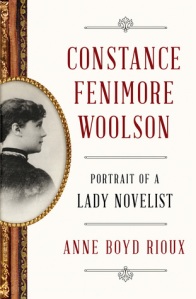
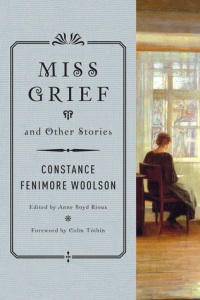 Constance Fenimore Woolson (1840–1894) is most often remembered for her connection to male writers; her great-uncle was pioneering American novelist James Fenimore Cooper, and in her later years as an expatriate in Europe she associated with Henry James, fueling rumors of a romance between them. Deserving to be known in her own right, Woolson represents key junctures between realism and regionalism, and between American and European styles. Gives a remarkable picture of a bold, bright woman who paved the way for writers such as Edith Wharton, E. M. Forster, and Willa Cather, and who arguably might be hailed in the same breath as Henry James and George Eliot.
Nudge
My quick response to Instructions for a Heatwave, for a Maggie O’Farrell retrospective: Another spot-on tale of family and romantic relationships – O’Farrell always gets the emotional tenor just right. You may spot hints of Rachel Joyce’s The Unlikely Pilgrimage of Harold Fry or Bernhard Schlink’s The Reader, but the psychological and linguistic precision is all O’Farrell’s own. Her descriptive language is unfailingly elegant. I love how she opens with the heat as the most notable character: “It inhabits the house like a guest who has outstayed his welcome: it lies along corridors, it circles around curtains, it lolls heavily on sofas and chairs.”
Pretentiousness: Why It Matters by Dan Fox: This wide-ranging essay discusses pretentiousness as it relates to class, taste, and modern art. Fox grew up outside of Oxford but now lives in New York City, where he is the co-editor of frieze. From its Latin etymology we learn that pretentious means “to stretch before,” so to hold something in front of you like a mask. He thus starts off by talking about acting techniques and rhetoric, then broadens this out to themes of authenticity and self-discovery. The most interesting part of the book concerns class connotations. This is a somewhat meandering work, and though it has good individual lines it is not always riveting.
 Third Way magazine
I’ve reviewed books, mostly fiction, for them for the last 2.5 years; sadly, the April 2016 issue will be the final one. It’s a shame; the progressive Christian perspective on popular culture is a niche it will be hard to fill.
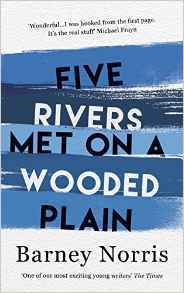
Five Rivers Met on a Wooded Plain by Barney Norris: Barney Norris is a playwright in his twenties, so it’s no surprise that there’s something a little staged to his debut novel. The lives of the book’s five narrators collide one night when a car hits a moped in Salisbury town center. We hear from each protagonist in turn as they reflect on their losses and wonder whether religion – represented by Salisbury Cathedral and the scripture and rituals of Christianity – might help. Rita is the liveliest and most engaging character, difficult as her expletive-strewn narrative might be to traverse. Like David Nicholls, Norris prizes emotional connection and delivers a theatrical plot. If he can avoid the more clichéd aspects of a novel like One Day, he could have a long career in fiction ahead of him. Releases April 21st.
I also post reviews of most of my casual reading and skimming on Goodreads:
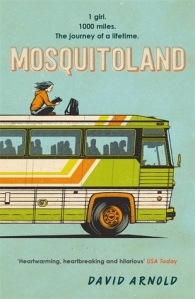 Mosquitoland by David Arnold: I don’t read a whole lot of YA, but the voice of this one captured me right away. Like Hazel in The Fault in Our Stars, Mim (Mary Iris Malone) is a lovably sarcastic oddball – she describes herself as “a young Ellen Page” à la Juno – with some hidden issues that come out over the course of the book. Here Mim’s journey takes the form of a road trip from Mississippi, where she lives with her father and new stepmother, back to Ohio to be with her sick mother. She meets a kooky cast of secondary characters along the way, narrowly escapes danger, and even gets a chance at romance.
A Change of World: Poems by Adrienne Rich: This is a forthcoming Norton reissue of Rich’s first collection from 1951. I’d always thought of her as a later, feminist poet, so it was jolting to see an introduction from W.H. Auden – that made it feel like a real generational crossover. It’s a very impressive debut, full of mannered, rhyme-rich verse. Two favorites were “Walden 1950” (“Thoreau, lank ghost, comes back to visit Concord, / Finds the town like all towns, much the same— / A little less remote, less independent”) and “The Innocents.” I’ll be interested to read some of her later work and see if she loosened up with form. Releases June 21st.
 The Shadow Hour by Kate Riordan: A clever dual-timeline novel with a pleasing Gothic flavor. In 1922 Grace Fairford takes up a governess position at Fenix House near Cheltenham, the very place where her grandmother, Harriet Jenner, worked in 1878. Every few chapters the perspective shifts from Grace (first person) to Harriet (third person). The novel is full of coincidences and the sense of history repeating itself. Riordan’s writing is capable, sometimes clichéd, but the echoes of Jane Eyre and The Turn of the Screw make this a delicious guilty-pleasure read.
Life’s Too Short to Pretend You’re Not Religious by David Dark: Etymologically, the word “religion” means to bind together again. Simply put, Dark’s thesis is that we’re all connected: we are in relationship with the people around us and can’t pretend otherwise. What we need is a shared vision for our shared life, and that involves engaging with other people. No pie-in-the-sky theology here; Dark affirms Daniel Berrigan’s assertion that “the actual world is our only world,” so things like climate change, gun control, immigration, and foreign policy are religious issues because they affect us all in this life. Together we have to imagine another story that isn’t capitalism and American imperialism as usual.
Adios, Cowboy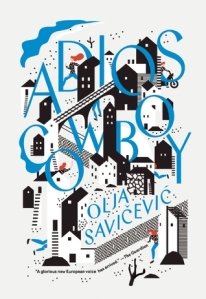 by Olja Savičević Ivančević: In summer 2009, Dada (aka Rusty) returns to her Croatian hometown to care for her mother. Going home facing up to the fact of her brother’s death – when he was 18 he threw himself under a train. “One has to sit down beside one’s demon and mollify it until it’s calm – that’s all, perhaps, that can be done,” she muses. Now for the title: Dada’s late father, brother, and friends (“the Iroquois Brothers”) were all big on cowboys and Indians. When news comes that a spaghetti western actor/director named Ned Montgomery will be passing through town, it causes Dada to think about her father and her brother and, what’s more, about the workings of her own memory.
Now Go Out There: (and Get Curious) by Mary Karr: There’s not much to this Syracuse University commencement speech. Leftovers of sob-story autobiography and clichéd advice cobbled together. Disappointing given how much I loved Karr’s recent The Art of Memoir. For a truly inspirational graduation address, I recommend David Foster Wallace’s This Is Water.

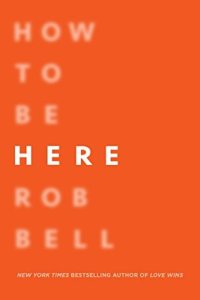 How to Be Here: A Guide to Creating a Life Worth Living by Rob Bell: Bell left his pastoral role to become a motivational speaker so, unsurprisingly, this book is closer to self-help than theology. He’s good pals with Elizabeth Gilbert, and this book would make a great companion piece to her Big Magic. It’s about how to find what gets you out of bed in the morning and live mindfully. As always, his formatting – bite-size paragraphs, stretching out phrases with line breaks – is slightly annoying. I didn’t learn a whole lot; it was more a case of being reminded of things I knew deep down. He prefaces most chapters with an anecdote about his creative ventures, some of which were utter failures.
And my highest recommendation goes to…
The Summer Guest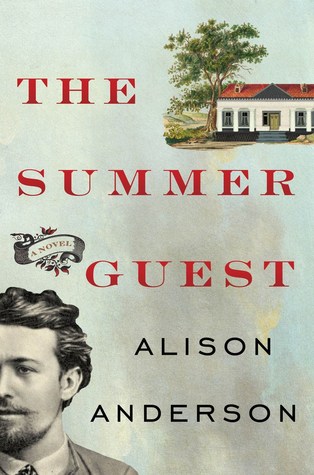 by Alison Anderson: The kernel of the novel is a true story: for two summers in the late 1880s, Chekhov stayed at the Lintvaryovs’ guest house in Luka, Ukraine. One strand of the narration is a journal kept during those years by Zinaida, the family’s eldest daughter, a doctor dying of a brain tumor. Zina’s story is offset by those of two contemporary women. Katya, a Russian émigré in London who’s trying to keep her failing publishing house afloat, sends the never-before-published diary to Ana, a translator based near the French border with Switzerland. There’s a touch of mystery here: where was the diary found? And what became of the novel Chekhov mentions he had in progress? Ana’s search for answers takes her to the Lintvaryov estate, even though Ukraine in 2014 is a hotbed of unrest. Having recently watched the BBC War & Peace miniseries with rapt interest and seen a Tchaikovsky symphony performance, it was the perfect time to get lost in an intricate, playful novel about how Russian literature still resonates. I’ll certainly be looking up Anderson’s other novels.
The Seed Collectors & The A to Z of You and Me
The Seed Collectors by Scarlett Thomas
“I have no idea why everyone thinks nature is so benign and glorious and wonderful. All nature is trying to do is kill us as efficiently as possible.”
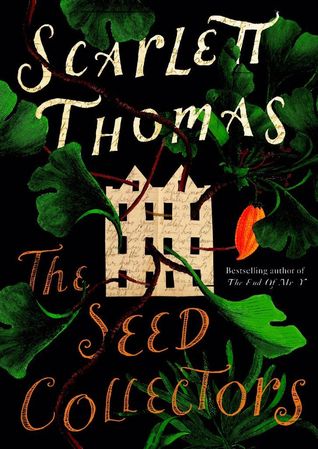 This offbeat novel about obsession, sex and inheritance is set in Kent in 2011 and stars an extended family of botanists. The concept of a family tree has a more than usually literal meaning here given the shared surname is Gardener and most members are named after plants. We have Great-Aunt Oleander, recently deceased; cousin Bryony and her children Holly and Ash; siblings Charlie and Clem (short for Clematis); and half-sister Fleur, who has taken over Oleander’s yoga center, Namaste House. The generation in between was virtually lost, perhaps to a plant-based drug overdose, on a seed collecting expedition to the South Pacific. Oleander has left each motherless child one of these possibly deadly seed pods.
Did I mention the book is saturated with sex? Incest, adultery, illegitimate children, S&M, Internet porn, you name it. But beyond that, the metaphorical language is highly sexualized – bursting with seeds, fertility and genital-like plants. I can’t think when I’ve encountered such oversexed vocabulary since D.H. Lawrence’s Sons and Lovers. Here’s a sampling:
Dave seems to be avoiding the clouds as he works the little plane up into the sky, penetrating it slowly, and really quite gently.
A surprising amount of plants look like dicks.
(of peat) It’s like walking on a giant’s pubes.
All lettuce wants is sex. And violence. Just like all plants. It wants to reproduce, and it wants to kill or damage its rivals so they don’t reproduce.
So many flowers are basically little sex booths.
And she was pulling him towards her, deeper into her, as if he were a flower and she an insect desperate for his cheap, sugary nectar.
Connections between characters morph and take on new dimensions as the book goes on. A few characters are unrealized, such as Fleur, which meant I felt slightly disconnected from them. (My ‘favorite’ in a book stuffed full of unlikable figures was probably Bryony, whose hunger for food, alcohol and shopping seems to be endless.) Likewise, not all the storylines are truly essential, so the book seems aimless for its final third; it definitely could have been shorter and tied together better, perhaps with some flashbacks to the previous generation’s experiences on the island to make the past feel more alive. The spiritual element remains vague, although there is a pleasant touch of magic realism along the way.
Despite these reservations, I truly enjoyed Thomas’s unusual writing. She moves freely between characters’ perspectives but also inserts odd second-person asides asking philosophical questions about wasted time and what is truly important in life. One peculiar little section even imagines the point-of-view of a robin in the garden of Namaste House, with made-up words fit for “The Jabberwocky”: “The man is, as always, incompt and untrig. He sloggers around his rooms in his black and grey ragtails like an elderly magpie.”
I like the range of questions you’re left with as a reader: Is nature malicious? Can we overcome our addictions? How much of who we are is down to our parentage? Does life really just come down to sex? The content of the novel might be reminiscent of A.S. Byatt and Andrea Barrett’s science-infused fiction or The World Before Us by Aislinn Hunter, but the style is totally different. I can’t even think who it reminds me of; it feels pretty one of a kind to me. Luckily this is Thomas’s sixth novel, so there’s plenty more for me to explore.
With thanks to Canongate for the free copy, won in a Goodreads giveaway.
My rating: 
The A to Z of You and Me by James Hannah
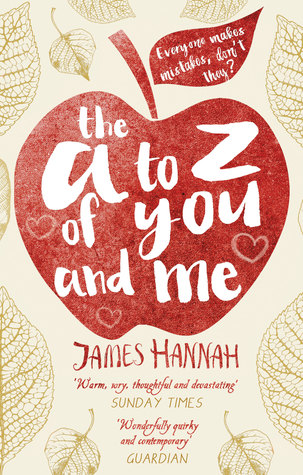 Lying in a hospice bed, 40-year-old Ivo looks back on his life. Even after just four short decades and a modest career at a garden center, he has plenty to regret. Hard partying and drug use exacerbated his diabetes and prompted kidney failure. His lifestyle also led indirectly to his girlfriend, a nursing student named Mia (the “you” whom he often addresses directly), leaving him. He’s estranged from his sister and the friends he’d been close to since school days, especially Mal. How did he mess up so badly and cut himself off so completely that he’s now dying alone? And how much can he put right before he goes?
There’s plenty of affecting writing in Hannah’s debut novel, as in one of my favorite passages: “The sun chooses this moment to radiate through to me, through me. It feels like – it feels like life. I can sense my corrupt blood bubbling and basking beneath the surface.” I also love how Hannah captures the routines of institutional life – the sights, smells and sounds that come to define Ivo’s circumscribed life:
Round the corner now. Noticeboard up on the right, pinned every inch over with flyers and leaflets. The papers at the bottom lift and flutter in the convection of the heater beneath.
I am lost in a world of regular hums, distant beeping, the periodic reheating of the coffee machine in the corridor, and that steady kazoo [of his next-door neighbor’s breathing].
Nurse Sheila and Amber, the daughter of another hospice patient, are great supporting characters. Sheila’s A to Z game, encouraging Ivo to think of a memory attached to body parts starting with each letter of the alphabet, provides a hokey but effective structure. As Ivo’s condition deteriorates and his thoughts are scrambled by morphine, his narration gradually becomes less coherent and more insular. This means that by the time we reach the conclusion (which somehow manages to be both predictable and shocking at the same time), we aren’t sure whether he’s giving a reliable account of events or imagining things.
Ultimately, I felt confused about what Hannah meant for the book to be. Is this Irvine Welsh lite? Or a Rachel Joyce style tear-jerker? It’s similar in setup to The Love Song of Miss Queenie Hennessy, you see, and the remembered relationship with Mia is rather sappy. However, keep in mind that in British English the letter Z is pronounced ‘zed’, so the title doesn’t rhyme, which keeps it from being overly twee. Another barrier to my appreciation of the novel was that I never understood why Ivo was dying. People don’t die of kidney failure nowadays, thanks to dialysis and transplantation. (I have a kidney disease, so I should know!)
I’d recommend this book to fans of Mark Haddon, David Nicholls and Donal Ryan. I’ll follow Hannah’s career and hope he can avoid melodrama and a contrived structure – the two near-pitfalls of this one – in the future.
With thanks to Transworld Books for the free copy, won in a Goodreads giveaway.
My rating: 
 Bookish Beck = Rebecca Foster. American transplant to England. Freelance proofreader and book reviewer.
 Bookish Beck