Reading about Mothers and Motherhood: Cosslett, Cusk, Emma Press Poetry, Heti, and Pachico
It was (North American) Mother’s Day at the weekend, an occasion I have complicated feelings about now that my mother is gone. But I don’t think I’ll ever stop reading and writing about mothering. At first I planned to divide my recent topical reads (one a reread) into two sets, one for ambivalence about becoming a mother and the other for mixed feelings about one’s mother. But the two are intertwined – especially in the poetry anthology I consider below – such that they feel more like facets of the same experience. I also review two memoirs (one classic; one not so much) and two novels (autofiction vs. science fiction).

The Year of the Cat: A Love Story by Rhiannon Lucy Cosslett (2023)
This was on my Most Anticipated list last year. A Covid memoir that features adopting a cat and agonizing over the question of whether to have a baby sounded right up my street. And in the earlier pages, in which Cosslett brings Mackerel the kitten home during the first lockdown and interrogates the stereotype of the crazy cat lady from the days of witches’ familiars onwards, it indeed seemed to be so. But the further I got, the more my pace through the book slowed to a limp; it took me 10 months to read, in fits and starts.
 I’ve struggled to pinpoint what I found so off-putting, but I have a few hypotheses: 1) By the time I got hold of this, I’d tired of Covid narratives. 2) Fragmentary narratives can seem like profound reflections on subjectivity and silences. But Cosslett’s strategy of bouncing between different topics – worry over her developmentally disabled brother, time working as an au pair in France, PTSD from an attempted strangling by a stranger in London and being in Paris on the day of the Charlie Hebdo terrorist attack – with every page or even every paragraph, feels more like laziness or arrogance. Of course the links are there; can’t you see them?
3) Cosslett claims to reject clichéd notions about pets being substitutes for children, then goes right along with them by presenting Mackerel as an object of mothering (“there is something about looking after her that has prodded the carer in me awake”) and setting up a parallel between her decision to adopt the kitten and her decision to have a child. “Though I had all these very valid reasons not to get a cat, I still wanted one,” she writes early on. And towards the end, even after she’s considered all the ‘very valid reasons’ not to have a baby, she does anyway. “I need to find another way of framing it, if I am to do it,” she says. So she decides that it’s an expression of bravery, proof of overcoming trauma. I was unconvinced. When people accuse memoirists of being navel-gazing, this is just the sort of book they have in mind. I wonder if those familiar with her Guardian journalism would agree. (Public library)
A Life’s Work: On Becoming a Mother by Rachel Cusk (2001)
 When this was first published, Cusk was vilified for “hating” her child – that is, for writing honestly about the bewilderment and misery of early motherhood. We’ve moved on since then. Now women are allowed to admit that it’s not all cherubs and lullabies. I suspect what people objected to was the unemotional tone: Cusk writes like an anthropologist arriving in a new land. The style is similar to her novels’ in that she can seem detached because of her dry wit, elevated diction and frequent literary allusions.
I understand that crying, being the baby’s only means of communication, has any number of causes, which it falls to me, as her chief companion and link to the world, to interpret.
Have you taken her to toddler group, the health visitor enquired. I had not. Like vaccinations and mother and baby clinics, the notion instilled in me a deep administrative terror.
We [new parents] are heroic and cruel, authoritative and then servile, cleaving to our guesses and inspirations and bizarre rituals in the absence of any real understanding of what we are doing or how it should properly be done.
She approaches mumsy things as an outsider, clinging to intellectualism even though it doesn’t seem to apply to this new world of bodily obligation, “the rambling dream of feeding and crying that my life has become.” By the end of the book, she does express love for and attachment to her daughter, built up over time and through constant presence. But she doesn’t downplay how difficult it was. “For the first year of her life work and love were bound together, fiercely, painfully.” This is a classic of motherhood literature, and more engaging than anything else I’ve read by Cusk. (Secondhand purchase – Awesomebooks.com)
The Emma Press Anthology of Motherhood, ed. by Rachel Piercey and Emma Wright (2014)
There’s a great variety of subject matter and tone here, despite the apparently narrow theme. There are poems about pregnancy (“I have a comfort house inside my body” by Ikhda Ayuning Maharsi), childbirth (“The Tempest” by Melinda Kallismae) and new motherhood, but also pieces imagining the babies that never were (“Daughters” by Catherine Smith) or revealing the complicated feelings adults have towards their mothers.
“All My Mad Mothers” by Jacqueline Saphra depicts a difficult bond through absurdist metaphors: “My mother was so hard to grasp: once we found her in a bath / of olive oil, or was it sesame, her skin well-slicked / … / to ease her way into this world. Or out of it.” I also loved her evocation of a mother–daughter relationship through a rundown of a cabinet’s contents in “My Mother’s Bathroom Armoury.”
 In “My Mother Moves into Adolescence,” Deborah Alma expresses exasperation at the constant queries and calls for help from someone unconfident in English. “This, then, is how you should pray” by Flora de Falbe cleverly reuses the structure of the Lord’s Prayer as she sees her mother returning to independent life and a career as her daughter prepares to leave home. “I will hold you / as you held me / my mother – / yours are the bathroom catalogues / and the whole of a glorious future.”
I connected with these perhaps more so than the poems about becoming a mother, but there are lots of strong entries and very few unmemorable ones. Even within the mothers’ testimonials, there is ambivalence: the visceral vocabulary in “Collage” by Anna Kisby is rather morbid, partway to gruesome: “You look at me // like liver looks at me, like heart. You are familiar as innards. / In strip-light I clean your first shit. I’m not sure I do it right. / It sticks to me like funeral silk. … There is a window // guillotined into the wall. I scoop you up like a clod.”
A favourite pair: “Talisman” by Anna Kirk and “Grasshopper Warbler” by Liz Berry, on facing pages, for their nature imagery. “Child, you are grape / skins stretched over fishbones. … You are crab claws unfurling into cabbage leaves,” Kirk writes. Berry likens pregnancy to patient waiting for an elusive bird by a reedbed. (Free copy – newsletter giveaway)
Motherhood by Sheila Heti (2018)
I first read this nearly six years ago (see my original review), when I was 34; I’m now 40 and pretty much decided against having children, but FOMO is a lingering niggle. Even though I already owned it in hardback, I couldn’t resist picking up a nearly new paperback I saw going for 50 pence in a charity shop, if only for the Leanne Shapton cover – her simple, elegant watercolour style is instantly recognizable. Having a different copy also provided some novelty for my reread, which is ongoing; I’m about 80 pages from the end.
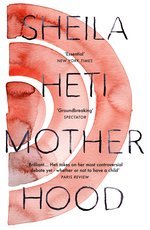 I’m not finding Heti’s autofiction musings quite as profound this time around, and I can’t deny that the book is starting to feel repetitive, but I’ve still marked more than a dozen passages. Pondering whether to have children is only part of the enquiry into what a woman artist’s life should be. The intergenerational setup stands out to me again as Heti compares her Holocaust survivor grandmother’s short life with her mother’s practical career and her own creative one.
For the past month or so, I’ve also been reading Alphabetical Diaries, so you could say that I’m pretty Heti-ed out right now, but I do so admire her for writing exactly what she wants to and sticking to no one else’s template. People probably react against Heti’s work as self-indulgent in the same way I did with Cosslett’s, but the former’s shtick works for me. (Secondhand purchase – Bas Books & Home, Newbury)
A few of the passages that have most struck me on this second reading:
I think that is how childbearing feels to me: a once-necessary, now sentimental gesture.
I don’t want ‘not a mother’ to be part of who I am—for my identity to be the negative of someone else’s positive identity.
The whole world needs to be mothered. I don’t need to invent a brand new life to give the warming effect to my life I imagine mothering will bring.
I have to think, If I wanted a kid, I already would have had one by now—or at least I would have tried.
Jungle House by Julianne Pachico (2023)
{BEWARE SPOILERS}
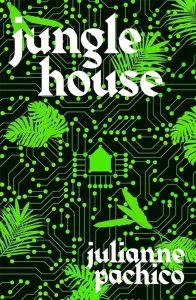 Pachico’s third novel is closer to sci-fi than I might have expected. Apart from Lena, the protagonist, all the major characters are machines or digital recreations: AI, droids, a drone, or a holograph of the consciousness of a dead girl. “Mother” is the AI security system that controls Jungle House, the Morel family’s vacation home in a country that resembles Colombia, where Pachico grew up and set her first two books. Lena, as the human caretaker, is forever grateful to Mother for rescuing her as a baby after the violent death of her parents, who were presumed rebels.
Mother is exacting but mercurial, strict about cleanliness yet apt to forget or overlook things during one of her “spells.” Lena pushes the boundaries of her independence, believing that Mother only wants to protect her but still longing to explore the degraded wilderness beyond the compound.
Mother was right, because Mother was always right about these kinds of things. The world was a complicated place, and Mother understood it much better than she did.
In the house, there was no privacy. In the house, Mother saw all.
Mother was Lena’s world. And Lena, in turn, was hers. No matter how angry they got at each other, no matter how much they fought, no matter the things that Mother did or didn’t do … they had each other.
It takes a while to work out just how tech-reliant this scenario is, what the repeated references to “the pit bull” are about, and how Lena emulated and resented Isabella, the Morel daughter, in equal measure. Even creepier than the satellites’ plan to digitize humans is the fact that Isabella’s security drone, Anton, can fabricate recorded memories. This reminded me a lot of Klara and the Sun. Tech themes aren’t my favourite, but I ultimately thought of this as an allegory of life with a narcissistic mother and the child’s essential task of breaking free. It’s not clinical and contrived, though; it’s a taut, subtle thriller with an evocative setting. (Public library)
See also: “Three on a Theme: Matrescence Memoirs”
Does one or more of these books take your fancy?
Recent Online Literary Events with George Saunders and Kazuo Ishiguro
I’ve been taking advantage of various free and inexpensive literary events – a bonus of our temporarily virtual-only world. I have five of them stored up to write about, but to keep this post from getting absurdly long I’ll focus on two for now and feature the rest another time.
George Saunders in Conversation with Max Porter
(5×15 event)
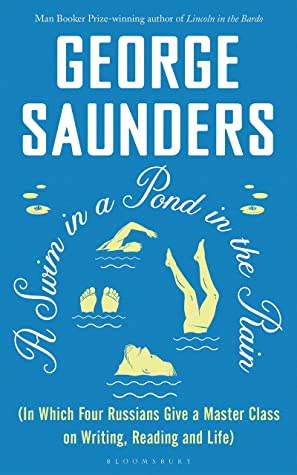 Saunders’s latest book, A Swim in a Pond in the Rain, is a written version of the graduate-level masterclass in the Russian short story that he offers at Syracuse University, where he has taught in the Creative Writing Program since 1997. His aim here was to “elevate the short story form,” he said. While the book reprints and discusses just seven stories (three by Anton Chekhov, two by Leo Tolstoy, and one each by Nikolai Gogol and Ivan Turgenev), in the class he and his students tackle more like 40. He wants people to read a story, react to the story, and trust that reaction – even if it’s annoyance. “Work with it,” he suggested. “I am bringing you an object to consider” on the route to becoming the author you are meant to be – such is how he described his offer to his students, who have already overcome 1 in 100 odds to be on the elite Syracuse program but might still need to have their academic egos tweaked.
The book is, thus, not just a set of essays on the Russian masters but also a guide to how to write well. It was clear there was mutual admiration between Saunders and Max Porter, who interviewed him. They discussed the revision process as an accumulation of micro-decisions that make the work better. For instance, Saunders compared two Tolstoy stories, “The Snowstorm” and “Master and Man” (written 20 years later), and noted that, though they are thematically similar, the later one is more organized.
Saunders spoke about writing as a dual process of intuition and iteration; a bunch of different “yous” have acted on a text by the time it’s done. Early on in his career, he thought that he had to choose which writer he wanted to be (e.g., Hemingway or Kerouac), but as he aged he realized that the mind is never fixed. He went surprisingly deep into Buddhism at this point, likening writing to meditation – both are practices pursued with intensity. To his younger self, he would say to keep going: improving is simply a matter of time (i.e., that 10,000 hours figure that’s bandied about as necessary for developing expertise).
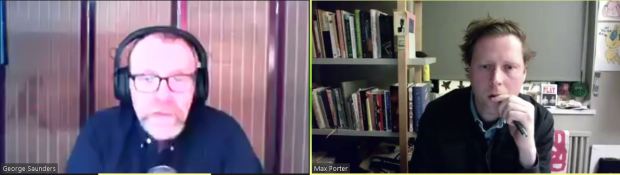
The only drawback to this event was that Saunders was speaking from his snow-encased upstate New York basement and had a horrible Internet connection; often his voice was faint and delayed, while his image stayed static. We and Porter could only stare gormlessly and wait for his face to move to match his words! I think the book would be too niche for me – I’ve hardly read anything by the Russians, and since I don’t write fiction I’m not in need of a guide to those kinds of writing decisions – but it was nice to ‘meet’ Saunders ‘in person’.
An Evening with Kazuo Ishiguro
(Faber Members / Guardian Live event)
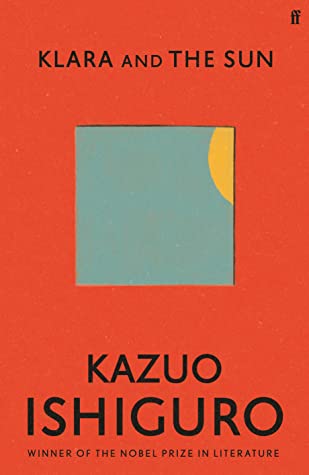 Ishiguro’s new novel, Klara and the Sun, was published by Faber yesterday. This conversation with Alex Clark also functioned as its launch event. It’s one of my most anticipated books of the year, so I pre-ordered a signed copy along with my ticket and look forward to it arriving soon. Klara is an Artificial Intelligence “friend” purchased to combat teenage loneliness. A childlike figure, she is cheerful and treats the sun like a god. Ishiguro said that the book developed from a story he wrote for children aged five to six, about a little girl who takes a doll home – except his daughter, author Naomi Ishiguro, told him no way was it suitable for young children, being far too dark. He likes “displaced or alien narrators, fish out of water,” he said, because the limited perspective allows him to focus on oddness.
In addition to Clark’s questions, a few pre-recorded questions from literary celebs (Daisy Johnson, Bernardine Evaristo, and David Mitchell) encouraged Ishiguro to create a tripartite schema for his novels, reflect on his writing about Japan, and look back at the devices he has used. Asked by Johnson about the connections between his novels, he admitted that his first three novels all retread the same ground: a man who has made a mess of his life or career picks over the past. Then his mid period is set in dreamscapes, while his most recent three novels are dystopian fantasies (though he does not see Klara as set in a dystopian world).
In response to Evaristo’s question about whether he felt an obligation to write about Japan, he said that with his early work he was conscious of needing to represent a group of people who even then (due to World War II) were viewed with suspicion or antipathy. He left Japan at age five so the country didn’t seem entirely real to him. What he knew was based on very early memories, what his mother told him, comic books sent by his grandparents, etc. As he stated in his Nobel Prize acceptance speech, writing about Japan in his twenties therefore felt like “an act of preservation.” Still, he wants his characters and situations to be universal.

Replying to Mitchell’s three questions (cheeky!), he explained that his first ambition was to be a singer/songwriter, and he wrote 100+ songs. Songwriting taught him minimalism. “You can say a huge amount by what you don’t say,” he noted. He hopes to create spaces, or rather vacuums that suck in the reader’s attention. Unlike Mitchell, he always knows the ending of a book before he begins, and his decisions are all about wanting to lodge in the reader’s brain. Thus, memorable endings are a priority for him, whereas they might not be for other writers. I was struck by his characterization of his own life: when he looks back, he doesn’t see a clear path that arose from his choices; instead, he sees a “weird, incoherent mess.” For this reason, he’s turned against the reflective device of his first three books. If he can come up with a theme, he’s hankering to write a book about hitchhikers in the north of England.
Towards the end of the (overlong) discussion, he mentioned that he has been questioning the novelist’s role due to the events of the past year: wondering about the meaning of fiction when so many have died and so many believe fake news. It was a melancholy but realistic point to end on. While I’m not an Ishiguro completist (The Unconsoled doesn’t appeal to me at all and I’m not sure I can be bothered with When We Were Orphans, but I will try The Buried Giant; I’ve read the rest), the event whetted my appetite to read his new book. (See also this Goodreads interview. I loved the anecdotes about learning he’d won the Nobel!)
Bookish online events coming up soon: The Rathbones Folio Prize announcement on the 24th and Claire Fuller’s book launch for Unsettled Ground on the 25th.
Have you attended any online literary events recently?
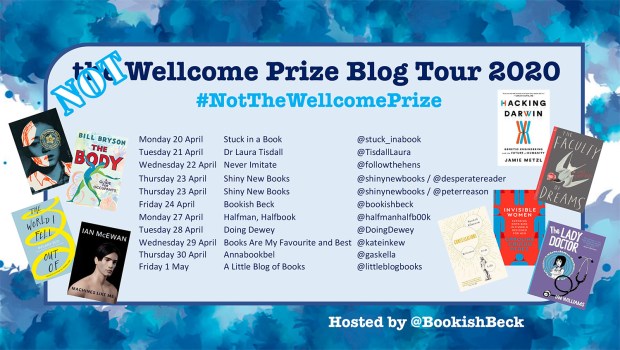
Recapping the Not the Wellcome Prize Blog Tour Reviews
It’s hard to believe the Not the Wellcome Prize blog tour is over already! It has been a good two weeks of showcasing some of the best medicine- and health-themed books published in 2019. We had some kind messages of thanks from the authors, and good engagement on Twitter, including from publishers and employees of the Wellcome Trust. Thanks to the bloggers involved in the tour, and others who have helped us with comments and retweets.
This weekend we as the shadow panel (Annabel of Annabookbel, Clare of A Little Blog of Books, Laura of Dr. Laura Tisdall, Paul of Halfman, Halfbook and I) have the tough job of choosing a shortlist of six books, which we will announce on Monday morning. I plan to set up a Twitter poll to run all through next week. The shadow panel members will vote to choose a winner, with the results of the Twitter poll serving as one additional vote. The winner will be announced a week later, on Monday the 11th.

First, here’s a recap of the 19 terrific books we’ve featured, in chronological blog tour order. In fiction we’ve got: novels about child development, memory loss, and disturbed mental states; science fiction about AI and human identity; and a graphic novel set at a small-town medical practice. In nonfiction the topics included: anatomy, cancer, chronic pain, circadian rhythms, consciousness, disability, gender inequality, genetic engineering, premature birth, sleep, and surgery in war zones. I’ve also appended positive review coverage I’ve come across elsewhere, and noted any other awards these books have won or been nominated for. (And see this post for a reminder of the other 56 books we considered this year through our mega-longlist.)

 Notes Made While Falling by Jenn Ashworth & The Remarkable Life of the Skin by Monty Lyman: Simon’s reviews
*Monty Lyman was shortlisted for the 2019 Royal Society Science Book Prize.
[Bookish Beck review of the Ashworth]
[Halfman, Halfbook review of the Lyman]
Exhalation by Ted Chiang & A Good Enough Mother by Bev Thomas: Laura’s reviews


 Constellations by Sinéad Gleeson & War Doctor by David Nott: Jackie’s reviews
*Sinéad Gleeson was shortlisted for the 2020 Rathbones Folio Prize.
[Rebecca’s Goodreads review of the Gleeson]
[Kate Vane’s review of the Gleeson]
[Lonesome Reader review of the Gleeson]
[Rebecca’s Shiny New Books review of the Nott]
Vagina: A Re-education by Lynn Enright: Hayley’s Shiny New Books review
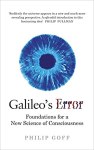
Galileo’s Error by Philip Goff: Peter’s Shiny New Books review

 Mother Ship by Francesca Segal & The Lady Doctor by Ian Williams: Rebecca’s reviews
[A Little Blog of Books review of the Segal]
[Annabookbel review of the Williams]
Chasing the Sun by Linda Geddes & The Nocturnal Brain by Guy Leschziner: Paul’s reviews
[Bookish Beck review of the Geddes]


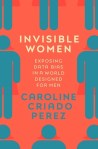 Invisible Women by Caroline Criado-Pérez: Katie’s review
*Caroline Criado-Pérez won the 2019 Royal Society Science Book Prize.
[Liz’s Shiny New Books review]
The Faculty of Dreams by Sara Stridsberg: Kate’s review

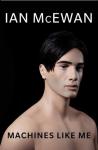
Machines Like Me by Ian McEwan: Kate’s review

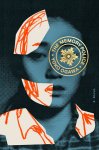 Hacking Darwin by Jamie Metzl & The Memory Police by Yoko Ogawa: Annabel’s reviews
*Yoko Ogawa is shortlisted for this year’s International Booker Prize.
[Lonesome Reader review of the Ogawa]

 The Body by Bill Bryson & The World I Fell Out Of by Melanie Reid: Clare’s reviews
[Bookish Beck review of the Bryson]
[Rebecca’s Goodreads review of the Reid]
And there we have it: the Not the Wellcome Prize longlist. I hope you’ve enjoyed following along with the reviews. Look out for the shortlist, and your chance to vote for the winner, here and via Twitter on Monday.
Which book(s) are you rooting for?
Wellcome Book Prize Shortlist: To Be a Machine by Mark O’Connell
The topic of this shortlisted book didn’t particularly appeal to me, so I was pleasantly surprised to enjoy it. Transhumanism is about using technology to help us overcome human limitations and radically extend our lifespan. Many of the strategies O’Connell, a Dublin-based freelance writer with a literature background, profiles are on the verge of science fiction. Are we looking at liberation from the rules of biology, or enslavement to technology? His travels take him to the heart of this very American, and very male, movement.
Cryogenic freezing: The first person was cryogenically frozen in 1966. Max More’s Alcor Life Extension Foundation in Scottsdale, Arizona offers whole-body or head-only (“neuro”) options for $200,000 or $80,000. More argues that the residents of Alcor are somewhere between living and dead. These entities are held in suspension in the belief that technology will one day allow us to upload the contents of the mind into a new vessel.
- This approach seems to conceive of the human mind/consciousness as pure information to be computed.
 Cyborgs: Grindhouse Wetware, near Pittsburgh, aims to turn people into literal cyborgs. Tim Cannon had a Circadia device the size of a deck of cards implanted in his arm for three months to take biometric measurements. Other colleagues have implanted RFID chips. He intends to have his arms amputated and replaced by superior prostheses as soon as the technology is available.
- That may seem extreme, but think how bound people already are to machines: O’Connell calls his smartphone a “mnemonic prosthesis” during his research travels.
Mortality as the enemy: Many transhumanists O’Connell meets speak of aging and death as an affront to human dignity. We mustn’t be complacent, they argue, but must oppose these processes with all we’re worth. One of the key people involved in that fight is Aubrey de Grey of SENS (“Strategies for Engineered Negligible Senescence”), and Google has also gotten in on it with their “Calico” project.
- O’Connell recounts explaining aging and death to his three-year-old son; his wife chipped in that – according to “Dada’s book” – perhaps by the time the boy is grown up death will no longer be a problem.
The Singularity: Posited by Ray Kurzweil, the Singularity is the future point at which artificial intelligence will surpass humanity. O’Connell likens it to the Christian idea of the Rapture, itself a moment of transcendence. At a conference on transhumanism and religion in Piedmont, California, he encounters Terasem, a religion founded recently by a transhumanist and transgender person.
- To my surprise, To Be a Machine makes frequent reference to religious ideas: O’Connell thinks of transhumanism as an attempt to reverse the Fall and become godlike, and he often describes the people he meets as zealots or saints, driven by the extremity of their beliefs. Both religion and transhumanism could be seen as a way of combating nihilism and insisting on the meaning of human life.
O’Connell’s outsider position helped me to engage with the science; he’s at least as interested, if not more so, in the deeper philosophical questions that transhumanism raises. I would caution that a grounding in religion and philosophy could be useful, as the points of reference used here range from the Gnostic gospels and St. Augustine to materialism and Nietzsche. But anyone who’s preoccupied with human nature should find the book intriguing.
You could also enjoy this purely as a zany travelogue along the lines of Elif Batuman’s The Possessed and Donovan Hohn’s Moby-Duck. The slapstick antics of the robots at the DARPA Robotics Challenge and the road trip in Zoltan Istvan’s presidential campaign Immortality Bus are particularly amusing. O’Connell’s Dickensian/Wildean delight in language is evident, and I also appreciated his passing references to William Butler Yeats.
It could be argued, however, that O’Connell was not the ideal author of this book. He is not naturally sympathetic to transhumanism; he’s pessimistic and skeptical, often wondering whether the proponents he meets are literally insane (e.g., to think that they are in imminent danger of being killed by robots). Most of the relevant research, even when conducted by Europeans, is going on in the USA, particularly in the Bay Area. So why would an Irish literary critic choose transhumanism as the subject for his debut? It’s a question I asked myself more than once, though it never stopped me from enjoying the book.
The title (from an Andy Warhol quote) may reference machines, but really this is about what it means to be human. O’Connell even ends with a few pages on his own cancer scare, a reminder that our bodies are flawed machines. I encourage you to give this a try even if you think you have no particular interest in technology or science fiction. It could also give a book club a lot to discuss.
Favorite lines:
“We exist, we humans, in the wreckage of an imagined splendor. It was not supposed to be this way: we weren’t supposed to be weak, to be ashamed, to suffer, to die. We have always had higher notions of ourselves. … The frailty is the thing, the vulnerability. This infirmity, this doubtful convalescence we refer to, for want of a better term, as the human condition.”
My rating:
See what the rest of the shadow panel has to say about this book:
Annabel’s review: “I loved this book from the front cover to the back, starting with its title. … He writes with empathy and a good deal of humour which makes the text always readable and entertaining, while provoking his readers to think deeply about their own beliefs.”
Clare’s review: “O’Connell’s prose style is wordy and ironic. He is pleasingly sceptical about many aspects of transhumanism. … It is an entertaining book which provides a lot of food for thought for a layperson like myself.”
Laura’s review: “Often, I found that his description of his own internal questions would mirror mine. This is a really fantastic book, and for me, a clear front runner for the Wellcome Book Prize.”
Paul’s review: “An interesting book that hopefully will provoke further discussion as we embrace technology and it envelops us.”
My gut feeling: Though they highlight opposite approaches to death – transcending it versus accepting it – this and Kathryn Mannix’s With the End in Mind seem to me the two shortlisted books of the most pressing importance. I’d be happy to see either of them win. To Be a Machine is an awful lot of fun to read, and it seems like a current favorite for our panel.
Shortlist strategy:
- I’m coming close to the end of my skim of The Vaccine Race by Meredith Wadman.
- I’m still awaiting a review copy of Mayhem by Sigrid Rausing, which I’ll be featuring as part of the official Wellcome Book Prize shortlist blog tour.
 Bookish Beck = Rebecca Foster. American transplant to England. Freelance proofreader and book reviewer.
 Bookish Beck