Reading Ireland Month, Part I: Wendy Erskine and Niamh Ní Mhaoileoin
St. Patrick’s Day is a good occasion for my first set of contributions to Cathy’s Reading Ireland Month. Today I have two 2025 debut novels by women, one about the ripples caused by a sexual assault; the other about grief, queerness and unease with the Catholic Church. Both come with a Women’s Prize seal of approval. As I write, I happen to be listening to the new Foy Vance album I picked up today, which has inspired me to choose a few relevant (Northern) Irish songs to accompany each book.
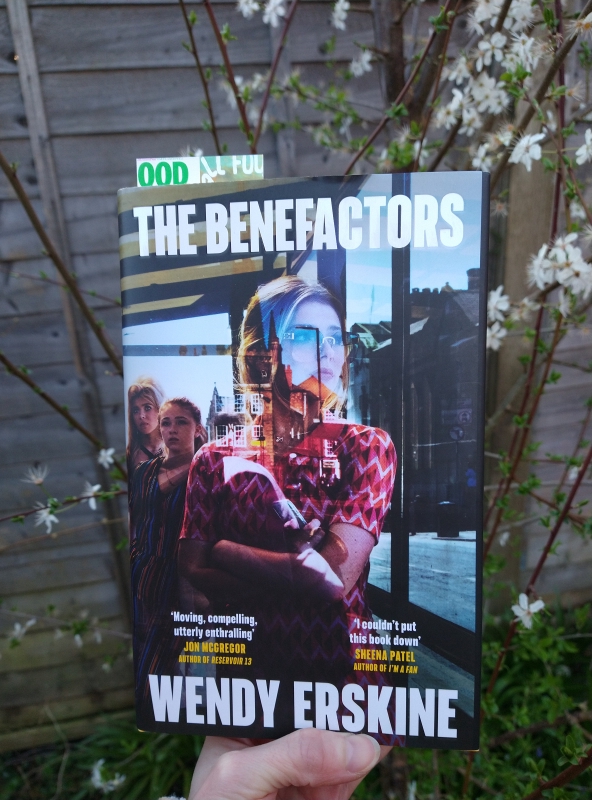
The Benefactors by Wendy Erskine
I loved Erskine’s short story collection Dance Move so was looking forward to this before it appeared on the Women’s Prize longlist. We’re introduced to three middle-aged Belfast women whose 18-year-old sons are charged with sexual assault: Frankie Levine, stepmother to Chris; Miriam Abdel Salam, mother of Rami; and Bronagh Farrell, mum of Lyness or “Line-up.” Frankie grew up in care but is now rich beyond her wildest dreams, Miriam was recently widowed by a car accident, and Bronagh heads a children’s services charity. Misty, the classmate who accused the boys of the assault at a party, lives with her stepfather, cab driver Boogie. As rumours spread, the mothers have confabs to prepare a united front. At one level they’re horrified by what their sons were capable of (Rami used a bottle), but on another they’ve decided that it’s just a hullabaloo – Bronagh’s word – that will die down soon.
Slut-shaming of Misty starts early: she has a “Bennyz” amateur porn account and did phone or video chats, very mild stuff, with men all over the world. It’s uncomfortable, though realistic, how money and class steer what happens next. The book’s title comes from the soft-porn site, but in a wider sense invites the question of who funds lifestyles and so who’s really in control. People who have compassion in general can’t find it in this situation. Erskine intersperses short sections from anonymous voices, such as policemen and partygoers, with the narrative. These are well done, and sometimes quite funny, but Erskine’s meta joke – “There can be just too many perspectives” – proves true in that the interludes add little we haven’t already grasped about the direction of the local gossip. Apart from Misty, I felt I’d hardly gotten to know any of the characters by the end. The novel also suffered from being the second novel about the aftermath of a gang rape I’ve read in three months (after Who Killed Bambi? by Monika Fagerholm, translated from Swedish). But I reckon its blend of grit and heart is likely to please readers of Colin Barrett and Lisa McInerney.
Northern Irish songs for Misty:
- “Collect Yourself” by Iain Archer
- “At Least My Heart Was Open” by Foy Vance (beware the F-bomb)
& an Irish one: “The Blower’s Daughter” by Damien Rice
Ordinary Saints by Niamh Ní Mhaoileoin
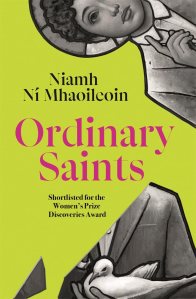 This was one of my Most Anticipated titles in 2025. It was shortlisted for the Women’s Prize Discoveries Award (for manuscripts in progress) in 2022 and won the PFD Queer Fiction Prize. Jacinta, who prefers to be known as Jay, is in her late twenties, living in London, working in marketing and half-serious about her relationship with her girlfriend, Lindsay. She tries not to think about Ireland, religion, or the past: her mother’s mental health struggles, her extended family’s casual homophobia, and the fact that her older brother, Ferdia, who was a trainee Catholic priest in Rome, died in a freak accident when she was 16. But it all comes back for her when her parents tell her that there is a campaign to have Ferdia canonized. While her mother scurries around making speeches and verifying miracles, Jay seeks the opposite for her brother: to be remembered as a normal, flawed and perhaps closeted human.
It took me ages to read this, despite the undemanding first-person, present-tense narration, because the early London material is so monotonous. Unlike the Erskine (probably because that is her third book), this felt very much like a debut, where a lot of earnest apprentice work has had to go into getting characters from A to B, literally and emotionally. Any time the author wants to advance the plot, she has Jay meet someone in a bar for a conversation. Without fail, there will be drinks involved. This felt to me like a stereotype of the Irish. It’s only really in the last quarter, as Jay has honest conversations with both parents, deals with her grief over Ferdia and accepts how much Lindsay means to her, that the book soars. For me, that was too little too late, even though the themes were irresistible.
A Northern Irish song for Jay:
- “Freewheel” by Duke Special
- and (for Jay and Lindsay) “Crack the Shutters” by Snow Patrol
& an Irish one: “The Trailing Skirts of God” by Bell X1
I loved the premise of both of these novels, but the execution left me slightly disappointed. Still, I wouldn’t discourage you from picking them up if they’ve caught your eye; I know that some blogger friends have liked one or the other much better than I did.
I’ll raise a cheeky glass of Bailey’s tonight to the greatness of Irish literature. Speaking of which, I’ll have another, bigger batch of reviews coming up before the end of the month!
My Year in Novellas (#NovNov24)
Here at the start of the month, we’re inviting you to tell us about the novellas you’ve read since last November.
I have a special shelf of short books that I add to throughout the year. When at secondhand bookshops, charity shops, a Little Free Library, or the public library where I volunteer, I’m always thinking about my piles for November. But I do read novellas at other times of year, too. Forty-four of them between December 2023 and now, according to my Goodreads shelves (last year it was 46, so it seems like that’s par for the course). I often choose to review books of novella length for BookBrowse, Foreword and Shelf Awareness. I’ve read a real mixture, but predominantly literature in translation and autobiographical works.


My favourites of the ones I’ve already covered on the blog would probably be (nonfiction) Alphabetical Diaries by Sheila Heti and (fiction) Aimez-vous Brahms by Françoise Sagan. My proudest achievements are: reading the short graphic novel Broderies by Marjane Satrapi in the original French at our Parisian Airbnb in December; and managing two rereads: Heartburn by Nora Ephron and Of Mice and Men by John Steinbeck.

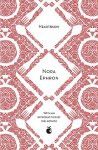

Of the short books I haven’t already reviewed here, I’ve chosen two gems, one fiction and one nonfiction, to spotlight in this post:
Fiction
Clear by Carys Davies
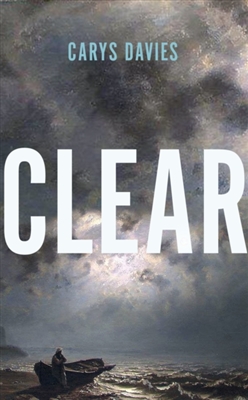 Clear depicts the Highland Clearances in microcosm though the experiences of one man, Ivar, the last resident of a remote Scottish island between Shetland and Norway. As in a play, there is a limited setting and cast. John is a minister sent by the landowner to remove Ivar, but an accident soon after his arrival leaves him beholden to Ivar for food and care. Mary, John’s wife, is concerned and sets off on the long journey from the mainland to rescue him. Davies writes vivid scenes and brings the island’s scenery to life. Flashbacks fill in the personal and cultural history, often via objects. The Norn language is another point of interest. The deceptively simple prose captures both the slow building of emotion and the moments that change everything. It seemed the trio were on course for tragedy, yet they are offered the grace of a happier ending.
In my book club, opinions differed slightly as to the central relationship and the conclusion, but we agreed that it was beautifully done, with so much conveyed in the concise length. This received our highest rating ever, in fact. I’d read Davies’ West and not appreciated it as much, although looking back I can see that it was very similar: one or a few character(s) embarked on unusual and intense journey(s); a plucky female character; a heavy sense of threat; and an improbably happy ending. It was the ending that seemed to come out of nowhere and wasn’t in keeping with the tone of the rest of the novella that made me mark West down. Here I found the writing cinematic and particularly enjoyed Mary as a strong character who escaped spinsterhood but even in marriage blazes her own trail and is clever and creative enough to imagine a new living situation. And although the ending is sudden and surprising, it nevertheless seems to arise naturally from what we know of the characters’ emotional development – but also sent me scurrying back to check whether there had been hints. One of my books of the year for sure. 
Nonfiction
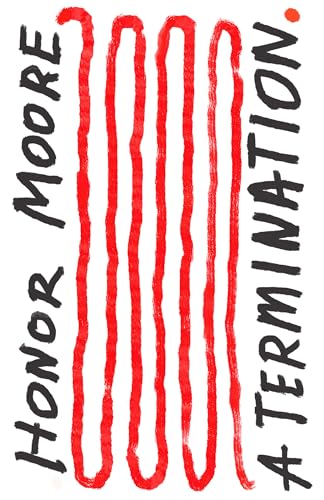
A Termination by Honor Moore
Poet and memoirist Honor Moore’s A Termination is a fascinatingly discursive memoir that circles her 1969 abortion and contrasts societal mores across her lifetime.
 During the spring in question, Moore was a 23-year-old drama school student. Her lover, L, was her professor. But she also had unwanted sex with a photographer. She did not know which man had impregnated her, but she did know she didn’t feel prepared to become a mother. She convinced a psychiatrist that doing so would destroy her mental health, and he referred her to an obstetrician for a hospital procedure. The termination was “my first autonomous decision,” Moore insists, a way of saying, “I want this life, not that life.”
Family and social factors put Moore’s experiences into perspective. The first doctor she saw refused Moore’s contraception request because she was unmarried. Her mother, however, bore nine children and declined to abort a pregnancy when advised to do so for medical reasons. Moore observes that she made her own decision almost 10 years before “the word choice replaced pro abortion.”
This concise work is composed of crystalline fragments. The stream of consciousness moves back and forth in time, incorporating occasional second- and third-person narration as well as highbrow art and literature references. Moore writes one scene as if it’s in a play and imagines alternative scenarios in which she has a son; though she is curious, she is not remorseful. The granular attention to women’s lives recalls Annie Ernaux, while the kaleidoscopic yet fluid approach is reminiscent of Sigrid Nunez’s work. It’s a stunning rendering of steps on her childfree path. 
Reprinted with permission from Shelf Awareness.
I currently have four novellas underway and plan to start some more this weekend. I have plenty to choose from!
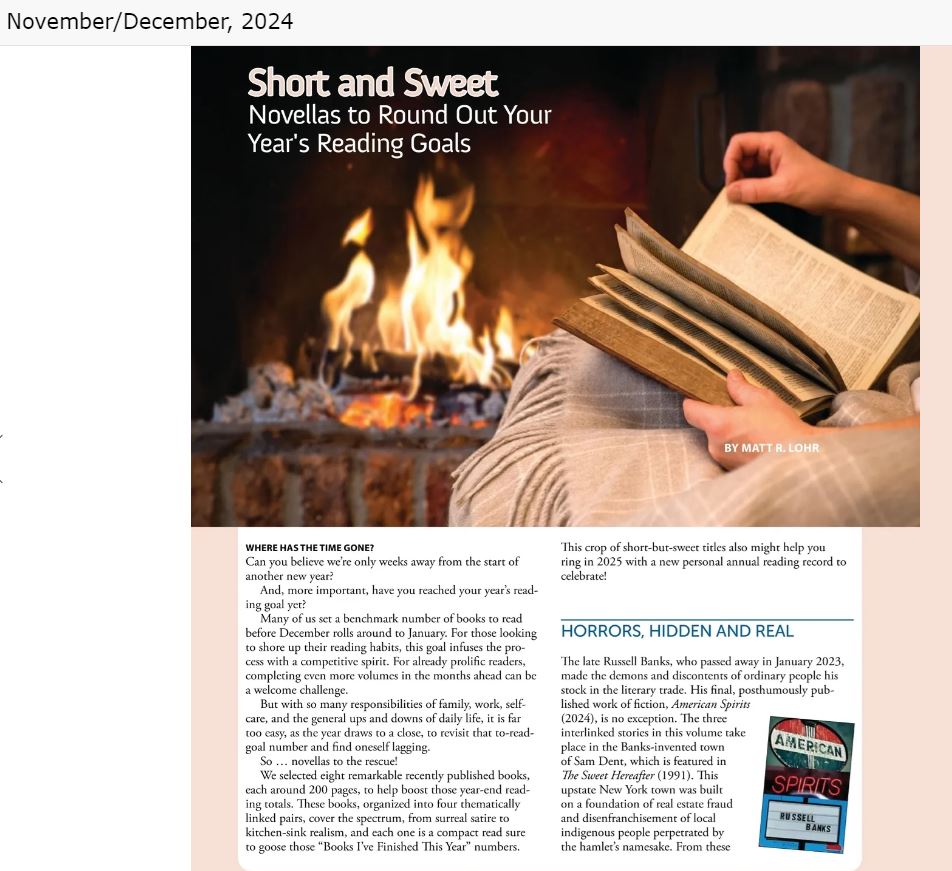
Everyone’s getting in on the act: there’s an article on ‘short and sweet books’ in the November/December issue of Bookmarks magazine, for which I’m an associate editor; Goodreads sent around their usual e-mail linking to a list of 100 books under 250 or 200 pages to help readers meet their 2024 goal. Or maybe you’d like to join in with Wafer Thin Books’ November buddy read, the Ugandan novella Waiting by Goretti Kyomuhendo (2007).

Why not share some recent favourite novellas with us in a post of your own?

Book Serendipity, January to February 2024
I call it “Book Serendipity” when two or more books that I read at the same time or in quick succession have something in common – the more bizarre, the better. This is a regular feature of mine every couple of months. Because I usually have 20–30 books on the go at once, I suppose I’m more prone to such incidents. The following are in roughly chronological order.
- I finished two poetry collections by a man with the surname Barnett within four days in January: Murmur by Cameron Barnett and Birds Knit My Ribs Together by Phil Barnett.

- I came across the person or place name Courtland in The Optimist’s Daughter by Eudora Welty, then Cortland in a story from The Orange Fish by Carol Shields, then Cotland (but where? I couldn’t locate it again! Was it in Elizabeth Is Missing by Emma Healey?).
- The Manet painting Olympia is mentioned in Christmas Holiday by W. Somerset Maugham and The Paris Novel by Ruth Reichl (both of which are set in Paris).


- There’s an “Interlude” section in Babel by R.F. Kuang and The Vulnerables by Sigrid Nunez.
- The Morris (Minor) car is mentioned in Elizabeth Is Missing by Emma Healey and Various Miracles by Carol Shields.
- The “flour/flower” homophone is mentioned in Babel by R.F. Kuang and Various Miracles by Carol Shields.
- A chimney swift flies into the house in Cat and Bird by Kyoko Mori and The Optimist’s Daughter by Eudora Welty.
- A character named Cornelius in The Fruit Cure by Jacqueline Alnes and Wellness by Nathan Hill.
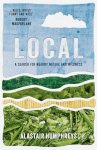
- Reading two year challenge books at the same time, A Year of Biblical Womanhood by Rachel Held Evans and Local by Alastair Humphreys, both of which are illustrated with frequent black-and-white photos by and of the author.
- A woman uses a bell to summon children in one story of Universally Adored and Other One Dollar Stories by Elizabeth Bruce and The Optimist’s Daughter by Eudora Welty.
- Apple turnovers get a mention in A Year of Biblical Womanhood by Rachel Held Evans and Wellness by Nathan Hill.
- A description of rolling out pie crust in A Year of Biblical Womanhood by Rachel Held Evans and Cat and Bird by Kyoko Mori.

- The idea of a house giving off good or bad vibrations in Wellness by Nathan Hill and a story from Various Miracles by Carol Shields.

- Emergency C-sections described or at least mentioned in Brother Do You Love Me by Manni Coe, The Unfamiliar by Kirsty Logan, Wellness by Nathan Hill, and lots more.
- Frustration with a toddler’s fussy eating habits, talk of “gentle parenting” methods, and mention of sea squirts in Wellness by Nathan Hill and Matrescence by Lucy Jones.
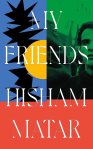
- The nickname “Poet” in The Tidal Year by Freya Bromley and My Friends by Hisham Matar.
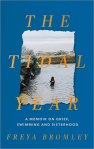
- A comment about seeing chicken bones on the streets of London in The Tidal Year by Freya Bromley and Went to London, Took the Dog by Nina Stibbe.
- Swans in poetry in The Tidal Year by Freya Bromley and Egg/Shell by Victoria Kennefick.
- A mention or image of Captcha technology in Egg/Shell by Victoria Kennefick and Went to London, Took the Dog by Nina Stibbe.
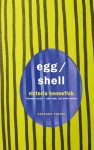

- An animal automaton in Loot by Tania James and Egg/Shell by Victoria Kennefick.
- A mention of Donna Tartt in The Tidal Year by Freya Bromley, Looking in the Distance by Richard Holloway, and Matrescence by Lucy Jones.
- Cathy Rentzenbrink appears in The Tidal Year by Freya Bromley and Went to London, Took the Dog by Nina Stibbe.
 Dialogue is given in italics in the memoirs The Tidal Year by Freya Bromley and The Unfamiliar by Kirsty Logan.
- An account of a man being forced to marry the sister of his beloved in A Year of Biblical Womanhood by Rachel Held Evans, Wellness by Nathan Hill, and The Tiger’s Wife by Téa Obreht.
- Saying that one doesn’t want to remember the loved one as ill (but really, not wanting to face death) so not saying goodbye (in Cat and Bird by Kyoko Mori) or having a closed coffin (Wellness by Nathan Hill).
- An unhappy, religious mother who becomes a hoarder in Wellness by Nathan Hill and I’m Glad My Mom Died by Jennette McCurdy.
- Characters called Lidija and Jin in Exhibit by R. O. Kwon and Lydia and Jing in the first story of This Is Salvaged by Vauhini Vara.
- Distress at developing breasts in Cactus Country by Zoë Bossiere and I’m Glad My Mom Died by Jennette McCurdy.
- I came across mentions of American sportscaster Howard Cosell in Heartburn by Nora Ephron and Stations of the Heart by Richard Lischer (two heart books I was planning on reviewing together) on the same evening. So random!
- Girls kissing and flirting with each other (but it’s clear one partner is serious about it whereas the other is only playing or considers it practice for being with boys) in Cactus Country by Zoë Bossiere and Winter’s Bone by Daniel Woodrell.
- A conversion to Catholicism in Places I’ve Taken My Body by Molly McCully Brown and Stations of the Heart by Richard Lischer.
- A zookeeper is attacked by a tiger when s/he goes into the enclosure (maybe not the greatest idea!!) in Tiger by Polly Clark and The Tiger’s Wife by Téa Obreht.

- The nickname Frodo appears in Tiger by Polly Clark and Brother Do You Love Me by Manni Coe.
- Opening scene of a parent in a coma, California setting, and striking pink and yellow cover to Death Valley by Melissa Broder and I’m Glad My Mom Died by Jennette McCurdy.

- An Englishman goes to Nigeria in Howards End by E.M. Forster and Immanuel by Matthew McNaught.
 The Russian practice of whipping people with branches at a spa in Tiger by Polly Clark and Fight Night by Miriam Toews.
- A mother continues washing her daughter’s hair until she is a teenager old enough to leave home in Mrs. March by Virginia Feito and I’m Glad My Mom Died by Jennette McCurdy.
- Section 28 (a British law prohibiting the “promotion of homosexuality” in schools) is mentioned in A Bookshop of One’s Own by Jane Cholmeley, Some Kids I Taught and What They Taught Me by Kate Clanchy, and Brother Do You Love Me by Manni Coe.
- Characters named Gord (in one story from Various Miracles by Carol Shields, and in Fight Night by Miriam Toews), Gordy (in The Absolutely True Diary of a Part-Time Indian by Sherman Alexie), and Gordo (in Blood Red by Gabriela Ponce).

- Montessori and Waldorf schools are mentioned in Cactus Country by Zoë Bossiere and When Fragments Make a Whole by Lory Widmer Hess.
- A trailer burns down in The Absolutely True Diary of a Part-Time Indian by Sherman Alexie and Cactus Country by Zoë Bossiere.

What’s the weirdest reading coincidence you’ve had lately?
Three “Love” or “Heart” Books for Valentine’s Day: Ephron, Lischer and Nin
Every year I say I’m really not a Valentine’s Day person and yet put together a themed post featuring books that have “Love” or a similar word in the title. This is the eighth year in a row, in fact (after 2017, 2018, 2019, 2020, 2021, 2022, and 2023)! Today I’m looking at two classic novellas, one of them a reread and the other my first taste of a writer I’d expected more from; and a wrenching, theologically oriented bereavement memoir.
Heartburn by Nora Ephron (1983)
I’d already pulled this out for my planned reread of books published in my birth year, so it’s pleasing that it can do double duty here. I can’t say it better than my original 2013 review:
The funniest book you’ll ever read about heartbreak and betrayal, this is full of wry observations about the compromises we make to marry – and then stay married to – people who are very different from us. Ephron readily admitted that her novel is more than a little autobiographical: it’s based on the breakdown of her second marriage to investigative journalist Carl Bernstein (All the President’s Men), who had an affair with a ludicrously tall woman – one element she transferred directly into Heartburn.
Ephron’s fictional counterpart is Rachel Samstad, a New Yorker who writes cookbooks or, rather, memoirs with recipes – before that genre really took off. Seven months pregnant with her second child, she has just learned that her second husband is having an affair. What follows is her uproarious memories of life, love and failed marriages. Indeed, as Ephron reflected in a 2004 introduction, “One of the things I’m proudest of is that I managed to convert an event that seemed to me hideously tragic at the time to a comedy – and if that’s not fiction, I don’t know what is.”
As one might expect from a screenwriter, there is a cinematic – that is, vivid but not-quite-believable – quality to some of the moments: the armed robbery of Rachel’s therapy group, her accidentally flinging an onion into the audience during a cooking demonstration, her triumphant throw of a key lime pie into her husband’s face in the final scene. And yet Ephron was again drawing on experience: a friend’s therapy group was robbed at gunpoint, and she’d always filed the experience away in a mental drawer marked “Use This Someday” – “My mother taught me many things when I was growing up, but the main thing I learned from her is that everything is copy.” This is one of celebrity chef Nigella Lawson’s favorite books ever, for its mixture of recipes and rue, comfort food and folly. It’s a quick read, but a substantial feast for the emotions.
 Sometimes I wonder why I bother when I can’t improve on reviews I wrote over a decade ago (see also another upcoming reread). What I would add now, without disputing any of the above, is that there’s more bitterness to the tone than I’d recalled, even though Ephron does, yes, play it for laughs. But also, some of the humour hasn’t aged well, especially where based on race/culture or sexuality. I’d forgotten that Rachel’s husband isn’t the only cheater here; pretty much every couple mentioned is currently working through the aftermath of an affair or has survived one in the past. In one of these, the wife who left for a woman is described not as a lesbian but by another word, each time, which felt unkind rather than funny.
Still, the dialogue, the scenes, the snarky self-portrayal: it all pops. This was autofiction before that was a thing, but anyone working in any genre could learn how to write readable content by studying Ephron. “‘I don’t have to make everything into a joke,’ I said. ‘I have to make everything into a story.’ … I think you often have that sense when you write – that if you can spot something in yourself and set it down on paper, you’re free of it. And you’re not, of course; you’ve just managed to set it down on paper, that’s all.” (Little Free Library)
My original rating (2013): 
My rating now:
Stations of the Heart: Parting with a Son by Richard Lischer (2013)
“What we had taken to be a temporary unpleasantness had now burrowed deep into the family pulp and was gnawing us from the inside out.” Like all life writing, the bereavement memoir has two tasks: to bear witness and to make meaning. From a distance that just happens to be Mary Karr’s prescribed seven years, Lischer opens by looking back on the day when his 33-year-old son Adam called to tell him that his melanoma, successfully treated the year before, was back. Tests revealed that the cancer’s metastases were everywhere, including in his brain, and were “innumerable,” a word that haunted Lischer and his wife, their daughter, and Adam’s wife, who was pregnant with their first child.
 The next few months were a Calvary of sorts, and Lischer, an emeritus professor at Duke Divinity School, draws deliberate parallels with the biblical and liturgical preparations for Good Friday that feel appropriate for this Ash Wednesday. Lischer had no problem with Adam’s late-life conversion from Protestantism to Catholicism, whose rites he followed with great piety in his final summer. He traces Adam and Jenny’s daily routines as well as his own helpless attendance at hospital appointments. Doped up on painkillers, Adam attended one last Father’s Day baseball game with him; one last Fourth of July picnic. Everyone so desperately wanted him to keep going long enough to meet his baby girl. To think that she is now a young woman and has opened all the presents Adam bought to leave behind for her first 18 birthdays.
The facts of the story are heartbreaking enough, but Lischer’s prose is a perfect match: stately, resolute and weighted with spiritual allusion, yet never morose. He approaches the documenting of his son’s too-short life with a sense of sacred duty: “I have acquired a new responsibility: I have become the interpreter of his death. God, I must do a better job. … I kissed his head and thanked him for being my son. I promised him then that his death would not ruin my life.” This memoir brought back so much about my brother-in-law’s death from brain cancer in 2015, from the “TEAM [ADAM/GARNET]” T-shirts to Adam’s sister’s remark, “I never dreamed this would be our family’s story.” We’re not alone. (Remainder book from the Bowie, Maryland Dollar Tree) 
A Spy in the House of Love by Anaïs Nin (1954)
 I’d heard Nin spoken of in the same breath as D.H. Lawrence, so thought I might similarly appreciate her because of, or despite, comically overblown symbolism around sex. I think I was also expecting something more titillating? (I guess I had this confused for Delta of Venus, her only work that would be shelved in an Erotica section.) Many have tried to make a feminist case for this novella about Sabina, an early liberated woman in New York City who has extramarital sex with four other men who appeal to her for various not particularly good reasons (the traumatized soldier whom she comforts like a mother; the exotic African drummer – “Sabina did not feel guilty for drinking of the tropics through Mambo’s body”). She herself states, “I want to trespass boundaries, erase all identifications, anything which fixes one permanently into one mould, one place without hope of change.” The most interesting aspect of the book was Sabina’s questioning of whether she inherited her promiscuity from her father (it’s tempting to read this autobiographically as Nin’s own father left the family for another woman, a foundational wound in her life).
Come on, though, “fecundated,” “fecundation” … who could take such vocabulary seriously? Or this sex writing (snort!): “only one ritual, a joyous, joyous, joyous impaling of woman on a man’s sensual mast.” I charge you to use the term “sensual mast” wherever possible in the future. (Secondhand – Oxfam, Newbury) 
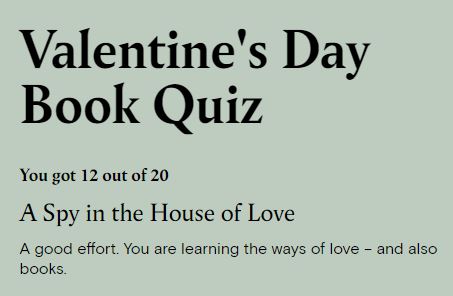
But hey, check out my score for the Faber Valentine’s quiz!
Reading Ireland Month: Erskine, O’Farrell, Quinn and Tóibín
Reading Ireland Month is hosted each year by Cathy of 746 Books. I’m sneaking in on the final day of March (there’s a surprise snow squall out the window as I write this) with four short reviews and feeling rather smug that my post covers lots of bases: short stories, a novel, a book of autobiographical pieces, and a poetry collection.
Dance Move by Wendy Erskine (2022)
 The 11 stories in Erskine’s second collection do just what short fiction needs to: dramatize an encounter, or moment, that changes life forever. Her characters are ordinary, moving through the dead-end work and family friction that constitute daily existence, until something happens, or rises up in the memory, that disrupts the tedium.
Erskine being from Belfast, evidence of the Troubles is never far away. In “Nostalgie,” a washed-up rocker is asked to perform his hit song at a battalion’s party. A woman and her lodger are welded together by a violent secret in “Bildungsroman,” which reminded me of a tale from Bernard MacLaverty’s Blank Pages and Other Stories. “Gloria and Max” struck me most of all: a drive to a film festival becomes a traumatic flashback when they’re first on the scene of an accident.
Erskine’s writing is blunt and edgy, the kind that might be stereotyped as male but nowadays is also, inevitably for Irish authors, associated with Sally Rooney: matter-of-fact; no speech marks, flat dialogue and slang. A couple of other favourites: “Mathematics,” in which a cleaner finds an abandoned child in a hotel room and tries to do right by her; and “Memento Mori,” about two deaths, one drawn out and one sudden; both equally unexpected; and only enough compassion to cope with one. (Public library) 
After You’d Gone by Maggie O’Farrell (2000)
 In form this is similar to O’Farrell’s The Distance Between Us, one of my Reading Ireland selections from last year: short sections of a few pages flit between times and perspectives. (There’s also an impulsive trip from London to Scotland in both.) But whereas in her third novel I found the jump cuts confusing and unnecessary, here they just work, and elegantly, to build a portrait of Alice Raikes, in a coma after what may have been a suicide attempt. That day she’d taken a train from London to Edinburgh at the last minute, met her sisters at the station, seen something that threw her, and gotten right on a return train. Back in London and on the way to the shop for cat food, she stepped off the kerb and into the path of a car.
Scenes from Alice’s childhood in Scotland are interspersed with her love affairs; her parents’ disappointing marriage serves as a counterpoint to her great passion for John. The setup of three female generations in North Berwick and the question of sexual autonomy reminded me strongly of Evie Wyld’s The Bass Rock.
This is a bold debut novel, refusing to hold readers’ hands through shifts from now to near past to further ago, from third to second to first person (even Alice from her coma: “my body still clings to life, and I find myself suspended like Persephone between two states … I am somewhere. Drifting. Hiding.”). Loss, secrets and family inheritance may be familiar themes, but when this was published at the millennium it must have seemed thrillingly fresh; it still does now.
I only have one unread O’Farrell novel awaiting me now, My Lover’s Lover. I’ll be saving that up, maybe for this time next year. Having not much enjoyed Hamnet, I’m disappointed that her forthcoming novel will also be historical and will probably skip it; I miss her stylish contemporary commentary. (Secondhand from a charity shop)
A Portrait of the Artist as a Young Girl, ed. John Quinn (1986)
 These autobiographical essays were compiled by Quinn based on interviews he conducted with nine women writers for an RTE Radio series in 1985. I’d read bits of Dervla Murphy’s and Edna O’Brien’s work before, but the other authors were new to me (Maeve Binchy, Clare Boylan, Polly Devlin, Jennifer Johnston, Molly Keane, Mary Lavin and Joan Lingard). The focus is on childhood: what their family was like, what drove these women to write, and what fragments of real life have made it into their books.
I read the first couple of pieces but then started to find the format repetitive and didn’t want to read out-of-context illustrative passages from novels I’d never heard of, so only skimmed through the rest. You can work out what Quinn’s questions were based on how the essays spin out: What is your earliest memory? What was your relationship with your parents? What was your schooling? Were you lonely? What part did books and writing play in your childhood? Distant fathers, a strict Catholic upbringing, solitude/boredom and escaping into novels are common elements. Some had happier childhoods than others, but all are grateful for the life of the mind: A solid base of familial love and the freedom to explore were vital.
The best passage comes from Seamus Heaney’s foreword: “The woman writer, like everybody else, is in pursuit of coherence, attempting to bring into significant alignment the creature she was and the being she is striving to become.” (Secondhand from Bookbarn International) 
Vinegar Hill by Colm Tóibín (2022)
 I didn’t realize when I started it that this was Tóibín’s debut collection; so confident is his verse that I assumed he’s been publishing poetry for decades. He’s one of those polymaths who’s written in many genres – contemporary fiction, literary criticism, travel memoir, historical fiction – and impresses in all. I’ve been finding his recent Folio Prize winner, The Magician, a little too dry and biography-by-rote for someone with no particular interest in Thomas Mann (I’ve only ever read Death in Venice), so I will likely just skim it before returning it to the library, but I can highly recommend his poems as an alternative.
There’s such a range of tone, structures and topics here. Bereavements and chemotherapy are part of a relatable current events background, as in “Lines Written After the Second Moderna Vaccine at Dodgers’ Stadium Los Angeles, 27 February 2021.” Irish-Catholic nostalgia animates the very witty sequence from “The Nun” to “Vatican II.” You can come along on some armchair travels: “In Washington DC,” “In San Clemente,” “Canal Water” (Venice), “Jericho,” and so on. The poems are based around anecdotes or painterly observations; there are both short phrases and prose paragraphs. The line breaks are unfailingly fascinating (any other enjambment geeks out there?). I particularly loved “Kennedy in Wexford,” “In the White House,” “Eccles Street” and “Eve.”

With thanks to Carcanet Press for the e-copy for review.
Have you read any Irish literature this month?
R.I.P. Reads, Part I: Bender, Harkness, Hurley
I’ve been reading twisted fairy tales, a novel about witches and vampires with historical and contemporary timelines, and a subtle work of Gothic horror set on a remote stretch of the English coast.
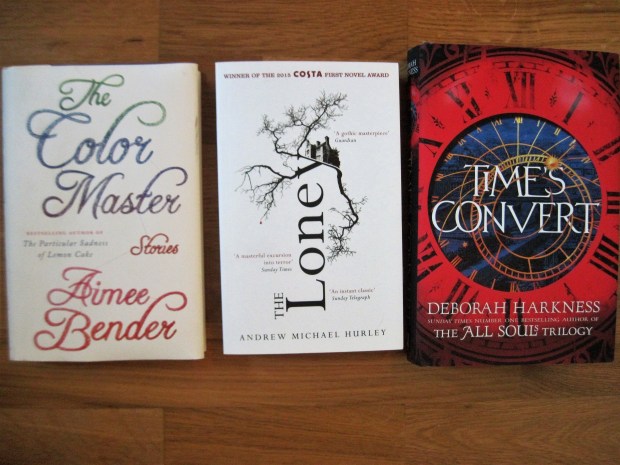
The Color Master by Aimee Bender (2013)
Aimee Bender is best known for The Particular Sadness of Lemon Cake. This is the second collection of her stories that I’ve read. Most have a touch of the bizarre to them – a tiny tweak to normal life – but some are set in completely alternate worlds. One character experiences extreme face blindness; another deludes himself that he was a famously vicious Nazi during the Second World War. Seamstresses take on odd tasks like repairing endangered animals or, in the title story, creating a dress that resembles the moon and embodies female anger. In “Appleless,” vigilantes punish a girl who won’t eat apples, while “The Devourings” is a dark riff on Shrek in which a woman comes to terms with her ogre husband’s innate violence.
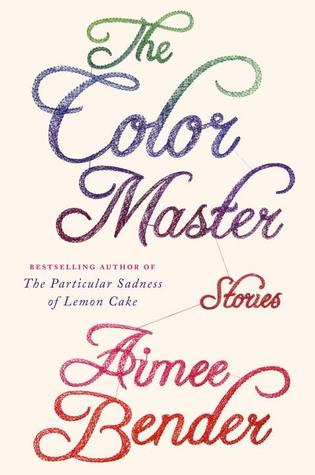 A few favorites were “A State of Variance,” in which a character can’t seem to avoid perfect facial symmetry no matter how he tries to mar his natural beauty, “The Doctor and the Rabbi,” a philosophical conversation between an ill rabbi and her atheist-leaning parishioner, and “The Red Ribbon” (which draws on the same source material as Carmen Maria Machado’s “The Husband Stitch”), about a bored housewife who starts acting out sexual fantasies to try to save her marriage.
Bender deploys a good mixture of voices and protagonists, though at least four of the 15 stories felt unnecessary to me. Her approach is similar to Kelly Link’s and Karen Russell’s, but I’ve failed to get on with their surreal stories before – Bender’s writing is that bit more accessible. I’d recommend her to fans of stories by Amy Bloom and Sarah Hall.
My rating: 
Time’s Convert by Deborah Harkness (2018)
This is a companion volume to Harkness’s All Souls Trilogy, which is like the thinking gal’s Twilight, as written by a historian of science. I read the first book, A Discovery of Witches, in 2011 and surprised myself by completely loving the story of the witch Diana Bishop, who researches alchemy at the Bodleian Library and falls hard for a centuries-old vampire, Matthew de Clermont. Although Time’s Convert is likely intended to stand alone, I felt it could do with a dramatis personae at the start as I’d forgotten who many of the minor characters were.
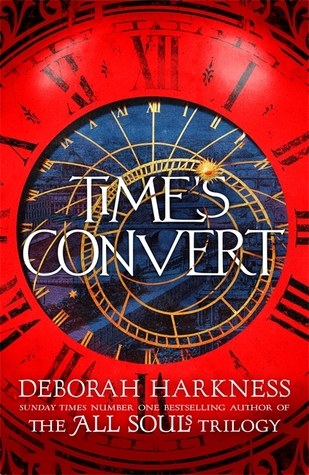 Diana and Matthew are still major characters, though not at the heart of the book. One strand has Diana and her family staying in the French countryside. She and Matthew now have toddler twins, Philip and Becca, who are just starting to show magical powers: Philip summons a griffon named Apollo as his familiar. Another is set in Paris, where Phoebe Taylor is willingly being transformed into a vampire so she can marry Matthew’s son, Marcus. A final strand recreates Marcus’s experiences during the American and French Revolutions and onward: he was born in Massachusetts in 1757 and was a surgeon during the Revolutionary War before he met Matthew and received the offer of immortality.
I almost always feel that sequels fail to live up to the original. Time’s Convert is most like Shadow of Night, the second book of the series and my least favorite because it spends so much time in 1590s England. Here the three different story lines split my focus and I resented being taken away from Diana’s first-person narration, which is much more engaging than the third-person material. I would only recommend this volume to diehard fans of the series.
My rating:
With thanks to Headline for the free copy for review.
Note: A television adaptation of A Discovery of Witches recently aired on Sky One in the UK and is coming to North America in January.
The Loney by Andrew Michael Hurley (2014)
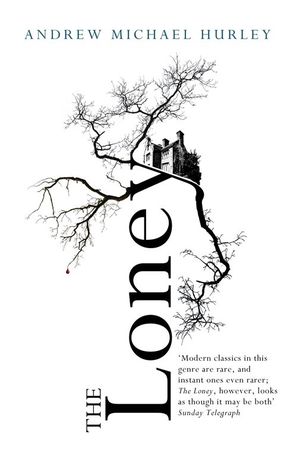 The Loney is not a monster, as I suppose I expected, but a place: an isolated coastline in the northwest of England that the narrator and his family visited on pilgrimage with their Roman Catholic congregation every Easter in the 1970s. The narrator, only identified by the nickname Tonto, explores their strange rental house – full of taxidermied animals and hidden rooms, it also has a rifle under the floorboards – and goes to the beach with his mute brother Andrew (“Hanny”). Mummer and Farther hold out hope that their son Hanny will be healed on a visit to the local shrine, and Mummer especially is frustrated that Father Bernard isn’t as strict and devout as their previous priest, Father Wilfred, who died under a cloud of suspicion not long before this trip.
Last year at around this time I read Hurley’s follow-up, Devil’s Day, which has a similarly bleak and eerie atmosphere. Both look at rural superstitions as experienced by outsiders. The Loney was more profound for me, though, in how it subverts religious rituals and posits a subtle evil influence without ever disappearing down doctrinal rabbitholes. It asks how far people will go to get what they want, what meaning there is to human life if there is no supernatural being looking out for us, and – through a framing story set 30 or more years later – how guilt and memory persist. I especially loved the Tenebrae service in a gloomy church featuring Bosch-like horrors in its artwork. This reminded me of a less abstract After Me Comes the Flood and a more contemporary The Short Day Dying; I highly recommend it.
Favorite lines:
“The Church of the Sacred Heart was an ancient place – dark and squat and glistening amphibiously in the rain.”
“The wind continued to rise and fall. Whining and shrilling. It was as insistent as the priest, louder sometimes, preaching an older sermon, about the sand and the sea.”
My rating:
 Bookish Beck = Rebecca Foster. American transplant to England. Freelance proofreader and book reviewer.
 Bookish Beck