20 Books of Summer, #19–20: Heat & The Gospel of Trees
Finishing off my summer reading project with a stellar biography-cum-travel book about Italian cuisine and a family memoir about missionary work in Haiti in the 1980s.
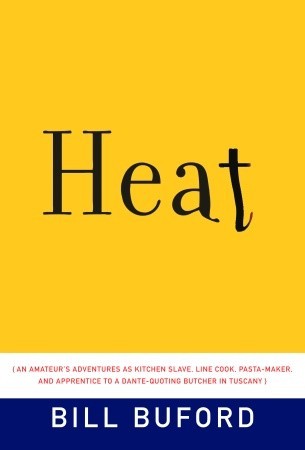
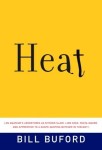
Heat by Bill Buford (2006)
(20 Books of Summer, #19) The long subtitle gives you an outline of the contents: “An Amateur’s Adventures as Kitchen Slave, Line Cook, Pasta-Maker, and Apprentice to a Dante-Quoting Butcher in Tuscany.” If Buford’s name sounds familiar, it’s because he was the founding editor of Granta magazine and publisher at Granta Books, but by the time he wrote this he was a staff writer for the New Yorker.
 Mario Batali is the book’s presiding imp. In 2002–3, Buford was an unpaid intern in the kitchen of Batali’s famous New York City restaurant, Babbo, which serves fancy versions of authentic Italian dishes. It took 18 months for him to get so much as a thank-you. Buford’s strategy was “be invisible, be useful, and eventually you’ll be given a chance to do more.”
In between behind-the-scenes looks at frantic or dull sessions of food prep (“after you’ve made a couple thousand or so of these little ears [orecchiette pasta], your mind wanders. You think about anything, everything, whatever, nothing”), Buford traces Batali’s culinary pedigree through Italy and London, where Batali learned from the first modern celebrity chef, Marco Pierre White, and gives pen portraits of the rest of the kitchen staff. At first only trusted with chopping herbs, the author develops his skills enough that he’s allowed to work the pasta and grill stations, and to make polenta for 200 for a benefit dinner in Nashville.
Later, Buford spends stretches of several months in Italy as an apprentice to a pasta-maker and a Tuscan butcher. His obsession with Italian cuisine is such that he has to know precisely when egg started to replace water in pasta dough in historical cookbooks, and is distressed when the workers at the pasta museum in Rome can’t give him a definitive answer. All the same, the author never takes himself too seriously: he knows it’s ridiculous for a clumsy, unfit man in his mid-forties to be entertaining dreams of working in a restaurant for real, and he gives self-deprecating accounts of his mishaps in the various kitchens he toils in:
to stir the polenta, I was beginning to feel I had to be in the polenta. Would I finish cooking it before I was enveloped by it and became the darkly sauced meaty thing it was served with?
Compared to Kitchen Confidential, I found this less brash and more polished. You still get the sense of macho posturing from a lot of the figures profiled, but of course this author is not going to be in a position to interrogate food culture’s overweening masculinity. However, he does take a stand in support of small-scale food production:
Small food: by hand and therefore precious, hard to find. Big food: from a factory and therefore cheap, abundant. Just about every preparation I learned in Italy was handmade and involved learning how to use my own hands differently. … Food made by hand is an act of defiance and runs contrary to everything in our modernity. Find it; eat it; it will go.
This is exactly what I want from food writing: interesting nuggets of trivia and insight, a quick pace, humor, and mouthwatering descriptions. If the restaurant world lures you at all, you must read this one.
- Nice connections with my other summer reading: there are mentions of both Eric Asimov and Ruth Reichl visiting Babbo in their capacity as food critics for the New York Times.
- This also induced a weird case of reverse déjà vu: a book I reviewed last summer for BookBrowse, Hungry by Jeff Gordinier, is so similar that it must have been patterned on Heat: the punchy one-word title; a New York journalist follows an internationally known chef (in that case, René Redzepi) and surveys culinary trends.
 I was delighted to learn that this year Buford released a sequel of sorts, this one about French cuisine: Dirt. It’s on my wish list.
Source: From my dad
My rating: 
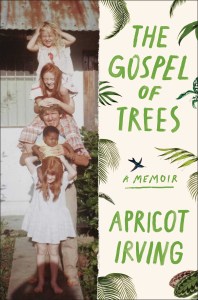
The Gospel of Trees by Apricot Irving (2018)
(20 Books of Summer, #20) Irving’s parents were volunteer missionaries to Haiti between 1982 and 1991, when she was aged six to 15. Her father, Jon, was trained as an agronomist, and his passion was for planting trees to combat the negative effects of deforestation on the island (erosion and worsened flooding). But in a country blighted by political unrest, AIDS and poverty, people can’t think long-term; they need charcoal to light their stoves, so they cut down trees.
 Along with an agricultural center, the American Baptist missionaries were closely associated with a hospital, Hôpital le Bon Samaritain, run by amateur archaeologist Dr. Hodges and his family. Although Apricot and her two younger sisters were young enough to adapt easily to life in a developing country, they were disoriented each time the family returned to California in between assignments. Their bonds were shaky due to her father’s temper, her parents’ rocky relationship, and the jealousy provoked over almost adopting a Haitian baby girl.
Irving drew on letters and cassette tape recordings, newsletters, and journals (her parents’ and her own) to recreate the decade in Haiti and the years since. This debut book was many years in the making – she started the project in 2001. “I inherited my father’s anger and his perfectionism. Haiti was a wound, an unhealed scab that I was afraid to pick open. But I knew that unless I faced that broken history, my own buried grief, like my father’s, would explode ways I couldn’t predict.”
She and her parents returned to the country after the 2010 earthquake: they were volunteers with a relief organization, while she reported for the This American Life radio program. I loved the ambivalent portrait of Haiti and, especially, of Jon, but couldn’t muster up much interest in secondary characters, hoped for more discussion of (loss of) faith, and thought the book about 80 pages too long. Irving writes wonderfully, though, especially when musing on Haiti’s pre-Columbian history; I’d gladly read a nature book about her life in Oregon, or a novel – in tone this reminded me of The Poisonwood Bible.
Some favorite lines:
If, like my father, you suffer from a savior complex, Haiti is a bleak assignment, but if you are able to enter it unguarded, shielded only by curiosity, you will find the sorrows entangled with a defiant joy.
My family had moved to Haiti to try to help, but instead, we learned our limitations. Failure can be a wise friend. We felt crushed at times; found it difficult to breathe; and yet the experience carved into each of us an understanding of loss, the weight of compassion. We learned how small we were when measured against the world’s great sorrow.
Source: Bargain book from Amazon last year
My rating: 
And a DNF:
 We Were the Mulvaneys by Joyce Carol Oates (oats!)
I gave up after 38 pages. I’ve long meant to try Oates, but her oeuvre is daunting. An Oprah’s Book Club selection seemed like a safe bet. I found the quirky all-American family saga approach somewhat similar to John Irving or Richard Russo, but Judd’s narration is annoyingly perky, and already I was impatient to find out what happened to his sister Marianne on Valentine’s Day 1976. I’ll give it a few years and try again. In the meantime, maybe I’ll try Oates in a different genre.
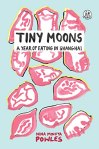
Looking back, Heat was the clear highlight of my 20 Books, closely followed by My Year of Meats by Ruth Ozeki. I also really enjoyed the foodoirs by Anthony Bourdain, Nina Mingya Powles and Luisa Weiss. It’s funny how much I love foodie lit given that I don’t cook. As Alice Steinbach puts it, “while we all like to eat, we like it more when someone else does the cooking.”
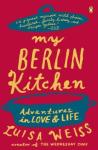
 Of course, not all of my selections were explicitly food-related; others simply had food words in their titles (or, as above, in the author’s name). Of these, my favorite was a reread, Ella Minnow Pea. Ideally, I would not have had to include my two skims and one partial read in the total, but I ran out of time in August to substitute in three more books. I’m happy enough with my showing this year, but next time I plan to build in more flexibility – or cheating, whichever you wish to call it – to ensure that I manage 20 solid reads.
I already have a color theme planned for 20 Books of Summer 2021! Here are 15 books that I own, mostly fiction, that would fit the bill:
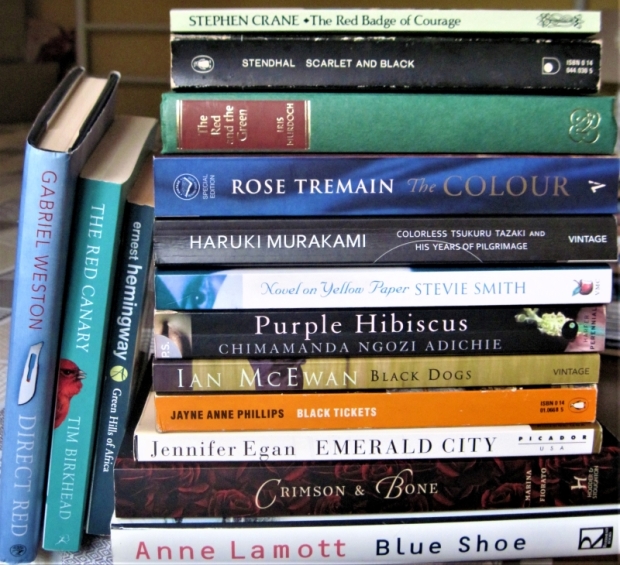
As wildcard selections and/or substitutes, I will also allow:
- Books with “light”, “dark”, or “bright” in the title
- Kindle or library books, though I’d like the focus to remain on print books I own.
- If I’m really stuck, book covers/jackets in a rainbow of colors. I’ll skip orange because Penguin paperbacks are too plentiful in my book collection, but I have some nice red, yellow, green, blue, purple and pink covers to choose from.
20 Books of Summer: Bourdain, Ozeki and More
Over halfway through the summer and my numbers are looking poor. It’s not that I’m not reading a ton – in general, I am – it’s just that I’m having trouble finishing any foodie books. I’m in the middle of two food-related memoirs plus Cakes and Ale by W. Somerset Maugham, and have recently started buddy-reading Mother’s Milk by Edward St Aubyn with Annabel, so more reviews will be along eventually, but I predict August will be a scramble.
Today I review an in-your-face tell-all about the life of a chef, and a novel set between Japan and the United States that exposes the seamy side of meat production. A lite road trip and an iffy California classic follow as bonuses.
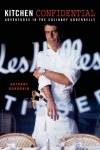
Kitchen Confidential: Adventures in the Culinary Underbelly by Anthony Bourdain (2000)
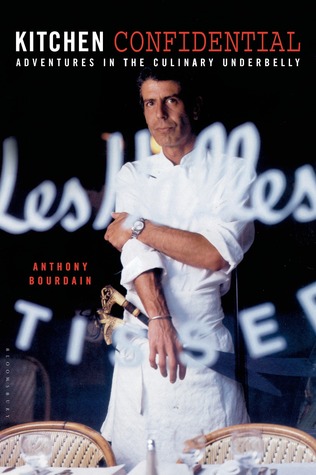 (20 Books of Summer, #5) “Get that dried crap away from my bird!” That random line about herbs is one my husband and I remember from a Bourdain TV program and occasionally quote to each other. It’s a mild curse compared to the standard fare in this flashy memoir about what really goes on in restaurant kitchens. His is a macho, vulgar world of sex and drugs. In the “wilderness years” before he opened his Les Halles restaurant, Bourdain worked in kitchens in Baltimore and New York City and was addicted to heroin and cocaine. Although he eventually cleaned up his act, he would always rely on cigarettes and alcohol to get through ridiculously long days on his feet.
From “Appetizer” to “Coffee and a Cigarette,” the book is organized like a luxury meal. Bourdain charts his development as a chef, starting with a childhood summer in France during which he ate vichyssoise and oysters for the first time and learned that food “could be important … an event” and describing his first cooking job in Provincetown and his time at the Culinary Institute of America. He also discusses restaurant practices and hierarchy, and home cook cheats and essentials. (I learned that you should never order fish in a restaurant on a Monday – it’ll be left over from Thursday’s order.) The pen portraits of his crazy sous-chef and baker are particularly amusing; other subjects include a three-star chef he envies and the dedicated Latino immigrants who are the mainstay of his kitchen staff.
My dad is not a reader but he is a foodie, and he has read Bourdain’s nonfiction (and watched all his shows), so I felt like I was continuing a family tradition in reading this. I loved my first taste of Bourdain’s writing: he’s brash, passionate, and hilariously scornful of celebrity chefs and vegetarianism (“the enemy of everything good and decent in the human spirit, an affront to all I stand for, the pure enjoyment of food”). Being in charge of a restaurant sounds manic, yet you can see why some would find it addictive. How ironic, though, to find a whole seven references to suicide in this book. Sometimes he’s joking; sometimes he’s talking about chefs he’s heard about who couldn’t take the pressure. Eighteen years after this came out, he, too, would kill himself.
(See also this article about rereading Bourdain in the 20th anniversary year of Kitchen Confidential.)
Source: Local swap shop (free)
My rating: 
(These two are linked by a late chapter in the Bourdain, “Mission to Tokyo,” in which he advises on a new Les Halles offshoot in Japan and gorges himself on seafood delights.)
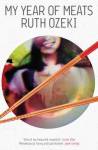
My Year of Meats by Ruth Ozeki (1998)
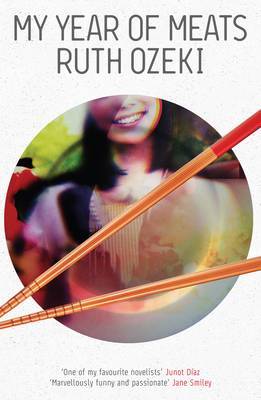 (20 Books of Summer, #6) I don’t know what took me so long to read another novel by Ruth Ozeki after A Tale for the Time Being, one of my favorite books of 2013. This is nearly as fresh, vibrant and strange. Set in 1991, it focuses on the making of a Japanese documentary series, My American Wife, sponsored by a beef marketing firm. Japanese American filmmaker Jane Takagi-Little is tasked with finding all-American families and capturing their daily lives – and best meat recipes. The traditional values and virtues of her two countries are in stark contrast, as are Main Street/Ye Olde America and the burgeoning Walmart culture.
There is a clear message here about cheapness and commodification, but Ozeki filters it through the wrenching stories of two women with fertility problems: Jane, whose reproductive system was damaged by DES, a synthetic estrogen her mother took during pregnancy to prevent a miscarriage; and Akiko, the wife of Jane’s boss, who struggles with an eating disorder and domestic violence.
Jane starts sneaking controversial subjects into her shoots: a lesbian couple, a family formed by interracial adoption, and a five-year-old who has already undergone puberty due to the hormones used on her family’s cattle feedlot. What is “natural,” and what gets branded alien or invasive? From the kudzu that strangles the South to a murdered Japanese exchange student, Ozeki probes the related issues of nativism and racism. Her two protagonists’ stories – one in the first person; the other in the third person – come together in a surprising manner as Jane decides that she has a more pressing obligation than creating a diverting television show.
This is a bold if at times discomforting novel. At first it brought to mind the exaggerated comedy of Julian Barnes’s England, England and Jane Smiley’s Moo, but as it grew darker it reminded me more of Han Kang’s The Vegetarian. It’s tricky, when a work of fiction tackles ethical or environmental matters, to balance storytelling and consciousness-raising, but Ozeki pulls it off with style. The only aspect that didn’t mean much to me, perhaps simply because of my unfamiliarity, was the excerpts from The Pillow Book of Shōnagon. How sad to think that I only have one more Ozeki awaiting me, All Over Creation. She averages a book every 5‒10 years; we can only hope that another is on the way soon.
Source: Charity shop
My rating: 
I picked up another two food-adjacent books that didn’t work for me, though I ended up skimming them to the end.
America Unchained: A Freewheeling Roadtrip in Search of Non-Corporate USA by Dave Gorman (2008)
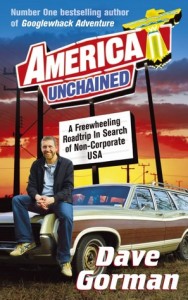 (20 Books of Summer, #7) I read the first couple of chapters, in which he plans his adventure, and then started skimming. I expected this to be a breezy read I would race through, but the voice was neither inviting nor funny. I also hoped to find more about non-chain supermarkets and restaurants – that’s why I put this on the pile for my foodie challenge in the first place – but, from a skim, it mostly seemed to be about car trouble, gas stations and fleabag motels. The only food-related moments are when Gorman (a vegetarian) downs three fast food burgers and orders of fries in 10 minutes and, predictably, vomits them all back up; and when he stops at an old-fashioned soda fountain for breakfast.
Source: Free bookshop
Tortilla Flat by John Steinbeck (1935)
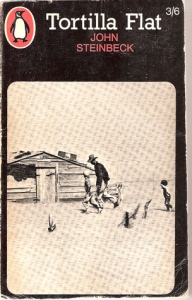 (20 Books of Summer, #8) I read the first 25 pages and then started skimming. This is a story of a group of friends – paisanos, of mixed Mexican, Native American and Caucasian blood – in Monterey, California. During World War I, Danny serves as a mule driver and Pilon is in the infantry. When discharged from the Army, they return to Tortilla Flat, where Danny has inherited two houses. He lives in one and Pilon is his tenant in the other (though Danny will never see a penny in rent). They’re a pair of loveable scamps, like Huck Finn all grown up, stealing wine and chickens left and right.
Steinbeck novels seem to fall into two camps for me. This is one of his inconsequential, largely unlikable novellas (like The Pearl and The Red Pony, which I studied in school – I’m lucky they didn’t put me off Steinbeck forever), whereas The Grapes of Wrath and East of Eden are masterful. It may also have something to do with the slight air of condescension towards characters of a different race: Steinbeck renders their speech with “thee” and “thou,” trying to imitate a Romance language’s informal pronouns, but it feels dated and alienating.
Source: Free bookshop
Book Serendipity, April‒Early July
I call it serendipitous when two or more books that I read at the same time or in quick succession have something pretty bizarre in common. Because I have so many books on the go at once (usually around 20), I suppose I’m more prone to such incidents than some. I also list these occasional reading coincidences on Twitter. The following are in rough chronological order. (January to March appeared in this post.)
- Characters named Sonny in Pew by Catherine Lacey, My Father’s Wake by Kevin Toolis, and Sacred Country by Rose Tremain.
- A double dose via Greenery via Tim Dee – while reading it I was also reading Other People’s Countries by Patrick McGuinness, whom he visits in Belgium; and A Cold Spring by Elizabeth Bishop, referenced in a footnote.


- A red thread is worn as a bracelet for its emotional or spiritual significance in The Book of Longings by Sue Monk Kidd and Plan B by Anne Lamott.
- The Library of Alexandria features in Footprints by David Farrier and The Book of Longings by Sue Monk Kidd.
- The Artist’s Way is mentioned in At Hawthorn Time by Melissa Harrison and Traveling Mercies by Anne Lamott.
- Characters sleep in a church in Pew by Catherine Lacey and Abide With Me by Elizabeth Strout. (And both novels have characters named Hilda.)


- Coins being flung away among some trees in In the Springtime of the Year by Susan Hill and The Book of Longings by Sue Monk Kidd (literally the biblical 30 pieces of silver in the Kidd, which is then used as a metaphor in the Hill).
- Rabbit-breeding projects in When the Lights Go Out by Carys Bray and Parable of the Sower by Octavia E. Butler.


- Mentions of the Great Barrier Reef in When the Lights Go Out by Carys Bray and Footprints by David Farrier.
- The same very specific fact – that Seamus Heaney’s last words, in a text to his wife, were “Noli timere” – was mentioned in Curlew Moon by Mary Colwell and Greenery by Tim Dee.
- Klondike ice cream bars appeared in both Small Victories by Anne Lamott and The Fixed Stars by Molly Wizenberg.

- The metaphor of a rising flood only the parent or the child will survive is used in both Exit West by Mohsin Hamid and What We Carry by Maya Lang.
- The necessity of turning right to save oneself in a concentration camp setting is mentioned in both Man’s Search for Meaning by Viktor Frankl and Fugitive Pieces by Anne Michaels.
- An English child is raised in North Africa in Oleander, Jacaranda by Penelope Lively and The Child in Time by Ian McEwan.
- The Bristol Stool Chart appeared in both Gulp by Mary Roach and The Bad Doctor by Ian Williams.


- A Greek island setting in both Exit West by Mohsin Hamid and Fugitive Pieces by Anne Michaels (plus, earlier, in A Theatre for Dreamers by Polly Samson).
- Both Writers & Lovers by Lily King and Mother: A Memoir by Nicholas Royle mention Talking Heads within the first 20 pages.
- A trip to North Berwick in the early pages of Mother: A Memoir by Nicholas Royle, and hunting for cowrie shells on the beach – so familiar from Evie Wyld’s The Bass Rock, read the previous month. (Later, more collecting of cowrie shells in Oleander, Jacaranda by Penelope Lively.)
- Children’s authors are main characters in The Crow Road by Iain Banks and The Child in Time by Ian McEwan.
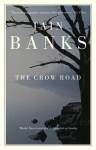

- A character is killed by a lightning strike in The Crow Road by Iain Banks and Writers & Lovers by Lily King.
- Characters named Ash in The Crow Road by Iain Banks and The Fixed Stars by Molly Wizenberg.
 A brother steals the main character’s object of affection in The Crow Road by Iain Banks and Sacred Country by Rose Tremain.
- A minor character in Parable of the Sower by Octavia E. Butler is called Richard Rohr … meanwhile, I was reading a book by Richard Rohr, The Universal Christ.
- A maternity ward setting in The Pull of the Stars by Emma Donoghue and The Bell in the Lake by Lars Mytting.
- A love triangle is a central element in Writers & Lovers by Lily King and The Bell in the Lake by Lars Mytting.


- Reading a book by a Galloway (The Trick Is to Keep Breathing by Janice Galloway) and a book about Galloway (Native: Life in a Vanishing Landscape by Patrick Laurie) simultaneously.
- Attending college in L.A. in The Vanishing Half by Brit Bennett and Dreams from My Father by Barack Obama.
- Two books that reference the same Darwin quote: Into the Tangled Bank by Lev Parikian, and “The Entangled Bank” is the title of the final poem in Red Gloves by Rebecca Watts.


- Characters with the surname Savage in The Box Garden by Carol Shields and Islands of Mercy by Rose Tremain.
- A character is taught how to eat oysters in The Vanishing Half by Brit Bennett and Kitchen Confidential by Anthony Bourdain.
- A Louisiana setting in The Vanishing Half by Brit Bennett and Property by Valerie Martin.
- Characters named Stella in The Vanishing Half by Brit Bennett and The Group by Lara Feigel.


- The last line of the book has a character saying “Come in” in Americanah by Chimamanda Ngozi Adichie and Ankomst by Gøhril Gabrielsen.
- Currently reading four books with mixed-race narrators: (Black/white) The Girl Who Fell from the Sky by Heidi Durrow, Dreams from My Father by Barack Obama, Memorial Drive by Natasha Trethewey; and (Japanese/white) My Year of Meats by Ruth Ozeki.
- Currently reading two novels in which a pair of orphaned sisters are taken in by relatives (Deerbrook by Harriet Martineau and Rise and Shine by Anna Quindlen). Plus two more novels with orphan characters: The Girl Who Fell from the Sky and My Year of Meats.
-
- In two of these four (not telling which, though you can safely assume it’s not the Victorian novel!), they are orphans because both parents were killed in a car accident. I feel like this is a fictional setup that I encounter all the time (cf. All the Beautiful Girls, The Monsters of Templeton, Saint Maybe) that can’t be that common in real life?
-


- Vassar as an alma mater in Kitchen Confidential by Anthony Bourdain and The Group by Mary McCarthy.
- Punahou School (Honolulu, Hawaii) is the author’s alma mater in The Noonday Demon by Kathleen Norris and Dreams from My Father by Barack Obama.
What’s the weirdest reading coincidence you’ve had lately?
My 10 Favorite Books from the Past Decade
I make no claims to objectivity here. These are simply 10 books that stand out to me from the past decade. I narrowed the list down from about 25 titles, trying not to agonize over it for too long. I’m pleased that it happens to be half female, with two POC and one work in translation. (Could be more diverse, but not too bad.)
You can see the seeds of my interest in memoirs and medical books, and the variety of fiction I love, from absurdist comedy (Auslander) to Greek-level tragedy (Vann).
In alphabetical order by author surname:
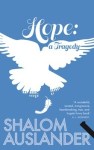


Hope: A Tragedy by Shalom Auslander (2012)
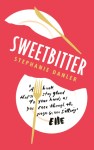
Sweetbitter by Stephanie Danler (2016)
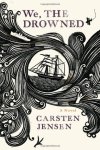
We, the Drowned by Carsten Jensen (English translation, 2010)
Priestdaddy by Patricia Lockwood (2017)
H Is for Hawk by Helen Macdonald (2014)
Want Not by Jonathan Miles (2013)
The Emperor of All Maladies: A Biography of Cancer by Siddhartha Mukherjee (2010)
A Tale for the Time Being by Ruth Ozeki (2013)
The Immortal Life of Henrietta Lacks by Rebecca Skloot (2010)
Caribou Island by David Vann (2010)
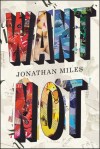


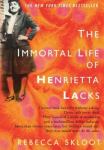
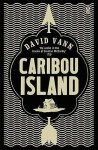
These selections skew early in the decade; 2010‒13 happened to be particularly memorable reading years for me. All of these are books I would like to reread, sooner rather than later.
(Five of these are repeated from the list of favorite books I drew up for my 35th birthday.)
Do we overlap on any favorites?
Which books of the 2010s were standouts for you?
35 Years, 35 Favorite Books
I love book lists: ticking off what I’ve read from newspaper and website selections, comparing my “best-of” choices and prize predictions with other people’s, and making up my own thematic inventories. Earlier in the year I spotted Desert Island-style 100-book lists on Annabookbel and A life in books, as well as Lonesome Reader’s reconsideration of the 100 favorite books he’d chosen half a lifetime ago. For my 35th birthday today, I’ve looked back at my “Absolute Favorites” shelf on Goodreads and picked the 35 titles that stand out the most for me: some are childhood favorites, some are books that changed my thinking, some I have read two or three times (an extreme rarity for me), and some are recent discoveries that have quickly become personal classics. I’ve listed these in rough chronological order of when I first read them, rather than ranking them, which would be nigh on impossible! Perhaps I’ll revisit the list on future significant birthdays and see how things change. Interesting to note that this works out as about two-thirds fiction and one-third nonfiction.
~
- Miss Rumphius by Barbara Cooney
- The Silver Chair by C.S. Lewis
- Watership Down by Richard Adams
- Anne of Green Gables by L.M. Montgomery
- David Copperfield by Charles Dickens
 The Scarlet Letter by Nathaniel Hawthorne
- Far from the Madding Crowd by Thomas Hardy
- Jane Eyre by Charlotte Brontë
- A Portrait of the Artist as a Young Man by James Joyce
- Possession by A.S. Byatt
- Flaubert’s Parrot by Julian Barnes
- Sixpence House by Paul Collins
 A History of God by Karen Armstrong
- Conundrum by Jan Morris
- The Heart of Christianity by Marcus Borg
- The Blind Assassin by Margaret Atwood
- My Family and Other Animals by Gerald Durrell
- On Beauty by Zadie Smith
- Heaven’s Coast by Mark Doty
 Secrets in the Dark by Frederick Buechner
- A Prayer for Owen Meany by John Irving
- American Wife by Curtis Sittenfeld
- Middlesex by Jeffrey Eugenides
- Caribou Island by David Vann
- To Travel Hopefully by Christopher Rush
- We, the Drowned by Carsten Jensen
 The Emperor of All Maladies by Siddhartha Mukherjee
- Leaving Alexandria by Richard Holloway
- An Exact Replica of a Figment of My Imagination by Elizabeth McCracken
- A Tale for the Time Being by Ruth Ozeki
- Want Not by Jonathan Miles
- Journal of a Solitude by May Sarton
- F by Daniel Kehlmann
 Dinner at the Homesick Restaurant by Anne Tyler
- March by Geraldine Brooks
Are any of these among your favorites, too?
Starting the Year as I Mean to Go On?
The houseguests have gone home, the Christmas tree is coming down tomorrow, and it’s darned cold. I’m feeling stuck in a rut in my career, the blog, and so many other areas of life. It’s hard not to think of 2017 as a huge stretch of emptiness with very few bright spots. All I want to do is sit around in my new fuzzy bathrobe and read under the cat. Luckily, I’ve had some great books to accompany me through the Christmas period and have finished five so far this year.
I thought I’d continue the habit of writing two-sentence reviews (or maybe no more than three), except when I’m writing proper full-length reviews on assignment or for blog tours or other websites. Granted, they’re usually long and multi-part sentences, and this isn’t actually a time-saving trick – as Blaise Pascal once said, “I’m sorry I wrote you such a long letter; I didn’t have time to write a short one” – but it feels like good discipline.
So here’s some mini-reviews of what I’ve been reading in late December and early January:
The Dark Flood Rises, Margaret Drabble
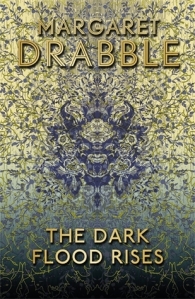 The “dark flood” is D.H. Lawrence’s metaphor for death, and here it corresponds to busy seventy-something Fran’s obsession with last words, obituaries and the search for the good death as many of her friends and acquaintances succumb – but also to literal flooding in the west of England and (dubious, this) to mass immigration of Asians and Africans into Europe. This is my favorite of the five Drabble books that I’ve read – it’s closest in style and tone to her sister A.S. Byatt as well as to Tessa Hadley, and the themes of old age and life’s randomness are strong – even though there seem to be too many characters and the Canary Islands subplot mostly feels like an unnecessary distraction. (Public library)
Hogfather, Terry Pratchett
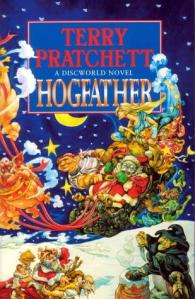 In Discworld belief causes imagined beings to exist, so when a devious plot to control children’s minds results in a dearth of belief in the Hogfather, the Fat Man temporarily disappears and Death has to fill in for him on this Hogswatch night. I laughed aloud a few times while reading this clever Christmas parody, but I had a bit of trouble following the plot and grasping who all the characters were given that this was my first Discworld book; in general I’d say that Pratchett is another example of British humor that I don’t entirely appreciate (along with Monty Python and Douglas Adams) – he’s my husband’s favorite, but I doubt I’ll try another of his books. (Own copy)
Love of Country: A Hebridean Journey, Madeleine Bunting
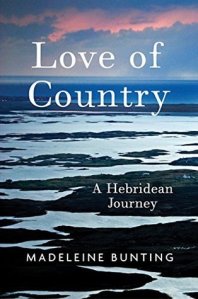 In a reprise of childhood holidays that inevitably headed northwest, Bunting takes a series of journeys around the Hebrides and weaves together her contemporary travels with the religion, folklore and history of this Scottish island chain, an often sad litany of the Gaels’ poverty and displacement that culminated with the brutal Clearances. Rather than giving an exhaustive survey, she chooses seven islands to focus on and tells stories of unexpected connections – Orwell’s stay on Jura, Lord Leverhulme’s (he of Port Sunlight and Unilever) purchase of Lewis, and Bonnie Prince Charlie’s landing on Eriskay – as she asks how geography influences history and what it truly means to belong to a place. (Public library)
Cobwebs and Cream Teas: A Year in the Life of a National Trust House, Mary Mackie
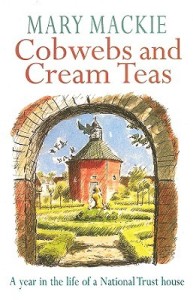 Mackie’s husband was Houseman and then Administrator at Felbrigg Hall in Norfolk in the 1980s – live-in roles that demanded a wide range of skills and much more commitment than the usual 9 to 5 (when he borrowed a pedometer he learned that he walked 15 miles in the average day, without leaving the house!). Her memoir of their first year at Felbrigg proceeds chronologically, from the intense cleaning and renovations of the winter closed season through to the following Christmas’ festivities, and takes in along the way plenty of mishaps and visitor oddities. It will delight anyone who’d like a behind-the-scenes look at the life of a historic home. (Own copy)
The Bridge Ladies: A Memoir, Betsy Lerner
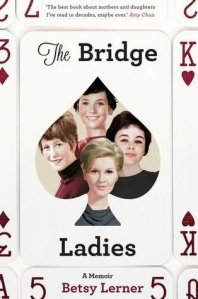 When life unexpectedly took the middle-aged Lerner back to her hometown of New Haven, Connecticut, she spent several years sitting in on her mother’s weekly bridge games to learn more about these five Jewish octogenarians who have been friends for 50 years and despite their old-fashioned reserve have seen each other through the loss of careers, health, husbands and children. Although Lerner also took bridge lessons herself, this is less about the game and more about her ever-testy relationship with her mother (starting with her rebellious teenage years), the ageing process, and the ways that women of different generations relate to their family and friends. It wouldn’t be exaggerating to say that every mother and daughter should read this; I plan to shove it in my mother’s and sister’s hands the next time I’m in the States. (Own copy)
Waiting on the Word, Malcolm Guite
 Guite chooses well-known poems (by Christina Rossetti, John Donne, Alfred Lord Tennyson, Samuel Taylor Coleridge et al.) as well as more obscure contemporary ones as daily devotional reading between the start of Advent and Epiphany; I especially liked his sonnet sequence in response to the seven “O Antiphons.” His commentary is learned and insightful, and even if at times I thought he goes into too much in-depth analysis rather than letting the poems speak for themselves, this remains a very good companion to the Christmas season for any poetry lover. (E-book from NetGalley)
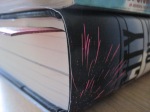 I started too many books over Christmas and have sort of put six of them on hold – including Titus Groan, which I’m thinking of quitting (it takes over 50 pages for one servant to tell another that the master has had a son?!), and City on Fire, which is wonderful but dispiritingly long: even after two good sessions with it in the days after Christmas, I’ve barely made a dent.
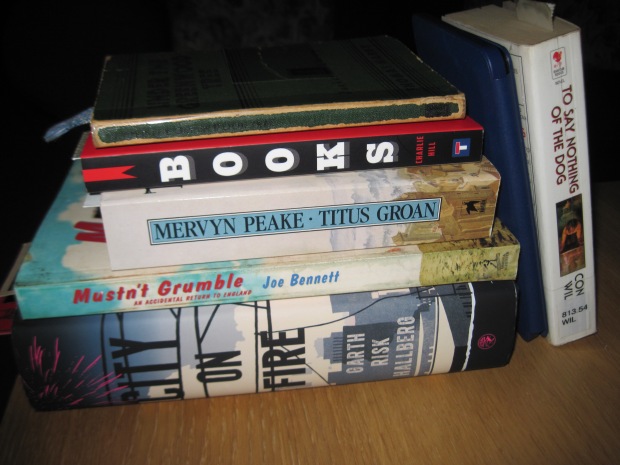
Stack on left = on hold (the book on top is Under the Greenwood Tree); standing up at right = books I’m actually reading.
However, the three books that I am actively reading I’m loving: To Say Nothing of the Dog by Connie Willis is an uproarious blend of time travel science fiction and Victorian pastiche (university library), Pachinko by Min Jin Lee is a compulsive historical saga set in Korea (ARC from NetGalley), and the memoir Birds Art Life by Kyo Maclear has been compared to H Is for Hawk in the way she turns to birdwatching to deal with depression (e-book from Edelweiss). I also will be unlikely to resist my e-galley of the latest Anne Lamott book, Hallelujah Anyway (forthcoming in April, ARC from Edelweiss), for much longer.



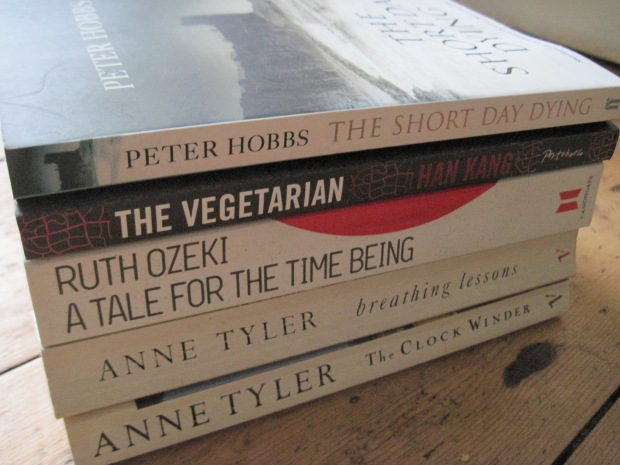
Meanwhile, in post-holiday charity shopping I scored six books for £1.90: one’s been tucked away as a present for later in the year; the Ozeki I’ve already read, but it’s a favorite so I’m glad to own it; and the rest are new to me. I look forward to trying Han Kang; Anne Tyler is a reliable choice for a cozy read; and the Hobbs sounds like a wonderful Victorian-set novel.
All in all, I seem to be starting my year in books as I mean to go on: reading a ton; making sure I review most or all of the books, even if I write just a few sentences; maintaining a balance between my own books, library books, and recent or advance NetGalley/Edelweiss reads; and failing to restrain myself from buying more.
Now if I could just work on my general attitude…
How’s the reading year starting off for you?
Polishing off the Booker Prize Shortlist
This is the second year in a row that I’ve managed to read the whole of the Man Booker Prize shortlist before the announcement of the winner. (In 2013 and 2014 I only got through four of the six titles.) Here’s my take on the final two from the shortlist (see my quick impressions of the others here and here), plus one from the longlist. I finish with thoughts about my favorites and the likely winner.
All That Man Is by David Szalay
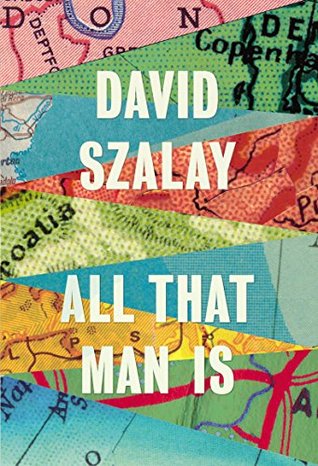 In a riff on the Ages of Man, Szalay gives nine vignettes of men trying to figure out what life is all about. His antiheroes range from age 17 to 73. Each section has several chapters and follows a similar pattern: a man from one European country travels to another European country; there are lots of scenes set at airports or otherwise in transit, and part of the overall atmosphere of dislocation is simply the effort of having to adjust to foreignness. These trips are made for various reasons: feckless French twentysomething Bérnard has been fired by his uncle so goes ahead with a vacation to Cyprus; tabloid journalist Kristian flies from Denmark to Spain to confirm rumors of a government minister’s involvement in a scandal; recently impoverished oligarch Aleksandr takes his yacht for a farewell Adriatic cruise.
Predictably, sex is a major theme: reluctant hook-ups, fantasy lovers, affairs regretted, wild oats never sown. At times I was ready to fill in the title phrase in my best Cockney accent with “All That Man Is…is a bloody wanker.” As individual stories, there’s nothing particularly wrong with these. Inevitably, though, some are more interesting than others, and they don’t quite succeed in feeding into an overarching message, unless to confirm a mood of hedonism and angst. Life is short and pointless; enjoy its moments while you can, eh? Overall, I didn’t find this to be the philosophical and elegiac experience I expected. The prose is great, though; I’d certainly read a more straightforward novel by Szalay.
Favorite lines: “How little we understand about life as it is actually happening. The moments fly past, like trackside pylons seen from a train window.”
My rating: 
Do Not Say We Have Nothing by Madeleine Thien
 “Music and stories, even in times like these, were a refuge, a passport, everywhere.” A sweeping epic of life in China in the turbulent 1960s–80s, this is the Canadian novelist’s fourth book. Narrated from the present day by Marie (or Ma-Li), who lives in Vancouver with her mother, the novel plunges into layers of flashbacks about her family’s connection to Ai-Ming and her musician father, Sparrow. With loyalty to the Communist Party (the title is a line from its anthem) considered the gold standard of behavior and Western music widely denounced as revolutionary, these characters are in a bind: will they pursue their identity as artists, or keep their heads down to avoid trouble? This theme reminded me of Julian Barnes’s fictionalized biography of the Russian composer Shostakovich, The Noise of Time, which also asks whether music can withstand political oppression.
If, like me, you know next to nothing about China’s Cultural Revolution and the transition from Chairman Mao to successive leaders, you will learn so much. There is no denying the power of this portrayal of history. In addition, I was consistently impressed by the book’s language. Thien incorporates Chinese characters and wordplay, musical bars, and snatches of poetry and folk songs. However, I didn’t find this easy reading. The flashbacks can feel endless, such that I experienced Marie’s sections as a relief and wished for more of them. I had to set daily reading targets to get through the novel before the library due date. Yet it is the sort of epic the Booker Prize loves – with echoes of Ruth Ozeki’s The Tale for the Time Being (which should have won in 2013) and Richard Flanagan’s The Narrow Road to the Deep North – and is full of wise observations about what keeps us going when life falls apart. (See my full review at Nudge.)
My rating: 
And here’s another from the longlist that I read recently:
The Many by Wyl Menmuir
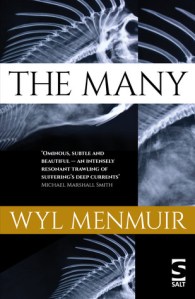 A short work of muted horror, all about atmosphere and the unexplained. Set in a Cornish fishing village, it sees newcomer Timothy Buchannan trying to figure out what happened to Perran, the man who occupied his rundown cottage until his death 10 years ago, and why everyone refuses to talk about him. Flashbacks in italics give glimpses into Timothy’s life with his wife, Lauren, who is meant to join him when he finishes the renovations; and into the fisherman Ethan’s past. I enjoyed the unsettling mood and the language used to describe the setting and Timothy’s dreams. Ultimately I’m not sure I fully understood the book, especially whether the late turns of the plot are to be viewed literally or allegorically. What I take away from it, and this is perhaps too simplistic, is an assertion that we are all joined in our losses. A quick, creepy read – you could do worse than pick it up this Halloween.
My rating: 
My two favorites from the shortlist are #1 His Bloody Project by Graeme Macrae Burnet and #2 Hot Milk by Deborah Levy. But my prediction for tomorrow’s winner is Do Not Say We Have Nothing by Madeleine Thien.
What have you managed to read from the Booker shortlist? What’s your prediction for tomorrow?
What Makes a Review Popular?
I’ve only been reviewing on Goodreads for a couple years, but in that time I’ve noticed some contradictory trends. The most-liked reviews can be thousands of words long or two sentences; disjointed ramblings or concise analysis; gif after gif (screen captures of moving or still images from TV or film) or pure text; strewn with typos or perfectly honed; personal or detached; gimmicky or straightforward; gushing praise or forthright dismissal. In other words, I’m somewhat puzzled as to what makes a review popular.
To some extent it’s down to the popularity of a reviewer: the more friends and followers they have, the more likely people are to ‘like’ their review (if you’re not familiar with Goodreads, it has a ‘like’ button just like on Facebook, and reviews of a certain book then arrange themselves in order with the ones with the highest likes on the top). But this isn’t a sure thing. Although top reviewers probably account for a good percentage of the most popular reviews, there are always those sneaky book reviews that come out of nowhere and go viral.
Here are my thoughts on what is likely to make a review popular, thinking not just of Goodreads but of other sites I’ve worked with:
The book has buzz already, and/or has won a major prize.
By far, my most popular review ever is of Eleanor Catton’s The Luminaries [458 likes]. It won the Man Booker Prize in 2013.
 My second most popular review ever is of Gabrielle Zevin’s The Storied Life of A.J. Fikry [264 likes]. It was a New York Times bestseller and especially successful with the bookish types on Goodreads.
To my knowledge, our most popular article ever published on Bookkaholic was a book debate we did about Adam Johnson’s The Orphan Master’s Son, which won the Pulitzer Prize in 2013. I rated it 3 stars, while my opponent, an Australian blogger, gave it 5.
There’s thousands of 5-star ratings for Anthony Doerr’s All the Light We Cannot See, the 2015 Pulitzer winner, so while mine is not one of the top reviews by any means, it’s still my fifth most popular one at 62 likes.
You get in there early.
 Mine was one of the first reviews of The Luminaries to hit Goodreads, thanks to an advanced reader’s copy sent to me by We Love This Book. I also managed to review A.J. Fikry a few weeks before the publication date thanks to an Edelweiss download. With an early review, you can sometimes set the trend.
Helen Macdonald’s superb memoir, H is for Hawk, was released in the UK about a year before it finally arrived in the States, so that allowed my review time to gain some momentum (though not as much as a review that contained lots of photographs, something I still haven’t figured out how to do in html). It’s my sixth most popular review at 48 likes.
You epitomize the positive (or dissenting) response.
 My third most popular review is of Ruth Ozeki’s A Tale for the Time Being [138 likes], one of my favorite books from 2013 or any year. That was an unreserved 5-star rating. My 5-star review of Jo Baker’s Longbourn, my fourth most popular at 64 likes, went up the week of publication and started off strong before being overtaken by some other positive reviews.
By contrast, my reviews of The Luminaries and A.J. Fikry are lukewarm and critical, respectively. For the latter, I seem to represent the negative response: people who were disappointed by how clichéd and sappy a promising bibliophile’s novel turned out to be.
[Note: The above numbers were correct as of October 12, 2015; I will now stop updating them as it was taking up too much of my time and memory! My Goodreads teaser for A Little Life has now overtaken H is for Hawk as my sixth most popular review.]
Do you have any theories as to what makes a review popular? If you’re a blogger and/or reviewer, what have been some of your most popular pieces?
All comments welcome!
 Bookish Beck = Rebecca Foster. American transplant to England. Freelance proofreader and book reviewer.
 Bookish Beck