November 18th: On the Calculation of Volume, I by Solvej Balle (#NovNov26 & #SciFiMonth)
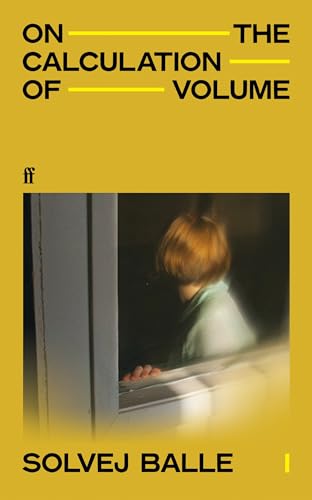
This Danish novella, the start of a projected seven-volume series, was shortlisted for the International Booker Prize in 2025. I’m reviewing it today because the whole premise is that, Groundhog Day-like, Tara Selter keeps reliving the 18th of November. Book I covers her initial year of being trapped on this particular day. When she first wakes up and realizes the daily calendar page hadn’t advanced, she’s in Paris acquiring books for the antiquarian business she runs with her husband, Thomas, from their home in rural France. She also buys him a Roman sestertius coin from her dealer friends Philip and Marie as a surprise. Early clues that she’s stuck include repeated minor events such as someone dropping a piece of bread at the hotel breakfast and burning her hand on Philip and Marie’s heater.
The most interesting part of the world-building here is Tara’s discovery of how objects move through time. For the most part, what she acquires or consumes remains present or absent, respectively, despite the clock restarting. As the year advances, her burn fades to a scar and she is physically ageing, but Thomas is not. At first, she returns home and tries to enlist his help escaping this time loop, but when after 120+ days it becomes clear that their efforts are futile, she decides to leave him to the bliss of ignorance and hide in their spare room. It’s too heartbreaking to explain every morning why she’s here instead of in Paris. She keeps her own hoard of food to preserve his supplies, and goes out at night to watch the stars with a telescope. Each day, she makes a tally mark to count the November 18s she’s endured, and writes in this notebook.
That is why I began to write. Because I can hear him in the house. Because time has fallen apart. Because I found a pack of paper on the shelf. Because I’m trying to remember. Because the paper remembers. And there may be healing in sentences.
Of necessity – by nature and by design – this is a repetitive narrative. The subject matter is insular and the mood claustrophobic. It’s a fascinating thought experiment but for me it grew more tedious rather than more entrancing as it went on. There is a hint of interest to come in Book II: she goes back to Paris and has a new, dispiriting encounter with Philip and Marie. The blurb for the next volume at the back of my paperback indicates that Tara will try to achieve a sense of time by traveling across Europe and further into winter. I loved the idea of language being her means of survival, her way of recreating or even creating her reality. And I did feel for Tara’s predicament. But no way would I have the persistence (or is it an addiction?) required to read more about it. I have history of not getting on with (multi-part) translated phenomena: Elena Ferrante’s Neapolitan Quartet (I skimmed My Brilliant Friend – meh) and Karl Ove Knausgaard’s My Struggle (I read Volume 1 – pretty good!)…
Naomi F. and Simon are stans for the series. Book I was also recently reviewed by Kay.
On the Calculation of Volume, Book I by Solvej Balle (2020; 2024)
[Translated from Danish by Barbara Haveland]
(New from Waterstones with a birthday book token)

[179 pages]


 Bookish Beck = Rebecca Foster. American transplant to England. Freelance proofreader and book reviewer.

