20 Books of Summer, 17–20: Jaouad, Kim, Merwin, Piñeiro (#WITMonth)
It’s time to draw a line under 20 Books of Summer so I can focus on hosting Short Story September. I’m technically not quite finished with these first two I’m technically not quite finished with these first two [70 pages to go in the Jaouad and 46 in the Kim], but I’ve read enough to form an opinion and will pop back later to add in final thoughts and ratings. My final four are a memoir of cancer in young adulthood; a page-turning courtroom drama about experimental autism treatment gone wrong; gorgeous nature poems; and a novella in translation that comments on disability, motherhood and mental health issues. Skip to the end for my one DNF of the challenge and a look back at some stats plus my most successful reads.
Between Two Kingdoms: What Almost Dying Taught Me about Living by Suleika Jaouad (2021)
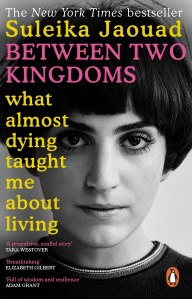
{Updated on 7 September} Jaouad wrote a New York Times column about going through leukaemia treatment in her early twenties and what came next. After months of itching and fatigue, she fell properly ill while working her first postgraduate job in Paris and her blood test results were so bad that she flew home to New York. She would be in and out of hospital for the next five years, enduring multiple rounds of chemo and a bone marrow transplant from her brother. It’s a terrific granular account of the physical and emotional rigours of illness, as well as the strain it put on her relationships – being her primary caregiver was too much for her boyfriend, Will. But she also found a community of young cancer patients, many (like Max Ritvo) now dead. After 60% of the book’s length, as the title – its metaphor taken from Susan Sontag – suggests, the new challenge for Jaouad was resuming life. “I’ve spent the past fifteen hundred days working tirelessly toward a single goal—survival. And now that I’ve survived, I’m realizing I don’t know how to live.” She decides to undertake a cross-country road trip punctuated by visits to people who wrote to her through her column: fellow cancer survivors, a mother who lost a son to suicide, a man on death row in Texas. At first I thought this content felt tacked on and should have been a sequel, but ultimately it illustrates why she wouldn’t edit out her illness if she had it all to do again. I hadn’t heard of Jaouad before I stumbled on this book; from Instagram, I learned she’s now (at age 38) weathered cancer three times. (Little Free Library) 
Miracle Creek by Angie Kim (2019)
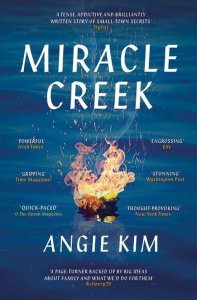
{Updated on 7 September} After enjoying Happiness Falls so much, I wanted to go back to Kim’s debut, for which she won an Edgar Award. (There’s an autistic boy and discussion of therapies in that second book as well.) The bulk of the novel is set during the four days of an August 2009 trial. It’s been a year since a horrific accident at Pak Yoo’s “Miracle Submarine,” a rural Virginia hyperbaric oxygen chamber where regulars came for twice-daily treatment of autism, cerebral palsy, and infertility. Meanwhile, protesters gathered outside to draw attention to what they believed to be a dangerous and unproven technique, the equivalent of child abuse. Someone with Camel cigarettes and matches from a local 7-11 set a small fire under an oxygen tank; the resulting explosion killed two and seriously injured two more. The mother of one of the autistic boys was arrested for suspected arson and attempted murder, but as the trial goes on suspicion seems to shift to members of the Korean American family who ran the HBOT operation. There’s a lot to sink the teeth into here. Each character has secrets, and little revelations are emerging all the time, such that the prosecutor and defence lawyer are always having to adjust their approach. Like I’ve experienced with Kim before, this was intelligent, thought-provoking, and absorbing. It’s just the sort of crime-adjacent fiction I like. An author Q&A at the end reveals a couple of autobiographical inspirations: working in her immigrant parents’ convenience store near Baltimore as a teenager, and taking one of her sons, who had neurological deafness and chronic illnesses, for HBOT. (Gift from my wish list)
The Vixen by W.S. Merwin (1996)
it seems that the world is made of a single
summer as it always has been (from “Entry”)
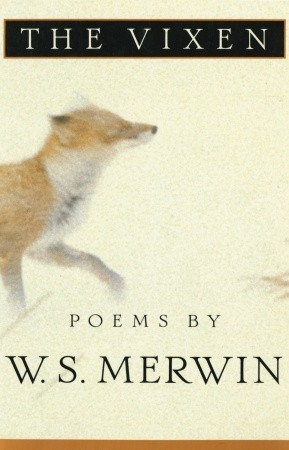 I took this off the shelf because Merwin was one of the POV characters in The Daffodil Days, Helen Bain’s excellent novel about Sylvia Plath’s final years. I had no idea what to expect, and it took me a while to get used to his entirely unpunctuated verse. Only by reading aloud or in my head was I able to split the text blocks into meaning-rich phrases. The fox is a revenant flitting through many of these poems as they pinpoint natural rhythms and human traces across the seasons and centuries. A lot reference summer, in particular, so this was a perfect choice for the challenge. There are a few historical portraits but most of the pieces feel timeless, evoking a countryside locale where the speaker returns to find derelict dwellings given over to birds and trees. Mostly it feels like this could be England, but sometimes a dry aridity suggests the Mediterranean. There is a strong sense of temporality, especially of afterness – the close of a day, the tail end of a season, the still-resonant emptiness after life has left or activity has finished. But there is also the hint of an eternal present:
Seen from afterward the time appears to have been
all of a piece which of course it was but how seldom
it seemed that way when it was still happening (from “Completion”)
In a long book (~65 pieces), there were only a few poems that washed over me without making any impression. The run-on pace, alliteration, and close attention to the natural world made this utterly mesmerizing. I’ll be sure to read more by Merwin. (Secondhand – Bridport Old Books) 
Elena Knows by Claudia Piñeiro (2007; 2021)
[Translated from Spanish by Frances Riddle]
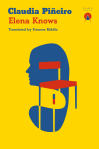
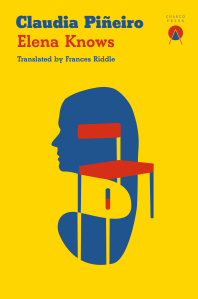 Piñeiro is an Argentinian author known for infusing her detective novels with a political conscience. Elena Knows is a mystery of sorts, in which the title character devotes herself to investigating her daughter’s death (Rita was found hanging in the belfry of a church). But several elements make this atypical for crime fiction: Elena has Parkinson’s disease – “that f—ing whore illness,” she calls it; refuses to accept the police’s conclusion that Rita died by suicide – she would never have gone there in the rain, she insists; and drags her uncooperative body across Buenos Aires to confront an acquaintance she thinks might be able to shed some light. It’s a circadian narrative, divided into sections by Elena’s pill schedule, but expands its timeline through flashbacks to consider the complications of the mother–daughter relationship as Elena became more physically dependent. The eventual encounter with Isabel presents a contrast in the form of a woman who didn’t want to become a mother but had to because of a prohibition on abortion, which was only legalized in Argentina in 2020. While the approach and themes were appealing, I found this repetitive and the long blocks of dialogue in italics were challenging to read. This was shortlisted for the International Booker Prize, though I thought it had a better chance in that year’s Barbellion Prize race (returning this year!). (Gift from my wish list)
And a DNF:
Blonde by Joyce Carol Oates (2000)
Her problem wasn’t she was a dumb blonde, it was she wasn’t a blonde and she wasn’t dumb.
Sigh. Between February and July I read about 200 pages, then skimmed another 100 or so, then finally gave up. (My third Oates DNF. I don’t think she and I are meant to be, though I seem to have better luck with her short stories and own another couple of her books to try.) I engaged most with the early pages about her childhood with a vain, neglectful mother who ends up in a mental hospital; and then with her teenage marriage to Bucky Glazer and involvement in the war effort.
She was a sweet kid but so emotional. Wanting love all the time. She was immature and unreliable and I guess so was I; we were too young. If she’d been a better cook and not so emotional, it might’ve worked out.
Except that people were dying and being injured and the world filling up with smoldering rubble, Norma Jeane liked the War. The War was as steady and reliable as hunger or sleep. Always, the War was there.
 In the part that I skimmed, she is starting to become known in Hollywood, with a nude photo shoot (for which she only earned $50), bit parts in films, and her famous stage name.
In the introductory Author’s Note, Oates writes, “for all its length, synecdoche is the principle of appropriation.” So, for instance, instead of multiple foster families, we just get one. Always, there was unwanted male attention, including molestation. I was surprised to find that the pick-and-choose, fact–fiction hybrid approach became a problem for me. I wanted to know if she really married a man named Bucky and wrote poetry. Yet I didn’t want to have to be verifying every fact either.
Oates’s kitchen-sink style involves imagined scenes and dialogue plus retrospective commentary and knowing asides; long, looping sentences and short ones; direct and indirect speech; lots of exclamation points. Lots of everything. The repetition will be deliberate, for effect, but I kept longing for a streamlined version that cut, say, three of every five sentences.
Anyway, this was certainly a project worth undertaking for Oates; you can see why it was irresistible to unearth the reality behind a legend. Norma Jeane is intriguing for her simultaneous childlike innocence and cultivated sensuality. (Secondhand – Awesomebooks.com)
20 Books Statistics:
14 fiction
4 nonfiction
2 poetry
7 by BIPOC
3 towards WIT Month (for which I reviewed 8 in total, with library reads and Foreword reviews)
3 rereads
I’ve learned this year that it’s important, momentum-wise, to build in a number of shorter books (6 of novella length + 2 poetry collections) and best to avoid doorstoppers. I was wise to pick some addictive, undemanding novels that tread the line between popular and literary fiction (Kim, Mantel, O’Farrell, Reid, Sullivan); anything that feels like hard work (Oates!) is definitely not a summer read.
I only read a risible 4 of the specific books I set out as options in my planning post, plus 1 of my additional ideas. (It’s ironic that I struggled to finish this set of 20 when I could have labelled anything from my shelves part of the challenge – in total, I read 39 of my own books this summer.)
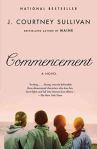
My favourites of the 20 were Strange Weather in Tokyo, Prodigal Summer & The Vanishing Act of Esme Lennox (both rereads), and The Vixen. But What Belongs to You, Miracle Creek, Mitz, The Employees, Commencement, and Flush were also great reads. To be able to single out half of the books equals a huge success!
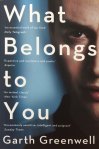
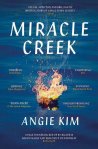
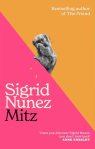
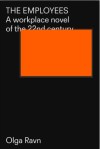
I also completed a 4-book diagonal on the Bingo card!
- Summer in the title (PRODIGAL SUMMER)
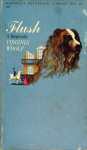
- A classic you’ve been meaning to (RE-)read (FLUSH)
- Features a family holiday (MITZ)
- Published in summer (ELENA KNOWS – July 2021)
20 Books of Summer, 14–16: Danticat, Ravn (#WITMonth) & Woolf
Today I have a tender Haitian American bereavement memoir, a shocking slice of Danish sci-fi about humans and robot hybrids aboard a spacecraft, and a reread of a delightful and rather overlooked classic. I’ll spend the rest of the weekend scrambling to finish my last few books to review on Monday!
Brother, I’m Dying by Edwidge Danticat (2007)
But isn’t death, no matter how or when it takes place, always solitary?
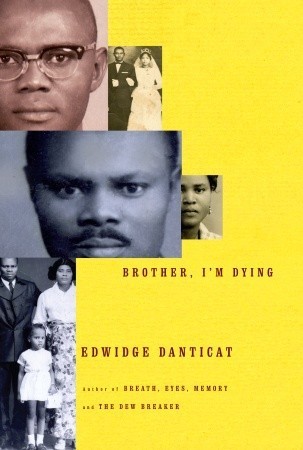 I’d read and enjoyed a novel and a short story collection by Danticat, so when I learned there was a bereavement memoir in her back catalogue I knew I had to have it. It opens with, and continues in the vein of, the conjunction of life and death: on the same day in 2004, Danticat found out she was pregnant with her daughter and her father was diagnosed with end-stage pulmonary fibrosis. She spent a year moving between her home in Miami and her parents’ in New York City. At the same time, her uncle, a pastor who raised her and her brothers for eight years back in Haiti after her parents left to set up the family’s new life in America, was in crisis. Gang warfare was rife in his neighbourhood and there had been threats against his church and against him personally. Aged 81, he flew to Miami, confident he would be accepted as a political refugee because his life was in danger. Instead, he was taken to a detention centre and denied his medications; he subsequently fell ill and died in a local hospital. All this happened in a few days. Danticat’s father outlived his brother, but only long enough to meet his granddaughter and namesake, Mira. I got a bit lost in details of family history and military coups, while my interest was piqued in her uncle’s earlier trip to the US for throat cancer treatment (thereafter his Kreol came through an electronic voicebox). This is an understated work that lets the awful facts speak for themselves. Ron Charles says of her new novel, Dèy, which takes on U.S. gun violence, that it exhibits the same “tempered outrage” as much of her work; maybe too mild for me. (Secondhand – gift from my wish list)
The Employees: a workplace novel of the 22nd century by Olga Ravn (2018; 2020)
[Translated from Danish by Martin Aitken]
Maybe the humans are that very element of chaos that keeps the world alive.
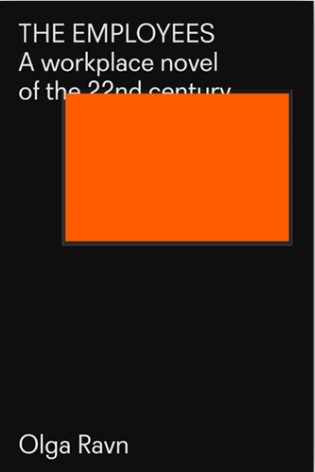 I knew about this from its International Booker Prize shortlisting. It took me nearly a third of the book to figure out what was going on because I’d avoided reading the blurb, but once I got it I was hooked into something like a sharper, horror-tinged version of Orbital. The novella is structured as a series of 100+ statements, in semi-random order, collected as part of an 18-month workplace tribunal. Each is about a page in length. All are voiced by crew members of the Six-Thousand Ship. Part of Statement 067 reads: “There’s humans, and then there’s humanoids. Those who were born and those who were made. Those who are going to die and those who aren’t.” It’s not always clear who is who. A trove of “objects” (I never quite decided what these are) the spacecraft takes on at a planet stop prompts musings about memory and emotions, loyalty and freedom. The humanoids, grown in a two-year process, are perfect workers from day 1. It’s their “responsibility to make sure the human section of the crew don’t buckle under to nostalgia and become catatonic” – like those who only want to spend time with holograms of their children. The humanoids have had longings implanted in them, to “move in with someone, get married, bake cookies, push a pram, learn to play an instrument, dance a waltz. I think I’ve seen all this in your educational material, is that right? What are cookies?” There’s humour here, but also a growing air of menace. When violence breaks out, it doesn’t just derail the mission, but threatens the whole future. My jaw dropped at the dark turn of events and the bleak but profound phrases it engenders:
I don’t think we as a category are going to survive.
I got the strong feeling that we have failed, and that our time is over.
How can we live with the knowledge that none of these days will be remembered by anyone, not even ourselves?
With the lines so blurred, we’re forced to ask what is essential to humanity. Mysterious and sobering, this is both a meditation on identity and autonomy and an elegy for life on Earth. (Secondhand – Hungerford Bookshop)
Flush: A Biography by Virginia Woolf (1933)
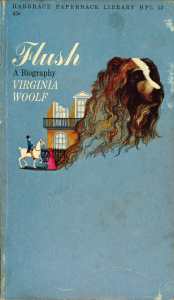 Woolf’s novels are so demanding that it’s good to be reminded she also knew how to have fun. Flush is a cheeky short ‘biography’ of Elizabeth Barrett Browning’s cocker spaniel, spanning the dog’s whole life but even (in a few prologue-like pages) dipping back into prehistory when his ancestors hunted rabbits in Spain. I was tickled to discover that Flush’s first owner was Mary Russell Mitford of Three Mile Cross near Reading – I know of her as a local author and have a copy of her book Our Village. Only because the Mitfords were desperate for money was she willing to sell him to her invalid friend, Miss Barrett. And so in 1842, Flush, used to chasing pheasants in the countryside, has to adjust to life as a city lapdog. He witnesses Miss Barrett’s compulsive letter-writing (“she would lie hour after hour passing her hand over a white page with a black stick”), Robert Browning’s courtship, and their preparations for moving to Italy and welcoming a baby with a mixture of ignorance and alarm. His dignity comes under attack by fleas, and by thieves who hold him to ransom for five days in a London slum – a thrilling central chapter in an otherwise serene narrative. As in Mitz by Sigrid Nunez, which is an homage to Flush, there is dramatic irony between what readers understand and a pet cannot. He mostly experiences the world through the senses, and there are lovely passages where Woolf rhapsodizes about what Flush smells and feels: “He knew Florence in its marmoreal smoothness and in its gritty and cobbled roughness.” Whether you’re a Woolf (or Barrett/Browning) fan, or dog lover, or not, this is an offbeat charmer. (Secondhand – Wonder Book and Video)
My original rating (2013):
My rating now:
#NovNov25 and #GermanLitMonth: Kästner, Kehlmann & Kracht
Our trip to Germany in September whetted my appetite to read more German-language fiction, and November also being German Literature Month (hosted this year by Caroline of Beauty Is a Sleeping Cat and Tony of Tony’s Reading List) was a perfect excuse. K names only this year, please. (Perhaps next year I’ll make it S and finally get to those Sebald and Seethaler novels I have on the shelf.) These three works – a children’s classic, a set of linked short stories about the writer’s craft, and a mother–son spending spree – have coy metafictional touches, plus there’s a connection I wasn’t expecting between the Kehlmann and Kracht. All:

Emil and the Detectives by Erich Kästner (1929; 1931)
[Translated by Eileen Hall]
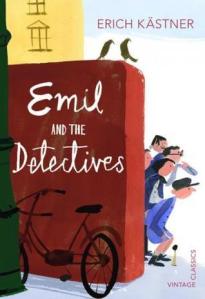 If only I’d realized this was set on a train to Berlin, I could have read it in the same situation! Instead, it was a random find while shelving in the children’s section of the library. Emil sets out on a slow train from Neustadt to stay with his aunt, grandmother and cousin in Berlin for a week’s holiday. His mother gives him £7 in an envelope he pins inside his coat for safekeeping. There are four adults in the carriage with him, but three get off early, leaving Emil alone with a man in a bowler hat. Much as he strives to stay awake, Emil drops off. No sooner has the train pulled into Berlin than he realizes the envelope is gone along with his fellow traveller. “There were four million people in Berlin at that moment, and not one of them cared what was happening to Emil Tischbein.” He’s sure he’ll have to chase the man in the bowler hat all by himself, but instead he enlists the help of a whole gang of boys, including Gustav who carries a motor-horn and poses as a bellhop, Professor with the glasses, and Little Tuesday who mans the phone lines. Together they get justice for Emil, deliver a wanted criminal to the police, and earn a hefty reward. This was a cute story and it was refreshing for children’s word to be taken seriously. There’s also the in-joke of the journalist who interviews Emil being Kästner. I’m sure as a kid I would have found this a thrilling adventure, but the cynical me of today deemed it unrealistic. (Public library) [153 pages]
Fame by Daniel Kehlmann (2009; 2010)
[Translated by Carol Brown Janeway]
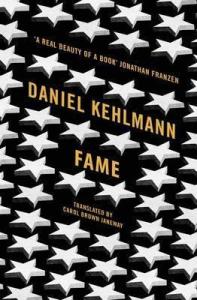 I’ve been equally enchanted by Kehlmann’s historical fiction (Measuring the World) and contemporary metafiction (F is one of my all-time favourites) in the past. These nine linked stories feature writers and their characters, actors and their look-alikes, and are about how life translates into – or is sometimes transformed by – art. Ralf Tanner starts to feel like he doesn’t exist when his calls gets diverted to someone else’s phone and an impersonator is more convincing at playing him than he is himself. Leo Richter’s new girlfriend is curiously similar to his most famous character, Lara Gaspard, a doctor working for a medical charity. Crime writer Maria Rubinstein takes Leo’s place on a cultural exchange to Central Asia and gets stuck in a Kafka-esque situation without a visa. Leo’s fan and Ralf’s call recipient are subjects of their own stories. References to Miguel Auristos Blanco’s spiritual self-help books recur and he, too, eventually becomes a character. I liked the pointed little jokes about what writers have to put up with (“Do you know how often I’ve been asked today where I get my ideas from? Fourteen. And nine times whether I work in the morning or the afternoon,” Leo complains). Mostly, these stories struck me as clever yet had me wondering what the point was. My favourite was “Rosalie Goes Off to Die,” in which Leo’s character travels to Zurich for an assisted death but he the writer decides to interfere before she can get her last wish. (Secondhand – Awesomebooks.com) [206 pages – but fairly large print]
Eurotrash by Christian Kracht (2021; 2024)
[Translated by Daniel Bowles]
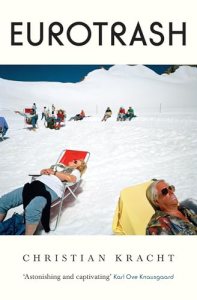 This was longlisted for the International Booker Prize and is the current Waterstones book of the month. The Swiss author’s seventh novel appears to be autofiction: the protagonist is named Christian Kracht and there are references to his previous works. Whether he actually went on a profligate road trip with his 80-year-old mother, who could say. I tend to think some details might be drawn from life – her physical and mental health struggles, her father’s Nazism, his father’s weird collections and sexual predilections – but brewed into a madcap maelstrom of a plot that sees the pair literally throwing away thousands of francs. Her fortune was gained through arms industry investment and she wants rid of it, so they hire private taxis and planes. If his mother has a whim to pick some edelweiss, off they go to find it. All the while she swigs vodka and swallows pills, and Christian changes her colostomy bags. I was wowed by individual lines (“This was the katabasis: the decline of the family expressed in the topography of her face”; “everything that does not rise into consciousness will return as fate”; “the glacial sun shone from above, unceasing and relentless, upon our little tableau vivant”) but was left chilly overall by the satire on the ultra-wealthy and those who seek to airbrush history. The fun connections: Like the Kehlmann, this involves arbitrary travel and happens to end in Africa. More than once, Kracht is confused for Kehlmann. (Little Free Library) [190 pages]
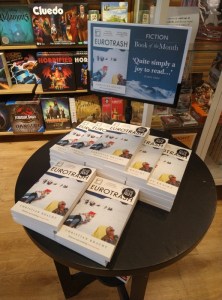
Spotted in my local Waterstones…

#WITMonth, Part I: Susanna Bissoli, Jente Posthuma and More
I’m starting off my Women in Translation month coverage with two short novels: one Italian and one Dutch; both about women navigating loss, family relationships, physical or mental illness, and the desire to be a writer.
Struck by Susanna Bissoli (2024; 2025)
[Translated from Italian by Georgia Wall]
Vera has been diagnosed a second time with breast cancer – the same disease that felled her mother a decade ago. “I’m fed up with feeling like a problem to be taken care of,” she thinks. Even as her treatment continues, she determines to find routes to a bigger life not defined by her illness. Writing is the solution. When she moves in with her grouchy octogenarian father, Zeno Benin, she discovers he’s secretly written a novel, A Lucky Man. The almost entirely unpunctuated document is handwritten across 51 notebooks Vera undertakes to type up and edit alongside her father as his health declines.
At the same time, she becomes possessed by the legend of local living ‘saint’ Annamaria Bigani, who has been visited multiple times by the Virgin Mary and learned her date of death. Wondering if there is a story here that she needs to tell, Vera interviews Bigani, then escapes to Greece for time and creative space. “Do they save us, stories? Or is it our job to save them? I believe writing that story, day in and day out for years, saved my father’s life. But I’m sorry, I don’t have time to save his story: I need to write my own. The saint, or so I thought.” In the end, we learn, Struck – the very novel we are reading – is Vera’s book.

The title comes from a scientific study conducted on people struck by lightning at a country festival in France. How did they survive, and what were the lasting effects? The same questions apply to Vera, who avoids talking about her cancer but whose relationship with her sister Nora is still affected by choices made while their mother was alive. There are many delightful small conversations and incidents here, often involving Vera’s niece Alice. Vera’s relationship with Franco, a doctor who works with asylum seekers, is a steady part of the background. A translator’s afterword helped me understand the thought that went into how to reproduce Vera and others’ use of dialect (La Bassa Veronese vs. standard Italian) through English vernacular – so Vera and her sister say “Mam” and her father uses colourful idioms.
Though I know nothing of Bissoli’s biography, this second novel has the feeling of autofiction. Despite its wrenching themes of illness and the inevitability of death, it’s a lighthearted family story with free-flowing prose that I can enthusiastically recommend to readers of Elizabeth Berg and Catherine Newman.
This was my introduction to new (est. 2023) independent publisher Linden Editions, which primarily publishes literature in translation. I have two more of their books underway for another WIT Month post later this month. And a nice connection is that I corresponded with translator Georgia Wall when she was the publishing manager for The Emma Press.
With thanks to Linden Editions for the free copy for review.
People with No Charisma by Jente Posthuma (2016; 2025)
[Translated from Dutch by Sarah Timmer Harvey]
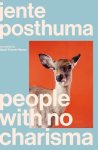 Dutch writer Jente Posthuma’s quirky, bittersweet first novel traces the ripples that grief and mental ill health send through a young woman’s life. The narrator’s mother was an aspiring actress; her father runs a mental hospital. A dozen episodic short chapters present snapshots from a neurotic existence as she grows from a child to a thirtysomething starting a family of her own. Some highlights include her moving to Paris to write a novel, and her father – a terrible driver – taking her on a road trip through France. Despite the deadpan humor, there’s heartfelt emotion here and the prose and incidents are idiosyncratic. (Full review forthcoming for Shelf Awareness)
& Reviewed for Foreword Reviews a couple of years ago:
What I Don’t Want to Talk About by Jente Posthuma (2020; 2023)
[Translated from Dutch by Sarah Timmer Harvey]
 A young woman bereft after her twin brother’s suicide searches for the seeds of his mental illness. The past resurges, alternating with the present in the book’s few-page vignettes. Their father leaving when they were 11 was a significant early trauma. Her brother came out at 16, but she’d intuited his sexuality when they were eight. With no speech marks, conversations blend into cogitation and memories here. A wry tone tempers the bleakness. (Shortlisted for the European Union Prize for Literature and the International Booker Prize.)
Both featured an unnamed narrator and a similar sense of humor. I concluded that Posthuma excels at exploring family dynamics and the aftermath of bereavement.
I got caught out when I reviewed The Appointment, too: Volckmer doesn’t technically count towards this challenge because she writes in English (and lives in London), but as she’s German, I’m adding in a teaser of my review as a bonus. Oddly, this novella did first appear in another language, French, in 2024, under the title Wonderf*ck. [The full title below was given to the UK edition.]
Calls May Be Recorded [for Training and Monitoring Purposes] by Katharina Volckmer (2025)
 Volckmer’s outrageous, uproarious second novel features a sex-obsessed call center employee who negotiates body and mommy issues alongside customer complaints. “Thank you for waiting. My name is Jimmie. How can I help you today?” each call opens. The overweight, homosexual former actor still lives with his mother. His customers’ situations are bizarre and his replies wildly inappropriate; it’s only a matter of time until he faces disciplinary action. As in her debut, Volckmer fearlessly probes the psychological origins of gender dysphoria and sexual behavior. Think of it as an X-rated version of The Office. (Full review forthcoming for Shelf Awareness)
 Bookish Beck = Rebecca Foster. American transplant to England. Freelance proofreader and book reviewer.
