Wellcome Book Prize Blog Tour: Will Eaves’s Murmur
“This is the death of one viewpoint, and its rebirth, like land rising above the waves, or sea foam running off a crowded deck: the odd totality of persons each of whom says ‘me’.”
When I first tried reading Murmur, I enjoyed the first-person “Part One: Journal,” which was originally a stand-alone story (shortlisted for the BBC National Short Story Award 2017) but got stuck on “Part Two: Letters and Dreams” and ended up just giving the rest of the book a brief skim. I’m glad that the book’s shortlisting prompted me to return to it and give it proper consideration because, although it was a challenge to read, it was well worth it.

Eaves’s protagonist, Alec Pryor, sometimes just “the scientist,” is clearly a stand-in for Alan Turing, quotes from whom appear as epigraphs heading most chapters. Turing was a code-breaker and early researcher in artificial intelligence at around the time of the Second World War, but was arrested for homosexuality and subjected to chemical castration. Perhaps due to his distress at his fall from grace and the bodily changes that his ‘treatment’ entailed, he committed suicide at age 41 – although there are theories that it was an accident or an assassination. If you’ve read about the manner of his death, you’ll find eerie hints in Murmur.
Every other week, Alec meets with Dr Anthony Stallbrook, a psychoanalyst who encourages him to record his dreams and feelings. This gives rise to the book’s long central section. As is common in dreams, people and settings whirl in and out in unpredictable ways, so we get these kinds of flashes: sneaking out from the boathouse at night with his schoolboy friend, Chris Molyneux, who died young; anti-war protests at Cambridge; having sex with men; going to a fun fair; confrontations with his mother and brother; and so on. Alec and his interlocutors discuss the nature of time, logic, morality, and the threat of war.
There are repeated metaphors of mirrors, gold and machines, and the novel’s language is full of riddles and advanced vocabulary (volutes, manumitted, pseudopodium) that sometimes require as much deciphering as Turing’s codes. The point of view keeps switching, too, as in the quote I opened with: most of the time the “I” is Alec, but sometimes it’s another voice/self observing from the outside, as in Akwaeke Emezi’s Freshwater. There are also fragments of second- and third-person narration, as well as imagined letters to and from June Wilson, Alec’s former Bletchley Park colleague and fiancée. All of these modes of expression are ways of coming to terms with the past and present.
 I am usually allergic to any book that could be described as “experimental,” but I found Murmur’s mosaic of narrative forms an effective and affecting way of reflecting its protagonist’s identity crisis. There were certainly moments where I wished this book came with footnotes, or at least an Author’s Note that would explain the basics of Turing’s situation. (Is Eaves assuming too much about readers’ prior knowledge?) For more background I recommend The Imitation Game, starring Benedict Cumberbatch as Turing.
To my surprise, given my initial failure to engage with Murmur, it is now my favorite to win the Wellcome Book Prize. For one thing, it’s a perfect follow-on from last year’s winner, To Be a Machine. (“It is my fate to make machines that think,” Alec writes.) For another, it connects the main themes of this year’s long- and shortlists: mental health and sexuality. In particular, Alec’s fear that in developing breasts he’s becoming a sexual hybrid echoes the three books from the longlist that feature trans issues. Almost all of the longlisted books could be said to explore the mutability of identity to some extent, but Murmur is the very best articulation of that. A playful, intricate account of being in a compromised mind and body, it’s written in arresting prose. Going purely on literary merit, this is my winner by a mile.
My rating: 
With thanks to Midas PR for the free copy for review.

From Gallop: Selected Poems by Alison Brackenbury. Originally published in the volume After Beethoven.
Will Eaves is an associate professor in the Writing Programme at the University of Warwick and a former arts editor of the Times Literary Supplement. Murmur, his fourth novel, was also shortlisted for the 2018 Goldsmiths Prize and was the joint winner of the 2019 Republic of Consciousness Prize. He has also published poetry and a hybrid memoir.
Opinions on this book vary within our shadow panel; our final votes aren’t in yet, so it remains to be seen who we will announce as our winner on the 29th.
If you are within striking distance of London, please consider coming to the “5×15” shortlist event being held next Tuesday evening the 30th.
I was delighted to be asked to participate in the Wellcome Book Prize blog tour. See below for details of where other reviews have appeared or will be appearing soon.

Recent Writing for BookBrowse, Shiny New Books and the TLS
We’re back from a pleasant but whirlwind weekend in France. Even just sticking to one corner of Normandy, there was far too much to see and do and not enough good weather to do it all in. Highlights were the Bayeux tapestry, the gorse-covered rocky cliff above a river at Les Roches de Ham, a delicious three-course meal in a restaurant just outside Bayeux, fresh bread and cake from boulangeries, and the enormous Sunday morning open-air market in Caen. (Low point: being sick on the boat on the way back. I hate sailing.) I finished up The Dreamers by Karen Thompson Walker, read all of A Breath of French Air by H.E. Bates, and started a few more books.
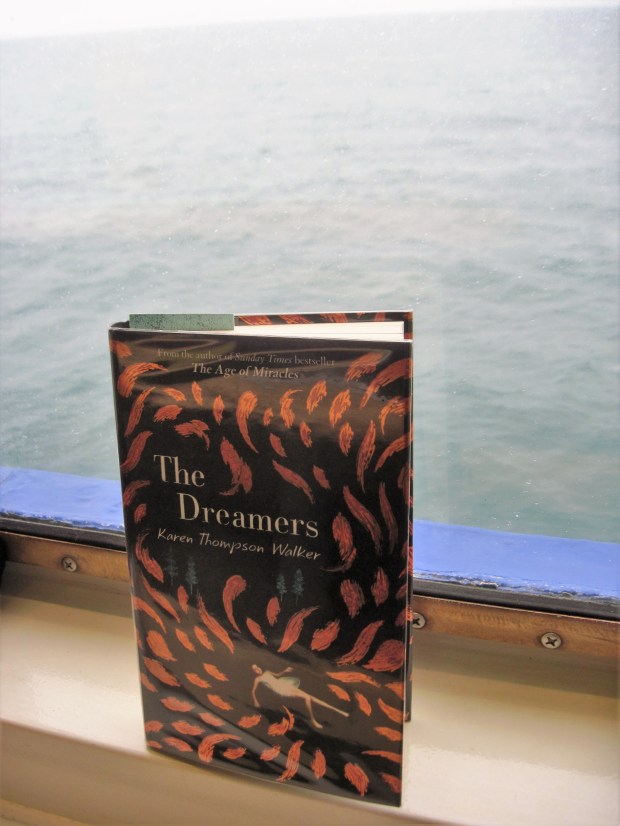
It was good to have a gripping novel to take my mind off the rocking motion of the ferry on the trip out.
Here are excerpts from and links to some of my recent print or online writing for other places. (No surprise that four out of the five are nonfiction and involve medical or bereavement themes!)
BookBrowse
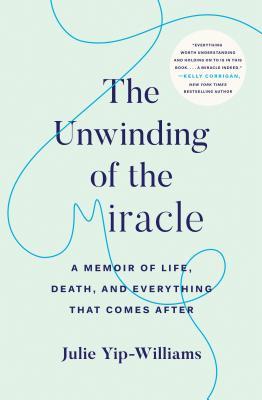 The Unwinding of the Miracle: A Memoir of Life, Death, and Everything That Comes After by Julie Yip-Williams: A lawyer facing late-stage cancer reflects on the happy life she had despite disability and an inauspicious start, and bids farewell to her family. It was miracle enough to have survived her first few years (blindness, a euthanasia attempt, and fleeing Vietnam by boat), but she eventually graduated from Harvard Law School and joined a Wall Street law firm. The author dubs herself “a somewhat ruthless realist.” Early on she vowed she would do nothing desperate or bizarre in her quest for healing, in contravention of what she calls the American “hope industrial complex.” Yet she also left room for spirituality to surprise her. The book resembles a set of journal entries or thematic essays, written at various times over her five years with colon cancer. Some stories are told more than once; an editor might have combined or cut some passages to avoid repetitiveness. Still, this posthumous memoir stands as a testament to a remarkable life of overcoming adversity, asking questions, and appreciating beauty wherever it’s found. (See also my list of other recommended posthumous cancer memoirs.)
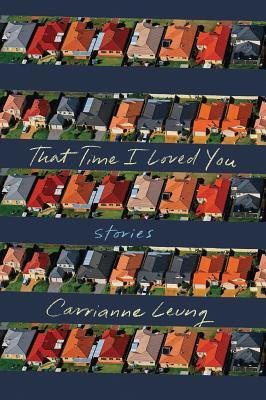 That Time I Loved You: Stories by Carrianne Leung: The residents of a Toronto suburb cope with growing up amid a spate of surprise suicides in the late 1970s and early 1980s. Leung explores different points of view on the same events and changes that take place in a community over several years. Three of the stories are narrated by June, who is 11 years old at the start. Her parents came over from Hong Kong 15 years ago. Other stories fill in a kaleidoscopic view of the neighborhood, showing how lonely the residents are – and how segregated along ethnic lines. Leung returns to June’s perspective at the beginning, middle, and end of the book, so we see her growing up and learning how the world works. Hard lessons are in store for her: people are sometimes punished for their differences, and the older generation doesn’t have it all figured out. Suburbia gets a bad rap, but it’s where so many of us come from, so it’s heartening to see a writer taking it seriously here. (See also my article on linked short story collections, for which I enlisted lots of blogger help via book Twitter.)
Shiny New Books
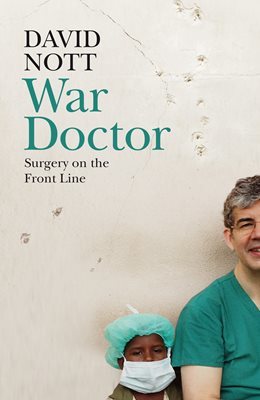 War Doctor: Surgery on the Front Line by David Nott: Welsh surgeon David Nott combines advanced technical skills with extreme altruism: for weeks of every year he takes unpaid leave to volunteer with a medical charity like Médecins sans Frontières or Syria Relief in war zones or disaster areas around the world. The kinds of procedures he has performed in Sarajevo, Kabul and Darfur are a world away from his normal work as an NHS consultant in London: amputations, treating injuries caused by homemade bombs, and delivering the babies of young rape victims. His memoir is mostly structured by countries and/or time periods. There are gripping moments – such as completing a difficult amputation by following instructions texted to him by a London colleague – but also some less fascinating chronology. The book is slow to start and took me weeks to get through. However, it shines when Nott recalls particular patients who have stood out for him. All told, his is an amazing and inspiring story.
As if you haven’t already heard enough about the Wellcome Book Prize from me (!), I also wrote this article for Shiny about the Prize’s history and the range of books that have won or been nominated over the last 10 years, finishing up with some reflections on this year’s shortlist.
Times Literary Supplement
Somehow I seem to have become a TLS regular. The biography editor periodically contacts me with lists of recent memoirs to be reviewed in 400 words for the “In Brief” section, and I’ve been doing about one per month this year.
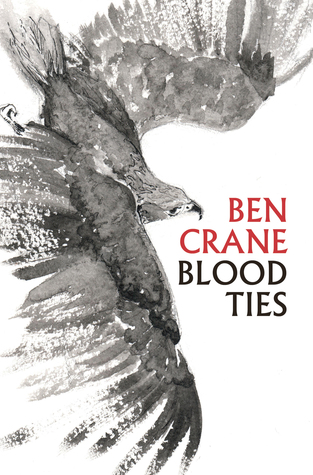 Blood Ties by Ben Crane: Artist Ben Crane has developed a passion for birds of prey, raising hawks and training as a falconer. “I saw that my feelings towards nature, and birds of prey in particular, ran in parallel with my feelings for my son,” he writes. Blood Ties accordingly cuts between the story of rehabilitating a pair of rescued sparrowhawks named Girl and Boy and a parallel story about raising his son as a part-time single father. Together these strands emphasize the common concerns that arise when caring for any creature. Crane’s descriptive language is memorably sharp. Whatever struggles his Asperger’s entails, it seems to heighten his observational skills. Pruning the travel segments would have produced a more focused memoir, but this is a powerful story all the same – of the ties that bind us, both to nature and our own families. (Full review in February 8th issue.)
 Notes for the Everlost: A Field Guide to Grief by Kate Inglis: Inglis, a Nova Scotian photographer and children’s author, has written this delicate, playful handbook – something between a bereavement memoir and a self-help guide – for people who feel they might disappear into grief for ever. In 2007, Inglis’s identical twin sons were born premature, at twenty-seven weeks. Ben lived but Liam died. Every milestone in Ben’s life would serve as a reminder of the brother who should have been growing up alongside him. The unfairness was particularly keen on the day she returned to hospital for two appointments: Ben’s check-up and a report on Liam’s autopsy. Unable to sustain the eye-popping freshness of the prose in the introduction, Inglis resorts to some clichés in what follows. But this kooky, candid book will be valuable to anyone facing bereavement or supporting a loved one through it. (Full review in March 15th issue.)
Would any of these books interest you?
Recent Writing for BookBrowse, Shiny New Books and the TLS
Here are excerpts from (and links to, where available) some of my recent reviews for other places. A few of these books will undoubtedly be showing up on my end-of-year best lists in a couple weeks’ time.
BookBrowse
I was pleased to have three of the books I reviewed show up on BookBrowse’s list of the top 20 books of the year, as voted for by the site’s readers. What’s more, Educated was voted their top nonfiction book of the year and Where the Crawdads Sing (below) their #1 debut novel. (The third on the list was Unsheltered.)
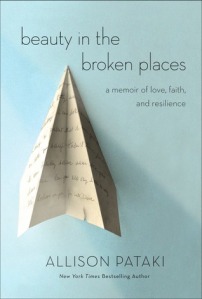 Beauty in the Broken Places by Allison Pataki: Ernest Hemingway wrote that we are strong at the broken places, and Allison Pataki found that to be true when her husband, David Levy, a third-year orthopedic surgery resident in Chicago, had a near-fatal stroke at age 30. On June 9, 2015, Dave and five-months-pregnant Allison were on a flight from Chicago to Hawaii for their babymoon, planning to stop in Seattle to visit Dave’s brothers. But they never made it there. On the plane Dave told her he couldn’t see out of his right eye.The plane made an emergency landing in Fargo, North Dakota and Dave was rushed to a hospital for testing. Doctors found he had suffered a bithalamic midbrain ischemic stroke, even though he’d had no risk factors and this stroke type was virtually unknown in patients of his age. Pataki goes back and forth between the details of this health crisis and her past with Dave. Hers is a relatable story of surviving the worst life can throw at you and finding the beauty in it.
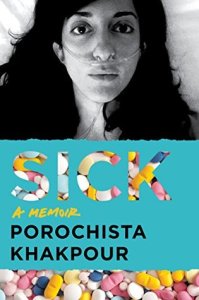 Sick by Porochista Khakpour: Khakpour can’t remember a time when she didn’t feel unwell and like she wanted to escape. “I had no idea what normal was. I never felt good,” she writes in her bracing memoir. Related to this sense of not being at home in her body was the feeling of not having a place where she fit in. Throughout Sick, she gives excellent descriptions of physical and mental symptoms. Her story is a powerful one of being mired in sickness and not getting the necessary help from medical professionals. Lyme disease has cost her $140,000 so far, and a lack of money and health insurance likely delayed her diagnosis by years. There is, unfortunately, some inherent repetition in a book of this nature. At times it feels like an endless cycle of doctors, appointments, and treatment strategies. However, the overall arc of struggling with one’s body and coming to terms with limitations will resonate widely.
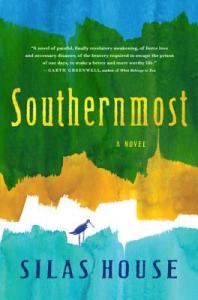 Southernmost by Silas House: In Silas House’s sixth novel, a Tennessee preacher’s family life falls apart when he accepts a gay couple into his church. We go on a long journey in Southernmost: not just a literal road trip from Tennessee to Florida, but also a spiritual passage from judgment to grace. Reconciliation is a major theme, but so is facing up to the consequences of poor decisions. I found the plotting decisions rewarding but also realistic. The pattern of a narrow religious worldview ebbing away to no faith at all and eventually surging back as a broader and more universal spirituality truly resonates. I loved House’s characters and setups, as well as his gentle evocation of the South. His striking metaphors draw on the natural world, like “She had the coloring of a whip-poor-will” and “The sky is the pink of grapefruit meat.” It’s a beautiful, quietly moving novel of redemption and openness to what life might teach us.
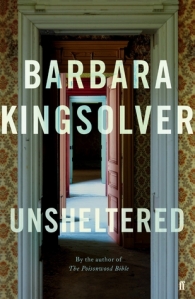 Unsheltered by Barbara Kingsolver: Kingsolver’s bold eighth novel has a dual timeline that compares the America of the 1870s and the recent past, revealing how they are linked by distrust and displacement. The book’s themes and structure emphasize similarities between two time periods that might initially appear very different. Chapters alternate between the story lines, and the last words of one chapter form the title of the next. It’s a clever and elegant connecting strategy, as is the habit of using variations on the title word as frequently as possible – something Jonathan Franzen also does in his novels. (I counted 22 instances of “shelter” and its variants in the text; how many can you spot?) Kingsolver can be heavy-handed with her messages about science, American politics and healthcare, etc. All the same, Unsheltered is a rich, rewarding novel and an important one for our time, with many issues worth pondering and discussing.
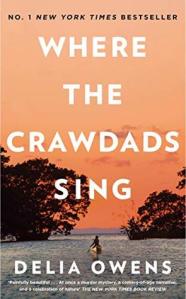 Where the Crawdads Sing by Delia Owens: It’s easy to see why so many have taken this debut novel into their hearts: it’s a gripping mystery but also a tender coming-of-age story about one woman’s desperately lonely upbringing and her rocky route to finding love and a vocation. Not only that, but its North Carolina marsh setting is described in lyrical language that evinces Delia Owens’s background in nature writing, tempered with folksy Southern dialect. The title refers to places where wild creatures do what comes naturally, and throughout the book we are invited to ponder how instinct and altruism interact and what impact human actions can have in the grand scheme of things. In Kya, Owens has created a truly outstanding character. The extremity of her situation makes her a sympathetic figure in spite of her oddities. Crawdads is a real treat.
Shiny New Books
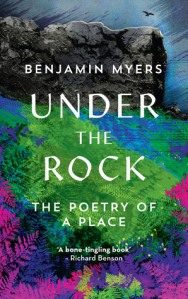 Under the Rock by Benjamin Myers: When Myers moved to the Calder Valley of West Yorkshire from London over a decade ago, he approached his new patch with admirable curiosity, and supplemented the observations he made from his study window with frequent long walks with his dog (“Walking is writing with your feet”) and research into the history of the area. The result is a divagating, lyrical book that ranges from literature and geology to true crime but has an underlying autobiographical vein. This isn’t old-style nature writing in search of unspoiled places. Instead, it’s part of a growing interest in the ‘edgelands’ where human impact is undeniable but nature is creeping back in. Interludes transcribe his field notes, which are stunning impromptu poems. I came away from this feeling that Myers could write anything – a thank-you note, a shopping list – and make it profound literature. Every sentence is well-crafted and memorable. “Writing is a form of alchemy,” he declares. “It’s a spell, and the writer is the magician.” I certainly fell under his spell here.
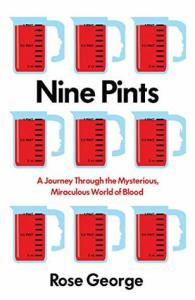 Nine Pints by Rose George: Nine Pints dives deep into the science and cultural history of blood. George’s journalistic tenacity keeps her pushing through the statistics to find the human stories that animate the book. In the first chapter we track the journey of a pint of blood that she donates in her hometown of Leeds. I was particularly interested, if morbidly so, in the chapter on leeches and bloodletting. Other sections journey further afield, chiefly to South Africa and India, to explore AIDS and menstruation taboos. The style can be choppy and repetitive, given to short sentences and identical paragraph openers, and there are a couple of places where the nine-chapter structure shows its weaknesses. While Nine Pints is quite uneven, it does convey a lot of important information about the past, present and future of our relationship to blood.
Times Literary Supplement
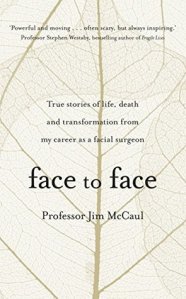 Face to Face: True stories of life, death and transformation from my career as a facial surgeon by Jim McCaul: Eighty percent of a facial surgeon’s work is the removal of face, mouth and neck tumors in surgeries lasting eight hours or more. McCaul also restores patients’ appearance as much as possible after disfiguring accidents. Here he pulls back the curtain on the everyday details of his work life: everything from his footwear (white Crocs that soon become stained with blood and other fluids) to his musical choices (pop for the early phases; classical for the more challenging microsurgery stage). Like neurosurgeon Henry Marsh, he describes the awe of the first incision – “an almost overwhelming sense of entering into a sanctuary.” There’s a vicarious thrill to being let into this insider zone, and the book’s prose is perfectly clear and conversational, with unexpectedly apt metaphors such as “Sometimes the blood vessels can be of such poor quality that it is like trying to sew together two damp cornflakes.” This is a book that inspires wonder at all that modern medicine can achieve.
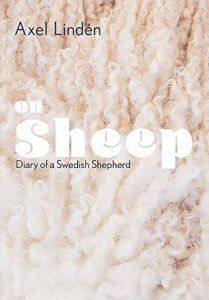 On Sheep: Diary of a Swedish Shepherd by Axel Lindén: Lindén left city life behind to take on his parents’ rural collective in southeast Sweden. This documents two years in his life as a shepherd aspiring to self-sufficiency and a small-scale model of food production. Published diaries can devolve into tedium, but the brevity and selectiveness of this one prevent its accounts of everyday tasks from becoming tiresome. Instead, the rural routines are comforting, even humbling, as the shepherd practices being present with these “quiet and unpretentious and stoical” creatures. The attention paid to slaughtering and sustainability issues – especially as the business starts scaling up and streamlining activities – lends the book a wider significance. It is thus more realistic and less twee than its stocking-stuffer dimensions and jolly title font seem to suggest.
Recent Bylines: Glamour, Shiny New Books, Etc.
Following up on my post from June, here are excerpts from and links to some of my recent online writing for places that aren’t my blog.
Review essay of Gross Anatomy by Mara Altman for Glamour UK
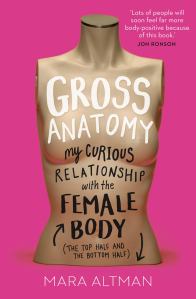 The female body has been a source of deep embarrassment for Altman, but here she swaps shame for self-deprecating silliness and cringing for chuckling. Through a snappy blend of personal anecdotes and intensive research, she exposes the cultural expectations that make us dislike our bodies, suggesting that a better knowledge of anatomy might help us feel normal. While 11 of her 15 topics aren’t exclusive to women’s anatomy—birthmarks, hemorrhoids, warts and more apply to men, too—she always presents an honest account of the female experience. This is one of my favorite books of the year and one I’d recommend to women of any age. It’s funny, it’s feminist, and it’s a cracking good read. (My full review is complete with embarrassing personal revelations!)
Essay on two books about “wasting time” for the Los Angeles Review of Books
In Praise of Wasting Time by Alan Lightman &
 The Art of the Wasted Day by Patricia Hampl: A poet’s delight in lyricism and free association is in evidence here. The book blends memoir with travel and biographical information about some of Hampl’s exemplars of solitary, introspective living, and it begins, quite literally, with daydreaming.
 Hampl and Lightman start from the same point of frazzled frustration and arrive at many of the same conclusions about the necessity of “wasted” time but go about it in entirely different ways. Lightman makes a carefully constructed argument and amasses a sufficient weight of scientific and anecdotal evidence; Hampl drifts and dreams through seemingly irrelevant back alleys of memory and experience. The latter is a case of form following function: her book wanders along with her mind, in keeping with her definition of memoir as “lyrical quest literature,” where meaning always hovers above the basics of plot.
Book list for OZY on the refugee crisis & another coming up on compassion in medicine.
Pittsburgh Post-Gazette reviews
(Their website is not available outside the USA, so the links may not work for you).
Slave Old Man by Patrick Chamoiseau
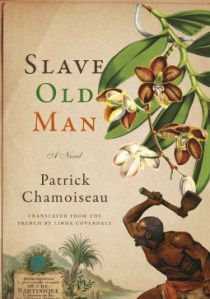 Chamoiseau is a social worker and author from the Caribbean island of Martinique. Translator Linda Coverdale has chosen to leave snippets of Martinican Creole in this text, creating a symphony of languages. The novel has an opening that might suit a gloomy fairytale: “In slavery times in the sugar isles, once there was an old black man.” The novel’s language is full of delightfully unexpected verbs and metaphors. At not much more than 100 pages, it is a nightmarish novella that alternates between feeling like a nebulous allegory and a realistic escaped slave narrative. It can be a disorienting experience: like the slave, readers are trapped in a menacing forest and prone to hallucinations. The lyricism of the writing and the brief glimpse back from the present day, in which an anthropologist discovers the slave’s remains and imagines the runaway back into life, give this book enduring power.
Lake Success by Gary Shteyngart
 Barry Cohen, a conceited hedge fund manager under SEC investigation for insider trading, sets out on a several-month picaresque road trip in the second half of 2016. The ostensible aim is to find his college girlfriend, but he forms fleeting connections with lots of ordinary folks along the way. Barry may be a figure of fun, but it’s unpleasant to spend so much time with his chauvinism (“he never remembered women’s names” but gets plenty of them to sleep with him), which isn’t fully tempered by alternating chapters from his wife’s perspective. Pitched somewhere between the low point of “Make America Great Again” and the loftiness of the Great American novel, Lake Success may not achieve the profundity it’s aiming for, but it’s still a biting portrait of an all-too-recognizable America where money is God and villains gets off easy.
Shiny New Books reviews
(Upcoming: Nine Pints by Rose George and Under the Rock by Benjamin Myers.) Latest:
The Immeasurable World: Journeys in Desert Places by William Atkins
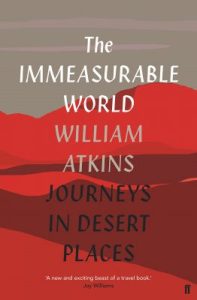 Atkins has produced an appealing blend of vivid travel anecdotes, historical background and philosophical musings. He is always conscious that he is treading in the footsteps of earlier adventurers. He has no illusions about being a pioneer here; rather, he eagerly picks up the thematic threads others have spun out of desert experience and runs with them – things like solitude, asceticism, punishment for wrongdoing and environmental degradation. The book is composed of seven long chapters, each set in a different desert. In my favorite segment, the author rents a cabin in the Sonoran Desert of Arizona for $100 a week. My interest waxed and waned from chapter to chapter, but readers of travelogues should find plenty to enjoy. Few of us would have the physical or emotional fortitude to repeat Atkins’s journeys, but we get the joy of being armchair travelers instead.
Mrs Gaskell & Me: Two Women, Two Love Stories, Two Centuries Apart by Nell Stevens
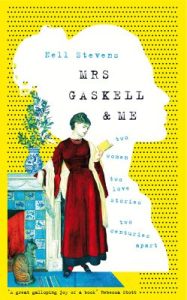 I was ambivalent about the author’s first book (Bleaker House), but for a student of the Victorian period this was unmissable, and the meta aspect was fun and not off-putting this time. Stevens has a light touch, and flits between Gaskell’s story and her own in alternating chapters. One strand covers the last decade of Gaskell’s life, but what makes it so lively and unusual is that Stevens almost always speaks of Gaskell as “you.” The intimacy of that address ensures her life story is anything but dry. The other chapters are set between 2013 and 2017 and narrated in the present tense, which makes Stevens’s dilemmas feel pressing. For much of the first two years her PhD takes a backseat to her love life. She’s obsessed with Max, a friend and unrequited crush from her Boston University days who is now living in Paris. This is a whimsical, sentimental, wry book that will ring true for anyone who’s ever been fixated on an idea or put too much stock in a relationship that failed to thrive.
Times Literary Supplement reviews
I’ve recently submitted my sixth and seventh for publication. All of them have been behind a paywall so far, alas. (Upcoming: Face to Face: True stories of life, death and transformation from my career as a facial surgeon by Jim McCaul; On Sheep: Diary of a Swedish Shepherd by Axel Lindén.) Latest:
How To Build A Boat: A Father, his Daughter, and the Unsailed Sea by Jonathan Gornall
 Gornall’s genial memoir is the story of a transformation and an adventure, as a fifty-something freelance journalist gets an unexpected second chance at fatherhood and decides to build his daughter, Phoebe, a boat. It was an uncharacteristic resolution for “a man who [had] never knowingly wielded a plane or a chisel,” yet in a more metaphorical way it made sense: the sea was in his family’s blood. Gornall nimbly conveys the precarious financial situation of the freelancer, as well as the challenges of adjusting to new parenthood late in life. This is a refreshingly down-to-earth account. The nitty-gritty details of the construction will appeal to some readers more than to others, but one can’t help admiring the combination of craftsmanship and ambition. (Full review in September 7th issue.)
My Most Anticipated Releases of the Second Half of 2018
Here are 30 books that are on my radar for the months of July through November (I haven’t heard about any December titles yet), plus one bonus book that I’ve already read. This is by no means a full inventory of what’s coming out, or even of what I have available through NetGalley and Edelweiss; instead, think of it as a preview of the books I actually intend to read, in release date order. The quoted descriptions are from the publisher blurbs on Goodreads. If I already have access to the book in some way, I’ve noted that.
The first half of the year seemed to be all about plants. This time around I have plenty of memoirs, some medical and some bookish; birds and watery imagery; and some religious and philosophical themes.
[By the way, here’s how I did with my most anticipated releases of the first half of the year:
- 17 out of 30 read; of those 8 were at least somewhat disappointing (d’oh!)
- 5 unfinished
- 1 currently reading
- 1 lost interest in
- 1 I still intend to read
- 5 I didn’t manage to find]
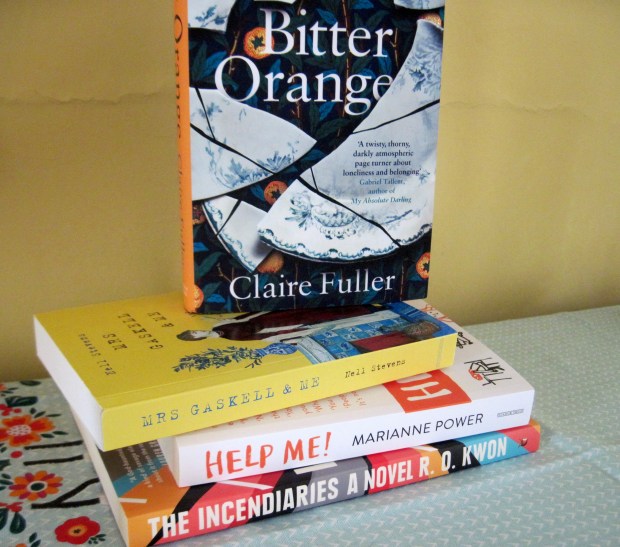
The upcoming titles I happen to own in print.
July
 No One Tells You This: A Memoir by Glynnis MacNicol [July 10, Simon & Schuster]: “If the story doesn’t end with marriage or a child, what then? This question plagued Glynnis MacNicol on the eve of her 40th birthday. … Over the course of her fortieth year, which this memoir chronicles, Glynnis embarks on a revealing journey of self-discovery that continually contradicts everything she’d been led to expect.” (NetGalley download)
 The Lost Chapters: Finding Recovery and Renewal One Book at a Time by Leslie Schwartz [July 10, Blue Rider Press]: “Leslie Schwartz’s powerful, skillfully woven memoir of redemption and reading, as told through the list of books she read as she served a 90-day jail sentence. … Incarceration might have ruined her, if not for the stories that comforted her while she was locked up.”
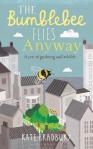 The Bumblebee Flies Anyway: Gardening and Surviving Against the Odds by Kate Bradbury [July 17, Bloomsbury Wildlife]: “Finding herself in a new home in Brighton, Kate Bradbury sets about transforming her decked, barren backyard into a beautiful wildlife garden. She documents the unbuttoning of the earth and the rebirth of the garden, the rewilding of a tiny urban space.”
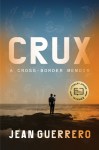 Crux: A Cross-Border Memoir by Jean Guerrero [July 17, One World]: “A daughter’s quest to find, understand, and save her charismatic, troubled, and elusive father, a self-mythologizing Mexican immigrant who travels across continents—and across the borders between imagination and reality; and spirituality and insanity—fleeing real and invented persecutors.”
 The Incendiaries by R.O. Kwon [July 31, Riverhead]: “A shocking novel of violence, love, faith, and loss, as a young woman at an elite American university is drawn into acts of domestic terrorism by a cult tied to North Korea. … The Incendiaries is a fractured love story and a brilliant examination of the minds of extremist terrorists, and of what can happen to people who lose what they love most.” (Print ARC for blog review at UK release on Sept. 6 [Virago])
August
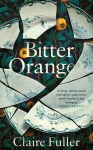 Bitter Orange by Claire Fuller [Aug. 2, Penguin Fig Tree]: I’ve loved Fuller’s two previous novels. This one is described as “a suspenseful story about deception, sexual obsession and atonement” set in 1969 in a run-down English country house. I don’t need to know any more than that; I have no doubt it’ll be brilliant in an Iris Murdoch/Gothic way. (Print ARC for blog review on release date)
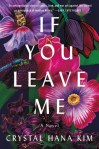 If You Leave Me by Crystal Hana Kim [Aug. 7, William Morrow]: “An emotionally riveting debut novel about war, family, and forbidden love—the unforgettable saga of two ill-fated lovers in Korea and the heartbreaking choices they’re forced to make in the years surrounding the civil war that continues to haunt us today.” This year’s answer to Pachinko? And another botanical cover to boot! (Edelweiss download)
 A River of Stars by Vanessa Hua [Aug. 14, Ballantine Books]: “In a powerful debut novel about motherhood, immigration, and identity, a pregnant Chinese woman makes her way to California and stakes a claim to the American dream. … an entertaining, wildly unpredictable adventure, told with empathy and wit” Sounds like The Leavers, which is a Very Good Thing.
 The Shakespeare Requirement by Julie Schumacher [Aug. 14, Doubleday]: A sequel to the very funny epistolary novel Dear Committee Members! “Now is the fall of his discontent, as Jason Fitger, newly appointed chair of the English Department of Payne University, takes aim against a sea of troubles, personal and institutional.” (Edelweiss download)
 Gross Anatomy: Dispatches from the Front (and Back) by Mara Altman [Aug. 21, G.P. Putnam’s Sons]: “By using a combination of personal anecdotes and fascinating research, Gross Anatomy holds up a magnifying glass to our beliefs, practices, biases, and body parts and shows us the naked truth—that there is greatness in our grossness.” (PDF from publisher; to review for GLAMOUR online)
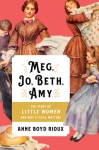 Meg, Jo, Beth, Amy: The Story of Little Women and Why It Still Matters by Anne Boyd Rioux [Aug. 21, W. W. Norton Company]: This is the bonus one I’ve already read, as part of my research for my Literary Hub article on rereading Little Women at its 150th anniversary. (That’s also the occasion for this charming book.) Rioux unearths Little Women’s origins in Alcott family history, but also traces its influence through to the present day. She also makes a strong feminist case for it. My short Goodreads review is here. (Edelweiss download)
September
 Lake Success by Gary Shteyngart [Sept. 4, Random House]: I read his memoir but am yet to try his fiction. “When his dream of the perfect marriage, the perfect son, and the perfect life implodes, a Wall Street millionaire takes a cross-country bus trip in search of his college sweetheart and ideals of youth. … [a] biting, brilliant, emotionally resonant novel very much of our times.” (Edelweiss download; for Pittsburgh Post-Gazette review)
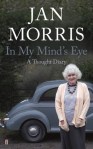 In My Mind’s Eye: A Thought Diary by Jan Morris [Sept. 6, Faber & Faber]: One of my most admired writers. “A collection of diary pieces that Jan Morris wrote for the Financial Times over the course of 2017.” I have never before in my life kept a diary of my thoughts, and here at the start of my ninth decade, having for the moment nothing much else to write, I am having a go at it. Good luck to me.
 Help Me!: One Woman’s Quest to Find Out if Self-Help Really Can Change Her Life by Marianne Power [Sept. 6, Picador]: “[F]or a year she vowed to test a book a month, following its advice to the letter, taking the surest road she knew to a perfect Marianne. As her year-long plan turned into a demented roller coaster where everything she knew was turned upside down, she found herself confronted with a different question: Self-help can change your life, but is it for the better?” (Print ARC)
 Normal People by Sally Rooney [Sept. 6, Faber & Faber]: Much anticipated follow-up to Conversations with Friends. “Connell and Marianne both grow up in the same town in rural Ireland. The similarities end there; they are from very different worlds. But they both get places to study at university in Dublin, and a connection that has grown between them despite the social tangle of school lasts long into the following years.”
 Mrs. Gaskell & Me by Nell Stevens [Sept. 6, Picador]: “In 2013, Nell Stevens is embarking on her PhD … and falling drastically in love with a man who lives in another city. As Nell chases her heart around the world, and as Mrs. Gaskell forms the greatest connection of her life, these two women, though centuries apart, are drawn together.” I was lukewarm on her previous book, Bleaker House, but I couldn’t resist the Victorian theme of this one! (Print ARC to review for Shiny New Books)
 Heart: A History by Sandeep Jauhar [Sept. 18, Farrar, Straus and Giroux]: “Deftly alternating between key historical episodes and his own work, Jauhar tells the colorful and little-known story of the doctors who risked their careers and the patients who risked their lives to know and heal our most vital organ. … Affecting, engaging, and beautifully written.” (Edelweiss download)
 To the Moon and Back: A Childhood under the Influence by Lisa Kohn [Sept. 18, Heliotrope Books]: “Lisa was raised as a ‘Moonie’—a member of the Unification Church, founded by self-appointed Messiah, Reverend Sun Myung Moon. … Told with spirited candor, [this] reveals how one can leave behind such absurdity and horror and create a life of intention and joy.”
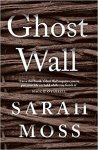 Ghost Wall by Sarah Moss [Sept. 20, Granta]: I’ve read Moss’s complete (non-academic) oeuvre; I’d read her on any topic. This novella sounds rather similar to her first book, Cold Earth, which I read recently. “Teenage Silvie is living in a remote Northumberland camp as an exercise in experimental archaeology. … Behind and ahead of Silvie’s narrative is the story of a bog girl, a sacrifice, a woman killed by those closest to her, and as the hot summer builds to a terrifying climax, Silvie and the Bog girl are in ever more terrifying proximity.” (NetGalley download)
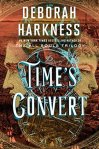 Time’s Convert (All Souls Universe #1) by Deborah Harkness [Sept. 25, Viking]: I was a sucker for Harkness’s A Discovery of Witches and its sequels, much to my surprise. (The thinking girl’s Twilight, you see. I don’t otherwise read fantasy.) Set between the American Revolution and contemporary London, this fills in the backstory for some of the vampire characters.
October
 All You Can Ever Know: A Memoir by Nicole Chung [Oct. 2, Catapult]: “Nicole Chung was born severely premature, placed for adoption by her Korean parents, and raised by a white family in a sheltered Oregon town. … With warmth, candor, and startling insight, Chung tells of her search for the people who gave her up, which coincided with the birth of her own child.” (Edelweiss download)
 Melmoth by Sarah Perry [Oct. 2, Serpent’s Tail]: Gothic fantasy / historical thriller? Not entirely sure. I just know that it’s the follow-up by the author of The Essex Serpent. (I choose to forget that her first novel exists.) Comes recommended by Eleanor Franzen and Simon Savidge, among others. (Edelweiss download)
 The Ravenmaster: Life with the Ravens at the Tower of London by Christopher Skaife [Oct. 2, 4th Estate]: More suitably Gothic pre-Halloween fare! “Legend has it that if the Tower of London’s ravens should perish or be lost, the Crown and kingdom will fall. … [A]fter decades of serving the Queen, Yeoman Warder Christopher Skaife took on the added responsibility of caring for these infamous birds.” I briefly met the author when he accompanied Lindsey Fitzharris to the Wellcome Book Prize ceremony.
 I Am Dynamite!: A Life of Friedrich Nietzsche by Sue Prideaux [Oct. 4, Faber & Faber]: “Friedrich Nietzsche’s work forms the bedrock of our contemporary thought, and yet a shroud of misunderstanding surrounds the philosopher behind these proclamations. The time is right for a new take on Nietzsche’s extraordinary life, whose importance as a thinker rivals that of Freud or Marx.” (For a possible TLS review?)
 Almost Everything: Notes on Hope by Anne Lamott [Oct. 16, Riverhead]: I haven’t been too impressed with Lamott’s recent stuff, but I’ll still read anything she publishes. “In this profound and funny book, Lamott calls for each of us to rediscover the nuggets of hope and wisdom that are buried within us that can make life sweeter than we ever imagined. … Almost Everything pinpoints these moments of insight as it shines an encouraging light forward.”
 The Library Book by Susan Orlean [Oct. 16, Simon & Schuster]: The story of a devastating fire at Los Angeles Public Library in April 1986. “Investigators descended on the scene, but over 30 years later, the mystery remains: Did someone purposefully set fire to the library—and if so, who? Weaving her life-long love of books and reading with the fascinating history of libraries and the sometimes-eccentric characters who run them, … Orlean presents a mesmerizing and uniquely compelling story as only she can.” (Edelweiss download)
 Unsheltered by Barbara Kingsolver [Oct. 18, Faber & Faber]: Kingsolver is another author I’d read anything by. “[T]he story of two families, in two centuries, who live at the corner of Sixth and Plum, as they navigate the challenges of surviving a world in the throes of major cultural shifts.” 1880s vs. today, with themes of science and utopianism – I’m excited! (Edelweiss download)
 Nine Pints: A Journey through the Money, Medicine, and Mysteries of Blood by Rose George [Oct. 23, Metropolitan Books]: “Rose George, author of The Big Necessity [on human waste], is renowned for her intrepid work on topics that are invisible but vitally important. In Nine Pints, she takes us from ancient practices of bloodletting to modern ‘hemovigilance’ teams that track blood-borne diseases.”
November
 The End of the End of the Earth: Essays by Jonathan Franzen [Nov. 13, Farrar, Straus and Giroux]: “[G]athers essays and speeches written mostly in the past five years … Whether exploring his complex relationship with his uncle, recounting his young adulthood in New York, or offering an illuminating look at the global seabird crisis, these pieces contain all the wit and disabused realism that we’ve come to expect from Franzen.”
 A River Could Be a Tree by Angela Himsel [Nov. 13, Fig Tree Books]: “How does a woman who grew up in rural Indiana as a fundamentalist Christian end up a practicing Jew in New York? … Ultimately, the connection to God she so relentlessly pursued was found in the most unexpected place: a mikvah on Manhattan’s Upper West Side. This devout Christian Midwesterner found her own form of salvation—as a practicing Jewish woman.”
 Becoming by Michelle Obama [Nov. 13, Crown]: “In her memoir, a work of deep reflection and mesmerizing storytelling, Michelle Obama invites readers into her world, chronicling the experiences that have shaped her—from her childhood on the South Side of Chicago to her years as an executive balancing the demands of motherhood and work, to her time spent at the world’s most famous address.”
Which of these do you want to read, too? What other upcoming 2018 titles are you looking forward to?
Some of My Recent and Upcoming Bylines
Next month marks five years that I’ve been a freelance reviewer, and I turn 35 later in the year. With these milestones in mind, I’ve been pushing myself a bit more to make contact with new publications and try to get my work out there more widely.
Most recently, I was pleased to have my first article in Literary Hub, an essay about rereading Little Women in its 150th anniversary year in conjunction with the new BBC/PBS miniseries production. (I shared this article intensively on social media, so do forgive me if you’ve already seen it somewhere else!) This is the first time, apart from here on the blog, that I’ve blended book commentary with personal material. I think it’s probably the best “exposure” I’ve had for my writing thus far: last time I looked, Literary Hub’s Facebook post about the article had gotten 123 likes and 33 shares, with 71 likes and 22 retweets on Twitter.
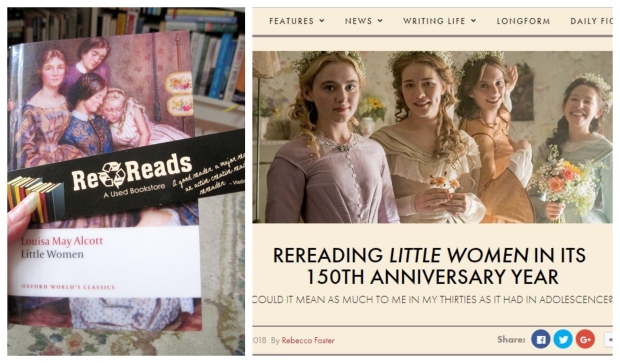
[Note: I now know that the spelling is Katharine Hepburn and have asked twice over e-mail for the editor to correct it, but it’s clearly very low on their list of priorities!]
I continue to review for the Pittsburgh Post-Gazette on a regular basis. My latest review was quite a negative one, alas, for Richard Flanagan’s First Person ( ). Upcoming: Slave Old Man by Patrick Chamoiseau () and A Weekend in New York by Benjamin Markovits.


I still contribute the occasional review to Shiny New Books. My latest two are of From Here to Eternity by Caitlin Doughty () and All the Beautiful Girls by Elizabeth J. Church ().


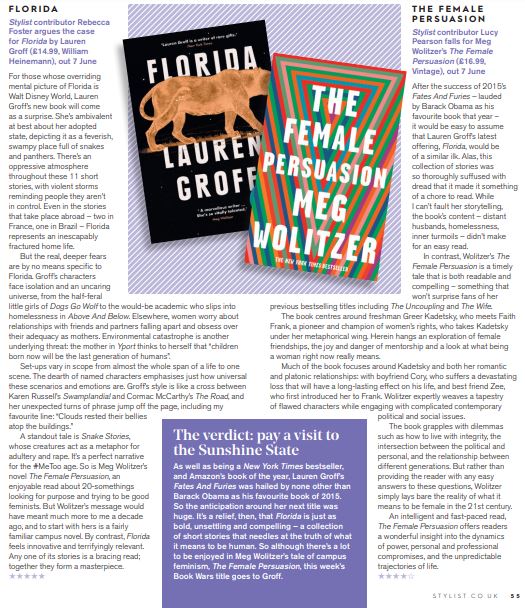
I reviewed Florida by Lauren Groff (), my fiction book of the year so far, for Stylist magazine. This is the fourth time I’ve volunteered for their “Book Wars” column, but the first time I’ve ‘won’ – I attribute it to the high class of book!
Bylines coming later in the summer:
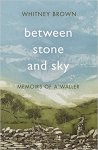
- A dual review of two nature-themed memoirs in the Times Literary Supplement (June 15th issue). This is my third piece for the TLS, but as it’s a longer one it feels a little more ‘real’.
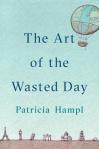
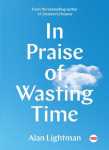
- An essay on two books about “wasting time” (including Alan Lightman’s) in the Los Angeles Review of Books (June 20th).
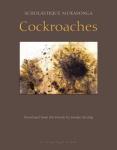
- A dual review of a memoir and a poetry volume by African writers in Wasafiri literary magazine (Issue 95).
Upcoming work, with no publication date yet:
- A dual review of two death-themed poetry collections for PN Review.

- Two book lists for OZY, one on the refugee crisis and another on compassion in medicine.
- A review essay on Gross Anatomy by Mara Altman for Glamour Online.
Final Thoughts on the Booker Longlist
On Wednesday the 13th the Man Booker Prize shortlist will be announced. I’d already reviewed six of the nominees and abandoned one; in the time since the longlist announcement I’ve only managed to read another one and a bit. That leaves four I didn’t get a chance to experience. Here’s a run-through of the 13 nominees, with my brief thoughts on each.
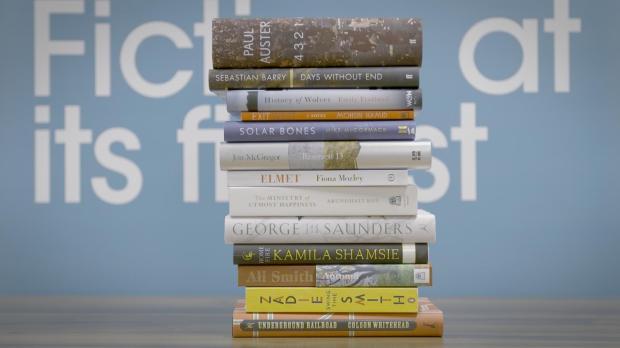
4 3 2 1 by Paul Auster (US) (Faber & Faber): I can’t see myself reading this one any time soon; I’ll choose a shorter work to be my first taste of Auster’s writing. I’ve heard mostly good reports, though.
Days Without End by Sebastian Barry (Ireland) (Faber & Faber): Read in March 2017. This is my overall favorite from the longlist so far. (See my BookBrowse review.) However, it’s already been recognized with the Costa Prize and the Walter Scott Prize for historical fiction, so if it doesn’t make the Booker shortlist I certainly won’t be crushed.
History of Wolves by Emily Fridlund (US) (Weidenfeld & Nicolson): Read in March 2017. A slow-building coming-of-age story with a child’s untimely death at its climax. Fridlund’s melancholy picture of outsiders whose skewed thinking leads them to transgress moral boundaries recalls Lauren Groff and Marilynne Robinson. (Reviewed for the Times Literary Supplement; )
Exit West by Mohsin Hamid (Pakistan-UK) (Hamish Hamilton): I don’t have much interest in reading this one at this point; I didn’t get far in the one book I tried by Hamid (The Reluctant Fundamentalist) earlier this year. I’ve encountered mixed reviews.
Solar Bones by Mike McCormack (Ireland) (Canongate): If you’ve heard anything about this, it’s probably that the entire book is composed of one sentence. Now here’s an embarrassing admission: I didn’t make it past the first page.
Reservoir 13 by Jon McGregor (UK) (4th Estate): I read the first 15% last month and set it aside. I knew what to expect – lovely descriptions of the natural world and the daily life of a small community – but I guess hadn’t fully heeded the warning that nothing much happens. I won’t rule out trying this one again in the future, but for now it couldn’t hold my interest.
Elmet by Fiona Mozley (UK) (JM Originals): Read in August 2017. Simply terrific. (See my full blog review.) Overall, this dark horse selection is in second place for me. I’d love to see it make it through to the shortlist.
The Ministry of Utmost Happiness by Arundhati Roy (India) (Hamish Hamilton): I was never a huge fan of The God of Small Things, so this is another I’m not too keen to try.
Lincoln in the Bardo by George Saunders (US) (Bloomsbury Publishing): Read in April 2017. An entertaining and original treatment of life’s transience. I enjoyed the different registers Saunders uses for his characters, but was less convinced about snippets from historical texts. So audacious it deserves a shortlist spot; I wouldn’t mind it winning.
Home Fire by Kamila Shamsie (UK-Pakistan) (Bloomsbury Circus): This is the one book from the longlist that I most wish I’d gotten a chance to read. It’s been widely reviewed in the press as well as in the blogging world (A life in books, Elle Thinks, and Heavenali), generally very enthusiastically.
Autumn by Ali Smith (UK) (Hamish Hamilton): Read in November 2016. (See my blog review.) While some of Smith’s strengths benefit from immediacy – a nearly stream-of-consciousness style (no speech marks) and jokey dialogue – I’d prefer a more crafted narrative. In places this was repetitive, with the seasonal theme neither here nor there.
Swing Time by Zadie Smith (UK) (Hamish Hamilton): Read in October 2016 for a BookBrowse review. The Africa material wasn’t very convincing, and the Aimee subplot and the way Tracey turns out struck me as equally clichéd. The claustrophobic narration makes this feel insular. A disappointment compared to White Teeth and On Beauty.
The Underground Railroad by Colson Whitehead (US) (Fleet): Read in July 2017. (See my blog review.) I’m surprised such a case has been made for the uniqueness of this novel based on a simple tweak of the historical record. I felt little attachment to Cora and had to force myself to keep plodding through her story. Every critic on earth seems to love it, though.
If I had to take a guess at which six books will make it through Wednesday and why, I’d say:
- 4 3 2 1 by Paul Auster – A chunkster by a well-respected literary lion.
- Exit West by Mohsin Hamid – A timely refugee theme and a touch of magic realism.
- Solar Bones by Mike McCormack – Irish stream-of-consciousness. Channel James Joyce and you’ll impress all the literary types.
- Lincoln in the Bardo by George Saunders – Effusive in tone and cutting-edge in form.
- Autumn by Ali Smith – Captures the post-Brexit moment.
- The Underground Railroad by Colson Whitehead – Though it’s won every prize going, the judges probably think they’d be churlish to pass it by.
By contrast, if I were asked for the six I would prefer to be on the shortlist, and why, it’d be:
- Days Without End by Sebastian Barry – Pretty much unforgettable.
- History of Wolves by Emily Fridlund – A haunting novel that deserves more attention.
- Reservoir 13 by Jon McGregor – Though it’s not my personal favorite, I support McGregor.
- Elmet by Fiona Mozley – A nearly flawless debut. Give the gal a chance.
- Lincoln in the Bardo by George Saunders – Show-offy, but such fun to read.
- Home Fire by Kamila Shamsie – Timely and well crafted, by all accounts.
That would be three men and three women, if not the best mix of countries. I’d be happy with that list.
What have you managed to read from the Booker longlist? How do your predictions match up against mine?
In the Past Week…
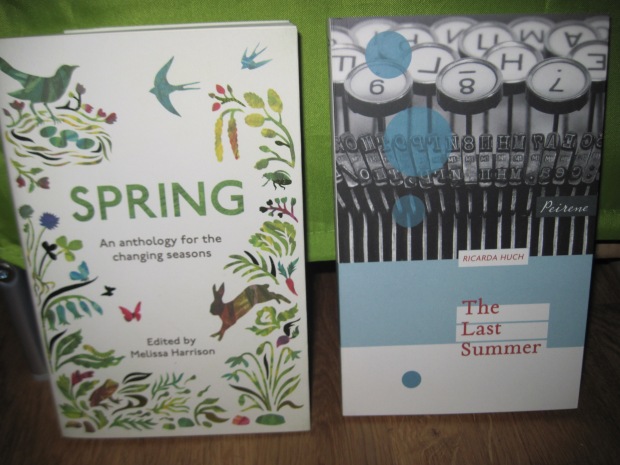
It truly felt like spring was on the way. Temperatures were in the mid-fifties (I’ve never really gotten to grips with Centigrade) and the daffodils in our back garden were trying their best to join the snowdrops decorating the churchyard in town. I started reading this pair of books to look to the seasons ahead instead of dreading that winter might return in earnest:
Some lovely things have happened in the past week.
- I’ve delighted from afar as my sister, a widow for just over two years, precipitously falls in love with a pastor she met through a dating website.
- I had my second yoga class and, after the one other participant had to leave early, got what was essentially a private lesson. Many of the poses feel right at the edge of what my flexibility and balance will allow, which is surely a sign that the exercise is doing me good.
- (This one’s not so much lovely as annoying yet amusing.) The cat, already a connoisseur of cereal milk, discovered the illicit pleasure of melted butter in a dish we unthinkingly left on the counter, and now will not rest in his search for it. This is bad news as he’s already quite the butterball. He’s also ramped up his efforts to access all of the house’s secret spaces, including the airing cupboard, the under-stairs cupboard, and the crawlspace under the bath. [Stay tuned for tomorrow’s mini-reviews of yet more cat books, including one about some very mischievous Siamese cats.]
- On Friday I got an e-mail out of the blue asking me to review a book for the Times Literary Supplement. It was October 2015 when I first wrote for them, but that ended poorly: they ran out space in the magazine for my review and paid me a “kill fee” instead, but it made me doubt myself – was that code for them not thinking my writing was good enough to publish? So hearing back from them five months after I’d last gotten in touch asking for work was a great surprise. And I get to read History of Wolves, which I’ve heard marvelous things about.
- We went to a brilliant gig by folk artists Phillip Henry and Hannah Martin in a hole-in-the-wall venue 10 minutes from our house. It was doubtless the first time I’d seen beatboxing and a classical Indian sitar/guitar used in folk music, and Henry’s harmonica skills were literally unbelievable. You had to have been there. I was impressed anew at how folk, arising as it does from liberal working-class traditions, is unafraid to tackle social issues. They had songs about his cotton mill-working grandfather, the war in Syria, immigration, and a detention center in the Midlands. My favorite, though, was “Landlocked,” about a real woman from the eighteenth century who went to sea with her naval husband but ended up right back where she started: selling fish at Exmouth harbor. I loved Martin’s deep, rich voice and the complex interplay of guitar, banjo, pedal steel and fiddle in many of their songs.
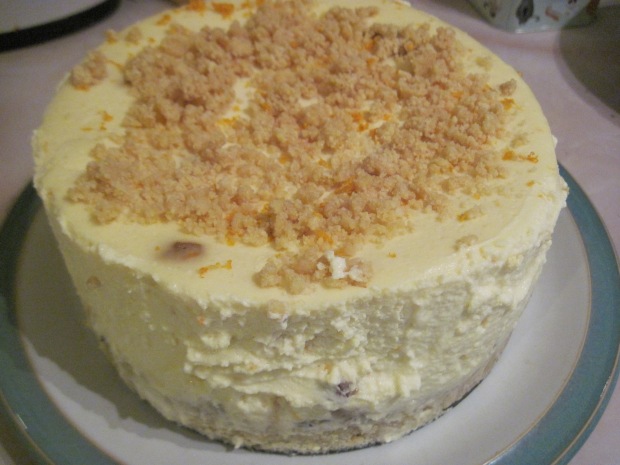
- With one of our leftover jars of homemade mincemeat we made a decadent mincemeat cheesecake from this Nigel Slater recipe. What with the shortbread crust and crumbs and the orange zest in the topping, it was very much like having mince pies – but also cheesecake. Yum.
- This morning we attended a service led by a former archbishop. We knew that George Carey was a parishioner at the Berkshire church we’ve been frequenting since December, but hadn’t seen him at the pulpit yet. He’s one of various retired and lay clergy who have been filling in while the church seeks to appoint a new vicar. Carey gave a damn fine sermon (I guess he’s had plenty of practice) on the enormous topic of why bad things happen to good people, refuting the prosperity gospel and telling the tragically fascinating story behind the hymn “It Is Well with My Soul.”
And, of course, I’ve been reading some brilliant books. This week’s ongoing reading has included three terrific novels: Homegoing by Yaa Gyasi, Spaceman of Bohemia by Jaroslav Kalfař, and Narcissism for Beginners by Martine McDonagh.
 Bookish Beck = Rebecca Foster. American transplant to England. Freelance proofreader and book reviewer.
 Bookish Beck