Young Writer of the Year Award 2020: Shortlist Reviews and Predictions
Being on the shadow panel for the Sunday Times Young Writer of the Year Award was a bookish highlight of 2017 for me. I’m pleased for this year’s panelists, especially blogging friend Marina Sofia, to have had the same opportunity, and I look forward to hearing who they choose as their shadow panel winner on December 3rd and then attending the virtual prize ceremony on December 10th.

At the time of the shortlisting, I happened to have already read Exciting Times by Naoise Dolan and was halfway through Catherine Cho’s memoir Inferno. I got the poetry collection Surge by Jay Bernard out from the library to have another go (after DNFing it last year), and the kind folk of FMcM Associates sent me the other two shortlisted books, a poetry collection and a novel, so that I could follow along with the shadow panel’s deliberations. Here are my brief thoughts on all five nominees.
Surge by Jay Bernard (2019)
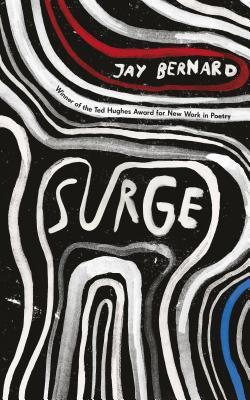 As a writer-in-residence at the George Padmore Institute, a research centre for radical Black history, in 2016, Bernard investigated the New Cross Massacre, a fire that killed 13 young people in 1981. In 2017, the tragedy found a horrific echo in the Grenfell Tower fire, which left 72 dead. This debut poetry collection bridges that quarter-century through protest poems from various perspectives, giving voice to victims and their family members and exploring the interplay between race, sexuality and violence. Patois comes in at several points, most notably in “Songbook.” I especially liked “Peg” and “Pride,” and the indictment of government indifference in “Blank”: “It-has-nothing-to-do-with-us today issued this statement: / those involved have defended their actions and been … acquitted / retired with full pay”. On the whole, I found it difficult to fully engage with this collection, but I am reliably informed that Bernard’s protest poems have more impact when performed aloud.
Readalikes: In Nearby Bushes by Kei Miller, A Portable Paradise by Roger Robinson and Don’t Call Us Dead by Danez Smith
My rating: 
Inferno by Catherine Cho (2020)
 Cho, a Korean American literary agent based in London, experienced stress-induced postpartum psychosis after the birth of her son. She and her husband had returned to the USA when Cato was two months old to introduce him to friends and family, ending with a big Korean 100-day celebration at her in-laws’ home. Almost as soon as they got to her in-laws’, though, she started acting strangely: she was convinced cameras were watching their every move, and Cato’s eyes were replaced with “devil’s eyes.” She insisted they leave for a hotel, but soon she would be in a hospital emergency room, followed by a mental health ward. Cho alternates between her time in the mental hospital and a rundown of the rest of her life before the breakdown, weaving in her family history and Korean sayings and legends. Twelve days: That was the length of her hospitalization in early 2018, but Cho so painstakingly depicts her mindset that readers are fully immersed in an open-ended purgatory. She captures extremes of suffering and joy in this vivid account. (Reviewed in full here.)
Readalikes: An Angel at My Table by Janet Frame and Dear Scarlet by Teresa Wong
My rating: 
Exciting Times by Naoise Dolan (2020)
 At 22, Ava leaves Dublin to teach English as a foreign language to wealthy preteens in Hong Kong and soon comes to a convenient arrangement with her aloof banker friend, Julian, who lets her live with him without paying rent and buys her whatever she wants. They have sex, yes, but he’s not her boyfriend per se, so when he’s transferred to London for six months, there’s no worry about hard feelings when her new friendship with Edith Zhang turns romantic. It gets a little more complicated, though, when Julian returns and she has to explain these relationships to her two partners and to herself. On the face of it, this doesn’t sound like it would be an interesting plot, and the hook-up culture couldn’t be more foreign to me. But with Ava Dolan has created a funny, deadpan voice that carries the entire novel. I loved the psychological insight, the playfulness with language, and the zingy one-liners (“I wondered if Victoria was a real person or three Mitford sisters in a long coat”). (Reviewed in full here.)
Readalikes: Besotted by Melissa Duclos and Conversations with Friends by Sally Rooney
My rating:
Tongues of Fire by Seán Hewitt (2020)
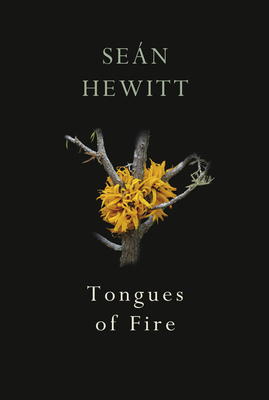 In the title poem, the arboreal fungus from the cover serves as “a bright, ancestral messenger // bursting through from one realm to another” like “the cones of God, the Pentecostal flame”. This debut collection is alive with striking imagery that draws links between the natural and the supernatural. Sex and grief, two major themes, are silhouetted against the backdrop of nature. Fields and forests are loci of meditation and epiphany, but also of clandestine encounters between men: “I came back often, // year on year, kneeling and being knelt for / in acts of secret worship, and now / each woodland smells quietly of sex”. Hewitt recalls travels to Berlin and Sweden, and charts his father’s rapid decline and death from an advanced cancer. A central section of translations of the middle-Irish legend “Buile Suibhne” is less memorable than the gorgeous portraits of flora and fauna and the moving words dedicated to the poet’s father: “You are not leaving, I know, // but shifting into image – my head / already is haunted with you” and “In this world, I believe, / there is nothing lost, only translated”.
Readalikes: Physical by Andrew McMillan and If All the World and Love Were Young by Stephen Sexton
My rating:
Nightingale by Marina Kemp (2020)
 Marguerite Demers, a 24-year-old nurse, has escaped Paris to be a live-in carer for elderly Jérôme Lanvier in southern France. From the start, she senses she’s out of place here – “She felt, as always in this village, that she was being observed”. She strikes up a friendship with a fellow outsider, an Iranian émigrée named Suki, who, in this story set in 2002, stands out for wearing a hijab. Everyone knows everyone here, and everyone has history with everyone else – flirtations, feuds, affairs, and more. Brigitte Brochon, unhappily married to a local farmer, predicts Marguerite will be just like the previous nurses who failed to hack it in service to the curmudgeonly Monsieur Lanvier. But Marguerite sticks up for herself and, though plagued by traumatic memories, makes her own bid for happiness. The novel deals sensitively with topics like bisexuality, euthanasia, and family estrangement, but the French provincial setting and fairly melodramatic plot struck me as old-fashioned. Still, the writing is strong enough to keep an eye out for what Kemp writes next. (U.S. title: Marguerite.)
Readalikes: French-set novels by Joanne Harris and Rose Tremain; The Hoarder by Jess Kidd
My rating:
General thoughts:
After last year’s unexpected winner – Raymond Antrobus for his poetry collection The Perseverance – I would have said that it’s time for a novel by a woman to win. However, I feel like a Dolan win would be too much of a repeat of 2017’s win (for Sally Rooney), and Kemp’s debut novel isn’t quite up to scratch. Much as I enjoyed Inferno, I can’t see it winning over these judges (three of whom are novelists: Kit de Waal, Sebastian Faulks and Tessa Hadley), though it would be suited to the Wellcome Book Prize if that comes back in 2021. So, to my surprise, I think it’s going to be another year for poetry.
I’ve been following the shadow panel’s thoughts via Marina’s blog and the others’ Instagram accounts and it looks like they are united in their admiration for the poetry collections, particularly the Hewitt. That would be my preference, too: I respond better to theme and style in poetry (Hewitt) than to voice and message (Bernard). However, I think that in 2020 the Times may try to trade its rather fusty image for something more woke, bearing in mind the Black Lives Matter significance and the unprecedented presence of a nonbinary author.
My predictions:
Shadow panel winner: Tongues of Fire by Seán Hewitt
Official winner: Surge by Jay Bernard
Have you read anything from this year’s shortlist?
The IRON Book of Tree Poetry (Blog Tour)
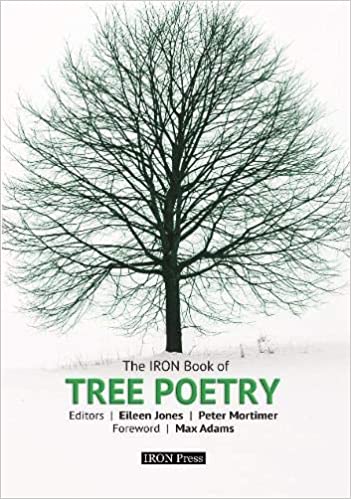 Though I’d only heard of two of the contributors, my love for nature and environmentalist themes made this anthology irresistible. The authors of the 50 poems write about individual and generic trees; forests real and imagined; environmental crisis and personal reckonings. In Sarah Mnatzaganian’s “Father Tree,” a sprawling horse-chestnut symbolizes her dying father and his motherland. Dominic Weston’s “Ancestry.com” literalizes the language of the family tree. In Celia McCulloch’s “Rhododendrons at Stapleford Wood,” an invasive species is a politically charged token of prejudice: “Is it just our xenophobia, this hatred for the Greek-named / tree, the immigrant, the Windrush plantation?”
I enjoyed the playful use of myth in Pauline Plummer’s “The Baobab”: “When God made the baobab He gave / it to the hyena, who laughed and laughed / throwing it into the scrub / where it landed upside down, dancing.” In “Abele,” Di Slaney envisions her post-mortem body feeding a woodland’s worth of creatures and being reincorporated into the flesh of trees.
Again and again, trees serve as a reminder of time passing, of seasons changing, of the vanity of human concerns compared to their centuries-old solidity – as in the final stanza of Mary Anne Perkins’s “To an Unpopular Poplar”:
This summer’s end, if I could translate
just one full hour of the whisperings
between your shimmered leaves,
how much the wiser I might be.
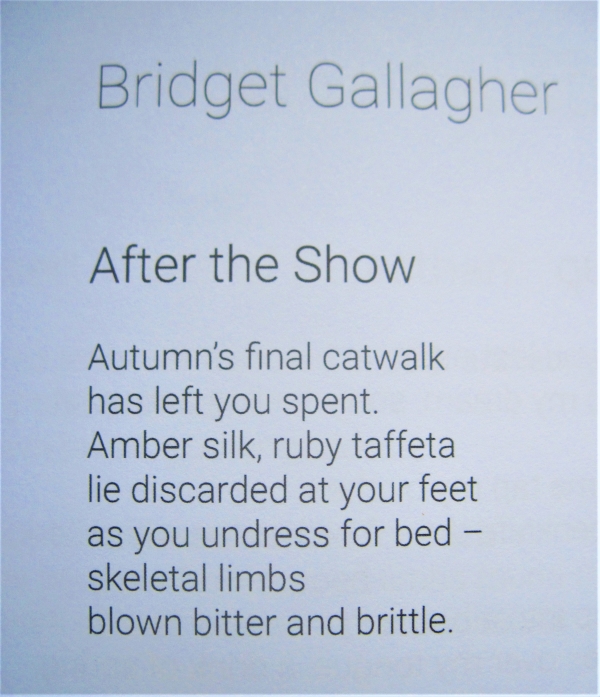
Thematic organization, rather than alphabetical, would have made more sense for this volume, but I appreciated the introduction to many new-to-me poets. Two favorite seasonal poems are pictured below.

My thanks to IRON Press for the free copy for review.
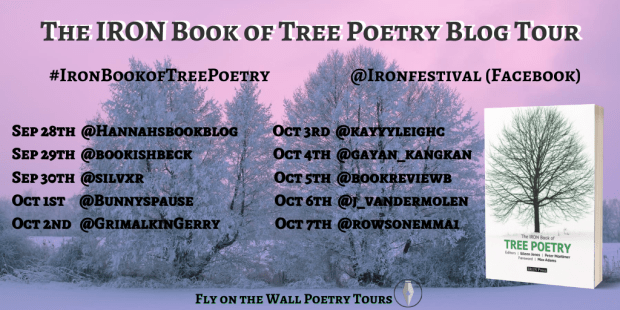
I was delighted to be invited to take part in the blog tour for The IRON Book of Tree Poetry. See below for where more reviews have appeared or will be appearing.
20 Books of Summer, #19–20: Heat & The Gospel of Trees
Finishing off my summer reading project with a stellar biography-cum-travel book about Italian cuisine and a family memoir about missionary work in Haiti in the 1980s.
Heat by Bill Buford (2006)
(20 Books of Summer, #19) The long subtitle gives you an outline of the contents: “An Amateur’s Adventures as Kitchen Slave, Line Cook, Pasta-Maker, and Apprentice to a Dante-Quoting Butcher in Tuscany.” If Buford’s name sounds familiar, it’s because he was the founding editor of Granta magazine and publisher at Granta Books, but by the time he wrote this he was a staff writer for the New Yorker.
 Mario Batali is the book’s presiding imp. In 2002–3, Buford was an unpaid intern in the kitchen of Batali’s famous New York City restaurant, Babbo, which serves fancy versions of authentic Italian dishes. It took 18 months for him to get so much as a thank-you. Buford’s strategy was “be invisible, be useful, and eventually you’ll be given a chance to do more.”
In between behind-the-scenes looks at frantic or dull sessions of food prep (“after you’ve made a couple thousand or so of these little ears [orecchiette pasta], your mind wanders. You think about anything, everything, whatever, nothing”), Buford traces Batali’s culinary pedigree through Italy and London, where Batali learned from the first modern celebrity chef, Marco Pierre White, and gives pen portraits of the rest of the kitchen staff. At first only trusted with chopping herbs, the author develops his skills enough that he’s allowed to work the pasta and grill stations, and to make polenta for 200 for a benefit dinner in Nashville.
Later, Buford spends stretches of several months in Italy as an apprentice to a pasta-maker and a Tuscan butcher. His obsession with Italian cuisine is such that he has to know precisely when egg started to replace water in pasta dough in historical cookbooks, and is distressed when the workers at the pasta museum in Rome can’t give him a definitive answer. All the same, the author never takes himself too seriously: he knows it’s ridiculous for a clumsy, unfit man in his mid-forties to be entertaining dreams of working in a restaurant for real, and he gives self-deprecating accounts of his mishaps in the various kitchens he toils in:
to stir the polenta, I was beginning to feel I had to be in the polenta. Would I finish cooking it before I was enveloped by it and became the darkly sauced meaty thing it was served with?
Compared to Kitchen Confidential, I found this less brash and more polished. You still get the sense of macho posturing from a lot of the figures profiled, but of course this author is not going to be in a position to interrogate food culture’s overweening masculinity. However, he does take a stand in support of small-scale food production:
Small food: by hand and therefore precious, hard to find. Big food: from a factory and therefore cheap, abundant. Just about every preparation I learned in Italy was handmade and involved learning how to use my own hands differently. … Food made by hand is an act of defiance and runs contrary to everything in our modernity. Find it; eat it; it will go.
This is exactly what I want from food writing: interesting nuggets of trivia and insight, a quick pace, humor, and mouthwatering descriptions. If the restaurant world lures you at all, you must read this one.
- Nice connections with my other summer reading: there are mentions of both Eric Asimov and Ruth Reichl visiting Babbo in their capacity as food critics for the New York Times.
- This also induced a weird case of reverse déjà vu: a book I reviewed last summer for BookBrowse, Hungry by Jeff Gordinier, is so similar that it must have been patterned on Heat: the punchy one-word title; a New York journalist follows an internationally known chef (in that case, René Redzepi) and surveys culinary trends.
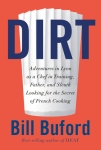 I was delighted to learn that this year Buford released a sequel of sorts, this one about French cuisine: Dirt. It’s on my wish list.
Source: From my dad
My rating: 
The Gospel of Trees by Apricot Irving (2018)
(20 Books of Summer, #20) Irving’s parents were volunteer missionaries to Haiti between 1982 and 1991, when she was aged six to 15. Her father, Jon, was trained as an agronomist, and his passion was for planting trees to combat the negative effects of deforestation on the island (erosion and worsened flooding). But in a country blighted by political unrest, AIDS and poverty, people can’t think long-term; they need charcoal to light their stoves, so they cut down trees.
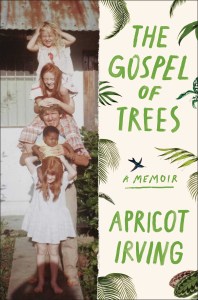 Along with an agricultural center, the American Baptist missionaries were closely associated with a hospital, Hôpital le Bon Samaritain, run by amateur archaeologist Dr. Hodges and his family. Although Apricot and her two younger sisters were young enough to adapt easily to life in a developing country, they were disoriented each time the family returned to California in between assignments. Their bonds were shaky due to her father’s temper, her parents’ rocky relationship, and the jealousy provoked over almost adopting a Haitian baby girl.
Irving drew on letters and cassette tape recordings, newsletters, and journals (her parents’ and her own) to recreate the decade in Haiti and the years since. This debut book was many years in the making – she started the project in 2001. “I inherited my father’s anger and his perfectionism. Haiti was a wound, an unhealed scab that I was afraid to pick open. But I knew that unless I faced that broken history, my own buried grief, like my father’s, would explode ways I couldn’t predict.”
She and her parents returned to the country after the 2010 earthquake: they were volunteers with a relief organization, while she reported for the This American Life radio program. I loved the ambivalent portrait of Haiti and, especially, of Jon, but couldn’t muster up much interest in secondary characters, hoped for more discussion of (loss of) faith, and thought the book about 80 pages too long. Irving writes wonderfully, though, especially when musing on Haiti’s pre-Columbian history; I’d gladly read a nature book about her life in Oregon, or a novel – in tone this reminded me of The Poisonwood Bible.
Some favorite lines:
If, like my father, you suffer from a savior complex, Haiti is a bleak assignment, but if you are able to enter it unguarded, shielded only by curiosity, you will find the sorrows entangled with a defiant joy.
My family had moved to Haiti to try to help, but instead, we learned our limitations. Failure can be a wise friend. We felt crushed at times; found it difficult to breathe; and yet the experience carved into each of us an understanding of loss, the weight of compassion. We learned how small we were when measured against the world’s great sorrow.
Source: Bargain book from Amazon last year
My rating: 
And a DNF:
 We Were the Mulvaneys by Joyce Carol Oates (oats!)
I gave up after 38 pages. I’ve long meant to try Oates, but her oeuvre is daunting. An Oprah’s Book Club selection seemed like a safe bet. I found the quirky all-American family saga approach somewhat similar to John Irving or Richard Russo, but Judd’s narration is annoyingly perky, and already I was impatient to find out what happened to his sister Marianne on Valentine’s Day 1976. I’ll give it a few years and try again. In the meantime, maybe I’ll try Oates in a different genre.
Looking back, Heat was the clear highlight of my 20 Books, closely followed by My Year of Meats by Ruth Ozeki. I also really enjoyed the foodoirs by Anthony Bourdain, Nina Mingya Powles and Luisa Weiss. It’s funny how much I love foodie lit given that I don’t cook. As Alice Steinbach puts it, “while we all like to eat, we like it more when someone else does the cooking.”
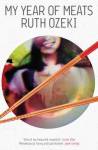
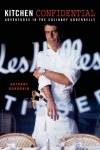
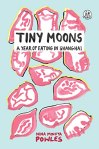
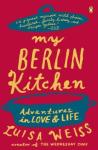
 Of course, not all of my selections were explicitly food-related; others simply had food words in their titles (or, as above, in the author’s name). Of these, my favorite was a reread, Ella Minnow Pea. Ideally, I would not have had to include my two skims and one partial read in the total, but I ran out of time in August to substitute in three more books. I’m happy enough with my showing this year, but next time I plan to build in more flexibility – or cheating, whichever you wish to call it – to ensure that I manage 20 solid reads.
I already have a color theme planned for 20 Books of Summer 2021! Here are 15 books that I own, mostly fiction, that would fit the bill:
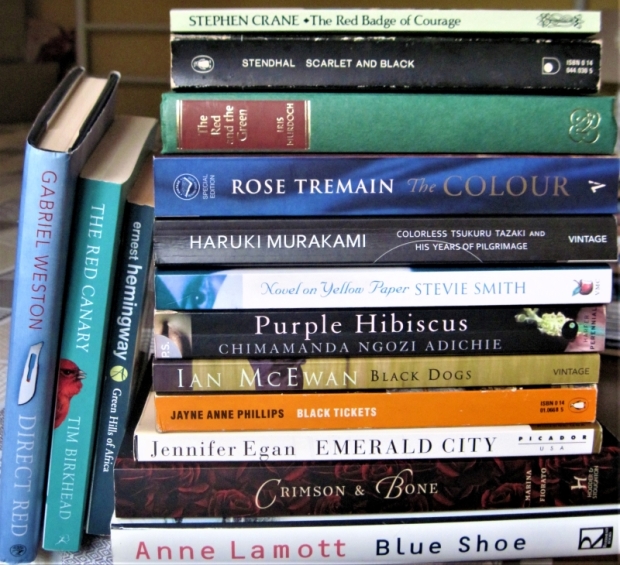
As wildcard selections and/or substitutes, I will also allow:
- Books with “light”, “dark”, or “bright” in the title
- Kindle or library books, though I’d like the focus to remain on print books I own.
- If I’m really stuck, book covers/jackets in a rainbow of colors. I’ll skip orange because Penguin paperbacks are too plentiful in my book collection, but I have some nice red, yellow, green, blue, purple and pink covers to choose from.
My Books of 2018: Some Runners-Up
Across my four best-of posts (Nonfiction was on Wednesday and Fiction on Thursday; Backlist reads are coming up tomorrow), I will have spotlighted roughly the top 20% of my year’s reading. The 15 runners-up below – 5 fiction and 10 nonfiction – are in alphabetical order by author. The ones marked with an asterisk are my Best 2018 Books You Probably Never Heard Of (Unless You Heard about Them from Me!).

Some runners-up for best books of the year (the ones I own in print, anyway).
Fiction:
 *Frieda by Annabel Abbs: If you rely only on the words of D.H. Lawrence, you’d think Frieda was lucky to shed a dull family life and embark on an exciting set of bohemian travels with him as he built his name as a writer; Abbs adds nuance to that picture by revealing just how much Frieda was giving up, and the sorrow she left behind her. Frieda’s determination to live according to her own rules makes her a captivating character.
 A Ladder to the Sky by John Boyne: A delicious piece of literary suspense with a Tom Ripley-like hero you’ll love to hate: Maurice Swift, who wants nothing more than to be a writer but doesn’t have any ideas of his own, so steals them from other people. I loved how we see this character from several outside points of view before getting Maurice’s own perspective; by this point we know enough to understand just how unreliable a narrator he is.
 The Overstory by Richard Powers: A sprawling novel about regular people who through various unpredictable routes become so devoted to trees that they turn to acts, large and small, of civil disobedience to protest the clear-cutting of everything from suburban gardens to redwood forests. I admired pretty much every sentence, whether it’s expository or prophetic.
 You Think It, I’ll Say It by Curtis Sittenfeld: Sittenfeld describes families and romantic relationships expertly, in prose so deliciously smooth it slides right down. These 11 stories are about marriage, parenting, authenticity, celebrity and social media in Trump’s America. Overall, this is a whip-smart, current and relatable book, ideal for readers who don’t think they like short stories.
 *Meet Me at the Museum by Anne Youngson: A charming, bittersweet novel composed entirely of the letters that pass between Tina Hopgood, a 60-year-old farmer’s wife in East Anglia, and Anders Larsen, a curator at the Silkeborg Museum in Denmark. It’s a novel about second chances in the second half of life, and has an open but hopeful ending. I found it very touching and wish it hadn’t been given the women’s fiction treatment.
Nonfiction:
 Rough Beauty: Forty Seasons of Mountain Living by Karen Auvinen: An excellent memoir that will have broad appeal with its themes of domestic violence, illness, grief, travel, wilderness, solitude, pets, wildlife, and relationships. A great example of how unchronological autobiographical essays can together build a picture of a life.
 *Heal Me: In Search of a Cure by Julia Buckley: Buckley takes readers along on a rollercoaster ride of new treatment ideas and periodically dashed hopes during four years of chronic pain. I was morbidly fascinated with this story, which is so bizarre and eventful that it reads like a great novel.
 *This Really Isn’t About You by Jean Hannah Edelstein: A wry, bittersweet look at the unpredictability of life as an idealistic young woman in the world’s major cities. Another great example of life writing that’s not comprehensive or strictly chronological yet gives a clear sense of the self in the context of a family and in the face of an uncertain future.
 *The Pull of the River: Tales of Escape and Adventure on Britain’s Waterways by Matt Gaw: This jolly yet reflective book traces canoe trips down Britain’s rivers, a quest to (re)discover the country by sensing the currents of history and escaping to the edge of danger. Gaw’s expressive writing renders even rubbish- and sewage-strewn landscapes beautiful.
 The Feather Thief: Beauty, Obsession, and the Natural History Heist of the Century by Kirk Wallace Johnson: A delightful read that successfully combines many genres – biography, true crime, ornithology, history, travel and memoir – to tell the story of an audacious heist of rare bird skins from the Natural History Museum at Tring in 2009. This is the very best sort of nonfiction: wide-ranging, intelligent and gripping.
 *No One Tells You This by Glynnis MacNicol: There was a lot of appeal for me in how MacNicol sets out her 40th year as an adventure into the unknown. She is daring and candid in examining her preconceptions and asking what she really wants from her life. And she tells a darn good story: I read this much faster than I generally do with a memoir.
 The Library Book by Susan Orlean: This is really two books in one. The first is a record of the devastating fire at the Los Angeles Central Library on April 29, 1986 and how the city and library service recovered. The second is a paean to libraries in general: what they offer to society, and how they work, in a digital age. Sure to appeal to any book-lover.
 Help Me!: One Woman’s Quest to Find Out if Self-Help Really Can Change Her Life by Marianne Power: I have a particular weakness for year-challenge books, and Power’s is written in an easy, chatty style, as if Bridget Jones had given over her diary to testing self-help books for 16 months. Help Me! is self-deprecating and relatable, with some sweary Irish swagger thrown in. I can recommend it to self-help junkies and skeptics alike.
 Mrs Gaskell & Me: Two Women, Two Love Stories, Two Centuries Apart by Nell Stevens: Stevens has a light touch, and flits between Gaskell’s story and her own in alternating chapters. This is a whimsical, sentimental, wry book that will ring true for anyone who’s ever been fixated on an idea or put too much stock in a relationship that failed to thrive.
 The Language of Kindness: A Nurse’s Story by Christie Watson: Watson presents her book as a roughly chronological tour through the stages of nursing – from pediatrics through to elderly care and the tending to dead bodies – but also through her own career. With its message of empathy for suffering and vulnerable humanity, it’s a book that anyone and everyone should read.
Coming tomorrow: My best backlist reads of the year.
A Retrospective of 2018’s Events, Reading Projects and Themes
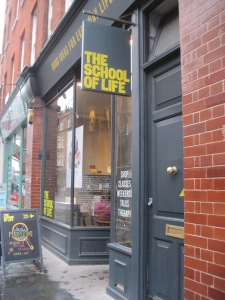 In January I had the tremendous opportunity to have a free personalized bibliotherapy appointment with Ella Berthoud at the School of Life in London. I’ve since read three of her prescriptions plus parts of a few others, but I still have several more awaiting me in the early days of 2019, and will plan to report back at some point on what I got out of all of them.
In March to April I ran a Wellcome Book Prize shadow panel for the second time. This year it was much more successful; I plan to do it again next year, too. (I actually proffered myself as an official judge for next year’s prize and got a very kind but entirely noncommittal e-mail back from the chairwoman, which I will have to take as victory enough.)
 Early April saw us visiting Wigtown, Scotland’s book town, for the first time. It was a terrific trip, but thus far I have not been all that successful at reading the 13 books that I bought! (Just two and a quarter so far.)
I reviewed three novels for Liz Dexter’s Iris Murdoch Readalong project: A Severed Head in March, The Italian Girl in June, and The Nice and the Good in September. In February I’ll pop back in with one more paperback that I own, The Sacred and Profane Love Machine. November was Margaret Atwood Reading Month, hosted by Marcie of Buried in Print and Naomi of Consumed by Ink, and provided me with a good excuse to read her first two novels.
 I did some “buddy reads” for the first time: Andrea Levy’s Small Island with Canadian blogger friends, including Marcie and Naomi; and West With the Night with Laila of Big Reading Life and Late Nights on Air with Naomi as well as Penny of Literary Hoarders during 20 Books of Summer, which I took part in for the first time. In May my mother and I read W. Somerset Maugham’s The Painted Veil and shared reading notes via e-mail. (A planned buddy read of The Left Hand of Darkness with Annabel and Laura was, alas, a fail.)
Besides the official Wellcome Book Prize blog tour in April, I participated in another 11 blog tours, averaging out at one a month. I’m going to scale back on these next year because I have too often found, after I accepted, that the book was a dud and I had to just run an extract because I could see I wasn’t going to get through it and write a review.
I joined my neighborhood book club in September and have attended every month since then. Our first four selections were Ladder of Years by Anne Tyler, The Gracekeepers by Kirsty Logan, Noonday by Pat Barker, and Number 11 by Jonathan Coe. I’d already read the Logan and Coe years ago and didn’t fancy rereading them, so wasn’t able to participate as much in those months, but was still glad to go along for the socializing. My husband even read the Coe and came to December’s meeting (was it just for the mince pies and mulled wine?!). We’ve set our first four reads for 2019 – the three below, in order from left to right, plus Ernest Hemingway’s The Garden of Eden, which I’ll borrow from the university library.

 In October I won tickets to see a production of Angela Carter’s Wise Children at the Old Vic in London. Just a few weeks later I won tickets to see Barbara Kingsolver in conversation about Unsheltered at the Southbank Centre. I don’t often make it into London, so it was a treat to have bookish reasons to go and blogging friends to meet up with (Clare of A Little Blog of Books joined me for both, and Laura T. was also at the Kingsolver event).
November was mostly devoted to novellas, for the third year in a row. Although I didn’t officially participate in Nonfiction November, I still enjoyed coming up with some fiction/nonfiction pairings and an “expert’s” list of women’s religious memoirs.
My husband wrote pretty much his entire PhD thesis this year and on Friday the 14th had his graduation ceremony. I was the moral support / proofreader / preparer of simple meals during the months when he was in the throes of writing up, so I will consider myself as sharing in the accomplishment. Congratulations, Dr. Foster!
This month and into January I’ll be reading the last few nominees for the National Book Critics Circle’s John Leonard Prize.

When the list of finalists was released, I was relieved to see I’d already read four out of seven (and three of those were ones I’d nominated); the other three – the Adjei-Brenyah and Brinkley stories and There There – were books I was keen to read but hadn’t managed to get hold of. About 80 of us NBCC members are reading the shortlist and voting for the best first book of the year by January 8th. Plus I’m technically up for an NBCC prize myself, in that I nominated myself (that’s how it works) for the 2018 Nona Balakian Citation for Excellence in Reviewing and sent in an application with five of my best reviews from the year.
The Ones that Got Away
 Two posts I planned but never got around to putting together would have commemorated the 50th anniversary of Thomas Merton’s death (I own several of his books but am most interested in reading The Seven-Storey Mountain, which celebrated its 70th birthday in October) and the 40th anniversary of the publication of The Snow Leopard by the late Peter Matthiessen. Perhaps I’ll try these authors for the first time next year instead.
Final Book Serendipity Incidents
In the second half of the year I started keeping track of all my weird reading coincidences, posting about them on Twitter or Instagram before collecting them into a blog post a couple months ago. Here are a few that popped up since then or recalled earlier reads from the year:
- Two protagonists named Willa: Anne Tyler’s Clock Dance and Barbara Kingsolver’s Unsheltered
- Two novels featuring bog people: Anne Youngson’s Meet Me at the Museum and Sarah Moss’s Ghost Wall
- Two dogs named Flash: Ben Crane’s Blood Ties and Andrew Marshall’s The Power of Dog
- Multiple sclerosis is an element in Christian Donlan’s The Unmapped Mind: A Memoir of Neurology, Incurable Disease and Learning How to Live, Jennifer Richardson’s Americashire and Michelle Obama’s Becoming (her father had it)
- The ideas of Freud are mentioned in a 1910s setting in Nancy Horan’s Loving Frank, Annabel Abbs’s Frieda and Daniel Mason’s The Winter Soldier
- Mermaids (or ‘mermaids’) and/or mermen appear in Imogen Hermes Gowar’s The Mermaid and Mrs Hancock, Melissa Broder’s The Pisces, Daniel Mason’s The Winter Soldier, and a series of poems in Miriam Darlington’s Windfall
- Bohemian writer dies young of tuberculosis (or similar) in novels about their wives: Annabel Abbs’s Frieda (D.H. Lawrence) and Nancy Horan’s Under the Wide and Starry Sky (Robert Louis Stevenson)
- Two books that mention the Indonesian practice of keeping dead relatives as mummies and bringing them out on occasion for ritual celebrations: From Here to Eternity by Caitlin Doughty and The Hot Young Widows Club by Nora McInerny
- Two books that include a trip to Lourdes for healing: Heal Me by Julia Buckley and Constellations by Sinéad Gleeson
- Two books that mention the irony of some of the most well-loved modern Christmas songs being written by Jews: In Mid-Air by Adam Gopnik and Christmas Days by Jeanette Winterson
Surprise Themes from My Year’s Reading
A few of these make sense – cults fit with my interest in narratives of religious experience, and it doesn’t take a psychologist to see that my relationship with my father has been an ongoing issue in recent years (I wonder how the numbers would compare for books about mothers?) – but most are completely random.
I decided a theme had to show up at least three times to make the list. Some topics I enjoyed so much I’ll keep reading about them next year. Within a category the books are in rough chronological order of my reading, and I include skims, DNFs and books in progress.
 Fathers (absent/difficult) + fatherhood in general: Educated by Tara Westover, And When Did You Last See Your Father? by Blake Morrison, The Italian Teacher by Tom Rachman, In the Days of Rain by Rebecca Stott, Implosion by Elizabeth W. Garber, Little Women by Louisa May Alcott & March by Geraldine Brooks, The Unmapped Mind by Christian Donlan, Never Mind and Bad News by Edward St. Aubyn, The Reading Promise by Alice Ozma, How to Build a Boat by Jonathan Gornall, Lake Success by Gary Shteyngart, Normal People by Sally Rooney, Rosie by Rose Tremain, My Father and Myself by J.R. Ackerley, Everything Under by Daisy Johnson, Ghost Wall by Sarah Moss, Surfacing by Margaret Atwood, Heart Berries by Terese Marie Mailhot, Blood Ties by Ben Crane, To Throw Away Unopened by Viv Albertine, Small Fry by Lisa Brennan-Jobs
Addiction: The Leavers by Lisa Ko, Mayhem by Sigrid Rausing, The Only Story by Julian Barnes, The Small Door of Your Death by Sheryl St. Germain, Writing and Madness in a Time of Terror by Afarin Majidi, Marlena by Julie Buntin, Ninety Days by Bill Clegg, Bad News by Edward St. Aubyn, Pretend I’m Dead by Jen Beagin, Heart Berries by Terese Marie Mailhot
 Greenland: A Wilder Time by William E. Glassley, This Cold Heaven by Gretel Ehrlich, Miss Smilla’s Feeling for Snow by Peter Høeg, On Balance by Sinéad Morrissey (the poem “Whitelessness”), Cold Earth by Sarah Moss, Crimson by Niviaq Korneliussen, The Library of Ice by Nancy Campbell
Cults: Educated by Tara Westover, Harmony by Carolyn Parkhurst, In the Days of Rain by Rebecca Stott, The Incendiaries by R.O. Kwon, A River Could Be a Tree by Angela Himsel
Trees: Ladders to Heaven by Mike Shanahan, The Overstory by Richard Powers, The Man Who Planted Trees by Jean Giono, The Wood and The Secret Life of the Oak by John Lewis-Stempel
 Flying: Skybound by Rebecca Loncraine, West With the Night by Beryl Markham, Going Solo by Roald Dahl, Skyfaring by Mark Vanhoenacker
The Anglo experience in Africa: Free Woman: Life, Love and Doris Lessing by Lara Feigel, Leaving Before the Rains Come by Alexandra Fuller, West With the Night by Beryl Markham, Going Solo by Roald Dahl
Korean-American women: The Incendiaries by R.O. Kwon, If You Leave Me by Crystal Hana Kim, All You Can Ever Know by Nicole Chung, Famous Adopted People by Alice Stephens, Digging to America by Anne Tyler
 New Zealand: The Garden Party and Other Stories by Katherine Mansfield, To the Is-Land by Janet Frame, Dunedin by Shena Mackay
Life in the White House: Living History by Hillary Rodham Clinton, All the Presidents’ Pastries by Roland Mesnier, Becoming by Michelle Obama
Lighthouses: Stargazing: Memoirs of a Young Lighthouse Keeper by Peter Hill, The Bird Artist by Howard Norman, Under the Wide and Starry Sky by Nancy Horan (about Robert Louis Stevenson, whose family built lighthouses)

More lighthouse books ready for next year.
Butterflies: Four Wings and a Prayer by Sue Halpern, Magdalena Mountain by Robert Michael Pyle, Mama Amazonica by Pascale Petit

More butterfly books ready for next year.
What were some of the highlights of your bookish year?
What odd coincidences and recurring themes have you spotted in your year’s reading?
The Shortest of the Short: Four Novellas of under 50 Pages

Outside Stamford Library.
It’s a tradition now in its third and last year: I spend one day at the New Networks for Nature conference with my husband, and then (to save money, and because I’ve usually had my fill of stimulating speakers by then) wander around Stamford and haunt the public library on the other day.
 This past Saturday I browsed the charity shops and found a short story collection I’ve been interested in reading, but otherwise just spent hours in Stamford’s library looking through recent issues of the Times Literary Supplement and The Bookseller and reading from the stack of novellas I’d brought with me. I read four in one sitting because all were shorter than 50 pages long: two obscure classics and two nature books.

Fiction:
The Man Who Planted Trees by Jean Giono (1953)
[Translated from the French by Barbara Bray; 46 pages]
 Trees have been a surprise recurring theme in my 2018 reading. This spare allegory from a Provençal author is all about the difference one person can make. The narrator meets a shepherd and beekeeper named Elzéard Bouffier who plants as many acorns as he can; “it struck him that this part of the country was dying for lack of trees, and having nothing much else to do he decided to put things right.” Decades pass and two world wars do their worst, but very little changes in the countryside. Old Bouffier has led an unassuming but worthwhile life.
 There’s not very much to this story, though I appreciated the message about doing good even if you won’t get any recognition or even live to see the fruits of your labor. What’s most interesting about it is the publication history: it was commissioned by Reader’s Digest for a series on “The Most Extraordinary Character I Ever Met,” and though the magazine accepted it with rapture, there was belated outrage when they realized it was fiction. It was later included in a German anthology of biography, too! No one recognized it as a fable; this became a sort of literary in-joke, as Giono’s daughter Aline reveals in a short afterword.
Bartleby the Scrivener by Herman Melville (1853)
[40 pages from my Penguin Classics copy of Billy Budd, Sailor and Other Stories]
 You probably know the basic plot even if you’ve never read the story. Hired as the fourth scrivener in a Wall Street office of law-copyists, Bartleby seems quietly efficient until one day he mildly refuses to do the work requested of him. “I prefer not to” becomes his refrain. First he stops proofreading his copies, and then he declines to do any writing at all. (More and more these days, I find I have the same can’t-be-bothered attitude as Bartleby!) As the employer/narrator writes, “a certain unconscious air … of pallid haughtiness … positively awed me into my tame compliance with his eccentricities.” Farce ensues as he finds himself incapable of getting rid of Bartleby, even after he goes to the extreme of changing the premises of his office. Three times he even denies knowing Bartleby, but still the man is a thorn in his flesh, a nuisance turned inescapable responsibility. A glance at the introduction by Harold Beaver tells me I’m not the first to make such Christian parallels. (This was the first Melville I’ve read since an aborted attempt on Moby-Dick during college.)
Nonfiction:
The Company of Swans by Jim Crumley (1997)
[Illustrated by Harry Brockway, who also did the wood engravings for the Giono; 39 pages]

 Crumley is an underappreciated Scottish nature writer. Here he tells the tale of a pair of mute swans on a loch in Highland Perthshire. He followed their relationship with great interest over a matter of years. First he noticed that their nest had been robbed, twice within a few weeks, and realized otters must be to blame. Then, although it’s a truism that swans mate for life, he observed the cob (male) leaving the pen (female) for another! Crumley was overtaken with sympathy for the abandoned swan and got to feed her by hand and watch her fall asleep. “To suggest there was true communication between us would be outrageous, but I believe she regarded me as benevolent, which was all I ever asked of her,” he writes. Two years later he learns the end of her story. A pleasant ode to fleeting moments of communion with nature.
Favorite passages:
“Swans this wild let you into only a certain portion of their lives. They give you intimate glimpses. But you can never have any part in the business of being a swan. You can offer them no more than the flung tribute of your admiring gaze.”
“I think there is nothing in all nature that outshines that lustrous lacing of curves [of swan necks], nothing in all theatre that outperforms its pivotal tension.”
Holloway by Robert Macfarlane (2013)
[Illustrated by Stanley Donwood; 39 pages]
 In 2011 Macfarlane set out to recreate a journey through South Dorset that he’d first undertaken with the late Roger Deakin in 2005, targeting the sunken paths of former roadways. This is not your average nature or travel book, though; it’s much more fragmentary and poetic than you’d expect from a straightforward account of a journey through the natural world. I thought the stream-of-consciousness style overdone, and got more out of the song about the book by singer-songwriter Anne-Marie Sanderson. (Her Book Songs, Volume 1 EP, which has been one of my great discoveries of the year, is available to listen to and purchase on her Bandcamp page. It also includes songs inspired by Ian McEwan’s Sweet Tooth, Barbara Kingsolver’s The Poisonwood Bible, Sarah Hall’s Haweswater, and Doris Lessing’s Mara and Dann.) The black-and-white illustrations are nicely evocative, though.


Lines I liked:
“paths run through people as surely as they run through places.”
“The holloway is absence; a wood-way worn away by buried feet.”
Have you read any of these super-short novellas? Which one takes your fancy?
Ladders to Heaven: The Secret History of Fig Trees
 A whole book about fig trees? That’s right! If you’re a voracious nonfiction reader like me, you’ll find freelance journalist Mike Shanahan’s history of fig trees unexpectedly fascinating. It opens with him atop a series of ladders in a national park in Borneo, reaching past a venomous snake to pick some figs. He did many such exciting things in his research towards a PhD in rainforest ecology, but that 1998 encounter was significantly more intrepid than his earliest experience with the genus: he remembers a potted weeping fig in the hallway of his childhood home.
From that little tree to the largest banyans, Ficus encompasses 750+ species and has had a major place in human culture for millennia. Fig trees turn up in Greek origin myths and are sacred to Hindus. Romulus and Remus were rescued from drowning in the Tiber by fig tree roots. The tree the Buddha sat under to meditate? A fig. The fruit Adam and Eve ate in the Garden of Eden? More likely a fig than an apple given the Middle Eastern climate and the fact that they then sew fig leaves together to cover their nakedness. (The confusion may have come about because in Latin malum means either “apple” or “evil”.)
Figs offer some biological surprises. For one thing, the plants have no apparent flowers. That’s because the flowers are internal: a fig is not technically a fruit but a hollow ball lined with tiny flowers that must be pollinated by two-millimeter-long fig-wasps. Strangler figs colonize a host tree, starting as a seed in the canopy and enveloping it in long tangled roots. Many tropical birds and mammals rely on figs, including monkeys and hornbills. Figs were, Shanahan writes, the “original superfood” for our primate ancestors.
The habitats where fig trees thrive face severe challenges, including drought, forest fires and poaching. However, history offers encouraging examples of how fig species can be key to tropical forest restoration. After a volcano erupted on Papua New Guinea in 1660, for example, the razed land was fairly quickly recolonized by Ficus species from seeds dropped by birds and bats – a prerequisite for wildlife returning. Similarly, fig trees were all that remained of the forest on Krakatoa after its famous volcanic eruption in 1883.
Building on this precedent, the Forest Restoration Research Unit, based in Thailand, now uses fig species to kickstart the restitution of tropical landscapes; one in every five of their plantings is a fig. Likewise, figs can be used to restore post-mining landscapes and lock up carbon. Researchers are looking into using drones to collect and deposit the seeds.
I’d never realized how often figs show up in the historical record, or how dependent on them we and other creatures have been. “Look after fig trees and they will look after you. It’s a lesson we have all but forgotten, but one we could learn again,” Shanahan concludes. Have a look at the bibliography and you’ll see just how much information is synthesized into this short, engaging book. It’s another gorgeous design from Unbound, too: the colorful cover was what first attracted me, and the author’s black-and-white pointillist illustrations adorn the text.

Nowadays I tend to think of figs as an exotic, luxury food. Every year we add some dried figs to our Christmas cake, creating caramel bursts of crunchy seeds. When my husband and I lived in Reading, we briefly had a LandShare arrangement to look after an established garden. Hidden behind a suburban fence, it was a secret paradise overflowing with fruit: plum, greengage and apple trees plus a fruit cage containing berries, currants, and – in one corner – a small fig. I remember one glorious late summer when we were inundated with more ripe figs than I’d ever seen before. We would heat them in the oven and serve them split open and oozing with goat’s cheese and runny honey. Our very own taste of Eden.
My rating: 
Ladders to Heaven was first published by Unbound in 2016 and releases in paperback today, September 6th. My thanks to the publisher for the free copy for review.
 Bookish Beck = Rebecca Foster. American transplant to England. Freelance proofreader and book reviewer.
