Book Serendipity, Mid-April to Mid-June
I call it “Book Serendipity” when two or more books that I read at the same time or in quick succession have something in common – the more bizarre, the better. This is a regular feature of mine every couple of months. Because I usually have 20–30 books on the go at once, I suppose I’m more prone to such incidents. People frequently ask how I remember all of these coincidences. The answer is: I jot them down on scraps of paper or input them immediately into a file on my PC desktop; otherwise, they would flit away!
The following are in roughly chronological order.
- Raising a wild animal but (mostly) calling it by its species rather than by a pet name (so “Pigeon” and “the leveret/hare”) in We Should All Be Birds by Brian Buckbee and Raising Hare by Chloe Dalton.
- Eating hash cookies in New York City in Women by Chloe Caldwell and How to Be Somebody Else by Miranda Pountney.
- A woman worries she’s left underclothes strewn about a room she’s about to show someone in one story of Single, Carefree, Mellow by Katherine Heiny and Days of Light by Megan Hunter.
 The dialogue is italicized in Women by Chloe Caldwell and Days of Light by Megan Hunter.
- The ‘you know it when you see it’ definition (originally for pornography) is cited in Moderation by Elaine Castillo and Bookish by Lucy Mangan.
- Women (including the protagonist) weightlifting in a gym in Moderation by Elaine Castillo and All Fours by Miranda July.
- Miranda July, whose All Fours I was also reading at the time, was mentioned in Chinese Parents Don’t Say I Love You by Candice Chung.
- A sibling story and a mystical light: late last year into early 2025 I read The Snow Queen by Michael Cunningham, and then I recognized this type of moment in Days of Light by Megan Hunter.
- A lesbian couple with a furniture store in Carol [The Price of Salt] by Patricia Highsmith and one story of Are You Happy? by Lori Ostlund.

- Not being able to see the stars in Las Vegas because of light pollution was mentioned in The Wild Dark by Craig Childs, then in Moderation by Elaine Castillo.
- A gynaecology appointment scene in All Fours by Miranda July and How to Be Somebody Else by Miranda Pountney.
- An awkwardly tall woman in Heartwood by Amity Gaige, How to Be Somebody Else by Miranda Pountney, and Stoner by John Williams.
- The 9/11 memorial lights’ disastrous effect on birds is mentioned in The Wild Dark by Craig Childs and How to Be Somebody Else by Miranda Pountney.
- A car accident precipitated by an encounter with wildlife is key to the denouement in the novellas Women by Chloe Caldwell and Wild Boar by Hannah Lutz.
- The plot is set in motion by the death of an older brother by drowning, and pork chops are served to an unexpected dinner guest, in Bug Hollow by Michelle Huneven and Days of Light by Megan Hunter, both of which I was reading for Shelf Awareness review.
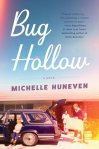
- Kids running around basically feral in a 1970s summer, and driving a box of human ashes around in Case Histories by Kate Atkinson and Bug Hollow by Michelle Huneven.
- A character becomes a nun in Case Histories by Kate Atkinson and Days of Light by Megan Hunter.
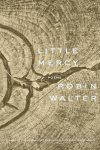
- Wrens nesting just outside one’s front door in Lifelines by Julian Hoffman and Little Mercy by Robin Walter.

- ‘The female Woody Allen’ is the name given to a character in Women by Chloe Caldwell and then a description (in a blurb) of French author Nolwenn Le Blevennec.
- A children’s birthday party scene in Single, Carefree, Mellow by Katherine Heiny and Friends and Lovers by Nolwenn Le Blevennec. A children’s party is also mentioned in Case Histories by Kate Atkinson and A Family Matter by Claire Lynch.
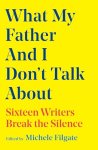
- A man who changes his child’s nappies, unlike his father – evidence of different notions of masculinity in different generations, in Case Histories by Kate Atkinson, What My Father and I Don’t Talk About, edited by Michele Filgate, and one piece in Beyond Touch Sites, edited by Wendy McGrath.
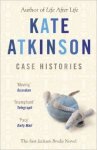
- What’s in a name? Repeated names I came across included Pansy (Case Histories by Kate Atkinson and Days of Light by Megan Hunter), Olivia (Case Histories by Kate Atkinson and A Family Matter by Claire Lynch), Jackson (Case Histories by Kate Atkinson and So Far Gone by Jess Walter), and Elias (Good Girl by Aria Aber and Dream State by Eric Puchner).
- The old wives’ tale that you should run in zigzags to avoid an alligator appeared in Alligator Tears by Edgar Gomez and then in The Girls Who Grow Big by Leila Mottley, both initially set in Florida.
- A teenage girl is groped in a nightclub in Good Girl by Aria Aber and Girl, 1983 by Linn Ullmann.
- Discussion of the extinction of human and animal cultures and languages in both Nature’s Genius by David Farrier and Lifelines by Julian Hoffman, two May 2025 releases I was reading at the same time.
- In Body: My Life in Parts by Nina B. Lichtenstein, she mentions Linn Ullmann – who lived on her street in Oslo and went to the same school (not favourably – the latter ‘stole’ her best friend!); at the same time, I was reading Linn Ullmann’s Girl, 1983! And then, in both books, the narrator recalls getting a severe sunburn.
 On the same day, I read about otter sightings in Lifelines by Julian Hoffman and Spring by Michael Morpurgo. The next day, I read about nesting swallows in both books.
- The Salish people (Indigenous to North America) are mentioned in Lifelines by Julian Hoffman, Dream State by Eric Puchner (where Salish, the town in Montana, is also a setting), and So Far Gone by Jess Walter.
- Driving into a compound of extremists, and then the car being driven away by someone who’s not the owner, in Dream State by Eric Puchner and So Far Gone by Jess Walter.
- A woman worries about her (neurodivergent) husband saying weird things at a party in The Honesty Box by Lucy Brazier and Normally Weird and Weirdly Normal by Robin Ince.
- Shooting raccoons in Ginseng Roots by Craig Thompson and So Far Gone by Jess Walter. (Raccoons also feature in Dream State by Eric Puchner.)
- A graphic novelist has Hollywood types adding (or at least threatening to add) wholly unsuitable supernatural elements to their plots in Spent by Alison Bechdel and Ginseng Roots by Craig Thompson.
- A novel in which a character named Dawn has to give up her daughter in the early 1980s, one right after the other: A Family Matter by Claire Lynch, followed by Love Forms by Claire Adam.
- A girl barricades her bedroom door for fear of her older brother in Love Forms by Claire Adam and Sleep by Honor Jones.
- A scene of an only child learning that her mother had a hysterectomy and so couldn’t have any more children in Dream Count by Chimamanda Ngozi Adichie and Other People’s Mothers by Julie Marie Wade.
- An African hotel cleaner features in Dream Count by Chimamanda Ngozi Adichie and The Hotel by Daisy Johnson.

- Annie Dillard’s essay “Living Like Weasels” is mentioned in Nature’s Genius by David Farrier and The Dry Season by Melissa Febos.
- A woman assembles an inventory of her former lovers in Dream Count by Chimamanda Ngozi Adichie and The Dry Season by Melissa Febos.
What’s the weirdest reading coincidence you’ve had lately?
Monsters: A Fan’s Dilemma by Claire Dederer
The question posed by Claire Dederer’s third hybrid work of memoir and cultural criticism might be stated thus: “Are we still allowed to enjoy the art made by horrible people?” You might be expecting a hard-line response – prescriptive rules for cancelling the array of sexual predators, drunks, abusers and abandoners (as well as lesser offenders) she profiles. Maybe you’ve avoided Monsters for fear of being chastened about your continuing love of Michael Jackson’s music or the Harry Potter series. I have good news: This book is as compassionate as it is incisive, and while there is plenty of outrage, there is also much nuance.
Dederer begins, in the wake of #MeToo, with film directors Roman Polanski and Woody Allen, setting herself the assignment of re-watching their masterpieces while bearing in mind their sexual crimes against underage women. In a later chapter she starts referring to this as “the stain,” a blemish we can’t ignore when we consider these artists’ work. Try as we might to recover prelapsarian innocence, it’s impossible to forget allegations of misconduct when watching The Cosby Show or listening to Miles Davis’s Kind of Blue. Nor is it hard to find racism and anti-Semitism in the attitude of many a mid-20th-century auteur.

Does “genius” excuse all? Dederer asks this in relation to Picasso and Hemingway, then counteracts that with a fascinating chapter about Lolita – as far as we know, Nabokov never engaged in, or even contemplated, sex with minors, but he was able to imagine himself into the mind of Humbert Humbert, an unforgettable antihero who did. “The great writer knows that even the blackest thoughts are ordinary,” she writes. Although she doesn’t think Lolita could get published today, she affirms it as a devastating picture of stolen childhood.
“The death of the author” was a popular literary theory in the 1960s that now feels passé. As Dederer notes, in the Internet age we are bombarded with biographical information about favourite writers and musicians. “The knowledge we have about celebrities makes us feel we know them,” and their bad “behavior disrupts our ability to apprehend the work on its own terms.” This is not logical, she emphasizes, but instinctive and personal. Some critics (i.e., white men) might be wont to dismiss such emotional responses as feminine. Super-fans are indeed more likely to be women or teenagers, and heartbreak over an idol’s misdoings is bound up with the adoration, and sense of ownership, of the work. She talks with many people who express loyalty “even after everything” – love persists despite it all.

U.S. cover
In a book largely built around biographical snapshots and philosophical questions, Dederer’s struggle to make space for herself as a female intellectual, and write a great book, is a valuable seam. I particularly appreciated her deliberations on the critic’s task. She insists that, much as we might claim authority for our views, subjectivity is unavoidable. “We are all bound by our perspectives,” she asserts; “consuming a piece of art is two biographies meeting: the biography of the artist, which might disrupt the consuming of the art, and the biography of the audience member, which might shape the viewing of the art.”
While men’s sexual predation is a major focus, the book also weighs other sorts of failings: abandonment of children and alcoholism. The “Abandoning Mothers” chapter posits that in the public eye this is the worst sin that a woman can commit. Her two main examples are Doris Lessing and Joni Mitchell, but there are many others she could have mentioned. Even giving more mental energy to work than to childrearing is frowned upon. Dederer wonders if she has been a monster in some ways, and confronts her own drinking problem.

A painting by Cathy Lomax of girls at a Bay City Rollers concert.
Here especially, the project reminded me most of books by Olivia Laing: the same mixture of biographical interrogation, feminist cultural criticism, and memoir as in The Trip to Echo Spring and Everybody; some subjects even overlap (Raymond Carver in the former; Ana Mendieta and Valerie Solanas in the latter – though, unfortunately, these two chapters by Dederer were the ones I thought least necessary; they could easily have been omitted without weakening the argument in any way). I also thought of how Lara Feigel’s Free Woman examines her own life through the prism of Lessing’s.
The danger of being quick to censure any misbehaving artist, Dederer suggests, is a corresponding self-righteousness that deflects from our own faults and hypocrisy. If we are the enlightened ones, we can look back at the casual racism and daily acts of violence of other centuries and say: “1. These people were simply products of their time. 2. We’re better now.” But are we? Dederer redirects all the book’s probing back at us, the audience. If we’re honest about ourselves, and the people we love, we will admit that we are all human and so capable of monstrous acts.
Dederer’s prose is forthright and droll; lucid even when tackling thorny issues. She has succeeded in writing the important book she intended to. Erudite, empathetic and engaging from start to finish, this is one of the essential reads of 2023. 
With thanks to Sceptre for the free copy for review.
Buy Monsters from Bookshop.org [affiliate link]
20 Books of Summer, #14–15, RED: Gabriel Weston and Marie Winn
I’m catching up on blogs and getting back into the swing of work after a week’s staycation hosting my mom and stepdad and taking them on daytrips to lots of local sites: Highclere Castle (“Downton Abbey”), Bath, Avebury, the south coast, Sandham Memorial Chapel, the Kennet & Avon canal, and Mottisfont Abbey.
Today’s contributions to my colour-themed summer reading are both nonfiction: a forthright memoir from a female surgeon and a light-hearted record of multiple seasons of hawk-watching in Central Park.
Direct Red: A Surgeon’s Story by Gabriel Weston (2009)
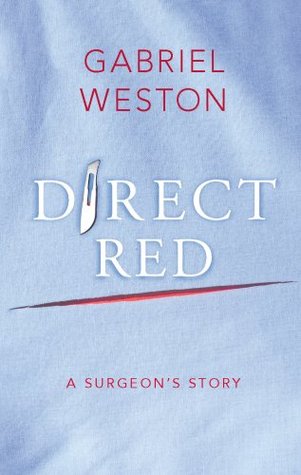 Trying to keep herself alert seven hours into assisting with a neck surgery, Weston recites to herself a list of dyes used to stain tissues for microscopy: methylene blue, acridine orange, saffron, malachite green, Tyrian purple, Hoffman’s violet, direct red. This is how the book opens, and of course, red being the colour of blood, it shows up frequently in what follows. She tells (anonymized) stories of people she has treated, of all ages and from all backgrounds, both during her training and after she specialized in ear, nose and throat surgery.
Like Henry Marsh in Admissions, she expresses regret for moments when she was in a rush or trying to impress seniors and didn’t give the best patient-focused care she could have. Some patients even surprise her into changing her mind, such as about the morality of plastic surgery.
The accounts of individual surgeries are detailed and sometimes gory: morbidly delicious for me, but definitely not for the squeamish.
Blood trickled in a stream down the inside of my wrist onto the plasticky gown, and then dripped off me and onto the drape. It collected in a green valley and was congealing there like a small garnet jelly. I lost my balance slightly as the breast was cut off.
Surgery is still a male-dominated field, and I’ve sensed unpleasant machismo from surgeon authors before (Stephen Westaby’s The Knife’s Edge). As a woman in medicine, Weston is keenly aware of the difficult balance to be struck between confidence and compassion.
To be a good doctor, you have to master a paradoxical art. You need to get close to a patient so that they will tell you things and you will understand what they mean. But you also have to keep distant enough not to get too affected.
It is no longer enough to be technically proficient; nowadays, we need to be nice. And this presents the modern surgeon with a great challenge: how to combine a necessary degree of toughness with an equally important ability to be gentle.
Initially, her bedside manner is on the brusque side, but when she becomes a mother this changes. Treating a sick baby in the ITU, she realizes she barely sees her own child for more than five minutes per evening. In the final paragraphs, she quits her career-track consultant job to work part-time. “I chose a life with more home in it.” It’s an abrupt ending to a 180-page memoir that I thoroughly enjoyed but that left me wanting more. (Secondhand purchase from Oxfam Books, Reading) 
Red-Tails in Love: A Wildlife Drama in Central Park by Marie Winn (1998)
 In the early 1990s, Wall Street Journal columnist Winn fell in with an earnest group of birdwatchers who monitor the daily activity in New York City’s Central Park, a haven for wildlife. Through the Register, a logbook stored in a boathouse, they share sightings and track patterns. Relative rarities thrive and breed each year. Before long the book zeroes in on a famous pair of red-tailed hawks, “Pale Male” and a series of females. Winn emphasizes the “drama” of her subtitle, arranging the content into Acts and Scenes that span about five years.
Wild birds face many risks, most of them the fault of humans, and there are some distressing losses here. It is thus a triumph when Pale Male and his mate successfully raise three chicks on the façade of a Fifth Avenue apartment building (home to Mary Tyler Moore, with Woody Allen across the street). The birdwatchers are vigilant, sending letters to the apartment manager and calling park staff to ensure the birds are left in peace. No doubt it’s easier to disseminate information and assign responsibility now what with WhatsApp and Twitter. Indeed, I found the book a little dated and the anthropomorphizing somewhat over-the-top, but Winn makes a sweet, rollicking yarn out of people getting invested in nature. (Secondhand purchase from Clock Tower Books, Hay-on-Wye) 
Coming up next: Three green, one black, one gold (and maybe a rainbow bonus).
Would you be interested in reading one of these?
Reviews Roundup, March–April
One of my goals with this blog is to have one convenient place where I can gather together all my writing that has appeared in disparate online locations. To that end, once a month – or maybe more often – I’ll provide links to all the book reviews I’ve published elsewhere, with a short taster and a rating (below) so you can decide whether to click to read more. (A couple of exceptions: I won’t point out my Kirkus Indie or BlueInk reviews since I don’t get a byline.)
BookBrowse
 The Animals by Christian Kiefer [BookBrowse is a subscription service, but an excerpt is available for free on the website]: Kiefer’s second novel contrasts wildness and civilization through the story of a man who runs an animal refuge to escape from his criminal past.

The Bookbag
 The Sunlit Night by Rebecca Dinerstein: A debut novel as charming as it is quirky. Two young adults from Brooklyn meet in the far north of Norway, where one is an artist’s apprentice and the other is burying a beloved father. Bittersweet family backstories and burgeoning romance make this a winner.

Beauty and Chaos: Slices and Morsels of Tokyo Life by Michael Pronko (& interview): The pleasant and diverse travel essays in this collection draw on Pronko’s 15 years living in Japan. A long-term resident but still an outsider, he is perfectly placed to notice the many odd and wonderful aspects of Tokyo life.
The Blind Man of Hoy: A True Story by Red Szell: Red Széll started losing his sight at age 19. In 2013 he became the first blind person to climb the Old Man of Hoy, off the Orkney Islands. An inspirational rock-climbing adventure.

 Adeline: A Novel of Virginia Woolf by Norah Vincent: Set in 1925–1941 and focusing on Virginia Woolf’s marriage and later career, this is a remarkable picture of mental illness from the inside. For the depth of its literary reference and psychological insight, this is my favorite novel of 2015 so far.
Nudge
On Immunity: An Inoculation by Eula Biss: This wide-ranging work of nonfiction explores the facts, myths and metaphors of vaccination. Biss powerfully captures the modern phenomenon of feeling simultaneously responsible and powerless.
Chaplin and Company by Mave Fellowes: An aspiring mime buys a London canal boat and finds her father in this debut novel. Fellowes writes good descriptive passages and handles past and present capably. However, I was unsure whether Chaplin and Company overall has much narrative verve. What I will take away is an offbeat, bittersweet coming-of-age story.

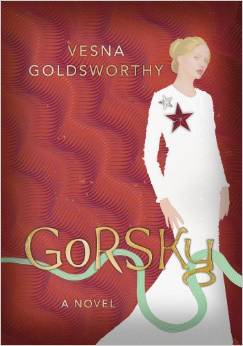 Gorsky by Vesna Goldsworthy: An updated version of The Great Gatsby set amongst contemporary London’s über-rich Russians. The novel is wise about the implications of class and immigration. However, as a whole it doesn’t work as well as some updated classics, such as The Innocents (Francesca Segal). In a sense, Goldsworthy’s literary debt is too obvious.

Quite a Good Time to Be Born: A Memoir, 1935-1975 by David Lodge [more personal musings and an overview of the book’s content]: David Lodge, one of Britain’s most celebrated comic novelists, surveys 40 years of personal and social change.
Better Than Before: Mastering the Habits of Our Everyday Lives by Gretchen Rubin: The author of The Happiness Project returns with a thorough guide to making and breaking habits, offering different strategies for different personality types.
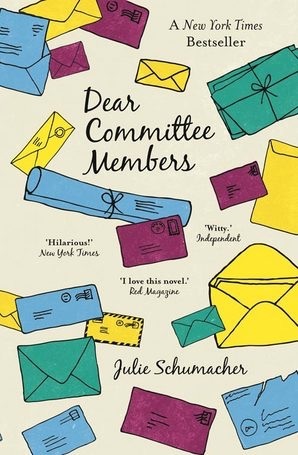 Dear Committee Members by Julie Schumacher: A very funny epistolary novel in the form of letters of recommendation written by a grouchy English professor. English graduates and teachers in particular will get a kick out of this, but I daresay anyone who has ever been fed up with bureaucracy at work will sympathize with Fitger.
The Last Asylum: A Memoir of Madness in Our Time by Barbara Taylor: Taylor was once a mental patient at Friern Hospital. This is an arresting vision of madness from the inside, as well as a history of England’s asylum system.
We Love This Book
 It’s What I Do: A Photographer’s Life of Love and War by Lynsey Addario: Photojournalist Lynsey Addario remembers a decade on the frontline of conflicts in the Middle East and Africa and strives for balance in her work and personal life. Journalists face real danger every day. It’s all here: bombs, car accidents, dehydration, beatings, and sexual assault. Yet all the risks over the years have been worth it “to convey beauty in war.”
Hausfrau by Jill Alexander Essbaum: Essbaum’s arresting debut novel reads like a modern retelling of Madame Bovary, with its main character a desperate housewife in Zurich. As deplorable as Anna’s actions may be, she is an entirely sympathetic tragic heroine. Watch her trajectory with horror but you cannot deny there is a little of Anna in you.
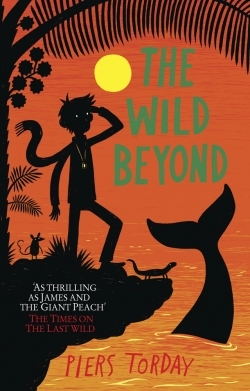 The Wild Beyond by Piers Torday: the suspenseful finale to “The Last Wild,” a fantasy trilogy for younger readers. The environmentalist message is not subtle but it is powerful and should inspire older children. Blending hints of Pullman and Tolkien with up-to-the-minute dystopian themes, this is an inventive take on the classic quest narrative.
The Time in Between: A Memoir of Hunger and Hope by Nancy Tucker: Nancy Tucker suffered from anorexia and bulimia for nearly a decade. Written in an original blend of styles, her eating disorder memoir is wrenching but utterly absorbing. You won’t find epiphanies or happy endings here, just a messy, ongoing recovery process – but 21-year-old Tucker narrates it exquisitely.
Quadrapheme literary magazine
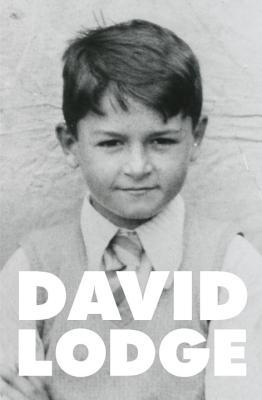 Quite a Good Time to Be Born: A Memoir, 1935-1975 by David Lodge [more of an essay about the context and sociological themes]: Even readers less familiar with Lodge’s work may be interested in the book’s insights into the social changes of post-war Britain. Lodge has not had a conventionally exciting life, and he knows it. From the title onward, his focus is more on his time period than his own uniqueness. He appears as an Everyman who superseded his working-class origins and expectations through hard work and luck.
Shiny New Books
 Reading the World: Confessions of a Literary Explorer by Ann Morgan: Not just another bibliomemoir. A better balance could have been struck between recycled blog content and academic musings on postcolonial literature and censorship. An interest in the politics of literature in translation would be a boon to anyone attempting this.
Foreword Reviews (self-published titles)
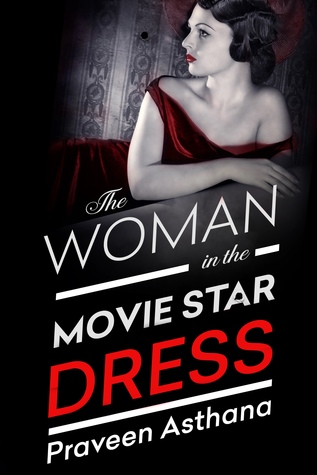 The Woman in the Movie Star Dress by Praveen Asthana: In this carefully plotted novel, a young Native American finds self-assurance and explores her sexuality by trying on the clothing – and personae – of Hollywood actresses. Spirited characters and dialogue make this an enjoyable read for classic film lovers.
Silence by Deborah Lytton: Lytton’s second novel for young adults concerns the unlikely match between a Broadway-bound singer who experiences temporary deafness after an accident and a pianist with a speech impediment and a traumatic past. It is a touching story about the forces that so often threaten us into silence and the struggle to find a voice anyway.
 Woody Allen: Reel to Real by Alex Sheremet: Woody Allen fans will prize this comprehensive, readable rundown of his oeuvre. This is an exhaustive study, ideal for established Allen enthusiasts and film students rather than the average moviegoer looking for an introduction.
I also post reviews of most of my casual reading on Goodreads.
The Mermaid’s Child by Jo Baker: This was Baker’s second novel, originally published in 2004. It doesn’t nearly live up to Longbourn, but it’s a fairly intriguing blend of historical fiction and fantasy. Malin’s father was a ferryman; her absent mother, so he swears, was a mermaid. Curiously timeless and placeless.
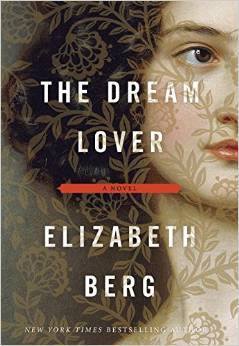 The Dream Lover: A Novel of George Sand by Elizabeth Berg: This historical novel about George Sand is a real slow burner. Berg makes the mistake of trying to be too comprehensive about Sand’s life; it would be better to just choose illustrative vignettes or representative love affairs (e.g. with Chopin) rather than include them all. There are two different timelines, 1831–1876 and 1804–1831, but together they’re still just a chronological slog.
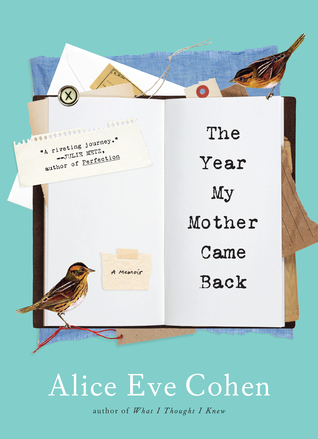 The Year My Mother Came Back by Alice Eve Cohen: There’s some gentle magic realism to this mother-daughter memoir. In the difficult year that forms the kernel of the memoir, Cohen’s younger daughter, Eliana, had a leg-lengthening surgery; her adopted older daughter, Julia, met her birth mother, Zoe; and Cohen herself underwent a lumpectomy and radiation for breast cancer. During radiation sessions, when she had to lie face-down, perfectly still, for 10 minutes at a time, her mother – dead for 20 years – would appear and talk to her.
A Sting in the Tale: My Adventures with Bumblebees by Dave Goulson: A wholly engaging tour through everything we know and are still trying to learn about bumblebees. I saw Goulson, founder of the UK’s Bumblebee Conservation Trust, speak at a nature conference in November and found him to be just as enthusiastic and well-informed in person. His occasional anthropomorphisms are unfailingly endearing.
 Black River by S.M. Hulse: Back in the town of Black River, Montana after his wife’s agonizing death, Wesley Carver must face the trauma he experienced as a prison guard when he was held hostage and tortured during an inmate riot. Now his attacker is up for parole, and Wes plans to attend the hearing and discourage the jury. At first you might think you’re reading a revenge story, but this is something subtler and sweeter than that. (What a shame that Hulse had to go by her initials, rather than Sarah, to be taken seriously in this genre, even though she’s on a level with Philipp Meyer.)
Trumbull Ave. by Michael Lauchlan: I didn’t like this quite as much as the other Made in Michigan books I’ve read, but Lauchlan does a good job of contrasting pastoral and post-industrial views of Detroit through free verse, as in “Detroit Pheasant,” the poem that gives the collection its cover image.
What Ridiculous Things We Could Ask of Each Other by Jeffrey Schultz: I enjoyed these poems set in a seemingly post-apocalyptic urban wasteland. They’re full of black humor, sarcasm and realistically pessimistic views of the American future. They’re very densely structured, usually in complete sentences of free verse.
 Bookish Beck = Rebecca Foster. American transplant to England. Freelance proofreader and book reviewer.
 Bookish Beck