All in all, I’ve reviewed 13 books (a mix of fiction and nonfiction) for #ParisInJuly2026; see also Part I and Part II. It’s been such a fun escapist project for the summer – thanks to Emma of Words and Peace for hosting! I’m squeaking in at the last minute with a final set of five made up of a few obscure classics and two sets of essays that veer between autobiographical reflection and social observation, with a bit of self-help thrown in. A shared theme this time is differences between the USA (or England) and France. Here’s a quick paragraph on each.

Fiction
The Dud Avocado by Elaine Dundy (1958)
“The world is wide, wide, wide and I am young, young, young, and we’re all going to live forever!”
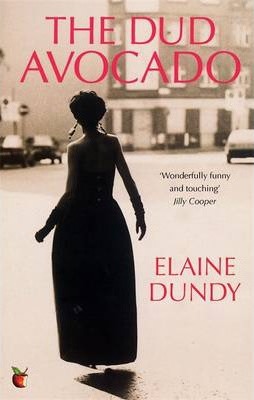 Sally Jay Gorce is determined to live it up in Paris. After all, now that she’s lost her passport, it doesn’t look like she’ll be going back to the States any time soon. With her dyed-pink hair, self-deprecating sense of humour, and heavily notched bedpost, she’s an endearing and impulsive protagonist. She’s always falling in and out of love and embarking on new projects, from acting on stage or as a film extra to posing as a painter’s model. I found her turns of phrase amusing – “To my chagrin, I found all my clothes … splitting themselves resolutely up into three categories: Tyrolean Peasant, Bar Girl, and Dreaded Librarian”; “It was dessert now, and I was deserting” – but did weary a bit of the meandering plot. This work of autofiction seems ahead of its time what with the protagonist’s promiscuity. I’ve always been intrigued about the title and learned that it arises from a love interest’s likening of American girls to avocados (“A hard centre with the tender meat all wrapped up in a shiny casing … so eternally green”) plus his mishearing of Sally Jay’s “dead” for “dud.” Somewhere on a continuum between I Capture the Castle and Nina Stibbe, this comic novel was a pleasant distraction. (Secondhand – Community Furniture Project, Newbury)
A linking passage: “Boy, we met a real nut on the beach today. A skinny young American with a fierce black moustache called Hugo McCarthy. He’d just left the South of France a couple of days ago, where he’d been kicked out of Somerset Maugham’s villa in Cap Ferrat for the third time.”
The Magician by W. Somerset Maugham (1908)
“There’s no place like Paris for meeting queer folk.”
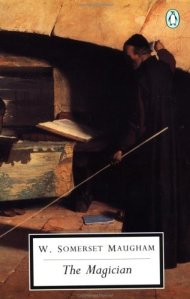 Who knew Maugham tried his hand at supernatural horror? The nearest thing I’d read from him before was Up at the Villa, a suspense novella. An autobiographical fragment preceding the text explains that Oliver Haddo, the villain of the piece, was inspired by a poet Maugham met in Paris, Aleister Crowley, who dabbled in Satanism and the occult. Arthur Burdon, an English surgeon in Paris, is engaged to marry Margaret Dauncey. Margaret’s roommate, Susie Boyd, is fascinated by Haddo, who looms large in personality and body. Margaret, on the other hand, says, “I’ve never met a man who filled me with such loathing.” Arthur and others of their acquaintance don’t know whether to take him seriously or not. This means that they underestimate the threat he poses to their happiness – and perhaps their lives. It’s rare to encounter a story of demon possession these days, and hard to know quite what to make of it. I found this reasonably compelling but melodramatic, plus it felt distasteful how Haddo’s weight increases to match his evil. Do read Maugham if you haven’t yet – he is reliably readable and a number of his works are short – but maybe not this one first. (Secondhand – 2nd & Charles)
Shadow of a Man by May Sarton (1950)
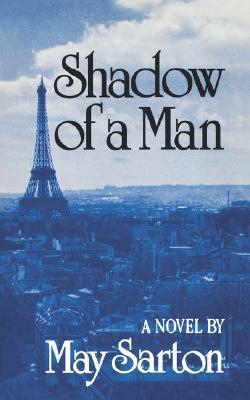 I’d not heard of Sarton’s third novel before I picked it up at random in a used bookstore. For those of us who discovered Sarton through her journals or poetry, I suspect her fiction will always fall short. The psychology of her characters’ relationships tends to lack subtlety, and plotting isn’t always her forté. I enjoyed this one well enough, probably because I could relate to the main character’s feeling of being adrift after his mother’s sudden death. After the funeral is over and done with, twenty-six-year-old Francis Chabrier decides to spend the summer in Paris. He’s half-French and thinks some time away from Boston might do him good. Except when he gets there he promptly falls in love with a family friend, Solange, and that’s complicated because she’s a 45-year-old widow whose late husband was shattered by his time in a concentration camp. It’s clear their romance will be short-lived. Francis’s stepfather, Alan, describes the young man as “a comet on the loose,” and the purpose of the months in Paris seems to be to set him on a more stable course. It grated that Solange is portrayed as almost an old lady (I’m only just over two years off her age now!), and that their affair only serves as a prelude to a more sensible relationship back home. However, the Paris setting (and coastal Maine later on) is delicious, and I marked out plenty of lines about Francis and his mother’s family dynamic. (Secondhand – Wonder Book & Video, Hagerstown)
Nonfiction
Pardon Our French: Parisian Lessons for a Happier Life by Alex Durand and Tom Carles with Allie Kingsley Baker (2026)
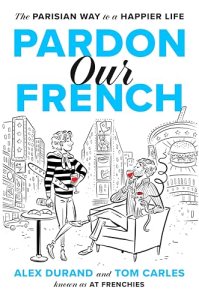 Durand and Carles moved to the USA to play college soccer and went viral on social media for their “AT Frenchies” videos about French language and culture. (I’ve not actually seen any.) Although they’ve come to admire aspects of the American lifestyle, such as ambition and individualism, they still prize traditionally French values of curiosity, privacy and a more relaxed approach to time management. Chapters on romance, food, style, friendships, green living, the arts and rituals bring out the best of what France has to offer. “L’histoire d’Alex” and “L’histoire de Tom” memoir sections alternate with more generic self-help advice. I expect Baker had a lot to do with the vernacular prose, which can be slick and clichéd. Still, it’s a good-natured, chatty book and it’s always worthwhile to be reminded to live in the moment, savour small pleasures, and insist on quality.
To be published by Penguin Life on September 8. (Read via Edelweiss)
Paris to the Moon by Adam Gopnik (2000)
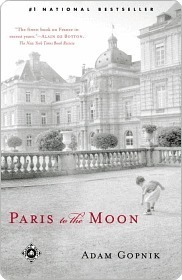 Longtime New Yorker writer Gopnik lived in Paris in 1995–2000 with his wife and young son; their daughter was born just before they left to return to New York City. Like other New Yorker regulars such as Elizabeth Kolbert and Susan Orlean, he is an excellent essayist. His book on French cuisine is a favourite of mine, and on this reread I most appreciated the pieces on food, and the general observations on being an expat:
Fish and plugs are the two great differences, the two things that are never quite alike from country to country. … This can shake you up, this business of things almost but not quite being the same. A pharmacy is not quite a drugstore; a brasserie is not quite a coffee shop
We have a beautiful existence in Paris, but not a full life, and in New York we have a full life and an unbeautiful existence. (= his wife’s conclusion)
everything about moving to France has been wonderful, and everything about emigrating to France difficult.
That summary of French bureaucracy, so at odds with the cultural experience of living in Paris, reminds me of what David Lebovitz has to say on the subject. There is too much about politics and sports in this book for me, but I loved his close attention to his son’s development and the customs they create around Christmas but also in the everyday, such as an ongoing bedtime story about a baseball player (“The Rookie”) and cake and hot chocolate after swimming. (Secondhand – 2nd & Charles)
My original rating (2016): 
My rating now:
Some apt quotes about Paris I encountered this month:
Adam Gopnik: “Paris in July is pretty much left to the tourists and the people who look after them” & “Perhaps in the end this is why Paris is ‘romantic.’ It marries both the voluptuous and restricted.”
David Lebovitz: “Like New Yorkers, Parisians have a complicated relationship to their city. They appreciate the beauty and excitement, but as Romain told me, Paris is dur (hard). That things aren’t easy—l’administration, the neighbors, the brusqueness, the fact that it’s not a perfect place—is what he likes about Paris.”
May Sarton: “I think Paris makes everyone wise … All Americans fall in love with Paris. It’s the coup de foudre.”

Overall favourites: the whole of my first batch!
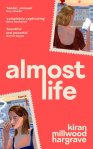
- Almost Life by Kiran Millwood Hargrave
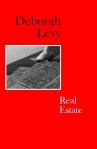
- My Year in Paris with Gertrude Stein & Real Estate by Deborah Levy
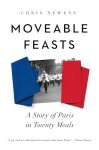
- Moveable Feasts by Chris Newens

 Bookish Beck = Rebecca Foster. American transplant to England. Freelance proofreader and book reviewer.
 Bookish Beck
Congrats for reading so many books on France!
And thanks for sharing the AT Frenchies. I had totally forgotten them
LikeLiked by 1 person
It was a pleasure!
I guess I should watch one of their videos 😉
LikeLiked by 1 person
[…] On Paris – posted by Bookish Beck […]
LikeLike
I really must read The Dud Avocado – I’m on a bit of a kick of novels that I can’t punchily categorise, but it’s something like “snarky women and their relationships in a decade before my birth but after WWII”. It’s mostly been Laurie Colwin and Nora Ephron so far (and I’m including Vita Sackville-West even though the novels I’ve read of hers have been from the ’30s), but Dundy clearly fits the bill. I also love Adam Gopnik’s nonfiction/journalism in the New Yorker, so Paris to the Moon is on my radar now!
LikeLiked by 1 person
It seems like something you’d enjoy. I’m going to pass it round to two ladies from my women’s classics book club subgroup (they love Spark, Pym, all that lot) and then I could send it your way.
Gopnik is great! I’ve read 5 of his books now. I randomly have a second copy of this one because after a decade I’d forgotten I owned it and bought it off a clearance shelf in the US earlier this summer. I’ll set it aside for you.
LikeLike
That’s very kind! Thank you!
LikeLike
I read Of Human Bondage when I was a teenager, and boy, I hated that book, so I stayed away from Maugham. Just the last few years, I have been reading him and finding him very readable, as you said, although I haven’t tried OHB again.
LikeLiked by 1 person
I wonder if that was too young to read it! I read OHB in my early 30s. It was my first from Maugham and I’ve read another 8 of his books since then.
LikeLiked by 1 person
I think probably that’s true, but I have always hated the theme of a man being helplessly in thrall to an abusive woman, which is what I remember of the book (but may not be what happened). I think it is so often the other way around that it makes me sick to think of how many men wrote books with that theme.
LikeLiked by 1 person
Interesting. The Magician has the opposite gender dynamic to that!
LikeLike
Good to see you rated Almost Life so highly. Adding the Gopnik to my list. I’ve occasionally heard him reading his essays on Radio 4 and enjoyed them.
LikeLiked by 1 person
One of his books that I’ve read was a compilation of those radio essays (In Mid-Air).
LikeLiked by 1 person
He speaks very well, as if you’re in the room with him.
LikeLiked by 1 person
Christopher Hitchens always said that the mark of good writing is that it sounds just like how you speak.
LikeLike
Shadow of a Man sounds the most interesting to me. I’m not too bothered about women my age being portrayed as “old”, nothing can beat 27 year old, haggard old maid Anne Elliot…
Also The Dud Avocado which seems polarizing, I seem to recall some pretty negative reviews, you make it sound fun though!
LikeLiked by 1 person
I keep reading Sarton’s novels even though they’re mostly middling. I guess she’s one of those authors I’ll be a completist about.
I was surprised to hear one book club friend say she was disappointed with The Dud Avocado. Another happily borrowed my copy!
LikeLike
Wow – you did well, but there’s something about Paris…
LikeLiked by 1 person
A certain je ne sais quoi? 😉
LikeLiked by 1 person
I read the Gopnik in August 2001! I don’t have a note of where I got it, but I acquired it in May 2001 (those were the days when I had a short TBR). I remember loving it even 25 years later, though, so I’m glad it still stands up.
LikeLiked by 1 person
He’s a great writer who can make you interested in almost anything (sport is still a stretch for me, though).
LikeLiked by 1 person