Paris in July, III: Dundy, Maugham, Sarton Novels; Nonfiction by Durand & Carles, Gopnik
All in all, I’ve reviewed 13 books (a mix of fiction and nonfiction) for #ParisInJuly2026; see also Part I and Part II. It’s been such a fun escapist project for the summer – thanks to Emma of Words and Peace for hosting! I’m squeaking in at the last minute with a final set of five made up of a few obscure classics and two sets of essays that veer between autobiographical reflection and social observation, with a bit of self-help thrown in. A shared theme this time is differences between the USA (or England) and France. Here’s a quick paragraph on each.

Fiction
The Dud Avocado by Elaine Dundy (1958)
“The world is wide, wide, wide and I am young, young, young, and we’re all going to live forever!”
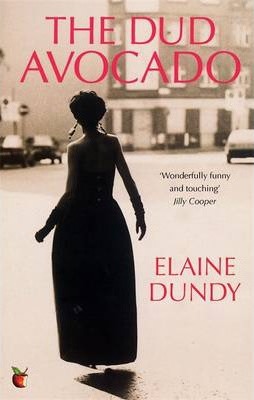 Sally Jay Gorce is determined to live it up in Paris. After all, now that she’s lost her passport, it doesn’t look like she’ll be going back to the States any time soon. With her dyed-pink hair, self-deprecating sense of humour, and heavily notched bedpost, she’s an endearing and impulsive protagonist. She’s always falling in and out of love and embarking on new projects, from acting on stage or as a film extra to posing as a painter’s model. I found her turns of phrase amusing – “To my chagrin, I found all my clothes … splitting themselves resolutely up into three categories: Tyrolean Peasant, Bar Girl, and Dreaded Librarian”; “It was dessert now, and I was deserting” – but did weary a bit of the meandering plot. This work of autofiction seems ahead of its time what with the protagonist’s promiscuity. I’ve always been intrigued about the title and learned that it arises from a love interest’s likening of American girls to avocados (“A hard centre with the tender meat all wrapped up in a shiny casing … so eternally green”) plus his mishearing of Sally Jay’s “dead” for “dud.” Somewhere on a continuum between I Capture the Castle and Nina Stibbe, this comic novel was a pleasant distraction. (Secondhand – Community Furniture Project, Newbury)
A linking passage: “Boy, we met a real nut on the beach today. A skinny young American with a fierce black moustache called Hugo McCarthy. He’d just left the South of France a couple of days ago, where he’d been kicked out of Somerset Maugham’s villa in Cap Ferrat for the third time.”
The Magician by W. Somerset Maugham (1908)
“There’s no place like Paris for meeting queer folk.”
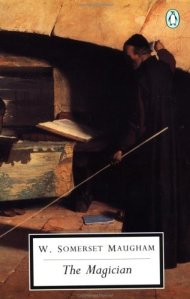 Who knew Maugham tried his hand at supernatural horror? The nearest thing I’d read from him before was Up at the Villa, a suspense novella. An autobiographical fragment preceding the text explains that Oliver Haddo, the villain of the piece, was inspired by a poet Maugham met in Paris, Aleister Crowley, who dabbled in Satanism and the occult. Arthur Burdon, an English surgeon in Paris, is engaged to marry Margaret Dauncey. Margaret’s roommate, Susie Boyd, is fascinated by Haddo, who looms large in personality and body. Margaret, on the other hand, says, “I’ve never met a man who filled me with such loathing.” Arthur and others of their acquaintance don’t know whether to take him seriously or not. This means that they underestimate the threat he poses to their happiness – and perhaps their lives. It’s rare to encounter a story of demon possession these days, and hard to know quite what to make of it. I found this reasonably compelling but melodramatic, plus it felt distasteful how Haddo’s weight increases to match his evil. Do read Maugham if you haven’t yet – he is reliably readable and a number of his works are short – but maybe not this one first. (Secondhand – 2nd & Charles)
Shadow of a Man by May Sarton (1950)
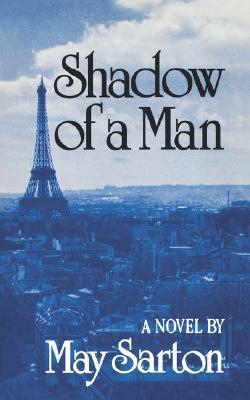 I’d not heard of Sarton’s third novel before I picked it up at random in a used bookstore. For those of us who discovered Sarton through her journals or poetry, I suspect her fiction will always fall short. The psychology of her characters’ relationships tends to lack subtlety, and plotting isn’t always her forté. I enjoyed this one well enough, probably because I could relate to the main character’s feeling of being adrift after his mother’s sudden death. After the funeral is over and done with, twenty-six-year-old Francis Chabrier decides to spend the summer in Paris. He’s half-French and thinks some time away from Boston might do him good. Except when he gets there he promptly falls in love with a family friend, Solange, and that’s complicated because she’s a 45-year-old widow whose late husband was shattered by his time in a concentration camp. It’s clear their romance will be short-lived. Francis’s stepfather, Alan, describes the young man as “a comet on the loose,” and the purpose of the months in Paris seems to be to set him on a more stable course. It grated that Solange is portrayed as almost an old lady (I’m only just over two years off her age now!), and that their affair only serves as a prelude to a more sensible relationship back home. However, the Paris setting (and coastal Maine later on) is delicious, and I marked out plenty of lines about Francis and his mother’s family dynamic. (Secondhand – Wonder Book & Video, Hagerstown)
Nonfiction
Pardon Our French: Parisian Lessons for a Happier Life by Alex Durand and Tom Carles with Allie Kingsley Baker (2026)
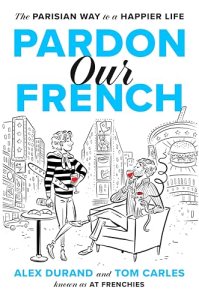 Durand and Carles moved to the USA to play college soccer and went viral on social media for their “AT Frenchies” videos about French language and culture. (I’ve not actually seen any.) Although they’ve come to admire aspects of the American lifestyle, such as ambition and individualism, they still prize traditionally French values of curiosity, privacy and a more relaxed approach to time management. Chapters on romance, food, style, friendships, green living, the arts and rituals bring out the best of what France has to offer. “L’histoire d’Alex” and “L’histoire de Tom” memoir sections alternate with more generic self-help advice. I expect Baker had a lot to do with the vernacular prose, which can be slick and clichéd. Still, it’s a good-natured, chatty book and it’s always worthwhile to be reminded to live in the moment, savour small pleasures, and insist on quality.
To be published by Penguin Life on September 8. (Read via Edelweiss)
Paris to the Moon by Adam Gopnik (2000)
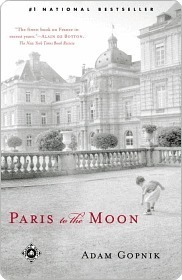 Longtime New Yorker writer Gopnik lived in Paris in 1995–2000 with his wife and young son; their daughter was born just before they left to return to New York City. Like other New Yorker regulars such as Elizabeth Kolbert and Susan Orlean, he is an excellent essayist. His book on French cuisine is a favourite of mine, and on this reread I most appreciated the pieces on food, and the general observations on being an expat:
Fish and plugs are the two great differences, the two things that are never quite alike from country to country. … This can shake you up, this business of things almost but not quite being the same. A pharmacy is not quite a drugstore; a brasserie is not quite a coffee shop
We have a beautiful existence in Paris, but not a full life, and in New York we have a full life and an unbeautiful existence. (= his wife’s conclusion)
everything about moving to France has been wonderful, and everything about emigrating to France difficult.
That summary of French bureaucracy, so at odds with the cultural experience of living in Paris, reminds me of what David Lebovitz has to say on the subject. There is too much about politics and sports in this book for me, but I loved his close attention to his son’s development and the customs they create around Christmas but also in the everyday, such as an ongoing bedtime story about a baseball player (“The Rookie”) and cake and hot chocolate after swimming. (Secondhand – 2nd & Charles)
My original rating (2016): 
My rating now:
Some apt quotes about Paris I encountered this month:
Adam Gopnik: “Paris in July is pretty much left to the tourists and the people who look after them” & “Perhaps in the end this is why Paris is ‘romantic.’ It marries both the voluptuous and restricted.”
David Lebovitz: “Like New Yorkers, Parisians have a complicated relationship to their city. They appreciate the beauty and excitement, but as Romain told me, Paris is dur (hard). That things aren’t easy—l’administration, the neighbors, the brusqueness, the fact that it’s not a perfect place—is what he likes about Paris.”
May Sarton: “I think Paris makes everyone wise … All Americans fall in love with Paris. It’s the coup de foudre.”

Overall favourites: the whole of my first batch!
- Almost Life by Kiran Millwood Hargrave
- My Year in Paris with Gertrude Stein & Real Estate by Deborah Levy
- Moveable Feasts by Chris Newens

Book Serendipity, June to July
Life can have odd confluences. Esme will not say serendipity: she loathes the word. But sometimes she thinks there must be something at work, some impulse, some collision of forces, some kinks in chronology.
~The Vanishing Act of Esme Lennox by Maggie O’Farrell
Unlike Esme Lennox, I love the word serendipity! You probably know by now that I call it “Book Serendipity” when two or more books that I read at the same time or in quick succession have something in common – the more bizarre, the better. This is a regular feature of mine every couple of months. Because I usually have 20–30 books on the go at once, I suppose I’m more prone to such incidents. People frequently ask how I remember all of these coincidences. The answer is: I jot them down on scraps of paper or input them immediately into a file on my PC desktop; otherwise, they would flit away!
Thanks to Kay for posting about her own book serendipity moments here!
The following are in roughly chronological order.
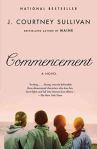
- A woman gets on a flight even though she’s technically too pregnant to do so in one poem of Family Lines (ed. Armitage and Bower) and Commencement by J. Courtney Sullivan.
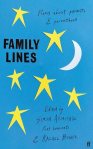
- A mention of a Spanish cat in one poem of Family Lines (ed. Armitage and Bower) and Tsi-Tsa by George Mikes.
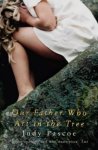
- Rum and coke is mentioned in I Sing to the Greenhearts by Maggie Harris and Our Father Who Art in the Tree by Judy Pascoe.
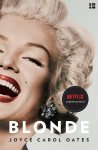
- A character named Gladys in Blonde by Joyce Carol Oates and Our Father Who Art in the Tree by Judy Pascoe.
- A character named Celia in The Seven Husbands of Evelyn Hugo by Taylor Jenkins Reid and Commencement by J. Courtney Sullivan.
- A girl holds her breath until she faints in Lost Lambs by Madeline Cash and Our Father Who Art in the Tree by Judy Pascoe.
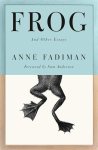 Samuel Taylor Coleridge’s performance as a father appears in one poem of Family Lines (ed. Armitage and Bower) and one essay of Frog by Anne Fadiman.
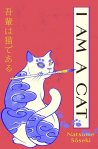
- A cat scratches a tatami mat in Letters of Note: Cats (ed. Shaun Usher) and I Am a Cat by Natsume Sōseki.
- A Freudian explanation of the collector’s obsessive impulse in The Madman’s Guide to Stamp Collecting by Robert Irwin and The Butterfly Season by Lea Korsgaard.
- A book/other arts coincidence, this: I first saw the actress Anya Taylor-Joy in The Menu, which I watched on my sister’s TV streaming system in the US, and then realized she’s pictured on the Netflix tie-in cover of a book I borrowed from the library, The Queen’s Gambit by Walter Tevis.
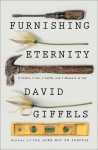
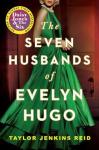
- Manhattans are drunk in Furnishing Eternity by David Giffels and The Seven Husbands of Evelyn Hugo by Taylor Jenkins Reid.
- A main character has a history of living in an orphanage in Blonde by Joyce Carol Oates, Buckeye by Patrick Ryan, and The Queen’s Gambit by Walter Tevis; and in children’s homes in Hunger and Thirst by Claire Fuller.
- An in-law named Fran(cesca) in The Vanishing Act of Esme Lennox by Maggie O’Farrell and The Things We Never Say by Elizabeth Strout.
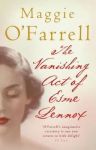
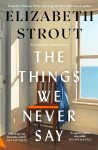
- A scene of visiting one’s grandmother in a dementia ward in The Vanishing Act of Esme Lennox by Maggie O’Farrell and Black Lake by Emily Skaja.
- Eating spoons of sugar straight from the jar/box in Depression Cooking by Sonali Menezes and The Things We Never Say by Elizabeth Strout.
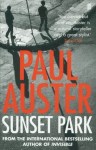
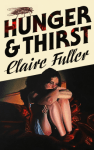
- Young people living in a squat in Sunset Park by Paul Auster and then Hunger and Thirst by Claire Fuller.
- A people-trafficking plot in Lost Lambs by Madeline Cash and The Singer’s Gun by Emily St. John Mandel.
- Someone who doesn’t want to be recognized says “I don’t know what you’re talking about” / “I have no idea what you’re talking about” when someone identifies them in Apt Pupil by Stephen King and The Seven Husbands of Evelyn Hugo by Taylor Jenkins Reid.
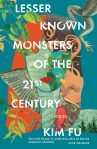
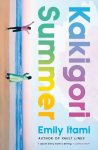
- A woman suffers from insomnia despite having done all the ‘right’ things, sleep hygiene-wise, in one story of Lesser-Known Monsters of the 21st Century by Kim Fu and Kakigori Summer by Emily Itami.
- A future blonde bombshell actress gets married off at age 15 in Blonde by Joyce Carol Oates and The Seven Husbands of Evelyn Hugo by Taylor Jenkins Reid.
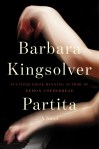
- A homosexual encounter takes place in a public bathroom in What Belongs to You by Garth Greenwell and The Seven Husbands of Evelyn Hugo by Taylor Jenkins Reid. (Plus heterosexual ones in a private shower in Partita by Barbara Kingsolver.)
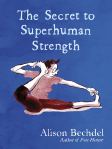
- A reference to Emerson’s “transparent eyeball” in The Secret to Superhuman Strength by Alison Bechdel and Black Lake by Emily Skaja.

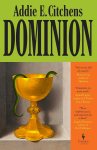
- A character named Manny in Dominion by Addie E. Citchens, Partita by Barbara Kingsolver, and one story of The Typing Lady by Ruth Ozeki.
- A female character named Mick(ie) in The Heart Is a Lonely Hunter by Carson McCullers and Partita by Barbara Kingsolver. (There’s also a male Mick in Few and Far Between by Jan Carson.)
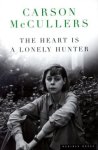
- Shoplifting takes place in Receipts from the Bookshop by Katie Clapham, The Singer’s Gun by Emily St. John Mandel, The Heart Is a Lonely Hunter by Carson McCullers, one story of The Typing Lady by Ruth Ozeki, and The Things We Never Say by Elizabeth Strout.
- The medical necessity of ironing all one’s clothing, especially nappies/underwear, is mentioned in L’Appart by David Lebovitz (a Greek person told him that) and Don’t Let’s Go to the Dogs Tonight by Alexandra Fuller (de rigueur in 1970s Rhodesia).

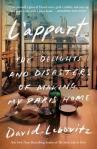 Remarking on how quiet/noisy a French dishwasher is in Paris to the Moon by Adam Gopnik/L’Appart by David Lebovitz and a mention of one’s good fortune in getting a store to accept a returned appliance.
- A mention of Ludwig Bemelmans’ Madeline in Receipts from the Bookshop by Katie Clapham and Brother, I’m Dying by Edwidge Danticat.
- Characters are robbed in a motel room in Dominion by Addie E. Citchens and The New People by Andrea Uptmor.

- Living in the space above a garage in one story of The Typing Lady by Ruth Ozeki and The New People by Andrea Uptmor.
- Scenes of a woman/girl reassembling a gun, and a gun amnesty, in one story of Lesser-Known Monsters of the 21st Century by Kim Fu and Don’t Let’s Go to the Dogs Tonight by Alexandra Fuller.
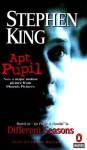
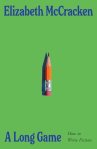
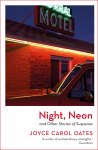
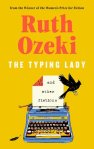
- The use of a typewriter in Brother, I’m Dying by Edwidge Danticat, Apt Pupil by Stephen King, A Long Game by Elizabeth McCracken, one story of Night, Neon by Joyce Carol Oates, and The Typing Lady by Ruth Ozeki.
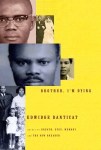
- Thousands of dollars being stored in/under a mattress in Brother, I’m Dying by Edwidge Danticat and The New People by Andrea Uptmor.
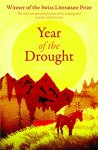 The smell of vetiver: a cologne in Year of the Drought by Roland Buti and fabric softener in Brother, I’m Dying by Edwidge Danticat.
- I encountered sections on the sense of smell at about the same time in Life in Five Senses by Gretchen Rubin and Wearing God by Lauren Winner.
- A person bites someone else’s finger in Don’t Let’s Go to the Dogs Tonight by Alexandra Fuller, one story of The Typing Lady by Ruth Ozeki, and The New People by Andrea Uptmor. (And an ear in The Dud Avocado by Elaine Dundy.)
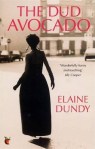
- Eating an omelette in a Paris café in The Dud Avocado by Elaine Dundy, Paris to the Moon by Adam Gopnik, and Moveable Feasts by Chris Newens. (I suppose these things will happen if I read multiple Paris-set books at once!)
- The fact that “Pas mal” (“not bad”) is high praise in French is explained in Pardon Our French by Alex Durand and Tom Carles and L’Appart by David Lebovitz.
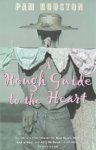 An insistence that the soles of a woman’s feet not be shown in A Rough Guide to the Heart by Pam Houston (etiquette in Bhutan) and Blonde by Joyce Carol Oates (when Norma Jeane Baker, aka Marilyn Monroe, is having early nude photos taken).
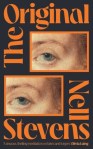
- A nude photo shoot takes place in The Singer’s Gun by Emily St. John Mandel and Blonde by Joyce Carol Oates. There are also nude portrait sittings in The Dud Avocado by Elaine Dundy and The Original by Nell Stevens.

- A man has glass embedded in his face in Few and Far Between by Jan Carson and The Singer’s Gun by Emily St. John Mandel.
- The idea that one will be cursed for touching a stranger’s grave appears in Don’t Let’s Go to the Dogs Tonight by Alexandra Fuller and Kakigori Summer by Emily Itami.
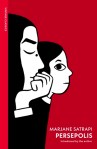
- I find myself rereading two childhood memoirs of wartime life at the same time: Don’t Let’s Go to the Dogs Tonight by Alexandra Fuller and Persepolis by Marjane Satrapi.
What’s the weirdest reading coincidence you’ve had lately?
 Bookish Beck = Rebecca Foster. American transplant to England. Freelance proofreader and book reviewer.
