I wouldn’t want to be in Paris right now – continental Europe is far too hot in high summer and in recent years the UK has been following suit – but I am having such fun travelling there through books. I have a fantastic stack of Paris-set novels and memoirs on the go, perfect for sinking into on long afternoons and evenings while I hide from the second round of the heat wave in our relatively cool lounge. These first four selections were corkers! I mostly read them earlier: in May, or across several years, or started in January but only just finished. And what a treat they all were: an epic yet intimate queer romance, two auto/fiction hybrids about making a life as an unconventional woman, and a tour through Paris food, district by district.

Almost Life by Kiran Millwood Hargrave (2026)
There has been homoerotic content in Hargrave’s previous fiction for adults, but this is a full-blown queer love story that, with its time span (1978 to 2013) and heft, feels momentous, like a future classic. Erica is an earnest 18-year-old tourist experiencing Paris before starting at UEA. She meets Laure, an older, cynical Sorbonne art history student, on the steps of the Sacré-Coeur: drawn to her not just because they’re reading the same book (A Lover’s Discourse by Roland Barthes) but also because Laure looks so perfectly Parisian there in a louche sprawl, smoking a cigarette. Laure is a confirmed lesbian, whereas Erica was previously straight. It’s coup de foudre for sure. Laure has been with many women, including married ones, but what she feels for Erica is different, and Erica leaving at the end of the summer is such a blow that her problem drinking gets out of control.
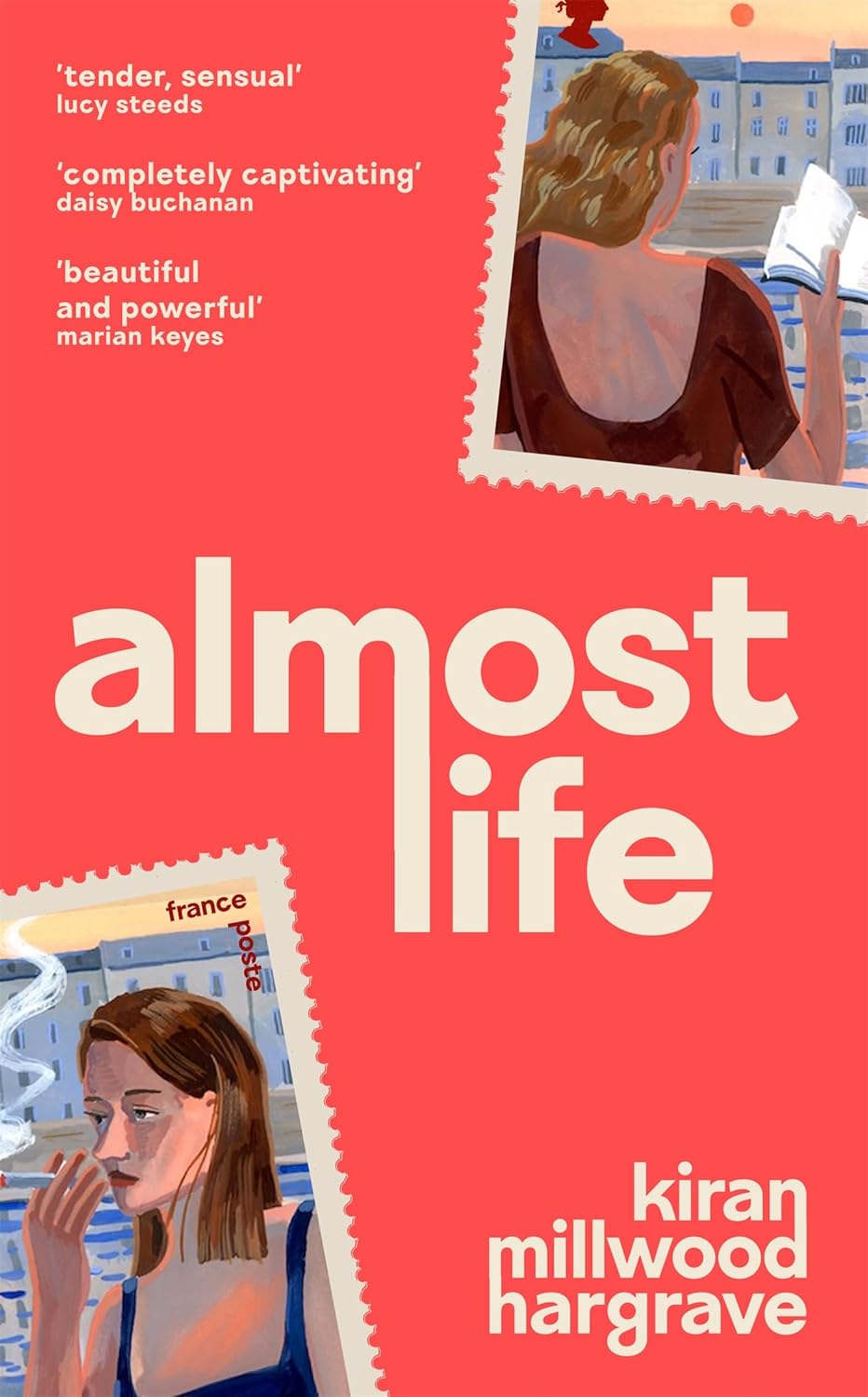
Comparisons with One Day by David Nicholls are inescapable what with the structure of jumping ahead by a few years with each section, although I’d argue that this is more similar to The Versions of Us by Laura Barnett and The Heart’s Invisible Furies by John Boyne. Hargrave’s close third-person narration alternates between her two protagonists and occasionally documents their interactions, though they keep missing their chance to be together. On two occasions Erica doesn’t write or visit when she should; twice they resume their love affair and could have gotten back together, but by then one or both has another partner. (Erica marries a Creative Writing MA classmate and they have two daughters.) The social context is important: they lose a dear friend to the AIDS crisis and Hargrave carefully bookends the action to show an advance in LGBTQ rights: early on, the characters are caught up in an attack on a gay bar in 1978; in the last pages, France legalizes same-sex marriage.
Thirty-five years is a long time in any relationship, but Erica and Laure’s is repeatedly strained by absence and perceived betrayals. They each, separately, go through a lot, including bereavements, addiction, mental health issues, and career disappointments. I thought the novel might have a speculative element, contrasting their potential life together with their divergent trajectories. In fact, only in one brief instance does Hargrave offer an alternative version of how things might have gone. Instead, the focus is on moments when fear or negligence stopped one of them from reaching out. I quibbled with a few seeming anachronisms and errors but overall found this delicious, touching, and even strangely close to home sometimes. Paris itself is a star, its museums, bars, and streets a perfect backdrop; Monet’s gardens and the Norfolk coast are appealing settings, too. This was a sweet, sexy, sobering read I can wholeheartedly recommend. (Public library) 
A linking passage:
“They went together to the Père-Lachaise and Erica pulled a button off her shirt to put on Gertrude Stein’s grave. Laure was amazed she knew Tender Buttons but not that Gertrude Stein had loved a woman. She did not want to be the lesbian prophet to this girl, but she could not help herself.”
My Year in Paris with Gertrude Stein: A Fiction by Deborah Levy (2026)
“Gertrude Stein said that’s enough. (I know that that’s not enough now.)”
~from “Roseability” by Idlewild – enjoy the c. 2000 Scottish punk!
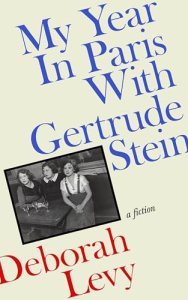
Here’s the good news: You don’t need to know anything – or particularly care – about Gertrude Stein to enjoy this. Even not having read any Stein, just having read about her, it was clear to me that the style is an homage in places (repetition, scant punctuation). But where Stein’s is famously cryptic, Levy’s prose is crystal-clear as usual. There’s a gauzy fictional storyline in which the narrator is wrestling with an inchoate essay about Gertrude Stein. (Rather like Geoff Dyer trying to write about D.H. Lawrence in Out of Sheer Rage.) She has two close friends: Eva is a graphic novelist with an international background, currently separated from a husband back in Seattle; Fanny is a polyamorous French lesbian who works in finance and, no matter the topic, tells it like it is. A mystery of sorts arises in the form of Eva’s lost cat, Bob. Fanny has heard about a cat found drowned in the canal and they later meet a Frenchman whose cat was stolen. (It’s unclear whether it’s all one and the same cat.)
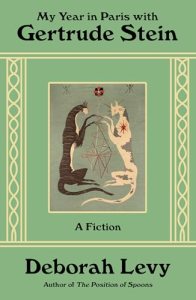
Cute American cover (though the British one is probably more apt).
The narrator alternates between this minor intrigue, biographical fragments about Stein, and her struggle to know how to capture her subject in words. Stein was brought up in a German Jewish household in Pennsylvania and failed her medical school exams at Johns Hopkins. In Paris she lived with Alice B. Toklas as she pleased, without apology: an artist’s muse, intellectual and author inspired by “early psychology and cubism.” Levy clearly admires Stein for pushing the boundaries of literature and of life, paving the way for so many. I wasn’t sure that the ‘story’, such as it is, matters here, or at least not as much as the biography and pastiche. Levy is very much in Ali Smith territory here. In any case, I found it playful, sophisticated and beguiling. There are so many plainly put but brilliant lines:
“Stein put her immense writing energies into making sure she was not understood. This is what interested me most about her writing. She did not believe it is worth having a conversation if everything is understandable.”
“Every century needs an artist to dismantle coherence as we have been taught it and make a space for something new to happen.”
I have a copy of The Autobiography of Alice B. Toklas that I’m going to attempt soon…
(Public library)
Real Estate by Deborah Levy (2021)
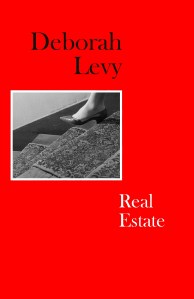 I’m not sure why it took me so long to read the final volume of Levy’s so-called Living Autobiography. I started it in August 2022: perfect timing because that was the year we bought our first house. But I left it part-read on a shelf until April. It’s not my favourite of the trilogy – that’s The Cost of Living, which is perfect – but I appreciated it a lot more than Things I Don’t Want to Know, which felt forced. Levy paints her life as restless, nomadic; to an extent, she likes it that way. She flits between London and Paris, attends a literary festival in India and takes an extended holiday in Greece. At age 60, single and with adult daughters, she doesn’t have to answer to anyone. Yet she longs for a home of her own – a deep sense of fulfilment that perhaps can’t be bought along with a piece of property. Is it a paradox to desire grounding but also freedom? That’s the main question that Levy explores here, and you can see why Stein would become a model for her (Leonora Carrington is another in this book). “It seemed to me all over again that in every phase of living we do not have to conform to the way our life has been written for us, especially by those who are less imaginative than ourselves.” This is incredibly quotable, and really a perfect book for every woman of a certain age as we come to resemble our mothers and ponder how to go on constructing ourselves through words and relationships.
to think and feel and live and love more freely is the point of life
So then, now that I was a sixty-year-old female character, both unwritten and constantly rewriting the script, what did I value, own, discard and bequeath?
Levy has an enviable talent for simplicity and clarity, but simultaneous impact and meaning. I’d be lucky to ever write anything autobiographical that has half as much elegance and power as her work. (New purchase – Amazon?) 
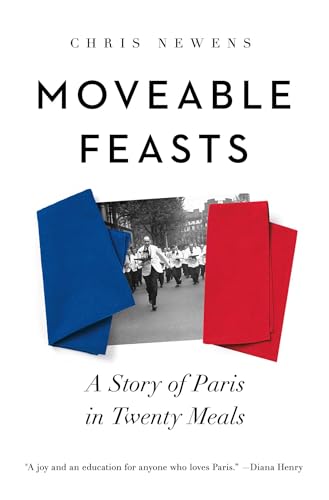
Moveable Feasts: A Story of Paris in Twenty Meals by Chris Newens (2025)
Newens, an English journalist, grew up working in his family bakery and tea rooms, so knew of the hard labour and long, early hours that daily food preparation requires. He’d lived in Paris for a decade when he decided that his strategy for getting a broader understanding of his adopted city would be through its cuisine. Arrondissement by arrondissement, he explores culinary landmarks and famous dishes, choosing one recipe from each to recreate in his kitchen. Some of these are familiar French staples such as croissants, crêpes, macarons, a goat’s cheese salad and tartiflette. Others aren’t so much a recipe as a serving suggestion: fresh oysters, an omelette with no ingredients beyond 3 eggs, pre-packaged escargots. Tourist food can be good or terrible, depending on where you go.
 To get beyond clichés and give an accurate portrait of Paris, Newens realized, it’s essential to include ethnic dishes such as banh mi, couscous, falafel, kebabs (made of equal parts lamb belly and turkey thigh meat) and meen puyabaisse (a Tamil-fusion fish stew – A Waiter in Paris taught me that many of the city’s food service workers are from Sri Lanka) to reflect the many immigrant cultures that call Paris home. To mix things up, he sometimes strays from the usual format of meeting with restaurant staff and learning a dish from them. One chapter is an elegy for the family friend through whom he first discovered French food. In others he is surprised by the delicious/awful fare on offer at a Paris soup kitchen/sex club. Ultimately, he concludes that what sets the food in France apart, no matter the cuisine in question, is the quality of the produce, so his final trip is to Rungis, the largest produce market in the world, which supplies most of Paris’s food needs at some times of year. He then ties it all together by hosting a picnic where guests cook one of his 20 recipes to bring.
This is the best sort of armchair travelling, where you get to experience the deliciousness and excitement vicariously and can be relieved that you’ve avoided all the inconvenient or embarrassing realities of interviewing strangers. I also learned a fair bit about the different districts’ personalities and how tradition meets modernity in French food. Food is a daily chance at pleasure and I just love reading about it (even though I don’t cook). Newens won a Jane Grigson Trust Award for New Food and Drink Writers, and with his curiosity and sense of humour it’s easy to see why. (Read via Edelweiss)
 Bookish Beck = Rebecca Foster. American transplant to England. Freelance proofreader and book reviewer.

How have I not come across Moveable Feasts before? Definitely one for my list. I’m so glad you enjoyed Almost Life, one of my books of the year, and I’m looking forward to My Year in Paris with Gertrude Stein. Have you read Monique Truong’s The Book of Salt?
LikeLiked by 1 person
Moveable Feasts was delightful. It actually came out in the UK from Profile last year but I somehow missed it.
I tried the Truong some years back but didn’t get far with it.
LikeLiked by 1 person
A great review of Almost Life. Like Susan, I might have it as one of my Books of the Year. I only tried Deborah Levy once, and didn’t get on with her. It looks as if I should try again? Moveable Feasts sounds … tasty.
LikeLiked by 1 person
I’ve had a mixed experience with Levy’s fiction but she has some fantastic stuff. The Cost of Living being the pinnacle.
Moveable Feasts was delicious!
LikeLiked by 1 person
I’ll give Levy another go .. and have a Moveable Feast too, if I can! (our library service has’t got it. It rarely lets me down)
LikeLiked by 1 person
Definitely interested in Levy’s take on Stein…
LikeLiked by 1 person
I enjoyed it even as a complete newcomer to Stein. So if you have some familiarity, I imagine you’d appreciate it even more.
LikeLiked by 1 person
Good reviews. You’ve reminded me to read Moveable Feasts.
LikeLiked by 1 person
Thanks! Hope you enjoy it.
LikeLike
I love your description of food as “a daily chance at pleasure”. When I lost my senses of taste and smell during COVID, I realised how much food meant to me on a deep level, like music or art. It made me feel, weirdly, a lot better about liking food (a thing I think so many women are taught is, deep down, unacceptable, though of course we’re meant to enjoy cooking it…) Moveable Feasts therefore sounds particularly wonderful!
LikeLiked by 1 person
It was great fun to read. Sonali Menezes’s upcoming Depression Cooking is very much about reclaiming joy in food after struggles with body image and disordered eating. It mixes memoir, self-help, recipes and comics. I haven’t read Ruby Tandoh, but I imagine it’s a similar voice and strategy.
LikeLike
I’ll keep an eye out for the Menezes. Yes – Ruby Tandoh not dissimilar.
LikeLike
Probably not the easiest to find — ECW Press (Canada) — though I see it’s on NetGalley atm.
LikeLike
Wow Rebecca, your literary trip through France / Paris is amazing. I am currently reading ‘My Year in Paris with Gertrude Stein’ and have just finished ‘Paris France’ by Gertrude Stein. But that is all I have achieved so far.. but like you I think I will enjoy Levy’s book.. It is very easy to read..
LikeLiked by 1 person
Levy quotes from that Stein volume at some point. Stein seems very quotable, yet I don’t know how I’ll cope with a whole book by her. How did you get on with that one?
LikeLiked by 1 person
I found it okay. It is fairly easy to read, but I got a little tired of her constant cliches, and forthright position about the 20th century inventing itself.. I need to pull my thoughts properly together and write up my review.
LikeLiked by 1 person
Huh. Cliches is not what I would have expected from her!
LikeLiked by 1 person
What a great collection, I love everything to do with Miss Stein so don’t know why I haven’t got around to the Levy yet; Moveable Feasts sounds terrific too!
LikeLiked by 1 person
Thanks! Both highly recommended.
LikeLiked by 1 person
Sorry, just discovering this through social media, as you didn’t use our MrLinky.Adding your post now to our main page: https://wordsandpeace.com/2026/06/23/parisinjuly2026-all-the-links/Thanks for these wonderful short reviews. Am definitely tempted by the one on Gertrude
LikeLiked by 1 person
Thank you! I didn’t realize there was a link-up. I’ll use that for my other reviews this month.
LikeLiked by 1 person
[…] 4 short reviews – posted by Bookish Beck […]
LikeLike
Moveable Feasts looks very enticing!
LikeLiked by 1 person
I love reading about food almost as much as I love eating it!
LikeLike
Just placed a hold for Movable Feasts…sounds like the perfect escape read for my trip home to Ohio (not Paris, but a girl can dream!).
LikeLiked by 1 person
Enjoy!
LikeLike
Once I finish my last Ernaux of the summer, Levy is to take her place but, unfortunately, the local library hasn’t elected to add this one to their shelves. At first, I didn’t mind because I figured it was more for Stein fans, but now I wish they had. At least I can look forward to the rest (the one about the swimming pool is the only one I’ve read, I think?).
LikeLiked by 1 person
Do you ever place stock purchase requests? (Dangerous for you and me, I know. I’ve only done one batch so far but now that I’ve nearly read all of those I’m planning my second set.)
LikeLike
Rarely, and I still have to read one of “my requests” yet. Yes, it does feel a little dangerous. hehe But it did occur to me this might be a reasonable ask because they have three or four of her others already (and I had nothing to do with that!) /handsinair.
LikeLiked by 1 person
Totally justified!
LikeLike
[…] been good for one thing (maybe two): finishing books – and watching swifts. Following on from my first set of four Paris reads, I have another four (and five more before the end of the month): a teen novel […]
LikeLike
Thanks for adding this to our MrLinky. I had listed your post under ‘4 short reviews’. But I now realize I should add instead the 4 books you reviewed here. Will be ready in a few minutes. Thanks for your patience and perseverance!
LikeLiked by 1 person
I greatly enjoyed Moveable Feasts and My Year in Paris.
LikeLiked by 1 person
[…] in all, I’ve reviewed 13 books (a mix of fiction and nonfiction) for #ParisInJuly2026; see also Part I and Part II. It’s been such a fun escapist project for the summer – thanks to Emma of Words and […]
LikeLike