Paris in July, III: Dundy, Maugham, Sarton Novels; Nonfiction by Durand & Carles, Gopnik
All in all, I’ve reviewed 13 books (a mix of fiction and nonfiction) for #ParisInJuly2026; see also Part I and Part II. It’s been such a fun escapist project for the summer – thanks to Emma of Words and Peace for hosting! I’m squeaking in at the last minute with a final set of five made up of a few obscure classics and two sets of essays that veer between autobiographical reflection and social observation, with a bit of self-help thrown in. A shared theme this time is differences between the USA (or England) and France. Here’s a quick paragraph on each.

Fiction
The Dud Avocado by Elaine Dundy (1958)
“The world is wide, wide, wide and I am young, young, young, and we’re all going to live forever!”
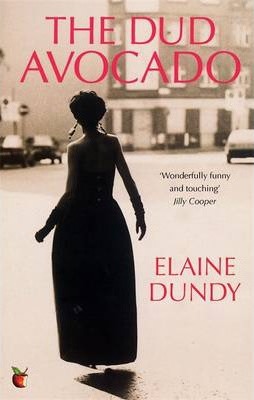 Sally Jay Gorce is determined to live it up in Paris. After all, now that she’s lost her passport, it doesn’t look like she’ll be going back to the States any time soon. With her dyed-pink hair, self-deprecating sense of humour, and heavily notched bedpost, she’s an endearing and impulsive protagonist. She’s always falling in and out of love and embarking on new projects, from acting on stage or as a film extra to posing as a painter’s model. I found her turns of phrase amusing – “To my chagrin, I found all my clothes … splitting themselves resolutely up into three categories: Tyrolean Peasant, Bar Girl, and Dreaded Librarian”; “It was dessert now, and I was deserting” – but did weary a bit of the meandering plot. This work of autofiction seems ahead of its time what with the protagonist’s promiscuity. I’ve always been intrigued about the title and learned that it arises from a love interest’s likening of American girls to avocados (“A hard centre with the tender meat all wrapped up in a shiny casing … so eternally green”) plus his mishearing of Sally Jay’s “dead” for “dud.” Somewhere on a continuum between I Capture the Castle and Nina Stibbe, this comic novel was a pleasant distraction. (Secondhand – Community Furniture Project, Newbury)
A linking passage: “Boy, we met a real nut on the beach today. A skinny young American with a fierce black moustache called Hugo McCarthy. He’d just left the South of France a couple of days ago, where he’d been kicked out of Somerset Maugham’s villa in Cap Ferrat for the third time.”
The Magician by W. Somerset Maugham (1908)
“There’s no place like Paris for meeting queer folk.”
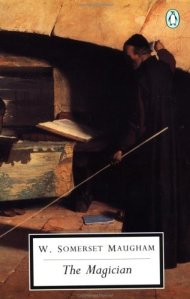 Who knew Maugham tried his hand at supernatural horror? The nearest thing I’d read from him before was Up at the Villa, a suspense novella. An autobiographical fragment preceding the text explains that Oliver Haddo, the villain of the piece, was inspired by a poet Maugham met in Paris, Aleister Crowley, who dabbled in Satanism and the occult. Arthur Burdon, an English surgeon in Paris, is engaged to marry Margaret Dauncey. Margaret’s roommate, Susie Boyd, is fascinated by Haddo, who looms large in personality and body. Margaret, on the other hand, says, “I’ve never met a man who filled me with such loathing.” Arthur and others of their acquaintance don’t know whether to take him seriously or not. This means that they underestimate the threat he poses to their happiness – and perhaps their lives. It’s rare to encounter a story of demon possession these days, and hard to know quite what to make of it. I found this reasonably compelling but melodramatic, plus it felt distasteful how Haddo’s weight increases to match his evil. Do read Maugham if you haven’t yet – he is reliably readable and a number of his works are short – but maybe not this one first. (Secondhand – 2nd & Charles)
Shadow of a Man by May Sarton (1950)
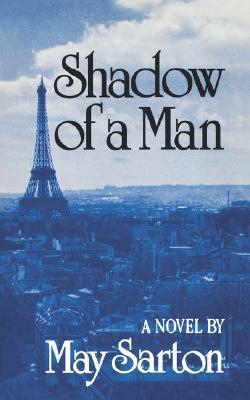 I’d not heard of Sarton’s third novel before I picked it up at random in a used bookstore. For those of us who discovered Sarton through her journals or poetry, I suspect her fiction will always fall short. The psychology of her characters’ relationships tends to lack subtlety, and plotting isn’t always her forté. I enjoyed this one well enough, probably because I could relate to the main character’s feeling of being adrift after his mother’s sudden death. After the funeral is over and done with, twenty-six-year-old Francis Chabrier decides to spend the summer in Paris. He’s half-French and thinks some time away from Boston might do him good. Except when he gets there he promptly falls in love with a family friend, Solange, and that’s complicated because she’s a 45-year-old widow whose late husband was shattered by his time in a concentration camp. It’s clear their romance will be short-lived. Francis’s stepfather, Alan, describes the young man as “a comet on the loose,” and the purpose of the months in Paris seems to be to set him on a more stable course. It grated that Solange is portrayed as almost an old lady (I’m only just over two years off her age now!), and that their affair only serves as a prelude to a more sensible relationship back home. However, the Paris setting (and coastal Maine later on) is delicious, and I marked out plenty of lines about Francis and his mother’s family dynamic. (Secondhand – Wonder Book & Video, Hagerstown)
Nonfiction
Pardon Our French: Parisian Lessons for a Happier Life by Alex Durand and Tom Carles with Allie Kingsley Baker (2026)
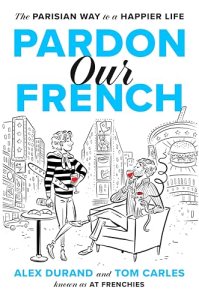 Durand and Carles moved to the USA to play college soccer and went viral on social media for their “AT Frenchies” videos about French language and culture. (I’ve not actually seen any.) Although they’ve come to admire aspects of the American lifestyle, such as ambition and individualism, they still prize traditionally French values of curiosity, privacy and a more relaxed approach to time management. Chapters on romance, food, style, friendships, green living, the arts and rituals bring out the best of what France has to offer. “L’histoire d’Alex” and “L’histoire de Tom” memoir sections alternate with more generic self-help advice. I expect Baker had a lot to do with the vernacular prose, which can be slick and clichéd. Still, it’s a good-natured, chatty book and it’s always worthwhile to be reminded to live in the moment, savour small pleasures, and insist on quality.
To be published by Penguin Life on September 8. (Read via Edelweiss)
Paris to the Moon by Adam Gopnik (2000)
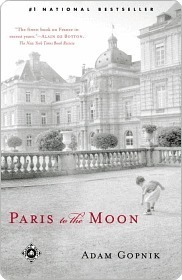 Longtime New Yorker writer Gopnik lived in Paris in 1995–2000 with his wife and young son; their daughter was born just before they left to return to New York City. Like other New Yorker regulars such as Elizabeth Kolbert and Susan Orlean, he is an excellent essayist. His book on French cuisine is a favourite of mine, and on this reread I most appreciated the pieces on food, and the general observations on being an expat:
Fish and plugs are the two great differences, the two things that are never quite alike from country to country. … This can shake you up, this business of things almost but not quite being the same. A pharmacy is not quite a drugstore; a brasserie is not quite a coffee shop
We have a beautiful existence in Paris, but not a full life, and in New York we have a full life and an unbeautiful existence. (= his wife’s conclusion)
everything about moving to France has been wonderful, and everything about emigrating to France difficult.
That summary of French bureaucracy, so at odds with the cultural experience of living in Paris, reminds me of what David Lebovitz has to say on the subject. There is too much about politics and sports in this book for me, but I loved his close attention to his son’s development and the customs they create around Christmas but also in the everyday, such as an ongoing bedtime story about a baseball player (“The Rookie”) and cake and hot chocolate after swimming. (Secondhand – 2nd & Charles)
My original rating (2016): 
My rating now:
Some apt quotes about Paris I encountered this month:
Adam Gopnik: “Paris in July is pretty much left to the tourists and the people who look after them” & “Perhaps in the end this is why Paris is ‘romantic.’ It marries both the voluptuous and restricted.”
David Lebovitz: “Like New Yorkers, Parisians have a complicated relationship to their city. They appreciate the beauty and excitement, but as Romain told me, Paris is dur (hard). That things aren’t easy—l’administration, the neighbors, the brusqueness, the fact that it’s not a perfect place—is what he likes about Paris.”
May Sarton: “I think Paris makes everyone wise … All Americans fall in love with Paris. It’s the coup de foudre.”

Overall favourites: the whole of my first batch!
- Almost Life by Kiran Millwood Hargrave
- My Year in Paris with Gertrude Stein & Real Estate by Deborah Levy
- Moveable Feasts by Chris Newens

Paris in July, II: Beauvais, Brown, Elkin and Lebovitz
July has been one long heat wave here in southern England. Luckily, it’s a bit cooler than it was earlier in the month, and we’re developing strategies for coping with what seems to be the new normal – until it gets worse again. My main tactic has been doing very little on most days apart from sitting on the couch or reclining on a mattress with a stack of books to hand. So it’s been good for one thing (maybe two): finishing books – and watching swifts. Following on from my first set of four Paris reads, I have another four (and five more coming up before the end of the month): a teen novel about overcoming peers’ prejudice, an essay anthology about the enduring appeal of the city for authors, a fragmentary memoir composed on a phone during a bus commute, and a record of a chef’s home renovation journey from hell.
Piglettes by Clémentine Beauvais (2014; 2017)
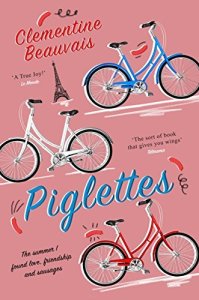 This was my second YA novel by Beauvais (after In Paris with You); she translated both herself and her proficiency in both languages allowed her to include wordplay that might have been lost otherwise (“I finally get what it means to have l’esprit de l’escalier, when I scream to her, from the bottom of the staircase…”). Mireille LaPlanche’s former friend Malo introduced a cruel annual tradition at their high school: a “Pig Pageant” in which classmates pick the fattest, ugliest girls – including her. She decides to team up with two other finalists, Astrid and Hakima, and show their persecutors what they can do. After a period of planning and training, they undertake a week-long cycle ride from their home in Bourg-en-Bresse to Paris, timed so that they’ll arrive on Bastille Day and crash the president’s garden party. Hakima’s older brother, Kader, who lost his legs in the Iraq War and uses a wheelchair, is their chaperone. They’ve dubbed themselves the “Three Little Piglettes” and tow a trailer full of sausages that they cook and sell at each stop. Soon they’re a social media phenomenon. This sweet, funny Cinderella story about defusing fatphobia includes good diversity rep and touches on lots of issues including anxiety, bullying, and unrequited love – all with an unmistakably French enthusiasm for wine, cheese and philosophy. (Edelweiss)
A Paris All Your Own: Bestselling Women Writers on the City of Light, ed. Eleanor Brown (2017)
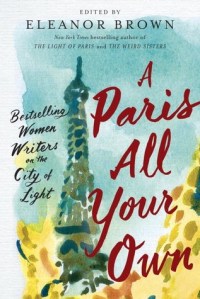 A reread that I started shortly after our trip to Paris in December 2023 but left half-finished on a shelf until this month. The roster of 18 contributors leans very much towards women’s fiction. While I probably most enjoyed the third of the book that was by authors I’d read and liked before – J. Courtney Sullivan, Susan Vreeland, Paula McLain, Julie Powell, Therese Anne Fowler and Maggie Shipstead – all of the pieces are cosy and undemanding. They tell of time spent living, working or travelling in the city. Sometimes it meets expectations; other times, mishaps and faux pas create disillusionment until a future visit grants a second chance. There are favourite foods and language struggles, art treasures and magical spots to discover, and stereotypes to confirm or overturn. The experience of Paris can vary based on who the travel companion is – an enthusiastic child, a needy parent or a soon-to-be ex. Fowler made her research trip before writing a biographical novel about Zelda Fitzgerald, while McLain only saw Hemingway’s haunts after she’d written The Paris Wife. Each essay finishes with a quickfire list of favourite Paris moments, books, sites, songs, etc. Not a bad substitute for being there! (Secondhand – 2nd & Charles)
My original rating (2017):
My rating now:
No. 91/92: Notes on a Parisian Commute by Lauren Elkin (2021)
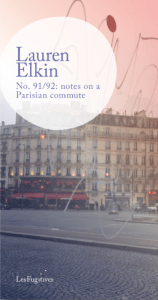 Just imagine keeping a diary of your bus journeys in the Notes app of your phone for seven months and getting a book out of it. Elkin’s mostly unedited observations are based on people-watching and her own swirling thoughts in 2014–15. She covers obnoxious behaviours on public transport (the same the world over, it seems: “Oi. Manspreader. Bouge ton cul”); her teaching work; overheard conversations; and Paris as seen in different seasons. Her mind wanders across history and theory. The bus is a melting pot: She’s thrown into false intimacy with people she’s never seen before and hopes never to encounter again. Nothing much happens until it does. First it’s the Charlie Hebdo attacks. Then she falls pregnant but it’s ectopic and she loses the baby. And, after she’s switched to Métro commuting, the Hypercacher attacks. In the prologue and epilogue, Elkin talks about only understanding major events in retrospect. She also cites lockdown diaries as being a new subgenre her project fit into. But let’s be honest: if she’d not already made a name for herself as a cultural critic, this would never have been published. While it has some value as an in-the-moment historical document, I didn’t find it nearly as profound as, say Deborah Levy’s autobiography. (Secondhand – Awesomebooks.com with SellItBack voucher)
L’appart: The Delights and Disasters of Making My Paris Home by David Lebovitz (2017)
Lebovitz is a San Francisco pastry chef who moved to Paris a couple of decades ago. We get a lot of ideas from his dessert cookbook and extensive blog archive. Like The Sweet Life in Paris, this contains lighthearted musings about cultural differences between France and the US and many tantalizing recipes (most of them sweet but also a few savoury) that I am actually likely to make. But it’s primarily about the several-year saga of buying and restoring an apartment. Lebovitz had a grand plan for the kitchen, especially: a huge space with American-style appliances that would ease his cookbook writing and testing. French bureaucracy made the purchase difficult enough as the property had to be officially reregistered as residential rather than commercial, and the seller and realtor were both antagonistic.
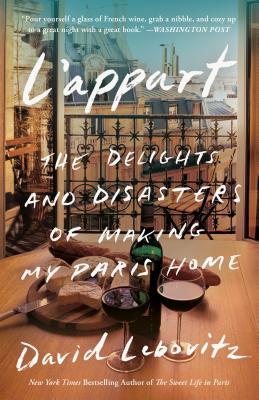 But that was nothing compared to the nightmare of the renovation. To start with, Lebovitz was friendly with his contractor and his workers. In fact, too friendly, his partner, Romain, warned. He called the builders “tu,” brought fresh-baked treats for them, and always paid their bills promptly. They started taking liberties: hardly ever showing up, failing to meet deadlines, replying to every concern with “pas de problème” but never fixing the issues. The shoddiness and incompetence are truly astounding: counters at the wrong height, an unusable faucet, melted fuses, an electricity leak, buckled floorboards, askew windows, an upside-down water softener. Every mistake cost time and money, such that the whole job was three times longer and more expensive than projected. (A lawyer dissuaded Lebovitz from suing because in the French legal system it could take five years and not even go his way.)
Depending on your own experience, this might be cathartic, or too close to home, or a cautionary tale. (We’d already long decided we won’t do any major building projects because we can’t tolerate noise, disruption or strangers and our house is good enough for our needs.) Keep in mind that Lebovitz dealt with all this in a second language and his fortitude is impressive. Scenes at Ikea and conversations with his contractor are amusingly surreal. But I confess I did find this a little overlong and repetitive, and every setback made me cringe for him. I’ll have to bake some frangipane plum-raspberry gratins and try to forget the pain. (Secondhand – Better World Books with Little Free Library voucher)
#ParisInJuly2026, I: Kiran Millwood Hargrave, Deborah Levy & Chris Newens
I wouldn’t want to be in Paris right now – continental Europe is far too hot in high summer and in recent years the UK has been following suit – but I am having such fun travelling there through books. I have a fantastic stack of Paris-set novels and memoirs on the go, perfect for sinking into on long afternoons and evenings while I hide from the second round of the heat wave in our relatively cool lounge. These first four selections were corkers! I mostly read them earlier: in May, or across several years, or started in January but only just finished. And what a treat they all were: an epic yet intimate queer romance, two auto/fiction hybrids about making a life as an unconventional woman, and a tour through Paris food, district by district.
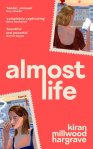
Almost Life by Kiran Millwood Hargrave (2026)
There has been homoerotic content in Hargrave’s previous fiction for adults, but this is a full-blown queer love story that, with its time span (1978 to 2013) and heft, feels momentous, like a future classic. Erica is an earnest 18-year-old tourist experiencing Paris before starting at UEA. She meets Laure, an older, cynical Sorbonne art history student, on the steps of the Sacré-Coeur: drawn to her not just because they’re reading the same book (A Lover’s Discourse by Roland Barthes) but also because Laure looks so perfectly Parisian there in a louche sprawl, smoking a cigarette. Laure is a confirmed lesbian, whereas Erica was previously straight. It’s coup de foudre for sure. Laure has been with many women, including married ones, but what she feels for Erica is different, and Erica leaving at the end of the summer is such a blow that her problem drinking gets out of control.
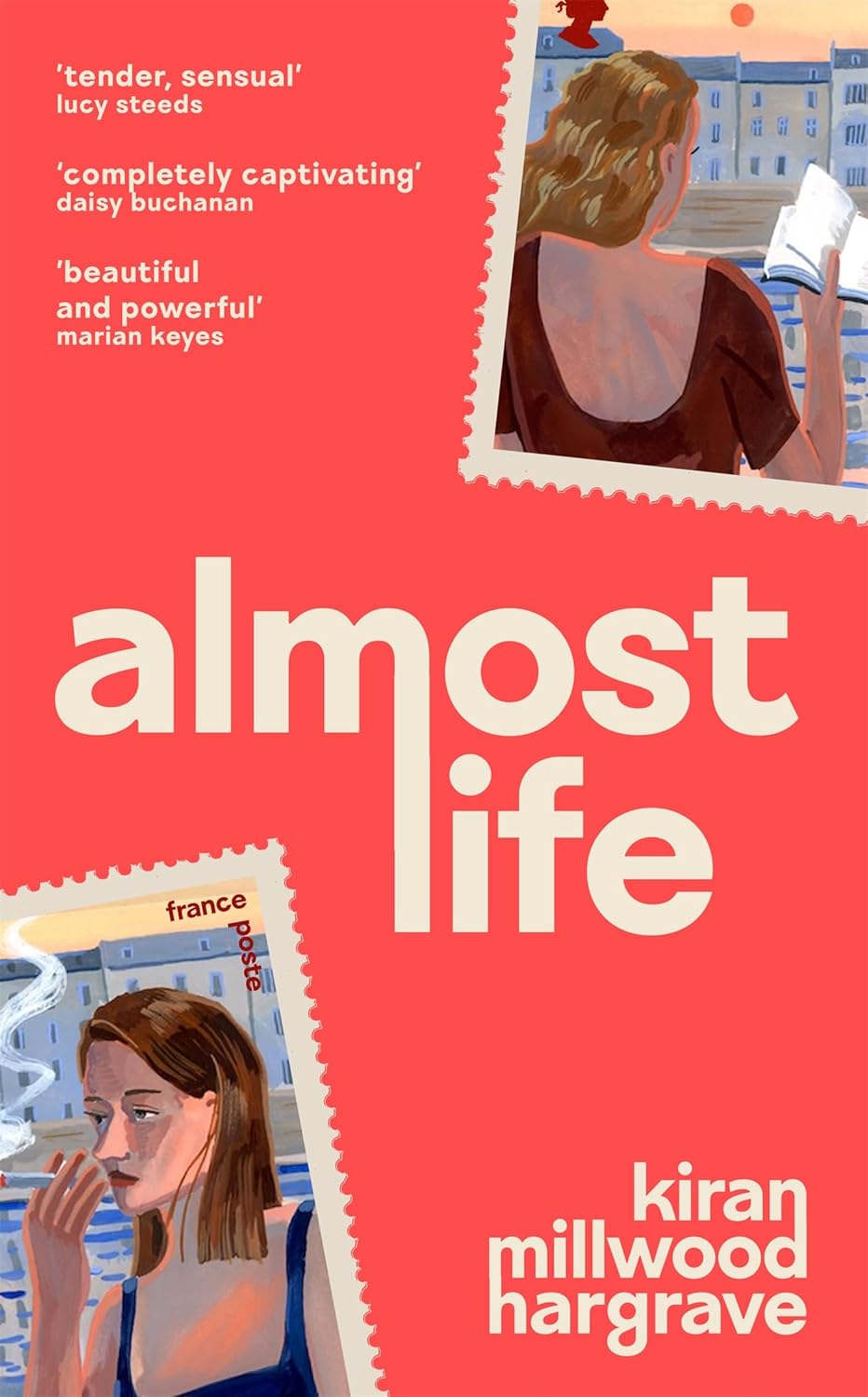
Comparisons with One Day by David Nicholls are inescapable what with the structure of jumping ahead by a few years with each section, although I’d argue that this is more similar to The Versions of Us by Laura Barnett and The Heart’s Invisible Furies by John Boyne. Hargrave’s close third-person narration alternates between her two protagonists and occasionally documents their interactions, though they keep missing their chance to be together. On two occasions Erica doesn’t write or visit when she should; twice they resume their love affair and could have gotten back together, but by then one or both has another partner. (Erica marries a Creative Writing MA classmate and they have two daughters.) The social context is important: they lose a dear friend to the AIDS crisis and Hargrave carefully bookends the action to show an advance in LGBTQ rights: early on, the characters are caught up in an attack on a gay bar in 1978; in the last pages, France legalizes same-sex marriage.
Thirty-five years is a long time in any relationship, but Erica and Laure’s is repeatedly strained by absence and perceived betrayals. They each, separately, go through a lot, including bereavements, addiction, mental health issues, and career disappointments. I thought the novel might have a speculative element, contrasting their potential life together with their divergent trajectories. In fact, only in one brief instance does Hargrave offer an alternative version of how things might have gone. Instead, the focus is on moments when fear or negligence stopped one of them from reaching out. I quibbled with a few seeming anachronisms and errors but overall found this delicious, touching, and even strangely close to home sometimes. Paris itself is a star, its museums, bars, and streets a perfect backdrop; Monet’s gardens and the Norfolk coast are appealing settings, too. This was a sweet, sexy, sobering read I can wholeheartedly recommend. (Public library) 
A linking passage:
“They went together to the Père-Lachaise and Erica pulled a button off her shirt to put on Gertrude Stein’s grave. Laure was amazed she knew Tender Buttons but not that Gertrude Stein had loved a woman. She did not want to be the lesbian prophet to this girl, but she could not help herself.”
My Year in Paris with Gertrude Stein: A Fiction by Deborah Levy (2026)
“Gertrude Stein said that’s enough. (I know that that’s not enough now.)”
~from “Roseability” by Idlewild – enjoy the c. 2000 Scottish punk!
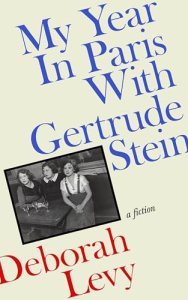
Here’s the good news: You don’t need to know anything – or particularly care – about Gertrude Stein to enjoy this. Even not having read any Stein, just having read about her, it was clear to me that the style is an homage in places (repetition, scant punctuation). But where Stein’s is famously cryptic, Levy’s prose is crystal-clear as usual. There’s a gauzy fictional storyline in which the narrator is wrestling with an inchoate essay about Gertrude Stein. (Rather like Geoff Dyer trying to write about D.H. Lawrence in Out of Sheer Rage.) She has two close friends: Eva is a graphic novelist with an international background, currently separated from a husband back in Seattle; Fanny is a polyamorous French lesbian who works in finance and, no matter the topic, tells it like it is. A mystery of sorts arises in the form of Eva’s lost cat, Bob. Fanny has heard about a cat found drowned in the canal and they later meet a Frenchman whose cat was stolen. (It’s unclear whether it’s all one and the same cat.)

Cute American cover (though the British one is probably more apt).
The narrator alternates between this minor intrigue, biographical fragments about Stein, and her struggle to know how to capture her subject in words. Stein was brought up in a German Jewish household in Pennsylvania and failed her medical school exams at Johns Hopkins. In Paris she lived with Alice B. Toklas as she pleased, without apology: an artist’s muse, intellectual and author inspired by “early psychology and cubism.” Levy clearly admires Stein for pushing the boundaries of literature and of life, paving the way for so many. I wasn’t sure that the ‘story’, such as it is, matters here, or at least not as much as the biography and pastiche. Levy is very much in Ali Smith territory here. In any case, I found it playful, sophisticated and beguiling. There are so many plainly put but brilliant lines:
“Stein put her immense writing energies into making sure she was not understood. This is what interested me most about her writing. She did not believe it is worth having a conversation if everything is understandable.”
“Every century needs an artist to dismantle coherence as we have been taught it and make a space for something new to happen.”
I have a copy of The Autobiography of Alice B. Toklas that I’m going to attempt soon…
(Public library)
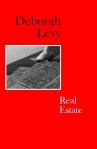
Real Estate by Deborah Levy (2021)
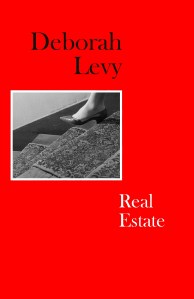 I’m not sure why it took me so long to read the final volume of Levy’s so-called Living Autobiography. I started it in August 2022: perfect timing because that was the year we bought our first house. But I left it part-read on a shelf until April. It’s not my favourite of the trilogy – that’s The Cost of Living, which is perfect – but I appreciated it a lot more than Things I Don’t Want to Know, which felt forced. Levy paints her life as restless, nomadic; to an extent, she likes it that way. She flits between London and Paris, attends a literary festival in India and takes an extended holiday in Greece. At age 60, single and with adult daughters, she doesn’t have to answer to anyone. Yet she longs for a home of her own – a deep sense of fulfilment that perhaps can’t be bought along with a piece of property. Is it a paradox to desire grounding but also freedom? That’s the main question that Levy explores here, and you can see why Stein would become a model for her (Leonora Carrington is another in this book). “It seemed to me all over again that in every phase of living we do not have to conform to the way our life has been written for us, especially by those who are less imaginative than ourselves.” This is incredibly quotable, and really a perfect book for every woman of a certain age as we come to resemble our mothers and ponder how to go on constructing ourselves through words and relationships.
to think and feel and live and love more freely is the point of life
So then, now that I was a sixty-year-old female character, both unwritten and constantly rewriting the script, what did I value, own, discard and bequeath?
Levy has an enviable talent for simplicity and clarity, but simultaneous impact and meaning. I’d be lucky to ever write anything autobiographical that has half as much elegance and power as her work. (New purchase – Amazon?) 
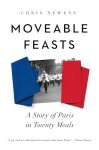
Moveable Feasts: A Story of Paris in Twenty Meals by Chris Newens (2025)
Newens, an English journalist, grew up working in his family bakery and tea rooms, so knew of the hard labour and long, early hours that daily food preparation requires. He’d lived in Paris for a decade when he decided that his strategy for getting a broader understanding of his adopted city would be through its cuisine. Arrondissement by arrondissement, he explores culinary landmarks and famous dishes, choosing one recipe from each to recreate in his kitchen. Some of these are familiar French staples such as croissants, crêpes, macarons, a goat’s cheese salad and tartiflette. Others aren’t so much a recipe as a serving suggestion: fresh oysters, an omelette with no ingredients beyond 3 eggs, pre-packaged escargots. Tourist food can be good or terrible, depending on where you go.
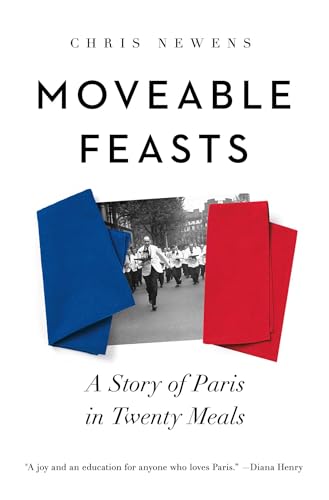 To get beyond clichés and give an accurate portrait of Paris, Newens realized, it’s essential to include ethnic dishes such as banh mi, couscous, falafel, kebabs (made of equal parts lamb belly and turkey thigh meat) and meen puyabaisse (a Tamil-fusion fish stew – A Waiter in Paris taught me that many of the city’s food service workers are from Sri Lanka) to reflect the many immigrant cultures that call Paris home. To mix things up, he sometimes strays from the usual format of meeting with restaurant staff and learning a dish from them. One chapter is an elegy for the family friend through whom he first discovered French food. In others he is surprised by the delicious/awful fare on offer at a Paris soup kitchen/sex club. Ultimately, he concludes that what sets the food in France apart, no matter the cuisine in question, is the quality of the produce, so his final trip is to Rungis, the largest produce market in the world, which supplies most of Paris’s food needs at some times of year. He then ties it all together by hosting a picnic where guests cook one of his 20 recipes to bring.
This is the best sort of armchair travelling, where you get to experience the deliciousness and excitement vicariously and can be relieved that you’ve avoided all the inconvenient or embarrassing realities of interviewing strangers. I also learned a fair bit about the different districts’ personalities and how tradition meets modernity in French food. Food is a daily chance at pleasure and I just love reading about it (even though I don’t cook). Newens won a Jane Grigson Trust Award for New Food and Drink Writers, and with his curiosity and sense of humour it’s easy to see why. (Read via Edelweiss)
20 Books of Summer, 8: Au Revoir, Tristesse by Viv Groskop
This is a substitute I picked out as a potential (now belated) #ParisinJuly2025 contribution. There’s been little time for writing over the past week while we’ve been hosting my sister and brother-in-law. Their whirlwind trip was shortened by a day due to a cancelled flight from the States, but we managed to pack in a lot, including a two-night mini-break down in Devon.

Reminiscent of Something to Declare by Julian Barnes and How Proust Can Change Your Life by Alain de Botton, this is a lighthearted tour through a dozen great works of French literature and the lessons they might offer modern readers on how to live well. Ever since her school days of studying French and spending every family holiday in France, Groskop has been obsessed with the language and culture. In most of the chapters, she undertakes a rereading of a novel she first read as a teenager or Cambridge student, marveling at how much more she gets out of it with greater life experience.
 Although her choices are indisputable classics, she acknowledges they can only ever be an incomplete and biased selection, unfortunately all white and largely male, though she opens with Bonjour Tristesse and also includes Colette and Duras novels. I’d only read three of her dozen, in translation: along with the Sagan, Dangerous Liaisons and Madame Bovary (as well as other books by two of the additional authors), but it didn’t make much difference whether I was familiar with a plot or not. So long as one is not allergic to spoilers, it’s possible to enjoy these miniature essays’ witty combination of literary criticism, biographical information, self-help messaging, and a bit of autobiographical context.
The male writers tended to be syphilitic workaholics – Balzac is reputed to have drunk 50 cups of coffee per day to sustain his output – while the women flouted social conventions by drinking, taking much younger (and/or female) lovers and driving recklessly. While the subtitle promises “Lessons in Happiness,” from Hugo to Camus these are in fact pretty miserable narratives in which, as was especially common in the 19th century, protagonists are punished for ambition or transgressions, or never reach contentment because of self-delusion.
In boiling down each plot to one line of advice for a chapter title, Groskop’s tone alternates between earnest (“Our greatest weaknesses conceal our greatest strengths” = Cyrano de Bergerac) and tongue in cheek (“Social climbing rarely pays off, but you’ll probably want to do it anyway” = Le Rouge et le Noir). She describes the works with genuine affection and clearly believes they are still worth reading, yet isn’t afraid to question those aspects that have aged less well. Controversially, she suggests being selective with Proust’s mammoth oeuvre: “skim-read, rereading the passages you fall in love with and discarding the rest.” She also surveys how the stories live on through adaptations. Of the new-to-me, I’m most drawn to Bel-Ami but also fancy La Cousine Bette. This was a delight I wouldn’t hesitate to recommend to fellow Francophiles. (New purchase – remainder from Hay Cinema Bookshop)

 Bookish Beck = Rebecca Foster. American transplant to England. Freelance proofreader and book reviewer.
