Tomoko Ikuta is on a beach vacation with her three children and sister-in-law, Yasue, who is their de facto nanny and housekeeper. The trip soon turns nightmarish when three family members die in quick succession.
{BEWARE SPOILERS IN THE REMAINDER}
Tomoko is taking a well-deserved nap to escape the punishing sun. Yasue is an attentive babysitter who has already chased after the children and warned them about going any deeper. She’s barely looked away for a second when the six-year-old boy, Kiyoo, and five-year-old girl, Keiko, disappear. Yasue runs into the ocean to find them and is hit by a massive wave that seems to trigger a heart attack. In the ensuing chaos, the missing children are forgotten – even by Tomoko – until it’s far too late.
All of the above happens within the first six pages; the rest is aftermath. The idyllic setting introduced in the story’s first few paragraphs (the beach “unspoiled for sea bathing,” the hotel’s “beautiful” view, the placid image of the mother asleep) feels like mockery when set against the “ridiculous” and “excessive” tragedy that has befallen the family. The husband, Masaru, on the train from Tokyo to join his diminished kin, wishes he could “shout at the other passengers: ‘Listen, everybody. You don’t know it, but I have just lost my sister and two of my three children.” The season itself seems to have betrayed them: “If only summer would end. The very word ‘summer’ carried with it festering thoughts of death.”
Mishima’s vision is of fate as cruel and capricious. As the bereaved parents undertake the necessary funeral preparations, he explores the practicalities and the ironies of the situation:
A death is always a problem in administration. They were frantically busy administering.
Tomoko listened to the subdued humming of the autumn cicadas, and smelled the incense and the cool, shady grass. ‘What a nice place. They’ll have room to play, and they won’t be bored. I can’t help thinking it will be good for them. Strange, isn’t it?’
She’s found a perfect, peaceful spot for her children to spend eternity, since they’ll never get to grow up.
As time passes, the memory of the incident is less painful. What had been unbearable becomes simple reality. But then something curious happens. One family’s losses take on legendary status, transformed into a widespread cautionary tale:
Rather than an injury it became a moral lesson, and it changed from a concrete fact to a metaphor. It was no longer the property of the Ikuta family, it was public. … You have to watch children constantly when you take them to the beach. People drown where you would never think it possible. Not that Masaru and his wife had sacrificed two children and a sister to teach a lesson. The loss of the three had served no other purpose, however; and many a heroic death produces as little.
Yet Mishima also extends an opportunity for redemption when, two years later, the couple returns to the same beach with their remaining son, five-year-old Katsuo, and their new daughter, Momoko. It’s an act of faith and an acceptance that danger is always present and that no parent, however protective, can completely eliminate risk. By inscribing a full circle like that, Mishima emphasizes the severity of the loss but also somehow atones for it.
I found this story so powerful – emotionally charged but understated – that I’m surprised I’d not come across it before in my constant quest to find the best classic grief literature. At 29 pages, it feels just right; a note at the end mentions that it was abridged by translator Edward G. Seidensticker. I’ll be sure to try more by Mishima.
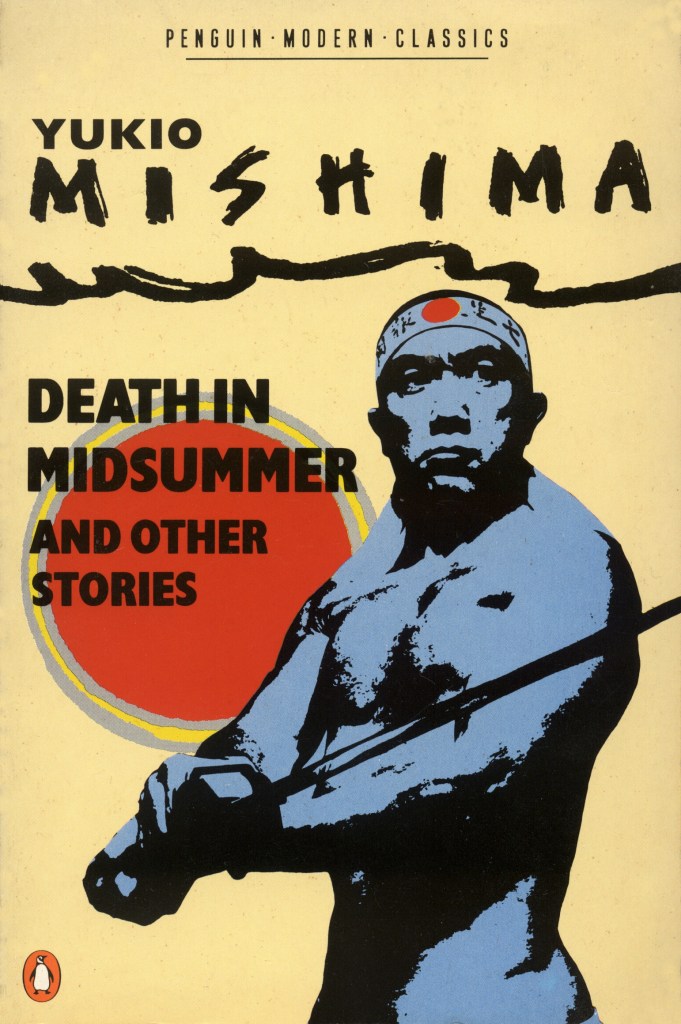
From Death in Midsummer and Other Stories (1966) (Secondhand – Better World Books)

 Bookish Beck = Rebecca Foster. American transplant to England. Freelance proofreader and book reviewer.

What a sad story. The ending surprised me; my first reaction was that the parents would never have returned to that beach but on second thoughts I remembered another family I knew who often returned to the place where their child died.
LikeLiked by 1 person
I kind of skimmed your review as this sounds intriguing and I hope to read it
LikeLiked by 2 people
I have done the same and added to my short story classic TBR list.
LikeLiked by 2 people
I highly recommend!
LikeLiked by 1 person
I enjoy A LOT Mishima, and he can write in so many different genres. Impressive.
I haven’t read his stort-storis though.
Wait, abridged by translator??
LikeLiked by 1 person
Yes, I was surprised to see that note at the end. I wonder how much longer the original is.
I’m going to try to read Mishima again for the 1949 Club next month.
LikeLike
I don’t know how, but I wasn’t aware that Mishima had written short stories. My favourite novel of his is The Temple of the Golden Pavilion. I also really rate The Sailor Who Fell From Grace With the Sea, which is a strange little book. I read all four books in The Sea of Tranquility series and needed a break from him after that. Maybe 11 years is a long enough period!
LikeLiked by 1 person
I was new to Mishima and really enjoyed this story. I’m going to try to get hold of Confessions of a Mask for next month (1949 Club), but it’s currently on loan.
LikeLiked by 1 person
[…] I read for the challenge. (My other reviews: six stories, Old Romantics by Maggie Armstrong, “Death in Midsummer” by Yukio Mishima, three R.I.P. collections.) The range of styles, settings, and subject matter […]
LikeLike