Love Your Library, November 2022
Eleanor got loads of her R.I.P. reads from the library last month. Several of my novellas for this month have come from the public library, and before long it’ll be time to gather up a few holiday-appropriate reads.
I cut down my library volunteering from four hours a week to two, to claw back a little more time for work and for myself – between adjusting my meal times and walking there and back, it felt like I lost the whole of my Thursday afternoons, and already I enjoy having them free.
Early next month the library will close for two days for a complete stock take. I’ll go in on my usual Tuesday morning to help out with that for a few hours. I know to expect a lot of standing and repetitive work, but we’ve been promised tea and cake at break time!
Since last month:
READ
- Strangers on a Pier: Portrait of a Family by Tash Aw

- Fair Play by Tove Jansson
- The Magic Pudding by Norman Lindsay
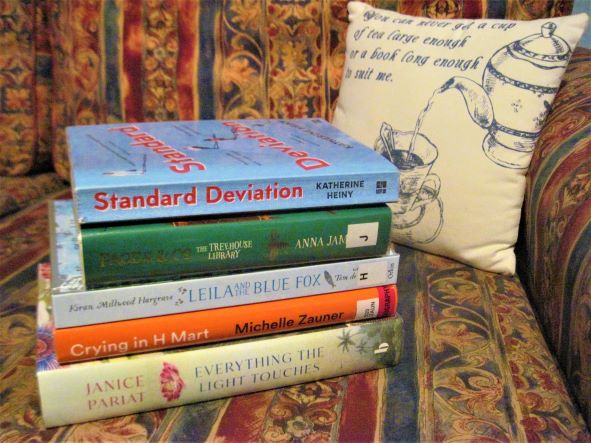
CURRENTLY READING
- Standard Deviation by Katherine Heiny
- Pages & Co.: The Treehouse Library (Pages & Co. #5) by Anna James
- Heat and Dust by Ruth Prawer Jhabvala
- Everything the Light Touches by Janice Pariat
- Leap Year by Helen Russell
- The Family Retreat by Bev Thomas
- Another Brooklyn by Jacqueline Woodson
- Crying in H Mart by Michelle Zauner
What have you been reading or reviewing from the library recently?

Share a link to your own post in the comments. Feel free to use the above image. The hashtag is #LoveYourLibrary.
Love Your Library, October 2022
Naomi has been reading an interesting selection of books from the library. I’ve recently returned a couple of giant piles of library books unread or part-read so that I can focus on novellas next month; I can always borrow those particular books again another time, or maybe the fact that none ever made it onto one of my reading stacks tells me I wasn’t excited enough about them.
A lot of other reading challenges are coming up in November: Australia Reading Month, German Literature Month, Margaret Atwood Reading Month, and Nonfiction November. If you don’t already have plans, your local library is a great source of options. And of course we would be delighted to have you join us in reading one or more short books for Novellas in November (#NovNov22), which launches tomorrow. I’ve been reading ahead for it, as you can see.
Since last month (links where I haven’t already reviewed a book or plan to soon):
READ
- The Improbable Cat by Allan Ahlberg

- Treacle Walker by Alan Garner

- Jungle Nama by Amitav Ghosh

- The Fear Index by Robert Harris

- Hare House by Sally Hinchcliffe

- We Have Always Lived in the Castle by Shirley Jackson

- Undoctored by Adam Kay

- Up at the Villa by W. Somerset Maugham
- Metronome by Tom Watson
- Tomorrow, and Tomorrow, and Tomorrow by Gabrielle Zevin
CURRENTLY READING
- Strangers on a Pier: Portrait of a Family by Tash Aw
- Heat and Dust by Ruth Prawer Jhabvala
- The Magic Pudding by Norman Lindsay
- Leap Year by Helen Russell
Then I have various new releases on hold for me, including the new Maggie O’Farrell novel (which I’m on the fence about actually reading) and this pleasingly colourful pair.
 What have you been reading or reviewing from the library recently?
Share a link to your own post in the comments. Feel free to use the above image. The hashtag is #LoveYourLibrary.
Planning My Reading Stacks for Novellas in November (#NovNov22)
Just a couple of weeks until Novellas in November (#NovNov22) begins! I gathered up all of my potential reads for a photo shoot, including review copies, library loans, recent birthday gifts and books that have been languishing on my shelves for ages.

Week One: Short Classics (= pre-1980)

Week Two: Novellas in Translation
 I always struggle with this prompt the most. (The Sorrows of Young Werther by Johann Wolfgang Goethe would also be a token contribution to German Literature Month.)
Week Three: Short Nonfiction
 This is probably (not so secretly) my favourite week of the month. Others may find it strange to consider nonfiction during a novellas month, but this challenge is really about celebrating the art of the short book in all its forms, and I love a work that can contribute something significant on a topic, or illuminate a portion of an author’s life, in under 200 pages.
Week Four: Contemporary Novellas (= post-1980)

I have a few other options on my e-readers as well, such as Marigold and Rose by Louise Glück, Foster by Claire Keegan (our buddy read for the month), and The Hero of This Book by Elizabeth McCracken.
I read 29 novellas last November; why not aim for one a day this time?! November is also Margaret Atwood Reading Month, so I’ve lined up one of her fairly recent poetry collections that I picked up from a Little Free Library. Apart from that, I do have a few review books I need to get to for Shelf Awareness, so it’ll be a jam-packed month.
Kate has already come up with her list of possible titles. Look out for Cathy’s today, too. If you’re struggling for ideas, here’s a long list of suitable authors and publishers I put together last year, or you might like to browse through the reviews from 2021.
Now to get reading!!
Do you have any novellas in mind to read next month?
Which options from my stacks should I prioritize?
Book Serendipity, Mid-August to Mid-October 2022
It’s my birthday today and we’re off to Kelmscott Manor, where William Morris once lived, so I’ll start with a Morris-related anecdote even if it’s not a proper book coincidence. One of his most famous designs, the Strawberry Thief, is mentioned in Tomorrow, and Tomorrow, and Tomorrow by Gabrielle Zevin, and I happen to be using a William Morris wall calendar this year. I will plan to report back tomorrow on our visit plus any book hauls that occur.
I call it “Book Serendipity” when two or more books that I read at the same time or in quick succession have something in common – the more bizarre, the better. This is a regular feature of mine every few months. Because I usually have 20–30 books on the go at once, I suppose I’m more prone to such incidents. The following are in roughly chronological order.
 There’s a character named Verena in What Concerns Us by Laura Vogt and Summer by Edith Wharton. Add on another called Verona from Stories from the Tenants Downstairs by Sidik Fofana.
- Two novels with a female protagonist who’s given up a singing career: Brief Lives by Anita Brookner and What Concerns Us by Laura Vogt.
- Two books featuring Black characters, written in African American Vernacular English, and with elements of drug use and jail time plus rent rises driving people out of their apartments and/or to crime (I’ve basically never felt so white): Stories from the Tenants Downstairs by Sidik Fofana and Nightcrawling by Leila Mottley.

- Two books on my stack with the protagonist an African American woman from Oakland, California: Red Island House by Andrea Lee and Nightcrawling by Leila Mottley
- A middle-aged woman’s hair is described as colourless and an officious hotel staff member won’t give the protagonist a cup of coffee/glass of wine in Brief Lives by Anita Brookner and Oh William! by Elizabeth Strout.
- There’s a central Switzerland setting in Mountain Song by Lucy Fuggle and What Concerns Us by Laura Vogt.
- On the same day, I encountered two references to Mary Oliver’s famous poem “The Summer Day” (“what is it you plan to do / with your one wild and precious life?”): in Mountain Song by Lucy Fuggle and This Beauty by Nick Riggle. (Fuggle and Riggle – that makes me laugh!)
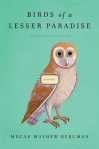
- In the same evening I found mentions of copperhead snakes in Demon Copperhead by Barbara Kingsolver (no surprise there), but also on the very first page of Birds of a Lesser Paradise by Megan Mayhew-Bergman.

- Crop circles are important to What Remains? by Rupert Callender and The Perfect Golden Circle by Benjamin Myers.
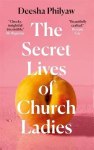
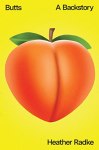
- I was reading two books with provocative peaches on the cover at the same time: The Secret Lives of Church Ladies by Deesha Philyaw and Butts: A Backstory by Heather Radke.
- A main character is pregnant but refuses medical attention in The Language of Flowers by Vanessa Diffenbaugh and What Concerns Us by Laura Vogt.
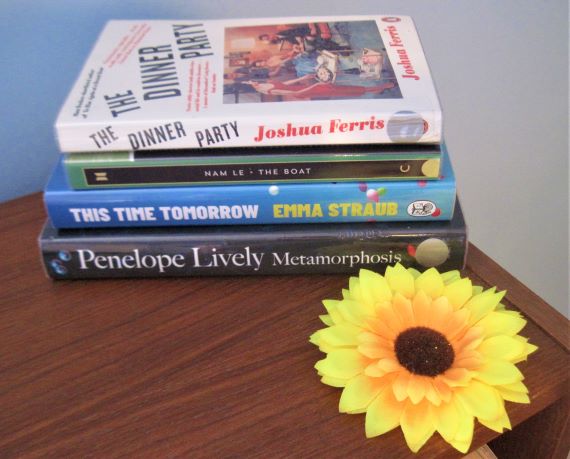
- An Australian setting and the slang “Carn” or “C’arn” for “come on” in Cloudstreet by Tim Winton and one story (“Halflead Bay”) from The Boat by Nam Le.
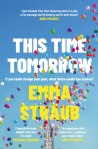
- Grape nuts cereal is mentioned in Leap Year by Helen Russell and This Time Tomorrow by Emma Straub.
- A character wagers their hair in a short story from Bratwurst Haven by Rachel King and one from Anthropology by Dan Rhodes.
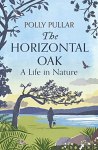
- Just after I started reading a Jackie Kay poetry collection (Other Lovers), I turned to The Horizontal Oak by Polly Pullar and found a puff from Kay on the front cover. And then one from Jim Crumley, whose The Nature of Spring I was also reading, on the back cover! (All Scottish authors, you see.)
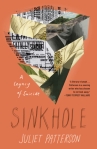
- Reading two memoirs that include a father’s suicide – Sinkhole by Juliet Patterson and The Horizontal Oak by Polly Pullar – at the same time.
- Middle school students reading Of Mice and Men in Ms. Hempel Chronicles by Sarah Shun-lien Bynum and Stories from the Tenants Downstairs by Sidik Fofana.
- A second novel in two months in which Los Angeles’s K-Town (Korean neighbourhood) is an important location: after Which Side Are You On by Ryan Lee Wong, Tomorrow, and Tomorrow, and Tomorrow by Gabrielle Zevin.
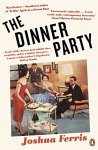
- The main character inherits his roommate’s coat in one story of The Dinner Party by Joshua Ferris, and Tomorrow, and Tomorrow, and Tomorrow by Gabrielle Zevin.
- The Groucho Marx quote “Whatever it is, I’m against it” turns up in What Remains? by Rupert Callender and Blurb Your Enthusiasm by Louise Willder (where it’s adapted to “we’re” as the motto of 3:AM Magazine).
 In Remainders of the Day by Shaun Bythell, Polly Pullar is mentioned as one of the writers at that year’s Wigtown Book Festival; I was reading her The Horizontal Oak at the same time.
- Marilyn Monroe’s death is mentioned in Sinkhole by Juliet Patterson and Tomorrow, and Tomorrow, and Tomorrow by Gabrielle Zevin.
- The types of standard plots that there are, and the fact that children’s books get the parents out of the way as soon as possible, are mentioned in And Finally by Henry Marsh and Blurb Your Enthusiasm by Louise Willder.
- Two books in quick succession with a leaping hare (and another leaping mammal, deer vs. dog) on the cover: Awayland by Ramona Ausubel, followed by Hare House by Sally Hinchcliffe.

- Three fingers held up to test someone’s mental state after a head injury in The House Is on Fire by Rachel Beanland and The Fear Index by Robert Harris.
- A scene where a teenage girl has to help with a breech livestock delivery (goat vs. sheep) in Belzhar by Meg Wolitzer and The Truants by Kate Weinberg.
- Two memoirs by a doctor/comedian that open with a scene commenting on the genitals of a cadaver being studied in medical school: Catch Your Breath by Ed Patrick wasn’t funny in the least, so I ditched it within the first 10 pages or so, whereas Undoctored by Adam Kay has been great so far.
What’s the weirdest reading coincidence you’ve had lately?
Love Your Library, September 2022
How embarrassing to find out from a fellow blogger’s post that two North American readers host a weekly meme for library borrowing. It’s called Library Loot (title envy!), and you should feel free to participate in that in addition to or instead of my monthly event.
 Pretty soon it will be time to stock up on horror and short books for R.I.P. and Novellas in November. For now, I’m still working on some short story collections, and plan to skim a bunch of nonfiction I’m interested-ish in (but not enough to read every word) to make space on my card. I did have reserves on three Booker-shortlisted titles, but admitted to myself that I don’t actually want to read them and cancelled my holds. The one that I do still plan to read is Treacle Walker by Alan Garner, a perfect read for #NovNov22, if not before.
Since last month:
READ
- Brief Lives by Anita Brookner (for book club)
- Case Study by Graeme Macrae Burnet
- The Dinner Party by Joshua Ferris
- The Boat by Nam Le
- Nightcrawling by Leila Mottley

- This Time Tomorrow by Emma Straub
- Oh William! by Elizabeth Strout
- Summer by Edith Wharton
- The Young Accomplice by Benjamin Wood
CURRENTLY READING
- The Dark Is Rising by Susan Cooper
- State of Wonder by Ann Patchett (a reread)
- Leap Year by Helen Russell
- Tomorrow, and Tomorrow, and Tomorrow by Gabrielle Zevin
Plus various new releases on loan or on hold.
What have you been reading or reviewing from the library recently?
Share a link to your own post in the comments. Feel free to use the above image. The hashtag is #LoveYourLibrary.
Get Ready for Novellas in November!
Novellas: “all killer, no filler” (said Joe Hill). For the third year in a row, Cathy of 746 Books and I are co-hosting Novellas in November as a month-long challenge, with four weekly prompts we’ll take it in turns to focus on. We’re announcing early to give you plenty of time to get your stacks ready.

Here’s the schedule:
1–7 November: Short classics (Rebecca)
8–14 November: Novellas in translation (Cathy)
15–21 November: Short nonfiction (Rebecca)
22–28 November: Contemporary novellas (Cathy)
29–30 November: You might like to post a “New to my TBR” or “My NovNov Month” roundup.
(As a reminder, we suggest 150–200 pages as the upper limit for a novella, and post-1980 as a definition of “contemporary.”)
This year we have one overall buddy read. Claire Keegan has experienced a resurgence of attention thanks to the Booker Prize shortlisting of Small Things Like These – one of our most-reviewed novellas from last year. Foster is a modern Irish classic that comes in at under 90 pages, and, in an abridged version, is free to read on the New Yorker website. You can find that here. (Or whet your appetite with Cathy’s review.)
Keegan describes Foster as a “long short story” rather than a novella, but it was published as a standalone volume by Faber in 2010. A new edition will be released by Grove Press in the USA on November 1st, and the book is widely available for Kindle. It is also the source material for the recent record-breaking Irish-language film The Quiet Girl, so there are several ways for you to encounter this story.
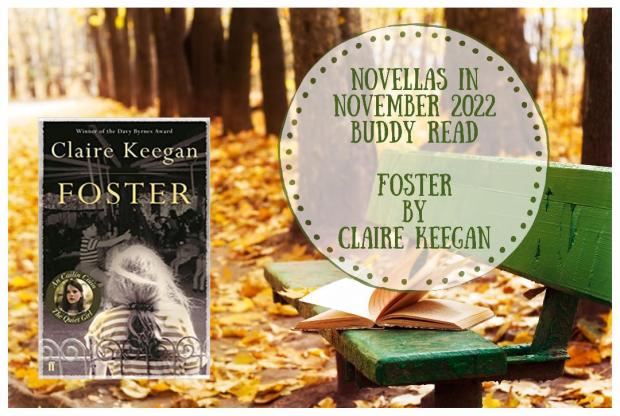
We’re looking forward to having you join us! We will each put up a pinned post where you can leave links starting on 1 November. Keep in touch via Twitter (@bookishbeck / @cathy746books) and Instagram (@bookishbeck / @cathy_746books), and feel free to use the terrific feature images Cathy has made and our new hashtag, #NovNov22.
September’s Focus: Short Stories
This is the seventh year in a row in which I’m making a special effort to read short stories in September; otherwise, story collections tend to languish on my shelves (and Kindle) unread. In September 2020 I read 8 collections, and in September 2021 it was 12. How many can I get through this time?! Here are my options, including, at far right, some I’m partway through, a thematic trio (“Birds” titles) I fancy reviewing together, and a few from the library.


To my surprise, if I count linked short stories, I’ve already read 13 collections this year. Highlights: Dance Move by Wendy Erskine, The Summer Book by Tove Jansson, Antipodes by Holly Goddard Jones, and How High We Go in the Dark by Sequoia Nagamatsu.
 The best of the lot, though, has been Stories from the Tenants Downstairs by Sidik Fofana, which I’ll be reviewing for BookBrowse over the weekend. It’s a character- and voice-driven set of eight stories about the residents of a Harlem apartment complex, many of them lovable rogues who have to hustle to try to make rent in this gentrifying area.
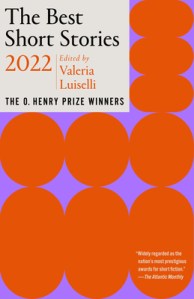 A September release I’ll quickly plug: The Best Short Stories 2022: The O. Henry Prize Winners, selected by Valeria Luiselli. I read this for Shelf Awareness and my review will be appearing in a couple of weeks. Half of the 20 stories are in translation – Luiselli insists this was coincidental – so it’s a nice taster of international short fiction. Contributing authors you will have heard of: Chimamanda Ngozi Adichie, Lorrie Moore, Samanta Schweblin and Olga Tokarczuk. The style runs the gamut from metafiction to sci-fi/horror. Covid-19, loss and parenting are frequent elements. My two favourites: Joseph O’Neill’s “Rainbows,” about sexual misconduct allegations, then and now; and the absolutely bonkers novella-length “Horse Soup” by Vladimir Sorokin, about a woman and a released prisoner who meet on a train and bond over food. (13 September, Anchor Books)
 Here’s a short story collection I received for review but, alas, couldn’t finish: Milk Blood Heat by Dantiel W. Moniz. This was longlisted for the Dylan Thomas Prize and won the NB Magazine Blogger’s Book Prize. The link, I have gathered, is adolescent girls in Florida. I enjoyed the title story, which opens the collection and takes peer pressure and imitation to an extreme, but couldn’t get through more than another 1.5 after that; they left zero impression.
Currently reading: The Boat by Nam Le (it won the Dylan Thomas Prize; I’ve read the first story so far and it was knockout!), Birds of a Lesser Paradise by Megan Mayhew Bergman.
 Resuming soon: The Predatory Animal Ball by Jennifer Fliss (e-book), Hearts & Bones by Niamh Mulvey, The Secret Lives of Church Ladies by Deesha Philyaw – all were review copies.
Are you a short story fan? Read any good ones recently?
Join me in this low-key challenge if you wish!
Love Your Library, August 2022
Edited: Belatedly adding in links to this month’s posts by Eleanor and Marcie, with a huge thank you for participating!
And here’s my haul from today. A few short story collections there because in September I always try to focus a bit more on stories.
Naomi has also been reading a lot from her local libraries, and Laura stocked up before heading out on holiday:

Normally my library system would be busily buying up the Booker Prize longlist, the Wainwright Prize shortlists, and big-name upcoming releases by the likes of John Irving and Ian McEwan. I have a file on my desktop with a list of 29 author names I periodically check for, as any on-order titles from them will show up at the top of the results. But there’s been a huge slowdown on acquisitions, and I know exactly why: the librarian who orders and processes new books experienced a family tragedy this summer and has been on compassionate leave for a while already. Were I not a library volunteer who also vaguely knows her socially, I’d have no idea and might be simmering with impatience right now. Instead, I’ll be patient, read what I already have out, and address my review book backlog.
Since last month…
READ
- Where the Wildflowers Grow by Leif Bersweden
- Bridget Jones: Mad About the Boy by Helen Fielding (for book club)
- My Life in Houses by Margaret Forster
- Black Narcissus by Rumer Godden
- Julia and the Shark by Kiran Millwood Hargrave
- The Summer Book by Tove Jansson
- From the Hedgerows by Lew Lewis
- The Last Wild Horses by Maja Lunde
- Golden Boys by Phil Stamper
- The False Rose by Jakob Wegelius
Also a children’s book I spotted while shelving – who knew it existed?!
- River Rose and the Magical Lullaby by Kelly Clarkson; illus. Laura Hughes
CURRENTLY READING
- Brief Lives by Anita Brookner (for book club)
- Case Study by Graeme Macrae Burnet
- Nightcrawling by Leila Mottley
- State of Wonder by Ann Patchett (a reread)
- Oh William! by Elizabeth Strout
- The Young Accomplice by Benjamin Wood
A few of these are from the Booker Prize longlist, in advance of the shortlist announcement on 6 September.
And from the university library:
- Summer by Edith Wharton
Still lots around that I’ve borrowed and not gotten into yet:


And various new releases on hold or awaiting me on the reservation shelf.
What have you been reading or reviewing from the library recently?
Share a link to your own post in the comments. Feel free to use the above image. The hashtag is #LoveYourLibrary.
Book Serendipity, May to Mid-August 2022
This is a regular feature of mine every few months. I call it “Book Serendipity” when two or more books that I read at the same time or in quick succession have something in common – the more bizarre, the better. Because I usually have 20–30 books on the go at once, I suppose I’m more prone to such incidents. The following are in roughly chronological order.
- Not only did the opening scene of All Down Darkness Wide by Seán Hewitt share with Falling Angels by Tracy Chevalier a graveyard setting, but more specifically an angel statue whose head falls off.

- SPOILER: {The protagonist has a backstory of a mother who drowned, presumably by suicide, in Secrets of the Sea House by Elisabeth Gifford and The Dance Tree by Kiran Millwood Hargrave.}
- I started reading two e-books on the same day that had Taylor Swift lyrics as an epigraph: Bad Vibes Only by Nora McInerny and Tracy Flick Can’t Win by Tom Perrotta. I have never knowingly heard a Taylor Swift song.
- Rescuing insects from a swimming pool in Fledgling by Hannah Bourne-Taylor and In the Quaker Hotel by Helen Tookey.
- Reading two feminist works of historical fiction in which the protagonist refuses to marry (even though it’s true love) at the same time: Lessons in Chemistry by Bonnie Garmus and Madwoman by Louisa Treger (about Nellie Bly).
- Two London-set books featuring a daughter named Mabel, one right after the other: This Is Not a Pity Memoir by Abi Morgan and Bridget Jones: Mad about the Boy by Helen Fielding.
- In Jenn Shapland’s My Autobiography of Carson McCullers I came across the fact that McCullers married the same man twice. Just a few days before, I’d seen that same odd fact about Hilary Mantel in her Wikipedia bio.
- A character named Clodagh in Black Narcissus by Rumer Godden and “Rainbows” by Joseph O’Neill, one of the entries in The Best Short Stories 2022: The O. Henry Prize Winners.
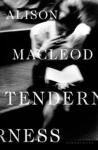
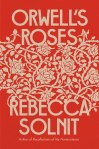
- Reading two books about an English author who died young of TB at the same time: Tenderness by Alison MacLeod (about D.H. Lawrence) and Orwell’s Roses by Rebecca Solnit.
- Reading two novels that mention the shipwreck of the Batavia at the same time: The Night Ship by Jess Kidd (where it’s a major element) and Cloudstreet by Tim Winton (just a tiny reference that nonetheless took me aback). According to Wikipedia, “Batavia was a ship of the Dutch East India Company. Built in Amsterdam in 1628 as the company’s new flagship, she sailed that year on her maiden voyage for Batavia, capital of the Dutch East Indies. On 4 June 1629, Batavia was wrecked on the Houtman Abrolhos, a chain of small islands off the western coast of Australia.”
- David Lack’s Swifts in a Tower is mentioned in Swifts and Us by Sarah Gibson (no surprise there) but also in From the Hedgerows by Lew Lewis.
- There’s a child nicknamed Chub in Damnation Spring by Ash Davidson and Cloudstreet by Tim Winton (which both also at least started off being buddy reads with Marcie of Buried in Print!).
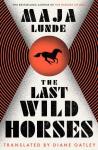
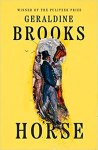
- Two novels in quick succession in which the discovery of a horse skeleton sparks the action in one story line: The Last Wild Horses by Maja Lunde and (coming up soon – I have a library reservation placed) Horse by Geraldine Brooks.
- Unst, Shetland as a setting in Orchid Summer by Jon Dunn, Sightlines by Kathleen Jamie, Julia and the Shark by Kiran Millwood Hargrave, and Where the Wildflowers Grow by Leif Bersweden.
- “Quiet as it’s kept” (a quote from the opening line of Toni Morrison’s The Bluest Eye) is borrowed in a poem in No Country for Eight-Spot Butterflies by Julian Aguon and one in the anthology American Wildflowers: A Literary Field Guide, ed. Susan Barba (“A Siren Patch of Indigo” by Cyrus Cassells).
- I didn’t recognize the word “swingeing” in The Reindeer Hunters by Lars Mytting and encountered it again the same day in Brief Lives by Anita Brookner before I had a chance to look it up (it means extreme or severe).
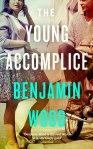
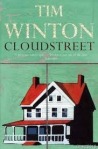
- A 1950s setting and a main character who is a man with missing fingers/arm in Cloudstreet by Tim Winton and The Young Accomplice by Benjamin Wood.
What’s the weirdest reading coincidence you’ve had lately?
Bookish Bits and Bobs
It’s felt like a BIG week for prize news. First we had the Booker Prize longlist, about which I’ve already shared some thoughts. My next selection from it is Trust by Hernan Diaz, which I started reading last night. The shortlist comes out on 6 September. We have our book club shadowing application nearly ready to send off – have your fingers crossed for us!
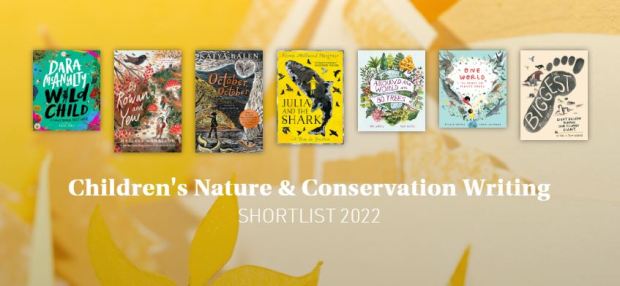
Then on Friday the three Wainwright Prize shortlists (I gave my reaction to the longlists last month) were announced: one for nature writing, one for conservation writing, and – new this year – one for children’s books on either.
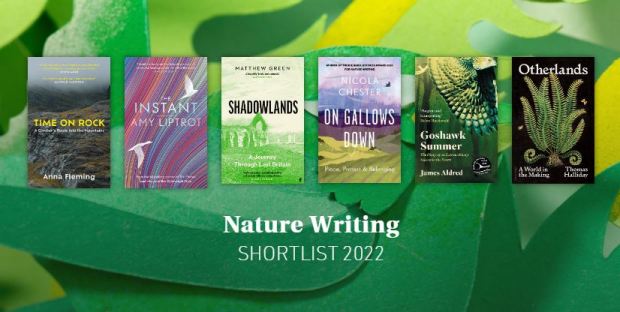
 I’m delighted that my top two overall picks, On Gallows Down by Nicola Chester and Silent Earth by Dave Goulson, are still in the running. I’ve read half of the nature list and still intend to read Shadowlands, which is awaiting me at the library. I’d happily read any of the remaining books on the conservation list and have requested the few that my library system owns. Of the children’s nominees, I’m currently a third of the way through Julia and the Shark and also have the Davies out from the library to read.
As if to make up for the recent demise of the Costa Awards, the Folio Prize has decided to split into three categories: fiction, nonfiction and poetry; the three finalists will then go head-to-head to compete for the overall prize. I’ve always wondered how the Folio judges pit such different books against each other. This makes theirs an easier job, I guess?
Speaking of prize judging, I’ve been asked to return as a manuscript judge for the 2023 McKitterick Prize administered by the Society of Authors, the UK trade union for writers. (Since 1990, the McKitterick Prize has been awarded to a debut novelist aged 40+. It’s unique in that it considers unpublished manuscripts as well as published novels – Political Quarterly editor Tom McKitterick, who endowed the Prize, had an unpublished novel at the time of his death.) Although I’d prefer to be assessing ‘real’ books, the fee is welcome. Submissions close in October, and I’ll spend much of November–December on the reading.
Somehow, it’s August. Which means:
- Less than a month left for the remaining 10 of my 20 Books of Summer. I’m actually partway through another 12 books that would be relevant to my flora theme, so I just have to make myself finish and review 10 of them.
- It’s Women in Translation month! I’m currently reading The Last Wild Horses by Maja Lunde and have The Summer Book by Tove Jansson out from the library. I also have review copies of two short novels from Héloïse Press, and have placed a library hold on The Disaster Tourist by Yun Ko-eun. We’ll see how many of these I get to.

 Marcie (Buried in Print) and I have embarked on a buddy read of Cloudstreet by Tim Winton. I’ve never read any of his major works and I’m enjoying this so far.
Goodreads, ever so helpfully, tells me I’m currently 37 books behind schedule on my year’s reading challenge. What the website doesn’t know is that, across my shelves and e-readers, I am partway through – literally – about 90 books. So if I could just get my act together to sit down and finish things instead of constantly grabbing for something new, my numbers would look a lot better. Nonetheless, I’ve read loads by anyone’s standard, and will read lots more before the end of the year, so I’m not going to sweat it about the statistics.
A new home has meant fun tasks like unpacking my library (as well as not-so-fun ones like DIY). As a reward for successfully hosting a housewarming party and our first weekend guests, I let myself unbox and organize most of the rest of the books in my new study. My in-laws are bringing us a spare bookcase soon; it’s destined to hold biographies, poetry and short story collections. I thought I’d be able to house all the rest of my life writing and literary reference books on two Billy bookcases, but it’s required some clever horizontal stacks, special ‘displays’ on the top of each case, and, alas, some double-stacking – which I swore I wouldn’t do.


Scotland and Victoriana displays, unread memoirs and literary reference books at left; medical reads display and read memoirs at right.
I need to acquire one more bookcase, a bit narrower than a Billy, to hold the rest of my read fiction plus some overflow travel and humour on the landing.
I get a bit neurotic about how my library is organized, so questions that others wouldn’t give much thought to plague me:
- Should I divide read from unread books?
- Do I hide the less sightly proof copies in a stack behind the rest?
- Is it better to have hardbacks and paperbacks all in one sequence, or separate them to maximize space?
(I’ve employed all of these options for various categories.)
I also have some feature shelves to match particular challenges, like novellas, future seasonal reads, upcoming releases and review books to catch up on, as well as signed copies and recent acquisitions to prioritize. Inevitably, once I’ve arranged everything, I find one or two strays that then don’t fit on the shelves I’ve allotted. Argh! #BibliophileProblems, eh?
I’ve been skimming through The Bookman’s Tale by Ronald Blythe, and this passage from the diary entry “The Bookshelf Cull” stood out to me:
“Should you carry a dozen volumes from one shelf to another, you will most likely be carrying hundreds before you finish. Sequences will be thrown out; titles will have to be regrouped; subjects will demand respect.”
What are your August reading plans? Following any literary prizes?
How are your shelves looking? Are they as regimented as mine, or more random?
 Bookish Beck = Rebecca Foster. American transplant to England. Freelance proofreader and book reviewer.
 Bookish Beck