Library Checkout: March 2019
A rare second post in a day from me since I was also committed to a blog tour. What have you been reading from your local library? I don’t have an official link-up system, so please just pop a link to your blog in the comments if you’ve taken part in Library Checkout this month. Feel free to use this image in your post.

LIBRARY BOOKS READ
- Boy Erased: A Memoir of Identity, Faith, and Family by Garrard Conley

- Old Possum’s Book of Practical Cats by T.S. Eliot [poetry]
- Dream Sequence by Adam Foulds

- “My Purple Scented Novel” by Ian McEwan

- East of Eden by John Steinbeck

- Absent in the Spring by “Mary Westmacott” (aka Agatha Christie)
SKIMMED
- Yesterday Morning by Diana Athill – I had read this back in 2012, but looked over it again for an article I was writing on Athill.

- Have You Eaten Grandma? by Gyles Brandreth
- Let’s Talk about Death (over Dinner): An Invitation and Guide to Life’s Most Important Conversation by Michael Hebb
- The Roasting Tin by Rukmini Iyer
- The Secret Lives of Colour by Kassia St. Clair
CURRENTLY READING
- Murmur by Will Eaves
- Also Human: The Inner Lives of Doctors by Caroline Elton
- Ordinary People by Diana Evans
- Faces in the Water by Janet Frame
- The Garden of Eden by Ernest Hemingway
- Injury Time by Clive James [poetry]
- Lanny by Max Porter
- The World I Fell Out Of by Melanie Reid
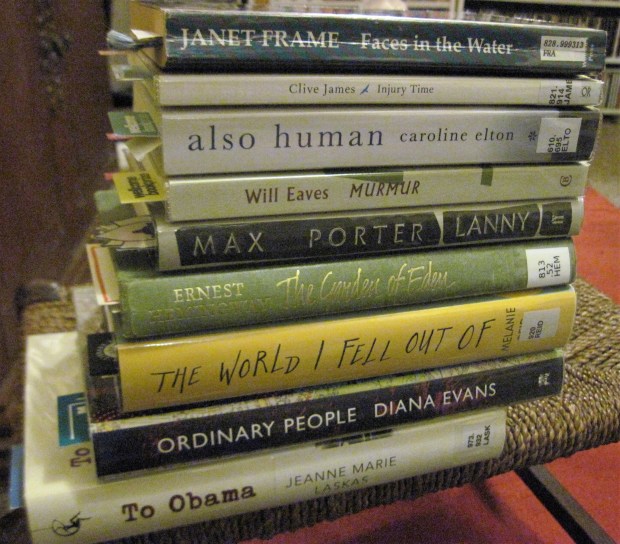
CURRENTLY SKIMMING
- To Obama: With love, joy, hate and despair by Jeanne Marie Laskas
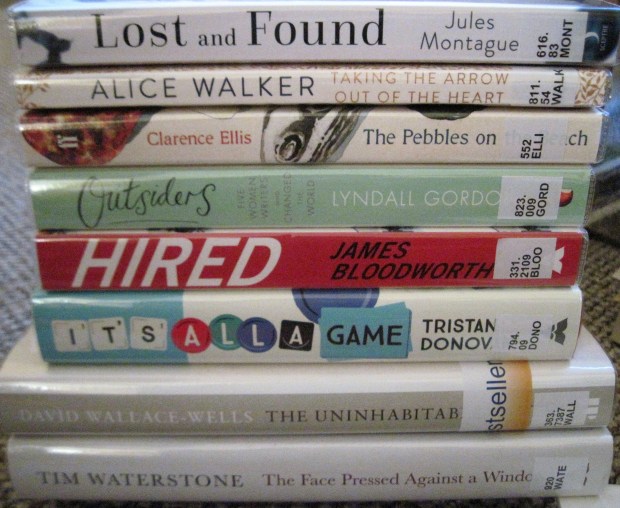
CHECKED OUT, TO BE READ (or skimmed)
- Hired: Six Months Undercover in Low-wage Britain by James Bloodworth
- It’s All a Game: A Short History of Board Games by Tristan Donovan
- The Pebbles on the Beach: A Spotter’s Guide by Clarence Ellis
- Outsiders: Five Women Writers Who Changed the World by Lyndall Gordon
- Lost and Found: Memory, Identity, and Who We Become when We’re No Longer Ourselves by Jules Montague
- Taking the Arrow out of the Heart by Alice Walker [poetry]
- The Uninhabitable World: A Story of the Future by David Wallace-Wells
- The Face Pressed against a Window: A Memoir by Tim Waterstone
ON HOLD, TO BE PICKED UP
- A Breath of French Air, H.E. Bates
- Still Water: The Deep Life of the Pond by John Lewis-Stempel
- The Dreamers, Karen Thompson Walker
IN THE RESERVATION QUEUE
- Seven Signs of Life: Stories from an Intensive Care Doctor by Aoife Abbey
- How to Treat People: A Nurse’s Notes by Molly Case
- Our Place: Can We Save Britain’s Wildlife before It Is Too Late? by Mark Cocker
- 21st-Century Yokel by Tom Cox
- How to Catch a Mole and Find Yourself in Nature by Marc Hamer
- The Recovering: Intoxication and Its Aftermath by Leslie Jamison
- Horizon by Barry Lopez
- I’ll Be Gone in the Dark: One Woman’s Obsessive Search for the Golden State Killer by Michelle McNamara
- Daisy Jones & the Six, Taylor Jenkins Reid
- Unnatural Causes by Richard Shepherd
- Feel Free: Essays by Zadie Smith
- A Farmer’s Diary: A Year at High House Farm by Sally Urwin
RETURNED UNFINISHED
- Hyperbole and a Half by Allie Brosh – I’d heard so much about this graphic novel, but I found the drawing style childish and didn’t get more than 10 pages in.
- Everybody Died, So I Got a Dog by Emily Dean – I couldn’t resist that title for a bereavement memoir, but within a couple pages I knew the author’s voice wasn’t for me.
RETURNED UNREAD
- Everything, Everything by Nicola Yoon – I needed space on my card to borrow my reservations. I’ll get this back out another time, perhaps even for book club as some other members have expressed interest.
Does anything appeal from my stacks?
March Reading Plans and Books to Look out For
My apologies if you’ve already heard this story on social media: I was supposed to be in France this past weekend, but for the fourth time in a row we’ve been plagued by transport problems on a holiday: a flat tire in Wigtown, a cancelled train to Edinburgh, a cancelled flight to the States, and now car trouble so severe we couldn’t get on the ferry to Normandy. Though we made it all the way to the ferry port in Poole, our car was by then making such hideous engine noises that it would have been imprudent to drive it any further. We got a tow back to the auto shop where our car is usually serviced and currently await its prognosis. If it can be fixed, we may be able to reschedule our trip for this coming weekend.
The good news about our strange (non-)travel day: I got a jump on my Doorstopper of the Month, Cutting for Stone by Abraham Verghese, a terrific read that reminds me of a cross between Midnight’s Children and The Cider House Rules, and also started Priestdaddy by Patricia Lockwood – though my husband made me stop reading it because I couldn’t stop sniggering while he was trying to make important phone calls about the car. We ended up having a nice weekend at home anyway: going out for Nepalese food, gelato and a screening of The Favorite; doing some gardening and getting bits of work and writing done; and (of course) doing plenty of reading. Waking up with a purring cat on my legs and tucking into a stack of pancakes with maple syrup, I thought to myself, being home is pretty great, too.
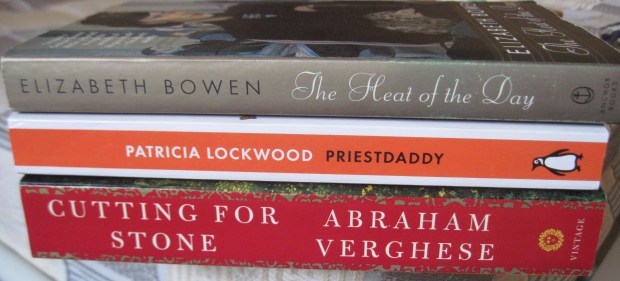
What I packed to read in France.
Reading Ireland Month 2019
This will be my second time participating in the annual challenge hosted by Cathy of 746 Books. I recently started The Heat of the Day by Elizabeth Bowen and I’m also currently reading two nonfiction books by Irish women: a review copy of Vagina: A Re-Education by Lynn Enright (which releases on March 7th) and the essay collection Notes to Self by Emilie Pine, on my Kindle. I have several other novels to choose from – two of which are set in Ireland rather than by Irish authors – plus a classic travel book by Dervla Murphy.
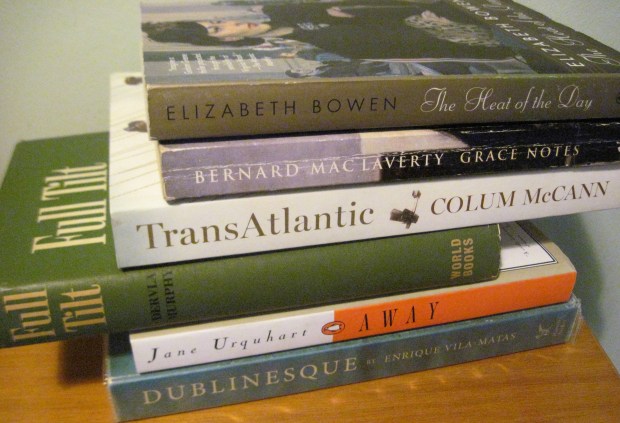
Irish selections.
Wellcome Book Prize
The second of my ‘assigned’ longlist reviews will be going up on Wednesday. I’m currently reading another three books from the longlist and will post some brief thoughts on them if I manage to finish them before the shortlist announcement on the 19th. At that point I will have read 10 out of the 12 books on the longlist, so should feel pretty confident about making predictions (or at least stating wishes) for what will go through to the next round.
Blog Tours
I have two blog tours coming up later in the month, including the official one that’s being run for the Dylan Thomas Prize longlist.
Review Books
I’ve got a pile-up of review copies that came out in February or are releasing early this month – 9, I think? Some I’ve already read and some are still in progress. So I will be doing my best to group these sensibly and write short reviews, but you may well notice a lot of posts from me.
Blog Anniversary
This Friday marks four years that I’ve been blogging about books!
Here are a few March releases I’ve read that you may want to look out for:
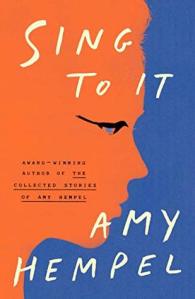 Sing to It: New Stories by Amy Hempel [releases on the 26th]: “When danger approaches, sing to it.” That Arabian proverb provides the title for Amy Hempel’s fifth collection of short fiction, and it’s no bad summary of the purpose of the arts in our time: creativity is for defusing or at least defying the innumerable threats to personal expression. Only roughly half of the flash fiction achieves a successful triumvirate of character, incident and meaning. The author’s passion for working with dogs inspired the best story, “A Full-Service Shelter,” set in Spanish Harlem. A novella, Cloudland, takes up the last three-fifths of the book and is based on the case of the “Butterbox Babies.” (Reviewed for the Pittsburgh Post-Gazette.)
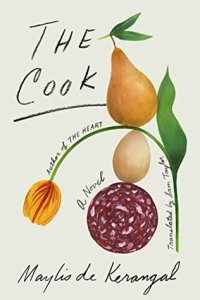 The Cook by Maylis de Kerangal (translated from the French by Sam Taylor) [releases on the 26th]: This is a pleasant enough little book, composed of scenes in the life of a fictional chef named Mauro. Each chapter picks up with the young man at a different point as he travels through Europe, studying and working in various restaurants. If you’ve read The Heart / Mend the Living, you’ll know de Kerangal writes exquisite prose. Here the descriptions of meals are mouthwatering, and the kitchen’s often tense relationships come through powerfully. Overall, though, I didn’t know what all these scenes are meant to add up to. Kitchens of the Great Midwest does a better job of capturing a chef and her milieu.
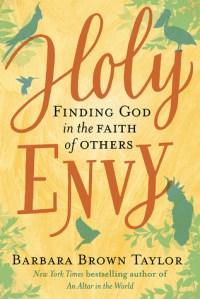 Holy Envy: Finding God in the Faith of Others by Barbara Brown Taylor [releases on the 12th]: After she left the pastorate, Taylor taught Religion 101 at Piedmont College, a small Georgia institution, for 20 years. This book arose from what she learned about other religions – and about Christianity – by engaging with faith in an academic setting and taking her students on field trips to mosques, temples, and so on. She emphasizes that appreciating other religions is not about flattening their uniqueness or looking for some lowest common denominator. Neither is it about picking out what affirms your own tradition and ignoring the rest. It’s about being comfortable with not being right, or even knowing who is right.
What’s on your reading docket for March?
Library Checkout: February 2019
A somewhat lighter month, but with lots of skimming of books on topics that interest me: happiness, nature, mental health and self-help. The set of books that I’m currently reading is absolutely fantastic. (As usual, I’ve added in star ratings and links to Goodreads reviews where I haven’t already featured the books on the blog in some way.)
LIBRARY BOOKS READ
- Silence in the Snowy Fields by Robert Bly [poetry]
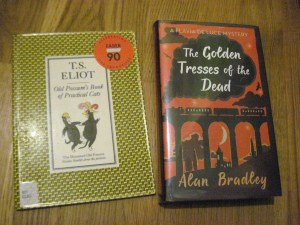
- The Golden Tresses of the Dead by Alan Bradley
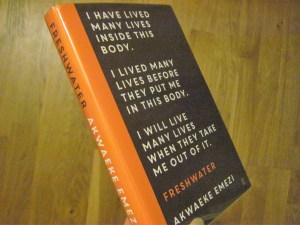
- Freshwater by Akwaeke Emezi
- A Light Song of Light by Kei Miller [poetry]
SKIMMED
- The Happy Brain: The Science of Where Happiness Comes From, and Why by Dean Burnett
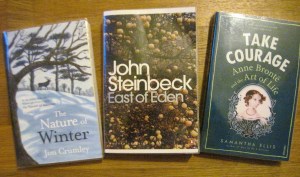
- The Nature of Winter by Jim Crumley
- The Name of the Rose by Umberto Eco
- Take Courage: Anne Brontë and the Art of Life by Samantha Ellis
- Lost Connections: Uncovering the Real Causes of Depression – and the Unexpected Solutions, Johann Hari
- The Four Tendencies: The Indispensable Personality Profiles that Reveal how to Make Your Life Better (And Other People’s Lives Better, Too) by Gretchen Rubin
CURRENTLY READING
- Boy Erased: A Memoir of Identity, Faith, and Family by Garrard Conley
- Faces in the Water by Janet Frame
- East of Eden by John Steinbeck
- Absent in the Spring by “Mary Westmacott” (aka Agatha Christie)
CURRENTLY SKIMMING
- To Obama: With love, joy, hate and despair by Jeanne Marie Laskas
CHECKED OUT, TO BE READ
- Old Possum’s Book of Practical Cats by T.S. Eliot [poetry]
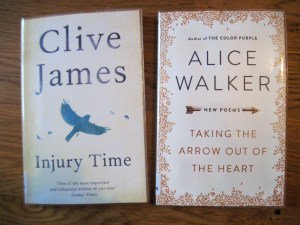
- Injury Time by Clive James [poetry]
- Taking the Arrow out of the Heart by Alice Walker [poetry]
- Everything, Everything by Nicola Yoon
Along with the rest of a new batch of university library books:
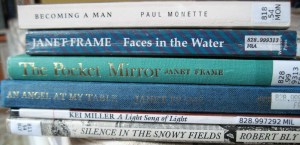
- An Angel at My Table by Janet Frame
- A Pocket Mirror by Janet Frame
- Becoming a Man by Paul Monette
IN THE RESERVATION QUEUE
- Seven Signs of Life: Stories from an Intensive Care Doctor by Aoife Abbey
- Hired: Six Months Undercover in Low-wage Britain by James Bloodworth
- 21st-Century Yokel by Tom Cox
- Everybody Died, So I Got a Dog by Emily Dean
- Murmur by Will Eaves
- Also Human: The Inner Lives of Doctors by Caroline Elton
- Dream Sequence by Adam Foulds
- Outsiders: Five Women Writers Who Changed the World by Lyndall Gordon
- The Recovering: Intoxication and Its Aftermath by Leslie Jamison
- Lost and Found: Memory, Identity, and Who We Become when We’re No Longer Ourselves by Jules Montague
- Lanny by Max Porter
- The World I Fell Out Of by Melanie Reid
- The Secret Barrister: Stories of the Law and How It’s Broken
- Feel Free: Essays by Zadie Smith
- The Face Pressed against a Window: A Memoir by Tim Waterstone
RETURNED UNFINISHED
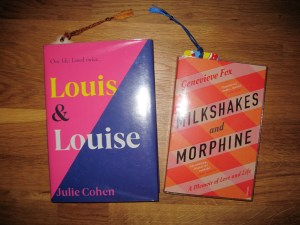
- Louis & Louise by Julie Cohen – The prose is fine – easy to read, but nothing special. Though Cohen says she was inspired by Alderman’s The Power and Woolf’s Orlando, I don’t have faith that significant points will be made about gender identity.
- The Binding by Bridget Collins – I didn’t even make it through the first chapter. I was getting Diane Setterfield-lite vibes, but couldn’t imagine reading 400 pages of this.
- Orchid Summer: In Search of the Wildest Flowers of the British Isles by John Dunn –The writing is great; no question about that. But the book is so dense: so many words on a page, in such small type. Unless you’re a botany nut, I wouldn’t recommend it.
- Milkshakes and Morphine: A Memoir of Love and Loss by Genevieve Fox – Fox has some amusing turns of phrase when talking about her throat cancer and treatment, but this is way too long at over 370 pages of small print.
RETURNED UNREAD
- Daphne by Will Boast – I liked the voice in the first couple of pages and will definitely get this back out at another time.
- The Way of the Hare by Marianne Taylor – This felt more detailed and technical than I was looking for in a species overview.
What have you been reading from your local libraries? Does anything appeal from my stacks?
I don’t have an official link-up system, so please just pop a link to your blog in the comments if you’ve taken part in Library Checkout this month. (Feel free to use the image in your post.)
This Year’s “Snow” and “Winter” Reads
Longtime readers will know how much I enjoy reading with the seasons. Although it’s just starting to feel like there’s a promise of spring here in the south of England, I understand that much of North America is still cold and snowy, so I hope these recent reads of mine will feel topical to some of you – and the rest of you might store some ideas away for next winter.
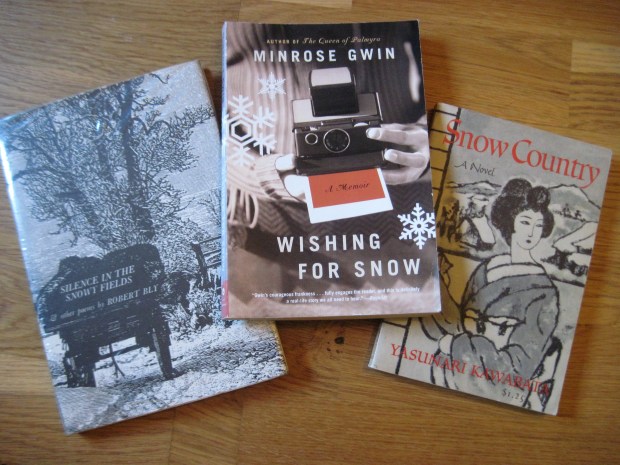
(The Way Past Winter has already gone back to the library.)
Silence in the Snowy Fields and Other Poems by Robert Bly (1967)
 Even when they’re in stanza form, these don’t necessarily read like poems; they’re often more like declaratory sentences, with the occasional out-of-place exclamation. But Bly’s eye is sharp as he describes the signs of the seasons, the sights and atmosphere of places he visits or passes through on the train (Ohio and Maryland get poems; his home state of Minnesota gets a whole section), and the small epiphanies of everyday life, whether alone or with friends. And the occasional short stanza hits like a wisdom-filled haiku, such as “There are palaces, boats, silence among white buildings, / Iced drinks on marble tops among cool rooms; / It is good also to be poor, and listen to the wind” (from “Poem against the British”).
Favorite wintry passages:
How strange to think of giving up all ambition!
Suddenly I see with such clear eyes
The white flake of snow
That has just fallen in the horse’s mane!
(“Watering the Horse” in its entirety)
The grass is half-covered with snow.
It was the sort of snowfall that starts in late afternoon,
And now the little houses of the grass are growing dark.
(the first stanza of “Snowfall in the Afternoon”)
My rating:
Wishing for Snow: A Memoir by Minrose Gwin (2004)
 One of the more inventive and surprising memoirs I’ve read. Growing up in Mississippi in the 1920s–30s, Gwin’s mother wanted nothing more than for it to snow. That wistfulness, a nostalgia tinged with bitterness, pervades the whole book. By the time her mother, Erin Clayton Pitner, a published though never particularly successful poet, died of ovarian cancer in the late 1980s, their relationship was a shambles. Erin’s mental health was shakier than ever – she stole flowers from the church altar, frequently ran her car off the road, and lived off canned green beans – and she never forgave Minrose for having had her committed to a mental hospital. Poring over Erin’s childhood diaries and adulthood vocabulary notebook, photographs, the letters and cards that passed between them, remembered and imagined conversations and monologues, and Erin’s darkly observant unrhyming poems (“No place to hide / from the leer of the sun / searching out every pothole, / every dream denied”), Gwin asks of her late mother, “When did you reach the point that everything was in pieces?”
My rating:
The Way Past Winter by Kiran Millwood Hargrave (2018)
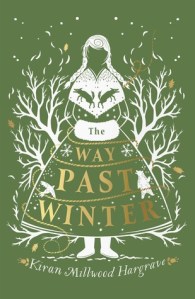 It has been winter for five years, and Sanna, Mila and Pípa are left alone in their little house in the forest – with nothing but cabbages to eat – when their brother Oskar is lured away by the same evil force that took their father years ago and has been keeping spring from coming. Mila, the brave middle daughter, sets out on a quest to rescue Oskar and the village’s other lost boys and to find the way past winter. Clearly inspired by the Chronicles of Narnia and especially Katherine Arden’s Winternight trilogy, this middle grade novel is set in an evocative, if slightly vague, Russo-Finnish past and has more than a touch of the fairy tale about it. I enjoyed it well enough, but wouldn’t seek out anything else by the author.
Favorite wintry passage:
“It was a winter they would tell tales about. A winter that arrived so sudden and sharp it stuck birds to branches, and caught the rivers in such a frost their spray froze and scattered down like clouded crystals on the stilled water. A winter that came, and never left.”
My rating:
Snow Country by Yasunari Kawabata (1937; English translation, 1956)
[Translated from the Japanese by Edward G. Seidensticker]
 The translator’s introduction helped me understand the book better than I otherwise might have. I gleaned two key facts: 1) The mountainous west coast of Japan is snowbound for months of the year, so the title is fairly literal. 2) Hot springs were traditionally places where family men travelled without their wives to enjoy the company of geishas. Such is the case here with the protagonist, Shimamura, who is intrigued by the geisha Komako. Her flighty hedonism seems a good match for his, but they fail to fully connect. His attentions are divided between Komako and Yoko, and a final scene that is surprisingly climactic in a novella so low on plot puts the three and their relationships in danger. I liked the appropriate atmosphere of chilly isolation; the style reminded me of what little I’ve read from Marguerite Duras. I also thought of Silk by Alessandro Baricco and Memoirs of a Geisha by Arthur Golden – perhaps those were to some extent inspired by Kawabata?
Favorite wintry passage:
“From the gray sky, framed by the window, the snow floated toward them in great flakes, like white peonies. There was something quietly unreal about it.”
My rating:
I’ve also been slowly working my way through The Snow Leopard by Peter Matthiessen, a spiritual quest memoir with elements of nature and travel writing, and skimming Francis Spufford’s dense book about the history of English exploration in polar regions, I May Be Some Time (“Heat and cold probably provide the oldest metaphors for emotion that exist.”).

On next year’s docket: The Library of Ice by Nancy Campbell (on my Kindle) and Snow Falling on Cedars by David Guterson
Last year I had a whole article on perfect winter reads published in the Nov/Dec issue of Bookmarks magazine. Buried in Print spotted it and sent this tweet. If you have access to the magazine via your local library, be sure to have a look!

Have you read any particularly wintry books recently?
Library Checkout: January 2019
As soon as I was back from the States on the 1st, I set about refilling my library stack and my reservation queue. I’ve been reading a bunch of poetry and skimming a lot of nature and social science books, with plenty of fiction, self-help and medical material on the way.
LIBRARY BOOKS READ
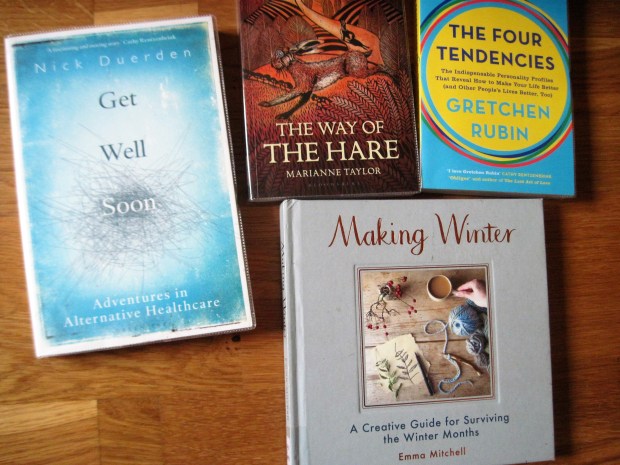
- Get Well Soon: Adventures in Alternative Healthcare by Nick Duerden
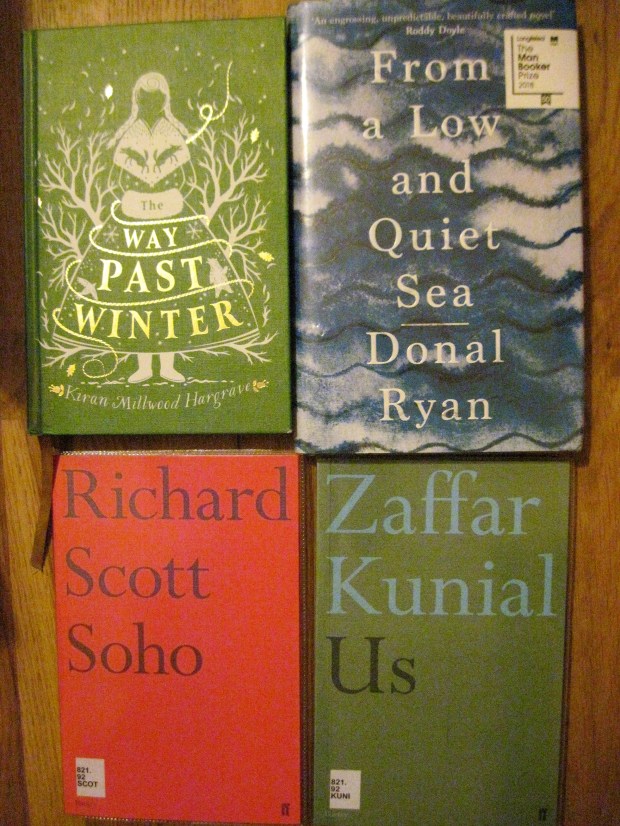
- The Way Past Winter by Kiran Millwood Hargrave
- A Honeybee Heart Has Five Openings by Helen Jukes

- Us by Zaffar Kunial [poetry]
- Soho by Richard Scott [poetry]
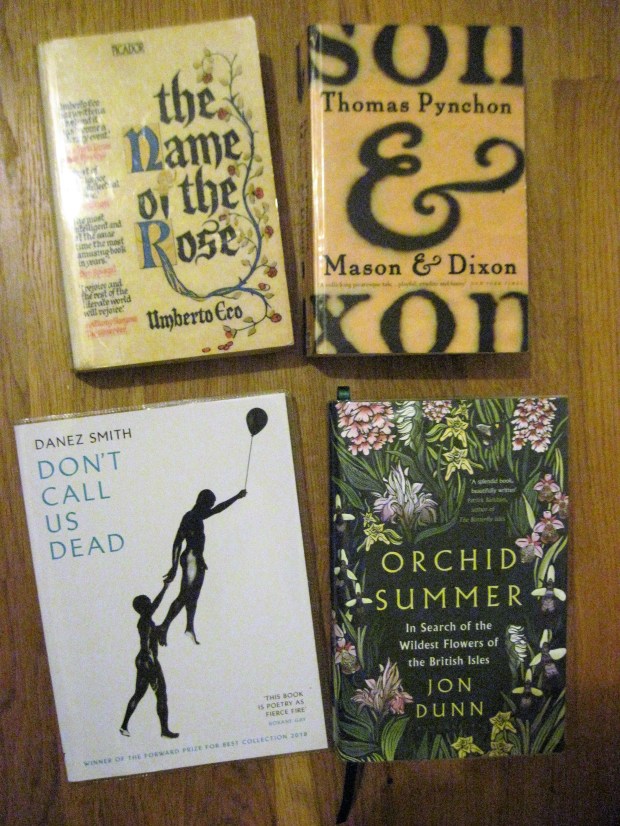
- Don’t Call Us Dead by Danez Smith [poetry]
SKIMMED
- Rewild Yourself: 23 Spellbinding Ways To Make Nature More Visible by Simon Barnes

- Making Winter: A Creative Guide for Surviving the Winter Months by Emma Mitchell
- The Brief Life of Flowers by Fiona Stafford
- Under the Knife: A History of Surgery in 28 Remarkable Operations by Arnold van de Laar
CURRENTLY SKIMMING
- The Nature of Winter by Jim Crumley
- The Name of the Rose by Umberto Eco
- Take Courage: Anne Brontë and the Art of Life by Samantha Ellis
- Lost Connections: Uncovering the Real Causes of Depression – and the Unexpected Solutions, Johann Hari
- The Four Tendencies: The Indispensable Personality Profiles that Reveal how to Make Your Life Better (And Other People’s Lives Better, Too) by Gretchen Rubin
CHECKED OUT, TO BE READ
- Orchid Summer: In Search of the Wildest Flowers of the British Isles by John Dunn
- East of Eden by John Steinbeck
- The Way of the Hare by Marianne Taylor
- The Mary Westmacott Collection, Vol. 1 [the alias of Agatha Christie – I only plan to read the third book in the volume, Absent in the Spring]
ON HOLD, TO BE CHECKED OUT
- Daphne by Will Boast
- The Binding by Bridget Collins

IN THE RESERVATION QUEUE
- Hired: Six Months Undercover in Low-wage Britain by James Bloodworth
- Selected Poems by Edmund Blunden
- The Golden Tresses of the Dead by Alan Bradley
- The Happy Brain: The Science of Where Happiness Comes From, and Why by Dean Burnett
- Louis & Louise by Julie Cohen
- Boy Erased: A Memoir of Identity, Faith, and Family by Garrard Conley
- Also Human: The Inner Lives of Doctors by Caroline Elton
- Dream Sequence by Adam Foulds
- Milkshakes and Morphine: A Memoir of Love and Loss by Genevieve Fox
- How to Break Up with Your Phone: The 30-Day Plan to Take Back Your Life by Catherine Price
- The Secret Barrister: Stories of the Law and How It’s Broken
- Growing Pains: Making Sense of Childhood: A Psychiatrist’s Story by Dr. Mike Shooter
- The Face Pressed against a Window: A Memoir by Tim Waterstone
RETURNED UNFINISHED
- The Sealwoman’s Gift by Sally Magnusson – I read the first 85 pages in December and found I couldn’t get back into it after a number of weeks away.
RETURNED UNREAD
- Assurances by J.O. Morgan [poetry] – I opened to the first page and instantly thought, “Nope.” Poetry is so subjective that it’s hard to pinpoint what put me off, but the fragmentary phrasing felt simultaneously repetitive and overwritten, and I don’t think I’d realized this is basically one long war poem. I didn’t make it past page 1 and returned it to the library on my next trip. Of course I then felt sheepish when I saw it won the Costa Prize for Poetry …
- From a Low and Quiet Sea by Donal Ryan – I’ve lost interest for the time being.
What have you been reading from your local libraries? Does anything appeal from my stacks?
I don’t have an official link-up system, so please just pop a link to your blog in the comments if you’ve taken part in Library Checkout this month. (Feel free to use the image in your post.)
American Book Acquisitions and 2019 Reading Goals
We arrived in the UK on January 1, after an overnight flight from Baltimore. There was no midnight announcement, no complimentary champagne; nothing. Clearly I had my hopes too high. So we’re feeling a bit cheated out of our New Year’s Eve experience and will be doing a recreated countdown and toast when we have houseguests over for this Epiphany weekend.
It was a low-key, relaxing couple of weeks back in the States, the majority of it spent seeing family and friends. We also made it into D.C. to see the new Obama portraits. Mostly I enjoyed doing not a lick of work. And I acquired books, of course: a secondhand and remainder stack that, after my trade-in of some cast-off books, cost just $4; and a few ARCs I’m excited about.


2019 Goals
I’m feeling restless in my career, like if someone gave me permission to quit all my gigs I would do it tomorrow. But, of course, only a fool would do so with no plan to replace them with other remunerative work. The year is likely to involve a lot of rethinking for me as I evaluate which of my proofreading and writing jobs feel worthwhile, and what’s taking me in the direction I want to go (not that I currently know what that is).
Life is awfully hard to plan out. Reading is much easier! So here are my fairly modest reading goals for the year, some of them overlapping:
- I plan to reinstate the Classic and Doorstopper of the month features I ran in 2017, since otherwise I hardly ever read them. I’m starting with Annabel’s readalong of The Name of the Rose by Umberto Eco, which is just over 500 pages but also conveniently falls into one of the below categories.

The doorstoppers I have around to choose from.
- I’ll make a second attempt at getting through some of the travel books and biographies I own, though I won’t hold myself to any particular target. At least five of each would be nice.


- I’m determined to up my literature in translation ratio. These are all the books I own that were originally published in other languages – pitiful! – but I will get hold of more through the library and publishers.

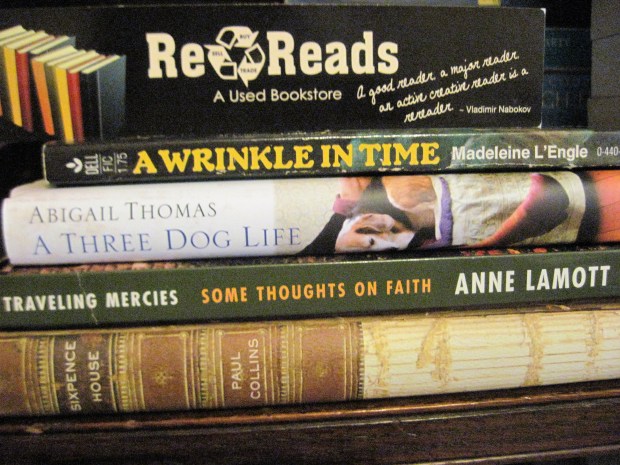
- Re-reading is something I undertake very reluctantly. I have friends who swear by it, but to me it can feel like a waste of time. Last year I re-read just four books: Little Women, Give Me Everything You Have, Crossing the Moon, and Diary of a Bookseller. In each case, on the second reading I rated the book a star lower. That suggests that, far from appreciating books more on a second reading, I have less patience with them and find more flaws! All the same, I’ve chosen four books to re-read in 2019. The Collins is a longtime favorite about moving to Hay-on-Wye; the Thomas is one of the books that first got me into reading memoirs. I’ve been let down by Lamott’s latest three books so wanted to go back to one of her spiritual classics; I’ve gotten into L’Engle’s writing for adults and want to revisit her most famous children’s book (which I don’t think I comprehended at age nine or whatever I was).
- I have a bad habit of racing through self-help and theology books rather than taking my time mulling over them and fully exploring how I might apply them in my life. This was especially true of The Artist’s Way, one of my bibliotherapy prescriptions. I started out with the aim of completing the daily “morning pages” of free writing (though for me they were ‘evening pages’; I’m not a morning person) and each chapter’s self-knowledge exercises. But soon I’d given up on the writing and contemplation and begun just reading the book straight through, which is not the point of it at all. So this year I mean to go back through the Cameron and Rubin books more mindfully, and use the McLaren devotional as it is intended, reading the recommended Bible passages alongside the weekly reflections.

What are some of your goals (reading-related or otherwise) for 2019?
Final 2018 Statistics and Where My Books Came From
My most prolific year yet! (I’m sure I said the same last year, but really, this is a number I will most likely never top and shouldn’t attempt to.) People sometimes joke to me, “why not shoot for a book a day?!” but that’s not how I do things. Instead of reading one book from start to finish, I almost always have 10 to 20 books on the go at a time, and I tend to start and finish books in batches – I’m addicted to starting new books, but also to finishing them.

The breakdown:
Fiction: 44.9%
Nonfiction: 45.8%
Poetry: 9.3%
(I think this is the first time nonfiction has surpassed fiction! They’re awfully close, though. I read a bit less poetry this year than last.)
Male author: 38.1%
Female author: 61.9%
(Roughly the same thing has happened the last two years, which I find interesting because I have never consciously set out to read more books by women.)
E-books: 15.7%
Print books: 84.3%
(In 2016 I read one-third e-books; in 2017 it was one-quarter. For some reason I seem to find e-books less and less appealing. They are awfully useful for traveling. However, I’ve been cutting back on the reviewing gigs that rely on me reading only e-books.)
Works in translation: 4.8%
(Ouch – my reading in translation almost halved compared to last year. I’m going to have to make a point of reading more translated work next year.)
Where my books came from for the whole year:
- Free print or e-copy from publisher: 28.7%
- Public library: 20.8%
- Secondhand purchase: 20.6%
- Downloaded from NetGalley or Edelweiss: 14.9%
- Gifts: 5%
- Free (giveaways, GET Free Bookshop, Book Thing of Baltimore, etc.): 3.8%
- University library: 3.2%
- New purchase (usually at a bargain): 1.5%
- Kindle purchase: 0.9%
- Borrowed: 0.6%
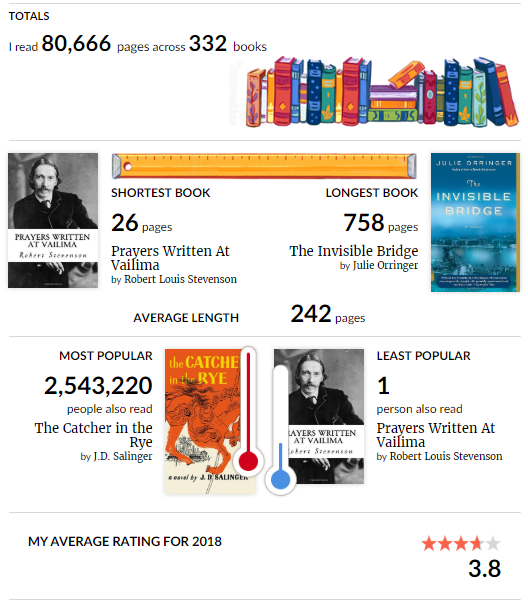
Some interesting additional statistics courtesy of Goodreads:
How did 2018 turn out for you reading-wise?
Happy New Year!
Library Checkout: December 2018
A lighter month since I was trying to finish up review books I got from the publisher and get all my end-of-year posts together. My local library closed for refurbishment for the entire length of my Christmas trip to America – how convenient! – so my loans from earlier in the month aren’t due until the first week of January. When I say “currently” below it’s sort of a fib; I’ve set all these books aside temporarily and will get back into them once I’m back in the UK. (As usual, I’ve added in star ratings and links to Goodreads reviews where I haven’t already featured the books on the blog in some way.)
LIBRARY BOOKS READ
- West by Carys Davies
- Becoming by Michelle Obama
- The Catcher in the Rye by J.D. Salinger

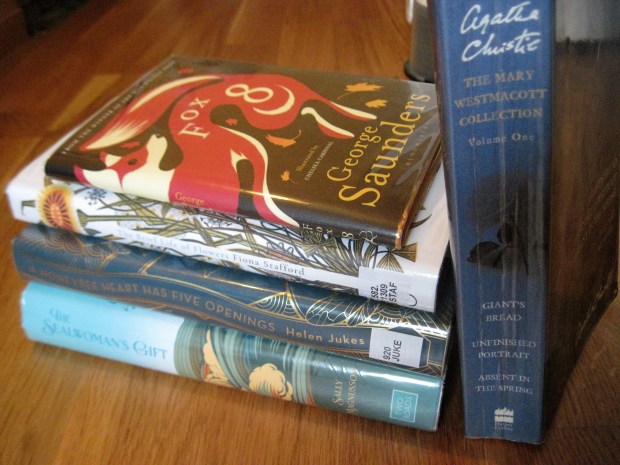
- Fox 8 by George Saunders

SKIMMED
- Dare to Lead: Brave Work, Tough Conversations, Whole Hearts by Brené Brown
- In Miniature: How Small Things Illuminate the World by Simon Garfield
- The Angry Chef: Bad Science and the Truth about Healthy Eating by Anthony Warner
CURRENTLY READING
- A Honeybee Heart Has Five Openings by Helen Jukes
- Us by Zaffar Kunial [poetry]
- The Sealwoman’s Gift by Sally Magnusson
CURRENTLY SKIMMING
- Rewild Yourself: 23 Spellbinding Ways To Make Nature More Visible by Simon Barnes
- Under the Knife: A History of Surgery in 28 Remarkable Operations by Arnold van de Laar
CHECKED OUT, TO BE READ
- Orchid Summer: In Search of the Wildest Flowers of the British Isles by John Dunn
- The Name of the Rose by Umberto Eco
- The Way Past Winter by Kiran Millwood Hargrave
- Mason & Dixon by Thomas Pynchon
- From a Low and Quiet Sea by Donal Ryan
- Soho by Richard Scott [poetry]
- Don’t Call Us Dead: Poems by Danez Smith
- The Mary Westmacott Collection, Vol. 1 [the alias of Agatha Christie – I only plan to read the third book in the volume, Absent in the Spring]
TO SKIM ONLY
- The Brief Life of Flowers by Fiona Stafford
IN THE RESERVATION QUEUE
- Selected Poems by Edmund Blunden
- Daphne by Will Boast
- Louis & Louise by Julie Cohen
- The Binding by Bridget Collins
- Boy Erased: A Memoir of Identity, Faith, and Family by Garrard Conley
- The Nature of Winter by Jim Crumley
- Get Well Soon: Adventures in Alternative Healthcare by Nick Duerden
- Dream Sequence by Adam Foulds
- Milkshakes and Morphine: A Memoir of Love and Loss by Genevieve Fox
- Making Winter: A Creative Guide for Surviving the Winter Months by Emma Mitchell
- Assurances by J.O. Morgan [poetry]
- The Four Tendencies: The Indispensable Personality Profiles that Reveal how to Make Your Life Better (And Other People’s Lives Better, Too) by Gretchen Rubin
- The Way of the Hare by Marianne Taylor
RETURNED UNFINISHED
- House of Glass by Susan Fletcher
- Winter by Ali Smith
What have you been reading from your local libraries? Does anything appeal from my stacks?
I don’t have an official link-up system, so please just pop a link to your blog in the comments if you’ve taken part in Library Checkout this month. (Feel free to use the image in your post.)
Other 2018 Superlatives and Some Early 2019 Recommendations
My Best Discoveries of the Year: Neil Ansell, James Baldwin, Janet Frame, Rohinton Mistry, Blake Morrison, Dani Shapiro, Sarah Vowell; Roald Dahl’s work for adults
The Author I Read the Most By: Anne Tyler (four novels)
 My Proudest Reading Achievement: Getting through a whole Rachel Cusk book (it was my third attempt to read her).
The 2018 Books Everybody Else Loved but I Didn’t: Melmoth by Sarah Perry and Normal People by Sally Rooney
The Year’s Biggest Disappointments: The Travelling Cat Chronicles by Hiro Arikawa and Sabrina by Nick Drnaso
 The Funniest Books I Read This Year: Fox 8 by George Saunders and Calypso by David Sedaris
Books that Made Me Cry: Leaving Before the Rains Come by Alexandra Fuller and The Long Goodbye by Meghan O’Rourke
 The Downright Strangest Books I Read This Year: The Bus on Thursday by Sheila Barrett, The Pisces by Melissa Broder and I Love Dick by Chris Kraus
The Debut Authors Whose Next Work I’m Most Looking Forward To: Julie Buntin, Lisa Ko and R.O. Kwon
The Best First Line of the Year: “Dust and ashes though I am, I sleep the sleep of angels.” (from The Western Wind by Samantha Harvey)
Some Early 2019 Recommendations
(in release date order)
 Book Love by Debbie Tung: Bookworms will get a real kick out of these cartoons, which capture everyday moments in the life of a book-obsessed young woman (perpetually in hoodie and ponytail). She reads anything, anytime, anywhere. Even though she has piles of books staring her in the face everywhere she looks, she can never resist a trip to the bookstore or library. The very idea of culling her books or finding herself short of reading material makes her panic, and she makes a friend sign a written agreement before he can borrow one of her books. Her partner and friends think she’s batty, but she doesn’t care. I found the content a little bit repetitive and the drawing style not particularly distinguished, but Tung gets the bibliophile’s psyche just right. (Out January 1.)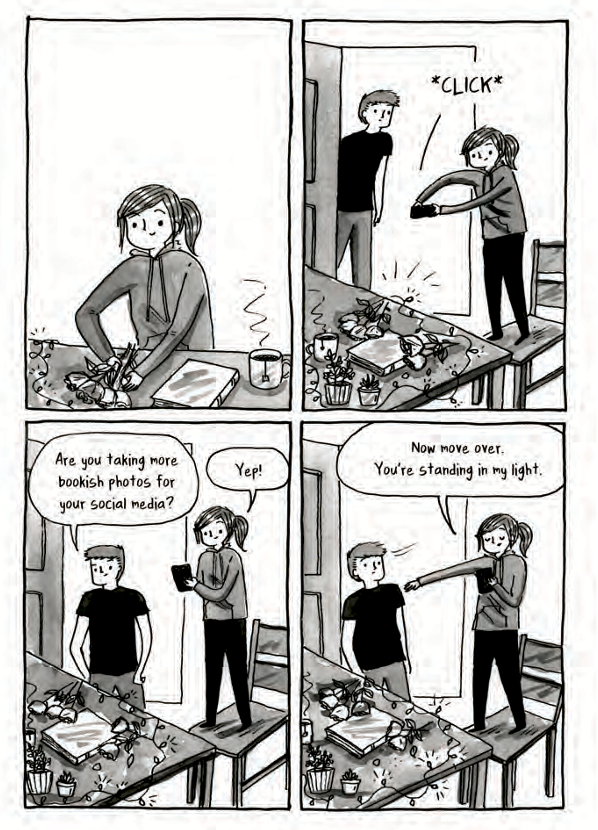
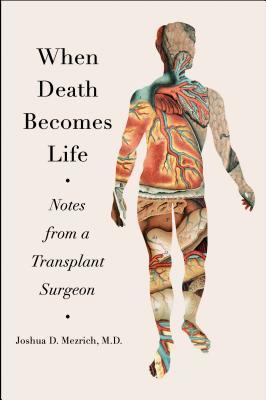 When Death Becomes Life: Notes from a Transplant Surgeon by Joshua D. Mezrich: In this debut memoir a surgeon surveys the history of organ transplantation, recalling his own medical education and the special patients he’s met along the way. In the 1940s and 1950s patient after patient was lost to rejection of the transplanted organ, post-surgery infection, or hemorrhaging. Mezrich marvels at how few decades passed between transplantation seeming like something out of a science-fiction future and becoming a commonplace procedure. His aim is to never lose his sense of wonder at the life-saving possibilities of organ donation, and he conveys that awe to readers through his descriptions of a typical procedure. One day I will likely need a donated kidney to save my life. How grateful I am to live at a time when this is a possibility. (Out January 15.)
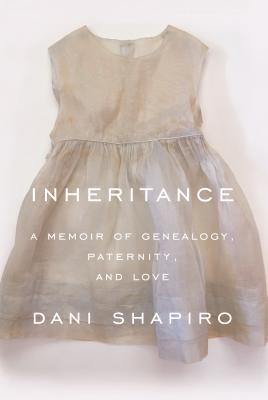 Inheritance: A Memoir of Genealogy, Paternity, and Love by Dani Shapiro: Shapiro was used to strangers’ comments about her blond hair and blue eyes. How could it be that she was an Orthodox Jew? people wondered. It never occurred to her that there was any truth to these hurtful jokes. On a whim, in her fifties, she joined her husband in sending off a DNA test kit. It came back with alarming results. Within 36 hours of starting research into her origins, Shapiro had found her biological father, a sperm donor whom she calls Dr. Ben Walden, and in the year that followed, their families carefully built up a relationship. The whole experience was memoirist’s gold, for sure. This is a moving account of her emotional state as she pondered her identity and what her sense of family would be in the future. (Out January 15.)

 Constellations: Reflections from Life by Sinéad Gleeson: Perfect for fans of I Am, I Am, I Am by Maggie O’Farrell, this is a set of trenchant autobiographical essays about being in a female body, especially one wracked by pain. As a child Gleeson had arthritis that weakened her hip bones, and eventually she had to have a total hip replacement. She ranges from the seemingly trivial to life-and-death matters as she writes about hairstyles, blood types, pregnancy, the abortion debate in Ireland and having a rare type of leukemia. In the tradition of Virginia Woolf, Frida Kahlo and Susan Sontag, Gleeson turns pain into art, particularly in a set of 20 poems based on the McGill Pain Index. The book feels timely and is inventive in how it brings together disparate topics to explore the possibilities and limitations of women’s bodies. (Out April 4.)
 The Hot Young Widows Club: Lessons on Survival from the Front Lines of Grief by Nora McInerny: In June 2016 I read It’s Okay to Laugh (Crying Is Cool Too), McInerny’s memoir about losing her father and her husband to cancer and her second child to a miscarriage – all within a few weeks – when she was 31. In this short book, an expansion of her TED talk, she argues that we are all incompetent when it comes to grief. There’s no rule book for how to do it well or how to help other people who are experiencing a bereavement, and comparing one loss to another doesn’t help anyone. I especially appreciated her rundown of the difference between pity and true empathy. “Pity keeps our hearts closed up, locked away. Empathy opens our heart up to the possibility that the pain of others could one day be our own pain.” (Out April 30.)
Coming tomorrow: Library Checkout & Final statistics for the year
Have you read any 2019 releases you can recommend?
How I Did on My 2018 Reading Goals & The Year’s Cover Trends
The year-end coverage continues!
So, how did I do with the 2018 reading goals I set for myself about this time last year? Rather poorly! is the short answer.
- I only read one book that might be considered a travel classic (by Patrick Leigh Fermor), though I did read some modern travel books.
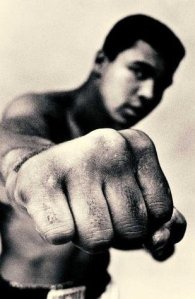 I only read Ali and the first half of a biography of May Sarton. What I’d envisioned being a monthly biography feature on the blog turned into a one-off.
- I need to work out my literature in translation percentage and compare it to last year’s to see if I’ve improved at all.
However, I do feel that I did well at reading my own books, as boosted by my 20 Books of Summer being chosen exclusively from my own shelves. Once I’m back from America I’ll have to do another full inventory and see how many unread books are still in the house, as compared to the 327 at this time last year.
Out of my 31 most anticipated reads of the second half of the year, I read 20 (of which 5 were at least somewhat disappointing), abandoned 2, still have 2 to read, lost interest in 1, have 1 in progress, and can’t find 5. For the whole year, the statistics are at 38/61 read (13 disappointments = more than 1/3 – that’s really bad and needs to be fixed!), 7 DNF, 4 still to read, 9 not found, 2 lost interest, and 1 in progress.
As for my non-reading-related goal … my accordion-playing fell by the wayside in July because I went away to America for three weeks unexpectedly, and after that never got back into the habit of daily practice and biweekly lessons the other side of Reading. I’d still like to pick it back up in the near future. I was at a point where I knew five notes and a few bass chords and could play both hands on a number of very simple tunes.

The poor cat was alarmed at yet another folk instrument entering his abode.
This Year’s Cover Trends
Mostly flora, which I noticed before 2018 had even begun.


The other one that kept jumping out at me was rubber gloves. Weird!


I’ll be back on the 26th to begin the countdown of my favorite books of the year, starting with nonfiction.
 Bookish Beck = Rebecca Foster. American transplant to England. Freelance proofreader and book reviewer.
 Bookish Beck