Best Nonfiction Books of 2018
Below I’ve chosen my 12 favorite nonfiction books published in 2018. You’ll be unsurprised to learn that half of them have a medical theme. Many have already featured on my blog in some way over the course of the year. To keep things simple, as I’ve done in previous years, I’m limiting myself to two sentences per title: a potted summary plus why you should read it. Let the countdown begin!
 12. The Line Becomes a River by Francisco Cantú: Francisco Cantú was a U.S. Border Patrol agent for four years in Arizona and Texas. Impressionistic rather than journalistic, his book is a loosely thematic scrapbook that, in giving faces to an abstract struggle, argues passionately that people should not be divided by walls but united in common humanity.
 11. Bookworm by Lucy Mangan: Mangan takes us along on a nostalgic chronological tour through the books she loved most as a child and adolescent. No matter how much or how little of your early reading overlaps with hers, you’ll appreciate her picture of the intensity of children’s relationship with books – they can completely shut out the world and devour their favorite stories over and over, almost living inside them, they love and believe in them so much – and her tongue-in-cheek responses to them upon rereading them decades later.
 10. Everything Happens for a Reason: And Other Lies I’ve Loved by Kate Bowler: An assistant professor at Duke Divinity School, Bowler was fascinated by the idea that you can claim God’s blessings, financial and otherwise, as a reward for righteous behavior and generosity to the church (“the prosperity gospel”), but if she’d been tempted to set store by this notion, that certainty was permanently fractured when she was diagnosed with stage IV colon cancer in her mid-thirties. Bowler writes tenderly about suffering and surrender, about living in the moment with her husband and son while being uncertain of the future.
 9. Gross Anatomy by Mara Altman: Through a snappy blend of personal anecdotes and intensive research, Altman exposes the cultural expectations that make us dislike our bodies, suggesting that a better knowledge of anatomy might help us feel normal. It’s funny, it’s feminist, and it’s a cracking good read.
 8. The Unmapped Mind by Christian Donlan: Donlan, a Brighton-area video games journalist, was diagnosed with (relapsing, remitting) multiple sclerosis in 2014; he approaches his disease with good humor and curiosity, using metaphors of maps to depict himself as an explorer into uncharted territory. This is some of the best medical writing from a layman’s perspective I’ve ever read.
 7. Skybound by Rebecca Loncraine: For Rebecca Loncraine, after treatment for breast cancer in her early thirties, taking flying lessons in an unpowered glider (everywhere from Wales to Nepal) was a way of rediscovering joy and experiencing freedom by facing her fears in the sky. Each year seems to bring one exquisite posthumous memoir about facing death with dignity; this is a worthwhile successor to When Breath Becomes Air et al.
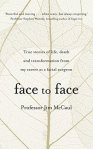 6. Face to Face by Jim McCaul: Eighty percent of a facial surgeon’s work is the removal of face, mouth and neck tumors in surgeries lasting eight hours or more; McCaul also restores patients’ appearance as much as possible after disfiguring accidents. This is a book that inspires wonder at all that modern medicine can achieve.
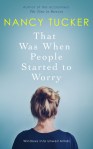 5. That Was When People Started to Worry by Nancy Tucker: Tucker interviewed 70 women aged 16 to 25 for a total of more than 100 hours and chose to anonymize their stories by creating seven composite characters who represent various mental illnesses: depression, bipolar disorder, self-harm, anxiety, eating disorders, PTSD and borderline personality disorder. Reading this has helped me to understand friends’ and acquaintances’ behavior; I’ll keep it on the shelf as an invaluable reference book in the years to come.
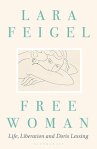 4. Free Woman by Lara Feigel: A familiarity with the works of Doris Lessing is not a prerequisite to enjoying this richly satisfying hybrid of biography, literary criticism and memoir. Lessing’s The Golden Notebook is about the ways in which women compartmentalize their lives and the struggle to bring various strands into harmony; that’s what Free Woman is all about as well.
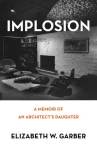 3. Implosion by Elizabeth W. Garber: The author endured sexual and psychological abuse while growing up in a glass house designed by her father, Modernist architect Woodie Garber – a fascinating, flawed figure – outside Cincinnati in the 1960s to 1970s. This is definitely not a boring tome just for architecture buffs; it’s a masterful memoir for everyone.
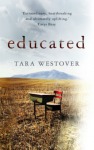 2. Educated by Tara Westover: Westover writes with calm authority, channeling the style of the scriptures and history books that were formative in her upbringing and education as she tells of a young woman’s off-grid upbringing in Idaho and the hard work that took her from almost complete ignorance to a Cambridge PhD. This is one of the most powerful and well-written memoirs I’ve ever read.
It was a real toss-up between Westover and this one, but since Educated has already gotten a ton of attention this year, I’ve awarded the title of nonfiction book of the year to:
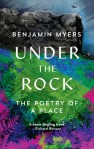 1. Under the Rock by Benjamin Myers: A spell-bindingly lyrical book that ranges from literature and geology to true crime but has an underlying autobiographical vein. Its every sentence is well-crafted and memorable; this isn’t old-style nature writing in search of unspoiled places, but part of a growing interest in the ‘edgelands’ where human impact is undeniable but nature is creeping back in.

My 2018 nonfiction books of the year (the ones I own in print, anyway).
What were some of your top nonfiction reads of the year?
Upcoming posts:
27th: Best fiction of the year
28th: Runners-up
29th: Best backlist reads
30th: Other superlatives and some early 2019 recommendations
31st: Library Checkout & Final statistics on my 2018 reading
How I Did on My 2018 Reading Goals & The Year’s Cover Trends
The year-end coverage continues!
So, how did I do with the 2018 reading goals I set for myself about this time last year? Rather poorly! is the short answer.
- I only read one book that might be considered a travel classic (by Patrick Leigh Fermor), though I did read some modern travel books.
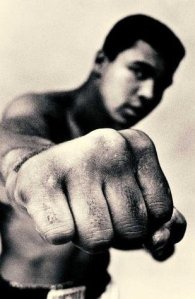 I only read Ali and the first half of a biography of May Sarton. What I’d envisioned being a monthly biography feature on the blog turned into a one-off.
- I need to work out my literature in translation percentage and compare it to last year’s to see if I’ve improved at all.
However, I do feel that I did well at reading my own books, as boosted by my 20 Books of Summer being chosen exclusively from my own shelves. Once I’m back from America I’ll have to do another full inventory and see how many unread books are still in the house, as compared to the 327 at this time last year.
Out of my 31 most anticipated reads of the second half of the year, I read 20 (of which 5 were at least somewhat disappointing), abandoned 2, still have 2 to read, lost interest in 1, have 1 in progress, and can’t find 5. For the whole year, the statistics are at 38/61 read (13 disappointments = more than 1/3 – that’s really bad and needs to be fixed!), 7 DNF, 4 still to read, 9 not found, 2 lost interest, and 1 in progress.
As for my non-reading-related goal … my accordion-playing fell by the wayside in July because I went away to America for three weeks unexpectedly, and after that never got back into the habit of daily practice and biweekly lessons the other side of Reading. I’d still like to pick it back up in the near future. I was at a point where I knew five notes and a few bass chords and could play both hands on a number of very simple tunes.

The poor cat was alarmed at yet another folk instrument entering his abode.
This Year’s Cover Trends
Mostly flora, which I noticed before 2018 had even begun.


The other one that kept jumping out at me was rubber gloves. Weird!


I’ll be back on the 26th to begin the countdown of my favorite books of the year, starting with nonfiction.
Merry Christmas!
Vocabulary Words I Learned from Books This Year
These are in chronological order by my reading.
- borborygmi = stomach rumblings caused by the movement of fluid and gas in the intestines
- crapula = sickness caused by excessive eating and drinking
- olm = a cave-dwelling aquatic salamander
~The Year of the Hare, Arto Paasilinna
- befurbelowed = ornamented with frills (the use seems to be peculiar to this book, as it is the example in every online dictionary!)
~The Awakening, Kate Chopin
 roding = the sound produced during the mating display of snipe and woodcock, also known as drumming
- peat hag = eroded ground from which peat has been cut
~Deep Country, Neil Ansell
- rallentando = a gradual decrease in speed
~Sight, Jessie Greengrass
- piceous = resembling pitch
~March, Geraldine Brooks
- soffit = the underside of eaves or an arch, balcony, etc.
~The Only Story, Julian Barnes
 lemniscate = the infinity symbol, here used as a metaphor for the pattern of pipe smoke
~The Invisible Bridge, Julie Orringer
- purfling = a decorative border
- lamingtons = sponge cake squares coated in chocolate and desiccated coconut (sounds yummy!)
~The Life and Loves of Lena Gaunt, Tracy Farr
- ocellated = having eye-shaped markings
~Red Clocks, Leni Zumas
- balloonatic (WWI slang) = a ballooning enthusiast
- skinkling = sparkling
- preludial = introductory
- claustral = confining
- baccalà = salted cod
~The Incendiaries, R. O. Kwon
(There were so many words I didn’t immediately recognize in this novel that I thought Kwon must have made them up; preludial and claustral, especially, are words I didn’t know existed but that one might have extrapolated from their noun forms.)
 bronies = middle-aged male fans of My Little Pony (wow, who knew this was a thing?! I feel like I’ve gone down a rabbit hole just by Googling it.)
- callipygian = having well-shaped buttocks
~Gross Anatomy, Mara Altman
- syce = someone who looks after horses; a groom (especially in India; though here it was Kenya)
- riem = a strip of rawhide or leather
- pastern = a horse’s ankle equivalent
~West with the Night, Beryl Markham
- blintering = flickering, glimmering (Scottish)
- sillion = shiny soil turned over by a plow
~The Light in the Dark: A Winter Journal, Horatio Clare
- whiffet = a small, young or unimportant person
~Ladder of Years, Anne Tyler
- trilliant = a triangular gemstone cut
- cabochon = a gemstone that’s polished but not faceted
- blirt = a gust of wind and rain (but here used as a verb: “Coldness blirted over her”)
- contumacious = stubbornly disobedient
~Four Bare Legs in a Bed, Helen Simpson
 xeric = very dry (usually describes a habitat, but used here for a person’s manner)
~Unsheltered, Barbara Kingsolver
- twitten = a narrow passage between two walls or hedges (Sussex dialect – Marshall is based near Brighton)
~The Power of Dog, Andrew Marshall
- swither (Scottish) = to be uncertain as to which course of action to take
- strathspey = a dance tune, a slow reel
~Stargazing, Peter Hill
- citole = a medieval fiddle
- naker = a kettledrum
- amice = a liturgical vestment that resembles a cape
~The Western Wind, Samantha Harvey
 pareidolia = seeing faces in things, an evolutionary adaptation (check out @FacesPics on Twitter!)
~The Overstory, Richard Powers
Have you learned any new vocabulary words recently?
How likely am I to use any of these words in the next year?
The Rest of the Books I Abandoned in 2018
Almost without exception, if I do not finish a book it’s because I WAS BORED AND COULDN’T BE BOTHERED. But that’s obviously not an acceptable review, even if it is the truth, so I always push myself to say a little more. What didn’t work for me? Why couldn’t I connect? I try not to go on too much about the books I don’t finish, since I feel a touch guilty about them and it doesn’t particularly serve anyone to list my failures. However, these occasional posts on abandoned books are very popular, I think because readers want permission to give up on books they’re not enjoying. (You have my express permission!) But also, if you enjoyed some of the below and think I should give them another try, do say. I apologize in advance for not getting on with a book you loved.
These are all the DNFs since late June, not mentioning again any that I described in my monthly Library Checkout posts. No tags, cover images, links or full reviews here – though I might write that little bit more if I got the book from the publisher. In total this year I abandoned about 50 books, equating to roughly 14% of the ones that I started. They are in chronological order of my attempted reads, with the pages or percentages read in brackets.
A Degree of Mastery: A Journey through Book Arts Apprenticeship by Annie Tremmel Wilcox: I bought this from The Open Book (Airbnb) shop in Wigtown. Of course I love books as physical objects, and repairing damaged books was my favorite task when I worked in a university library, so I thought I’d enjoy learning about the traditional bookbinding techniques the author learned from Bill Anthony at the University of Iowa. Yet this was somehow disappointingly tedious with technical detail. [57 pages]
Nevermore by Andrew McNeillie (poetry): I enjoyed the short bird portraits that form “Plato’s Aviary,” and “Elegy,” about the advancing dearth of common songbirds. None of what followed, especially the long ones, drew me in. [61 pages]
Kinship Theory by Hester Kaplan: “Maggie Crown was pregnant with her daughter’s baby,” the first line tells us, acting as a surrogate to fulfill Dale’s overpowering desire to become a mother. It’s a great setup, and I warmed to 48-year-old Maggie with her “burden of maternal guilt” she hopes to ease through this sacrificial act, but not to Dale (the odd, male-sounding name doesn’t help). I think this could have been a good short story, but I don’t have the patience to follow such a slow and quiet plot through nearly 300 pages. [24 pages]
The Shakespeare Requirement by Julie Schumacher: This sequel to Dear Committee Members was only mildly amusing. Jason Fitger is now Payne’s chair of English, a shabby and underfunded department that always seems to get passed over while Economics receives special treatment. His hapless floundering – wasp stings, dental treatment, accidentally getting high on pills before a party – induced a few cringes but no real laughs. The supporting characters are well drawn, but overall I had zero qualms about setting this aside. [44%]
The Librarian by Salley Vickers: The vintage cover design is adorable, and probably drew me in against my better judgment. An idealistic young woman takes up the post of Children’s Librarian in a small town populated by good-hearted busybodies and urchins. On the twee side of pleasant. Promises to be a predictable love story. An excuse for the author to list off her favorite books from childhood? I’m not sure I’d try anything else by Vickers. [48 pages]
If You Leave Me by Crystal Hana Kim: This feels SO similar to Pachinko that I was unable to evaluate it on its own merit. [11%]
Spectra by Ashley Toliver (poetry): I couldn’t make much literal or metaphorical sense out of these poems at all. I highlighted one passage I kind of liked – a play on the two meanings of ‘bulb’? – on my Kindle: “Away from the glow, a dumb bulb freezes in its wintery malaise, covering the rest of the light.” [37%]
Our Homesick Songs by Emma Hooper: I should have known from my experience with Etta and Otto that Hooper’s style is too twee for me, but I was lured in by the accordion on the cover! I did like the existence of the library boat and Cora redecorating the rooms of a derelict house to match the latest travel book she’s read. [14%]
When Rap Spoke Straight to God: A Poem by Erica Dawson: Not for me at all; I should have figured that out before even opening my Edelweiss download. [14%]
Pretend I’m Dead by Jen Beagin: I read the first long chapter (almost like a standalone novella) called “Hole.” Mona, a 23-year-old art school dropout turned cleaner, was raised by a cousin after her addict parents’ death. Like Beagin, who cleaned houses for five years to support her art, Mona collects vacuum cleaners and considers vacuuming her primary hobby. She enjoys the repetition and inadvertent intimacy of her job – it gives her glimpses into other people’s inner lives. In her spare time she volunteers for a needle exchange program and thus falls in with “Mr. Disgusting,” the nickname she gives to a thief and Dumpster diver 21 years her senior. It’s all super-quirky and unnecessarily crass. The closest comparison I can make is with Miranda July’s The First Bad Man. Throughout I kept thinking to myself, this should really be written in the first person. This is a strong character who can describe things for herself. The style is readable; I could have forced myself through the last two-thirds. But with so many other books waiting for me, I decided I didn’t want or need to keep going. [65 pages] My apologies and thanks to Oneworld for the review copy.
Famous Adopted People by Alice Stephens: This felt very college literary magazine. Perfectly competent writing, but with so much thrown in: details, descriptions, profanity and sassy slang in the dialogue. After skimming the first couple of chapters I’d warmed to none of the characters and had no clear idea of where this was going. I wonder if the opposite to the previous book is true: third person would have been a better choice. Each chapter opens with a Korean propaganda image and an epigraph from a famous adopted person. [5 pages]
The Western Wind by Samantha Harvey: Set in the English village of Oakham in 1491, this is narrated by local priest John Reve, who learns more than he might prefer to know about his neighbors through the confession box. The writing and the period detail are strong, but there’s little narrative drive despite Harvey’s unusual strategy of proceeding backwards and this ostensibly being a (murder) mystery. Reve writes of the “endless watermill of days,” and though the action takes place over just four days it still has that repetitive quality: a cycle of confessions, meals, and village rituals that doesn’t feel like it’s going anywhere. [60 pages]
Swan Song by Kelleigh Greenberg-Jephcott: Full of glitzy atmosphere contrasted with washed-up torpor. I have no doubt the author’s picture of Truman Capote is accurate, and there are great glimpses into the private lives of his catty circle. I always enjoy first person plural narration, too. However, I quickly realized that I don’t have sufficient interest in the figures or the time period to sustain me through nearly 500 pages. [18 pages]
Middle England by Jonathan Coe: In 2015 I very much enjoyed Number 11, Coe’s state-of-the-nation novel about wealth, celebrity and suspicion in contemporary England. Middle England uses roughly the same format, of multiple linked characters and story lines, and seems to make many of the same points, too. However, by embedding his book so completely in 2011–18 history, he limits its fictional possibilities. I often wonder how the history books will look back on recent events (Brexit, Trump), but revisiting them in fiction feels depressing and pointless – I was there, I remember all this stuff, I don’t need reminding of how we got here. The book is far too long and there were no characters I immediately latched onto. [22 pages] My apologies and thanks to Viking for the review copy.
The Man Who Came Uptown by George Pelecanos: I’m interested in trying more literary/crossover crime novels and liked the synopsis of this one, but didn’t enjoy the hardboiled style. [20 pages]
A Well-Behaved Woman by Therese Anne Fowler: “Alva did not need to love William Vanderbilt; she needed only to marry him.” I was a huge fan of Fowler’s Z and jumped at the chance to read this, but found the first couple of chapters dull. Alva is one of four sisters and has an invalid father. She’s desperate not to become a spinster or a caregiver, so she goes along with her best friend Consuelo’s plan to set her up with W.K. Vanderbilt, even if they share lingering snobbism about his nouveau riche background. There’s always a danger of historical fiction devolving into a biography-lite information dump about social history (manners, fashion, etc.), and unfortunately that felt like the case here. I might have been able to stomach Alva as part of a group biography, but she wasn’t promising as the focus of a novel. [25 pages] My apologies and thanks to Two Roads for the review copy.
Sea of Ink by Richard Weihe: Lots of names and dates of Chinese dynasties; not a lot of story. Started for a potential Novellas in November review. [7 pages]
The House of Impossible Beauties by Joseph Cassara: I couldn’t get into the sassy Spanglish voice. Doesn’t feel like a book for me, which is a real shame as I won a signed copy in a Oneworld Twitter competition. [5 pages]
Winter by Ali Smith: I’ve read six of her books before, but it’s looking unlikely that I’ll try another at this point (though I might make an exception for How to be both). I knew what to expect style-wise: no speech marks; a fairly repetitive stream-of-consciousness studded with subtle jokes and wordplay. I was enjoying the mock-Dickensian opening and Sophia’s run-in with British bureaucracy (a bank this time, as opposed to the post office in Autumn) on Christmas Eve. But by the time Art came along, I was done. [47 pages]
Crimson by Niviaq Korneliussen [translated from the Greenlandic by Anna Halagar]: I was keen to try this because Greenland has been one of my surprise reading themes this year in both travel books and novels, but this was definitely not for me. I didn’t get far enough into the story to comment on it, but what I did read was drenched in sex talk, with f***ing appearing in pretty much every sentence. One line I liked: “Dry kisses stiffening like desiccated fish.” [7%]
Don’t Skip Out on Me by Willy Vlautin: I picked up a free copy at the Faber Spring Party. It’s perfectly serviceably written in a contemporary Western style and I’m convinced by the setting, but I have no sense of the characters, especially the main character, and no desire to accompany him for another 250+ pages. I’ve seen the movie of Lean on Pete, so I know the sort of emotional tenor to expect. Sorry, Willy. Maybe I’ll try The Free instead. [30 pages]
The Madonna of the Mountains by Elise Valmorbida: Also from the Faber Spring Party. Nice writing, nice details. Italian woman fearing spinsterhood: “She must keep the wedding sheet clean and white, like her soul, like her body, immaculate and new. But she is old. Twenty-five years old and untouched by a husband. Her fingers are without thimbles. She has hands that can wring an animal’s neck. Arms to stir a pot of boiling polenta. She’s a good investment for any man, if only he can overlook her age.” I never built up momentum. [20 pages]
House of Glass by Susan Fletcher: I liked the Jane Eyre vibe of this novel about a young woman with osteogenesis imperfecta who travels from London to a rundown Gloucestershire manor house to create a collection of Kew Gardens’ plants. Clara seems feisty and there’s a neat connection between her brittle bones and the glasshouse she’s to set up. But there’s not enough suspense to this slow build, and based on the other Fletcher novel I read the payout won’t be sufficient. [87 pages]
What books disappointed you this year? Were there any you just couldn’t finish?
A Retrospective of 2018’s Events, Reading Projects and Themes
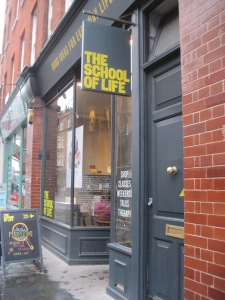 In January I had the tremendous opportunity to have a free personalized bibliotherapy appointment with Ella Berthoud at the School of Life in London. I’ve since read three of her prescriptions plus parts of a few others, but I still have several more awaiting me in the early days of 2019, and will plan to report back at some point on what I got out of all of them.
In March to April I ran a Wellcome Book Prize shadow panel for the second time. This year it was much more successful; I plan to do it again next year, too. (I actually proffered myself as an official judge for next year’s prize and got a very kind but entirely noncommittal e-mail back from the chairwoman, which I will have to take as victory enough.)
 Early April saw us visiting Wigtown, Scotland’s book town, for the first time. It was a terrific trip, but thus far I have not been all that successful at reading the 13 books that I bought! (Just two and a quarter so far.)
I reviewed three novels for Liz Dexter’s Iris Murdoch Readalong project: A Severed Head in March, The Italian Girl in June, and The Nice and the Good in September. In February I’ll pop back in with one more paperback that I own, The Sacred and Profane Love Machine. November was Margaret Atwood Reading Month, hosted by Marcie of Buried in Print and Naomi of Consumed by Ink, and provided me with a good excuse to read her first two novels.
 I did some “buddy reads” for the first time: Andrea Levy’s Small Island with Canadian blogger friends, including Marcie and Naomi; and West With the Night with Laila of Big Reading Life and Late Nights on Air with Naomi as well as Penny of Literary Hoarders during 20 Books of Summer, which I took part in for the first time. In May my mother and I read W. Somerset Maugham’s The Painted Veil and shared reading notes via e-mail. (A planned buddy read of The Left Hand of Darkness with Annabel and Laura was, alas, a fail.)
Besides the official Wellcome Book Prize blog tour in April, I participated in another 11 blog tours, averaging out at one a month. I’m going to scale back on these next year because I have too often found, after I accepted, that the book was a dud and I had to just run an extract because I could see I wasn’t going to get through it and write a review.
I joined my neighborhood book club in September and have attended every month since then. Our first four selections were Ladder of Years by Anne Tyler, The Gracekeepers by Kirsty Logan, Noonday by Pat Barker, and Number 11 by Jonathan Coe. I’d already read the Logan and Coe years ago and didn’t fancy rereading them, so wasn’t able to participate as much in those months, but was still glad to go along for the socializing. My husband even read the Coe and came to December’s meeting (was it just for the mince pies and mulled wine?!). We’ve set our first four reads for 2019 – the three below, in order from left to right, plus Ernest Hemingway’s The Garden of Eden, which I’ll borrow from the university library.

 In October I won tickets to see a production of Angela Carter’s Wise Children at the Old Vic in London. Just a few weeks later I won tickets to see Barbara Kingsolver in conversation about Unsheltered at the Southbank Centre. I don’t often make it into London, so it was a treat to have bookish reasons to go and blogging friends to meet up with (Clare of A Little Blog of Books joined me for both, and Laura T. was also at the Kingsolver event).
November was mostly devoted to novellas, for the third year in a row. Although I didn’t officially participate in Nonfiction November, I still enjoyed coming up with some fiction/nonfiction pairings and an “expert’s” list of women’s religious memoirs.
My husband wrote pretty much his entire PhD thesis this year and on Friday the 14th had his graduation ceremony. I was the moral support / proofreader / preparer of simple meals during the months when he was in the throes of writing up, so I will consider myself as sharing in the accomplishment. Congratulations, Dr. Foster!
This month and into January I’ll be reading the last few nominees for the National Book Critics Circle’s John Leonard Prize.

When the list of finalists was released, I was relieved to see I’d already read four out of seven (and three of those were ones I’d nominated); the other three – the Adjei-Brenyah and Brinkley stories and There There – were books I was keen to read but hadn’t managed to get hold of. About 80 of us NBCC members are reading the shortlist and voting for the best first book of the year by January 8th. Plus I’m technically up for an NBCC prize myself, in that I nominated myself (that’s how it works) for the 2018 Nona Balakian Citation for Excellence in Reviewing and sent in an application with five of my best reviews from the year.
The Ones that Got Away
 Two posts I planned but never got around to putting together would have commemorated the 50th anniversary of Thomas Merton’s death (I own several of his books but am most interested in reading The Seven-Storey Mountain, which celebrated its 70th birthday in October) and the 40th anniversary of the publication of The Snow Leopard by the late Peter Matthiessen. Perhaps I’ll try these authors for the first time next year instead.
Final Book Serendipity Incidents
In the second half of the year I started keeping track of all my weird reading coincidences, posting about them on Twitter or Instagram before collecting them into a blog post a couple months ago. Here are a few that popped up since then or recalled earlier reads from the year:
- Two protagonists named Willa: Anne Tyler’s Clock Dance and Barbara Kingsolver’s Unsheltered
- Two novels featuring bog people: Anne Youngson’s Meet Me at the Museum and Sarah Moss’s Ghost Wall
- Two dogs named Flash: Ben Crane’s Blood Ties and Andrew Marshall’s The Power of Dog
- Multiple sclerosis is an element in Christian Donlan’s The Unmapped Mind: A Memoir of Neurology, Incurable Disease and Learning How to Live, Jennifer Richardson’s Americashire and Michelle Obama’s Becoming (her father had it)
- The ideas of Freud are mentioned in a 1910s setting in Nancy Horan’s Loving Frank, Annabel Abbs’s Frieda and Daniel Mason’s The Winter Soldier
- Mermaids (or ‘mermaids’) and/or mermen appear in Imogen Hermes Gowar’s The Mermaid and Mrs Hancock, Melissa Broder’s The Pisces, Daniel Mason’s The Winter Soldier, and a series of poems in Miriam Darlington’s Windfall
- Bohemian writer dies young of tuberculosis (or similar) in novels about their wives: Annabel Abbs’s Frieda (D.H. Lawrence) and Nancy Horan’s Under the Wide and Starry Sky (Robert Louis Stevenson)
- Two books that mention the Indonesian practice of keeping dead relatives as mummies and bringing them out on occasion for ritual celebrations: From Here to Eternity by Caitlin Doughty and The Hot Young Widows Club by Nora McInerny
- Two books that include a trip to Lourdes for healing: Heal Me by Julia Buckley and Constellations by Sinéad Gleeson
- Two books that mention the irony of some of the most well-loved modern Christmas songs being written by Jews: In Mid-Air by Adam Gopnik and Christmas Days by Jeanette Winterson
Surprise Themes from My Year’s Reading
A few of these make sense – cults fit with my interest in narratives of religious experience, and it doesn’t take a psychologist to see that my relationship with my father has been an ongoing issue in recent years (I wonder how the numbers would compare for books about mothers?) – but most are completely random.
I decided a theme had to show up at least three times to make the list. Some topics I enjoyed so much I’ll keep reading about them next year. Within a category the books are in rough chronological order of my reading, and I include skims, DNFs and books in progress.
 Fathers (absent/difficult) + fatherhood in general: Educated by Tara Westover, And When Did You Last See Your Father? by Blake Morrison, The Italian Teacher by Tom Rachman, In the Days of Rain by Rebecca Stott, Implosion by Elizabeth W. Garber, Little Women by Louisa May Alcott & March by Geraldine Brooks, The Unmapped Mind by Christian Donlan, Never Mind and Bad News by Edward St. Aubyn, The Reading Promise by Alice Ozma, How to Build a Boat by Jonathan Gornall, Lake Success by Gary Shteyngart, Normal People by Sally Rooney, Rosie by Rose Tremain, My Father and Myself by J.R. Ackerley, Everything Under by Daisy Johnson, Ghost Wall by Sarah Moss, Surfacing by Margaret Atwood, Heart Berries by Terese Marie Mailhot, Blood Ties by Ben Crane, To Throw Away Unopened by Viv Albertine, Small Fry by Lisa Brennan-Jobs
Addiction: The Leavers by Lisa Ko, Mayhem by Sigrid Rausing, The Only Story by Julian Barnes, The Small Door of Your Death by Sheryl St. Germain, Writing and Madness in a Time of Terror by Afarin Majidi, Marlena by Julie Buntin, Ninety Days by Bill Clegg, Bad News by Edward St. Aubyn, Pretend I’m Dead by Jen Beagin, Heart Berries by Terese Marie Mailhot
 Greenland: A Wilder Time by William E. Glassley, This Cold Heaven by Gretel Ehrlich, Miss Smilla’s Feeling for Snow by Peter Høeg, On Balance by Sinéad Morrissey (the poem “Whitelessness”), Cold Earth by Sarah Moss, Crimson by Niviaq Korneliussen, The Library of Ice by Nancy Campbell
Cults: Educated by Tara Westover, Harmony by Carolyn Parkhurst, In the Days of Rain by Rebecca Stott, The Incendiaries by R.O. Kwon, A River Could Be a Tree by Angela Himsel
Trees: Ladders to Heaven by Mike Shanahan, The Overstory by Richard Powers, The Man Who Planted Trees by Jean Giono, The Wood and The Secret Life of the Oak by John Lewis-Stempel
 Flying: Skybound by Rebecca Loncraine, West With the Night by Beryl Markham, Going Solo by Roald Dahl, Skyfaring by Mark Vanhoenacker
The Anglo experience in Africa: Free Woman: Life, Love and Doris Lessing by Lara Feigel, Leaving Before the Rains Come by Alexandra Fuller, West With the Night by Beryl Markham, Going Solo by Roald Dahl
Korean-American women: The Incendiaries by R.O. Kwon, If You Leave Me by Crystal Hana Kim, All You Can Ever Know by Nicole Chung, Famous Adopted People by Alice Stephens, Digging to America by Anne Tyler
 New Zealand: The Garden Party and Other Stories by Katherine Mansfield, To the Is-Land by Janet Frame, Dunedin by Shena Mackay
Life in the White House: Living History by Hillary Rodham Clinton, All the Presidents’ Pastries by Roland Mesnier, Becoming by Michelle Obama
Lighthouses: Stargazing: Memoirs of a Young Lighthouse Keeper by Peter Hill, The Bird Artist by Howard Norman, Under the Wide and Starry Sky by Nancy Horan (about Robert Louis Stevenson, whose family built lighthouses)

More lighthouse books ready for next year.
Butterflies: Four Wings and a Prayer by Sue Halpern, Magdalena Mountain by Robert Michael Pyle, Mama Amazonica by Pascale Petit

More butterfly books ready for next year.
What were some of the highlights of your bookish year?
What odd coincidences and recurring themes have you spotted in your year’s reading?
Season’s Readings: What I’ll Be Reading This Christmas
With part of my birthday book token I treated myself to the new paperback edition of Jeanette Winterson’s Christmas Days, which I’ll read off and on over the holidays this year and next, probably. I recently finished Rachel Joyce’s wintry short story collection and started Madeleine L’Engle’s third Crosswicks Journal, An Irrational Season. The first two chapters are set at Advent and Christmas and the rest later in the liturgical year; I’ve set the book aside to come back to in January. L’Engle is a great author to read if you’d like some liberal, non-threatening theology at this time of year. I particularly recommend her Christmas-themed book that I read last year. (Mini-reviews of the Joyce and L’Engle are below.)
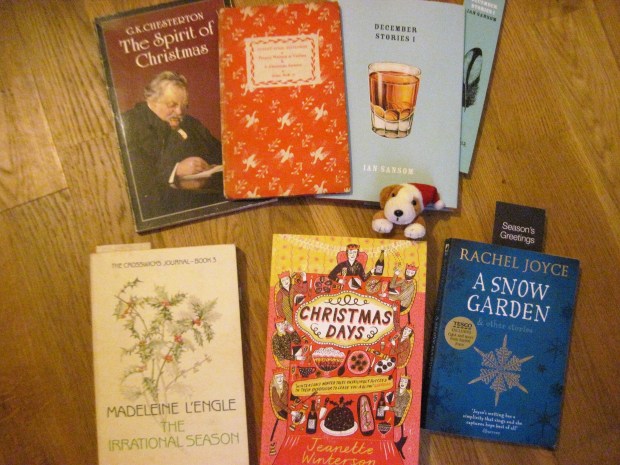
I also have a signed copy of Ian Sansom’s December Stories I that I won in a giveaway on Cathy’s blog, so I’ll be dipping into plenty of seasonally appropriate short stories this year. Earlier this year I picked up copies of the G.K. Chesterton collection (signed by the anthology editor) and the Robert Louis Stevenson volume (which contains prayers plus a sermon written during his time in Samoa) free at church from the theological library of a woman who’d died and donated her books to the church family.


A Snow Garden and Other Stories by Rachel Joyce
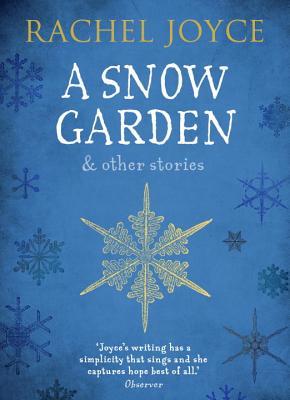 Two stand-outs were “The Boxing Day Ball,” a prequel to The Unlikely Pilgrimage of Harold Fry, describing how Harold and Maureen met, and “A Faraway Smell of Lemon,” in which a woman mourning the end of her relationship wanders into a cleaning supplies store and learns the simple lesson that everybody hurts. (“Life is hard sometimes” – fair enough, but can we say it without a cliché?) “I’ll Be Home for Christmas” is about the boy formerly known as Tim, now the mega pop star X. All he wants is a quiet few days back home, but he can’t seem to escape his reputation. Characters and little elements from previous stories reappear in later ones. My favorite was probably the title story, about a father trying to make the holidays perfect for his sons after his breakdown and divorce.
Joyce chooses to write about ordinary and forgotten people, but sometimes her vision of chavvy types doesn’t quite ring true, and when she isn’t being melancholy she’s twee. “Christmas Day at the Airport” was so contrived it made me groan. While I don’t think any of her books are truly great, they’re pleasant, relatable and easy to read.
My rating: 
Favorite lines:
“There is much to do, much to prepare, much to mend, but it cannot be done in a day and sometimes it is better to do one small thing.” (from “A Faraway Smell of Lemon”)
“The truth was, there were no instructions when you got married. There was no manual in the birthing suite that explained how to bring up a happy child. No one said, you do this, and then you do this, and after that this will happen. You made it up as you went along.” (from “The Marriage Manual”)
Bright Evening Star: Mystery of the Incarnation by Madeleine L’Engle
 “The story of Jesus’ birth has been oversentimentalized until it no longer has the ring of truth, and once we’d sentimentalized it we could commercialize it and so forget what Christmas is really about.” L’Engle believes in the power of storytelling, and in this short volume of memoir she retells the life story of Jesus and recalls her own experiences with suffering and joy: losing her father young (his lungs damaged by poison gas in WWI) and the death of her husband of 40 years versus the sustaining nature of family love and late-life friendships. Chapters 4 and 5 are particular highlights.
L’Engle was not at all your average American Christian: raised in the Episcopal tradition, she didn’t even encounter Evangelicalism until her mid-forties, and she doesn’t understand the focus on creationism and sexual morality. She also writes about free will and the adoration of Mary and how A Wrinkle in Time (rejected by many a publisher) was her fable of light in the midst of darkness. The title comes from The New Zealand Prayer Book, which also gives helpful alternate names for the persons of the Trinity: Earth Maker, Pain Bearer, Life Giver. This isn’t a particularly Christmas-y book, but it still lends itself to being read a chapter at a time during Advent.
My rating: 
Some other favorite lines:
“Christ, in being born as Jesus, broke into time for us, so that time will never be the same again.”
“Family can be a movable feast. It can be a group of friends sitting around the dining table for an evening. It can be one or two people coming to stay with me for a few nights or a few weeks. It should be the church, and I am grateful that my church is a small church.”
Are you reading any particularly wintry or Christmasy books this year?
“Cat Poems” & Other Cats I’ve Encountered in Books Recently
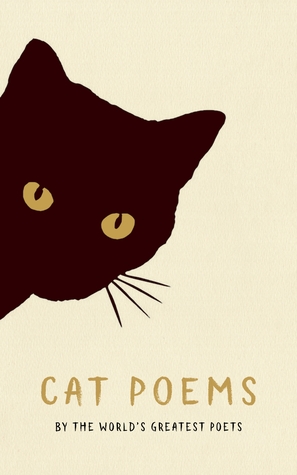 Cat Poems: An enjoyable selection of verse about our feline friends, nicely varied in terms of the time period, original language of composition, and outlook on cats’ contradictory qualities. I was unaware that Angela Carter and Muriel Spark had ever written poetry. There are perhaps too many poems by Stevie Smith – six in total! – though I did enjoy their jokey rhymes.
Some favorite lines:
“Cat sentimentality is a human thing. Cats / are indifferent, their minds can’t comprehend / the concept ‘I shall die’, they just go on living.” (from “Sonnet: Cat Logic” by Gavin Ewart)
“For every house is incomplete without him and a blessing is lacking in the spirit.” (from “Jubilate Agno” by Christopher Smart)
“These adorable things. When my life gives out, they’d eat me up in a second.” (from “I’ll Call Those Things My Cats” by Kim Hyesoon)
My rating:
Cat Poems was published in the UK on October 4th. My thanks to Serpent’s Tail for the free copy for review.
Even when it’s not a book specifically about cats, cats often turn up in my reading. Maybe it’s simply that I look out for them more since I became a cat owner several years ago. Here are some of the quotes, scenes or whole books featuring cats that I’ve come across this year.
Cats real and imaginary
 Stranger on a Train by Jenni Diski: “I find myself astonished that a creature of another species, utterly different to me, honours me with its presence and trust by sitting on me and allowing me to stroke it. This mundane domestic moment is as enormous, I feel at such moments, as making contact across a universe with another intelligence. This creature with its own and other consciousness and I with mine can sit in silence and enjoy each other’s presence. … This is a perfectly everyday scene but sometimes it takes my breath away that another living thing has allowed me into its life.”
 Certain American States by Catherine Lacey: “This cat wants to destroy beauty—I can tell. He is more than animal, he is evil, a plain enemy of the world. I wish him ill. I do. Almost daily I find a mess of feathers in the dirt. Some mornings there are whole bird carcasses left on my porch—eyes shocked open, brilliant blue wings, ripped and bloody. I have thought often of what it would take to kill a cat, quietly and quickly, with my bare hands. I have thought of this often. In fact I am thinking of it right now.” (from the story “Because You Have To”)
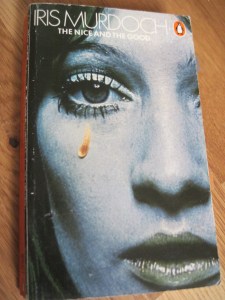 The Nice and the Good by Iris Murdoch: “Montrose was a large cocoa-coloured tabby animal with golden eyes, a square body, rectangular legs and an obstinate self-absorbed disposition, concerning whose intelligence fierce arguments raged among the children. Tests of Montrose’s sagacity were constantly being devised, but there was some uncertainty about the interpretation of the resultant data since the twins were always ready to return to first principles and discuss whether cooperation with the human race was a sign of intelligence at all. Montrose had one undoubted talent, which was that he could at will make his sleek hair stand up on end, and transform himself from a smooth stripey cube into a fluffy sphere. This was called ‘Montrose’s bird look’.”
 Four Bare Legs in a Bed and Other Stories by Helen Simpson: “They found it significant that I called my cat Felony. I argued that I had chosen her name for its euphonious qualities. She used to sink her incisors into the hell of my hand and pause a fraction of a millimeter from breaking the skin, staring at me until her eyes were reduced to sadistic yellow semibreves. She murdered without a qualm. She toyed with her victims, smiling broadly at their squeaks and death throes.
‘Why isn’t she a criminal?’ I asked. …
‘The difference is,’ said Mr Pringle, that we must assume your cat commits her crimes without mischievous discretion.’” (from the story “Escape Clauses”)
 In Delia Owens’s Where the Crawdads Sing, Sunday Justice is the name of the courthouse cat. He sits grooming on the courtroom windowsill during the trial and comes in and curls up to sleep in the cell of a particular prisoner we’ve come to care about.
A recommended picture book
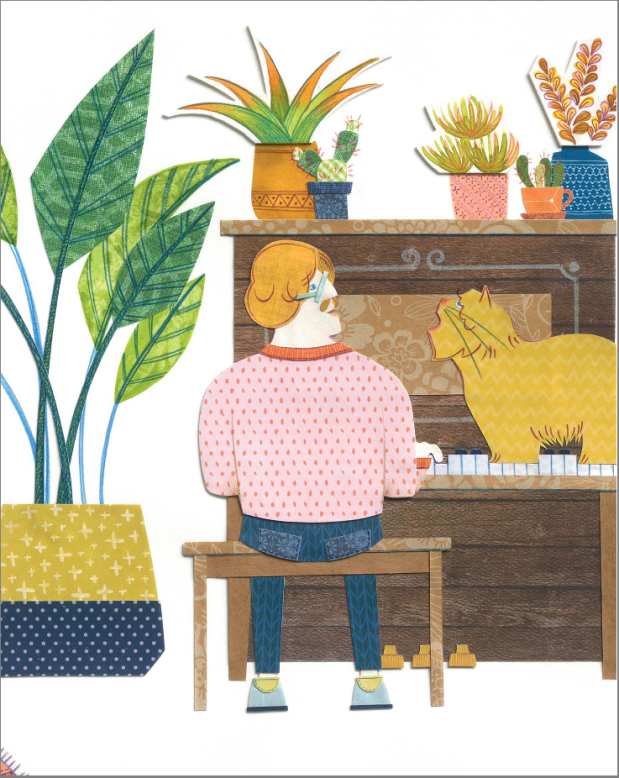
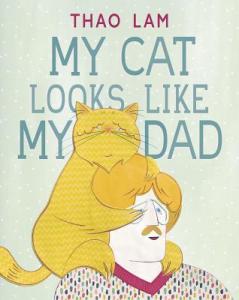 My Cat Looks Like My Dad by Thao Lam: I absolutely loved the papercut collage style of this kids’ book. The narrator explains all the ways in which the nerdy-cool 1970s-styled dad resembles the family cat, who is more like a sibling than a pet. “Family is what you make it.” There’s something of a twist ending, too. (Out on April 15, 2019.)
My rating: 
Later today I’m off to America for two weeks, but I’ll be scheduling plenty of posts, including the usual multi-part year-end run-down of my best reads, to go up while I’m away. Forgive me if I’m less responsive than usual to comments and to your own blogs!
This Really Isn’t About You by Jean Hannah Edelstein
This was the book I wanted Places I Stopped on the Way Home to be: a wry, bittersweet look at the unpredictability of life as an idealistic young woman in the world’s major cities. Edelstein’s memoir also fits into several of my favorite subgenres: it’s a family memoir, a medical memoir and a bereavement memoir all at once. The story opens in Brooklyn in February 2014 as Edelstein, age 32, is trying to build an adult life back in America after 14 years in London and Berlin. Two years earlier her father had told her via Skype from Baltimore that he had lung cancer, and she returned to the States to be closer to help. But when the moment came, she was still unprepared: “if someone had said to me: What would you like to be doing when your father dies? I would not have said, I would like to be looking for love on OKCupid. But I did not have the luxury to make that decision. Who does?”
 Her father never smoked yet died of lung cancer; his mother had colon cancer and died at 42. Both had Lynch syndrome, a genetic disease that predisposes people to various cancers. Six months after her father’s death, Edelstein took a genetic test, as he had wanted her to, and learned that she was positive for the Lynch syndrome mutation. The book’s structure (“Between” – “Before” – “After”) plunges readers right into the middle of the family mess, then pulls back to survey her earlier life, everything from childhood holidays in her mother’s native Scotland to being a secretary to a London literary agent who hated her, before returning to the turning point of that diagnosis. How is she going to live with this knowledge hanging over her? Doctors want her to have a prophylactic hysterectomy, but how can she rule out children when she doesn’t yet have a partner in her life?
So many aspects of this book resonated for me, especially moving between countries and having a genetic disease in the family. Beyond those major themes, there were tiny moments that felt uncannily familiar to me, like when she’s helping her mother prepare for an online auction of the contents of the family home in Maryland, or comparing the average cleanliness and comfort of rental properties in England and the States. There are so many little memorable scenes in this memoir: having an allergic reaction to shellfish two days after her arrival in the States, getting locked out of her sublet and having to call an Uzbek/Israeli locksmith at 3 a.m., and subsisting on oatmeal three times a day in London versus going on all-expenses-paid trips to Estonia and Mauritius for a conference travel magazine.
This is a clear-eyed look at life in all its irony (such as the fact that she’s claustrophobic and dreads getting MRI tests when it was her own father, a nuclear physicist, who built the world’s first full-body MRI scanner at Aberdeen) and disappointment. I’m prizing this as a prime example of life writing that’s not comprehensive or strictly chronological yet gives a clear sense of the self in the context of a family and in the face of an uncertain future.
My rating:
Readalikes:
The Family Gene by Joselin Linder
My Salinger Year by Joanna Rakoff
Mrs Gaskell & Me by Nell Stevens
Favorite lines:
“when I was in London, … I wondered if the problem of having my whole life ahead of me, free and clear and open for anything, was that having an unlimited number of options made the chance of choosing the wrong thing so high.”
“I was not yet old enough to realize that I’d never really know, that there would never be a time when I could think: I am here. This is me, without becoming uncertain again a moment later.”
“When I lived in England I drank a lot of tea, many cups a day, even though I didn’t like it. I learned quite fast after I arrived in London that drinking tea was an important way to connect with people: when I went over to their homes, or if we worked together in an office. Being offered a cup of tea meant that you were being offered an entry to something, and accepting it was important.”
This Really Isn’t About You was published by Picador on August 23rd. My thanks to the publisher for the free copy for review.
Frieda by Annabel Abbs: A Sideways Look at D.H. Lawrence
Possibly never before nor since has a great writer been so intensely and so permanently influenced by one woman as Lawrence was by Frieda von Richtofen.
~biographer Robert Lucas
I have a weakness for “famous wives” books, which have become increasingly popular over the past decade. (I have a whole shelf for them on Goodreads.) Frieda particularly appealed to me because of the reading I’ve done around the life of D.H. Lawrence. In my sophomore year of college I took a course on Yeats & Lawrence and found Lawrence fascinating almost in spite of myself. I remember bursting out in one early seminar on Sons and Lovers, “but he sexualizes everything!” The more I read, though, the more I admired his grasping for the fullness of life, which at least starts with the body.
After my study abroad year I did independent travel in Dorset and around Nottingham to explore the sense of place in Thomas Hardy and Lawrence’s works, and when I applied for graduate school scholarships I was undecided whether to focus on the Victorians or Lawrence and the Moderns (I eventually settled on the former). I also adapted a paper I’d written about D.H. Lawrence’s new moral framework for sexuality in Lady Chatterley’s Lover and presented it at the D.H. Lawrence Society of North America’s 2005 conference in Santa Fe, New Mexico. The conference included a wonderful trip out to Lawrence’s ranch at Taos.

All this explains why I was so keen to see how Annabel Abbs would depict Frieda, who came from disgraced German aristocracy and left her first husband, Ernest Weekley, a linguistics professor at Nottingham, and their three children to be with Lawrence. If you rely only on the words of Lawrence himself, you’d think Frieda was lucky to shed her dull family life and embark on an exciting set of bohemian travels with him as he built his name as a writer.
 Abbs adds nuance to that picture by revealing just how much Frieda was giving up, and the sorrow she left behind her. Much of the book is in third person limited from Frieda’s point of view, but there are also occasional chapters from the perspectives of Ernest and the children, mostly their son Monty, as they work through their confusion over Frieda’s actions and try to picture the future without her. I loved the way that these chapters employ dramatic irony, especially to create a believable child mindset. “I have realised there is something inside me struggling to come out,” Frieda says to Monty. “I call it the what-I-could-be.” Poor Monty, just seven years old when the book opens in 1907, thinks his mother must be talking literally about a baby on the way. When her inchoate longings finally center on Lawrence, Ernest’s working-class former student, in 1912, Monty describes the young man as a “hungry fox.”
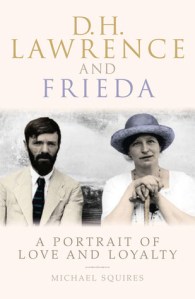 Frieda’s relationship with Lawrence, whom she called “Lorenzo,” lasted nearly two decades but was undeniably volatile. Abbs refuses to romanticize it: the early days of frolicking naked in meadows and weaving flowers through each other’s pubic hair soon cede to incidents of jealousy and disturbing cruelty. Lawrence pressed her into remarrying though she was happier living outside of convention. We can sympathize with the passion and deep communion she found with Lawrence –
“She was conscious, in that moment, that their minds had met and crossed and understood. That this miner’s son – so strange and unknown, so young – was more like her than anyone she’d ever met.”
“She felt as if she had been split open, as if Mr Lawrence had peered deep inside her, seen things she had hidden from the rest of the world. It was a marvellous feeling, she decided, to be explored and understood.”
– but also with the later suspicion that she’s given up so much – social acceptability and years of life with her children – and perhaps in some ways it hasn’t been worth it. “He could be so infuriating! So exhausting! But his vitality, the sharp light in which he saw everything, his wild poetic fury, they made her feel as if she could breathe again.”
Frieda is particularly reminiscent of Loving Frank, Nancy Horan’s novel about Mamah Borthwick Cheney’s affair with architect Frank Lloyd Wright: she left her children in pursuit of love and independence and spent time traveling, including in Germany, where she absorbed notions of free love and women’s rights – just as Frieda did. I was also reminded of Free Woman, Lara Feigel’s book on Doris Lessing, who gave up her children to pursue her writing. In Lessing’s case there was not the same wrenching regret. Still, all three books offer a valuable look at the choices women make when love, duty and vocation don’t align.

The Australian cover.
My knowledge of Lawrence’s writings and biography enhanced my enjoyment of this novel. I’ve appreciated for the first time just how much Frieda inspired the female protagonists in Lawrence’s major works. In a comprehensive Historical note and Author’s note, Abbs lists her sources and explains the small tweaks she made to the historical record to fit the story line. However, you don’t need any prior knowledge to fall in love with Frieda’s vivacity. Her determination to live according to her own rules makes her a captivating character.
My rating:
Frieda was published by Two Roads on November 15th. With thanks to the publisher for the proof copy for review.
Recent Writing for BookBrowse, Shiny New Books and the TLS
Here are excerpts from (and links to, where available) some of my recent reviews for other places. A few of these books will undoubtedly be showing up on my end-of-year best lists in a couple weeks’ time.
BookBrowse
I was pleased to have three of the books I reviewed show up on BookBrowse’s list of the top 20 books of the year, as voted for by the site’s readers. What’s more, Educated was voted their top nonfiction book of the year and Where the Crawdads Sing (below) their #1 debut novel. (The third on the list was Unsheltered.)
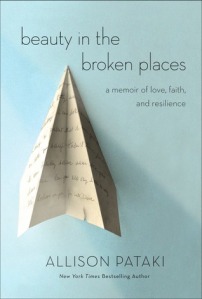 Beauty in the Broken Places by Allison Pataki: Ernest Hemingway wrote that we are strong at the broken places, and Allison Pataki found that to be true when her husband, David Levy, a third-year orthopedic surgery resident in Chicago, had a near-fatal stroke at age 30. On June 9, 2015, Dave and five-months-pregnant Allison were on a flight from Chicago to Hawaii for their babymoon, planning to stop in Seattle to visit Dave’s brothers. But they never made it there. On the plane Dave told her he couldn’t see out of his right eye.The plane made an emergency landing in Fargo, North Dakota and Dave was rushed to a hospital for testing. Doctors found he had suffered a bithalamic midbrain ischemic stroke, even though he’d had no risk factors and this stroke type was virtually unknown in patients of his age. Pataki goes back and forth between the details of this health crisis and her past with Dave. Hers is a relatable story of surviving the worst life can throw at you and finding the beauty in it.
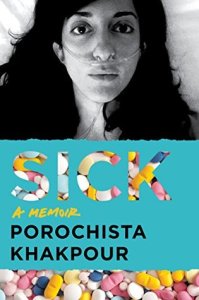 Sick by Porochista Khakpour: Khakpour can’t remember a time when she didn’t feel unwell and like she wanted to escape. “I had no idea what normal was. I never felt good,” she writes in her bracing memoir. Related to this sense of not being at home in her body was the feeling of not having a place where she fit in. Throughout Sick, she gives excellent descriptions of physical and mental symptoms. Her story is a powerful one of being mired in sickness and not getting the necessary help from medical professionals. Lyme disease has cost her $140,000 so far, and a lack of money and health insurance likely delayed her diagnosis by years. There is, unfortunately, some inherent repetition in a book of this nature. At times it feels like an endless cycle of doctors, appointments, and treatment strategies. However, the overall arc of struggling with one’s body and coming to terms with limitations will resonate widely.
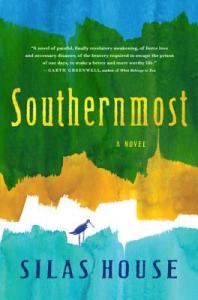 Southernmost by Silas House: In Silas House’s sixth novel, a Tennessee preacher’s family life falls apart when he accepts a gay couple into his church. We go on a long journey in Southernmost: not just a literal road trip from Tennessee to Florida, but also a spiritual passage from judgment to grace. Reconciliation is a major theme, but so is facing up to the consequences of poor decisions. I found the plotting decisions rewarding but also realistic. The pattern of a narrow religious worldview ebbing away to no faith at all and eventually surging back as a broader and more universal spirituality truly resonates. I loved House’s characters and setups, as well as his gentle evocation of the South. His striking metaphors draw on the natural world, like “She had the coloring of a whip-poor-will” and “The sky is the pink of grapefruit meat.” It’s a beautiful, quietly moving novel of redemption and openness to what life might teach us.
Unsheltered by Barbara Kingsolver: Kingsolver’s bold eighth novel has a dual timeline that compares the America of the 1870s and the recent past, revealing how they are linked by distrust and displacement. The book’s themes and structure emphasize similarities between two time periods that might initially appear very different. Chapters alternate between the story lines, and the last words of one chapter form the title of the next. It’s a clever and elegant connecting strategy, as is the habit of using variations on the title word as frequently as possible – something Jonathan Franzen also does in his novels. (I counted 22 instances of “shelter” and its variants in the text; how many can you spot?) Kingsolver can be heavy-handed with her messages about science, American politics and healthcare, etc. All the same, Unsheltered is a rich, rewarding novel and an important one for our time, with many issues worth pondering and discussing.
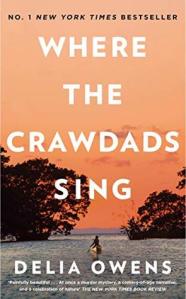 Where the Crawdads Sing by Delia Owens: It’s easy to see why so many have taken this debut novel into their hearts: it’s a gripping mystery but also a tender coming-of-age story about one woman’s desperately lonely upbringing and her rocky route to finding love and a vocation. Not only that, but its North Carolina marsh setting is described in lyrical language that evinces Delia Owens’s background in nature writing, tempered with folksy Southern dialect. The title refers to places where wild creatures do what comes naturally, and throughout the book we are invited to ponder how instinct and altruism interact and what impact human actions can have in the grand scheme of things. In Kya, Owens has created a truly outstanding character. The extremity of her situation makes her a sympathetic figure in spite of her oddities. Crawdads is a real treat.
Shiny New Books
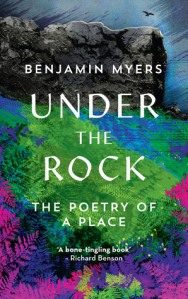 Under the Rock by Benjamin Myers: When Myers moved to the Calder Valley of West Yorkshire from London over a decade ago, he approached his new patch with admirable curiosity, and supplemented the observations he made from his study window with frequent long walks with his dog (“Walking is writing with your feet”) and research into the history of the area. The result is a divagating, lyrical book that ranges from literature and geology to true crime but has an underlying autobiographical vein. This isn’t old-style nature writing in search of unspoiled places. Instead, it’s part of a growing interest in the ‘edgelands’ where human impact is undeniable but nature is creeping back in. Interludes transcribe his field notes, which are stunning impromptu poems. I came away from this feeling that Myers could write anything – a thank-you note, a shopping list – and make it profound literature. Every sentence is well-crafted and memorable. “Writing is a form of alchemy,” he declares. “It’s a spell, and the writer is the magician.” I certainly fell under his spell here.
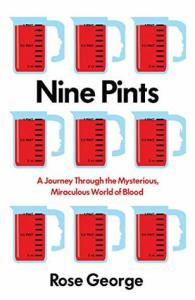 Nine Pints by Rose George: Nine Pints dives deep into the science and cultural history of blood. George’s journalistic tenacity keeps her pushing through the statistics to find the human stories that animate the book. In the first chapter we track the journey of a pint of blood that she donates in her hometown of Leeds. I was particularly interested, if morbidly so, in the chapter on leeches and bloodletting. Other sections journey further afield, chiefly to South Africa and India, to explore AIDS and menstruation taboos. The style can be choppy and repetitive, given to short sentences and identical paragraph openers, and there are a couple of places where the nine-chapter structure shows its weaknesses. While Nine Pints is quite uneven, it does convey a lot of important information about the past, present and future of our relationship to blood.
Times Literary Supplement
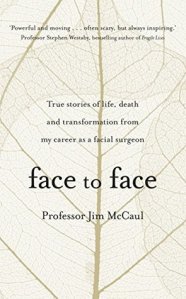 Face to Face: True stories of life, death and transformation from my career as a facial surgeon by Jim McCaul: Eighty percent of a facial surgeon’s work is the removal of face, mouth and neck tumors in surgeries lasting eight hours or more. McCaul also restores patients’ appearance as much as possible after disfiguring accidents. Here he pulls back the curtain on the everyday details of his work life: everything from his footwear (white Crocs that soon become stained with blood and other fluids) to his musical choices (pop for the early phases; classical for the more challenging microsurgery stage). Like neurosurgeon Henry Marsh, he describes the awe of the first incision – “an almost overwhelming sense of entering into a sanctuary.” There’s a vicarious thrill to being let into this insider zone, and the book’s prose is perfectly clear and conversational, with unexpectedly apt metaphors such as “Sometimes the blood vessels can be of such poor quality that it is like trying to sew together two damp cornflakes.” This is a book that inspires wonder at all that modern medicine can achieve.
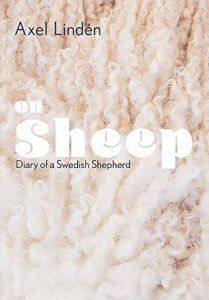 On Sheep: Diary of a Swedish Shepherd by Axel Lindén: Lindén left city life behind to take on his parents’ rural collective in southeast Sweden. This documents two years in his life as a shepherd aspiring to self-sufficiency and a small-scale model of food production. Published diaries can devolve into tedium, but the brevity and selectiveness of this one prevent its accounts of everyday tasks from becoming tiresome. Instead, the rural routines are comforting, even humbling, as the shepherd practices being present with these “quiet and unpretentious and stoical” creatures. The attention paid to slaughtering and sustainability issues – especially as the business starts scaling up and streamlining activities – lends the book a wider significance. It is thus more realistic and less twee than its stocking-stuffer dimensions and jolly title font seem to suggest.
 Bookish Beck = Rebecca Foster. American transplant to England. Freelance proofreader and book reviewer.
