Library Checkout: June 2018
I’ve read some terrific stuff from the library over the past month! As usual, I’ve added in star ratings and links to any Goodreads reviews if I haven’t already featured the books on the blog in some way.
Note: I’m going to skip the month of July because I’m spending three weeks of it in America helping my parents pack and move out of their house. My plan is to return all the public library books I still have out and cancel most of my reservation requests before I fly out. (I can always request them again as soon as I get back; for now I like the idea of a clean slate.)
LIBRARY BOOKS READ
- Anecdotal Evidence by Wendy Cope [poetry]

- The Lie of the Land by Amanda Craig

- The Unmapped Mind: A Memoir of Neurology, Incurable Disease and Learning How to Live by Christian Donlan

- Leaving Before the Rains Come by Alexandra Fuller
- The White Book by Han Kang

- Cold Earth by Sarah Moss

- The Long Goodbye: A Memoir of Grief by Meghan O’Rourke

- The Reading Promise: 3,218 Nights of Reading with My Father by Alice Ozma
- Never Mind by Edward St. Aubyn
- The Hate U Give by Angie Thomas
SKIMMED ONLY
- The Wonder Down Under: A User’s Guide to the Vagina by Dr. Nina Brochmann and Ellen Støkken Dahl
- A Moment of Grace by Patrick Dillon
- Morning—How to Make Time: A Manifesto by Allan Jenkins
- When I Hit You by Meena Kandasamy
CURRENTLY READING-ish (set aside temporarily)
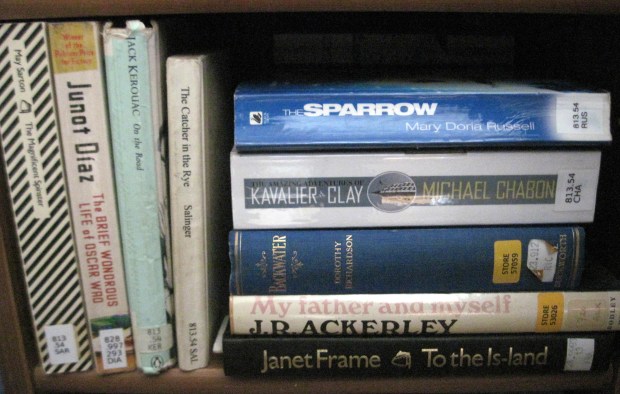
- To the Is-Land: An Autobiography by Janet Frame
CHECKED OUT, TO BE READ
These university library books have been hanging around for a loooooooooooong time, and most likely will continue to do so for months to come:
- My Father and Myself by J.R. Ackerley
- The Amazing Adventures of Kavalier & Clay by Michael Chabon
- The Brief Wondrous Life of Oscar Wao by Junot Díaz
- On the Road by Jack Kerouac
- The Cabaret of Plants: Botany and the Imagination by Richard Mabey (not pictured)
- Backwater by Dorothy Richardson
- The Sparrow by Mary Doria Russell
- The Catcher in the Rye by J.D. Salinger
- The Magnificent Spinster by May Sarton
IN THE RESERVATION QUEUE
- Whistle in the Dark by Emma Healy
- The Stopping Places: A Journey through Gypsy Britain by Damian Le Bas
- The Secret Barrister: Stories of the Law and How It’s Broken
- Rosie: Scenes from a Vanished Life by Rose Tremain
- The Librarian by Salley Vickers
RETURNED UNFINISHED
- The Day that Went Missing: A Family Tragedy by Richard Beard
- The Trick to Time by Kit de Waal
- Tender by Belinda McKeon
- The Lido by Libby Page

RETURNED UNREAD
- Places I Stopped on the Way Home: A Memoir of Chaos and Grace by Meg Fee
- That Was when People Started to Worry: Windows into Unwell Minds by Nancy Tucker
(I requested these from the publisher way back in November 2017 and was astounded when, 6.5 months later, copies turned up on my doorstep! I’d given up on them ever coming.)
- The Owl at the Window by Carl Gorham
- See What I Have Done by Sarah Schmidt
(I lost interest in these two and wasn’t drawn in by the first few pages.)
What have you been reading from your local libraries? Does anything appeal from my stacks?
The Bookshop Band & The June–July Outlook
The Bookshop Band played in an Oxfordshire village 35 minutes’ drive from us yesterday evening. I’ve now seen them four times; I don’t think that quite qualifies me as a groupie, though I do count them among my favorite artists and own their complete discography.
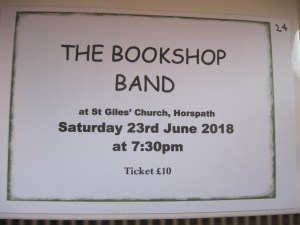
The small church provided great acoustics and an intimate setting, and the set list was a fun mixture of old and new. All of their songs are based on literature: When they were the house band at Mr B’s Emporium of Reading Delights in Bath, they would write two songs based on an author’s new book on the very day that s/he would be making an appearance at the shop in the evening. A combination of slow reading and procrastination, I suppose. You’d never believe it, though, because their songs are intricate and thoughtful, often pulling out moments and ideas from books (at least the ones I’ve read) that never would have occurred to me.
Here’s what they played last night, and which books the songs were based on:
- “Once Upon a Time” – For a radio commission they crafted this compilation of first lines from various books.
- “Cackling Farts” – A day-in-the-life song featuring archaic vocabulary words from Mark Forsyth’s The Horologicon.
- “You Make the Best Plans, Thomas” – Hilary Mantel’s Bring Up the Bodies (one of my absolute favorites of their songs).
- “Why I Travel This Way” – Yann Martel’s The High Mountains of Portugal (I have heard this live once before, but it’s never been recorded).
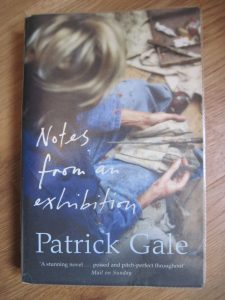 “Petroc and the Lights” – Patrick Gale’s Notes from an Exhibition (which reminds me that I really need to read it soon!).
- “Dirty Word” – A brand-new song based on Aldous Huxley’s Brave New World; it stemmed from their recent commission to write about banned books for the V&A.
- “How Not to Woo a Woman” – Rachel Joyce’s The Unlikely Pilgrimage of Harold Fry (it must be a band favorite as they’ve played it every time I’ve seen them).
- “Curious and Curiouser” – Lewis Carroll’s Alice in Wonderland.
- “Sanctuary” – A new song they wrote for the launch event at the Bodleian Library for Philip Pullman’s La Belle Sauvage (The Book of Dust, #1).
- “Room for Three” – The other song they wrote for the Pullman event
- “We Are the Foxes” – Ned Beauman’s Glow.
- “Edge of the World” – Emma Hooper’s Etta and Otto and Russell and James.
- “Faith in Weather” – The only one not based on a book; this was inspired by a Central European folktale about seven ravens (another of my absolute favorites).
- “Thirteen Chairs” – Dave Shelton’s Thirteen Chairs (another one they’ve played every time I’ve seen them).
I’m always impressed by Ben and Beth’s musicianship (guitars, ukuleles, cello, harmonium and more), and I also admire how they’ve continued touring intensively despite being new parents. They’re currently on the road for two months, and one-year-old Molly simply comes along for the ride!

A gorgeous sunset as we left the gig last night.
It’ll be a busy week on the blog. I have posts planned for every day through Saturday thanks to Library Checkout, the Iris Murdoch readalong, and various features reflecting on the first half of the year and looking ahead to the second half.
It turns out I’ll be in America for three weeks of July helping my parents pack and move, so I may have to slow down on the 20 Books of Summer challenge, and will almost certainly have to substitute in some books I have in storage over there. (I’m pondering fiction by Laurie Colwin, Hester Kaplan, Antonya Nelson and Julie Orringer; and nonfiction by Joan Anderson, Haven Kimmel and Sarah Vowell.) I have a few books lined up to review for their July release dates, but it’ll be a light month overall.
4 Reasons to Love Julie Buntin’s Debut Novel, Marlena
 I managed to miss Marlena when it first came out last year; luckily, I had another chance at reading it when it was released in paperback a couple of months ago. It bears some thematic similarities to Emma Cline’s The Girls, Rosalie Knecht’s Relief Map, Andrée Michaud’s The Last Summer, Julianne Pachico’s The Lucky Ones and especially Emily Fridlund’s History of Wolves, but Marlena is a cut above. It’s basically a flawless debut, one I can’t recommend too highly. Occasionally I weary of writing straightforward reviews – let’s be honest, you get tired of reading them, too – so I’m returning to a format I last used for my review of The Animators and pulling out four reasons why you must be sure not to miss this book.
- Michigan. Have you ever read another book set in northern Michigan? After her parents’ divorce, Cat moves to Silver Lake with her mom and older brother, and almost immediately meets Marlena Joyner, their new next-door neighbor. Although Marlena drowns in suspicious circumstances less than a year later – this is not a spoiler; it is part of the back cover blurb and is also revealed on the fourth page – her impact on Cat will last for decades. The setting pairs perfectly with the novel’s tone of foreboding: you have a sense of these troubled teens being isolated in their clearing in the woods, and from one frigid winter through a steamy summer and into the chill of the impending autumn, they have to figure out what in the world they are going to do with their terrifying freedom.
Probably most teenagers think where they live is boring. But there aren’t words for the catastrophic dreariness of being fifteen in northern Michigan at the tail end of winter, when you haven’t seen the sun in weeks and the snow won’t stop coming and there’s nowhere to go and you’re always cold and everyone you know is broke…
- Emulation and Envy. Catherine wants to be just like 17-year-old Marlena: experienced, sensual and insouciant. She puts childish hobbies and studious habits behind her and remakes herself as “Cat” at her new school. Through Marlena she develops a taste for alcohol and cigarettes. She also turns truant and starts hanging out with drug dealers at all hours. All along she’s conveniently ignoring that Marlena is essentially parentless – her mother left and her father cooks meth – and that popping pills and sleeping around aren’t exactly a great strategy for getting out of Silver Lake. Living with a single mom who works as a cleaner, Cat also starts to envy the rich incomers whose summer houses she helps to clean. In the scene that may well linger with me the longest, Cat tastes whole almonds for the first time at the Hodsons’ mansion and steals a stash.
I looked up to Marlena—she was tough and beautiful and I never once thought she wasn’t in control. … Even at fifteen I wasn’t dumb enough to glamorize Marlena’s world, the poverty, the drugs that were the fabric of everything, but I was attracted to it all the same.
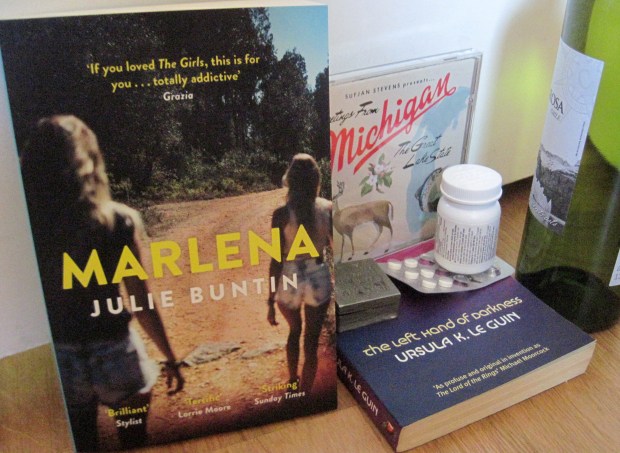
- Teenage Shenanigans. I was the squeakiest of squeaky clean kids in high school, but it’s always fun to experience very different lives through fiction. With Cat and Marlena you’ll get to skip school, throw unsupervised parties, and pull all manner of pranks. Their most impressive spectacle is affixing giant papier-mâché genitalia to a Big Boy restaurant statue as an act of revenge on a teacher who hit on Marlena.
Everything was happening in consequence-less free fall … the two of us made one perfect, unfuckwithable girl. Nothing could hurt us, as long as we weren’t alone.
- Hindsight Is Everything. Cat is writing this nearly 20 years later. In short interludes labeled “New York,” we learn about her adult life: a job in a library, a husband named Liam, and an ongoing struggle with a bad habit she formed under Marlena’s influence. When Marlena’s little brother Sal gets in touch and asks to visit Cat in New York City to hear about the sister he barely remembers, it sparks a trip back into memory. This narrative is like an exorcism or a system detox for Cat: not until she gets it out can she truly live her own life.
Those days were so big and electric that they swallowed the future and the past … a difficulty letting go of the past can run in families, like a problematic thyroid.
This is one of those books where the narration is so utterly convincing that you don’t so much read the plot as live it out. I felt no distance between Cat and me. When a first-person voice is this successful, you wonder why an author would ever choose anything else.
My rating:
Marlena was published in paperback in the UK by Picador on April 19th. My thanks to the publisher for sending a free copy for review.
20 Books of Summer, #1–3: Hadley, Timms & Tyler
I’ve been reading sophisticated short stories, a food/travel memoir, and a prize-winning slice of cozy Americana.
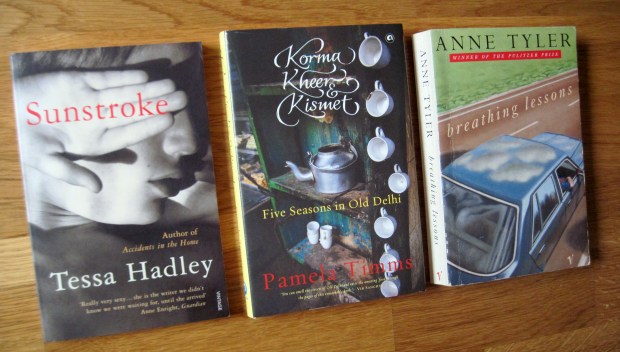
Sunstroke and Other Stories by Tessa Hadley (2007)
Everything is running away so fast; your deepest responsibility is to snatch at all the living you can.
Here’s a little something I wrote as an introduction to a review of Hadley’s most recent short story collection: “When I think of Tessa Hadley’s books, I picture a certain quality of light. I see piercing yellow shafts of sunlight filling airy, wood-floored rooms and lowering over suburban English gardens to create languid summer evenings. I think of childhood’s sense of possibility and adolescence’s gently scary feeling of new freedoms opening up. And, even when the story lines are set in the present day, I imagine the calm sophistication of 1950s–70s fashions: smart sweater sets and skirts, or flowing hippie dresses.” This volume is from a decade earlier and is not quite as strong, but that distinct atmosphere is still there.
 Each story pivots on a particular relationship: A mother fends off her son’s spurned lover; a teenager helps her older sister recover from a miscarriage; a woman hosts her former brother-in-law. Several stories revisit the same place or situation decades later. Claudia flirted with Graham when he was a teenager and she a grown woman; in “Phosphorescence” he tests whether there’s still any power in that connection 25 years later. In “A Card Trick” Gina goes back to a writer’s home she visited with family friends 25 years ago and reflects on how life has failed to live up to expectations. In “Matrilineal” Nia shares the comfort of a bed with her mother twice: once as a little girl the night they run away from her father, and again 40 years later in a hotel in New York City.
My two favorites were “The Surrogate,” in which a young woman falls for her professor – and for a pub customer who happens to look like him; and “Exchanges,” about two women on the cusp of middle age whose lives have diverged.
Korma, Kheer and Kismet: Five Seasons in Old Delhi by Pamela Timms (2014)
The only diary I’ve ever religiously maintained is my food journal.
 Timms is a Scottish journalist and food blogger who moved to India in 2005 when her husband got a job as a foreign correspondent. She delights in the street food stalls of Old Delhi, where you can get a hearty and delicious meal of mutton curry or fried vegetable dumplings for very little money. Often the snacks are simple – the first roasted sweet potatoes of the season or a big bowl of rice pudding made with buffalo milk and flavored with cardamom – but something about snatching sustenance while you’re on the go can make it the best thing you’ve ever tasted. It takes some searching to avoid the “pizza-fication” of Indian cuisine and discover an authentic hole-in-the-wall. Timms relies on local knowledge to locate hidden treasures and probes the owners until she gets recipes to recreate at home.
There isn’t a strong narrative to the book, but the food descriptions are certainly mouth-watering. Timms also captures the “magnificent mayhem of the spice market” and the extremes of the climate – a Delhi summer is like “being trapped inside a tandoor for three months of the year.” I reckon “Mr Naseem’s Sheer Khurma” will be fairly easy and so worth trying as a light dessert to follow a curry feast. Made with whole milk, ground rice, dried fruits and nuts, it’s a sweet custard traditionally used to break the Ramadan fast.
Breathing Lessons by Anne Tyler (1988)
“Was there a certain conscious point in your life when you decided to settle for being ordinary?”
Tyler won the Pulitzer Prize for this one. I’d rate it third out of the seven of her novels I’ve read so far, after Dinner at the Homesick Restaurant and The Accidental Tourist. (In general I seem to like her 1980s work the best.) The main action takes place all on one day, as Maggie Moran and her husband Ira travel from Baltimore up to Pennsylvania to attend the funeral of her childhood friend’s husband and pay a visit to their son’s ex-wife and their granddaughter.
 Of course, circadian narratives are so clever because they manage to interleave sufficient flashbacks to fill in the background. So we learn how 48-year-old Maggie – a precursor of Rebecca Davitch from Back When We Were Grown-ups and Abby Whitshank from A Spool of Blue Thread and the epitome of the exuberant, slightly ditzy, do-gooding heroine – has always meant well but through a combination of misunderstandings and fibs has botched things. She settled on Ira almost out of embarrassment: she’d heard a rumor he’d been killed in military training and sent his father an effusive condolence letter. When their son Jesse got Fiona pregnant, Maggie convinced Fiona to give him a chance based on a sentimental story about him that she perhaps half believed, and now, years later, she’s trying to do the same.
I loved the funeral scene itself – Serena is determined to recreate her wedding to Max, note for note – but I wearied of a sequence in which Maggie and Ira help an older African-American gentleman with car trouble. This is very much the Maggie show, so your reaction to the novel will largely depend on how well you’re able to tolerate her irksome habits. (Really, does she have to confuse the brake and the accelerator TWICE in one day?) Ira is the usual Tylerian standoffish husband, and Jesse the standard layabout progeny. What I found strangest was how little Tyler bothers to develop the character of the Moran daughter, Daisy.
Still, I enjoyed this. It’s a story about the mistakes we make, the patterns we get stuck in, and the ways we try to put things right. Sometimes it works; sometimes it doesn’t. Ultimately, we’re all making up this life business as we go along.
(I’ll also be reviewing Anne Tyler’s new novel, Clock Dance, on July 12th.)
Still More Books about Cats
The past two years I’ve had biannual specials on cat books. You might think I would have run out of options by now, but not so! Granted, my choices this time are rather light fare: several children’s picture books, two slight gift books, and a few breezy memoirs. But it’s nice to have a fluffy post every now and again, and today’s is in honor of getting past a week of the year I always dread: June 15th is the U.S. tax deadline for citizens living abroad, so I’ve been drowning in forms and numbers. To celebrate getting both my IRS and HMRC tax returns sent off by today, here’s some feline-themed reads to enjoy over a G&T or other summery tipple of your choice.
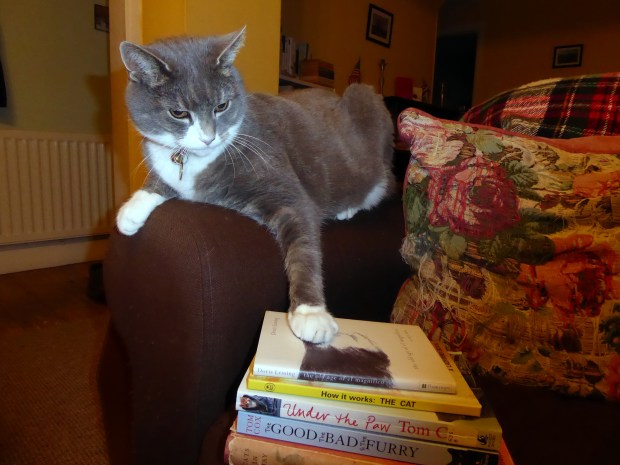
Alfie likes cat books, too. The stacks are good for scratching one’s cheek against.
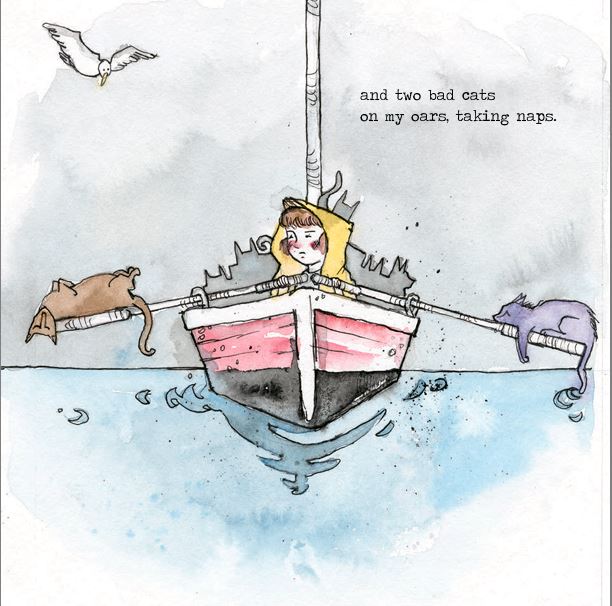
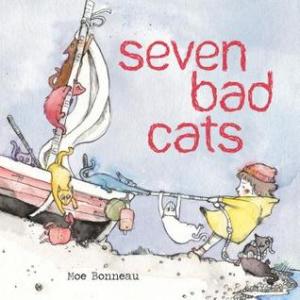 Seven Bad Cats by Monique Bonneau (2018): “Today I put on my boots and my coat, and seven bad cats jumped into my boat.” This is a terrific little rhyming book that counts up to seven and then back down to one with the help of some stowaway cats and their antics. (They come in colors that cats don’t normally come in, but that’s okay with me.) To start with they are incorrigibly lazy and mischievous, but when disaster is at hand they band together to help the little girl get back to shore safely. If only cats were so helpful in real life!
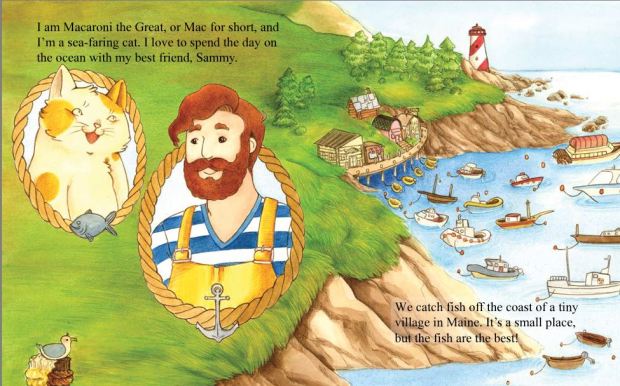
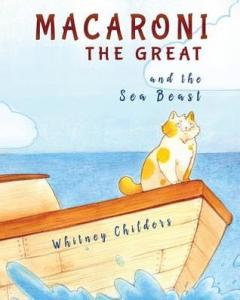 Macaroni the Great and the Sea Beast by Whitney Childers (2018): Macaroni the cat has an idyllic life by the coast of Maine with his hipster fisherman friend, Sammy. Sometimes he helps steer the fishing boat; sometimes he naps on the deck. But when a fearsome sea beast rears its head from the net one day, Mac is ready to fight back and save the day. From the colorfully nautical endpapers through to the peaceful last page, this is a great picture book for cat lovers to share with the little ones in their lives.
You don’t so often hear blokes talking about their cats, do you? That crazy cat lady stereotype dominates. But Tom Cox has written several memoirs about his life with cats.
 In Under the Paw: Confessions of a Cat Man (2008), Cox, who had previously published volumes of his journalism about music and sports, came out as a cat lover. By the end of the book he has SIX CATS, so this was not some passing fad but a deep and possibly worrying obsession. In essays and short list-based asides he traces his history with cats, reveals the wildly different personalities of his current pets, and wittily comments on cat behavior. I especially liked these entries from his “Cat Dictionary”: “ES Pee: The telepathic process that leads a cat to only get properly settled on its owner’s stomach in the moments when that owner is most desperate for the toilet” & “Muzzlewug: The state of bliss created by the perfect friction of an owner’s fingers on a fully extended chin.”
 The Good, the Bad and the Furry (2013) is another fairly entertaining book. Cat owners will recognize the ways in which a pet’s requirements impinge on their lives (but we wouldn’t have it any other way). Cox starts and ends the book with four cats, but – alas – goes down to three for a while in the middle, with visitors upping it to 3.5 sometimes. The Bear, Ralph and Shipley are the stalwarts, with The Bear described as “the only cat I’d ever seen who appeared to be almost permanently on the verge of tears.” He’s melancholy and philosophical, whereas Ralph (who says his own name when he meows) is vain and sullen. “The Ten Catmandments” was my favorite part: “Thou shalt not drink the water put out for thee by thy humans” and “Thou shalt ignore any toy thy human has bought for thee, especially the really expensive ones.” Includes lots of photographs of cats and kittens!
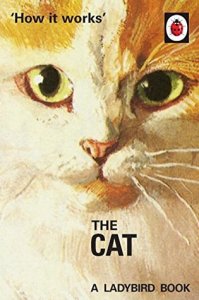 How It Works: The Cat (2016) is a Ladybird pastiche by Jason Hazeley and Joel Morris that we purchased as a bargain book from Aldi; it was published in the USA as The Fireside Book of the Cat. Tongue-in-cheek descriptions sit opposite 1950s-style drawings. Cat owners will certainly get a chuckle from lines like “Dogs have evolved to serve many sorts of human needs. And humans have evolved to serve many sorts of cat food.” (However, “It is a good idea to buy a lot of your cat’s favourite food. That way, you will have something to throw away when she changes her mind.”) Makes a good coffee table book for guests to smile at.
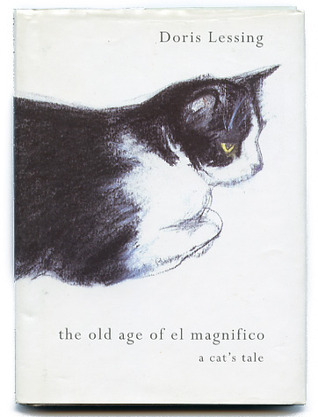 The Old Age of El Magnifico by Doris Lessing (2000): Pure cat lover’s delight. I wasn’t a big fan of Lessing’s Particularly Cats, which is surprisingly unsentimental and even brutal in places. This redresses the balance. It’s the bittersweet story of Butch, her enormous black and white cat, who was known by many additional nicknames including El Magnifico. At the age of 14 he was found to have a cancerous growth in his shoulder, and one entire front leg had to be removed. His habits, and even to an extent his personality, changed after the amputation, and Lessing regretted that she couldn’t let him know it was done for his good. She reflects on her duty towards the cats in her care, and on how pets encourage us to slow our pace and direct our attention fully to the present moment. Work? Chores? Worries? What could really be more important than sitting still and stroking a cat?
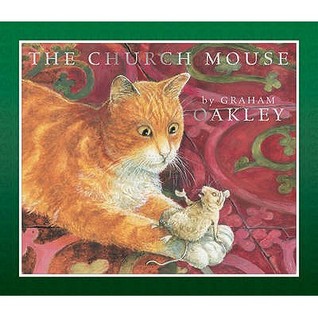 The Church Mouse by Graham Oakley: It is not good for a mouse to be alone. Arthur is lonely as the only mouse resident in the village church, but he has an idea: he proposes to the parson that if he will give all the local mice refuge in the church, they’ll undertake minor chores like flower arranging and picking up confetti. It seems like a good arrangement all around, but Sampson the church cat soon tires of the mice’s antics and creates something of a scene during a Sunday service. Luckily, he and the mice still work together to outwit a burglar who comes for the silver. There are quite a lot of words for a very small child to engage with, but older children should enjoy it very much. I find this whole series so charming. This was the first book of the 14, from 1972.
 Cats in May by Doreen Tovey (1959): The sequel is just as good as the original (Cats in the Belfry). Along with feline antics we get the adventures of Blondin the squirrel, whom Tovey and her husband adopted before they started keeping Siamese cats. (He was just as destructive as the pets that came after him, but I had to love his fondness for tea.) Solomon and Sheba appear on the BBC and object in the strongest possible terms when Doreen and Charles try to introduce a third Siamese, a kitten named Samson, to the household. The flu, visits from the rector’s grandson, and periodic troubles with their old farmhouse, including a chimney fire, round out this highly amusing story of life with pets.
Not all cat books are winners. Here are two that, alas, I cannot recommend:
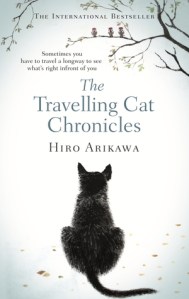 The Travelling Cat Chronicles by Hiro Arikawa (2017): This is the fable-like story of Satoru, a single man in his early thirties, and his cat, Nana (named for the shape of his tail, which resembles a Japanese 7). Satoru adopted Nana about five years ago when the cat, a local stray, was hit by a car. Now he needs to find a new owner for his beloved pet. No spoilers here, but really, there are only so many reasons why a young man would need to do this, and readers will likely work it out well before the “big reveal” over halfway through. We bounce between Nana’s perspective, which is quite cutely rendered, and third-person flashbacks to Satoru’s sad history. The author spells out and overstates everything. It’s pretty emotionally manipulative. Pet owners will appreciate Nana’s humor and loyalty (“I’m your cat till the bitter end!”), but I felt like I was being brow-beaten into crying – though I didn’t in the end.
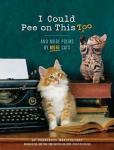
I Could Pee on This, Too: And More Poems by More Cats by Francesco Marciuliano (2016): Not a single memorable poem or line in the lot. Seriously. Stick with the original.
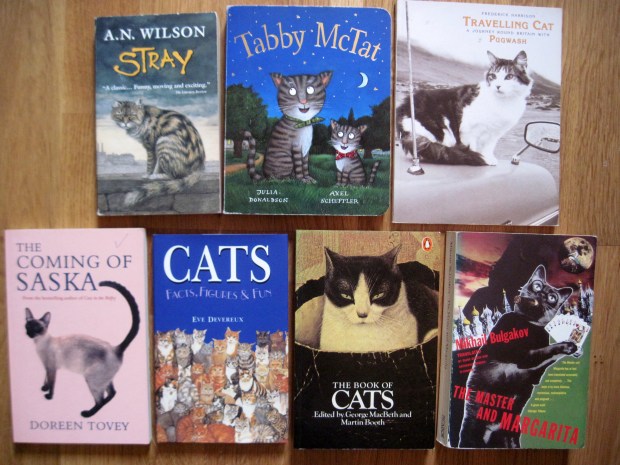
My next batch of cat books. Maybe I’ll try to write them up for a Christmas-tide treat.
Whether you are a cat lover or not, do any of these books appeal?
How Not to Decide: Motherhood by Sheila Heti
Should one have children? No matter who’s asking the question or in what context, you’re going to get the whole gamut of replies, as proven by this recent Literary Hub survey of authors. Should I have children? Turn the question personal and, even if it’s actually rhetorical, you’ll still get an opinion from every quarter. As The Decision looms over her, the narrator of Sheila Heti’s new novel, a 37-year-old writer from Toronto, isn’t sure who to listen to. Her neurotic inner voice makes her second-guess her life. “The question of a child is a bug in the brain—it’s a bug that crawls across everything, every memory, and every sense of my own future.” Meanwhile, acquaintances and strangers alike all have their two cents to chip in. Everywhere she goes on her book tour, for instance, she hears other people’s stories and has to sift through them. She’s something like the protagonist of Rachel Cusk’s Outline trilogy, though with a stronger personality and internal commentary.
Having a child is an act of creation, and Heti’s narrator worries that she only has sufficient creative energy for one or the other: writing or breeding. Her identity as an artist is so precious to her that she is terrified of giving it up, or watering it down, to risk being a (not very good?) mother. Yet she has the sense that to remain childless she had better come up with a really good excuse. People will want to know what she is going to do with her life instead, and they’re unlikely to be satisfied by the notion that her books are like her babies.

The novel is in short, aphoristic paragraphs and is dominated by cogitation rather than scenes, though there are some concrete events and secondary characters, such as the narrator’s mother; her friend Libby, a new mother; and her partner, Miles, who has a 12-year-old daughter from a previous relationship. The sections are given headings like “PMS,” “Bleeding,” “Follicular,” and “Ovulating,” which suggest the cyclical nature of life: whether she likes it or not, this character is part of a physical process geared towards reproduction.
The cyclical workings of the female body mirror the circularity of her thoughts: she keeps revolving around the same questions, never seeming to get any closer to a decision – though by the end she does decide. The temptation is always to offload the choice onto an external, fate-like force. The narrator wants the oracular voice of the universe to answer everything for her via coin tosses. (Heti writes in a prefatory note that these were based on actual coin tosses.) She asks series of yes/no questions and reports what the coins have to say. It’s a way of avoiding responsibility for her own decision, and produces some truly hilarious passages. Oh, the absurdity of having a dialogue with an impersonal force!
Our heroine does ultimately realize how random and meaningless the coins’ yes/no answers are, but she continues to look outside herself for wisdom: to a fortune teller, psychics, dreams, and even a crazy woman in New York City who hits her up for money. Anything to bypass the wringer of her own mind. She also latches onto the biblical story of Jacob wrestling with the angel, and contrasts this with the symbol of a kitchen knife, which represents a demon that robs her of hope.
 Every woman is a daughter as well as a potential mother, and a particularly moving strand of Motherhood is the narrator’s relationship with her female ancestors. Her Hungarian grandmother, Magda, survived Auschwitz only to die of cancer at 53; her mother, a doctor, devoted herself to her career and left the traditional household and childrearing tasks to her husband. This dual legacy of suffering and professional pride helps explain the narrator’s feelings. Deep down, she believes her family line was meant to end in a concentration camp; how dare she continue it now? She also emulates her mother’s commitment to a cerebral vocation – “So I also wanted to be the brains: to be nothing but words on a page.”
Chance, inheritance, and choice vie for pride of place in this relentless, audacious inquiry into the purpose of a woman’s life. I marked out dozens of quotes that could have been downloaded directly from my head or copied from my e-mails and journal pages. The book encapsulates nearly every thought that has gone through my mind over the last decade as I’ve faced the intractable question of whether to have children. I suspect it will mean the most to people who are still unsure or have already decided against children; parents may interpret Heti’s arguments as personal barbs, even though the narrator insists her own decision is not an inherent comment on anyone else’s. It’s a book I could have written, but now don’t have to; Heti has captured brilliantly what it’s like to be in this situation in this moment in time.
Here are a few of my favorite passages. They should give you an idea of whether this book might resonate with you, or at least interest you academically:
“On the one hand, the joy of children. On the other hand, the misery of them. On the one hand, the freedom of not having children. On the other hand, the loss of never having had them—but what is there to lose?”
“for a woman of curiosity, no decision will ever feel like the right one. In both, too much is missing. What can I say, except: I forgive myself for every time I neglected to take a risk, for all the narrowings and winnowings of my life. I understand that fear beckons to a person as much as possibility does, and even more strongly.”
“I don’t have to live every possible life, or to experience that particular love. I know I cannot hide from life; that life will give me experiences no matter what I choose. Not having a child is no escape from life, for life will always put me in situations, and show me new things, and take me to darknesses I wouldn’t choose to see, and all sorts of treasures of knowledge I cannot comprehend.”
My rating:
Motherhood was published in the UK by Harvill Secker on May 24th. My thanks to the publisher for the free copy for review. It came out in North America on May 1st (Knopf Canada / Henry Holt and Co.).
Some of My Recent and Upcoming Bylines
Next month marks five years that I’ve been a freelance reviewer, and I turn 35 later in the year. With these milestones in mind, I’ve been pushing myself a bit more to make contact with new publications and try to get my work out there more widely.
Most recently, I was pleased to have my first article in Literary Hub, an essay about rereading Little Women in its 150th anniversary year in conjunction with the new BBC/PBS miniseries production. (I shared this article intensively on social media, so do forgive me if you’ve already seen it somewhere else!) This is the first time, apart from here on the blog, that I’ve blended book commentary with personal material. I think it’s probably the best “exposure” I’ve had for my writing thus far: last time I looked, Literary Hub’s Facebook post about the article had gotten 123 likes and 33 shares, with 71 likes and 22 retweets on Twitter.
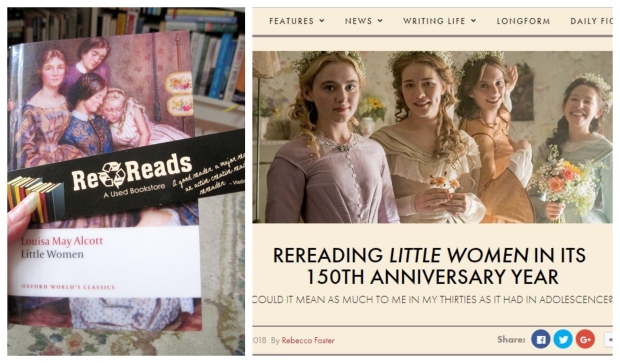
[Note: I now know that the spelling is Katharine Hepburn and have asked twice over e-mail for the editor to correct it, but it’s clearly very low on their list of priorities!]
I continue to review for the Pittsburgh Post-Gazette on a regular basis. My latest review was quite a negative one, alas, for Richard Flanagan’s First Person (). Upcoming: Slave Old Man by Patrick Chamoiseau () and A Weekend in New York by Benjamin Markovits.


I still contribute the occasional review to Shiny New Books. My latest two are of From Here to Eternity by Caitlin Doughty () and All the Beautiful Girls by Elizabeth J. Church ( ).
).


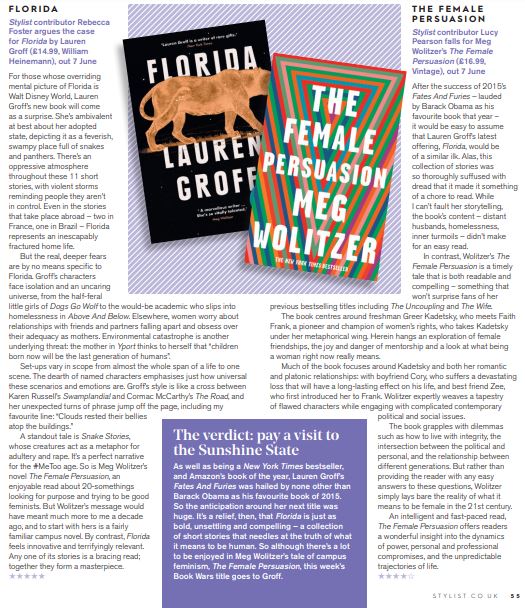
I reviewed Florida by Lauren Groff (), my fiction book of the year so far, for Stylist magazine. This is the fourth time I’ve volunteered for their “Book Wars” column, but the first time I’ve ‘won’ – I attribute it to the high class of book!
Bylines coming later in the summer:
- A dual review of two nature-themed memoirs in the Times Literary Supplement (June 15th issue). This is my third piece for the TLS, but as it’s a longer one it feels a little more ‘real’.
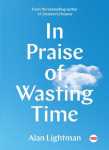
- An essay on two books about “wasting time” (including Alan Lightman’s) in the Los Angeles Review of Books (June 20th).
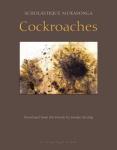
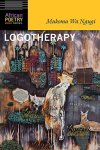
- A dual review of a memoir and a poetry volume by African writers in Wasafiri literary magazine (Issue 95).
Upcoming work, with no publication date yet:
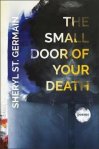
- A dual review of two death-themed poetry collections for PN Review.

- Two book lists for OZY, one on the refugee crisis and another on compassion in medicine.
- A review essay on Gross Anatomy by Mara Altman for Glamour Online.
The Feather Thief by Kirk Wallace Johnson
 The Feather Thief is a delightful read that successfully combines many genres – biography, true crime, ornithology, history, travel and memoir – to tell the story of an audacious heist of rare bird skins from the Natural History Museum at Tring in 2009. Somehow I managed not to hear about it at the time, but it was huge news in terms of museum collections and endangered species crime. The tendrils of this thorny case wind around Victorian explorers, tycoons, and fashionistas through to modern obsessions with music, fly-fishing and refugees.
Author Kirk Wallace Johnson worked for USAID in Iraq, heading up the reconstruction of Fallujah, then founded a non-profit organization rehoming refugees in America. Plagued by PTSD, he turned to fly-fishing as therapy, and this was how he heard about the curious case of Edwin Rist, who stole the bird specimens from Tring to sell the bright feathers to fellow hobbyists who tie elaborate Victorian-style fishing flies.
Rist, from upstate New York, was a 20-year-old flautist studying at the Royal Academy of Music in London. Since age 11 he’d been fixated on fly-tying, especially old-fashioned salmon ties, which use exotic feathers or ordinary ones dyed to look like them. An online friend told him he should check out Tring – the museum Walter Rothschild’s financier father built for him as a twenty-first birthday present – when he got to London. In 2008 Rist scoped out the collection, pretending to be photographing the birds of paradise for a friend’s book.
A year later he took the train to Tring one summer night with an empty suitcase and a glass cutter, broke in through a window, stole 300 bird skins, and made it back to his flat without incident. The museum only discovered the crime a month later, by accident. Rist sold many feathers and whole birds via a fly-tying forum and on eBay. It was nearly another year and a half before the police knocked on his door, having been alerted by a former law enforcement officer who encountered a museum-grade bird skin at the Dutch Fly Fair and asked where it came from.

An interior shot showing some plates of fishing flies.
Here is where things get really interesting, at least for me. Rist confessed immediately, but a psychological evaluation diagnosed him with Asperger’s; on the strength of that mental health defense he was given a suspension and a large fine, but no jail time, so he graduated from the Royal Academy as normal and auditioned for jobs. The precedent was a case from 2000 in which a young man with Asperger’s who stole human remains from a Bristol graveyard was exonerated.
The book is in three parts: the first gives historical context about specimen collection and the early feather trade; the second is a blow-by-blow of Rist’s crime and the aftermath, including the trial; and the third goes into Wallace’s own investigation process. He started by attending a fly-tying symposium, where he felt like an outsider and even received vague threats: Rist was now a no-go subject for this community. But Wallace wasn’t going to be deterred. Sixty-four bird skins were still missing, and his quest was to track them down. He started by contacting Rist’s confirmed customers, then interviewed Rist himself in Germany and traveled to Norway to meet someone who might have been Rist’s accomplice – or fall guy.

From the back cover.
I happened to be a bit too familiar with the related history – I’ve read a lot of books that touch on Alfred Russel Wallace, whose specimens formed the core of the Tring collection, as well as a whole book on the feather trade for women’s hats and the movement against the extermination, which led to the formation of the Audubon Society (Kris Radish’s The Year of Necessary Lies). This meant that I was a little impatient with the first few chapters, but if you are new to these subjects you shouldn’t have that problem. For me the highlights were the reconstruction of the crime itself and Wallace’s inquiry into whether the Asperger’s diagnosis was accurate and a fair excuse for Rist’s behavior.
This whole story is stranger than fiction, which would make it a great selection for readers who don’t often pick up nonfiction, perhaps expecting it to be dry or taxing. Far from it. This is the very best sort of nonfiction: wide-ranging, intelligent and gripping.
My rating:
The Feather Thief was published in the UK by Hutchinson on April 26th. My thanks to Najma Finlay for the free copy for review.
20 Books of Summer 2018
This is my first year joining in with the 20 Books of Summer challenge run by Cathy of 746 Books. I’ve decided to put two twists on it. One: I’ve only included books that I own in print, to work on tackling my mountain of unread books (300+ in the house at last count). As I was pulling out the books that I was most excited to read soon, I noticed that most of them happened to be by women. So for my second twist, all 20 books are by women. Why not? I’ve picked roughly half fiction and half life writing, so over the next 12 weeks I just need to pick one or two from the below list per week, perhaps alternating fiction and non-. I’m going to focus more on the reading than the reviewing, but I might do a few mini roundup posts.
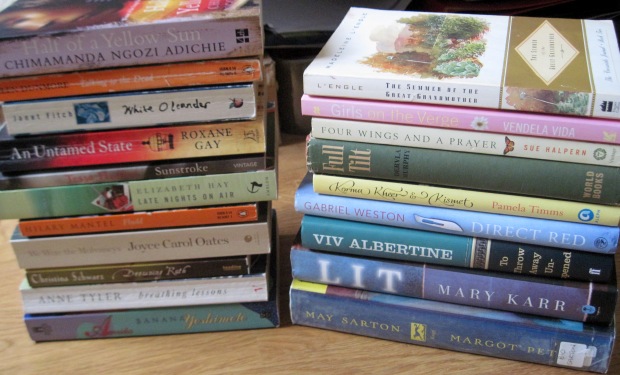
I’m doing abysmally with the goal I set myself at the start of the year to read lots of travel classics and biographies, so I’ve chosen one of each for this summer, but in general my criteria were simply that I was keen to read a book soon, and that it mustn’t feel like hard work. (So, alas, that ruled out novels by Elizabeth Bowen, Ursula K. LeGuin and Virginia Woolf.) I don’t insist on “beach reads” – the last two books I read on a beach were When Breath Becomes Air by Paul Kalanithi and Grief Cottage by Gail Godwin, after all – but I do hope that all the books I’ve chosen will be compelling and satisfying reads.
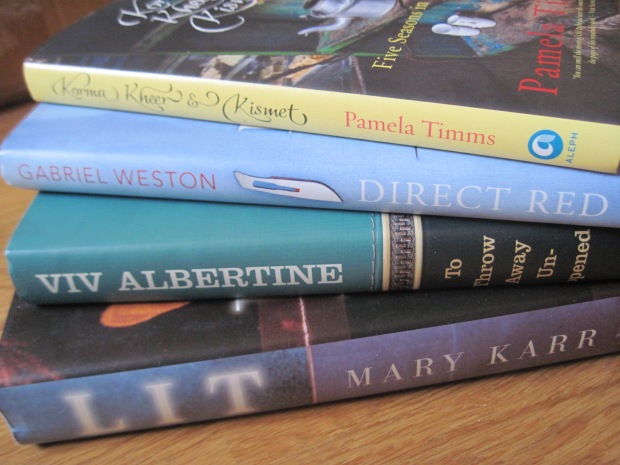
- To Throw Away Unopened by Viv Albertine – I picked up a copy from the Faber Spring Party, having no idea who Albertine was (guitarist of the all-female punk band The Slits). Everyone I know who has read this memoir has raved about it.
- Lit by Mary Karr – I’ve read Karr’s book about memoir, but not any of her three acclaimed memoirs. This, her second, is about alcoholism and motherhood.
- Korma, Kheer and Kismet: Five Seasons in Old Delhi by Pamela Timms – I bought a bargain copy at the Wigtown Festival shop earlier in the year. Timms is a Scottish journalist who now lives in India. This should be a fun combination of foodie memoir and travel book.
- Direct Red: A Surgeon’s Story by Gabriel Weston (a woman, honest!) – Indulging my love of medical memoirs here. I bought a copy at Oxfam Books earlier this year.
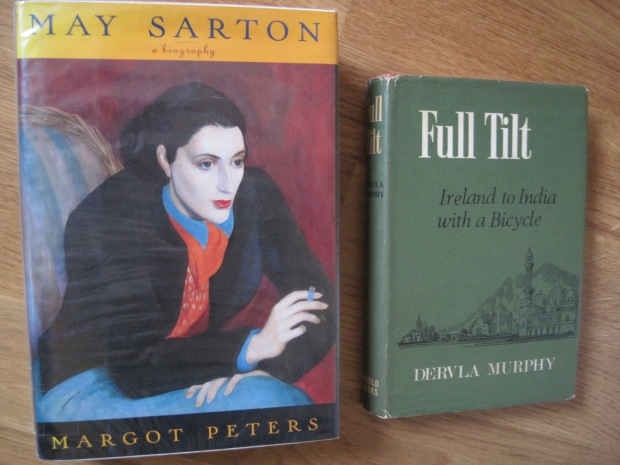 5. May Sarton by Margot Peters – I’ve been on a big May Sarton kick in recent years, so have been eager to read this 1997 biography, which apparently is not particularly favorable.
6. Full Tilt: Ireland to India with a Bicycle by Dervla Murphy – I bought this 1960s hardback from a charity shop in Cambridge a couple of years ago. It will at least be a start on that travel classics challenge.
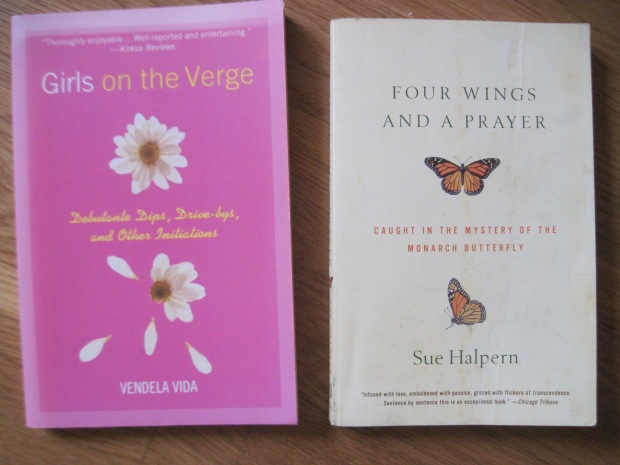
7. Girls on the Verge: Debutante Dips, Drive-bys, and Other Initiations by Vendela Vida – This was Vida’s first book. It’s about coming-of-age rituals for young women in America.
8. Four Wings and a Prayer: Caught in the Mystery of the Monarch Butterfly by Sue Halpern – Should fall somewhere between science and nature writing, with a travel element.
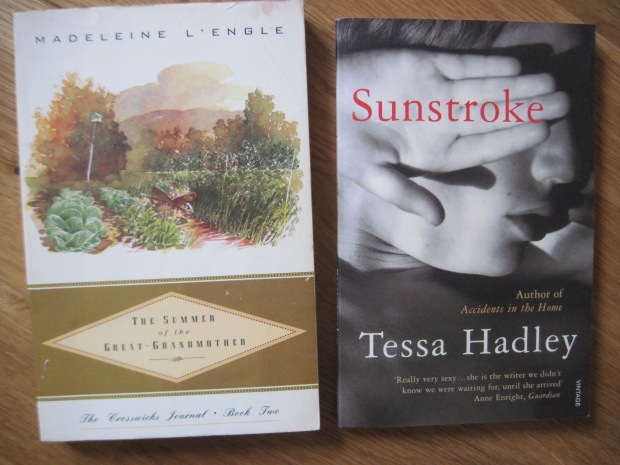
9. The Summer of the Great-Grandmother by Madeleine L’Engle – L’Engle is better known for children’s books, but she wrote tons for adults, too: fiction, memoirs and theology. I read the stellar first volume of the Crosswicks Journal, A Circle of Quiet, in September 2015 and have meant to continue the series ever since.
10. Sunstroke by Tessa Hadley – You know how I love reading with the seasons when I can. This slim 2007 volume of stories is sure to be a winner. Seven of the 10 originally appeared in the New Yorker or Granta.
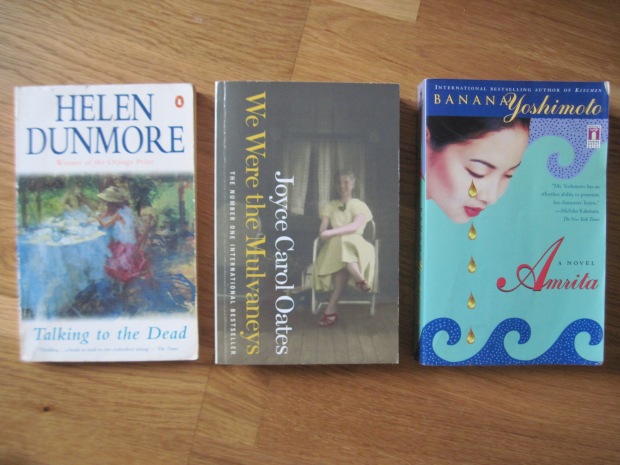
11. Talking to the Dead by Helen Dunmore – I’ve only ever read Dunmore’s poetry. It’s long past time to try her fiction. This one comes highly recommended by Susan of A life in books.
12. We Were the Mulvaneys by Joyce Carol Oates – Oates is intimidatingly prolific, but I’m finally going to jump in and give her a try.
13. Amrita by Banana Yoshimoto – A token lit in translation selection. “This is the story of [a] remarkable expedition through grief, dreams, and shadows to a place of transformation.” (Is it unimaginative to say that sounds like Murakami?)
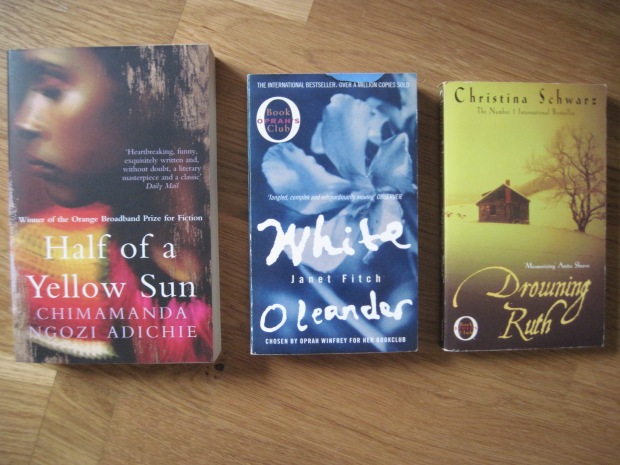
14. Half of a Yellow Sun by Chimamanda Ngozi Adichie – How have I not read any of her fiction yet?! This has been sitting on my shelf for years. I only vaguely remember the story line from the film, so it should be fairly fresh for me.
15. White Oleander by Janet Fitch – An Oprah’s Book Club selection from 1999. I reckon this would make a good beach or road trip read.
16. Drowning Ruth by Christina Schwarz – Another Oprah’s Book Club favorite from 2000. Set in Wisconsin in the years after World War I.
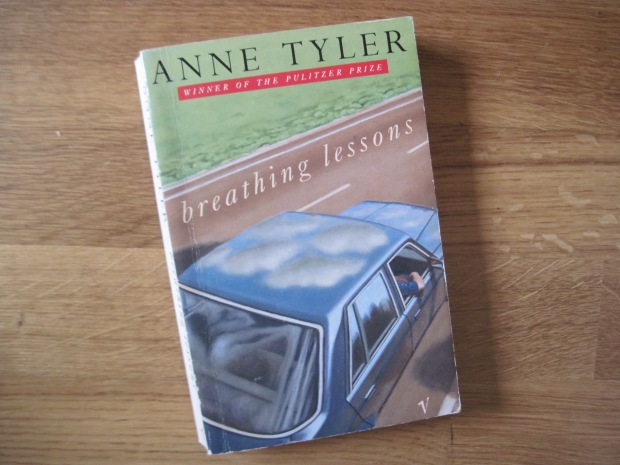
- Breathing Lessons by Anne Tyler – Tyler novels are a tonic. I have six unread on the shelf; the blurb on this one appealed to me the most. This summer actually brings two Tylers as Clock Dance comes out on July 12th – I’ll either substitute that one in, or read both!
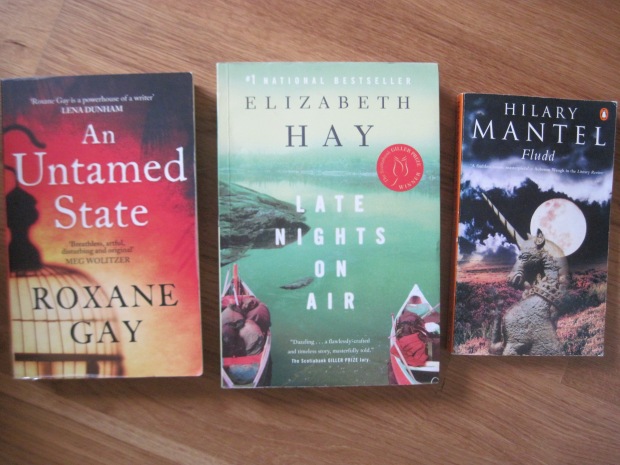
18. An Untamed State by Roxane Gay – I’ve only read Gay’s memoir, Hunger. She’s an important cultural figure; it feels essential to read all her books. I expect this to be rough.
19. Late Nights on Air by Elizabeth Hay – This has been on my radar for such a long time. After loving my first Hay novel (A Student of Weather) last year, what am I waiting for?
20. Fludd by Hilary Mantel – I haven’t read any Mantel in years, not since Bring Up the Bodies first came out. While we all await the third Cromwell book, I reckon this short novel about a curate arriving in a fictional town in the 1950s should hit the spot.
I’ll still be keeping up with my review books (paid and unpaid), blog tours, advance reads and library books over the summer. The aim of this challenge, though, is to make inroads into the physical TBR. Hopefully the habit will stick and I’ll keep on plucking reads from my shelves during the rest of the year.
Where shall I start? If I was going to sensibly move from darkest to lightest, I’d probably start with An Untamed State and/or Lit. Or I might try to lure in the summer weather by reading the two summery ones…
Which of these books have you read? Which ones appeal?
Recommended June Releases
I have an all-female line-up for you this time, with selections ranging from a YA romance in verse to a memoir by a spiritual recording artist. There’s a very random detail that connects two of these books – look out for it!

In Paris with You by Clémentine Beauvais
[Faber & Faber, 7th]
 I don’t know the source material Beauvais was working with (Eugene Onegin, 1837), but still enjoyed this YA romance in verse. Eugene and Tatiana meet by chance in Paris in 2016 and the attraction between them is as strong as ever, but a possible relationship is threatened by memories of a tragic event from 10 years ago involving Lensky, Eugene’s friend and the boyfriend of Tatiana’s older sister Olga. I’m in awe at how translator Sam Taylor has taken the French of her Songe à la douceur and turned it into English poetry with the occasional rhyme. This is a sweet book that would appeal to John Green’s readers, but it’s more sexually explicit than a lot of American YA, so is probably only suitable for older teens. (Proof copy from Faber Spring Party)
Favorite lines:
“Her heart takes the lift / up to her larynx, / where it gets stuck / hammering against the walls of her neck.”
“an adult with a miniature attention span, / like everyone else, refreshing, updating, / nibbling at time like a ham baguette.”
“helium balloons in the shape of spermatozoa straining towards the dark sky.”
My rating:
Implosion: A Memoir of an Architect’s Daughter by Elizabeth W. Garber
[She Writes Press, 12th]
 The author grew up in a glass house designed by her father, Modernist architect Woodie Garber, outside Cincinnati in the 1960s–70s. This and his other most notable design, Sander Hall, a controversial tower-style dorm at the University of Cincinnati that was later destroyed in a controlled explosion, serve as powerful metaphors for her dysfunctional family life. Woodie is such a fascinating, flawed figure. Manic depression meant he had periods of great productivity but also weeks when he couldn’t get out of bed. He and Elizabeth connected over architecture, like when he helped her make a scale model of Le Corbusier’s Villa Savoye for a school project, but it was hard for a man born in the 1910s to understand his daughter’s generation or his wife’s desire to go back to school and have her own career.
Mixed feelings towards a charismatic creative genius who made home life a torment and the way their fractured family kept going are reasons enough to read this book. But another is just that Garber’s life has been so interesting: she witnessed the 1968 race riots and had a black boyfriend when interracial relationships were frowned upon; she was briefly the librarian for the Oceanics School, whose boat was taken hostage in Panama; and she dropped out of mythology studies at Harvard to become an acupuncturist. Don’t assume this will be a boring tome only for architecture buffs. It’s a masterful memoir for everyone. (Read via NetGalley on Nook)
My rating:
Florida by Lauren Groff
[William Heinemann (UK), 7th / Riverhead (USA), 5th]
 My review is in today’s “Book Wars” column in Stylist magazine. Two major, connected threads in this superb story collection are ambivalence about Florida, and ambivalence about motherhood. The narrator of “The Midnight Zone,” staying with her sons in a hunting camp 20 miles from civilization, ponders the cruelty of time and her failure to be sufficiently maternal, while the woman in “Flower Hunters” is so lost in an eighteenth-century naturalist’s book that she forgets to get Halloween costumes for her kids. A few favorites of mine were “Ghosts and Empties,” in which the narrator goes for long walks at twilight and watches time passing through the unwitting tableaux of the neighbors’ windows; “Eyewall,” a matter-of-fact ghost story; and “Above and Below,” in which a woman slips into homelessness – it’s terrifying how precarious her life is at every step. (Proof copy)
Favorite lines:
“What had been built to seem so solid was fragile in the face of time because time is impassive, more animal than human. Time would not care if you fell out of it. It would continue on without you.” (from “The Midnight Zone”)
“The wind played the chimney until the whole place wheezed like a bagpipe.” (from “Eyewall”)
“How lonely it would be, the mother thinks, looking at her children, to live in this dark world without them.” (from “Yport”)
My rating:
The Most Beautiful Thing I’ve Seen: Opening Your Eyes to Wonder by Lisa Gungor
[Zondervan, 26th]
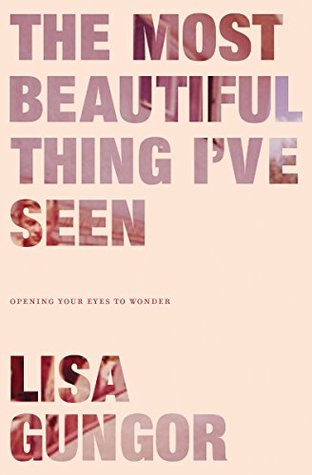 You’re most likely to pick this up if you enjoy Gungor’s music, but it’s by no means a band tell-all. The big theme of this memoir is moving beyond the strictures of religion to find an all-encompassing spirituality. Like many Gungor listeners, Lisa grew up in, and soon outgrew, a fundamentalist Christian setting. She bases the book around a key set of metaphors: the dot, the line, and the circle. The dot was the confining theology she was raised with; the line was the pilgrimage she and Michael Gungor embarked on after they married at 19; the circle was the more inclusive spirituality she developed after their second daughter, Lucie, was born with Down syndrome and required urgent heart surgery. Being mothered, becoming a mother and accepting God as Mother: together these experiences bring the book full circle. Barring the too-frequent nerdy-cool posturing (seven mentions of “dance parties,” and so on), this is a likable memoir for readers of spiritual writing by the likes of Sue Monk Kidd, Mary Oliver and Terry Tempest Williams. (Read via NetGalley on Kindle)
My rating:
 Orchid & the Wasp by Caoilinn Hughes
[Oneworld, 7th] – see my full review.
Ok, Mr Field by Katharine Kilalea
[Faber & Faber, 7th]
 Mr. Field is a concert pianist whose wrist was shattered in a train crash. With his career temporarily derailed, there’s little for him to do apart from wander his Cape Town house, a replica of Le Corbusier’s Villa Savoye, and the nearby coastal path. He also drives over to spy on his architect’s widow, with whom he’s obsessed. He’s an aimless voyeur who’s more engaged with other people’s lives than with his own – until a dog follows him home from a graveyard. This is a strangely detached little novel in which little seems to happen. Like Asunder by Chloe Aridjis and Leaving the Atocha Station by Ben Lerner, it’s about someone who’s been coasting unfeelingly through life and has to stop to ask what’s gone wrong and what’s worth pursuing. It’s so brilliantly written, with the pages flowing effortlessly on, that I admired Kilalea’s skill. Her descriptions of scenery and music are particularly good. In terms of the style, I was reminded of books I’ve read by Katie Kitamura and Henrietta Rose-Innes. (Proof copy from Faber Spring Party)
My rating:
This came out in the States (from Riverhead) back in early April, but releases here in the UK soon, so I’ve added it in as a bonus.
The Female Persuasion by Meg Wolitzer
[Chatto & Windus, 7th]
 An enjoyable story of twentysomethings looking for purpose and trying to be good feminists. To start with it’s a fairly familiar campus novel in the vein of The Art of Fielding and The Marriage Plot, but we follow Greer, her high school sweetheart Cory and her new friend Zee for the next 10+ years to see the compromises they make as ideals bend to reality. Faith Frank is Greer’s feminist idol, but she’s only human in the end, and there are different ways of being a feminist: not just speaking out from a stage, but also quietly living every day in a way that shows you value people equally. I have a feeling this would have meant much more to me a decade ago, and the #MeToo-ready message isn’t exactly groundbreaking, but I very much enjoyed my first taste of Wolitzer’s sharp, witty writing and will be sure to read more from her. This seems custom-made for next year’s Women’s Prize shortlist. (Free from publisher, for comparison with Florida in Stylist “Book Wars” column.)
My rating:
 Bookish Beck = Rebecca Foster. American transplant to England. Freelance proofreader and book reviewer.
